

Fire Along the Sky (Wilderness #4)
Book
The year is 1812 and Hannah Bonner has returned to her family’s mountain cabin in Paradise. But...

East Fortune
8.0 Rate It
Book
The boy stepped out into the road. He stretched his arms out and his legs apart, making an X, palms...

My Life, Our Times
Book
As former Prime Minister and our longest-serving Chancellor, Gordon Brown has been a guiding force...
biography politics
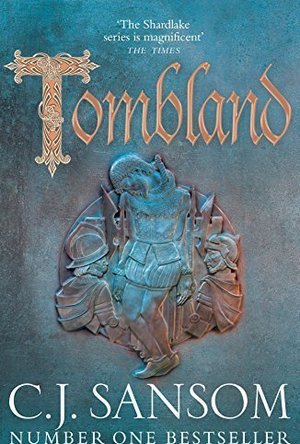
Tombland (The Shardlake series Book 7)
Book
Summer, 1549. Two years after the death of Henry VIII, England is sliding into chaos . . . The...
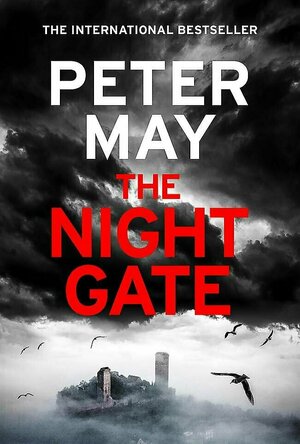
The Night Gate
Book
In a sleepy French village, the body of a man shot through the head is disinterred by the roots of...
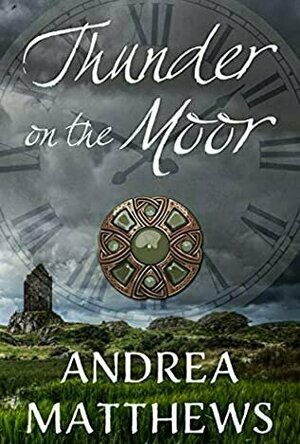
Thunder On The Moor (Thunder On The Moor #1)
Book
Maggie Armstrong grew up enchanted by her father’s tales of blood feuds and border raids. In fact,...
Time Travel Romance Scotland Scottish History
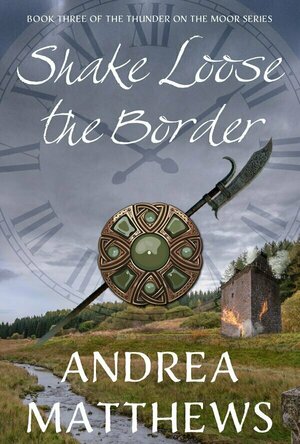
Shake Loose the Border (Thunder On The Moor #3)
Book
With Will and Maggie’s wedding just a week away, the last thing they need to stumble upon is...
Historical Time Travel Romance Scottish Scotland

ClareR (6253 KP) rated The Kingdoms in Books
Mar 6, 2022
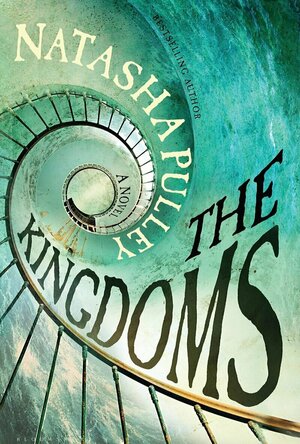

Basically (and I warn you: there’s nothing basic about this storyline!), Joe Tournier finds himself at a London train station, and realises that he doesn’t know how he got there, or who he is. A kind stranger takes him to the hospital where he’s diagnosed with amnesia. After a week at an asylum, his owner and his wife come to claim him. His French owner. He is a slave in Londres, which is occupied by the French after they won the Napoleonic Wars. But none of this feels right to him.
A month or so later, he receives a postcard written in illegal English, from a lighthouse in rebel Scotland - written 100 years ago. After gaining his freedom as a slave, Joe becomes an engineer, and is sent to the same lighthouse to make repairs. And that’s all I’ll say, because I really don’t want to spoil the story. I will say that there’s some jumping around in time, and it shows that if you change a small thing in the past, there can be huge ramifications in the future.
I loved the characters, the plot, the setting - just everything about it really appealed to me. I can’t say as I’ve read many books set mainly on boats, naval or otherwise. The rules and the running of the ships were really interesting, and the sea battles were gripping.
It’s a fabulous book, and I’d most definitely recommend it. Thanks to The Pigeonhole for the serialisation!

The Captain's Woman (The Thompsons of Locust Street #4)
Book
Meet the Thompsons of Locust Street, an unconventional family taking Philadelphia high society by...
American Historical Romance

Dean Gregory (18 KP) rated Scotland Yard in Tabletop Games
Jun 5, 2019


The board is a map of London divided into numbered stations and linked together by coloured lines, depicting routes and different modes of transport - yellow for taxis, blue for buses and red for the underground. There are also a handful of black routes for ferries, which are available only to Mister X under special rules.
The mechanic of a player moving in complete secret on a tabletop game is one I never would have thought was possible, but Scotland Yard manages to pull it off, and make it work well. Mister X plots their movements with the use of a special pad and paper by writing down the station number they occupy, covering it with the ticket they used to make their move. This is the only clue the detectives have as to where X might be. It works extremely well.
Mister X also has access to two special tickets - a X2 ticket allows them to make two moves in one, and a black ticket allows them to use any mode of transport, with the added bonus of showing them to take ferry routes. Smart use of these powers is necessary to get out of scrapes, as they also have to reveal their location every 5 moves, starting with move 3.
Detectives have a limited number of tickets for each mode of transport, so in order to win they need to coordinate their movements so they don't waste tickets unnecessarily. However, if there are less than 4 detective players, each detective not controlled by a player is replaced with a police officer who is universally controlled. The police can move freely without the need for tickets, making them far more versatile than detectives. This is presumably to balance the difficulty for smaller teams, but it ends up making a game with all 4 detectives considerably harder than a game with only 3. The level of care and consideration that must go into each move makes playing the detectives a completely different experience to playing as Mister X.
I came into the game thinking it would be heavily skewed in Mister X's favour. After all, most of the moves they make are in secret, they're completely unhindered by tickets, and they get a couple of special powers to boot. On top of that, the detectives first two moves are complete guesswork, so X gets a head start. In practice though, staying 3 steps ahead of the detectives is vital to survival, and when they work together well it can be ready for X to put themselves in an impossible situation. It takes careful planning to stay ahead of the game.
There is a beginner mode which is aimed at younger players. The differences are that the number of rounds Mister X needs to survive for is 13 instead of 22, red underground routes are unavailable to all players, and most of all, Mister X remains in the board all game, only disappearing on the turns where he would appear in the regular game. I can't really offer an opinion on this version, but I can see the appeal of it, even if it defeats the concept of the game a bit.
This is a bonafide classic, and a solid challenge no matter which role you take on. As long as the game doesn't devolve into a series of guesses and lucky breaks (which, due to the nature of Mister X's movements, can be a regular issue), it offers an evening of smart gameplay with a solid replay value.