
Search
Search results

Ravensburger Puzzle - the jigsaw collection
Games and Entertainment
App
The best jigsaw puzzle app for iPhone and iPad - of course from Ravensburger. A huge selection of...
Stumbling Stones: A Path Through Grief, Love and Loss
Book
This book is a beautifully written exploration of grief and loss. Thought-provoking, often poetic,...

James Dean Bradfield recommended Steeltown by Big Country in Music (curated)


Whoowasit? - Children's game of the year 2008
Games and Entertainment
App
Whoowasit? has been nominated in the categories „Bestes Kinderspiel“ (best game for kids) and...


Eilidh G Clark (177 KP) rated Dirt Road in Books
May 13, 2017
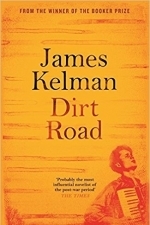


Kelman is an expert in understanding people
Kelman’s new novel Dirt Road is story that takes both characters and reader on a journey right from the outset, but the journey is more than it seems. The novel begins in the West coast of Scotland where we learn that Murdo - a sixteen-year-old boy - and his father Tom are mourning the death of their mother/wife and sister/daughter. Searching for solace, they embark on a journey to Alabama, U.S.A to spend time with Uncle John and Aunt Maureen. For Murdo, family is just a happy memory, a moment in time captured in a photograph, ‘The family was four and not just him and Dad’, whilst for Tom, family is the bond that holds them together. Throughout the journey, Tom strives to guide his son and keep him on ‘the right path’, yet Murdo, as we will learn, has a path of his own to find. Stifled by the fathers influence, the boy has a tendency to stray, thus when they reach Allentown Mississippi, Murdo stumbles upon a family of musicians led by Zydeco performer Queen Monzee-ay. Murdo is as drawn to music as his father is to family, the boy himself is an accomplished accordion player, and when he is offered an opportunity to play a set with Queen Monzee-ay in two weeks’ time, we watch as the road between father and son diverges and choice and risk becomes the key plot in the story.
While this may appear a simple story line, Kelman’s exploration into the fragmented relationship between father and son gives the reader an honest analysis of family and grief. The third person narrator, with bursts of free indirect discourse from Murdo, allows the reader both an internal and external insight into the constraints of family. This parallel leaves the reader feeling uncomfortable, yet with a conflicting heart. This is Kelman’s unique writing style at its best.
Dirt Road is more than a novel of grief and family relationships though; it is a novel of risk, of following new paths with uncertainties, about leaving behind the familiarities and safety of the past and following the heart. It is about deep connections; for Murdo this is through music and the feeling of freedom that he associates with music, whilst for the other characters it is about cultural connections and Scottish ancestry. Kelman’s clever use of parallels shows the reader the intensity of human connections whilst suggesting that change and progression is possible. This great novel will linger in your thoughts for weeks after you put it down, and it brings to mind a poem by Robert Frost, The Road Not Taken
I shall be telling this with a sigh
Somewhere ages and ages hence:
Two roads diverged in a wood, and I—
I took the one less traveled by,
And that has made all the difference.
For the full poem visit (https://www.poetryfoundation.org).
Dirt Road by James Kelman
Canongate Books (14 July 2016)

Britain's Best Small Hills: A Guide to Short Adventures and Wild Walks with Great Views
Book
Hot on the success of Wilderness Weekends, one of the top selling guides in 2015, award-winning...


Eilidh G Clark (177 KP) rated A Portable Shelter in Books
May 13, 2017

‘…there’s no other way to give you the truth except to hide it in a story and let you find your own way inside.’
‘…there’s no other way to give you the truth except to hide it in a story and let you find your own way inside.’
Kirsty Logan’s first collection of short stories, The Rental Heart and Other Fairytales, published by Salt in 2014, won the Polari First Book Prize in 2015. A Portable Shelter is her second collection. Set in a small cottage in the rural north coast of Scotland, Ruth and Liska are expecting their first child. The couple believe that their unborn baby will have a better chance of survival away from the harshness of suburban life. They make a pact with one another, that they will only ever tell their child the truth. Yet while Liska is asleep or Ruth is at work, each whispers secret stories to their unborn child. Delving into fantastical tales about people from their past and re-telling stories that span from generation to generation, the couple unfold the horrors of the real world. Whilst these tales, laced in myth and legend, and fattened with the magic of the imagination, demonstrate the art of oral storytelling, Logan reaches further to show the reader why storytelling is important.
While this book is primarily a collection of short stories, its novel like structure frames each story with a preceding monologue from either Ruth or Liska. The monologues offer delightful morsels of description that bring the harshness of Mother Nature into the safety of the couple’s bedroom, “right now our home is speaking to you. The walls creak their approval in the wind. The rain applauds on the roof. The lighthouse beam swoops, swoops, swoops. The tide breathes loud and slow like a giant. If you listen carefully, perhaps you can even hear the moon hum.” The pace of these sentences, combined with the delicacy of language demonstrates Logan’s skill at describing the sublime spirit of the natural world, which brings the narrative to life.
Most impressive though, is Logan’s poetic language and carefully crafted sentences which create the most beautiful imagery. In ‘Flinch,’ for example – James is a fisherman struggling with his identity, yet his affiliation with the land is locked into his first-person point of view where the reader gets to closely experience what he sees, “The sky is pinkish-grey like the insides of shells. Speckled bonxies wheel overhead. Seals loll on the rocks, fat as kings. The rising mist is cool and milky.” Any of these lines could easily be arranged into a poem and with sentences that are squeezed tight; they create a wonderful poetic rhythm. Logan uses this technique throughout her novel, demonstrating the precision and craft in her work. There are definite similarities in her writing style to fellow Scottish novelist and poet Jenni Fagan. Both authors use rich language, which is well crafted and smattered with vernacular. Furthermore, combining this with the reoccurring theme of identity, the oral storytelling tradition, landscape, folklore, and myth, it is clear to see why these authors contribute to the growing canon in Scottish literature.
This is a book that I will read over and over again because I know that in each reading, I will find something new. A Portable Shelter, I feel, deserves a place on my ‘keep’ book shelf.
A Portable Shelter, Kirsty Logan, London: Vintage, 2015
Eilidh G Clark (177 KP) rated Nasty Women in Books
May 13, 2017

Nasty women is hard-hitting, eye-opening, and unashamedly honest.
‘Sometimes the role model you need is not an example to aspire to, but someone who reflects back the parts of yourself that society deems fit.’ -
Becca Inglis
Nasty Women, published by 404 ink, is a collection of essays about what it is, and how it feels to be a woman in the 21st century. When I first picked up the book, I assumed, like I think most readers would, that it would be an easy book to just pick up and put down whenever I had a spare ten minutes. Wrong, I was sucked into this book right from the beginning, and read it all in a day. That doesn’t mean it was an easy read, or perhaps easy is the wrong word – it isn’t a comfortable read - and it isn’t meant to be. Nasty women is hard-hitting, eye-opening, and unashamedly honest.
The book opens with ‘Independence Day’ by Katie Muriel. A story of mixed race and identity in Trump’s America, Muriel discusses her experience of inter-family racism, heightened by political differences, ‘This is not the first, nor is it the last family divide Trump will leave in his wake, but I refuse to think of him as some deity who stands around shifting pieces on a board in his golden war room.’ The anger in this piece is clear, but it is the rationalism and clarity of the writer that speaks volumes. Race, racism and xenophobia, is a prominent feature in these stories. Claire L. Heuchan, for example, talks about ‘Othering’ a term that readers will see repeatedly in this book, ‘Scotland,’ she writes, ‘is a fairly isolating place to be a black woman.’
Survival is a key trope in Nasty Women. Mel Reeve, in ‘The Nastiness of Survival,’ talks about being a survivor of rape and emotional abuse, ‘I do not fit the ‘right’ definition of someone who has been raped.’ This statement alone is filled with irony.
I was particularly drawn to Laura Waddell’s essay, ‘Against Stereotypes: Working Class Girls and Working Class Art.’ Laura talks about the difficulty of both gender and class inequality, and, in particular, the lack of working class writers and working class fiction being published, ‘I have read a lot of fiction’ she says, ‘I have read almost none from housing estates such as the one I grew up on. These stories are missing, from shelves, and from the record.’ As a Scottish fiction writer from a working-class background myself, these words resonate deeply.
Alice Tarbuck’s ‘Foraging and Feminism: Hedge-Witchcraft in the 21st Century’, is almost fun to read in a deeply devastating way. There is a desperate tone in this piece, and a desperate need to escape society. ‘There is beauty and bounty around us if we look for it, and perhaps that is all the magic we need. Or perhaps, what we need is real magic, whether that comes in the form of resistance and community or the form of blackthorn charms and skullcap tinctures, and howling to the moon.
I loved this book. This book gives women a voice. And it is loud! Well done 404 Ink, and all the contributors, for bravely breaking the silence.