Search

Gareth von Kallenbach (980 KP) rated Climax (2018) in Movies
Jul 2, 2019
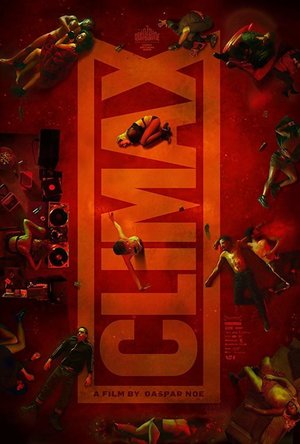

If you’re going to see this film, it likely won’t be a huge surprise to you. Those that will buy a ticket already know who Gaspar Noé is and what he’s all about. Films like Irreversible and Enter the Void have defined him as an artist of scandal, evil and the extreme. Climax follows directly in the footsteps of those films, but at this point it does leave us wondering if there’s any room for growth in this writer/director or if we’ll just continue to get more of the same until we’re sufficiently numb to his offerings.
The setting for Noé’s latest tour of human horrors is the final rehearsal of a French dance troupe set to tour internationally. The film begins with the final scene of the movie and the ending credits. Then, just as your confusion has built to appropriate levels, things actually begin with videotaped interviews of all 22 members in an attempt to give you some semblance of character introduction. Shown on an older TV, the screen is surrounded by books and plays focused on ultra-negative philosophical views and subjects such as schizophrenia and suicide. So, despite the rather upbeat and optimistic responses of the prospective dancers, the tone is already being set for the madness that is about to commence.
From there we are taken to the big dance number. A ten-minute single shot involving the entire cast choreographed to 90’s EDM music. While this scene felt a little bit long, it did nearly as much to introduce the characters as the audition tapes shown earlier. Each dancer has a unique style and flair that executes a certain character development. Once the dance is complete it feels like the movie finally begins and the cast starts their post-rehearsal party. The soiree involves dancing (of course), drinking (homemade sangria) and some minor cocaine use. But it mostly consists of quick shots between different cast members taking part in some intergroup gossip. We are treated to one more (non-choreographed) dance scene with each individual showing their talents in a circle of their comrades, then we break again for more conversation. As the party continues on everyone starts to feel a little bit funny. They quickly deduce that the sangria has been spiked with LSD, but cannot determine who drugged them.
And this is where the hour-long journey into hell embarks from. The realization that they have been drugged seems to worry them very little, but does instantly turn them all against each other. The effects of the LSD ramp up rather quickly and as the cast members descend into madness the audience is treated to a myriad of trauma and depravity including: rape, incest, self-mutilation, child electrocution and an attempted abortion via a swift kick to the stomach. None of this should be any surprise to someone familiar with Noé’s work. But if this is your first experience with his particular brand of filmmaking, then be prepared to leave no perverted stone unturned.
One of the most impressive things about this film is how little preparation actually went into it. The entire film was shot in 15 days and edited to completion in only 3 months after that in order to meet the Cannes festival deadline. In addition, it was shot with a mere 5 pages of script. The majority of the film consists of both dancing and psychotic undulations inspired by web videos of people high on crack, ecstasy and acid which were hand-selected by Noé. So, despite the assumed need for structure that comes with extended tracking shots such as these, the whole movie is (surprisingly) mostly ad-libbed. Only the opening dance scene is choreographed with all of the remaining ones being the result of the how the dancers chose to express themselves through dance.
In the end you’ll be left wondering if all of the shock and awe that’s been served to you actually meant something, or if it was simply sensory overload for the sake of itself. And that’s where the movie really falls short. If Noé had meant for any sort of deeper meaning in this film, it was ultimately lost to extreme subtlety. I did my best to find the clever allegory here (French history and culture, biblical stories, etc.) and I admittedly fell short. “Birth is a unique opportunity. Life is an impossible collective. Death is an extraordinary experience,” read three title cards which flash throughout the journey of Climax. Although these sayings are poetic and beautiful, they seem to have little or loose application to the actual storyline.
The strongest feelings in this film are not evoked from any sort of meaning or fable-style lesson. They come from the distress and disgust brought about by the actions of the characters and, more so, the beautifully executed cinematography. Every filming technique meant to cause discomfort is present here including: long tracking shots, inverted imagery, black screen with nonlinear sounds and subliminal images. The application and combination of all of these effects means that much credit for this film should most likely go to Noé’s DP, Benoit Debie.
Fundamentally, the judgement for a Gaspar Noé film exists on a different scale than any other film. And while that concept can be new and exciting when the first shocking film debuts, you quickly realize that subsequent ones have to continue to push the boundaries that were originally broken. Otherwise you run the risk of becoming stale. We may have gotten to that point now with Noé. Climax brings very little new shock to the table for a director who has developed his reputation as a purveyor of wickedness. Those who attend this movie will be looking for him to push their horror to new levels, but will likely end up unfulfilled. Although the lack of a new frontier doesn’t remove all of the value for the film, Noé has made implicit promises through his other work which he has failed to deliver upon with Climax.
The setting for Noé’s latest tour of human horrors is the final rehearsal of a French dance troupe set to tour internationally. The film begins with the final scene of the movie and the ending credits. Then, just as your confusion has built to appropriate levels, things actually begin with videotaped interviews of all 22 members in an attempt to give you some semblance of character introduction. Shown on an older TV, the screen is surrounded by books and plays focused on ultra-negative philosophical views and subjects such as schizophrenia and suicide. So, despite the rather upbeat and optimistic responses of the prospective dancers, the tone is already being set for the madness that is about to commence.
From there we are taken to the big dance number. A ten-minute single shot involving the entire cast choreographed to 90’s EDM music. While this scene felt a little bit long, it did nearly as much to introduce the characters as the audition tapes shown earlier. Each dancer has a unique style and flair that executes a certain character development. Once the dance is complete it feels like the movie finally begins and the cast starts their post-rehearsal party. The soiree involves dancing (of course), drinking (homemade sangria) and some minor cocaine use. But it mostly consists of quick shots between different cast members taking part in some intergroup gossip. We are treated to one more (non-choreographed) dance scene with each individual showing their talents in a circle of their comrades, then we break again for more conversation. As the party continues on everyone starts to feel a little bit funny. They quickly deduce that the sangria has been spiked with LSD, but cannot determine who drugged them.
And this is where the hour-long journey into hell embarks from. The realization that they have been drugged seems to worry them very little, but does instantly turn them all against each other. The effects of the LSD ramp up rather quickly and as the cast members descend into madness the audience is treated to a myriad of trauma and depravity including: rape, incest, self-mutilation, child electrocution and an attempted abortion via a swift kick to the stomach. None of this should be any surprise to someone familiar with Noé’s work. But if this is your first experience with his particular brand of filmmaking, then be prepared to leave no perverted stone unturned.
One of the most impressive things about this film is how little preparation actually went into it. The entire film was shot in 15 days and edited to completion in only 3 months after that in order to meet the Cannes festival deadline. In addition, it was shot with a mere 5 pages of script. The majority of the film consists of both dancing and psychotic undulations inspired by web videos of people high on crack, ecstasy and acid which were hand-selected by Noé. So, despite the assumed need for structure that comes with extended tracking shots such as these, the whole movie is (surprisingly) mostly ad-libbed. Only the opening dance scene is choreographed with all of the remaining ones being the result of the how the dancers chose to express themselves through dance.
In the end you’ll be left wondering if all of the shock and awe that’s been served to you actually meant something, or if it was simply sensory overload for the sake of itself. And that’s where the movie really falls short. If Noé had meant for any sort of deeper meaning in this film, it was ultimately lost to extreme subtlety. I did my best to find the clever allegory here (French history and culture, biblical stories, etc.) and I admittedly fell short. “Birth is a unique opportunity. Life is an impossible collective. Death is an extraordinary experience,” read three title cards which flash throughout the journey of Climax. Although these sayings are poetic and beautiful, they seem to have little or loose application to the actual storyline.
The strongest feelings in this film are not evoked from any sort of meaning or fable-style lesson. They come from the distress and disgust brought about by the actions of the characters and, more so, the beautifully executed cinematography. Every filming technique meant to cause discomfort is present here including: long tracking shots, inverted imagery, black screen with nonlinear sounds and subliminal images. The application and combination of all of these effects means that much credit for this film should most likely go to Noé’s DP, Benoit Debie.
Fundamentally, the judgement for a Gaspar Noé film exists on a different scale than any other film. And while that concept can be new and exciting when the first shocking film debuts, you quickly realize that subsequent ones have to continue to push the boundaries that were originally broken. Otherwise you run the risk of becoming stale. We may have gotten to that point now with Noé. Climax brings very little new shock to the table for a director who has developed his reputation as a purveyor of wickedness. Those who attend this movie will be looking for him to push their horror to new levels, but will likely end up unfulfilled. Although the lack of a new frontier doesn’t remove all of the value for the film, Noé has made implicit promises through his other work which he has failed to deliver upon with Climax.

A Bibliophagist (113 KP) rated Space Opera in Books
Jan 25, 2020 (Updated Jan 25, 2020)

Fun writing (2 more)
Creative
Witty
Overwritten (3 more)
Lacking plot
Disjointed and distracted
Boring
Technicolor Encyclopedia entry
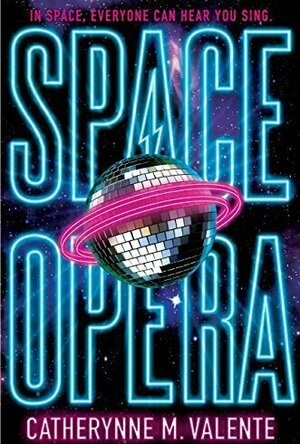
Space Opera seems to be a book, that based on other reviews, you either love or hate. The love reviewers can't seem to tell me why they love it, most attempting to replicate the style of the author and relying on a menagerie of adjectives to express themselves. "A glitter punk, Eurovision romp!" "Technicolor whirlwind!" but not actually saying WHY they liked it, or just saying "well you didn't get the humor". The ones who disliked it are pretty clear, and as I struggled with this book I found I agreed with their complaints. However, I have to thank the sheer number of DNFs from the disliked group for causing me to, ironically, finish it. I hate DNFing books, to begin with, but when I saw just how many bad reviews didn't make it through, it felt as bad as the good reviews not actually reviewing anything. So I powered through, and honestly, it was worth finishing. The author really got back on track and it was a great ending.
Valente has in fact given us a Eurovision, glitter punk, electric baby with Douglas Adams, her writing fantastical and humorous, her characters vapid but in a washed-out musician kind of way. She really thought about this book, creating droves of aliens and probably destroying a number of thesauri to bring them to life. We follow Decibel Jones of the "oh you haven't heard of it, well we used to be a thing" Decibel Jones and the Absolute Zeros. A washed-up, no longer active glitter punk band who is an amalgam of every band you probably are thinking of when trying to grasp what that description means.
The book opens with a wonderfully witty description of how there is in fact other life out there in the universe, life is easy to come by, they've just been off doing a galactic war and while they were gone we kind of popped up. Life is stupid. This part is the best part of the book. The humor is on point, the prose magnificant. She is spot on and very pointed in her argument for why war happens. It's people vs meat, and how does one determine something isn't meat, but in fact sentient? Well, no one really figured that out, hence the galactic war, but NOW post-war they think they've figured it out. Intergalactic Music competition. Makes sense, only something sentient could create music right?
Well, this year is a special year because Earth is invited, we've been deemed "may be sentient", but questionable enough that they'd rather not let us just hang out and become annoying someday. So we have to present a band and performance for consideration. We just have to not place last. If we don't place last, we're part of the club and we'll be a-ok. If we place last, we'll be destroyed, because they already think we're annoying and that will mean we're meat. People vs meat remember?
So, one day everyone on the planet earth, everyone, awake or sleeping is visited by the blue birdlike projection of our assigned guides, the Esca, and alien species that are new to the whole being accepted as a sentient thing, and will guide us through the competition. Which it is now telling us about, Suprise! They've chosen a list of musicians they think will do well, however it's outdated and only one band is really able to do it, the has-beens, who are they, Decibel Jones and the Absolute Zeros. Time was rough on our glam-punk friends as it tends to be on musicians, they lost the third member about a decade ago, the two remaining no longer talk. Decibel is a trainwreck, and Oort St Ultraviolet is now just a dad who very much wants to be a regular dude. But now they're being whisked off into space to sing for the world's salvation.
Sounds pretty fun right? This plus Douglas Adams type prose and humor? A real knock out. Unfortunately, that story I just described takes up... maybe a quarter of the book, MAYBE. You can pull the main story out and put it into a book that might be too small to be a novella. Because of this, the backstory, development, and exploration of these characters are slim to nothing. There is some mind you, but very little. It isn't until the 180pg mark or so that Valente actually decides to focus on the plot, giving very little time to do the entire Grand Prix, the actual competition takes up a page. A 288-page book about a singing competition and only 1-2 pages is actually the singing competition. Tack on another 10 maybe for the weird cocktail death party right before, that didn't have enough attempted death to make any real point of it, plus maybe another 5-10 scattered throughout the book on the back story and leading up to the story, and we've got MAYBE 25 pages of the actual plot. My math is wrong, I know, but it sure FEELS like this.
So, in a 288-page book, with 25 pages being the actual story, what are the other 263 pages? It was the author being somewhat... I don't mean to sound mean, but full of herself? She tried WAY too hard on this style she was going for. It felt like an "oh, you liked that opening chapter, didn't you? You totally read it out loud to your boyfriend, well here let me give it to you again, and again, and ... again". This book suffers from a severe case of needing to be edited. Of someone saying "that's enough now dear, but what about the story". Every few pages of the backstory of the plot we got were met with full chapters, sometimes multiple of Valente describing yet another alien species she's created, in yet another chain of witty simile and metaphor. To the point where sometimes I no longer knew what was happening, they were all interchangeable, which alien are we talking about now? It went on and on and on, and I never knew how such humorous writing could be just so soul suckingly boring. When she ran out of aliens it was describing previous grand prix's and how the aliens sang. In the exact same, formulaic, witty simile, witty simile, witty simile. Don't get me wrong, there were some absolute gems in here. Some that made me laugh out loud. But it's all about the ratio. I would trade in a heartbeat the ratio in this book. 263 pages of plot, and 25 pages of aliens described in witty simile. It took everything in my power after the third alien chapter to not skim. But she fit so much into a sentence that I was scared somewhere hiding would be a plot point (spoiler alert, there wasn't, skim away).
Then around the 180 page mark, a flip was switched, it was almost as if she went "crap, a story!" the adjective use was slimmed down dramatically and we actually got more than one chapter in a row with a plot point. But at this point, it was too late, the end of the book was hurdling at us and very little had happened and the book pretty much fizzled out with an "oh yeah, the Grand Prix happened". Mind you, the finale was very heartwarming and I liked it a lot. I just wish I hadn't had to read a full chapter about hairbrush interspecies sex to get there, and instead had more of it. But ironically, the hairbrush sex had more plot advancement that the majority of the book.
The ending did, however, for one moment, make me forget that I had just read an encyclopedia of descriptors and was happy for a few minutes. So good on her for that. That proves to me that she can write more than glittery descriptions, which then made me sad I didn't have more of that writing. With just a spattering of the gold of her opening chapters. I am glad I finished the book, the story, what little there was, was worth the read. However, I have no desire to read any other of Valente's writing now, and if there was a sequel, I just don't think I have it in me to read another 263 pages of description. Cool idea, good ability, just terribly executed. She could easily have released a separate book, expanding on a handful of species she established in the book, like an alien compendium, and I would have read it, and laughed, and been okay because I went into it expecting it. But I went into this wanting a story, not a neon throwup encyclopedia of just how "oh so creative" Valente is. That came off harsh, I know, but they blew past the fine line of interesting and well into the self-serving, look what I can do, territory. What suffered for it wasn't just a large number of DNFs, and my sanity for a few days, but an actually interesting, fun, Eurovision, glitter punk, heartwarming story about loss, life, how stupid it is, how beautiful it is, and why we should fight for it. It's in there, hiding beneath the layers and layers of word vomit. I want that story. Please release a second edition that is just that, the opening, and say... 3-5 of your favorite aliens Valente, I promise I'll give it another try if you do.
Valente has in fact given us a Eurovision, glitter punk, electric baby with Douglas Adams, her writing fantastical and humorous, her characters vapid but in a washed-out musician kind of way. She really thought about this book, creating droves of aliens and probably destroying a number of thesauri to bring them to life. We follow Decibel Jones of the "oh you haven't heard of it, well we used to be a thing" Decibel Jones and the Absolute Zeros. A washed-up, no longer active glitter punk band who is an amalgam of every band you probably are thinking of when trying to grasp what that description means.
The book opens with a wonderfully witty description of how there is in fact other life out there in the universe, life is easy to come by, they've just been off doing a galactic war and while they were gone we kind of popped up. Life is stupid. This part is the best part of the book. The humor is on point, the prose magnificant. She is spot on and very pointed in her argument for why war happens. It's people vs meat, and how does one determine something isn't meat, but in fact sentient? Well, no one really figured that out, hence the galactic war, but NOW post-war they think they've figured it out. Intergalactic Music competition. Makes sense, only something sentient could create music right?
Well, this year is a special year because Earth is invited, we've been deemed "may be sentient", but questionable enough that they'd rather not let us just hang out and become annoying someday. So we have to present a band and performance for consideration. We just have to not place last. If we don't place last, we're part of the club and we'll be a-ok. If we place last, we'll be destroyed, because they already think we're annoying and that will mean we're meat. People vs meat remember?
So, one day everyone on the planet earth, everyone, awake or sleeping is visited by the blue birdlike projection of our assigned guides, the Esca, and alien species that are new to the whole being accepted as a sentient thing, and will guide us through the competition. Which it is now telling us about, Suprise! They've chosen a list of musicians they think will do well, however it's outdated and only one band is really able to do it, the has-beens, who are they, Decibel Jones and the Absolute Zeros. Time was rough on our glam-punk friends as it tends to be on musicians, they lost the third member about a decade ago, the two remaining no longer talk. Decibel is a trainwreck, and Oort St Ultraviolet is now just a dad who very much wants to be a regular dude. But now they're being whisked off into space to sing for the world's salvation.
Sounds pretty fun right? This plus Douglas Adams type prose and humor? A real knock out. Unfortunately, that story I just described takes up... maybe a quarter of the book, MAYBE. You can pull the main story out and put it into a book that might be too small to be a novella. Because of this, the backstory, development, and exploration of these characters are slim to nothing. There is some mind you, but very little. It isn't until the 180pg mark or so that Valente actually decides to focus on the plot, giving very little time to do the entire Grand Prix, the actual competition takes up a page. A 288-page book about a singing competition and only 1-2 pages is actually the singing competition. Tack on another 10 maybe for the weird cocktail death party right before, that didn't have enough attempted death to make any real point of it, plus maybe another 5-10 scattered throughout the book on the back story and leading up to the story, and we've got MAYBE 25 pages of the actual plot. My math is wrong, I know, but it sure FEELS like this.
So, in a 288-page book, with 25 pages being the actual story, what are the other 263 pages? It was the author being somewhat... I don't mean to sound mean, but full of herself? She tried WAY too hard on this style she was going for. It felt like an "oh, you liked that opening chapter, didn't you? You totally read it out loud to your boyfriend, well here let me give it to you again, and again, and ... again". This book suffers from a severe case of needing to be edited. Of someone saying "that's enough now dear, but what about the story". Every few pages of the backstory of the plot we got were met with full chapters, sometimes multiple of Valente describing yet another alien species she's created, in yet another chain of witty simile and metaphor. To the point where sometimes I no longer knew what was happening, they were all interchangeable, which alien are we talking about now? It went on and on and on, and I never knew how such humorous writing could be just so soul suckingly boring. When she ran out of aliens it was describing previous grand prix's and how the aliens sang. In the exact same, formulaic, witty simile, witty simile, witty simile. Don't get me wrong, there were some absolute gems in here. Some that made me laugh out loud. But it's all about the ratio. I would trade in a heartbeat the ratio in this book. 263 pages of plot, and 25 pages of aliens described in witty simile. It took everything in my power after the third alien chapter to not skim. But she fit so much into a sentence that I was scared somewhere hiding would be a plot point (spoiler alert, there wasn't, skim away).
Then around the 180 page mark, a flip was switched, it was almost as if she went "crap, a story!" the adjective use was slimmed down dramatically and we actually got more than one chapter in a row with a plot point. But at this point, it was too late, the end of the book was hurdling at us and very little had happened and the book pretty much fizzled out with an "oh yeah, the Grand Prix happened". Mind you, the finale was very heartwarming and I liked it a lot. I just wish I hadn't had to read a full chapter about hairbrush interspecies sex to get there, and instead had more of it. But ironically, the hairbrush sex had more plot advancement that the majority of the book.
The ending did, however, for one moment, make me forget that I had just read an encyclopedia of descriptors and was happy for a few minutes. So good on her for that. That proves to me that she can write more than glittery descriptions, which then made me sad I didn't have more of that writing. With just a spattering of the gold of her opening chapters. I am glad I finished the book, the story, what little there was, was worth the read. However, I have no desire to read any other of Valente's writing now, and if there was a sequel, I just don't think I have it in me to read another 263 pages of description. Cool idea, good ability, just terribly executed. She could easily have released a separate book, expanding on a handful of species she established in the book, like an alien compendium, and I would have read it, and laughed, and been okay because I went into it expecting it. But I went into this wanting a story, not a neon throwup encyclopedia of just how "oh so creative" Valente is. That came off harsh, I know, but they blew past the fine line of interesting and well into the self-serving, look what I can do, territory. What suffered for it wasn't just a large number of DNFs, and my sanity for a few days, but an actually interesting, fun, Eurovision, glitter punk, heartwarming story about loss, life, how stupid it is, how beautiful it is, and why we should fight for it. It's in there, hiding beneath the layers and layers of word vomit. I want that story. Please release a second edition that is just that, the opening, and say... 3-5 of your favorite aliens Valente, I promise I'll give it another try if you do.