
Search
Search results
Hazel (1853 KP) rated Perfect Lies (Mind Games, #2) in Books
Dec 17, 2018

<i>This eBook was provided by the publisher via NetGalley in exchange for an honest review</i>
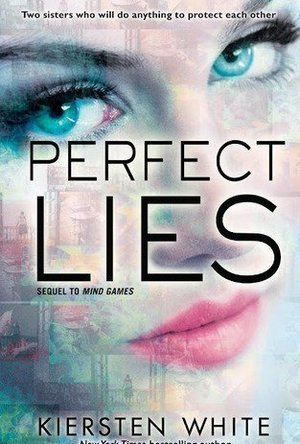
Not having had the opportunity to read the previous book it was sometimes difficult to understand what was going on, thus it is also tricky to give a completely honest review. <i>Perfect Lies</i> is the sequel to Kiersten White’s <i>Sister Assassin</i>(UK version, or <i>Mind Games</i>, US version) about two sisters with extraordinary gifts.
The story is told from the points of view of both sisters but from different time periods. Everything is leading up to a big event, but what that is we are not told. Fia is closer in time to it with her first chapter beginning “five days before”, whereas Annie is “four months before” but jumping through time quickly so that both her and Fia’s narratives meet up at the end.
Those who have already read the first book will know that Annie, although blind, has visions of the future. <i>Perfect Lies</i> begins with Annie pretending to be dead. Fia has “killed” her in order to keep her safe. Now the girls are separated and working with different people, people who seem to be enemies of each other, but whose aim is supposedly the same: destroy Keane Enterprises. Annie is what is known as a Seer and there are many girls with similar abilities as well as Feelers and Readers. Keane Enterprises has been seeking out these girls and educating them in a special school (Annie and Fia attended in the first novel) but then begin to take advantage of their powers – and many end up dead.
As time goes on it becomes less clear who the trustworthy people are and what their true intentions are. Fia thought she was protecting Annie by convincing people she were dead but now Annie believes that it is Fia that needs saving. Will the sisters ever be safe? As days turn to hours it appears that a happy ending is less and less likely…
Obviously not reading the first book meant that it took a while to work out who was who and for a long time felt, to quote Annie, “not up to speed on what’s going on, and I’d really like to be clued in.” The shifts in perspectives, especially time periods, were also confusing. When Annie had a vision involving Fia’s future it was quite often Fia’s present in the way this book was written.
It was interesting to read a narrative from a blind person’s point of view. For understandable reasons there were no visual descriptions (except for the visions) and so White relied on references to sounds, smells and feelings in order to set the seen. Fia’s chapters were also written in a noteworthy way. Presumably past experiences have left Fia slightly unhinged and a lot of her perspective involved her talking to herself in her head. White often used short, snappy sentences giving an impression of Fia’s flighty, unbalanced thoughts.
After getting past the who’s who and what’s what <i>Perfect Lies</i> became really interesting. It is a rather unique concept but anyone thinking about reading these books should definitely begin with <i>Sister Assassin/Mind Games</i> in order to get all the background information to save any confusion at the beginning of the sequel.
Not having had the opportunity to read the previous book it was sometimes difficult to understand what was going on, thus it is also tricky to give a completely honest review. <i>Perfect Lies</i> is the sequel to Kiersten White’s <i>Sister Assassin</i>(UK version, or <i>Mind Games</i>, US version) about two sisters with extraordinary gifts.
The story is told from the points of view of both sisters but from different time periods. Everything is leading up to a big event, but what that is we are not told. Fia is closer in time to it with her first chapter beginning “five days before”, whereas Annie is “four months before” but jumping through time quickly so that both her and Fia’s narratives meet up at the end.
Those who have already read the first book will know that Annie, although blind, has visions of the future. <i>Perfect Lies</i> begins with Annie pretending to be dead. Fia has “killed” her in order to keep her safe. Now the girls are separated and working with different people, people who seem to be enemies of each other, but whose aim is supposedly the same: destroy Keane Enterprises. Annie is what is known as a Seer and there are many girls with similar abilities as well as Feelers and Readers. Keane Enterprises has been seeking out these girls and educating them in a special school (Annie and Fia attended in the first novel) but then begin to take advantage of their powers – and many end up dead.
As time goes on it becomes less clear who the trustworthy people are and what their true intentions are. Fia thought she was protecting Annie by convincing people she were dead but now Annie believes that it is Fia that needs saving. Will the sisters ever be safe? As days turn to hours it appears that a happy ending is less and less likely…
Obviously not reading the first book meant that it took a while to work out who was who and for a long time felt, to quote Annie, “not up to speed on what’s going on, and I’d really like to be clued in.” The shifts in perspectives, especially time periods, were also confusing. When Annie had a vision involving Fia’s future it was quite often Fia’s present in the way this book was written.
It was interesting to read a narrative from a blind person’s point of view. For understandable reasons there were no visual descriptions (except for the visions) and so White relied on references to sounds, smells and feelings in order to set the seen. Fia’s chapters were also written in a noteworthy way. Presumably past experiences have left Fia slightly unhinged and a lot of her perspective involved her talking to herself in her head. White often used short, snappy sentences giving an impression of Fia’s flighty, unbalanced thoughts.
After getting past the who’s who and what’s what <i>Perfect Lies</i> became really interesting. It is a rather unique concept but anyone thinking about reading these books should definitely begin with <i>Sister Assassin/Mind Games</i> in order to get all the background information to save any confusion at the beginning of the sequel.

Kristy H (1252 KP) rated The Turn of The Key in Books
Aug 16, 2019
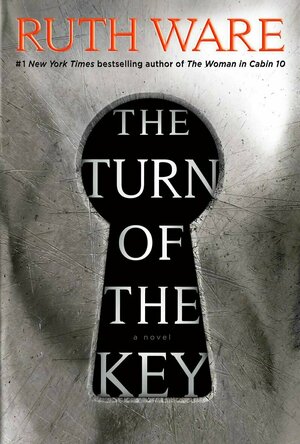


Rowan Caine feels like her life is at a bit of a dead end when she finds the advertisement: it's for a live-in nanny, and the pay is amazing. Rowan has a background in nannying and working with children, so she submits her CV and crosses her fingers. Still, she can't believe her luck when she interviews at the gorgeous Heatherbrae House in Scotland. It's isolated, but beautiful. And then she gets the job caring for four seemingly lovely children: Rhiannon, 14; Maddie, 8; Ellie, 5; and Petra, eighteen months. But the position isn't all it cracked up to be. The children are nothing like the sweet kids they appeared when she interviewed. The entire house is a smart home, controlled by a home management app, and it seems to go haywire constantly. The parents leave nearly the moment she arrives. And it really seems like the rumors of ghosts and a haunted house that drove away the past four nannies are true. We know Rowan is writing about all of this from prison--jailed for the death of one of the children. She claims she's innocent. What really happened at Heatherbrae House?
This was a very intriguing, eerie thriller, made all the more creepy by reading it alone in a cabin in the woods with no one beside me but my dog. Perhaps choosing this read for my short getaway was a mistake? Ha, I actually liked getting a little spooked by this Gothic mystery. It was an enjoyable slow-burning read that kept me hooked.
As mentioned, the entire book is told in letter form--albeit mostly one long letter--as Rowan sits in Scottish prison, trying to convince a Mr. Wrexham to take up her case. She's innocent, she says, and here is her story. And quite a story it is. From the moment Rowan arrives at the Elincourt's beautiful home, Heatherbrae House, it seems like things go wrong--she hasn't memorized the 300-page "manual" required to watch the girls, the "smart" house is out of control, and the children are absolute terrors.
"I guess it comes down to this in the end. I am the nanny in the Elincourt case, Mr. Wrexham. And I didn't kill that child."
But the more we hear from Rowan, we learn she may not be completely guilt-free in all of this, as perhaps there is more to her story than meets the eye. It all unfurls easily in Ware's deft hands. It may take a while to get to some of the major twists and turns, but there's plenty of little bits of creepiness along the way. Rowan is sure she's being haunted, and it's quite fun to try to figure out what exactly is happening. Ghosts? The smart house gone awry? While Rowan isn't always the easiest character to root for, I still sympathized with her (I wouldn't want to be left with four combative children) and yet I found myself getting attached to the kids anyway (clearly they didn't choose to be left behind by their rich and distracted parents).
"I need you to understand why I did what I did."
Overall, this one is a fun, eerie read. I enjoyed the combination of creepy Gothic plus smart home craziness. I also couldn't always foresee what was coming up next, which I appreciated. It's engaging and surprising, despite our limited cast of characters. 4 stars.
This was a very intriguing, eerie thriller, made all the more creepy by reading it alone in a cabin in the woods with no one beside me but my dog. Perhaps choosing this read for my short getaway was a mistake? Ha, I actually liked getting a little spooked by this Gothic mystery. It was an enjoyable slow-burning read that kept me hooked.
As mentioned, the entire book is told in letter form--albeit mostly one long letter--as Rowan sits in Scottish prison, trying to convince a Mr. Wrexham to take up her case. She's innocent, she says, and here is her story. And quite a story it is. From the moment Rowan arrives at the Elincourt's beautiful home, Heatherbrae House, it seems like things go wrong--she hasn't memorized the 300-page "manual" required to watch the girls, the "smart" house is out of control, and the children are absolute terrors.
"I guess it comes down to this in the end. I am the nanny in the Elincourt case, Mr. Wrexham. And I didn't kill that child."
But the more we hear from Rowan, we learn she may not be completely guilt-free in all of this, as perhaps there is more to her story than meets the eye. It all unfurls easily in Ware's deft hands. It may take a while to get to some of the major twists and turns, but there's plenty of little bits of creepiness along the way. Rowan is sure she's being haunted, and it's quite fun to try to figure out what exactly is happening. Ghosts? The smart house gone awry? While Rowan isn't always the easiest character to root for, I still sympathized with her (I wouldn't want to be left with four combative children) and yet I found myself getting attached to the kids anyway (clearly they didn't choose to be left behind by their rich and distracted parents).
"I need you to understand why I did what I did."
Overall, this one is a fun, eerie read. I enjoyed the combination of creepy Gothic plus smart home craziness. I also couldn't always foresee what was coming up next, which I appreciated. It's engaging and surprising, despite our limited cast of characters. 4 stars.

Heather Cranmer (2721 KP) rated Alee: an Every Girl novel in Books
Dec 2, 2019
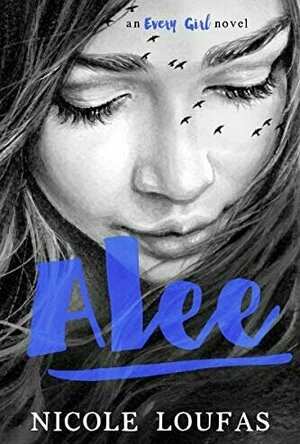

I love realistic fiction books that are a bit dark. When I first read the synopsis of Alee by Nicole Loufas, I was instantly hooked. I ended up devouring this novel in a short time!
The book starts out with Alee as a 17 year old high school senior. After sleeping with her boyfriend's best friend, she dumps her boyfriend for being too selfish. After being slut shamed at school, Alee finds comfort in her best friend Bryn. However, while at swim practice, Bryn is shot and killed. Around that time, Alee reconnects with her father that left her and her mother when she was 5, but even he isn't really there being as he's a homeless drug addict. With everything going wrong, Alee finds solace in Laine, her now ex-boyfriend's best friend - the one she slept with. The book talks briefly about Alee's life until the age of 21 where it really focuses on what is going on with Alee. When a major life even happens, Alee is thrown into a downward spiral that she may not ever escape.
I thought the plot for Alee was written beautifully. It's a story that most people can relate to in some way. I was sucked into the plot, and I felt like I was a ghost watching Alee's life unfold from the age of 17 to 21. There are a few minor plot twists which are interesting, but there are no cliff hangers. All of my questions were answered by the end of the book. The pacing for Alee is mostly perfect. There are a few, very rare, times where the pacing slows down, but it instantly picks right back up. I was never bored while reading Alee.
The characters in Alee felt very realistic and fleshed out. In fact, I felt like I knew all of these characters at one point in my life. Alee is such a strong character. She has had so much bad happen to her. It's as if she can't catch a break. It was interesting to follow Alee's thoughts on everything that would happen to her. She tried to stay positive even when her world was crashing down. I absolutely loved Alee, and I kept wanting something positive to happen to her. Laine seemed like such a great guy, and it was obvious how much Alee meant to him (and him to Alee). I loved reading about the love between Laine and Alee. I liked how Loufas made them feel like a real couple by giving them problems as well and not some Hollywood romance. I never really liked Benny. He was well written, but I always felt like I couldn't trust him. Throughout the book, I just kept wishing that he'd stay away from Alee!
Alee is a dark read, and it has quite a few strong triggers. These include gun violence, death, murder, suicide, rape, drug use, alcoholism, miscarriage, profanity, mentions of underage sex, and sexual situations (although not too graphic).
All in all, Alee was a very interesting and emotional read. If you are a fan of sunshine and rainbow books, Alee is not for you. However, if you're after a gritty, beautifully written realistic fiction novel that discuses tough issues, then Alee is the book you've been waiting for. I would definitely recommend Alee by Nicole Loufas to those aged 17+. Alee is one of those books that will keep you thinking about everything that happened in it long after you've finished reading it.
The book starts out with Alee as a 17 year old high school senior. After sleeping with her boyfriend's best friend, she dumps her boyfriend for being too selfish. After being slut shamed at school, Alee finds comfort in her best friend Bryn. However, while at swim practice, Bryn is shot and killed. Around that time, Alee reconnects with her father that left her and her mother when she was 5, but even he isn't really there being as he's a homeless drug addict. With everything going wrong, Alee finds solace in Laine, her now ex-boyfriend's best friend - the one she slept with. The book talks briefly about Alee's life until the age of 21 where it really focuses on what is going on with Alee. When a major life even happens, Alee is thrown into a downward spiral that she may not ever escape.
I thought the plot for Alee was written beautifully. It's a story that most people can relate to in some way. I was sucked into the plot, and I felt like I was a ghost watching Alee's life unfold from the age of 17 to 21. There are a few minor plot twists which are interesting, but there are no cliff hangers. All of my questions were answered by the end of the book. The pacing for Alee is mostly perfect. There are a few, very rare, times where the pacing slows down, but it instantly picks right back up. I was never bored while reading Alee.
The characters in Alee felt very realistic and fleshed out. In fact, I felt like I knew all of these characters at one point in my life. Alee is such a strong character. She has had so much bad happen to her. It's as if she can't catch a break. It was interesting to follow Alee's thoughts on everything that would happen to her. She tried to stay positive even when her world was crashing down. I absolutely loved Alee, and I kept wanting something positive to happen to her. Laine seemed like such a great guy, and it was obvious how much Alee meant to him (and him to Alee). I loved reading about the love between Laine and Alee. I liked how Loufas made them feel like a real couple by giving them problems as well and not some Hollywood romance. I never really liked Benny. He was well written, but I always felt like I couldn't trust him. Throughout the book, I just kept wishing that he'd stay away from Alee!
Alee is a dark read, and it has quite a few strong triggers. These include gun violence, death, murder, suicide, rape, drug use, alcoholism, miscarriage, profanity, mentions of underage sex, and sexual situations (although not too graphic).
All in all, Alee was a very interesting and emotional read. If you are a fan of sunshine and rainbow books, Alee is not for you. However, if you're after a gritty, beautifully written realistic fiction novel that discuses tough issues, then Alee is the book you've been waiting for. I would definitely recommend Alee by Nicole Loufas to those aged 17+. Alee is one of those books that will keep you thinking about everything that happened in it long after you've finished reading it.

Night Reader Reviews (683 KP) rated The Suicide Tree in Books
Jan 9, 2020
Honest Review for Free Copy of Book
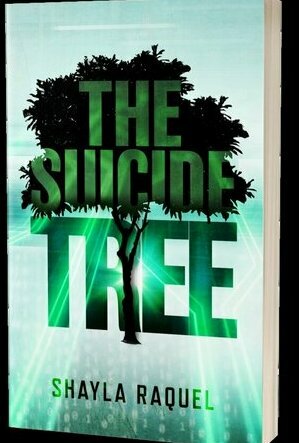
The Suicide Tree by Shayla Raquel was a surprisingly good book. It was not quite what I expected but after reading it I am honestly not sure what I was expecting. Early on it talks about the Suicide Tree being a real tree and I could not help but look it up. What I found is that the Suicide Tree is actually a tree called Cerbera Odollam and is found in Asia and India. I find it interesting Knox uses this tree’s nickname for his tag because of the specific properties this tree has. I will leave it up to the interested reader to look up those properties for themselves. The story was so good that I am afraid to say too much without the risk of spoilers.
Trigger Warning: Although I don’t usually feel like I need to add these to my reviews I feel this may be an exception. The death of Knox’s parents is a tragedy and a large part of the story and is brought up very frequently.
Knox Kevel’s parents died in an explosion three years before the story begins. Knox, being almost a computer genius becomes a hacker known as The Suicide Tree while his parents are still alive. After their death, he works for people on the black market and attracts the attention of the FBI. The FBI gets ahold of him twice and he is facing prison time when Arlo Jenson pops in. Arlo wants Knox to work for him and if Knox agrees Arlo will call in a favor with the DA and have Knox’s charges dropped.
Knox ends up flying to Italy with Arlo, in hopes of finding the person who hurt Arlo as a child. Knox and Arlo stay with Norah, Arlo’s sister, and her daughter Jessa. The four of them team up and travel to many well-known cities in Italy trying to discover the truth. The truth about what? Well, you will just have to read The Suicide Tree to find out for yourself.
What I liked most about this book was the interwoven stories of Knox, Arlo, and the mysterious person who harmed Arlo. It was actually hard to find something that I didn’t really like about this book. After thinking about it I would say that the reasoning behind Arlo’s childhood assault (for lack of a better term) was a bit on the anti-climatic side. I was hoping for something a little more in-depth than what was offered.
In all honesty, I believe just about anyone could read this book. There is little in the lines on inappropriate material in this book. The book is also relatively short and does not require a lot of dedication making it perfect for the occasional reader. I would rate this book 4 out of 5 because the plot line was well thought out and there was very little that I questioned after finishing the book. The story was strong and extremely entertaining. I would recommend it to anyone who wants a quick read.
Trigger Warning: Although I don’t usually feel like I need to add these to my reviews I feel this may be an exception. The death of Knox’s parents is a tragedy and a large part of the story and is brought up very frequently.
Knox Kevel’s parents died in an explosion three years before the story begins. Knox, being almost a computer genius becomes a hacker known as The Suicide Tree while his parents are still alive. After their death, he works for people on the black market and attracts the attention of the FBI. The FBI gets ahold of him twice and he is facing prison time when Arlo Jenson pops in. Arlo wants Knox to work for him and if Knox agrees Arlo will call in a favor with the DA and have Knox’s charges dropped.
Knox ends up flying to Italy with Arlo, in hopes of finding the person who hurt Arlo as a child. Knox and Arlo stay with Norah, Arlo’s sister, and her daughter Jessa. The four of them team up and travel to many well-known cities in Italy trying to discover the truth. The truth about what? Well, you will just have to read The Suicide Tree to find out for yourself.
What I liked most about this book was the interwoven stories of Knox, Arlo, and the mysterious person who harmed Arlo. It was actually hard to find something that I didn’t really like about this book. After thinking about it I would say that the reasoning behind Arlo’s childhood assault (for lack of a better term) was a bit on the anti-climatic side. I was hoping for something a little more in-depth than what was offered.
In all honesty, I believe just about anyone could read this book. There is little in the lines on inappropriate material in this book. The book is also relatively short and does not require a lot of dedication making it perfect for the occasional reader. I would rate this book 4 out of 5 because the plot line was well thought out and there was very little that I questioned after finishing the book. The story was strong and extremely entertaining. I would recommend it to anyone who wants a quick read.
Kristy H (1252 KP) rated George and Lizzie in Books
Oct 29, 2020
This is the seventh book in my #atozchallenge! I'm challenging myself to read a book from my shelves that starts with each letter of the alphabet.
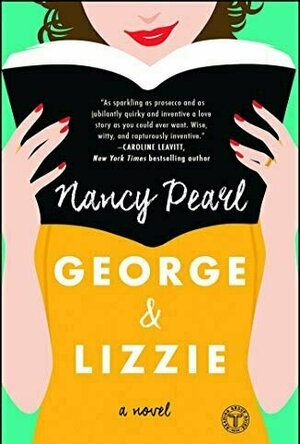
In high school, Lizzie made a choice--one she soon regrets--participating in something called the Great Game. The event alters the course of her life forever, along with a passionate relationship that ends in college. These moments, plus the influence of Lizzie's psychologist parents, who offer her little support as a kid, turn her into a melancholy and unfulfilled adult. Her husband, George, however, comes from a happy childhood with loving parents. He adores his family and they him. He also worships Lizzie, giving the two an unbalanced marriage. Can George and Lizzie survive an union on such unequal ground?
I'll confess that this book was not what I was expecting--I thought it was going to be a cheerful love story and a pick-me-up. It is a love story, though, all the same. George loves Lizzie. Lizzie, though, is lost in a love from the past. I'm not going to lie: Lizzie is a very frustrating character and a hard one for whom to care. She doesn't appreciate George, nor, really, much of her life. Now, she was truly saddled with terrible parents, so you have to grant her that. Her fixation on her past relationship makes you want to shake her, though.
"And because for years and years the voices in her head never let Lizzie forget that the Great Game had been a stupid idea right from the beginning and that she'd been an idiot for participating in it, her past was always there, a living thing. It shaped her present and future."
And of, of course, there is the Great Game--the event from high school which alters Lizzie's future. We can understand why Lizzie is Lizzie, but we can't always forgive her for her Lizzie type ways. Also, please note, there are a lot of football references in this book. A lot. I like football, but I'm not sure everyone who picks up a book like this will feel the same.
The story of George and Lizzie is told in very short vignettes (each with a title) that slowly move forward in time and alternate with Lizzie's past, mainly focusing on the Great Game, which so defined her life. This format takes much getting used to. There is no linear story here, but tiny bits and pieces of narrative from George and Lizzie. I almost abandoned the book when I first started--I couldn't get in the groove (and honestly, it's depressing). When I reluctantly returned to it a few days later, more prepared for the format, I could read it more easily.
In the end, I can't say I enjoyed this story. If I rated it purely on "like" factor, it would probably be a two-star read. Incorporating in Lizzie's life experiences and how a few things slowly grew on me, I'm giving this three stars, but only barely. (Also, I have real issues with how many kids from Lizzie's high school football team went on to the NFL. Maybe it's possible, but it seems insane.) 3 stars, but only eked out when they brought the chains out on the field to measure (too much?).
In high school, Lizzie made a choice--one she soon regrets--participating in something called the Great Game. The event alters the course of her life forever, along with a passionate relationship that ends in college. These moments, plus the influence of Lizzie's psychologist parents, who offer her little support as a kid, turn her into a melancholy and unfulfilled adult. Her husband, George, however, comes from a happy childhood with loving parents. He adores his family and they him. He also worships Lizzie, giving the two an unbalanced marriage. Can George and Lizzie survive an union on such unequal ground?
I'll confess that this book was not what I was expecting--I thought it was going to be a cheerful love story and a pick-me-up. It is a love story, though, all the same. George loves Lizzie. Lizzie, though, is lost in a love from the past. I'm not going to lie: Lizzie is a very frustrating character and a hard one for whom to care. She doesn't appreciate George, nor, really, much of her life. Now, she was truly saddled with terrible parents, so you have to grant her that. Her fixation on her past relationship makes you want to shake her, though.
"And because for years and years the voices in her head never let Lizzie forget that the Great Game had been a stupid idea right from the beginning and that she'd been an idiot for participating in it, her past was always there, a living thing. It shaped her present and future."
And of, of course, there is the Great Game--the event from high school which alters Lizzie's future. We can understand why Lizzie is Lizzie, but we can't always forgive her for her Lizzie type ways. Also, please note, there are a lot of football references in this book. A lot. I like football, but I'm not sure everyone who picks up a book like this will feel the same.
The story of George and Lizzie is told in very short vignettes (each with a title) that slowly move forward in time and alternate with Lizzie's past, mainly focusing on the Great Game, which so defined her life. This format takes much getting used to. There is no linear story here, but tiny bits and pieces of narrative from George and Lizzie. I almost abandoned the book when I first started--I couldn't get in the groove (and honestly, it's depressing). When I reluctantly returned to it a few days later, more prepared for the format, I could read it more easily.
In the end, I can't say I enjoyed this story. If I rated it purely on "like" factor, it would probably be a two-star read. Incorporating in Lizzie's life experiences and how a few things slowly grew on me, I'm giving this three stars, but only barely. (Also, I have real issues with how many kids from Lizzie's high school football team went on to the NFL. Maybe it's possible, but it seems insane.) 3 stars, but only eked out when they brought the chains out on the field to measure (too much?).

BookblogbyCari (345 KP) rated A Short History of the World in Books
Aug 5, 2018
Best known for his classic fiction, HG Wells also wrote a non-fiction book summarising the history of the world, going from the history of the solar system, right up to the date the book was published in 1922.
As I hoped, the book often reads like a novel, with 67 distinct sections, each like a mini story. In order to fit the history of the whole world into one book, by nature the story telling ranges from nice and rapid, to a little too rapid. I found it rather like a catalogue of numerous interesting little nuggets of information. Despite covering events from all over the world, the topics often flow seamlessly from one topic to the next. Due to so many overlapping topics, this history of the world isn't told in a linear purely chronological pattern, but has to go backwards a little, now and again.
At various times throughout, the stories are gripping and Wells successfully brings history to life. I particularly liked the various sections on religious leaders. Appropriately, Wells tackles religion as would any unbiased historian-become storyteller. I also enjoyed the beginning, where Wells paints a crystal clear picture of our solar system and the vast empty space that our dramas are within. His description of our galaxy sounds nothing short of beautiful.
The book was meant to be predominantly factual, but Wells did include a substantial amount of speculation and opinion. This does not distract from the storyline, but adds value in generating the concepts of the time periods.
It covers progress and prosperity as much as carnage and decimation, and provides good explanations of everything it covers. (Although it would benefit from more illustrations). At times it feels detail heavy but also gives the reader a feel for each age - the book is not limited to which country went to war with which country and when, but also examines changes in ways of thinking through the ages. Including the Ancient Greek philosophers, Arabian progress in maths and science, the advent of experimental science, and the development of political and social ideas in Wells’ time.
I was reassured to learn that despite not studying the history of the world in its entirety in school, I was already familiar with much of the book’s content. Having said that, there were also topics where I really felt I was learning something. I read Wells’ opinion on why the Roman Empire fell, and how the industrial revolution was not merely a revolution in machinery, but rather a revolution in how people conducted their everyday lives. There were also some important figures from history described that were never mentioned in my school days, particularly Charlemagne and Roger Bacon.
Towards the end of the book, Wells correctly predicts another war like that of the Great War. However his final message was one of faith and hope in humanity’s progress.
With such a huge scope, Wells must have struggled with deciding what topics to include and what to exclude. I thought he ought to have included a touch more detail on Ancient Egypt, and on the causes of the Great War (World War 1). As a British person myself I would have liked to have seen more on British history.
Likewise, if the book were written now rather than 1922 I began to speculate on what he would and wouldn’t have included. I imagine there would certainly be a section on World War 2, rockets into space, the internet, and 9/11. He would have provided an excellently conducted section on how humans are destroying the planet.
One of the beauties of this book has to be its availability. If you type “short history of the world” into Google, the free PDF of this book takes up much of the first 2 pages of results. If you’re sketchy on world history, this book will fill in the main blanks, and is worth a read if this is your aim, especially if you wish to do so quickly. The fact that it’s split up into so many succinct sections also means that you can pick up and put down the book as often as opportunity allows. It also works well as a reference book, as it does not need to be read from cover to cover in order to look up one particular event or time period.
In summary, this book would be a welcome addition to bookshelf (or ebook library) of the general non-fiction fan or historian.
Find more of my book review on www.bookblogbycari.com
As I hoped, the book often reads like a novel, with 67 distinct sections, each like a mini story. In order to fit the history of the whole world into one book, by nature the story telling ranges from nice and rapid, to a little too rapid. I found it rather like a catalogue of numerous interesting little nuggets of information. Despite covering events from all over the world, the topics often flow seamlessly from one topic to the next. Due to so many overlapping topics, this history of the world isn't told in a linear purely chronological pattern, but has to go backwards a little, now and again.
At various times throughout, the stories are gripping and Wells successfully brings history to life. I particularly liked the various sections on religious leaders. Appropriately, Wells tackles religion as would any unbiased historian-become storyteller. I also enjoyed the beginning, where Wells paints a crystal clear picture of our solar system and the vast empty space that our dramas are within. His description of our galaxy sounds nothing short of beautiful.
The book was meant to be predominantly factual, but Wells did include a substantial amount of speculation and opinion. This does not distract from the storyline, but adds value in generating the concepts of the time periods.
It covers progress and prosperity as much as carnage and decimation, and provides good explanations of everything it covers. (Although it would benefit from more illustrations). At times it feels detail heavy but also gives the reader a feel for each age - the book is not limited to which country went to war with which country and when, but also examines changes in ways of thinking through the ages. Including the Ancient Greek philosophers, Arabian progress in maths and science, the advent of experimental science, and the development of political and social ideas in Wells’ time.
I was reassured to learn that despite not studying the history of the world in its entirety in school, I was already familiar with much of the book’s content. Having said that, there were also topics where I really felt I was learning something. I read Wells’ opinion on why the Roman Empire fell, and how the industrial revolution was not merely a revolution in machinery, but rather a revolution in how people conducted their everyday lives. There were also some important figures from history described that were never mentioned in my school days, particularly Charlemagne and Roger Bacon.
Towards the end of the book, Wells correctly predicts another war like that of the Great War. However his final message was one of faith and hope in humanity’s progress.
With such a huge scope, Wells must have struggled with deciding what topics to include and what to exclude. I thought he ought to have included a touch more detail on Ancient Egypt, and on the causes of the Great War (World War 1). As a British person myself I would have liked to have seen more on British history.
Likewise, if the book were written now rather than 1922 I began to speculate on what he would and wouldn’t have included. I imagine there would certainly be a section on World War 2, rockets into space, the internet, and 9/11. He would have provided an excellently conducted section on how humans are destroying the planet.
One of the beauties of this book has to be its availability. If you type “short history of the world” into Google, the free PDF of this book takes up much of the first 2 pages of results. If you’re sketchy on world history, this book will fill in the main blanks, and is worth a read if this is your aim, especially if you wish to do so quickly. The fact that it’s split up into so many succinct sections also means that you can pick up and put down the book as often as opportunity allows. It also works well as a reference book, as it does not need to be read from cover to cover in order to look up one particular event or time period.
In summary, this book would be a welcome addition to bookshelf (or ebook library) of the general non-fiction fan or historian.
Find more of my book review on www.bookblogbycari.com

Rachel King (13 KP) rated A Short History of Myth in Books
Feb 11, 2019


For such a short book, I developed quite a strong opinion about the text while reading it. I have been curious about Armstrong's writings for a long time, but this is the first attempt I have made at actually reading anything by her. I have always been a fan of ancient mythology, such as Greek and Egyptian, so this seemed like an easy choice.
In seven chapters, Armstrong takes a simplified stroll through history, focusing on the concept of myth and its impact on civilization. All throughout the book, she attempts to support her claim that a person can believe in myths without believing that the myths are actually true, and that the failure of modern society is by not following her specific edict. While this notion strikes me as absurd, I keep reading because, hey, it's a short book.
While I know only bits and pieces about many of the world's religions, I do know both the history and the holy book of my religion, Christianity. It becomes apparent to me early in the text that she is masking her opinions and interpretations of this religion as actual fact, so I can only imagine how she misconstrues other religions.
Her citations were lacking to me, with many claims going unsupported, others only partially supported, such as citation #84 and #30, and some citations simply not even applying to the specified text, such as citation #87. In citation #55, she claims that the Bible contains a Creation myth in which God brings the world into being by killing a sea monster, but one of the four verses she cites make no reference to anything of the sort (Job 3:12), and the other three (Isaiah 27:1, Job 26:13, Psalm 74:14) that do mention a leviathan cannot be interpreted that way when read in context. Isaiah is describing the end of days, while Job merely says that God created the serpent, and the verse in Psalm is within the context of a song about God rescuing the Hebrews from Egyptian slavery -- no relevancy to Creation. She makes the claim that Paul "was not much interested in Jesus's teachings, which he rarely quotes, or in the events of his earthly life." This claim is easily disproved by examining how Paul's words line up with Jesus's in John 5:21 vs. 1 Corinthians 15:22, Matthew 6:25 vs. Philippians 4:6, and many other passages.
While going through the citations, I got the feeling that the author depended on secondary sources for her information without actually studying the original source of her information. The book struck me as highly opinionated, vague, and too general for the topic being addressed. I have no doubt that there are better and more thorough books available on the topic of myth. I do not believe that I will be reading any more of Armstrong's works in the future.
In seven chapters, Armstrong takes a simplified stroll through history, focusing on the concept of myth and its impact on civilization. All throughout the book, she attempts to support her claim that a person can believe in myths without believing that the myths are actually true, and that the failure of modern society is by not following her specific edict. While this notion strikes me as absurd, I keep reading because, hey, it's a short book.
While I know only bits and pieces about many of the world's religions, I do know both the history and the holy book of my religion, Christianity. It becomes apparent to me early in the text that she is masking her opinions and interpretations of this religion as actual fact, so I can only imagine how she misconstrues other religions.
Her citations were lacking to me, with many claims going unsupported, others only partially supported, such as citation #84 and #30, and some citations simply not even applying to the specified text, such as citation #87. In citation #55, she claims that the Bible contains a Creation myth in which God brings the world into being by killing a sea monster, but one of the four verses she cites make no reference to anything of the sort (Job 3:12), and the other three (Isaiah 27:1, Job 26:13, Psalm 74:14) that do mention a leviathan cannot be interpreted that way when read in context. Isaiah is describing the end of days, while Job merely says that God created the serpent, and the verse in Psalm is within the context of a song about God rescuing the Hebrews from Egyptian slavery -- no relevancy to Creation. She makes the claim that Paul "was not much interested in Jesus's teachings, which he rarely quotes, or in the events of his earthly life." This claim is easily disproved by examining how Paul's words line up with Jesus's in John 5:21 vs. 1 Corinthians 15:22, Matthew 6:25 vs. Philippians 4:6, and many other passages.
While going through the citations, I got the feeling that the author depended on secondary sources for her information without actually studying the original source of her information. The book struck me as highly opinionated, vague, and too general for the topic being addressed. I have no doubt that there are better and more thorough books available on the topic of myth. I do not believe that I will be reading any more of Armstrong's works in the future.

Ali A (82 KP) rated How It All Blew Up in Books
Sep 8, 2020
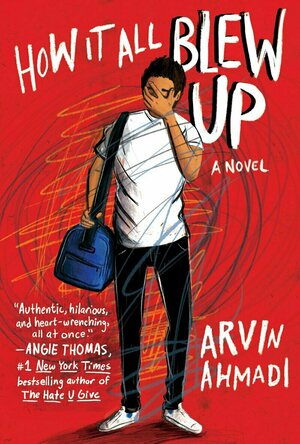

How it All Blew Up is about Amir, a closeted, eighteen-year-old. He always knew it would be hard to come out to his Muslim family, so he hasn't. When some bullies find out and blackmail him, Amir gets scared, skips graduation, and fleas to Rome. He gets taken in by a group of new friends and he spends his summer having late nights where he can feel like himself. Until his old life comes back knocking. Now, Amir is telling the whole story, with the entire truth, to a U.S. Customs officer as his family has just been detained. Can Amir get his hard-won freedom back?
I went into this book thinking it would be a storyline I don't really see: representation of a queer Muslim in YA... I didn't really get that. Islam plays no part in this story - Amir openly admits his family isn't that religious. When asked if his parents would disapprove of him being gay, he replied:
"Yes and no. Our culture is pretty conservative, even if you're not religious."
It also went into this huge countdown leading up to what happened on the airplane and why the family is detained and when we get there... it just felt like it fell short of what it could have been. I also just didn't care much for the main character, he never really clicked with me and I honestly don't know why but I found myself rolling my eyes at a lot of his choices and reasonings.
The whole story also felt very unrealistic to me. How on Earth does an eighteen-year-old make enough money editing Wikipedia pages to get to Rome, get his own apartment, and live there a whole month? There were so many side characters that would be mentioned in passing for only a page and then never heard from again? Amir's high school boyfriend we get built up to be this whole thing, for him to just toss him aside. We had all these supposed close relationships (Amir and his sister were supposedly super close??) but everything felt surface level and not flushed out. There's an entire scene in the novel, that I won't get into because of spoilers, but it just felt wrong and had no real build up to the entire scenario besides small side remarks.
The only character I really even cared for was Amir's sister, Soraya. She was only thirteen, but she was a firecracker just waiting to be messed with. She cared for her brother, regardless of anything.
I did enjoy the back and forth of the interrogation rooms and what happened as it made it a super fast read. Apart from that though, I think the story fell short of what it could have been.
*Thank you Bookish First and Penguin Teen for a copy of this book in exchange for an honest review.
I went into this book thinking it would be a storyline I don't really see: representation of a queer Muslim in YA... I didn't really get that. Islam plays no part in this story - Amir openly admits his family isn't that religious. When asked if his parents would disapprove of him being gay, he replied:
"Yes and no. Our culture is pretty conservative, even if you're not religious."
It also went into this huge countdown leading up to what happened on the airplane and why the family is detained and when we get there... it just felt like it fell short of what it could have been. I also just didn't care much for the main character, he never really clicked with me and I honestly don't know why but I found myself rolling my eyes at a lot of his choices and reasonings.
The whole story also felt very unrealistic to me. How on Earth does an eighteen-year-old make enough money editing Wikipedia pages to get to Rome, get his own apartment, and live there a whole month? There were so many side characters that would be mentioned in passing for only a page and then never heard from again? Amir's high school boyfriend we get built up to be this whole thing, for him to just toss him aside. We had all these supposed close relationships (Amir and his sister were supposedly super close??) but everything felt surface level and not flushed out. There's an entire scene in the novel, that I won't get into because of spoilers, but it just felt wrong and had no real build up to the entire scenario besides small side remarks.
The only character I really even cared for was Amir's sister, Soraya. She was only thirteen, but she was a firecracker just waiting to be messed with. She cared for her brother, regardless of anything.
I did enjoy the back and forth of the interrogation rooms and what happened as it made it a super fast read. Apart from that though, I think the story fell short of what it could have been.
*Thank you Bookish First and Penguin Teen for a copy of this book in exchange for an honest review.

Debbiereadsbook (1826 KP) rated Taylin's Temptation (Divergent Omegaverse #2) in Books
Oct 27, 2024
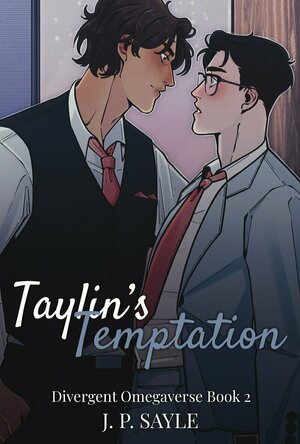
Steamy and emotional, a perfect combo for me!
Independent reviewer for Archaeolibrarian, I was gifted my copy of this book.
This is book 2 in the Divergent Omegaverse series, but you don't need to have read book 1, Alpha's Divergent Omega to follow this one. That is more of a short introduction into this group of men, and how things work in their world. You should though, cos it's short and steamy and packs a punch!
Taylin has worked with Hollis for 5 years. He wants Hollis but Hollis has made no indication that Taylin's want is reciprocated. When a meeting away coincides with Hollis' heat, that all changes. Taylin is considered divergent, and Hollis is not, since he can shift into his animal form, and Taylin cannot. Would Hollis really want Taylin?
What I loved about this, was that once Hollis set his sights onto Taylin, like PROPERLY, Taylin really didn't see it coming, and he was just a little bit blindsided by Hollis and this meeting away. Had he been paying more attention, he would have known it was Hollis' heat but he was too busy oogling Hollis!
These guys have wanted each other for so long, and once they get with the programme, they are all in and I loved that! Steamy and emotional, for me, a perfect combination!
I loved that all the boys of Lane and Derick have been instilled with the beliefs and views of their parents, both those born into the family and those who were bought into it for whatever reason. When they discover the omegas being mistreated in the factory, they ALL jump in, to set them free.
I loved that Taylin's brothers were ribbing him about being mated, but their fathers were like "just you wait!" and the brothers were like "nope, not happening!" and then, boom, book 3 is all laid out for you! Next one to fall is Booker.
Now, I have to admit, I had to google what a slow loris was, cos Taylin thought Hollis was cute in his shifted form, and I couldn't picture what they looked like, but oh my days! Cute is about the best word I could use to describe a slow loris! Especially when Hollis is curled up, in shifted form, on Taylin's chest. So bloody cute, that image.
I've followed Sayle from the very beginning. I mean, I almost slated her first book! But she has a way that pulls you in, and sets my book brain off with questions! It knows it has questions about Lord knows what about this book, but in true Sayle fashion, my brain can't voice them . . yet . . . maybe even at all!
So I'll leave this review with, I bloody loved it and I can't wait to watch the other brothers fall for their mates, in whichever way they do.
5 full and shiny stars
*same worded review will appear elsewhere
This is book 2 in the Divergent Omegaverse series, but you don't need to have read book 1, Alpha's Divergent Omega to follow this one. That is more of a short introduction into this group of men, and how things work in their world. You should though, cos it's short and steamy and packs a punch!
Taylin has worked with Hollis for 5 years. He wants Hollis but Hollis has made no indication that Taylin's want is reciprocated. When a meeting away coincides with Hollis' heat, that all changes. Taylin is considered divergent, and Hollis is not, since he can shift into his animal form, and Taylin cannot. Would Hollis really want Taylin?
What I loved about this, was that once Hollis set his sights onto Taylin, like PROPERLY, Taylin really didn't see it coming, and he was just a little bit blindsided by Hollis and this meeting away. Had he been paying more attention, he would have known it was Hollis' heat but he was too busy oogling Hollis!
These guys have wanted each other for so long, and once they get with the programme, they are all in and I loved that! Steamy and emotional, for me, a perfect combination!
I loved that all the boys of Lane and Derick have been instilled with the beliefs and views of their parents, both those born into the family and those who were bought into it for whatever reason. When they discover the omegas being mistreated in the factory, they ALL jump in, to set them free.
I loved that Taylin's brothers were ribbing him about being mated, but their fathers were like "just you wait!" and the brothers were like "nope, not happening!" and then, boom, book 3 is all laid out for you! Next one to fall is Booker.
Now, I have to admit, I had to google what a slow loris was, cos Taylin thought Hollis was cute in his shifted form, and I couldn't picture what they looked like, but oh my days! Cute is about the best word I could use to describe a slow loris! Especially when Hollis is curled up, in shifted form, on Taylin's chest. So bloody cute, that image.
I've followed Sayle from the very beginning. I mean, I almost slated her first book! But she has a way that pulls you in, and sets my book brain off with questions! It knows it has questions about Lord knows what about this book, but in true Sayle fashion, my brain can't voice them . . yet . . . maybe even at all!
So I'll leave this review with, I bloody loved it and I can't wait to watch the other brothers fall for their mates, in whichever way they do.
5 full and shiny stars
*same worded review will appear elsewhere

Chris Hooker (419 KP) rated No Way Home (A Science Fiction Anthology) in Books
Jan 12, 2018
I received [No Way Home] from author [Harry Manners] in exchange for a honest review. This collection of short stories with the theme of being stranded, in one way or another, was a thought provoking read.
[To Sing of Chaos and Eternal Night] by [Lucas Bale] took me a few days to get past the beginning. The concept of a soldier who has lost all being and is just thought sent to robotic bodies and told to fight the enemy was interesting. As I stated, unfortunately, it was a slow start but the ending was worth the read.
[XE, or People Are Strange] by [S. Elliot Brandis]gave a new meaning to getting away from it all. The main character, Bradley, volunteers to be put in a shuttle to find a new habitable plant. His mission is one way and he is to send a signal back to Earth if it is a safe place. Apparently, though, he is not the first, or only, person on the new planet. I really liked the twist in this story.
[Grist] by [J.S. Collyer] is a futuristic view where one entity has taken control and all others are forced to work for them, often underground. Wyatt was not born into this so he remembers fresh air and sun. He wants to escape and be free again. Just daring to think this way can be deadly and he must know who to trust. The question this story had me asking was what is life worth?
[Merely A Madness] by [S.W. Fairbrother] was one I was really excited to see in this collection because I had read [The Secret Dead] and loved it. [Merely A Madness] did not disappoint in anyway. Earth has become a hostile place but most people have escaped off planet. Hannah loves old earth and Mullen sets up a holiday because he aims to please. This would be like current day people going to a wild west ranch, real but not too real. Things go horribly wrong and Mullen must make a hard choice. This story was one of my favorites by far.
[Revolver] by [Michael Patrick Hicks] was the most overtly political and also one of the most enjoyable. The concept of reality TV and politics preying on the unfortunates is so scary because it is not far from our current reality. I really loved the statement made in this one.
[The Happy Place] by [Harry Manners] was a story of a dream gone horribly wrong. Michael has always dreamed of going to the stars and with his wife this dream becomes a reality as he is chosen to colonize Mars. Years later he realizes his dream may be a nightmare as he begins to lose everything he loves. The only thing that keeps him going is 'the Happy Place', a virtual reality of his memories from Earth, but keeping this secret from those he loves may cost him even more. This is the third work I have read from [Harry Manners] and I love how he handles loneliness and making hard decisions. His characters are always deeper than they first appear.
[Renata] by [Nadine Matheson] is a futuristic spy story wrapped in a mob hit with political intrigue. Yes, I enjoyed this one as well. Kaoru is an assassin who gets his assignments from his brother. His latest target is in the past. This is the assignment that may just kill him.
[Cold Witness] by [A.S. Sinclair] was a mental thriller. John Marshall is sent to check out an abandoned military complex that he is told little about. When he arrives there he hears rumors of strange things involving the final project at the base. Upon arrival he begins hallucinating and his memories begin to meld with others. The question of what is reality is constant throughout.
All the stories were well written and enjoyable. I also liked how each author wrote an "Afterword" that explained a little of how they came up with the concept they did. I recommend this to any fan of futuristic and science fiction.
[To Sing of Chaos and Eternal Night] by [Lucas Bale] took me a few days to get past the beginning. The concept of a soldier who has lost all being and is just thought sent to robotic bodies and told to fight the enemy was interesting. As I stated, unfortunately, it was a slow start but the ending was worth the read.
[XE, or People Are Strange] by [S. Elliot Brandis]gave a new meaning to getting away from it all. The main character, Bradley, volunteers to be put in a shuttle to find a new habitable plant. His mission is one way and he is to send a signal back to Earth if it is a safe place. Apparently, though, he is not the first, or only, person on the new planet. I really liked the twist in this story.
[Grist] by [J.S. Collyer] is a futuristic view where one entity has taken control and all others are forced to work for them, often underground. Wyatt was not born into this so he remembers fresh air and sun. He wants to escape and be free again. Just daring to think this way can be deadly and he must know who to trust. The question this story had me asking was what is life worth?
[Merely A Madness] by [S.W. Fairbrother] was one I was really excited to see in this collection because I had read [The Secret Dead] and loved it. [Merely A Madness] did not disappoint in anyway. Earth has become a hostile place but most people have escaped off planet. Hannah loves old earth and Mullen sets up a holiday because he aims to please. This would be like current day people going to a wild west ranch, real but not too real. Things go horribly wrong and Mullen must make a hard choice. This story was one of my favorites by far.
[Revolver] by [Michael Patrick Hicks] was the most overtly political and also one of the most enjoyable. The concept of reality TV and politics preying on the unfortunates is so scary because it is not far from our current reality. I really loved the statement made in this one.
[The Happy Place] by [Harry Manners] was a story of a dream gone horribly wrong. Michael has always dreamed of going to the stars and with his wife this dream becomes a reality as he is chosen to colonize Mars. Years later he realizes his dream may be a nightmare as he begins to lose everything he loves. The only thing that keeps him going is 'the Happy Place', a virtual reality of his memories from Earth, but keeping this secret from those he loves may cost him even more. This is the third work I have read from [Harry Manners] and I love how he handles loneliness and making hard decisions. His characters are always deeper than they first appear.
[Renata] by [Nadine Matheson] is a futuristic spy story wrapped in a mob hit with political intrigue. Yes, I enjoyed this one as well. Kaoru is an assassin who gets his assignments from his brother. His latest target is in the past. This is the assignment that may just kill him.
[Cold Witness] by [A.S. Sinclair] was a mental thriller. John Marshall is sent to check out an abandoned military complex that he is told little about. When he arrives there he hears rumors of strange things involving the final project at the base. Upon arrival he begins hallucinating and his memories begin to meld with others. The question of what is reality is constant throughout.
All the stories were well written and enjoyable. I also liked how each author wrote an "Afterword" that explained a little of how they came up with the concept they did. I recommend this to any fan of futuristic and science fiction.