
Search
Search results

Heather Cranmer (2721 KP) rated Alee: an Every Girl novel in Books
Dec 2, 2019
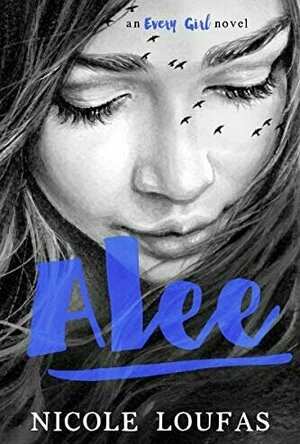

I love realistic fiction books that are a bit dark. When I first read the synopsis of Alee by Nicole Loufas, I was instantly hooked. I ended up devouring this novel in a short time!
The book starts out with Alee as a 17 year old high school senior. After sleeping with her boyfriend's best friend, she dumps her boyfriend for being too selfish. After being slut shamed at school, Alee finds comfort in her best friend Bryn. However, while at swim practice, Bryn is shot and killed. Around that time, Alee reconnects with her father that left her and her mother when she was 5, but even he isn't really there being as he's a homeless drug addict. With everything going wrong, Alee finds solace in Laine, her now ex-boyfriend's best friend - the one she slept with. The book talks briefly about Alee's life until the age of 21 where it really focuses on what is going on with Alee. When a major life even happens, Alee is thrown into a downward spiral that she may not ever escape.
I thought the plot for Alee was written beautifully. It's a story that most people can relate to in some way. I was sucked into the plot, and I felt like I was a ghost watching Alee's life unfold from the age of 17 to 21. There are a few minor plot twists which are interesting, but there are no cliff hangers. All of my questions were answered by the end of the book. The pacing for Alee is mostly perfect. There are a few, very rare, times where the pacing slows down, but it instantly picks right back up. I was never bored while reading Alee.
The characters in Alee felt very realistic and fleshed out. In fact, I felt like I knew all of these characters at one point in my life. Alee is such a strong character. She has had so much bad happen to her. It's as if she can't catch a break. It was interesting to follow Alee's thoughts on everything that would happen to her. She tried to stay positive even when her world was crashing down. I absolutely loved Alee, and I kept wanting something positive to happen to her. Laine seemed like such a great guy, and it was obvious how much Alee meant to him (and him to Alee). I loved reading about the love between Laine and Alee. I liked how Loufas made them feel like a real couple by giving them problems as well and not some Hollywood romance. I never really liked Benny. He was well written, but I always felt like I couldn't trust him. Throughout the book, I just kept wishing that he'd stay away from Alee!
Alee is a dark read, and it has quite a few strong triggers. These include gun violence, death, murder, suicide, rape, drug use, alcoholism, miscarriage, profanity, mentions of underage sex, and sexual situations (although not too graphic).
All in all, Alee was a very interesting and emotional read. If you are a fan of sunshine and rainbow books, Alee is not for you. However, if you're after a gritty, beautifully written realistic fiction novel that discuses tough issues, then Alee is the book you've been waiting for. I would definitely recommend Alee by Nicole Loufas to those aged 17+. Alee is one of those books that will keep you thinking about everything that happened in it long after you've finished reading it.
The book starts out with Alee as a 17 year old high school senior. After sleeping with her boyfriend's best friend, she dumps her boyfriend for being too selfish. After being slut shamed at school, Alee finds comfort in her best friend Bryn. However, while at swim practice, Bryn is shot and killed. Around that time, Alee reconnects with her father that left her and her mother when she was 5, but even he isn't really there being as he's a homeless drug addict. With everything going wrong, Alee finds solace in Laine, her now ex-boyfriend's best friend - the one she slept with. The book talks briefly about Alee's life until the age of 21 where it really focuses on what is going on with Alee. When a major life even happens, Alee is thrown into a downward spiral that she may not ever escape.
I thought the plot for Alee was written beautifully. It's a story that most people can relate to in some way. I was sucked into the plot, and I felt like I was a ghost watching Alee's life unfold from the age of 17 to 21. There are a few minor plot twists which are interesting, but there are no cliff hangers. All of my questions were answered by the end of the book. The pacing for Alee is mostly perfect. There are a few, very rare, times where the pacing slows down, but it instantly picks right back up. I was never bored while reading Alee.
The characters in Alee felt very realistic and fleshed out. In fact, I felt like I knew all of these characters at one point in my life. Alee is such a strong character. She has had so much bad happen to her. It's as if she can't catch a break. It was interesting to follow Alee's thoughts on everything that would happen to her. She tried to stay positive even when her world was crashing down. I absolutely loved Alee, and I kept wanting something positive to happen to her. Laine seemed like such a great guy, and it was obvious how much Alee meant to him (and him to Alee). I loved reading about the love between Laine and Alee. I liked how Loufas made them feel like a real couple by giving them problems as well and not some Hollywood romance. I never really liked Benny. He was well written, but I always felt like I couldn't trust him. Throughout the book, I just kept wishing that he'd stay away from Alee!
Alee is a dark read, and it has quite a few strong triggers. These include gun violence, death, murder, suicide, rape, drug use, alcoholism, miscarriage, profanity, mentions of underage sex, and sexual situations (although not too graphic).
All in all, Alee was a very interesting and emotional read. If you are a fan of sunshine and rainbow books, Alee is not for you. However, if you're after a gritty, beautifully written realistic fiction novel that discuses tough issues, then Alee is the book you've been waiting for. I would definitely recommend Alee by Nicole Loufas to those aged 17+. Alee is one of those books that will keep you thinking about everything that happened in it long after you've finished reading it.
LeftSideCut (3776 KP) rated Aladdin (2019) in Movies
Jan 28, 2020

Pleasantly Surprising
As I've mentioned before, I grew up during the 90s, and therefore, the Disney movies I have the fondest memories of run between Beauty & the Beast and Mulan. The original Aladdin's release in 1992 places it firmly it that era, and as such, is one that I lived as a kid. Couple this with the fact that I haven't particularly liked any of the live action Disney remakes so far, and this was one I was prepared to loathe.
But, dammit, Guy Ritchie wasn't going to let that happen! Aladdin is an adaption that is full with to the brim with positives.
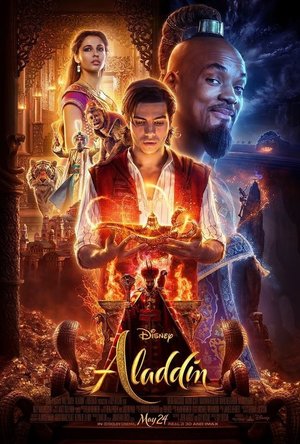
The cast for one thing. Mena Massoud and Naomi Scott (as Aladdin and Jasmine) are likeable leads and carry the main bulk of the story with minimal effort. They share good chemistry and are instantly charming.
Will Smith was obviously the big talking point before the films release. I though he did a great job at bringing Genie to life. He doesn't try to imitate what Robin Williams did back in 1992, and manages to stop short of turning into a full blown Will Smith vehicle, and this results in a respectful and fun portrayal of one of Disney's most beloved characters.
Jafar (Marwan Kenzari) was fine - he never really goes full Disney villain and felt quite subdued. Both a little underwhelming, but maybe a bit more grounded?
Even the CGI characters of Apu and The Magic Carpet have a respectable amount of personality!
The CGI is actually (and maybe predictably) where one of the few negatives stems from. The CG effects use in Will Smith when he's in full blown genie mode are pretty jarring at first. I feel myself getting used to it, and accepting that it actually looked fine seeing as he is a magical being and all, but then there another close up of his face and it's terrifying again. The infamous carpet ride hand a few dodgy moments as well, but other than that, it was all pretty good. The wider shots of Agrabar looked stunning and full of colour, and the film is gorgeous looking for the most part.
I've also mentioned before that I'm not a massive musical fan, but the nostalgia in me give films like Aladdin a bit of a pass. The songs here are all fine (if you ignore the autotune here and there) and the cast all seem like they can sing mostly unaided. I didn't care much for the new song they put in - it absolutely reeked of Frozen, right down to Jasmine's posturing - and added nothing to the narrative, even if the message is an empowering one.
The film also gets a bit carried away during the pre-credits, with it's reliance on the audiences tolerance for the songs.
Other than that handful of gripes, I would say that Aladdin is safely the best of the bunch so far when it comes to these live action Disney remakes. It actually feels like that cast and crew care about what they're doing, and it's doesn't come across as a money grab anywhere near as much as say The Lion King.
If you haven't yet given it a chance due to your fondness for the original, try not to worry about that and enjoy it for what it is. It could have been a lot worse!
But, dammit, Guy Ritchie wasn't going to let that happen! Aladdin is an adaption that is full with to the brim with positives.
The cast for one thing. Mena Massoud and Naomi Scott (as Aladdin and Jasmine) are likeable leads and carry the main bulk of the story with minimal effort. They share good chemistry and are instantly charming.
Will Smith was obviously the big talking point before the films release. I though he did a great job at bringing Genie to life. He doesn't try to imitate what Robin Williams did back in 1992, and manages to stop short of turning into a full blown Will Smith vehicle, and this results in a respectful and fun portrayal of one of Disney's most beloved characters.
Jafar (Marwan Kenzari) was fine - he never really goes full Disney villain and felt quite subdued. Both a little underwhelming, but maybe a bit more grounded?
Even the CGI characters of Apu and The Magic Carpet have a respectable amount of personality!
The CGI is actually (and maybe predictably) where one of the few negatives stems from. The CG effects use in Will Smith when he's in full blown genie mode are pretty jarring at first. I feel myself getting used to it, and accepting that it actually looked fine seeing as he is a magical being and all, but then there another close up of his face and it's terrifying again. The infamous carpet ride hand a few dodgy moments as well, but other than that, it was all pretty good. The wider shots of Agrabar looked stunning and full of colour, and the film is gorgeous looking for the most part.
I've also mentioned before that I'm not a massive musical fan, but the nostalgia in me give films like Aladdin a bit of a pass. The songs here are all fine (if you ignore the autotune here and there) and the cast all seem like they can sing mostly unaided. I didn't care much for the new song they put in - it absolutely reeked of Frozen, right down to Jasmine's posturing - and added nothing to the narrative, even if the message is an empowering one.
The film also gets a bit carried away during the pre-credits, with it's reliance on the audiences tolerance for the songs.
Other than that handful of gripes, I would say that Aladdin is safely the best of the bunch so far when it comes to these live action Disney remakes. It actually feels like that cast and crew care about what they're doing, and it's doesn't come across as a money grab anywhere near as much as say The Lion King.
If you haven't yet given it a chance due to your fondness for the original, try not to worry about that and enjoy it for what it is. It could have been a lot worse!
Sensation and Perception
Jeremy M Wolfe, Keith R Kluender, Dennis M Levi and Linda M Bartoshuk
Book
Sensation & Perception, Fourth Edition, introduces students to their own senses. Human sensory and...

Sarah (7800 KP) rated The True Adventures of Wolfboy (2021) in Movies
Mar 1, 2021

Nice but lacking in magic
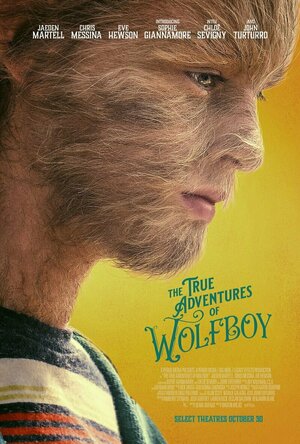
The Adventures of Wolfboy, also known as The True Adventures of Wolfboy, is a 2021 coming of age style drama and the feature film debut from Czech director Martin Krejcí. It follows Paul, a teenager with a life changing physical condition called congenital hypertrichosis that causes an abnormal and excessive amount of hair growth across his entire body, as he journeys to meet his estranged mother.
Paul (Jaeden Martell) lives an isolated life with his father in New York, where he hides away from everyone and only ventures out under the cover of a woolly balaclava, despite his father’s (Chris Messina) attempts to coax him into accepting his condition and revealing himself to the world. After a failed trip out to the local carnival for his 13th birthday, Paul returns home to find a mysterious gift from his mother (Chloë Sevigny), who he’s never known as she left when he was a child. Following a confrontation with his father over his proposal to send him to a special school, Paul runs away from home in search of his estranged mother. Along the way, he meets a number of colourful characters including carnival owner Mr. Silk (John Turturro), complicated and friendly Aristiana (Sophie Giannamore) and the daring and roguish Rose (Eve Hewson).
The Adventures of Wolfboy is undoubtedly a film for young adults or teenagers, meant as a coming of age, ‘accepting yourself’ type of road movie and in this it succeeds, although its message is rather more subtle than you’d expect. It expertly deals with the theme of loving yourself and others just as you are in a very low key manner, to the point where you almost miss the subtle hints at a character’s backstory (which is definitely true for Aristiana). For some this might be a problem, but a lot of films go out of their way to be heavy handed, virtually shoving a message down your throat so for me, I enjoyed the subtleties on display here. They’re helped by an unassuming performance from Jaeden Martell and charismatic turns from both Eve Hewson and Sophie Giannamore, who altogether with a story that doesn’t play out quite as predictably as first thought, make this an entertaining and heartwarming watch.
That said, despite the well meaning and heartwarming intentions, this film does falter. The title itself and the fairytale storyboard chapter titles throughout the film give this a magical sense of fantasy that just doesn’t quite materialise. I feel like it’s meant to be whimsical and adventurous, but the actual finished article falls short. It isn’t helped by John Turturro’s Mr Silk, who despite being the villain just comes across as weird rather than sinister, and what becomes of his character is a little lacklustre too. Generally if feels like it’s missing some ‘oomph’, a magical whimsical boost to turn this into something more than an average coming of age movie.
The Adventures of Wolfboy is a nice heartwarming film, and it’s refreshing to see a subtle take on a subject that has been done many times before. I just wished they’d have taken the magical and whimsical angle further, as this would have made it more than just average.
Paul (Jaeden Martell) lives an isolated life with his father in New York, where he hides away from everyone and only ventures out under the cover of a woolly balaclava, despite his father’s (Chris Messina) attempts to coax him into accepting his condition and revealing himself to the world. After a failed trip out to the local carnival for his 13th birthday, Paul returns home to find a mysterious gift from his mother (Chloë Sevigny), who he’s never known as she left when he was a child. Following a confrontation with his father over his proposal to send him to a special school, Paul runs away from home in search of his estranged mother. Along the way, he meets a number of colourful characters including carnival owner Mr. Silk (John Turturro), complicated and friendly Aristiana (Sophie Giannamore) and the daring and roguish Rose (Eve Hewson).
The Adventures of Wolfboy is undoubtedly a film for young adults or teenagers, meant as a coming of age, ‘accepting yourself’ type of road movie and in this it succeeds, although its message is rather more subtle than you’d expect. It expertly deals with the theme of loving yourself and others just as you are in a very low key manner, to the point where you almost miss the subtle hints at a character’s backstory (which is definitely true for Aristiana). For some this might be a problem, but a lot of films go out of their way to be heavy handed, virtually shoving a message down your throat so for me, I enjoyed the subtleties on display here. They’re helped by an unassuming performance from Jaeden Martell and charismatic turns from both Eve Hewson and Sophie Giannamore, who altogether with a story that doesn’t play out quite as predictably as first thought, make this an entertaining and heartwarming watch.
That said, despite the well meaning and heartwarming intentions, this film does falter. The title itself and the fairytale storyboard chapter titles throughout the film give this a magical sense of fantasy that just doesn’t quite materialise. I feel like it’s meant to be whimsical and adventurous, but the actual finished article falls short. It isn’t helped by John Turturro’s Mr Silk, who despite being the villain just comes across as weird rather than sinister, and what becomes of his character is a little lacklustre too. Generally if feels like it’s missing some ‘oomph’, a magical whimsical boost to turn this into something more than an average coming of age movie.
The Adventures of Wolfboy is a nice heartwarming film, and it’s refreshing to see a subtle take on a subject that has been done many times before. I just wished they’d have taken the magical and whimsical angle further, as this would have made it more than just average.
Jesters_folly (230 KP) rated TRON (1982) in Movies
Nov 17, 2020

Before Player One, before Ralph and Neo and even before the Lawnmower Man there was Tron. Tron covers a lot of ground, some of which was quite advanced for a film from 1983, we have hackers, corporate espionage, teleportation experiments, A.I. and what we would now call Cyberspace.
Basically Ed Dillinger is the boss of an evil corporation, Encom, (yes IT corporations were evil as far back as the 1980s) who got to where he was by stealing the programs of five arcade games from Flynn. Ed is being blackmailed by the 'Master Control Program' or 'MCP' for short, a rouge A.I. that believes it can rule the world better than humans.
Alan works at Encom and is trying to create a Data monitoring program called Tron. Alan is also dating Flynn's ex, Lora who also works at Encom, in a department that is developing a way of digitising mater and transporting it down a laser beam to a new destination. The three team up to help Flynn find the proof of the theft but the MCP digitises Flynn who finds himself used as a gladiator in the program. When Flynn meets the Tron program they team up to bring the MCP down.
First off the whole thing could have been stopped if Encom had proper health and safety, the computer that Flynn was using was the same one that operated the digitising laser and the laser was set up right behind the screen with barriers or other safety measures.
Ok in all seriousness the concepts in Tron were quite advanced, baring in mind that this was out in 1983, a time when home P.C.s were just beginning to become popular and the internet wasn't really around (there were networked computers but really only in offices) Tron brought us a concept of Cyberspace (although it wasn't called that in the film), a world where the computer programs live and the games are real. Not only that but everything is linked together, there weren't any networked games back then any you had to go to an arcade to play most of the games that existed.
By todays standards the Cyberspace world wouldn't feel right. It is a lineal landscape with fractural crystals coloured in greys, red and blues, a far cry from Wreck-it Ralph's advert filled, brightly coloured internet. Again this is due to when it was made, no internet, no advertising and, of course the computers of the time had slightly less memory than the ones today, with the ZX81 being released that year with a massive 16 or 48 Kb of memory, yes kiddies that's Kilo-bites, not even one meg so the games that were available were quite basic (compared to what we have today) an, of course, outside of an arcade those games would have been stored on floppy disk or cassette tape.
The action in Tron is muted, mainly kept to bike crashes and people throwing Frisbees at each other but this is because Tron is; 1) a kids film and 2) a Disney film. The muted action doesn't take away from the film though, it's still an enjoyable adventure film whose influence can be seen even now with films like Wreck-it Ralph.
For a film that is mostly early 80's CGI (or even just early CGI) Tron hasn't aged too badly and the story could easily have been written now, especially with the recent advent of LitRGP books and 'Isekai' anime such as 'Sword Art Online'.
Basically Ed Dillinger is the boss of an evil corporation, Encom, (yes IT corporations were evil as far back as the 1980s) who got to where he was by stealing the programs of five arcade games from Flynn. Ed is being blackmailed by the 'Master Control Program' or 'MCP' for short, a rouge A.I. that believes it can rule the world better than humans.
Alan works at Encom and is trying to create a Data monitoring program called Tron. Alan is also dating Flynn's ex, Lora who also works at Encom, in a department that is developing a way of digitising mater and transporting it down a laser beam to a new destination. The three team up to help Flynn find the proof of the theft but the MCP digitises Flynn who finds himself used as a gladiator in the program. When Flynn meets the Tron program they team up to bring the MCP down.
First off the whole thing could have been stopped if Encom had proper health and safety, the computer that Flynn was using was the same one that operated the digitising laser and the laser was set up right behind the screen with barriers or other safety measures.
Ok in all seriousness the concepts in Tron were quite advanced, baring in mind that this was out in 1983, a time when home P.C.s were just beginning to become popular and the internet wasn't really around (there were networked computers but really only in offices) Tron brought us a concept of Cyberspace (although it wasn't called that in the film), a world where the computer programs live and the games are real. Not only that but everything is linked together, there weren't any networked games back then any you had to go to an arcade to play most of the games that existed.
By todays standards the Cyberspace world wouldn't feel right. It is a lineal landscape with fractural crystals coloured in greys, red and blues, a far cry from Wreck-it Ralph's advert filled, brightly coloured internet. Again this is due to when it was made, no internet, no advertising and, of course the computers of the time had slightly less memory than the ones today, with the ZX81 being released that year with a massive 16 or 48 Kb of memory, yes kiddies that's Kilo-bites, not even one meg so the games that were available were quite basic (compared to what we have today) an, of course, outside of an arcade those games would have been stored on floppy disk or cassette tape.
The action in Tron is muted, mainly kept to bike crashes and people throwing Frisbees at each other but this is because Tron is; 1) a kids film and 2) a Disney film. The muted action doesn't take away from the film though, it's still an enjoyable adventure film whose influence can be seen even now with films like Wreck-it Ralph.
For a film that is mostly early 80's CGI (or even just early CGI) Tron hasn't aged too badly and the story could easily have been written now, especially with the recent advent of LitRGP books and 'Isekai' anime such as 'Sword Art Online'.

BookInspector (124 KP) rated The Chestnut Man in Books
Sep 24, 2020

I can’t decide one thing with this book, to put it in the “One of the best thrillers of 2018” because I read it this year, or to say that is “One of the best thrillers of 2019” because it is published next year. One thing for sure, it is an absolute treat!
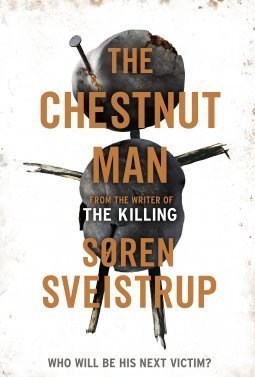
The first thing that I really loved, was the cover. It looks quite simple, but the way that the chestnut man is portrayed gave me the feeling that it is going to be a great thriller, and it definitely didn’t disappoint me. I think, that in this book there are multiple protagonists- Thulin and Hess. They both play quite equal roles during the investigation, even though it might not feel so. There is a wide variety of characters in this novel, and all of them are very well nurtured and thought through. Their qualities are delivered slowly, and I loved how they opened up throughout the book. I really liked Thulin and Hess, they both are very complex individuals. They are quite different people, and when they work together, all the process feels messy, chaotic, but in the end, it provides results.
I don’t even know from where to begin with the praise for the plot. The whole narrative has multiple layers, and there are several cases combined in this book. We have the disappearance of a Minister’s daughter, which happened a while ago and shook the whole country, and at present, we have these new murders with the chestnut dolls at the crime scenes. These two things entwined with each other created more richness and action for the whole story. I loved that it was told from multiple perspectives, it not only allowed to get to know the characters better but also gave an insight into different minds. The author chose very intriguing topics for this novel, such as foster care; child abuse; social services and their work; politicians and their lives; different family relationships; discrimination at work and many more.
The writing style of this book is impeccable! Sveistrup is a very talented storyteller with a great eye for detail, and after reading this book, I am definitely his fan. I really loved the setting of this novel, it is set mainly in Copenhagen, during the autumn/winter season, which created a very gloomy and mysterious atmosphere to the whole novel. The author is not afraid to show disturbing (to some) killings with amputations or disgusting acts of humankind, so this book is not suitable for sensitive people. It might feel like a big book, but the chapters are really short and the whole plot and characters really absorbed me so, I just couldn’t put it down. I really liked the ending of this thriller, it is unexpected, unusual, but rounded this novel very beautifully!
So, to conclude, this book has everything what a great thriller needs. The characters are complex and intriguing, the mood, suspense and twists are very well developed, it is dark and can be disgusting at times, but overall it is a gripping novel and I can’t wait to read more from this author! I do strongly recommend it, and I hope you will enjoy it as much as I did.
The first thing that I really loved, was the cover. It looks quite simple, but the way that the chestnut man is portrayed gave me the feeling that it is going to be a great thriller, and it definitely didn’t disappoint me. I think, that in this book there are multiple protagonists- Thulin and Hess. They both play quite equal roles during the investigation, even though it might not feel so. There is a wide variety of characters in this novel, and all of them are very well nurtured and thought through. Their qualities are delivered slowly, and I loved how they opened up throughout the book. I really liked Thulin and Hess, they both are very complex individuals. They are quite different people, and when they work together, all the process feels messy, chaotic, but in the end, it provides results.
I don’t even know from where to begin with the praise for the plot. The whole narrative has multiple layers, and there are several cases combined in this book. We have the disappearance of a Minister’s daughter, which happened a while ago and shook the whole country, and at present, we have these new murders with the chestnut dolls at the crime scenes. These two things entwined with each other created more richness and action for the whole story. I loved that it was told from multiple perspectives, it not only allowed to get to know the characters better but also gave an insight into different minds. The author chose very intriguing topics for this novel, such as foster care; child abuse; social services and their work; politicians and their lives; different family relationships; discrimination at work and many more.
The writing style of this book is impeccable! Sveistrup is a very talented storyteller with a great eye for detail, and after reading this book, I am definitely his fan. I really loved the setting of this novel, it is set mainly in Copenhagen, during the autumn/winter season, which created a very gloomy and mysterious atmosphere to the whole novel. The author is not afraid to show disturbing (to some) killings with amputations or disgusting acts of humankind, so this book is not suitable for sensitive people. It might feel like a big book, but the chapters are really short and the whole plot and characters really absorbed me so, I just couldn’t put it down. I really liked the ending of this thriller, it is unexpected, unusual, but rounded this novel very beautifully!
So, to conclude, this book has everything what a great thriller needs. The characters are complex and intriguing, the mood, suspense and twists are very well developed, it is dark and can be disgusting at times, but overall it is a gripping novel and I can’t wait to read more from this author! I do strongly recommend it, and I hope you will enjoy it as much as I did.

Emma @ The Movies (1786 KP) rated Stan & Ollie (2018) in Movies
Sep 25, 2019
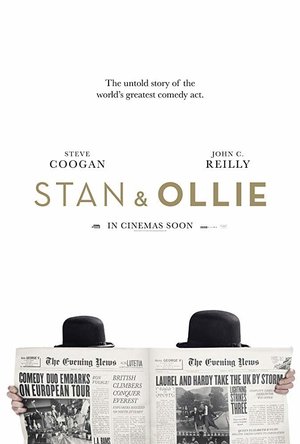

I think that almost everyone has some knowledge of Laurel and Hardy. Certainly growing up with a love of black and white comedies meant that I saw a fair few myself. There's certainly a familiarity in what we see from Coogan and Reilly that brings a smile to your face. The main problem is that it's such a hard act to follow. I can't say that I'm left raving about what was presented. It's a charming film... I'm just not sure if that's a compliment or not.
Seeing the BBC Films logo come up at the beginning gave me some hope. Having never really enjoy either of the main actor's work this actually gave me some hope that this would be an amazing sort of production that I've come to love from the BBC. Sadly, again, I wasn't wowed by what I saw.
Coogan and Reilly do both manage to capture their part of the double act well, and seeing those trademark moves briefly gives you that spark of joy. Nostalgia is a very powerful thing and you get a great buzz but I'm not sure it's enough to make up for the overall feeling of the film.
Both Shirley Henderson and Nina Arianda make for a fiery support cast in the roles of Lucille Hardy and Ida Laurel, but I have to say that Ida was the character for me. Self promoting and yet fiercely loyal. Loving and yet tinged with a streak of harsh reality. It was pleasing to see how she evolved to show such heart and unite the pair at the end.
Capturing snippets of a lifetime is always difficult. There are so many things going on that you have to choose whether to feature or not and that inevitably leads to gaps and slight inconsistencies. Hardy's gambling made several appearances but at no point is it really shown as a severe problem , most of it was done in a very lighthearted manner which sort of defeated the point of it being mentioned at all.
The first half of the film is incredibly slow and dare I say dull. So much so that I did wonder whether it was anything like the film that the trailer had promised. While I did silently chuckle to myself it was by no means laugh out loud funny with it's comedy... although the woman across the aisle from me would probably disagree on that point.
Despite my rather bland feelings about the film it did have some excellent moments. The opening sequence of them walking through the studio lot is really well set up, but shots after that were all very traditional. My other stand out moment was right at the end where they're doing their last performance. In that moment I had a stream of tears running down my face. The fact that they managed to convey the end of Laurel and Hardy's career in such a relatively short sequence was amazing.
Ultimately I think some of the greats from history should probably be left in that iconic position. I'm really not sure that this added anything to their story.
What you should do
If you#re one for nostalgia then you should head on out to see this in January.
Movie thing you wish you could take home
I'd have to have just a little piece of Stan Laurel's creativity and dedication.
Seeing the BBC Films logo come up at the beginning gave me some hope. Having never really enjoy either of the main actor's work this actually gave me some hope that this would be an amazing sort of production that I've come to love from the BBC. Sadly, again, I wasn't wowed by what I saw.
Coogan and Reilly do both manage to capture their part of the double act well, and seeing those trademark moves briefly gives you that spark of joy. Nostalgia is a very powerful thing and you get a great buzz but I'm not sure it's enough to make up for the overall feeling of the film.
Both Shirley Henderson and Nina Arianda make for a fiery support cast in the roles of Lucille Hardy and Ida Laurel, but I have to say that Ida was the character for me. Self promoting and yet fiercely loyal. Loving and yet tinged with a streak of harsh reality. It was pleasing to see how she evolved to show such heart and unite the pair at the end.
Capturing snippets of a lifetime is always difficult. There are so many things going on that you have to choose whether to feature or not and that inevitably leads to gaps and slight inconsistencies. Hardy's gambling made several appearances but at no point is it really shown as a severe problem , most of it was done in a very lighthearted manner which sort of defeated the point of it being mentioned at all.
The first half of the film is incredibly slow and dare I say dull. So much so that I did wonder whether it was anything like the film that the trailer had promised. While I did silently chuckle to myself it was by no means laugh out loud funny with it's comedy... although the woman across the aisle from me would probably disagree on that point.
Despite my rather bland feelings about the film it did have some excellent moments. The opening sequence of them walking through the studio lot is really well set up, but shots after that were all very traditional. My other stand out moment was right at the end where they're doing their last performance. In that moment I had a stream of tears running down my face. The fact that they managed to convey the end of Laurel and Hardy's career in such a relatively short sequence was amazing.
Ultimately I think some of the greats from history should probably be left in that iconic position. I'm really not sure that this added anything to their story.
What you should do
If you#re one for nostalgia then you should head on out to see this in January.
Movie thing you wish you could take home
I'd have to have just a little piece of Stan Laurel's creativity and dedication.

Andy K (10827 KP) rated The Fly (1986) in Movies
Oct 3, 2019
Be Afraid...Be Very Afraid
Seth Brundle is his own version of Dr Frankenstein. Instead of reanimating dead issue, his desire is to teleport flesh from one "telepod" to another.
After a chance meeting at a social magazine function, Veronica "Ronnie" Quaife meets the eccentric genius Brundle. She agrees to come back to his spacious, warehouse studio loft to see what he has been working on. He tells her about his masterpiece that will change the concept of travel throughout the world. After a short demonstration, Ronnie is not sure what to believe.
The next day, she explains what happened to her editor and scummy, sexist former boyfriend who suggests Brundle is just a con man. Eventually, Ronnie takes the offer to be Brundle's exclusive recorder of the evolution of his creation which has still one major flaw, it can only teleport inanimate objects. When tried on something living, the computer doesn't understand "the flesh" turn disembowels its subjects.Ronnie and Brundle begin a torrid affair amidst more work on the pods ultimately concluding with the successful teleportation of a baboon.
After Ronnie's boss and former lover threatens to publish her story early, Brundle gets drunk and decides it is time for a human trial of his newly perfected equipment. In his haste, he does not notice an insect guest present within his pod with him. Although successful, Brundle is not aware of his transformation yet to come.
His evolution from man to man/insect begins slowly, but continues relentlessly though Brundle does not know the cause. Once he looks through his records and discovers the genesis of his misfortune, he may be too late to stop it.
The Fly has to be director David Cronenberg's biggest financial hit grossing north of $40 million in 1986. Adjusted for inflation and considering the subject matter, genre and R rating, that would have to be much more if released today. It's hard to say the film would be Cronenberg's highest critical success, although most of his early films are now considered cult classics since they had a hard time finding mainstream audiences due to their "body horror" often gruesome visuals and offbeat subject matter.
Although most would classify as horror due to the shocking visuals within the last 30 minutes of the film, I have always felt it was more of a thriller. Once Bundle is infected, he has to use his sharp, but now deteriorating wits to figure a solution to his problem before it is too late. Every subsequent Ronnie visit to Brundle's loft finds unexpected results which keep the viewer on edge and wondering what horrors they will view next.
The make up effects in the film rivaled any of the top work ever at that time and garnered effect artist Chris Walas an Academy Award in 1986. By today's standards of CGI and film perfection, some elements could look a bit dated to modern audiences, but I believe still hold up to present day scrutiny.
The film score by frequent Cronenberg collaborator Howard Shore is haunting, bleak somber, and excellent.
Too often mesmerizing acting performances in horror/thriller movies get overlooked for the Oscars (except if you are Anthony Hopkins) which is a shame here. Jeff Goldblum undergoes not only a physical transformation, but his mannerisms, ticks and speech all go from human to insect and he deserves a lot of credit for what he did to bring "Brundlefly" to life.
After a chance meeting at a social magazine function, Veronica "Ronnie" Quaife meets the eccentric genius Brundle. She agrees to come back to his spacious, warehouse studio loft to see what he has been working on. He tells her about his masterpiece that will change the concept of travel throughout the world. After a short demonstration, Ronnie is not sure what to believe.
The next day, she explains what happened to her editor and scummy, sexist former boyfriend who suggests Brundle is just a con man. Eventually, Ronnie takes the offer to be Brundle's exclusive recorder of the evolution of his creation which has still one major flaw, it can only teleport inanimate objects. When tried on something living, the computer doesn't understand "the flesh" turn disembowels its subjects.Ronnie and Brundle begin a torrid affair amidst more work on the pods ultimately concluding with the successful teleportation of a baboon.
After Ronnie's boss and former lover threatens to publish her story early, Brundle gets drunk and decides it is time for a human trial of his newly perfected equipment. In his haste, he does not notice an insect guest present within his pod with him. Although successful, Brundle is not aware of his transformation yet to come.
His evolution from man to man/insect begins slowly, but continues relentlessly though Brundle does not know the cause. Once he looks through his records and discovers the genesis of his misfortune, he may be too late to stop it.
The Fly has to be director David Cronenberg's biggest financial hit grossing north of $40 million in 1986. Adjusted for inflation and considering the subject matter, genre and R rating, that would have to be much more if released today. It's hard to say the film would be Cronenberg's highest critical success, although most of his early films are now considered cult classics since they had a hard time finding mainstream audiences due to their "body horror" often gruesome visuals and offbeat subject matter.
Although most would classify as horror due to the shocking visuals within the last 30 minutes of the film, I have always felt it was more of a thriller. Once Bundle is infected, he has to use his sharp, but now deteriorating wits to figure a solution to his problem before it is too late. Every subsequent Ronnie visit to Brundle's loft finds unexpected results which keep the viewer on edge and wondering what horrors they will view next.
The make up effects in the film rivaled any of the top work ever at that time and garnered effect artist Chris Walas an Academy Award in 1986. By today's standards of CGI and film perfection, some elements could look a bit dated to modern audiences, but I believe still hold up to present day scrutiny.
The film score by frequent Cronenberg collaborator Howard Shore is haunting, bleak somber, and excellent.
Too often mesmerizing acting performances in horror/thriller movies get overlooked for the Oscars (except if you are Anthony Hopkins) which is a shame here. Jeff Goldblum undergoes not only a physical transformation, but his mannerisms, ticks and speech all go from human to insect and he deserves a lot of credit for what he did to bring "Brundlefly" to life.

JusTalk: simple video calling
Social Networking
App
JusTalk is a FREE high-quality video and voice calling app for everyone - simple, reliable, secure...

Matthew Krueger (10051 KP) rated the PlayStation 3 version of Psychonauts in Video Games
May 8, 2020 (Updated May 8, 2020)
Whats In Your Head
Psychonauts- I remember playing this game on the oringal Xbox and PS2 and now with the second game coming out this year hopefully. At Pax East this year, I did see the Demo and it looks excellent.
Im going to review the first one. This is the PS3 remaster verison review.
Psychonauts- is a platforming game developed by Double Fine Productions that first released in 2005.
Psychonauts follows the player-character Raz (voiced by Richard Horvitz), a young boy gifted with psychic abilities who runs away from the circus to try to sneak into a summer camp for those with similar powers to become a "Psychonaut", a spy with psychic abilities. He finds that there is a sinister plot occurring at the camp that only he can stop.
The game is centered on exploring the strange and imaginative minds of various characters that Raz encounters as a Psychonaut-in-training/"Psycadet" to help them overcome their fears or memories of their past, so as to gain their help and progress in the game. Raz gains use of several psychic abilities during the game that are used for both attacking foes and solving puzzles. The player can assign three of these powers to their controller or keyboard for quick use, but all earned powers are available at any time through a selection screen.
The game includes both the "real world" of the camp and its surroundings, as well as a number of "mental worlds" which exist in the consciousness of the game's various characters.
The mental worlds have wildly differing art and level design aesthetics, but generally have a specific goal that Raz must complete to help resolve a psychological issue a character may have, allowing the game's plot to progress.
Within the mental worlds are censors that react negatively to Raz's presence and will attack him. There are also various collectibles within the mental worlds, including "figments" of the character's imagination which help increase Raz's psi ranking, "emotional baggage" which can be sorted by finding tags and bringing them to the baggage, and "memory vaults" which can unlock a short series of slides providing extra information on that character's backstory.
The story is set in fictional Whispering Rock Psychic Summer Camp, a remote US government training facility under the guise of a children's summer camp.
Psychonauts is a platform game that incorporates various adventure elements. The player controls the main character Raz in a third-person, three-dimensional view, helping Raz to uncover a mystery at the Psychonauts training camp. Raz begins with basic movement abilities such as running and jumping, but as the game progresses, Raz gains additional psychic powers such as telekinesis, levitation, invisibility, and pyrokinesis. These abilities allow the player to explore more of the camp as well as fight off enemies.
Despite being well received, Psychonauts did not sell well with only about 100,000 retail units sold at the time of release, leading to severe financial loss for Majesco and their departure from the video game market; the title was considered a commercial failure. Psychonauts since has earned a number of industry awards and gained a cult following.
Its a excellent and phenomenal game and cant wait to play the second one.
Im going to review the first one. This is the PS3 remaster verison review.
Psychonauts- is a platforming game developed by Double Fine Productions that first released in 2005.
Psychonauts follows the player-character Raz (voiced by Richard Horvitz), a young boy gifted with psychic abilities who runs away from the circus to try to sneak into a summer camp for those with similar powers to become a "Psychonaut", a spy with psychic abilities. He finds that there is a sinister plot occurring at the camp that only he can stop.
The game is centered on exploring the strange and imaginative minds of various characters that Raz encounters as a Psychonaut-in-training/"Psycadet" to help them overcome their fears or memories of their past, so as to gain their help and progress in the game. Raz gains use of several psychic abilities during the game that are used for both attacking foes and solving puzzles. The player can assign three of these powers to their controller or keyboard for quick use, but all earned powers are available at any time through a selection screen.
The game includes both the "real world" of the camp and its surroundings, as well as a number of "mental worlds" which exist in the consciousness of the game's various characters.
The mental worlds have wildly differing art and level design aesthetics, but generally have a specific goal that Raz must complete to help resolve a psychological issue a character may have, allowing the game's plot to progress.
Within the mental worlds are censors that react negatively to Raz's presence and will attack him. There are also various collectibles within the mental worlds, including "figments" of the character's imagination which help increase Raz's psi ranking, "emotional baggage" which can be sorted by finding tags and bringing them to the baggage, and "memory vaults" which can unlock a short series of slides providing extra information on that character's backstory.
The story is set in fictional Whispering Rock Psychic Summer Camp, a remote US government training facility under the guise of a children's summer camp.
Psychonauts is a platform game that incorporates various adventure elements. The player controls the main character Raz in a third-person, three-dimensional view, helping Raz to uncover a mystery at the Psychonauts training camp. Raz begins with basic movement abilities such as running and jumping, but as the game progresses, Raz gains additional psychic powers such as telekinesis, levitation, invisibility, and pyrokinesis. These abilities allow the player to explore more of the camp as well as fight off enemies.
Despite being well received, Psychonauts did not sell well with only about 100,000 retail units sold at the time of release, leading to severe financial loss for Majesco and their departure from the video game market; the title was considered a commercial failure. Psychonauts since has earned a number of industry awards and gained a cult following.
Its a excellent and phenomenal game and cant wait to play the second one.