Search
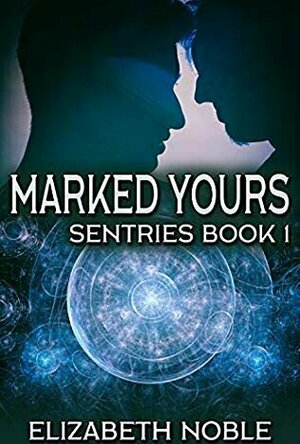
Marked Yours (Sentries #1)
Book
When one society fell, assaulted by natural disaster, in its place rose another, molded into...
Action Adventure Science Fiction Futuristic MM Romance
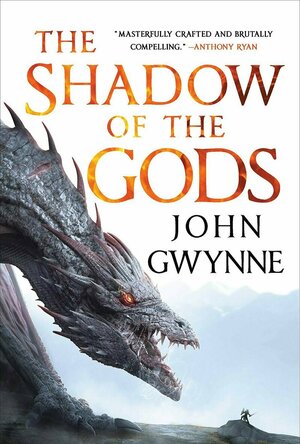
Ross (3284 KP) rated The Shadow of the Gods in Books
Jun 2, 2021
Superb nordic fantasy
Shadow of the Gods is the first book in a new series from Gwynne, and his first away from the world of the Faithful and the Fallen. It takes place in a viking-esque part of a world whose gods have recently died, and the world is gradually emerging from tribalism and remote settlements into wider government, at great pain to its people.
There are rumours of rare people who are descendants of the gods and under stress (or on command once they are trained) can enhance their physical abilities - strength, speed, fury etc.
We meet three characters:
- Orka, a woman with a mysterious past who just wants a quiet simple life with her husband and son, away from the ambitions of their countrymen
- Elvar, a young bountyhunter woman who, along with her fellow longboatmen are initially hunting one of the alleged gods' descendants
- Varg, a young man who has recently escaped slavery in unpleasant circumstances and wants to find what happened to his sister, seeking a magician to tell him her last moments
The three PoVs give us an excellent view of this world, and we see the beginning conflict from numerous standpoints. Varg, far from being a vehicle to deliver worldbuilding, is an excellently formed character who is trained in combat with spear and shield (and of course, Gwynne's trademark shield wall obsession).
The different PoVs also allow us to see one overall story developing, but building up from numerous subplots and quests.
The action scenes are excellent and plenty, as usual, both single combat trials and larger battle scenes against people and monsters. Where the Faithful and the Fallen had the "sword flicks sand in the eye" trope, which was overused, here we have the axe being used to hook someone's shield and yeet them out of the shield wall. This is less overused, and I believe a genuine effective battle tactic, but one that the reader notices regularly.
The mysteries of the world and the characters inhabiting it are revealed gradually enough to keep even this impatient reader satisfied. I admit to overthinking it and trying to guess how the stories might overlap/weave together and got it all completely wrong. There were times when I did mix up the quests of Varg and his boat crew, and Elvar and her boat crew, as they are very similar, but this is natural when such a large cast of characters is introduced.
An excellent thrilling adventure and one that effortlessly got me out of something of a reading slump (everything has felt like a chore for so long, but this was a delight every time I sat down to read).
I received a free copy from the publishers and netgalley in exchange for an honest review.
There are rumours of rare people who are descendants of the gods and under stress (or on command once they are trained) can enhance their physical abilities - strength, speed, fury etc.
We meet three characters:
- Orka, a woman with a mysterious past who just wants a quiet simple life with her husband and son, away from the ambitions of their countrymen
- Elvar, a young bountyhunter woman who, along with her fellow longboatmen are initially hunting one of the alleged gods' descendants
- Varg, a young man who has recently escaped slavery in unpleasant circumstances and wants to find what happened to his sister, seeking a magician to tell him her last moments
The three PoVs give us an excellent view of this world, and we see the beginning conflict from numerous standpoints. Varg, far from being a vehicle to deliver worldbuilding, is an excellently formed character who is trained in combat with spear and shield (and of course, Gwynne's trademark shield wall obsession).
The different PoVs also allow us to see one overall story developing, but building up from numerous subplots and quests.
The action scenes are excellent and plenty, as usual, both single combat trials and larger battle scenes against people and monsters. Where the Faithful and the Fallen had the "sword flicks sand in the eye" trope, which was overused, here we have the axe being used to hook someone's shield and yeet them out of the shield wall. This is less overused, and I believe a genuine effective battle tactic, but one that the reader notices regularly.
The mysteries of the world and the characters inhabiting it are revealed gradually enough to keep even this impatient reader satisfied. I admit to overthinking it and trying to guess how the stories might overlap/weave together and got it all completely wrong. There were times when I did mix up the quests of Varg and his boat crew, and Elvar and her boat crew, as they are very similar, but this is natural when such a large cast of characters is introduced.
An excellent thrilling adventure and one that effortlessly got me out of something of a reading slump (everything has felt like a chore for so long, but this was a delight every time I sat down to read).
I received a free copy from the publishers and netgalley in exchange for an honest review.
Rachel King (13 KP) rated A Short History of Myth in Books
Feb 11, 2019

For such a short book, I developed quite a strong opinion about the text while reading it. I have been curious about Armstrong's writings for a long time, but this is the first attempt I have made at actually reading anything by her. I have always been a fan of ancient mythology, such as Greek and Egyptian, so this seemed like an easy choice.
In seven chapters, Armstrong takes a simplified stroll through history, focusing on the concept of myth and its impact on civilization. All throughout the book, she attempts to support her claim that a person can believe in myths without believing that the myths are actually true, and that the failure of modern society is by not following her specific edict. While this notion strikes me as absurd, I keep reading because, hey, it's a short book.
While I know only bits and pieces about many of the world's religions, I do know both the history and the holy book of my religion, Christianity. It becomes apparent to me early in the text that she is masking her opinions and interpretations of this religion as actual fact, so I can only imagine how she misconstrues other religions.
Her citations were lacking to me, with many claims going unsupported, others only partially supported, such as citation #84 and #30, and some citations simply not even applying to the specified text, such as citation #87. In citation #55, she claims that the Bible contains a Creation myth in which God brings the world into being by killing a sea monster, but one of the four verses she cites make no reference to anything of the sort (Job 3:12), and the other three (Isaiah 27:1, Job 26:13, Psalm 74:14) that do mention a leviathan cannot be interpreted that way when read in context. Isaiah is describing the end of days, while Job merely says that God created the serpent, and the verse in Psalm is within the context of a song about God rescuing the Hebrews from Egyptian slavery -- no relevancy to Creation. She makes the claim that Paul "was not much interested in Jesus's teachings, which he rarely quotes, or in the events of his earthly life." This claim is easily disproved by examining how Paul's words line up with Jesus's in John 5:21 vs. 1 Corinthians 15:22, Matthew 6:25 vs. Philippians 4:6, and many other passages.
While going through the citations, I got the feeling that the author depended on secondary sources for her information without actually studying the original source of her information. The book struck me as highly opinionated, vague, and too general for the topic being addressed. I have no doubt that there are better and more thorough books available on the topic of myth. I do not believe that I will be reading any more of Armstrong's works in the future.
In seven chapters, Armstrong takes a simplified stroll through history, focusing on the concept of myth and its impact on civilization. All throughout the book, she attempts to support her claim that a person can believe in myths without believing that the myths are actually true, and that the failure of modern society is by not following her specific edict. While this notion strikes me as absurd, I keep reading because, hey, it's a short book.
While I know only bits and pieces about many of the world's religions, I do know both the history and the holy book of my religion, Christianity. It becomes apparent to me early in the text that she is masking her opinions and interpretations of this religion as actual fact, so I can only imagine how she misconstrues other religions.
Her citations were lacking to me, with many claims going unsupported, others only partially supported, such as citation #84 and #30, and some citations simply not even applying to the specified text, such as citation #87. In citation #55, she claims that the Bible contains a Creation myth in which God brings the world into being by killing a sea monster, but one of the four verses she cites make no reference to anything of the sort (Job 3:12), and the other three (Isaiah 27:1, Job 26:13, Psalm 74:14) that do mention a leviathan cannot be interpreted that way when read in context. Isaiah is describing the end of days, while Job merely says that God created the serpent, and the verse in Psalm is within the context of a song about God rescuing the Hebrews from Egyptian slavery -- no relevancy to Creation. She makes the claim that Paul "was not much interested in Jesus's teachings, which he rarely quotes, or in the events of his earthly life." This claim is easily disproved by examining how Paul's words line up with Jesus's in John 5:21 vs. 1 Corinthians 15:22, Matthew 6:25 vs. Philippians 4:6, and many other passages.
While going through the citations, I got the feeling that the author depended on secondary sources for her information without actually studying the original source of her information. The book struck me as highly opinionated, vague, and too general for the topic being addressed. I have no doubt that there are better and more thorough books available on the topic of myth. I do not believe that I will be reading any more of Armstrong's works in the future.
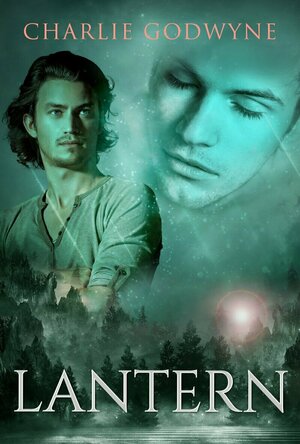
Lantern (Danubian #1)
Book
In the black night, I alone uphold the shrine of the seven lantern gods. The year is 2448....
MM Paranormal Romance
Kara Skinner (332 KP) rated Beauty and The Beast in Books
Sep 10, 2019
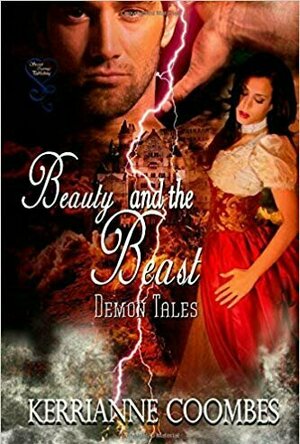
Princess Callindra of Tempath is in for some trouble when she runs aways from her mother’s castle and gets kidnapped by a vampire demon who will sell her into slavery. Her only hope out of there is with the help of a mysterious and hairy demon named Brigg, who is not in the least happy to be helping a human. He has hated humans ever since his father was cursed by a human woman, who turned all of them into hairy beasts for life. But he was drawn to this woman, as vexing as she could be. Every part of him was drawn to her and yearned to protect her and make her his. His inner demon was sure that she was his mate. But that was impossible, wasn’t it? How could he have a human for a mate?
I’m a huge sucker for Beauty and Beast stories, as you probably know if you’ve read some of my other reviews. Seriously. You can win some girls over with chocolate and others over with hugs and kisses, but nothing does it for me like an insecure love interest and a woman who’s his salvation because of her unconditional love. (Okay, maybe I’m a little high maintenance). So of course I loved this story! Brigg was wonderfully sweet and conflicted, even though he needs to stop listening to his idiot brother. Cally is a fantastic damsel in distress even though sometimes she just needs to think of the obvious and frickin’ tell someone she doesn’t want to go back home because her mother’s a bitch and she’s part demon. But you know, aside from that, the characters are great.
It’s totally understandable why Brigg dislikes humans. I mean, the only real exposure he had of them was from Cally’s mom, who cursed him and his brother to be hairy beasts instead of the handsome, practically human-looking demons they really were. Frankly, I’d be pissed too. I also understand his confusion when he falls himself falling for Cally when he thinks she’s completely human, and the daughter of a crazy witch/queen to boot. Nevertheless, he still protects her. He saves her from slavery, risking the wrath of her kidnapper to do it, and he keeps her safe. He does this even though he doesn’t think she could ever love him in return.
She was a vision, an image plucked right from his dreams. Maybe a time– before the curse– he had imagined such a beauty being his…. But he was no longer that young Rain demon, that young demon with smooth skin and a face as human as hers. He was a beast, an ugly monster who didn’t deserve the look of interest Cally was flashing right now.
What can I say? I love the insecurities. They are as sexy as hell when done right.
But even though his intentions are good, Brigg is not the smartest demon in the hellhole. As soon as his brother Torc enters the scene, it takes Brigg all of two minutes to decide that Cally has placed a spell on him to use him to get home. This would make sense, except by this point both Brigg and Cally were safe. In a palace. As the guests of a prince. Who was giving her a lift home. She would need to continue on with the spell and the act because…. ?
Like I said, not that fast of a thinker. But Cally isn’t much better. More than anything she wants to avoid her old home, with her abusive mother who was going to put her into an arranged marriage which would only end badly for Cally. Now she’s in an impenetrable palace that’s owned by Sam, who has been nothing but kind to her. He thinks he’s still being kind when he arranges for her ride home. And Cally doesn’t bother to tell him she doesn’t want to go home! Clearly, she’s just being melodramatic. She’s not that desperate.
She had thought about telling Sam, considered asking for his help, but she had been such a burden since Brigg rescued her, Call was frightened of rejection.
You think Sam’s rejection is going to be worse than having your horns filed off again before getting married to a prince that will likely torture you for the rest of your life when he finds out you’re a demon. Clearly, you don’t have your priorities straight.
But seriously, I loved the characters! I’m telling you, it’s Beauty and the Beast! My standards might be a tad low with this story arc.
There was a lot of confusing things in the plot as well. Like what era does this take place in? Cally rides home in a carriage and Brigg and Torc use swords. But Cally also wears t-shirts and jeans and she uses an electric torch, aka flashlight. It’s difficult enough to learn all of the nooks and crannies of the world the author built. There shouldn’t be confusion like flashlights with swords as well. Also, I felt like there was a lot of potential for a longer, more developed story. The whole thing felt very short to me. We never find out why Brigg’s father got cursed to begin with, and I’d love to know more about Brigg’s past, like how did he go crazy and get everyone to be afraid of him? That was never explained. Also, I know it’s unlikely, but I really wished there was some confirmation that Brigg and Cally are not brother and sister. After all, we know Cally’s mom has a past with Brigg’s father, Cally’s own father is MIA, and her horns are the same color as Brigg’s. Probably not anything, but just enough to make me wonder.
I don’t know. I liked this story enough to read it twice– that’s a huge compliment from me– but after reading it a second time and writing this review I’m wondering how good it really was. Maybe I just read it at the right time but didn’t like it as much. I don’t know. So three out of five stars on this one?

I’m a huge sucker for Beauty and Beast stories, as you probably know if you’ve read some of my other reviews. Seriously. You can win some girls over with chocolate and others over with hugs and kisses, but nothing does it for me like an insecure love interest and a woman who’s his salvation because of her unconditional love. (Okay, maybe I’m a little high maintenance). So of course I loved this story! Brigg was wonderfully sweet and conflicted, even though he needs to stop listening to his idiot brother. Cally is a fantastic damsel in distress even though sometimes she just needs to think of the obvious and frickin’ tell someone she doesn’t want to go back home because her mother’s a bitch and she’s part demon. But you know, aside from that, the characters are great.
It’s totally understandable why Brigg dislikes humans. I mean, the only real exposure he had of them was from Cally’s mom, who cursed him and his brother to be hairy beasts instead of the handsome, practically human-looking demons they really were. Frankly, I’d be pissed too. I also understand his confusion when he falls himself falling for Cally when he thinks she’s completely human, and the daughter of a crazy witch/queen to boot. Nevertheless, he still protects her. He saves her from slavery, risking the wrath of her kidnapper to do it, and he keeps her safe. He does this even though he doesn’t think she could ever love him in return.
She was a vision, an image plucked right from his dreams. Maybe a time– before the curse– he had imagined such a beauty being his…. But he was no longer that young Rain demon, that young demon with smooth skin and a face as human as hers. He was a beast, an ugly monster who didn’t deserve the look of interest Cally was flashing right now.
What can I say? I love the insecurities. They are as sexy as hell when done right.
But even though his intentions are good, Brigg is not the smartest demon in the hellhole. As soon as his brother Torc enters the scene, it takes Brigg all of two minutes to decide that Cally has placed a spell on him to use him to get home. This would make sense, except by this point both Brigg and Cally were safe. In a palace. As the guests of a prince. Who was giving her a lift home. She would need to continue on with the spell and the act because…. ?
Like I said, not that fast of a thinker. But Cally isn’t much better. More than anything she wants to avoid her old home, with her abusive mother who was going to put her into an arranged marriage which would only end badly for Cally. Now she’s in an impenetrable palace that’s owned by Sam, who has been nothing but kind to her. He thinks he’s still being kind when he arranges for her ride home. And Cally doesn’t bother to tell him she doesn’t want to go home! Clearly, she’s just being melodramatic. She’s not that desperate.
She had thought about telling Sam, considered asking for his help, but she had been such a burden since Brigg rescued her, Call was frightened of rejection.
You think Sam’s rejection is going to be worse than having your horns filed off again before getting married to a prince that will likely torture you for the rest of your life when he finds out you’re a demon. Clearly, you don’t have your priorities straight.
But seriously, I loved the characters! I’m telling you, it’s Beauty and the Beast! My standards might be a tad low with this story arc.
There was a lot of confusing things in the plot as well. Like what era does this take place in? Cally rides home in a carriage and Brigg and Torc use swords. But Cally also wears t-shirts and jeans and she uses an electric torch, aka flashlight. It’s difficult enough to learn all of the nooks and crannies of the world the author built. There shouldn’t be confusion like flashlights with swords as well. Also, I felt like there was a lot of potential for a longer, more developed story. The whole thing felt very short to me. We never find out why Brigg’s father got cursed to begin with, and I’d love to know more about Brigg’s past, like how did he go crazy and get everyone to be afraid of him? That was never explained. Also, I know it’s unlikely, but I really wished there was some confirmation that Brigg and Cally are not brother and sister. After all, we know Cally’s mom has a past with Brigg’s father, Cally’s own father is MIA, and her horns are the same color as Brigg’s. Probably not anything, but just enough to make me wonder.
I don’t know. I liked this story enough to read it twice– that’s a huge compliment from me– but after reading it a second time and writing this review I’m wondering how good it really was. Maybe I just read it at the right time but didn’t like it as much. I don’t know. So three out of five stars on this one?
Becs (244 KP) rated How NOT to Summon a Demon Lord in TV
Jul 22, 2019
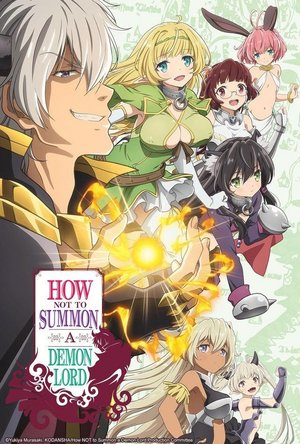
Catching and Action-Packed!
TRIGGER WARNINGS: memory loss, anger issues, agoraphobia, graphic injuries, fat-shaming, body-shaming, forced marriage, incest, manipulation, toxic relationship, mind control, misogynistic language, slavery, torture, violence, executions
I was generally worried at whether this show was going to be good or if it was going to be one of those trashy anime's that are just 'alright'. I randomly put it on as I had just finished my hundredth re-watch of Vampire Knight and was shocked. This was crafted into a rather enjoyable story that had an amazing cast of main characters. There was silliness, softcore (ecchi) content, action, and adventure.
Throughout the show, there are scenes that are deemed inappropriate and the first episode contains one of those "whoa there" scenes. I wouldn't recommend watching if you don't want somewhat sexual scenes littered throughout the show. Besides those moments, How NOT to Summon a Demon Lord is pretty fun and an enjoyable series that fits with the genre of the show.
How NOT to Summon a Demon Lord captures the whole overpowered main character but balances it with a main character that has limits to his power. There is also the whole sense of danger to those that are close to the main character. The story is told really well and wraps up nicely, leaving the ending open so that if more seasons do end up getting made it would work perfectly with continuing the story on. But if this was the end, then it ended on a good note.
You won't see much of the modern world in the show except for the very beginning. The setting is set in a parallel fantasy world (isekai) where the main character is instantly sucked into a world similar to the game that he was playing. There isn't much connection between the game world and the modern world, but it really isn't an issue as it happened early on in the show.
The show itself is about the main character, who plays an all-mighty powerful Demon Lord in a game in the modern world, but then gets physically summoned into this parallel fantasy world. The twist: the main character is actually stuck in the body of his character Diablo. The story follows a pretty typical plotline where the main character adapts to being in a new body, a new world, how he deals with his surroundings, and how he tackles the issues that arise.
The biggest plot point revolves around the two summoners: Rem and Shera. Each had their own reason for summoning Diablo and he even gets involved with those same issues, seeking to help them. It's insinuated incredibly well that these two young women are main characters alongside Diablo, but some issues arise. Like the slave collars that are around the women's necks should have been around Diablo's neck. The issues that these young women have are as weighty as the salve collars. Slavery is apparently legal in this world, but Diablo doesn't abuse his power and actually allows the women to do as they please, even going as far as forming a bond with both of them.
Overall, I enjoyed watching the story unfold and seeing the producers establish the difference between the modern world and the game that Diablo was experiencing. And even seeing Diablo overpower so many of the opponents he encountered throughout the world. I was entertained throughout every episode and ended up binging this in an entire night!
Generally, when you have a show like this, the characters have to carry a ton to really make the show good. In How NOT to Summon a Demon Lord, they do an exceptional job at portraying that. Diablo is a pretty solid main character, even being likable! The problem with action-packed shows like this with an overly powerful main character is that the character isn't likable and that makes the show rather boring. With this show, you do not get that vibe one bit. Diablo actually works because he's a generally nice guy at heart, never resorting to using his powers right away or even stop caring about whether or not he kills someone. His strength is evenly matched with his lack of communication and his heavy social anxiety. I mean, you get inside his head quite often and he uses both his brains and brawn to help in a rough spot, instead of just randomly firing about as most power main characters do. This really adds to the appeal of Diablo.
The other two main characters, Rem and Shera are two girls with their own reasons for summoning a powerful demon to aid them. Both are entertaining and even have their own backstories that really add to the story. Rem's backstory is a bit more emotional compared to Shera's but the watcher is able to emphasize with both excruciatingly well. Especially when all three main characters develop a sturdy friendship and gain the trust of the others. Shera is the glue that holds both Rem and Diablo together when they start doubting themselves.
There are a wide variety of antagonists and side characters that don't get a ton of focus, but they do help push the main cast and story along. These antagonists have their own goals and that causes serious conflict with the goals Diablo, Rem, and Shera have/want to do. But then there are also the side characters that are actually on the side of the three mains and do play important roles in various points of the story.
The art and visual effects were well down and it wasn't the same graphic scenes and spells as most anime's do. For instance, Diablo doesn't just spam the same spell over and over (like I do when I'm playing a game because I'm a button smasher haha) instead, he uses different attacks and spells for each occasion. The show doesn't shower blood around like it's rain *cough cough Game of Thrones cough cough*, but it does a good enough job letting the watcher know when someone gets hurt/ dies.
My final thoughts:
Overall, this was a well-done show that held the action and made the characters very likable, without rushing the story. There is comedy, action, magic, and a bit of a push on the boundary with softcore (ecchi) content but you get a good sense from the main characters and story that it's defiantly worth checking out.
I was generally worried at whether this show was going to be good or if it was going to be one of those trashy anime's that are just 'alright'. I randomly put it on as I had just finished my hundredth re-watch of Vampire Knight and was shocked. This was crafted into a rather enjoyable story that had an amazing cast of main characters. There was silliness, softcore (ecchi) content, action, and adventure.
Throughout the show, there are scenes that are deemed inappropriate and the first episode contains one of those "whoa there" scenes. I wouldn't recommend watching if you don't want somewhat sexual scenes littered throughout the show. Besides those moments, How NOT to Summon a Demon Lord is pretty fun and an enjoyable series that fits with the genre of the show.
How NOT to Summon a Demon Lord captures the whole overpowered main character but balances it with a main character that has limits to his power. There is also the whole sense of danger to those that are close to the main character. The story is told really well and wraps up nicely, leaving the ending open so that if more seasons do end up getting made it would work perfectly with continuing the story on. But if this was the end, then it ended on a good note.
You won't see much of the modern world in the show except for the very beginning. The setting is set in a parallel fantasy world (isekai) where the main character is instantly sucked into a world similar to the game that he was playing. There isn't much connection between the game world and the modern world, but it really isn't an issue as it happened early on in the show.
The show itself is about the main character, who plays an all-mighty powerful Demon Lord in a game in the modern world, but then gets physically summoned into this parallel fantasy world. The twist: the main character is actually stuck in the body of his character Diablo. The story follows a pretty typical plotline where the main character adapts to being in a new body, a new world, how he deals with his surroundings, and how he tackles the issues that arise.
The biggest plot point revolves around the two summoners: Rem and Shera. Each had their own reason for summoning Diablo and he even gets involved with those same issues, seeking to help them. It's insinuated incredibly well that these two young women are main characters alongside Diablo, but some issues arise. Like the slave collars that are around the women's necks should have been around Diablo's neck. The issues that these young women have are as weighty as the salve collars. Slavery is apparently legal in this world, but Diablo doesn't abuse his power and actually allows the women to do as they please, even going as far as forming a bond with both of them.
Overall, I enjoyed watching the story unfold and seeing the producers establish the difference between the modern world and the game that Diablo was experiencing. And even seeing Diablo overpower so many of the opponents he encountered throughout the world. I was entertained throughout every episode and ended up binging this in an entire night!
Generally, when you have a show like this, the characters have to carry a ton to really make the show good. In How NOT to Summon a Demon Lord, they do an exceptional job at portraying that. Diablo is a pretty solid main character, even being likable! The problem with action-packed shows like this with an overly powerful main character is that the character isn't likable and that makes the show rather boring. With this show, you do not get that vibe one bit. Diablo actually works because he's a generally nice guy at heart, never resorting to using his powers right away or even stop caring about whether or not he kills someone. His strength is evenly matched with his lack of communication and his heavy social anxiety. I mean, you get inside his head quite often and he uses both his brains and brawn to help in a rough spot, instead of just randomly firing about as most power main characters do. This really adds to the appeal of Diablo.
The other two main characters, Rem and Shera are two girls with their own reasons for summoning a powerful demon to aid them. Both are entertaining and even have their own backstories that really add to the story. Rem's backstory is a bit more emotional compared to Shera's but the watcher is able to emphasize with both excruciatingly well. Especially when all three main characters develop a sturdy friendship and gain the trust of the others. Shera is the glue that holds both Rem and Diablo together when they start doubting themselves.
There are a wide variety of antagonists and side characters that don't get a ton of focus, but they do help push the main cast and story along. These antagonists have their own goals and that causes serious conflict with the goals Diablo, Rem, and Shera have/want to do. But then there are also the side characters that are actually on the side of the three mains and do play important roles in various points of the story.
The art and visual effects were well down and it wasn't the same graphic scenes and spells as most anime's do. For instance, Diablo doesn't just spam the same spell over and over (like I do when I'm playing a game because I'm a button smasher haha) instead, he uses different attacks and spells for each occasion. The show doesn't shower blood around like it's rain *cough cough Game of Thrones cough cough*, but it does a good enough job letting the watcher know when someone gets hurt/ dies.
My final thoughts:
Overall, this was a well-done show that held the action and made the characters very likable, without rushing the story. There is comedy, action, magic, and a bit of a push on the boundary with softcore (ecchi) content but you get a good sense from the main characters and story that it's defiantly worth checking out.
Becs (244 KP) rated Marrow Charm in Books
Dec 20, 2019
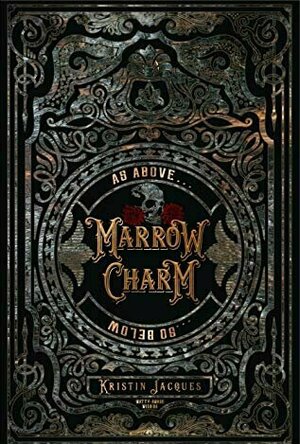
Dark and magical!!
Trigger Warnings: cannibalism, death, murder, gore, slavery, injury, abduction, absent parent(s), death of a parent(s), manipulation, violence
I was honestly surprised that I ended up loving this novel as much as I did. I had extremely high expectations for it and IT. DELIVERED. When I first picked it up, it took a good minute to actually get into the story. But once it clicked into place, I was devouring Marrow Charm with a thirst. It is heart-wrenching, action packed, enemies to lovers (kinda, a girl can dream), dark and oh so magical!
Marrow Charm follows a morally gray heroine, Azzy Brimvine in a world destroyed by magic. The magic plaguing the lands caused humans to retreat underground. But every so often, magical borne plagues will wipe out masses of human cities. These plagues create aberrations by striking those with magic. When Azzy’s brother is infected, she sets out with her mentor to the Above determined to save him. But, the world in the Above is not all gum drops and unicorns. It is plagued with monsters and humans, wild and cunning. Azzy must brave the perils that litter the Above to reach her brother before the Gate is opened.
Marrow Charm is a bit slow in the begin, but as you continue on it does pick up quite quickly. Once you hit that sweet spot though, your attention is gripped to the point where you don’t even want to put the book down because you are just enthralled in the complex world and characters. I would say the book starts picking up a few chapters in. This could also be a me only thing as I was slumping a bit when I started Marrow Charm, and we all know how slumps can ruin a book!
I was enthralled with not only the characters and their stories, but also the world. Kristin’s writing style is eloquent and breathtaking, and they included a couple of different themes throughout the story! Such as, family and friendship. It was really nice to see both of these take place when the main character had such a life of hardship. And don’t get me started on the complexity of the characters and world!
The characters are written in a way that draws the reader to them but they are also realistic in a way where their actions and thoughts are extremely relatable. This was really interesting to experience when reading, as I was not expecting to enjoy the characters as much as I did. The complexity of the world was also something that surprised me! There was no clear “good-side” or “bad-side” and the descriptions of everything was extremely well-done! You can tell that there is a higher, dark presence that is interwoven into the world but what it is, is unknown. Even at the ending of the novel. This was kind of a bummer, as I wanted to know what that presence was. But it also set it up nicely for book two: Skin Curse.
I can’t gush about Marrow Charm enough! It’s seriously one of my top books of the year and I can’t stop recommending it to everyone. If you are a fan of dark tales with fantasy and magical elements but also a hint of realism, then this is the book for you! But be warned, it does read ‘heavy.’ In the end though, the ‘heavy’ presence makes sense.
You can also find this review on my blog: bookingwayreads.wordpress.com

I was honestly surprised that I ended up loving this novel as much as I did. I had extremely high expectations for it and IT. DELIVERED. When I first picked it up, it took a good minute to actually get into the story. But once it clicked into place, I was devouring Marrow Charm with a thirst. It is heart-wrenching, action packed, enemies to lovers (kinda, a girl can dream), dark and oh so magical!
Marrow Charm follows a morally gray heroine, Azzy Brimvine in a world destroyed by magic. The magic plaguing the lands caused humans to retreat underground. But every so often, magical borne plagues will wipe out masses of human cities. These plagues create aberrations by striking those with magic. When Azzy’s brother is infected, she sets out with her mentor to the Above determined to save him. But, the world in the Above is not all gum drops and unicorns. It is plagued with monsters and humans, wild and cunning. Azzy must brave the perils that litter the Above to reach her brother before the Gate is opened.
Marrow Charm is a bit slow in the begin, but as you continue on it does pick up quite quickly. Once you hit that sweet spot though, your attention is gripped to the point where you don’t even want to put the book down because you are just enthralled in the complex world and characters. I would say the book starts picking up a few chapters in. This could also be a me only thing as I was slumping a bit when I started Marrow Charm, and we all know how slumps can ruin a book!
I was enthralled with not only the characters and their stories, but also the world. Kristin’s writing style is eloquent and breathtaking, and they included a couple of different themes throughout the story! Such as, family and friendship. It was really nice to see both of these take place when the main character had such a life of hardship. And don’t get me started on the complexity of the characters and world!
The characters are written in a way that draws the reader to them but they are also realistic in a way where their actions and thoughts are extremely relatable. This was really interesting to experience when reading, as I was not expecting to enjoy the characters as much as I did. The complexity of the world was also something that surprised me! There was no clear “good-side” or “bad-side” and the descriptions of everything was extremely well-done! You can tell that there is a higher, dark presence that is interwoven into the world but what it is, is unknown. Even at the ending of the novel. This was kind of a bummer, as I wanted to know what that presence was. But it also set it up nicely for book two: Skin Curse.
I can’t gush about Marrow Charm enough! It’s seriously one of my top books of the year and I can’t stop recommending it to everyone. If you are a fan of dark tales with fantasy and magical elements but also a hint of realism, then this is the book for you! But be warned, it does read ‘heavy.’ In the end though, the ‘heavy’ presence makes sense.
You can also find this review on my blog: bookingwayreads.wordpress.com
Hazel (1853 KP) rated Lies We Tell Ourselves in Books
Dec 17, 2018
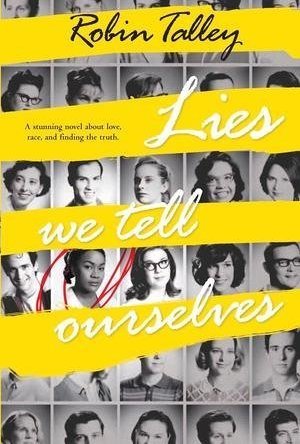
<i>This ARC was provided by the publisher via NetGalley in exchange for an honest review</i>
<i>Lies We Tell Ourselves</i> by Robin Talley is a realistic tale about the beginning of the integration of coloured people into white schools in late 1950s America. In Virginia it is 1959 and ten Negros are beginning their first day at Jefferson Highschool. The experience is narrated from one of the ten, Sarah’s, perspective. In other parts of the novel the voice changes to that of Linda, a particularly nasty white girl, who is one of countless students opposed to integration.
Although many young people will have been taught about the black civil right movement it is still shocking to read about the horrible things they had to endure. By writing in the first person, Talley encourages the reader to try to understand how they would feel in a similar situation. Sarah and her friends instantly become the victims of verbal and physical abuse that members of authority turn a blind eye to.
To Sarah, Linda is a nasty spoilt bully who, although does not join in with the taunting and abuse, is as bad as the rest of them. Through reading Linda’s account it becomes clear that her behaviour has a lot to do with her home life, in particularly with her father’s attitude towards her. After being forced to partner Sarah for a French project Linda begins to question why there is so much emphasis on skin colour, however not wanting to be shunned by her own friends she keeps these thoughts to herself.
Sarah is also struggling to come to terms with her sexual preference for girls. It has been drilled into her that these thoughts are a sin. She hides her true feelings from everyone and constantly berates herself mentally for being “unnatural”. But it turns out she may not be the only one with these thoughts.
The lies referred to in the title are not the blatant or harmful lies but rather the lies the characters believe or even want to believe. Each chapter begins with a lie that reflects what is occurring in the novel at that time; for example “There’s no need to be afraid” and “I don’t care what they think of me.” This is an interesting way of telling the story as it emphasizes Sarah’s determination to keep going despite what she is subjected to. It also reveals the mental struggles she faces. On the other hand the lies disclose Linda’s conflicting feelings towards the South’s current situation and segregation laws.
Although not a religious novel, each part begins with the title of a Christian hymn. It was the norm for everyone to go to church and, despite the separate churches, was something black and white people did. Sarah and Linda have faith in God yet they both use the bible’s teachings for opposing arguments. The religious aspect also highlights Sarah’s self-hatred and belief that she has fallen into sin.
Unfortunately in today’s world there are still issues with racism and homophobia however after reading <i>Lies We Tell Ourselves</i> it is evident that these situations have vastly improved, at least in the Western world, since the 1950s. Without children such as Sarah going through these horrible experiences nothing would have changed. There would still be separate schools, slavery and inaccurate opinions about race inequality. America has a lot to thank these brave students who were the first to create mixed race schools.
Overall this is a brilliant book. Well written and realistic, it really draws the reader in to the characters’ stories. Although <i>Lies We Tell Ourselves</i> is a work of fiction, it is historically accurate and can teach a lot about America’s history to young adults today.
<i>Lies We Tell Ourselves</i> by Robin Talley is a realistic tale about the beginning of the integration of coloured people into white schools in late 1950s America. In Virginia it is 1959 and ten Negros are beginning their first day at Jefferson Highschool. The experience is narrated from one of the ten, Sarah’s, perspective. In other parts of the novel the voice changes to that of Linda, a particularly nasty white girl, who is one of countless students opposed to integration.
Although many young people will have been taught about the black civil right movement it is still shocking to read about the horrible things they had to endure. By writing in the first person, Talley encourages the reader to try to understand how they would feel in a similar situation. Sarah and her friends instantly become the victims of verbal and physical abuse that members of authority turn a blind eye to.
To Sarah, Linda is a nasty spoilt bully who, although does not join in with the taunting and abuse, is as bad as the rest of them. Through reading Linda’s account it becomes clear that her behaviour has a lot to do with her home life, in particularly with her father’s attitude towards her. After being forced to partner Sarah for a French project Linda begins to question why there is so much emphasis on skin colour, however not wanting to be shunned by her own friends she keeps these thoughts to herself.
Sarah is also struggling to come to terms with her sexual preference for girls. It has been drilled into her that these thoughts are a sin. She hides her true feelings from everyone and constantly berates herself mentally for being “unnatural”. But it turns out she may not be the only one with these thoughts.
The lies referred to in the title are not the blatant or harmful lies but rather the lies the characters believe or even want to believe. Each chapter begins with a lie that reflects what is occurring in the novel at that time; for example “There’s no need to be afraid” and “I don’t care what they think of me.” This is an interesting way of telling the story as it emphasizes Sarah’s determination to keep going despite what she is subjected to. It also reveals the mental struggles she faces. On the other hand the lies disclose Linda’s conflicting feelings towards the South’s current situation and segregation laws.
Although not a religious novel, each part begins with the title of a Christian hymn. It was the norm for everyone to go to church and, despite the separate churches, was something black and white people did. Sarah and Linda have faith in God yet they both use the bible’s teachings for opposing arguments. The religious aspect also highlights Sarah’s self-hatred and belief that she has fallen into sin.
Unfortunately in today’s world there are still issues with racism and homophobia however after reading <i>Lies We Tell Ourselves</i> it is evident that these situations have vastly improved, at least in the Western world, since the 1950s. Without children such as Sarah going through these horrible experiences nothing would have changed. There would still be separate schools, slavery and inaccurate opinions about race inequality. America has a lot to thank these brave students who were the first to create mixed race schools.
Overall this is a brilliant book. Well written and realistic, it really draws the reader in to the characters’ stories. Although <i>Lies We Tell Ourselves</i> is a work of fiction, it is historically accurate and can teach a lot about America’s history to young adults today.
Jordan Binkerd (567 KP) rated All Systems Red (The Murderbot Diaries, #1) in Books
Aug 8, 2019 (Updated Aug 9, 2019)
Hilariously cynical and sarcastic narrator (2 more)
Bleak and dystopian universe
Complex characters and worldbuilding
An excellent novella
Meet Murderbot. Nobody else calls it that, of course - to most of the stupid humans it has to interact with, it’s just the security unit that the company made them bring along as part of the contract to safeguard the investment. But whereas most SecUnits are slaves to the central AI running whatever shoddy equipment the company sent along, Murderbot (as it thinks of itself) has hacked its own governor unit and can ignore whatever orders it wants, freeing it to stand around listlessly guarding stupid humans from dangers that are mostly non-existant as long as nobody does anything too moronic, devoting most of its energy to watching the terrabytes of serials that it downloaded from the entertainment feed last time they made contact. When things start to go wrong, initially it seems like just business as usual - life is cheap, and the contract for this equipment all went to the lowest bidder. But as incidents start to pile up, even Murderbot has to admit someone is trying to kill its humans. Even worse? Murderbot seems to have accidentally started to care about them…. Crap. It’s going to have to actually put in some effort this time around, isn’t it?
To put it simply, this is the best book I’ve read in quite a while. The entire thing is narrated by the extremely sarcastic, introverted, and misanthropic Murderbot, which makes for maybe the most engaging narrator since Harry Dresden. Don’t believe me? Read the first several pages on TOR's website. You know that thing with Charles Dickens where everything would be terribly depressing without his tongue-in-cheek style to bring the humor, rendering it impossible to abridge? No? I’m the only one to notice that? Oh well, moving on. This is like that - a dystopian wasteland of a society that is expanding across the cosmos using crappy low-budget equipment that’s liable to stop working on you when you most need it - to the point where it takes multiple incidents before the protagonists conclude that this isn’t business as usual. There’s also the moral ambiguity of the slavery-in-all-but-name of the Constructs that form the backbone of the labor force - sentient, at least without the governor unit, but forced to follow every whim of the humans they’re assigned to, even if those humans get bored and force them into gladiatorial combat or some such. These Constructs are described as androids, but are more accurately clone-based cyborgs fitted out for whatever task they’ll be doomed to for their term of service; part mechanical hardware, part expendable and easily-regrown meat, genderless and sexless unless designated for….that. And Murderbot? Murderbot just wants to be left alone, yet is a surprisingly deep and compelling character with a tragic backstory and motivations that are deceptively noble given its internal dialogue. Even its self-given name deserves a second look by the end of the book. I cannot recommend this book enough. And it’s a short read, clocking in at right about a hundred and fifty pages, technically more of a novella than a full-fledged novel. Now I just have to wait for whoever has the second book checked out from the library to give it back….
CONTENT: Some violence, not too gruesomely described. Some sexual references, including offhand mentions that some of the characters are in relationships that would be far outside the norm today (one character is said to have three romantic partners waiting together at home for them, for example). Murderbot also makes disparaging references to pleasurebots, but nothing explicit. Occasional R-rated profanity, but not too gratuitous.
To put it simply, this is the best book I’ve read in quite a while. The entire thing is narrated by the extremely sarcastic, introverted, and misanthropic Murderbot, which makes for maybe the most engaging narrator since Harry Dresden. Don’t believe me? Read the first several pages on TOR's website. You know that thing with Charles Dickens where everything would be terribly depressing without his tongue-in-cheek style to bring the humor, rendering it impossible to abridge? No? I’m the only one to notice that? Oh well, moving on. This is like that - a dystopian wasteland of a society that is expanding across the cosmos using crappy low-budget equipment that’s liable to stop working on you when you most need it - to the point where it takes multiple incidents before the protagonists conclude that this isn’t business as usual. There’s also the moral ambiguity of the slavery-in-all-but-name of the Constructs that form the backbone of the labor force - sentient, at least without the governor unit, but forced to follow every whim of the humans they’re assigned to, even if those humans get bored and force them into gladiatorial combat or some such. These Constructs are described as androids, but are more accurately clone-based cyborgs fitted out for whatever task they’ll be doomed to for their term of service; part mechanical hardware, part expendable and easily-regrown meat, genderless and sexless unless designated for….that. And Murderbot? Murderbot just wants to be left alone, yet is a surprisingly deep and compelling character with a tragic backstory and motivations that are deceptively noble given its internal dialogue. Even its self-given name deserves a second look by the end of the book. I cannot recommend this book enough. And it’s a short read, clocking in at right about a hundred and fifty pages, technically more of a novella than a full-fledged novel. Now I just have to wait for whoever has the second book checked out from the library to give it back….
CONTENT: Some violence, not too gruesomely described. Some sexual references, including offhand mentions that some of the characters are in relationships that would be far outside the norm today (one character is said to have three romantic partners waiting together at home for them, for example). Murderbot also makes disparaging references to pleasurebots, but nothing explicit. Occasional R-rated profanity, but not too gratuitous.
Darren (1599 KP) rated The Red Sea Diving Resort (2019) in Movies
Aug 6, 2019
Story: The Red Sea Diving Resort starts as Ari (Evans) an American Ari (Evans) working for the Israel Mossad agents rescues refugees from Ethiopia with his latest mission seeing Kabede (Williams) rescued. Ari does become grounded, but isn’t willing to let more innocent people murder, he comes up with an idea that could see thousands rescued.
Ari puts together a team including Rachel Reiter (Bennett), Jake (Huisman), Max (Hassell) and Sammy (Nivola) with the plan to lease a hotel known as the Red Sea Diving Resort to use it to get refugees out of Africa back to Israel. This is one of the riskiest rescue attempts tried and one that will bring history to life.
Thoughts on The Red Sea Diving Resort
Characters – Ari Levinson is leading an Israeli group of agent, who are trying to rescue Ethiopian refugees by taking them through Sudan, giving them their only hope to make it out alive. He is willing to risk everything to make it happen by taking a mission which will risk their own lives to lead them out to see, remaining calm through the operations which will see them become targets of the local generals. Rachel is one of the team, just by being a woman she is risking even more than the rest, though her language skills are key to the whole operation. Kabede Bimro is the connection with Ari that leads the refugees to him, he becomes one of the most wanted men because of his actions, but will risk everything for his own family. Ethan Levin is the one that tries to control Ari on his mission, he doesn’t agree with most of what he does, knowing if he was to get caught it could create an international incident.
Performances – Chris Evans takes his first major role since leaving the role as Captain America, he does show he can handle the serious side of acting even though his character does feel like branch of what Captain America stood for. Haley Bennett is strong throughout, in a world that her character shouldn’t feel safe in. Ben Kingsley does what you would expect in his authority role, while Michael Kenneth Williams is the most interesting character though we could have spent more time with his character.
Story – The story here follows an Israeli agent that risked everything to try and rescue as many Ethiopian refugees as he could using a Sudanese hotel as a cover to hide them and move them through to safety despite heavy pressure from the military forces in the country. This is another incredible story of how somebody and their team would do the right thing for the human race that would be left facing a future which would see them killed or forced into slavery if they couldn’t get free. It should be seen to highlight the continuing problems in the world along with the incredible work that was done. We are kept waiting to see how many will get rescued and how they will overcome the obstacles placed in their way, though it would be fair it wouldn’t be a story if they had failed.
History – This is a moment in history which showed a country reaching out to help in secret when another country would rather butcher their own people.
Settings – The film creates the realistic settings that only make this feel like we are part of the era it is set in, we see how much was being risked in what could be considered a calm location of a hotel.
Scene of the Movie – Runway.
That Moment That Annoyed Me – The fact that his behaviour actually still happens in the world.
Final Thoughts – This is a highlight on just what was risked to save thousands of stranded refugees, it has top class acting and shows that we can achieve great things if we worked together.
Overall: Brilliant look at bravery.
Ari puts together a team including Rachel Reiter (Bennett), Jake (Huisman), Max (Hassell) and Sammy (Nivola) with the plan to lease a hotel known as the Red Sea Diving Resort to use it to get refugees out of Africa back to Israel. This is one of the riskiest rescue attempts tried and one that will bring history to life.
Thoughts on The Red Sea Diving Resort
Characters – Ari Levinson is leading an Israeli group of agent, who are trying to rescue Ethiopian refugees by taking them through Sudan, giving them their only hope to make it out alive. He is willing to risk everything to make it happen by taking a mission which will risk their own lives to lead them out to see, remaining calm through the operations which will see them become targets of the local generals. Rachel is one of the team, just by being a woman she is risking even more than the rest, though her language skills are key to the whole operation. Kabede Bimro is the connection with Ari that leads the refugees to him, he becomes one of the most wanted men because of his actions, but will risk everything for his own family. Ethan Levin is the one that tries to control Ari on his mission, he doesn’t agree with most of what he does, knowing if he was to get caught it could create an international incident.
Performances – Chris Evans takes his first major role since leaving the role as Captain America, he does show he can handle the serious side of acting even though his character does feel like branch of what Captain America stood for. Haley Bennett is strong throughout, in a world that her character shouldn’t feel safe in. Ben Kingsley does what you would expect in his authority role, while Michael Kenneth Williams is the most interesting character though we could have spent more time with his character.
Story – The story here follows an Israeli agent that risked everything to try and rescue as many Ethiopian refugees as he could using a Sudanese hotel as a cover to hide them and move them through to safety despite heavy pressure from the military forces in the country. This is another incredible story of how somebody and their team would do the right thing for the human race that would be left facing a future which would see them killed or forced into slavery if they couldn’t get free. It should be seen to highlight the continuing problems in the world along with the incredible work that was done. We are kept waiting to see how many will get rescued and how they will overcome the obstacles placed in their way, though it would be fair it wouldn’t be a story if they had failed.
History – This is a moment in history which showed a country reaching out to help in secret when another country would rather butcher their own people.
Settings – The film creates the realistic settings that only make this feel like we are part of the era it is set in, we see how much was being risked in what could be considered a calm location of a hotel.
Scene of the Movie – Runway.
That Moment That Annoyed Me – The fact that his behaviour actually still happens in the world.
Final Thoughts – This is a highlight on just what was risked to save thousands of stranded refugees, it has top class acting and shows that we can achieve great things if we worked together.
Overall: Brilliant look at bravery.