
Search
Search results

ClareR (6256 KP) rated Young Women in Books
Apr 12, 2023
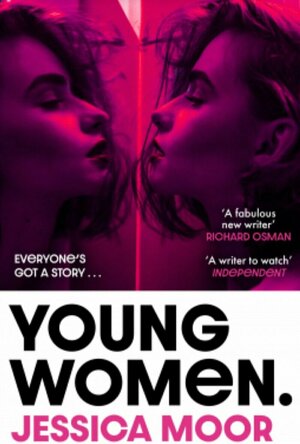

Young Women is set against the #MeToo era. It’s a fascinating read, and it was interesting to take a look into the lives of Emily and her friend Tamsin.
Emily meets Tamsin at a protest march and they become friends very quickly. Tamsin is an actress who seems to be living a very expensive life. She owns a flat in Soho, eats in expensive restaurants and drinks in even more expensive bars. In contrast, Emily shares a small flat, and works for a charity that deals with women’s advocacy. Her life is very different, and she’s excited by what Tamsin has to offer.
When an actress comes forward to accuse a film director of sexual assault, Emily realises that Tamsin is involved in some way.
This novel looks at how women can be coerced into keeping quiet about assault and in this case, with large sums of money. We see how men have all the power, how acts of sexual assault by males are all too frequent and commonplace, and how women can make themselves complicit whilst experiencing trauma.
There’s a lot to talk about in this novel, and I think it would make an outstanding book club book. It would certainly create a great deal of discussion around both sides of the equation. All of the men are written as complication inappropriate behaviours around women, and the women initially take the money in exchange for their silence, only to disclose what happened to them later.
This is a brilliant book, I hope people will read it and discuss the questions it raises about our society as a whole.

Gwenna The Welsh Confectioner (The New Zealand Immigrant Collection) by Vicky Adin
Book
Against overwhelming odds, can she save her legacy? Gwenna's life is about to change. Her father is...
Historical Fiction Women's Fiction New Zealand Family Saga
ClareR (6256 KP) rated Circus of Wonders in Books
Mar 15, 2022
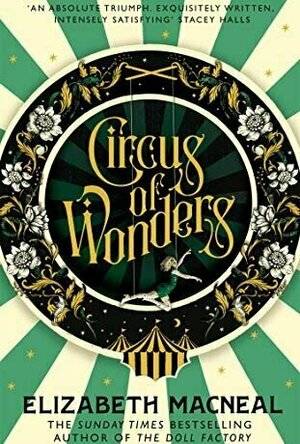


After reading The Doll Factory, I was on the look out for Elizabeth Macneal’s next book. Circus of Wonders has NOT disappointed me.
Elizabeth Macneal has described what it is like to be on the margins of society - an outcast because you don’t look the same as everyone else. Nell lives in a time where you are shunned for having birthmarks such as hers. She is considered to be bad luck, a curse. Not helped by the fact that her mother had died in childbirth. Her father constantly reinforces this, and won’t even touch her. Nell’s beloved brother is her sole comfort. He cares for her, and promises to take her with him when he marries.
But Nell’s father sells her to Jasper Jupiters Circus of Wonders. Jasper is a man who is hellbent on being a success, and thinks nothing of using Nell and others like her, to achieve greatness. Jasper and his brother Toby, are both survivors of the Crimean war, and clearly carry many secrets.
Themes such as exploitation, ownership, differences, power, sibling love, secrets, love and loss are central to this book.
Nell is a constant surprise. She goes from being a scared, vulnerable girl, to becoming the centre of attention, in control of all those who come to watch her. This is the other side to the P. T. Barnum story. We’ve probably all heard of ‘The Greatest Showman’, but there’s the other exploitative side that seems to have been brushed under the carpet. This book shows that side.
I loved this book, and I wouldn’t hesitate to tell you all to go out and buy it!

Laura Doe (1350 KP) rated To Sir Phillip, With Love (Bridgertons, #5) in Books
Jan 8, 2022
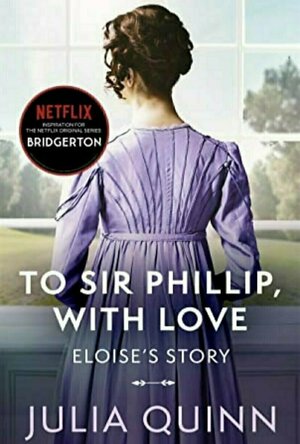
The Bridgerton stories just get better and better. This one has definitely been my favourite so far, but I think that might be because Eloise was my favourite female Bridgerton anyway.
I wondered how Julia Quinn was planning on replacing the Lady Whistledown’s Society Paper excerpts at the start of the chapters after she retired, but having excerpts from Eloise’s letters seemed like the perfect replacement throughout this book. It really gave an insight into Eloise’s thoughts at each of the important points in her life when she was writing to someone she loved.
As much as it was difficult to read about Phillip and his struggles to control his temper, it was very well done and knowing the background behind his temper helped to understand his character too. I was glad that from the moment Eloise entered his life he tried to be a better father to his children and also appeared a lot calmer than he was at first. This is the opposite to the previous books where most of the men seems to become angry quite quickly at their future wives as they’re “infuriating” before it quickly turns into love. So it was quite nice to have it a different way where he didn’t frequently fly into a rage over something that his wife had said.
I think the Bridgerton books are very clever, as they don’t give too much away about each sibling, making you want to read the next book to learn more about them and not just the snippets that you see of them in each book. I will be starting the next book asap!
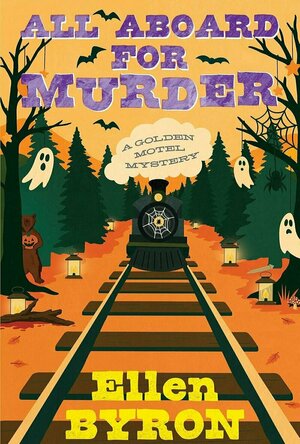
All Aboard for Murder
9.0 Rate It
Book
Dee Stern is starting to feel at home running her Golden Motel in the scenic California village...

Merissa (14202 KP) rated Learning To Breathe Again (The Work of Becoming #1) in Books
Oct 19, 2026

LEARNING TO BREATHE AGAIN is the first book in The Work of Becoming series, set in America's Depression era, featuring two very different women - on the surface, at least.
Mary is living in Miami and is happily married to Edward, but under strain as she looks after both their daughter and her mother. Understandably, it knocks her off her feet when she loses both within a short amount of time. On the other end of the spectrum, Elena is living in New York City with her husband, William, spending money on silk, going to fancy restaurants and Broadway. Their lives briefly overlap at the World Fair in Chicago, before William and Edward meet up to make future plans.
This was an amazing story, giving me more than I had envisaged. The plight of both Mary and Elena is incredibly detailed, showing just how limited their options are, what society expects of a wife, and how much of a choice they actually had.
I will say, on a personal note as an asthma sufferer, the scenes of the sugar cane burning were so vivid, I found myself taking breaths for Mary.
This was a beautifully written introduction to the series, and I can't wait to continue with the series and see what the future holds for both Mary and Elena. 4 out of 5 great stars.
** The same worded review will appear elsewhere. **
* A copy of this book was provided to me with no requirements for a review. I read this book voluntarily; the comments here are my honest opinion. *
Merissa
Archaeolibrarian
Oct 16, 2026

Hazel (1853 KP) rated Small Great Things in Books
May 24, 2017
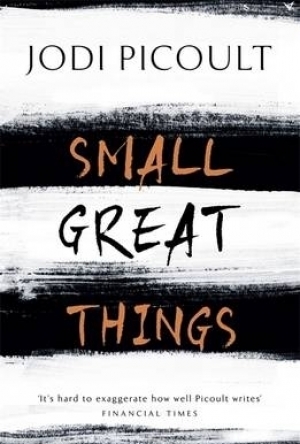
Small is an Understatement
Jodi Picoult has been my favourite author since I first came across her novels in 2008. With twenty-three novels under her belt, she continues to delight readers with her page-turning stories. Most of Picoult’s books contain a moral issue, often, but not always, in the form of medical ethics, as well as a hefty court case. Although following along similar lines, Small Great Things is a radical, revolutionary book, which, with great courage, Picoult has written with the intent to expose the reader to truths that most of us, as a society, are intentionally oblivious to.
The gist of the storyline is that a baby dies whilst under the care of a nurse, prompting the grieving parents to take her to court with the accusation of murder. Although that sounds like an interesting story, it barely begins to describe what the book is about. The character on trial, Ruth, is an African American labour and delivery nurse – something that in this day and age need not by an issue. On the other hand, the parents of the baby are White Supremacists: seriously racist with the belief that white people are the master race. The father, Turk, refuses to let his wife and child be treated by Ruth, however circumstances result in her being the only nurse available to watch Davis, when, unfortunately, he so happens to go into cardiac arrest. Although the reader knows that Ruth is not at fault, Turk insists she murdered his child – but is he accusing her of medical negligence, or punishing her for being black?
Three characters, all with different views and experience when it comes to racism, alternately narrate Small Great Things. Ruth and Turk represent the extremes at either side of the scale. Ruth experiences first hand the negative impact of prejudice in the American system and society, not only through this court case, but in everyday life as well. She also reveals the difficulties growing up in a predominately white environment, never feeling like she fitted in with her peers. Alternatively, Turk spent his teenage years attending KKK rallies, participating in a white power movement, and beating up anyone who was different: black, foreign, gay, Jewish and so forth.
The third character represents the majority of white people living in America. Kennedy is a public defender and the lawyer assigned to Ruth’s case. Like most of the population, she believes that she is not racist, and persuades Ruth to leave the colour of her skin out of the argument. However, as she gets to know her client, she begins to realize that it is nigh on impossible to ignore racial prejudice.
Picoult shocks the reader on two accounts: one, the way that people of colour have been, and still are, treated; and two, the revelation that an invisible empire of White Supremacists are living amongst us. Yet there is a third way in which Picoult provokes outrage – she indirectly accuses the reader of being racist, too.
There is always something to learn in a Jodi Picoult novel, for instance medical terminology, or the way in which a court trial is conducted. Small Great Things provides a lot more eye opening information than any of her previous books, unveiling facts about such a controversial subject.
Through Kennedy, the reader’s eyes are opened to the racial discrimination that we all turn a blind eye to. Ignored are the difficulties African Americans suffer when going shopping, applying for jobs, attending school, walking down the street, sitting on a bus, and so forth. Picoult asks me as a reader to think about how my life has been affected by racial discrimination: being served politely in shops because I am white, not having my ethnicity questioned when applying for college etc. Living in Britain I have not experienced openly hateful comments or behaviours towards people with a different skin tone – I used to believe this was primarily an American problem. Yet, Small Great Things has really made me think about the hierarchy of power within society, particularly in regards to the ethnicity of those at the top, compared with those at the bottom.
Jodi Picoult sat on the idea of writing a book about racism for well over a decade, yet it is particularly apt that it is published now, with the current predicaments America is facing. Although we have come a long way in attempts to achieve equality for all – compare the trial in To Kill A Mockingbird to Picoult’s version – recent events have revealed that we are no where near.
Small Great Things will shock everyone who reads it regardless of their ethnicity and so forth. Many may find it uncomfortable to read, become upset or outraged, and even feel like they are being directly targeted. If this is the case, then good – it should do that. Everyone needs to read this book. On the one hand it is a brilliant, well told story with a beautiful, almost poetic narrative, and on the other, it causes us to face up to the issues we are forever making light of or overlooking entirely. We have grown up believing that racism is a form of hatred when, actually, it is about power. However Small Great Things makes you feel, it is definitely worth reading, especially for the satisfying ending – one that you do not see coming.
Hazel (1853 KP) rated Small Great Things in Books
Dec 7, 2018
Jodi Picoult has been my favourite author since I first came across her novels in 2008. With twenty-three novels under her belt, she continues to delight readers with her page-turning stories. Most of Picoult’s books contain a moral issue, often, but not always, in the form of medical ethics, as well as a hefty court case. Although following along similar lines, <i>Small Great Thing</i>s is a radical, revolutionary book, which, with great courage, Picoult has written with the intent to expose the reader to truths that most of us, as a society, are <s>intentionally</s> oblivious to.
The gist of the storyline is that a baby dies whilst under the care of a nurse, prompting the grieving parents to take her to court with the accusation of murder. Although that sounds like an interesting story, it barely begins to describe what the book is about. The character on trial, Ruth, is an African American labour and delivery nurse – something that in this day and age need not by an issue. On the other hand, the parents of the baby are White Supremacists: seriously racist with the belief that white people are the master race. The father, Turk, refuses to let his wife and child be treated by Ruth, however circumstances result in her being the only nurse available to watch Davis, when, unfortunately, he so happens to go into cardiac arrest. Although the reader knows that Ruth is not at fault, Turk insists she murdered his child – but is he accusing her of medical negligence, or punishing her for being black?
Three characters, all with different views and experience when it comes to racism, alternately narrate<i> Small Great Things</i>. Ruth and Turk represent the extremes at either side of the scale. Ruth experiences first hand the negative impact of prejudice in the American system and society, not only through this court case, but in everyday life as well. She also reveals the difficulties growing up in a predominately white environment, never feeling like she fitted in with her peers. Alternatively, Turk spent his teenage years attending KKK rallies, participating in a white power movement, and beating up anyone who was different: black, foreign, gay, Jewish and so forth.
The third character represents the majority of white people living in America. Kennedy is a public defender and the lawyer assigned to Ruth’s case. Like most of the population, she believes that she is not racist, and persuades Ruth to leave the colour of her skin out of the argument. However, as she gets to know her client, she begins to realize that it is nigh on impossible to ignore racial prejudice.
Picoult shocks the reader on two accounts: one, the way that people of colour have been, and still are, treated; and two, the revelation that an invisible empire of White Supremacists are living amongst us. Yet there is a third way in which Picoult provokes outrage – she indirectly accuses the reader of being racist, too.
There is always something to learn in a Jodi Picoult novel, for instance medical terminology, or the way in which a court trial is conducted. <i>Small Great Things</i> provides a lot more eye opening information than any of her previous books, unveiling facts about such a controversial subject.
Through Kennedy, the reader’s eyes are opened to the racial discrimination that we all turn a blind eye to. Ignored are the difficulties African Americans suffer when going shopping, applying for jobs, attending school, walking down the street, sitting on a bus, and so forth. Picoult asks me as a reader to think about how my life has been affected by racial discrimination: being served politely in shops because I am white, not having my ethnicity questioned when applying for college etc. Living in Britain I have not experienced openly hateful comments or behaviours towards people with a different skin tone – I used to believe this was primarily an American problem. Yet, <i>Small Great Things</i> has really made me think about the hierarchy of power within society, particularly in regards to the ethnicity of those at the top, compared with those at the bottom.
Jodi Picoult sat on the idea of writing a book about racism for well over a decade, yet it is particularly apt that it is published now, with the current predicaments America is facing. Although we have come a long way in attempts to achieve equality for all – compare the trial in <i>To Kill A Mockingbird</i> to Picoult’s version – recent events have revealed that we are no where near.
<i>Small Great Things</i> will shock everyone who reads it regardless of their ethnicity and so forth. Many may find it uncomfortable to read, become upset or outraged, and even feel like they are being directly targeted. If this is the case, then good – it should do that. Everyone needs to read this book. On the one hand it is a brilliant, well told story with a beautiful, almost poetic narrative, and on the other, it causes us to face up to the issues we are forever making light of or overlooking entirely. We have grown up believing that racism is a form of hatred when, actually, it is about power. However <i>Small Great Things </i>makes you feel, it is definitely worth reading, especially for the satisfying ending – one that you do not see coming.

Eilidh G Clark (177 KP) rated The Portrait of Mr W.H. in Books
May 14, 2017
. As a paradox to the realism and ethics of the period, decadent writers, artists, and poets challenged a society that strove for a standard in public discourse.
First published in 1889, Oscar Wilde’s The Portrait of Mr W.H., is a short story about the efforts of three characters trying to discover the identity of Shakespeare’s Mr W.H. ; the dedicatee of his many sonnets. Wilde’s novel is a prime example of decadent literature and aestheticism, which, as a result, challenges the Victorian ideals of moral decency and public rectitude. The author uses paradox in the novel to present a theory that contradicts the conservative critics of Shakespeare’s sonnets.
Wilde presents a subjective interpretation of Shakespeare’s sonnets that portrays homoerotic sexual desire as the force for creative inspiration. Foremost, through the character Cyril Graham, the author demonstrates that art is ‘an attempt to realise one’s own personality on some imaginative plane out of reach of the trammelling accidents and limitations of real life’, (Wilde, p.111).
Taking from a hypothesis in the previous century by Edmund Malone and Thomas Tyrwhitt, the character of Cyril forms a theory in which Mr W.H. is a young actor named Willie Hughes, employed by Shakespeare and who is the muse to which the sonnets are devoted. Cyril investigates each poem and pieces together a theory he believes to be true.
On the surface, Cyril’s theory derives from feeling and beauty rather than logic and instruction.
The withholding of facts in Shakespeare’s sonnets energises Cyril. He scours the poems to find a clue that harmonise with his own feelings. Cyril believes that Shakespeare influences his readers by guiding them to Willie Hughes.
Cyril, spurned by the moralistic interpretations of previous critics, becomes enthralled by Shakespeare’s muse.

Mekkin B. (122 KP) rated His Majesty's Dragon in Books
Sep 14, 2017
Set during the Napoleonic War, British officer and gentleman Captain William Laurence has his life turned upside down after seizing a rare dragon egg from a captured French vessel. Led by an unwavering sense of duty and a growing affection for his new dragonet, Temeraire, he must leave behind everything he knows to join the mysterious and disreputable Aerial Corps.
Naomi Novik knows her stuff. This book is chock full of amazing worldbuilding. Her mastery of naval maneuvers, English society, and the history of the Napoleonic wars is immersive in its completeness. She wastes no time coddling the reader with infodumps or explanations, although the drawback is that it is occasionally so detailed and alien to me that my eyes would glaze over and slide completely past a paragraph filled with information about where Napoleon's forces were and what they were doing.
Laurence himself gets flack as a character for being stiff and "unprogressive", but I feel this is somewhat unwarranted. He's compelling precisely because he exhibits a mindset that would be entirely normal for a man of his station in his time, and slowly has to adjust everything he thinks about class, gender, and duty. His stiffness and reserve can seem alien at times, but we empathize completely with his love of the bright and lovely Temeraire.
This book does have some pacing problems. It is slow in places, particularly during their training and Loch Laggan, and in others cuts chapters far too early, leaving one feeling a bit of whiplash as the next chapter starts up.
Still, the premise is amazing, the dragons are glorious, and I spent an entire night reading this book cover to cover. If you like Bloody Jack, or wondered what How To Train Your Dragon would look like if it were set during the Napoleonic war, you'll definitely enjoy this one.