

Gareth von Kallenbach (980 KP) rated Money Monster (2016) in Movies
Aug 6, 2019
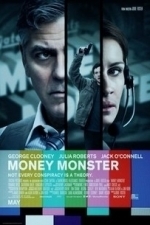

Clooney, who serves as the show’s host, quickly finds himself in the middle of a storm of tension and deception as he and his captor try to discover what happened to over $800 million in investments. The film itself is sufficient as an overview for satisfying our need for some sense of understanding at how corrupt and unstable the financial industry can be. Through much of the film, I found myself wondering about how many people wanted these same answers in 2008 during the financial market meltdowns and the collapse of the housing markets. The film approaches this anger that hit the American working class, but do not delve deeper than the superficial issues and discontent. There is a major lack of depth and this might be a metaphor for the industry itself that is built on confusion, misdirection, and a lack of substance. The plot is simplistic and does not allow for any surprises or twists.
It is a very straightforward movie where a flawed character wants answers. He wants closure. He wants to bring to justice the people who ruined the lives of countless Americans and took advantage of their desire to experience the American Dream. Despite the lack of complexity and a few holes in the storytelling, Money Monster provides a few laughs and leaves the audience asking questions about how deep the problems and corruption may be within our financial system nearly 8 years after the collapse. It makes us want to “follow the money” in the hopes that we will find answers.

blueirisfox (125 KP) rated Write to Market: Write a Book that Sells (Write Faster, Write Smarter 3) in Books
Feb 15, 2020 (Updated Feb 15, 2020)

From watching his videos, I understood the level and tone of the advice he would be giving in his books, and I've gotta say, the guy is an absolute gift to the writing community.
Even if you don't buy any of his books, there is so much to learn from him for free on his YouTube channel: from plotting to selling, this guy pretty much has it all.
Saying that, I still 100% recommend buying his Write Faster, Write Smarter book series, because I can't stress enough how amazing his targeted exercises are.
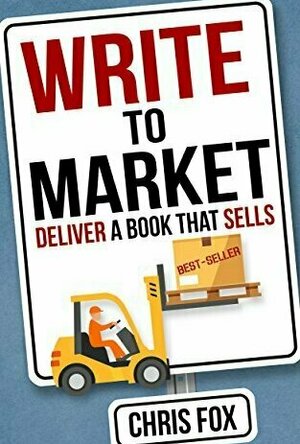
For this specific book in the series, he explains how to effectively sell books to targeted audiences. This can sound a bit controversial, as if you were simply copying an idea and trying to cash in on it. BUT THAT'S NOT IT AT All. Chris Fox himself shuts down the idea of copying hit books quite early on. What this book will do, is explain to you how to use popular tropes to your advantage.
If you're not really sure about this book from my review, check out its page on Amazon and read the first few pages. Better yet, check out Chris Fox's YouTube channel and get a feel for what this guy is like, because at the end of the day we all absorb information differently and find certain things useful that others simply don't.
Anyways, I hope that this helped someone find the tools that they need in order to do Storytelling some justice.
Peace out,
blueirisfox

Financial Post – Canadian Business & Investing
News and Magazines & Newspapers
App
Get the news you need with the Financial Post app for iPhone and iPad. Find insight on demand from...

National Geographic Traveller (UK)
Travel and Magazines & Newspapers
App
Subscribe to the National Geographic Traveller (UK) app to enjoy all of the award-winning content...

Where Memories Go: Why Dementia Changes Everything
Book
THE SUNDAY TIMES BESTSELLER - AS HEARD ON BBC RADIO 4 BOOK OF THE WEEK 'The tenuous but vital...

Sentimental Murder: Love and Madness in the Eighteenth Century
Book
On an April evening in 1779, a woman is shot on the steps of Covent Garden. Her murderer is a young...
Sextant: A Voyage Guided by the Stars and the Men Who Mapped the World's Oceans
Book
In the tradition of Dava Sobel's 'Longitude' comes sailing expert David Barrie's compelling and...
Copywriting in a Week: Be a Great Copywriter in Seven Simple Steps
Book
Great copywriting just got easier It's strange to think that there was a time when only the...

Creative Strategy Generation: Using Passion and Creativity to Compose Business Strategies That Inspire Action and Growth
Book
Successful strategies must have one key element to produce spectacular results for your business -...
Directors Tell the Story: Master the Craft of Television and Film Directing
Bethany Rooney and Mary Lou Belli
Book
Move over, movies: the freshest storytelling today is on television, where the multi-episodic format...