Search

Search only in certain items:

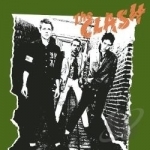
Clash by The Clash
Clash by The Clash
1977 | Rock
8.6 (5 Ratings)
Album Favorite

"This song has this kind of rocksteady beat over a little bit of a punk rock thing, but I could relate to it because it still sounded like folk music. It wasn’t over the top like the Sex Pistols, it was music from the street and for the people and it had a heartbeat. Joe was explaining the situation in the song much like Bob too, and something in my head just clicked where I was like, ‘This is the same.’ That sent me even further on my musical course. “When I first heard Joe and Mick [Jones, lead guitarist in The Clash] get together and play those beats with the simple guitar stabs, I knew that all I cared about was lyrics. I didn’t care about the music or playing technical. Of course, I was only 13 years old and now I care much more about that, but at this point I just wanted to communicate my message and The Clash showed me the way. After that I got even deeper into storytelling punk rock music."

Source
  
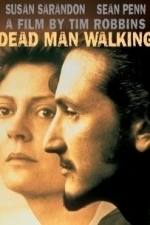
Dead Man Walking (1995)
1995 | Drama, Mystery

"I think the next one was Dead Man Walking. One, it was a brilliant film with brilliant performances, but I thought the filmmaker put forth the question without giving us the answers. And I thought he did it masterfully. You know, it’s a question of capital punishment. It wasn’t preachy, it wasn’t didactic, it wasn’t sort of a polemic that you kind of go, “Let’s investigate this like an English class.” It was telling you a great story because, you know, all the audience wants to hear is what happened next. So it was telling you a great story, and based on the story telling I found my perspective changing. I had great sympathy for Sean Penn’s character and then suddenly I didn’t. And I thought he deserved exactly what he got. And then in the next fifteen minutes, my point of view would change. That’s why I thought it really involved you on an emotional level on the question of capital punishment. But even more than that I think it showed what film can do and what really great storytelling can do."

Source
  
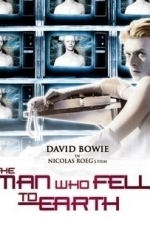
The Man Who Fell to Earth (1976)
1976 | Drama, Sci-Fi

"After getting my brain stretched by Kubrick, the next “favorite director” I started to discover as a preteen and teen was Nicolas Roeg. Like 2001 before it, The Man Who Fell to Earth was sci-fi that reached out and grabbed my mind, spun it around, and made me want to see it over and over again. Roeg’s use of music and surreal imagery made the film both a visceral and an intellectual experience simultaneously—a heartbreaking puzzle—still my favorite kind of film experience. Don’t Look Now is probably my favorite scary movie of all time, and a model for the now overused and underachieved expression “a smart genre film.” Now, that might mean a movie that’s marginally less dopey than most mainstream films that deal with the occult, but in the days of this and Rosemary’s Baby, etc., the emphasis was much more on smart than on genre. And Walkabout is an amazing piece of nearly wordless visual storytelling that left me desperately in love with Jenny Agutter for years afterward."

Source
  
40x40

KeithGordan recommended Don't Look Now (1973) in Movies (curated)
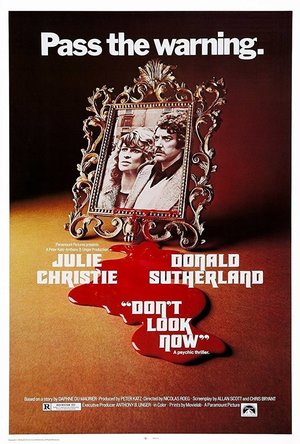
 
Don't Look Now (1973)
1973 | Drama, Horror, Thriller

"After getting my brain stretched by Kubrick, the next “favorite director” I started to discover as a preteen and teen was Nicolas Roeg. Like 2001 before it, The Man Who Fell to Earth was sci-fi that reached out and grabbed my mind, spun it around, and made me want to see it over and over again. Roeg’s use of music and surreal imagery made the film both a visceral and an intellectual experience simultaneously—a heartbreaking puzzle—still my favorite kind of film experience. Don’t Look Now is probably my favorite scary movie of all time, and a model for the now overused and underachieved expression “a smart genre film.” Now, that might mean a movie that’s marginally less dopey than most mainstream films that deal with the occult, but in the days of this and Rosemary’s Baby, etc., the emphasis was much more on smart than on genre. And Walkabout is an amazing piece of nearly wordless visual storytelling that left me desperately in love with Jenny Agutter for years afterward."

Source
  
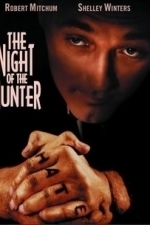
The Night of the Hunter (1955)
1955 | Drama, Mystery
8.8 (6 Ratings)
Movie Favorite

"I was twenty years old when I first saw it. It terrified me then, and still does.
 The preacher, played by Robert Mitchum, is the most frightening
 psychopath I’ve ever seen depicted. This is the only film directed by Charles Laughton, and its haunting, over-the-top storytelling is reminiscent of Laughton’s own character portrayals. The poetic, expressionistic images are by Stanley Cortez, a true American master who I fortunately came to know many years before his death. Stanley photographed, among others, The Magnificent Ambersons and The Three Faces of Eve, in which his lighting is equally unique. The disturbing orchestral score is by Walter Schumann, who also wrote the Dragnet theme and whose music underlines and drives the horror the way Bernard Herrmann’s does in Psycho. This is one of James Agee’s rare screenplays—another was The African Queen—and it captures America in the Depression as
 well as did his book, Let Us Now Praise Famous Men, with photographs by Walker Evans. The film’s story is an American equivalent of the Brothers Grimm."

Source
  
40x40

Greg Mottola recommended The 400 Blows (1959) in Movies (curated)
 
The 400 Blows (1959)
1959 | Drama
(0 Ratings)
Movie Favorite

"One of the reasons this movie is important to me is that I’m a big fan of personal storytelling; people who tell their own stories and tell them vividly and honestly, and without sentimentality. It’s such a beautiful, naturalistic film, but unlike a lot of movies about children, it is devoid of sentimentality, but it’s also incredibly rich with emotion, which are two different things. It’s a painful movie in a lot of ways, but it’s just never cheap. There’s nothing cheap about the depiction of that young man’s life. It’s also one of the best child performances I’ve ever seen in a movie, because he’s a very specific character, but there’s nothing about him that feels forced, or that the filmmakers are trying to make you like him or pity him in a phony way. Jean-Pierre Leaud clearly had something special that is fascinating to watch; he’s really funny and charming, but also it’s strange to see a child character depicted so richly — he’s got flaws, there are sh***y things about him, but he captures all of it."

Source
  
40x40

KeithGordan recommended Walkabout (1971) in Movies (curated)

 
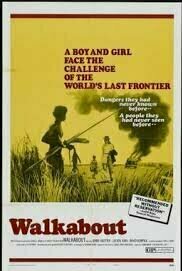
Walkabout (1971)
Walkabout (1971)
1971 |
(0 Ratings)
Movie Favorite

"After getting my brain stretched by Kubrick, the next “favorite director” I started to discover as a preteen and teen was Nicolas Roeg. Like 2001 before it, The Man Who Fell to Earth was sci-fi that reached out and grabbed my mind, spun it around, and made me want to see it over and over again. Roeg’s use of music and surreal imagery made the film both a visceral and an intellectual experience simultaneously—a heartbreaking puzzle—still my favorite kind of film experience. Don’t Look Now is probably my favorite scary movie of all time, and a model for the now overused and underachieved expression “a smart genre film.” Now, that might mean a movie that’s marginally less dopey than most mainstream films that deal with the occult, but in the days of this and Rosemary’s Baby, etc., the emphasis was much more on smart than on genre. And Walkabout is an amazing piece of nearly wordless visual storytelling that left me desperately in love with Jenny Agutter for years afterward."

Source