
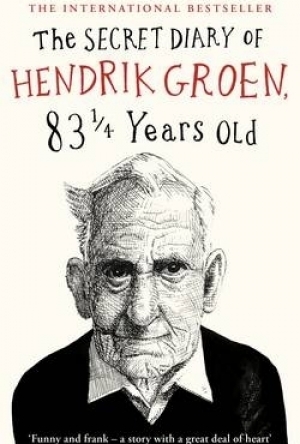
The Secret Diary of Hendrik Groen, 83 Years Old
Hendrik Groen and Hester Velmans
8.7 Rate It
Book
** THE INTERNATIONAL PHENOMENON ** 'There are many laughs in this book but it's so much more than...

Kirk Bage (1775 KP) rated Jojo Rabbit (2019) in Movies
Jan 22, 2021
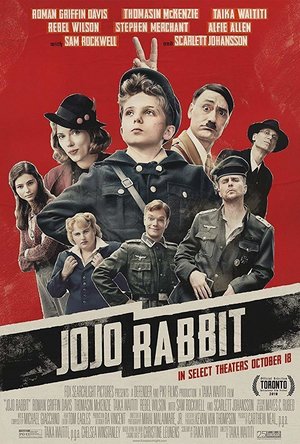

I have followed the Kiwi’s original output since way back, and always enjoyed his quirky sense of humour and childlike charm. Either Eagle vs Shark or The Flight of the Conchords would have been my first encounter; and by the time of Hunt for the Wilderpeople and Thor: Ragnarok I had become a tentative fan. Never entirely bowled over by his style and content in the same way as, say, Wes Anderson (to whom some compare his outlook on the creative world), and never rolling around on the floor in hysterics at his naivety and comedy of manners, nevertheless, I like the guy a lot.
So when I heard he had adapted a fantasy novel about Nazi Germany from the point of view of a child, and would be playing Hitler himself, I knew instantly where he would be pitching this. The idea of it being offensive in any way was not a concern or even a thought, and anyone that did react that way is just… ridiculous and deliberately missing the point for the sake of finding something to be outraged about.
Of course subjects of genocide, political repression and evil existing in the world should and must be treated with a sensitivity to a degree, and amongst the silly lampooning and most extreme moments of satire that care is evident. There are moments of real gravity and tenderness in the mix here, thanks in large to some wonderful performances from the adult actors, notably the ever reliable Sam Rockwell and the increasingly strong and impressive Scarlett Johansson, who picked up her second Oscar nomination for this, after Marriage Story ticked the box for true drama.
The film focuses and relies on young Roman Griffin Davis as the eponymous Jojo, a happy little boy who sees goodness and light in an ever darkening world around him. Waititi as director works well with kids, placing the idea of charm and likability above acting prowess per se. And that is both the strength and ultimate weakness of this premise. He is charming and likeable, and cute and sweet and very watchable, but his inexperience in front of the camera and ability to find a range of emotions is often tested beyond his tender years, and can therefore break the magic spell that is woven in the best scenes.
The humour itself also doesn’t always hit the mark. Sometimes it is merely amusing rather than something laugh out loud funny, much as an average Mel Brooks film always was. And that can lead to a feel of something uneven and rambling, as the story struggles to find what it really wants to say. In its final moments it does land on an overlying message that leaves you with a winning impression, and you leave feeling that you saw something you enjoyed, but not something you would unreservedly recommend to everyone. In fact if someone said they didn’t enjoy it, or get the joke at all, then I would respect that view.
Under a microscope of scrutiny it doesn’t hold up that well, and I wonder how a few years of distance will treat it, once our sensibilities shift again with time. There are a few moments when the heart of the film connects with it’s silly bone and resonates, but not nearly enough. I personally wanted more of that. But, sadly, whenever JoJo threatens to grow up it retreats back into childhood and shies away from commenting on anything serious or truly meaningful. But, of course, that is not the point. As an entertainment it is a wonderful, unique and lovely film. And that should really be all that it is judged by.
In conclusion, a curiosity I will look forward to watching again, but don’t think quite makes the grade as an instant classic. It only reinforced however how much I like Rockwell and Johansson, and will always be curious about what Waititi is up to next.

Naughty Date-Hook Up Adult Dating App & Chat
Dating and Social Networking
1.0 Rate It
App
Naughty Date, one of the most popular adult dating apps, is a collection of hot girls and attractive...

My Boo Virtual Pet & Mini Game
Games and Entertainment
6.0 Rate It
App
Meet Boo, your very own virtual pet! Enjoy countless hours of fun in this addictive and entertaining...

b.Young (97 KP) rated Win (The Atlantis Grail Book 3) in Books
May 21, 2018
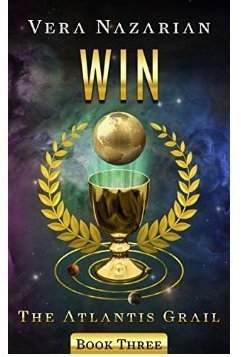

After Qualify, I was completely invested in the fate of Gwen Lark and needed to know what happened, so I continued with Compete. While Compete did not have the same action and urgency as Qualify, it was still an outstanding sequel and made me want to continue the The Atlantis Grail Series.
To be honest, Compete left me right where I wanted to be! Everything I had hoped for Gwen was happening and I had no choice but to continue the story (yes, I am a person who gets emotionally attached to certain fictional characters and therefore live my fantasy life vicariously through them).
Now, on to Win. Oh. My. Lord! Be still my heart, because Aeson has admitted his feelings for Gwen and they are going to get married!!! Yes, regular Earth-girl and winner of an all expense paid trip to Atlantis gets to marry the friggen Crown Prince of Atlantida!!!
Nevermind that Aeson's dad, the Imperator of Atlantida, does not like this one little bit, because what Gwen and Aeson have is real true love and it is so sweet and tender and... I must stop here before I gush all over this review since shit is about to get very real for them (at the hands of the Imperator, of course).
Flashback to that mindnumbing and heartbreaking decision Gwen made in Book 2 to niether become a Civilian or Cadet and instead enter the Atlantis Grail to become a Citizen so she could save her parents and her brother George from the impeding doom of the Asteriod hurtling through space with the purpose of destroying Earth. Well, it just so happens that because she is now the Imperial Bride-to-be, she will be awarded Citizenship when she marries Aeson and thusly inherit the ability to save the rest of her family without having to compete in the horrible and terrifying Atlantis Grail Games. I was literally jumping in my seat and squealing when I learned this!
All that worry and training for the entire year travelling in space to Atlantis was put to a rest and all seemed just hunky-dory. Until....
The Imperial Court Assembly that is held to recognize Gwen as Aeson's choice of Imperial Consort and Bride. Everything goes as planned until the Imperator decides to bestow an unrefusable gift unto Gwen: the "opportunity" to compete in the Atlantis Grail Games. This was such a blow to my heart and I wanted to hold Gwen and tell her it was never going to happen and she could just marry her Prince and have many children and live happily ever after. Alas, that would not have made for a very interesting story, so we must concede to the Imperator's whim and suffer with Aeson as Gwen competes in the stupid Atlantis Grail for her life all because the Imperator is not happy Aeson did not choose Lady Tiri, a proper Atlantean Royal.
Things get intense from this point on as Gwen only has 28 days to train and become a warrior capable of NOT dying in the Games. Thankfully, she has the support of her Bridegroom and the crew of the Astra Diamon to help her with this nearly impossible challenge.
After the 28 days of intense training, it is finally time for Gwen to say her goodbyes and focus on staying alive through all 4 stages of the deadly Grail Games.
During the Games, she is met with unique challenges and ordeals that left me reading into the wee hours of the night to make sure Gwen survived. I seriously could not put this book down I was so worried for Gwen and Aeson.
The Grail Games were more intense and horrible than Katniss Everdeen ever had to endure and although I was confident Gwen would make it through alive, I was unsure just how much of her would make it out at the end.
I cannot wait for Book 4, Survive! I saw an update yesterday from the author mentioning that over 26,000 words had been completed for the book! It cannot come soon enough!

Kristy H (1252 KP) rated Eleanor Oliphant Is Completely Fine in Books
Feb 13, 2018
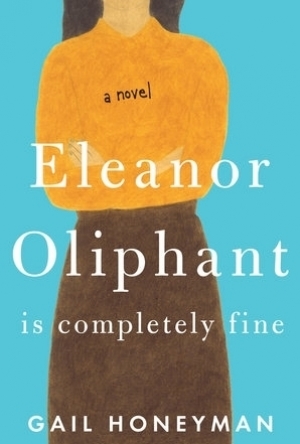
This book, oh this book. Wow, what a journey. <i>I'm so very glad I finally picked it up. </i> Where do I even begin? First of all, Honeyman captures the voice of Eleanor perfectly. I was honestly a bit surprised when I started this one. I'd been expecting a slightly quirky character (a la the lead in THE ROSIE PROJECT), but there's far more depth and darkness to Eleanor (and her tale) than I imagined. It took me a little longer to get into the story, but once I was: wow. You can visualize Eleanor and her supporting cast so clearly. Raymond comes across effortlessly too. <i>The plot is striking-- an amazing combination of heartbreaking and tender.</i> My heart truly broke for dear Eleanor at times.
I was intrigued by the fact that there's no real huge story, per se, to this novel--it's just Eleanor finding her way in the world. As mentioned, Eleanor and Raymond assist Sammy, and this jolts Eleanor out of her life built around routine and sameness. Forced to come out of her shell, she suddenly sees some things in a new light--her appearance, her job, her friendships (or lack thereof), her apartment, and more. The way Honeyman presents the world--through Eleanor's eyes--is uncanny. I cannot describe how well she captures her diction and how aghast Eleanor is sometimes by the world around her (dirty books from the library, people who waste her time with conversation, the food people eat and how they eat, etc.).
At the same time, you realize how much Eleanor is formed by her childhood, or lack thereof, and it's just... striking. How Honeyman gets this all across in words is amazing. The unexpected darkness and sadness that comes across in the novel and the added layer of suspense she casts as we ponder Eleanor's tragic childhood: it's chilling. <i>The entire book is mesmerizing and beautiful. </i>
That's not to say the book isn't funny or enjoyable, too. Eleanor is her own person, and she's witty and true to her self, for sure. You will find yourself rooting for her personality quirks (of which there are many) and all. If Eleanor's attempts to understand the world don't tug at your heartstrings, I'm not sure anything will (and I'm pretty tough nut to crack when reading, mind you). I was worried that perhaps the moral would be that Eleanor would have to change herself to find happiness, but no, I don't think that was Honeyman's ultimate intent, even if Eleanor does make some "improvements" along the way. (I won't say more for risk of spoilers.) Also, I loved Raymond, as well; his mother; Glen (!!!!); and so many other parts of the story that made me smile. Seriously, even with its sad parts, this book just makes you happy.
Ultimately, this is a lovely book, with beautiful, well-written characters. The tale of Eleanor Oliphant will stay with me for a long time, and I'm so glad I finally decided to read this book. Honeyman is an excellent writer, her depiction of Eleanor is gorgeous and heart-rendering and the few flaws I found with this were so minor, as I was left just awed by the end. <i>One of my favorites so far this year.</i> 4.5 stars.
<center><a href="http://justacatandabookatherside.blogspot.com/">Blog</a>; ~ <a href="https://twitter.com/mwcmoto">Twitter</a>; ~ <a href="https://www.facebook.com/justacatandabook/">Facebook</a>; ~ <a href="https://plus.google.com/u/0/+KristyHamiltonbooks">Google+</a>; ~ <a href="https://www.instagram.com/justacatandabook/">Instagram</a>; </center>

Gareth von Kallenbach (980 KP) rated Borderlands 2 - Tiny Tina's Assault on Dragon Keep in Video Games
Jun 19, 2019
As any fans of the series will know, Tina is the highly precocious yet unstable character with a penchant for blowing things up. This time around she is hosting a role-playing game session for her colleagues from the first game. With time on their hands, the group reluctantly agrees to take part in the adventure which is set within a fantasy realm. This allows the game developers to capture the elements of Borderlands 2 that works so well such as the team-based gameplay, millions of weapons and power up combinations, customizations, and above all action-packed gameplay while introducing a new twist.
The twist this time around is not only in the fantasy setting which allows gamers to encounter skeletons, dragons, Orcs, dwarves, wizards, and other fantasy opponents, but dealing with Tina herself. As the host of the game, Tina often presents seemingly impossible challenges such as introducing an undefeatable Dragon at the start of the game. This allows humor to enter into the picture as you can clearly hear the other players complaining about this development which in turn causes her to adjust the game on the fly to a more manageable opponent or situation. While being immersed in the game and being able to hear the players banter about their situation as well as complain to Tina really captures the immersive elements of role-playing games and provides some of the best moments of the series to date.
The quest is a straightforward save the Queen style mission but along the way there’ll be plenty of laughs and challenges to keep even the most hard-core gamer satisfied. I took great delight in using my high-powered sniper rifle to take down adult skeletal archers as well as reducing skeletal swordsmen to crumbling piles of bone with one well-placed punch. For me the ultimate delight was knocking a helmet off opponent with a well-placed shot and then sending the skull flying with the follow-up. Unfortunately you still have the skeletal body to contend with but once weakened, they went down very easily. There are no vehicles to contend with this time as all travel is done on foot but this in no way lessens the experience as this is a classic combination of role-playing games and Borderlands universe that comes complete with jokes about rolling for initiative and other genre staples.
There is a lot of challenge offered in the game and at times some of the boss battles are exceptionally difficult and work best when you have players assisting you in the quest. Even so, expect several trips to the regeneration chamber as death is definitely a constant in the game even for the most experienced players. The game supports up to four players and allows them to drop in and out of the game at any time.
The graphics and sound of the game are first rate and illustrate just why Borderlands 2 won so many awards. The detail level of dungeons, castles, dark forests, and other fantasy realms came alive with vivid clarity and was a nice change of pace from the previous settings in and around the world of Pandora. I found myself enjoying this offering more than I had the previous three DLC packs which is saying something as each one of them was highly enjoyable in their own way. The banter between Tina and the players will have fans and stitches but there are some very unexpected and tender moments in the game as well.
There are also plenty of side quests available for those who want to expand their experience and countless new weapons and power up opportunities can be found from the abundant treasure chests that litter the landscape as well as by defeating key opponents. I did find the pathfinding at times to be a bit frustrating especially in the mines as at times various members of the party was unsure of which way to go. That being said, the final result was a big success and I look forward to seeing what is to come next in the franchise. The game is available for the PC, Xbox 360, and Playstation 3 systems.
http://sknr.net/2013/07/11/httpsknr-netreviewsgaming-reviewsborderlands-2-tiny-tinas-assault-on-dragon-keep-on-dragon-keep/

Chris Sawin (602 KP) rated Lars and the Real Girl (2007) in Movies
Jun 18, 2019

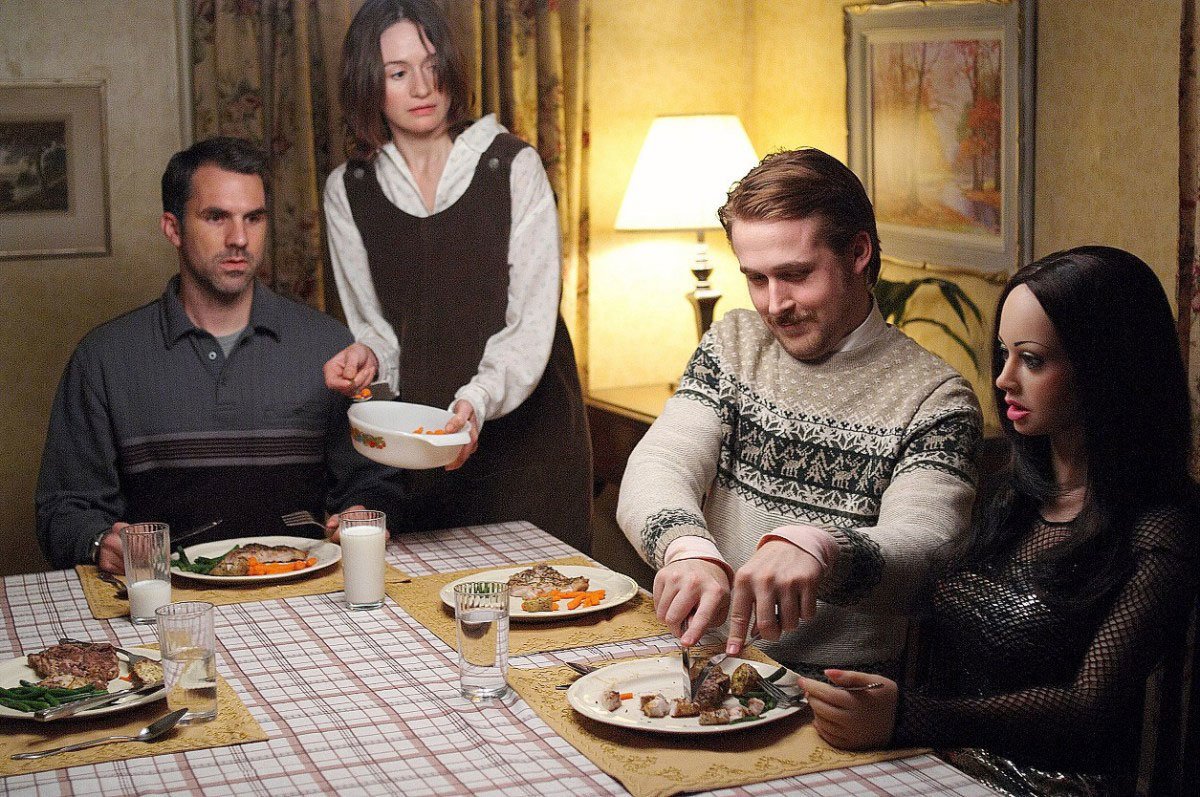
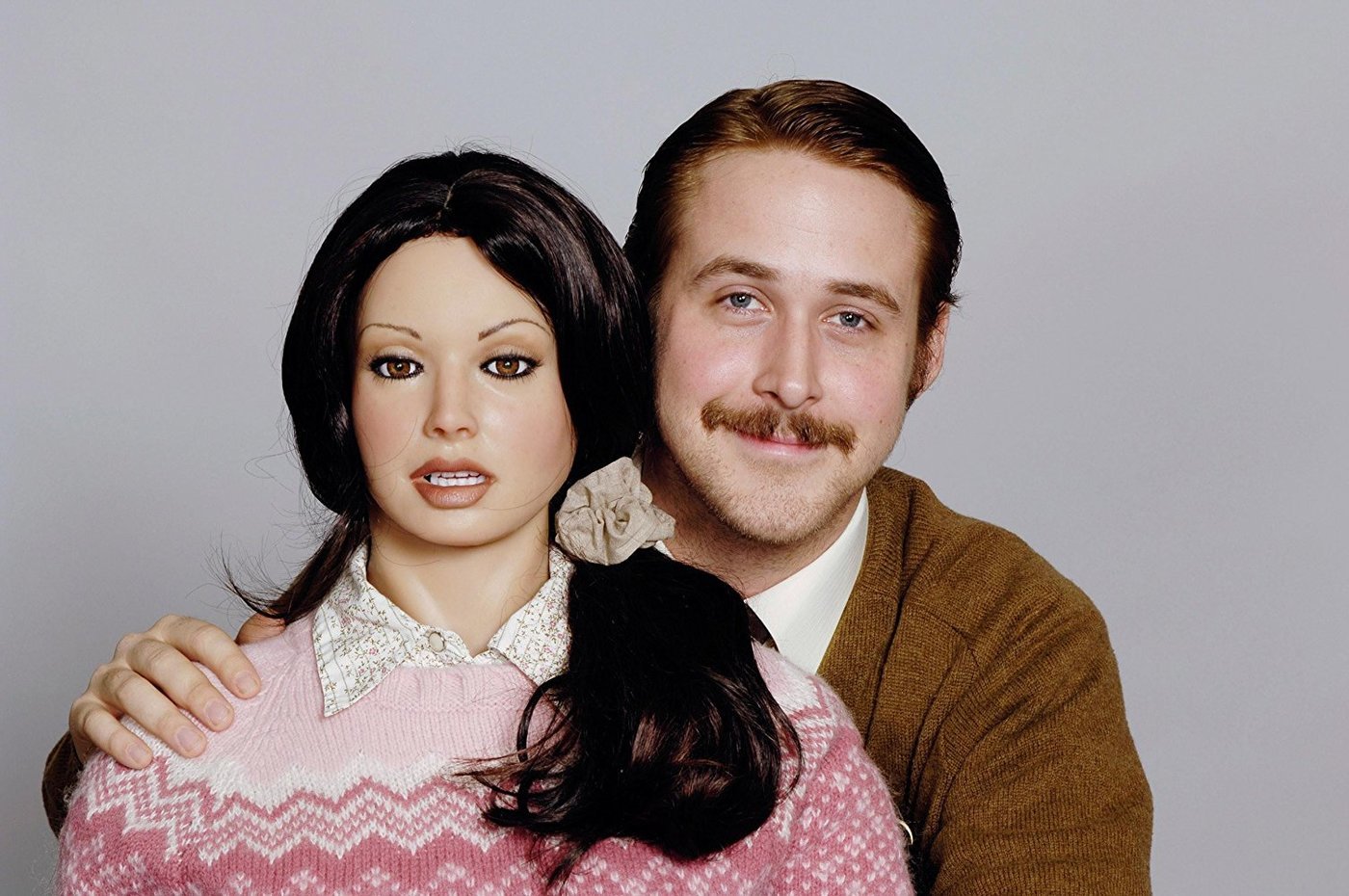
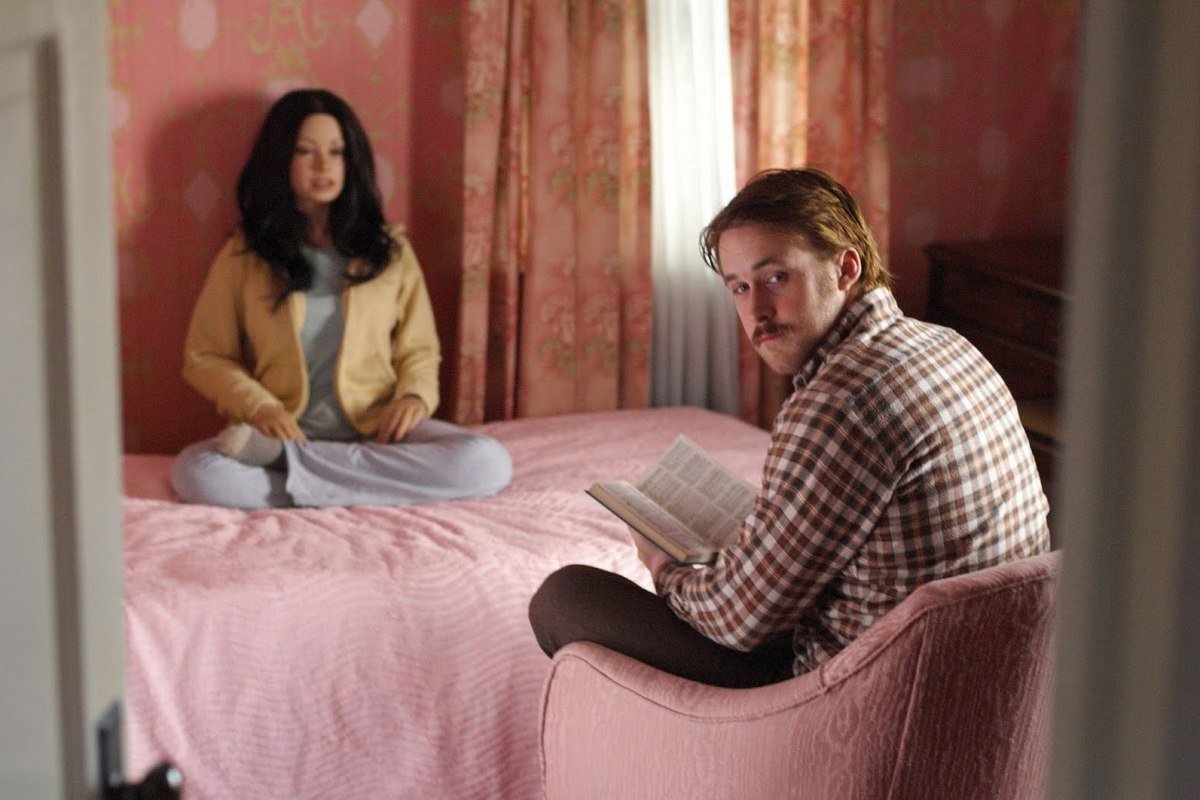
Lars not only has a shy and stand-offish demeanor he also tends to avoid people and social interactions altogether. If a woman happens to speak to him, Lars is incapable of responding. Physical contact from anyone seems to physically hurt Lars, but that doesn’t stop his friends and family from encouraging him to get a girlfriend. One fateful day, Lars is shown a peculiar website by a co-worker that sells love dolls. Although Lars is reluctant at first, he eventually warms up to the idea of a love doll as his companion. Bianca soon becomes an especially important part of Lars’ life and her presence not only changes Lars, but the town that he lives in for the better.
It took nearly a year to finally see Lars and the Real Girl after its theatrical release; a statistic that seems like a luxury ten years later when seeing and promoting new releases seems to lose steam after its opening weekend. The concept for Lars and the Real Girl is a strange one. A sex doll tagging along with an extreme introvert doesn’t sound all that appealing at first, but Lars is easy to understand as a character especially if you’re an introvert yourself or have had trouble with the opposite sex at some point in your life. Dating was always this massive hurdle that only seemed to expand and grow with each failed first date or cancellation. With those experiences and that mentality where you find yourself retreating into your own constructed sanctuary, Lars is strangely easy to relate to.
It’s not that Ryan Gosling hasn’t been a part of big budget films, but Lars and the Real Girl was released at a time in his career when he was catering more towards the independent side of things. This is pre-Drive yet post-Notebook Ryan Gosling here; films like Half Nelson and Blue Valentine solidified how talented Gosling is as an actor without all the bells and whistles of a huge cast or blockbuster film. Lars and the Real Girl is the film that made a lot of people realize that Gosling was more than a teenage heartthrob and former Mouseketeer.
Gosling fits the Lars Lindstrom role perfectly as he’s capable of portraying quirks that are as awkward as they are charming. How he’s able to talk to a doll for over an hour and not only make it believable, but also entertaining is incredibly impressive. Part of that is attributed to Bianca being treated like an actual person with her own trailer, getting dressed in private, and only being on set when she was in the scene, but Gosling also contributed quite a bit as well. Gosling improvised the CPR on Margo’s teddy bear sequence and the scene before he and Bianca enter the party.
The film fits that independent film mold a bit too well as it has humor that’s funny but not laugh out loud funny and is dramatic and heartfelt enough to make you invested in something you likely never would without the context of the film. The film shares elements from films like Her, The Perks of Being a Wallflower, and Lost in Translation; that sensation of being lost in what is considered to be normal society but finding something unorthodox that makes you belong and feel comfortable and whole. There’s this overwhelming sense of charm and sentimentality that can only be found in films like this.
Lars and the Real Girl is a comedic drama that relies on awkward situations or even one rare occurrence that triggers unusual peculiarities as it focuses on people’s reactions to these situations that occur. It’s worth seeing if you’ve ever felt like an outcast and to witness Lars’ odd behavior and the snowball effect that it causes. Introverts will likely enjoy it more than the average film lover, but Lars and the Real Girl takes something that seems taboo on the surface and molds it into this genuine motion picture experience that is strangely beautiful.
Lars and the Real Girl is currently available to stream on Amazon Prime, YouTube, Google Play, and Vudu for $2.99 and iTunes for $3.99. It’s also available to stream for free on Amazon Prime if you have Starz with Prime Video channels. The DVD is $8.51 and the Multi-Format Blu-ray is $7.68 on Amazon. On eBay, the DVD is $7.98 and the Blu-ray is $7.95 (or best offer) while both are in brand new condition and both have free shipping.
Nymphomaniac Volume I (2014)
6.7
Rate It
Movie Watch
1. "The Compleat Angler" Inspired by a fly fishing hook in the wall behind her and Seligman's love...

Bob Mann (459 KP) rated A Quiet Place (2018) in Movies
Sep 29, 2021
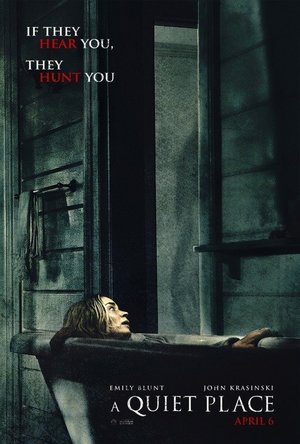

It’s 2020 and 89 days after “it” happens, the world is a very different place. Making any noise at all becomes a death sentence…. that bad cold could kill you and nothing seems to be able to prevent mankind from being annihilated one sneeze at a time.
In what could be a nice “Cloverfield”-style series, the action here focuses in on the resourceful Abbott family: the father Lee (John Krasinski, “Away We Go”) is handy with electronics and back-woods skills; the mother Evelyn (Emily Blunt, “The Girl on the Train“; “Edge of Tomorrow“) has medical training. So they are well suited then to take care of their offspring: the profoundly deaf Regan (Millicent Simmonds); Marcus (Noah Jupe); and their youngest Beau (a cute Cade Woodward). It’s a battle of brains against vicious, relentless and malevolent alien brawn: how far will Lee and Evelyn go to keep their family safe?
Man, this is a tense film! It doesn’t pull its punches from the get-go and thereafter there is an air of brooding and ever-building menace that gets right under your skin. This is certainly not helped by the fact that there is a ticking clock of an oncoming ‘event’ – no spoilers here – to worry about. As incessantly and inevitably as the rising tide in “The Shallows” a clock ticks down. Thank heavens then that the ‘event’ and the outcome of that ‘event’ are both traditionally such quiet affairs!
While all of the buzz at the moment is on the 80’s Easter Eggs in “Ready Player One”, here is a movie packed with delights for movie lovers. There are recognisable elements here from such classics as “The Road”, “Signs”, “Witness”, “Alien”, “Jurassic Park”, “Jaws”…. even (traumatically) “Home Alone”! So is it then just a rag-bag collection of stolen moments from other films? No – not at all. This stands tall and proud as a master work in its own right, the standout and unique quality of the movie being its use (or rather absence) of sound… something that works so magnificently as a concept in a movie-theatre.
I was lucky enough in the late September of 1979 to see (at 10 am in the morning as I remember!) in the Odeon Leicester Square in London, the first ever UK (and probably worldwide) showing of a little film called “Alien”. The cinema was pretty empty, but I have never sat through such an electric viewing. This had some of the same aura about it: a hushed audience, totally gripped. (I agree with Simon Mayo and Ali Plumb on this though that all snacks, and especially popcorn in scrapy SCRAPY cardboard boxes, should be banned from these screenings… I had to physically move seats away a noisy muncher as the film started!). But for sure, distractions accepted, this is a classic communal movie experience and so is a movie you should most DEFINITELY see in the cinema.
If there is one Oscar for February 2019 that I think should already be a shoe-in for a nomination, if not a win, it is the sound team led by Erik Aadahl and Ethan Van der Ryn: breathtakingly spectacular. This is assisted enormously by the musical score of Marco Beltrami (“Logan“, “The Shallows“) which helps augment and annotate the action jump-scares brilliantly.
Another critical member of the crew for a film like this is the editor, and here Christopher Tellefsen (“Joy“) delivers the goods with tight and effective execution of those cuts (the film sort!) that made me vertically leave my seat at least a couple of times.
Real life couple Krasinski and Blunt share such obvious and tender chemistry that it is impossible to not get emotionally involved. A shared iPhone listening moment, as a lull in the action, is very moving. Millicent Simmonds, who is actually deaf from childhood in an inspired piece of storytelling/casting, is also an acting force to be reckoned with: her only other movie is last year’s “Wonderstruck” that I have yet to see.
Writers Bryan Woods and Scott Beck (with contribution to the screenplay from Krasinski) also deserve praise for an intelligent and highly satisfying plot that never fails to disappoint to the last drop. Every detail, down to the painted footsteps on the un-squeaky floorboards, is just pitch-perfect. It’s also a film that very wisely doesn’t outstay its welcome: 90 minutes of such adrenaline is almost too much for anyone to stand! Krasinski as director keeps everything deliciously tight during that running time with no time to breath, particularly in the frenetic final reel.
I’ve gushed enough. This is a must see for sci-fi and horror fans of all ages. And with a “BvS quotient” of just 6.8%, it’s enormously good value for money. Go see it!