
Search
Search results

Gareth von Kallenbach (980 KP) rated Pixels (2015) in Movies
Aug 6, 2019
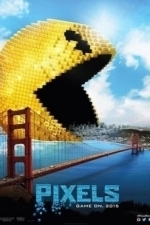

The new Sony film ‘Pixels’, was written by Tim Herlihy, Adam Sandler and Timothy Dowling. It stars Adam Sandler (Sam Brenner), Peter Dinklage (Eddie ‘The Fire Blaster’), Kevin James (President Will Cooper), Jane Krakowski (the First Lady), and Josh Gad (Ludlow Lamonsoff).
The movie opens with scenes straight out of the 1980’s and shows Sam, Eddie, Will and Ludlow all gathering at the arcade video world championships. The championships are being recorded to send in a time capsule to outer space, hoping to find alien life forms. The competition comes down to Sam and Eddie (who has nick named himself ‘The Fire Blaster’) and Eddie defeats Sam. Sam is crushed.
Fast forward about 30 years and Sam is working as an installation technician, and somehow Will has become the POTUS. Ludlow and Eddie are no where to be seen.
An attack occurs, Ludlow mysteriously appears in Sams van, and Ludlow reveals that the attack was perpetrated not only by aliens, but by 80’s style pixelated arcade aliens, who apparently intercepted our space bound time capsule, interpreted it as a declaration of war (????) and sent back pixelated arcade aliens to destroy us (?!?).
The two childhood friends go to the president with the information, who at first, under the pressure of his advisors, brushes them off.
After another attack occurs, President Will over rides his advisers and enlists Sam and Ludlows help, and also reaches out to The Fire Blaster (currently in prison, and demanding a list of concessions in exchange for his help and expertise.)
The movie didn’t have any dragging points for me, and I did laugh out loud at some portions. My son who is nearly 7 REALLY enjoyed it, and if it had had slightly less obvious (and what felt like marginally unnecessary) curse words I would have liked it better for his age range. There were children even younger than my son in the theatre though, and I found myself cringing at some of the language, and noticed my son looking at me to see if I noticed him noticing that there were ‘bad words’. Since it IS rated PG-13, there’s not a whole lot to be said about it, but it could have been just as good a movie, and therefore enjoyable by a bigger age range, without the cursing.
When I asked him later whether he liked the movie he said he ‘liked it a lot, but it had some bad words’.
Pixels was pretty action packed, and although I found it to be an odd premise for a movie, I did enjoy it. I don’t feel that they made as good a use of the 3D format as they could have. The soundtrack was good. I liked the characters, even though i couldn’t quite make the jump as to ‘why or how’ Will became president, and I had the hardest time dealing with Eddies accent. It just ‘felt off’, most likely because I’ve been watching him most recently on Game of Thrones.
I think kids will enjoy it for the action and parents will like it well enough for the nostalgia factor.
Overall I would give this movie 2.5 out of 5 stars.
The movie opens with scenes straight out of the 1980’s and shows Sam, Eddie, Will and Ludlow all gathering at the arcade video world championships. The championships are being recorded to send in a time capsule to outer space, hoping to find alien life forms. The competition comes down to Sam and Eddie (who has nick named himself ‘The Fire Blaster’) and Eddie defeats Sam. Sam is crushed.
Fast forward about 30 years and Sam is working as an installation technician, and somehow Will has become the POTUS. Ludlow and Eddie are no where to be seen.
An attack occurs, Ludlow mysteriously appears in Sams van, and Ludlow reveals that the attack was perpetrated not only by aliens, but by 80’s style pixelated arcade aliens, who apparently intercepted our space bound time capsule, interpreted it as a declaration of war (????) and sent back pixelated arcade aliens to destroy us (?!?).
The two childhood friends go to the president with the information, who at first, under the pressure of his advisors, brushes them off.
After another attack occurs, President Will over rides his advisers and enlists Sam and Ludlows help, and also reaches out to The Fire Blaster (currently in prison, and demanding a list of concessions in exchange for his help and expertise.)
The movie didn’t have any dragging points for me, and I did laugh out loud at some portions. My son who is nearly 7 REALLY enjoyed it, and if it had had slightly less obvious (and what felt like marginally unnecessary) curse words I would have liked it better for his age range. There were children even younger than my son in the theatre though, and I found myself cringing at some of the language, and noticed my son looking at me to see if I noticed him noticing that there were ‘bad words’. Since it IS rated PG-13, there’s not a whole lot to be said about it, but it could have been just as good a movie, and therefore enjoyable by a bigger age range, without the cursing.
When I asked him later whether he liked the movie he said he ‘liked it a lot, but it had some bad words’.
Pixels was pretty action packed, and although I found it to be an odd premise for a movie, I did enjoy it. I don’t feel that they made as good a use of the 3D format as they could have. The soundtrack was good. I liked the characters, even though i couldn’t quite make the jump as to ‘why or how’ Will became president, and I had the hardest time dealing with Eddies accent. It just ‘felt off’, most likely because I’ve been watching him most recently on Game of Thrones.
I think kids will enjoy it for the action and parents will like it well enough for the nostalgia factor.
Overall I would give this movie 2.5 out of 5 stars.

Statusbrew: Social Media Tools
Social Networking, Productivity and Stickers
App
Share and Schedule posts for Twitter, Instagram, Facebook, LinkedIn and Google+ all from a single...
The Nutcracker Musical Storybook
Book and Entertainment
App
Join Clara and The Nutcracker Prince in a fully animated, cinematic storybook adventure of the...

Ivana A. | Diary of Difference (1171 KP) rated Mayhem in Books
Oct 2, 2020
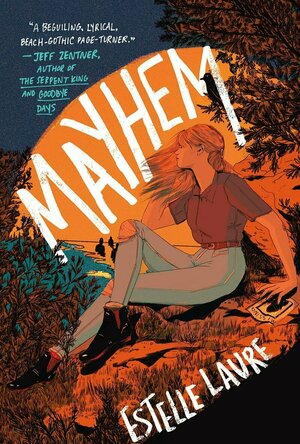


I am so happy to have the opportunity to be part of the blog tour for Mayhem by Estelle Laure. Thank you to the team at Wednesday Books, for sending me an e-copy in exchange for an honest review.
Estelle Laure, the author of This Raging Light and But Then I Came Back believes in love, magic, and the power of facing hard truths. She has a BA in Theatre Arts and an MFA from Vermont College of Fine Arts in Writing for Children and Young Adults, and she lives in Taos, New Mexico, with her family. Her work is translated widely around the world.
It's 1987 and Mayhem Brayburn has always known something's off about her and her mum, Roxy. Roxy is in constant physical pain, and Mayhem has an irresistible pull to water. She knows they aren't like the other people.
When one day, Mayhem's stepfather goes one step too far, her and Roxy escape to Santa Maria, California, the beach town that holds the answers to all of Mayhem's questions about who her mother is. There, she meets the kids who live with her aunt, and she opens the door to the magic that runs through the female lineage of the Brayburn family. The very magic Mayhem is next in line to inherit and which will change her life for good.
But when she is on a mission to search for a man that has been kidnapping girls from the beach, her life takes another dangerous turn and she needs to pay the price of vigilante justice and to ask herself whether revenge is worth the cost.
My Thoughts:
Mayhem by Estelle Laure is one of a kind. Entwined with mystery, magic with family heritage and revenge, this book is full of emotions.
The beginning of the book, although powerful, is very slow. It took me a little while to get into it, but as soon as I was hooked, it stayed amazing.
Mayhem is an interesting character. She holds a lot of emotions inside of her, all from past experiences that have shaped her character. Sad to say that most of her experiences were not good, and she holds the burden for it all. I can imagine how hard it must be to write a character as complicated as Mayhem, and I think Estelle Laure did and amazing job doing it.
I loved the kids as well - each of them different in their own way, battling their own demons and living through their bad experiences in the past. Some of these characters drastically change over the course of the book, which was unbelievable to me.
The magic aspect of this book was interesting, and for me, original. I have seen many reviews mentioning that this might not be true, and it is a very similar story to The Lost Boys. Since I haven't watched The Lost Boys, I am unable to comment on this part. Personally, I really enjoyed the magic concept with the water, the dependency on it and the family heritage part too.
If you are searching for a YA fantasy thriller, with rich characters and mysterious adventures, I think you will definitely enjoy this book.
Estelle Laure, the author of This Raging Light and But Then I Came Back believes in love, magic, and the power of facing hard truths. She has a BA in Theatre Arts and an MFA from Vermont College of Fine Arts in Writing for Children and Young Adults, and she lives in Taos, New Mexico, with her family. Her work is translated widely around the world.
It's 1987 and Mayhem Brayburn has always known something's off about her and her mum, Roxy. Roxy is in constant physical pain, and Mayhem has an irresistible pull to water. She knows they aren't like the other people.
When one day, Mayhem's stepfather goes one step too far, her and Roxy escape to Santa Maria, California, the beach town that holds the answers to all of Mayhem's questions about who her mother is. There, she meets the kids who live with her aunt, and she opens the door to the magic that runs through the female lineage of the Brayburn family. The very magic Mayhem is next in line to inherit and which will change her life for good.
But when she is on a mission to search for a man that has been kidnapping girls from the beach, her life takes another dangerous turn and she needs to pay the price of vigilante justice and to ask herself whether revenge is worth the cost.
My Thoughts:
Mayhem by Estelle Laure is one of a kind. Entwined with mystery, magic with family heritage and revenge, this book is full of emotions.
The beginning of the book, although powerful, is very slow. It took me a little while to get into it, but as soon as I was hooked, it stayed amazing.
Mayhem is an interesting character. She holds a lot of emotions inside of her, all from past experiences that have shaped her character. Sad to say that most of her experiences were not good, and she holds the burden for it all. I can imagine how hard it must be to write a character as complicated as Mayhem, and I think Estelle Laure did and amazing job doing it.
I loved the kids as well - each of them different in their own way, battling their own demons and living through their bad experiences in the past. Some of these characters drastically change over the course of the book, which was unbelievable to me.
The magic aspect of this book was interesting, and for me, original. I have seen many reviews mentioning that this might not be true, and it is a very similar story to The Lost Boys. Since I haven't watched The Lost Boys, I am unable to comment on this part. Personally, I really enjoyed the magic concept with the water, the dependency on it and the family heritage part too.
If you are searching for a YA fantasy thriller, with rich characters and mysterious adventures, I think you will definitely enjoy this book.

Emma @ The Movies (1786 KP) rated Death on the Nile (2022) in Movies
Feb 19, 2022
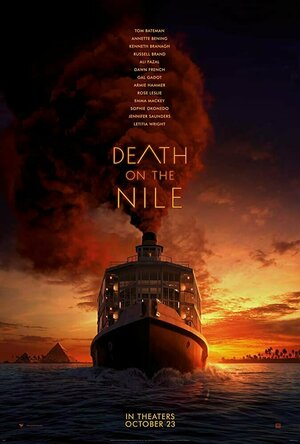

I don't like to go into a film with a negative impression... but... #NotMyPoirot #SlashTheStash.
Linnet Ridgeway goes to Poirot with fears for her safety, and that of her new husband, when an old mutual acquaintance shows up at each new location on their honeymoon.
An Agatha Christie novel always makes for a great plot, and this one has had several different adaptations over the years. Don't go into it expecting a faithful adaptation though, this one comes out a bit spicier. It also takes some liberties with Poirot's backstory, which does add some interesting context to things about him, but at the same time, it's not the source material.
As with Death Train, Death Boat has a star-studded cast. While I love most of them in other things, I found the whole dynamic to be a little all over the place. Tom Bateman and Ali Fazal were solid, Russell Brand was surprisingly good, but everyone else was either rather bland or too over the top. Then there's Kenneth... I'll give it to them, it feels wrong thinking that Poirot is sexy... but there's one moment where even I, a Ken denier, took a sharp intake of breath.
Death on the Nile comes in at 2 hours and 7 minutes, had they cut what felt like 10 minutes of Gal Gadot walking down the length of the ship, it could easily have come in under 2 hours.
I think that identifies the issue I have with these new adaptations. This one in particular has a very theatrical feel to it. A lot of the boat shots early on feel like you're watching it happen on a stage. I don't object to that style, I like watching theatre, but having it thrown in randomly threw me.
My other big gripe was the choice of shots. Death Boat really likes to not show you faces when people are talking. Watching these scenes was off-putting, it felt like they'd been re-edited and had a new audio track overlaid... badly. There's also a scene where the camera swoops backwards and forwards between the people who are talking, and after a while, I could feel the motion sickness building.
It isn't until films like this come out that you realise just how much of one is computer generated. I have to assume that the majority of this budget went on the cast, it certainly wasn't spent on the effects. The de-aging on Branagh in the opening was awful, and must have cost more than hiring a younger actor to do those scenes. The generated scenery wasn't any better, it was painfully obvious which weren't real.
Death on the Nile is, at the end of the day, another classic Christie story, and even with some butchering, there's still a great mystery to unfold. That being said, I would rather sit through one of the other adaptations again if they were all laid out in front of me.
Originally posted on: https://emmaatthemovies.blogspot.com/2022/02/death-on-nile-movie-review.html
Linnet Ridgeway goes to Poirot with fears for her safety, and that of her new husband, when an old mutual acquaintance shows up at each new location on their honeymoon.
An Agatha Christie novel always makes for a great plot, and this one has had several different adaptations over the years. Don't go into it expecting a faithful adaptation though, this one comes out a bit spicier. It also takes some liberties with Poirot's backstory, which does add some interesting context to things about him, but at the same time, it's not the source material.
As with Death Train, Death Boat has a star-studded cast. While I love most of them in other things, I found the whole dynamic to be a little all over the place. Tom Bateman and Ali Fazal were solid, Russell Brand was surprisingly good, but everyone else was either rather bland or too over the top. Then there's Kenneth... I'll give it to them, it feels wrong thinking that Poirot is sexy... but there's one moment where even I, a Ken denier, took a sharp intake of breath.
Death on the Nile comes in at 2 hours and 7 minutes, had they cut what felt like 10 minutes of Gal Gadot walking down the length of the ship, it could easily have come in under 2 hours.
I think that identifies the issue I have with these new adaptations. This one in particular has a very theatrical feel to it. A lot of the boat shots early on feel like you're watching it happen on a stage. I don't object to that style, I like watching theatre, but having it thrown in randomly threw me.
My other big gripe was the choice of shots. Death Boat really likes to not show you faces when people are talking. Watching these scenes was off-putting, it felt like they'd been re-edited and had a new audio track overlaid... badly. There's also a scene where the camera swoops backwards and forwards between the people who are talking, and after a while, I could feel the motion sickness building.
It isn't until films like this come out that you realise just how much of one is computer generated. I have to assume that the majority of this budget went on the cast, it certainly wasn't spent on the effects. The de-aging on Branagh in the opening was awful, and must have cost more than hiring a younger actor to do those scenes. The generated scenery wasn't any better, it was painfully obvious which weren't real.
Death on the Nile is, at the end of the day, another classic Christie story, and even with some butchering, there's still a great mystery to unfold. That being said, I would rather sit through one of the other adaptations again if they were all laid out in front of me.
Originally posted on: https://emmaatthemovies.blogspot.com/2022/02/death-on-nile-movie-review.html
Daniel Boyd (1066 KP) rated The Jungle Book (2016) in Movies
Jul 21, 2017
Incredible CGI (2 more)
Amazing voice acting
New versions of classic songs
The King Of The Swingers
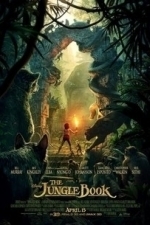
I was sceptical going in, as I’m not a huge fan of the original Disney cartoon version and the fact that the only live action performance in the movie was being delivered by a child actor definitely made me fairly dubious. However I actually enjoyed this movie. The young actor portraying Mowgli is a bit cringeworthy at times, but when you think that all he had to work with was a bunch of green screens and voiceovers, he did a remarkably good job, especially considering his age. He wasn’t anywhere near as good as Jaeden Lieberher was in Midnight Special, but he did a decent job of carrying the movie’s plot along. The CG work in this movie is mind blowing. Disney have gone all out and went for a hyper realistic style of animation and at times, even as an animator myself, I forgot that these animals and environments were cartoons and totally bought them as real world objects and environments. Also the cast is made up of Hollywood gold and all of the voice performances are spot on. Ben Kingsley does a great job as the parental panther who guides Mowgli along his journey and whoever decided to cast Bill Murray as Baloo deserves a raise, as that is a stroke of casting genius. Murray is hilarious here and his relationship with Mowgli is also fantastic. Scarlett Johannsen does a decent job as the snake, but to be honest it is more of a cameo role as she is in the movie for under five minutes. Of course it would be a crime not to mention the legend that is Christopher Walken and his fantastic performance as King Louie. He gives off a perfect blend of charm and villainy and his rendition of King Of The Swingers is also very entertaining. However, although all of the above voice performances were great, there is one that completely steals the show and that is Idris Elba as the antagonist Lion, Sher Khan. The command that Elba has over his vocal performance is incredible, he is such a threatening presence throughout the entire movie and he completely steals every single scene that he is in. Several people have also complained about the use of the music in the film, but that was actually one of my favourite parts of the film, Bare Necessities is used as more of a shanty than an actual song, and King Of The Swingers performed by Walken, is in my opinion very well implemented and serves as an awesome new take on the classic song. The one gripe that I have about the film is that, it is quite slow at times and I was left fairly bored several times, as were a lot of the kids in the theatre by the looks of it. If I didn’t have to keep an eye on the kids we were looking after I probably would have drifted off and to be honest I don’t know if they really enjoyed much either, they seemed to either be scared by Sher Khan and hiding their eyes or bored and fidgety. Although it’s hard to deny that this is a very well made movie and while not totally faithful to its source material, it is a fresh new take on the classic story for a new generation. I would like to see the film again without a wriggling child on my knee, but I did enjoy myself with this movie overall.

Lee (2222 KP) rated A Series of Unfortunate Events - Season 1 in TV
Jul 26, 2017
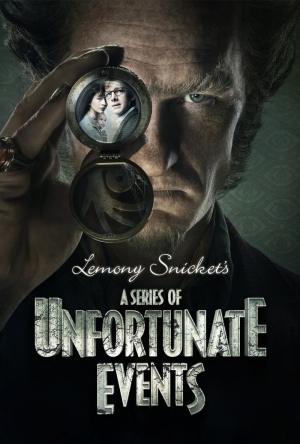

The latest adaptation of the thirteen books comprising ‘A Series of Unfortunate Events’ makes its way onto Netflix, the last being the 2004 film starring Jim Carrey. I haven’t read any of the books, or seen the movie. However my daughter has, and she loves them (the books, not so much the movie). So, we sat down together to watch season 1, which covers the first four books in the series, with two episodes devoted to each book.
The unfortunate events all involve three children – Violet, Klaus and Sunny Baudelaire, whose parents are killed in a fire at the beginning of the story. They inherit a vast fortune, which will not come into their possession until Violet comes of age, and are placed in the care of Count Olaf, supposedly their only living relative. Olaf is only concerned with getting his hands on the Baudelaire fortune though and the story covers his hilarious attempts to do so, quite often involving ridiculous disguises and usually involving further unfortunate unpleasantness for the children. The children initially escape Olaf, moving between a succession of guardians and locations for each book, only for him to catch up with them once more.
Quite simply, the show is excellent. I have to admit that the first episode took me a little while to settle into but from the opening credits, urging you to ‘look away’, through to the big budget Burtonesque sets and vibrant colours, the attention to detail is simply incredible. Partick Warburton is Lemony Snickett, our narrator, wryly and brilliantly interjecting at various points to explain details and guide us through the story. Neil Patrick Harris is Count Olaf, in full on pantomime villain mode, and I absolutely loved the humour he brought to every single scene he’s in, whether he’s as himself or disguised as a scientist/sailor/woman! My only gripe is that he’s never quite villainous or evil enough, more along the lines of a harmless Dick Dastardly as each desperately elaborate scheme is so easily foiled. He’s aided along the way by a group of oddball goons, who are all part of his theatre group – more creepy than scary – but it doesn’t detract from the shows overall enjoyment, and I guess this is a family show after all! There are also a few good cameos along the way – Don Johnson as owner of the Miserable Mill, and Rhys Darby as his downtrodden partner, for example. All of the supporting cast are all brilliant, however the main stars of the show are the children. Superb young actors, right down to little baby Sunny who cutely talks in baby speak (subtitled for us to understand!), gnawing her way through anything she can get her hands on and surviving all manner of unfortunate events the children find themselves in.
Things get a little formulaic after a while – the children settle in with a new guardian, Count Olaf appears in a new guise and with a new plot, the children foil his plan and move on again. However, things change slightly for the final few episodes and throughout the season we gradually discover a deep background of secrets and conspiracies, which I’m sure will help keep the story moving for the remainder of the seasons to come. And there are a few twists and turns along the way too. Overall I was hugely impressed with the show, as was my daughter. It appears to be a very faithful adaptation of what is a hugely popular series of books, and I’m very much looking forward to what’s to come next.
The unfortunate events all involve three children – Violet, Klaus and Sunny Baudelaire, whose parents are killed in a fire at the beginning of the story. They inherit a vast fortune, which will not come into their possession until Violet comes of age, and are placed in the care of Count Olaf, supposedly their only living relative. Olaf is only concerned with getting his hands on the Baudelaire fortune though and the story covers his hilarious attempts to do so, quite often involving ridiculous disguises and usually involving further unfortunate unpleasantness for the children. The children initially escape Olaf, moving between a succession of guardians and locations for each book, only for him to catch up with them once more.
Quite simply, the show is excellent. I have to admit that the first episode took me a little while to settle into but from the opening credits, urging you to ‘look away’, through to the big budget Burtonesque sets and vibrant colours, the attention to detail is simply incredible. Partick Warburton is Lemony Snickett, our narrator, wryly and brilliantly interjecting at various points to explain details and guide us through the story. Neil Patrick Harris is Count Olaf, in full on pantomime villain mode, and I absolutely loved the humour he brought to every single scene he’s in, whether he’s as himself or disguised as a scientist/sailor/woman! My only gripe is that he’s never quite villainous or evil enough, more along the lines of a harmless Dick Dastardly as each desperately elaborate scheme is so easily foiled. He’s aided along the way by a group of oddball goons, who are all part of his theatre group – more creepy than scary – but it doesn’t detract from the shows overall enjoyment, and I guess this is a family show after all! There are also a few good cameos along the way – Don Johnson as owner of the Miserable Mill, and Rhys Darby as his downtrodden partner, for example. All of the supporting cast are all brilliant, however the main stars of the show are the children. Superb young actors, right down to little baby Sunny who cutely talks in baby speak (subtitled for us to understand!), gnawing her way through anything she can get her hands on and surviving all manner of unfortunate events the children find themselves in.
Things get a little formulaic after a while – the children settle in with a new guardian, Count Olaf appears in a new guise and with a new plot, the children foil his plan and move on again. However, things change slightly for the final few episodes and throughout the season we gradually discover a deep background of secrets and conspiracies, which I’m sure will help keep the story moving for the remainder of the seasons to come. And there are a few twists and turns along the way too. Overall I was hugely impressed with the show, as was my daughter. It appears to be a very faithful adaptation of what is a hugely popular series of books, and I’m very much looking forward to what’s to come next.

RəX Regent (349 KP) rated Pandora's Box (1929) in Movies
Feb 18, 2019
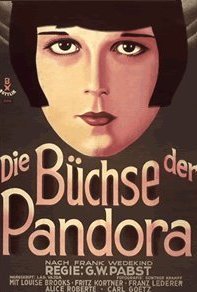
Pandora’s Box was one of the last films of the silent era, a period of transition to sound which I believe set the art of cinematography back a decade.
In short. Pandora’s Box looks stunning! Using the frame to its fullest, with a combination of wide framing and exploiting the art of the close up as Lulu herself, would the men around her, as well as driven by brilliant performances by most of the cast. But kudos needs to go to the star, Louise Brooks, as she portrays Lulu, the alluring flapper girl who can work her innocent, secutive magic on anyone, men and women alike.
But this is not limited to the narrative’s characters as her performance is subtle and underplayed, oozing out the silver screen and seducing the audience with same allure. If looks could kill, then this movie has them all.
With a sparse use of inter-titles, the film relies on both the physicality of the cast and imaginative cinematography to convey the seductive and danger of the events as they unfold over the two and bit hour runtime. Fritz Korner in particular rivals Brooks with the intensity of his performance as the ill fated husband of the girl about town.
And then there’s Alice Roberts, the Countess, who is widely thought to have the first lesbian to be seen on screen. Only Belgian actress’s second film in her short career, is played very Germanic, yet sympathetic as she too, has been drawn under Lulu’s spell.
This was made during the period in which German cinema was ruling, driving the art form from the nickelodeon to the theatre, but this was about to change in the 1930’s with advent of the sound and the golden age of American cinema. But as this film proves, you do not need sound to tell or show a good story.
Granted, the central story is pretty mediocre; a simple tale of a damaged woman who instinctively uses her allure to get her own way yet not as a diva, just an instinctive manipulator, casting her spell far and wide until that spell leads her into the hands London serial killer, Jack The Ripper (Gustav Diessl). But she is never portrayed as evil or scheming, just as herself as those around her are drawn to her aide.
There is little of the pantamine action or motives that you can expect from this genre even now, 90 years on.
But German director G.W. Pabst manages to create a multi-layered tale, deepened by psychological and social subtext, achieved as much because of the relationship he garnered with the star, Brookes, as he played on her natural talents to bring one of cinemas most defining roles to the screen. This would be the first of two collaborations between the director and the wayward starlet that year.
Pandora’s Box is yet another example of how German Cinema was leading the world back in the 1920’s; and even though the second world war may have brought this golden era to an abrupt end, it’s legacy lives on today with the styles, both in front and behind the camera, still being honoured by entire film industry now and hopefully for decades to come.
In short. Pandora’s Box looks stunning! Using the frame to its fullest, with a combination of wide framing and exploiting the art of the close up as Lulu herself, would the men around her, as well as driven by brilliant performances by most of the cast. But kudos needs to go to the star, Louise Brooks, as she portrays Lulu, the alluring flapper girl who can work her innocent, secutive magic on anyone, men and women alike.
But this is not limited to the narrative’s characters as her performance is subtle and underplayed, oozing out the silver screen and seducing the audience with same allure. If looks could kill, then this movie has them all.
With a sparse use of inter-titles, the film relies on both the physicality of the cast and imaginative cinematography to convey the seductive and danger of the events as they unfold over the two and bit hour runtime. Fritz Korner in particular rivals Brooks with the intensity of his performance as the ill fated husband of the girl about town.
And then there’s Alice Roberts, the Countess, who is widely thought to have the first lesbian to be seen on screen. Only Belgian actress’s second film in her short career, is played very Germanic, yet sympathetic as she too, has been drawn under Lulu’s spell.
This was made during the period in which German cinema was ruling, driving the art form from the nickelodeon to the theatre, but this was about to change in the 1930’s with advent of the sound and the golden age of American cinema. But as this film proves, you do not need sound to tell or show a good story.
Granted, the central story is pretty mediocre; a simple tale of a damaged woman who instinctively uses her allure to get her own way yet not as a diva, just an instinctive manipulator, casting her spell far and wide until that spell leads her into the hands London serial killer, Jack The Ripper (Gustav Diessl). But she is never portrayed as evil or scheming, just as herself as those around her are drawn to her aide.
There is little of the pantamine action or motives that you can expect from this genre even now, 90 years on.
But German director G.W. Pabst manages to create a multi-layered tale, deepened by psychological and social subtext, achieved as much because of the relationship he garnered with the star, Brookes, as he played on her natural talents to bring one of cinemas most defining roles to the screen. This would be the first of two collaborations between the director and the wayward starlet that year.
Pandora’s Box is yet another example of how German Cinema was leading the world back in the 1920’s; and even though the second world war may have brought this golden era to an abrupt end, it’s legacy lives on today with the styles, both in front and behind the camera, still being honoured by entire film industry now and hopefully for decades to come.

Movie Metropolis (309 KP) rated Ghost in the Shell (2017) in Movies
Jun 10, 2019
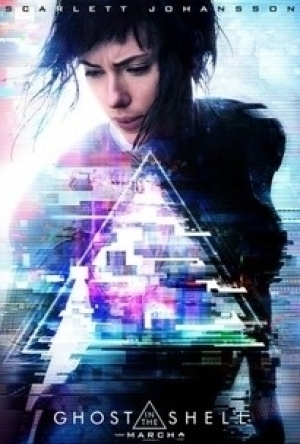
Turning the beloved Ghost in the Shell manga franchise into a Hollywood film that’ll please picky Western audiences was always going to be a tough job for director Rupert Sanders (Snow White & the Huntsman).
Casting the central lead, The Major, proved even more difficult. When Scarlett Johansson’s name was attached to play the role, Hollywood was once again accused of white-washing, a tag lobbied at Gods of Egypt last year. The finished product is now in cinemas around the globe, but is it the disaster many predicted?
In the near future, Major (Scarlett Johansson) is the first of her kind: a human who has been cyber-enhanced to create a perfect soldier devoted to stopping the world’s most dangerous criminals. When terrorism reaches a new level that includes the ability to hack into people’s minds and control them, Major is uniquely qualified to stop it. As she prepares to face a new enemy, Major finds truths about her past that changes her view on the world forever.
The greatest accolade that can be given to Ghost in the Shell is that its pre-release detractors haven’t stopped people from going to see it. The cinema was busy on its opening night, with many itching to see how such a universally loved manga could be fine-tuned for a Western palate.
Visually; the film is absolutely stunning and is best viewed on the biggest screen possible. Each frame is dripping with detail and the naturally heavy use of CGI doesn’t detract from creating a vibrant metropolis that feels every bit alive.
The story is simple to follow and easy to enjoy. It’s exciting, emotional and boosted by a fine, if slightly uninspiring performance from Johansson. The rest of the cast can also be described as fine, with only Juliette Binoche’s mother-like Dr. Ouélet creating any sort of lasting impact.
And this is Ghost in the Shell’s fundamental weakness. Outside of Binoche, the rest of the cast are largely forgettable and that’s a real shame considering the characters in its excellent source material were, for want of a better word, magical. Even the villain is devoid any sort of tyranny.
Thankfully though, the impressive set design and well-choreographed action sequences mask the disappointing array of characters well and steamroll this thrilling adventure to a very satisfying conclusion. It’s also accompanied by a gorgeous soundtrack by Clint Mansell and Lorne Balfe that compliments the futuristic nature of the film beautifully.
Sitting in the theatre, it felt at times like I was watching an updated version of Total Recall, and that’s no bad thing. Comparing it to a cult classic is probably what director Rupert Sanders was trying to achieve and despite its poor characters, Ghost in the Shell has every opportunity to succeed as a film we look back on in 30 years and think “hey, that’s actually pretty good”.
Overall, Ghost in the Shell is one hell of a good-looking film. Couple this with impressive special effects and a rollercoaster ride of a story and you have a big screen experience that’s great for 106 minutes, but probably won’t have any lasting impact once the end credits roll.
https://moviemetropolis.net/2017/03/31/not-without-its-faults-ghost-in-the-shell-review/
Casting the central lead, The Major, proved even more difficult. When Scarlett Johansson’s name was attached to play the role, Hollywood was once again accused of white-washing, a tag lobbied at Gods of Egypt last year. The finished product is now in cinemas around the globe, but is it the disaster many predicted?
In the near future, Major (Scarlett Johansson) is the first of her kind: a human who has been cyber-enhanced to create a perfect soldier devoted to stopping the world’s most dangerous criminals. When terrorism reaches a new level that includes the ability to hack into people’s minds and control them, Major is uniquely qualified to stop it. As she prepares to face a new enemy, Major finds truths about her past that changes her view on the world forever.
The greatest accolade that can be given to Ghost in the Shell is that its pre-release detractors haven’t stopped people from going to see it. The cinema was busy on its opening night, with many itching to see how such a universally loved manga could be fine-tuned for a Western palate.
Visually; the film is absolutely stunning and is best viewed on the biggest screen possible. Each frame is dripping with detail and the naturally heavy use of CGI doesn’t detract from creating a vibrant metropolis that feels every bit alive.
The story is simple to follow and easy to enjoy. It’s exciting, emotional and boosted by a fine, if slightly uninspiring performance from Johansson. The rest of the cast can also be described as fine, with only Juliette Binoche’s mother-like Dr. Ouélet creating any sort of lasting impact.
And this is Ghost in the Shell’s fundamental weakness. Outside of Binoche, the rest of the cast are largely forgettable and that’s a real shame considering the characters in its excellent source material were, for want of a better word, magical. Even the villain is devoid any sort of tyranny.
Thankfully though, the impressive set design and well-choreographed action sequences mask the disappointing array of characters well and steamroll this thrilling adventure to a very satisfying conclusion. It’s also accompanied by a gorgeous soundtrack by Clint Mansell and Lorne Balfe that compliments the futuristic nature of the film beautifully.
Sitting in the theatre, it felt at times like I was watching an updated version of Total Recall, and that’s no bad thing. Comparing it to a cult classic is probably what director Rupert Sanders was trying to achieve and despite its poor characters, Ghost in the Shell has every opportunity to succeed as a film we look back on in 30 years and think “hey, that’s actually pretty good”.
Overall, Ghost in the Shell is one hell of a good-looking film. Couple this with impressive special effects and a rollercoaster ride of a story and you have a big screen experience that’s great for 106 minutes, but probably won’t have any lasting impact once the end credits roll.
https://moviemetropolis.net/2017/03/31/not-without-its-faults-ghost-in-the-shell-review/

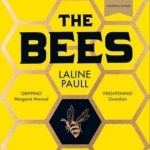
WHEN golden banded honeybees, so often likened to summer and honey sweetness, become the metaphor of a dystopian version of British Government and the Monarchy, what is one left to think?
Established British playwright Laline Paull’s debut novel, The Bees, represents just that. I may just be reading too much into the buzz, but the Oxford alumni who has had two plays performed at the Royal National Theatre must have some of the country in her subconscious as she writes.
The novel follows the life of worker honeybee Flora 717, born of the lowest class of bee society. In a world where mutation and difference is destroyed on sight, the larger-than-average Flora is saved from destruction by opportunities born from austerity in the hive, where ‘the season is deformed by rain, and the flowers shun’ the bees, so they need every available worker.
The life of the honeybee turns out to be symmetrical of Plato’s Republic and his utopia, where children are told what role they will have in life based on their ‘blood’. Plato divided the bronze craftsman, silver guardians and golden philosophers, and Paull divides bees in their ‘kin’ groups, named after flowers, and are priestesses to police, foragers who can fly outside the hive to the sanitation Flora, the lowest, and are given ‘no flower’. ‘A Flora may not make Wax for she is unclean, nor Propolis for she is clumsy, nor ever may she forage for she has no taste, but only may she serve her hive by cleaning,’ but the talented Flora 717 wants more.
Throughout the novel, Paull shows the same attachment to characters as George R R Martin, author of the Game of Thrones novels; the frequent loss deepens the heartbreak Flora must overcome as she fights to defy her set fate and claim the most illegal of desires. No reader will escape the anguish that concludes each new adventure.
The hive is akin to a cult, with leaders keeping their inferiors in check, with fear, intoxication and just a little hypnosis. The cult is complete with its own religion, mantra and even a parody of the Lord’s Prayer, ‘Hallowed be thy womb’, arguably my favourite part. This made the story really exciting, being on the ‘outside looking in’ as the reader, I wanted to encourage Flora to defy, but felt the fear of going against her sisters (this isn’t a cult bond word, they are all blood sisters, for only ‘the queen may breed’).
Paull’s scriptwriting has nurtured the ability to make the reader visualise her words exactly how she writes them, and that is clear within The Bees. I can see the wax panels that Flora 717 scuttles across as she travels around her hive, I can imagine the wax cribs in the nursery and know the deadly yellow and fine lines of the enemy wasp. In the ‘glass cage’ when Flora discovers the Venus Fly Trap, Paull never mentions the plant by name, but speaks only of their ‘red mouths’ with ‘white filaments’ on each ‘inner lip’, they ‘bore no pollen, the only nectar a viscous slick at the join of the petals’. But for all her beautiful imagery seeping off the pages, The Bees was not a book I have felt submerged in.
Full review on <a href="http://www.natari-himi.com">natari-himi.com</a>;
Established British playwright Laline Paull’s debut novel, The Bees, represents just that. I may just be reading too much into the buzz, but the Oxford alumni who has had two plays performed at the Royal National Theatre must have some of the country in her subconscious as she writes.
The novel follows the life of worker honeybee Flora 717, born of the lowest class of bee society. In a world where mutation and difference is destroyed on sight, the larger-than-average Flora is saved from destruction by opportunities born from austerity in the hive, where ‘the season is deformed by rain, and the flowers shun’ the bees, so they need every available worker.
The life of the honeybee turns out to be symmetrical of Plato’s Republic and his utopia, where children are told what role they will have in life based on their ‘blood’. Plato divided the bronze craftsman, silver guardians and golden philosophers, and Paull divides bees in their ‘kin’ groups, named after flowers, and are priestesses to police, foragers who can fly outside the hive to the sanitation Flora, the lowest, and are given ‘no flower’. ‘A Flora may not make Wax for she is unclean, nor Propolis for she is clumsy, nor ever may she forage for she has no taste, but only may she serve her hive by cleaning,’ but the talented Flora 717 wants more.
Throughout the novel, Paull shows the same attachment to characters as George R R Martin, author of the Game of Thrones novels; the frequent loss deepens the heartbreak Flora must overcome as she fights to defy her set fate and claim the most illegal of desires. No reader will escape the anguish that concludes each new adventure.
The hive is akin to a cult, with leaders keeping their inferiors in check, with fear, intoxication and just a little hypnosis. The cult is complete with its own religion, mantra and even a parody of the Lord’s Prayer, ‘Hallowed be thy womb’, arguably my favourite part. This made the story really exciting, being on the ‘outside looking in’ as the reader, I wanted to encourage Flora to defy, but felt the fear of going against her sisters (this isn’t a cult bond word, they are all blood sisters, for only ‘the queen may breed’).
Paull’s scriptwriting has nurtured the ability to make the reader visualise her words exactly how she writes them, and that is clear within The Bees. I can see the wax panels that Flora 717 scuttles across as she travels around her hive, I can imagine the wax cribs in the nursery and know the deadly yellow and fine lines of the enemy wasp. In the ‘glass cage’ when Flora discovers the Venus Fly Trap, Paull never mentions the plant by name, but speaks only of their ‘red mouths’ with ‘white filaments’ on each ‘inner lip’, they ‘bore no pollen, the only nectar a viscous slick at the join of the petals’. But for all her beautiful imagery seeping off the pages, The Bees was not a book I have felt submerged in.
Full review on <a href="http://www.natari-himi.com">natari-himi.com</a>;