
Search
Search results
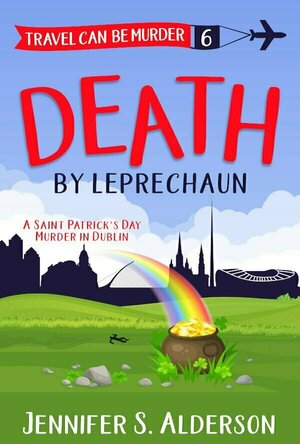
Death by Leprechaun: A Saint Patrick’s Day Murder in Dublin (Travel Can Be Murder Cozy Mystery #6)
9.0 Rate It
Book
When an old friend is arrested in Dublin, tour guide Lana Hansen will need the luck of the Irish to...
Cozy Mystery Travel Cozy



BEARLY GOLD is the second in the Fairy Tale Fatale series and is a very imaginative retelling of Goldilocks and the Three Bears.
'Goldilocks' is a young, incredibly brave girl who has seen and suffered more than any should do. Our main character, Fayola, is a lightning bird of legend, an impundulu. She is on her fortieth mission, after which she will be free to do what she wants with her life. But that fortieth mission brings untold action and the saving of children from a war-torn area. Initially, she doesn't want to. She wants to finish her mission and go home. But how can she leave them?
Featuring bear and elephant shifters, plus impundulu, as well as humans, this is an intricate and twisting story, telling the dark tale of child trafficking. It is lightened in places by Fay's musings, her friends and family, plus romantic elements with Jelani - her long-term partner. It is also violent in places but, I can honestly say, I really didn't care because it couldn't happen to nicer people!!!
This series is simply amazing, covering dark topics. I can't wait to read the next in this series, whichever story it is. HIGHLY recommended by me.
As an aside, there is a simply amazing line spoken in the book which rings true. I'm using the words as written by the author in her notes at the end:
"Heroes are needed in this fight. Not vampiric lightning birds of lore but informed and caring human beings. Child trafficking is not inconsequential but bringing the crime to its overdue end requires people to, like Fayola, engage in the fine art of giving a shit."
** same worded review will appear elsewhere **
* A copy of this book was provided to me with no requirements for a review. I voluntarily read this book; the comments here are my honest opinion. *
Merissa
Archaeolibrarian - I Dig Good Books!
Jun 19, 2022
'Goldilocks' is a young, incredibly brave girl who has seen and suffered more than any should do. Our main character, Fayola, is a lightning bird of legend, an impundulu. She is on her fortieth mission, after which she will be free to do what she wants with her life. But that fortieth mission brings untold action and the saving of children from a war-torn area. Initially, she doesn't want to. She wants to finish her mission and go home. But how can she leave them?
Featuring bear and elephant shifters, plus impundulu, as well as humans, this is an intricate and twisting story, telling the dark tale of child trafficking. It is lightened in places by Fay's musings, her friends and family, plus romantic elements with Jelani - her long-term partner. It is also violent in places but, I can honestly say, I really didn't care because it couldn't happen to nicer people!!!
This series is simply amazing, covering dark topics. I can't wait to read the next in this series, whichever story it is. HIGHLY recommended by me.
As an aside, there is a simply amazing line spoken in the book which rings true. I'm using the words as written by the author in her notes at the end:
"Heroes are needed in this fight. Not vampiric lightning birds of lore but informed and caring human beings. Child trafficking is not inconsequential but bringing the crime to its overdue end requires people to, like Fayola, engage in the fine art of giving a shit."
** same worded review will appear elsewhere **
* A copy of this book was provided to me with no requirements for a review. I voluntarily read this book; the comments here are my honest opinion. *
Merissa
Archaeolibrarian - I Dig Good Books!
Jun 19, 2022

Whatchareadin (174 KP) rated The Pink Bonnet: True Colors in Books
Jul 2, 2019
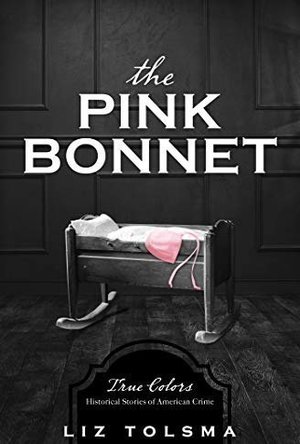

Cecile Dowd is a single mother, just trying to keep life together in 1933 for her and her three year old daughter Millie. Cecile is a widow and it's the great depression. Without her husband, it's difficult to always control Millie's behavior and make sure there is enough food on the table. Cecile decides she needs to get another job to help make things easier. While she goes out looking, she leaves Millie with a neighbor. When she returns to pick up Millie at the end of the day, Millie is gone. The neighbor says, that Cecile can't handle the child and has given her to someone who can help, Georgia Tann the head of the Tennessee Children's Home. They "help" parents find loving families for their children. But Cecile didn't ask for this and neither did a lot of other parents. Ms. Tann is taking children from parents she deems unfit and sending them to other families in the area. Ms. Tann has most of the Tennessee government in her back pocket and no matter who Cecile goes to for help, it's to no avail. Will she be able to find Millie before she's gone forever? With people trying to stop her at every turn, Cecile is determined, no matter what the cost.
Thank you to NetGalley and Barbour Publishing for the opportunity to read and review this book.
This book is based on a true story. Georgia Tann was a real woman who really ran an adoption agency in Tennessee for over 25 years. During her tenure, it is believed that approximately 5,000 children were taken unwillingly from their parents and sold in adoptions to whoever would pay the highest price.
This book hit my heart hard. I can't imagine what I would do, if I left my child with a friend or neighbor for a little bit and then when I came back they had forged my name on documents to allow my child to be taken for adoption. Or if they were just snatched from the street on their way home from school. This was happening to hundreds of families during the depression. People were doing anything they could to make ends meet, but for Georgia Tann that didn't matter. One parent should be with the child at all times. That is the only way to show that you really love and are able to take care of the child.
I would love to read more about this lady. I hope there was a warm seat in hell waiting for her and all her cohorts when she passed away. Throughout the story, you can feel the love for Millie that Cecile has and she risks her life and the lives of those that are helping her in order to get to her daughter. No matter what she does, though it never seems like enough, Millie is always just beyond her grasp.
If you like historical, true crime fiction, you will enjoy this book.
Thank you to NetGalley and Barbour Publishing for the opportunity to read and review this book.
This book is based on a true story. Georgia Tann was a real woman who really ran an adoption agency in Tennessee for over 25 years. During her tenure, it is believed that approximately 5,000 children were taken unwillingly from their parents and sold in adoptions to whoever would pay the highest price.
This book hit my heart hard. I can't imagine what I would do, if I left my child with a friend or neighbor for a little bit and then when I came back they had forged my name on documents to allow my child to be taken for adoption. Or if they were just snatched from the street on their way home from school. This was happening to hundreds of families during the depression. People were doing anything they could to make ends meet, but for Georgia Tann that didn't matter. One parent should be with the child at all times. That is the only way to show that you really love and are able to take care of the child.
I would love to read more about this lady. I hope there was a warm seat in hell waiting for her and all her cohorts when she passed away. Throughout the story, you can feel the love for Millie that Cecile has and she risks her life and the lives of those that are helping her in order to get to her daughter. No matter what she does, though it never seems like enough, Millie is always just beyond her grasp.
If you like historical, true crime fiction, you will enjoy this book.

Kristy H (1252 KP) rated Our Little Secret in Books
Apr 12, 2018
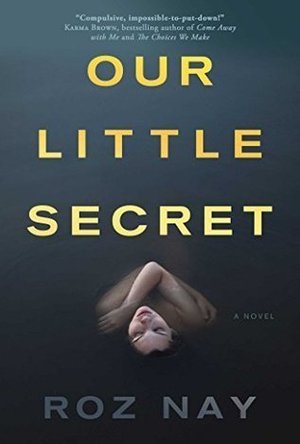
Excellent, well-written suspense novel from debut author
"All love stories are crime stories and all crime stories, love. If you say that's not true, you're not looking properly. Perhaps when two people join, it's inevitable, the things they'll damage in each other." ~Angela to Novak*
Angela is being held for interrogation at the police station. Detective Novak wants only thing from her--to know where Saskia is. But Angela cannot comply; instead, she tells Detective Novak a story, one starting with her senior year, when she fell in love with a boy named HP. As she tells her tale, it becomes clear it is one of love, sadness, betrayal, and anger. Does Angela know where Saskia is? And can we trust her?
This was a really fascinating and different book, and it was so refreshing to read something that felt original and unlike so many of the suspense novels I've read lately. I will say upfront: Nay is an excellent storyteller, and I found this novel to be wonderfully written. Parts of this story actually hurt me to read, because it was so vividly told. I could so clearly picture the events unfolding and visualize this tale of teen love gone wrong.
I loved the idea that our entire book is Angela, trapped at the police station, telling the story of the last several years of her life to Detective Novak. It seems unconventional, and it is, but it worked well for me. It took the unreliable narrator trope to a different level, and it was so much better than the drunken, rambling, angry unreliable narrator that we see so often. Angela tells her tale of woe and bitterness to the Detective, with only minor interruptions as he provides some pieces of new evidence that occasionally cast doubt upon her viewpoints. As such, we are left to guess how truthful she is being with all of us. Every statement she makes is charged with double meaning. I found the entire thing to be incredibly compelling and oddly fascinating. I was completely hooked, madly flipping the pages to find out what happened next. Even more, I was amazed at how Nay created sympathy toward a character who wasn't all that likeable at times. I was rooting for her, even when I knew I probably shouldn't.
I felt this faltered only a little near the end, where I wasn't quite sure I was on board with everything, but it certainly wasn't enough to diminish my love of the novel. And the actual ending is excellent and basically redeemed it all. Overall, this was an excellent, well-written, suspenseful novel. Angela is a dynamic and complicated character who immediately draws you in with her narration. I was constantly second-guessing her as I read and found the entire novel to be incredibly powerful and satisfying. Apparently this is Nay's first book, which is even more impressive. Can't wait for the next one. Definitely worth a read! 4+ stars.
I received a copy of this novel from the publisher and Netgalley in return for an unbiased review (thank you!).
*all quotes from an advanced reader copy and subject to change
Angela is being held for interrogation at the police station. Detective Novak wants only thing from her--to know where Saskia is. But Angela cannot comply; instead, she tells Detective Novak a story, one starting with her senior year, when she fell in love with a boy named HP. As she tells her tale, it becomes clear it is one of love, sadness, betrayal, and anger. Does Angela know where Saskia is? And can we trust her?
This was a really fascinating and different book, and it was so refreshing to read something that felt original and unlike so many of the suspense novels I've read lately. I will say upfront: Nay is an excellent storyteller, and I found this novel to be wonderfully written. Parts of this story actually hurt me to read, because it was so vividly told. I could so clearly picture the events unfolding and visualize this tale of teen love gone wrong.
I loved the idea that our entire book is Angela, trapped at the police station, telling the story of the last several years of her life to Detective Novak. It seems unconventional, and it is, but it worked well for me. It took the unreliable narrator trope to a different level, and it was so much better than the drunken, rambling, angry unreliable narrator that we see so often. Angela tells her tale of woe and bitterness to the Detective, with only minor interruptions as he provides some pieces of new evidence that occasionally cast doubt upon her viewpoints. As such, we are left to guess how truthful she is being with all of us. Every statement she makes is charged with double meaning. I found the entire thing to be incredibly compelling and oddly fascinating. I was completely hooked, madly flipping the pages to find out what happened next. Even more, I was amazed at how Nay created sympathy toward a character who wasn't all that likeable at times. I was rooting for her, even when I knew I probably shouldn't.
I felt this faltered only a little near the end, where I wasn't quite sure I was on board with everything, but it certainly wasn't enough to diminish my love of the novel. And the actual ending is excellent and basically redeemed it all. Overall, this was an excellent, well-written, suspenseful novel. Angela is a dynamic and complicated character who immediately draws you in with her narration. I was constantly second-guessing her as I read and found the entire novel to be incredibly powerful and satisfying. Apparently this is Nay's first book, which is even more impressive. Can't wait for the next one. Definitely worth a read! 4+ stars.
I received a copy of this novel from the publisher and Netgalley in return for an unbiased review (thank you!).
*all quotes from an advanced reader copy and subject to change

<a href="https://amzn.to/2Wi7amb">Wishlist</a>; | <a
<a href="https://diaryofdifference.com/">Blog</a>; | <a href="https://www.facebook.com/diaryofdifference/">Facebook</a>; | <a href="https://twitter.com/DiaryDifference">Twitter</a>; | <a href="https://www.instagram.com/diaryofdifference/">Instagram</a>; | <a href="https://www.pinterest.co.uk/diaryofdifference/pins/">Pinterest</a>;
<img src="https://diaryofdifference.com/wp-content/uploads/2020/09/Book-Review-Banner-79.png"/>;
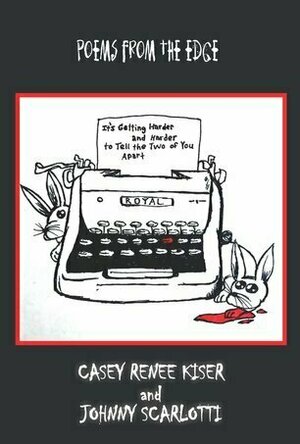
I don’t always read poetry, but I won "It's Getting Harder and Harder To Tell the Two of You Apart" by Casey Renee Kiser and Johnny Scarlotti through a giveaway on LibraryThing.
And if you are already familiar with my “reading rules”, you know I try and read every single book I have ever received, because it’s only fair. And sometimes, the most unexpected books and the ones we don’t actively search for tend to surprise us the most. That happened with this book as well!
"It's Getting Harder and Harder To Tell the Two of You Apart" is written by two authors - two amazing writers of poetry, who have a very similar style of horror and suspense, but also very distinctive differences in their writing style too. The book is split in two parts, and we get the chance to explore both worlds.
<b>Part 1 - Casey Renee Kiser</b>
The first part of the book was written by Casey Renee Kiser, and my favorite poem was “I am not a ghost yet”. It is morbid and powerful, and I loved the way the feelings and scenes were amplified in a morbid sense. I love the brutality of the writing.
<b><i>“Everything was beautiful the day you died”,
You said as you touched my cold hand. </i></b>
<b>Part 2 - Johnny Scarlotti</b>
I could instantly see the difference in the poems between the two poets, but at the same time, also admire how similar their styles and themes are. I find Johnny’s writing very creepy, much creepier than Casey’s. Especially when the mood suddenly changes and the random “haha’s” and “woahh’s” in the poems appear.
<b><i>Now I’m dashing through the park clipping
Children’s kite strings
Ha ha, that’s what you get, you little freaks!</i></b>
It felt like I was reading the secret diary of the Joker. Either him, or Pennywise. It was so fucked up, but it read as the new normal, which is what a psycho would think and feel. It was creepy, it was wrong, but at the same time it satisfied my curiosity. I think that may be the same curiosity that makes me watch true crime shows, crime confessions and old interview with Ted Bundy. And I really enjoyed it.
If I could change anything about my experience with this book, I would have read this for Halloween. I think it would have been the perfect experience, next to a lot of red candles and dim lighting, alongside some quiet creepy music.
I would recommend "It's Getting Harder and Harder To Tell the Two of You Apart" to all fans of horror poetry - it is dark and twisty, brutally honest and creepy, and it will pull you over to the dark side, even for a day.
<a href="https://diaryofdifference.com/">Blog</a>; | <a href="https://www.facebook.com/diaryofdifference/">Facebook</a>; | <a href="https://twitter.com/DiaryDifference">Twitter</a>; | <a href="https://www.instagram.com/diaryofdifference/">Instagram</a>; | <a href="https://www.pinterest.co.uk/diaryofdifference/pins/">Pinterest</a>;
<img src="https://diaryofdifference.com/wp-content/uploads/2020/09/Book-Review-Banner-79.png"/>;
I don’t always read poetry, but I won "It's Getting Harder and Harder To Tell the Two of You Apart" by Casey Renee Kiser and Johnny Scarlotti through a giveaway on LibraryThing.
And if you are already familiar with my “reading rules”, you know I try and read every single book I have ever received, because it’s only fair. And sometimes, the most unexpected books and the ones we don’t actively search for tend to surprise us the most. That happened with this book as well!
"It's Getting Harder and Harder To Tell the Two of You Apart" is written by two authors - two amazing writers of poetry, who have a very similar style of horror and suspense, but also very distinctive differences in their writing style too. The book is split in two parts, and we get the chance to explore both worlds.
<b>Part 1 - Casey Renee Kiser</b>
The first part of the book was written by Casey Renee Kiser, and my favorite poem was “I am not a ghost yet”. It is morbid and powerful, and I loved the way the feelings and scenes were amplified in a morbid sense. I love the brutality of the writing.
<b><i>“Everything was beautiful the day you died”,
You said as you touched my cold hand. </i></b>
<b>Part 2 - Johnny Scarlotti</b>
I could instantly see the difference in the poems between the two poets, but at the same time, also admire how similar their styles and themes are. I find Johnny’s writing very creepy, much creepier than Casey’s. Especially when the mood suddenly changes and the random “haha’s” and “woahh’s” in the poems appear.
<b><i>Now I’m dashing through the park clipping
Children’s kite strings
Ha ha, that’s what you get, you little freaks!</i></b>
It felt like I was reading the secret diary of the Joker. Either him, or Pennywise. It was so fucked up, but it read as the new normal, which is what a psycho would think and feel. It was creepy, it was wrong, but at the same time it satisfied my curiosity. I think that may be the same curiosity that makes me watch true crime shows, crime confessions and old interview with Ted Bundy. And I really enjoyed it.
If I could change anything about my experience with this book, I would have read this for Halloween. I think it would have been the perfect experience, next to a lot of red candles and dim lighting, alongside some quiet creepy music.
I would recommend "It's Getting Harder and Harder To Tell the Two of You Apart" to all fans of horror poetry - it is dark and twisty, brutally honest and creepy, and it will pull you over to the dark side, even for a day.

Gareth von Kallenbach (980 KP) rated Gridiron Gang (2006) in Movies
Aug 14, 2019
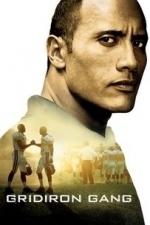

Often the true mark of cinema, this is the category where you will often find the majority of the award winners. The challenge of combining realistic yet sympathetic characters with gripping stories and emotional themes can be a true challenge, but when it works, this is where Hollywood truly shines.
In his latest film Gridiron Gang Dwayne Johnson, better known as the Rock has an appealing mix of sports action, drama, and comedy on his hands that will not only touch you, but will have you cheering.
The Rock stars as Sean Porter, a former college football star who works in a L.A. Area detention center for juvenile offenders. Saddened by the wasted lives of the young men, Sean looks for them to find an alternative to the life of crime, violence, and early death that so many of his inmates face.
With 75% of offenders likely to become repeat offenders, Sean decides to start a football team with the hope of teaching the young inmates the value of hard work, sacrifice, playing as a team, and duty.
Despite some initial obstacles from the system as well as school leagues hesitant to play against convicted offenders, the team son finds themselves with a full schedule and less than three weeks to go before their first game.
The hard practice and coaching style of Sean wears on the players, but they soon find themselves in their first game against a hardened and proven team which underscores just how much work they have to do.
As pressure mounts from all sides, Sean must find a way to meld his team into a winner and prove that this is a project worth doing and that the young men in his care are not lost causes, but are deserving of a new start.
While much of the film may play out as you would expect with the team coming together to play the big game, what is refreshing about the film is the solid performance of The Rock who shows that he is more than just an action star and is very capable of acting. He mixes his portrayal of Sean with equal amounts toughness and caring, to create what is easily his most mature and well defined character to date.
The supporting cast is good, especially Xzibit as Malcolm Moore, who provides a solid supporting presence to The Rock.
While the film is heavy on football action, it also does not shy away from giving the audience a glimpse of the life that the team comes from and how old rivalries and
hostilities can follow them even when they try to leave them behind with the best of intentions.
The action on the field is first-rate as the game choreography never lets up, and is easily the most accurate portrayal of the sport ever committed to film. You can tell that the cast is playing with heart and passion and not simply going through the motions.
Despite a few predictable moments, Gridiron Gang is a very pleasant surprise that is one of the years most enjoyable and satisfying films.
In his latest film Gridiron Gang Dwayne Johnson, better known as the Rock has an appealing mix of sports action, drama, and comedy on his hands that will not only touch you, but will have you cheering.
The Rock stars as Sean Porter, a former college football star who works in a L.A. Area detention center for juvenile offenders. Saddened by the wasted lives of the young men, Sean looks for them to find an alternative to the life of crime, violence, and early death that so many of his inmates face.
With 75% of offenders likely to become repeat offenders, Sean decides to start a football team with the hope of teaching the young inmates the value of hard work, sacrifice, playing as a team, and duty.
Despite some initial obstacles from the system as well as school leagues hesitant to play against convicted offenders, the team son finds themselves with a full schedule and less than three weeks to go before their first game.
The hard practice and coaching style of Sean wears on the players, but they soon find themselves in their first game against a hardened and proven team which underscores just how much work they have to do.
As pressure mounts from all sides, Sean must find a way to meld his team into a winner and prove that this is a project worth doing and that the young men in his care are not lost causes, but are deserving of a new start.
While much of the film may play out as you would expect with the team coming together to play the big game, what is refreshing about the film is the solid performance of The Rock who shows that he is more than just an action star and is very capable of acting. He mixes his portrayal of Sean with equal amounts toughness and caring, to create what is easily his most mature and well defined character to date.
The supporting cast is good, especially Xzibit as Malcolm Moore, who provides a solid supporting presence to The Rock.
While the film is heavy on football action, it also does not shy away from giving the audience a glimpse of the life that the team comes from and how old rivalries and
hostilities can follow them even when they try to leave them behind with the best of intentions.
The action on the field is first-rate as the game choreography never lets up, and is easily the most accurate portrayal of the sport ever committed to film. You can tell that the cast is playing with heart and passion and not simply going through the motions.
Despite a few predictable moments, Gridiron Gang is a very pleasant surprise that is one of the years most enjoyable and satisfying films.

Hadley (567 KP) rated A Luminous Republic in Books
Aug 13, 2020

Well-written (1 more)
Unpredictable
Andres Barba's A Luminous Republic has feral children, senseless murders, and a plot that keeps the story moving enough that the reader won't want to put the book down. This story creatively combines politics, murder, fear and family - - - but the best part is, the book is unpredictable.
We first meet our main character, whose name is never given throughout the entire story, when he and his family are moving to San Cristobal because of a job opportunity. He works for the Department of Social Affairs, and has just received a promotion because he has come up with a very successful plan: " I had developed a social integration program for indigenous communities. The idea was simple and the program proved to be an effective model; it consisted of granting the indigenous exclusive rights to farm certain specific product." Our main character believes that this plan will bring the farmers more money. And he is more than happy to go back to the city where he fell in-love with his now wife, Maia - - - a violin teacher who had a daughter before meeting him, who he calls 'girl' throughout the story because she is also named Maia.
While on his way to work one day, our main character comes across one of the unknown children of the jungle, which shakes him up a bit. The unknown jungle children were known to beg at street lights for money and food, but one of the grimy, frizzy-haired boys stared the man down, only to end up giving him a very wide smile. "The boy's smile unsettled me because it confirmed that there had been a connection between us, that something had begun in me ended in him." Pretty soon after, he begins to notice these unknown jungle children running around a lot more, and that sometimes their intentions are not always innocent - - - he and the 'girl' witness an elderly woman get robbed of her groceries by a group of these children in the middle of the street in a subtle but violent way.
The unknown jungle children soon begin to rob several people,and when a police officer is killed while being attacked by them, the Mayor and the police want the children off the streets as soon as possible. Working with our main character, the former and the latter try to figure out the strange language these children use, whom may be the leader among them, and where they disappear to at night. Since the story is being told from our main character's past, the book is written like a True Crime story, with names of professionals and such being cited throughout. Our main character brings up a woman, who was a young girl at the time of the jungle children's invasion on San Cristobal: Teresa Otano, who happened to 'publish' her diary from that time, which gives readers insights into the jungle children: "Often, some of the thirty-two [jungle children], on their nightly journey back to the jungle, congregated next to Teresa's house, on one corner of Antartida Avenue. At first, Teresa, enthralled, simply makes notes, logging the days on which they appeared, whether there were three, four or five of them, what they were wearing, and so forth. She establishes patterns and identifies a few of the kids..." our main character explains to the reader.
But soon, the children cross a line that they can never come back from; being told by our main character from the view of surveillance video tapes, he describes to us that the jungle children entered a supermarket after an incident with a guard that works there, they block the entrance doors and begin to destroy items throughout the store, but the chaos quickly escalates, and two adults are murdered by the children - - - fear now holds the town in its grip, causing search parties to sweep through the dense jungle after the children fled.
But murder wasn't something new to San Cristobal, our main character explains to us that the suburbs of this area usually had a murder a week all year long, and that on the outskirts of the jungle, there were known spots for drug trafficking and assaults. What made the 'Dakota Supermarket' murders scare the town was that the residents' own children began to behave differently afterwards - - - they start to play a 'game' where they put their ears to the ground, believing that they can hear the jungle children talking to them. Our main character even walks in on the 'girl' playing this exact game. "For a second it was as if I were witnessing a ritual invented by a twelve-year-old girl, and I thought of how afraid my daughter must have felt when I found her in the bathroom that day. People often remark on the self-assured quality of the invocation, its instruction-manual tone, but I'd say that its intensity actually stems from what it dispenses: adult logic, a world that no longer serves. How could our children possibly have explained to us what they were doing? We weren't prepared for their world or their logic. Somewhere out there, underground, that dissonant sound was being sent, in code: down below, chaos. "
This phenomenon attracts the attention of money/fame seekers, which includes the Zapata children. Four siblings, ranging from the ages of five to nine, claimed that the jungle children were speaking to them through their dreams. They would make drawings from what they were told by the jungle children, but state that even they didn't know what the drawings meant. The media quickly jumped on them and put them in front of a camera, causing the family's home to be surrounded by civilians at all hours of the day and night. One night, the crowd outside becomes anxious, and breaks into the house, stealing not only the drawings from the Zapata children, but also the life savings of the family. At this point, the Zapatas had had enough, and retreat from the story altogether for reasons I won't disclose here. I can't give away much more of the book without ruining the story.
Barba's attempt at making a different kind of Lord of the Flies was done well, but the lack of emotion is felt throughout the entire story which makes the characters flat, especially our main character, who I didn't find likable in any such way. He calls a grieving woman a 'whore,' and he seems rude towards his family, especially his step-daughter.
A Luminous Republic is redeemed by is unpredictability, which is something that doesn't come along in fiction that often anymore. I enjoyed that the story was written like a True Crime novel, with fictitious documentaries, news reports and books. So, I would recommend this book to people who like True Crime and Mysteries.
We first meet our main character, whose name is never given throughout the entire story, when he and his family are moving to San Cristobal because of a job opportunity. He works for the Department of Social Affairs, and has just received a promotion because he has come up with a very successful plan: " I had developed a social integration program for indigenous communities. The idea was simple and the program proved to be an effective model; it consisted of granting the indigenous exclusive rights to farm certain specific product." Our main character believes that this plan will bring the farmers more money. And he is more than happy to go back to the city where he fell in-love with his now wife, Maia - - - a violin teacher who had a daughter before meeting him, who he calls 'girl' throughout the story because she is also named Maia.
While on his way to work one day, our main character comes across one of the unknown children of the jungle, which shakes him up a bit. The unknown jungle children were known to beg at street lights for money and food, but one of the grimy, frizzy-haired boys stared the man down, only to end up giving him a very wide smile. "The boy's smile unsettled me because it confirmed that there had been a connection between us, that something had begun in me ended in him." Pretty soon after, he begins to notice these unknown jungle children running around a lot more, and that sometimes their intentions are not always innocent - - - he and the 'girl' witness an elderly woman get robbed of her groceries by a group of these children in the middle of the street in a subtle but violent way.
The unknown jungle children soon begin to rob several people,and when a police officer is killed while being attacked by them, the Mayor and the police want the children off the streets as soon as possible. Working with our main character, the former and the latter try to figure out the strange language these children use, whom may be the leader among them, and where they disappear to at night. Since the story is being told from our main character's past, the book is written like a True Crime story, with names of professionals and such being cited throughout. Our main character brings up a woman, who was a young girl at the time of the jungle children's invasion on San Cristobal: Teresa Otano, who happened to 'publish' her diary from that time, which gives readers insights into the jungle children: "Often, some of the thirty-two [jungle children], on their nightly journey back to the jungle, congregated next to Teresa's house, on one corner of Antartida Avenue. At first, Teresa, enthralled, simply makes notes, logging the days on which they appeared, whether there were three, four or five of them, what they were wearing, and so forth. She establishes patterns and identifies a few of the kids..." our main character explains to the reader.
But soon, the children cross a line that they can never come back from; being told by our main character from the view of surveillance video tapes, he describes to us that the jungle children entered a supermarket after an incident with a guard that works there, they block the entrance doors and begin to destroy items throughout the store, but the chaos quickly escalates, and two adults are murdered by the children - - - fear now holds the town in its grip, causing search parties to sweep through the dense jungle after the children fled.
But murder wasn't something new to San Cristobal, our main character explains to us that the suburbs of this area usually had a murder a week all year long, and that on the outskirts of the jungle, there were known spots for drug trafficking and assaults. What made the 'Dakota Supermarket' murders scare the town was that the residents' own children began to behave differently afterwards - - - they start to play a 'game' where they put their ears to the ground, believing that they can hear the jungle children talking to them. Our main character even walks in on the 'girl' playing this exact game. "For a second it was as if I were witnessing a ritual invented by a twelve-year-old girl, and I thought of how afraid my daughter must have felt when I found her in the bathroom that day. People often remark on the self-assured quality of the invocation, its instruction-manual tone, but I'd say that its intensity actually stems from what it dispenses: adult logic, a world that no longer serves. How could our children possibly have explained to us what they were doing? We weren't prepared for their world or their logic. Somewhere out there, underground, that dissonant sound was being sent, in code: down below, chaos. "
This phenomenon attracts the attention of money/fame seekers, which includes the Zapata children. Four siblings, ranging from the ages of five to nine, claimed that the jungle children were speaking to them through their dreams. They would make drawings from what they were told by the jungle children, but state that even they didn't know what the drawings meant. The media quickly jumped on them and put them in front of a camera, causing the family's home to be surrounded by civilians at all hours of the day and night. One night, the crowd outside becomes anxious, and breaks into the house, stealing not only the drawings from the Zapata children, but also the life savings of the family. At this point, the Zapatas had had enough, and retreat from the story altogether for reasons I won't disclose here. I can't give away much more of the book without ruining the story.
Barba's attempt at making a different kind of Lord of the Flies was done well, but the lack of emotion is felt throughout the entire story which makes the characters flat, especially our main character, who I didn't find likable in any such way. He calls a grieving woman a 'whore,' and he seems rude towards his family, especially his step-daughter.
A Luminous Republic is redeemed by is unpredictability, which is something that doesn't come along in fiction that often anymore. I enjoyed that the story was written like a True Crime novel, with fictitious documentaries, news reports and books. So, I would recommend this book to people who like True Crime and Mysteries.

Bob Mann (459 KP) rated The Mauritanian (2021) in Movies
Apr 14, 2021
Great acting from all four leads, especially Tahar Rahim (2 more)
Great use of screen ratios for flashbacks
Very thought provoking
War crimes don't just happen on the battlefield
It’s 2001. Bush and Rumsfeld seek vengeance on the perpetrators of 9/11. Quite right too. But rounding up hundreds of suspects and incarcerating them for years, without charge, in Guantánamo Bay in Cuba was an appalling act for a supposedly first-world country.
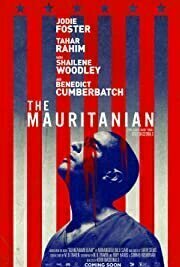
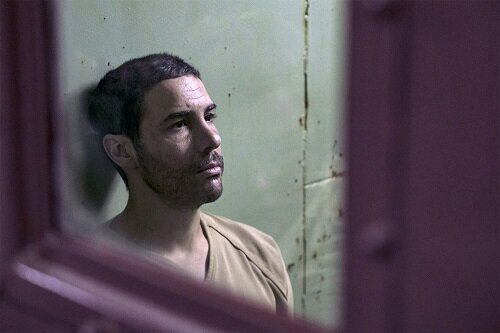
“The Mauritanian” then is the true story of one such unfortunate – Mohamedou Ould Slahi, played by Tahar Rahim. We first join Slahi at a family wedding in Nouakchott (good “Pointless” answer for the capital of Mauritania people!). ‘Invited for questioning’ by the American authorities, we next see Slahi in the Cuban stronghold.
Pro-bono lawyer Nancy Hollander (Jodie Foster) becomes a pariah by picking up his defence. Supporting her is assistant Teri Duncan (Shailene Woodley). Hollander is very formal and professionally aloof, not assuming his guilt or innocence. After meeting the man, and assuming his innocence, Duncan though is more emotionally involved. The man opposing them at trial is US Army prosecutor Stuart Couch (Benedict Cumberbatch). Couch, having lost one of his best friends aboard the South Tower plane, has an axe to grind.
As the pair battle unseen forces for access to documentation, they uncover more and more of the truth about life in Guantánamo Bay.
Positives:
- I've not read the book so I found the story gripping. As the related legal information is divulged, the movie drip-feeds flashbacks of Slahia's story, which is clever.
- Acting wise, "The Mauritanian" has top notch stuff. Tahir Rahim is excellent as Slahia. He portrays charismatic and confident businessman, brought down to earth with a bump. Not recognizing him with an Oscar nomination feels like a minor crime. He will have to make do with the BAFTA nomination. Also brilliant is Jodie Foster. As the illustrious Mrs Movie Man pointed out, it's so nice to see an actress acting her age with confidence. The ever-watchable Shailene Woodley is also great, especially in a dramatic 'dismissal' scene. She adds some much needed warmth to the legal team. The southern drawl from Cumberbatch is a bit of a surprise and takes some getting used to. But it's still a strong performance from him.
- After ranting on last time at Zack Snyder's use of 4:3 screen ratios in "Justice League", here is an intelligent use of the technique. The film is in 16:9 ratio, but then pivots to 4:3 for all of the Guantanamo flashback scenes, reflecting the claustrophobia of Slahia's position.
- Real-life footage over the closing titles is absolutely fascinating.
Negatives:
- I personally didn't find this a particular negative, but I went into the film knowing it to be a "legal drama". So there would be lots of scenes, as in "The Trial of the Chicago 7", with courtroom debate and gavel-banging, right? Actually, there is almost none of that. Most of the legal action is in terms of the preparation of the case and the paperwork involved. (If this makes the movie sound excruciatingly dull... think again!)
- The Guantanamo story ends quite abruptly (with the above-mentioned jolt), and left me wanting to see more of the intervening time. It's not often that I complain about a film running too short, but here is one where just a little of "the Snyder treatment" might have been welcomed!
Additional Note for the squeamish: For those worried about seeing distressing scenes of torture (e.g. Fingernail extraction, etc), these are - although disturbing - more of the "psychological torment" type. So those of a squeamish disposition can still watch this one.
Summary Thoughts:
The fact that "The Mauritanian" is a true story hammers home just what the US has been up to over the last 20 years. War crimes are not only committed on the battlefield.
Director Kevin Macdonald is no stranger to documentaries ("Touching the Void", "Whitney"). He's also proved adept at bringing gripping true stories to the screen (having previously given us "The Last King of Scotland"). Here, the emotional journeys of the key characters are well observed making the movie 'highly recommended'.
For the full One Mann's Movies review see here - https://bob-the-movie-man.com/2021/04/09/the-mauritanian-america-are-you-squirming-with-embarrassment/
“The Mauritanian” then is the true story of one such unfortunate – Mohamedou Ould Slahi, played by Tahar Rahim. We first join Slahi at a family wedding in Nouakchott (good “Pointless” answer for the capital of Mauritania people!). ‘Invited for questioning’ by the American authorities, we next see Slahi in the Cuban stronghold.
Pro-bono lawyer Nancy Hollander (Jodie Foster) becomes a pariah by picking up his defence. Supporting her is assistant Teri Duncan (Shailene Woodley). Hollander is very formal and professionally aloof, not assuming his guilt or innocence. After meeting the man, and assuming his innocence, Duncan though is more emotionally involved. The man opposing them at trial is US Army prosecutor Stuart Couch (Benedict Cumberbatch). Couch, having lost one of his best friends aboard the South Tower plane, has an axe to grind.
As the pair battle unseen forces for access to documentation, they uncover more and more of the truth about life in Guantánamo Bay.
Positives:
- I've not read the book so I found the story gripping. As the related legal information is divulged, the movie drip-feeds flashbacks of Slahia's story, which is clever.
- Acting wise, "The Mauritanian" has top notch stuff. Tahir Rahim is excellent as Slahia. He portrays charismatic and confident businessman, brought down to earth with a bump. Not recognizing him with an Oscar nomination feels like a minor crime. He will have to make do with the BAFTA nomination. Also brilliant is Jodie Foster. As the illustrious Mrs Movie Man pointed out, it's so nice to see an actress acting her age with confidence. The ever-watchable Shailene Woodley is also great, especially in a dramatic 'dismissal' scene. She adds some much needed warmth to the legal team. The southern drawl from Cumberbatch is a bit of a surprise and takes some getting used to. But it's still a strong performance from him.
- After ranting on last time at Zack Snyder's use of 4:3 screen ratios in "Justice League", here is an intelligent use of the technique. The film is in 16:9 ratio, but then pivots to 4:3 for all of the Guantanamo flashback scenes, reflecting the claustrophobia of Slahia's position.
- Real-life footage over the closing titles is absolutely fascinating.
Negatives:
- I personally didn't find this a particular negative, but I went into the film knowing it to be a "legal drama". So there would be lots of scenes, as in "The Trial of the Chicago 7", with courtroom debate and gavel-banging, right? Actually, there is almost none of that. Most of the legal action is in terms of the preparation of the case and the paperwork involved. (If this makes the movie sound excruciatingly dull... think again!)
- The Guantanamo story ends quite abruptly (with the above-mentioned jolt), and left me wanting to see more of the intervening time. It's not often that I complain about a film running too short, but here is one where just a little of "the Snyder treatment" might have been welcomed!
Additional Note for the squeamish: For those worried about seeing distressing scenes of torture (e.g. Fingernail extraction, etc), these are - although disturbing - more of the "psychological torment" type. So those of a squeamish disposition can still watch this one.
Summary Thoughts:
The fact that "The Mauritanian" is a true story hammers home just what the US has been up to over the last 20 years. War crimes are not only committed on the battlefield.
Director Kevin Macdonald is no stranger to documentaries ("Touching the Void", "Whitney"). He's also proved adept at bringing gripping true stories to the screen (having previously given us "The Last King of Scotland"). Here, the emotional journeys of the key characters are well observed making the movie 'highly recommended'.
For the full One Mann's Movies review see here - https://bob-the-movie-man.com/2021/04/09/the-mauritanian-america-are-you-squirming-with-embarrassment/

Rachel (48 KP) rated Exonerated: A History of the Innocence Movement in Books
May 25, 2017

Such a Disappointment
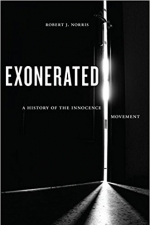
I had very high hopes for this book, it is a fascinating subject, but sadly it did not live up to expectations at all.
Halfway through the introduction I realised just how dry it was going to be. I recognised the structure of it from my university essays. When an introduction includes a brief synopsis of the chapters to come it is obviously good to be more of an academic study than a book you can sit down and get lost in!
And so it continued. Far too much time is dedicated to very dry details. For example, 10 pages are dedicated to a conference held in 1998 called The National Conference on Wrongful Convictions and the Death Penalty. Obviously this is an extremely important cause but it could either have been explained in 2 - 3 pages maximum or a lot more details about the exoneree's could have been added. This is actually the problem through out the book. Details of the exoneration's are sparse, usually with as little detail as "he was exonerated by DNA".
When the author, rarely, tells the story of someone he really comes to life. He has a voice that can put across the suffering and circustance of a person in a very warm and interesting way. Had there been more of that writing it could have been a spectacular book.
As the book was about the Innocence Movement itself I was not expecting some true crime book but, had the dates and figures been interspersed with case studies it would have been great. It would have been nice to know exactly how someone was wrongfully imprisoned and how they were exonerated. Had this been the case I would have given a much higher rating.
The author himself calls this work a study. Unless this book is to be marketed solely for academic purposes, which I am sure it isn't, then it should not BE a study. It should be an accessible book for all people interested in the subject to enjoy.
The author is obviously very passionate about this subject - hence 2 stars instead of 1 - yet passion alone does not make a book good.
Halfway through the introduction I realised just how dry it was going to be. I recognised the structure of it from my university essays. When an introduction includes a brief synopsis of the chapters to come it is obviously good to be more of an academic study than a book you can sit down and get lost in!
And so it continued. Far too much time is dedicated to very dry details. For example, 10 pages are dedicated to a conference held in 1998 called The National Conference on Wrongful Convictions and the Death Penalty. Obviously this is an extremely important cause but it could either have been explained in 2 - 3 pages maximum or a lot more details about the exoneree's could have been added. This is actually the problem through out the book. Details of the exoneration's are sparse, usually with as little detail as "he was exonerated by DNA".
When the author, rarely, tells the story of someone he really comes to life. He has a voice that can put across the suffering and circustance of a person in a very warm and interesting way. Had there been more of that writing it could have been a spectacular book.
As the book was about the Innocence Movement itself I was not expecting some true crime book but, had the dates and figures been interspersed with case studies it would have been great. It would have been nice to know exactly how someone was wrongfully imprisoned and how they were exonerated. Had this been the case I would have given a much higher rating.
The author himself calls this work a study. Unless this book is to be marketed solely for academic purposes, which I am sure it isn't, then it should not BE a study. It should be an accessible book for all people interested in the subject to enjoy.
The author is obviously very passionate about this subject - hence 2 stars instead of 1 - yet passion alone does not make a book good.
Whatchareadin (174 KP) rated Now You See Her in Books
May 10, 2018
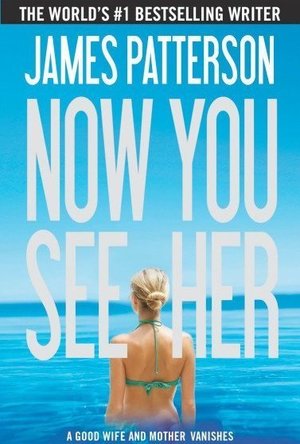

Nina Bloom is a successful attorney in New York City. She has a beautiful daughter who has just turned 17 and is the most important thing in her life. But Nina has a past that no one knows about. Both of her parents are dead and she was an only child. During her senior year in college, she took a trip to Key West for Spring Break that changed her life forever. Now with a new case being presented to her, she has to face the demons from her past. Will she be able to get through this case and come out on the other end alive? Will she still be able to protect her daughter from the dangers that she has been hiding for so long?
James Patterson has long been one of my favorite authors. I love how quickly I can get through his books and how enthralling the story usually is. I plan on listening to all of JP's standalone books through audio this year. I've gotten caught up with all the Women's Murder Club books and hope to continue to stay on top of those.
What really struck me about this book was Nina's ability to keep the secret for so long. For 17 years no one knew about her past or that she was even hiding in the first place. Her firm decides to take on some pro bono work with other firms in the city in a effort to exonerate people on death row. The first case she is assigned is quite personal as she is quite sure that the person who is in jail for the crime should not be. I wondered the whole time if she would be able to get through the case without having to reveal her true identity or if the past she left behind was going to come back and haunt her and her daughter forever. I great listen for this James Patterson book.
Up next, [bc:Sundays at Tiffany's|2029177|Sundays at Tiffany's|James Patterson|https://images.gr-assets.com/books/1266475617s/2029177.jpg|3307932]
James Patterson has long been one of my favorite authors. I love how quickly I can get through his books and how enthralling the story usually is. I plan on listening to all of JP's standalone books through audio this year. I've gotten caught up with all the Women's Murder Club books and hope to continue to stay on top of those.
What really struck me about this book was Nina's ability to keep the secret for so long. For 17 years no one knew about her past or that she was even hiding in the first place. Her firm decides to take on some pro bono work with other firms in the city in a effort to exonerate people on death row. The first case she is assigned is quite personal as she is quite sure that the person who is in jail for the crime should not be. I wondered the whole time if she would be able to get through the case without having to reveal her true identity or if the past she left behind was going to come back and haunt her and her daughter forever. I great listen for this James Patterson book.
Up next, [bc:Sundays at Tiffany's|2029177|Sundays at Tiffany's|James Patterson|https://images.gr-assets.com/books/1266475617s/2029177.jpg|3307932]