
Search
Search results

Movie Metropolis (309 KP) rated Pete's Dragon (2016) in Movies
Jun 11, 2019



Lovely in every sense of the word
2016 really does belong to Disney. The House of Mouse has been churning out some incredible films this year with the live-action remake of The Jungle Book proving sceptical audiences (and critics) completely wrong.
The BFG was a pleasant and inoffensive adaptation of Roald Dahl’s wonderful novel and Finding Dory got Pixar back on the right track, and let’s not forget Captain America: Civil War, by far the best superhero film of the year.
Here, Disney continues its trend with recreating its classic cartoons in live-action; resurrecting Pete’s Dragon. But is this remake of the 1977 film of the same name as good as The Jungle Book?
Mr. Meacham (Robert Redford), a woodcarver, delights local children with stories of a mysterious dragon that lives deep in the woods of the Pacific Northwest. His daughter Grace (Bryce Dallas Howard) believes these are just tall tales, until she meets Pete (Oakes Fegley), a 10-year-old orphan who says he lives in the woods with a giant, friendly dragon called Elliot. With help from a young girl named Natalie (Oona Laurence), Grace sets out to investigate if this fantastic claim can be true.
Director David Lowery helms the film with a quiet subtlety that automatically makes Pete’s Dragon a very different adaptation to Jon Favreau’s stomping Jungle Book. Here, the joy is in the storytelling rather than popping on a set of nostalgia glasses and settling in for the journey.
Acting wise, it’s a pretty formulaic affair. Bryce Dallas Howard, in her first major role since last year’s smash hit Jurassic World, is as likeable as ever and like the film itself, commands the screen with an understated presence. Elsewhere, Oakes Fegley gives a cracking portrayal of Pete.
Naturally, the main character throughout is Elliot, the big friendly dragon. This bright green behemoth is rendered in wonderful CGI, with each gust of wind lifting his fur beautifully. Considering the film’s modest $65million budget, Elliot is utterly believable in each and every scene.
The lush forest landscape provides a mesmerising backdrop on which to construct a film and David Lowery takes the audience on sweeping journeys across the tree-tops, brilliantly juxtaposed with confined caves and the woodland floor.
Unfortunately, the deforestation side plot is never truly explored with Karl Urban’s underdeveloped “villain” proving to be a slight undoing in this near perfect remake.
Thankfully though, the themes of family, friendship and never giving up despite the odds are explored to their fullest – these are themes that Disney knows how to do better than any other studio and the emotional heart that brings to Pete’s Dragon ensures teary eyes are inevitable.
Overall, Disney has done it again. Just five months after the phenomenal Jungle Book remake, the studio has got it spot on with Pete’s Dragon. The two films couldn’t be further apart, with this one succeeding in its quiet dignity. It is in every sense of the word – lovely.
https://moviemetropolis.net/2016/08/16/lovely-in-every-sense-of-the-word-petes-dragon-review/
The BFG was a pleasant and inoffensive adaptation of Roald Dahl’s wonderful novel and Finding Dory got Pixar back on the right track, and let’s not forget Captain America: Civil War, by far the best superhero film of the year.
Here, Disney continues its trend with recreating its classic cartoons in live-action; resurrecting Pete’s Dragon. But is this remake of the 1977 film of the same name as good as The Jungle Book?
Mr. Meacham (Robert Redford), a woodcarver, delights local children with stories of a mysterious dragon that lives deep in the woods of the Pacific Northwest. His daughter Grace (Bryce Dallas Howard) believes these are just tall tales, until she meets Pete (Oakes Fegley), a 10-year-old orphan who says he lives in the woods with a giant, friendly dragon called Elliot. With help from a young girl named Natalie (Oona Laurence), Grace sets out to investigate if this fantastic claim can be true.
Director David Lowery helms the film with a quiet subtlety that automatically makes Pete’s Dragon a very different adaptation to Jon Favreau’s stomping Jungle Book. Here, the joy is in the storytelling rather than popping on a set of nostalgia glasses and settling in for the journey.
Acting wise, it’s a pretty formulaic affair. Bryce Dallas Howard, in her first major role since last year’s smash hit Jurassic World, is as likeable as ever and like the film itself, commands the screen with an understated presence. Elsewhere, Oakes Fegley gives a cracking portrayal of Pete.
Naturally, the main character throughout is Elliot, the big friendly dragon. This bright green behemoth is rendered in wonderful CGI, with each gust of wind lifting his fur beautifully. Considering the film’s modest $65million budget, Elliot is utterly believable in each and every scene.
The lush forest landscape provides a mesmerising backdrop on which to construct a film and David Lowery takes the audience on sweeping journeys across the tree-tops, brilliantly juxtaposed with confined caves and the woodland floor.
Unfortunately, the deforestation side plot is never truly explored with Karl Urban’s underdeveloped “villain” proving to be a slight undoing in this near perfect remake.
Thankfully though, the themes of family, friendship and never giving up despite the odds are explored to their fullest – these are themes that Disney knows how to do better than any other studio and the emotional heart that brings to Pete’s Dragon ensures teary eyes are inevitable.
Overall, Disney has done it again. Just five months after the phenomenal Jungle Book remake, the studio has got it spot on with Pete’s Dragon. The two films couldn’t be further apart, with this one succeeding in its quiet dignity. It is in every sense of the word – lovely.
https://moviemetropolis.net/2016/08/16/lovely-in-every-sense-of-the-word-petes-dragon-review/

Gareth von Kallenbach (980 KP) rated Dark Shadows (2012) in Movies
Aug 7, 2019
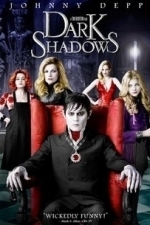

Tim Burton has always been one of my all time favorite directors because of his strange-yet-humorous nature and the frequent use of my favorite actor, Johnny Depp. For the last decade or so we have been plagued with remakes of stories that we are all familiar with and the only thing that makes them different is the addition of the iconic Tim Burton style. Once again Tim Burton brings us yet another remake, only this time of the 70’s cult classic soap opera Dark Shadows.
Frequent collaborator, Johnny Depp, stars as Barnabas Collins in a role previously made famous by Jonathan Frid. Barnabas Collins and his parents leave Liverpool in 1760 for New Hampshire, in an attempt to expand their family business. They succeed and become the wealthiest family in the area, resulting in the town getting named after the family. Barnabas was a ladies’ man and scorned the heart of Angelique Bouchard (Eva Green) by falling in love with Josette DuPres (Bella Heathcote). Unbeknownst to him, Angelique is a witch and out of pure jealousy, she kills his one true love and has cursed Barnabas to be a vampire so that his suffering would be endless. Angelique rallies the townspeople to bury Barnabas alive.
After nearly 200 years, Barnabas is accidently unearthed in the year 1972. He heads to the one place that he can call home and encounters the remaining four dysfunctional members of his family and discovers that his family estate is in jeopardy. Barnabas soon learns that the evil person behind all his families turmoil is none other than Angelique herself.
Though this film does have the quirky Burton-esque feel that we are all familiar with, it lacks his signature energy. The plot itself is long and drawn out and makes the first half of the movie extremely slow and boring. Now don’t get me wrong, Depp did manage to slip in more than a few funny lines but even his best work was a strained attempt at humor. I do, on the other hand, appreciate that Burton brought back the original vampire myths, with all the burning in the sunlight and not being able to see a reflection. Though the script and story itself leaves much to be desired, Johnny Depp is as funny as the story and/or script allows him to be and as Barnabas, he carries the movie. Even Michelle Pfeiffer and Helena Bonham Carter couldn’t help save this movie from the pedantic pace of a very uneven but predictable story. Equally disappointing was the waste of the perfect casting of Chloe Moretz as Michelle’s daughter. Even though she looked and sounded a lot like her movie mom, she wasn’t given much to do but sulk and glare.
Even though you will experience an entertaining blast from the past with the characters, soundtrack and fashions, it is best to say that this film should be left as a rental. Being such a huge fan of Burton’s kooky and imaginative world, it sure pains me to say that this movie is a bit of a train wreck and lacks the enchanting storytelling that we’ve come to expect from him.
Frequent collaborator, Johnny Depp, stars as Barnabas Collins in a role previously made famous by Jonathan Frid. Barnabas Collins and his parents leave Liverpool in 1760 for New Hampshire, in an attempt to expand their family business. They succeed and become the wealthiest family in the area, resulting in the town getting named after the family. Barnabas was a ladies’ man and scorned the heart of Angelique Bouchard (Eva Green) by falling in love with Josette DuPres (Bella Heathcote). Unbeknownst to him, Angelique is a witch and out of pure jealousy, she kills his one true love and has cursed Barnabas to be a vampire so that his suffering would be endless. Angelique rallies the townspeople to bury Barnabas alive.
After nearly 200 years, Barnabas is accidently unearthed in the year 1972. He heads to the one place that he can call home and encounters the remaining four dysfunctional members of his family and discovers that his family estate is in jeopardy. Barnabas soon learns that the evil person behind all his families turmoil is none other than Angelique herself.
Though this film does have the quirky Burton-esque feel that we are all familiar with, it lacks his signature energy. The plot itself is long and drawn out and makes the first half of the movie extremely slow and boring. Now don’t get me wrong, Depp did manage to slip in more than a few funny lines but even his best work was a strained attempt at humor. I do, on the other hand, appreciate that Burton brought back the original vampire myths, with all the burning in the sunlight and not being able to see a reflection. Though the script and story itself leaves much to be desired, Johnny Depp is as funny as the story and/or script allows him to be and as Barnabas, he carries the movie. Even Michelle Pfeiffer and Helena Bonham Carter couldn’t help save this movie from the pedantic pace of a very uneven but predictable story. Equally disappointing was the waste of the perfect casting of Chloe Moretz as Michelle’s daughter. Even though she looked and sounded a lot like her movie mom, she wasn’t given much to do but sulk and glare.
Even though you will experience an entertaining blast from the past with the characters, soundtrack and fashions, it is best to say that this film should be left as a rental. Being such a huge fan of Burton’s kooky and imaginative world, it sure pains me to say that this movie is a bit of a train wreck and lacks the enchanting storytelling that we’ve come to expect from him.

Andy K (10827 KP) rated Dial M for Murder (1954) in Movies
Sep 15, 2019

An unsavory proposition
When ranking Hitchcock's elite films, Dial M For Murder doesn't usually get mentioned in the top 5 including Psycho, Rear Window, Vertigo North By Northwest and maybe The Birds, but it should be. I went through a Hitchcock phase myself a few years back (I would think most serious film fans would at some point). Although, I still have several to go, most still hold up as suspense/thriller classics definitely including this film.
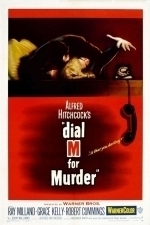
Ex tennis pro Tony Wendice, now married to beautiful and wealthy Margot, has discovered her secret, she's been seeing another man. Months earlier he discovered a love letter from her lover in her handbag and secretly blackmailed for with this information.
Tony decides to invite an old college acquaintance, currently an unsavory character over to their home to explain his plot for this man killing his wife. He would then stand to inherit her fortunes as he is the beneficiary of her will. The man agrees so the plot is set.
The next evening, Tony is out with friends (to ensure his alibi) and phones Margot late in the evening so she rises to answer with the perpetrator waiting for her. After he slips a stocking around her neck to strangle her, a struggle ensues. Instead of her murder, Margot manages to stab the assailant in the back with a pair of nearby scissors. The man falls to the ground in pain driving the scissors deeper within finishing the job for him instead.
The ensuing police investigation initially feels the facts just don't add up since there was no break in and the man did not have a key on him, but he did have the love letter Tony planted on him before the police initially arrived. Fingers eventually point toward Margot as the killer since the facts seem to lead that way.
The 3rd act is brilliant in the way the eventual plot is discovered and how the police ensure Tony incriminates himself as the true antagonist.
Hitchcock's use of camera framing and movement to reveal certain scene elements only when he wants you to see them is one of my favorite elements of his films. He obviously chose source materials which suited his natural abilities to tell sinister or suspenseful stories and this one works just as well as some of his more famous classics.
Ray Milland is charming and diabolical as Tony, never letting on to his beautiful wife (the gorgeous Princess Grace Kelly) the dastardly scheme he has cooked up for her demise or his initial deeds of blackmail. The reveal at the beginning of the murder plot takes the audience on maybe a typical Hitchcock suspense route, but you never know where or when the twists are going to come, but you are willing to go along for the ride.
Your emotions turn from shock having seen the murder to disgust when Margot is eventually blamed for it and then finally to delight when Tony performs just as the police want him to in the end.
Ex tennis pro Tony Wendice, now married to beautiful and wealthy Margot, has discovered her secret, she's been seeing another man. Months earlier he discovered a love letter from her lover in her handbag and secretly blackmailed for with this information.
Tony decides to invite an old college acquaintance, currently an unsavory character over to their home to explain his plot for this man killing his wife. He would then stand to inherit her fortunes as he is the beneficiary of her will. The man agrees so the plot is set.
The next evening, Tony is out with friends (to ensure his alibi) and phones Margot late in the evening so she rises to answer with the perpetrator waiting for her. After he slips a stocking around her neck to strangle her, a struggle ensues. Instead of her murder, Margot manages to stab the assailant in the back with a pair of nearby scissors. The man falls to the ground in pain driving the scissors deeper within finishing the job for him instead.
The ensuing police investigation initially feels the facts just don't add up since there was no break in and the man did not have a key on him, but he did have the love letter Tony planted on him before the police initially arrived. Fingers eventually point toward Margot as the killer since the facts seem to lead that way.
The 3rd act is brilliant in the way the eventual plot is discovered and how the police ensure Tony incriminates himself as the true antagonist.
Hitchcock's use of camera framing and movement to reveal certain scene elements only when he wants you to see them is one of my favorite elements of his films. He obviously chose source materials which suited his natural abilities to tell sinister or suspenseful stories and this one works just as well as some of his more famous classics.
Ray Milland is charming and diabolical as Tony, never letting on to his beautiful wife (the gorgeous Princess Grace Kelly) the dastardly scheme he has cooked up for her demise or his initial deeds of blackmail. The reveal at the beginning of the murder plot takes the audience on maybe a typical Hitchcock suspense route, but you never know where or when the twists are going to come, but you are willing to go along for the ride.
Your emotions turn from shock having seen the murder to disgust when Margot is eventually blamed for it and then finally to delight when Tony performs just as the police want him to in the end.

Leap of Fate
Games
App
*** Minimum hardware: iPad 4, iPad mini 2, iPhone 5s. *** Leap of Fate is a furiously-paced...
Gareth von Kallenbach (980 KP) rated Spider-Man: No Way Home (2021) in Movies
Dec 15, 2021

Life for Peter Parker (Tom Holland) is complicated thanks to his dual life as Spider-Man and the challenges of being in High School. Unfortunately for him; his best intentions are about to make things much worse in "Spider-Man: No Way Home".
Taking place where "Spider-Man: Far From Home" ended; Peter must deal with his secret identity being leaked by Tabloid Journalist J. Jonah Jameson (J. K. Simmons); and the throngs of people, helicopters, and protestors who follow his every move and camp outside his home.
As if this was not bad enough; being accused of being a murderer has drawn the attention of the authorities which further complicates his life as does returning to a school where everyone knows his identity.
Desperate to get away from the constant scrutiny and observation; Peter seeks out Doctor Strange (Benedict Cumberbatch), and asks him to cast a spell that would make the world forget that Peter Parker is Spider-Man.
Strange agrees but mid-spell Peter requests that there are some exemptions from the spell which include his Girlfriend MJ (Zendaya); his Aunt May (Marisa Tomei); and his friend Ned (Jacob Batalon).
Strange agrees but in doing so; complications arise which allows entrants from other dimensions to enter their realm. Soon Peter is accosted by villains whom he does not know but seem to know him; that is until he is unmasked and they have no idea who this Peter Parker is before them.
As more villains arrive; Peter learns of their fates in their natural dimension and is determined to save them and give them a second chance which puts him at odds with Doctor Strange who says they must go back to whatever fate they had.
What follows is a descent into humor and darkness as Peter despite his best intentions sees the situation go from bad to worse and he must fight to stay true to himself and save the day.
The film is a difficult one to review in the fact that there are so many surprise guests, twists, and turns that it is challenging to not reveal anything but suffice it to say that fans should absolutely enjoy it.
The film takes its time getting to the action as it has a very slow and deliberate climb and Director Jon Watts is confident enough in the characters and premise that he allows ample time for the characters and setting to build and be established before he gets to the action.
While there is considerable fan service in the film; it never once seems like it is pandering and it all fits very well within the story and the MCU and opens up numerous possibilities for the future.
There is a mid-credit scene and a post-credit scene which is basically a trailer and both are very engaging in terms of the possibilities as Marvel has again shown that their plan of interwoven stories and characters continues to deliver and that Spider-Man still remains as popular and engaging as ever.
Taking place where "Spider-Man: Far From Home" ended; Peter must deal with his secret identity being leaked by Tabloid Journalist J. Jonah Jameson (J. K. Simmons); and the throngs of people, helicopters, and protestors who follow his every move and camp outside his home.
As if this was not bad enough; being accused of being a murderer has drawn the attention of the authorities which further complicates his life as does returning to a school where everyone knows his identity.
Desperate to get away from the constant scrutiny and observation; Peter seeks out Doctor Strange (Benedict Cumberbatch), and asks him to cast a spell that would make the world forget that Peter Parker is Spider-Man.
Strange agrees but mid-spell Peter requests that there are some exemptions from the spell which include his Girlfriend MJ (Zendaya); his Aunt May (Marisa Tomei); and his friend Ned (Jacob Batalon).
Strange agrees but in doing so; complications arise which allows entrants from other dimensions to enter their realm. Soon Peter is accosted by villains whom he does not know but seem to know him; that is until he is unmasked and they have no idea who this Peter Parker is before them.
As more villains arrive; Peter learns of their fates in their natural dimension and is determined to save them and give them a second chance which puts him at odds with Doctor Strange who says they must go back to whatever fate they had.
What follows is a descent into humor and darkness as Peter despite his best intentions sees the situation go from bad to worse and he must fight to stay true to himself and save the day.
The film is a difficult one to review in the fact that there are so many surprise guests, twists, and turns that it is challenging to not reveal anything but suffice it to say that fans should absolutely enjoy it.
The film takes its time getting to the action as it has a very slow and deliberate climb and Director Jon Watts is confident enough in the characters and premise that he allows ample time for the characters and setting to build and be established before he gets to the action.
While there is considerable fan service in the film; it never once seems like it is pandering and it all fits very well within the story and the MCU and opens up numerous possibilities for the future.
There is a mid-credit scene and a post-credit scene which is basically a trailer and both are very engaging in terms of the possibilities as Marvel has again shown that their plan of interwoven stories and characters continues to deliver and that Spider-Man still remains as popular and engaging as ever.

Hadley (567 KP) rated The Devil in the White City: Murder, Magic, and Madness in Books
Jan 18, 2021
History (1 more)
Well-written
H.H. Holmes had many aliases and lives.
He's been a doctor and a licensed pharmacist, who then conned an old couple into selling their drug store to him where he preyed on young girls and ignorant customers that would buy whatever Holmes would tell them to buy, whether it were real or fake tonics.
He was a building owner who had a murder hotel secretly built with " a wooden chute that would descend from a secret location on the second floor all the way to the basement... ", "a room next to his office fitted with a large walk-in vault, with airtight seams and asbestos-coated iron walls. A gas jet embedded in one wall would be controlled from his closet...", "a large basement with hidden chambers and a sub-basement for the permanent storage of sensitive material. "
He owned and ran an alcohol-treatment company known as the Silver Ash Institute that claimed to have the cure for alcoholism.
He was a traveling business man, who had two wives and two children. He established the Campbell-Yates Manufacturing Company, which made nothing and sold nothing.
He was also labeled as America's first serial killer. His body count is unknown even today; his victims were frequently young women, which included stenographers and house wives. He was best known for convincing people who trusted him to sign him as the beneficiary of their life insurance policies, only to kill them and make it seem an accident so he could collect the money.
Holmes grew up in a small farming village in New Hampshire, where he briefly spoke about an early fear of a human skeleton that hung in a doctor's office: " 'I had daily to pass the office of one village doctor, the door of which was seldom if ever barred,' he wrote in a later memoir. 'Partly from its being associated in my mind as the source of all the nauseous mixtures that had been my childish terror (for this was before the day of children's medicines), and partly because of vague rumors I had heard regarding its contents, this place was one of peculiar abhorrence to me.' "... "Two children discovered Mudgett's [Holmes' real last name] fear and one day captured him and dragged him 'struggling and shrieking' into the doctor's office. 'Nor did they desist,' Mudgett wrote, 'until I had been brought face to face with one of its grinning skeletons, which, with arms outstretched, seemed ready in its turn to seize me. It was a wicked and dangerous thing to do to a child of tender years and health,' he wrote, ' but it proved an heroic method of treatment, destined ultimately to cure me of my fears, and to inculcate in me, first, a strong feeling of curiosity, and, later, a desire to learn, which resulted years afterwards in my adopting medicine as a profession.' "
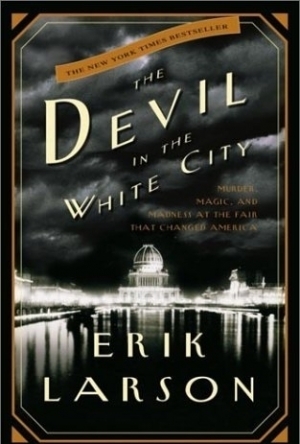
Erik Larson's fourth book, the Devil in the White City, is only partly about Holmes and his dark trail of murder and lies. The story told is mostly centered around the planning and building of the 1893 World's Fair. The prologue opens with one of the architects aboard a ship long after the fair has ended - - - 1912 to be exact- - - where he begins to write of the fair in his diary. The next chapter continues on with Chicago competing against other major cities to win the rights to host the World's Fair. Chicago was not the ideal place for the fair because it was known for it's crime and slaughter houses - - - this was exactly why the politicians wanted it so badly there, so it would help to lighten the image of Chicago for the rest of the world. Even the local Whitechapel Club that had sprouted up after the infamous murders by Jack the Ripper, were excited to win the rights to host the fair in their city, and celebrated in a macabre way:
"Upon learning that Chicago had won the fair, the men of the Whitechapel Club composed a telegram to Chauncey Depew, who more than any other man symbolized New York and its campaign to win the fair. Previously Depew had promised the members of the Whitechapel Club that if Chicago prevailed he would present himself at the club's next meeting, to be hacked apart by the Ripper himself - - - metaphorically, he presumed, although at the Whitechapel Club could one ever be certain? The club's coffin, for example, had once been used to transport the body of a member who had committed suicide. After claiming his body, the club hauled it to the Indiana Dunes on Lake Michigan, where members erected an immense pyre. They placed the body on top, then set it alight. Carrying torches and wearing black hooded robes, they circled the fire singing hymns to the dead between sips of whiskey. The club also had a custom of sending robed members to kidnap visiting celebrities and steal them away in a black coach with covered windows, all without saying a word.
The club's telegram reached Depew in Washington twenty minutes after the final ballot, just as Chicago's congressional delegation began celebrating at the Willard Hotel near the White House. The telegram asked, 'When may we see you at our dissecting table?' "
There are chapters in-between, technically reading like a side story, that tell us about Holmes and his misdeeds in Chicago, but there just wasn't enough about Holmes that I could consider this a True Crime book, nor an informative book about Holmes. Unfortunately, when the reader begins to really dwell into the story of Holmes, it's quickly ended by having two or more chapters about the building of the World's Fair. One interesting point about the story is that the reader does get to see how many inventions were brought to light because of the Fair, such as the invention of the Ferris Wheel. Larson's writing is very coherent and the descriptions are so well done that the reader is practically transported back to the late 1800s, yet, before I finished the book, I felt misled by the title... then coming across everything that happened to not only the Fair, but the people who were involved with it, it's hard not to wonder if the whole thing was cursed, thus the Devil being in the White City.
One of the side stories I did really enjoy was the slow unfolding of a man named Prendergast. A delusional young man who ran one of the groups of paperboys in Chicago, who was also obsessed with politics, became a determined supporter of Mayor Harrison; after Harrison was voted into office again, Prendergast believed it was because of him and the letters he sent out to numerous politicians and potential voters. Prendergast also believed he deserved a chair on the council for Harrison's re-election, for which he even showed up at City Hall to take over. This incident was the straw that broke the camel's back for Prendergast - - - he was humiliated when the people there laughed in his face. Prendergast then decided to take matters into his own hands, and bought a revolver. The day before the Fair would end, Prendergast showed up at Harrison's home and shot him. Harrison died minutes later. Prendergast turned himself in for the murder as soon as he left Harrison's residence. When asked why he had done it, Prendergast responded: " ' Because he betrayed my confidence. I supported him through his campaign and he promised to appoint me corporation counsel. He didn't live up to his word.' "
This book has been voted as a top True Crime must-read novel. I don't agree with this. As I said before: Holmes' chapters are few; eighty percent of this book is about the building of the World's Fair. As a True Crime junkie, I didn't enjoy this one, but also as a history junkie, I enjoyed learning about the Fair and everything that happened. I can't recommend this book to TC fans or horror fans. It's mostly history and architecture.
He's been a doctor and a licensed pharmacist, who then conned an old couple into selling their drug store to him where he preyed on young girls and ignorant customers that would buy whatever Holmes would tell them to buy, whether it were real or fake tonics.
He was a building owner who had a murder hotel secretly built with " a wooden chute that would descend from a secret location on the second floor all the way to the basement... ", "a room next to his office fitted with a large walk-in vault, with airtight seams and asbestos-coated iron walls. A gas jet embedded in one wall would be controlled from his closet...", "a large basement with hidden chambers and a sub-basement for the permanent storage of sensitive material. "
He owned and ran an alcohol-treatment company known as the Silver Ash Institute that claimed to have the cure for alcoholism.
He was a traveling business man, who had two wives and two children. He established the Campbell-Yates Manufacturing Company, which made nothing and sold nothing.
He was also labeled as America's first serial killer. His body count is unknown even today; his victims were frequently young women, which included stenographers and house wives. He was best known for convincing people who trusted him to sign him as the beneficiary of their life insurance policies, only to kill them and make it seem an accident so he could collect the money.
Holmes grew up in a small farming village in New Hampshire, where he briefly spoke about an early fear of a human skeleton that hung in a doctor's office: " 'I had daily to pass the office of one village doctor, the door of which was seldom if ever barred,' he wrote in a later memoir. 'Partly from its being associated in my mind as the source of all the nauseous mixtures that had been my childish terror (for this was before the day of children's medicines), and partly because of vague rumors I had heard regarding its contents, this place was one of peculiar abhorrence to me.' "... "Two children discovered Mudgett's [Holmes' real last name] fear and one day captured him and dragged him 'struggling and shrieking' into the doctor's office. 'Nor did they desist,' Mudgett wrote, 'until I had been brought face to face with one of its grinning skeletons, which, with arms outstretched, seemed ready in its turn to seize me. It was a wicked and dangerous thing to do to a child of tender years and health,' he wrote, ' but it proved an heroic method of treatment, destined ultimately to cure me of my fears, and to inculcate in me, first, a strong feeling of curiosity, and, later, a desire to learn, which resulted years afterwards in my adopting medicine as a profession.' "
Erik Larson's fourth book, the Devil in the White City, is only partly about Holmes and his dark trail of murder and lies. The story told is mostly centered around the planning and building of the 1893 World's Fair. The prologue opens with one of the architects aboard a ship long after the fair has ended - - - 1912 to be exact- - - where he begins to write of the fair in his diary. The next chapter continues on with Chicago competing against other major cities to win the rights to host the World's Fair. Chicago was not the ideal place for the fair because it was known for it's crime and slaughter houses - - - this was exactly why the politicians wanted it so badly there, so it would help to lighten the image of Chicago for the rest of the world. Even the local Whitechapel Club that had sprouted up after the infamous murders by Jack the Ripper, were excited to win the rights to host the fair in their city, and celebrated in a macabre way:
"Upon learning that Chicago had won the fair, the men of the Whitechapel Club composed a telegram to Chauncey Depew, who more than any other man symbolized New York and its campaign to win the fair. Previously Depew had promised the members of the Whitechapel Club that if Chicago prevailed he would present himself at the club's next meeting, to be hacked apart by the Ripper himself - - - metaphorically, he presumed, although at the Whitechapel Club could one ever be certain? The club's coffin, for example, had once been used to transport the body of a member who had committed suicide. After claiming his body, the club hauled it to the Indiana Dunes on Lake Michigan, where members erected an immense pyre. They placed the body on top, then set it alight. Carrying torches and wearing black hooded robes, they circled the fire singing hymns to the dead between sips of whiskey. The club also had a custom of sending robed members to kidnap visiting celebrities and steal them away in a black coach with covered windows, all without saying a word.
The club's telegram reached Depew in Washington twenty minutes after the final ballot, just as Chicago's congressional delegation began celebrating at the Willard Hotel near the White House. The telegram asked, 'When may we see you at our dissecting table?' "
There are chapters in-between, technically reading like a side story, that tell us about Holmes and his misdeeds in Chicago, but there just wasn't enough about Holmes that I could consider this a True Crime book, nor an informative book about Holmes. Unfortunately, when the reader begins to really dwell into the story of Holmes, it's quickly ended by having two or more chapters about the building of the World's Fair. One interesting point about the story is that the reader does get to see how many inventions were brought to light because of the Fair, such as the invention of the Ferris Wheel. Larson's writing is very coherent and the descriptions are so well done that the reader is practically transported back to the late 1800s, yet, before I finished the book, I felt misled by the title... then coming across everything that happened to not only the Fair, but the people who were involved with it, it's hard not to wonder if the whole thing was cursed, thus the Devil being in the White City.
One of the side stories I did really enjoy was the slow unfolding of a man named Prendergast. A delusional young man who ran one of the groups of paperboys in Chicago, who was also obsessed with politics, became a determined supporter of Mayor Harrison; after Harrison was voted into office again, Prendergast believed it was because of him and the letters he sent out to numerous politicians and potential voters. Prendergast also believed he deserved a chair on the council for Harrison's re-election, for which he even showed up at City Hall to take over. This incident was the straw that broke the camel's back for Prendergast - - - he was humiliated when the people there laughed in his face. Prendergast then decided to take matters into his own hands, and bought a revolver. The day before the Fair would end, Prendergast showed up at Harrison's home and shot him. Harrison died minutes later. Prendergast turned himself in for the murder as soon as he left Harrison's residence. When asked why he had done it, Prendergast responded: " ' Because he betrayed my confidence. I supported him through his campaign and he promised to appoint me corporation counsel. He didn't live up to his word.' "
This book has been voted as a top True Crime must-read novel. I don't agree with this. As I said before: Holmes' chapters are few; eighty percent of this book is about the building of the World's Fair. As a True Crime junkie, I didn't enjoy this one, but also as a history junkie, I enjoyed learning about the Fair and everything that happened. I can't recommend this book to TC fans or horror fans. It's mostly history and architecture.
Hadley (567 KP) rated The Amazing Crime and Trial of Leopold and Loeb in Books
Apr 13, 2019
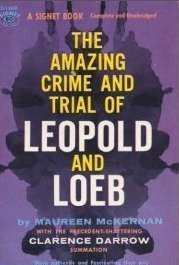
"The crime itself was indefensible. The brilliant, spoiled and bored sons of two of Chicago's wealthiest families planned to commit the perfect crime both for the thrill of and to prove their perverse misunderstanding of Friedrich Nietzsche's philosophy of the 'superman,' who was above all law so long as he made no mistake. Their plan, worked out over several months, was to kidnap and immediately kill one of their younger neighbors and hide his body. They would then demand and collect a ransom. The body would never be discovered, the crime would never be solved and only they would know that they had prevailed over ordinary human beings and their simple-minded legal system. But far from being the 'perfect crime,' the murder of 14-year-old Bobby Franks turned out to be amateurishly botched. Before any ransom could be paid, the boy's body was discovered in a culvert near where Nathan Leopold often went bird-watching. A pair of telltale glasses were found adjacent to the body. They were easily traced to Leopold who first came up with a paper-thin alibi and soon thereafter confessed to the crime. His fellow murderer likewise confessed. Each of the 'superboys' placed blame for the actual killing on the other." - Alan M. Dershowitz
If you mentioned the names Leopold and Loeb today, many people wouldn't know who you were talking about, but if you had mentioned them just thirty years ago, many people would recall the 'murder of the century.'
If you are a fan of the True Crime genre, you'll come across the case of two wealthy Chicago boys who thought they could get away with murder. (The trial is probably the most talked about trial to-date because this is the first time that psychology was brought before a court room.)
For a good part of the late 1920's, Leopold and Loeb were household names for good reason: they came from millionaire families, they were college graduates before they were 18-years-old, and their trial was the first time in history that the world saw psychology put in front of a judge. The trial was even more unforgettable due to a closing speech given by famous defense attorney, Clarence Darrow, which is reprinted in its entirety,spanning a hefty 93 pages.
Nathan Leopold, Jr. and Richard Loeb were two people who should have never met, according to the courtroom. The two met at about the age of fifteen, soon after they began to embark on criminal acts together, ranging from theft to arson. It's stated in 'the Amazing Crime and Trial of Leopold and Loeb' that Loeb had created a fantasy world where he was a crime ringleader that was too smart for the police to catch. Readers get to judge for themselves whether or not they believe Loeb was the cause of their crimes, or if Leopold was the one really in charge.
After robbing Loeb's fraternity house together, Leopold and Loeb came up with a plan to kidnap a wealthy child that they could then ransom. "They began to devise elaborate plans for this kidnapping, and soon the planning became the all-important thing. They gave up the idea of kidnapping this particular person [a young man named William], and settled on the idea of kidnapping anyone who would fit in their kidnapping plans." Throughout the book, we find out that the boys were pretty desperate for a kidnapping victim, that they even thought about kidnapping one of their close friends:
"The plan of kidnaping Dick Rubel was given up because Dick Rubel's father was so tight we might not get any money from him."
Leopold and Loeb discussed everything from how they would receive the ransom, what weapons they would use, how they would get the victim inside a rented vehicle, and what they would do with the body afterwards. "In March, 1924, the patient [Loeb] conceived the idea of securing the money by having it thrown off a moving train. This idea was discussed in great detail, and gradually developed into a carefully systematized plan. As time wore on the plan became greatly modified from the original one. They discussed at considerable length the choice of a suitable subject for kidnapping. The patient's companion [Leopold] suggested that they kidnap a young girl instead of a boy, but the patient [Loeb] objected to this. His companion [Leopold] also suggested that they kidnap the patient's [Loeb] younger brother, but the patient apparently did not seriously consider doing this. They then considered half a dozen boys, any one of whom would do, for the following reasons: that they were physically small enough to be easily handled and their parents were extremely wealthy and would have no difficulty or disinclination to pay ransom money."
During the trial, Leopold and Loeb's psychological evaluations became the forefront of their guilty plea, stating that they were not responsible for their actions due to their upbringing and environment. "I submit the facts do not rest on the evidence of these boys alone. It is proven by the writings; it is proven by every act. It is proven by their companions, and there can by no question about it." Clarence Darrow explains in his famous closing statement. "We brought into this courtroom a number of their boy friends, whom they had known day by day, who had associated with them in the club house, were their constant companions, and they tell the same stories. They tell the story that neither of these two boys was responsible for his conduct."
'The Amazing Crime and Trial of Leopold and Loeb' contains the portions of the psychiatric evaluations that were submitted in court,but the testimony of character witnesses is omitted. For a factual telling of a real life trial, this book is okay. If the reader pays attention, they may notice that some of the book contradicts itself, such as one page states that the car robe used to wrap up Franks' body was found buried near Lake Michigan,but then pages later, the book states it had been burned at Loeb's home.
The psychiatric reports are very repetitive,just using different words to describe the same things. Yet, these reports are the backbone of the trial and well worth a read. The evaluations and Darrow's extensive speech were what saved Leopold and Loeb from a death sentence.
There are very few books written about the 'murder of the century,' and even less about the 'lawyer of the century.' Leopold and Loeb, as well as Darrow, have faded into the obscurity of the True Crime genre, but because the boys' mental state was brought into question, we now accept forensic science/psychology in the court room today. I feel that only people who are truly interested in True Crime, or even have a fascination for the court room are the only ones who will enjoy 'The Amazing Crime and Trial of Leopold and Loeb.'
If you mentioned the names Leopold and Loeb today, many people wouldn't know who you were talking about, but if you had mentioned them just thirty years ago, many people would recall the 'murder of the century.'
If you are a fan of the True Crime genre, you'll come across the case of two wealthy Chicago boys who thought they could get away with murder. (The trial is probably the most talked about trial to-date because this is the first time that psychology was brought before a court room.)
For a good part of the late 1920's, Leopold and Loeb were household names for good reason: they came from millionaire families, they were college graduates before they were 18-years-old, and their trial was the first time in history that the world saw psychology put in front of a judge. The trial was even more unforgettable due to a closing speech given by famous defense attorney, Clarence Darrow, which is reprinted in its entirety,spanning a hefty 93 pages.
Nathan Leopold, Jr. and Richard Loeb were two people who should have never met, according to the courtroom. The two met at about the age of fifteen, soon after they began to embark on criminal acts together, ranging from theft to arson. It's stated in 'the Amazing Crime and Trial of Leopold and Loeb' that Loeb had created a fantasy world where he was a crime ringleader that was too smart for the police to catch. Readers get to judge for themselves whether or not they believe Loeb was the cause of their crimes, or if Leopold was the one really in charge.
After robbing Loeb's fraternity house together, Leopold and Loeb came up with a plan to kidnap a wealthy child that they could then ransom. "They began to devise elaborate plans for this kidnapping, and soon the planning became the all-important thing. They gave up the idea of kidnapping this particular person [a young man named William], and settled on the idea of kidnapping anyone who would fit in their kidnapping plans." Throughout the book, we find out that the boys were pretty desperate for a kidnapping victim, that they even thought about kidnapping one of their close friends:
"The plan of kidnaping Dick Rubel was given up because Dick Rubel's father was so tight we might not get any money from him."
Leopold and Loeb discussed everything from how they would receive the ransom, what weapons they would use, how they would get the victim inside a rented vehicle, and what they would do with the body afterwards. "In March, 1924, the patient [Loeb] conceived the idea of securing the money by having it thrown off a moving train. This idea was discussed in great detail, and gradually developed into a carefully systematized plan. As time wore on the plan became greatly modified from the original one. They discussed at considerable length the choice of a suitable subject for kidnapping. The patient's companion [Leopold] suggested that they kidnap a young girl instead of a boy, but the patient [Loeb] objected to this. His companion [Leopold] also suggested that they kidnap the patient's [Loeb] younger brother, but the patient apparently did not seriously consider doing this. They then considered half a dozen boys, any one of whom would do, for the following reasons: that they were physically small enough to be easily handled and their parents were extremely wealthy and would have no difficulty or disinclination to pay ransom money."
During the trial, Leopold and Loeb's psychological evaluations became the forefront of their guilty plea, stating that they were not responsible for their actions due to their upbringing and environment. "I submit the facts do not rest on the evidence of these boys alone. It is proven by the writings; it is proven by every act. It is proven by their companions, and there can by no question about it." Clarence Darrow explains in his famous closing statement. "We brought into this courtroom a number of their boy friends, whom they had known day by day, who had associated with them in the club house, were their constant companions, and they tell the same stories. They tell the story that neither of these two boys was responsible for his conduct."
'The Amazing Crime and Trial of Leopold and Loeb' contains the portions of the psychiatric evaluations that were submitted in court,but the testimony of character witnesses is omitted. For a factual telling of a real life trial, this book is okay. If the reader pays attention, they may notice that some of the book contradicts itself, such as one page states that the car robe used to wrap up Franks' body was found buried near Lake Michigan,but then pages later, the book states it had been burned at Loeb's home.
The psychiatric reports are very repetitive,just using different words to describe the same things. Yet, these reports are the backbone of the trial and well worth a read. The evaluations and Darrow's extensive speech were what saved Leopold and Loeb from a death sentence.
There are very few books written about the 'murder of the century,' and even less about the 'lawyer of the century.' Leopold and Loeb, as well as Darrow, have faded into the obscurity of the True Crime genre, but because the boys' mental state was brought into question, we now accept forensic science/psychology in the court room today. I feel that only people who are truly interested in True Crime, or even have a fascination for the court room are the only ones who will enjoy 'The Amazing Crime and Trial of Leopold and Loeb.'



The first half of The Serpent and the Moon mainly deals with Francois I's reign as king and has little to do with the love triangle. Frankly, the whole book itself hasn't much to do with the love triangle or "one of the great love stories of all time," but more to do with the political intrigue of Henri I and his father's reigns. Oh, and lest I forget, Henri, Diane, and both of their symbols, monograms, etc. I honestly don't know what the whole fascination of that was all about, but it showed up everywhere.
On page 187 the princess tells us that it is a man's way of thinking that Diane wouldn't have become Henri's mistress if he hadn't become dauphin. I disagree, it is a realist's view, and frankly, I think it's fully possible that was how it started. Yes, maybe she was flattered by his attention too, but to consider having him as a lover in light of how much she was in his life growing up, it's a bit creepy. Oedipus comes to mind. I believe he was infatuated with her from a young age and it most likely progressed into love, for both of them. I envision her grabbing the chance at being the mistress of a king and being older, she knew how to mould and persuade him. Whether or not it was a true love story, I really don't know; I'm not sure anyone does and I don't care all that much.
As many other reviewers have stated, there is an obvious bias. The readers are warned in the introduction, but even if you know that, there's still the possibility that the work as a whole might be neutral. Unfortunately, that's not the case. Maybe if it had only been a slight bias, I wouldn't have cared so much, but when an author heaps praise on one person and how they accomplish everything, and then turn around and bash someone else for the exact same thing. Well, that's just hypocrisy.
From the book, the author would have you believe that Diane de Poitiers got to where she was merely by being a good, honest, gracious, and pious woman and Catherine de' Medici did it by being a cold, heartless, evil, spiteful person. I'm sorry but you cannot have climbed to the heights Diane did, especially in those times, without being conniving in one way or the other. I'm sure she did the same things Catherine did, so quit holding Diane up on a pedestal; she's really not a goddess, just a woman. Diane is a white light, Catherine is black as death and there isn't any grey between them for most of the book. By the end of the book I really took the "history" lightly, mainly that of these two women, more than anything else; it was just an unfair assessment. And with the author's snarky and catty remarks directed towards Catherine, saying she has a "fat little heart," well, that was just uncalled for. Then at the end, her words were so disgusting about Catherine's behavior towards Diane, saying how petty she was and she did things purely due to "feminine spite". Catherine could have done much worse to her but she didn't! Of course, Ms. Perfect D. was always so respectful and exemplary of Catherine. Give me a break. Maybe some of the things said in the book were true about both women, but then again, maybe not. Most is lost to history.
If Princess Michael of Kent's plan was for me to sympathize and idolize Diane de Poitiers, as she does, it backfired. Now I don't ever care to ever hear about her again, and I love history of all kinds. On the other hand, I have already ordered two books about Catherine de' Medici from the library. Most likely the opposite of what she wanted. I honestly don't blame Catherine if she was bitter, who wouldn't be in that situation? Even if it was a different time, circumstance, and an arranged marriage? I refuse to believe Diane was this perfect being, a goddess, virtuous as can be, a victim - nobody is all these things and I don't know why the author cannot see any imperfections and insists on romanticizing her.
Even though I hated how biased this book was, I still appreciate the amount of research this must have taken, it was fairly well-written in form, and there was loads of information. I'd only recommend this to Catherine haters, loathers, or serious dislikers. With the princess's flair for the dramatic and speculation on feelings and actions, she might want to focus on writing works of fiction instead. I have no desire to read anything by this author again.
On page 187 the princess tells us that it is a man's way of thinking that Diane wouldn't have become Henri's mistress if he hadn't become dauphin. I disagree, it is a realist's view, and frankly, I think it's fully possible that was how it started. Yes, maybe she was flattered by his attention too, but to consider having him as a lover in light of how much she was in his life growing up, it's a bit creepy. Oedipus comes to mind. I believe he was infatuated with her from a young age and it most likely progressed into love, for both of them. I envision her grabbing the chance at being the mistress of a king and being older, she knew how to mould and persuade him. Whether or not it was a true love story, I really don't know; I'm not sure anyone does and I don't care all that much.
As many other reviewers have stated, there is an obvious bias. The readers are warned in the introduction, but even if you know that, there's still the possibility that the work as a whole might be neutral. Unfortunately, that's not the case. Maybe if it had only been a slight bias, I wouldn't have cared so much, but when an author heaps praise on one person and how they accomplish everything, and then turn around and bash someone else for the exact same thing. Well, that's just hypocrisy.
From the book, the author would have you believe that Diane de Poitiers got to where she was merely by being a good, honest, gracious, and pious woman and Catherine de' Medici did it by being a cold, heartless, evil, spiteful person. I'm sorry but you cannot have climbed to the heights Diane did, especially in those times, without being conniving in one way or the other. I'm sure she did the same things Catherine did, so quit holding Diane up on a pedestal; she's really not a goddess, just a woman. Diane is a white light, Catherine is black as death and there isn't any grey between them for most of the book. By the end of the book I really took the "history" lightly, mainly that of these two women, more than anything else; it was just an unfair assessment. And with the author's snarky and catty remarks directed towards Catherine, saying she has a "fat little heart," well, that was just uncalled for. Then at the end, her words were so disgusting about Catherine's behavior towards Diane, saying how petty she was and she did things purely due to "feminine spite". Catherine could have done much worse to her but she didn't! Of course, Ms. Perfect D. was always so respectful and exemplary of Catherine. Give me a break. Maybe some of the things said in the book were true about both women, but then again, maybe not. Most is lost to history.
If Princess Michael of Kent's plan was for me to sympathize and idolize Diane de Poitiers, as she does, it backfired. Now I don't ever care to ever hear about her again, and I love history of all kinds. On the other hand, I have already ordered two books about Catherine de' Medici from the library. Most likely the opposite of what she wanted. I honestly don't blame Catherine if she was bitter, who wouldn't be in that situation? Even if it was a different time, circumstance, and an arranged marriage? I refuse to believe Diane was this perfect being, a goddess, virtuous as can be, a victim - nobody is all these things and I don't know why the author cannot see any imperfections and insists on romanticizing her.
Even though I hated how biased this book was, I still appreciate the amount of research this must have taken, it was fairly well-written in form, and there was loads of information. I'd only recommend this to Catherine haters, loathers, or serious dislikers. With the princess's flair for the dramatic and speculation on feelings and actions, she might want to focus on writing works of fiction instead. I have no desire to read anything by this author again.

honingwords (32 KP) rated Alias in Books
Jul 5, 2018
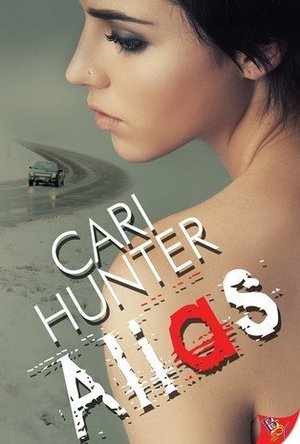
I’ve never read a book by Cari Hunter that I haven't loved and Alias lived up to my high expectations.
I’ve never read a book by Cari Hunter that I haven't loved and Alias lived up to my high expectations. It became available to me soon after I finished the third of her Dark Peaks trilogy so I was able to fangirl-mode right into it.
It is an absolute joy to read Cari Hunter’s books. I’m so thankful I have stumbled across her at the point where there have been a few books to binge on. It is no secret that I think she is one of the finest authors currently, and she has re-awakened my interest in crime thrillers after many years of reading solely romances. It’s a bonus that she is writing novels about regional parts of the UK.
Alias is written in the first person through-out, which is different to her other books and I found this quite refreshing.
The plot starts off with a car crash on a Welsh country road. The woman driver finds herself alive, confused as to who the dead woman beside her is, and then frustrated she doesn’t remember anything about herself, including her name, or why she was driving through Wales.
The opening scene brought tears to my eyes when I realised a great writer was going to be looking after the next few hours of my reading pleasure.
The local Police spend their time trying to work out if she should be prosecuted and she decides to keep tight-lipped about the small pieces of information that start to come back to her through her fugue while she is hospitalised, and then for the short while after she is released.
The rest of the book is about her finding out whether she is a goody or a baddy; whether she should trust Detective Bronwen Pryce, or, in fact, any of the other characters who tell her they are friends and colleagues. Cari makes us wonder about everyone until the very end of the novel.
The details! The details! Cari just loads her pages with perfect details about what is happening to the characters. There is never anything to stutter over. I never have to read a sentence twice because I didn’t understand it, or lose track of the easy-going flow.
I had to note the parts which made me beam during this book so I could re-read them at leisure. That’s it! Cari Hunter makes me beam while reading her books.
Her character’s legs are ‘wobblier than watered-down jelly’, they find ‘novelty of two cooperating lungs’, their ‘fingers poke out’ (from her splint) ‘as fat as unpopped sausages.’
Cari doesn’t simply give her characters goose pimples - they ‘tickle as they rise along her arm.’ They use ‘the painted numbers on the wheelie bins to gauge’ their progress down the street. When they eat they try ‘at first to isolate flavours and then giving up and simply enjoy the mix.’ Their stomach doesn’t just rumble; eating silences their ‘gastric percussion and leaves them with a stitch to walk off.’ The weather isn't cold, it is ‘brittle cold.’
The amnesia aspect had me in tears at points. There are people who possibly may no longer be alive and when she meets her friend for the ‘first time’ I became quite emotional.
As per her other books Cari has humorous moments throughout Alias.
The character is ‘sure that my choice of forget-me-nots wasn’t intended to be ironic.’ And there is a car-buying scene which make me laugh out loud.
There is no CSI Effect in this book. Some blood testing will be ‘four to five weeks at best’ rather than the four to five hours it can sometimes be in fiction.
I’m really sorry to learn there are no plans to take these characters further. Cari writes well-rounded characters with believable back stories and I would have loved to have seen a couple of the ones in this book teased out a little more in at least one sequel.
Don’t be picking this book up if you are looking for bodice-ripping sex. It just isn't there. Part of me cries out for more than Cari usually offers us, the part of me which craves romances. Holy Crap! She can sure write sex when she wants to but, people, this. is. a. crime. novel.
She could have put more sex in, but then it wouldn’t be true to itself, she wouldn’t be true to herself, and the novel would suffer for reader-driven gratuitous sex scenes which aren’t necessary to the plot.
If you would like recommendations for that kind of book let me know and I’ll introduce you to different genres and different authors.
For now, sit back and enjoy good down-to-earth well-written crime fiction.
It is an absolute joy to read Cari Hunter’s books. I’m so thankful I have stumbled across her at the point where there have been a few books to binge on. It is no secret that I think she is one of the finest authors currently, and she has re-awakened my interest in crime thrillers after many years of reading solely romances. It’s a bonus that she is writing novels about regional parts of the UK.
Alias is written in the first person through-out, which is different to her other books and I found this quite refreshing.
The plot starts off with a car crash on a Welsh country road. The woman driver finds herself alive, confused as to who the dead woman beside her is, and then frustrated she doesn’t remember anything about herself, including her name, or why she was driving through Wales.
The opening scene brought tears to my eyes when I realised a great writer was going to be looking after the next few hours of my reading pleasure.
The local Police spend their time trying to work out if she should be prosecuted and she decides to keep tight-lipped about the small pieces of information that start to come back to her through her fugue while she is hospitalised, and then for the short while after she is released.
The rest of the book is about her finding out whether she is a goody or a baddy; whether she should trust Detective Bronwen Pryce, or, in fact, any of the other characters who tell her they are friends and colleagues. Cari makes us wonder about everyone until the very end of the novel.
The details! The details! Cari just loads her pages with perfect details about what is happening to the characters. There is never anything to stutter over. I never have to read a sentence twice because I didn’t understand it, or lose track of the easy-going flow.
I had to note the parts which made me beam during this book so I could re-read them at leisure. That’s it! Cari Hunter makes me beam while reading her books.
Her character’s legs are ‘wobblier than watered-down jelly’, they find ‘novelty of two cooperating lungs’, their ‘fingers poke out’ (from her splint) ‘as fat as unpopped sausages.’
Cari doesn’t simply give her characters goose pimples - they ‘tickle as they rise along her arm.’ They use ‘the painted numbers on the wheelie bins to gauge’ their progress down the street. When they eat they try ‘at first to isolate flavours and then giving up and simply enjoy the mix.’ Their stomach doesn’t just rumble; eating silences their ‘gastric percussion and leaves them with a stitch to walk off.’ The weather isn't cold, it is ‘brittle cold.’
The amnesia aspect had me in tears at points. There are people who possibly may no longer be alive and when she meets her friend for the ‘first time’ I became quite emotional.
As per her other books Cari has humorous moments throughout Alias.
The character is ‘sure that my choice of forget-me-nots wasn’t intended to be ironic.’ And there is a car-buying scene which make me laugh out loud.
There is no CSI Effect in this book. Some blood testing will be ‘four to five weeks at best’ rather than the four to five hours it can sometimes be in fiction.
I’m really sorry to learn there are no plans to take these characters further. Cari writes well-rounded characters with believable back stories and I would have loved to have seen a couple of the ones in this book teased out a little more in at least one sequel.
Don’t be picking this book up if you are looking for bodice-ripping sex. It just isn't there. Part of me cries out for more than Cari usually offers us, the part of me which craves romances. Holy Crap! She can sure write sex when she wants to but, people, this. is. a. crime. novel.
She could have put more sex in, but then it wouldn’t be true to itself, she wouldn’t be true to herself, and the novel would suffer for reader-driven gratuitous sex scenes which aren’t necessary to the plot.
If you would like recommendations for that kind of book let me know and I’ll introduce you to different genres and different authors.
For now, sit back and enjoy good down-to-earth well-written crime fiction.
Gareth von Kallenbach (980 KP) rated The Lady In The Van (2015) in Movies
Aug 6, 2019

In the last two decades America has seen an almost literal ‘invasion’ of British film and television programming. Like the British ‘music invasion’ some 60 years ago we just can’t seem to get enough of it. Today’s film for your consideration is the 2015 British dramatic comedy ‘The Lady In The Van’. Based upon the 1999 West End play of the same name written by Alan Bennett and starring famed British actress Maggie Smith, who also portrayed the lead in the original stage production at Queens Theater in London and again in a 2009 BBC 4 radio adaption, ‘The Lady In The Van’ follows the true story of Maggie Shepherd. An elderly lady who lived in a rundown van in Bennett’s driveway for 15 years.
Directed by Nicholas Hytner, who also directed the stage play, the film stars legendary British actress Maggie Smith as Maggie Shepherd, Alex Jennings as Alan Bennett, Jim Broadbent as Underwood, Deborah Findlay as Pauline, Roger Allam as Rufus, Gwen Taylor as Mam, Cecillia Noble as Miss Brisco, Nicholas Burns as Giles Perry, Pandora Colin as Mrs Perry, and Frances de la Tour As Ursula Vaughan Williams.
‘The Lady In The Van’ follows the true story of playwright Alan Bennett’s strained and tested relationship with Miss Maggie Shepherd. An eccentric and frightened homeless woman whom he befriended in the 1970s shortly after he moved into London’s Camden neighborhood. Originally, Bennett invites Shepherd to park her aging Bedford van in his driveway so she can list it as an address in order to collect benefits and eventually move on. Instead, Shepherd ends up living in the van in Bennett’s driveway for 15 years. Just before her death in 1989, Alan learns that Maggie Shepherd is actually Margaret Fairchild. A gifted piano player who was a pupil of pianist Alfred Cortot and had a fondness for Chopin. So much so that when she tried to become a nun, she was kicked out of her religious order twice for wanting to play music. Bennett also learns that the reason Shepherd was homeless was that she was on the run for leaving the scene of a crime she didn’t commit after escaping an institution where she’d been committed by her own brother.
I found this movie to be a prime example of the concept ‘Everyone Has A Story To Tell’. Whether the person wants to tell the story or not is a whole other idea entirely. The strange friendship between Bennett and Shepherd is certainly an unusual one to be sure. While Bennett’s neighbors would be happy to see they as they describe ‘the crazy old lady leave the neighborhood, Bennett seems to follow his writer’s instincts and also his humanity. Maggie Smith’s and Alex Jennings’s performances as the oddly paired friends go far in helping to comprehend what went on between the two. Shepherd and Bennett both excelled as artists in their own way. One as a writer one as a musician. Both kinds of artists tell stories thorough their respective crafts. In this case though, the writer (Bennett) had the ‘responsibility’ of telling Shepherd’s story after debating with himself more than once whether he had the right to do so and whether it was moral or not. On top of that, it took over a decade to find the answers Bennett was looking for. In the end, it seems Bennett did what writers do. They use what’s around them in their lives to write about. And perhaps, by doing so, he helped give Shepherd some sort of closure and perhaps peace as well just before her death.
I’m going to give this film 4 out of 5 stars. The movie clocks in at 104 minutes so it is a long movie but honestly, how can you say ‘no’ to a movie with Maggie Smith? Honestly, explain that one to me. She definitely ‘carries the film’ with her performance as Miss Mary Shepherd but the combination of her performance and that of Alex Jennings as the writer Alan Bennett that really make the film. I think another one of the reasons this film was good was because you had so many of the people that were involved in the original play that worked on the film itself. I personally find some British films, comedies in particular, to be a bit quirky sometimes. As funny as British humor is its sometimes difficult to grasp at first and there’s a bit of that in this film. Don’t let that discourage you though. If you can find an awesome art house movie theater, I’d certainly recommend going to catch it there. If you can’t, watch it online.
This is your friendly neighborhood freelance photographer and movie fanatic ‘The CameraMan’ and on behalf of my fellows at Skewed & Reviewed I’d like to say ‘Thanks For Reading’ and we’ll see you at the movies.
Directed by Nicholas Hytner, who also directed the stage play, the film stars legendary British actress Maggie Smith as Maggie Shepherd, Alex Jennings as Alan Bennett, Jim Broadbent as Underwood, Deborah Findlay as Pauline, Roger Allam as Rufus, Gwen Taylor as Mam, Cecillia Noble as Miss Brisco, Nicholas Burns as Giles Perry, Pandora Colin as Mrs Perry, and Frances de la Tour As Ursula Vaughan Williams.
‘The Lady In The Van’ follows the true story of playwright Alan Bennett’s strained and tested relationship with Miss Maggie Shepherd. An eccentric and frightened homeless woman whom he befriended in the 1970s shortly after he moved into London’s Camden neighborhood. Originally, Bennett invites Shepherd to park her aging Bedford van in his driveway so she can list it as an address in order to collect benefits and eventually move on. Instead, Shepherd ends up living in the van in Bennett’s driveway for 15 years. Just before her death in 1989, Alan learns that Maggie Shepherd is actually Margaret Fairchild. A gifted piano player who was a pupil of pianist Alfred Cortot and had a fondness for Chopin. So much so that when she tried to become a nun, she was kicked out of her religious order twice for wanting to play music. Bennett also learns that the reason Shepherd was homeless was that she was on the run for leaving the scene of a crime she didn’t commit after escaping an institution where she’d been committed by her own brother.
I found this movie to be a prime example of the concept ‘Everyone Has A Story To Tell’. Whether the person wants to tell the story or not is a whole other idea entirely. The strange friendship between Bennett and Shepherd is certainly an unusual one to be sure. While Bennett’s neighbors would be happy to see they as they describe ‘the crazy old lady leave the neighborhood, Bennett seems to follow his writer’s instincts and also his humanity. Maggie Smith’s and Alex Jennings’s performances as the oddly paired friends go far in helping to comprehend what went on between the two. Shepherd and Bennett both excelled as artists in their own way. One as a writer one as a musician. Both kinds of artists tell stories thorough their respective crafts. In this case though, the writer (Bennett) had the ‘responsibility’ of telling Shepherd’s story after debating with himself more than once whether he had the right to do so and whether it was moral or not. On top of that, it took over a decade to find the answers Bennett was looking for. In the end, it seems Bennett did what writers do. They use what’s around them in their lives to write about. And perhaps, by doing so, he helped give Shepherd some sort of closure and perhaps peace as well just before her death.
I’m going to give this film 4 out of 5 stars. The movie clocks in at 104 minutes so it is a long movie but honestly, how can you say ‘no’ to a movie with Maggie Smith? Honestly, explain that one to me. She definitely ‘carries the film’ with her performance as Miss Mary Shepherd but the combination of her performance and that of Alex Jennings as the writer Alan Bennett that really make the film. I think another one of the reasons this film was good was because you had so many of the people that were involved in the original play that worked on the film itself. I personally find some British films, comedies in particular, to be a bit quirky sometimes. As funny as British humor is its sometimes difficult to grasp at first and there’s a bit of that in this film. Don’t let that discourage you though. If you can find an awesome art house movie theater, I’d certainly recommend going to catch it there. If you can’t, watch it online.
This is your friendly neighborhood freelance photographer and movie fanatic ‘The CameraMan’ and on behalf of my fellows at Skewed & Reviewed I’d like to say ‘Thanks For Reading’ and we’ll see you at the movies.