
Search

Gareth von Kallenbach (980 KP) rated BlacKkKlansman (2018) in Movies
Jul 8, 2019
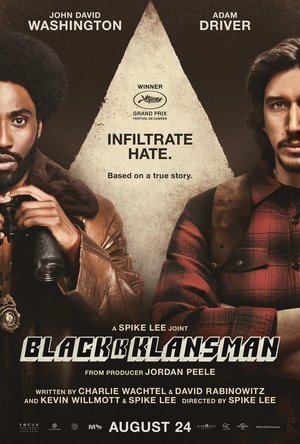

From Director Spike Lee comes the incredible story of true American hero. In the early 1970s, Ron Stallworth (John David Washington) is the first African-American detective to serve in the Colorado Springs Police Department. Determined to make a name for himself, Stallworth bravely sets out on a dangerous mission: infiltrate and expose the Ku Klux Klan. The movie is based on Stallworth’s 2014 book Black Klansman, which details his experience. When it came time to meet the Klan members face-to-face, he utilized the help of a white undercover narcotics officer (Adam Driver in the movie), who posed as Stallworth for all in-person meetings with the Klan. Together, they team up to take down the extremist hate group as the organization aims to sanitize its violent rhetoric to appeal to the mainstream.
The film is very creative in the way that it presents history and allows the audience ride along with the action, suspense, and anxiety experience by Washington and Driver’s characters. The tone of the film, at times, is lighthearted in its approach but quickly draws you back in when faced with the reality that David Duke, and people like him walk among us dressing up their racism with non-threatening slogans, professional attire, and a clean-cut package.
The story displayed is a reminder that racism in America has a long history and is not isolated geographically to the south nor limited to Charlottesville or Charleston. The attitudes and actions committed by those who agree with the stances of white supremacy and white supremacist organizations have had a drastic impact on the development of American society. It has shaped and misshapen our attitudes towards one another. It continues to affect us today as we all bear witness to unbridled racism or the downplaying of racism with terms like “political correctness.” This film is timely in its approach and offers audiences a more full and expansive view of what combatting racism and racist attitudes and actions looks like.
Blackkklansman is a film that many have waited for when first hearing about the story of Ron Stallworth and they will not be disappointed with what they witness on screen. Sadly, the people who desperately need to see this movie may pass on it because they are uncomfortable with the subject matter and the reality that they themselves may be complicit in the continuance of racism and white supremacy. This film feels like a conversation being conducted directly between the director and audience. There are subtleties that allow the audience to think about the meaning and even parallel between the early 1970s and the current political environment, as well as, moments where there is no hiding of the message, no metaphor, no allegory. The filmmakers make it clear for those watching that many of us need to wake up almost as blatantly as Spike Lee promotes one of his earlier films, School Daze.
The only problem I found with the film was that I was left wanting more discussion. I wanted to see more of what Ron Stallworth dealt with as the only black detective in his department. If anything, this shows a real strength in the film by leaving audiences emotionally connected with the horrors that he faced, as well as, the way that those around him come to grips with the reality of the hatred and racial violence that had overlooked before because it did not have a direct effect on them. Blackkklansman is a film that will have audiences reflecting long after the credits have rolled. Hopefully the themes, metaphors, and overall message will help foster overdue and well-needed conversations about race, racism, prejudice, and violence. This film takes audiences out of their comfort zones and forces them to face some of the dark corners of America for two hours. Within that two hours, hopefully the people who don’t recognize racism and bigotry get a glimpse of the true horror and fear that marginalized communities feel on a daily basis so that they themselves can be agents of change and fight against racism.
The film is very creative in the way that it presents history and allows the audience ride along with the action, suspense, and anxiety experience by Washington and Driver’s characters. The tone of the film, at times, is lighthearted in its approach but quickly draws you back in when faced with the reality that David Duke, and people like him walk among us dressing up their racism with non-threatening slogans, professional attire, and a clean-cut package.
The story displayed is a reminder that racism in America has a long history and is not isolated geographically to the south nor limited to Charlottesville or Charleston. The attitudes and actions committed by those who agree with the stances of white supremacy and white supremacist organizations have had a drastic impact on the development of American society. It has shaped and misshapen our attitudes towards one another. It continues to affect us today as we all bear witness to unbridled racism or the downplaying of racism with terms like “political correctness.” This film is timely in its approach and offers audiences a more full and expansive view of what combatting racism and racist attitudes and actions looks like.
Blackkklansman is a film that many have waited for when first hearing about the story of Ron Stallworth and they will not be disappointed with what they witness on screen. Sadly, the people who desperately need to see this movie may pass on it because they are uncomfortable with the subject matter and the reality that they themselves may be complicit in the continuance of racism and white supremacy. This film feels like a conversation being conducted directly between the director and audience. There are subtleties that allow the audience to think about the meaning and even parallel between the early 1970s and the current political environment, as well as, moments where there is no hiding of the message, no metaphor, no allegory. The filmmakers make it clear for those watching that many of us need to wake up almost as blatantly as Spike Lee promotes one of his earlier films, School Daze.
The only problem I found with the film was that I was left wanting more discussion. I wanted to see more of what Ron Stallworth dealt with as the only black detective in his department. If anything, this shows a real strength in the film by leaving audiences emotionally connected with the horrors that he faced, as well as, the way that those around him come to grips with the reality of the hatred and racial violence that had overlooked before because it did not have a direct effect on them. Blackkklansman is a film that will have audiences reflecting long after the credits have rolled. Hopefully the themes, metaphors, and overall message will help foster overdue and well-needed conversations about race, racism, prejudice, and violence. This film takes audiences out of their comfort zones and forces them to face some of the dark corners of America for two hours. Within that two hours, hopefully the people who don’t recognize racism and bigotry get a glimpse of the true horror and fear that marginalized communities feel on a daily basis so that they themselves can be agents of change and fight against racism.

Hadley (567 KP) rated Stranger Things: Darkness on the Edge of Town in Books
Jul 17, 2019
Jim Hopper (1 more)
Serial killers and cults, oh my!
Too much attention to detail (1 more)
Using the same body language for every character
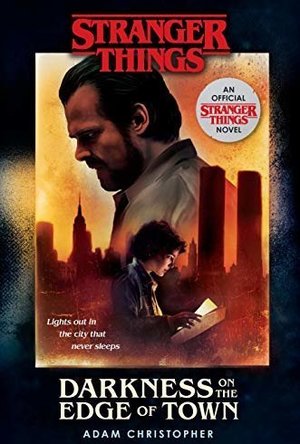
In 1977, New York City was a disaster; men were trying to return to a normal life after Vietnam ended, gangs were on every street corner, and a serial killer, by the name 'Son of Sam,' was on the loose. But for Detective Jim Hopper, New York was housing another serial killer just for him- - - a killer who is killing Vietnam war veterans, and leaving behind a psychic calling card, known as the Zener cards.
Adam Christopher is the chosen author to tell Stranger Things' fans about the most important homicide case that Jim Hopper ever worked on in the novel 'Darkness on the Edge of Town.' Fans may recall from season 2, when Eleven found a secret hatch in Hopper's cabin, it revealed boxes under the floor - one which was labeled 'New York.' This is that story.
The entire book is Hopper telling Eleven about his greatest homicide story from New York City. Readers get to meet new characters from Hopper's past, but the most memorable may be his partner in the Homicide Unit, Rosario Delgado (1977 was a time where Homicide Units didn't allow female detectives, and Delgado is one of the first of few that is allowed into the unit). Delgado, who is Cuban, but was raised in Queens, New York, has all the right attitude that wins over her partner, Hopper. The reader will realize that they are two-peas-in-a-pod.
Quickly, the story gets into the first case the two have together: the Zener card serial killer; here, we learn that there were two previous victims, both murdered the same way: stabbed five times with the wounds joining together to form a five-pointed star. Throughout the book, the story goes back and forth between 1977 and the present, where Eleven asks questions about the story, and also, Hopper questioning himself as to whether he should continue to tell Eleven the story.
But soon, we meet a very important man named Leroy Washington - a gang member who wants protection in exchange for the information that he holds- this leads Hopper to our villain: a cult leader who goes by the name Saint John. This villain believes that Satan is going to rise and destroy New York City.
Backtracking a little before, Hopper and Delgado are taken off the case of the Zener card murders, introducing readers to Special Agent Gallup. Gallup states that the third victim, Jacob Hoeler, was also a Special Agent, so the case is turned over to Federal Agents. "What you don't know, Detective, is that Jacob Hoeler is one of ours- - - Special Agent Jacob Hoeler. He was working on assignment, and the fact that he was killed in the course of his duties is of primary concern to my department. Therefore, we need to be sure that a most thorough investigation is carried out. In order to ensure that happens, we will be taking the case in-house. " Hopper, along with Delgado, refuse to let the case go, and secretly continue to work on it. But, as they dig deeper into the evidence and crime scenes, the two realize the murder case is a part of something much bigger - - - a cult that is armed with vehicles and weapons, ready to take over New York City for their leader, Saint John.
Readers get to see the story from both Hopper's and Delgado's point of view, which readers may question how Hopper knows Delgado's side of the story, but quickly to react, Eleven asks this very question for us: " 'Fair point,' said Hopper. 'But we - - - I mean, Delgado and me- - - we pieced it all together afterward. We had to interview everyone we could, and we put it all into a big official report. Actually, it took way longer to write that thing up than we spent on the investigation itself. We were even flown down to D.C. to present it to a bunch of anonymous suits in some federal building. They grilled us pretty well, too, although I ever found out who they all were. ' He grinned. ' Kinda sums the whole thing up, really.' " Even so, without Delgado's point of view, the story wouldn't have turned out as well as it did.
Hopper's obsession with cracking this case lands him in the center of it- - - he is recruited, not by choice, to the task force that is trying to top Saint John's big plan to destroy New York City. Leroy Washington, the informant from before, is Hopper's wing man for the mission, because Washington turns out to be a recruiting officer for the cult. Hopper is to pretend that he is a new recruit, and that he is an ex-cop, who just happened to 'murder' two people the night before. Hopper infiltrating the cult is one of the most exciting parts of the book, but the sequence of these scenes are much too short, leaving this reader disappointed.
Unfortunately, by this time, Delgado has become somewhat of a secondary character. She still works the case, being in the-know of Hopper going undercover, but we see little else of Delgado's character being developed. This is a missed opportunity indeed.
Although I enjoyed Christopher bringing Hopper's backstory to light, the writer is so detail oriented in his writing, that it bogged down much of the flow in the story. The reader is told things in almost every scene that come to nothing, and just seem to waste the reader's time. You may also find that the author uses the same words or physical actions to describe emotions for every single character (such as neck rolling to show stress), which gets old very quickly.
With that said, and only a few inconsistencies here and there, the book was very good. The story takes off pretty quickly and doesn't seem to slow down. The scenery descriptions put the reader right there with our favorite Hawkins Police Chief, Jim Hopper, but the best part about this book is that you don't have to be a Stranger Things' fan to enjoy it; anyone who enjoys Crime Fiction would love this story. Highly recommend!
Adam Christopher is the chosen author to tell Stranger Things' fans about the most important homicide case that Jim Hopper ever worked on in the novel 'Darkness on the Edge of Town.' Fans may recall from season 2, when Eleven found a secret hatch in Hopper's cabin, it revealed boxes under the floor - one which was labeled 'New York.' This is that story.
The entire book is Hopper telling Eleven about his greatest homicide story from New York City. Readers get to meet new characters from Hopper's past, but the most memorable may be his partner in the Homicide Unit, Rosario Delgado (1977 was a time where Homicide Units didn't allow female detectives, and Delgado is one of the first of few that is allowed into the unit). Delgado, who is Cuban, but was raised in Queens, New York, has all the right attitude that wins over her partner, Hopper. The reader will realize that they are two-peas-in-a-pod.
Quickly, the story gets into the first case the two have together: the Zener card serial killer; here, we learn that there were two previous victims, both murdered the same way: stabbed five times with the wounds joining together to form a five-pointed star. Throughout the book, the story goes back and forth between 1977 and the present, where Eleven asks questions about the story, and also, Hopper questioning himself as to whether he should continue to tell Eleven the story.
But soon, we meet a very important man named Leroy Washington - a gang member who wants protection in exchange for the information that he holds- this leads Hopper to our villain: a cult leader who goes by the name Saint John. This villain believes that Satan is going to rise and destroy New York City.
Backtracking a little before, Hopper and Delgado are taken off the case of the Zener card murders, introducing readers to Special Agent Gallup. Gallup states that the third victim, Jacob Hoeler, was also a Special Agent, so the case is turned over to Federal Agents. "What you don't know, Detective, is that Jacob Hoeler is one of ours- - - Special Agent Jacob Hoeler. He was working on assignment, and the fact that he was killed in the course of his duties is of primary concern to my department. Therefore, we need to be sure that a most thorough investigation is carried out. In order to ensure that happens, we will be taking the case in-house. " Hopper, along with Delgado, refuse to let the case go, and secretly continue to work on it. But, as they dig deeper into the evidence and crime scenes, the two realize the murder case is a part of something much bigger - - - a cult that is armed with vehicles and weapons, ready to take over New York City for their leader, Saint John.
Readers get to see the story from both Hopper's and Delgado's point of view, which readers may question how Hopper knows Delgado's side of the story, but quickly to react, Eleven asks this very question for us: " 'Fair point,' said Hopper. 'But we - - - I mean, Delgado and me- - - we pieced it all together afterward. We had to interview everyone we could, and we put it all into a big official report. Actually, it took way longer to write that thing up than we spent on the investigation itself. We were even flown down to D.C. to present it to a bunch of anonymous suits in some federal building. They grilled us pretty well, too, although I ever found out who they all were. ' He grinned. ' Kinda sums the whole thing up, really.' " Even so, without Delgado's point of view, the story wouldn't have turned out as well as it did.
Hopper's obsession with cracking this case lands him in the center of it- - - he is recruited, not by choice, to the task force that is trying to top Saint John's big plan to destroy New York City. Leroy Washington, the informant from before, is Hopper's wing man for the mission, because Washington turns out to be a recruiting officer for the cult. Hopper is to pretend that he is a new recruit, and that he is an ex-cop, who just happened to 'murder' two people the night before. Hopper infiltrating the cult is one of the most exciting parts of the book, but the sequence of these scenes are much too short, leaving this reader disappointed.
Unfortunately, by this time, Delgado has become somewhat of a secondary character. She still works the case, being in the-know of Hopper going undercover, but we see little else of Delgado's character being developed. This is a missed opportunity indeed.
Although I enjoyed Christopher bringing Hopper's backstory to light, the writer is so detail oriented in his writing, that it bogged down much of the flow in the story. The reader is told things in almost every scene that come to nothing, and just seem to waste the reader's time. You may also find that the author uses the same words or physical actions to describe emotions for every single character (such as neck rolling to show stress), which gets old very quickly.
With that said, and only a few inconsistencies here and there, the book was very good. The story takes off pretty quickly and doesn't seem to slow down. The scenery descriptions put the reader right there with our favorite Hawkins Police Chief, Jim Hopper, but the best part about this book is that you don't have to be a Stranger Things' fan to enjoy it; anyone who enjoys Crime Fiction would love this story. Highly recommend!