

Ginger Snapping All The Way (Love In Mission City #1)
8.0 Rate It
Book
Maddox I’m not a fan of Christmas. I’m happy to stay up in my mountain cabin and let the...

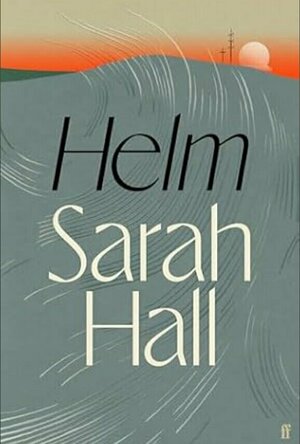

Helm is the anthropomorphised wind in the North of England, in a valley that feels like it should be in the Peak District (perhaps?). For millennia, it blows around, doing its own thing, and then humanity comes on the scene.
A prehistoric clan worship Helm, hoping for leniency from it’s devastating, troublesome, unpredictable nature. Another character, a wizard-type priest, tries to banish Helm. A Victorian Engineer wants to capture him. My favourite characters were the girl who could converse with Helm and is then regarded as insane (as well as promiscuous by her mother), and the Climate Scientist who wants to save the wind. All of these characters have only one connection: Helm.
Don’t expect some nice, tied up with a bow, perfect ending. That’s not this book. I loved how it showed humanity’s relationship with nature and the weather in such a creative way.
I was transfixed throughout.
Highly recommended!

Diddly Sqaut
Book
Welcome to Clarkson's farm. An idyllic spot offering picturesque views across the Cotswolds,...

No Parm No Foul
8.0
Rate It
Book
The second book in a delicious culinary cozy series—the muensters have arrived in Balsam Dell in...


Hazel (1853 KP) rated Where the Wild Winds are: Walking Europe's Winds from the Pennines to Provence in Books
Sep 26, 2017
From the moment the great storm of 1987 almost blew six-year-old Nick Hunt away, he has had the urge to travel. So many travel books are on the market, it is difficult to produce something new and exciting, but after coming across an interesting map of Europe, Hunt was determined to go on a journey that not many have attempted before. With a map listing the named winds of Europe, Hunt sets off on a quixotic quest to follow the winds.
Beginning in the Pennine Mountains, Nick Hunt takes the reader on a personal journey through the continent as he explores the towns and valleys the winds flow through whilst hoping the elusive tempests will occur so that he can experience them himself. With a mix of euphoria and disappointment, Hunt details his arduous journey providing additional knowledge along the way.
Some winds are more evanescent than others – one, discouragingly, not appearing at all – whereas one is so strong, Hunt witnesses a waterfall being blown upwards. Ignoring the warnings of the locals, Hunt, dead set on completing what he intended to do, takes us on a long walk from Italy to Croatia, a trek through the Alpine valleys of Switzerland, and a final expedition to the south of France.
Wind may seem like an odd topic to write a book about, but the Helm, Bora, Foehn and Mistral are no ordinary breezes. Their violence makes Hunt’s journey a dangerous and daring endeavour and is full of stories about past disasters that have occurred as a result of the strong, temperamental weather.
As well as teaching us about these four winds, Nick Hunt has collected facts and stories about the general areas he passes through. Personal stories of the inhabitants break up Hunt’s narrative, however, myths, legends, history and superstitions frequent the lengthy chapters as much as the winds themselves.
Giving wind a name provides it with a personality, as though it is something tangible that can be met and observed. Nick Hunt notes that artists such as Turner and Constable were interested in the weather and fascinated by the effects the wind had on the surrounding landscape. Another artist that was affected by the weather was Vincent Van Gogh - some of his paintings took place in France in the midst of the powerful Mistral. Just as the wind can be seen in his starry night skies, the scenery in France is evocative of a Van Gogh painting.
The winds do not only affect the lands they blow through, they have a strong impact on the wellbeing of the inhabitants. Some experience physical symptoms such as headaches, nose bleeds, dry skin and so forth, whereas others find themselves growing irritable, depressed and confused. The author himself has the opportunity to undergo the effects of these winds. Hunt also puts forward the suggestion that Van Gogh’s deteriorating mental health was a direct consequence of residing in the path of the Mistral.
From witchcraft to the Greek god Aeolus, there are a number of theories about why these strong winds blow. There are, of course, meteorological explanations, which Hunt attempts to explain, but admits he finds it as baffling as the next person. Regardless of the reason, these winds exist and it is captivating to learn about this aspect of Europe.
Where the Wild Winds Are: Walking Europe’s Winds from the Pennines to Provence is a fantastic, beautifully written book. Nick Hunt’s narrative is so personal that it becomes more than a travel documentation or informative non-fiction. As we read, we really get a sense of the emotions and physical hardship Hunt experienced, yet, at the same time, learn so much about European culture as well as, of course, Europe’s winds. Whether or not you are interested in travelling, this book will take you on a journey you will never forget.
From the moment the great storm of 1987 almost blew six-year-old Nick Hunt away, he has had the urge to travel. So many travel books are on the market, it is difficult to produce something new and exciting, but after coming across an interesting map of Europe, Hunt was determined to go on a journey that not many have attempted before. With a map listing the named winds of Europe, Hunt sets off on a quixotic quest to follow the winds.
Beginning in the Pennine Mountains, Nick Hunt takes the reader on a personal journey through the continent as he explores the towns and valleys the winds flow through whilst hoping the elusive tempests will occur so that he can experience them himself. With a mix of euphoria and disappointment, Hunt details his arduous journey providing additional knowledge along the way.
Some winds are more evanescent than others – one, discouragingly, not appearing at all – whereas one is so strong, Hunt witnesses a waterfall being blown upwards. Ignoring the warnings of the locals, Hunt, dead set on completing what he intended to do, takes us on a long walk from Italy to Croatia, a trek through the Alpine valleys of Switzerland, and a final expedition to the south of France.
Wind may seem like an odd topic to write a book about, but the Helm, Bora, Foehn and Mistral are no ordinary breezes. Their violence makes Hunt’s journey a dangerous and daring endeavour and is full of stories about past disasters that have occurred as a result of the strong, temperamental weather.
As well as teaching us about these four winds, Nick Hunt has collected facts and stories about the general areas he passes through. Personal stories of the inhabitants break up Hunt’s narrative, however, myths, legends, history and superstitions frequent the lengthy chapters as much as the winds themselves.
Giving wind a name provides it with a personality, as though it is something tangible that can be met and observed. Nick Hunt notes that artists such as Turner and Constable were interested in the weather and fascinated by the effects the wind had on the surrounding landscape. Another artist that was affected by the weather was Vincent Van Gogh - some of his paintings took place in France in the midst of the powerful Mistral. Just as the wind can be seen in his starry night skies, the scenery in France is evocative of a Van Gogh painting.
The winds do not only affect the lands they blow through, they have a strong impact on the wellbeing of the inhabitants. Some experience physical symptoms such as headaches, nose bleeds, dry skin and so forth, whereas others find themselves growing irritable, depressed and confused. The author himself has the opportunity to undergo the effects of these winds. Hunt also puts forward the suggestion that Van Gogh’s deteriorating mental health was a direct consequence of residing in the path of the Mistral.
From witchcraft to the Greek god Aeolus, there are a number of theories about why these strong winds blow. There are, of course, meteorological explanations, which Hunt attempts to explain, but admits he finds it as baffling as the next person. Regardless of the reason, these winds exist and it is captivating to learn about this aspect of Europe.
<i>Where the Wild Winds Are: Walking Europe’s Winds from the Pennines to Provence</i> is a fantastic, beautifully written book. Nick Hunt’s narrative is so personal that it becomes more than a travel documentation or informative non-fiction. As we read, we really get a sense of the emotions and physical hardship Hunt experienced, yet, at the same time, learn so much about European culture as well as, of course, Europe’s winds. Whether or not you are interested in travelling, this book will take you on a journey you will never forget.

Deeper Smart Sonar
Lifestyle and Sports
App
The No.1 downloaded fishfinder app with great features for planning fishing trips, this free app can...

Buienradar - weer
Weather and Travel
App
***PLEASE NOTE: THIS APP IS ONLY AVAILABLE IN THE DUTCH LANGUAGE*** Would you like to avoid walking...

PV Master - Professional photovoltaic solar panels
Weather and Utilities
App
************************************* Find all the photovoltaic data you need for your location. ...