
Search
Search results

Merissa (14198 KP) rated His Lordship's Blood (His Lordship’s Mysteries #4) in Books
Jun 14, 2023
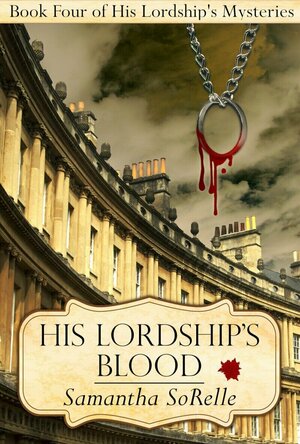

HIS LORDSHIP'S BLOOD is the fourth book in His Lordship's Mysteries and, for me, has been the best of the bunch so far. Why? I'm not entirely sure as I've thoroughly enjoyed all of them. This one, though? A certain je ne sais quoi that pushed this one to 5-stars.
Alfie and Nick head to Bath rather than to Balcarres to see if they can find out more about Nick's parentage. What they find is rather more than expected, plus a whole host of characters to entertain. Some of them are already known to us but most are not.
The private times between Alfie and Nick are few and far between in this one but, when they do get the chance, it confirms again just how strong to each other their bond is.
I can't say I was surprised by 'whodunnit' being how the weapon has been categorised throughout history but, I was kept on tenterhooks with Nick's choice. And the ending? That "Well..." from Nick was absolutely perfect and I completely relate with Alfie.
I would absolutely recommend this book to be read as part of a series, just so you know how hard Alfie and Nick have fought for each other. I can't wait to continue their story but I certainly hope they have time Balcarres before their next adventure. I think these two need some alone time after everything they've been through!
** same worded review will appear elsewhere **
* A copy of this book was provided to me with no requirements for a review. I voluntarily read this book; the comments here are my honest opinion. *
Merissa
Archaeolibrarian - I Dig Good Books!
Jun 9, 2023
Alfie and Nick head to Bath rather than to Balcarres to see if they can find out more about Nick's parentage. What they find is rather more than expected, plus a whole host of characters to entertain. Some of them are already known to us but most are not.
The private times between Alfie and Nick are few and far between in this one but, when they do get the chance, it confirms again just how strong to each other their bond is.
I can't say I was surprised by 'whodunnit' being how the weapon has been categorised throughout history but, I was kept on tenterhooks with Nick's choice. And the ending? That "Well..." from Nick was absolutely perfect and I completely relate with Alfie.
I would absolutely recommend this book to be read as part of a series, just so you know how hard Alfie and Nick have fought for each other. I can't wait to continue their story but I certainly hope they have time Balcarres before their next adventure. I think these two need some alone time after everything they've been through!
** same worded review will appear elsewhere **
* A copy of this book was provided to me with no requirements for a review. I voluntarily read this book; the comments here are my honest opinion. *
Merissa
Archaeolibrarian - I Dig Good Books!
Jun 9, 2023
All Aboard for Murder
9.0 Rate It
Book
Dee Stern is starting to feel at home running her Golden Motel in the scenic California village...
Merissa (14198 KP) rated All That Was Left Unsaid in Books
Oct 5, 2026
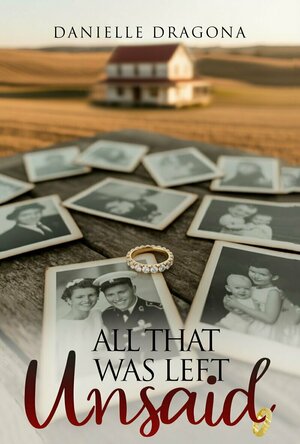

ALL THAT WAS LEFT UNSAID is a standalone family saga that is told from Katrina's perspective.
The story begins with Katrina dealing with her husband Sam's death, and further details come out about how he had an affair. Now that he is gone, Katrina needs to figure out just who she is and how to cope now.
To be honest, I didn't find Katrina a sympathetic character for most of the book. She came across as quite acerbic and self-pitying. I expected her to bellow or bark "Get off my lawn" at any moment. It was only near the end that I could appreciate what she'd been through and how it had impacted her life and relationships with her friends and family.
This was an intriguing read that dealt with topics mostly avoided, like how you can lose your identity in being a wife and mother, how it feels to be aware of an affair, and how the hits keep on coming. I can't say the surprise was really surprising, as I thought it plain to see, but I could appreciate how it was dealt with.
All in all, this was an engaging read that kept me turning the pages. I found it to be well-written and smoothly paced. I definitely recommend it and give it 3.5 very good stars, rounded up to 4 where necessary.
** The same worded review will appear elsewhere. **
* A copy of this book was provided to me with no requirements for a review. I voluntarily read this book; the comments here are my honest opinion. *
Merissa
Archaeolibrarian
Oct 5, 2026
The story begins with Katrina dealing with her husband Sam's death, and further details come out about how he had an affair. Now that he is gone, Katrina needs to figure out just who she is and how to cope now.
To be honest, I didn't find Katrina a sympathetic character for most of the book. She came across as quite acerbic and self-pitying. I expected her to bellow or bark "Get off my lawn" at any moment. It was only near the end that I could appreciate what she'd been through and how it had impacted her life and relationships with her friends and family.
This was an intriguing read that dealt with topics mostly avoided, like how you can lose your identity in being a wife and mother, how it feels to be aware of an affair, and how the hits keep on coming. I can't say the surprise was really surprising, as I thought it plain to see, but I could appreciate how it was dealt with.
All in all, this was an engaging read that kept me turning the pages. I found it to be well-written and smoothly paced. I definitely recommend it and give it 3.5 very good stars, rounded up to 4 where necessary.
** The same worded review will appear elsewhere. **
* A copy of this book was provided to me with no requirements for a review. I voluntarily read this book; the comments here are my honest opinion. *
Merissa
Archaeolibrarian
Oct 5, 2026

RəX Regent (349 KP) rated Solo: A Star Wars Story (2018) in Movies
Feb 18, 2019


The Star Wars Story that nobody asked for, but was is a story worth telling?
In short, NO.
Where to start? Indeed, where to start with a background prequel focusing on one of the most iconic Star Wars characters ever, taking the ageing Harrison Ford’s characters to, well not so far beyond the age that we first met him back in 1977.
Recast with actor who brings very little Ford with him, apart from a few well practice smiles and other expressions here and there, this is a reinterpretation of the character, in this case as a naive and wimpy version, maybe even soft, is not the part for Alden Ehrenreich.
The Character arch of Han Solo in the original trilogy was his redemption from a selfish, self-assured space pirate to a man who could recognise and fight for a cause bigger than himself. But according this haphazard prequel, he was already a big softy before her learns the harsh realities of life, only he doesn’t, not really.
He just learns to be a little more cynical and to smirk his way through every situation with his lucky die and everything turns out okay for him. Ehrenrieich done not bring an ounce of the gravitas or charisma of Harrison Ford, as this film, which had to be almost entirely re-shot with Ron Howard taking the helm after The Lego Movie directing due Chris Miller and Phil Lord where unceremoniously fired after “not getting it”, apparently, shoe horns as much of the token events of Solo’s pre-rebellion life into its two and bit hour run time.
Ron Howard; A few hits and plenty of misses. Willow (1988) springs to mind. Not only was Willow Lucas’ attempt to begin and new fantasy trilogy after the Star Wars Saga was completed, it was micro directed by George Lucas as Ron Howard took the credit. And this has a lot of the hallmarks of Willow.
In short; A poor mans Star Wars. Hammy scripting and at times acting, the story is all over the place, with shallow characterisations, poor exposition, haphazard pacing and the action is actually quite hard to follow. Just please, give us ONE decent shot of the Millennium Falcon that we can keep up with and actually see, especially as it has been altered so much from the icon version that we all love. Maybe we’re getting bored of the same ship after 40 years? Maybe we all need to go out and by a new version?
Toyetic… anyone?
Instead everything of interest is speeding across the screen and the boring stuff is left to linger. And there was a level of boredom here. Incredibly predictable plotting, simply going through the motions of a no stakes story. But it does feel as if they shoehorned a larger narrative in there, with introduction in the final act of the rebellion and an old villain returns with a new legs, but by the time what should have been an earth shattering twist appeared, it wasn’t really interested, especially if you know the The Clone Wars or Rebels.
One major plus note though, Donald Glover aced Lando Calrissian, to such an extant that I wish this movie was actually called Lando: A Star War Story rather than Solo, because there’s no doubt that Glover brought so much more Billy Dee Williams and built on it, than Ehrenreich did for Ford’s.
As well as the subtle and well conceived plotting around Lando’s female droid, L3-37 (Phoebe Waller-Bridge) who may well be the ‘Old girl’ referred to by both Han and Lando during in the original trilogy when they speak to the Falcon, whilst shining a light on the deliberately ambiguous nature of droids in the Star Wars universe. In short; are they sentient or not? But this is not Star Trek so we do not really need an answer to that… do we?
Overall, I want to say that this was missed opportunity but in truth, it was not. It was waste of time. A story that did not need to be told with script that did not know what say. Clearly, they were aiming for a Guardians Of The Galaxy (2015), unaware that the secret of that surprise success was that it tapped in to the retro Star Wars vibe by NOT being Star Wars. And with little expectations.
Here they were playing with one of the biggest guns in modern film history and in my opinion, it blew up in there faces.
Where to start? Indeed, where to start with a background prequel focusing on one of the most iconic Star Wars characters ever, taking the ageing Harrison Ford’s characters to, well not so far beyond the age that we first met him back in 1977.
Recast with actor who brings very little Ford with him, apart from a few well practice smiles and other expressions here and there, this is a reinterpretation of the character, in this case as a naive and wimpy version, maybe even soft, is not the part for Alden Ehrenreich.
The Character arch of Han Solo in the original trilogy was his redemption from a selfish, self-assured space pirate to a man who could recognise and fight for a cause bigger than himself. But according this haphazard prequel, he was already a big softy before her learns the harsh realities of life, only he doesn’t, not really.
He just learns to be a little more cynical and to smirk his way through every situation with his lucky die and everything turns out okay for him. Ehrenrieich done not bring an ounce of the gravitas or charisma of Harrison Ford, as this film, which had to be almost entirely re-shot with Ron Howard taking the helm after The Lego Movie directing due Chris Miller and Phil Lord where unceremoniously fired after “not getting it”, apparently, shoe horns as much of the token events of Solo’s pre-rebellion life into its two and bit hour run time.
Ron Howard; A few hits and plenty of misses. Willow (1988) springs to mind. Not only was Willow Lucas’ attempt to begin and new fantasy trilogy after the Star Wars Saga was completed, it was micro directed by George Lucas as Ron Howard took the credit. And this has a lot of the hallmarks of Willow.
In short; A poor mans Star Wars. Hammy scripting and at times acting, the story is all over the place, with shallow characterisations, poor exposition, haphazard pacing and the action is actually quite hard to follow. Just please, give us ONE decent shot of the Millennium Falcon that we can keep up with and actually see, especially as it has been altered so much from the icon version that we all love. Maybe we’re getting bored of the same ship after 40 years? Maybe we all need to go out and by a new version?
Toyetic… anyone?
Instead everything of interest is speeding across the screen and the boring stuff is left to linger. And there was a level of boredom here. Incredibly predictable plotting, simply going through the motions of a no stakes story. But it does feel as if they shoehorned a larger narrative in there, with introduction in the final act of the rebellion and an old villain returns with a new legs, but by the time what should have been an earth shattering twist appeared, it wasn’t really interested, especially if you know the The Clone Wars or Rebels.
One major plus note though, Donald Glover aced Lando Calrissian, to such an extant that I wish this movie was actually called Lando: A Star War Story rather than Solo, because there’s no doubt that Glover brought so much more Billy Dee Williams and built on it, than Ehrenreich did for Ford’s.
As well as the subtle and well conceived plotting around Lando’s female droid, L3-37 (Phoebe Waller-Bridge) who may well be the ‘Old girl’ referred to by both Han and Lando during in the original trilogy when they speak to the Falcon, whilst shining a light on the deliberately ambiguous nature of droids in the Star Wars universe. In short; are they sentient or not? But this is not Star Trek so we do not really need an answer to that… do we?
Overall, I want to say that this was missed opportunity but in truth, it was not. It was waste of time. A story that did not need to be told with script that did not know what say. Clearly, they were aiming for a Guardians Of The Galaxy (2015), unaware that the secret of that surprise success was that it tapped in to the retro Star Wars vibe by NOT being Star Wars. And with little expectations.
Here they were playing with one of the biggest guns in modern film history and in my opinion, it blew up in there faces.

Movie Metropolis (309 KP) rated Justice League (2017) in Movies
Jun 10, 2019
Hoorah, it's not a total dud
The entire production of Justice League has been enveloped in the tragedy surrounding director Zack Snyder’s sudden departure from the project in March this year.
After losing his daughter, Autumn, to suicide, the DC regular decided to hand over the reins of his passion project to Avengers director Joss Whedon so that he could spend time with his family. Whedon came on board and decided to undertake costly reshoots in order to get the film finished on time.
In that respect, it’s a miracle we’ve even got a Justice League movie in the first place. What’s even more of a miracle is that it turns out to be not rubbish – unfortunately that’s probably the biggest compliment I can give this frequently entertaining but messy outing for our favourite selection of DC Comic superheroes.
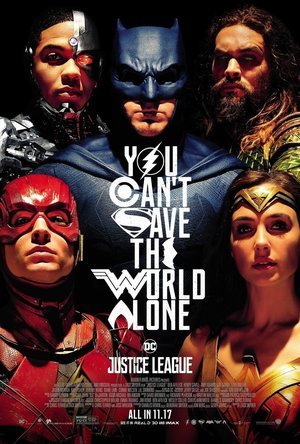
Fuelled by his restored faith in humanity and inspired by Superman’s (Henry Cavill) act of selflessness, Bruce Wayne (Ben Affleck) enlists newfound ally Diana Prince (Gal Gadot) to face an even greater threat. Together, Batman and Wonder Woman work quickly to recruit a team to stand against their newly awakened enemy, Steppenwolf. Despite the formation of an unprecedented league of heroes — Batman, Wonder Woman, Aquaman (Jason Momoa), Cyborg (Ray Fisher) and the Flash (Ezra Miller) – it may be too late to save the planet from an assault of catastrophic proportions.
This year’s Wonder Woman proved that the DC Universe can be at least a passable alternative to the might of Marvel and Batman v Superman: Dawn of Justice was an entertaining, if entirely forgettable mash up of the two titular heroes. Justice League sits somewhere in between – it’s not as much of an ordeal as BvS, but it’s also not as interesting as Wonder Woman. The less said about Suicide Squad, the better.
Acting wise, it’s a good start for the League. Ben Affleck is a cracking Bruce Wayne, but his Batman is lacking the gritty humanity of Christian Bale’s turn as the caped crusader. Ezra Miller, Jason Momoa and Ray Fisher all perform well with the former in particular being a highlight, but their rushed introductions do them no favours. However, the standout once again is the wonderful Gal Gadot. Her selfless Diana Prince really is magnificent and her increased screen-time in Justice League when compared to Batman v Superman is more than welcome.
Justice League is a film with a bit of an identity crisis as it frequently feels like a mishmash of scenes put together to make a film.
The main villain, Steppenwolf, voiced well by Ciarán Hinds is less successful. Masked behind walls of at-times poor CGI, his threat never feels truly realised and poor Hinds is wasted in a role reminiscent of the dreadful work 20th Century Fox did on Oscar Issac in X-Men: Apocalypse. He gets some good lines however, and makes for a decent, if unremarkable antagonist.
Amy Adams and Diane Lane are once again side-lined in their roles as Lois Lane and Martha Kent respectively. These incredible actresses really are wasted in roles that have little-to-no outcome to the plot. And this is a problem that has blighted the DCEU from the get-go. The calibre of actors used in these films is frankly, astounding and each one of them deserves better than the overly expositional and cringe worthy dialogue they continue to be lumped with.
The final act, like so many films before it, is a mess of ugly CGI that spoils a very decent middle section that has some truly poignant moments. The return of Superman (that isn’t a spoiler if you’ve been following the marketing for Justice League) is handled well and the moment he is reunited with his mother is touching and well-acted.
Justice League is a film with a bit of an identity crisis as it frequently feels like a mishmash of scenes put together to make a film. It’s also painfully obvious where Snyder’s very ‘operatic’ filming style is replaced with Joss Whedon’s trademark wit and this doesn’t sit well all of the time. It’s clear that a turbulent production has created a film that’s biggest merit is that it even managed to exist in the first place, and that’s a real shame. Entertaining? Yes. But entertainment can’t mask a film that reeks of mediocrity.
https://moviemetropolis.net/2017/11/19/justice-league-review/
After losing his daughter, Autumn, to suicide, the DC regular decided to hand over the reins of his passion project to Avengers director Joss Whedon so that he could spend time with his family. Whedon came on board and decided to undertake costly reshoots in order to get the film finished on time.
In that respect, it’s a miracle we’ve even got a Justice League movie in the first place. What’s even more of a miracle is that it turns out to be not rubbish – unfortunately that’s probably the biggest compliment I can give this frequently entertaining but messy outing for our favourite selection of DC Comic superheroes.
Fuelled by his restored faith in humanity and inspired by Superman’s (Henry Cavill) act of selflessness, Bruce Wayne (Ben Affleck) enlists newfound ally Diana Prince (Gal Gadot) to face an even greater threat. Together, Batman and Wonder Woman work quickly to recruit a team to stand against their newly awakened enemy, Steppenwolf. Despite the formation of an unprecedented league of heroes — Batman, Wonder Woman, Aquaman (Jason Momoa), Cyborg (Ray Fisher) and the Flash (Ezra Miller) – it may be too late to save the planet from an assault of catastrophic proportions.
This year’s Wonder Woman proved that the DC Universe can be at least a passable alternative to the might of Marvel and Batman v Superman: Dawn of Justice was an entertaining, if entirely forgettable mash up of the two titular heroes. Justice League sits somewhere in between – it’s not as much of an ordeal as BvS, but it’s also not as interesting as Wonder Woman. The less said about Suicide Squad, the better.
Acting wise, it’s a good start for the League. Ben Affleck is a cracking Bruce Wayne, but his Batman is lacking the gritty humanity of Christian Bale’s turn as the caped crusader. Ezra Miller, Jason Momoa and Ray Fisher all perform well with the former in particular being a highlight, but their rushed introductions do them no favours. However, the standout once again is the wonderful Gal Gadot. Her selfless Diana Prince really is magnificent and her increased screen-time in Justice League when compared to Batman v Superman is more than welcome.
Justice League is a film with a bit of an identity crisis as it frequently feels like a mishmash of scenes put together to make a film.
The main villain, Steppenwolf, voiced well by Ciarán Hinds is less successful. Masked behind walls of at-times poor CGI, his threat never feels truly realised and poor Hinds is wasted in a role reminiscent of the dreadful work 20th Century Fox did on Oscar Issac in X-Men: Apocalypse. He gets some good lines however, and makes for a decent, if unremarkable antagonist.
Amy Adams and Diane Lane are once again side-lined in their roles as Lois Lane and Martha Kent respectively. These incredible actresses really are wasted in roles that have little-to-no outcome to the plot. And this is a problem that has blighted the DCEU from the get-go. The calibre of actors used in these films is frankly, astounding and each one of them deserves better than the overly expositional and cringe worthy dialogue they continue to be lumped with.
The final act, like so many films before it, is a mess of ugly CGI that spoils a very decent middle section that has some truly poignant moments. The return of Superman (that isn’t a spoiler if you’ve been following the marketing for Justice League) is handled well and the moment he is reunited with his mother is touching and well-acted.
Justice League is a film with a bit of an identity crisis as it frequently feels like a mishmash of scenes put together to make a film. It’s also painfully obvious where Snyder’s very ‘operatic’ filming style is replaced with Joss Whedon’s trademark wit and this doesn’t sit well all of the time. It’s clear that a turbulent production has created a film that’s biggest merit is that it even managed to exist in the first place, and that’s a real shame. Entertaining? Yes. But entertainment can’t mask a film that reeks of mediocrity.
https://moviemetropolis.net/2017/11/19/justice-league-review/

Dana (24 KP) rated The Crown's Game (The Crown's Game, #1) in Books
Mar 23, 2018


This review, like all others before it, will have spoilers in it. Read at your own risk.
This book was pretty cool! It is not like a lot of the other fantasy novels I read because it is set in Russia in 1825 and has some actual historical people and ideas in it. By the way, that is one of my favorite parts of this book. The fact that it is able to mix fact and fiction together so well is a feat not many can do, so I applaud Ms. Skye for doing just that.
The world felt so real and very well developed. I got the feeling that a lot of research went into creating this book and I am glad she did because it feels authentic and inhabited which is often a problem in fantasy novels such as this. Though she draws on history and fact, she understands she is able to pull in here own creative licenses because she has to make a world that will fit her story. I enjoyed those facts a lot and I am excited to see what else we will get to see in the next book (which I still need to buy).
Now onto characters, then plot.
The main character Vika is a very strong female lead, which I love in any story, not just in fantasy. She is powerful and she knows it. While this can lead to arrogance and a little too much self-esteem, but she is brought to be humbled quite a bit throughout the book, which is actually nice. It grounds her. While she is a strong character, this fact gets her into trouble sometimes because she thinks too much of herself. This arrogance is inevitably what kills her father. She is blinded by the strength she now has and, instead of questioning why she all of the sudden got so much stronger, she just rolls on without a care in the world.
I love Nikolai. In my humble opinion, he is so much better than Pasha because he opens himself up to being hurt but doesn't get angry or act like a spoiled brat when people do something wrong. Nikolai is a dreamer, something I appreciate a lot. He has his heads in the clouds sometimes and needs someone to bring him back down. While he is competitive, just like Vika, he is also very thoughtful. He could have done many things with his magic, but each time, he did something for the people, whether to bring them joy or to restore the magic of what they once knew, he does it for people other than himself. MAJOR SPOILER IS COMING UP NEXT: In his final act of the book, he gives his life to save Vika and if that isn't selfless, I don't know what is. He is caring and kind and I just wished he could have been completely happy. He loved Vika and he deserved so much more than he got. Also, that plot twist that he is the tsar's son, holy crap, I did not see that coming at all.
Now onto Pasha. I am not really a fan of Pasha, to be completely honest. He thinks he is so worthless in comparison to Nikolai even though he is going to be the tsar of Russia. Why is he making everything into a pissing match with his best friend after he finds out Nikolai also loves Vika? Seriously, he could have anyone he wanted, but no. He just has to have an enchantress. He is very selfish and does not think about how his actions will always have consequences and that is a little too reckless for me. Even though he knows he is going to become the tsar, he doesn't take his responsibility seriously at all. I am just not a fan of him. I hope he does not end up with Vika because she deserves so much more than him.
What I love most about these characters is that they have faults and issues that they have to overcome and deal with before they can move on to the next stages of their lives (well, some of them at least).
Onto the plot!
I thought this story was very well structured. I enjoyed the pacing and the flow of everything as well. It felt like it was an actual competition to see who could get my attention the most. (It was Vika and Nikolai as my top two, the others were kinda annoying at times).
Overall, I really enjoyed this book and I am excited to pick up the next one! If you have not already, give this book a read and tell me what you think!
This book was pretty cool! It is not like a lot of the other fantasy novels I read because it is set in Russia in 1825 and has some actual historical people and ideas in it. By the way, that is one of my favorite parts of this book. The fact that it is able to mix fact and fiction together so well is a feat not many can do, so I applaud Ms. Skye for doing just that.
The world felt so real and very well developed. I got the feeling that a lot of research went into creating this book and I am glad she did because it feels authentic and inhabited which is often a problem in fantasy novels such as this. Though she draws on history and fact, she understands she is able to pull in here own creative licenses because she has to make a world that will fit her story. I enjoyed those facts a lot and I am excited to see what else we will get to see in the next book (which I still need to buy).
Now onto characters, then plot.
The main character Vika is a very strong female lead, which I love in any story, not just in fantasy. She is powerful and she knows it. While this can lead to arrogance and a little too much self-esteem, but she is brought to be humbled quite a bit throughout the book, which is actually nice. It grounds her. While she is a strong character, this fact gets her into trouble sometimes because she thinks too much of herself. This arrogance is inevitably what kills her father. She is blinded by the strength she now has and, instead of questioning why she all of the sudden got so much stronger, she just rolls on without a care in the world.
I love Nikolai. In my humble opinion, he is so much better than Pasha because he opens himself up to being hurt but doesn't get angry or act like a spoiled brat when people do something wrong. Nikolai is a dreamer, something I appreciate a lot. He has his heads in the clouds sometimes and needs someone to bring him back down. While he is competitive, just like Vika, he is also very thoughtful. He could have done many things with his magic, but each time, he did something for the people, whether to bring them joy or to restore the magic of what they once knew, he does it for people other than himself. MAJOR SPOILER IS COMING UP NEXT: In his final act of the book, he gives his life to save Vika and if that isn't selfless, I don't know what is. He is caring and kind and I just wished he could have been completely happy. He loved Vika and he deserved so much more than he got. Also, that plot twist that he is the tsar's son, holy crap, I did not see that coming at all.
Now onto Pasha. I am not really a fan of Pasha, to be completely honest. He thinks he is so worthless in comparison to Nikolai even though he is going to be the tsar of Russia. Why is he making everything into a pissing match with his best friend after he finds out Nikolai also loves Vika? Seriously, he could have anyone he wanted, but no. He just has to have an enchantress. He is very selfish and does not think about how his actions will always have consequences and that is a little too reckless for me. Even though he knows he is going to become the tsar, he doesn't take his responsibility seriously at all. I am just not a fan of him. I hope he does not end up with Vika because she deserves so much more than him.
What I love most about these characters is that they have faults and issues that they have to overcome and deal with before they can move on to the next stages of their lives (well, some of them at least).
Onto the plot!
I thought this story was very well structured. I enjoyed the pacing and the flow of everything as well. It felt like it was an actual competition to see who could get my attention the most. (It was Vika and Nikolai as my top two, the others were kinda annoying at times).
Overall, I really enjoyed this book and I am excited to pick up the next one! If you have not already, give this book a read and tell me what you think!

Gareth von Kallenbach (980 KP) rated Super 8 (2011) in Movies
Aug 7, 2019
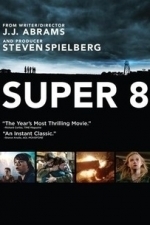
Writer/Director/Producer JJ Abramas is one of film and televisions hottest talents. With credits that include Lost, Fringe, Alias, “Mission Impossible 3“, “Cloverfield“, and “Star Trek” on his resume and several projects in the works, Abrams is one of the shining young talents in Hollywood.
For his new film “Super 8” Abrams uses a small Ohio town in the summer of 1979 to set the stage for his tale about a group of friends who while shooting a zombie film project make a discovery that will shake the foundation of their rural community.
Following the tragic death of his mother in a mill accident, Joe Lamb (Joel Courtney), is deep in dispair over his loss. His father deputy Lamb (Kyle Chandler), is focused on his work and with this own grieving that he has no time to bond with his son.
When summer break arrives deputy Lamb thinks that Joe would be better off spedning a few weeks at a baseball camp instead of associating with his friends and making what he believes is a stupid zombie film.
Wishing to stay with his friends, Joe works to help his friend Charles (Riley Griffiths), finish his Super 8 film for a contest by providing the makeup for the film. When the group of friends sneak out one evening to film scenes at a train platform they are thrilled to have a local girl named Alice (Elle Fanning), on board the production. Joe has long had interest in Alice and the fact that she has borrowed her fathers car to drive them despite having her license is a big plus.
The filming is going well when they notice a truck driving into the path of an oncoming train and setting off a spectacular derailment and series of explosions.
When the smoke clears the friends learn that the truck was driven by their high school biology teacher who warns them not to say a word as their lives as well as their families lives will be in danger .
The friends return to town and keep quiet about what they have seen even when the military shows up and is clearly hiding something from the local population. When a series of bizzare events start to unfold it becomes clear that something has escaped from the train wreckage, and it is something that the military will go to any lengths to recover and are not about to let anyone stand in their way.
Caught between the military and a creature on the loose, Joe and his friends must find a way to get to the truth and save their town and friends before its to late.
The film moves at a very steady pace that does not lend itself to an action film. The movie is a character driven film about the youngsters and their coming of age relationships with one another as they are faced with a situation beyond their comprehension.
There is a good amount of humor in the film and the youngcast does very well with one another. I especially liked the character of Cary (Ryan Lee), who is obsesses with explosives and blowing things up. He provided plenety of light moments in the film as did other cast members who brought humanity to their parts with their foibles like having a weak stomach in times of stress.
My biggest issue with the film was that as good as the cast was the pacing was to slow as there was not enough action and suspense to sustain the films premise. The reveal of the creature was fairly matter of fact and lacked any real tension or surprise.
The film also suffered from having the adults in the film for the most part come across as incompetant individuals which forced the children to take action.
While this can be overlooked, I think the film could have used some more action and suspense as well as a tighter transition and pacing to the films final act as it came across as all to familiar with very little in the way of suspense or thrills.
“Super 8” played out as JJ Abrams nostalgic homage to the Steven Spielberg (who produced the film) movies of his childhood which so clearly influenced him. I saw many elements of Spielberg directed or produced classic such as the shadowy authority figures, child heroes, and the sense of wonder and growing up that made such fims as “E.T”, “Close Encounters of the Third Kind”, “Gremlins” and “The Goonies” such beloved films.
That being said, “Super 8” is a fun and entertaining summer film that is enjoyable if not original. The nostalgic soundtrack and look of the era is captured well and provides for a pleasant summer distraction.
For his new film “Super 8” Abrams uses a small Ohio town in the summer of 1979 to set the stage for his tale about a group of friends who while shooting a zombie film project make a discovery that will shake the foundation of their rural community.
Following the tragic death of his mother in a mill accident, Joe Lamb (Joel Courtney), is deep in dispair over his loss. His father deputy Lamb (Kyle Chandler), is focused on his work and with this own grieving that he has no time to bond with his son.
When summer break arrives deputy Lamb thinks that Joe would be better off spedning a few weeks at a baseball camp instead of associating with his friends and making what he believes is a stupid zombie film.
Wishing to stay with his friends, Joe works to help his friend Charles (Riley Griffiths), finish his Super 8 film for a contest by providing the makeup for the film. When the group of friends sneak out one evening to film scenes at a train platform they are thrilled to have a local girl named Alice (Elle Fanning), on board the production. Joe has long had interest in Alice and the fact that she has borrowed her fathers car to drive them despite having her license is a big plus.
The filming is going well when they notice a truck driving into the path of an oncoming train and setting off a spectacular derailment and series of explosions.
When the smoke clears the friends learn that the truck was driven by their high school biology teacher who warns them not to say a word as their lives as well as their families lives will be in danger .
The friends return to town and keep quiet about what they have seen even when the military shows up and is clearly hiding something from the local population. When a series of bizzare events start to unfold it becomes clear that something has escaped from the train wreckage, and it is something that the military will go to any lengths to recover and are not about to let anyone stand in their way.
Caught between the military and a creature on the loose, Joe and his friends must find a way to get to the truth and save their town and friends before its to late.
The film moves at a very steady pace that does not lend itself to an action film. The movie is a character driven film about the youngsters and their coming of age relationships with one another as they are faced with a situation beyond their comprehension.
There is a good amount of humor in the film and the youngcast does very well with one another. I especially liked the character of Cary (Ryan Lee), who is obsesses with explosives and blowing things up. He provided plenety of light moments in the film as did other cast members who brought humanity to their parts with their foibles like having a weak stomach in times of stress.
My biggest issue with the film was that as good as the cast was the pacing was to slow as there was not enough action and suspense to sustain the films premise. The reveal of the creature was fairly matter of fact and lacked any real tension or surprise.
The film also suffered from having the adults in the film for the most part come across as incompetant individuals which forced the children to take action.
While this can be overlooked, I think the film could have used some more action and suspense as well as a tighter transition and pacing to the films final act as it came across as all to familiar with very little in the way of suspense or thrills.
“Super 8” played out as JJ Abrams nostalgic homage to the Steven Spielberg (who produced the film) movies of his childhood which so clearly influenced him. I saw many elements of Spielberg directed or produced classic such as the shadowy authority figures, child heroes, and the sense of wonder and growing up that made such fims as “E.T”, “Close Encounters of the Third Kind”, “Gremlins” and “The Goonies” such beloved films.
That being said, “Super 8” is a fun and entertaining summer film that is enjoyable if not original. The nostalgic soundtrack and look of the era is captured well and provides for a pleasant summer distraction.


The Queen of Hearts' Tale
This eBook was provided by the publisher via NetGalley in exchange for an honest review
Before she was the Queen of Hearts she was just a girl who wanted to fall in love. When Marissa Meyer finished writing The Lunar Chronicles, a series of books loosely based on fairytales, everyone wondered what she would do next. Continuing along the lines of using famous stories, Meyer has devoted an entire novel to Lewis Carroll’s Alice’s Adventures in Wonderland. With thousands of references to the original tale, and a couple of other works too, Heartless is perfect for fans of Carroll’s salient characters.
Unlike most retellings, Meyer has focused on events prior to Alice’s accidental discovery of Wonderland. The resulting novel is essentially a theory as to how the characters turned out the way they did in the original story published in 1865. Drawing attention to the predestined Queen of Hearts, a young woman named Catherine, readers discover a reason for her development into an infamous villain.
Lady Catherine Pinkerton is completely unlike the character she is fated to be. She is a kind, thoughtful girl whose greatest wish is to open her own bakery. Unfortunately, this dream is just that, a dream. With the asinine King of Hearts resolved to marry her, there is little Cath can do to avoid her royal future. At first it may appear odd that Cath is so against marrying the ruler of Hearts, but she soon makes it clear she would much rather marry for love. So, when the court joker, Jest – a similar character to the legendary Hatter – catches her eye, Catherine becomes determined to control her own future.
Heartless is a humourous, yet romantic, young adult novel, full of both well-known and new characters. Set in a world with morals similar to the Victorian era, it works extremely well as a prequel to Alice’s Adventures in Wonderland. Catherine is an admirable, feministic character who readers will struggle to believe will become such a notorious Queen. What could possibly happen to vastly alter her personality? Similarly, what is it that makes the Hatter go mad, and who is Jest? Being a character unique to this novel, there is a foreboding sense that this joker, and his poetry reciting raven – cue Edgar Allan Poe references – suffer a horrible demise.
Unlike Marissa Meyer’s previous books where the fairytales were not so obvious, the storyline in Heartless perfectly joins up with Lewis Carroll’s imagination. With references to mock turtles, the Jabberwock and other minor characters, there is so much to discover in Meyer’s interpretation of Wonderland – it even clears up a couple of scenarios from the original tale that may have bamboozled readers initially.
Admittedly, Heartless takes a little while to get going, but once it has, it is difficult to put down. Fans of Marissa Meyer may be disappointed that she did not stick to her futuristic storytelling, however all Alice enthusiasts will fall in love with this book – and probably with Jest as well. Overall, Heartless is a delightful book that reignites our inner childish imagination.
Before she was the Queen of Hearts she was just a girl who wanted to fall in love. When Marissa Meyer finished writing The Lunar Chronicles, a series of books loosely based on fairytales, everyone wondered what she would do next. Continuing along the lines of using famous stories, Meyer has devoted an entire novel to Lewis Carroll’s Alice’s Adventures in Wonderland. With thousands of references to the original tale, and a couple of other works too, Heartless is perfect for fans of Carroll’s salient characters.
Unlike most retellings, Meyer has focused on events prior to Alice’s accidental discovery of Wonderland. The resulting novel is essentially a theory as to how the characters turned out the way they did in the original story published in 1865. Drawing attention to the predestined Queen of Hearts, a young woman named Catherine, readers discover a reason for her development into an infamous villain.
Lady Catherine Pinkerton is completely unlike the character she is fated to be. She is a kind, thoughtful girl whose greatest wish is to open her own bakery. Unfortunately, this dream is just that, a dream. With the asinine King of Hearts resolved to marry her, there is little Cath can do to avoid her royal future. At first it may appear odd that Cath is so against marrying the ruler of Hearts, but she soon makes it clear she would much rather marry for love. So, when the court joker, Jest – a similar character to the legendary Hatter – catches her eye, Catherine becomes determined to control her own future.
Heartless is a humourous, yet romantic, young adult novel, full of both well-known and new characters. Set in a world with morals similar to the Victorian era, it works extremely well as a prequel to Alice’s Adventures in Wonderland. Catherine is an admirable, feministic character who readers will struggle to believe will become such a notorious Queen. What could possibly happen to vastly alter her personality? Similarly, what is it that makes the Hatter go mad, and who is Jest? Being a character unique to this novel, there is a foreboding sense that this joker, and his poetry reciting raven – cue Edgar Allan Poe references – suffer a horrible demise.
Unlike Marissa Meyer’s previous books where the fairytales were not so obvious, the storyline in Heartless perfectly joins up with Lewis Carroll’s imagination. With references to mock turtles, the Jabberwock and other minor characters, there is so much to discover in Meyer’s interpretation of Wonderland – it even clears up a couple of scenarios from the original tale that may have bamboozled readers initially.
Admittedly, Heartless takes a little while to get going, but once it has, it is difficult to put down. Fans of Marissa Meyer may be disappointed that she did not stick to her futuristic storytelling, however all Alice enthusiasts will fall in love with this book – and probably with Jest as well. Overall, Heartless is a delightful book that reignites our inner childish imagination.

Mothergamer (1658 KP) rated Horizon Zero Dawn: The Frozen Wilds in Video Games
Apr 3, 2019
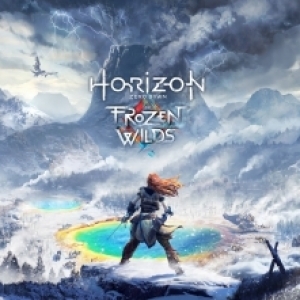
The Frozen Wilds is the new DLC for the game Horizon Zero Dawn. I was excited to revisit that world and play as Aloy again. The content can be done after the main story is finished and it integrates very well with it. You get to explore a beautiful new area and learn even more about the nomadic tribe, the Banuk. I always liked the Banuk because their spirituality and structure were interesting. Frozen Wilds brings Aloy to a snowy mountain area known as The Cut and a Banuk tribe in order to investigate new machines that are incredibly strong and aggressive. It should be noted that the new area is challenging so players should be at least level 40 or higher before attempting it.
Aloy arrives at The Cut.
The combat is as great as it always was. There's also new skills that can be unlocked such as repairing machine mounts. There are new weapons as well that can be modified and upgraded via a quest. I had a lot of fun with these because they did some excellent damage and were just fun to play with. There is also new armor which is great for the new area because it adds protection from the elements and various attacks from the new machines.
The machines in The Cut are definitely dangerous. They're stronger, challenging, and the sense of danger is quite high. The battles are intense making you think about strategies in order to take down enemies. Adding to this is the introduction of Control Towers, machines that look like spindly flowers and emit a pulse which heal the machines in the area. The new weapons are incorporated into this and they make the fights a lot of fun.
Aloy battles a new machine in the Frozen Wilds.
Aloy is still as endearing as ever while being a wonderful strong female character. The new people she meets are also strong and terrific adding more depth to the story. The story for the Frozen Wilds is complex and interesting while adding more insights into the main story. It also answers some questions about some familiar characters in the main story.
The world of Frozen Wilds is a snowy tundra that is challenging yet beautiful and a lot of fun to explore. There are plenty of side quests to do along with the side quest. These offer more insights into the Banuk tribe as well and explores where their faith and spirituality belong in a world that is harsh and unforgiving. Just stopping in to take the view while playing was worth it. There are so many spectacular scenes in the game and I relished every minute of it.
A great view.
Frozen Wilds is amazing. It's 15 hours of fantastic gameplay and story. I enjoyed all of it and the completionist in me unlocked everything. It adds a lot of great elements to the main story and the entire game overall. It's a grand adventure and I was happy that I visited Aloy's world again.
Aloy arrives at The Cut.
The combat is as great as it always was. There's also new skills that can be unlocked such as repairing machine mounts. There are new weapons as well that can be modified and upgraded via a quest. I had a lot of fun with these because they did some excellent damage and were just fun to play with. There is also new armor which is great for the new area because it adds protection from the elements and various attacks from the new machines.
The machines in The Cut are definitely dangerous. They're stronger, challenging, and the sense of danger is quite high. The battles are intense making you think about strategies in order to take down enemies. Adding to this is the introduction of Control Towers, machines that look like spindly flowers and emit a pulse which heal the machines in the area. The new weapons are incorporated into this and they make the fights a lot of fun.
Aloy battles a new machine in the Frozen Wilds.
Aloy is still as endearing as ever while being a wonderful strong female character. The new people she meets are also strong and terrific adding more depth to the story. The story for the Frozen Wilds is complex and interesting while adding more insights into the main story. It also answers some questions about some familiar characters in the main story.
The world of Frozen Wilds is a snowy tundra that is challenging yet beautiful and a lot of fun to explore. There are plenty of side quests to do along with the side quest. These offer more insights into the Banuk tribe as well and explores where their faith and spirituality belong in a world that is harsh and unforgiving. Just stopping in to take the view while playing was worth it. There are so many spectacular scenes in the game and I relished every minute of it.
A great view.
Frozen Wilds is amazing. It's 15 hours of fantastic gameplay and story. I enjoyed all of it and the completionist in me unlocked everything. It adds a lot of great elements to the main story and the entire game overall. It's a grand adventure and I was happy that I visited Aloy's world again.
Movie Metropolis (309 KP) rated Kingsman: The Secret Service (2015) in Movies
Jun 10, 2019
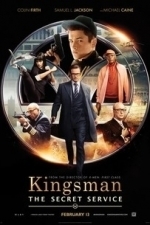
Simply Brilliant
Director Matthew Vaughn has brought some visually striking films to the big screen in his fairly short career, from the brilliant Layer Cake, to the movie which many credit as saving the X-Men franchise, First Class, he certainly knows his way around a camera.
However, Kingsman: The Secret Service is probably his riskiest proposition yet. Can a dark comedy about upper-class British spies with their tailor-made suits compete with the very best films in the genre?
Thankfully the answer is a resounding yes. The spectacular cinematography and fantastic performances in Kingsman ensure it is one of the most memorable and cleverly crafted blockbusters of the last decade.
The film follows the story of underprivileged Eggsy, played wonderfully by Taron Egerton in his first full role, as he does his best to join The Kingsmen, a secret society of spies working to bring down evil in the world.
An absolutely marvellous Colin Firth and a slightly underused Michael Caine also play part of this group – possibly creating the poshest ensemble of characters seen in a film for years.
Naturally a spy flick isn’t complete without a villain and Samuel L Jackson is on course here to become one of the cheesiest megalomaniacs ever put to the big screen. His deliberately camp performance goes well with the dark humour throughout.
Kingsman is also genuinely funny and a real treat to watch with explosive, over-the-top visuals and beautiful scenery which utilises what the world has to offer rather than delving into the CGI drawer many directors employ nowadays.
It all feels decidedly old fashioned and all the better for it with an almost grainy quality to the production – think The Avengers TV series but with a higher budget.
The plot is top notch and whilst it may border on cliché at times, Kingsman manages to steer the story in enough directions to make sure the audience never settles into a rut, the use of our reliance on modern technology being a particular highlight.
Special effects wise, it holds up well with most other blockbusters and has just a few lapses in CGI at the start and towards the riveting finale,Taron_Egerton_SDCC_2014 though these are barely noticeable if you’re not looking hard enough.
Moreover, it is a true pleasure to sit in a film and not wonder what the producers had to cut to achieve a crowd-pleasing 12A certification. Kingsman pulls no punches, this is a violent rollercoaster ride and well deserves the BBFC 15 rating it has been given. Whether or not this hurts its box-office performance remains to be seen.
Overall, Kingsman: The Secret Service is one of the only films which combines the ever-popular spy genre with comedy and manages to keep its dignity in tact as the end credits role.
So many films, Johnny English: Reborn and Get Smart to name a couple, simply delve into slapstick territory once the writers run out of ideas – this isn’t the case here.
From its exciting plot and brutally dark humour, to the engaging performances from every single character, Kingsman: The Secret Service is simply brilliant.
https://moviemetropolis.net/2015/01/30/simply-brilliant-kingsman-the-secret-service-review/
However, Kingsman: The Secret Service is probably his riskiest proposition yet. Can a dark comedy about upper-class British spies with their tailor-made suits compete with the very best films in the genre?
Thankfully the answer is a resounding yes. The spectacular cinematography and fantastic performances in Kingsman ensure it is one of the most memorable and cleverly crafted blockbusters of the last decade.
The film follows the story of underprivileged Eggsy, played wonderfully by Taron Egerton in his first full role, as he does his best to join The Kingsmen, a secret society of spies working to bring down evil in the world.
An absolutely marvellous Colin Firth and a slightly underused Michael Caine also play part of this group – possibly creating the poshest ensemble of characters seen in a film for years.
Naturally a spy flick isn’t complete without a villain and Samuel L Jackson is on course here to become one of the cheesiest megalomaniacs ever put to the big screen. His deliberately camp performance goes well with the dark humour throughout.
Kingsman is also genuinely funny and a real treat to watch with explosive, over-the-top visuals and beautiful scenery which utilises what the world has to offer rather than delving into the CGI drawer many directors employ nowadays.
It all feels decidedly old fashioned and all the better for it with an almost grainy quality to the production – think The Avengers TV series but with a higher budget.
The plot is top notch and whilst it may border on cliché at times, Kingsman manages to steer the story in enough directions to make sure the audience never settles into a rut, the use of our reliance on modern technology being a particular highlight.
Special effects wise, it holds up well with most other blockbusters and has just a few lapses in CGI at the start and towards the riveting finale,Taron_Egerton_SDCC_2014 though these are barely noticeable if you’re not looking hard enough.
Moreover, it is a true pleasure to sit in a film and not wonder what the producers had to cut to achieve a crowd-pleasing 12A certification. Kingsman pulls no punches, this is a violent rollercoaster ride and well deserves the BBFC 15 rating it has been given. Whether or not this hurts its box-office performance remains to be seen.
Overall, Kingsman: The Secret Service is one of the only films which combines the ever-popular spy genre with comedy and manages to keep its dignity in tact as the end credits role.
So many films, Johnny English: Reborn and Get Smart to name a couple, simply delve into slapstick territory once the writers run out of ideas – this isn’t the case here.
From its exciting plot and brutally dark humour, to the engaging performances from every single character, Kingsman: The Secret Service is simply brilliant.
https://moviemetropolis.net/2015/01/30/simply-brilliant-kingsman-the-secret-service-review/