

Royalty Inc: Britain's Best-Known Brand
6.0 Rate It
Book
It is an amazing feat in the 21st century that Queen Elizabeth II, a small woman in her...

Journey: Memoirs of an Air Force Chief of Staff
Norty Schwartz and Ron Levinson
Book
The General's dysfunctional home life drove him to apply to the Air Force Academy almost 40 years...
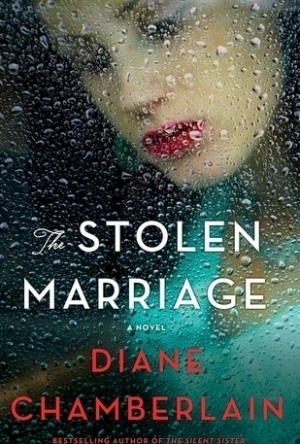
The Stolen Marriage
10.0 Rate It
Book
The Stolen Marriage is a compelling novel from Diane Chamberlain, the bestselling author of The...

The Evangelicals: The Struggle to Shape America
1.0 Rate It
Book
This groundbreaking book from Pulitzer Prize–winning historian Frances FitzGerald is the first...
History Religion

The Crisis of Multiculturalism in Europe: A History
Book
A history of modern European cultural pluralism, its current crisis, and its uncertain future In...
Politics social issues

The Science Behind Alien Encounters
Book
Astronomers agree the universe has more stars in it then there are grains of sand on Earth. Even...

Hazel (2934 KP) rated The Collaborator's Daughter in Books
Apr 16, 2023


Set in two timeliness - 2010 and 1944 - the story is written from the point of view of Fran (Safranka) in Sussex in 2010 and her father, Branko in Dubrovnik in 1944. Fran was born in Dubrovnik but left with her mother when she was just a baby and never knew her father but was always told he was a hero.
Fran is now in her 60's; her stepfather has recently passed away having lost her mother a number of years earlier. With her son having grown up with his own family and having found out that her father's remains have been found in a mass grave containing fascists and collaborators from World War II; Fran decides to return to her country of birth to learn more about her father and to find out what she wants to do with the rest of her life now she has no one left to care for.
I loved the characters and particularly the fact that they were of an older generation which was a refreshing change proving that it's never too late to change your life although it remains a scary concept. I loved the setting and the descriptions of Dubrovnik which really made me want to visit. I found the sections set in 1944 were my favourite parts, I wish they had been longer and more in depth however, the author has explained why this was very difficult due to the lack of information available.
Overall, an enjoyable read and whilst I don't usually like a book that has quite such a focus on romance, it did work well with this particular story and it made for a gentle and easy read.
My thanks go to HarperCollins UK, One More Chapter and NetGalley for enabling me to read and share my thoughts of The Collaborator's Daughter.
Hazel (2934 KP) rated The Boy in the Attic (Wartime Holland Book 3) in Books
Aug 28, 2022

The Boy in the Attic is a story told from 2 timelines, 2 perspectives and 2 countries.
Ilse's story takes place in Holland during World War II. The Nazi's have put a halt to her studies to become a doctor and she is living with her parents. Food is scarce and it's a daily battle to find enough to keep them from starving to death. Ilse then receives a request to help out at a hospital and she moves to live with her friend and her parents but what she discovers and the choices she makes, puts all their lives in jeopardy.
Anna's story is based in the UK in the early 2000's. Her father has just past away and whilst sorting through his affairs, discovers he was adopted and his origins are in Holland. Anna sets out to find out more.
I found the dual timelines worked really well although I admit to being more emotionally attached to Ilse's story. Both characters are well developed and I found myself completely immersed in both their stories and desperate to find out how Ilse and Anna were connected.
I found Ilse's story captivating, Anna's not as much but they worked well together and I did feel connected and invested in both their stories to the end.
This is a story of heartbreak and tragedy but also one of discovery and survival and one I would recommend to those who enjoy historical fiction stories that are set in this period. This one uses the author's own family history to give a believable feel to this story.
Thanks go to Bookouture and NetGalley for enabling me to read The Boy in the Attic and share my views.

Gareth von Kallenbach (980 KP) rated Hellboy II: The Golden Army (Hellboy 2) (2008) in Movies
Aug 14, 2019
One such decision that will undoubtedly look bad with the passage of time, was the decision for Columbia not to continue the “Hellboy” film series and allow it to walk away to find a home elsewhere.
Thankfully due to the strength of “Pan’s Labyrinth”, creator Guillmo del Toro who is riding a wave of critical success, “Hellboy II: The Golden Army”, is a step up from the previous film and sets the stage for a potential series of sequels for Universal.
The film once again stars Ron Perlman as the title character, a demon of supernatural origin who was raised by humans and leads a team of gifted individuals in the ultra-secret Bureau for Paranormal Research and Defense (BPRD).
The story begins shortly after the events of the last film, and finds BPRD Director Tom Manning (Jeffrey Tambor), frustrated with Hellboy’s continued flaunting of the rules by posing for pictures and autographs while on missions, despite being sworn to keep himself and the agency a closely guarded secret.
As if this was not enough trouble, Hellboy is having issues with the love of his life Liz (Selma Blair), who is starting to have issues with his gruff mannerisms and slovenly ways.
Unknown to the BRPD a new threat is brewing in the form of Prince Nauada (Luke Goss), who plans to retrieve three pieces of a golden crown so that he may control a fabled army of golden soldiers, and wage war on humanity.
Nauada is part of the mythical world of beings that long ago formed a truce with humanity and have lived in peace. Nauada, who has lived under the rule of his father for centuries, strikes out and sets events into motion which require the BPRD to respond to a threat greater than any they have previously faced,.
With the able help of Abe Sapien (Doug Jones), and new member Johann Krauss (Seth MacFarlane), the BPRD clash with themselves and the forces of Nauada with the fate of the world in the balance.
The new film is significantly better than the previous one, and del Toro has masterfully blended the characters and many interesting sub-stories with solid action, FX, and surprising humor. There is a scene in the film where Hellboy and Abe bond over music and beer to discuss women that is truly classic as is the confrontation between Hellboy and Krauss over leadership.
del Toro is a master at creating world of fantasy and splendor and when he allows the film to venture into this area, the film truly shines. It is during the transition between fantasy and alleged reality where the film has a few rough edges. While it was great to see the characters have a more defined relationship and interaction with one another, it seemed at times that areas for potential gold were glossed over or rushed to get back to the action and FX. There are some great storylines about Hellboy’s relationship with humanity, Liz being caught between two worlds, and many more that I hope get developed more in any future films.
There were times in the film where the nearly two hour run time seemed excessive and dragged, especially leading up to a finale, that did not deliver as big an impact as the setup had hinted at.
That being said, thanks to great characters and visuals “Hellboy II: The Golden Army”, is the rare sequel that is better than the original.

Movie Metropolis (309 KP) rated Dunkirk (2017) in Movies
Jun 10, 2019


With war, you have to respect the past whilst allowing modern-day film-goers to truly understand the brutality that ordinary people like you and I went through on a daily basis.
In May 1940, Germany had advanced into France, trapping Allied troops on the beaches of Dunkirk. Under air and ground cover from British and French forces, troops were slowly and methodically evacuated from the beach using not only military ships but civilian boats too. At the end of this incredible story of courage, 330,000 French, British, Belgian and Dutch soldiers were safely evacuated.
I found a quote the other day that said “Christopher Nolan is like Michael Bay for people who have ever read a book” and in Dunkirk that seems more apt than ever. Of course there are explosions, many of them, but they are interweaved with some incredible storytelling.
Split into three separate timelines, Dunkirk follows fisherman Mark Rylance as he sails to the beaches as part of the civilian rescue effort. On land we shadow a group of young soldiers desperately trying to get back home. Finally, the film flies alongside Tom Hardy’s brave Spitfire pilot as he tries his best to keep the beaches safe.
Each of the stories has something to offer but Mark Rylance’s performance is definitely the best, making his timeline the most interesting and often the most emotional. Addressing the elephant in the room, Harry Styles, is probably best at this part of the review – he’s excellent and in a much larger part than I had imagined.
In fact, all the performances are excellent, helped in part by Christopher Nolan’s incredible use of close-ups. This is a living, breathing war and as the audience, you feel as claustrophobic as the 400,000 men did waiting on that beach in 1940.
Moreover, the sound is just astonishing. I have never known a film use sound to such an extent to convey sheer terror. The score by Hans Zimmer, coupled with the deafening aircraft flying overhead and the rapid gunfire is incredibly harrowing and makes Dunkirk very hard to watch at times – despite its 12A certification.
Dunkirk is also a masterclass in practical effects. Nearly everything you see on screen was shot without the use of CGI and my goodness you can tell. We’re so used to seeing blockbusters filled to the brim with computer generated imagery that it’s easy to forget just how good practical effects can be.
Overall, Christopher Nolan has created a tasteful homage to a day that has been etched into the minds of generations of people. It would’ve been easy to create a film that focused on the action rather than the human details of this incredible story, but Nolan has managed to craft an absolute triumph. It’s one of the best films of the year and an absolute must-watch.
https://moviemetropolis.net/2017/07/23/dunkirk-review-a-triumph/