

Japanese Gardens and Landscapes, 1650-1950
Book
Moss, stone, trees, and sand arranged in striking or natural-looking compositions: the tradition of...

Southern Illinois Salukis Football
Dan Verdun and Jerry Kill
Book
Southern Illinois Salukis Football, the first book to focus solely on the program and its history at...

Gunnar Birkerts, National Library of Latvia, Riga
Janis Dripe and Indrikis Sturmanis
Book
The building of the National Library of Latvia is a landmark of the city of Riga, a spatial symbol...
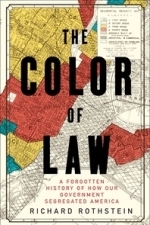
The Color of Law
Book
In this groundbreaking history of the modern American metropolis, Richard Rothstein, a leading...
History Politics

LeftSideCut (3776 KP) rated Watchmen - Season 1 in TV
Dec 26, 2019 (Updated Dec 27, 2019)
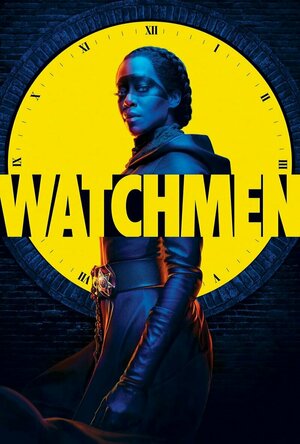

I was absolutely buzzing when I heard that HBO were going to be airing a series based on the property. A series would have more room to breathe and for exploration than the movie (that I still like, for the record). When it became apparent that it would be set some time after the comic, I was honestly a bit miffed. I was looking forward to seeing Rorschach and Co on the small screen...
But it turns out, I had no reason to be worried. Watchmen is outstanding through and through.
Plot wise, it's set in present day, and maintains the events of the comic in the 1980s. The world we're presented with is a world still feeling the effects from the mass killing via giant squid monster from the comic. A world where the police cover their faces to protect their identities. A world where racism is still rife and peddled by a white supremacist group calling themselves The Seventh Cavalry, a group that happen to wear Rorschach masks.
It's set mainly in Tulsa, Oklahoma, and it's distance from the neon New York setting of the comic gives it a more realistic feeling.
Angela Abar, aka Sister Night (Regina King), is heading the investigation into the Cavalry, and when things start to spiral out of control, the FBI send Laurie Blake (Jean Smart) - the retired Silk Spectre - to Tulsa to take over proceedings and figure out what's really happening behind the scenes.
To discuss the plot anymore than this would be spoiling it, but rest assured, after a fairly slow burning start, Watchmen quickly hits an ascending slope of quality that doesn't waver, and when concrete connections to the comic come out to play, the show hits some extremely lofty heights.
The cast are all brilliant. Regina King takes centre stage, and she manages to be badass, relatable, and sympathetic. Her relationship with her husband Cal (Yahya Abdul-Mateen II) is one of the best character elements throughout.
Characters that could be described more as 'side characters' played by the likes of Tim Blake Nelson, Louis Gossett Jr, James Woke, and Hong Chau (just to name a few), all end up with surprisingly strong development.
As for the characters from the original comic, we have the aforementioned Laurie Blake played by Jean Smart, and Adrian Veidt aka Ozymandius played by Jeremy Irons.
Jeremy Irons is a undoubtable highlight of the whole series. His portrayal of an older Veidt is pretty spot on, and his plot line is equal parts bizarre and humorous.
As seen from the trailers, Dr. Manhattan has a part to play here as well, but again, no spoilers here. Just have a look for yourself. It's great.
As the narrative jumps around and steams ahead, Watchmen still manages to touch on important subjects, such as war, family, and especially that of race and racism. There are some powerful moments littered throughout, and some genuinely emotional scenes that had me tearing up at times.
The direction and dialogue are brilliant, and the use of digital effects are mostly subtle and look great. The whole season is filled to the brim with amazing shots.
The music score is great as well, especially the original stuff, penned by Trent Reznor and Atticus Ross. Reznor's distinctive industrial sound suits the series down to the ground.
I absolutely loved Watchmen from start to finish. It's shows consistent willingness to do something new and it's a hugely ambitious project that's pulled off so damn well. I really hope that a second season comes about, but if it doesn't, then I'm suitably satisfied by what we've already been given. Just fantastic.
Caitlin Ann Cherniak (85 KP) rated Voyage of the Heart in Books
Oct 5, 2018
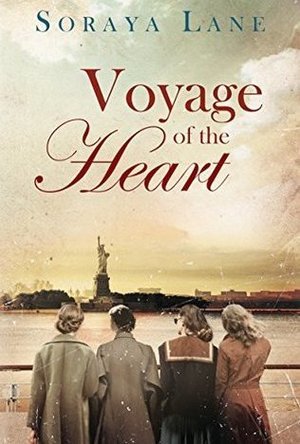

As a romance, I wasn't sure if it was gonna go the stereotypical route or a more serious route. After giving this a five-star rating, yeah, this went a route that I didn't expect at all. You have four women from England who married four different men from America during World War II so that when WWII ended, they would finally come to America and live happier married lives. Some of them are promised wonderful lives, but wonderful doesn't come without challenges. June is happily married but is struggling to have children, her one dream she always wanted. Alice's husband, suffering from PTSD, has become an alcoholic, leaving Alice being given attention by her womanizing, married boss. Betty, who had just given birth on the boat coming into the US, learns that her husband was killed while on a mission, so she's under the care of her late husband's brother. Madeline becomes a farmer's wife and is abused by her husband and the rest of his family because of her upbringing. All of these women are 100% relatable, and you sympathize with their struggles. While I kinda question Alice's not being there for her husband when he's clearly suffering, at the same time, I do understand that she doesn't get what being a soldier's wife is really like, and at least her husband does acknowledge that he has a problem. However, my favorite character is Betty because instead of focusing on how miserable she is after finding out her husband died, though I still sympathize with her for that, her main focus is her newborn son because he is the legacy that her husband left behind for her to remember him. Plus, her husband's brother is a doll! I wish I knew more about June. Her life is the more boring one because she has a very great husband and her main issue is the baby thing, but I expected more drama to happen there while the rest of the drama is poured onto Alice, Betty, and Madeline. Either way, I enjoyed this book, and I highly recommend that you guys read it if you are history and romance buffs.
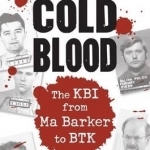
Beyond Cold Blood: The KBI from Ma Barker to BTK
Book
Ma Barker and Pretty Boy Floyd once shot their way across the state, and Bonnie and Clyde were known...
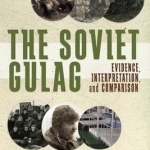
The Soviet Gulag: Evidence, Interpretation and Comparison
Book
Before the collapse of the Soviet Union and the subsequent archival revolution, Aleksandr...

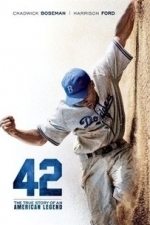

Jackie must start in a feeder team and must put aside the segregation issues that is still going through America, Jackie and his wife Rachel (Beharie) must show they have the thick skin to deal with the abuse from the crowd, other players attitude and prejudices going through America to become a trailblazer for the African American Baseball players.
Thoughts on 42
Characters – Looking at the characters we are looking at real people this time and one Jackie Robinson who would stand up for what he believed in while making his name on the baseball field, he becomes the trailblazer given the chance to become the first black major league baseball player defining all the segregation problems going through America. Branch Rickey was a bible loving owner of the Brooklyn Dodgers who wants to make a difference in the game giving Jackie a chance to change the game so he could be owning a victorious team. Rachel is Jackie’s wife that stands by him through the discrimination he experiences.
Performance – Chadwick Boseman is fantastic in this role showing that he was going to be a huge name in the future. Harrison Ford gives us one of his best performances of his elder career that is outside his known franchises, with Nicole Beharie doing well with the character she has to work with.
Story – The story of Jackie Robinson is the stuff of legends on America, the trailblazer for African America baseball players fight on and off the field against the discrimination he faces to become the star of the season. We get to see how the country of America was so far behind the times with their equality that is still happening without being as serious as it once was. This is an important history lesson if you are a fan of baseball, sport and history in general.
Biography/Sports – Jackie Robinson is an icon of the sport of baseball, this shows how he fought off everything to become that icon.
Settings – Each setting shows us the different worlds that Jackie must walk into with different opinions on the difference in race.
Scene of the Movie – The team standing up for Robinson against ben Chapman.
That Moment That Annoyed Me – I don’t understand baseball.
Final Thoughts – When you look at sports biopics you will always see an icon born and this shows just how Jackie Robinson became the legend the game knows and is a must watch.
Overall: Must watch for sports fans.
https://moviesreview101.com/2019/05/27/42-2013/

Los Angeles Stories
Book
A Los Angeles Times's and Southern California Indie Bookseller Association's Bestseller! Los Angeles...