
Search
Search results

Chris Sawin (602 KP) rated Under the Silver Lake (2018) in Movies
Jul 6, 2019
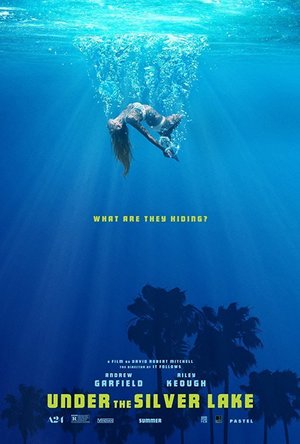


In David Robert Mitchell’s (It Follows) Under the Silver Lake, Andrew Garfield portrays a jobless and lethargic young man named Sam. Apart from his obsession with conspiracy theories and finding obscure messages in common pop culture, Sam typically spies on his topless and bird-loving neighbor. He also blatantly ignores the fact that he’s facing eviction in five days for unpaid rent. His current infatuation is a zine entitled Under the Silver Lake, which seems to mirror what’s currently transpiring in Los Angeles. Sam develops a crush on his new neighbor named Sarah (Riley Keough), who seems to disappear without a trace overnight. What begins as an investigation into Sarah’s current whereabouts evolves into something deeply rooted in the peculiar.
There’s a lot to digest with Under the Silver Lake. Not only is the story constructed on finding clues and deciphering the bizarre, but the film itself is also loaded with homage to famous music, film, and people. Nirvana, The Legend of Zelda, Nintendo Power, and Spider-Man are just a few references in the film and that doesn’t cover the blatant influence of films such as Rear Window or 2001: A Space Odyssey. What you have to ask yourself, and this is probably what makes the film so polarizing, is if what lays between the admiration for popular culture a worthwhile experience?
What you can appreciate is Andrew Garfield’s performance. Sam is so bored with his uneventful existence that he tries to find hidden meaning in everyday items. He is basically a stalker fueled by paranoia and consistent lusting of whatever woman is closest to him. When sex isn’t an option for Sam, he masturbates and somehow this becomes a common theme of the film. The first thing you ever pleasured yourself to is suddenly a conversation piece. Garfield has an unusual demeanor as Sam, but never really comes off as creepy. The method in which the story keeps snowballing into something bigger with more and more connections helps Sam’s case. Sam beats the snot out of a kid who keyed a giant penis ejaculating onto the hood of his black GT Mustang and you only seem to like him more because of it.
The fact of the matter is you also become invested in Sam’s discoveries. Despite what you feel about Under the Silver Lake as a film, it’s still unpredictable and intriguing even with its 139-minute duration. With its abrupt camera movements, a kamikaze squirrel, a serial dog killer on the loose, pets named after soda, the discovery of saltines and orange juice being one of the most unique combinations ever, a gory dream sequence, animated zine stories, people barking like dogs, the map on the back of a cereal box being the answer to everything, a seething hatred for the homeless, a way too impressive piano medley, and an almost unrecognizable Topher Grace as a reliable friend, Under the Silver Lake feels like it is overloaded with these overwhelmingly precise details that don’t necessarily lead to anything substantial.
On first watch, it’s impossible to decipher if Under the Silver Lake is destined to be a cult classic or a misguided neo-noir mystery. David Robert Mitchell knows how to introduce elements of comedy, mystery, and drama, but that final product is what leaves you scratching your head. Maybe this gets better with multiple viewings and you find more Easter eggs with each watch or everything connects differently in your head after knowing what direction the story is headed in. In the meantime though, Under the Silver Lake mostly feels like a nearly two and a half hour session of stoner ramblings that can’t decide whether to be Brick, Inherent Vice, or Southland Tales; even The Homeless King feels like a side story lifted from Terry Gilliam’s The Fisher King.
What’s happening directly in Sam’s world isn’t what matters most in Under the Silver Lake. He’s more worried about Sarah and Los Angeles than he is about not having a job or possibly a place to live in a matter of days. The outside world is far more interesting to Sam because it’s that, “The grass is always greener,” kind of mentality. Sam is consumed by Sarah because she is the one woman in the film he doesn’t get to sleep with. Having everlasting discussions of what your topless neighbor’s parrot is saying is far more humorous than revealing anything remotely personal. Becoming entangled in this crazy spider’s web of a conspiracy is far more interesting than living a boring existence. Sam makes the most out of nothing, literally. Under the Silver Lake is this spellbinding enigma of a film that is equally stimulating as it is mystifying.
There’s a lot to digest with Under the Silver Lake. Not only is the story constructed on finding clues and deciphering the bizarre, but the film itself is also loaded with homage to famous music, film, and people. Nirvana, The Legend of Zelda, Nintendo Power, and Spider-Man are just a few references in the film and that doesn’t cover the blatant influence of films such as Rear Window or 2001: A Space Odyssey. What you have to ask yourself, and this is probably what makes the film so polarizing, is if what lays between the admiration for popular culture a worthwhile experience?
What you can appreciate is Andrew Garfield’s performance. Sam is so bored with his uneventful existence that he tries to find hidden meaning in everyday items. He is basically a stalker fueled by paranoia and consistent lusting of whatever woman is closest to him. When sex isn’t an option for Sam, he masturbates and somehow this becomes a common theme of the film. The first thing you ever pleasured yourself to is suddenly a conversation piece. Garfield has an unusual demeanor as Sam, but never really comes off as creepy. The method in which the story keeps snowballing into something bigger with more and more connections helps Sam’s case. Sam beats the snot out of a kid who keyed a giant penis ejaculating onto the hood of his black GT Mustang and you only seem to like him more because of it.
The fact of the matter is you also become invested in Sam’s discoveries. Despite what you feel about Under the Silver Lake as a film, it’s still unpredictable and intriguing even with its 139-minute duration. With its abrupt camera movements, a kamikaze squirrel, a serial dog killer on the loose, pets named after soda, the discovery of saltines and orange juice being one of the most unique combinations ever, a gory dream sequence, animated zine stories, people barking like dogs, the map on the back of a cereal box being the answer to everything, a seething hatred for the homeless, a way too impressive piano medley, and an almost unrecognizable Topher Grace as a reliable friend, Under the Silver Lake feels like it is overloaded with these overwhelmingly precise details that don’t necessarily lead to anything substantial.
On first watch, it’s impossible to decipher if Under the Silver Lake is destined to be a cult classic or a misguided neo-noir mystery. David Robert Mitchell knows how to introduce elements of comedy, mystery, and drama, but that final product is what leaves you scratching your head. Maybe this gets better with multiple viewings and you find more Easter eggs with each watch or everything connects differently in your head after knowing what direction the story is headed in. In the meantime though, Under the Silver Lake mostly feels like a nearly two and a half hour session of stoner ramblings that can’t decide whether to be Brick, Inherent Vice, or Southland Tales; even The Homeless King feels like a side story lifted from Terry Gilliam’s The Fisher King.
What’s happening directly in Sam’s world isn’t what matters most in Under the Silver Lake. He’s more worried about Sarah and Los Angeles than he is about not having a job or possibly a place to live in a matter of days. The outside world is far more interesting to Sam because it’s that, “The grass is always greener,” kind of mentality. Sam is consumed by Sarah because she is the one woman in the film he doesn’t get to sleep with. Having everlasting discussions of what your topless neighbor’s parrot is saying is far more humorous than revealing anything remotely personal. Becoming entangled in this crazy spider’s web of a conspiracy is far more interesting than living a boring existence. Sam makes the most out of nothing, literally. Under the Silver Lake is this spellbinding enigma of a film that is equally stimulating as it is mystifying.

Andy K (10827 KP) rated Doctor Sleep (2019) in Movies
Nov 9, 2019

A return to Room 237
***MINOR SPOILERS ONLY***
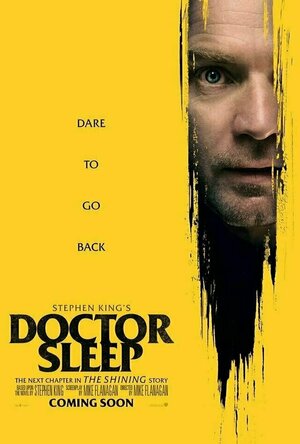
After the events which ruined his childhood at the Overlook Hotel, Dan Torrance has not had a profound life. He does drugs and has become addicted to alcohol. He decides to move to a small town where he tries to get his act together. He is still haunted by those events so long ago even seeing the ghost of long deceased Overlook cook Dick Hallorann who also possessed the ability to "shine". Dan always knew or assumed other in the world had the ability as well; however, had tried to lead a normal existence.
Meanwhile, a cult of soul swallowing degenerates emerges and preys on those who have the ability. Some not knowing their minor gifts are easy prey, but those who have remarkable abilities present more of a challenge. One of these such wunderkinds is 13 year old Abra Stone. Like Danny, she has had abilities all her life, her parents chose to ignore them, but now events are intensifying so profound she cannot ignore them. The cult leader, Rose The Hat, seeks out more victims for her flock to feed upon having an eventual confrontation with Abra.
***I don't want to say more so I don't ruin for anyone.***
I have decided when writing a review of a sequel of any kind, I will never refer to it as "unnecessary". I have read many recent critiques of movies like Zombieland: Double Tap or Maleficent: Mistress of Evil when this word is used and I don't agree with that as a criticism. People are only using that word if the sequel is a disappointment. Someone would never say The Empire Strikes Back or The Dark Knight were unnecessary because they were great films. Even mediocre sequels will get tagged with unnecessary and I guess I feel you should rate the film which was made on its own merits and not try to decide if it was worth making or not.
Much like the way 2010 tried to explain the monolith and the mystery from Kubrick's masterpiece and my favorite film of all time 2001: A Space Odyssey, Doctor Sleep explores and expands the "shining" universe and gives audiences another look into that world. I was reminded when watching for some reason the sequence in Ready Player One where the characters go back to the Overlook and interact with the unique setting and art direction the film possessed. The homages and settings in Doctor Sleep feel both modernized and a fond look back of what everyone loved from The Shining. I could tell writer/director Mike Flanagan loved this universe so intensely, he decided to adapt the Stephen King sequel novel and it is well done.
Most main characters from the original Shining film make an appearance here as well, most with smaller cameo type roles which I don't want to spoil here. The new characters of both Abra Stone and Rose The Hat are great additions and acting by Rebecca Ferguson (who is quickly becoming one of my faves) and young Kyliegh Curran really bring them to life. Other than the obvious Trainspotting, Ewan McGregor usually plays such happy and likable characters that it was interesting to see him in a darker light, especially at the beginning of the film.
The musical score felt much like The Shining at times (the best parts), but also foraged new ground and was truly haunting and beautiful throughout. The cinematography and art direction were beautiful when showing the dark forest and suburban landscapes as well as the recreation of some of the more familiar elements.
Doctor Sleep is the ceiling threshold of how good a sequel to a Kubrick classic iconic perfection piece of movie artwork onscreen. The feeling and fun of seeing new interpretations of classic characters was fine with me as the screenplay does them justice. Comparing it to The Shining is moot since Kubrick was the master and his films should be studied indefinitely by film students worldwide and Doctor Sleep is an admirable compliment to that.
I tried to find an instance where Kubrick made comment about the film 2010, but I could not other than he said he wished the director well with it. I would imagine he would have the same reaction here. I think he would feel his work stands on its own without need for further explanation or additional narrative, but that is not a criticism, just an observation.
After the events which ruined his childhood at the Overlook Hotel, Dan Torrance has not had a profound life. He does drugs and has become addicted to alcohol. He decides to move to a small town where he tries to get his act together. He is still haunted by those events so long ago even seeing the ghost of long deceased Overlook cook Dick Hallorann who also possessed the ability to "shine". Dan always knew or assumed other in the world had the ability as well; however, had tried to lead a normal existence.
Meanwhile, a cult of soul swallowing degenerates emerges and preys on those who have the ability. Some not knowing their minor gifts are easy prey, but those who have remarkable abilities present more of a challenge. One of these such wunderkinds is 13 year old Abra Stone. Like Danny, she has had abilities all her life, her parents chose to ignore them, but now events are intensifying so profound she cannot ignore them. The cult leader, Rose The Hat, seeks out more victims for her flock to feed upon having an eventual confrontation with Abra.
***I don't want to say more so I don't ruin for anyone.***
I have decided when writing a review of a sequel of any kind, I will never refer to it as "unnecessary". I have read many recent critiques of movies like Zombieland: Double Tap or Maleficent: Mistress of Evil when this word is used and I don't agree with that as a criticism. People are only using that word if the sequel is a disappointment. Someone would never say The Empire Strikes Back or The Dark Knight were unnecessary because they were great films. Even mediocre sequels will get tagged with unnecessary and I guess I feel you should rate the film which was made on its own merits and not try to decide if it was worth making or not.
Much like the way 2010 tried to explain the monolith and the mystery from Kubrick's masterpiece and my favorite film of all time 2001: A Space Odyssey, Doctor Sleep explores and expands the "shining" universe and gives audiences another look into that world. I was reminded when watching for some reason the sequence in Ready Player One where the characters go back to the Overlook and interact with the unique setting and art direction the film possessed. The homages and settings in Doctor Sleep feel both modernized and a fond look back of what everyone loved from The Shining. I could tell writer/director Mike Flanagan loved this universe so intensely, he decided to adapt the Stephen King sequel novel and it is well done.
Most main characters from the original Shining film make an appearance here as well, most with smaller cameo type roles which I don't want to spoil here. The new characters of both Abra Stone and Rose The Hat are great additions and acting by Rebecca Ferguson (who is quickly becoming one of my faves) and young Kyliegh Curran really bring them to life. Other than the obvious Trainspotting, Ewan McGregor usually plays such happy and likable characters that it was interesting to see him in a darker light, especially at the beginning of the film.
The musical score felt much like The Shining at times (the best parts), but also foraged new ground and was truly haunting and beautiful throughout. The cinematography and art direction were beautiful when showing the dark forest and suburban landscapes as well as the recreation of some of the more familiar elements.
Doctor Sleep is the ceiling threshold of how good a sequel to a Kubrick classic iconic perfection piece of movie artwork onscreen. The feeling and fun of seeing new interpretations of classic characters was fine with me as the screenplay does them justice. Comparing it to The Shining is moot since Kubrick was the master and his films should be studied indefinitely by film students worldwide and Doctor Sleep is an admirable compliment to that.
I tried to find an instance where Kubrick made comment about the film 2010, but I could not other than he said he wished the director well with it. I would imagine he would have the same reaction here. I think he would feel his work stands on its own without need for further explanation or additional narrative, but that is not a criticism, just an observation.

Gareth von Kallenbach (980 KP) rated Ad Astra (2019) in Movies
Sep 16, 2019
My first experience in IMAX was at the IMAX theater at the Grand Canyon. This was before IMAX theaters could easily be found within easy driving distance in most large cities. The movie, which interestingly still is showing today from those early years took viewers on the magical journey through the Grand Canyon. Throwing in a bit of history, with incredible visages, viewers could experience the canyon without ever hiking within its depths. It may seem odd to compare a big budget title like Ad Astra written and directed by James Gray (The Immigrant / The Lost City of Z) to a short thirty-minute experience film about the Grand Canyon, but both are equally awe inspiring and beautiful if experienced in the same way.
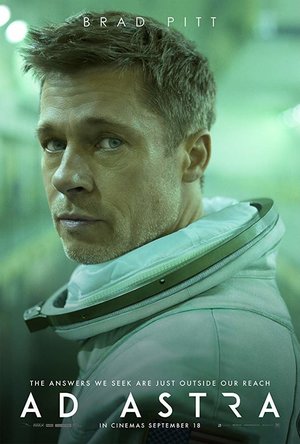
Ad Astra features Brad Pitt as Astronaut Roy McBride, a film that takes place in the not so distant future where the moon has become a commercialized tourist destination. A place where outside the safe tourist zones corporations fight for control of resources, and convoys are regularly ransacked by pirates looking to make a quick buck off the wares they are able to obtain. Mars has become a staging location for deep exploration ships hoping to discover if intelligent life exists outside our solar system.
Strange power surges begin to emanate deep within the galaxy, threatening to destroy everything in their path (Earth not excluded) and the top scientist are brought together to identify the threat and propose a theory to stop it. Roy McBride after suffering a near fatal fall from aboard a space station is brought into a top-secret meeting to discuss these surges. It is in this meeting that Roy is informed that the surges appear to be manifesting near Neptune and even more interestingly they are identified as anti-matter surges that are being generated from a ship that Roy’s father Clifford (Tommy Lee Jones) was in charge of nearly 29 years ago. The mission was a search for extra terrestrial life that Clifford was overseeing and presumed dead after Earth had lost contact with his ship. Roy must put his personal feelings aside regarding his father and must travel to the outer reaches of our solar system to put a stop to the surges, in any way possible.
Ad Astra is an incredible achievement in cinematography. The visions of the moon, mars and the numerous rockets taken to get there are spectacular. Much like the Grand Canyon film I spoke of earlier, in IMAX Ad Astra gives you a front row seat exploring the solar system as we know it. It takes a realistic approach while not bogging the viewers in all the technical details that would be necessary to achieve this flight. You would be doing yourself a disservice to see this film on any but the largest of movie screens. While it might be an acceptable experience in a normal theater, much of the grandiose vistas and beautiful sets would be wasted. This is not a movie to wait for on Netflix if you have any interest in seeing it at all.
From a story perspective, there isn’t a whole lot to tell. Brad Pitt brings his amazing acting abilities to a film that features more inner dialogue to himself, then to others on the screen. It is reminiscent to the original Dune movie from the 80s combined with 2001: A space odyssey. For a movie that literally is about a voyage to deep space, there are some scenes sprinkled throughout that provide some action and even a bit of suspense. Supporting characters such as Tommy Lee Jones and Donald Sutherland provide outstanding performances, even if their screen time is extremely limited. Liv Tyler once again reprises a role similar to the one from Armageddon as the reluctant wife of a man who is tasked with saving the world.
Ad Astra is a cinematic experience, the story alone is passable if not particularly quick moving and at time rarely engaging. However, when you combine this with the technological wizardry used to bring the Solar System to life it makes for an adventure that certainly lives up to the hype and will delight your visual senses. If you’ve ever dreamed of what it would be like to live on the moon or adventure into the stars, then Ad Astra might just be the closest we ever get in our lifetime. It’s beautiful, deadly and overall an achievement to behold, just make sure you see it on the biggest screen you can.
4 out of 5 stars
Ad Astra features Brad Pitt as Astronaut Roy McBride, a film that takes place in the not so distant future where the moon has become a commercialized tourist destination. A place where outside the safe tourist zones corporations fight for control of resources, and convoys are regularly ransacked by pirates looking to make a quick buck off the wares they are able to obtain. Mars has become a staging location for deep exploration ships hoping to discover if intelligent life exists outside our solar system.
Strange power surges begin to emanate deep within the galaxy, threatening to destroy everything in their path (Earth not excluded) and the top scientist are brought together to identify the threat and propose a theory to stop it. Roy McBride after suffering a near fatal fall from aboard a space station is brought into a top-secret meeting to discuss these surges. It is in this meeting that Roy is informed that the surges appear to be manifesting near Neptune and even more interestingly they are identified as anti-matter surges that are being generated from a ship that Roy’s father Clifford (Tommy Lee Jones) was in charge of nearly 29 years ago. The mission was a search for extra terrestrial life that Clifford was overseeing and presumed dead after Earth had lost contact with his ship. Roy must put his personal feelings aside regarding his father and must travel to the outer reaches of our solar system to put a stop to the surges, in any way possible.
Ad Astra is an incredible achievement in cinematography. The visions of the moon, mars and the numerous rockets taken to get there are spectacular. Much like the Grand Canyon film I spoke of earlier, in IMAX Ad Astra gives you a front row seat exploring the solar system as we know it. It takes a realistic approach while not bogging the viewers in all the technical details that would be necessary to achieve this flight. You would be doing yourself a disservice to see this film on any but the largest of movie screens. While it might be an acceptable experience in a normal theater, much of the grandiose vistas and beautiful sets would be wasted. This is not a movie to wait for on Netflix if you have any interest in seeing it at all.
From a story perspective, there isn’t a whole lot to tell. Brad Pitt brings his amazing acting abilities to a film that features more inner dialogue to himself, then to others on the screen. It is reminiscent to the original Dune movie from the 80s combined with 2001: A space odyssey. For a movie that literally is about a voyage to deep space, there are some scenes sprinkled throughout that provide some action and even a bit of suspense. Supporting characters such as Tommy Lee Jones and Donald Sutherland provide outstanding performances, even if their screen time is extremely limited. Liv Tyler once again reprises a role similar to the one from Armageddon as the reluctant wife of a man who is tasked with saving the world.
Ad Astra is a cinematic experience, the story alone is passable if not particularly quick moving and at time rarely engaging. However, when you combine this with the technological wizardry used to bring the Solar System to life it makes for an adventure that certainly lives up to the hype and will delight your visual senses. If you’ve ever dreamed of what it would be like to live on the moon or adventure into the stars, then Ad Astra might just be the closest we ever get in our lifetime. It’s beautiful, deadly and overall an achievement to behold, just make sure you see it on the biggest screen you can.
4 out of 5 stars

BankofMarquis (1832 KP) rated Ready Player One (2018) in Movies
Apr 17, 2018
Entertaining film - but the book was better
I loved the book.
When that phrase is uttered, it doesn't necessarily mean that the film has a strike going against it. For every film that "the book was better" (MISS PEREGRINE and THE GIRL ON THE TRAIN, for instance), I can also point to films where they "did justice to the book" (like THE MARTIAN and the recent version of IT).
So...it was with some trepidation - and some excitement - that I checked into the virtual world of the Oasis and caught READY PLAYER ONE. Most of my excitement was because I was going see this Steven Spielberg opus on the big screen in 70mm. I was ready for an immersive, stunningly visual film experience.
And...I wasn't disappointed.
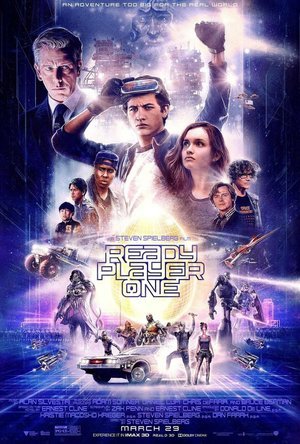
Set in a not-too-distant-future, dystopian world (is there any other?), READY PLAYER ONE is part WILLIE WONKA and part THE MATRIX. A brilliant game designer has died and has littered his virtual world - a world where most of the people on planet Earth go to escape the poverty and depravity of the "real world" - with clues and an "Easter Egg" (literally). The first one to find the hidden Easter Egg gains ownership of the Oasis. 5 years later, no one has found anything and it has turned into a battle between the evil Corporate conglomerate IOI that wants to commercialize the Oasis and the "gunters" (Grail hunters) that want to keep the Oasis "pure".
So, into this world, Spielberg brings us - and succeeds for the most part. The most stunning part of this film - and the reason I wanted to see this on the big screen and in 70mm - is that 80% of it takes place in the Oasis, the virtual reality world. The scenery, imagery and detail of this world are a marvel to behold. Since it is a virtual world, you can throw away the laws of physics - and that is a fun aspect of things (especially when you forget that your are in a virtual, and not a real, world).
The real fun of this story (both in the book and in the movie) is that most of the Oasis is filled with homages to 1980's Pop Culture (with some 60's, 70's and 90's thrown in), so you are treated to many fun "cameo" images on the screen (like the DeLorean from BACK TO THE FUTURE) - even if they are in the background. I won't give much away, but in one scene I spotted the "open the pod bay doors, HAL" pod from 2001:A SPACE ODYSSEY, just hanging out in the background without anyone referring to it. If you are any kind of pop culture "nerd" you will be in hog heaven with this aspect of the movie.
And that's a good thing because we spend, as I said, 80% of our time in this film in this virtual world - and it is well worth the trip. The other 20% is spent in the "real world" and the visuals, the imagery and, sadly, the characters are just not as exciting or interesting.
Take, for example, our 5 heroes - the "High Five" gunters. In the Oasis, their avatars are interesting to look at and to spend time with. Outside of the Oasis, the 5 actors who inhabit these characters are - to be honest - somewhat boring and lacking in screen presence and charisma.
I blame most of the lack of charisma on Spielberg, who - obviously - spent most of his attention (rightfully so) on the special effects and creating the world of the Oasis. He left the actors to "do their thing" and these 5 kids (or maybe I should say "young adults") just don't have the chops to pull it off. Someone who does - Ben Mendehlson as the Corporation's head and the main villain of this piece - eats scenery like it is snack chips. The only thing he didn't do in this film is twirl his mustache and tie the female lead to the train tracks. Add to that performance the usually obnoxious TJ Miller, as the main henchman who is up to his usual, obnoxious self here. I could have used a lot less of both of these characters.
What I could have used a lot more of is the brilliant Mark Rylance - superbly underplaying his role as the game's chief designer, who pops up in virtual flashbacks and commands the screen whenever he is on. His partner is played by the usually reliable Simon Pegg, who was "fine", but - if I'm being honest - I think is miscast in this film.
Is it a good film? I'd have to say yes - I enjoyed myself very much - and you will too. I did, though, walk out thinking about what a missed opportunity it was. The film could have been better.
The book, certainly, was better.
Letter Grade: B
7 (out of 10) stars and you can take that to the Bank(ofMarquis)
When that phrase is uttered, it doesn't necessarily mean that the film has a strike going against it. For every film that "the book was better" (MISS PEREGRINE and THE GIRL ON THE TRAIN, for instance), I can also point to films where they "did justice to the book" (like THE MARTIAN and the recent version of IT).
So...it was with some trepidation - and some excitement - that I checked into the virtual world of the Oasis and caught READY PLAYER ONE. Most of my excitement was because I was going see this Steven Spielberg opus on the big screen in 70mm. I was ready for an immersive, stunningly visual film experience.
And...I wasn't disappointed.
Set in a not-too-distant-future, dystopian world (is there any other?), READY PLAYER ONE is part WILLIE WONKA and part THE MATRIX. A brilliant game designer has died and has littered his virtual world - a world where most of the people on planet Earth go to escape the poverty and depravity of the "real world" - with clues and an "Easter Egg" (literally). The first one to find the hidden Easter Egg gains ownership of the Oasis. 5 years later, no one has found anything and it has turned into a battle between the evil Corporate conglomerate IOI that wants to commercialize the Oasis and the "gunters" (Grail hunters) that want to keep the Oasis "pure".
So, into this world, Spielberg brings us - and succeeds for the most part. The most stunning part of this film - and the reason I wanted to see this on the big screen and in 70mm - is that 80% of it takes place in the Oasis, the virtual reality world. The scenery, imagery and detail of this world are a marvel to behold. Since it is a virtual world, you can throw away the laws of physics - and that is a fun aspect of things (especially when you forget that your are in a virtual, and not a real, world).
The real fun of this story (both in the book and in the movie) is that most of the Oasis is filled with homages to 1980's Pop Culture (with some 60's, 70's and 90's thrown in), so you are treated to many fun "cameo" images on the screen (like the DeLorean from BACK TO THE FUTURE) - even if they are in the background. I won't give much away, but in one scene I spotted the "open the pod bay doors, HAL" pod from 2001:A SPACE ODYSSEY, just hanging out in the background without anyone referring to it. If you are any kind of pop culture "nerd" you will be in hog heaven with this aspect of the movie.
And that's a good thing because we spend, as I said, 80% of our time in this film in this virtual world - and it is well worth the trip. The other 20% is spent in the "real world" and the visuals, the imagery and, sadly, the characters are just not as exciting or interesting.
Take, for example, our 5 heroes - the "High Five" gunters. In the Oasis, their avatars are interesting to look at and to spend time with. Outside of the Oasis, the 5 actors who inhabit these characters are - to be honest - somewhat boring and lacking in screen presence and charisma.
I blame most of the lack of charisma on Spielberg, who - obviously - spent most of his attention (rightfully so) on the special effects and creating the world of the Oasis. He left the actors to "do their thing" and these 5 kids (or maybe I should say "young adults") just don't have the chops to pull it off. Someone who does - Ben Mendehlson as the Corporation's head and the main villain of this piece - eats scenery like it is snack chips. The only thing he didn't do in this film is twirl his mustache and tie the female lead to the train tracks. Add to that performance the usually obnoxious TJ Miller, as the main henchman who is up to his usual, obnoxious self here. I could have used a lot less of both of these characters.
What I could have used a lot more of is the brilliant Mark Rylance - superbly underplaying his role as the game's chief designer, who pops up in virtual flashbacks and commands the screen whenever he is on. His partner is played by the usually reliable Simon Pegg, who was "fine", but - if I'm being honest - I think is miscast in this film.
Is it a good film? I'd have to say yes - I enjoyed myself very much - and you will too. I did, though, walk out thinking about what a missed opportunity it was. The film could have been better.
The book, certainly, was better.
Letter Grade: B
7 (out of 10) stars and you can take that to the Bank(ofMarquis)

TheDefunctDiva (304 KP) rated Bohemian Rhapsody (2018) in Movies
Feb 17, 2019 (Updated Feb 17, 2019)
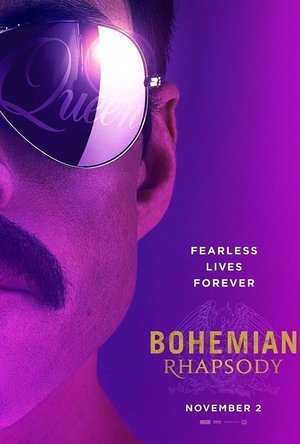
I want it all. I want it all. I want it all. And I want it now
Contains spoilers, click to show
“I want it all. I want it all. I want it all. And I want it now.”
“I Want It All,” Queen, The Miracle, 1989
I am hating having to write this review though I feel compelled to do so. I bought this movie knowing I would like it. I didn’t have much money left in my checking account, but I thought, yes, this would be worth what little I had left to spend. I gifted it to my kiddo for Valentine’s Day knowing she would surely love it, too.
I didn’t love it. I didn’t even really like it.
I haven’t made a mistake this bad since the much-renowned Lost in Translation. Why the ire? Because Bohemian Rhapsody taught me some things, but not enough. Not what I wanted to know. I wanted to learn more than what a rudimentary Google search would have taught me about the band. Instead, I obtained only basic information about the band’s success. I think to really do the band justice you would need a series. Maybe that is my problem. The film had too much general information crammed into it, and I needed MORE, PEOPLE.
I should have liked this film because it revolved around Queen’s music. The best thing about this film is the soundtrack. I think contemplating some of Queen’s lyrics throughout would have really enhanced the film, though. They talked about the poetry but didn’t examine it. And I was disappointed.
Malek’s Mercury just didn’t do it for me though I admire his dedication to the craft. I do think he did an excellent job, but there was something missing that I can’t put my finger on. It felt very much like pretending. And I can’t even adequately explain why. I did love the costuming though. Especially the hair. The transformation of Mercury from boy to man was impressive. It made me want to grow a mustache.
The supporting characters were stereotypical. The supporting cast members might have been cardboard cutouts for all of the attachment I felt to them. The film also didn’t undertake the concept of what it meant to be LGBT in that era. Therefore, it didn’t fully explore the ramifications of the risks that Mercury was taking both professionally and personally. Conflicts just didn’t resonate with the high drama I felt they should have especially considering the in-your-face elements of Mercury’s personality. The passion just wasn’t there. And a real miracle would have been adequately examining the collaboration between the musicians.
I also felt the film was generally stilted by the writing, which seemed comprised of the most overused clichés in the English language.
Bohemian Rhapsody didn’t delve into the AIDS crisis deep enough to evoke much of an emotional response in me. I appreciate that Freddie Mercury didn’t want his life to be a “cautionary tale.” I get that. But the tragedy of his death seemed really downplayed to me for some reason. I wasn’t expecting the emotional response you would get from a film like Philadelphia. But something close would have been nice. Maybe I’ve seen too many films that focus on tragedy and expected to be weeping by the end of the film. Or the beginning of the film, or at any point during the film. But I was left feeling hollow.
The crowd scene from Live Aid and the Live Aid performance rightfully stole what remained of this show. The looks on the faces of the crowd. The expanse of the crowd. The scene reflected what it must have felt like to be a performer or a fan in such a large venue. Malek was awesome in this scene and deserves his due. It might be what earns him the Oscar.
I hate to say it, but I liked Mark Wahlberg and Rock Star (2001) better than I liked this movie. I just felt they could have done a better job with it. It didn’t live up to the hype.
And now I’ve touched upon the real issue. I could never get enough of this band, or of Mercury, and DAMNIT. The experience they provided fans around the world was just gone too soon.
And I just don’t feel the movie did the band or Mercury’s life justice.
I spent my Saturday listening to music in my car, wondering what a septuagenarian Mercury would have thought of today’s saturated music market. I imagine he would have been like my late father, fascinated by both the popular and the underground.
Ok, NOW I’m crying.
But touch my tears, with your lips
Touch my world, with your fingertips.
And we can have forever
And we can love forever
Forever is our today…
Queen, “Who Wants to Live Forever,” It’s Kind of Magic, 1986
“I Want It All,” Queen, The Miracle, 1989
I am hating having to write this review though I feel compelled to do so. I bought this movie knowing I would like it. I didn’t have much money left in my checking account, but I thought, yes, this would be worth what little I had left to spend. I gifted it to my kiddo for Valentine’s Day knowing she would surely love it, too.
I didn’t love it. I didn’t even really like it.
I haven’t made a mistake this bad since the much-renowned Lost in Translation. Why the ire? Because Bohemian Rhapsody taught me some things, but not enough. Not what I wanted to know. I wanted to learn more than what a rudimentary Google search would have taught me about the band. Instead, I obtained only basic information about the band’s success. I think to really do the band justice you would need a series. Maybe that is my problem. The film had too much general information crammed into it, and I needed MORE, PEOPLE.
I should have liked this film because it revolved around Queen’s music. The best thing about this film is the soundtrack. I think contemplating some of Queen’s lyrics throughout would have really enhanced the film, though. They talked about the poetry but didn’t examine it. And I was disappointed.
Malek’s Mercury just didn’t do it for me though I admire his dedication to the craft. I do think he did an excellent job, but there was something missing that I can’t put my finger on. It felt very much like pretending. And I can’t even adequately explain why. I did love the costuming though. Especially the hair. The transformation of Mercury from boy to man was impressive. It made me want to grow a mustache.
The supporting characters were stereotypical. The supporting cast members might have been cardboard cutouts for all of the attachment I felt to them. The film also didn’t undertake the concept of what it meant to be LGBT in that era. Therefore, it didn’t fully explore the ramifications of the risks that Mercury was taking both professionally and personally. Conflicts just didn’t resonate with the high drama I felt they should have especially considering the in-your-face elements of Mercury’s personality. The passion just wasn’t there. And a real miracle would have been adequately examining the collaboration between the musicians.
I also felt the film was generally stilted by the writing, which seemed comprised of the most overused clichés in the English language.
Bohemian Rhapsody didn’t delve into the AIDS crisis deep enough to evoke much of an emotional response in me. I appreciate that Freddie Mercury didn’t want his life to be a “cautionary tale.” I get that. But the tragedy of his death seemed really downplayed to me for some reason. I wasn’t expecting the emotional response you would get from a film like Philadelphia. But something close would have been nice. Maybe I’ve seen too many films that focus on tragedy and expected to be weeping by the end of the film. Or the beginning of the film, or at any point during the film. But I was left feeling hollow.
The crowd scene from Live Aid and the Live Aid performance rightfully stole what remained of this show. The looks on the faces of the crowd. The expanse of the crowd. The scene reflected what it must have felt like to be a performer or a fan in such a large venue. Malek was awesome in this scene and deserves his due. It might be what earns him the Oscar.
I hate to say it, but I liked Mark Wahlberg and Rock Star (2001) better than I liked this movie. I just felt they could have done a better job with it. It didn’t live up to the hype.
And now I’ve touched upon the real issue. I could never get enough of this band, or of Mercury, and DAMNIT. The experience they provided fans around the world was just gone too soon.
And I just don’t feel the movie did the band or Mercury’s life justice.
I spent my Saturday listening to music in my car, wondering what a septuagenarian Mercury would have thought of today’s saturated music market. I imagine he would have been like my late father, fascinated by both the popular and the underground.
Ok, NOW I’m crying.
But touch my tears, with your lips
Touch my world, with your fingertips.
And we can have forever
And we can love forever
Forever is our today…
Queen, “Who Wants to Live Forever,” It’s Kind of Magic, 1986


Hadley (567 KP) rated American Gods in Books
Jun 5, 2020
Mad Sweeney (1 more)
Gaiman's writing and descriptions
No character development (2 more)
Dehumanizes women
The ending
The gods of the old world still exist in Neil Gaiman's 2001 novel "American Gods."
A science fiction/ fantasy story set in today's America, American Gods tries to answer the question of what happens when people stop believing in the past gods, and start worshiping new ones?
Shadow is our main character, who we meet while he's attempting to get released from prison after three years of incarceration - - - afterall, he has a job, wife and life waiting for him on the outside. And even though he's built up a strong exterior while in prison, everything comes crashing down after he receives news that his wife and best friend have died in a car accident.
Cue Wednesday, an old, odd man who gives Shadow a job after his release from prison - - - with strings attached: Shadow can't ask any questions, he must protect his employer at all costs, and if people need to be hurt, he must hurt them. Although Wednesday doesn't tell him exactly what is going on, Shadow agrees to his duties and begins a road trip with the eccentric old man, meeting an array of colorful characters along the way. But soon, Shadow begins to realize that his employer may be a mythical god in disguise, yet, oddly Shadow never really questions it or anything in the entire book for that matter.
The novel takes an odd turn early on when Shadow's dead wife, Laura, comes back to life in a zombified way. While Shadow is staying in a cheap hotel room, and Wednesday sharing a room with a young hotel employee in another, Shadow sees his wife in the clothing she was buried in, but he doesn't flinch - - - he carries a very calm conversation with dead Laura, he even goes down to the lobby to buy her a pack of cigarettes, and the next morning, he still doesn't seem bothered by it when he sees her muddy footprints on the floor. Wednesday tries to convince Shadow it was a dream, but makes snarky remarks that tells Shadow that even he knows it wasn't a dream. The two simply move on on their road trip, no questions asked.
But during this road trip, Shadow's suspicions are confirmed. He gets to see not only Wednesday, but two others in their true god-form, and afterwards, Wednesday confirms that he is indeed the Norse god, Odin.
Gaiman's take on mythological gods living in today's society is interesting, but disappointing. From recognizable gods to the forgotten ones, readers with a liking to history would probably enjoy this story most.
American Gods centers on the question of what happens to gods when they are no longer worshipped, and Gaiman merely focuses on male gods, while making all female characters (gods and humans) either prostitutes and/or sexual objects which is really off-putting for me as a female reader. And Gaiman's character development in the novel for gods and humans is nowhere to be seen thus lending very little plot development that is actually believable or enjoyable. I was unable to bring myself to care about our main character, Shadow, nor the plight with his zombie wife.And speaking of Laura, the disappointing character traits makes her not just unlikable, but also an unnecessary character overall.
I just can't recommend this book: the novel is good for the first 100 pages, but you could easily skip the next 450 pages that is just filler, and not miss much of the story. Gaiman also dehumanizes women, introduces characters in a way that would make them seem an important part of the story to only drop them out of it as quickly as they came in, and the ending is just a huge disappointment. All in all, Gaiman had a great idea, but the execution he used was poorly done - - - some parts even seem like Gaiman wrote them in a completely different state of mind, contradicting story lines and character traits altogether.
I did, however, have three favorite characters that weren't utilized enough for me to rate the story higher than I have: Mad Sweeney, Ibis and Jacquel. Mad Sweeney is a giant leprechaun that can pull gold coins out of the air; Ibis and Jacquel are Anubis and Jackel from Egyptian mythology, who run a funeral home in Cairo, Illinois today.
American Gods takes place only over a few months, which is surprising with how long the novel is. But the story is a buildup with no climax. Most characters come and go before readers can even decide if they like them or not,and that paired up with severe lack of character development leaves most of the main characters pretty forgettable. With this special edition containing 1200 more words, the story is still not worth it in the end. Gaiman is still a great writer, but this is not the book to recommend to anyone who wants to begin reading his work.
A science fiction/ fantasy story set in today's America, American Gods tries to answer the question of what happens when people stop believing in the past gods, and start worshiping new ones?
Shadow is our main character, who we meet while he's attempting to get released from prison after three years of incarceration - - - afterall, he has a job, wife and life waiting for him on the outside. And even though he's built up a strong exterior while in prison, everything comes crashing down after he receives news that his wife and best friend have died in a car accident.
Cue Wednesday, an old, odd man who gives Shadow a job after his release from prison - - - with strings attached: Shadow can't ask any questions, he must protect his employer at all costs, and if people need to be hurt, he must hurt them. Although Wednesday doesn't tell him exactly what is going on, Shadow agrees to his duties and begins a road trip with the eccentric old man, meeting an array of colorful characters along the way. But soon, Shadow begins to realize that his employer may be a mythical god in disguise, yet, oddly Shadow never really questions it or anything in the entire book for that matter.
The novel takes an odd turn early on when Shadow's dead wife, Laura, comes back to life in a zombified way. While Shadow is staying in a cheap hotel room, and Wednesday sharing a room with a young hotel employee in another, Shadow sees his wife in the clothing she was buried in, but he doesn't flinch - - - he carries a very calm conversation with dead Laura, he even goes down to the lobby to buy her a pack of cigarettes, and the next morning, he still doesn't seem bothered by it when he sees her muddy footprints on the floor. Wednesday tries to convince Shadow it was a dream, but makes snarky remarks that tells Shadow that even he knows it wasn't a dream. The two simply move on on their road trip, no questions asked.
But during this road trip, Shadow's suspicions are confirmed. He gets to see not only Wednesday, but two others in their true god-form, and afterwards, Wednesday confirms that he is indeed the Norse god, Odin.
Gaiman's take on mythological gods living in today's society is interesting, but disappointing. From recognizable gods to the forgotten ones, readers with a liking to history would probably enjoy this story most.
American Gods centers on the question of what happens to gods when they are no longer worshipped, and Gaiman merely focuses on male gods, while making all female characters (gods and humans) either prostitutes and/or sexual objects which is really off-putting for me as a female reader. And Gaiman's character development in the novel for gods and humans is nowhere to be seen thus lending very little plot development that is actually believable or enjoyable. I was unable to bring myself to care about our main character, Shadow, nor the plight with his zombie wife.And speaking of Laura, the disappointing character traits makes her not just unlikable, but also an unnecessary character overall.
I just can't recommend this book: the novel is good for the first 100 pages, but you could easily skip the next 450 pages that is just filler, and not miss much of the story. Gaiman also dehumanizes women, introduces characters in a way that would make them seem an important part of the story to only drop them out of it as quickly as they came in, and the ending is just a huge disappointment. All in all, Gaiman had a great idea, but the execution he used was poorly done - - - some parts even seem like Gaiman wrote them in a completely different state of mind, contradicting story lines and character traits altogether.
I did, however, have three favorite characters that weren't utilized enough for me to rate the story higher than I have: Mad Sweeney, Ibis and Jacquel. Mad Sweeney is a giant leprechaun that can pull gold coins out of the air; Ibis and Jacquel are Anubis and Jackel from Egyptian mythology, who run a funeral home in Cairo, Illinois today.
American Gods takes place only over a few months, which is surprising with how long the novel is. But the story is a buildup with no climax. Most characters come and go before readers can even decide if they like them or not,and that paired up with severe lack of character development leaves most of the main characters pretty forgettable. With this special edition containing 1200 more words, the story is still not worth it in the end. Gaiman is still a great writer, but this is not the book to recommend to anyone who wants to begin reading his work.

Zuky the BookBum (15 KP) rated The Surgeon (Rizzoli & Isles, #1) in Books
Mar 15, 2018
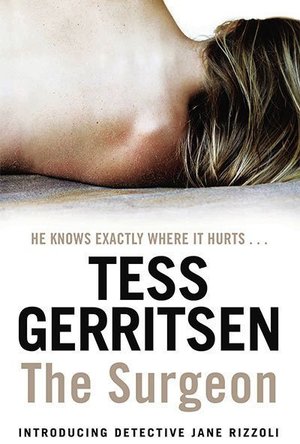
<b>Trigger warning:</b> this book is heavily focused on sexual assault and rape.
This novel is certainly very captivating. I found it difficult to put it down once I had picked it up! I loved the crime and mysterious criminal and I loved the pace of it all. Sometimes, these crime novels can burst with excitement for one second, and then fizzle out until the last few pages, or, completely the opposite of that, be total non-stop action, but feel really over the top and unrealistic. This, on the other hand, had a great mix of action and downtime.
I loved the setting for this, it felt so retro with its mention of floppy disks, pagers, and cassette tapes! This whole book was really well described and brought to life. It felt so real, you completely lost yourselves in the characters worlds. The horror of each murder and plot reveal really grabs you by the throat and give you goosebumps. There’s no escaping the terror in this one.
As for the crime, this one is certainly unique… and gruesome! If you’re like me, and don’t like the thought of surgery or human anatomy, then this will certainly be a struggle to read as it contains many in-depth scenes where we’re walked through what’s happening on the inside of the body. That certainly made it a little hard for me to read because I have this slight fear of our insides and all descriptions of it, but I was too intrigued as to who the killer was, to put it down. While not a particularly twisty turny story, there are plenty of characters in this novel to keep you guessing on who the real killer is.
This always seems to happen to me, but I just can’t seem to get on with female detectives in these kinds of series. Rizzoli wasn’t the worst I have come across, but she still got on my nerves. I’m well aware the message this book was trying to put across was all to do with a “woman in a man’s world”, and I can feel for Rizzoli, it would be hard to be taken seriously in a homicide department in 2001 as a woman… But!!! It was not necessary for her to act as though every single man she encountered was an enemy, needing to be destroyed and put in his place. If she wanted to be taken so seriously as a woman, I’m surprised she couldn’t utter the word “tampon” and described it as being a “disgusting object”. (I have seen this point mentioned by other reviewers and some have said the “fear” of tampons could be a generational thing).
I also wasn’t a fan of the underlying tone this book had, that “all men are capable of evil”. <i>Everyone</i> is capable of evil, why were only men being targeted in this book? Now, I don’t want to sound anti-feminist or something with me saying all this stuff, but I felt the book was a bit radical with some of it’s points about men being raping, murdering bastards. Again, I would like to put my hands up and say I’m <i>really</i> not trying to trivialise or undermine rape “victims” (I prefer the term survivors myself) because I’m close to several, I know how much it fucks them up, but I did feel like this book was a bit heavy hitting towards the male gender as a whole, rather than to the select few scumbags who do that sort of thing <i>(just to rehash this point, I’m not some kind of rape apologist, I just didn’t feel the book needed to be so anti-man).</i>
Another problem I had with this book was sometimes it seemed to have an undermining stance on rape, calling it a woman’s “shameful secret” as though it was their own fault they had been abused in this way. There was also a moment where Rizzoli called herself a “victim of The Surgeon” because she had fucked up part of the investigation, which I thought was completely inappropriate. Comparing a job related incident that was your own fault to being kidnapped and raped is just disgusting. <i>That</i> really got on my nerves. Another thing that grated on me was the overuse of the word “victim” when it came to the rape survivors, but I can imagine that’s more to do with the time this book came out than anything else.
Also!!! (<b>Not a spoiler</b>) There is a disgusting comment on suicide nearer the end of the novel, where Rizzoli calls a man who killed himself a “loser who ate his gun” and “pathetic enough to blow his own brains out”.
Even after having those couple of issues with this novel, I still enjoyed it enough to finish it but I won’t forget the offensiveness of it. I’m going to give myself a break from this series for a month or so, just to really review whether use want to continue with writing I find so problematic. If any of you have gone on to read more of this series, please let me know if it gets any better by not taking digs at traumatised women and mental illness.
This novel is certainly very captivating. I found it difficult to put it down once I had picked it up! I loved the crime and mysterious criminal and I loved the pace of it all. Sometimes, these crime novels can burst with excitement for one second, and then fizzle out until the last few pages, or, completely the opposite of that, be total non-stop action, but feel really over the top and unrealistic. This, on the other hand, had a great mix of action and downtime.
I loved the setting for this, it felt so retro with its mention of floppy disks, pagers, and cassette tapes! This whole book was really well described and brought to life. It felt so real, you completely lost yourselves in the characters worlds. The horror of each murder and plot reveal really grabs you by the throat and give you goosebumps. There’s no escaping the terror in this one.
As for the crime, this one is certainly unique… and gruesome! If you’re like me, and don’t like the thought of surgery or human anatomy, then this will certainly be a struggle to read as it contains many in-depth scenes where we’re walked through what’s happening on the inside of the body. That certainly made it a little hard for me to read because I have this slight fear of our insides and all descriptions of it, but I was too intrigued as to who the killer was, to put it down. While not a particularly twisty turny story, there are plenty of characters in this novel to keep you guessing on who the real killer is.
This always seems to happen to me, but I just can’t seem to get on with female detectives in these kinds of series. Rizzoli wasn’t the worst I have come across, but she still got on my nerves. I’m well aware the message this book was trying to put across was all to do with a “woman in a man’s world”, and I can feel for Rizzoli, it would be hard to be taken seriously in a homicide department in 2001 as a woman… But!!! It was not necessary for her to act as though every single man she encountered was an enemy, needing to be destroyed and put in his place. If she wanted to be taken so seriously as a woman, I’m surprised she couldn’t utter the word “tampon” and described it as being a “disgusting object”. (I have seen this point mentioned by other reviewers and some have said the “fear” of tampons could be a generational thing).
I also wasn’t a fan of the underlying tone this book had, that “all men are capable of evil”. <i>Everyone</i> is capable of evil, why were only men being targeted in this book? Now, I don’t want to sound anti-feminist or something with me saying all this stuff, but I felt the book was a bit radical with some of it’s points about men being raping, murdering bastards. Again, I would like to put my hands up and say I’m <i>really</i> not trying to trivialise or undermine rape “victims” (I prefer the term survivors myself) because I’m close to several, I know how much it fucks them up, but I did feel like this book was a bit heavy hitting towards the male gender as a whole, rather than to the select few scumbags who do that sort of thing <i>(just to rehash this point, I’m not some kind of rape apologist, I just didn’t feel the book needed to be so anti-man).</i>
Another problem I had with this book was sometimes it seemed to have an undermining stance on rape, calling it a woman’s “shameful secret” as though it was their own fault they had been abused in this way. There was also a moment where Rizzoli called herself a “victim of The Surgeon” because she had fucked up part of the investigation, which I thought was completely inappropriate. Comparing a job related incident that was your own fault to being kidnapped and raped is just disgusting. <i>That</i> really got on my nerves. Another thing that grated on me was the overuse of the word “victim” when it came to the rape survivors, but I can imagine that’s more to do with the time this book came out than anything else.
Also!!! (<b>Not a spoiler</b>) There is a disgusting comment on suicide nearer the end of the novel, where Rizzoli calls a man who killed himself a “loser who ate his gun” and “pathetic enough to blow his own brains out”.
Even after having those couple of issues with this novel, I still enjoyed it enough to finish it but I won’t forget the offensiveness of it. I’m going to give myself a break from this series for a month or so, just to really review whether use want to continue with writing I find so problematic. If any of you have gone on to read more of this series, please let me know if it gets any better by not taking digs at traumatised women and mental illness.

Mandy and G.D. Burkhead (26 KP) rated Flightless Falcon in Books
May 20, 2018
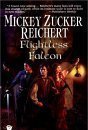
Shelf Life – Flightless Falcon Still Glides Pretty Well
Flightless Falcon is a light DAW fantasy by Mickey Zucker Reichert that first came out in paperback in July of 2001. Set in your typical fantasy land – lightly coated in magic but sans any fantastical creatures such as dragons, elves, dwarves, and the like – it follows the sad, luckless exploits of an ex-miner named Tamison made useless after a cave in kills his father and brother and leaves him trapped deep in the mine for a few days.
Afterwards, with a debilitating fear of both the dark and being underground, he’s unable to continue as a miner, yet too unskilled to get any other job. As such, he and his family live in dirt poverty for a decade or so until he finally decides to try stealing what they need instead of earning the money to buy it. Unfortunately he’s just as horrible at this as anything else he tries and ends up in jail for two years.
When he finally gets out, his family’s disappeared, so he adopts a stray dog and lives on the streets for a while. Then one day a guard finds him and tells him, “Hey, I know where your family is, and it’s bad, man, we should go save ’em.” So Tamison saves a fortune teller from some different guards, just for good measure, and the three of them go off to get his family back.
The plot evolves from there – I won’t go into much greater detail because I don’t want to give anything away. And while it’s an entertaining read, it does have its share of snags, though not often or strong enough to derail the overall experience. Still, might was well talk about ’em.
The majority of these moments occur due to the protagonist himself; Tamison’s constant suffering and depression and worthlessness gets a bit irritating after a while (and not a very long while). But you do end up genuinely sympathizing with him, at least for the most part – his self-pitying and constant sobbing are offset, personality-wise, by his intense love and devotion to his family’s welfare (though apparently it still isn’t strong enough for him to suck up his phobia and go back to working in the mines). The end result is a character that, while whiny enough that you want to reach into the pages and smack him, is still believable. The fact that a lot of his misfortune is brought on by bad luck and the overwhelming apathy of the world around him, instead of just his own sad uselessness, also helps save what might have been an otherwise excruciatingly sad-sack protagonist.
But ignore what Miss Reichert and the back cover of the book say – the real star of this story isn’t Tamison, the guard (Dallan), or the fortune teller (Rifkah). It’s the weasely bastard of a con man that Tamison can’t stop running into, the aptly-named Con. This guy’s selfish lack of a moral compass and unwillingness to sugarcoat anything for anyone is a breath of fresh air amidst the hopeful optimism and general boyscout do-goodery of the rest of the starring party, and his quick wit and blunt, sarcastic dialogue are at once impressive and entertaining to read in the circumstances. His back story’s also far more interesting than anything Tamison, Dallan, and Rifkah can come up with.
The story itself also grows past a simple “save some good guys from some bad guys” fetch quest to envelope a degree of political intrigue, subterfuge, loyalty dilemmas, and good ol’ fashion backstabbery. I won’t say anything more past the obvious (there’s a twist, you know there’s gonna be a twist, there’s always a twist) other than to say that the generic good-guy-bad-guy feeling the book’s own synopsis offers slips slowly into a more realistic, more satisfying realm of uncertain grayness that accompanies all conflicts between the world’s two rival governments, the one Tamison belongs to and the one he’s told is harboring his missing family.
Basically, each time you think this book is going to march the plot or one of the characters into Generic Land (and you will occasionally think this multiple times), the direction skews off at the last moment to surprise you. The result is that you end up reading the book in two minds: one for soaking up the story and being entertained, and one with a critical eye turned always on the author’s style, to see where it threatens to stray into unimpressiveness and how it keeps saving itself.
But don’t focus overly much on my criticisms – that’s just how I’ve been trained to talk about good writing, to search for the roughest spots and pick at them in order to see how the whole thing might be polished even more. The reason this book is so easy to criticize is because its weak spots are few and manageable and therefor easy to cover and be done with in the length of a blog post. The overall impression I came away with is still one of a fun, thoughtful, imaginative tale, at times suspenseful, at times moving, and always deeply visual. I didn’t mention the detailed visual descriptions did I? Oh well, I just did. Now you know they’re there.
It’s not going to turn into the next blockbuster fantasy franchise, but if you find it in your used book store, there are less-enjoyable ways to spend your reading time. I recommend Flightless Falcon to anyone who enjoys well-written, character-driven fantasy and doesn’t need it to last through a dozen sequels.
Afterwards, with a debilitating fear of both the dark and being underground, he’s unable to continue as a miner, yet too unskilled to get any other job. As such, he and his family live in dirt poverty for a decade or so until he finally decides to try stealing what they need instead of earning the money to buy it. Unfortunately he’s just as horrible at this as anything else he tries and ends up in jail for two years.
When he finally gets out, his family’s disappeared, so he adopts a stray dog and lives on the streets for a while. Then one day a guard finds him and tells him, “Hey, I know where your family is, and it’s bad, man, we should go save ’em.” So Tamison saves a fortune teller from some different guards, just for good measure, and the three of them go off to get his family back.
The plot evolves from there – I won’t go into much greater detail because I don’t want to give anything away. And while it’s an entertaining read, it does have its share of snags, though not often or strong enough to derail the overall experience. Still, might was well talk about ’em.
The majority of these moments occur due to the protagonist himself; Tamison’s constant suffering and depression and worthlessness gets a bit irritating after a while (and not a very long while). But you do end up genuinely sympathizing with him, at least for the most part – his self-pitying and constant sobbing are offset, personality-wise, by his intense love and devotion to his family’s welfare (though apparently it still isn’t strong enough for him to suck up his phobia and go back to working in the mines). The end result is a character that, while whiny enough that you want to reach into the pages and smack him, is still believable. The fact that a lot of his misfortune is brought on by bad luck and the overwhelming apathy of the world around him, instead of just his own sad uselessness, also helps save what might have been an otherwise excruciatingly sad-sack protagonist.
But ignore what Miss Reichert and the back cover of the book say – the real star of this story isn’t Tamison, the guard (Dallan), or the fortune teller (Rifkah). It’s the weasely bastard of a con man that Tamison can’t stop running into, the aptly-named Con. This guy’s selfish lack of a moral compass and unwillingness to sugarcoat anything for anyone is a breath of fresh air amidst the hopeful optimism and general boyscout do-goodery of the rest of the starring party, and his quick wit and blunt, sarcastic dialogue are at once impressive and entertaining to read in the circumstances. His back story’s also far more interesting than anything Tamison, Dallan, and Rifkah can come up with.
The story itself also grows past a simple “save some good guys from some bad guys” fetch quest to envelope a degree of political intrigue, subterfuge, loyalty dilemmas, and good ol’ fashion backstabbery. I won’t say anything more past the obvious (there’s a twist, you know there’s gonna be a twist, there’s always a twist) other than to say that the generic good-guy-bad-guy feeling the book’s own synopsis offers slips slowly into a more realistic, more satisfying realm of uncertain grayness that accompanies all conflicts between the world’s two rival governments, the one Tamison belongs to and the one he’s told is harboring his missing family.
Basically, each time you think this book is going to march the plot or one of the characters into Generic Land (and you will occasionally think this multiple times), the direction skews off at the last moment to surprise you. The result is that you end up reading the book in two minds: one for soaking up the story and being entertained, and one with a critical eye turned always on the author’s style, to see where it threatens to stray into unimpressiveness and how it keeps saving itself.
But don’t focus overly much on my criticisms – that’s just how I’ve been trained to talk about good writing, to search for the roughest spots and pick at them in order to see how the whole thing might be polished even more. The reason this book is so easy to criticize is because its weak spots are few and manageable and therefor easy to cover and be done with in the length of a blog post. The overall impression I came away with is still one of a fun, thoughtful, imaginative tale, at times suspenseful, at times moving, and always deeply visual. I didn’t mention the detailed visual descriptions did I? Oh well, I just did. Now you know they’re there.
It’s not going to turn into the next blockbuster fantasy franchise, but if you find it in your used book store, there are less-enjoyable ways to spend your reading time. I recommend Flightless Falcon to anyone who enjoys well-written, character-driven fantasy and doesn’t need it to last through a dozen sequels.

Movie Metropolis (309 KP) rated Life Of Pi (2012) in Movies
Jun 10, 2019 (Updated Jun 10, 2019)
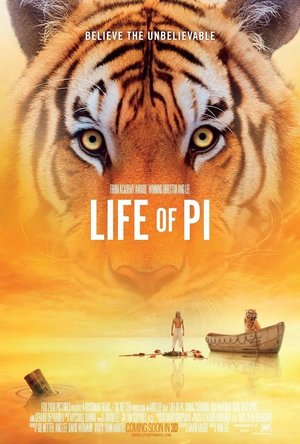

Ang Lee has directed some very artistic and emotionally charged films in his career and his new movie, Life of Pi is certainly no exception. But can his take on Yann Martel’s 2001 novel of the same name live up to his usual high standards?
In short, the answer is a resounding yes. From the stunning special effects and beautiful acting to the heart-warming story, it captivates from beginning to end like no other film released this year.
The film begins with a pet hate of mine, the credits. I always think a movie that starts with its credits is usually a huge let-down but something was different here, as soon as the brilliantly filmed names flash across the screen, I knew this film was going to be spectacular, just how spectacular however, I was not prepared for.
The story is, essentially what the title says it is, the life of a boy called Pi and his extraordinary journey from childhood, through adolescence and finally into adulthood. It seems quite simple and perhaps nothing too innovative or different, but the way Lee has captured the magic of the novel really does shine through on screen.
In the present day, Rafe Spall plays a budding writer searching for inspiration for his next big book. He comes across Irrfan Khan who plays the adult Pi and has an unbelievable story to tell. So, as he begins to narrate this incredible journey, the viewer is transported to when Pi was a boy.
It’s true that the film takes a while to get going and the scenes in Pi’s native India are perhaps the most testing of the entire film. The momentum is built up slowly as the boy travels through school life whilst his family run a small zoo in their hometown. Alas, the perfection of his childhood is ruined when his entire family decide to relocate to Canada due to an economic crisis. They are packed onto a tanker with the zoo animals on-board and begin the journey to their new life.
Whilst on the last leg of their journey, their ship is ravaged by a severe storm and Pi’s family is lost, along with most of the zoo animals and, in a scene that even betters the emotionally charged sinking in Titanic and the CGI packed sinking in Poseidon, their tanker is lost to the ocean.
Thankfully he survives, along with an injured zebra, a naughty hyena and a motherly orangutan in a small life-boat. It’s safe to say that the zebra and ape don’t last too long on-board a ship with a hyena and they are picked off as lunch. However, also sailing with them is Richard Parker, a Bengal tiger and he forms the basis of the film, along with Pi. At first, after Richard Parker makes light work of the hyena, the relationship between Pi and his new shipmate is somewhat strained, a constant battle between who is going to eat who and the only sensible option is for Pi to live on separate raft tied to the life-boat.
However, a few days pass and finally they can share a boat, albeit after a couple of amusing scenes involving urine and some flying fish.
Richard Parker is a beautiful animal to say the least, a mixture of live action tigers, CGI animation and animatronics really brings him to life, which is good considering he is the only other character in the film. This is where Ang Lee’s brilliance as a director shines, bringing warmth and heart to a character that is not only not real, but an animal, without the ability to talk and share feelings. Credit must also be given to newcomer Suraj Sharma who plays Pi Patel absolutely brilliantly. I simply could not believe this was his first big acting role; his performance is nothing short of stunning.
Then there are the special effects and 3D. Everything is a wonder to behold and the 3D is a help in enjoying the film, rather than a hindrance which it continues to be in other movies. There are two scenes in particular which really stand out, including a lot of jellyfish and a few thousand meerkats. I won’t say anything else, as they need to be seen to be believed.
Moreover, in the depths of this film lies a huge emotional core, the story of a boy and his ‘pet’ and the perils they face, the togetherness they bring to one another is touching to say the least and let’s just say there were more than a few sniffles coming from the rows behind me in the cinema. However, it is more than just a story of companionship; there is a deep religious message about believing in god even if he seems to not be there 100% of the time. Whether or not you choose to read into this is your decision, but it’s there throughout.
Life of Pi is something really special, a magical journey that needs to be seen to be believed. Very rarely, a film comes along that touches your heart, your soul and your head and this is one of those films. Everything from the performances of all the actors, the beautiful recreation of Richard Parker and stunning special effects make this film as revolutionary as Avatar was in 2009. It is not only the best film of 2012; it is one of the best films ever made. Please, I urge all of you who read this, go see it, and witness history in the making.
https://moviemetropolis.net/2012/12/22/life-of-pi-review-2012/
In short, the answer is a resounding yes. From the stunning special effects and beautiful acting to the heart-warming story, it captivates from beginning to end like no other film released this year.
The film begins with a pet hate of mine, the credits. I always think a movie that starts with its credits is usually a huge let-down but something was different here, as soon as the brilliantly filmed names flash across the screen, I knew this film was going to be spectacular, just how spectacular however, I was not prepared for.
The story is, essentially what the title says it is, the life of a boy called Pi and his extraordinary journey from childhood, through adolescence and finally into adulthood. It seems quite simple and perhaps nothing too innovative or different, but the way Lee has captured the magic of the novel really does shine through on screen.
In the present day, Rafe Spall plays a budding writer searching for inspiration for his next big book. He comes across Irrfan Khan who plays the adult Pi and has an unbelievable story to tell. So, as he begins to narrate this incredible journey, the viewer is transported to when Pi was a boy.
It’s true that the film takes a while to get going and the scenes in Pi’s native India are perhaps the most testing of the entire film. The momentum is built up slowly as the boy travels through school life whilst his family run a small zoo in their hometown. Alas, the perfection of his childhood is ruined when his entire family decide to relocate to Canada due to an economic crisis. They are packed onto a tanker with the zoo animals on-board and begin the journey to their new life.
Whilst on the last leg of their journey, their ship is ravaged by a severe storm and Pi’s family is lost, along with most of the zoo animals and, in a scene that even betters the emotionally charged sinking in Titanic and the CGI packed sinking in Poseidon, their tanker is lost to the ocean.
Thankfully he survives, along with an injured zebra, a naughty hyena and a motherly orangutan in a small life-boat. It’s safe to say that the zebra and ape don’t last too long on-board a ship with a hyena and they are picked off as lunch. However, also sailing with them is Richard Parker, a Bengal tiger and he forms the basis of the film, along with Pi. At first, after Richard Parker makes light work of the hyena, the relationship between Pi and his new shipmate is somewhat strained, a constant battle between who is going to eat who and the only sensible option is for Pi to live on separate raft tied to the life-boat.
However, a few days pass and finally they can share a boat, albeit after a couple of amusing scenes involving urine and some flying fish.
Richard Parker is a beautiful animal to say the least, a mixture of live action tigers, CGI animation and animatronics really brings him to life, which is good considering he is the only other character in the film. This is where Ang Lee’s brilliance as a director shines, bringing warmth and heart to a character that is not only not real, but an animal, without the ability to talk and share feelings. Credit must also be given to newcomer Suraj Sharma who plays Pi Patel absolutely brilliantly. I simply could not believe this was his first big acting role; his performance is nothing short of stunning.
Then there are the special effects and 3D. Everything is a wonder to behold and the 3D is a help in enjoying the film, rather than a hindrance which it continues to be in other movies. There are two scenes in particular which really stand out, including a lot of jellyfish and a few thousand meerkats. I won’t say anything else, as they need to be seen to be believed.
Moreover, in the depths of this film lies a huge emotional core, the story of a boy and his ‘pet’ and the perils they face, the togetherness they bring to one another is touching to say the least and let’s just say there were more than a few sniffles coming from the rows behind me in the cinema. However, it is more than just a story of companionship; there is a deep religious message about believing in god even if he seems to not be there 100% of the time. Whether or not you choose to read into this is your decision, but it’s there throughout.
Life of Pi is something really special, a magical journey that needs to be seen to be believed. Very rarely, a film comes along that touches your heart, your soul and your head and this is one of those films. Everything from the performances of all the actors, the beautiful recreation of Richard Parker and stunning special effects make this film as revolutionary as Avatar was in 2009. It is not only the best film of 2012; it is one of the best films ever made. Please, I urge all of you who read this, go see it, and witness history in the making.
https://moviemetropolis.net/2012/12/22/life-of-pi-review-2012/