Search
Search results

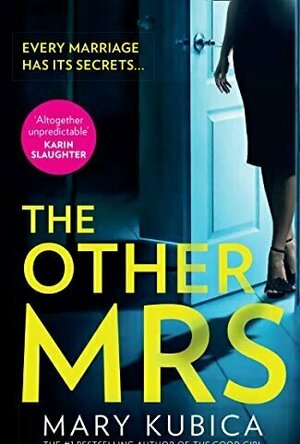
Hadley (567 KP) rated The Other Mrs. in Books
Apr 4, 2020


Mental illness done correctly (1 more)
Addictive
Mental illness.
I've read a lot of horror books that cover this subject, watched horror movies covering this subject, listened to music covering this subject, but none of them have covered mental illness as well and correctly as Mary Kubica's "The Other Mrs.."
So, with that said, if you have any type of PTSD, this book may be hard for you to read. Otherwise, this novel is very addicting, filled with so many twists and turns that you won't be able to set it down for long. For me, someone who deals with C-PTSD, 'The Other Mrs.' by Mary Kubica has been a heartache to read, but also very fulfilling to finish.
Kubica is known for her best-selling novel 'the Good Girl' - - - a thriller following a mother and a detective in search of the the former's missing daughter that leads them down a twisted tale of family secrets. From highly acclaimed critics, 'the Other Mrs.' has out-done 'the Good Girl' as Kubica's best novel so far. Kubica sticks with her psychological thriller writing that she is known for in this newest novel. She keeps the reader guessing at what will happen next, and she plays out mental illnesses in a way that most who suffer can relate while winding in a mystery well enough that the reader won't be able to guess everything before the ending.
I can't give such a heavy review on this book because, to do so, would give away a lot of the ending, so I'll stick to talking about noteworthy characters that make up the novel. The main character is a woman named Sadie, whose family is being uprooted from Chicago and moved to a small island in Maine after her husband's sister dies, which leaves them with not only a house in the will, but a sixteen-year-old niece named Imogen.
Sadie is already a mother of two sons, both younger than sixteen, when she suddenly finds herself in-charge of the stereo-typical edgy teenager, Imogen. Sadie describes her the first time she sees Imogen: " But there she stands, a morose figure dressed in black. Black jeans, a black shirt, bare feet. Her hair is black, long with bangs that slant sideways across her face. Her eyes are outlined in a thick slash of black eyeliner. Everything black, aside from the white lettering on her shirt, which reads, I want to die. The septum of her nose is pierced. Her skin, in contrast to everything else, is white, pallid, ghostlike. She's thin. "
Early one morning when Sadie is heading off to work, she finds a word spelled on her car window. The word reads: "Die." Sadie, as most readers, quickly assumes that Imogen is responsibly for this, as she tries to explain: "I've tried to be understanding because of how awful the situation must be for her. Her life has been upended. She lost her mother and now must share her home with people she doesn't know. But that doesn't justify threatening me. Because Imogen doesn't mince words. She means just what she said. She wants me to die."
The next character that makes up a big part of this story is a confident, self-centered woman, whose name is Camille,and is also the 'other woman' in this story. Camille is a woman who gets what and who she wants, and won't let anyone get in her way, including Sadie, whose husband is someone Camille wants. I can't go much into the things that Camille's character does because it would give away a lot of the surprises in this novel - - - I can say though that there is murder and mystery throughout; the book will leave most readers guessing until the very end.
One other character who deserves mentioning is a little girl- - - with the nickname 'Mouse' - - - who finds herself suddenly dealing with a horrific stepmother, who abuses her physically and mentally unbeknownst to Mouse's father. One time, in which Mouse shows how smart she is to her the stepmother while being in front of her father (who Mouse likes to call 'Fake Mom'), later that night, when Mouse's father isn't looking, Fake Mom lets Mouse know how she felt about that:
" But later that night, when he father wasn't looking, Fake Mom got down into Mouse's face and told her if she ever made her look stupid again in front of her father, there would be hell to pay. Fake Mom's face got all red. She bared her teeth like a dog does when it's mad. A vein stuck out of her forehead. It throbbed. Fake Mom spit when she spoke, like she was so mad she couldn't stop herself from spitting. Like she was spitting mad. She spit on Mouse's face but Mouse didn't dare raise a hand to wipe it away."
Mental and physical abuse make up all that The Other Mrs. is about. So far, this is the best story I have read in a long time. My only problem with it is it's written like a YA novel, where it seems Kubica tried to keep that from happening by throwing in some heavy syllable words to make it more fitting for adults. But, luckily, she left out most of the wishy-washy elements that make up YA novels, so I believe most adults will enjoy this. I highly recommend this book to people who love murder mysteries!
I've read a lot of horror books that cover this subject, watched horror movies covering this subject, listened to music covering this subject, but none of them have covered mental illness as well and correctly as Mary Kubica's "The Other Mrs.."
So, with that said, if you have any type of PTSD, this book may be hard for you to read. Otherwise, this novel is very addicting, filled with so many twists and turns that you won't be able to set it down for long. For me, someone who deals with C-PTSD, 'The Other Mrs.' by Mary Kubica has been a heartache to read, but also very fulfilling to finish.
Kubica is known for her best-selling novel 'the Good Girl' - - - a thriller following a mother and a detective in search of the the former's missing daughter that leads them down a twisted tale of family secrets. From highly acclaimed critics, 'the Other Mrs.' has out-done 'the Good Girl' as Kubica's best novel so far. Kubica sticks with her psychological thriller writing that she is known for in this newest novel. She keeps the reader guessing at what will happen next, and she plays out mental illnesses in a way that most who suffer can relate while winding in a mystery well enough that the reader won't be able to guess everything before the ending.
I can't give such a heavy review on this book because, to do so, would give away a lot of the ending, so I'll stick to talking about noteworthy characters that make up the novel. The main character is a woman named Sadie, whose family is being uprooted from Chicago and moved to a small island in Maine after her husband's sister dies, which leaves them with not only a house in the will, but a sixteen-year-old niece named Imogen.
Sadie is already a mother of two sons, both younger than sixteen, when she suddenly finds herself in-charge of the stereo-typical edgy teenager, Imogen. Sadie describes her the first time she sees Imogen: " But there she stands, a morose figure dressed in black. Black jeans, a black shirt, bare feet. Her hair is black, long with bangs that slant sideways across her face. Her eyes are outlined in a thick slash of black eyeliner. Everything black, aside from the white lettering on her shirt, which reads, I want to die. The septum of her nose is pierced. Her skin, in contrast to everything else, is white, pallid, ghostlike. She's thin. "
Early one morning when Sadie is heading off to work, she finds a word spelled on her car window. The word reads: "Die." Sadie, as most readers, quickly assumes that Imogen is responsibly for this, as she tries to explain: "I've tried to be understanding because of how awful the situation must be for her. Her life has been upended. She lost her mother and now must share her home with people she doesn't know. But that doesn't justify threatening me. Because Imogen doesn't mince words. She means just what she said. She wants me to die."
The next character that makes up a big part of this story is a confident, self-centered woman, whose name is Camille,and is also the 'other woman' in this story. Camille is a woman who gets what and who she wants, and won't let anyone get in her way, including Sadie, whose husband is someone Camille wants. I can't go much into the things that Camille's character does because it would give away a lot of the surprises in this novel - - - I can say though that there is murder and mystery throughout; the book will leave most readers guessing until the very end.
One other character who deserves mentioning is a little girl- - - with the nickname 'Mouse' - - - who finds herself suddenly dealing with a horrific stepmother, who abuses her physically and mentally unbeknownst to Mouse's father. One time, in which Mouse shows how smart she is to her the stepmother while being in front of her father (who Mouse likes to call 'Fake Mom'), later that night, when Mouse's father isn't looking, Fake Mom lets Mouse know how she felt about that:
" But later that night, when he father wasn't looking, Fake Mom got down into Mouse's face and told her if she ever made her look stupid again in front of her father, there would be hell to pay. Fake Mom's face got all red. She bared her teeth like a dog does when it's mad. A vein stuck out of her forehead. It throbbed. Fake Mom spit when she spoke, like she was so mad she couldn't stop herself from spitting. Like she was spitting mad. She spit on Mouse's face but Mouse didn't dare raise a hand to wipe it away."
Mental and physical abuse make up all that The Other Mrs. is about. So far, this is the best story I have read in a long time. My only problem with it is it's written like a YA novel, where it seems Kubica tried to keep that from happening by throwing in some heavy syllable words to make it more fitting for adults. But, luckily, she left out most of the wishy-washy elements that make up YA novels, so I believe most adults will enjoy this. I highly recommend this book to people who love murder mysteries!

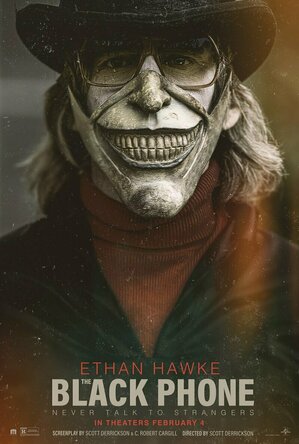
Chris Sawin (602 KP) rated The Black Phone (2022) in Movies
Jun 26, 2022

Ethan Hawke (2 more)
Madeleine McGraw
Leaves much of the horror to the audience's imagination
Writing is a bit silly at times (1 more)
Teases more story elements and horror than it reveals
A Juvenile Curtain Call of Death
Somewhere in North Denver in 1978, The Black Phone sees Finney (Mason Thames) and his sister Gwen (Madeleine McGraw) attempting to survive constant bullying at school and the abuse of an alcoholic father (played by Jeremy Davies). The missing kids in town are said to be a result of The Grabber (Ethan Hawke); a man who drives around in a black van with black balloons kidnapping and eventually killing kids. When Finney is suddenly taken by The Grabber, he’s told that the black phone in his room doesn’t work but then the phone rings.
Based on the short story of the same name by Joe Hill, The Black Phone is directed by Scott Derrickson (Doctor Strange, Sinister) and written by Derrickson and C. Robert Cargill (the two have been collaborating together on everything Derrickson has done since Sinister). What’s interesting is The Black Phone has mastered the art of subtlety and teasing its audience. The Grabber is introduced in the film similar to the shark in Jaws. You only see glimpses of him for the first third of the film. The black van will come into frame and the screen will immediately fade to black. The Grabber will park and get out of his van to abduct a kid, but he’ll purposely be out of focus. The Grabber lurks in the background like a shark waiting for that first drop of blood, which is essentially when Finney walks by alone.
The unfortunate aspect is that it feels like something is missing. The supernatural horror film keeps building and building that when the finale rolls around it feels like it isn’t a big enough payoff. Most of the violence and kills aren’t seen since the film deals with child and teenager victims. The audience is shown the end result instead; the wounds sustained by the victims that call Finney, The Grabber’s game of Naughty Boy, and Gwen being whipped with a belt by her father (you see him holding the belt and her crying, but we never see the contact). There’s artistry to leaving some things to the viewer’s imagination. In a time where horror has evolved into showing its audience every gruesome detail it’s become a forgotten art. It could also be a personal preference, but it feels like The Black Phone teases more than it reveals.
The writing of the film is as genius as it is ridiculous. Most of it is very good, especially with what Finney is building up to in the basement. The unveiling of the location of The Grabber’s house is silly though, especially since an entire police squad didn’t make the connection. Finney and Gwen’s mom is never seen since she’s passed during the events of the film, but she is mentioned. She apparently heard things and seen things that ended up in a fatal situation for her. Gwen has visions of The Grabber while she sleeps and Finney is able to receive phone calls from The Grabber’s victims because of the relation to their mom. This leads to one of the greatest lines in the film when Finney asks why no one has ever called before. “The phone rang, but no one heard it.”
Ethan Hawke’s performance is so mesmerizing that you wish he had more screen time. Even his motive behind what he intends to do with his victims is hinted at, but not really clarified. With all of the bodies piling up and the amount of phone calls Finney receives, the end result is always the same. The Grabber is slightly flamboyant in his demeanor and particular about how everything should play out. His mask and the fact that it resembles the comedy and tragedy masks that tend to symbolize the theater hint at this all being a performance for him. Things not going his way is like someone fumbling over their lines; it’s unforgivable.
Madeleine McGraw is not so secretly the best part of the film. Her career before The Black Phone has mostly been in voice acting (Cars 3, Toy Story 4, The Mitchells vs The Machines) and playing younger versions of other characters (Pacific Rim: Uprising, Ant-Man and the Wasp). McGraw gets a fair amount of screen time here and Gwen is an incredibly resourceful character and arguably the film’s biggest asset. McGraw’s performance is genuine as you believe every word she says. She’s hilarious as she has the best lines of dialogue in the film. Her portrayal of sadness and anguish is top notch as well as she has the most powerful and emotional sequence in the film that breaks your heart and only makes you sympathize with both her and Finney.
With supernatural dread lifted from the likes of Stir of Echoes and The Sixth Sense, The Black Phone features a breakthrough performance from Madeleine McGraw while Ethan Hawke’s hauntingly memorable turn as The Grabber is felt in a hair-raising sense; like someone who has unknowingly snuck up behind you and waits in your peripheral for that dramatic reveal. The Black Phone is a solid, pulse racing horror film that packs a punch, but seems like the type of film that simply won’t be as delectable on repeat viewings.
Based on the short story of the same name by Joe Hill, The Black Phone is directed by Scott Derrickson (Doctor Strange, Sinister) and written by Derrickson and C. Robert Cargill (the two have been collaborating together on everything Derrickson has done since Sinister). What’s interesting is The Black Phone has mastered the art of subtlety and teasing its audience. The Grabber is introduced in the film similar to the shark in Jaws. You only see glimpses of him for the first third of the film. The black van will come into frame and the screen will immediately fade to black. The Grabber will park and get out of his van to abduct a kid, but he’ll purposely be out of focus. The Grabber lurks in the background like a shark waiting for that first drop of blood, which is essentially when Finney walks by alone.
The unfortunate aspect is that it feels like something is missing. The supernatural horror film keeps building and building that when the finale rolls around it feels like it isn’t a big enough payoff. Most of the violence and kills aren’t seen since the film deals with child and teenager victims. The audience is shown the end result instead; the wounds sustained by the victims that call Finney, The Grabber’s game of Naughty Boy, and Gwen being whipped with a belt by her father (you see him holding the belt and her crying, but we never see the contact). There’s artistry to leaving some things to the viewer’s imagination. In a time where horror has evolved into showing its audience every gruesome detail it’s become a forgotten art. It could also be a personal preference, but it feels like The Black Phone teases more than it reveals.
The writing of the film is as genius as it is ridiculous. Most of it is very good, especially with what Finney is building up to in the basement. The unveiling of the location of The Grabber’s house is silly though, especially since an entire police squad didn’t make the connection. Finney and Gwen’s mom is never seen since she’s passed during the events of the film, but she is mentioned. She apparently heard things and seen things that ended up in a fatal situation for her. Gwen has visions of The Grabber while she sleeps and Finney is able to receive phone calls from The Grabber’s victims because of the relation to their mom. This leads to one of the greatest lines in the film when Finney asks why no one has ever called before. “The phone rang, but no one heard it.”
Ethan Hawke’s performance is so mesmerizing that you wish he had more screen time. Even his motive behind what he intends to do with his victims is hinted at, but not really clarified. With all of the bodies piling up and the amount of phone calls Finney receives, the end result is always the same. The Grabber is slightly flamboyant in his demeanor and particular about how everything should play out. His mask and the fact that it resembles the comedy and tragedy masks that tend to symbolize the theater hint at this all being a performance for him. Things not going his way is like someone fumbling over their lines; it’s unforgivable.
Madeleine McGraw is not so secretly the best part of the film. Her career before The Black Phone has mostly been in voice acting (Cars 3, Toy Story 4, The Mitchells vs The Machines) and playing younger versions of other characters (Pacific Rim: Uprising, Ant-Man and the Wasp). McGraw gets a fair amount of screen time here and Gwen is an incredibly resourceful character and arguably the film’s biggest asset. McGraw’s performance is genuine as you believe every word she says. She’s hilarious as she has the best lines of dialogue in the film. Her portrayal of sadness and anguish is top notch as well as she has the most powerful and emotional sequence in the film that breaks your heart and only makes you sympathize with both her and Finney.
With supernatural dread lifted from the likes of Stir of Echoes and The Sixth Sense, The Black Phone features a breakthrough performance from Madeleine McGraw while Ethan Hawke’s hauntingly memorable turn as The Grabber is felt in a hair-raising sense; like someone who has unknowingly snuck up behind you and waits in your peripheral for that dramatic reveal. The Black Phone is a solid, pulse racing horror film that packs a punch, but seems like the type of film that simply won’t be as delectable on repeat viewings.

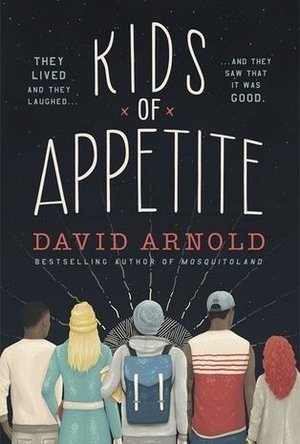
Hazel (1853 KP) rated Kids of Appetite in Books
Dec 14, 2018
<i>This ARC was provided by the publisher via NetGalley in exchange for an honest review
They lived and they laughed and they saw that it was good.</i>
<i>Mosquitoland </i>was the best book I read last year (2015) and I was excited to discover what David Arnold would write next. I approached<i> Kids of Appetite</i> with mild trepidation; what if it did not live up to my expectations? Need not have worried – it was brilliant. Dubbed a “tragicomedy” <i>Kids of Appetite</i> is a combination of realistic, heartbreaking experiences with intellectual humour.
The book opens mid interview at a local police station where two teenagers, Vic and Mad, are being questioned about a murder their friend has supposedly committed. From there, the story backtracks a week and proceeds to bring the reader up to date. It all begins with Vic running away from home, distancing himself from his mother and her new partner. By chance, a coincidence – a bump, Vic would say – he is found by Mad who introduces him to a small group of homeless friends. Vic may not have packed in preparation for life on the streets – or in a greenhouse as it turns out – however he did grab the urn containing his late father’s ashes before racing out of the house. Along with the urn is a letter containing cryptic clues that lead to various locations that Vic’s father wished for his ashes to be scattered. He, along with his new found friends; make it a mission to put his father to rest.
It is not possible to label the general theme of the book. <i>Kids of Appetite</i> is a story full of stories. Each character has their own past, something that led them to the situation they find themselves in now. The group consists of five members – once Vic has been accepted. Baz, at age twenty-seven, is clearly the leader: responsible, caring, and fatherly – until accused of murder. Seven years younger is Zuz, Baz’s mute brother, and finally Coco, an eleven year old with the mouth of a foul old lady. It is Coco, amongst all her swearing and hilarious misuse of words, that coins the name <i>Kids of Appetite, KOA</i> for short, a play on words: they are not solely in want of food, they hunger for life.
Initially it would appear that the main focus will be on Vic: his father’s death, his mother’s new partner, Moebius (facial paralysis) – a syndrome that results in a lot of bullying and discrimination – and, of course, his flight from home. However the remaining members of <i>KOA </i>equally contribute to the overall narrative. Mad, like Vic, knows what it is like to lose a father. Unfortunately she also knows what it is like to lose a mother. Her life since the fateful car crash that left her and orphan has been full of abuse and uncertainty. Baz and Zuz, on the other hand, have escaped a traumatizing childhood in the midst of the Congo Civil War.
Similarly with <i>Mosquitoland</i>, Arnold’s second book is full of intellectual knowledge and humour complete with references to highbrow material. Vic is obsessed with an operatic song and deeply interested in abstract art, particularly Matisse. He pulls the artist’s work apart in search of meaning and relatable truths of life. Like Vic, Mad has a particular song she draws comfort from. The lyrics help her make sense of the world around her, and produce her own manifesto – Madifesto, rather. She is particularly fascinated by S E Hinton’s <i>The Outsiders</i> – a book I have not read, but am obviously going to now. With in-depth theories purloined from her favourite novel, she encourages and advises those around her.
The murder investigation is evidently another key point of the book. I do not want to say too much on the matter as it would not be fair to give the ending away. Be reassured that<i> Kids of Appetite</i> is not a thriller, crime or horror novel; it is the events and dialogue leading up to the conclusion that make up the greatest parts of the story.
It is essentially the characters that make <i>Kids of Appetite</i> such a fantastic work of fiction. Their background stories are all based on real life experiences of many people throughout the world, but it is their opinion of life, their terminology, and their reckless enthusiasm that really impacts the reader. <i>Kids of Appetite</i> is a book to be read over and over again. So many phrases can be lifted and quoted to explain our own lives and feelings. In fact, the entire novel is one big quote to sum up life itself. Although there are so many themes, stories and ideas, there is one clear message. Let go. Let go of the past. Let go of the things that hold you back. For Vic and Mad it is the death of their parents; for Coco it is abandonment; and Baz and Zuz learn to let go of their violent childhood.
David Arnold is an extremely talented author, seamlessly flowing from one notion to another, whilst sweeping the reader into a sea of pure emotion. He may over use the word “ergo” and have an unconventional penchant for ellipses, but that only adds to the uniqueness of the writing. There may be an excessive amount of expletives, however that is overshadowed by the pure genius of the story itself. <i>Kids of Appetite</i> is a book I want to recommend to all. The blurb likens it to authors Rainbow Rowell and Jennifer Niven – I would like to throw John Green into the mix – and should appeal to many Young Adult readers. I could write forever about this book, but I would rather you go and read it yourself. And whilst you read, remember:
<i>They lived and they laughed and they saw that it was good. </i>
They lived and they laughed and they saw that it was good.</i>
<i>Mosquitoland </i>was the best book I read last year (2015) and I was excited to discover what David Arnold would write next. I approached<i> Kids of Appetite</i> with mild trepidation; what if it did not live up to my expectations? Need not have worried – it was brilliant. Dubbed a “tragicomedy” <i>Kids of Appetite</i> is a combination of realistic, heartbreaking experiences with intellectual humour.
The book opens mid interview at a local police station where two teenagers, Vic and Mad, are being questioned about a murder their friend has supposedly committed. From there, the story backtracks a week and proceeds to bring the reader up to date. It all begins with Vic running away from home, distancing himself from his mother and her new partner. By chance, a coincidence – a bump, Vic would say – he is found by Mad who introduces him to a small group of homeless friends. Vic may not have packed in preparation for life on the streets – or in a greenhouse as it turns out – however he did grab the urn containing his late father’s ashes before racing out of the house. Along with the urn is a letter containing cryptic clues that lead to various locations that Vic’s father wished for his ashes to be scattered. He, along with his new found friends; make it a mission to put his father to rest.
It is not possible to label the general theme of the book. <i>Kids of Appetite</i> is a story full of stories. Each character has their own past, something that led them to the situation they find themselves in now. The group consists of five members – once Vic has been accepted. Baz, at age twenty-seven, is clearly the leader: responsible, caring, and fatherly – until accused of murder. Seven years younger is Zuz, Baz’s mute brother, and finally Coco, an eleven year old with the mouth of a foul old lady. It is Coco, amongst all her swearing and hilarious misuse of words, that coins the name <i>Kids of Appetite, KOA</i> for short, a play on words: they are not solely in want of food, they hunger for life.
Initially it would appear that the main focus will be on Vic: his father’s death, his mother’s new partner, Moebius (facial paralysis) – a syndrome that results in a lot of bullying and discrimination – and, of course, his flight from home. However the remaining members of <i>KOA </i>equally contribute to the overall narrative. Mad, like Vic, knows what it is like to lose a father. Unfortunately she also knows what it is like to lose a mother. Her life since the fateful car crash that left her and orphan has been full of abuse and uncertainty. Baz and Zuz, on the other hand, have escaped a traumatizing childhood in the midst of the Congo Civil War.
Similarly with <i>Mosquitoland</i>, Arnold’s second book is full of intellectual knowledge and humour complete with references to highbrow material. Vic is obsessed with an operatic song and deeply interested in abstract art, particularly Matisse. He pulls the artist’s work apart in search of meaning and relatable truths of life. Like Vic, Mad has a particular song she draws comfort from. The lyrics help her make sense of the world around her, and produce her own manifesto – Madifesto, rather. She is particularly fascinated by S E Hinton’s <i>The Outsiders</i> – a book I have not read, but am obviously going to now. With in-depth theories purloined from her favourite novel, she encourages and advises those around her.
The murder investigation is evidently another key point of the book. I do not want to say too much on the matter as it would not be fair to give the ending away. Be reassured that<i> Kids of Appetite</i> is not a thriller, crime or horror novel; it is the events and dialogue leading up to the conclusion that make up the greatest parts of the story.
It is essentially the characters that make <i>Kids of Appetite</i> such a fantastic work of fiction. Their background stories are all based on real life experiences of many people throughout the world, but it is their opinion of life, their terminology, and their reckless enthusiasm that really impacts the reader. <i>Kids of Appetite</i> is a book to be read over and over again. So many phrases can be lifted and quoted to explain our own lives and feelings. In fact, the entire novel is one big quote to sum up life itself. Although there are so many themes, stories and ideas, there is one clear message. Let go. Let go of the past. Let go of the things that hold you back. For Vic and Mad it is the death of their parents; for Coco it is abandonment; and Baz and Zuz learn to let go of their violent childhood.
David Arnold is an extremely talented author, seamlessly flowing from one notion to another, whilst sweeping the reader into a sea of pure emotion. He may over use the word “ergo” and have an unconventional penchant for ellipses, but that only adds to the uniqueness of the writing. There may be an excessive amount of expletives, however that is overshadowed by the pure genius of the story itself. <i>Kids of Appetite</i> is a book I want to recommend to all. The blurb likens it to authors Rainbow Rowell and Jennifer Niven – I would like to throw John Green into the mix – and should appeal to many Young Adult readers. I could write forever about this book, but I would rather you go and read it yourself. And whilst you read, remember:
<i>They lived and they laughed and they saw that it was good. </i>
5 Minute Movie Guy (379 KP) rated Whiplash (2014) in Movies
Jul 1, 2019
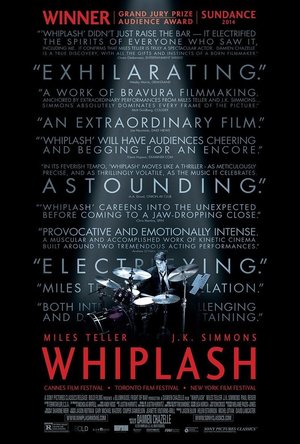

Whiplash makes for a painfully tense and terrifying learning experience that is nothing short of cinematic brilliance. It'll have you on the edge of your seat, with your heart still pounding even after it's over.
I believe that there’s a desire in all of us to achieve greatness. A deep, internal yearning for importance, respect, and acceptance. We want to be remembered and we want to fulfill a sense of purpose in our lives. For Andrew Nieman (Miles Teller), the central character in the 2014 Best Picture nominated film Whiplash, that desire is to be one of the all-time great jazz drummers. Of course, he knows that accomplishing such a goal will require a firmly fixed focus, an uncompromising dedication, and endless hours of practice. What he surely wasn’t expecting was to run into a teacher like Terence Fletcher (J.K. Simmons), who will stop at nothing in order to push his students to strive to be their very best. Whiplash makes for a painfully tense and terrifying learning experience that is nothing short of cinematic brilliance.
Andrew is a first-year student at the prestigious Shaffer Conservatory of Music in New York where the presence of their great head music conductor, Terence Fletcher, looms over everyone. Fletcher is well-known, respected, and feared. More importantly, he is their ticket to success as musicians. Landing a spot in his band is a coveted high honor. Earning his respect is even greater. Though under Fletcher’s guidance, success doesn’t come easy. He rules over the school like a maniacal dictator and he demands absolute perfection from his students. After all, he has a highly revered reputation to preserve, and he’s not about to let anyone jeopardize it. Andrew finds himself lucky enough to be chosen to rehearse with Fletcher’s band, but he’s soon tested, humiliated, abused, and pushed to the limit by his short-tempered instructor.
Already something of a loner, Andrew delves even deeper within due to pressure from his teacher, turning his passion for music into an unhealthy obsession. He cuts off contact with others and devotes himself entirely to practicing. With fingers bloodied from extensive drumming, he simply bandages them up and keeps at it. Not only is his music playing taking control of his life, but it’s also clearly taking a toll on his mental health. Even more troubling for Andrew is that no matter how hard he tries, Fletcher is never satisfied, and he torments his students until they get things right, even if it means practicing all night. Resentment and tension rapidly rise for Andrew as he approaches his breaking point, resulting in the film’s unforgettably tense conclusion.
Whiplash is no walk in the park. It will have you sitting on the edge of your seat in suspense and terror, with your heart still pounding even after it’s over. It’s an emotional horror for young Andrew who is put through Hell by his mad musical conductor. I was legitimately in fear for his life and sanity. While the movie has given me a greater respect for musicians, and jazz bands in particular, it sure makes me feel glad that I was never in band!
Whiplash is remarkable in its design and execution. The film’s cinematography shows a wonderfully adept eye for camera angles, and gives this low-budget film a distinguished look. The director revels in the closeness of the scene, putting us right alongside Andrew as he comes face-to-face with the ever-menacing Fletcher. It’s unbelievably tense and uncomfortable to watch while he’s being verbally and physically assaulted right before your eyes. The film’s Oscar-winning editing finds the right tempo with knowing when to cut and when to linger. It also expertly accompanies the music with its barrage of clear, fast-paced shots. Of course, Whiplash is also very respectful to its music sources, and it does an amazing job in showcasing the outrageous musical talent on display.
The performances from Miles Teller and J.K. Simmons are sensational. It is estimated that roughly forty percent of the drumming you see by Andrew in Whiplash was actually performed by Teller. Considering the ridiculous amount of skill involved in these jazz band classics, that statistic should not be understated in the least. Teller puts on an incredible display and pours his heart into this movie. He carries the film, appearing in every single scene, and makes for a believable transition of character under the strict discipline of Fletcher. Even more extraordinary is J.K. Simmons, who won the Oscar for Best Supporting Actor with this performance. Simmons injects his character with an intense ferocity that demands your attention. He terrorizes his musicians while conducting with an iron fist. Yet there’s far more to his character than just being a bully. While I disagreed with his abusive methods, I couldn’t argue against his intended result. His character’s extreme conduct will no doubt take things too far for some viewers, but despite all of his anger, I still found Fletcher to be remarkably fascinating. In the end, as deserving of hatred as he may be, I couldn’t help but feel some level of respect for him, and I think that really speaks to the quality of the film.
Whiplash is an emotionally stirring masterpiece that questions how much is too much when it comes to pushing someone to be their best. It also explores the emotional and psychological harm that can result from that level of pressure and abuse. The movie is bolstered by two tense and energetic performances from Miles and Simmons, who are deserving of all of their praise and accolades. You don’t have to be a fan of jazz music to enjoy this phenomenal film. I found the music to be intoxicating, but the real strength of the movie is the teacher and student dynamic between Andrew and Fletcher. With a diabolically delightful and brilliant ending, these two characters have achieved an esteemed level of movie greatness that make Whiplash a must-see!
Andrew is a first-year student at the prestigious Shaffer Conservatory of Music in New York where the presence of their great head music conductor, Terence Fletcher, looms over everyone. Fletcher is well-known, respected, and feared. More importantly, he is their ticket to success as musicians. Landing a spot in his band is a coveted high honor. Earning his respect is even greater. Though under Fletcher’s guidance, success doesn’t come easy. He rules over the school like a maniacal dictator and he demands absolute perfection from his students. After all, he has a highly revered reputation to preserve, and he’s not about to let anyone jeopardize it. Andrew finds himself lucky enough to be chosen to rehearse with Fletcher’s band, but he’s soon tested, humiliated, abused, and pushed to the limit by his short-tempered instructor.
Already something of a loner, Andrew delves even deeper within due to pressure from his teacher, turning his passion for music into an unhealthy obsession. He cuts off contact with others and devotes himself entirely to practicing. With fingers bloodied from extensive drumming, he simply bandages them up and keeps at it. Not only is his music playing taking control of his life, but it’s also clearly taking a toll on his mental health. Even more troubling for Andrew is that no matter how hard he tries, Fletcher is never satisfied, and he torments his students until they get things right, even if it means practicing all night. Resentment and tension rapidly rise for Andrew as he approaches his breaking point, resulting in the film’s unforgettably tense conclusion.
Whiplash is no walk in the park. It will have you sitting on the edge of your seat in suspense and terror, with your heart still pounding even after it’s over. It’s an emotional horror for young Andrew who is put through Hell by his mad musical conductor. I was legitimately in fear for his life and sanity. While the movie has given me a greater respect for musicians, and jazz bands in particular, it sure makes me feel glad that I was never in band!
Whiplash is remarkable in its design and execution. The film’s cinematography shows a wonderfully adept eye for camera angles, and gives this low-budget film a distinguished look. The director revels in the closeness of the scene, putting us right alongside Andrew as he comes face-to-face with the ever-menacing Fletcher. It’s unbelievably tense and uncomfortable to watch while he’s being verbally and physically assaulted right before your eyes. The film’s Oscar-winning editing finds the right tempo with knowing when to cut and when to linger. It also expertly accompanies the music with its barrage of clear, fast-paced shots. Of course, Whiplash is also very respectful to its music sources, and it does an amazing job in showcasing the outrageous musical talent on display.
The performances from Miles Teller and J.K. Simmons are sensational. It is estimated that roughly forty percent of the drumming you see by Andrew in Whiplash was actually performed by Teller. Considering the ridiculous amount of skill involved in these jazz band classics, that statistic should not be understated in the least. Teller puts on an incredible display and pours his heart into this movie. He carries the film, appearing in every single scene, and makes for a believable transition of character under the strict discipline of Fletcher. Even more extraordinary is J.K. Simmons, who won the Oscar for Best Supporting Actor with this performance. Simmons injects his character with an intense ferocity that demands your attention. He terrorizes his musicians while conducting with an iron fist. Yet there’s far more to his character than just being a bully. While I disagreed with his abusive methods, I couldn’t argue against his intended result. His character’s extreme conduct will no doubt take things too far for some viewers, but despite all of his anger, I still found Fletcher to be remarkably fascinating. In the end, as deserving of hatred as he may be, I couldn’t help but feel some level of respect for him, and I think that really speaks to the quality of the film.
Whiplash is an emotionally stirring masterpiece that questions how much is too much when it comes to pushing someone to be their best. It also explores the emotional and psychological harm that can result from that level of pressure and abuse. The movie is bolstered by two tense and energetic performances from Miles and Simmons, who are deserving of all of their praise and accolades. You don’t have to be a fan of jazz music to enjoy this phenomenal film. I found the music to be intoxicating, but the real strength of the movie is the teacher and student dynamic between Andrew and Fletcher. With a diabolically delightful and brilliant ending, these two characters have achieved an esteemed level of movie greatness that make Whiplash a must-see!
Death By Rock and Roll by The Pretty Reckless
Album
Rock 'n' roll is a religion. It's a commitment to an ideal, a belief system. The lifestyle and...
Daniel Boyd (1066 KP) rated Gerald's Game (2017) in Movies
Oct 13, 2017 (Updated Oct 13, 2017)
Top Notch Performances. (1 more)
Effective Scares.
Hard To Watch, Yet Impossible To Turn Away
Contains spoilers, click to show
After being underwhelmed by the major blockbuster release of IT, I didn’t have much hope for this small Netflix movie with a limited cast, a low budget and being an adaption of what is regarded as one of Stephen King’s lesser works. I am happy to report that I was pleasantly surprised when I sat down to watch this one, in fact I’d go as far as to say it blew me away.
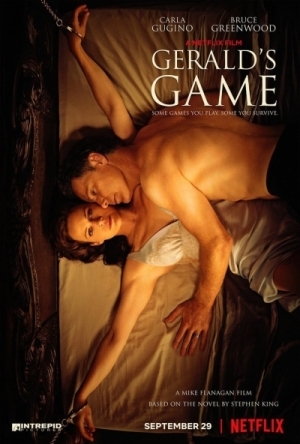
This is a movie that lives and dies on the performances of the actors involved. For those of you not familiar with the story’s premise, it involves a married couple driving out to a holiday cottage in the woods for a dirty weekend. The couple is played by Carla Gugino, (Jessie,) and Bruce Greenwood, (Gerald,) who both totally nail their respective roles in the movie. Once they get to the cottage and the door is conveniently left ajar, Gerald handcuffs Jessie to the bed and goes to the bathroom to pop a Viagra. Once he comes back and explains how he has made sure the gardeners and the cleaners won’t disturb them for a few days, he takes a heart attack and collapses onto the floor and dies.
From this point on, Carla Gugino spends the vast majority of the movie handcuffed to the bed and she gives an absolutely stellar performance, possibly the best of her career. She goes though a vast array of emotions in convincing, believable form and shows everything, from despair, to sadness, to anger, to fear, to resilience. I don’t think anyone has ever been Oscar nominated for a straight-to-Netflix movie, but if there is one performance that deserves to be, it is this one.
If you haven’t seen the movie yet, please don’t read on past this point as I am going to have to delve into spoilers in order to discuss the other aspects of the movie that I enjoyed. I thought the way that Gerald appeared to Jessie as a sort of devil on her shoulder was really effective and Greenwood delivered the required level of intense cruelty perfectly. Then the fact that Jessie appeared to herself as a sort of angel on the shoulder to oppose Gerald’s negative thoughts, meant that Gugino was required to deliver a dual character performance, on top of the already challenging role of being chained to the bed.
Flashback sequences in movies can go either way for me. They usually either tend to detract from the story at hand and become an unnecessary tangent, or they compliment what is going on and add to the movie overall. Thankfully in this movie, it is the latter. The flashback scenes are uncomfortable and hard to watch, but they do add context to what is going on in the character’s mind and make for a more interesting dissection of the effect that child abuse can have on a person in later life and how psychologically, even as adults people are still affected by the dreadful things that occurred in their past.
I also thought that this film was extremely effective in terms of its fear factor. As opposed to IT, which was scary at the start, but became repetitive and managed to desensitise its audience for what to expect by the halfway mark, Gerald’s game retains an unpredictable level of uneasiness throughout.
As far as the viewer knows during the first half of the movie, the main conflict facing the protagonist is starvation and the dog that is gnawing on Gerald’s dead body, but then things take a much more sinister turn. In what is possibly the creepiest scene I have seen in a movie this year, Jessie wakes up during the night after passing out for a few hours and she looks into the corner of the room, squinting her eyes. The camera follows where she is looking and the general shape of something can be made out. Then the shape begins to move forwards into the moonlight and is revealed to be a huge, deformed man holding a trinket box. This was so unexpected and freaky, and I loved it. I thought it was so effective in the context of the movie and was executed perfectly to be as disturbing as possible. It is also a relatable scare, as we have all experienced that moment; glancing at the corner of the room, something catches our eye and looks off in the darkness, but you just brush it off and fall back asleep. Jessie’s worst fears are confirmed here though, as she really did see something in the corner of the room and she is helpless to get away from it.
It also throws a twist into a story that has so far been based in what could be a real situation. You start to wonder, is Jessie experiencing something supernatural, or is she just hallucinating due to lack of food and water? Then the Gerald hallucination asks her if ‘The Moonlight Man,’ that she saw isn’t real, then why did the dog run away when he was in the room? Just like Jessie, the audience starts to wonder if he could be real, perhaps he is death and he has come to take Jessie to hell. All of these questions add to the already intense and disturbing tone of the movie and I thought it worked perfectly.
Eventually the movie wraps up with Jessie having an epiphany that if she smashes the glass of water and cuts her wrist, the blood can help her slip her hand out of the cuffs. What follows is a gory, brutal, difficult to watch de-gloving scene that will have you wincing and watching through your fingers. Then in true Stephen King fashion, the movie goes on to reveal another twist. It is revealed that ‘The Moonlight Man,’ really was in the room with Jessie. He was a serial killer that collected various body parts form dead people and he was taking parts from Gerald’s body while Jessie was chained to the bed. I can see why this ending could be polarizing for some, but I loved it and I thought it added an extra layer of craziness to the already insane sequence of events that we just witnessed.
Overall, Gerald’s Game is fantastic. A truly unsettling, chilling Stephen King adaption that showcases fantastic performances from its cast, makes the most of its minimal setting and managed to creep me out way more than any other horror movie I have seen this year.
This is a movie that lives and dies on the performances of the actors involved. For those of you not familiar with the story’s premise, it involves a married couple driving out to a holiday cottage in the woods for a dirty weekend. The couple is played by Carla Gugino, (Jessie,) and Bruce Greenwood, (Gerald,) who both totally nail their respective roles in the movie. Once they get to the cottage and the door is conveniently left ajar, Gerald handcuffs Jessie to the bed and goes to the bathroom to pop a Viagra. Once he comes back and explains how he has made sure the gardeners and the cleaners won’t disturb them for a few days, he takes a heart attack and collapses onto the floor and dies.
From this point on, Carla Gugino spends the vast majority of the movie handcuffed to the bed and she gives an absolutely stellar performance, possibly the best of her career. She goes though a vast array of emotions in convincing, believable form and shows everything, from despair, to sadness, to anger, to fear, to resilience. I don’t think anyone has ever been Oscar nominated for a straight-to-Netflix movie, but if there is one performance that deserves to be, it is this one.
If you haven’t seen the movie yet, please don’t read on past this point as I am going to have to delve into spoilers in order to discuss the other aspects of the movie that I enjoyed. I thought the way that Gerald appeared to Jessie as a sort of devil on her shoulder was really effective and Greenwood delivered the required level of intense cruelty perfectly. Then the fact that Jessie appeared to herself as a sort of angel on the shoulder to oppose Gerald’s negative thoughts, meant that Gugino was required to deliver a dual character performance, on top of the already challenging role of being chained to the bed.
Flashback sequences in movies can go either way for me. They usually either tend to detract from the story at hand and become an unnecessary tangent, or they compliment what is going on and add to the movie overall. Thankfully in this movie, it is the latter. The flashback scenes are uncomfortable and hard to watch, but they do add context to what is going on in the character’s mind and make for a more interesting dissection of the effect that child abuse can have on a person in later life and how psychologically, even as adults people are still affected by the dreadful things that occurred in their past.
I also thought that this film was extremely effective in terms of its fear factor. As opposed to IT, which was scary at the start, but became repetitive and managed to desensitise its audience for what to expect by the halfway mark, Gerald’s game retains an unpredictable level of uneasiness throughout.
As far as the viewer knows during the first half of the movie, the main conflict facing the protagonist is starvation and the dog that is gnawing on Gerald’s dead body, but then things take a much more sinister turn. In what is possibly the creepiest scene I have seen in a movie this year, Jessie wakes up during the night after passing out for a few hours and she looks into the corner of the room, squinting her eyes. The camera follows where she is looking and the general shape of something can be made out. Then the shape begins to move forwards into the moonlight and is revealed to be a huge, deformed man holding a trinket box. This was so unexpected and freaky, and I loved it. I thought it was so effective in the context of the movie and was executed perfectly to be as disturbing as possible. It is also a relatable scare, as we have all experienced that moment; glancing at the corner of the room, something catches our eye and looks off in the darkness, but you just brush it off and fall back asleep. Jessie’s worst fears are confirmed here though, as she really did see something in the corner of the room and she is helpless to get away from it.
It also throws a twist into a story that has so far been based in what could be a real situation. You start to wonder, is Jessie experiencing something supernatural, or is she just hallucinating due to lack of food and water? Then the Gerald hallucination asks her if ‘The Moonlight Man,’ that she saw isn’t real, then why did the dog run away when he was in the room? Just like Jessie, the audience starts to wonder if he could be real, perhaps he is death and he has come to take Jessie to hell. All of these questions add to the already intense and disturbing tone of the movie and I thought it worked perfectly.
Eventually the movie wraps up with Jessie having an epiphany that if she smashes the glass of water and cuts her wrist, the blood can help her slip her hand out of the cuffs. What follows is a gory, brutal, difficult to watch de-gloving scene that will have you wincing and watching through your fingers. Then in true Stephen King fashion, the movie goes on to reveal another twist. It is revealed that ‘The Moonlight Man,’ really was in the room with Jessie. He was a serial killer that collected various body parts form dead people and he was taking parts from Gerald’s body while Jessie was chained to the bed. I can see why this ending could be polarizing for some, but I loved it and I thought it added an extra layer of craziness to the already insane sequence of events that we just witnessed.
Overall, Gerald’s Game is fantastic. A truly unsettling, chilling Stephen King adaption that showcases fantastic performances from its cast, makes the most of its minimal setting and managed to creep me out way more than any other horror movie I have seen this year.
Mandy and G.D. Burkhead (26 KP) rated Hottest Blood: The Ultimate in Erotic Horror in Books
May 20, 2018


Shelf Life – Hottest Blood: The Ultimate in Erotic Horror is Neither of Those Things
(I’m gonna go ahead and throw a disclaimer on up here: You are about to read something that deals with purportedly “erotic” subject matter. If you don’t like the sound of that word, you might wanna go elsewhere. If it’s actually-erotic things that offend you, though, you’ll be fine.)
I like short story compilations because you get a variety of content that’s just as easy to breeze through if you have the time as it is to get to a stopping point and put down if you don’t. I like horror fiction because it usually involves the super-natural, which interests me, and intense emotional responses, which are almost always a good thing in writing. And I like eroticism because I am a warm-blooded human being with a pulse. However, on the whole, I do not like Hottest Blood.
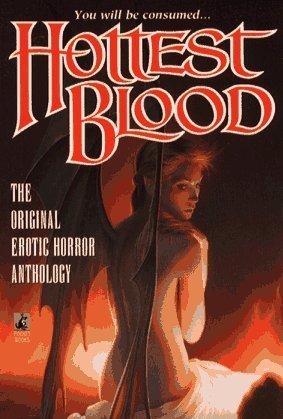
I wanted to, I did. Look at that cover. It’s equal amounts scary and sexy, both in completely safe, PG-13-at-most kind of ways. Unfortunately, Softcore Succubus here is both the scariest and the sexiest thing about this book
Bluntly analogized, you know that feeling you get when you come across something on the internet that disturbs and/or disgusts you, and then you learn that there’s a dedicated group of people that gets off on it? Most of the stories in this book are that feeling captured in words.
Case in point, the story “Damaged Goods” by Elizabeth Massie, which as far as I can tell is about a couple of physically abused, emotionally damaged, developmentally stunted kids somewhere around their early teens who live with a religious fringe cult being led out to a field to have sex with each other while a nameless U.S. President watches and masturbates before both kids are drowned in a river by their preacher/pimp caretaker.
Or there’s “Mr. Right” by Chris Lacher, which tells the story of a college student named Russ who has a secret fetish for the deformed women in the freak show at a nearby carnival – a fascination which leads to him getting held down and forcibly raped by a group of unwashed subhuman mutants, which the detailed descriptions make sure you understand are completely revolting to all five senses. The story ends with him being dumped out behind the fairgrounds while a small, legless girl happily informs him that this is how all carnival workers reproduce, and he can look forward to seeing his own mutant rape-spawn in the show next year.
Or there’s “Abuse” by Matthew Costello, which simply shows us how the arrest of a Peewee Herman surrogate goes down in an adult movie theater before ending with another man jerking off with the cold, dry, severed hand in his pocket as he contemplates getting a new one to replace it.
The tone of these three are pretty much par for the course for the rest of the book: thoroughly disturbing, and sex is involved, but the disturbing feeling stems from revulsion rather than fear, and the sex bits are so far on the other end of the spectrum from erotic that it feels like the authors are trying to punish their readers for even expecting to be aroused in any way.
Of course, I said myself earlier that intense emotional responses are “almost always a good thing in writing.” By that merit alone, this book technically succeeds; in fact, if it had billed itself as shock fiction instead of erotic horror, I’d begrudgingly give it a medal in its class. The “aw, what the hell?!” moments are not as artistically executed as, say, a Chuck Palahniuk read, and they tend not to have as much depth to them, but strictly in terms of making you wish that you could unread words, they get the job done.
But that isn’t the job that Hottest Blood was hired to do, and that’s not what it put on its resume. It said it was going to “heat the blood and chill the mind,” and promised that “terror never felt this sexy!” It would have been more appropriate to say that “sex never felt this terrible.”
All of that said, if you abandon any hope of seeing anything resembling erotica or horror (scary horror, anyway), there are a few stories in here that are decent reads – mostly because they try to say something with their subject matter rather than use it to see how thoroughly they can ruin the idea of sex for the reader. To give a few quick nods of approval:
Nancy Holder’s “I Hear the Mermaids Singing,” which opens the anthology, is a dark and modern re-imagining of “The Little Mermaid” that brutally points up the drawbacks to throwing away your whole life and family in order to pursue someone that you know nothing about outside of a few fleeting glimpses and lustful inner fantasies.
J.L. Comeau’s “Black Cars” is the narrative of a high-class chauffeur as he tells his passenger an increasingly mysterious story about a couple of his regular customers, culminating in a creepy twist payoff that, in retrospect, actually makes it count as a legitimate horror story, and a decently gripping one at that.
And “Safe at Home” by Steve and Melanie Tem, while decidedly and disturbingly unsexy, at least has good reason to be; it’s a short character study of a young woman who’d been molested as a child, and the lasting and complex psychological damage resulting thereof that prevents her from having any normal social life or relationships, even with someone whom she legitimately likes, someone who knows what’s happened and sincerely cares for her.
So for the handful of intriguing stories that don’t make you quit (or wish you had) mid-read out of revolted disappointment, I can’t completely condemn Hottest Blood. If you want to test your own threshold for repulsion but are understandably hesitant to use online image searches to this end, I heartily recommend it.
If you are legitimately turned on by the idea of a man eating a woman alive and then gestating her alien spawn inside his own bloated body until his head detaches and crawls away (“How Deep the Taste of Love,” John Shirley), I suppose I still heartily recommend it, though I do so from a safe distance.
If you want to read one of the few stories involved that aren’t horrible, I heartily recommend trying to find them on their own somewhere else first.
But if you want “the ultimate in erotic horror,” stay the hell away. Softcore Succubus is a trap.
I like short story compilations because you get a variety of content that’s just as easy to breeze through if you have the time as it is to get to a stopping point and put down if you don’t. I like horror fiction because it usually involves the super-natural, which interests me, and intense emotional responses, which are almost always a good thing in writing. And I like eroticism because I am a warm-blooded human being with a pulse. However, on the whole, I do not like Hottest Blood.
I wanted to, I did. Look at that cover. It’s equal amounts scary and sexy, both in completely safe, PG-13-at-most kind of ways. Unfortunately, Softcore Succubus here is both the scariest and the sexiest thing about this book
Bluntly analogized, you know that feeling you get when you come across something on the internet that disturbs and/or disgusts you, and then you learn that there’s a dedicated group of people that gets off on it? Most of the stories in this book are that feeling captured in words.
Case in point, the story “Damaged Goods” by Elizabeth Massie, which as far as I can tell is about a couple of physically abused, emotionally damaged, developmentally stunted kids somewhere around their early teens who live with a religious fringe cult being led out to a field to have sex with each other while a nameless U.S. President watches and masturbates before both kids are drowned in a river by their preacher/pimp caretaker.
Or there’s “Mr. Right” by Chris Lacher, which tells the story of a college student named Russ who has a secret fetish for the deformed women in the freak show at a nearby carnival – a fascination which leads to him getting held down and forcibly raped by a group of unwashed subhuman mutants, which the detailed descriptions make sure you understand are completely revolting to all five senses. The story ends with him being dumped out behind the fairgrounds while a small, legless girl happily informs him that this is how all carnival workers reproduce, and he can look forward to seeing his own mutant rape-spawn in the show next year.
Or there’s “Abuse” by Matthew Costello, which simply shows us how the arrest of a Peewee Herman surrogate goes down in an adult movie theater before ending with another man jerking off with the cold, dry, severed hand in his pocket as he contemplates getting a new one to replace it.
The tone of these three are pretty much par for the course for the rest of the book: thoroughly disturbing, and sex is involved, but the disturbing feeling stems from revulsion rather than fear, and the sex bits are so far on the other end of the spectrum from erotic that it feels like the authors are trying to punish their readers for even expecting to be aroused in any way.
Of course, I said myself earlier that intense emotional responses are “almost always a good thing in writing.” By that merit alone, this book technically succeeds; in fact, if it had billed itself as shock fiction instead of erotic horror, I’d begrudgingly give it a medal in its class. The “aw, what the hell?!” moments are not as artistically executed as, say, a Chuck Palahniuk read, and they tend not to have as much depth to them, but strictly in terms of making you wish that you could unread words, they get the job done.
But that isn’t the job that Hottest Blood was hired to do, and that’s not what it put on its resume. It said it was going to “heat the blood and chill the mind,” and promised that “terror never felt this sexy!” It would have been more appropriate to say that “sex never felt this terrible.”
All of that said, if you abandon any hope of seeing anything resembling erotica or horror (scary horror, anyway), there are a few stories in here that are decent reads – mostly because they try to say something with their subject matter rather than use it to see how thoroughly they can ruin the idea of sex for the reader. To give a few quick nods of approval:
Nancy Holder’s “I Hear the Mermaids Singing,” which opens the anthology, is a dark and modern re-imagining of “The Little Mermaid” that brutally points up the drawbacks to throwing away your whole life and family in order to pursue someone that you know nothing about outside of a few fleeting glimpses and lustful inner fantasies.
J.L. Comeau’s “Black Cars” is the narrative of a high-class chauffeur as he tells his passenger an increasingly mysterious story about a couple of his regular customers, culminating in a creepy twist payoff that, in retrospect, actually makes it count as a legitimate horror story, and a decently gripping one at that.
And “Safe at Home” by Steve and Melanie Tem, while decidedly and disturbingly unsexy, at least has good reason to be; it’s a short character study of a young woman who’d been molested as a child, and the lasting and complex psychological damage resulting thereof that prevents her from having any normal social life or relationships, even with someone whom she legitimately likes, someone who knows what’s happened and sincerely cares for her.
So for the handful of intriguing stories that don’t make you quit (or wish you had) mid-read out of revolted disappointment, I can’t completely condemn Hottest Blood. If you want to test your own threshold for repulsion but are understandably hesitant to use online image searches to this end, I heartily recommend it.
If you are legitimately turned on by the idea of a man eating a woman alive and then gestating her alien spawn inside his own bloated body until his head detaches and crawls away (“How Deep the Taste of Love,” John Shirley), I suppose I still heartily recommend it, though I do so from a safe distance.
If you want to read one of the few stories involved that aren’t horrible, I heartily recommend trying to find them on their own somewhere else first.
But if you want “the ultimate in erotic horror,” stay the hell away. Softcore Succubus is a trap.

Becs (244 KP) rated How NOT to Summon a Demon Lord in TV
Jul 22, 2019

Catching and Action-Packed!
TRIGGER WARNINGS: memory loss, anger issues, agoraphobia, graphic injuries, fat-shaming, body-shaming, forced marriage, incest, manipulation, toxic relationship, mind control, misogynistic language, slavery, torture, violence, executions
I was generally worried at whether this show was going to be good or if it was going to be one of those trashy anime's that are just 'alright'. I randomly put it on as I had just finished my hundredth re-watch of Vampire Knight and was shocked. This was crafted into a rather enjoyable story that had an amazing cast of main characters. There was silliness, softcore (ecchi) content, action, and adventure.
Throughout the show, there are scenes that are deemed inappropriate and the first episode contains one of those "whoa there" scenes. I wouldn't recommend watching if you don't want somewhat sexual scenes littered throughout the show. Besides those moments, How NOT to Summon a Demon Lord is pretty fun and an enjoyable series that fits with the genre of the show.
How NOT to Summon a Demon Lord captures the whole overpowered main character but balances it with a main character that has limits to his power. There is also the whole sense of danger to those that are close to the main character. The story is told really well and wraps up nicely, leaving the ending open so that if more seasons do end up getting made it would work perfectly with continuing the story on. But if this was the end, then it ended on a good note.
You won't see much of the modern world in the show except for the very beginning. The setting is set in a parallel fantasy world (isekai) where the main character is instantly sucked into a world similar to the game that he was playing. There isn't much connection between the game world and the modern world, but it really isn't an issue as it happened early on in the show.
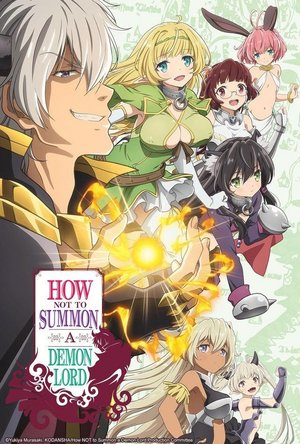
The show itself is about the main character, who plays an all-mighty powerful Demon Lord in a game in the modern world, but then gets physically summoned into this parallel fantasy world. The twist: the main character is actually stuck in the body of his character Diablo. The story follows a pretty typical plotline where the main character adapts to being in a new body, a new world, how he deals with his surroundings, and how he tackles the issues that arise.
The biggest plot point revolves around the two summoners: Rem and Shera. Each had their own reason for summoning Diablo and he even gets involved with those same issues, seeking to help them. It's insinuated incredibly well that these two young women are main characters alongside Diablo, but some issues arise. Like the slave collars that are around the women's necks should have been around Diablo's neck. The issues that these young women have are as weighty as the salve collars. Slavery is apparently legal in this world, but Diablo doesn't abuse his power and actually allows the women to do as they please, even going as far as forming a bond with both of them.
Overall, I enjoyed watching the story unfold and seeing the producers establish the difference between the modern world and the game that Diablo was experiencing. And even seeing Diablo overpower so many of the opponents he encountered throughout the world. I was entertained throughout every episode and ended up binging this in an entire night!
Generally, when you have a show like this, the characters have to carry a ton to really make the show good. In How NOT to Summon a Demon Lord, they do an exceptional job at portraying that. Diablo is a pretty solid main character, even being likable! The problem with action-packed shows like this with an overly powerful main character is that the character isn't likable and that makes the show rather boring. With this show, you do not get that vibe one bit. Diablo actually works because he's a generally nice guy at heart, never resorting to using his powers right away or even stop caring about whether or not he kills someone. His strength is evenly matched with his lack of communication and his heavy social anxiety. I mean, you get inside his head quite often and he uses both his brains and brawn to help in a rough spot, instead of just randomly firing about as most power main characters do. This really adds to the appeal of Diablo.
The other two main characters, Rem and Shera are two girls with their own reasons for summoning a powerful demon to aid them. Both are entertaining and even have their own backstories that really add to the story. Rem's backstory is a bit more emotional compared to Shera's but the watcher is able to emphasize with both excruciatingly well. Especially when all three main characters develop a sturdy friendship and gain the trust of the others. Shera is the glue that holds both Rem and Diablo together when they start doubting themselves.
There are a wide variety of antagonists and side characters that don't get a ton of focus, but they do help push the main cast and story along. These antagonists have their own goals and that causes serious conflict with the goals Diablo, Rem, and Shera have/want to do. But then there are also the side characters that are actually on the side of the three mains and do play important roles in various points of the story.
The art and visual effects were well down and it wasn't the same graphic scenes and spells as most anime's do. For instance, Diablo doesn't just spam the same spell over and over (like I do when I'm playing a game because I'm a button smasher haha) instead, he uses different attacks and spells for each occasion. The show doesn't shower blood around like it's rain *cough cough Game of Thrones cough cough*, but it does a good enough job letting the watcher know when someone gets hurt/ dies.
My final thoughts:
Overall, this was a well-done show that held the action and made the characters very likable, without rushing the story. There is comedy, action, magic, and a bit of a push on the boundary with softcore (ecchi) content but you get a good sense from the main characters and story that it's defiantly worth checking out.
I was generally worried at whether this show was going to be good or if it was going to be one of those trashy anime's that are just 'alright'. I randomly put it on as I had just finished my hundredth re-watch of Vampire Knight and was shocked. This was crafted into a rather enjoyable story that had an amazing cast of main characters. There was silliness, softcore (ecchi) content, action, and adventure.
Throughout the show, there are scenes that are deemed inappropriate and the first episode contains one of those "whoa there" scenes. I wouldn't recommend watching if you don't want somewhat sexual scenes littered throughout the show. Besides those moments, How NOT to Summon a Demon Lord is pretty fun and an enjoyable series that fits with the genre of the show.
How NOT to Summon a Demon Lord captures the whole overpowered main character but balances it with a main character that has limits to his power. There is also the whole sense of danger to those that are close to the main character. The story is told really well and wraps up nicely, leaving the ending open so that if more seasons do end up getting made it would work perfectly with continuing the story on. But if this was the end, then it ended on a good note.
You won't see much of the modern world in the show except for the very beginning. The setting is set in a parallel fantasy world (isekai) where the main character is instantly sucked into a world similar to the game that he was playing. There isn't much connection between the game world and the modern world, but it really isn't an issue as it happened early on in the show.
The show itself is about the main character, who plays an all-mighty powerful Demon Lord in a game in the modern world, but then gets physically summoned into this parallel fantasy world. The twist: the main character is actually stuck in the body of his character Diablo. The story follows a pretty typical plotline where the main character adapts to being in a new body, a new world, how he deals with his surroundings, and how he tackles the issues that arise.
The biggest plot point revolves around the two summoners: Rem and Shera. Each had their own reason for summoning Diablo and he even gets involved with those same issues, seeking to help them. It's insinuated incredibly well that these two young women are main characters alongside Diablo, but some issues arise. Like the slave collars that are around the women's necks should have been around Diablo's neck. The issues that these young women have are as weighty as the salve collars. Slavery is apparently legal in this world, but Diablo doesn't abuse his power and actually allows the women to do as they please, even going as far as forming a bond with both of them.
Overall, I enjoyed watching the story unfold and seeing the producers establish the difference between the modern world and the game that Diablo was experiencing. And even seeing Diablo overpower so many of the opponents he encountered throughout the world. I was entertained throughout every episode and ended up binging this in an entire night!
Generally, when you have a show like this, the characters have to carry a ton to really make the show good. In How NOT to Summon a Demon Lord, they do an exceptional job at portraying that. Diablo is a pretty solid main character, even being likable! The problem with action-packed shows like this with an overly powerful main character is that the character isn't likable and that makes the show rather boring. With this show, you do not get that vibe one bit. Diablo actually works because he's a generally nice guy at heart, never resorting to using his powers right away or even stop caring about whether or not he kills someone. His strength is evenly matched with his lack of communication and his heavy social anxiety. I mean, you get inside his head quite often and he uses both his brains and brawn to help in a rough spot, instead of just randomly firing about as most power main characters do. This really adds to the appeal of Diablo.
The other two main characters, Rem and Shera are two girls with their own reasons for summoning a powerful demon to aid them. Both are entertaining and even have their own backstories that really add to the story. Rem's backstory is a bit more emotional compared to Shera's but the watcher is able to emphasize with both excruciatingly well. Especially when all three main characters develop a sturdy friendship and gain the trust of the others. Shera is the glue that holds both Rem and Diablo together when they start doubting themselves.
There are a wide variety of antagonists and side characters that don't get a ton of focus, but they do help push the main cast and story along. These antagonists have their own goals and that causes serious conflict with the goals Diablo, Rem, and Shera have/want to do. But then there are also the side characters that are actually on the side of the three mains and do play important roles in various points of the story.
The art and visual effects were well down and it wasn't the same graphic scenes and spells as most anime's do. For instance, Diablo doesn't just spam the same spell over and over (like I do when I'm playing a game because I'm a button smasher haha) instead, he uses different attacks and spells for each occasion. The show doesn't shower blood around like it's rain *cough cough Game of Thrones cough cough*, but it does a good enough job letting the watcher know when someone gets hurt/ dies.
My final thoughts:
Overall, this was a well-done show that held the action and made the characters very likable, without rushing the story. There is comedy, action, magic, and a bit of a push on the boundary with softcore (ecchi) content but you get a good sense from the main characters and story that it's defiantly worth checking out.
Mandy and G.D. Burkhead (26 KP) rated Sir Apropos of Nothing in Books
May 20, 2018
Shelf Life – Sir Apropos of Nothing Skewers the Hero’s Journey
Contains spoilers, click to show
Fantasy and satire are two of my favorite genres in any medium, but especially so in books. Satirical fantasy, then, holds a special place on my shelves. I grew up on Sir Terry Pratchett’s Discworld series, and desire to imitate him and his style is what led me in middle school to begin writing in earnest, for fun, and for myself rather than just for my teachers and their assignments.
So when I picked up Sir Apropos of Nothing, I did so based on the title pun and the back-of-the-book synopsis that promised “a berserk phoenix, murderous unicorns, mutated harpies, homicidal warrior kings, and – most problematic of all – a princess who may or may not be a psychotic arsonist.” I expected another lighthearted riff on the familiar archetypes. Murderous unicorns? Unicorns are not typically described as such! Oh teehee, how unexpectedly humorous!
Sir Apropos of Nothing is a satirical fantasy, just like it promised, though at times it’s hard to tell how much of the story is played for laughs and how much is played straight. See, the thing about satire that’s easy to forget at times is that it’s not synonymous with buffoonery. Make no mistake – Apropos is a funny book, full of witty dialogue and groan-inducing puns. It’s a book that takes great delight in lampshading traditional fantasy tropes and archetypes, as well as the entirety of Joseph Campbell’s Hero’s Journey idea. But it is not always a silly lampshade; sometimes a cliche or trope is pointed out to have its inherit ridiculousness laughed at, and sometimes it is pointed out because it is causing real and lasting pain or damage, either to the society in which it is set or, more often, to the titular Apropos himself and his ever-degrading esteem of both the people around him and himself.
The tone, at first, is hard to pin down. The story starts in media res with the main character being caught by a knight while in mid-coitus with that knight’s wife and escalates from there. The second chapter opens with a fourth wall-breaking narrative admission by Apropos himself that this was done with the express purpose of catching your attention, and now we’re going back to cover Apropos’s childhood, which ends up being equal parts dark, tragic, punny, and conveniently trope-filled – all of which Apropos, as narrator, approaches with the same resigned, blasé outlook.
If this sounds a bit jarring, well, it kind of is. Early on, I wasn’t sure what to think of where the story was trying to go or what I was expected to feel about it. After the first turn from cliché to dark and visceral to light and punny, all within a few pages, I caught myself thinking, “Crap, is this book gonna try and mix goofy jokes with serious drama and thoughtful moral quandary?”
The answer is yes. And it pulls it off fantastically.
This is due in large part to the interesting depths of the antihero, Apropos, who seems to be so named purely for the joke in the title. In Apropos we see a deep sense of justice and rightness that is entirely eclipsed by an even deeper cynicism and an unshakeable instinct for self-preservation. His life is objectively terrible, but rather than brood and lament, he adjusts. He keeps his head down when he can, weathers abuse when he can’t, and learns to deal with the constant shit storm, all the while bottling his growing anger and resentment at a world that would allow such amounts of suffering and hypocrisy to go unchecked. The fact that he himself becomes a selfish, hypocritical, and generally awful person is not lost on him, and the result is a flawed, unheroic, pathetic coward of a protagonist, a magnificently multifaceted bastard who doesn’t spare even himself from his vast and withering contempt.
And it’s a blast. It really is. Apropos is refreshingly pragmatic and unabashedly pessimistic, a welcome change from the typical righteous-yet-humble heroes of traditional fantasy, or even the loveable and untalented everyman in over his head of traditional fantasy spoofs. Despite a portentous birthmark (on his ass, no less) and beginnings that are not “humble” so much as “poverty of the dirtiest kind,” Apropos is everything a hero should not be short of outright evil.
And this, as it turns out, is entirely the point. This is where the satire, funny or otherwise, really shines through. This is the crux that elevates Sir Apropos of Nothing from a generically self-aware fantasy story to an original and memorable subversion of storytelling as a whole.
Without giving too much away, there comes a point in the plot where Apropos realizes that the events surrounding his miserable life are part of a heroic tale that has been preordained by Fate and is now being epically written out by Destiny. And despite his birthmark, his tragic past, and his mother’s constant reassurances that he has some sort of great destiny hovering over him, he is not the hero. He is only a minor character. A walk-on role on the hero’s stage. A brief pit-stop along the hero’s journey. An NPC whose dreams, desires, and continued existence are so far below importance to the story as to be utterly negligible.
And once this finally clicks with him, he violently, brazenly rebels against it. He gives an emphatic middle finger to Fate’s ideas and sets about making Destiny sit up and take notice of him again. He momentarily and violently overcomes his own abject cowardice just long enough to find a way to completely wreck the traditional heroic ballad in which he lives, all on the basis that, dammit, the world owes him more than this, and nobody should be so miserably cursed as to live their entire life as a foil character.
At this point in my own reading, I didn’t know whether to cheer him on or worry about the repercussions of his actions, because he doesn’t suddenly become heroic when this happens. He’s exactly as much of a selfish, lying bastard as before, and however bad you feel for him, you can completely understand why he was never cast for this role in the first place. Add to this the complete disregard of the author for following what seems to be the obvious progression of events in favor of twists that take you completely by surprise, but still make complete sense and arise organically from the story itself, and you eventually give up thinking that you have any sense of where the story’s going or how any event is going to play out. From beginning to end, it feeds you familiar ideas and then completely subverts them, introduces clichés and then proceeds to tear them apart, and you laugh and pity and feel something the entire way through.
In short, Sir Apropos of Nothing is a book that will keep you turning page after page – not necessarily because of the gripping drama (although it has that) or because of any breezy humor (although it has that too), or because the narration itself oozes suspense (although it often does), but because, with the rapid infusion of new and creative ideas and the hidden depths of character constantly bubbling to the surface in everyone involved, you honestly never know what’s going to happen next. If you like fantasy and can stand to have your expectations messed with, Apropos is certainly apropos.
So when I picked up Sir Apropos of Nothing, I did so based on the title pun and the back-of-the-book synopsis that promised “a berserk phoenix, murderous unicorns, mutated harpies, homicidal warrior kings, and – most problematic of all – a princess who may or may not be a psychotic arsonist.” I expected another lighthearted riff on the familiar archetypes. Murderous unicorns? Unicorns are not typically described as such! Oh teehee, how unexpectedly humorous!
Sir Apropos of Nothing is a satirical fantasy, just like it promised, though at times it’s hard to tell how much of the story is played for laughs and how much is played straight. See, the thing about satire that’s easy to forget at times is that it’s not synonymous with buffoonery. Make no mistake – Apropos is a funny book, full of witty dialogue and groan-inducing puns. It’s a book that takes great delight in lampshading traditional fantasy tropes and archetypes, as well as the entirety of Joseph Campbell’s Hero’s Journey idea. But it is not always a silly lampshade; sometimes a cliche or trope is pointed out to have its inherit ridiculousness laughed at, and sometimes it is pointed out because it is causing real and lasting pain or damage, either to the society in which it is set or, more often, to the titular Apropos himself and his ever-degrading esteem of both the people around him and himself.
The tone, at first, is hard to pin down. The story starts in media res with the main character being caught by a knight while in mid-coitus with that knight’s wife and escalates from there. The second chapter opens with a fourth wall-breaking narrative admission by Apropos himself that this was done with the express purpose of catching your attention, and now we’re going back to cover Apropos’s childhood, which ends up being equal parts dark, tragic, punny, and conveniently trope-filled – all of which Apropos, as narrator, approaches with the same resigned, blasé outlook.
If this sounds a bit jarring, well, it kind of is. Early on, I wasn’t sure what to think of where the story was trying to go or what I was expected to feel about it. After the first turn from cliché to dark and visceral to light and punny, all within a few pages, I caught myself thinking, “Crap, is this book gonna try and mix goofy jokes with serious drama and thoughtful moral quandary?”
The answer is yes. And it pulls it off fantastically.
This is due in large part to the interesting depths of the antihero, Apropos, who seems to be so named purely for the joke in the title. In Apropos we see a deep sense of justice and rightness that is entirely eclipsed by an even deeper cynicism and an unshakeable instinct for self-preservation. His life is objectively terrible, but rather than brood and lament, he adjusts. He keeps his head down when he can, weathers abuse when he can’t, and learns to deal with the constant shit storm, all the while bottling his growing anger and resentment at a world that would allow such amounts of suffering and hypocrisy to go unchecked. The fact that he himself becomes a selfish, hypocritical, and generally awful person is not lost on him, and the result is a flawed, unheroic, pathetic coward of a protagonist, a magnificently multifaceted bastard who doesn’t spare even himself from his vast and withering contempt.
And it’s a blast. It really is. Apropos is refreshingly pragmatic and unabashedly pessimistic, a welcome change from the typical righteous-yet-humble heroes of traditional fantasy, or even the loveable and untalented everyman in over his head of traditional fantasy spoofs. Despite a portentous birthmark (on his ass, no less) and beginnings that are not “humble” so much as “poverty of the dirtiest kind,” Apropos is everything a hero should not be short of outright evil.
And this, as it turns out, is entirely the point. This is where the satire, funny or otherwise, really shines through. This is the crux that elevates Sir Apropos of Nothing from a generically self-aware fantasy story to an original and memorable subversion of storytelling as a whole.
Without giving too much away, there comes a point in the plot where Apropos realizes that the events surrounding his miserable life are part of a heroic tale that has been preordained by Fate and is now being epically written out by Destiny. And despite his birthmark, his tragic past, and his mother’s constant reassurances that he has some sort of great destiny hovering over him, he is not the hero. He is only a minor character. A walk-on role on the hero’s stage. A brief pit-stop along the hero’s journey. An NPC whose dreams, desires, and continued existence are so far below importance to the story as to be utterly negligible.
And once this finally clicks with him, he violently, brazenly rebels against it. He gives an emphatic middle finger to Fate’s ideas and sets about making Destiny sit up and take notice of him again. He momentarily and violently overcomes his own abject cowardice just long enough to find a way to completely wreck the traditional heroic ballad in which he lives, all on the basis that, dammit, the world owes him more than this, and nobody should be so miserably cursed as to live their entire life as a foil character.
At this point in my own reading, I didn’t know whether to cheer him on or worry about the repercussions of his actions, because he doesn’t suddenly become heroic when this happens. He’s exactly as much of a selfish, lying bastard as before, and however bad you feel for him, you can completely understand why he was never cast for this role in the first place. Add to this the complete disregard of the author for following what seems to be the obvious progression of events in favor of twists that take you completely by surprise, but still make complete sense and arise organically from the story itself, and you eventually give up thinking that you have any sense of where the story’s going or how any event is going to play out. From beginning to end, it feeds you familiar ideas and then completely subverts them, introduces clichés and then proceeds to tear them apart, and you laugh and pity and feel something the entire way through.
In short, Sir Apropos of Nothing is a book that will keep you turning page after page – not necessarily because of the gripping drama (although it has that) or because of any breezy humor (although it has that too), or because the narration itself oozes suspense (although it often does), but because, with the rapid infusion of new and creative ideas and the hidden depths of character constantly bubbling to the surface in everyone involved, you honestly never know what’s going to happen next. If you like fantasy and can stand to have your expectations messed with, Apropos is certainly apropos.

Purple Phoenix Games (2266 KP) rated Gift of Tulips in Tabletop Games
Mar 2, 2021
Admittedly, I have never attended a tulip festival. Nor a Renaissance faire. Nor many other festivals that are niche and awesome. I would love to attend one in the future, but I cannot see myself traveling all the way to Amsterdam for the great Tulip Festival. Luckily, I no longer need to, as Gift of Tulips has arrived to my doorstep! But someone please invite me to a Ren Faire when we are able to commune once again.
Gift of Tulips is a game of choices. In it players are attendees at the festival attempting to gather the most beautiful bouquet of flowers for themselves as well as gifting some to friends. The winner of the game is the player who can best decide which tulips should be kept, which should be gifted, and which should be donated to the secret festival.
DISCLAIMER: We were provided a prototype copy of this game for the purposes of this review. These are preview copy components, and I do not know for sure if the final components will be any different from these shown. Also, it is not my intention to detail every rule in the game, as there are just too many. You are invited to download the rulebook, back the game through the Kickstarter campaign, or through any retailers stocking it after fulfillment. -T
To setup refer to the rulebook to adjust the deck of tulip cards per number of players. Shuffle this deck and place aside for now. Each player receives a scoring card, reference card, favorite color player cube, and two tulip cards from the deck. Per number of players set the appropriate Festival Cards on the table from 1st Place through 4th Place. Draw two cards from the deck and place the highest-numbered card under the 1st Place Festival Card and the lower valued tulip card under 2nd Place. Each player then looks at their dealt cards and decides which they would like to keep to start their personal bouquet and which they wish to donate face-down to the secret festival stack. The game is now ready to begin!
On a turn the active player will draw one card from the deck and then perform one action. Next they will draw a second card and perform a different action (not the same action as the first). The available actions are keeping a tulip for the bouquet, gifting the tulip to a friend, or adding a card to either the festival or the secret festival stack.
Keeping a tulip for the player’s bouquet is simply that: place the card face-up in front of the player and score immediate points depending on the tulip type’s position in the festival. This is also important when scoring for gifting. As tulips are added to their types in the festival, their placement in the festival can change. So while a purple tulip, for example, begins the game as the highest numbered tulip in the 1st position, another tulip type, orange maybe, may possibly overtake the 1st position cards by having a larger total value in tulips. When this happens, the newly-increased-in-rank tulip stack pushes the next highest into the lower position. Each position’s festival card will contain icons that award points for when that type of tulip is kept, given, and when majority of cards is owned at endgame.
Similarly, when a player opts to gift a tulip for an action, they simply choose an opponent (well, friend) and give them the card. By referencing the tulip type’s current position in the festival the player may score immediate points.
Lastly the player may choose to donate their tulip to the festival (face-up under the Festival Cards or face-down into the secret festival stack). By donating to the festival proper they will add the card to the appropriate type stack and adjust the total value and position within the festival. Should the player wish to add the card to the secret festival stack, they simply add it face-down.
Once all cards have been drawn and played from the deck the game is over and final scoring may begin. Firstly the secret festival cards are to be shuffled and five from this deck will be added to the festival proper to fine-tune some value adjustments (so that is why players may want to add to the secret festival during play). Once the five cards have been added players will address each tulip type by placement in the festival. The tulip type under the 1st Place card will score majority points to the player with the majority of that type of card (not value, but number of flowers). Similarly, the player with the second most of that type will score the second majority and so on through 4th Place. The player with the most points at the end of the game has won and will now owe the other players a bouquet of real flowers. Well, maybe not that last part.
Components. Again, this is a prototype copy of the game so components may be different as a result of a successful Kickstarter campaign. That said, this is a bunch of cards and some token markers (cubes in the prototype). The cards all feature incredible botanical artwork that is simply beautiful to behold. The card backs and Festival Cards all feature a lovely delftware pattern from the Netherlands. The artwork on this game is amazing and really colorful, like so many from Weird Giraffe Games.
But do I enjoy the gameplay? Absolutely. It reminds my wife and me of a great little game called Biblios where players are choosing where to allocate cards, and are not allowed to simply gobble them for themselves. Being able to adjust the market, if you will, is also a mechanic that I truly enjoy. A static market is fine, but those kinds of games are a little easier to abuse. Constantly shifting markets is where it’s at.
Being able to gift your opponents higher cards for those immediate points is new and clever, but you have to always be keeping track of the number of cards given per type. Obviously shuffling all your blue tulips to the same person may result in that person holding majority at endgame. But then again, there are ways to adjust the market to counter that. It is just so fun to think about and play.
I also am in love with the art. I mentioned this in my components review but I simply love the way this game looks. Art and theme go a long way with me, and this one certainly has both in spades.
So if you are a fan of beautiful games with a quick teach and light to medium gameplay, I urge you to check this out. The art and theme are strong, the gameplay is super solid and fun, and you feel great donating so many lovely flowers at the end of the game. If you are looking for that gorgeous game to complete your collection, or you need a game to fill that empty Netherlands slot in your collection, please consider backing Gift of Tulips. When you have a game that uses both orange and purple as main colors you KNOW it’s going to be great!
Gift of Tulips is a game of choices. In it players are attendees at the festival attempting to gather the most beautiful bouquet of flowers for themselves as well as gifting some to friends. The winner of the game is the player who can best decide which tulips should be kept, which should be gifted, and which should be donated to the secret festival.
DISCLAIMER: We were provided a prototype copy of this game for the purposes of this review. These are preview copy components, and I do not know for sure if the final components will be any different from these shown. Also, it is not my intention to detail every rule in the game, as there are just too many. You are invited to download the rulebook, back the game through the Kickstarter campaign, or through any retailers stocking it after fulfillment. -T
To setup refer to the rulebook to adjust the deck of tulip cards per number of players. Shuffle this deck and place aside for now. Each player receives a scoring card, reference card, favorite color player cube, and two tulip cards from the deck. Per number of players set the appropriate Festival Cards on the table from 1st Place through 4th Place. Draw two cards from the deck and place the highest-numbered card under the 1st Place Festival Card and the lower valued tulip card under 2nd Place. Each player then looks at their dealt cards and decides which they would like to keep to start their personal bouquet and which they wish to donate face-down to the secret festival stack. The game is now ready to begin!
On a turn the active player will draw one card from the deck and then perform one action. Next they will draw a second card and perform a different action (not the same action as the first). The available actions are keeping a tulip for the bouquet, gifting the tulip to a friend, or adding a card to either the festival or the secret festival stack.
Keeping a tulip for the player’s bouquet is simply that: place the card face-up in front of the player and score immediate points depending on the tulip type’s position in the festival. This is also important when scoring for gifting. As tulips are added to their types in the festival, their placement in the festival can change. So while a purple tulip, for example, begins the game as the highest numbered tulip in the 1st position, another tulip type, orange maybe, may possibly overtake the 1st position cards by having a larger total value in tulips. When this happens, the newly-increased-in-rank tulip stack pushes the next highest into the lower position. Each position’s festival card will contain icons that award points for when that type of tulip is kept, given, and when majority of cards is owned at endgame.
Similarly, when a player opts to gift a tulip for an action, they simply choose an opponent (well, friend) and give them the card. By referencing the tulip type’s current position in the festival the player may score immediate points.
Lastly the player may choose to donate their tulip to the festival (face-up under the Festival Cards or face-down into the secret festival stack). By donating to the festival proper they will add the card to the appropriate type stack and adjust the total value and position within the festival. Should the player wish to add the card to the secret festival stack, they simply add it face-down.
Once all cards have been drawn and played from the deck the game is over and final scoring may begin. Firstly the secret festival cards are to be shuffled and five from this deck will be added to the festival proper to fine-tune some value adjustments (so that is why players may want to add to the secret festival during play). Once the five cards have been added players will address each tulip type by placement in the festival. The tulip type under the 1st Place card will score majority points to the player with the majority of that type of card (not value, but number of flowers). Similarly, the player with the second most of that type will score the second majority and so on through 4th Place. The player with the most points at the end of the game has won and will now owe the other players a bouquet of real flowers. Well, maybe not that last part.
Components. Again, this is a prototype copy of the game so components may be different as a result of a successful Kickstarter campaign. That said, this is a bunch of cards and some token markers (cubes in the prototype). The cards all feature incredible botanical artwork that is simply beautiful to behold. The card backs and Festival Cards all feature a lovely delftware pattern from the Netherlands. The artwork on this game is amazing and really colorful, like so many from Weird Giraffe Games.
But do I enjoy the gameplay? Absolutely. It reminds my wife and me of a great little game called Biblios where players are choosing where to allocate cards, and are not allowed to simply gobble them for themselves. Being able to adjust the market, if you will, is also a mechanic that I truly enjoy. A static market is fine, but those kinds of games are a little easier to abuse. Constantly shifting markets is where it’s at.
Being able to gift your opponents higher cards for those immediate points is new and clever, but you have to always be keeping track of the number of cards given per type. Obviously shuffling all your blue tulips to the same person may result in that person holding majority at endgame. But then again, there are ways to adjust the market to counter that. It is just so fun to think about and play.
I also am in love with the art. I mentioned this in my components review but I simply love the way this game looks. Art and theme go a long way with me, and this one certainly has both in spades.
So if you are a fan of beautiful games with a quick teach and light to medium gameplay, I urge you to check this out. The art and theme are strong, the gameplay is super solid and fun, and you feel great donating so many lovely flowers at the end of the game. If you are looking for that gorgeous game to complete your collection, or you need a game to fill that empty Netherlands slot in your collection, please consider backing Gift of Tulips. When you have a game that uses both orange and purple as main colors you KNOW it’s going to be great!