
Search

ViaMichelin GPS, Route Planner
Navigation and Lifestyle
App
Discover all the ViaMichelin experience and know-how at the heart of its free application (no...

Gareth von Kallenbach (980 KP) rated Concussion (2015) in Movies
Aug 6, 2019
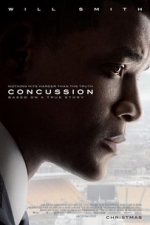


Concussion has quite a few big names starring in it, as well as a few I
had never heard of.
The main cast is as follows: Will Smith as Dr. Bennet Omalu, Gugu
Mbatha-Raw as Prema Mutiso, Alec Baldwin as Dr. Julian Bailes, Albert
Brooks as Dr. Cyril Wecht, David Morse
as Mike Webster, Matthew Willig as Justin Strezelczyk, Paul Reiser as
Dr. Elliot Pellman, Arliss Howard as Dr. Joseph Maroon, Luke Wilson as
Roger Goodell, Mike O’Malley as Daniel Sullivan, Hill Harper as Spellman
Jones, Eddie Marsan as Dr. Steven DeKosky, Stephen Moyer as Dr. Ron
Hamilton, and Adewale Akinnuoye-Agbaje as Dave Duerson.
Dr. Bennet Omalu works at the Pittsburgh coroner’s office as a forensic
pathologist along with Dr. Cyril Wecht and Daniel Sullivan. Omalu, a
highly educated Doctor hailing from Nigeria, strives to stride in the
footsteps of Dr. Wecht, and must contend with the derision thrown his
way by Sullivan.
Based on true events, the story follows Omalu in his quest to find out
the true cause of death of “Iron Mike” Webster, and subsequently team
mates and other football players that seem to go crazy for no obvious
reason.
Will Smith takes this role and immerses himself in it. His accent is
believable, his mannerisms are believable, his portrayal of the
character as a whole drew me and made me BELIEVE it.
The supporting cast are all really really great as well. Gugu Mbatha-Raw
as Smiths love interest, Prema is probably one of the quietest
characters in the movie, yet she portrays herself as Omalu’s staunch
supporter straight through the whole film.
Albert Brooks as Dr. Cyril Wecht gave a brilliant performance as a cut
and dry no-nonsense Chief Medical Examiner as well. He supports Omalu’s
research even when he must see that it may be detrimental to his own
career, and indeed, in the end, his support of Omalu does almost cost
him his entire career.
Dr. Omalus research, spending his own money to run testing in order to
find the cause of death of Mike Webster, puts him directly in the
crosshairs of the NFL. His subsequent discovery of and diagnoses of CTE
(Chronic Traumatic Encephalopathy) in Webster, and other NFL players
that died by their own hands or in tragic accidents due to basically
going crazy, threatened the NFL and its entire existence, or so they
thought.
Alec Baldwin gives a great performance as a man struggling between his
love of a sport and his guilt over sending players back into a game when
they were hurt. Early in the film he is shown to say “what am I
missing”. He has run the tests he knows to run, but cannot get to the
bottom of what is clearly affecting his players. He helps Dr. Omalu in
his quest to bring the truth before the NFL and the media and the
public.
Adewale Akinnuoye-Agbaje as Dave Duerson has only brief moments on film,
but his contribution to the movie and his final contribution to Omalus
research at the time of his death, helps bring CTE to the forefront of
the media eye, which in turn forces the NFL to address the findings, at
least ion some level.
Will Smith is up for a Golden Globe for his role in this film and I have
to say that in my opinion it is well deserved.
I loved the movie, it had my full attention from beginning to end, and I
thought that it was very well done. It showed the seedy underside of the
NFL and the extents to which big multi-million dollar companies will go
to in order to hide any truths that might threaten their way of doing
business. During the movie I murmured under my breath to my husband
“This reminds me of the crap the tobacco industry pulled when it was
trying to deny that cigarette smoking causes lung cancer”, and I was not
surprised when in some of the later clips there were voice overs heard
from a congressional hearing basically saying the same thing.
I would give this movie 5 out of 5 stars.
had never heard of.
The main cast is as follows: Will Smith as Dr. Bennet Omalu, Gugu
Mbatha-Raw as Prema Mutiso, Alec Baldwin as Dr. Julian Bailes, Albert
Brooks as Dr. Cyril Wecht, David Morse
as Mike Webster, Matthew Willig as Justin Strezelczyk, Paul Reiser as
Dr. Elliot Pellman, Arliss Howard as Dr. Joseph Maroon, Luke Wilson as
Roger Goodell, Mike O’Malley as Daniel Sullivan, Hill Harper as Spellman
Jones, Eddie Marsan as Dr. Steven DeKosky, Stephen Moyer as Dr. Ron
Hamilton, and Adewale Akinnuoye-Agbaje as Dave Duerson.
Dr. Bennet Omalu works at the Pittsburgh coroner’s office as a forensic
pathologist along with Dr. Cyril Wecht and Daniel Sullivan. Omalu, a
highly educated Doctor hailing from Nigeria, strives to stride in the
footsteps of Dr. Wecht, and must contend with the derision thrown his
way by Sullivan.
Based on true events, the story follows Omalu in his quest to find out
the true cause of death of “Iron Mike” Webster, and subsequently team
mates and other football players that seem to go crazy for no obvious
reason.
Will Smith takes this role and immerses himself in it. His accent is
believable, his mannerisms are believable, his portrayal of the
character as a whole drew me and made me BELIEVE it.
The supporting cast are all really really great as well. Gugu Mbatha-Raw
as Smiths love interest, Prema is probably one of the quietest
characters in the movie, yet she portrays herself as Omalu’s staunch
supporter straight through the whole film.
Albert Brooks as Dr. Cyril Wecht gave a brilliant performance as a cut
and dry no-nonsense Chief Medical Examiner as well. He supports Omalu’s
research even when he must see that it may be detrimental to his own
career, and indeed, in the end, his support of Omalu does almost cost
him his entire career.
Dr. Omalus research, spending his own money to run testing in order to
find the cause of death of Mike Webster, puts him directly in the
crosshairs of the NFL. His subsequent discovery of and diagnoses of CTE
(Chronic Traumatic Encephalopathy) in Webster, and other NFL players
that died by their own hands or in tragic accidents due to basically
going crazy, threatened the NFL and its entire existence, or so they
thought.
Alec Baldwin gives a great performance as a man struggling between his
love of a sport and his guilt over sending players back into a game when
they were hurt. Early in the film he is shown to say “what am I
missing”. He has run the tests he knows to run, but cannot get to the
bottom of what is clearly affecting his players. He helps Dr. Omalu in
his quest to bring the truth before the NFL and the media and the
public.
Adewale Akinnuoye-Agbaje as Dave Duerson has only brief moments on film,
but his contribution to the movie and his final contribution to Omalus
research at the time of his death, helps bring CTE to the forefront of
the media eye, which in turn forces the NFL to address the findings, at
least ion some level.
Will Smith is up for a Golden Globe for his role in this film and I have
to say that in my opinion it is well deserved.
I loved the movie, it had my full attention from beginning to end, and I
thought that it was very well done. It showed the seedy underside of the
NFL and the extents to which big multi-million dollar companies will go
to in order to hide any truths that might threaten their way of doing
business. During the movie I murmured under my breath to my husband
“This reminds me of the crap the tobacco industry pulled when it was
trying to deny that cigarette smoking causes lung cancer”, and I was not
surprised when in some of the later clips there were voice overs heard
from a congressional hearing basically saying the same thing.
I would give this movie 5 out of 5 stars.

Lottie disney bookworm (1056 KP) rated Let It Go: A Frozen Twisted Tale in Books
Aug 20, 2019
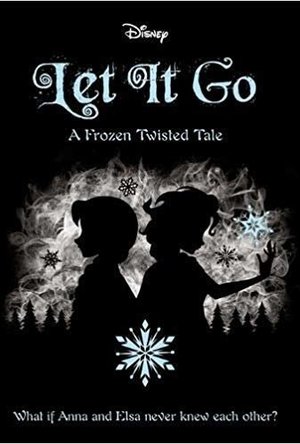

“What if Anna and Elsa never knew each other?”
I did it again! A new shiny twisted tale came out and I let it jump to the top of my TBR pile! I’m weak!
Let It Go is the latest instalment in the twisted tale’s series and explores how Anna and Elsa’s story would play out if a magical accident caused the two sisters to be cursed.
As always, Jen Calonita writes this very well: drip feeding us information by opening the novel on eighteen-year-old Elsa shadowing her parents’ royal duties and preparing to become a leader when she comes of age.
It is quite refreshing for the reader to meet the King and Queen of Arendelle: they didn’t have much depth in the movie but Jen Calonita presents an intimidating yet loving King with his kind and gentle Queen. They are both, however, marred by a melancholy which even Elsa cannot fathom; the Queen in particular has an air of sadness around her and has a habit of taking mysterious day trips, always alone.
Elsa is an adoring daughter and will clearly be a benevolent Queen as she follows in her father’s footsteps. She is, however, lonely and has always pined for someone of her own age for company: she has always wished for a sister. It isn’t until Elsa overhears an argument between her parents that she begins to question the life around her.
Unlike other books in the twisted tale’s franchise we aren’t introduced to any new characters apart from the King and Queen. There are a few servants who have minor roles but no one who has a real impact upon the story. Instead, Let It Go focuses on all the characters we already love: I really liked how Jen Calonita included everybody, even the irritating Duke of Weselton. True to form though, the characters don’t meet quite as they did in the movie. Hans and Olaf meet Elsa first whereas Anna and Kristoff are acquaintances in Anna’s “cursed” life. In truth I preferred Anna and Kristoff’s relationship in this novel as it seemed more realistic, with Kristoff being irritated by Anna’s stubbornness and incessant chatter.
Like I mentioned, Calonita isn’t forthcoming with information regarding the curse and it is only with the help of a certain troll that we learn the details of how Elsa and Anna were parted as well as the severity of the curse that has been placed upon them: if they come too close to each other Elsa’s powers will freeze Anna.
I did appreciate how Calonita didn’t just settle for a storyline that the girls had to be kept apart to avoid further accidents and the impossible, heat-wrenching decision for their parents is beautifully written. I also liked how the curse came about due to the sheer love between the sisters and specifically, Elsa’s defiance to lose their special bond and friendship.
In fact, I loved how the twist is all about the sister’s love for each other: the red herring of true love’s kiss is not even considered.
Unfortunately, my enthusiasm for the book didn’t continue all the way through to the conclusion as the second half seemed to mirror the film a lot. Don’t get me wrong I absolutely loved the little references to the film all the way through the book, as I do with all the twisted tales. However, towards the end Let It Go felt like it was just writing out the movie, with a few characters in different locations. For this reason, I did feel the ending was a little lacklustre.
Overall Let It Go is an enjoyable, easy read. Anna’s flashbacks provide an insight into the childhood of the princesses that we don’t get in the film and my favourite, Olaf, plays a more important role than that of dismembered tour guide. For me, the second half of the book was not as gripping and more of a retelling of the film but it is still a good addition to the twisted tale franchise.
I did it again! A new shiny twisted tale came out and I let it jump to the top of my TBR pile! I’m weak!
Let It Go is the latest instalment in the twisted tale’s series and explores how Anna and Elsa’s story would play out if a magical accident caused the two sisters to be cursed.
As always, Jen Calonita writes this very well: drip feeding us information by opening the novel on eighteen-year-old Elsa shadowing her parents’ royal duties and preparing to become a leader when she comes of age.
It is quite refreshing for the reader to meet the King and Queen of Arendelle: they didn’t have much depth in the movie but Jen Calonita presents an intimidating yet loving King with his kind and gentle Queen. They are both, however, marred by a melancholy which even Elsa cannot fathom; the Queen in particular has an air of sadness around her and has a habit of taking mysterious day trips, always alone.
Elsa is an adoring daughter and will clearly be a benevolent Queen as she follows in her father’s footsteps. She is, however, lonely and has always pined for someone of her own age for company: she has always wished for a sister. It isn’t until Elsa overhears an argument between her parents that she begins to question the life around her.
Unlike other books in the twisted tale’s franchise we aren’t introduced to any new characters apart from the King and Queen. There are a few servants who have minor roles but no one who has a real impact upon the story. Instead, Let It Go focuses on all the characters we already love: I really liked how Jen Calonita included everybody, even the irritating Duke of Weselton. True to form though, the characters don’t meet quite as they did in the movie. Hans and Olaf meet Elsa first whereas Anna and Kristoff are acquaintances in Anna’s “cursed” life. In truth I preferred Anna and Kristoff’s relationship in this novel as it seemed more realistic, with Kristoff being irritated by Anna’s stubbornness and incessant chatter.
Like I mentioned, Calonita isn’t forthcoming with information regarding the curse and it is only with the help of a certain troll that we learn the details of how Elsa and Anna were parted as well as the severity of the curse that has been placed upon them: if they come too close to each other Elsa’s powers will freeze Anna.
I did appreciate how Calonita didn’t just settle for a storyline that the girls had to be kept apart to avoid further accidents and the impossible, heat-wrenching decision for their parents is beautifully written. I also liked how the curse came about due to the sheer love between the sisters and specifically, Elsa’s defiance to lose their special bond and friendship.
In fact, I loved how the twist is all about the sister’s love for each other: the red herring of true love’s kiss is not even considered.
Unfortunately, my enthusiasm for the book didn’t continue all the way through to the conclusion as the second half seemed to mirror the film a lot. Don’t get me wrong I absolutely loved the little references to the film all the way through the book, as I do with all the twisted tales. However, towards the end Let It Go felt like it was just writing out the movie, with a few characters in different locations. For this reason, I did feel the ending was a little lacklustre.
Overall Let It Go is an enjoyable, easy read. Anna’s flashbacks provide an insight into the childhood of the princesses that we don’t get in the film and my favourite, Olaf, plays a more important role than that of dismembered tour guide. For me, the second half of the book was not as gripping and more of a retelling of the film but it is still a good addition to the twisted tale franchise.

Purple Phoenix Games (2266 KP) rated Tokyo Highway in Tabletop Games
Oct 30, 2021


Living in Iowa/Illinois, the saying is that we only have 2 seasons: winter and road construction. Our winters can certainly be brutal, and our road workers and civil engineers deserve major props for the work they do for our communities! Let’s put ourselves in their shoes for a minute. Can you design a structurally secure overpass? How about figuring out the logistics to create an underpass? If a part of your roadway is damaged, can you fix it without causing further harm? These are all things that you must consider in the minimalistic game of Tokyo Highway.
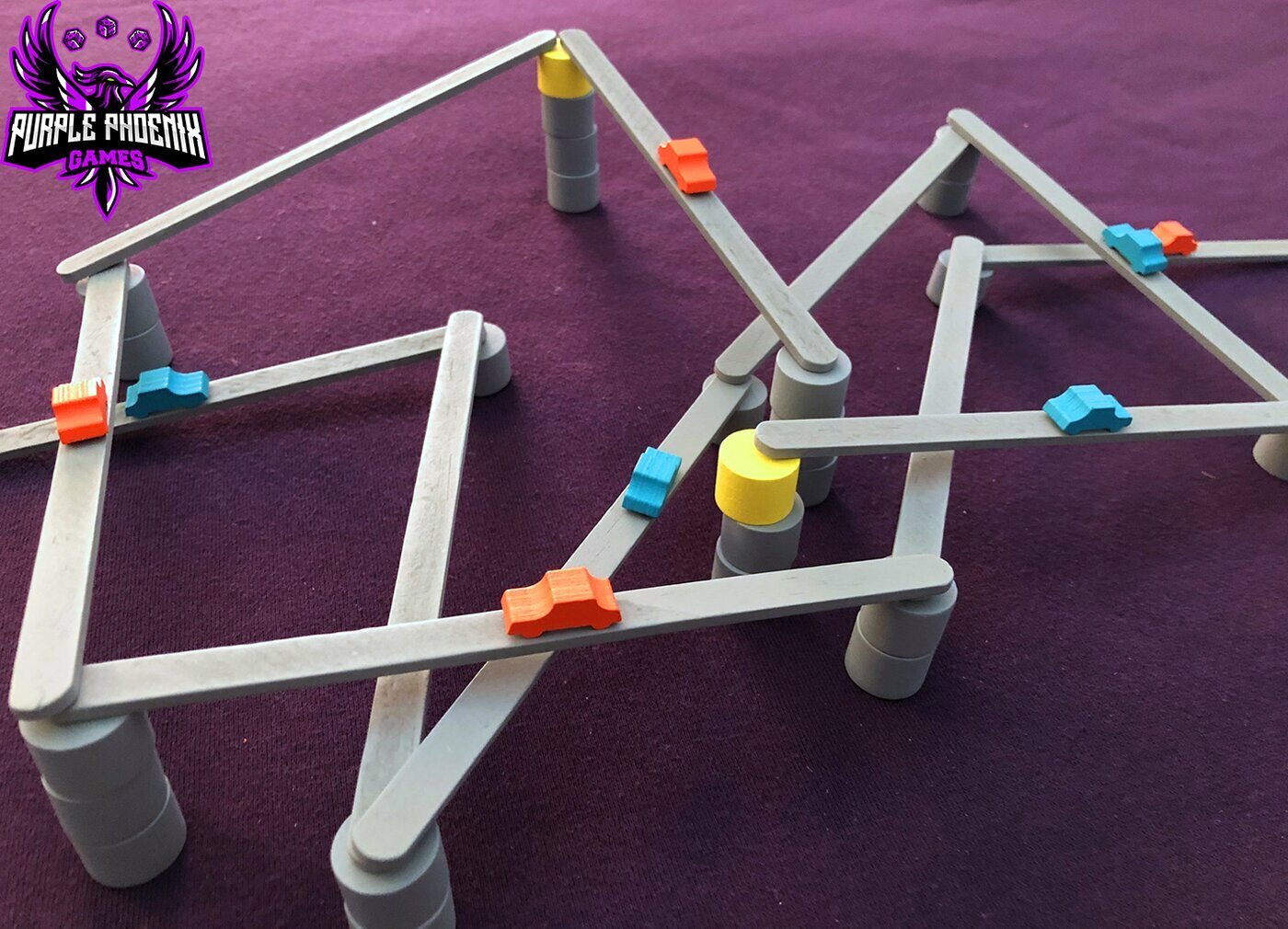
Tokyo Highway is a dexterity game of route building in which players are trying to create a roadway on which their cars will travel. The first player to place all of their cars on the highway is the winner. Originally, Tokyo Highway was for only 2 players, but an expansion has come out to accommodate up to 4 players. This review will address all player counts! To begin the game, hand out components and set up as described in the rulebook for your chosen player count. Select a starting player, and you are ready to begin.
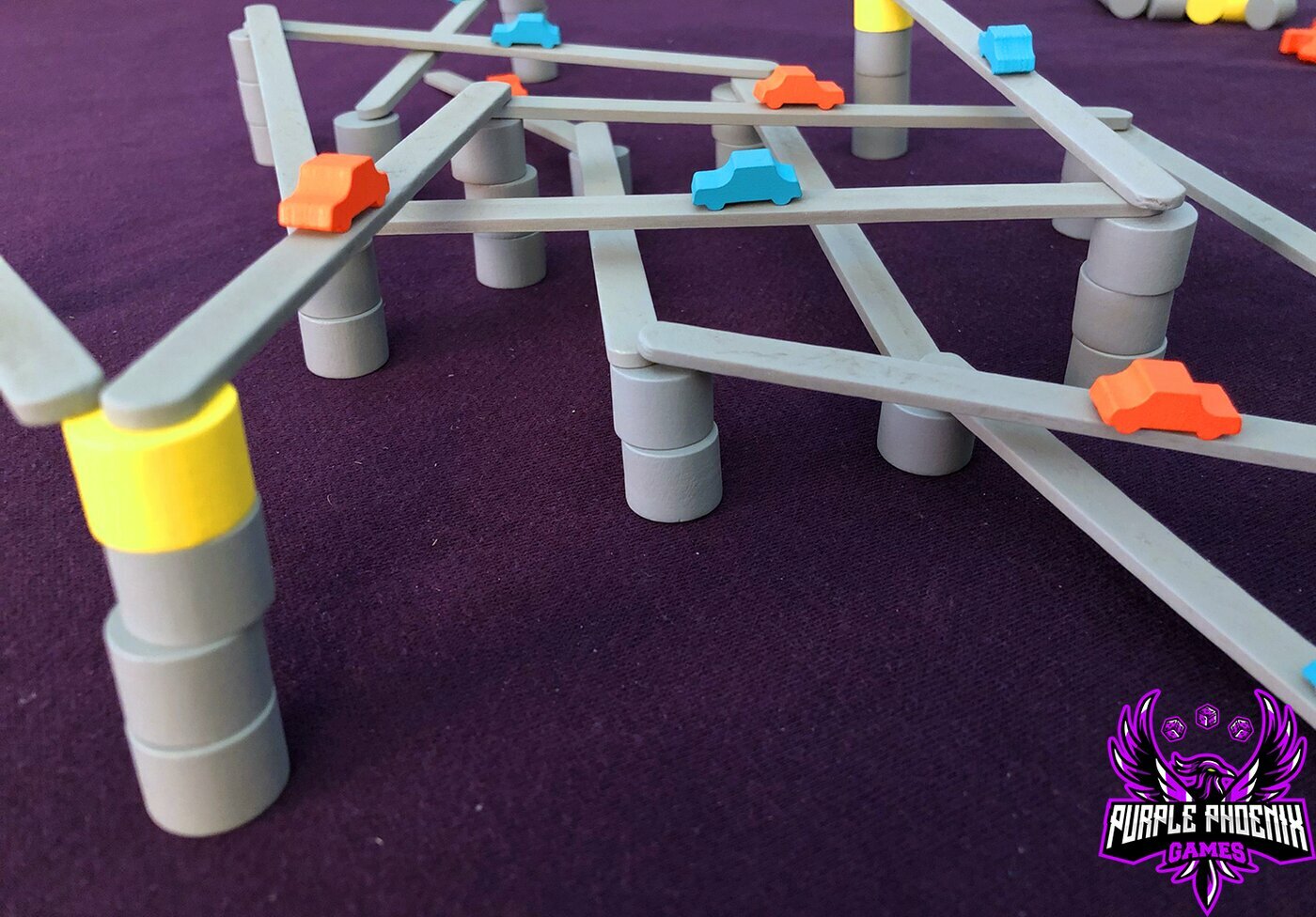
On your turn, you will perform 3 actions: build a column, build a road, and place a car. When building a column, there are 2 things to remember – the column must create a continuation of your existing road, and it must be built exactly 1 level above or 1 level below the column from which it is based. For example, to play off of a column with a height of 2, you must either play a height of 1 or a height of 3. To build a road, take one of your road sticks and place it on the columns so it connects the newly built column to its predecessor. The last part of your turn is to place a car on your road stick, if you have met the placement requirements. The requirements for placing a car are that your new section of road must cross an opponent’s road, either by being the first road to cross over it, or being the first road to cross under it. You may place additional cars on your road stick for additional roads that your segment crosses above/below.
There are a couple of twists in the game, though! First, each player begins the game with a certain amount of Junctions. When you choose to play a Junction, you are allowed to create a column of any height, regardless of the height of its predecessor. Another special power of Junctions is that once you place a Junction, you have the option to branch 2 roads from that single point, instead of only 1 like with regular columns. The other twist? If at any point during your turn, you knock over an opponents’ cars, roads, or columns, you are penalized and must give that opponent the number of equivalent pieces that were toppled from your own personal supply. You then fix the damage, and continue your turn as normal. The game end is triggered when either 1 player has placed all of their cars, or when a player runs out of construction components. The player who places all of their cars first is the winner, or a player that runs out of components loses the game and the other players continue until the game end is triggered again.
For such a seemingly simple game, Tokyo Highway challenges players on 2 fronts: dexterity and strategy. Obviously, your dexterity is put to the test as you try to move steadily, build secure roads, and not topple over any other components in play. It really is harder than it looks, and creates a good physical challenge for players. Strategy comes into play because you have to plan turns in advance and try to anticipate your opponent’s movements in order to create opportunities to place your cars. You’ve got to strategize where you want to build under or over, and then set yourself up for those builds. But you’ve also got to keep an eye on your opponent, because they might unknowingly (or purposefully…) disrupt your strategy with a placement of their own. Players are never idle in this game, everyone is engaged throughout as they plan ahead for success.
My biggest qualm with Tokyo Highway are the rules regarding knocking down roadways on your turn. According to the rules, if you knock anything down, you forfeit components from your supply, and then rebuild the destroyed area. However, as the game progresses and gets more intricate, with roads crossing very tightly together, one misstep could destroy nearly the entire structure. And it is difficult to rebuild since the highway placements vary with literally every turn, and unless you take a picture after every turn, chances are you can’t recreate it from memory. At that point, continuing the game is futile, and then who wins? You either have to restart the game, or just call it then and end it.
The components of Tokyo Highway are pretty great. Everything is sturdy and wooden, and will definitely withstand the test of time. They feel great in hand and are simply just fun to fiddle with between turns! It is a simple and minimalistic game overall, and the components reflect that wonderfully.
So overall, how is Tokyo Highway? I think it is a game with a nearly perfect balance of dexterity and strategy. You must employ both of those to succeed, because focusing on only one will get you nowhere. It definitely offers more than meets the eye, and that is a fun surprise. There is no set game board or layout, so literally every game will be different, allowing for seemingly infinite replayability. It is definitely a game that keeps players engaged and on their toes. Although there are a few issues regarding dexterity ‘accidents,’ the gameplay overall flows well and is logical. Purple Phoenix Games gives Tokyo Highway a speedy 8 / 12.
Tokyo Highway is a dexterity game of route building in which players are trying to create a roadway on which their cars will travel. The first player to place all of their cars on the highway is the winner. Originally, Tokyo Highway was for only 2 players, but an expansion has come out to accommodate up to 4 players. This review will address all player counts! To begin the game, hand out components and set up as described in the rulebook for your chosen player count. Select a starting player, and you are ready to begin.
On your turn, you will perform 3 actions: build a column, build a road, and place a car. When building a column, there are 2 things to remember – the column must create a continuation of your existing road, and it must be built exactly 1 level above or 1 level below the column from which it is based. For example, to play off of a column with a height of 2, you must either play a height of 1 or a height of 3. To build a road, take one of your road sticks and place it on the columns so it connects the newly built column to its predecessor. The last part of your turn is to place a car on your road stick, if you have met the placement requirements. The requirements for placing a car are that your new section of road must cross an opponent’s road, either by being the first road to cross over it, or being the first road to cross under it. You may place additional cars on your road stick for additional roads that your segment crosses above/below.
There are a couple of twists in the game, though! First, each player begins the game with a certain amount of Junctions. When you choose to play a Junction, you are allowed to create a column of any height, regardless of the height of its predecessor. Another special power of Junctions is that once you place a Junction, you have the option to branch 2 roads from that single point, instead of only 1 like with regular columns. The other twist? If at any point during your turn, you knock over an opponents’ cars, roads, or columns, you are penalized and must give that opponent the number of equivalent pieces that were toppled from your own personal supply. You then fix the damage, and continue your turn as normal. The game end is triggered when either 1 player has placed all of their cars, or when a player runs out of construction components. The player who places all of their cars first is the winner, or a player that runs out of components loses the game and the other players continue until the game end is triggered again.
For such a seemingly simple game, Tokyo Highway challenges players on 2 fronts: dexterity and strategy. Obviously, your dexterity is put to the test as you try to move steadily, build secure roads, and not topple over any other components in play. It really is harder than it looks, and creates a good physical challenge for players. Strategy comes into play because you have to plan turns in advance and try to anticipate your opponent’s movements in order to create opportunities to place your cars. You’ve got to strategize where you want to build under or over, and then set yourself up for those builds. But you’ve also got to keep an eye on your opponent, because they might unknowingly (or purposefully…) disrupt your strategy with a placement of their own. Players are never idle in this game, everyone is engaged throughout as they plan ahead for success.
My biggest qualm with Tokyo Highway are the rules regarding knocking down roadways on your turn. According to the rules, if you knock anything down, you forfeit components from your supply, and then rebuild the destroyed area. However, as the game progresses and gets more intricate, with roads crossing very tightly together, one misstep could destroy nearly the entire structure. And it is difficult to rebuild since the highway placements vary with literally every turn, and unless you take a picture after every turn, chances are you can’t recreate it from memory. At that point, continuing the game is futile, and then who wins? You either have to restart the game, or just call it then and end it.
The components of Tokyo Highway are pretty great. Everything is sturdy and wooden, and will definitely withstand the test of time. They feel great in hand and are simply just fun to fiddle with between turns! It is a simple and minimalistic game overall, and the components reflect that wonderfully.
So overall, how is Tokyo Highway? I think it is a game with a nearly perfect balance of dexterity and strategy. You must employ both of those to succeed, because focusing on only one will get you nowhere. It definitely offers more than meets the eye, and that is a fun surprise. There is no set game board or layout, so literally every game will be different, allowing for seemingly infinite replayability. It is definitely a game that keeps players engaged and on their toes. Although there are a few issues regarding dexterity ‘accidents,’ the gameplay overall flows well and is logical. Purple Phoenix Games gives Tokyo Highway a speedy 8 / 12.


Gareth von Kallenbach (980 KP) rated the PlayStation 4 version of Jurassic World Evolution in Video Games
Aug 14, 2019


People are fickle creatures by nature. They say they want to experience a time when dinosaurs roamed the earth and then they suddenly abandon you when they decide your park is too dangerous. So what if a few people got eaten when my cash flow dried up and my Ceratosaurus had no choice but to break free of its enclosure and snack on a few visitors. Is that really a reason to decide my park isn’t worth visiting any longer? I think not. That is just how things are when you are trying to build a combination of zoo and theme park in Frontier Developments’ latest park simulator game Jurassic World Evolution.
As a kid I used to spend time with my older sister playing dinosaur hunter with my old View-Master and some 3D slides of dinosaurs. We’d pretend that we had gone back in time to an age where dinosaurs walked the earth. As I got older, and technology improved dramatically, I had the opportunity to experience Jurassic Park when it was first released on the big screen and my simple exploration dream turned into a dream of what it would be like to experience this in real life. While dinosaur cloning hasn’t become an actual thing…yet, Jurassic World Evolution introduces you to a world of fossil digging, dinosaur incubating and park managing.
At it’s core, Jurassic World Evolution is a theme park management sim. It’s much less complex than Frontier’s other theme park sim, Planet Coaster, and of course brings with it the main draw of “living” dinosaurs. There are three major departments that you are trying to appease as you bring your park to life, Entertainment, Science and Security. As you play through the initial campaign, you will be given tasks from each department who are all trying to further their own agendas. Entertainment is focused on adding attractions, bringing people into your parks, and ensuring your profit margin is as high as possible. Science is focused on furthering the study of the dinosaurs, ensuring their survivability and tracking down and bringing to life numerous other species from around the globe. Finally, Security is trying to ensure that should a disaster strike, the proper fail-safes are in place to minimize the impact to the visitors and the park. While satisfying all three of these factions is the best way to make money and make your park a success, the tasks you do will impact your reputation with one department as you satisfy the requests of the others. It becomes a balancing act between ensuring each faction is as loyal and happy as possible (to avoid sabotage and espionage) and making enough money to ensure your park continues to function.
You begin the game with a sizable amount of money that you use to build your park and send teams on archeological digs around the world to unearth dinosaur fossils. The teams then bring back the fossils for you to practice your dinosaur cloning skills. Successful dinosaur cloning will result in absolutely breath-takingly detailed dinosaurs being added to your park. It’s up to you to ensure that the dinosaur enclosures are well suited and comfortable for the individual species of dinosaurs that will live in them. Each dinosaur has a specific set of traits that determine its’ comfort level. Some dinosaurs need grassland to run around in, while others are social creatures that don’t do well in solitary confinement. If your dinosaur’s comfort decreases below 50% they will attempt to break free of their enclosures and find what makes them happy and sometimes snacking on fear-stricken patrons is what they seek. So, keeping their comfort levels high is one key to avoiding major catastrophes in your park. After all, a happy dinosaur is one that is less likely to attempt an escape and snack on your paying patrons.
Ensuring your guest are happy and spending money is another key to running a successful park. Adding buildings and attractions for your guests to spend money on increases the rating of your park and adds additional cash flow. You will need all the cash you can get to keep things running smoothly and to prevent “accidents” from occurring. You will also need cash flow to research building improvements, finance other archeological digs, and ultimately continue to grow your park into what you had always envisioned it could be.
Graphically Jurassic World Evolution is absolutely stunning. The dinosaur models are gorgeous, and the weather effects (particularly when it’s raining) take on a near photo-realistic quality. This is easily one of the best-looking games available in this genre. When you aren’t busy managing the park, you’ll have the opportunity to pilot a helicopter and chase down escaped dinosaurs with your handy tranquilizer gun. You will also be given tasks where you will drive a Jeep through your park to do things such as replenish feeders or take pictures of your creations. The ability to traverse your park and get up close and personal with everything you have created is a real joy. As you progress, you can also unlock additional islands for you to create parks on and each island has its own unique challenges and adventures.
No game is perfect however, and Jurassic World Evolution certainly has a few issues. One of the more annoying issues I encountered is that some quests you are given are ones that you had already completed. Instead of the game recognizing I had already completed the quest, I had to redo what had already been done for the quest to continue. In the early stages of the game when you are asked to incubate a specific expensive breed of dinosaur when you have already done so (and it will cost you more than you can really afford to spend) it can get annoying fast. Some folks might also get tired of some of the more monotonous areas of the game, as flying a helicopter to tranquilize an escaped dinosaur the first dozen times you do it is exhilarating, but after that it can start to get a little stale. Additionally, there are some tasks that simply take time to complete such as waiting for a specific type of dinosaur to finish incubating before moving on to the next phase of the mission. As stated above there are ways to help pass the time (drive a Jeep and take some pictures for example), but an option to speed up the time just a bit would have been a real benefit. All-in-all though, these are pretty minor issues I had with an overall amazing game.
The developer Frontier is known for regularly updating their other games, including free (and paid) releases. While I think this game launches with an already incredible amount of variety, I suspect that Frontier will continue to add additional content and dinosaurs to the game. Considering the game launched without mod support (and whether mods will be supported in the future is still unclear) it’s important to have a developer who will continue to update the game and keep things fresh. This is an area that I believe Frontier will do an amazing job.
Jurassic World Evolution isn’t the perfect theme park simulation, but it’s pretty darn close. If you enjoy theme park simulators but have been intimidated by others on the market, you certainly should give this game a try. If you love dinosaurs or ever dreamed of owning your own Jurassic Park someday then this game is an absolute no brainer purchase. I was excited when I got my hands on it at E3, and the final release lived up to all my expectations and more. It’s truly an incredible game in one of this generations most beloved franchises. So, jump in the Jeep and “Welcome to Jurassic Park” (cue the Jurassic Park theme song).
What I liked: Stunning graphics, Accessible theme park management, Huge variety of dinosaurs
What I liked less: Some missions needing to be repeated for no reason
As a kid I used to spend time with my older sister playing dinosaur hunter with my old View-Master and some 3D slides of dinosaurs. We’d pretend that we had gone back in time to an age where dinosaurs walked the earth. As I got older, and technology improved dramatically, I had the opportunity to experience Jurassic Park when it was first released on the big screen and my simple exploration dream turned into a dream of what it would be like to experience this in real life. While dinosaur cloning hasn’t become an actual thing…yet, Jurassic World Evolution introduces you to a world of fossil digging, dinosaur incubating and park managing.
At it’s core, Jurassic World Evolution is a theme park management sim. It’s much less complex than Frontier’s other theme park sim, Planet Coaster, and of course brings with it the main draw of “living” dinosaurs. There are three major departments that you are trying to appease as you bring your park to life, Entertainment, Science and Security. As you play through the initial campaign, you will be given tasks from each department who are all trying to further their own agendas. Entertainment is focused on adding attractions, bringing people into your parks, and ensuring your profit margin is as high as possible. Science is focused on furthering the study of the dinosaurs, ensuring their survivability and tracking down and bringing to life numerous other species from around the globe. Finally, Security is trying to ensure that should a disaster strike, the proper fail-safes are in place to minimize the impact to the visitors and the park. While satisfying all three of these factions is the best way to make money and make your park a success, the tasks you do will impact your reputation with one department as you satisfy the requests of the others. It becomes a balancing act between ensuring each faction is as loyal and happy as possible (to avoid sabotage and espionage) and making enough money to ensure your park continues to function.
You begin the game with a sizable amount of money that you use to build your park and send teams on archeological digs around the world to unearth dinosaur fossils. The teams then bring back the fossils for you to practice your dinosaur cloning skills. Successful dinosaur cloning will result in absolutely breath-takingly detailed dinosaurs being added to your park. It’s up to you to ensure that the dinosaur enclosures are well suited and comfortable for the individual species of dinosaurs that will live in them. Each dinosaur has a specific set of traits that determine its’ comfort level. Some dinosaurs need grassland to run around in, while others are social creatures that don’t do well in solitary confinement. If your dinosaur’s comfort decreases below 50% they will attempt to break free of their enclosures and find what makes them happy and sometimes snacking on fear-stricken patrons is what they seek. So, keeping their comfort levels high is one key to avoiding major catastrophes in your park. After all, a happy dinosaur is one that is less likely to attempt an escape and snack on your paying patrons.
Ensuring your guest are happy and spending money is another key to running a successful park. Adding buildings and attractions for your guests to spend money on increases the rating of your park and adds additional cash flow. You will need all the cash you can get to keep things running smoothly and to prevent “accidents” from occurring. You will also need cash flow to research building improvements, finance other archeological digs, and ultimately continue to grow your park into what you had always envisioned it could be.
Graphically Jurassic World Evolution is absolutely stunning. The dinosaur models are gorgeous, and the weather effects (particularly when it’s raining) take on a near photo-realistic quality. This is easily one of the best-looking games available in this genre. When you aren’t busy managing the park, you’ll have the opportunity to pilot a helicopter and chase down escaped dinosaurs with your handy tranquilizer gun. You will also be given tasks where you will drive a Jeep through your park to do things such as replenish feeders or take pictures of your creations. The ability to traverse your park and get up close and personal with everything you have created is a real joy. As you progress, you can also unlock additional islands for you to create parks on and each island has its own unique challenges and adventures.
No game is perfect however, and Jurassic World Evolution certainly has a few issues. One of the more annoying issues I encountered is that some quests you are given are ones that you had already completed. Instead of the game recognizing I had already completed the quest, I had to redo what had already been done for the quest to continue. In the early stages of the game when you are asked to incubate a specific expensive breed of dinosaur when you have already done so (and it will cost you more than you can really afford to spend) it can get annoying fast. Some folks might also get tired of some of the more monotonous areas of the game, as flying a helicopter to tranquilize an escaped dinosaur the first dozen times you do it is exhilarating, but after that it can start to get a little stale. Additionally, there are some tasks that simply take time to complete such as waiting for a specific type of dinosaur to finish incubating before moving on to the next phase of the mission. As stated above there are ways to help pass the time (drive a Jeep and take some pictures for example), but an option to speed up the time just a bit would have been a real benefit. All-in-all though, these are pretty minor issues I had with an overall amazing game.
The developer Frontier is known for regularly updating their other games, including free (and paid) releases. While I think this game launches with an already incredible amount of variety, I suspect that Frontier will continue to add additional content and dinosaurs to the game. Considering the game launched without mod support (and whether mods will be supported in the future is still unclear) it’s important to have a developer who will continue to update the game and keep things fresh. This is an area that I believe Frontier will do an amazing job.
Jurassic World Evolution isn’t the perfect theme park simulation, but it’s pretty darn close. If you enjoy theme park simulators but have been intimidated by others on the market, you certainly should give this game a try. If you love dinosaurs or ever dreamed of owning your own Jurassic Park someday then this game is an absolute no brainer purchase. I was excited when I got my hands on it at E3, and the final release lived up to all my expectations and more. It’s truly an incredible game in one of this generations most beloved franchises. So, jump in the Jeep and “Welcome to Jurassic Park” (cue the Jurassic Park theme song).
What I liked: Stunning graphics, Accessible theme park management, Huge variety of dinosaurs
What I liked less: Some missions needing to be repeated for no reason
Purple Phoenix Games (2266 KP) rated Tumble Town in Tabletop Games
Mar 5, 2020
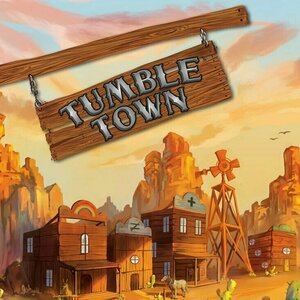
Fun fact about me: I used to live in Le Claire, Iowa (birthplace of “Buffalo Bill” Cody) on a street named Wild West Drive. While the town named many of their streets after American West figures and items, it was not your typical Iowa ghost town – if there are such things. That said, I do have an affinity for the Wild West in my gaming preferences, so when I heard about a dice/building game with an American West theme designed by Kevin Russ (who also recently designed Calico) I was immediately interested. But how does this one… stack up?
Tumble Town is dice rolling, structure building, drafting game with variable player powers. You are charged with choosing building plans to be added to Main Street of Tumble Town. You do this throughout the game by selecting the plans that will make best use of the resources (dice) you gain. The buildings that you construct may allow you special powers to be used on future turns, or one-time bonuses to be used once built. The player who can turn the greatest profit (in terms of VP) at the end of the game will be the winner!
DISCLAIMER: We were provided a prototype copy of this game for the purposes of this review. These are preview copy components, and the final components will definitely be different from these shown. Also, it is not my intention to detail every rule in the game, as there are just too many. You are invited to back the game through the Kickstarter campaign, from your FLGS, or through any other retailers stocking it after fulfillment. -T
To setup, deal each player a packet of starting components: a unique Horse card, two reference cards, Storehouse card, Main Street card, and two brown (they are red in the prototype) dice to be rolled and placed within the Storehouse. Shuffle and display the 1-, 2-, and 3-cactus building cards per the rulebook instructions to form the market. Set aside a number of each die type per the rulebook (both the building cards and dice are determined by number of players). Determine the first player and give them the first player token (a colorful rubber potted cactus). Players will connect their two Main Street cards at the central icon to create a two-card street (we chose the wagon wheel – Easy) and the game can begin!
Turns in Tumble Town consist of four mini-phases that flow into each other rather naturally. The first phase will have the players choosing a revealed building plan card from the offer market. The face-down draw stack will inform the active player as to how many and which type of dice they must draw and roll. Once they have these dice in their Storehouse, the player may now build plans using the dice they control. Buildings can be constructed and placed right onto Main Street, or be placed on the plan card to be placed on Main Street on a later turn. If the player has collected more dice than their Storehouse can hold, they must discard any of the dice they wish. This concludes a turn and the next player can begin their turn.
Certain iconography on the building plan cards allow players to use special powers throughout the game once built, and there are three types. Cards with the silvery bottom panel of symbols and the 1x notation are powers that must be used only once and only when the building is constructed. These powers could be collecting a die of the player’s choice, or receiving various dice counters. The building plan cards that feature a circular arrow notation are powers that can be used once per turn, every turn, if wished. These powers are found on each player’s Horse as well and can be adjusting a die’s face value, or re-rolling two dice, as examples. The third type of power is from the golden paneled cards that have an arrow pointing to a vertical line. These powers are only activated at the end of the game and mostly include scoring variances, like 1VP for each building a player has constructed that has a vulture icon (or a windmill, for example) featured on the card art.
Once a building is erected, the player may choose to place it onto their Main Street cards. When they place them, the player will need to choose where on Main Street these buildings should live. Like Bob Ross always says, “There are no mistakes, just happy accidents.” A player can place their buildings anywhere they wish on Main Street, but the Main Street cards will give extra bonuses to those players who plan ahead and place their buildings strategically. Some plots will ask for a building of a specific height (one die high or three dice high). Some will ask for the base level of the structure to be made of a specific material/die color (brown wood, black coal, silver metal, and gold… gold). Extra points are awarded if one-die-width alleyways are allotted, and these Main Street placements can score a bunch of endgame points.
Turns can be very quick or very deliberate, depending on the types of players involved. AP-prone players will take longer on their turns as they internalize all possibilities of their rolled results, while people like me just fly by the seats of our breeches. The game continues in this fashion: four mini-phases of drafting cards from the market, grabbing the associated dice, rolling them, and attempting to erect the best buildings on Main Street until two dice pools contain two or fewer dice. The current turn order finishes and the game is over.
Components. Again, this is a prototype copy of the game, and the publisher was decent enough to include a listing of items to be improved in the final version (like the red dice being poured brown in final – that really messed up someone’s strategy during a play-through for us because they kept forgetting that red is actually brown). The overall art style is very simplistic and I do NOT mean that negatively. The graphics and artwork are great, and give exactly what is needed without being so distracting that you cannot concentrate on your strategy. The dice are normal dice quality (that always seem to roll poorly when I’m rolling… hmm…). Once you see the photos of how the game will look during production, you will appreciate how great this is going to look on the table. No problems with components at all, save for the red vs. brown debacle that happened on our table. I really hope they keep the awwwwesome rubber cactus first player marker because it’s amazing.
I absolutely loved this one. I have always enjoyed using items for purposes other than originally intended – in this case, using dice as building materials. Of course, playing any game with dice introduces a bit of luck and instability in strategy, but Tumble Town offers quite a bit of manipulation of dice rolls that keeps almost all dice results feasible and useful. I really enjoyed the stacking, the quick turns, and the desperation when someone takes the last wood die when I was gunning for a wood-based building on my next turn. This game is light, but is chocked full of difficult decisions and luck of the roll. Tumble Town is for people who enjoy the rolling and stacking from FUSE (minus the frenzy), and the spatial building placement chaining of Villages of Valeria.
If this is the game for you, then we highly encourage you to check out the Kickstarter campaign which is running until Thursday, March 26. Tumble Town has already exceeding the funding goal at time of this review, but all future pledges will contribute to stretch goals that will improve components and add other components (spoiler?). So get out there and build up Tumble Town, ya yella-bellied greenhorns!
Tumble Town is dice rolling, structure building, drafting game with variable player powers. You are charged with choosing building plans to be added to Main Street of Tumble Town. You do this throughout the game by selecting the plans that will make best use of the resources (dice) you gain. The buildings that you construct may allow you special powers to be used on future turns, or one-time bonuses to be used once built. The player who can turn the greatest profit (in terms of VP) at the end of the game will be the winner!
DISCLAIMER: We were provided a prototype copy of this game for the purposes of this review. These are preview copy components, and the final components will definitely be different from these shown. Also, it is not my intention to detail every rule in the game, as there are just too many. You are invited to back the game through the Kickstarter campaign, from your FLGS, or through any other retailers stocking it after fulfillment. -T
To setup, deal each player a packet of starting components: a unique Horse card, two reference cards, Storehouse card, Main Street card, and two brown (they are red in the prototype) dice to be rolled and placed within the Storehouse. Shuffle and display the 1-, 2-, and 3-cactus building cards per the rulebook instructions to form the market. Set aside a number of each die type per the rulebook (both the building cards and dice are determined by number of players). Determine the first player and give them the first player token (a colorful rubber potted cactus). Players will connect their two Main Street cards at the central icon to create a two-card street (we chose the wagon wheel – Easy) and the game can begin!
Turns in Tumble Town consist of four mini-phases that flow into each other rather naturally. The first phase will have the players choosing a revealed building plan card from the offer market. The face-down draw stack will inform the active player as to how many and which type of dice they must draw and roll. Once they have these dice in their Storehouse, the player may now build plans using the dice they control. Buildings can be constructed and placed right onto Main Street, or be placed on the plan card to be placed on Main Street on a later turn. If the player has collected more dice than their Storehouse can hold, they must discard any of the dice they wish. This concludes a turn and the next player can begin their turn.
Certain iconography on the building plan cards allow players to use special powers throughout the game once built, and there are three types. Cards with the silvery bottom panel of symbols and the 1x notation are powers that must be used only once and only when the building is constructed. These powers could be collecting a die of the player’s choice, or receiving various dice counters. The building plan cards that feature a circular arrow notation are powers that can be used once per turn, every turn, if wished. These powers are found on each player’s Horse as well and can be adjusting a die’s face value, or re-rolling two dice, as examples. The third type of power is from the golden paneled cards that have an arrow pointing to a vertical line. These powers are only activated at the end of the game and mostly include scoring variances, like 1VP for each building a player has constructed that has a vulture icon (or a windmill, for example) featured on the card art.
Once a building is erected, the player may choose to place it onto their Main Street cards. When they place them, the player will need to choose where on Main Street these buildings should live. Like Bob Ross always says, “There are no mistakes, just happy accidents.” A player can place their buildings anywhere they wish on Main Street, but the Main Street cards will give extra bonuses to those players who plan ahead and place their buildings strategically. Some plots will ask for a building of a specific height (one die high or three dice high). Some will ask for the base level of the structure to be made of a specific material/die color (brown wood, black coal, silver metal, and gold… gold). Extra points are awarded if one-die-width alleyways are allotted, and these Main Street placements can score a bunch of endgame points.
Turns can be very quick or very deliberate, depending on the types of players involved. AP-prone players will take longer on their turns as they internalize all possibilities of their rolled results, while people like me just fly by the seats of our breeches. The game continues in this fashion: four mini-phases of drafting cards from the market, grabbing the associated dice, rolling them, and attempting to erect the best buildings on Main Street until two dice pools contain two or fewer dice. The current turn order finishes and the game is over.
Components. Again, this is a prototype copy of the game, and the publisher was decent enough to include a listing of items to be improved in the final version (like the red dice being poured brown in final – that really messed up someone’s strategy during a play-through for us because they kept forgetting that red is actually brown). The overall art style is very simplistic and I do NOT mean that negatively. The graphics and artwork are great, and give exactly what is needed without being so distracting that you cannot concentrate on your strategy. The dice are normal dice quality (that always seem to roll poorly when I’m rolling… hmm…). Once you see the photos of how the game will look during production, you will appreciate how great this is going to look on the table. No problems with components at all, save for the red vs. brown debacle that happened on our table. I really hope they keep the awwwwesome rubber cactus first player marker because it’s amazing.
I absolutely loved this one. I have always enjoyed using items for purposes other than originally intended – in this case, using dice as building materials. Of course, playing any game with dice introduces a bit of luck and instability in strategy, but Tumble Town offers quite a bit of manipulation of dice rolls that keeps almost all dice results feasible and useful. I really enjoyed the stacking, the quick turns, and the desperation when someone takes the last wood die when I was gunning for a wood-based building on my next turn. This game is light, but is chocked full of difficult decisions and luck of the roll. Tumble Town is for people who enjoy the rolling and stacking from FUSE (minus the frenzy), and the spatial building placement chaining of Villages of Valeria.
If this is the game for you, then we highly encourage you to check out the Kickstarter campaign which is running until Thursday, March 26. Tumble Town has already exceeding the funding goal at time of this review, but all future pledges will contribute to stretch goals that will improve components and add other components (spoiler?). So get out there and build up Tumble Town, ya yella-bellied greenhorns!
A Bibliophagist (113 KP) rated Scythe (Arc of a Scythe #1) in Books
Jan 27, 2020
Well written (3 more)
Unique plot
Less YA tropes
No teen angst and romance
Not your typical YA
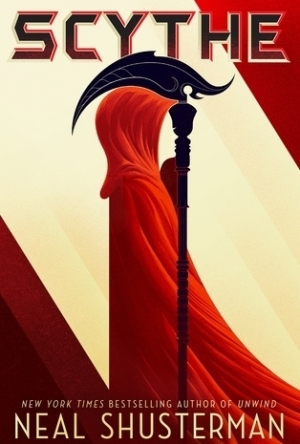
I approached this book with little expectation. I saw it cluttering up my feed on Instagram and being posted by everyone. I liked the cover (I'm a sucker for good covers and any YA without a photo manipulated monstrosity catches my eye). However every time I picked it up in the store and read the back and I just wasn't interested.
So in a New year new me moment, I forced myself to pick up two popular books that I was not interested in. Since they were both YA, they'd be quick reads and my expectations could below. I also forced my picks to not be hard SciFi, as I need to step out of my comfort zone. I picked this up, and developed more concern when I noticed how divided the reviews were, I noticed people were either firmly in the "this is my most favorite book ever" or in the "this is the most boring book ever I hated it" camps. I rarely rate books 1 or 5, so I wanted to see how I felt.
Honestly, I was very pleasantly surprised. This book is YA, and obviously has some YA aspects, but it doesn't follow the tropes unless stripped down to bullet points and is surprisingly well written. This well written aspect, with no intentions of making people mad, I think is why so many found it boring. If you primarily read YA, and are used to it's over the top writing, it's over the top dialogue and relationships and emotions, then yes, this book was probably horribly boring.
We do open with the standard tropes of uninteresting, normal girl and boy get thrown into something extraordinary. But that's where the stereotypes ended for me. The author quickly throws us into the world and the events of the story. We're in the future, who knows how far past the present, where society has overcome death. AI has evolved and "The Cloud" is now "The Thunderhead" a massive AI database that has solved most of the world's problems, eliminated poverty, war, government, created jobs for everyone, and even defeated death. We all have healing nanites that prevent illness and repair injury, and even in the case of death, we can be revived at a revival center and be greeted with some tasty ice cream. If we start feeling our age, we can just "turn a corner" resetting ourselves to a younger version of ourselves while retaining our memories.
Now, in a world without death, but babies are still being born, some form of population control is in order, the balance must be restored. So the world created the Scythedom. An organization outside the authority of "The Thunderhead" because death has and always should be a responsibility of the living. Those who become Scythes, must "Glean" (permanently kill) a quota of people every year to maintain population control. How they do so is up to them, but there are rules, a Scythe cannot show bias or malice in their choices, they cannot marry or have a family, they cannot kill another Scythe (but they can glean themselves) or someone with immunity, They may grant immunity to those they feel worthy, they must kill the families of those who resist, and they are above all other laws. The vagueness of these laws worked when the Scythedom was first created, but the world has become complicated, and some people have decided to find joy in what they do, even if it's killing.
Our story follows two teenagers who recently encountered the Honorable Scythe Faraday, Citra, and Rowan. Citra showed gumption and sass and moral balance, and Rowan held the hand of a boy that was not his friend as he was gleaned. Faraday is considered old school and chooses all that is gleaned by old school, age of mortality statistics. If a percentage of teenagers died in alcohol-related car accidents, he found a teenager with a penchant for drinking, who just got a car, and gleaned them. He believes the job is necessary, but should never be enjoyed, you need to be moral and compassionate and hurt every time. He is granted permission to take on an apprentice, and he takes on two, Rowan and Citra. Neither want it, nor should they, but should they become a Scythe, their families will receive immunity as long as they shall live, which in this day in age could be forever. So, reluctantly they both take it. There is a glamour to Scythedom as well, they'll wat for nothing, people will bend over backward to provide them with their desires in the hopes of immunity. If these two follow the teachings of Faraday, they won't be tempted by this, they won't abuse it, but not everyone feels the same way.
Citra and Rowan begin training (it gets a bit YAish here) studying history, poisons, combat, weapons. The goal to make them perfect, moral, compassionate, killing machines. Everything is going as well as it can, and luckily the book doesn't do what every other YA author would do and give us pages upon pages of the two falling in love, awkward encounters, stolen kisses. We have none of that thankfully. The dialogue is all purposeful and helps propel the plot, not flowery passages talking about teenage angst and feelings. But, it is a book, after all, so everything starts falling apart when a group of "New Age" Scythes, Scythes that believe they should enjoy their jobs, who take pleasure in mass killings (entire flights, festivals, food courts) stir things up at a Scythe Conclave meeting. They question if having two apprentices hurts whether or not the Conclave can judge the worthiness of either, or if them being friends will result in them always helping each other. How can they truly judge their ability if they always have each other's support? So they propose, since no law prevents it, that whichever apprentice should be chosen (remember Faraday was given permission to have ONE apprentice) will have to Glean the other. The Lead Scythe allows it, and honestly, this is one aspect of the book I struggled with, but I think was supposed to express the corruption of the Scythedom, at times when things aren't in writing they say "welp can't do it" and other times they say "welp nothing says we can't do it". Faraday attempts to free our two protagonists from their apprenticeships, but instead, they are separated, one going to a respected Old School Scythe, one going to the very modern group that started this whole problem, thrusting them into a world excess, deprivation, and honestly psychotic murdering. They now train, separately, knowing that one will die unless they can figure out a way to change things.
Even writing that sounds so Yaish, but it doesn't feel that way because it's so well written. The author doesn't give us Romeo and Juliet, no pining, no romance, just two kids trying to be that, good. Even when surrounded by something very bad. So, if you want to star crossed lovers, you won't like this book. If you like character development and struggle, you might like this book. We arguably see more of Rowan's development, Citra for me felt less focused on or given fewer opportunities for growth, and she had a bit of an attitude that made me no like her much, but given her circumstances, I UNDERSTOOD why she was the way she is, and I can't say I wouldn't be just as grumpy. If anything her response to the corruption and the situation felt very real, even if it sacrificed having a manic pixie daydream mary sue to project myself into. While appearances weren't really given for the two, setting them up to be good old fashioned Mary Sue and Gary Stu, they were very much their own people, with little room for the reader to pretend to be them. So another star in the breaking the YA mold category. We watch them struggle with where they are, and how to come to terms with their inevitable future, either being takers of life or having their life taken.
Overall this was refreshing, while it was an easy read and was a good "palette cleanser" and m boyfriend calls my YA marathons in between books that actually linger in my soul. It felt elevated, sure it was still very much YA, but it was more thought out than the standard, it focused on the story and not the romance, it focused on important things, and it never lost sight of its story. I started at 11am on a Sunday and Finished by noon on Monday, eager for the next. It was an unexpected, refreshing read, with a unique concept that has room for more. The sequel doesn't feel forced, and if I never got it, this story is finished, but the world and situation created to allow for more, without feeling like a forced trilogy. I wanted to know how this story was going to play out, and now that it has, I want to know how the next story in this set up plays out.
So in a New year new me moment, I forced myself to pick up two popular books that I was not interested in. Since they were both YA, they'd be quick reads and my expectations could below. I also forced my picks to not be hard SciFi, as I need to step out of my comfort zone. I picked this up, and developed more concern when I noticed how divided the reviews were, I noticed people were either firmly in the "this is my most favorite book ever" or in the "this is the most boring book ever I hated it" camps. I rarely rate books 1 or 5, so I wanted to see how I felt.
Honestly, I was very pleasantly surprised. This book is YA, and obviously has some YA aspects, but it doesn't follow the tropes unless stripped down to bullet points and is surprisingly well written. This well written aspect, with no intentions of making people mad, I think is why so many found it boring. If you primarily read YA, and are used to it's over the top writing, it's over the top dialogue and relationships and emotions, then yes, this book was probably horribly boring.
We do open with the standard tropes of uninteresting, normal girl and boy get thrown into something extraordinary. But that's where the stereotypes ended for me. The author quickly throws us into the world and the events of the story. We're in the future, who knows how far past the present, where society has overcome death. AI has evolved and "The Cloud" is now "The Thunderhead" a massive AI database that has solved most of the world's problems, eliminated poverty, war, government, created jobs for everyone, and even defeated death. We all have healing nanites that prevent illness and repair injury, and even in the case of death, we can be revived at a revival center and be greeted with some tasty ice cream. If we start feeling our age, we can just "turn a corner" resetting ourselves to a younger version of ourselves while retaining our memories.
Now, in a world without death, but babies are still being born, some form of population control is in order, the balance must be restored. So the world created the Scythedom. An organization outside the authority of "The Thunderhead" because death has and always should be a responsibility of the living. Those who become Scythes, must "Glean" (permanently kill) a quota of people every year to maintain population control. How they do so is up to them, but there are rules, a Scythe cannot show bias or malice in their choices, they cannot marry or have a family, they cannot kill another Scythe (but they can glean themselves) or someone with immunity, They may grant immunity to those they feel worthy, they must kill the families of those who resist, and they are above all other laws. The vagueness of these laws worked when the Scythedom was first created, but the world has become complicated, and some people have decided to find joy in what they do, even if it's killing.
Our story follows two teenagers who recently encountered the Honorable Scythe Faraday, Citra, and Rowan. Citra showed gumption and sass and moral balance, and Rowan held the hand of a boy that was not his friend as he was gleaned. Faraday is considered old school and chooses all that is gleaned by old school, age of mortality statistics. If a percentage of teenagers died in alcohol-related car accidents, he found a teenager with a penchant for drinking, who just got a car, and gleaned them. He believes the job is necessary, but should never be enjoyed, you need to be moral and compassionate and hurt every time. He is granted permission to take on an apprentice, and he takes on two, Rowan and Citra. Neither want it, nor should they, but should they become a Scythe, their families will receive immunity as long as they shall live, which in this day in age could be forever. So, reluctantly they both take it. There is a glamour to Scythedom as well, they'll wat for nothing, people will bend over backward to provide them with their desires in the hopes of immunity. If these two follow the teachings of Faraday, they won't be tempted by this, they won't abuse it, but not everyone feels the same way.
Citra and Rowan begin training (it gets a bit YAish here) studying history, poisons, combat, weapons. The goal to make them perfect, moral, compassionate, killing machines. Everything is going as well as it can, and luckily the book doesn't do what every other YA author would do and give us pages upon pages of the two falling in love, awkward encounters, stolen kisses. We have none of that thankfully. The dialogue is all purposeful and helps propel the plot, not flowery passages talking about teenage angst and feelings. But, it is a book, after all, so everything starts falling apart when a group of "New Age" Scythes, Scythes that believe they should enjoy their jobs, who take pleasure in mass killings (entire flights, festivals, food courts) stir things up at a Scythe Conclave meeting. They question if having two apprentices hurts whether or not the Conclave can judge the worthiness of either, or if them being friends will result in them always helping each other. How can they truly judge their ability if they always have each other's support? So they propose, since no law prevents it, that whichever apprentice should be chosen (remember Faraday was given permission to have ONE apprentice) will have to Glean the other. The Lead Scythe allows it, and honestly, this is one aspect of the book I struggled with, but I think was supposed to express the corruption of the Scythedom, at times when things aren't in writing they say "welp can't do it" and other times they say "welp nothing says we can't do it". Faraday attempts to free our two protagonists from their apprenticeships, but instead, they are separated, one going to a respected Old School Scythe, one going to the very modern group that started this whole problem, thrusting them into a world excess, deprivation, and honestly psychotic murdering. They now train, separately, knowing that one will die unless they can figure out a way to change things.
Even writing that sounds so Yaish, but it doesn't feel that way because it's so well written. The author doesn't give us Romeo and Juliet, no pining, no romance, just two kids trying to be that, good. Even when surrounded by something very bad. So, if you want to star crossed lovers, you won't like this book. If you like character development and struggle, you might like this book. We arguably see more of Rowan's development, Citra for me felt less focused on or given fewer opportunities for growth, and she had a bit of an attitude that made me no like her much, but given her circumstances, I UNDERSTOOD why she was the way she is, and I can't say I wouldn't be just as grumpy. If anything her response to the corruption and the situation felt very real, even if it sacrificed having a manic pixie daydream mary sue to project myself into. While appearances weren't really given for the two, setting them up to be good old fashioned Mary Sue and Gary Stu, they were very much their own people, with little room for the reader to pretend to be them. So another star in the breaking the YA mold category. We watch them struggle with where they are, and how to come to terms with their inevitable future, either being takers of life or having their life taken.
Overall this was refreshing, while it was an easy read and was a good "palette cleanser" and m boyfriend calls my YA marathons in between books that actually linger in my soul. It felt elevated, sure it was still very much YA, but it was more thought out than the standard, it focused on the story and not the romance, it focused on important things, and it never lost sight of its story. I started at 11am on a Sunday and Finished by noon on Monday, eager for the next. It was an unexpected, refreshing read, with a unique concept that has room for more. The sequel doesn't feel forced, and if I never got it, this story is finished, but the world and situation created to allow for more, without feeling like a forced trilogy. I wanted to know how this story was going to play out, and now that it has, I want to know how the next story in this set up plays out.