

Ross (3284 KP) rated Pan's Labyrinth: The Labyrinth of the Faun in Books
Aug 19, 2019
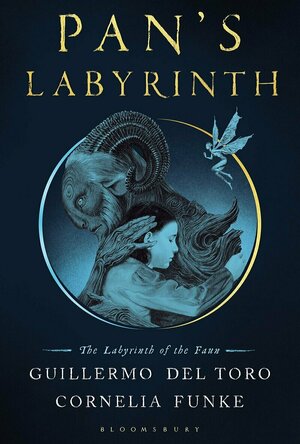

It has been a number of years since I watched Pan's Labyrinth, but remember it as being a dark, twisted fairy tale set during the second world war. The book keeps that feel, we are introduced to Ofelia, a quiet bookish young girl who is moving with her mother to live with her stepfather, as he tries to break a group of Spanish rebels, ahead of the birth of her half-brother.
Ofelia sees some unusual statues and artefacts in the woods and soon meets the Faun, who sets her a mission to return to take her place as the princess of the Underground Kingdom.
There follows a brilliant mix of Ofelia's real life, the despicable exploits of Franco's army, and the fairy tale world she steps into.
This is a very short, immersive fairy tale with lots of nice side-stories that all weave into the book in some form.

Biochar: A Regional Supply Chain Approach in View of Climate Change Mitigation
Viktor J. Bruckman, Esin Apaydin Varol, Basak B. Uzun and Jay Liu
Book
Climate change poses a fundamental threat to humanity, and thus solutions for both mitigation and...
13 Reasons Why
7.7 Rate It
TV Show Watch
13 Reasons Why (stylized onscreen as Th1rteen R3asons Why) is an American television series based on...

Bostonian916 (449 KP) rated They Live (1988) in Movies
Aug 17, 2020 (Updated Aug 17, 2020)


Roddy Piper (in arguably the role of his career) and Keith David both work tirelessly to do their part in creating an in film world where, through complete happenstance, they are gifted the ability to see the world for what it really is beyond the "truth" that is being shown to them. Both characters work feverishly to expose the wickedness of the world around them while being beat back around every bend.
All in all a very good action flick, especially given the tools available at the time to the film makers.
While John Carpenter is very widely known and revered in the industry, it is my opinion that They Live might be the most important work of his long and illustrious career. A scathing criticism of corporate and political greed and misdeeds the world over, displayed in a way that is oddly relatable over thirty years later.
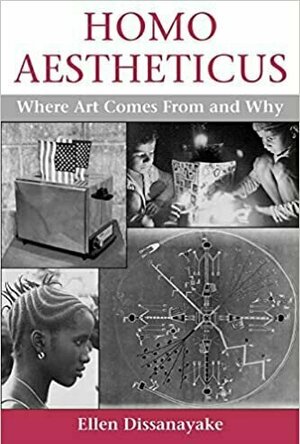
Homo Aestheticus: Where Art Comes From and Why
Book
“Dissanayake argues that art was central to human evolutionary adaptation and that the aesthetic...
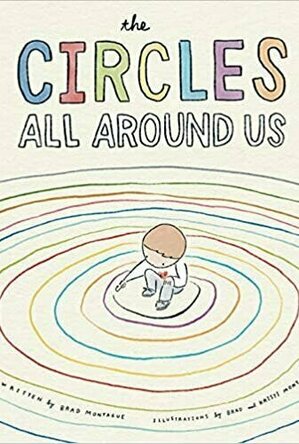
The Circles All Around Us
Book
The debut picture book from the creator of the viral sensation Kid President is a moving take on how...

David McK (3921 KP) rated Murder on the Orient Express (2017) in Movies
Apr 21, 2022
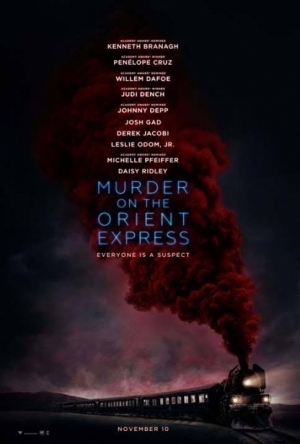


I also watched this after recently watching the semi-sequel 'Death in the Nile' on Disney+, thinking then that - as that was a sequel of sorts - I might as well go back and watch the original.
The problem, of course, as with all murder mysteries is that once they are solved (in either print or on screen), then they lose nearly all sense of drama or suspense. That, I think, is a fault of the genre as a whole and is perhaps the reason why it is generally not my favourite type of story: I prefer works that you can rewatch or re-read and discover something new each time through.
Anyway, the fact that I already knew the ending might have spoiled my enjoyment of this movie, even if I'm aware it takes liberties with the source material. Not obvious liberties, though! (Or, at least I didn't think they were).

Mothergamer (1658 KP) rated Death on the Nile (2022) in Movies
Apr 22, 2022

RəX Regent (349 KP) rated Dracula (English) (1931) in Movies
Mar 7, 2019
Tod Browning was a man who would unfortunately find little success in the sound era, but not necessarily because he couldn't move with the times, but because his career was derailed a couple of years later by his disturbing horror pic, Freaks.
Dracula was shot THREE times. One, this one, was the conventional sound version that we all know. An other was shot at night and in Spanish for the benefit of that audience, which the studio supposedly preferred. This was quite common at this time, but little known nowadays. And the third was a straight forward silent version for the many theatres still un-equipped to handle sound.
But the styles of the silent era are all over this film. From the long silent reactions shots and the over acting, especially by Bela Lagosi in the titular role. This was also the adaptation of the stage adaptation of Bram Stoker's chiller, and was faithfully adapted from that source, hence the lack of more complex special effects, with bats on strings and fog machines, over more cinematic effects.
The transformation scenes for example, where the Count morphs from a bat to the undead human occur off-screen, rather than some form of cross fade etc. Is this a choice driven by lack of money? Lack of cinematic ambition of a choice to stick to the stage material? To be honest, I have too little knowledge or experience of Tod Browning's work to suggest a reason, but when all's said and done, it did work.
Let's be honest, this is 80 years old and is not the least bit scary and it is hard not to laugh, but in context, I'm sure it worked well at the time and the story is well conveyed. Lagosi's undead performance is hammy by today's standards but he was somewhat likable. He was very deliberate, slow and the silent era has certainly left its scars, as the subtly of sound performing was yet to take hold.
But this is the sort of film were silent melodramatic acting still worked. This is of course a piece Gothic Horror, the home of melodrama if ever there was one. This is surly a product of its time, both as the industry went through one of it's most dramatic changes, which ended so many careers as well a created so many new ones, but it's also, let's not forget, the first direct adaptation of Bram Stoker's book, besides the 1922 German version, Nosferatu, which changes a fair few details to try to get around the copyright, failing to do so mind, resulting in failed bid to have every copy of the film destroyed.
This is the film that ingrained the image of the Dracula that we know today into popular culture. This was were the Universal horror franchise began. For whatever faults it has by today's standards, it did something right.
RəX Regent (349 KP) rated V for Vendetta (2005) in Movies
Mar 7, 2019
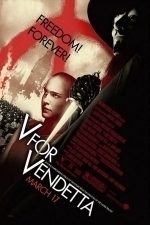
We ended up with a dull, overly bombastic and ponderous take on a much more subversive novel, with stereotypical fascist villains, shown to have taken power by releasing a virus upon the country's population, rather than the comic's thesis on the apathetic voters, legitimately electing them.
This is Hollywood does Britain, and as usual, they got it wrong. This is a sci-fi fantasy, where the hero/terrorist dons a Guy Fawkes mask and romantically spreads revolution across the country. But Hugo Weaving's ranting, good though he always is, is just boring and overblown. He is a Nutter and not in the good sense. I don't understand what gives him the right to blow up Parliament for us? I think that he's the other side of the same coin; a dictator in his own right. Is this the point? Maybe, but that point is lost when the film is trying to walk the fine line between epic political film-making with an edge, and a major comic book adaptation by the creators of the revolutionary Matrix. Though, the ill-conceived sequels should have served as a warning to us all as to what to expect from this project.
When I first watched this, I thought it was okay, but on repeat viewings it just continues to fall further and further down in my estimation. Boring, contrived, and misconceived. The Brothers Grimm Wachowski need to rethink their strategy and their role in the business and they are in no way, shape or form serious filmmakers. They have a fantastic and they did have a revolutionary view of cinematography, but as for being deep and meaningful writers... more ponderous and self absorbed than anything else.