
Search

Bob Mann (459 KP) rated Knives Out (2019) in Movies
Dec 4, 2019
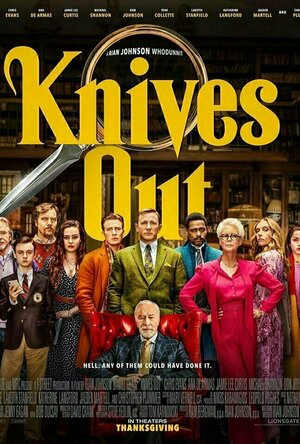


If they were to give it a go, this movie should justifiably be Rian's redemption from the harshest of his previous critics. For this is a really entertaining film. I found myself smiling with glee through a sizable proportion of the running time.
Multi-millionaire crime-fiction author Harlan Thrombey (the wonderful Christopher Plummer) is celebrating his 85th birthday with three generations of his family in his "Cludo-like" mansion. But all is not well with the family harmonic and the next morning Harlan is found dead in his room by his nurse Marta (Ana de Armas). Apparently, it's a suicide, but when private detective Benoit Blanc (Daniel Craig) arrives on the scene he starts turning over stones "oin seearch ov tha troooth" (sic) and dark secrets begin to emerge.
Key to success of this Agatha Christie-style movie is a dense portmanteau cast and a well-plotted script. Both are here present.
In terms of the cast, this is another candidate for the SAG Ensemble Cast award. For the cast is suitably stellar with Chris "Cap" Evans, Toni Collette, Michael Shannon, Jamie Lee Curtis and Don Johnson vying for the top billing with Craig and Plummer. They bounce off each other joyously, with Collette taking my prize for top acting kudos. She's just deliciously over the top as the scheming hippy chick with the rasping voice and the cutting one-liners.
With a starring role is Cuban bombshell Ana de Armas, here notching down the glamour to play the plainly dressed nurse. But she has a magnetic screen presence and is perfectly cast as the girl at the heart of all the action. She has the doe-eyed innocence that Alfred Hitchcock was always looking for in his leading ladies. Interestingly, she is soon to appear with Craig again as Bond-girl Paloma in "No Time to Die".
Elsewhere in the cast are some interesting cameos: the family's lawyer is none other than Frank "Yoda" Oz; and the ancient security guard is M. Emmet Walsh, who has an amazing filmography going back to the late 60's.
Writer/director is clearly his 'thing'. But Rian Johnson here pulls off a neat trick with the script which is brilliantly twisty and turny and 100% entertaining. Although it's presented as cuts between the 'present time' and versions of the night in question, the whole doughnut is never entirely in view until the final reel. It's a satisfying story, and some of the dialogue is laugh-out-loud funny.
A nice plot point is the inability for young Marta to tell a lie without vomiting. Wouldn't the UK General Elections be Sooooo much more colourful if that was a general trait!!
I've only the one real criticism of the movie, and that's Daniel Craig's appalling Southern drawl. It's really quite distracting. Aside from some witty lines of dialogue ("What is this? CSI KFC?") nothing would have been lost to cast him as an urbane English detective instead. They could have slipped in some Brexit jokes instead! I appreciate Craig wants to distance himself from Bond somewhat. He did the same thing as Joe Bang in "Logan Lucky". But - sorry - it didn't really work for me then and it doesn't work now either.
In summary, this is a really fun movie that a whole family with older children (the rating is 12+) can go and enjoy together. There's limited violence; limited swearing and sexual innuendo; and no sex (save for the Hitler youth in the bathroom!). But there is a whole lot of sleuthing fun to be had. Bravo Mr Johnson, bravo! For that reason it comes with a bob-the-movie-man "Highly recommended" tag.
(For the full graphical review please check out https://bob-the-movie-man.com/2019/12/04/one-manns-movies-film-review-knives-out-2019/).
Multi-millionaire crime-fiction author Harlan Thrombey (the wonderful Christopher Plummer) is celebrating his 85th birthday with three generations of his family in his "Cludo-like" mansion. But all is not well with the family harmonic and the next morning Harlan is found dead in his room by his nurse Marta (Ana de Armas). Apparently, it's a suicide, but when private detective Benoit Blanc (Daniel Craig) arrives on the scene he starts turning over stones "oin seearch ov tha troooth" (sic) and dark secrets begin to emerge.
Key to success of this Agatha Christie-style movie is a dense portmanteau cast and a well-plotted script. Both are here present.
In terms of the cast, this is another candidate for the SAG Ensemble Cast award. For the cast is suitably stellar with Chris "Cap" Evans, Toni Collette, Michael Shannon, Jamie Lee Curtis and Don Johnson vying for the top billing with Craig and Plummer. They bounce off each other joyously, with Collette taking my prize for top acting kudos. She's just deliciously over the top as the scheming hippy chick with the rasping voice and the cutting one-liners.
With a starring role is Cuban bombshell Ana de Armas, here notching down the glamour to play the plainly dressed nurse. But she has a magnetic screen presence and is perfectly cast as the girl at the heart of all the action. She has the doe-eyed innocence that Alfred Hitchcock was always looking for in his leading ladies. Interestingly, she is soon to appear with Craig again as Bond-girl Paloma in "No Time to Die".
Elsewhere in the cast are some interesting cameos: the family's lawyer is none other than Frank "Yoda" Oz; and the ancient security guard is M. Emmet Walsh, who has an amazing filmography going back to the late 60's.
Writer/director is clearly his 'thing'. But Rian Johnson here pulls off a neat trick with the script which is brilliantly twisty and turny and 100% entertaining. Although it's presented as cuts between the 'present time' and versions of the night in question, the whole doughnut is never entirely in view until the final reel. It's a satisfying story, and some of the dialogue is laugh-out-loud funny.
A nice plot point is the inability for young Marta to tell a lie without vomiting. Wouldn't the UK General Elections be Sooooo much more colourful if that was a general trait!!
I've only the one real criticism of the movie, and that's Daniel Craig's appalling Southern drawl. It's really quite distracting. Aside from some witty lines of dialogue ("What is this? CSI KFC?") nothing would have been lost to cast him as an urbane English detective instead. They could have slipped in some Brexit jokes instead! I appreciate Craig wants to distance himself from Bond somewhat. He did the same thing as Joe Bang in "Logan Lucky". But - sorry - it didn't really work for me then and it doesn't work now either.
In summary, this is a really fun movie that a whole family with older children (the rating is 12+) can go and enjoy together. There's limited violence; limited swearing and sexual innuendo; and no sex (save for the Hitler youth in the bathroom!). But there is a whole lot of sleuthing fun to be had. Bravo Mr Johnson, bravo! For that reason it comes with a bob-the-movie-man "Highly recommended" tag.
(For the full graphical review please check out https://bob-the-movie-man.com/2019/12/04/one-manns-movies-film-review-knives-out-2019/).

BankofMarquis (1832 KP) rated Knives Out (2019) in Movies
Jan 3, 2020
Original and Quirky...enough
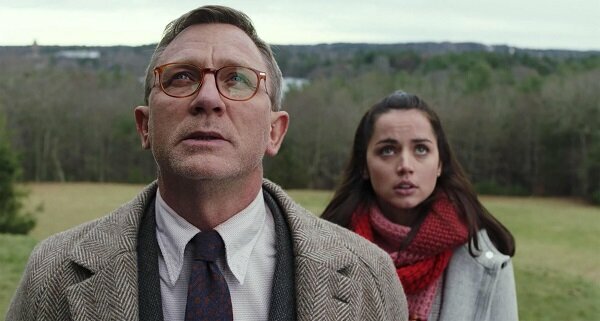
KNIVES OUT was one of the films I had circled on my calendar as a "must see". It seemed to be a perfect antidote to the CGI-Fest films that are very prevalent in the multi-plex today. So...when life got in the way and I couldn't get to this film for about a month, I tried (and succeeded) in not getting this movie spoiled for me in my various Social Media feeds.
And I'm glad I went to such lengths, for I found KNIVES OUT to be a truly original and entertaining film that kept me guessing throughout the length of the film - right up to the "big reveal."
So...if you haven't seen this film...stop reading this now...go see it...and come back.
Still here (or are you back)? Okay...let's continue...
Directed by Rian Johnson (known by many as the Director of THE LAST JEDI, but I think this movie owes more of it's heritage to his breakthrough film BRICK or his Sci-Fi action flick, LOOPER), KNIVES OUT is an old-fashioned, Agatha Christie-type murder mystery complete with an oddball Detective trying to figure out "whodunnit" that features an All-Star cast of suspects as well as an Oscar winning murder victim.
As I stated above, Johnson has traversed a murder mystery-type film before in his neo-noir homage BRICK, but in this film he really let's his wings fly as he plays, marvelously, with the drawing room murder mystery pastiche. Johnson wrote and directed this film and the twists and turns and originality of his vision is apparent on screen, playing with expectations without being too clever.
He has assembled an All-Star cast of actors playing interesting characters. Jamie Lee Curtis, Michael Shannon, Chris Evans, Toni Colette, Don Johnson and Jacob Trombley all bring star power and charisma to their roles and each one COULD have been the murderer. As often happens in these types of films, each one gets A scene to shine, but only the one "whodunnit" really gets to step out.
As the Law Enforcement on their trail, Lakeith Stanfield (GET OUT) and Noah Segan (LOOPER) play off each other well and they play off of Daniel Craig (James Bond, of course) very well. Craig plays Private Detective Benoit Blanc with some sort of Cajun-type accent that works more than it doesn't, I enjoyed his performance enough to find it charming and not annoying.
Special notice needs to be made of the performances of Christopher Plummer - as the murder victim (I'm not spoiling anything here, it's in the trailer) and Frank Oz (the famous Muppeteer and Director). Both are "old pros" who bring a grounding to the proceedings. Their performances are almost down to earth commentaries on the other characters/performances and they both helped out this film tremendously.
Finally, the film revolves around the journey that Ana de Armas' character, Maria Cabrera, is on in this film. She is the audience's eyes and ears into this story, having clues and plot points revealed to her as we, the audience, have them revealed to us. I fell in love with de Armas when she played Joi in BLADE RUNNER: 2049 and she is pleasant enough company here to search out this mystery with.
With all these pieces - and characters - to put together and move around, I did find that this film suffered a bit by "too much" and "too fast" at times that caused me not to care about certain people and circumstances (especially at the beginning), but that was quickly forgotten/forgiven as the film progressed and I was engrossed in the mystery - a mystery that I did not know how it was going to end.
And that, is unique and rare enough for me.
Letter Grade: B+
7 1/2 (out of 10) stars and you can take that to the Bank(ofMarquis)
And I'm glad I went to such lengths, for I found KNIVES OUT to be a truly original and entertaining film that kept me guessing throughout the length of the film - right up to the "big reveal."
So...if you haven't seen this film...stop reading this now...go see it...and come back.
Still here (or are you back)? Okay...let's continue...
Directed by Rian Johnson (known by many as the Director of THE LAST JEDI, but I think this movie owes more of it's heritage to his breakthrough film BRICK or his Sci-Fi action flick, LOOPER), KNIVES OUT is an old-fashioned, Agatha Christie-type murder mystery complete with an oddball Detective trying to figure out "whodunnit" that features an All-Star cast of suspects as well as an Oscar winning murder victim.
As I stated above, Johnson has traversed a murder mystery-type film before in his neo-noir homage BRICK, but in this film he really let's his wings fly as he plays, marvelously, with the drawing room murder mystery pastiche. Johnson wrote and directed this film and the twists and turns and originality of his vision is apparent on screen, playing with expectations without being too clever.
He has assembled an All-Star cast of actors playing interesting characters. Jamie Lee Curtis, Michael Shannon, Chris Evans, Toni Colette, Don Johnson and Jacob Trombley all bring star power and charisma to their roles and each one COULD have been the murderer. As often happens in these types of films, each one gets A scene to shine, but only the one "whodunnit" really gets to step out.
As the Law Enforcement on their trail, Lakeith Stanfield (GET OUT) and Noah Segan (LOOPER) play off each other well and they play off of Daniel Craig (James Bond, of course) very well. Craig plays Private Detective Benoit Blanc with some sort of Cajun-type accent that works more than it doesn't, I enjoyed his performance enough to find it charming and not annoying.
Special notice needs to be made of the performances of Christopher Plummer - as the murder victim (I'm not spoiling anything here, it's in the trailer) and Frank Oz (the famous Muppeteer and Director). Both are "old pros" who bring a grounding to the proceedings. Their performances are almost down to earth commentaries on the other characters/performances and they both helped out this film tremendously.
Finally, the film revolves around the journey that Ana de Armas' character, Maria Cabrera, is on in this film. She is the audience's eyes and ears into this story, having clues and plot points revealed to her as we, the audience, have them revealed to us. I fell in love with de Armas when she played Joi in BLADE RUNNER: 2049 and she is pleasant enough company here to search out this mystery with.
With all these pieces - and characters - to put together and move around, I did find that this film suffered a bit by "too much" and "too fast" at times that caused me not to care about certain people and circumstances (especially at the beginning), but that was quickly forgotten/forgiven as the film progressed and I was engrossed in the mystery - a mystery that I did not know how it was going to end.
And that, is unique and rare enough for me.
Letter Grade: B+
7 1/2 (out of 10) stars and you can take that to the Bank(ofMarquis)



Sophia (Bookwyrming Thoughts) (530 KP) rated Becoming Darkness in Books
Jan 23, 2020


<b><i>I received this book for free from Publisher in exchange for an honest review. This does not affect my opinion of the book or the content of my review.</i></b>
Never have I ever read a book in which Hitler won World War II and succeeded in taking over the world.
Until now. I admit I'm a little fond of this one because of the whole alternative history thing going on right there, but I'm a little disturbed here, Lindsay Francis Brambles. You're as bad as Agatha Christie and came very close to killing everyone. Although technically, you did kill most of the characters that I grew fond of. Not cool. I don't think I can ever forgive you for this transgression of Trigger Happy Book. (More like Explosion Happy Book.)
But in the very long run, I only liked <i>Becoming Darkness</i> for a few things.
Sadistic as it may be, I did like how Brambles made Hitler won the second world war and unleashed a virus that made a lot of people turn into vampires all of that is told within the first few pages. Although the origins of Gemorrah (le virus) is revealed throughout the story and integrated in the plot, I still don't understand how the creators came up with that name in the first place. Does it mean something in German, or is it something they thought sounded sinister and cool and decided to go with it? In my humble opinion, it does not sound cool or sinister. It sounds like a Mary Poppins word.
I also really liked how Brambles didn't go completely off course from history there are some references to the war, there might be another significant historical figure who makes a cameo appearance (under a different name, but don't quote me), etc. Basically, there's not much that's thrown in completely off kilter aside from maybe the virus I still feel fishy about that.
Sophie Harkness does not take BS when there are boys hitting on her in the stupidest, cheesiest ways. Namely: "We're meant for one another because you're a girl, I'm a guy, and we have the parts to create phenomenal offspring." Sorry for the disturbing image, but that was very much implied by the character. Unfortunately for her, she sort of believes in love at first sight when she first met Val back when she was fourteen.
Sophie is also not a judgmental character she's very open-minded and believes vampires aren't exactly sinister blood sucking creatures. Every other Immune, those who can't get Gemorrah, are so judgmental and narrow-minded, it just peeves me greatly. It IS understandable, though, considering the year Brambles sets the book in.
Unfortunately, I didn't really like the whole flashbacks. For awhile in the beginning, it's a little confusing and I had to backtrack to make sure it was a flashback and not actually set in the present day. There's a "sort-of" warning and then we're in flashback mode that feels like it's set in the present but is really Sophie telling a story. On the bright side, all those flashbacks (and the journal entries written by Sophie's mom) all play a relevant role in the overall plot.
I also didn't really like Valentine. Though I eventually warmed up to him over the course of the book, something about him was really disturbing. He's not an annoying "stalker type" of character, but it IS a little weird he still tried to keep his connections to Sophie's family from grandma to mom to Sophie in the hopes of falling in love again. But considering the fact he's doesn't throw out stupidly cheesy lines at Sophie, I like him a little.
Have I mentioned I'm sick and tired of seeing the name Valentine over and over again in literature? We just can't get any more original than St. Valentine, can we?
I would totally summarize <i>Becoming Darkness</i> in a few words if only I didn't end up giving major spoilers. But in a nutshell, the book quite literally tells me all of us should be downright grateful the Third Reich didn't succeed. It also told me I'm royally screwed if the way to a man's heart is through his stomach, but I think I've established that in sixth grade with the whole Ramen Noodle Stove catastrophe.
<a href="https://bookwyrmingthoughts.com/arc-review-becoming-darkness-by-lindsay-francis-brambles/"; target="_blank">This review was originally posted on Bookwyrming Thoughts</a>
Never have I ever read a book in which Hitler won World War II and succeeded in taking over the world.
Until now. I admit I'm a little fond of this one because of the whole alternative history thing going on right there, but I'm a little disturbed here, Lindsay Francis Brambles. You're as bad as Agatha Christie and came very close to killing everyone. Although technically, you did kill most of the characters that I grew fond of. Not cool. I don't think I can ever forgive you for this transgression of Trigger Happy Book. (More like Explosion Happy Book.)
But in the very long run, I only liked <i>Becoming Darkness</i> for a few things.
Sadistic as it may be, I did like how Brambles made Hitler won the second world war and unleashed a virus that made a lot of people turn into vampires all of that is told within the first few pages. Although the origins of Gemorrah (le virus) is revealed throughout the story and integrated in the plot, I still don't understand how the creators came up with that name in the first place. Does it mean something in German, or is it something they thought sounded sinister and cool and decided to go with it? In my humble opinion, it does not sound cool or sinister. It sounds like a Mary Poppins word.
I also really liked how Brambles didn't go completely off course from history there are some references to the war, there might be another significant historical figure who makes a cameo appearance (under a different name, but don't quote me), etc. Basically, there's not much that's thrown in completely off kilter aside from maybe the virus I still feel fishy about that.
Sophie Harkness does not take BS when there are boys hitting on her in the stupidest, cheesiest ways. Namely: "We're meant for one another because you're a girl, I'm a guy, and we have the parts to create phenomenal offspring." Sorry for the disturbing image, but that was very much implied by the character. Unfortunately for her, she sort of believes in love at first sight when she first met Val back when she was fourteen.
Sophie is also not a judgmental character she's very open-minded and believes vampires aren't exactly sinister blood sucking creatures. Every other Immune, those who can't get Gemorrah, are so judgmental and narrow-minded, it just peeves me greatly. It IS understandable, though, considering the year Brambles sets the book in.
Unfortunately, I didn't really like the whole flashbacks. For awhile in the beginning, it's a little confusing and I had to backtrack to make sure it was a flashback and not actually set in the present day. There's a "sort-of" warning and then we're in flashback mode that feels like it's set in the present but is really Sophie telling a story. On the bright side, all those flashbacks (and the journal entries written by Sophie's mom) all play a relevant role in the overall plot.
I also didn't really like Valentine. Though I eventually warmed up to him over the course of the book, something about him was really disturbing. He's not an annoying "stalker type" of character, but it IS a little weird he still tried to keep his connections to Sophie's family from grandma to mom to Sophie in the hopes of falling in love again. But considering the fact he's doesn't throw out stupidly cheesy lines at Sophie, I like him a little.
Have I mentioned I'm sick and tired of seeing the name Valentine over and over again in literature? We just can't get any more original than St. Valentine, can we?
I would totally summarize <i>Becoming Darkness</i> in a few words if only I didn't end up giving major spoilers. But in a nutshell, the book quite literally tells me all of us should be downright grateful the Third Reich didn't succeed. It also told me I'm royally screwed if the way to a man's heart is through his stomach, but I think I've established that in sixth grade with the whole Ramen Noodle Stove catastrophe.
<a href="https://bookwyrmingthoughts.com/arc-review-becoming-darkness-by-lindsay-francis-brambles/"; target="_blank">This review was originally posted on Bookwyrming Thoughts</a>
Bob Mann (459 KP) rated Murder on the Orient Express (2017) in Movies
Sep 29, 2021

You’ll never guess who dunnit…
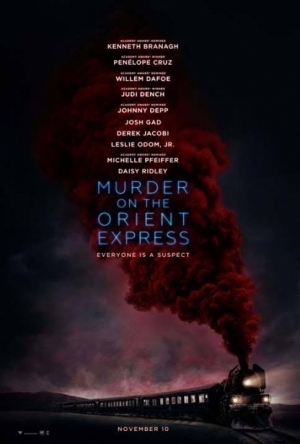
There’s a big problem with Kenneth Branagh’s 2017 filming of the Hercule Poirot-based murder mystery…. and that’s the 1974 Sidney Lumet classic featuring Albert Finney in the starring role. For that film was so memorable – at least, the “who” of the “whodunnit” (no spoilers here) was so memorable – that any remake is likely to be tarnished by that knowledge. If you go into this film blissfully unaware of the plot, you are a lucky man/woman. For this is a classic Agatha Christie yarn.
The irascible, borderline OCD, but undeniably great Belgian detective, Poirot, is dragged around the world by grateful police forces to help solve unsolvable crimes. After solving a case in Jerusalem, Poirot is called back to the UK with his mode of transport being the famous Orient Express. Trapped in the mountains by an avalanche, a murder is committed and with multiple suspects and a plethora of clues it is up to Poirot to solve the case.
Branagh enjoys himself enormously as Poirot, sporting the most distractingly magnificent facial hair since Daniel Day-Lewis in “The Gangs of New York”. The moustache must have had its own trailer and make-up team!
Above all, the film is glorious to look at, featuring a rich and exotic colour palette that is reminiscent of the early colour films of the 40’s. Cinematography was by Haris Zambarloukos (“Mamma Mia” and who also collaborated with Branagh on “Thor) with lots of innovative “ceiling down” shots and artful point-of-view takes that might be annoying to some but which I consider as deserving of Oscar/BAFTA nominations.
The pictures are accompanied by a lush score by Patrick Doyle (who also scored Branagh’s “Thor”). Hats off also to the special effects crew, who made the alpine bridge scenes look decidedly more alpine than where they were actually filmed (on a specially made bridge in the Surrey Hills!).
All these technical elements combine to make the film’s early stages look and feel truly epic.
And the cast… what a cast! Dame Judi Dench (“Victoria and Abdul“); Olivia Coleman (“The Lobster“); Johnny Depp (“Black Mass“); Daisy Ridley (“Star Wars: The Force Awakens“); Penélope Cruz (“Zoolander 2“); Josh Gad (Olaf!); Derek Jacobi (“I, Claudius”); Willem Dafoe (“The Great Wall“) and Michelle Pfeiffer (“mother!“). A real case again of an “oh, it’s you” film again at the cinema – when’s the last time we saw that?
It’s also great to see young Lucy Boynton, so magnificent in last year’s excellent “Sing Street“, getting an A-list role as the twitchy and disturbed countess.
With all these ingredients in the pot, it should be great, right? Unfortunately, in my view, no, not quite. The film’s opening momentum is really not maintained by the screenplay by Michael Green (“Blade Runner 2049“; “Logan“). At heart, it’s a fairly static and “stagey” piece at best, set as it is on the rather claustrophobic train (just three carriages… on the Orient Express… really?). But the tale is made even more static by the train’s derailment in the snow. Branagh and Green try to sex up the action where they can, but there are lengthy passages of fairly repetitive dialogue. One encounter in particular between Branagh and Depp seems to last interminably: you wonder if the problem was that the director wasn’t always looking on to yell “Cut”!
All this leads to the “revelation” of the murderer as being a bit of an anticlimactic “thank heavens for that” rather than the gasping denouement it should have been. (Perhaps this would be different if you didn’t know the twist).
However, these reservations aside, it’s an enjoyable night out at the flicks, although a bit of a disappointment from the level of expectation I had for it. I can’t be too grumpy about it, given it’s a return to good old-fashioned yarn-spinning at the cinema, with great visuals and an epic cast. And that has to be good news.
For sure, Branagh does make for an amusing and engaging Poirot, even if his dialogue did need some ‘tuning in’ to. There was a suggestion at the end of the film that we might be seeing his return in “Death on the Nile” – the most lush and decorous of Peter Ustinov’s outings – which I would certainly welcome. He will have to find another 10 A-list stars though to decorate the boat, which will be a challenge for casting!
The irascible, borderline OCD, but undeniably great Belgian detective, Poirot, is dragged around the world by grateful police forces to help solve unsolvable crimes. After solving a case in Jerusalem, Poirot is called back to the UK with his mode of transport being the famous Orient Express. Trapped in the mountains by an avalanche, a murder is committed and with multiple suspects and a plethora of clues it is up to Poirot to solve the case.
Branagh enjoys himself enormously as Poirot, sporting the most distractingly magnificent facial hair since Daniel Day-Lewis in “The Gangs of New York”. The moustache must have had its own trailer and make-up team!
Above all, the film is glorious to look at, featuring a rich and exotic colour palette that is reminiscent of the early colour films of the 40’s. Cinematography was by Haris Zambarloukos (“Mamma Mia” and who also collaborated with Branagh on “Thor) with lots of innovative “ceiling down” shots and artful point-of-view takes that might be annoying to some but which I consider as deserving of Oscar/BAFTA nominations.
The pictures are accompanied by a lush score by Patrick Doyle (who also scored Branagh’s “Thor”). Hats off also to the special effects crew, who made the alpine bridge scenes look decidedly more alpine than where they were actually filmed (on a specially made bridge in the Surrey Hills!).
All these technical elements combine to make the film’s early stages look and feel truly epic.
And the cast… what a cast! Dame Judi Dench (“Victoria and Abdul“); Olivia Coleman (“The Lobster“); Johnny Depp (“Black Mass“); Daisy Ridley (“Star Wars: The Force Awakens“); Penélope Cruz (“Zoolander 2“); Josh Gad (Olaf!); Derek Jacobi (“I, Claudius”); Willem Dafoe (“The Great Wall“) and Michelle Pfeiffer (“mother!“). A real case again of an “oh, it’s you” film again at the cinema – when’s the last time we saw that?
It’s also great to see young Lucy Boynton, so magnificent in last year’s excellent “Sing Street“, getting an A-list role as the twitchy and disturbed countess.
With all these ingredients in the pot, it should be great, right? Unfortunately, in my view, no, not quite. The film’s opening momentum is really not maintained by the screenplay by Michael Green (“Blade Runner 2049“; “Logan“). At heart, it’s a fairly static and “stagey” piece at best, set as it is on the rather claustrophobic train (just three carriages… on the Orient Express… really?). But the tale is made even more static by the train’s derailment in the snow. Branagh and Green try to sex up the action where they can, but there are lengthy passages of fairly repetitive dialogue. One encounter in particular between Branagh and Depp seems to last interminably: you wonder if the problem was that the director wasn’t always looking on to yell “Cut”!
All this leads to the “revelation” of the murderer as being a bit of an anticlimactic “thank heavens for that” rather than the gasping denouement it should have been. (Perhaps this would be different if you didn’t know the twist).
However, these reservations aside, it’s an enjoyable night out at the flicks, although a bit of a disappointment from the level of expectation I had for it. I can’t be too grumpy about it, given it’s a return to good old-fashioned yarn-spinning at the cinema, with great visuals and an epic cast. And that has to be good news.
For sure, Branagh does make for an amusing and engaging Poirot, even if his dialogue did need some ‘tuning in’ to. There was a suggestion at the end of the film that we might be seeing his return in “Death on the Nile” – the most lush and decorous of Peter Ustinov’s outings – which I would certainly welcome. He will have to find another 10 A-list stars though to decorate the boat, which will be a challenge for casting!
Kirk Bage (1775 KP) rated Knives Out (2019) in Movies
Jan 22, 2021
Murder mystery films tend to be more fun in theory and anticipation than they are to watch. It’s a genre that I very much enjoy and have indulged in over the years. Yet, if I look back in detail at it, I find that it is the books, especially those of Agatha Christie, that I like much more than anything lasting a couple of hours on the screen. There’s something about the mystery being rushed and squeezed into the cinema artform that is usually anti-climactic or even a full on let down.
Perhaps my favourite of the entire genre is a film that refuses to take itself seriously and is at once a pastiche of the multiple cliches that have accumulated over the years. And that film is, of course, the wonderfully camp, funny and charming 1985 romp Clue, starring Tim Curry and a slough of 80s B stars having the time of their lives. It isn’t a “good” film, it is a cult film, it’s joy being in its absolute lack of pretension or moral judgement. Like the board game that inspired it, it isn’t overly complicated or long, but has just enough cleverness, mirth and ambiance about it to always be a winner.
Rian Johnson’s take on the genre, Knives Out, is aware of these elements at all times, being above all things colourful, playful, arch and glib, but never convoluted or cerebral in an alienating way. He is something of a master at subverting a genre and wringing new life into it; take the invention of the teen noir in Brick, or the blend of assassin time travel sci-fi in Looper. He even gave an entire franchise a new breath of life by re-examining the use of humour and self referencing in Star Wars: The Last Jedi.
All of those previous films have as many detractors as mega fans, proving his style is devisive, for its audacity and its irreverence towards any idea of purism within an established model. And Knives Out is no exception to that. However, it may be the film of his that most people can agree on that they enjoyed, for one reason or another. I think it’s as interesting to ask why that is as it is to talk about the film itself… so, I will. At least, I’ll try to do both without losing my train of thought.
Firstly, it looks stunning; the palate of rich colours used in the poster and all marketing just make it look like something you want to immerse yourself in – every jacket, tie, dress, or piece of furniture is designed to precision, and it works like a dream of the genre you may have once had, as if it had been plucked directly from your subconscious. As in all good murder mysteries, the location, props and costumes should hold as much character as the actors, and the stately home of the Thrombey family certainly provides plenty of atmosphere in every texture and material on display.
Of course, the cast of characters is wonderfully put together with some inspired casting of familiar faces and actors you trust, such as Toni Collette and Michael Shannon, together with a few we don’t see enough of these days, such as Jamie Lee Curtis and Don Johnson, who both manage to create something as memorable as anything they did in their golden days. Add to the mix two bone fide action film superstars in Daniel Craig and Chris Evans, who leave the baggage of their most famous characters far behind and manage to convince you they are real actors again, the former with the aide of a jarring but hilarious Southern drawl, that grates at first but is a perfect choice on reflection.
Then there are the two lynchpins of this film’s ultimate success and joy: the exceptional legendary gravitas of 90 year old Christopher Plummer as the patriarch and victim at the centre of the intrigue, and the quite glorious revelation of Ana de Armas, whose charisma, beauty and skill in this delicately balanced role was the most impressive thing for me about the whole production. It may be Craig who is the ever present focus, as the detective tasked with solving the “crime”, but it is de Armas that you will remember most long after the credits roll.
As for the plot, well… I obviously can’t talk about it without ruining the whole thing. But, I can say that it isn’t far into the intricate web of motives, alibis and secrets before you start to sense this is going somewhere different, even unique. The examination of the relationships and personalities, and the extent to which they each demonstrate greed and selfishness is fascinating, superceding the crime that exists on the surface with a swamp of far seedier and unpleasant goings-on. Craig’s suave Benoit Blanc isn’t so much a detective here as a family therapist, or perhaps a supernatural presence in the style of the old classic, An Inspector Calls. Perhaps, it is suggested, no one completely escapes guilt and shame here… or do they? Are we looking for a murderer, or the only morally good person amidst a pack of dogs?
Another key element is how modern and unstuffy it feels, despite the country house and riches this is no play of manners, quite the opposite – no one here is on their best behaviour for the sake of decorum, and being upper class is an idea played with rather than enforced. The tea and cakes of the classic Christie, such as Murder on the Orient Express is replaced by smartphones and similar trappings, that identify it as definitely 2019 and no period piece. The concerns and themes are very much rooted in our present problems, and for that it engages and resonates in ways a costume drama just can’t do.
Upon finishing it for the first time, you may be thinking “sure, OK, I enjoyed that… but I’m not blown away here”. Then, as it sinks in over coming weeks, you find yourself recommending it to people, and thinking about how good it is in ways you didn’t initially think about. And that is surely why it was so embraced by the critics and paying public alike; it is a likeable, fun film, that can also stand some artistic scrutiny. It isn’t the smartest, or prettiest, or most meaningful film ever made, but it is enough of all three to make it an instant mini-classic, in my opinion.
I feel like there is maybe more to say about it, which is always a good sign, but that will do for now. I’d be happy to discuss it with anyone that feels the need. Or hear from anyone that didn’t like it! It would be interesting to hear that side of it, because I haven’t heard many negative comments on it at all. I don’t think I would defend it as a masterpiece to the end of the Earth, ‘cos it ain’t that good. I’m just hard pressed to find a serious fault. And it’s great when one of those sneaks up on you!
Perhaps my favourite of the entire genre is a film that refuses to take itself seriously and is at once a pastiche of the multiple cliches that have accumulated over the years. And that film is, of course, the wonderfully camp, funny and charming 1985 romp Clue, starring Tim Curry and a slough of 80s B stars having the time of their lives. It isn’t a “good” film, it is a cult film, it’s joy being in its absolute lack of pretension or moral judgement. Like the board game that inspired it, it isn’t overly complicated or long, but has just enough cleverness, mirth and ambiance about it to always be a winner.
Rian Johnson’s take on the genre, Knives Out, is aware of these elements at all times, being above all things colourful, playful, arch and glib, but never convoluted or cerebral in an alienating way. He is something of a master at subverting a genre and wringing new life into it; take the invention of the teen noir in Brick, or the blend of assassin time travel sci-fi in Looper. He even gave an entire franchise a new breath of life by re-examining the use of humour and self referencing in Star Wars: The Last Jedi.
All of those previous films have as many detractors as mega fans, proving his style is devisive, for its audacity and its irreverence towards any idea of purism within an established model. And Knives Out is no exception to that. However, it may be the film of his that most people can agree on that they enjoyed, for one reason or another. I think it’s as interesting to ask why that is as it is to talk about the film itself… so, I will. At least, I’ll try to do both without losing my train of thought.
Firstly, it looks stunning; the palate of rich colours used in the poster and all marketing just make it look like something you want to immerse yourself in – every jacket, tie, dress, or piece of furniture is designed to precision, and it works like a dream of the genre you may have once had, as if it had been plucked directly from your subconscious. As in all good murder mysteries, the location, props and costumes should hold as much character as the actors, and the stately home of the Thrombey family certainly provides plenty of atmosphere in every texture and material on display.
Of course, the cast of characters is wonderfully put together with some inspired casting of familiar faces and actors you trust, such as Toni Collette and Michael Shannon, together with a few we don’t see enough of these days, such as Jamie Lee Curtis and Don Johnson, who both manage to create something as memorable as anything they did in their golden days. Add to the mix two bone fide action film superstars in Daniel Craig and Chris Evans, who leave the baggage of their most famous characters far behind and manage to convince you they are real actors again, the former with the aide of a jarring but hilarious Southern drawl, that grates at first but is a perfect choice on reflection.
Then there are the two lynchpins of this film’s ultimate success and joy: the exceptional legendary gravitas of 90 year old Christopher Plummer as the patriarch and victim at the centre of the intrigue, and the quite glorious revelation of Ana de Armas, whose charisma, beauty and skill in this delicately balanced role was the most impressive thing for me about the whole production. It may be Craig who is the ever present focus, as the detective tasked with solving the “crime”, but it is de Armas that you will remember most long after the credits roll.
As for the plot, well… I obviously can’t talk about it without ruining the whole thing. But, I can say that it isn’t far into the intricate web of motives, alibis and secrets before you start to sense this is going somewhere different, even unique. The examination of the relationships and personalities, and the extent to which they each demonstrate greed and selfishness is fascinating, superceding the crime that exists on the surface with a swamp of far seedier and unpleasant goings-on. Craig’s suave Benoit Blanc isn’t so much a detective here as a family therapist, or perhaps a supernatural presence in the style of the old classic, An Inspector Calls. Perhaps, it is suggested, no one completely escapes guilt and shame here… or do they? Are we looking for a murderer, or the only morally good person amidst a pack of dogs?
Another key element is how modern and unstuffy it feels, despite the country house and riches this is no play of manners, quite the opposite – no one here is on their best behaviour for the sake of decorum, and being upper class is an idea played with rather than enforced. The tea and cakes of the classic Christie, such as Murder on the Orient Express is replaced by smartphones and similar trappings, that identify it as definitely 2019 and no period piece. The concerns and themes are very much rooted in our present problems, and for that it engages and resonates in ways a costume drama just can’t do.
Upon finishing it for the first time, you may be thinking “sure, OK, I enjoyed that… but I’m not blown away here”. Then, as it sinks in over coming weeks, you find yourself recommending it to people, and thinking about how good it is in ways you didn’t initially think about. And that is surely why it was so embraced by the critics and paying public alike; it is a likeable, fun film, that can also stand some artistic scrutiny. It isn’t the smartest, or prettiest, or most meaningful film ever made, but it is enough of all three to make it an instant mini-classic, in my opinion.
I feel like there is maybe more to say about it, which is always a good sign, but that will do for now. I’d be happy to discuss it with anyone that feels the need. Or hear from anyone that didn’t like it! It would be interesting to hear that side of it, because I haven’t heard many negative comments on it at all. I don’t think I would defend it as a masterpiece to the end of the Earth, ‘cos it ain’t that good. I’m just hard pressed to find a serious fault. And it’s great when one of those sneaks up on you!
Kayleigh (12 KP) rated To Kill a Mockingbird in Books
Jan 2, 2019
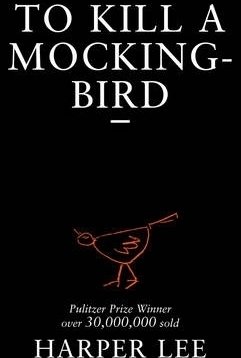
Well, February is definitely the month for discovering classics I’ve missed! For some reason, I’d always classed To Kill a Mockingbird in amongst the Agatha Christie genre of murder mysteries – not that I’ve read those either – and didn’t know enough about it for it to have piqued my interest. Now I’ve read it though, I can see what all the fuss is about, and it’s not surprising that, despite being published in 1960, it was still the <a href="http://www.guardian.co.uk/news/datablog/2012/aug/09/best-selling-books-all-time-fifty-shades-grey-compare">65th best-selling book of all time</a> in 2012. Beware of spoilers!
The story is set in Maycomb, Alabama in the 1930s, and is written from the perspective of Jean Louise ‘Scout’ Finch, who is between six and eight years old as the story progresses. The start of the book does an effective job of introducing us to all the characters. Scout lives with her widowed father, Atticus, a lawyer, her brother Jem (who is 4 years older than her) and Calpurnia, a black woman who acts as a type of mother figure. A friend, Dill, also joins them in the summer. The three children are intrigued by Arthur ‘Boo’ Radley, who lives in the house on the corner but is never seen outside. I really enjoyed this part of the story; it set the scene brilliantly, as well as helping me reminisce about my own childhood. Even if there is no ‘haunted’ house, children will always make one – at least, my brother and I did! With the limitless amounts of imagination children have, there will always be adventures to be had and ‘monsters’ to escape from. There was one particular house, when we were around the same age as Jem and Scout, where they had a doorbell you pulled, like a cord. My brother Josh said it was a doorbell that made you scream every time you pulled it, so we obviously had great fun in pulling it, screaming, and running away. If by some fluke the person living there is reading this, I’m really sorry, but it still makes me laugh! There was also every Christmas, when we went carol singing. We had decided that the houses beyond the wood were richer than the others, and every year would link arms, lighting matches to try and find our way in the dark and telling ghost stories the whole time.
Once everything has been established, the book moves on to a case Atticus is defending. A black man, Tom, has been accused of raping Mayella Ewell, part of a trashy white family with very poor education and even less money. This is where the casual prejudice of the time is evident – Jem and Scout have to put up with people calling their family a “nigger-lover” (sorry if that language offends, it is a direct quote and I mean no harm); Atticus faces repercussions for his whole-hearted attempt to save Tom; and many of the Maycomb women look down on the black community. However, there’s still a touch of hope – the way Atticus defends Tom’s case makes everybody think, a great feat in the setting where black and white people are in completely different classes. In this part of the story, I really looked up to Atticus, in his seemingly-infinite wisdom.
In the final part of the story, Jem and Scout finally get to meet Boo Radley, and it is here that the title of the book becomes apparent. In the middle of the book, after Jem and Scout get air-rifles, it is said:
<blockquote>When he gave us our air-rifles Atticus wouldn’t teach us to shoot. Uncle Jack instructed us in the rudiments thereof; he said Atticus wasn’t interested in guns. Atticus said to Jem one day, “I’d rather you shoot at tin cans in the back yard, but I know you’ll go after birds. Shoot all the bluejays you want, if you can hit ‘em, but remember it’s a sin to kill a mockingbird.”
That was the only time I ever heard Atticus say it was a sin to do something, and I asked Miss Maudie about it.
“Your father’s right,” she said. “Mockingbirds don’t do one thing but make music for us to enjoy. They don’t eat up people’s gardens, don’t nest in corncribs, they don’t do one thing but sing their hearts out for us. That’s why it’s a sin to kill a mockingbird.”</blockquote>
Obviously, not knowing what was coming, I thought the story must eventually be about the children shooting a mockingbird. The last page of the book, though, I realised that it was a lot more subtle and symbolic than that. The mockingjay is Boo Radley, the man who gives when he can and causes no harm.
I really wish I’d read this story as a child, to see what sort of perspective I’d have had back then. Reading as an adult means that, while Scout was a brilliant perspective, I was almost reading as an outsider. I could see her maturing, slowly fitting the pieces together to start acting like an adult, but at the same time it was an undeniably adult reading. I really really enjoyed the book, but I have a feeling it’s one of those multi-faceted ones where you read something different every time. I can’t help thinking that reading it as a child would have been a lot more powerful.
This review is also on my <a href="http://awowords.wordpress.com">blog</a>; - if you liked it, please check it out!
The story is set in Maycomb, Alabama in the 1930s, and is written from the perspective of Jean Louise ‘Scout’ Finch, who is between six and eight years old as the story progresses. The start of the book does an effective job of introducing us to all the characters. Scout lives with her widowed father, Atticus, a lawyer, her brother Jem (who is 4 years older than her) and Calpurnia, a black woman who acts as a type of mother figure. A friend, Dill, also joins them in the summer. The three children are intrigued by Arthur ‘Boo’ Radley, who lives in the house on the corner but is never seen outside. I really enjoyed this part of the story; it set the scene brilliantly, as well as helping me reminisce about my own childhood. Even if there is no ‘haunted’ house, children will always make one – at least, my brother and I did! With the limitless amounts of imagination children have, there will always be adventures to be had and ‘monsters’ to escape from. There was one particular house, when we were around the same age as Jem and Scout, where they had a doorbell you pulled, like a cord. My brother Josh said it was a doorbell that made you scream every time you pulled it, so we obviously had great fun in pulling it, screaming, and running away. If by some fluke the person living there is reading this, I’m really sorry, but it still makes me laugh! There was also every Christmas, when we went carol singing. We had decided that the houses beyond the wood were richer than the others, and every year would link arms, lighting matches to try and find our way in the dark and telling ghost stories the whole time.
Once everything has been established, the book moves on to a case Atticus is defending. A black man, Tom, has been accused of raping Mayella Ewell, part of a trashy white family with very poor education and even less money. This is where the casual prejudice of the time is evident – Jem and Scout have to put up with people calling their family a “nigger-lover” (sorry if that language offends, it is a direct quote and I mean no harm); Atticus faces repercussions for his whole-hearted attempt to save Tom; and many of the Maycomb women look down on the black community. However, there’s still a touch of hope – the way Atticus defends Tom’s case makes everybody think, a great feat in the setting where black and white people are in completely different classes. In this part of the story, I really looked up to Atticus, in his seemingly-infinite wisdom.
In the final part of the story, Jem and Scout finally get to meet Boo Radley, and it is here that the title of the book becomes apparent. In the middle of the book, after Jem and Scout get air-rifles, it is said:
<blockquote>When he gave us our air-rifles Atticus wouldn’t teach us to shoot. Uncle Jack instructed us in the rudiments thereof; he said Atticus wasn’t interested in guns. Atticus said to Jem one day, “I’d rather you shoot at tin cans in the back yard, but I know you’ll go after birds. Shoot all the bluejays you want, if you can hit ‘em, but remember it’s a sin to kill a mockingbird.”
That was the only time I ever heard Atticus say it was a sin to do something, and I asked Miss Maudie about it.
“Your father’s right,” she said. “Mockingbirds don’t do one thing but make music for us to enjoy. They don’t eat up people’s gardens, don’t nest in corncribs, they don’t do one thing but sing their hearts out for us. That’s why it’s a sin to kill a mockingbird.”</blockquote>
Obviously, not knowing what was coming, I thought the story must eventually be about the children shooting a mockingbird. The last page of the book, though, I realised that it was a lot more subtle and symbolic than that. The mockingjay is Boo Radley, the man who gives when he can and causes no harm.
I really wish I’d read this story as a child, to see what sort of perspective I’d have had back then. Reading as an adult means that, while Scout was a brilliant perspective, I was almost reading as an outsider. I could see her maturing, slowly fitting the pieces together to start acting like an adult, but at the same time it was an undeniably adult reading. I really really enjoyed the book, but I have a feeling it’s one of those multi-faceted ones where you read something different every time. I can’t help thinking that reading it as a child would have been a lot more powerful.
This review is also on my <a href="http://awowords.wordpress.com">blog</a>; - if you liked it, please check it out!
Bob Mann (459 KP) rated Bad Times at the El Royale (2018) in Movies
Sep 28, 2021

Why is everyone not raving about this movie?
Imagine a ménage à trois of Agatha Christie, Alfred Hitchcock and Quentin Tarantino at the Overlook Hotel with a banging 60’s soundtrack. Got that unpleasant vision in your mind? Good! You’re halfway there to getting the feel of “Bad Times at the El Royale”. And they really are bad times!
The Plot
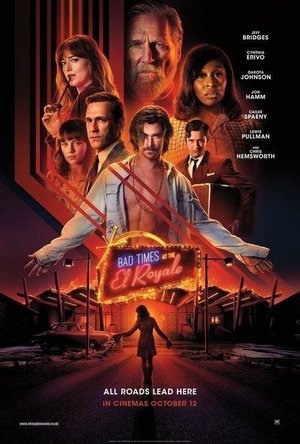
It’s 1969 and an oddball set of characters arrive at the faded glory of the El Royale hotel at Lake Tahoe: “a bi-state establishment” straddling the Nevada/California border: so describes the manager-cum-bellhop-cum-bartender-cum-cleaner Miles Miller (Lewis Pullman, soon to appear as Maverick in the “Top Gun” sequel). The motley crew include Laramie Seymour Sullivan, a vacuum cleaner salesman (Jon Hamm); Father Daniel Flynn, an oddly-acting priest (Jeff Bridges); Darlene Sweet, a struggling Motown-style singer (Cynthia Erivo); and Emily Summerspring, a rude and abrupt hippy-chick with attitude (Dakota Johnson). But noone is quite who they seem and their twisted and convoluted lives combine in a memorable night of surprise and violence at the El Royale.
The turns
I’ve often expressed my admiration for the Screen Actor’s Guild Awards and their category of “Best Ensemble Cast”: at a time when there are controversial suggestions of additions to the Oscars, this is one I would like to see (along with a “Best Stunt Team” award that I’ve previously lobbied for). And here is my second serious candidate for the “Best Ensemble Cast” Oscar in 2018, my first being “Three Billboards in Ebbing, Missouri” (which in their books would count as 2017 anyway!) Everyone really works hard on this film and the larger than life characters suck you into the story because of the quality and intensity of their performances.
Out in front of the pack are the simply brilliant Jeff Bridges and Cynthia Erivo, an actress new to me who has a great voice and made a big impression. Scenes between the pair are just electric. Jon Hamm is as quirkily great as ever and Dakota “not Fanning” Johnson is far better in this film than any recent stuff I’ve seen her in. Another standout was another newcomer to me – young Cailee Spaeny as Rose, looking for all the world in some scenes like a young Carey Mulligan. While we’re on lookalikes, Lewis Pullman (best known to me for “Battle of the Sexes“) looks very like Tom Holland in some scenes.
The Review
I found this film to be just enormously entertaining. It is very Tarantino-esque in its claustrophobic nature (compare it with “The Hateful 8” in that respect) and with its quirky episodic flash cards (compare with “Pulp Fiction” or “Kill Bill”) but for me was much more appetising since – although very violent – it never stooped to the queasy “blow your face off” excesses of Tarantino, that I personally find distasteful. Where it apes Hitchcock is in its intricate plotting: the story regularly throws you off-balance with some genuinely surprising twists and turns that you never see coming. And the interesting time-splicing and flashbacks also keep you on your mental toes. To say any more or to give any examples would be a spoilerish crime, so I will refrain. This is a dish best served cold (so avoid the trailer if you can).
The film has a marvellous sense of place and time and key to establishing that is some superb set design; some brilliant costumes; and – most of all – an exquisitely chosen song catalogue. The great Michael Giacchino is behind the music, and he does a truly fabulous job, not just with the song selection but also with the background music. This never seems to intrude noticeably until the end titles, when you realise it’s been insistently working on you all the time: the best sort of soundtrack.
There are some films that make you marvel how someone sat at a keyboard and got a screenplay down on paper so satisfyingly. While it could be accused of aping Tarantino somewhat, for me this is still one such film. The writer/director Drew Goddard has come from the J.J. Abrams stable of “Alias” and “Lost”, and has previously written the great screenplays for films including “Cloverfield”, “The Martian” and “World War Z“. His only previous directorial feature was “The Cabin in the Woods” (which I’ve not seen), but after this he is definitely on my movie radar: his next film will be “X-force”: a “Deadpool 2” follow-on with Ryan Reynolds, Josh Brolin and Zazie Beetz, and I can’t wait to see that.
If there’s a criticism it’s that at 141 minutes its a tad long. It never to me felt like a film that long, such was the entertainment value, but while I just loved the development of character just a few of the scenes felt a little leisurely and superfluous. Trim 10 minutes off the running time – no more – and it might have felt tighter still.
I didn’t mention one star name in “The Turns” section, and that’s Chris Hemsworth. He actually does a great job in his demanding Messianic role of Billy Lee, but I just had trouble equating the “Thor” star as being “all kinds of bad”: this felt like a slight misstep in the casting to me.
Summary
This film is without a doubt going to storm into my Top 10 for the year. It’s an entertaining delight, full of twists, turns, deliciously wordy dialogue and a satisfyingly open ending. I can’t believe this film hasn’t been top billing in multiplexes up and down the country for WEEKS on end. If you get the chance, my advice would be to seek this out before it disappears.
The Plot
It’s 1969 and an oddball set of characters arrive at the faded glory of the El Royale hotel at Lake Tahoe: “a bi-state establishment” straddling the Nevada/California border: so describes the manager-cum-bellhop-cum-bartender-cum-cleaner Miles Miller (Lewis Pullman, soon to appear as Maverick in the “Top Gun” sequel). The motley crew include Laramie Seymour Sullivan, a vacuum cleaner salesman (Jon Hamm); Father Daniel Flynn, an oddly-acting priest (Jeff Bridges); Darlene Sweet, a struggling Motown-style singer (Cynthia Erivo); and Emily Summerspring, a rude and abrupt hippy-chick with attitude (Dakota Johnson). But noone is quite who they seem and their twisted and convoluted lives combine in a memorable night of surprise and violence at the El Royale.
The turns
I’ve often expressed my admiration for the Screen Actor’s Guild Awards and their category of “Best Ensemble Cast”: at a time when there are controversial suggestions of additions to the Oscars, this is one I would like to see (along with a “Best Stunt Team” award that I’ve previously lobbied for). And here is my second serious candidate for the “Best Ensemble Cast” Oscar in 2018, my first being “Three Billboards in Ebbing, Missouri” (which in their books would count as 2017 anyway!) Everyone really works hard on this film and the larger than life characters suck you into the story because of the quality and intensity of their performances.
Out in front of the pack are the simply brilliant Jeff Bridges and Cynthia Erivo, an actress new to me who has a great voice and made a big impression. Scenes between the pair are just electric. Jon Hamm is as quirkily great as ever and Dakota “not Fanning” Johnson is far better in this film than any recent stuff I’ve seen her in. Another standout was another newcomer to me – young Cailee Spaeny as Rose, looking for all the world in some scenes like a young Carey Mulligan. While we’re on lookalikes, Lewis Pullman (best known to me for “Battle of the Sexes“) looks very like Tom Holland in some scenes.
The Review
I found this film to be just enormously entertaining. It is very Tarantino-esque in its claustrophobic nature (compare it with “The Hateful 8” in that respect) and with its quirky episodic flash cards (compare with “Pulp Fiction” or “Kill Bill”) but for me was much more appetising since – although very violent – it never stooped to the queasy “blow your face off” excesses of Tarantino, that I personally find distasteful. Where it apes Hitchcock is in its intricate plotting: the story regularly throws you off-balance with some genuinely surprising twists and turns that you never see coming. And the interesting time-splicing and flashbacks also keep you on your mental toes. To say any more or to give any examples would be a spoilerish crime, so I will refrain. This is a dish best served cold (so avoid the trailer if you can).
The film has a marvellous sense of place and time and key to establishing that is some superb set design; some brilliant costumes; and – most of all – an exquisitely chosen song catalogue. The great Michael Giacchino is behind the music, and he does a truly fabulous job, not just with the song selection but also with the background music. This never seems to intrude noticeably until the end titles, when you realise it’s been insistently working on you all the time: the best sort of soundtrack.
There are some films that make you marvel how someone sat at a keyboard and got a screenplay down on paper so satisfyingly. While it could be accused of aping Tarantino somewhat, for me this is still one such film. The writer/director Drew Goddard has come from the J.J. Abrams stable of “Alias” and “Lost”, and has previously written the great screenplays for films including “Cloverfield”, “The Martian” and “World War Z“. His only previous directorial feature was “The Cabin in the Woods” (which I’ve not seen), but after this he is definitely on my movie radar: his next film will be “X-force”: a “Deadpool 2” follow-on with Ryan Reynolds, Josh Brolin and Zazie Beetz, and I can’t wait to see that.
If there’s a criticism it’s that at 141 minutes its a tad long. It never to me felt like a film that long, such was the entertainment value, but while I just loved the development of character just a few of the scenes felt a little leisurely and superfluous. Trim 10 minutes off the running time – no more – and it might have felt tighter still.
I didn’t mention one star name in “The Turns” section, and that’s Chris Hemsworth. He actually does a great job in his demanding Messianic role of Billy Lee, but I just had trouble equating the “Thor” star as being “all kinds of bad”: this felt like a slight misstep in the casting to me.
Summary
This film is without a doubt going to storm into my Top 10 for the year. It’s an entertaining delight, full of twists, turns, deliciously wordy dialogue and a satisfyingly open ending. I can’t believe this film hasn’t been top billing in multiplexes up and down the country for WEEKS on end. If you get the chance, my advice would be to seek this out before it disappears.

Hadley (567 KP) rated The Ghost of Villa Winter in Books
Mar 12, 2021

A cult (1 more)
Description of environment
All of the characters (1 more)
Amateur writing mistakes
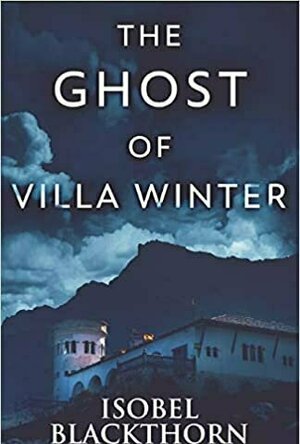
Little does the reader know when they pick up a copy of The Ghost of Villa Winter by Isobel Blackthorn that a cult is lurking about inside the pages.
We begin our journey with Clarissa ,our main character, boarding a tour bus where she lets her personality shine through, which turns out to be extremely judgmental of anyone who isn't like her, or doesn't fit into the categories she places them in. For example, the driver of the tour bus is automatically labeled by Clarissa as a bad man because he has an uneven face and a French accent, and much of the same is said about the other seven passengers, as well. When she finally manages to stop judging the passengers, readers find out that Clarissa is somewhat of a psychic: "Ghosts spoke a language of their own and if a member of the spirit world inhabited the abandoned abode, she was sure to pick up on it. She was never wrong in these matters. Only three of the thirty or more premises she'd investigated on so-called ghost tours had contained a legitimate ghost. She prided herself on her mediumistic prowess. She was apt to pick up on preternatural inhabitants of places said not to be haunted. Sometimes she thought she could singlehandedly re-write history based on information she had gleaned, but that was being arrogant. She followed her dreams and her visions and her intuition, that was all. A natural psychic and a cynic to boot. "
It turns out that Clarissa is on the tour to see if she can encounter any spirits that may be at the infamous Villa Winter; a place that is believed to have been a secret Nazi base, as well as a place for human experiments - - - the tower was also believed to have been used as a lighthouse for German U-boats - - - which, in reality, Villa Winter is an actual place that exists on the Canary Islands in Spain.
The Ghost of Villa Winter is the fourth book in Blackthorn's Canary Islands Mysteries series, but it can be easily read as an introduction to it because you don't need any background information to understand what is going on. The novel takes on the usual tropes of a murder-mystery plot (a body is found, people are stranded and trying to figure out who among them is the murderer). Agatha Christie is one of the best authors of the murder-mystery genre who loved using her knowledge of poisons in her stories - - - Blackthorn treats the tropes with the right amount of respect which makes The Ghost of Villa Winter a pretty good story.
My major complaint for the Ghost of Villa Winter are the characters, which I found every single one quite unlikable, and even by the end, I couldn't bring myself to care at all for Clarissa. The way that she judged everyone so harshly, and her viewpoint that if no one acted the way she wanted them to, she would believe something was wrong with them that needed to be addressed in a rude manner: "He was the most anxious man she had come across in a long time. Anxious, unsure of himself and preoccupied. Far too self-conscious. The way he'd aligned his plate at lunch. That was obsessive-compulsive. And he certainly couldn't handle Fred Spice. She was sure he could be charming with pretty young ladies, patronizing even, but around her he was awkward. It was clear, too, that he was broken. It wouldn't be easy being an author knowing as you aged that all of your success was behind you and your future held nothing but diminishment. Writing was one of those activities you could pursue until you dropped and many successful authors did just that. As irritating as he could be, she felt sorry for him. "
The other characters are all seen from Clarissa's viewpoint, so they come off quite annoying, but at one point it seemed like Blackthorn was trying to redeem Clarissa's negative qualities by making her an advocate for a possibly wrongly convicted man. This story line didn't come off as redemption for me, but rather to fuel Clarissa's need to be important and in the right. Blackthorn failed to make any of the characters grow above pettiness. If a reader doesn't have a character to root for, the story becomes unenjoyable - - - which is the main reason I gave the book such a low rating; the murder-mystery was interesting, but the characters were not.
The murder, a woman who may have been part of a cult, is found inside a nailed-up crate with a tattoo of a number on her body being one of the only clues that puts Clarissa into sleuth-mode. After believing that one of the tourists is the killer, she decides to keep the discovery of the murder between her and Richard - - - a crime author who came to Villa Winter in hopes of a book inspiration. The two slowly begin to investigate their fellow tourists to figure out who had the mind and motive to kill the young woman, but this doesn't seem to be as easy as it is in Richard's books. I did have a problem though with the ending which ends up being very reminiscent of a majority of short stories: the ending came abruptly and the pieces fell into a place that was unbelievable.
I had never read any of Blackthorn's books before, so I didn't have much of an expectation reading the Ghost of Villa Winter. Unfortunately, I came away from this one pretty dissatisfied because all of the interesting points in the story (such as the cult) are rarely shown/explored further. Also, the fact that 'ghost' is in the title, I was pretty let down with only a couple of scenes where a ghost actually shows up, one such short-lived scene: "She [Clarissa] was about to carry on when a figure appeared in one of the uppermost tower windows. Appeared, and then was gone. At least, what she thought to be a figure. Could have been a ghost. " The scenes are so short that I believe 'ghost' shouldn't be in the title because it's misleading.
With quite a few amateur writing mistakes, and unlikable characters, I don't think I will read anymore of the books in this series. I loved the idea of a cult murder and a haunting in a possible Nazi base, but too much of the focus in the story was on Clarissa's judgmental outlook on everything that it ended up not being the story it could have been. I can only recommend this book to people who want a quick murder-mystery (what most call the genre 'cozy mystery'), but for paranormal lovers, the ghosts practically disappeared within a few pages.
We begin our journey with Clarissa ,our main character, boarding a tour bus where she lets her personality shine through, which turns out to be extremely judgmental of anyone who isn't like her, or doesn't fit into the categories she places them in. For example, the driver of the tour bus is automatically labeled by Clarissa as a bad man because he has an uneven face and a French accent, and much of the same is said about the other seven passengers, as well. When she finally manages to stop judging the passengers, readers find out that Clarissa is somewhat of a psychic: "Ghosts spoke a language of their own and if a member of the spirit world inhabited the abandoned abode, she was sure to pick up on it. She was never wrong in these matters. Only three of the thirty or more premises she'd investigated on so-called ghost tours had contained a legitimate ghost. She prided herself on her mediumistic prowess. She was apt to pick up on preternatural inhabitants of places said not to be haunted. Sometimes she thought she could singlehandedly re-write history based on information she had gleaned, but that was being arrogant. She followed her dreams and her visions and her intuition, that was all. A natural psychic and a cynic to boot. "
It turns out that Clarissa is on the tour to see if she can encounter any spirits that may be at the infamous Villa Winter; a place that is believed to have been a secret Nazi base, as well as a place for human experiments - - - the tower was also believed to have been used as a lighthouse for German U-boats - - - which, in reality, Villa Winter is an actual place that exists on the Canary Islands in Spain.
The Ghost of Villa Winter is the fourth book in Blackthorn's Canary Islands Mysteries series, but it can be easily read as an introduction to it because you don't need any background information to understand what is going on. The novel takes on the usual tropes of a murder-mystery plot (a body is found, people are stranded and trying to figure out who among them is the murderer). Agatha Christie is one of the best authors of the murder-mystery genre who loved using her knowledge of poisons in her stories - - - Blackthorn treats the tropes with the right amount of respect which makes The Ghost of Villa Winter a pretty good story.
My major complaint for the Ghost of Villa Winter are the characters, which I found every single one quite unlikable, and even by the end, I couldn't bring myself to care at all for Clarissa. The way that she judged everyone so harshly, and her viewpoint that if no one acted the way she wanted them to, she would believe something was wrong with them that needed to be addressed in a rude manner: "He was the most anxious man she had come across in a long time. Anxious, unsure of himself and preoccupied. Far too self-conscious. The way he'd aligned his plate at lunch. That was obsessive-compulsive. And he certainly couldn't handle Fred Spice. She was sure he could be charming with pretty young ladies, patronizing even, but around her he was awkward. It was clear, too, that he was broken. It wouldn't be easy being an author knowing as you aged that all of your success was behind you and your future held nothing but diminishment. Writing was one of those activities you could pursue until you dropped and many successful authors did just that. As irritating as he could be, she felt sorry for him. "
The other characters are all seen from Clarissa's viewpoint, so they come off quite annoying, but at one point it seemed like Blackthorn was trying to redeem Clarissa's negative qualities by making her an advocate for a possibly wrongly convicted man. This story line didn't come off as redemption for me, but rather to fuel Clarissa's need to be important and in the right. Blackthorn failed to make any of the characters grow above pettiness. If a reader doesn't have a character to root for, the story becomes unenjoyable - - - which is the main reason I gave the book such a low rating; the murder-mystery was interesting, but the characters were not.
The murder, a woman who may have been part of a cult, is found inside a nailed-up crate with a tattoo of a number on her body being one of the only clues that puts Clarissa into sleuth-mode. After believing that one of the tourists is the killer, she decides to keep the discovery of the murder between her and Richard - - - a crime author who came to Villa Winter in hopes of a book inspiration. The two slowly begin to investigate their fellow tourists to figure out who had the mind and motive to kill the young woman, but this doesn't seem to be as easy as it is in Richard's books. I did have a problem though with the ending which ends up being very reminiscent of a majority of short stories: the ending came abruptly and the pieces fell into a place that was unbelievable.
I had never read any of Blackthorn's books before, so I didn't have much of an expectation reading the Ghost of Villa Winter. Unfortunately, I came away from this one pretty dissatisfied because all of the interesting points in the story (such as the cult) are rarely shown/explored further. Also, the fact that 'ghost' is in the title, I was pretty let down with only a couple of scenes where a ghost actually shows up, one such short-lived scene: "She [Clarissa] was about to carry on when a figure appeared in one of the uppermost tower windows. Appeared, and then was gone. At least, what she thought to be a figure. Could have been a ghost. " The scenes are so short that I believe 'ghost' shouldn't be in the title because it's misleading.
With quite a few amateur writing mistakes, and unlikable characters, I don't think I will read anymore of the books in this series. I loved the idea of a cult murder and a haunting in a possible Nazi base, but too much of the focus in the story was on Clarissa's judgmental outlook on everything that it ended up not being the story it could have been. I can only recommend this book to people who want a quick murder-mystery (what most call the genre 'cozy mystery'), but for paranormal lovers, the ghosts practically disappeared within a few pages.