Search
Search results

Gareth von Kallenbach (980 KP) rated Captain Marvel (2019) in Movies
Jun 19, 2019
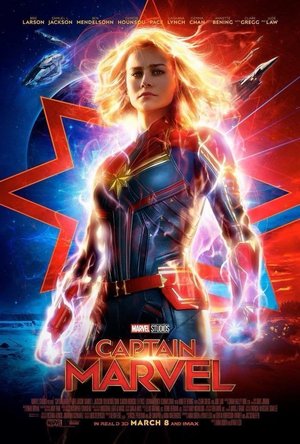


Marvel Studios has once again launched a new franchise within their expansive Marvel Cinematic Universe with the arrival of “Captain Marvel”. The film tells the origin of the title character (Brie Larson), who struggles with gaps in her memory while serving as a Kree Protector under the supervision of Yon-Rogg (Jude Law).
When things do not go as planned during a mission; the good Captain finds herself on Earth forced to wait for her crew to retrieve her. The gaps in her memory combined with the arrival of the shape-shifting Skrulls are bad enough, but now there is also the arrival of S.H.I.E.L.D. agent Nick Fury (Samuel L. Jackson) for her to contend with.
Being set in the 90s we get a Fury that has yet to be awakened to what is truly out there so he finds the claims of alien beings a bit hard to grasp until fate pairs him with the Captain who must stop the threat posed by the aliens and unlock the mystery of her missing memories.
While the film takes a while to get going; there is enough action scattered throughout to keep your interest and the finale is a rousing FX showcase that really helps establish the character and delivers what fans expect.
Naturally there is a good amount of humor along the way and the dynamic between Larson and Jackson is very good and I hope we get to see them paired on future Marvel adventures.
The supporting cast of Jude Law, Annette Bening, and Ben Mendelsohn is great and it was nice to see many other characters from past Marvel films appear as younger versions of themselves.
The film had to balance establishing the character and setting up further adventures with making sure audiences understood her importance and why her presence in “Avengers: Endgame” is connected and does so very well.
Larson was amazing in the title role as she portrays a strength and confidence without ever being arrogant but there is also a quick wit and at times; a vulnerability that makes her character more well-rounded than people would expect from a comic based film.
It is amazing to me how Marvel Studios can take some of their lesser known characters and turn them into Box Office gold and their winning formula continues with this entertaining new franchise.
http://sknr.net/2019/03/05/captain-marvel/
When things do not go as planned during a mission; the good Captain finds herself on Earth forced to wait for her crew to retrieve her. The gaps in her memory combined with the arrival of the shape-shifting Skrulls are bad enough, but now there is also the arrival of S.H.I.E.L.D. agent Nick Fury (Samuel L. Jackson) for her to contend with.
Being set in the 90s we get a Fury that has yet to be awakened to what is truly out there so he finds the claims of alien beings a bit hard to grasp until fate pairs him with the Captain who must stop the threat posed by the aliens and unlock the mystery of her missing memories.
While the film takes a while to get going; there is enough action scattered throughout to keep your interest and the finale is a rousing FX showcase that really helps establish the character and delivers what fans expect.
Naturally there is a good amount of humor along the way and the dynamic between Larson and Jackson is very good and I hope we get to see them paired on future Marvel adventures.
The supporting cast of Jude Law, Annette Bening, and Ben Mendelsohn is great and it was nice to see many other characters from past Marvel films appear as younger versions of themselves.
The film had to balance establishing the character and setting up further adventures with making sure audiences understood her importance and why her presence in “Avengers: Endgame” is connected and does so very well.
Larson was amazing in the title role as she portrays a strength and confidence without ever being arrogant but there is also a quick wit and at times; a vulnerability that makes her character more well-rounded than people would expect from a comic based film.
It is amazing to me how Marvel Studios can take some of their lesser known characters and turn them into Box Office gold and their winning formula continues with this entertaining new franchise.
http://sknr.net/2019/03/05/captain-marvel/
Gareth von Kallenbach (980 KP) rated Venom (2018) in Movies
Jun 19, 2019
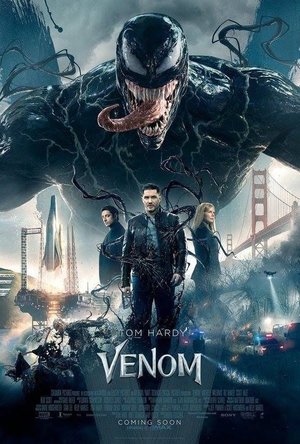
If you can manage to throw away what you know about the Marvel Comic book story of Venom, you’ll enjoy this movie immensely. After a successful re-launching of the Spiderman series, it’s no surprise Sony Pictures would capitalize and develop a Venom spin-off.
Venom follows investigative journalist Eddie Brock (Tom Hardy), who’s living life in San Francisco with his fiancé Annie (Michelle Williams) after being blacklisted by all media outlets in New York for his outlandish attempts at digging for the truth to his stories. Eddie, with his inability to follow protocol and keep boundaries, he steals confidential information from his fiancé’s computer, loses the only job willing to hire him, and tries to bring down the
powerful Carlton Drake (Riz Ahmed), famed bio-tech entrepreneur. Behind the façade of Drake’s disease curing company, Life Foundation, Drake’s major motive is to bond with alien creatures called symbiotes in hopes of recreating the human by providing them with the ability to survive in space. He managed to send a rocket into space and return 4 symbiotes which he tests on human’s killing 2 of the symbiotes and leaving one to escape and the last one to test on himself. Realizing the amount of power he gets from the merging of the two species, Drake decides he wants to head back into space and bring back more symbiotes
With nothing left to lose, Brock breaks into the Life Foundation and ends up becoming infected by one of the last 2 symbiotes which eventually introduces itself to Brock as Venom. With Venom inhabiting Eddie’s body, they become an unlikely human killing machine each trying to keep to their species capabilities. This unusual pairing consists of quick witted banter, with each trying to upstage the other.
As the two begin to spend some quality time “together,” they realize they aren’t much different. They figure out a way to co-exist all for the sake of saving the human race.
A fast-paced superhero movie that keeps you on the edge of your seat, laughing out loud, and completely entertained. The character development is a bit lacking, however the action sequences, and the comradery between our morphed superhero makes up for some of the holes in the story line.
http://sknr.net/2018/10/05/venom/
Venom follows investigative journalist Eddie Brock (Tom Hardy), who’s living life in San Francisco with his fiancé Annie (Michelle Williams) after being blacklisted by all media outlets in New York for his outlandish attempts at digging for the truth to his stories. Eddie, with his inability to follow protocol and keep boundaries, he steals confidential information from his fiancé’s computer, loses the only job willing to hire him, and tries to bring down the
powerful Carlton Drake (Riz Ahmed), famed bio-tech entrepreneur. Behind the façade of Drake’s disease curing company, Life Foundation, Drake’s major motive is to bond with alien creatures called symbiotes in hopes of recreating the human by providing them with the ability to survive in space. He managed to send a rocket into space and return 4 symbiotes which he tests on human’s killing 2 of the symbiotes and leaving one to escape and the last one to test on himself. Realizing the amount of power he gets from the merging of the two species, Drake decides he wants to head back into space and bring back more symbiotes
With nothing left to lose, Brock breaks into the Life Foundation and ends up becoming infected by one of the last 2 symbiotes which eventually introduces itself to Brock as Venom. With Venom inhabiting Eddie’s body, they become an unlikely human killing machine each trying to keep to their species capabilities. This unusual pairing consists of quick witted banter, with each trying to upstage the other.
As the two begin to spend some quality time “together,” they realize they aren’t much different. They figure out a way to co-exist all for the sake of saving the human race.
A fast-paced superhero movie that keeps you on the edge of your seat, laughing out loud, and completely entertained. The character development is a bit lacking, however the action sequences, and the comradery between our morphed superhero makes up for some of the holes in the story line.
http://sknr.net/2018/10/05/venom/

Hazel (1853 KP) rated Trying to Float: Coming of Age in the Chelsea Hotel in Books
Dec 17, 2018


<i>I received this book for free through Goodreads First Reads.</i>
Written about a young girl by a young girl, <i>Trying To Float</i> is the amusing, witty story of Nicolaia Rips’ life thus far. About to graduate from LaGuardia High School for the Performing Arts in New York City, Nicolaia talks the reader through her life from birth, through preschool and elementary school, before coming to rest at the end of her middle school experiences.
As the strap line <i>Coming of Age in the Chelsea Hotel</i> indicates, Nicolaia has lived in the Chelsea Hotel in New York for her entire life. Her unconventional father and travel obsessed mother decided to settle there after the birth of their only child, resulting in an unusual upbringing surrounded by avant-garde writers, artists and musicians, as well as the plethora of drug addicts, alcoholics and eccentrics.
Although Nicolaia’s lifestyle caused her to be the worldliest wise of five year olds, she was completely alien to the knowledge of friendships, hard work and the generally accepted behaviour of children. This resulted in numerous, often awkward, situations throughout her schooling which, although must have been soul destroying at the time, Nicolaia writes in a highly amusing tone.
<i>Trying to Float</i> reminded me of a television programme aired on the BBC last year: <i>The Kennedys</i> – a story of the daughter of highly peculiar and embarrassing parents, who was constantly surrounded by a mass of oddball characters. I could not help but see similarities even though there is absolutely no correlation between the two stories.
While Nicolaia has based this book on a journal she kept during her childhood, there are many scenes that have been warped by exaggeration and imagination to add comedic effect. Due to this, her original writing has been worked over so much in order for it to flow like a story, that it is more fiction than biographical.
It is not completely clear who the target audience is. Naturally a story about a child’s experiences at school would relate more to young adults, however the coarse language used by the inhabitants of the hotel make it more appropriate for adults. Whatever your age and background, you are likely to relate to something in this gem of a book. Nicolaia makes light of her experiences, but deep down it is a very heart-wrenching story.
Written about a young girl by a young girl, <i>Trying To Float</i> is the amusing, witty story of Nicolaia Rips’ life thus far. About to graduate from LaGuardia High School for the Performing Arts in New York City, Nicolaia talks the reader through her life from birth, through preschool and elementary school, before coming to rest at the end of her middle school experiences.
As the strap line <i>Coming of Age in the Chelsea Hotel</i> indicates, Nicolaia has lived in the Chelsea Hotel in New York for her entire life. Her unconventional father and travel obsessed mother decided to settle there after the birth of their only child, resulting in an unusual upbringing surrounded by avant-garde writers, artists and musicians, as well as the plethora of drug addicts, alcoholics and eccentrics.
Although Nicolaia’s lifestyle caused her to be the worldliest wise of five year olds, she was completely alien to the knowledge of friendships, hard work and the generally accepted behaviour of children. This resulted in numerous, often awkward, situations throughout her schooling which, although must have been soul destroying at the time, Nicolaia writes in a highly amusing tone.
<i>Trying to Float</i> reminded me of a television programme aired on the BBC last year: <i>The Kennedys</i> – a story of the daughter of highly peculiar and embarrassing parents, who was constantly surrounded by a mass of oddball characters. I could not help but see similarities even though there is absolutely no correlation between the two stories.
While Nicolaia has based this book on a journal she kept during her childhood, there are many scenes that have been warped by exaggeration and imagination to add comedic effect. Due to this, her original writing has been worked over so much in order for it to flow like a story, that it is more fiction than biographical.
It is not completely clear who the target audience is. Naturally a story about a child’s experiences at school would relate more to young adults, however the coarse language used by the inhabitants of the hotel make it more appropriate for adults. Whatever your age and background, you are likely to relate to something in this gem of a book. Nicolaia makes light of her experiences, but deep down it is a very heart-wrenching story.

BankofMarquis (1832 KP) rated Men in Black International (2019) in Movies
Jun 23, 2019

Perfectly Fine
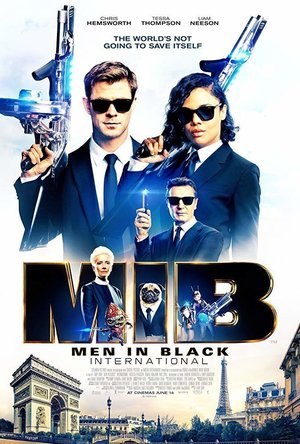
MEN IN BLACK INTERNATIONAL is a perfectly fine movie that showcases two perfectly fine talents getting into a perfectly fine predicament that is perfectly fine to view. It's fun and action-packed with weird aliens and charismatic, bickering, leads.
It also is nothing new. We've seen this film before with MEN IN BLACK or MEN IN BLACK II or MEN IN BLACK III. So, while I walked out of the cineplex with a satisfying movie going experience, I was left wanting something...more.
In this version of MIB, Tessa Thompson takes over the Will Smith role as the "newbie" in the MIB Universe. We (the audience) experience unusual - and unexpected - things through her eyes and she is joined by a veteran MIB agent - this time played by Chris Hemsworth. The MIB Universe is expanded as agent "M" (Thompson) is sent to the London Bureau by her boss, "O" (an always welcome Emma Thompson". There she meets the head of MIB London (Liam Neeson being gruff and "boss-like") and his "golden boy", Agent "H" (a game Hemsworth). The two join forces to investigate a "mole" in MIB and are, eventually, joined by Alien "Pawney" (voiced, nicely, by Kumail Nanjiani).
The plot machinations are nothing new. I saw the 2 "plot twists" coming a mile off. So it is the journey, not the destination, that should be the fun of it and, ultimately, the journey is agreeable enough but nothing more. "H" and "M" bicker their way through the proceedings until they form a mutual respect for each other. "O", "High T" and Agent "C" (a rival for Hemsworth's "H") are gruff...enough...but never threatening.
And that, ultimately, is the issue here. The stakes weren't high enough, the conflicts weren't big enough, the special effects weren't new enough and, ultimately, the movie just isn't original enough. I kept thinking to myself..."This is the perfect "airplane" movie." By that, I mean I could watch this on an airplane and not be worried about who is looking over my shoulder at what I am watching on screen. It is a safe, pleasant enough, entertainment experience.
You won't be disappointed in this film, you also won't be challenged, thrilled or amazed at it, either.
Letter Grade: B
7 stars (out of 10) and you can take that to the Bank(OfMarquis)
It also is nothing new. We've seen this film before with MEN IN BLACK or MEN IN BLACK II or MEN IN BLACK III. So, while I walked out of the cineplex with a satisfying movie going experience, I was left wanting something...more.
In this version of MIB, Tessa Thompson takes over the Will Smith role as the "newbie" in the MIB Universe. We (the audience) experience unusual - and unexpected - things through her eyes and she is joined by a veteran MIB agent - this time played by Chris Hemsworth. The MIB Universe is expanded as agent "M" (Thompson) is sent to the London Bureau by her boss, "O" (an always welcome Emma Thompson". There she meets the head of MIB London (Liam Neeson being gruff and "boss-like") and his "golden boy", Agent "H" (a game Hemsworth). The two join forces to investigate a "mole" in MIB and are, eventually, joined by Alien "Pawney" (voiced, nicely, by Kumail Nanjiani).
The plot machinations are nothing new. I saw the 2 "plot twists" coming a mile off. So it is the journey, not the destination, that should be the fun of it and, ultimately, the journey is agreeable enough but nothing more. "H" and "M" bicker their way through the proceedings until they form a mutual respect for each other. "O", "High T" and Agent "C" (a rival for Hemsworth's "H") are gruff...enough...but never threatening.
And that, ultimately, is the issue here. The stakes weren't high enough, the conflicts weren't big enough, the special effects weren't new enough and, ultimately, the movie just isn't original enough. I kept thinking to myself..."This is the perfect "airplane" movie." By that, I mean I could watch this on an airplane and not be worried about who is looking over my shoulder at what I am watching on screen. It is a safe, pleasant enough, entertainment experience.
You won't be disappointed in this film, you also won't be challenged, thrilled or amazed at it, either.
Letter Grade: B
7 stars (out of 10) and you can take that to the Bank(OfMarquis)
Fred (860 KP) rated Close Encounters of the Third Kind (1977) in Movies
Jan 22, 2019

Spielberg's best
When people think of Spielberg's best, they'll either jump straight to Jaws or Schindler's List. While both are fantastic movies, there is one movie in my opinion, that is often forgotten & is truly his best. Close Encounters of the Third Kind. I first saw this as a kid, when I forced my parents to take me to see it on their movie night, while my 5 brothers were stuck at home being babysat by my Grandma.
Anyway, let's talk about the movie. From the beginning scene with the planes in the desert, you know you're in for something special. At the time I saw the movie, I was big into UFOs. I knew all the stories, all the alien types, all the photos. I even knew who Dr. Allen Hynek, who ran Project Blue Book, was & recognized him at the end of the film, where he makes a cameo. My dad, who was not into sci-fi & didn't believe in the supernatural, told me many times that this was one of his favorite films because "It could happen".
And that's part of the movie's appeal. It could happen. But it's Spielberg's direction of the actors that makes it seem even more real. The way Roy's family acts when all together is all too real & much like real people would act. Everyone in the film is great. If I had only one complaint about the movie, it would be that Roy's wife leaves him too quickly. It's almost like she doesn't even like him & is so quick to give up on him. In any case, she is played very well by Teri Garr. We meet a lot of strange people on the way too, who also have seen these UFOs, like the whistling guy, who saw Bigfoot once too. And he's believable. Again, it all seems like it could happen.
Then there are the special effects. Done by ILM, who had no peers at the time. The UFOs look like they're there & the Mothership at the end still drops my jaw. Throw in John Williams memorable score & you got movie magic. Whenever I think of this film, I get in the mood to watch it right away. And I usually do. I probably have seen this movie over 50 times & will watch it again & again. Close Encounters is Spielberg's best & my third favorite of all time
Anyway, let's talk about the movie. From the beginning scene with the planes in the desert, you know you're in for something special. At the time I saw the movie, I was big into UFOs. I knew all the stories, all the alien types, all the photos. I even knew who Dr. Allen Hynek, who ran Project Blue Book, was & recognized him at the end of the film, where he makes a cameo. My dad, who was not into sci-fi & didn't believe in the supernatural, told me many times that this was one of his favorite films because "It could happen".
And that's part of the movie's appeal. It could happen. But it's Spielberg's direction of the actors that makes it seem even more real. The way Roy's family acts when all together is all too real & much like real people would act. Everyone in the film is great. If I had only one complaint about the movie, it would be that Roy's wife leaves him too quickly. It's almost like she doesn't even like him & is so quick to give up on him. In any case, she is played very well by Teri Garr. We meet a lot of strange people on the way too, who also have seen these UFOs, like the whistling guy, who saw Bigfoot once too. And he's believable. Again, it all seems like it could happen.
Then there are the special effects. Done by ILM, who had no peers at the time. The UFOs look like they're there & the Mothership at the end still drops my jaw. Throw in John Williams memorable score & you got movie magic. Whenever I think of this film, I get in the mood to watch it right away. And I usually do. I probably have seen this movie over 50 times & will watch it again & again. Close Encounters is Spielberg's best & my third favorite of all time


Sophia (Bookwyrming Thoughts) (530 KP) rated The 5th Wave: Book 1 in Books
Jan 23, 2020

I really wanted to like <i>The 5th Wave</i>. The synopsis sounded fantastic, it's becoming a movie – the book just sounded like one of those that I would probably read quickly, enjoy it, demand the second book (in other words, snag it straight off Lupe's shelf), read through that quickly, and pretty much have another favorite book this year (there's really only two so far that are special).
I didn't even last thirty pages. <i>Thirty</i> pages, which says <i>a lot</i>, because while I may give up on books more often now, I don't usually give up THAT early.
The premise wasn't what made me give up reading <i>The 5th Wave</i> – characters trying to fight for survival? Sounds like <i>Hatchet</i>, only with the "aliens" attacking with "waves."
I only stopped because of Cassie. Cassie, short for Cassiopeia, the main character of the book. I couldn't stand her for the life of me.
She's materialistic – in a world when the world is literally falling apart around you, who <i>cares</i> about hygiene being top priority? It's great she cares (because you can't just walk to a job interview smelling like horse poop), but by the whatever wave that's past the first, I'm pretty sure you're too busy making surviving the <i>day</i> your priority.
She's rude – if there's one thing I don't like, it's texting while in a conversation simply because you're bored. Then, she says, "Oh, and in case you're an alien reading this? BITE ME."
Totally. I'm totally willing to bite Cassie... in a review, that is.
Basically, there was a vibe about her I didn't like early on. But with all of the flashbacks at literally every chapter, I not only got to know the world <i>before</i> the 1st Wave, I got to know Cassie as a person. And Cassie probably tops the list of the most annoying characters I've ever come across in a book.
Someone please tell me I'm not the only one who couldn't stand Cassie. If I am, I'm willing to cry in a little corner alone with my lonesome self...
<a href="https://bookwyrmingthoughts.com/dnf-review-the-5th-wave-by-rick-yancey/"; target="_blank">This review was originally posted on Bookwyrming Thoughts</a>
I didn't even last thirty pages. <i>Thirty</i> pages, which says <i>a lot</i>, because while I may give up on books more often now, I don't usually give up THAT early.
The premise wasn't what made me give up reading <i>The 5th Wave</i> – characters trying to fight for survival? Sounds like <i>Hatchet</i>, only with the "aliens" attacking with "waves."
I only stopped because of Cassie. Cassie, short for Cassiopeia, the main character of the book. I couldn't stand her for the life of me.
She's materialistic – in a world when the world is literally falling apart around you, who <i>cares</i> about hygiene being top priority? It's great she cares (because you can't just walk to a job interview smelling like horse poop), but by the whatever wave that's past the first, I'm pretty sure you're too busy making surviving the <i>day</i> your priority.
She's rude – if there's one thing I don't like, it's texting while in a conversation simply because you're bored. Then, she says, "Oh, and in case you're an alien reading this? BITE ME."
Totally. I'm totally willing to bite Cassie... in a review, that is.
Basically, there was a vibe about her I didn't like early on. But with all of the flashbacks at literally every chapter, I not only got to know the world <i>before</i> the 1st Wave, I got to know Cassie as a person. And Cassie probably tops the list of the most annoying characters I've ever come across in a book.
Someone please tell me I'm not the only one who couldn't stand Cassie. If I am, I'm willing to cry in a little corner alone with my lonesome self...
<a href="https://bookwyrmingthoughts.com/dnf-review-the-5th-wave-by-rick-yancey/"; target="_blank">This review was originally posted on Bookwyrming Thoughts</a>
Gareth von Kallenbach (980 KP) rated Bullet to the Head (2013) in Movies
Aug 7, 2019

Action icon Sylvester Stallone follows up his smash hit “The Expendables 2” with a turn as a New Orleans hitman on a mission of revenge in “Bullet to the Head”. Produced by Walter Hill, who brought us such classics as the “Alien” series and directed films such as “Red Heat” and “48 Hours”, his signature style is evident throughout.
Stallone plays James Bonomo, a.k.a. Jimmy Bobo, a thug with a long rap sheet and few friends. After celebrating a successful contract hit, his partner is brutally killed and an attempt is made on Jimmy’s life as well. Suspecting that they’d been setup, James reluctantly meets with a D.C. detective named Taylor Kwon (Sung Kang), who is in town to investigate the murder of his former partner. Fate forces the duo to work with one another despite Kwon’s by-the-book nature and utter disdain for James and his choice of profession. The two soon uncover a large conspiracy that threatens not only their lives but the cities very powerful and elite, making the duo the prime targets for those who will stop at nothing.
Despite having a fairly formulaic plot, the film works very well, thanks in large part to the cast. The two leads work very well with one another, and the fine supporting work by Jason Momoa and Adewale Akinnuoye-Agbaje really set the tone. The action in the film is intense and at times brutal but does not seem gratuitous, making it clear that the characters live in a violent world where accepting death is second nature to the urge to kill.
Stallone gives a very physical performance as the world weary James and you can tell that he went all out for the films action sequences despite the toll his body had to take. The film is based on the graphic novel “Du Plomb dans la Tête” and captures the elements of a classic film noir, with the action of a buddy cop film without pandering to many of the genre stereotypes.
While I enjoyed Schwarzenegger’s “The Last Stand” a bit more, I was very surprised at how enjoyable the film was after being underwhelmed by the trailer. In the end, if you’re a fan of Stallone, and love a good action film, then this is one you will not want to miss.
Stallone plays James Bonomo, a.k.a. Jimmy Bobo, a thug with a long rap sheet and few friends. After celebrating a successful contract hit, his partner is brutally killed and an attempt is made on Jimmy’s life as well. Suspecting that they’d been setup, James reluctantly meets with a D.C. detective named Taylor Kwon (Sung Kang), who is in town to investigate the murder of his former partner. Fate forces the duo to work with one another despite Kwon’s by-the-book nature and utter disdain for James and his choice of profession. The two soon uncover a large conspiracy that threatens not only their lives but the cities very powerful and elite, making the duo the prime targets for those who will stop at nothing.
Despite having a fairly formulaic plot, the film works very well, thanks in large part to the cast. The two leads work very well with one another, and the fine supporting work by Jason Momoa and Adewale Akinnuoye-Agbaje really set the tone. The action in the film is intense and at times brutal but does not seem gratuitous, making it clear that the characters live in a violent world where accepting death is second nature to the urge to kill.
Stallone gives a very physical performance as the world weary James and you can tell that he went all out for the films action sequences despite the toll his body had to take. The film is based on the graphic novel “Du Plomb dans la Tête” and captures the elements of a classic film noir, with the action of a buddy cop film without pandering to many of the genre stereotypes.
While I enjoyed Schwarzenegger’s “The Last Stand” a bit more, I was very surprised at how enjoyable the film was after being underwhelmed by the trailer. In the end, if you’re a fan of Stallone, and love a good action film, then this is one you will not want to miss.

When Friday Comes: Football, War and Revolution in the Middle East
Book
In January 2011 millions of Egyptians took part in mass protests that ended the iron rule of its...
The New Counter-Measures: Series 1
John Dorney, Guy Adams, Ian Potter and Christopher Hatherall
Book
Four new investigations for Sir Toby Kinsella and his specialist team. 1. Nothing to See Here by Guy...