
Search
Search results

Kristy H (1252 KP) rated Small Great Things in Books
Feb 1, 2018
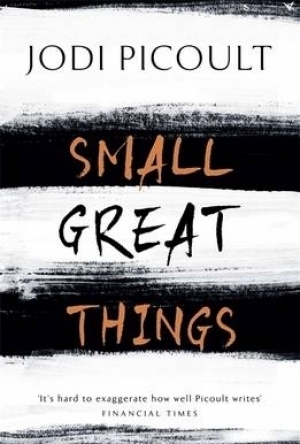


Ruth Jefferson is a successful labor and delivery nurse with over twenty years of experience. She has a nice home and a college-bound seventeen-year-old son, Edison. She also happens to be African American. When Ruth takes over for a colleague at shift change, she is simply doing a checkup on newborn baby boy Davis. But after his checkup, she's told Davis' parents don't want her touching their child. A post-it note in his file states that no African American staff should be touching the patient. Ruth is shocked-- and angry. The next day, when Davis has a medical emergency, Ruth is faced with a choice. Does she help the baby--defying the order of the parents and her supervisor? Ruth's decision leads her on a path that involves the police and being charged with a serious crime. Police come into her home, handcuffing her and her son. Her public defender, Kennedy McQuarrie, recommends that Ruth's defense not involve race: a lightning rod for juries, she says. But Ruth is angry and humiliated and wants to clear her name, at whatever the cost.
This is a touching and powerful novel. Told from the varying points of view of Ruth, Kennedy, and Turk--baby Davis' father-- it is a compelling look at how race and family history shapes the person we become. It is a poignant story at points: it is amazing what people can rationalize when it comes to hatred. I found the novel very fitting right now, with what's going on in the U.S. Honestly, it's very frightening at times and hits a little too close to home.
Picoult's characters are well-formed and dynamic, and you find yourself drawn into parts of each.
Turk, obviously, despite the loss of his child, is not a sympathetic character, but he is a complex one; his progression over the course of the novel is intriguing, and it's amazing how Picoult did not make him a one dimensional white supremacist. The book is extremely well-researched; both from the side of white supremacy, as well as racism and the medical aspects of Davis' case. Kennedy is likeable and her struggle with Ruth's case, as she realizes the depth of both the visible and latent racism her client faces on a daily basis, is real and relatable. I applaud Picoult for tackling such a difficult subject with such honesty. It's almost as if, through Kennedy, she's admitting exactly what she doesn't know. (I highly recommend reading Picoult's afterword, as well.)
For me, the hardest parts of the book was that it gets a little too poetic in the Jodi Picoult way (those who frequently read her novels will identify), with her waxing on about race and parents and being brought together, versus letting the story tell itself. At points the book just goes on and on a bit, versus getting to the story and the point. There are lots of little subplots that go off, detracting at times from the main story and frustrating the reader. And, of course, there are some weird twists and plot points in the typical Picoult style, though they don't seem to pack the punch of her older novels. It all wraps up a little too smoothly, though I have to confess I sort of enjoyed the ending. It may have been a bit trite, but I am often a sucker for such things.
Overall, I was impressed with how Picoult approached this novel, and I enjoyed the storyline for the most part (I was certainly invested), though it dawdled at times and ended a bit too easily. I'd rate this a strong 3.5 - 3.75 stars. Certainly worth reading, especially if you're a Picoult fan.
I received a copy of this novel from the publisher and Netgalley; is available everywhere as of 10/11/2016.
This is a touching and powerful novel. Told from the varying points of view of Ruth, Kennedy, and Turk--baby Davis' father-- it is a compelling look at how race and family history shapes the person we become. It is a poignant story at points: it is amazing what people can rationalize when it comes to hatred. I found the novel very fitting right now, with what's going on in the U.S. Honestly, it's very frightening at times and hits a little too close to home.
Picoult's characters are well-formed and dynamic, and you find yourself drawn into parts of each.
Turk, obviously, despite the loss of his child, is not a sympathetic character, but he is a complex one; his progression over the course of the novel is intriguing, and it's amazing how Picoult did not make him a one dimensional white supremacist. The book is extremely well-researched; both from the side of white supremacy, as well as racism and the medical aspects of Davis' case. Kennedy is likeable and her struggle with Ruth's case, as she realizes the depth of both the visible and latent racism her client faces on a daily basis, is real and relatable. I applaud Picoult for tackling such a difficult subject with such honesty. It's almost as if, through Kennedy, she's admitting exactly what she doesn't know. (I highly recommend reading Picoult's afterword, as well.)
For me, the hardest parts of the book was that it gets a little too poetic in the Jodi Picoult way (those who frequently read her novels will identify), with her waxing on about race and parents and being brought together, versus letting the story tell itself. At points the book just goes on and on a bit, versus getting to the story and the point. There are lots of little subplots that go off, detracting at times from the main story and frustrating the reader. And, of course, there are some weird twists and plot points in the typical Picoult style, though they don't seem to pack the punch of her older novels. It all wraps up a little too smoothly, though I have to confess I sort of enjoyed the ending. It may have been a bit trite, but I am often a sucker for such things.
Overall, I was impressed with how Picoult approached this novel, and I enjoyed the storyline for the most part (I was certainly invested), though it dawdled at times and ended a bit too easily. I'd rate this a strong 3.5 - 3.75 stars. Certainly worth reading, especially if you're a Picoult fan.
I received a copy of this novel from the publisher and Netgalley; is available everywhere as of 10/11/2016.

App in the Air
Travel and Productivity
App
App in the Air - your personal flying assistant that keeps you up-to-date with your flight: real...

Bob Mann (459 KP) rated First Man (2018) in Movies
Sep 28, 2021
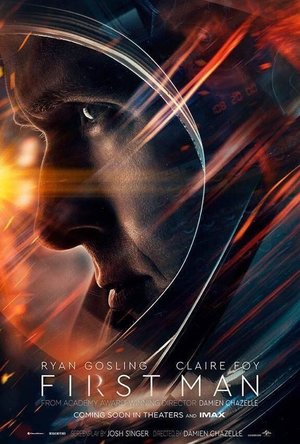


He captured a feeling. Sky with no ceiling.
A memorable event
I am a child of the 60’s, born in 1961. The “Space Race” for me was not some historical concept but a pervasive backdrop to my childhood. I still recall, at the age of 8, being marched into my junior school’s assembly hall. We all peered at the grainy black-and-white pictures of Neil Armstrong as he spoke his famously fluffed line before stepping onto the lunar surface. The event happened at 3:54am UK time, so clearly my recollection of “seeing it live” is bogus. (I read that the BBC stayed on air until 10:30 in the morning, so it was probably a ‘final review’ of the night’s events I saw). It is probably lodged in my memory less for the historical event and more due to the fact that there was TELEVISION ON IN THE MORNING! (Kids, ask your grandparents!)
A very personal connection. My personal copy of Waddington’s “Blast Off” board game, briefly shown in the film.
The plot
But back to Damien Chazelle‘s film. We start early in the 60’s with America getting well and truly kicked up the proberbial by the Russians in the space race: they fail to get the first man in space; they fail to carry out the first spacewalk. So the Americans, following the famous JFK speech, set their sights on the moon. It’s the equivalent of making a mess of cutting your toenails but then deciding to have a go at brain surgery. NASA develop the Gemini programme to practice the essential docking manoevers required as a precursor for the seemingly impossible (‘two blackboard’) mission that is Apollo.
But the price paid for such ambition is high.
Ryan Gosling plays Neil Armstrong as a dedicated, prickly, professional; altogether not a terribly likeable individual. Claire Foy plays his long-suffering wife Janet, putting her support for her husband’s dangerous profession ahead of her natural fears of becoming a single mother.
Review
There is obviously little tension to be mined from a film that has such a well-known historical context. Those with even a subliminal knowledge of the subject will be aware of the key triumphs and tragedies along the way. The script (by Josh Singer, “The Post“; “Spotlight“) is very well done in developing a creeping dread of knowing what is shortly to come.
Even with these inherent spoilers, Chazelle still manages to evoke armrest-squeezing tension into the space flight sequences. A lot of this is achieved through disorientating camera movements and flashing images that may irritate some but I found to be highly effective. (Did anyone else flash back to that excellent “Mission Space” ride at Epcot during the launch sequences?) This hand-held cinematography by Linus Sandgren (Chazelle’s “La La Land” collaborator) is matched by some utterly drop-dead gorgeous shots – beautifully framed; beautifully lit – that would be worthy of a Kaminski/Spielberg collaboration.
Those expecting a rollercoaster thrill-ride of the likes of “Apollo 13” will be disappointed. The film has more of the slow-and-long-burn feeling of “The Right Stuff” in mood and, at 141 minutes, some might even find it quite boring. There is significant time, for example, spent within the family home. These scenes include turbulent events of which I wasn’t previously aware: events that form the cornerstone of the film’s drama. For me, the balance of the personal and the historical background was perfectly done. I found it curious though that with such a family-oriented drama Chazelle chose to ditch completely any cuts away to the earthbound onlookers during the tense lunar landing sequence. (Compare and contrast with Ron Howard‘s masterly inter-cutting in the re-entry scene of “Apollo 13”). With the outcome foretold, perhaps such tension building was considered unnecessary? I’m not suggesting it was wrong to ‘stay in the moment’ with the astronauts, but it’s a bold directorial move.
Overall, the foolhardiness of NASA trying to do what they did with the 60’s technology at their disposal is well-portrayed. If you’ve been lucky enough, as I have, to view the Apollo 11 capsule in the National Air and Space museum in Washington you can’t help but be impressed by the bravery of Armstong, Aldrin and Collins in getting in that bucket of bolts and putting their lives on the line. True American heroes.
On that topic, the “flag issue” has generated much self-righteous heat within the US media; that is regarding Chazelle not showing the American flag being planted. This seems fatuous to me. Not only is the flag shown on the moon, but the film ably demonstrates the American know-how and bravery behind the mission. If Clint Eastwood had been directing he would have probably gone there: but for me it certainly didn’t need any further patriotism rubbed in the viewer’s face.
The turns
Are Oscar nominations on the cards for Ryan Gosling and Claire Foy? For me, it would be staggering if they are not: this film has “Oscar nomination” written all over it. I’d also certainly not bet against Foy winning for Best Actress: her portrayal of a wife on the edge is nothing short of brilliant. And perhaps, just perhaps, this might be Gosling’s year too.
Elsewhere there are strong supporting performances from Kyle Chandler (as Deke Slayton), Corey Stoll (as the ‘tell it how it is’ Buzz Aldrin) and Jason Clarke (as Ed White). It’s also great to see Belfast-born Ciarán Hinds in another mainstream Hollywood release.
For me, another dead cert Oscar nomination will be Justin Hurwitz for the score which is breathtakingly brilliant, not just in its compelling themes but also in its orchestration: the use of the eerie theremin and melodic harp are just brilliant together. I haven’t heard a score this year that’s more fitting to the visuals: although it’s early in the Oscar season to be calling it, I’d be very surprised if this didn’t walk away with the statuette.
Summary
Loved this. Damien Chazelle – with “Whiplash“, “La La Land” and now “First Man” – has hit all of three out of the park in my book. It’s not really a film for thrill-seekers, who might get bored, but anyone, like me, with an interest in the history of space exploration will I think lap it up: for this was surely the most memorable decade in space history… so far.
On leaving the cinema I looked up at the rising moon and marvelled once more at the audacity of man. My eyes then drifted across to the red dot that was Mars. How long I wonder? And how many dramatic film biographies still to come?
I am a child of the 60’s, born in 1961. The “Space Race” for me was not some historical concept but a pervasive backdrop to my childhood. I still recall, at the age of 8, being marched into my junior school’s assembly hall. We all peered at the grainy black-and-white pictures of Neil Armstrong as he spoke his famously fluffed line before stepping onto the lunar surface. The event happened at 3:54am UK time, so clearly my recollection of “seeing it live” is bogus. (I read that the BBC stayed on air until 10:30 in the morning, so it was probably a ‘final review’ of the night’s events I saw). It is probably lodged in my memory less for the historical event and more due to the fact that there was TELEVISION ON IN THE MORNING! (Kids, ask your grandparents!)
A very personal connection. My personal copy of Waddington’s “Blast Off” board game, briefly shown in the film.
The plot
But back to Damien Chazelle‘s film. We start early in the 60’s with America getting well and truly kicked up the proberbial by the Russians in the space race: they fail to get the first man in space; they fail to carry out the first spacewalk. So the Americans, following the famous JFK speech, set their sights on the moon. It’s the equivalent of making a mess of cutting your toenails but then deciding to have a go at brain surgery. NASA develop the Gemini programme to practice the essential docking manoevers required as a precursor for the seemingly impossible (‘two blackboard’) mission that is Apollo.
But the price paid for such ambition is high.
Ryan Gosling plays Neil Armstrong as a dedicated, prickly, professional; altogether not a terribly likeable individual. Claire Foy plays his long-suffering wife Janet, putting her support for her husband’s dangerous profession ahead of her natural fears of becoming a single mother.
Review
There is obviously little tension to be mined from a film that has such a well-known historical context. Those with even a subliminal knowledge of the subject will be aware of the key triumphs and tragedies along the way. The script (by Josh Singer, “The Post“; “Spotlight“) is very well done in developing a creeping dread of knowing what is shortly to come.
Even with these inherent spoilers, Chazelle still manages to evoke armrest-squeezing tension into the space flight sequences. A lot of this is achieved through disorientating camera movements and flashing images that may irritate some but I found to be highly effective. (Did anyone else flash back to that excellent “Mission Space” ride at Epcot during the launch sequences?) This hand-held cinematography by Linus Sandgren (Chazelle’s “La La Land” collaborator) is matched by some utterly drop-dead gorgeous shots – beautifully framed; beautifully lit – that would be worthy of a Kaminski/Spielberg collaboration.
Those expecting a rollercoaster thrill-ride of the likes of “Apollo 13” will be disappointed. The film has more of the slow-and-long-burn feeling of “The Right Stuff” in mood and, at 141 minutes, some might even find it quite boring. There is significant time, for example, spent within the family home. These scenes include turbulent events of which I wasn’t previously aware: events that form the cornerstone of the film’s drama. For me, the balance of the personal and the historical background was perfectly done. I found it curious though that with such a family-oriented drama Chazelle chose to ditch completely any cuts away to the earthbound onlookers during the tense lunar landing sequence. (Compare and contrast with Ron Howard‘s masterly inter-cutting in the re-entry scene of “Apollo 13”). With the outcome foretold, perhaps such tension building was considered unnecessary? I’m not suggesting it was wrong to ‘stay in the moment’ with the astronauts, but it’s a bold directorial move.
Overall, the foolhardiness of NASA trying to do what they did with the 60’s technology at their disposal is well-portrayed. If you’ve been lucky enough, as I have, to view the Apollo 11 capsule in the National Air and Space museum in Washington you can’t help but be impressed by the bravery of Armstong, Aldrin and Collins in getting in that bucket of bolts and putting their lives on the line. True American heroes.
On that topic, the “flag issue” has generated much self-righteous heat within the US media; that is regarding Chazelle not showing the American flag being planted. This seems fatuous to me. Not only is the flag shown on the moon, but the film ably demonstrates the American know-how and bravery behind the mission. If Clint Eastwood had been directing he would have probably gone there: but for me it certainly didn’t need any further patriotism rubbed in the viewer’s face.
The turns
Are Oscar nominations on the cards for Ryan Gosling and Claire Foy? For me, it would be staggering if they are not: this film has “Oscar nomination” written all over it. I’d also certainly not bet against Foy winning for Best Actress: her portrayal of a wife on the edge is nothing short of brilliant. And perhaps, just perhaps, this might be Gosling’s year too.
Elsewhere there are strong supporting performances from Kyle Chandler (as Deke Slayton), Corey Stoll (as the ‘tell it how it is’ Buzz Aldrin) and Jason Clarke (as Ed White). It’s also great to see Belfast-born Ciarán Hinds in another mainstream Hollywood release.
For me, another dead cert Oscar nomination will be Justin Hurwitz for the score which is breathtakingly brilliant, not just in its compelling themes but also in its orchestration: the use of the eerie theremin and melodic harp are just brilliant together. I haven’t heard a score this year that’s more fitting to the visuals: although it’s early in the Oscar season to be calling it, I’d be very surprised if this didn’t walk away with the statuette.
Summary
Loved this. Damien Chazelle – with “Whiplash“, “La La Land” and now “First Man” – has hit all of three out of the park in my book. It’s not really a film for thrill-seekers, who might get bored, but anyone, like me, with an interest in the history of space exploration will I think lap it up: for this was surely the most memorable decade in space history… so far.
On leaving the cinema I looked up at the rising moon and marvelled once more at the audacity of man. My eyes then drifted across to the red dot that was Mars. How long I wonder? And how many dramatic film biographies still to come?

Rachel King (13 KP) rated Water for Elephants in Books
Feb 11, 2019
This is one of those books that I read because I loved the movie first. So, I was quite surprised when I read how the book begins - with the murder of one of the main characters. When I further realized that August does not own the Benzini Brothers, I began to see the movie as its own story separate from the book.
Jacob is by far the most interesting character of the book, especially since he tells the story as an old man in a nursing home - and has the wisdom and experience to go with his age. His emotions are infectious and I longed to sit down with him and listen to all of his stories in person way before I finished the book.
August is the kind of villain that is confusing in his evil deeds - he has schizophrenia - which makes it somewhat unfair to dislike him so much. His irrational behavior has been exploited for the almighty dollar by Uncle Al - but the real villain tends to fade into the background.
Marlena is beautiful to the point of angelic, very little of what she does can be considered wrong in any way, as she is a victim struggling for freedom for most of the book. She approaches August's mood swings with the same caution due a wild animal, and remains faithful to him despite her personal feelings, and does not leave until he first betrays her. Considering how women today will leave their husbands for any reason, I admire her strong morals.
The background is set during the Great Depression, which made for many intense situations as the circus struggled to profit, as well as the survival of the cast of characters. Though I studied this period in American history, the direct experience gave me a clearer idea of the desperation of people alive during this time - how easily morals could be put on hold for the sake of another mouthful of food or another coin in the pocket. So many men of the circus would work without pay for the promise of another meal and unending hope that life could still improve.
Rosie, the elephant, is also one of the most fascinating characters in the book. She proved to be only one example of how animals were exploited to the point of cruelty for profit. I could not help wondering where the animal activists were.
Needless to say, this book sparked many conversations and inspired many moments of personal contemplation for me. I loved this book, and I highly recommend it.
Jacob is by far the most interesting character of the book, especially since he tells the story as an old man in a nursing home - and has the wisdom and experience to go with his age. His emotions are infectious and I longed to sit down with him and listen to all of his stories in person way before I finished the book.
August is the kind of villain that is confusing in his evil deeds - he has schizophrenia - which makes it somewhat unfair to dislike him so much. His irrational behavior has been exploited for the almighty dollar by Uncle Al - but the real villain tends to fade into the background.
Marlena is beautiful to the point of angelic, very little of what she does can be considered wrong in any way, as she is a victim struggling for freedom for most of the book. She approaches August's mood swings with the same caution due a wild animal, and remains faithful to him despite her personal feelings, and does not leave until he first betrays her. Considering how women today will leave their husbands for any reason, I admire her strong morals.
The background is set during the Great Depression, which made for many intense situations as the circus struggled to profit, as well as the survival of the cast of characters. Though I studied this period in American history, the direct experience gave me a clearer idea of the desperation of people alive during this time - how easily morals could be put on hold for the sake of another mouthful of food or another coin in the pocket. So many men of the circus would work without pay for the promise of another meal and unending hope that life could still improve.
Rosie, the elephant, is also one of the most fascinating characters in the book. She proved to be only one example of how animals were exploited to the point of cruelty for profit. I could not help wondering where the animal activists were.
Needless to say, this book sparked many conversations and inspired many moments of personal contemplation for me. I loved this book, and I highly recommend it.

Louise (64 KP) rated The Sun is Also a Star in Books
Jul 2, 2018
*I received a copy of this book from Netgalley and the publisher in exchange for an honest opinion*
The Sun is Also a Star is Nicola Yoon’s second novel and they just keep getting better. She is becoming the queen of contemporary and I will definitely be reading everything that she writes. This book is so much better than Everything, Everything.
<img src="https://media.giphy.com/media/l41YleLHixOeCWNe8/giphy.gif"; width="140" height="180" alt="description"/>
Natasha is an undocumented immigrant living in New York with her family, she is being deported back to Jamaica after living in America for 8 years. Desperate and at the end of her tether she will do anything to stop this from happening. Natasha has her future planned out and her friends in New York.
Daniel is a Korean-American and has his entrance exams for college.He’s to study medicine as his parents have always wanted but this is not Daniel’s dreams,he wants to be a poet and write about love and fate.
Natasha and Daniel meet on the streets of New York City the day that Natasha is to be deported and Daniel has his entrance exam. Believing in fate and destiny, Daniel tries to convince Natasha that she will fall in love with him by the end of the day and in doing so asks her questions that scientists have tested and proved.
This book is really amazing, it has everything going for it! First off we have that stunning cover the colours and design are just beautiful. Nicola Yoon’s writing is very addictive. It had all the romance and then scientific facts and whilst writing about serious topics she then blends in the humour. I also loved that there were excerpts from other characters such as their history or future and it really added and made it such a fulfilling story.It made you realise that things happen for a reason and everyone’s actions lead to someone else’s fate/destiny.
The characters are great, they are three-dimensional but also they have their flaws,they are totally different from one another in what they believe in and want from life.
This does seem like insta-love because the book is set over the course of day, but it’s not insta-love as Natasha wants nothing to do with Daniel and it takes time for her to warm to him.
I would definitely recommend this book.
I rated this 5 out of 5 stars
The Sun is Also a Star is Nicola Yoon’s second novel and they just keep getting better. She is becoming the queen of contemporary and I will definitely be reading everything that she writes. This book is so much better than Everything, Everything.
<img src="https://media.giphy.com/media/l41YleLHixOeCWNe8/giphy.gif"; width="140" height="180" alt="description"/>
Natasha is an undocumented immigrant living in New York with her family, she is being deported back to Jamaica after living in America for 8 years. Desperate and at the end of her tether she will do anything to stop this from happening. Natasha has her future planned out and her friends in New York.
Daniel is a Korean-American and has his entrance exams for college.He’s to study medicine as his parents have always wanted but this is not Daniel’s dreams,he wants to be a poet and write about love and fate.
Natasha and Daniel meet on the streets of New York City the day that Natasha is to be deported and Daniel has his entrance exam. Believing in fate and destiny, Daniel tries to convince Natasha that she will fall in love with him by the end of the day and in doing so asks her questions that scientists have tested and proved.
This book is really amazing, it has everything going for it! First off we have that stunning cover the colours and design are just beautiful. Nicola Yoon’s writing is very addictive. It had all the romance and then scientific facts and whilst writing about serious topics she then blends in the humour. I also loved that there were excerpts from other characters such as their history or future and it really added and made it such a fulfilling story.It made you realise that things happen for a reason and everyone’s actions lead to someone else’s fate/destiny.
The characters are great, they are three-dimensional but also they have their flaws,they are totally different from one another in what they believe in and want from life.
This does seem like insta-love because the book is set over the course of day, but it’s not insta-love as Natasha wants nothing to do with Daniel and it takes time for her to warm to him.
I would definitely recommend this book.
I rated this 5 out of 5 stars

Gareth von Kallenbach (980 KP) rated Bridge of Spies (2015) in Movies
Jun 19, 2019
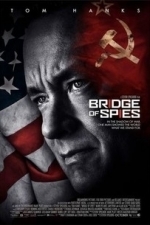

In the 1950s the world was locked in the midst of the Cold War where paranoia, mutual distrust, and fear, combined with the threat of nuclear annihilation between the United States and Soviet Union. In “Bridge of Spies” Director Steven Spielberg has once again used history as a basis for a compelling story filled with real characters and emotions.
When suspected spy Rudolf Abel (Mark Rylance), is arrested New York Tax Attorney James Donovan (Tom Hanks) is asked to provide Abel with a competent defense so the United States can show the world that Abel was given a fair trial and due process despite the charges against him.
Although hesitant what defending an accused spy will bring hatred to him and his family, Donovan takes up the task and despite a judge and process that wants to railroad this to a conviction in spite of possible illegal search and seizure, Donovan is able to avoid the death penalty for his client and even files an appeal before the Supreme Court as he is convinced his client was convicted on evidence that was illegally obtained.
At the same time, a young Air Force pilot named Francis Gary Powers (Austin Stowell), is shot down by the Russians in a U-2 spy plane and is paraded by the Russians on television before being convicted of being a Spy.
This situation increases and already tense situation and when the East German government starts to build the Berlin Wall and takes an American student prisoner for espionage, back channels contact Donovan to discuss a possible exchange of prisoners.
Now since this cannot be done by any official sanction of the U.S. or Russian governments, Donovan must in secret travel to Berlin and meet with figures to obtain a release. The U.S. wants Powers and considers the student an expendable throw in but Donovan is resolute to bring them both home in exchange for his client Abel.
The film is beautifully shot and masterfully acted with top performance by Hanks and the leads. The events are fairly close to the historical accounts I studied as a child and Spielberg is wise to let the story and the characters drive the film and not create over impassioned speeches or tacked on action sequences to build the drama.
The film is an early contender for several Oscar nominations as far as I am concerned as is one of the best movies of 2015.
http://sknr.net/2015/10/16/bridge-of-spies/
When suspected spy Rudolf Abel (Mark Rylance), is arrested New York Tax Attorney James Donovan (Tom Hanks) is asked to provide Abel with a competent defense so the United States can show the world that Abel was given a fair trial and due process despite the charges against him.
Although hesitant what defending an accused spy will bring hatred to him and his family, Donovan takes up the task and despite a judge and process that wants to railroad this to a conviction in spite of possible illegal search and seizure, Donovan is able to avoid the death penalty for his client and even files an appeal before the Supreme Court as he is convinced his client was convicted on evidence that was illegally obtained.
At the same time, a young Air Force pilot named Francis Gary Powers (Austin Stowell), is shot down by the Russians in a U-2 spy plane and is paraded by the Russians on television before being convicted of being a Spy.
This situation increases and already tense situation and when the East German government starts to build the Berlin Wall and takes an American student prisoner for espionage, back channels contact Donovan to discuss a possible exchange of prisoners.
Now since this cannot be done by any official sanction of the U.S. or Russian governments, Donovan must in secret travel to Berlin and meet with figures to obtain a release. The U.S. wants Powers and considers the student an expendable throw in but Donovan is resolute to bring them both home in exchange for his client Abel.
The film is beautifully shot and masterfully acted with top performance by Hanks and the leads. The events are fairly close to the historical accounts I studied as a child and Spielberg is wise to let the story and the characters drive the film and not create over impassioned speeches or tacked on action sequences to build the drama.
The film is an early contender for several Oscar nominations as far as I am concerned as is one of the best movies of 2015.
http://sknr.net/2015/10/16/bridge-of-spies/
Gareth von Kallenbach (980 KP) rated The Birth of a Nation (2016) in Movies
Jul 15, 2019
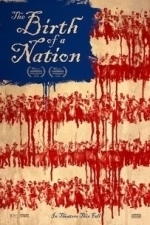
America was not born with the landing of the Mayflower. It was not born at Jamestown. It was not born with the Declaration of Independence or Treaty of Paris. It wasn’t born on the battlefields of the Civil War, nor was it born with D.W. Griffith’s Birth of a Nation in 1915. America was born in the fire and spilt blood from the institution of slavery and revolts by slaves seeking to break free. Nat Turner’s revolt was an omen to America signifying that human beings would no longer tolerate being subjugated, dehumanized, brutalized, and degraded without some form of pushback.
Nate Parker’s The Birth of a Nation tells a full story of Nat Turner and does not simply rely on the revolt to convey his message of a call for equality and fighting injustice. It is emblematic of resistance to the many sins this nation has committed. The film and story are a punch to the gut reminding Americans that there is much left unfinished with respect to telling the full story of slavery and American history as a whole. There is much of our past that we must reconcile with no matter how uncomfortable. Parker’s film demonstrates the power film has as historical record and permitting audiences to have a greater idea and picture of the past.
The Birth of A Nation allows audiences to become consumed with the horrors of slavery, but it is not limited to that aspect. It humanizes the slaves and demonstrates cultural aspects and relationships that have often gone ignored or overlooked with previous films. It does not rely on sensationalizing events in order to drive the points home. There is subtlety and honesty in the portrayal of the events and circumstances.
This is a film that will have audiences speechless at the end as the come to terms with their emotions about events as they unfold and coming to terms with what the witnessed onscreen. There is nothing that can prepare audiences for this film. It is a work of art that you cannot help but feel compelled to reflect on what you witnessed.
There are those who will not see the film due to the subject matter. There are others who won’t see it because of the sexual assault allegations against Nate Parker. There are many who won’t see it out of a pure lack of interest. Regardless of your stance, this is a film that needs to be seen. It is essential to telling a more complete story about America.
Nate Parker’s The Birth of a Nation tells a full story of Nat Turner and does not simply rely on the revolt to convey his message of a call for equality and fighting injustice. It is emblematic of resistance to the many sins this nation has committed. The film and story are a punch to the gut reminding Americans that there is much left unfinished with respect to telling the full story of slavery and American history as a whole. There is much of our past that we must reconcile with no matter how uncomfortable. Parker’s film demonstrates the power film has as historical record and permitting audiences to have a greater idea and picture of the past.
The Birth of A Nation allows audiences to become consumed with the horrors of slavery, but it is not limited to that aspect. It humanizes the slaves and demonstrates cultural aspects and relationships that have often gone ignored or overlooked with previous films. It does not rely on sensationalizing events in order to drive the points home. There is subtlety and honesty in the portrayal of the events and circumstances.
This is a film that will have audiences speechless at the end as the come to terms with their emotions about events as they unfold and coming to terms with what the witnessed onscreen. There is nothing that can prepare audiences for this film. It is a work of art that you cannot help but feel compelled to reflect on what you witnessed.
There are those who will not see the film due to the subject matter. There are others who won’t see it because of the sexual assault allegations against Nate Parker. There are many who won’t see it out of a pure lack of interest. Regardless of your stance, this is a film that needs to be seen. It is essential to telling a more complete story about America.
Gareth von Kallenbach (980 KP) rated Black Mass (2015) in Movies
Aug 6, 2019
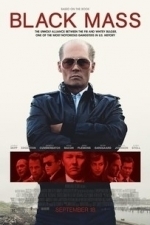
He was one of the most dangerous men and most notorious gangsters in American history. For over sixteen years he evaded the FBI and law enforcement until his eventual capture in 2011. Black Mass tells the story of James “Whitey” Bulger and his alliance with the FBI. The film delves deep into the relationship that is built between Bulger and FBI agents which allows him to expand his power beyond the Boston area. Audiences will be awestruck by the actions permitted and overlooked on the part of FBI agents working with Bulger which fall in line with the advice that Bulger gives his son: “If no one saw it, it didn’t happen.”
Johnny Depp (Pirates of the Caribbean, Sleepy Hollow, Edward Scissorhands) assumes the role of Bulger and audiences will not be able to take their eyes off of him in this film. Every movement, word, and action that he provides on screen demonstrates his versatility and ability to wear the skin and assume identity of those that he portrays. His portrayal of Whitey Bulger separates him from the “Jack Sparrow” identity that his audiences have become accustomed to. Even more impressive about his acting is the way in which the film’s direction displays more of a human element to this monster. The audience is shown countless acts of brutality undertaken by Bulger or on his orders, but there are moments in which you feel a sense of sorrow for the character. In no way do the moments allow for redemption or offer excuses for his actions, but it allows for the portrayal of a more human element. Humanizing Bulger allows for a much fuller picture of what took place during his life and demonstrates that crime was not the only factor.
The film takes all of us into a very dark place. We see a monster in action. We see countless people fall victim to Bulger and his organization. Depp intimidates not only the other characters being portrayed, but the audience in the way that his eyes always seem so cold and heartless. It is said that when you look into someone’s eyes, you can see their soul. With Whitey Bulger, his soul is absent whenever he is portrayed onscreen. This helps to solidify Depp’s portrayal of Bulger and the way that he lived his life. He was a cold, heartless monster. The only sense of a soul or any humanity comes with the direction of the film to make this monster human.
Johnny Depp (Pirates of the Caribbean, Sleepy Hollow, Edward Scissorhands) assumes the role of Bulger and audiences will not be able to take their eyes off of him in this film. Every movement, word, and action that he provides on screen demonstrates his versatility and ability to wear the skin and assume identity of those that he portrays. His portrayal of Whitey Bulger separates him from the “Jack Sparrow” identity that his audiences have become accustomed to. Even more impressive about his acting is the way in which the film’s direction displays more of a human element to this monster. The audience is shown countless acts of brutality undertaken by Bulger or on his orders, but there are moments in which you feel a sense of sorrow for the character. In no way do the moments allow for redemption or offer excuses for his actions, but it allows for the portrayal of a more human element. Humanizing Bulger allows for a much fuller picture of what took place during his life and demonstrates that crime was not the only factor.
The film takes all of us into a very dark place. We see a monster in action. We see countless people fall victim to Bulger and his organization. Depp intimidates not only the other characters being portrayed, but the audience in the way that his eyes always seem so cold and heartless. It is said that when you look into someone’s eyes, you can see their soul. With Whitey Bulger, his soul is absent whenever he is portrayed onscreen. This helps to solidify Depp’s portrayal of Bulger and the way that he lived his life. He was a cold, heartless monster. The only sense of a soul or any humanity comes with the direction of the film to make this monster human.

TeachMe: Preschool / Toddler
Education and Games
App
"***** An absolute must-buy. An amazing app for the price." -SmartAppsForKids.com "The combination...

Walden by Henry David Thoreau
Podcast
Two years, two months and two days! This is what forms the time line of one man's quest for the...