
Search
Search results
Inner Perspectives: Guideposts for the Spiritual Journey
3.0 Rate It
Podcast
Elizabeth Clare Prophet, modern mystic and pioneer in New Age spirituality, answers more than 300...

Hadley (567 KP) rated Soul Drinker in Books
Jul 25, 2020

The writing (2 more)
No character development
No ending
One of the classic horror tropes is Heaven versus Hell, angels versus demons, good versus evil (like a boogeyman versus an innocent child, or a killer versus a group of teenagers, or even an evil spirit versus an exorcist) and we always know how it's going to end: good triumphs evil, every time. Some of the most well known films with this trope are Constantine (2005), the Exorcist (1973) and more recently, Stephen King's IT : Chapter 2 (2019).
That, along with a little romance, mystery, and historical elements make up this novel that features three main characters who are stuck in a struggle between good and evil while having to face mistakes from the past.
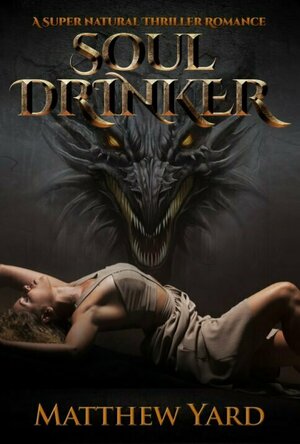
Welcome to the hellish world of Soul Drinker by newcomer, Matthew Yard.
Deep description is what makes up Yard's storytelling, so much so that the book is extremely hard to read. Only 132 pages long, Yard spends most paragraphs describing one single thing in many different ways, such as a young woman's hair, which only needs one sentence to tell such a detail, but instead, took an entire paragraph.
During an ancient civilization, a deity appeared named Destroyer, it found a way to break through the boundaries that separates realms and universes - - - finding our realm, Destroyer leaves his son Luther to build powerful followings through cults run by Pagans.
The novel's villain, Luther, isn't present enough to feel like a real threat for the reader. And the three main characters, other than their physical descriptions, are lifeless because of the extreme lack of character development.
Our main character, Devin, is a college student who constantly has nightmares of his best friend's murder. He also lives at house in the woods which he has no idea how he attained it and this is never explained. After Devin and a classmate named Vic have an encounter with a supernatural cloud, they end up at this house, where readers find out that Devin isn't the only one who has been having nightmares.
Vic is a beautiful, young woman, who Devin seems to be enamoured with, but she is still busy getting over her first love. A few chapters in, readers get flashbacks of Vic's father and mother before she was born. Vic's father was also haunted by this supernatural cloud, which seems to have had a tighter grip on him than Vic - - - her father's flashbacks are the most interesting part of this story.
Vic's father, Jacob, is fast asleep next to his wife when a giant face wakes him up, telling him that there is work to do. Jacob follows the face out into the hallway, when it begins to sway, as if through the eyes of a drunk. Jacob fights the urge to continue to the stairs, wanting to turn back and protect his sleeping wife.
A little while later, we find out that Jacob is psychic: he can see the dead and/or the past. But for anymore development on that interesting piece of information, readers get one glimpse of what Jacob sees - - - and that's it. Jacob's wife, Nina, is an even flatter character, which we only get to see in bed either asleep or waking up. Even Jacob's mental and spiritual fight with the 'face' is disappointingly short with no real tension, no climax, or feelings of betrayal when something finally happens in the end of that scene.
Love, the supernatural, and Pagan cults are what make up the plot of this book. The story jumps between Devin, Vic and Jacob, but the story gets caught up in moments that shouldn't be more than a paragraph, which caused me to become bored with the story. And Yard's writing made this book read like a fan fiction: a lot of inconsistencies throughout, tons of misspellings, and a major overuse of the same words, sometimes even in the same sentence.
Unfortunately, this book was almost unreadable, and the heavy descriptions were extremely off-putting, as was the end of the story- - - the book ended suddenly, and with no sequel in sight. I can't recommend this book to anyone.
That, along with a little romance, mystery, and historical elements make up this novel that features three main characters who are stuck in a struggle between good and evil while having to face mistakes from the past.
Welcome to the hellish world of Soul Drinker by newcomer, Matthew Yard.
Deep description is what makes up Yard's storytelling, so much so that the book is extremely hard to read. Only 132 pages long, Yard spends most paragraphs describing one single thing in many different ways, such as a young woman's hair, which only needs one sentence to tell such a detail, but instead, took an entire paragraph.
During an ancient civilization, a deity appeared named Destroyer, it found a way to break through the boundaries that separates realms and universes - - - finding our realm, Destroyer leaves his son Luther to build powerful followings through cults run by Pagans.
The novel's villain, Luther, isn't present enough to feel like a real threat for the reader. And the three main characters, other than their physical descriptions, are lifeless because of the extreme lack of character development.
Our main character, Devin, is a college student who constantly has nightmares of his best friend's murder. He also lives at house in the woods which he has no idea how he attained it and this is never explained. After Devin and a classmate named Vic have an encounter with a supernatural cloud, they end up at this house, where readers find out that Devin isn't the only one who has been having nightmares.
Vic is a beautiful, young woman, who Devin seems to be enamoured with, but she is still busy getting over her first love. A few chapters in, readers get flashbacks of Vic's father and mother before she was born. Vic's father was also haunted by this supernatural cloud, which seems to have had a tighter grip on him than Vic - - - her father's flashbacks are the most interesting part of this story.
Vic's father, Jacob, is fast asleep next to his wife when a giant face wakes him up, telling him that there is work to do. Jacob follows the face out into the hallway, when it begins to sway, as if through the eyes of a drunk. Jacob fights the urge to continue to the stairs, wanting to turn back and protect his sleeping wife.
A little while later, we find out that Jacob is psychic: he can see the dead and/or the past. But for anymore development on that interesting piece of information, readers get one glimpse of what Jacob sees - - - and that's it. Jacob's wife, Nina, is an even flatter character, which we only get to see in bed either asleep or waking up. Even Jacob's mental and spiritual fight with the 'face' is disappointingly short with no real tension, no climax, or feelings of betrayal when something finally happens in the end of that scene.
Love, the supernatural, and Pagan cults are what make up the plot of this book. The story jumps between Devin, Vic and Jacob, but the story gets caught up in moments that shouldn't be more than a paragraph, which caused me to become bored with the story. And Yard's writing made this book read like a fan fiction: a lot of inconsistencies throughout, tons of misspellings, and a major overuse of the same words, sometimes even in the same sentence.
Unfortunately, this book was almost unreadable, and the heavy descriptions were extremely off-putting, as was the end of the story- - - the book ended suddenly, and with no sequel in sight. I can't recommend this book to anyone.

Bob Mann (459 KP) rated Tomb Raider (2018) in Movies
Sep 29, 2021
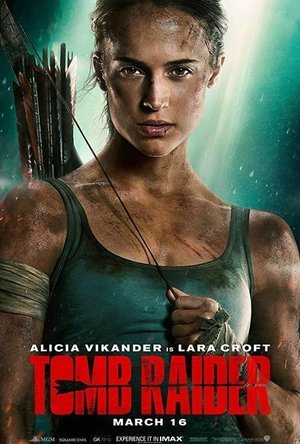


A tremendously energetic and fun video game spin-off.
In this #TimesUp year, reviewing a film like “Tomb Raider” is just asking for trouble! So where shall I start digging my shallow grave?
Let’s start with the video game… “Tomb Raider” is of course the original video game phenomenon that started in 1993, featuring Lara Croft: someone that teenagers across the land mastur…. did their homework alongside in bedrooms up and down the land. Beauty; athleticism; a fierce independence; unfeasibly large breasts; ridiculously impossible leaps: in this film reboot, Alicia Vikander’s Lara differs from this ideal in just one respect. And before the Dora Milaje smash through my windows and drag me off for incarceration on Mysogeny Island, I’ll point out that this is OBVIOUSLY the least important omission! 🙂
For this film is good… very good.
“I’M SORRY….? WHAT DID YOU SAY DR BOB??” “But this is a film about a VIDEO GAME! … They are all uniformly s****e!”
Beauty, brains and talent: the GB Olympic team will likely be calling.
I know – I can barely bring myself to admit it. But this one really is good. Most of this is down to the reason I was looking forward so much to this one. Alicia Vikander (“Ex Machina“; “The Danish Girl“; “The Light Between Oceans“) is such a class act, and here she is so much more than just a one-dimensional action hero. She hurts, she mourns, she feels guilt, she’s vulnerable. And it’s all there on her face. Great acting skill. She also kicks ass like no woman on film since Emily Blunt in “Edge of Tomorrow“!
Don’t you just hate it when you drop a bag of flour in your kitchen?
The story by Evan Daugherty and Geneva Robertson-Dworet (with Alastair Siddons adding to the screenplay) rockets off in great style with a “fox and hounds” bike chase around the City of London which is brilliantly done and sets up Croft’s character with the minimum of tedious back story. Switch to the main story and Lara is struggling to face the fact that her father (Dominic West, “Money Monster“), seen in flashback, is finally dead after going off to Japan seven years previously in search of the legendary tomb of ancient sorceress Queen Himiko. The Croft corp. COO (Kristin Scott Thomas, “Darkest Hour“) persuades Lara its time to sign the necessary papers, but on the verge of this act the lawyer Mr Yaffe (Derek Jacobi, “Murder on the Orient Express“) lets a significant cat out of the bag and sets Lara off on the trail of her long-dead father’s original mission.
In happier times. Daddy (Dominic West) goes off on yet another trip from Croft Manor.
It’s a rollercoaster ride that’s really well done. But I reckon the writers should have named Jeffrey Boam, George Lucas and Menno Meyjes as co-collaborators, for the film plagerises terribly from “Indiana Jones and the Last Crusade”. In two or three places, the similarities are shocking! As in the best of Lucas traditions though there are some breathtaking set-pieces, with the best of them staged at the top of a raging waterfall that’s just plane ridiculous! (Even if it plagerises blatantly from “The Lost World”!).
English and patient. Kristin Scott Thomas as the guiding hand at the Croft corporation.
The movie’s tremendous to look at too, with cinematography by George Richmond (“Kingsman“; “Eddie the Eagle“) and (aside from a dodgy helicopter effect) good special effect by Max Poolman (“District 9”) and his team.
My one criticism would be that Vogel – the chief villain, played by Walton Goggins (“The Hateful Eight“) – is rather too unremittingly evil to have two sweetly smiling young children in his desk photo. One can only hope he faces a nasty demise!
Never trust a guy with a beard. Walton Goggins, a bit over the top as the villain of the piece.
The film is directed by Norwegian director Roar Uthaug, in what looks to be his first “non-Norwegian” film. Roar by name; roar by nature! He does a great job. An early “summer blockbuster” actioner that gets two thumbs up from me. What a pleasant surprise!
Let’s start with the video game… “Tomb Raider” is of course the original video game phenomenon that started in 1993, featuring Lara Croft: someone that teenagers across the land mastur…. did their homework alongside in bedrooms up and down the land. Beauty; athleticism; a fierce independence; unfeasibly large breasts; ridiculously impossible leaps: in this film reboot, Alicia Vikander’s Lara differs from this ideal in just one respect. And before the Dora Milaje smash through my windows and drag me off for incarceration on Mysogeny Island, I’ll point out that this is OBVIOUSLY the least important omission! 🙂
For this film is good… very good.
“I’M SORRY….? WHAT DID YOU SAY DR BOB??” “But this is a film about a VIDEO GAME! … They are all uniformly s****e!”
Beauty, brains and talent: the GB Olympic team will likely be calling.
I know – I can barely bring myself to admit it. But this one really is good. Most of this is down to the reason I was looking forward so much to this one. Alicia Vikander (“Ex Machina“; “The Danish Girl“; “The Light Between Oceans“) is such a class act, and here she is so much more than just a one-dimensional action hero. She hurts, she mourns, she feels guilt, she’s vulnerable. And it’s all there on her face. Great acting skill. She also kicks ass like no woman on film since Emily Blunt in “Edge of Tomorrow“!
Don’t you just hate it when you drop a bag of flour in your kitchen?
The story by Evan Daugherty and Geneva Robertson-Dworet (with Alastair Siddons adding to the screenplay) rockets off in great style with a “fox and hounds” bike chase around the City of London which is brilliantly done and sets up Croft’s character with the minimum of tedious back story. Switch to the main story and Lara is struggling to face the fact that her father (Dominic West, “Money Monster“), seen in flashback, is finally dead after going off to Japan seven years previously in search of the legendary tomb of ancient sorceress Queen Himiko. The Croft corp. COO (Kristin Scott Thomas, “Darkest Hour“) persuades Lara its time to sign the necessary papers, but on the verge of this act the lawyer Mr Yaffe (Derek Jacobi, “Murder on the Orient Express“) lets a significant cat out of the bag and sets Lara off on the trail of her long-dead father’s original mission.
In happier times. Daddy (Dominic West) goes off on yet another trip from Croft Manor.
It’s a rollercoaster ride that’s really well done. But I reckon the writers should have named Jeffrey Boam, George Lucas and Menno Meyjes as co-collaborators, for the film plagerises terribly from “Indiana Jones and the Last Crusade”. In two or three places, the similarities are shocking! As in the best of Lucas traditions though there are some breathtaking set-pieces, with the best of them staged at the top of a raging waterfall that’s just plane ridiculous! (Even if it plagerises blatantly from “The Lost World”!).
English and patient. Kristin Scott Thomas as the guiding hand at the Croft corporation.
The movie’s tremendous to look at too, with cinematography by George Richmond (“Kingsman“; “Eddie the Eagle“) and (aside from a dodgy helicopter effect) good special effect by Max Poolman (“District 9”) and his team.
My one criticism would be that Vogel – the chief villain, played by Walton Goggins (“The Hateful Eight“) – is rather too unremittingly evil to have two sweetly smiling young children in his desk photo. One can only hope he faces a nasty demise!
Never trust a guy with a beard. Walton Goggins, a bit over the top as the villain of the piece.
The film is directed by Norwegian director Roar Uthaug, in what looks to be his first “non-Norwegian” film. Roar by name; roar by nature! He does a great job. An early “summer blockbuster” actioner that gets two thumbs up from me. What a pleasant surprise!
Bob Mann (459 KP) rated The Mummy (2017) in Movies
Sep 29, 2021
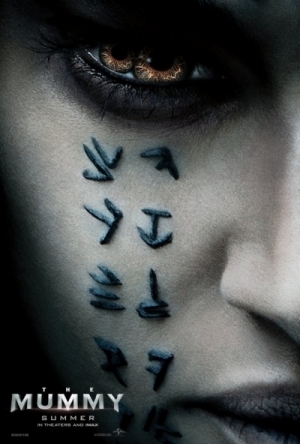

Crushingly Mediocre
I’d read the bad reviews, but thought “Hey, it’s Tom Cruise – how bad could it be?” The answer is, “Pretty bad”.
It’s an ominous sign when a film starts with a voice-over (even if done by the sonorous tones of Russell Crowe). Regular readers of this blog will know I generally abhor voice-overs: it invariably belies a belief by the scriptwriters that they think the audience are too damn stupid to join up the plot-dots themselves. Here we portentously walk through the ancient Egyptian backstory of princess Ahmanet (Sofia Boutella, “Kingsman: The Secret Service“; “Star Trek Beyond“) cursed to become the titular Mummy. We then skip forward to the present day and the film settles down, promisingly enough, with scavenging adventurer Nick Morton (Cruise, in Indiana Jones mode), discovering a lost Egyptian temple in war-torn modern-day Mesopotamia that for the sake of the world should have stayed lost.
But after an impressive plane crash (with zero G scenes filmed for real in a “Vomit Comet”) the plot dissolves into a completely incoherent mush. With B-movie lines forcing B-movie acting performances, the film lurches from plot crisis to plot crisis in a similar manner to the comically lurching undead Zombie-like creatures that Ahmanet has sucked the life out of. (After 110 minutes of this, I know how they feel!)
What were actors of this calibre doing in this mess? When I first saw the trailer for this, and saw that Cruise was in it, I thought this felt like an unusual career misstep for the megastar. After seeing the film, I’m even more mystified. Nick Morton is supposed to be an immoral bad guy. Immoral bad guy?? Tom Cruise?? Nope, you lost the audience on that one in the first ten minutes. Cruise, who is STILL only a year younger than I am (damn him, for real!) is still in great shape and must spend ALL his time in the gym. There must be a time soon coming though where he gets to a “Roger Moore in View to a Kill” moment where these action hero roles just no longer become credible anymore.
And what was Russell Crowe, as a famous / infamous (yes, both!) doctor from literature doing in this? His character’s involvement in the plot was almost completely inconsequential. In fact his ‘affliction’ only serves as a coincidental diversion (how convenient!) for bad Mummy-related action to happen. His character has no backstory and seems to serve only as a backbone for Universal’s “Dark Universe” franchise that this movie is supposed to launch. (Good luck with that Universal after this stinker!) Surely it would have made more sense to have the first film in the series to be the origins story for Crowe’s character and the organisation he sets up. This would have made far more sense.
Annabelle Wallis, who is sweet and “only” 22 years his junior, plays Cruise’s love interest in the film and equips herself well, given the material she has to play with. However (after “King Arthur: Legend of the Sword“) she must be kicking herself for not picking the ‘right’ summer blockbusters for her CV.
The main culprit here is the plot, which again is mystifying given that the writing team includes David Koepp (“Jurassic Park”; “Mission Impossible”); Christopher McQuarrie (“The Usual Suspects”, “Edge of Tomorrow“) and Jon Spaihts (“Mission Impossible: Rogue Nation“, “Doctor Strange“). A poor script can sometimes be salvaged by a good director, but here we have Alex Kurtzman, who has only one other directing credit to his name. And I’m afraid it shows. All round, not a good day at the office.
Brian Tyler did the music (aside from the Danny Elfman opening “Dark Universe” fanfare) but it comprises what I would term “running and jumping music”, with few discernible leitmotifs for the characters breaking through.
“Was that supposed to be funny?” My wife’s reaction after the film sums up that this really is a bit of a stinker. Best avoided.
It’s an ominous sign when a film starts with a voice-over (even if done by the sonorous tones of Russell Crowe). Regular readers of this blog will know I generally abhor voice-overs: it invariably belies a belief by the scriptwriters that they think the audience are too damn stupid to join up the plot-dots themselves. Here we portentously walk through the ancient Egyptian backstory of princess Ahmanet (Sofia Boutella, “Kingsman: The Secret Service“; “Star Trek Beyond“) cursed to become the titular Mummy. We then skip forward to the present day and the film settles down, promisingly enough, with scavenging adventurer Nick Morton (Cruise, in Indiana Jones mode), discovering a lost Egyptian temple in war-torn modern-day Mesopotamia that for the sake of the world should have stayed lost.
But after an impressive plane crash (with zero G scenes filmed for real in a “Vomit Comet”) the plot dissolves into a completely incoherent mush. With B-movie lines forcing B-movie acting performances, the film lurches from plot crisis to plot crisis in a similar manner to the comically lurching undead Zombie-like creatures that Ahmanet has sucked the life out of. (After 110 minutes of this, I know how they feel!)
What were actors of this calibre doing in this mess? When I first saw the trailer for this, and saw that Cruise was in it, I thought this felt like an unusual career misstep for the megastar. After seeing the film, I’m even more mystified. Nick Morton is supposed to be an immoral bad guy. Immoral bad guy?? Tom Cruise?? Nope, you lost the audience on that one in the first ten minutes. Cruise, who is STILL only a year younger than I am (damn him, for real!) is still in great shape and must spend ALL his time in the gym. There must be a time soon coming though where he gets to a “Roger Moore in View to a Kill” moment where these action hero roles just no longer become credible anymore.
And what was Russell Crowe, as a famous / infamous (yes, both!) doctor from literature doing in this? His character’s involvement in the plot was almost completely inconsequential. In fact his ‘affliction’ only serves as a coincidental diversion (how convenient!) for bad Mummy-related action to happen. His character has no backstory and seems to serve only as a backbone for Universal’s “Dark Universe” franchise that this movie is supposed to launch. (Good luck with that Universal after this stinker!) Surely it would have made more sense to have the first film in the series to be the origins story for Crowe’s character and the organisation he sets up. This would have made far more sense.
Annabelle Wallis, who is sweet and “only” 22 years his junior, plays Cruise’s love interest in the film and equips herself well, given the material she has to play with. However (after “King Arthur: Legend of the Sword“) she must be kicking herself for not picking the ‘right’ summer blockbusters for her CV.
The main culprit here is the plot, which again is mystifying given that the writing team includes David Koepp (“Jurassic Park”; “Mission Impossible”); Christopher McQuarrie (“The Usual Suspects”, “Edge of Tomorrow“) and Jon Spaihts (“Mission Impossible: Rogue Nation“, “Doctor Strange“). A poor script can sometimes be salvaged by a good director, but here we have Alex Kurtzman, who has only one other directing credit to his name. And I’m afraid it shows. All round, not a good day at the office.
Brian Tyler did the music (aside from the Danny Elfman opening “Dark Universe” fanfare) but it comprises what I would term “running and jumping music”, with few discernible leitmotifs for the characters breaking through.
“Was that supposed to be funny?” My wife’s reaction after the film sums up that this really is a bit of a stinker. Best avoided.
Bob Mann (459 KP) rated Doctor Strange (2016) in Movies
Sep 29, 2021
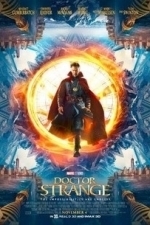

Well multiversed.
In the latest Marvel film (notably now available with the snazzy new Marvel production logo at the start) Benedict Cumberbatch (“Sherlock”, “Star Trek Into Darkness”) plays the titular hero: a neurosurgeon with exceptional skills, an encyclopedic knowledge of discographies and an ego to rival Donald Trump.
After an horrific car crash (topically addressing the dangers of mobile use while driving) Strange loses the ability to practice his craft, and descends into a spiral of self-pity and despair. Finding a similar soul, Jonathan Pangborn (Benjamin Bratt, “24: Live Another Day”) who’s undergone a miracle cure, Strange travels to Katmandu in search of similar salvation where he is trained in spiritual control by “The Ancient One” (Tilda Swinton, “Hail Caesar”, “The Grand Budapest Hotel”) ably supported by her assistant Mordo (Chiwetel Ejiofor, “12 Years a Slave”) and librarian Wong (Benedict Wong, “The Martian”). So far so “Batman Begins”.
As always in these films though there is also a villain, in this case a rogue former pupil turned to the dark side (have we not been here before Anakin?) called Kaecilius (Mads Mikkelssen, “Quantum of Solace”). The world risks total destruction from spiritual attack (“…the Avengers handle the physical threats…” – LOL) and the team stand together to battle Kaecilius’s attempts to open a portal (“Zuuuul”) and ‘let the right one in’.
Followers of this blog will generally be aware that I am not a great fan of the Marvel and DC universes in general. However, there is a large variation in the style of films dished out by the studios ranging from the pompously full-of-themselves films at the “Batman vs Superman” (bottom) end to the more light-hearted (bordering on “Kick-Ass-style”) films at the “Ant Man” (top) end. Along this continuum I would judge “Doctor Strange” to be about a 7: so it is a lot more fun than I expected it to be.
The film is largely carried by Cumberbatch, effecting a vaguely annoying American accent but generally adding acting credence to some pretty ludicrous material. In particular he milks all the comic lines to maximum effect, leading to some genuinely funny moments: yes, the comedy gold extends past Ejiofor’s (very funny) wi-fi password line in the trailer.
Cumberbatch also has the range to convincingly play the fall of the egocentric Strange: his extreme unpleasantness towards his beleaguered on/off girlfriend (the ever-reliable Rachel McAdams (“Sherlock Holmes”)) drew audible gasps of shock from a few of the ‘Cumberbitches’ in my screening. (As I’m writing this on November 9th, the day of Trumpagedden, we might have already found a candidate able to play the new President elect!)
In fact, the whole of the first half of the film is a delight: Strange’s decline; effective Nepalese locations; a highly entertaining “training” sequence; and Cumberbatch and Swinton sparking off each other beautifully.
Where the film pitches downhill is where it gets too “BIG”: both in a hugely overblown New York morphing sequence (the – remember – human heroes suffer skyscraper-level falls without injury) and where (traditionally) a cosmic being gets involved and our puny heroes have to defend earth against it. Once again we have a “big CGI thing” centre screen with the logic behind the (long-term) defeating of the “big CGI thing” little better than that behind the defeat of the “big CGI thing” in “Batman vs Superman” (but without Gal Gadot’s legs unfortunately to distract the male audience).
Music is by Michael Giacchino, and his suitably bombastic Strange theme is given a very nice reworking over the end titles. By the way, for those who are interested in “Monkeys” (see glossary) there is a scene a few minutes into the credits featuring Strange and one of the Avengers (fairly pointless) and a second right at the end of the credits featuring Pangborn and Mordo setting up (not very convincingly I must say) the potential villain for Strange 2.
Not Shakespeare, but still an enjoyable and fun night out at the movies and far better than I was expecting.
After an horrific car crash (topically addressing the dangers of mobile use while driving) Strange loses the ability to practice his craft, and descends into a spiral of self-pity and despair. Finding a similar soul, Jonathan Pangborn (Benjamin Bratt, “24: Live Another Day”) who’s undergone a miracle cure, Strange travels to Katmandu in search of similar salvation where he is trained in spiritual control by “The Ancient One” (Tilda Swinton, “Hail Caesar”, “The Grand Budapest Hotel”) ably supported by her assistant Mordo (Chiwetel Ejiofor, “12 Years a Slave”) and librarian Wong (Benedict Wong, “The Martian”). So far so “Batman Begins”.
As always in these films though there is also a villain, in this case a rogue former pupil turned to the dark side (have we not been here before Anakin?) called Kaecilius (Mads Mikkelssen, “Quantum of Solace”). The world risks total destruction from spiritual attack (“…the Avengers handle the physical threats…” – LOL) and the team stand together to battle Kaecilius’s attempts to open a portal (“Zuuuul”) and ‘let the right one in’.
Followers of this blog will generally be aware that I am not a great fan of the Marvel and DC universes in general. However, there is a large variation in the style of films dished out by the studios ranging from the pompously full-of-themselves films at the “Batman vs Superman” (bottom) end to the more light-hearted (bordering on “Kick-Ass-style”) films at the “Ant Man” (top) end. Along this continuum I would judge “Doctor Strange” to be about a 7: so it is a lot more fun than I expected it to be.
The film is largely carried by Cumberbatch, effecting a vaguely annoying American accent but generally adding acting credence to some pretty ludicrous material. In particular he milks all the comic lines to maximum effect, leading to some genuinely funny moments: yes, the comedy gold extends past Ejiofor’s (very funny) wi-fi password line in the trailer.
Cumberbatch also has the range to convincingly play the fall of the egocentric Strange: his extreme unpleasantness towards his beleaguered on/off girlfriend (the ever-reliable Rachel McAdams (“Sherlock Holmes”)) drew audible gasps of shock from a few of the ‘Cumberbitches’ in my screening. (As I’m writing this on November 9th, the day of Trumpagedden, we might have already found a candidate able to play the new President elect!)
In fact, the whole of the first half of the film is a delight: Strange’s decline; effective Nepalese locations; a highly entertaining “training” sequence; and Cumberbatch and Swinton sparking off each other beautifully.
Where the film pitches downhill is where it gets too “BIG”: both in a hugely overblown New York morphing sequence (the – remember – human heroes suffer skyscraper-level falls without injury) and where (traditionally) a cosmic being gets involved and our puny heroes have to defend earth against it. Once again we have a “big CGI thing” centre screen with the logic behind the (long-term) defeating of the “big CGI thing” little better than that behind the defeat of the “big CGI thing” in “Batman vs Superman” (but without Gal Gadot’s legs unfortunately to distract the male audience).
Music is by Michael Giacchino, and his suitably bombastic Strange theme is given a very nice reworking over the end titles. By the way, for those who are interested in “Monkeys” (see glossary) there is a scene a few minutes into the credits featuring Strange and one of the Avengers (fairly pointless) and a second right at the end of the credits featuring Pangborn and Mordo setting up (not very convincingly I must say) the potential villain for Strange 2.
Not Shakespeare, but still an enjoyable and fun night out at the movies and far better than I was expecting.

Gareth von Kallenbach (980 KP) rated the PC version of Shadow Warrior in Video Games
Jun 19, 2019

Back in 1997 the success of 3-D shooters such as Doom, Quake, and Duke Nukem 3D gave rise to a flood of 3-D shooter games and helped usher in the early days of online gaming. I fondly remember playing Shadow Warrior as I loved the mix of humor, action, and new technological advances that made it such an enjoyable gameplay experience.
Sadly the game never quite reached the status it deserves in part due to the rising political correctness movement and early days the Internet that allowed people to voice their displeasure with what they perceived as negative and inaccurate Asian stereotypes in the game.
Despite never being the breakout hit it deserved, the game spawned two expansions as well as a couple of novels and remained a fond memory for many of those who played it.
Devolver Digital has picked up the Katana and has brought back Lo Wang for an all-new adventure and a highly effective reboot of the franchise.
Playing as Lo Wang, a courier and muscle for a wealthy Japanese industrialist named Zilla, the game opens with the player being tasked to purchase a valuable sword. Things do not go as planned as Wang soon finds himself battling henchmen and surprisingly demons and effort to escape with his skin intact.
Thanks to the assistance of a demon named Hoji, Wang learns that his bosses attempting to obtain and combine reports to an extremely powerful and ancient sword that will give him dominion over the land. The only problem is that Zilla is in league with several demonic forces and does not care about the fact that said demons are in our world and laying waste to all those they encounter.
Armed with his trusty Katana, and in time, a pistol, shotgun, flame thrower, rocket launcher, machine gun, and other weapons, Wang is up for the task of recovering the sword and endhing the rein of the demons.
The game is spread out over 17 levels and contains a very nice mix of enemies. Some of the battles are extremely difficult and without being able to change difficulty setting mid-level, expect to find yourself cursing sometimes at the never-ending waves of enemies that come at you. Do not forget that the folks behind this reboot brought us Serious Sam so enemies coming at you in increasingly difficult and not ending waves are par for the course.
Fortunately Wang can obtain not only upgrades to his weapons but to himself as well as he is able to learn various powers of an offensive and defensive nature. Being able to heal yourself mid battle is a huge plus when health packs are not available, as is the ability to steal health from a defeated enemy or to simply turn the world on and by unleashing a snare trap and picking them off at your leisure.
There were times when thanks to the extremely long levels that some of the enemies felt a bit repetitive and more annoying than challenging. I should’ve known better as there were soon battles with some bosses and other precarious situations ahead.
The game allows you a decent amount of exploration as the detail level of the maps is quite amazing. Ranging from office complexes, a castle, the Shadow Realm, shipping docks, and so much more the true beauty of the game is always enjoyable to behold.
The game shines graphically as there is a great mix of lighting and particle effects as well as plenty of flames and explosions throughout. I have to admit that I took great delight in slicing an unfortunate opponent into several pieces and watching said pieces littered ground around me.
The variety of enemies is good and I especially enjoyed one of the later game powers of being able to take a demons had that I had severed and using it to unleash a death ray upon any of those who challenge me.
There is some great sound effects in the game and although not offensive, Wang has not lost his traditional sense of humor as he has several witty lines throughout the game and still asks those he encounters “who wants some Wang” before heading into battle.
The developer is also clearly paid attention to the original game as there are several Easter eggs throughout which are nods to the original game include in hidden areas with the graphical look of the old game. There were also some enjoyable returns such as Wang’s sticky bombs which now are available as an upgrade to the crossbow weapon rather than being a grenade that clung to enemies and could be remotely detonated.
While the game does not offer a multiplayer mode, it does offer plenty of gameplay due to the 17 long levels in the game and some real challenge from some of the bigger battles. The developers of told me that if there is a demand for it and if the game is popular enough, they would not rule out adding a multi-play component at sometime in the future.
I also want to pass along huge kudos to the developers for not relying solely on a checkpoint save system. The game does allow players to save at various points in game which is huge due to the difficulty of some of the battles as I can only imagine the level of frustration if certain segments of the game have to be played checkpoint checkpoint.
For now, Shadow Warrior is a shining example of how a 3-D shooter should be made rather than a nostalgic re-polish of an era since passed. The gameplay is sharp and fresh as our the story and characters making the game one of my most pleasant surprises of the year and one that I hope we will be seeing more of in the near future.
http://sknr.net/2013/10/08/shadow-warrior/
Sadly the game never quite reached the status it deserves in part due to the rising political correctness movement and early days the Internet that allowed people to voice their displeasure with what they perceived as negative and inaccurate Asian stereotypes in the game.
Despite never being the breakout hit it deserved, the game spawned two expansions as well as a couple of novels and remained a fond memory for many of those who played it.
Devolver Digital has picked up the Katana and has brought back Lo Wang for an all-new adventure and a highly effective reboot of the franchise.
Playing as Lo Wang, a courier and muscle for a wealthy Japanese industrialist named Zilla, the game opens with the player being tasked to purchase a valuable sword. Things do not go as planned as Wang soon finds himself battling henchmen and surprisingly demons and effort to escape with his skin intact.
Thanks to the assistance of a demon named Hoji, Wang learns that his bosses attempting to obtain and combine reports to an extremely powerful and ancient sword that will give him dominion over the land. The only problem is that Zilla is in league with several demonic forces and does not care about the fact that said demons are in our world and laying waste to all those they encounter.
Armed with his trusty Katana, and in time, a pistol, shotgun, flame thrower, rocket launcher, machine gun, and other weapons, Wang is up for the task of recovering the sword and endhing the rein of the demons.
The game is spread out over 17 levels and contains a very nice mix of enemies. Some of the battles are extremely difficult and without being able to change difficulty setting mid-level, expect to find yourself cursing sometimes at the never-ending waves of enemies that come at you. Do not forget that the folks behind this reboot brought us Serious Sam so enemies coming at you in increasingly difficult and not ending waves are par for the course.
Fortunately Wang can obtain not only upgrades to his weapons but to himself as well as he is able to learn various powers of an offensive and defensive nature. Being able to heal yourself mid battle is a huge plus when health packs are not available, as is the ability to steal health from a defeated enemy or to simply turn the world on and by unleashing a snare trap and picking them off at your leisure.
There were times when thanks to the extremely long levels that some of the enemies felt a bit repetitive and more annoying than challenging. I should’ve known better as there were soon battles with some bosses and other precarious situations ahead.
The game allows you a decent amount of exploration as the detail level of the maps is quite amazing. Ranging from office complexes, a castle, the Shadow Realm, shipping docks, and so much more the true beauty of the game is always enjoyable to behold.
The game shines graphically as there is a great mix of lighting and particle effects as well as plenty of flames and explosions throughout. I have to admit that I took great delight in slicing an unfortunate opponent into several pieces and watching said pieces littered ground around me.
The variety of enemies is good and I especially enjoyed one of the later game powers of being able to take a demons had that I had severed and using it to unleash a death ray upon any of those who challenge me.
There is some great sound effects in the game and although not offensive, Wang has not lost his traditional sense of humor as he has several witty lines throughout the game and still asks those he encounters “who wants some Wang” before heading into battle.
The developer is also clearly paid attention to the original game as there are several Easter eggs throughout which are nods to the original game include in hidden areas with the graphical look of the old game. There were also some enjoyable returns such as Wang’s sticky bombs which now are available as an upgrade to the crossbow weapon rather than being a grenade that clung to enemies and could be remotely detonated.
While the game does not offer a multiplayer mode, it does offer plenty of gameplay due to the 17 long levels in the game and some real challenge from some of the bigger battles. The developers of told me that if there is a demand for it and if the game is popular enough, they would not rule out adding a multi-play component at sometime in the future.
I also want to pass along huge kudos to the developers for not relying solely on a checkpoint save system. The game does allow players to save at various points in game which is huge due to the difficulty of some of the battles as I can only imagine the level of frustration if certain segments of the game have to be played checkpoint checkpoint.
For now, Shadow Warrior is a shining example of how a 3-D shooter should be made rather than a nostalgic re-polish of an era since passed. The gameplay is sharp and fresh as our the story and characters making the game one of my most pleasant surprises of the year and one that I hope we will be seeing more of in the near future.
http://sknr.net/2013/10/08/shadow-warrior/
Gareth von Kallenbach (980 KP) rated Hellboy (2019) in Movies
Jul 2, 2019
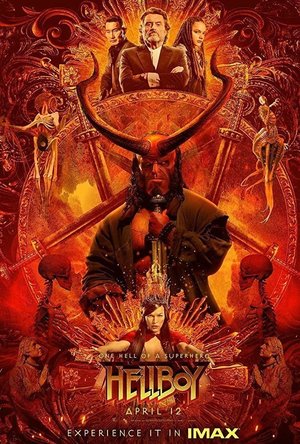
Trivia question for you…what does an immortal evil queen, King Arthur, Nazis and a boy born from Hell itself have in common? If you answered Hellboy you win a prize. The prize is going to the theater and watching the film and whether it’s a prize worth winning is something you’ll have to decide for yourself. I’m getting a bit ahead of myself though, so let’s rewind a bit and start at the beginning.
Hellboy (David Harbour) is a demon from Hell (hence the name), his backstory as we learn early on in the movie is pretty standard fare. The Nazi’s are on the verge of losing World War II and in a desperate move to turn the tide call upon the evil sorcerer Rasputin to call upon the depths of Hell and raise a champion who will fight for them. The incantation is interrupted when famous Nazi hunter Lobster Johnson (Thomas Haden Church) goes in with guns blazing, as other allied troops join the fray. Their relief at stopping the incantation is short-lived as the alter opens and a young demon climbs through. Professor Broom who had infiltrated the Nazi team had been brought in to put down any evil that was successfully summoned. Upon seeing the young demon, Professor Broom (for reasons known only to him at the time) decides not to kill him, but to take him in and raise him as his own.
Flash forward to present day, and Hellboy as we now know him alongside his father are members of the B.P.R.D (Bureau for Paranormal Research and Defense). On a mission to defeat some giants that are roaming the countryside in England they stumble upon an ancient evil that dark forces are trying to retrieve. It seems back in the dark ages a war between humans and monsters was being waged. Seeing no end to the violence King Arthur (Mark Stanley) and his faithful wizard Merlin (Brian Gleeson) offer to surrender to The Blood Queen (Milla Jovovich). On top the hill where the surrender is to take place, the Blood Queen is betrayed by one of her own and King Arthur, using the infamous blade Excalibur, cut the Blood Queen into several parts. While she can’t be killed, she can be contained and each of her body parts are placed in separate boxes. These boxes are then sealed with holy water that only a holy man can unlock and are sent to the farthest corners of England. If the Blood Queen ever returns, she will release a plague that will not only destroy England but spread across the entire world. Thus, sets the stage for Hellboy.
Being a fan of the previous movies and in particular the portrayal of Hellboy by Ron Pearlman, I wasn’t sure how to feel about David Harbour in this role. It’s always a bit hit or miss when a series is rebooted, and I was pleasantly surprised with how David Harbour stepped up and into the role. While he doesn’t have the same menacing size and gruffness that Ron Pearlman possesses, it didn’t take me long to adjust to this new version. He is joined by a strong supporting cast consisting of Sasha Lane as his ghost whispering friend Alice and Ben Daimo as an MI-11 agent weary of teaming up with a monster. Milla Jovovich does an outstanding job as the Blood Queen and her fairy-pig friend portrayed by Stephen Graham and Douglas Tait.
Visually the movie is stunning, with the numerous monsters and fairy creatures coming to life before your eyes. The movie is exceptionally gory as one might expect, with numerous limb dismemberments, decapitations, and more blood than anyone would expect to erupt from such wounds. It’s over-the-top and meant to be that way which tended to bring some uncomfortable laughter at times from those around me. Having recently played Mortal Kombat 11, I couldn’t help but feel that some of the fatality screens in that game would have felt right at home in this movie.
Story is where I feel Hellboy falls a bit flat. There are so many characters and side stories going on that it’s easy to get lost in it. From my description above, you can see that it includes King Arthur, Rasputin, Nazis, Secret Societies, Witches that eat children, monsters…and that’s only in the first half of the movie. There is a ton going on and there are a lot of disconnects. While trying to avoid spoilers, there is a part in the film where Hellboy is talking to Baba Yaga (see another character reference), and after tricking her she places a curse on him. I’m still trying to figure out if the curse she placed on him occurred in the movie or not. In fact, I’m trying to figure out exactly what the point of that scene was. It’s not a bad story, but it tries to pack in a TON of references in its brief hour and forty five-ish minutes.
I’ll be the first to admit that I’ve never read any of the Hellboy graphic novels, I have seen both of the previous films, so I had a little bit of background going into this movie. I don’t know if all the references in the movie are pivotal to the novels or not. You certainly don’t have to have read them or seen the previous movies to appreciate this one, I just wonder if they tried to fit in too many Hellboy references into one film. Hellboy is an enjoyable ride, and it certainly doesn’t drag at all, in fact I was surprised at how quickly it was over. With all that being said, it’s a fun action-packed movie, with lots of gratuitous violence if that’s your thing. I certainly wouldn’t recommend taking your children to see it, violence aside, I just think there is way too much going on and it can be difficult to follow. Oh, and don’t forget to stay through the credits for the end credit scene. It’s not pivotal to the movie, but worth waiting around for.
Hellboy (David Harbour) is a demon from Hell (hence the name), his backstory as we learn early on in the movie is pretty standard fare. The Nazi’s are on the verge of losing World War II and in a desperate move to turn the tide call upon the evil sorcerer Rasputin to call upon the depths of Hell and raise a champion who will fight for them. The incantation is interrupted when famous Nazi hunter Lobster Johnson (Thomas Haden Church) goes in with guns blazing, as other allied troops join the fray. Their relief at stopping the incantation is short-lived as the alter opens and a young demon climbs through. Professor Broom who had infiltrated the Nazi team had been brought in to put down any evil that was successfully summoned. Upon seeing the young demon, Professor Broom (for reasons known only to him at the time) decides not to kill him, but to take him in and raise him as his own.
Flash forward to present day, and Hellboy as we now know him alongside his father are members of the B.P.R.D (Bureau for Paranormal Research and Defense). On a mission to defeat some giants that are roaming the countryside in England they stumble upon an ancient evil that dark forces are trying to retrieve. It seems back in the dark ages a war between humans and monsters was being waged. Seeing no end to the violence King Arthur (Mark Stanley) and his faithful wizard Merlin (Brian Gleeson) offer to surrender to The Blood Queen (Milla Jovovich). On top the hill where the surrender is to take place, the Blood Queen is betrayed by one of her own and King Arthur, using the infamous blade Excalibur, cut the Blood Queen into several parts. While she can’t be killed, she can be contained and each of her body parts are placed in separate boxes. These boxes are then sealed with holy water that only a holy man can unlock and are sent to the farthest corners of England. If the Blood Queen ever returns, she will release a plague that will not only destroy England but spread across the entire world. Thus, sets the stage for Hellboy.
Being a fan of the previous movies and in particular the portrayal of Hellboy by Ron Pearlman, I wasn’t sure how to feel about David Harbour in this role. It’s always a bit hit or miss when a series is rebooted, and I was pleasantly surprised with how David Harbour stepped up and into the role. While he doesn’t have the same menacing size and gruffness that Ron Pearlman possesses, it didn’t take me long to adjust to this new version. He is joined by a strong supporting cast consisting of Sasha Lane as his ghost whispering friend Alice and Ben Daimo as an MI-11 agent weary of teaming up with a monster. Milla Jovovich does an outstanding job as the Blood Queen and her fairy-pig friend portrayed by Stephen Graham and Douglas Tait.
Visually the movie is stunning, with the numerous monsters and fairy creatures coming to life before your eyes. The movie is exceptionally gory as one might expect, with numerous limb dismemberments, decapitations, and more blood than anyone would expect to erupt from such wounds. It’s over-the-top and meant to be that way which tended to bring some uncomfortable laughter at times from those around me. Having recently played Mortal Kombat 11, I couldn’t help but feel that some of the fatality screens in that game would have felt right at home in this movie.
Story is where I feel Hellboy falls a bit flat. There are so many characters and side stories going on that it’s easy to get lost in it. From my description above, you can see that it includes King Arthur, Rasputin, Nazis, Secret Societies, Witches that eat children, monsters…and that’s only in the first half of the movie. There is a ton going on and there are a lot of disconnects. While trying to avoid spoilers, there is a part in the film where Hellboy is talking to Baba Yaga (see another character reference), and after tricking her she places a curse on him. I’m still trying to figure out if the curse she placed on him occurred in the movie or not. In fact, I’m trying to figure out exactly what the point of that scene was. It’s not a bad story, but it tries to pack in a TON of references in its brief hour and forty five-ish minutes.
I’ll be the first to admit that I’ve never read any of the Hellboy graphic novels, I have seen both of the previous films, so I had a little bit of background going into this movie. I don’t know if all the references in the movie are pivotal to the novels or not. You certainly don’t have to have read them or seen the previous movies to appreciate this one, I just wonder if they tried to fit in too many Hellboy references into one film. Hellboy is an enjoyable ride, and it certainly doesn’t drag at all, in fact I was surprised at how quickly it was over. With all that being said, it’s a fun action-packed movie, with lots of gratuitous violence if that’s your thing. I certainly wouldn’t recommend taking your children to see it, violence aside, I just think there is way too much going on and it can be difficult to follow. Oh, and don’t forget to stay through the credits for the end credit scene. It’s not pivotal to the movie, but worth waiting around for.
Gareth von Kallenbach (980 KP) rated The Da Vinci Code (2006) in Movies
Aug 14, 2019
No film since “The Last Temptation of Christ” has invoked as much controversy as The Da Vinci Code based on the book of the same name by Dan Brown. Prior to the film even being screened for the press, cries ran out to ban the film and its message that some find blasphemous. Fortunately calmer heads have prevailed and the film by Director Ron Howard has arrived in a wash of media frenzy not seen since Mel Gibson’s The Passion of the Christ.
If you are seeing a pattern forming, you would be correct as it seems that few topics can raise ire and wrath more than the topic of religion, especially if the film proposes a viewpoint that differs from the traditional beliefs that are given by the church, bible, and history.
In the film, a monk appears to murder an elderly man who with his last ounces of strength, manages to leave a cryptic riddle on his body. The bizarre nature of the crime prompts French police inspector Fache (Jean Reno) to travel to the Louvre to investigate the crime. A clue at the crime scene causes the police to summer Robert Langdon (Tom Hanks) from a lecture hall where he is signing his latest book on symbols. Since the deceased was supposed to meet Langdon earlier in the day Langdon has fallen under suspicion for the crime.
As he attempts to decipher the message at the crime scene, Langdon encounters a police cryptologists named Sophie (Audrey Tautou), who informs Robert that he is in danger and soon the duo are fleeing from the police after deciphering some hidden clues at the crime scene.
Before either Robert or Audrey knows what is happening, they are being accused of multiple murders and on the run. As the clues begin to mount, the mystery takes an even stranger turn by the discovery of an artifact that when unlocked, should contain a map.
Seeking refuge and help, the duo arrive at the estate of Sir Leigh Teabing (Sir Ian Mc Kellen), who proceeds to tell Robert and Sophie that the clues they have uncovered are part of a cover-up that segments of the church will stop at nothing to keep secret. The nature of this secret is such that should it become public knowledge, then they very foundations of history, faith, and the church could be shaken to their core.
As the mystery becomes clearer, the group are attacked by a Monk named Silas (Paul Bettany), who has been doing the violent work of someone know as The Teacher in an effort to discover the location of artifacts and those attempting to uncover the mystery.
What follows is a frantic race that travels from Paris to London in an effort to get to the bottom of the mystery and unravel the true nature of the mystery and the secret that people are willing to kill for in order to protect.
While some may find the mystery, the players, and their motivations confusing, the film does grab hold and moves along at a solid pace. Ron Howard once again shows his skill by directing a film that is different from his other works, yet rich in its visuals and complexity. The scenic locales of the film enhance the mystery (For those who have not read the book), as they attempt to decipher the clues along with the characters.
The work from the cast was solid as Hanks gives a very good if restrained performance in his portrayal. Mc Kellen is a very nice blend of elegance and old world charm that lifts up every scene in which he is in.
While there are those who will lambaste the film for the message it provides, I chose to look at it as a film that does what movies should, entertain and make you think. The film is not saying its assertions are hard and cold facts, what it is doing is providing a vehicle for debate.
In college I was told that through debate comes knowledge and growth for a society. This was common in ancient Greek and Roman society where issues of the day would be debated in open forums. It seems that we as a society have become too insistent to take things at face value and have forgotten that the very nature of the human experience is to question, grow, and seek our own answers. As such the film is a great example of how Hollywood at times gets it right and provides solid entertainment that will stimulate as well as entertain.
If you are seeing a pattern forming, you would be correct as it seems that few topics can raise ire and wrath more than the topic of religion, especially if the film proposes a viewpoint that differs from the traditional beliefs that are given by the church, bible, and history.
In the film, a monk appears to murder an elderly man who with his last ounces of strength, manages to leave a cryptic riddle on his body. The bizarre nature of the crime prompts French police inspector Fache (Jean Reno) to travel to the Louvre to investigate the crime. A clue at the crime scene causes the police to summer Robert Langdon (Tom Hanks) from a lecture hall where he is signing his latest book on symbols. Since the deceased was supposed to meet Langdon earlier in the day Langdon has fallen under suspicion for the crime.
As he attempts to decipher the message at the crime scene, Langdon encounters a police cryptologists named Sophie (Audrey Tautou), who informs Robert that he is in danger and soon the duo are fleeing from the police after deciphering some hidden clues at the crime scene.
Before either Robert or Audrey knows what is happening, they are being accused of multiple murders and on the run. As the clues begin to mount, the mystery takes an even stranger turn by the discovery of an artifact that when unlocked, should contain a map.
Seeking refuge and help, the duo arrive at the estate of Sir Leigh Teabing (Sir Ian Mc Kellen), who proceeds to tell Robert and Sophie that the clues they have uncovered are part of a cover-up that segments of the church will stop at nothing to keep secret. The nature of this secret is such that should it become public knowledge, then they very foundations of history, faith, and the church could be shaken to their core.
As the mystery becomes clearer, the group are attacked by a Monk named Silas (Paul Bettany), who has been doing the violent work of someone know as The Teacher in an effort to discover the location of artifacts and those attempting to uncover the mystery.
What follows is a frantic race that travels from Paris to London in an effort to get to the bottom of the mystery and unravel the true nature of the mystery and the secret that people are willing to kill for in order to protect.
While some may find the mystery, the players, and their motivations confusing, the film does grab hold and moves along at a solid pace. Ron Howard once again shows his skill by directing a film that is different from his other works, yet rich in its visuals and complexity. The scenic locales of the film enhance the mystery (For those who have not read the book), as they attempt to decipher the clues along with the characters.
The work from the cast was solid as Hanks gives a very good if restrained performance in his portrayal. Mc Kellen is a very nice blend of elegance and old world charm that lifts up every scene in which he is in.
While there are those who will lambaste the film for the message it provides, I chose to look at it as a film that does what movies should, entertain and make you think. The film is not saying its assertions are hard and cold facts, what it is doing is providing a vehicle for debate.
In college I was told that through debate comes knowledge and growth for a society. This was common in ancient Greek and Roman society where issues of the day would be debated in open forums. It seems that we as a society have become too insistent to take things at face value and have forgotten that the very nature of the human experience is to question, grow, and seek our own answers. As such the film is a great example of how Hollywood at times gets it right and provides solid entertainment that will stimulate as well as entertain.

Purple Phoenix Games (2266 KP) rated Set a Watch in Tabletop Games
Sep 26, 2019
Purple Phoenix Games Solo Chronicles
I love a good fantasy-themed game. We’ve all, at some point in our lives, probably dreamed of being adventurers – traveling across the land, fighting monsters, and saving all of humanity. Sounds like it could maybe be fun to me. So whenever I see a game that emulates that theme, I am drawn to it. Such was definitely the case when I stumbled across Set a Watch as I was perusing Kickstarter one day, and the rest is history.
The kingdom is under attack. Hoards of creatures are amassing at locations around the realm in an attempt to resurrect ancient Unhallowed monsters. Their ultimate goal? To take control of the world. You and your fellow adventurers have been tasked with stopping this uprising. By traveling to these various locations, you will attempt to clear the area of evil-doers and maintain peace in the kingdom. Keep a vigilant watch, and your team will be successful. But if you wane for even a moment, all could be lost.
DISCLAIMER: This review uses the Deluxe version of Set a Watch that we backed on Kickstarter. Some components may differ from components found other versions. -T
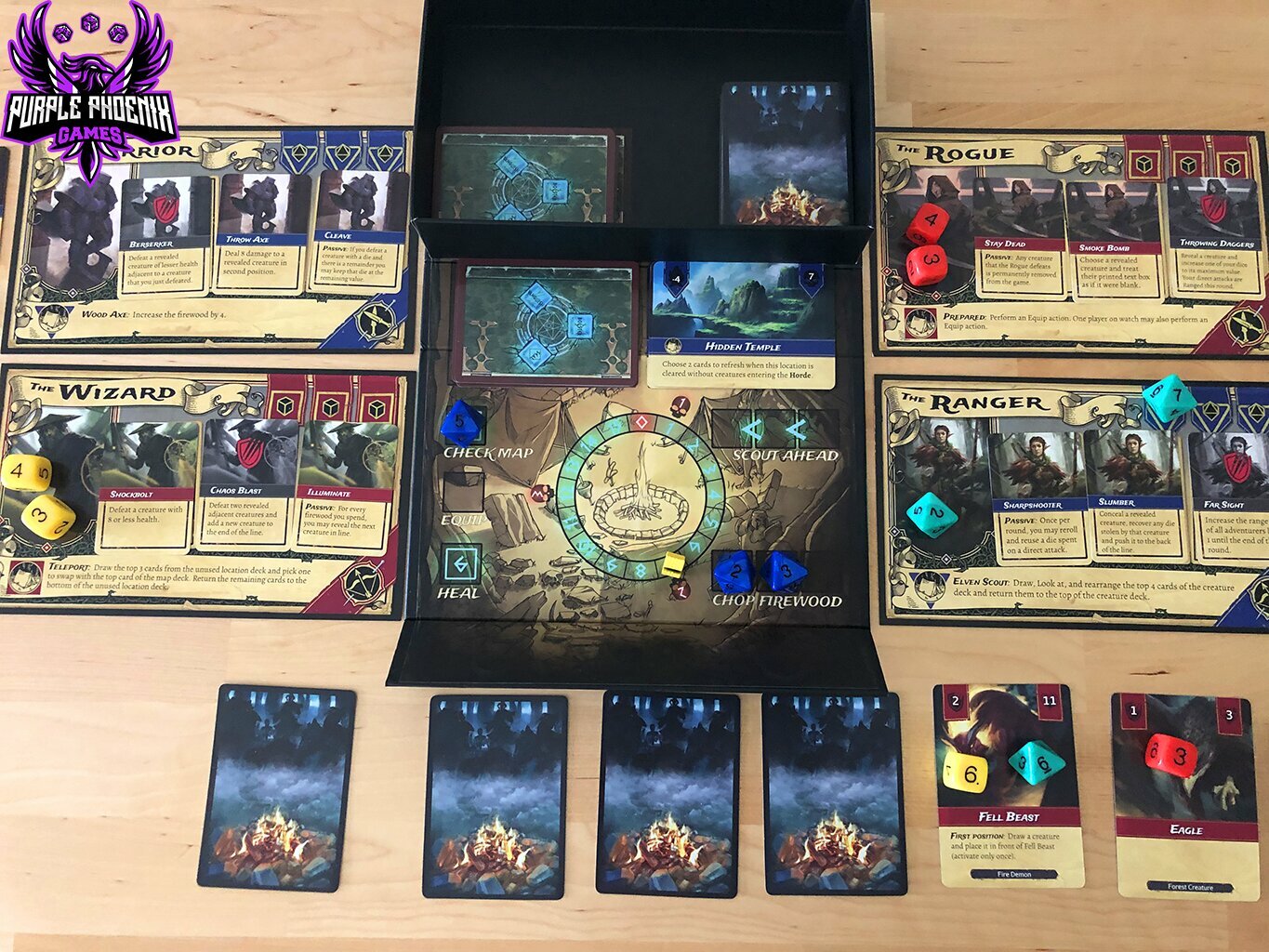
Set A Watch is a cooperative game for 1-4 players in which players must secure nine locations around the realm to prevent the release of the deadly Unhallowed monsters. The party always consists of 4 adventurers, regardless of actual player count. In each round, one adventurer will stay back at camp, resting and taking strategic actions, while the other 3 adventurers take watch and fight off the creatures attempting to infiltrate the camp by using special abilities and powers to aid in battle. The game ends in victory if the adventurers have successfully secured all locations. If, at the end of a round, all adventurers on watch are exhausted, the camp is overrun and the game is lost.
So how does solo play differ from multiplayer games? It doesn’t! A solo game of Set A Watch plays identically to a multiplayer game – the solo player just controls all 4 adventurers at once instead of being split up among the players. Obviously, as a solo player, you have to make all of the decisions, which is sometimes nicer than playing with other people. You get to play whatever strategy YOU want to, without having to compromise with other players. On the flip side, that could be treacherous if your strategy is too bold/too meek or if you get in a tight spot and are at a loss for what to do next. Other than the aspect of solo decision-making, the gameplay remains unchanged. One adventurer still rests at camp while the other 3 stand watch and battle monsters.
Typically, I am not a fan of solo games in which you are forced to play multiple characters. That just feels like kind of a cop-out way to say ‘Yeah, we have a solo mode’ when in reality you’re still playing a multiplayer game, just by yourself. That being said, I actually don’t mind this aspect in Set A Watch. Why? Because there really are no ‘turns’ to track. One adventurer stays at camp and acts first, but the other 3 go to battle and act whenever/however they want. There is no real turn order. I make the characters act when and how I want them to, and that really opens the rounds up to a lot of freedom. I don’t have to sacrifice special powers/abilities because it wasn’t that character’s ‘turn’ – I can come up with some sweet combos, utilizing whichever characters I need to, to really do some damage. The lack of turns makes this a truly cooperative game, even when playing solo.
Overall, I love Set A Watch. It was, admittedly, a little intimidating at first, but once I got the hang of it, it plays great! The components are nice and sturdy, the box transforms into the game board, and the artwork is very nicely done. Set A Watch is a game I would definitely play either multiplayer or solo, and not as a last resort. The gameplay is engaging, the strategic options give you a different game every play, and the theme itself is just exciting to me. I am very happy with this Kickstarter purchase, and I look forward to any expansions/reimplementations that could be in the works!
The kingdom is under attack. Hoards of creatures are amassing at locations around the realm in an attempt to resurrect ancient Unhallowed monsters. Their ultimate goal? To take control of the world. You and your fellow adventurers have been tasked with stopping this uprising. By traveling to these various locations, you will attempt to clear the area of evil-doers and maintain peace in the kingdom. Keep a vigilant watch, and your team will be successful. But if you wane for even a moment, all could be lost.
DISCLAIMER: This review uses the Deluxe version of Set a Watch that we backed on Kickstarter. Some components may differ from components found other versions. -T
Set A Watch is a cooperative game for 1-4 players in which players must secure nine locations around the realm to prevent the release of the deadly Unhallowed monsters. The party always consists of 4 adventurers, regardless of actual player count. In each round, one adventurer will stay back at camp, resting and taking strategic actions, while the other 3 adventurers take watch and fight off the creatures attempting to infiltrate the camp by using special abilities and powers to aid in battle. The game ends in victory if the adventurers have successfully secured all locations. If, at the end of a round, all adventurers on watch are exhausted, the camp is overrun and the game is lost.
So how does solo play differ from multiplayer games? It doesn’t! A solo game of Set A Watch plays identically to a multiplayer game – the solo player just controls all 4 adventurers at once instead of being split up among the players. Obviously, as a solo player, you have to make all of the decisions, which is sometimes nicer than playing with other people. You get to play whatever strategy YOU want to, without having to compromise with other players. On the flip side, that could be treacherous if your strategy is too bold/too meek or if you get in a tight spot and are at a loss for what to do next. Other than the aspect of solo decision-making, the gameplay remains unchanged. One adventurer still rests at camp while the other 3 stand watch and battle monsters.
Typically, I am not a fan of solo games in which you are forced to play multiple characters. That just feels like kind of a cop-out way to say ‘Yeah, we have a solo mode’ when in reality you’re still playing a multiplayer game, just by yourself. That being said, I actually don’t mind this aspect in Set A Watch. Why? Because there really are no ‘turns’ to track. One adventurer stays at camp and acts first, but the other 3 go to battle and act whenever/however they want. There is no real turn order. I make the characters act when and how I want them to, and that really opens the rounds up to a lot of freedom. I don’t have to sacrifice special powers/abilities because it wasn’t that character’s ‘turn’ – I can come up with some sweet combos, utilizing whichever characters I need to, to really do some damage. The lack of turns makes this a truly cooperative game, even when playing solo.
Overall, I love Set A Watch. It was, admittedly, a little intimidating at first, but once I got the hang of it, it plays great! The components are nice and sturdy, the box transforms into the game board, and the artwork is very nicely done. Set A Watch is a game I would definitely play either multiplayer or solo, and not as a last resort. The gameplay is engaging, the strategic options give you a different game every play, and the theme itself is just exciting to me. I am very happy with this Kickstarter purchase, and I look forward to any expansions/reimplementations that could be in the works!

Bob Mann (459 KP) rated Pitch Perfect 3 (2017) in Movies
Sep 29, 2021
Aca-bysmal.
Mr Plot and Miss Tale were teenage sweethearts. They met at Storyville High School and inseparable, but were viciously cursed by a jealous school nurse, bitter from a recent split. Notwithstanding this setback, they realised that they were soul-mates, got engaged and were married in the following summer. Everyone wished them well, and spoke of the time when the sound of little Plots would ring out around their new house. Unfortunately, however hard they tried, no little Plot arrived. The ancient curse of the school nurse rang in their ears. They paid to see the most expensive doctors on Harley Street, but noone could help them. It turned out that not only was Mrs Plot infertile, but so was Mr Plot. It was hopeless, and because of an unfortunate conviction for marujiana possession in Mr Plot’s teenage years they couldn’t even adapt, sorry, adopt a little Plot from someone else. So they lived together with sadness and bitterness building up inside them. Would the curse ever be lifted? Would they work through their differences to find new purpose in life? Or would they part acromoniously with Mrs Plot joining a convent to sing mournful songs of grief and missed opportunities in the Swiss Alps? TO… BE…CONTINUED.
There. You were there, weren’t you? Living it. You want to know what happens next? Sure you do. You see, even I can come up with a story…. and I’m not a “professional Hollywood scriptwriter”.
Why then, I ask you. Why oh why oh why oh why oh why do the scriptwriters of Pitch Perfect 3 – Kay Cannon (the original PP screenwriter) and Mike White (“The Emoji Movie”) – think that this dreadfully lazy set of loosely connected scenes represent a viable basis for a movie? Is the view from the guys who green-lit this thing that the crowd that loved “Pitch Perfect” and the pretty dreadful sequel “Pitch Perfect 2” will pay their box office money regardless? Let’s advertise the hell out of it and cash in our chips before word of mouth gets out!?
In this ‘adventure’ the Bellas go on a US Forces overseas tour (though this is not really explained until they suddenly appear in Spain – what? how?). The really REALLY annoying commentators John (John Michael Higgins) and Gail (Elizabeth Banks, “Love and Mercy“) tag along, filming some lame half-arsed documentary about them until even the scriptwriters get fed up of that tedious plot-line and it quietly withers on the vine.
Fat Amy (is this still an acceptable nickname in 2017?) also runs into her nefarious father again after many years (John Lithgow, “Interstellar“, “Daddy’s Home 2“). Lithgow – sporting a wonderful Australian accent – is about the best thing in the film. The “plot” (sorry, I can barely bring myself to use that word) revolves around Daddy trying to get something of Amy’s that he needs, for reasons – given the yacht he sails – that makes no sense whatsoever. Will he succeed? Will the Bellas get selected to headline with DJ Khaled (who is apparently a thing, but I’ve never heard him on BBC Radio 2)? Does anyone really care?
As my wife pointed out, it’s a bit unfortunate that the only Bellas who are not stick-thin size zeroes are the obese and annoyingly loud one, the black lesbian one and two that nobody knows why they are there. The message to the target female teen audience is clear: if you want to be “in” you’d better diet… hard. Nice.
Looking for all the world like sticks of candy-cane. The size 0 Bellas.
What can I say that’s vaguely nice about this monstrosity?
Some of the acapella song and dance numbers are fun enough, particularly “Toxic” that opens the film;
The closing number by Anna Kendrick (“Table 19“) is quite appealing;
There are also about 5 funny lines that made me smile: not laugh… smile;
It’s also a relief that John and Gail, unlike in “Pitch Perfect 2“, only come out with one xenophobic/racist comment in the film (and that’s about the French, so that hardly counts 🙂 ).
And I’m out…
There will be no doubt die-hard teenage fans who will love this one too. But my wife was a great fan of the first film (as indeed was I); she tolerated the second one; but even she declared this to be “Aca-Awful”. It’s not as toxically dreadful as “Dirty Grandpa“… what could be? But, seriously, life is too short for this.
There. You were there, weren’t you? Living it. You want to know what happens next? Sure you do. You see, even I can come up with a story…. and I’m not a “professional Hollywood scriptwriter”.
Why then, I ask you. Why oh why oh why oh why oh why do the scriptwriters of Pitch Perfect 3 – Kay Cannon (the original PP screenwriter) and Mike White (“The Emoji Movie”) – think that this dreadfully lazy set of loosely connected scenes represent a viable basis for a movie? Is the view from the guys who green-lit this thing that the crowd that loved “Pitch Perfect” and the pretty dreadful sequel “Pitch Perfect 2” will pay their box office money regardless? Let’s advertise the hell out of it and cash in our chips before word of mouth gets out!?
In this ‘adventure’ the Bellas go on a US Forces overseas tour (though this is not really explained until they suddenly appear in Spain – what? how?). The really REALLY annoying commentators John (John Michael Higgins) and Gail (Elizabeth Banks, “Love and Mercy“) tag along, filming some lame half-arsed documentary about them until even the scriptwriters get fed up of that tedious plot-line and it quietly withers on the vine.
Fat Amy (is this still an acceptable nickname in 2017?) also runs into her nefarious father again after many years (John Lithgow, “Interstellar“, “Daddy’s Home 2“). Lithgow – sporting a wonderful Australian accent – is about the best thing in the film. The “plot” (sorry, I can barely bring myself to use that word) revolves around Daddy trying to get something of Amy’s that he needs, for reasons – given the yacht he sails – that makes no sense whatsoever. Will he succeed? Will the Bellas get selected to headline with DJ Khaled (who is apparently a thing, but I’ve never heard him on BBC Radio 2)? Does anyone really care?
As my wife pointed out, it’s a bit unfortunate that the only Bellas who are not stick-thin size zeroes are the obese and annoyingly loud one, the black lesbian one and two that nobody knows why they are there. The message to the target female teen audience is clear: if you want to be “in” you’d better diet… hard. Nice.
Looking for all the world like sticks of candy-cane. The size 0 Bellas.
What can I say that’s vaguely nice about this monstrosity?
Some of the acapella song and dance numbers are fun enough, particularly “Toxic” that opens the film;
The closing number by Anna Kendrick (“Table 19“) is quite appealing;
There are also about 5 funny lines that made me smile: not laugh… smile;
It’s also a relief that John and Gail, unlike in “Pitch Perfect 2“, only come out with one xenophobic/racist comment in the film (and that’s about the French, so that hardly counts 🙂 ).
And I’m out…
There will be no doubt die-hard teenage fans who will love this one too. But my wife was a great fan of the first film (as indeed was I); she tolerated the second one; but even she declared this to be “Aca-Awful”. It’s not as toxically dreadful as “Dirty Grandpa“… what could be? But, seriously, life is too short for this.