

Deborah (162 KP) rated The Queen's Governess in Books
Dec 21, 2018


The novel is written in the first person, which can be a little clumsy in the hands of an unskilled author, but Harper carried it off well. I was interested in her historical note at the end, as Kat Ashley's origins are a little obscure - I do like to know what is fact and what the author's imagination, but of course fact is often stranger than fiction! I'm not totally sure if the relationship with Cromwell as shown in the novel is based on historical fact or more on conjecture on the author's part.
I did spot a couple of errors in the text - I know they do move county boundaries now and then, but I do beleive that Stamford is in Lincolnshire and not Northamptonshire. Yes, I know it's picky, but it's that sort of thing that makes me stop and think "Are you sure?".
The novel starts with the demise of Anne Boleyn and then takes us back to Kat's earlier life in Devon, leading up to the moment we see in the prologue. We are carried through all the trials and tribulations of the reigns of her half siblings finally followed by Elizabeth's accession and some way into her reign.
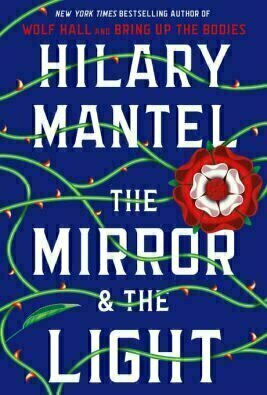
The Mirror & the Light
Book
“If you cannot speak truth at a beheading, when can you speak it?” England, May 1536....

Lyndsey Gollogly (2893 KP) rated Anna of Kleve: Queen of Secrets ( Six Tudor Queens book 4) in Books
Dec 30, 2021
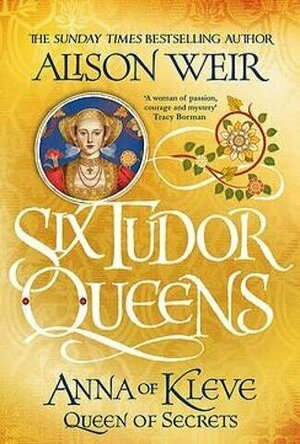

Book
Anna of Kleve: Queen of Secrets ( Six Tudor Queens book 4)
By Alison Weir
Once read a review will be written via Smashbomb and link posted in comments
Newly widowed and the father of an infant son, Henry VIII realizes he must marry again to ensure the royal succession. Forty-six, overweight, and suffering from gout, Henry is soundly rejected by some of Europe's most eligible princesses. Anna of Kleve, from a small German duchy, is twenty-four, and has a secret she is desperate to keep hidden. Henry commissions her portrait from his court painter, who depicts her from the most flattering perspective. Entranced by the lovely image, Henry is bitterly surprised when Anna arrives in England and he sees her in the flesh. Some think her attractive, but Henry knows he can never love her.
What follows is the fascinating story of an awkward royal union that somehow had to be terminated. Even as Henry begins to warm to his new wife and share her bed, his attention is captivated by one of her maids-of-honor. Will he accuse Anna of adultery as he did Queen Anne Boleyn, and send her to the scaffold? Or will he divorce her and send her home in disgrace? Alison Weir takes a fresh and astonishing look at this remarkable royal marriage by describing it from the point of view of Queen Anna, a young woman with hopes and dreams of her own, alone and fearing for her life in a royal court that rejected her almost from the day she set foot on England’s shore.
Wolf Hall & Bring Up the Bodies: RSC Stage Adaptation
Hilary Mantel and Mike Poulton
Book
A new, revised edition for the London transfer of Mike Poulton's expertly adapted two-part...

The Cardinal's Whores
8.0 Rate It
Book
Blackmail. Betrayal. Lust. Just standard fare in the court of Henry the Eighth. Joan Larke...
Historical Romance Suspense
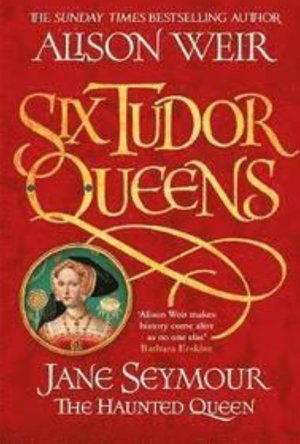
Jane Seymour: The Haunted Queen
8.3
Rate It
Book
Acclaimed author and historian Alison Weir continues her epic Six Tudor Queens series with this...

Young Elizabeth: Princess. Prisoner. Queen
10.0 Rate It
Book
Elizabeth I is one of England's most famous monarchs, whose story as the ‘Virgin Queen’ is well...
Katherine Howard: The Tragic Story of Henry VIII's Fifth Queen
8.5
Rate It
Book
'An impressive revisionist biography' The Times Looming out of the encroaching darkness of the...


Immediately, I was struck by Hilary Mantel's remarkable ability to capture life of that time - making it seem strangely familiar, despite the fact it was hundreds of years ago. She made it all seem so real, largely due to her richness of detail, not to mention expert knowledge of the era. The little notes of humour throughout are what really bring it to life - so often, history is treated with utmost seriousness, yet Mantel is absolutely correct - I'm sure people were cracking jokes and saying silly things in the Tudor era too!
The relationships were likewise beautifully illustrated, and the death of Cromwell's wife, genuinely moving. For me, this was one of the most impressive moments of the book, as Mantel captures grief so powerfully and yet so simply.
One thing I did find strange though - the way Mantel uses pronouns throughout the book. I pondered for ages about why it jarred on me every so often, and I think it's because the 3rd person narrative is so intimate, it almost feels like a 1st person in places. Then, when she uses 'he' again, rather than 'I', it is momentarily confusing. I found myself wondering what the book would have been like had she just told it in first person through Cromwell's eyes - my personal belief is that it might have worked better.
Also, although the richness of the detail was spectacular, there were times when I felt that it held up the narrative slightly. I appreciate her desire to capture every moment of these tumultuous historic events, but at times, I did find them a wee bit boring.
However, for the most part, I was really into this book, and loved the character of Cromwell to bits. A man from a humble background, unfailingly pragmatic and clever - fabulous stuff!
Katherine of Aragon, the True Queen
8.0
Rate It
Book
*A Sunday Times Top Ten Bestseller* Katherine of Aragon: The True Queen by bestselling historian...