
Search

ClareR (6256 KP) rated The Familiars in Books
Jul 14, 2019 (Updated Jul 14, 2019)
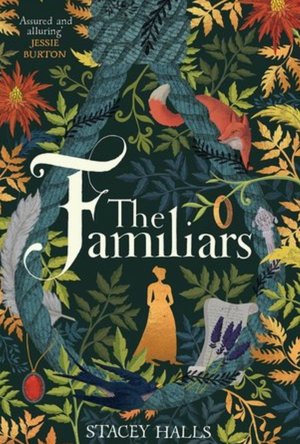


The fact that this book is based on true events makes it all the more harrowing, in my opinion. When people ask “What era would you like to visit or live in?”, I pretty much always answer “I’m fine just where I am. I rather like the antibiotics, general freedom and option not to be hung and/ or burned as a witch, thanks very much”. I do however, very much like reading about the past, and this gives a fascinating insight to the Pendle Hill Witch Trials.
Fleetwood is seventeen years old and pregnant for the fourth time. Her three previous pregnancies have all resulted in stillbirth or miscarriage, and she has found letters from a doctor to her husband, saying that she will not survive another. She meets Alice Grey, who is a midwife, by chance. Alice promises to help her give birth to a living child, and assures her that she will survive the birth.
The fact that Alice is a midwife leaves her vulnerable to accusations of witchcraft, and accused she is. Fleetwood is adamant that she will save her as she is her friend and the only person who will be able to save hers and her baby’s lives. No one takes Fleetwood seriously though; when they do take her seriously, they expect her to go home and knuckle down to the more womanly pursuits of child bearing and being a wife.
Fleetwoods frustration is described so well - no one will listen, and no one will help. It’s such a tense atmosphere - Fleetwood just wants to help,her friend, and there are so many obstacles in the way. Even her social standing is no deterrent if someone were to accuse her of witchcraft if she becomes too troublesome (there’s the example of Margaret Pearson in the story, whose maid accused her of having a toad as a familiar, and spent time in the stocks before being imprisoned)
I really enjoyed this book, and I’ll be waiting for whatever the author writes next (I’m on the mailing list!).
Many thanks to Readers First for my copy of this book.
Fleetwood is seventeen years old and pregnant for the fourth time. Her three previous pregnancies have all resulted in stillbirth or miscarriage, and she has found letters from a doctor to her husband, saying that she will not survive another. She meets Alice Grey, who is a midwife, by chance. Alice promises to help her give birth to a living child, and assures her that she will survive the birth.
The fact that Alice is a midwife leaves her vulnerable to accusations of witchcraft, and accused she is. Fleetwood is adamant that she will save her as she is her friend and the only person who will be able to save hers and her baby’s lives. No one takes Fleetwood seriously though; when they do take her seriously, they expect her to go home and knuckle down to the more womanly pursuits of child bearing and being a wife.
Fleetwoods frustration is described so well - no one will listen, and no one will help. It’s such a tense atmosphere - Fleetwood just wants to help,her friend, and there are so many obstacles in the way. Even her social standing is no deterrent if someone were to accuse her of witchcraft if she becomes too troublesome (there’s the example of Margaret Pearson in the story, whose maid accused her of having a toad as a familiar, and spent time in the stocks before being imprisoned)
I really enjoyed this book, and I’ll be waiting for whatever the author writes next (I’m on the mailing list!).
Many thanks to Readers First for my copy of this book.

Gareth von Kallenbach (980 KP) rated Moneyball (2011) in Movies
Aug 7, 2019

Baseball economics has long a source of serious debate amongst fans, players, and teams. The contentious issues of how to divide the revenue in an equitable manner led to the cancellation of the playoffs and World Series in 1994 and is still largely unresolved today. While smaller market teams are given funds from a luxury tax imposed on larger payroll teams, it still fails to provide an even competitive playing field when large market teams, such as the New York Yankees, can field teams with a $225 million-plus payroll while the smaller market teams have to make do with budgets often under $40 million.
Naturally, this has put many teams at a competitive disadvantage and most feel that they have no chance to win long-term, even as they develop cheap homegrown talent in their minor-league systems. They lose said talent to the larger market clubs once players become eligible for free agency. It is against this backdrop that the new film “Moneyball” starring Brad Pitt is set.
The film was based on the book of the same name which tells the story and philosophy of Oakland A’s general manager Billy Beane. Beane was a highly recruited baseball player at a high school who turned down a scholarship to Stanford for his shot at the major leagues. Unfortunately for Beane, his career was a major disappointment punctuated with numerous stops between the pros and the minor leagues which resulted in a very mediocre and forgettable career.
Beane got himself a job as a scout and in time worked his way to being the general manager of the Oakland A’s. As the film opens, Oakland has just lost a deciding Game 5 the New York Yankees, whose payroll at the time was almost $120 million greater than Oaklands. Adding further insult to injury, Oakland is unable to re-sign its three biggest stars as they accept large contracts with the Yankees, Red Sox, and other large market teams.
Unable to get any additional funds from his owner, Beane travels to Cleveland in an attempt to find affordable talent via trades. Beane is categorically rebuffed and told that he couldn’t afford many of the players that he’s asking about and that the ones he can afford are not be available to him.
Beane notices a young man, Peter Brand (Jonah Hill) during the negotiations, whose quiet input was heeded by the Indians, even though this is Peter’s first job since graduating from Yale with an economics degree. Beane gets Peter to confide in him about his beliefs that the traditional baseball method for evaluating talent is all wrong and that there is a better way to do it.
Intrigued, Beane hires Brand to be his assistant general manager and the two set out to rebuild the Oakland A’s on a budget. Needless to say this does not sit well with many of the talent scouts or manager Art Howe (a very believable Phillip Seymour Hoffman), who sees the recruiting of washed-up has-beens and never-weres by Beane as misguided and ridiculous.
But Beane and Brand are determined, and using statistical formula that looks at such things as on-base percentages and runs scored as opposed to batting average, home runs, and RBIs, the A’s quickly put together an unlikely team. It doesn’t immediately play out well for the hopeful general manager because Howe is unwilling to play many of the new players that have been brought on. Oakland quickly sinks to the bottom of the league, and many begin to question the sanity of Bean’s approach, to the point that even his young daughter worries that his days as a general manager are numbered.
The film does a good job at showing the inner workings of baseball and Pitt does an amazing job showing the complex nature of Beane. He is a single father dealing with the failure of his playing career, and his inability to get Oakland to be a consistant winner. He puts everything he has into this so-called outrageous scheme and is willing to see it through no matter the cost. Chris Pratt does great supporting work as Scott Hatteberg, one of Beane’s reclamation projects as does Stephen Bisop as aging major-league slugger David Justice.
The film stays very true to historical events and shows the characters as they are, flaws and all. While a true story, Peter Brand, is a fictional charcter based on Paul DePodesta who introduced Beane to the analytical principles of sabermetrics. The movie remains a very interesting character study as well as an examination of the delicate relationships between players, front offices, and ownership where wins and dollars are paramount even when many teams are struggling to make do with less.
That being said the film was a very enjoyable and realistic look at the inner workings of baseball that should not be missed.
Naturally, this has put many teams at a competitive disadvantage and most feel that they have no chance to win long-term, even as they develop cheap homegrown talent in their minor-league systems. They lose said talent to the larger market clubs once players become eligible for free agency. It is against this backdrop that the new film “Moneyball” starring Brad Pitt is set.
The film was based on the book of the same name which tells the story and philosophy of Oakland A’s general manager Billy Beane. Beane was a highly recruited baseball player at a high school who turned down a scholarship to Stanford for his shot at the major leagues. Unfortunately for Beane, his career was a major disappointment punctuated with numerous stops between the pros and the minor leagues which resulted in a very mediocre and forgettable career.
Beane got himself a job as a scout and in time worked his way to being the general manager of the Oakland A’s. As the film opens, Oakland has just lost a deciding Game 5 the New York Yankees, whose payroll at the time was almost $120 million greater than Oaklands. Adding further insult to injury, Oakland is unable to re-sign its three biggest stars as they accept large contracts with the Yankees, Red Sox, and other large market teams.
Unable to get any additional funds from his owner, Beane travels to Cleveland in an attempt to find affordable talent via trades. Beane is categorically rebuffed and told that he couldn’t afford many of the players that he’s asking about and that the ones he can afford are not be available to him.
Beane notices a young man, Peter Brand (Jonah Hill) during the negotiations, whose quiet input was heeded by the Indians, even though this is Peter’s first job since graduating from Yale with an economics degree. Beane gets Peter to confide in him about his beliefs that the traditional baseball method for evaluating talent is all wrong and that there is a better way to do it.
Intrigued, Beane hires Brand to be his assistant general manager and the two set out to rebuild the Oakland A’s on a budget. Needless to say this does not sit well with many of the talent scouts or manager Art Howe (a very believable Phillip Seymour Hoffman), who sees the recruiting of washed-up has-beens and never-weres by Beane as misguided and ridiculous.
But Beane and Brand are determined, and using statistical formula that looks at such things as on-base percentages and runs scored as opposed to batting average, home runs, and RBIs, the A’s quickly put together an unlikely team. It doesn’t immediately play out well for the hopeful general manager because Howe is unwilling to play many of the new players that have been brought on. Oakland quickly sinks to the bottom of the league, and many begin to question the sanity of Bean’s approach, to the point that even his young daughter worries that his days as a general manager are numbered.
The film does a good job at showing the inner workings of baseball and Pitt does an amazing job showing the complex nature of Beane. He is a single father dealing with the failure of his playing career, and his inability to get Oakland to be a consistant winner. He puts everything he has into this so-called outrageous scheme and is willing to see it through no matter the cost. Chris Pratt does great supporting work as Scott Hatteberg, one of Beane’s reclamation projects as does Stephen Bisop as aging major-league slugger David Justice.
The film stays very true to historical events and shows the characters as they are, flaws and all. While a true story, Peter Brand, is a fictional charcter based on Paul DePodesta who introduced Beane to the analytical principles of sabermetrics. The movie remains a very interesting character study as well as an examination of the delicate relationships between players, front offices, and ownership where wins and dollars are paramount even when many teams are struggling to make do with less.
That being said the film was a very enjoyable and realistic look at the inner workings of baseball that should not be missed.

Democracy in Chains
Book
An explosive exposé of the right’s relentless campaign to eliminate unions, suppress voting,...
History Politics

Acanthea Grimscythe (300 KP) rated Demon Seed: A novel of terror to horrify you this Halloween in Books
May 16, 2018


One of the things I’ve noticed when I’m running around between thrift stores is an abundance of Dean Koontz novels. That said, I’ve definitely been stockpiling them up, and the first one I read out of my Koontz pile is Demon Seed. Demon Seed is told from a rather peculiar perspective: that of a computer with artificial intelligence. Before I delve deeper into my thoughts on Demon Seed, I would like to note that this is a copy of the 1997 release, and not the original novel published in 1973. There are differences in the two books, however because I have not happened to lay hands upon the original version, I am unable to compare or contrast their contents. As such, my review is based solely upon the second version of the book, which is told solely from the perspective of Proteus, the artificial intelligence program that is all too frighteningly real.
The idea of a computer striking fear into someone’s heart is a bit of an oddball, but with the idea of artificial intelligence an all too possible reality, fear over what could happen should the AI take control of itself and evolve is real. In Demon Seed that science is taken too far when Proteus takes control of his own programming and not only stalks the recently divorced Susan Harris, but holds her captive within her own home. With a plan for the ideal race of humans on its mind, Proteus sets forth on a horrifying adventure to create for himself the perfect body, and poor Susan is a key player in his endeavor.
As a premise, especially for something originally written in the early 70’s, the idea behind Demon Seed is intriguing. I find Proteus to be a very disturbing character, and the way in which Koontz pens Proteus gives me chills. I remember once, a long time ago, having a similar feeling while reading a novel by P. T. Deutermann, in which the occasional chapter was in the killer’s perspective. I don’t remember the name of the book, only the fact that I was left nerve-wracked. Koontz’s Proteus is not too far off from that mark and the mere fact that Koontz is able to capture that essence of a true sociopath with an inanimate object (if I can really call Proteus that) probably factors into my opinion on the book the most. The other characters, and to some degree Susan as well, strike me as a bit one-dimensional. They have a single, solitary purpose and while they possess wildly different backgrounds, the way in which the story progresses does not leave room for the development of feelings toward the characters.
Demon Seed is an extremely quick read, and if you’ve got the time to sit for a few hours and thumb through its pages, I’d definitely recommend it. While it isn’t among my favorite books, and only receives a passing “meh” score from me, it was enjoyable. The linear plot line, told from a single, solitary perspective, makes it an easy read as well. There is also a movie adaptation of the novel, but it is not presently on my to-watch list.
The idea of a computer striking fear into someone’s heart is a bit of an oddball, but with the idea of artificial intelligence an all too possible reality, fear over what could happen should the AI take control of itself and evolve is real. In Demon Seed that science is taken too far when Proteus takes control of his own programming and not only stalks the recently divorced Susan Harris, but holds her captive within her own home. With a plan for the ideal race of humans on its mind, Proteus sets forth on a horrifying adventure to create for himself the perfect body, and poor Susan is a key player in his endeavor.
As a premise, especially for something originally written in the early 70’s, the idea behind Demon Seed is intriguing. I find Proteus to be a very disturbing character, and the way in which Koontz pens Proteus gives me chills. I remember once, a long time ago, having a similar feeling while reading a novel by P. T. Deutermann, in which the occasional chapter was in the killer’s perspective. I don’t remember the name of the book, only the fact that I was left nerve-wracked. Koontz’s Proteus is not too far off from that mark and the mere fact that Koontz is able to capture that essence of a true sociopath with an inanimate object (if I can really call Proteus that) probably factors into my opinion on the book the most. The other characters, and to some degree Susan as well, strike me as a bit one-dimensional. They have a single, solitary purpose and while they possess wildly different backgrounds, the way in which the story progresses does not leave room for the development of feelings toward the characters.
Demon Seed is an extremely quick read, and if you’ve got the time to sit for a few hours and thumb through its pages, I’d definitely recommend it. While it isn’t among my favorite books, and only receives a passing “meh” score from me, it was enjoyable. The linear plot line, told from a single, solitary perspective, makes it an easy read as well. There is also a movie adaptation of the novel, but it is not presently on my to-watch list.

Zuky the BookBum (15 KP) rated The Witchfinder's Sister in Books
Mar 15, 2018


<i><b>I think now that to be close to someone can be to underestimate them. Grow too close, and you do not see what they are capable of; or you do not see it in time.</b></i>
<i>The Witchfinder’s Sister</i> is based on true life witch hunter Matthew Hopkins that grew to fame during the English Civil War around East Anglia, hunting and killing “witches”. This book isn’t non-fiction, it’s fiction based around non-fiction! I love these sorts of books that create their own stories from something that was very much real. Not only does it make for good reading, they also bring in some true history facts, so you’re being educated on the subject as you read.
High praise goes to Underdown for this novel. I feel like historical fiction can be hard genre to get right, and considering this is a <i>debut</i> novel, I’m amazed at how well put together and beautiful this has turned out to be! I love reading historical fiction, every once in awhile, and this is the sort of book that keeps my love for the genre burning.
The writing in this novel was haunting and beautiful. Nine times out of ten, it was exactly as you would have imagined the 17th Century to be, but I felt there were a few slips that made the book feel modern. For example, would a lady in 1645 say the phrase <i><b>“shitting herself”</b></i>? Correct me if I’m wrong, but that feels like a reasonably modern phrase to me.
I loved our main character, Alice. Me and my mum were talking about historical fiction novels and how we find it hard to understand why women make the decisions they make in these books, because we’re so used to having some equality and independence. But I noted that in this book, even though Alice is inferior to her brother and his counterparts, she is still a risk taker; going against her brother's wishes & sneaking around. I liked that she was strong and a little rebellious, it was so much easier to connect with her because of this.
On the other hand. I <i>hated</i> Matthew. He was a despicable character. I can rarely hate a character in a book, even if I’m supposed to. I tend to find the good in them at some point, or have some sort of sympathy for them, but I absolutely despised Matthew. Well done to Underdown for creating such a hate-inducing character. It’s quite a hard feat, but she managed it perfectly. The same goes for Mary Phillips.
The tension was built so well in this novel, you could feel the mystery growing and growing with every page and I loved it! Though the story moved reasonably slowly, the book was still absolutely riveting and I found it extremely hard to put down when I knew it was time to get some rest.
I am so, so excited to read more from Underdown. This was an amazingly well put together and researched.
<i>Thanks to Netgalley and Penguin Books UK for giving me the opportunity to read this in exchange for an honest review.</i>
<i>The Witchfinder’s Sister</i> is based on true life witch hunter Matthew Hopkins that grew to fame during the English Civil War around East Anglia, hunting and killing “witches”. This book isn’t non-fiction, it’s fiction based around non-fiction! I love these sorts of books that create their own stories from something that was very much real. Not only does it make for good reading, they also bring in some true history facts, so you’re being educated on the subject as you read.
High praise goes to Underdown for this novel. I feel like historical fiction can be hard genre to get right, and considering this is a <i>debut</i> novel, I’m amazed at how well put together and beautiful this has turned out to be! I love reading historical fiction, every once in awhile, and this is the sort of book that keeps my love for the genre burning.
The writing in this novel was haunting and beautiful. Nine times out of ten, it was exactly as you would have imagined the 17th Century to be, but I felt there were a few slips that made the book feel modern. For example, would a lady in 1645 say the phrase <i><b>“shitting herself”</b></i>? Correct me if I’m wrong, but that feels like a reasonably modern phrase to me.
I loved our main character, Alice. Me and my mum were talking about historical fiction novels and how we find it hard to understand why women make the decisions they make in these books, because we’re so used to having some equality and independence. But I noted that in this book, even though Alice is inferior to her brother and his counterparts, she is still a risk taker; going against her brother's wishes & sneaking around. I liked that she was strong and a little rebellious, it was so much easier to connect with her because of this.
On the other hand. I <i>hated</i> Matthew. He was a despicable character. I can rarely hate a character in a book, even if I’m supposed to. I tend to find the good in them at some point, or have some sort of sympathy for them, but I absolutely despised Matthew. Well done to Underdown for creating such a hate-inducing character. It’s quite a hard feat, but she managed it perfectly. The same goes for Mary Phillips.
The tension was built so well in this novel, you could feel the mystery growing and growing with every page and I loved it! Though the story moved reasonably slowly, the book was still absolutely riveting and I found it extremely hard to put down when I knew it was time to get some rest.
I am so, so excited to read more from Underdown. This was an amazingly well put together and researched.
<i>Thanks to Netgalley and Penguin Books UK for giving me the opportunity to read this in exchange for an honest review.</i>
Gareth von Kallenbach (980 KP) rated Power Rangers (2017) in Movies
Jul 12, 2019
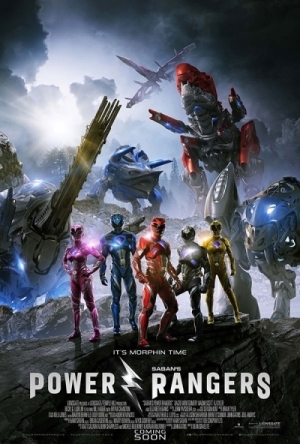
When I first heard that The Mighty Morphin Power Rangers would be getting a film adaptation, I was a bit apprehensive. Hollywood has had a bit of trouble converting many of the themes and issues brought up in a variety of shows into films that stay loyal to their respective franchises.
Fans on social media have often expressed their dissatisfaction with films not staying true to the origin stories or their inabil;ity to retain much of the character and charm that endeared them to their fans. Power Rangers does not suffer from this dilemma. As someone who watched the series as it first hit American markets in the 1990s, I was unsure of how this story would transfer onto the big screen.
It wasn’t something that I was too personally invested in. It was a series in which I considered myself to be a casual fan understanding the background, characters, and general direction of the show. I wasn’t prepared for what the film version offered.
This adaptation is near perfect in the way that it is able to create a modern, mature version that incorporates many aspects into weaving their story.
The basics of the film are roughly the same as the show: it is based in Angel Grove, there are five teenagers serving the role of rangers whose goal is to save the world, and all the complexities that come with being a superhero who has a “real life.”
One of the more remarkable issues related to the film is how the writers and director are able to be inclusive with their characters without being condescending to their audiences old and new. We get a glimpse of a team that is more colorful and diverse. Where the original crew showed a group of youths of different races, the film version does not stop with race as demonstrating the variety that exists within our world. The film allows for the inclusion of people on the autism spectrum, as well as, allowing for the inclusion of the LGBT community. The film shows audiences that there are people just like them or people that they know in the superhero realm. It is not limited by race, gender, sexual orientation, or cognitive development.
Power Rangers itself is a fun movie with depth. As the film continued, I tried to look for areas to pick it apart and find those pieces that really detracted from the story. The film has its faults in a simply developing storyline, but that goes with the franchise. It isn’t supposed to be complex or overbearing. The humor ranges from sophomoric to sophisticated. The film is accessible to those who are new to the franchise and those who have been watching since its inception. Additionally, it is a superhero movie it is not insulting to its audience. It demonstrates the difficulties that exist with teen life, presents real problems that they have to deal with in contrast to the fantasy that they are living out as part of this team.
The film is beautifully shot and the CGI is nearly seamless (the film is not overly reliant on it, either). The fighting and action sequences are as much a part of the story as the characters themselves. Power Rangers allows for audiences to be entertained visually and comedically. Additionally, it allows for those of us who have not watched or followed the Power Rangers in a while to be a bit nostalgic and look back to when we ourselves could not get home quickly enough for “Morphin’ Time.” The film is updated, mature, and will have fans young and old beaming with delight.
Fans on social media have often expressed their dissatisfaction with films not staying true to the origin stories or their inabil;ity to retain much of the character and charm that endeared them to their fans. Power Rangers does not suffer from this dilemma. As someone who watched the series as it first hit American markets in the 1990s, I was unsure of how this story would transfer onto the big screen.
It wasn’t something that I was too personally invested in. It was a series in which I considered myself to be a casual fan understanding the background, characters, and general direction of the show. I wasn’t prepared for what the film version offered.
This adaptation is near perfect in the way that it is able to create a modern, mature version that incorporates many aspects into weaving their story.
The basics of the film are roughly the same as the show: it is based in Angel Grove, there are five teenagers serving the role of rangers whose goal is to save the world, and all the complexities that come with being a superhero who has a “real life.”
One of the more remarkable issues related to the film is how the writers and director are able to be inclusive with their characters without being condescending to their audiences old and new. We get a glimpse of a team that is more colorful and diverse. Where the original crew showed a group of youths of different races, the film version does not stop with race as demonstrating the variety that exists within our world. The film allows for the inclusion of people on the autism spectrum, as well as, allowing for the inclusion of the LGBT community. The film shows audiences that there are people just like them or people that they know in the superhero realm. It is not limited by race, gender, sexual orientation, or cognitive development.
Power Rangers itself is a fun movie with depth. As the film continued, I tried to look for areas to pick it apart and find those pieces that really detracted from the story. The film has its faults in a simply developing storyline, but that goes with the franchise. It isn’t supposed to be complex or overbearing. The humor ranges from sophomoric to sophisticated. The film is accessible to those who are new to the franchise and those who have been watching since its inception. Additionally, it is a superhero movie it is not insulting to its audience. It demonstrates the difficulties that exist with teen life, presents real problems that they have to deal with in contrast to the fantasy that they are living out as part of this team.
The film is beautifully shot and the CGI is nearly seamless (the film is not overly reliant on it, either). The fighting and action sequences are as much a part of the story as the characters themselves. Power Rangers allows for audiences to be entertained visually and comedically. Additionally, it allows for those of us who have not watched or followed the Power Rangers in a while to be a bit nostalgic and look back to when we ourselves could not get home quickly enough for “Morphin’ Time.” The film is updated, mature, and will have fans young and old beaming with delight.

Hazel (1853 KP) rated A Step Towards Falling in Books
Dec 14, 2018
Rating: 3.5
<i>This eBook was provided by the publisher via NetGalley in exchange for an honest review
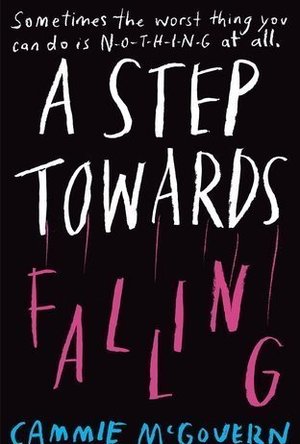
A Step Towards Falling</i> by Cammie McGovern is a book full of important messages. As with a couple of her previous novels, McGovern writes about characters with developmental disabilities, i.e. Autism, focusing on the ways in which they interact with the world around them and vice versa. This particular story is written with teenagers in mind, featuring topics such as dating and future prospects.
One of the narrators Emily, along with high school football player Lucas, are being punished for not helping a disabled student when they witnessed her being assaulted. In order to appease the school they are subjected to forty hours of community service – voluntarily helping to run the Boundaries and Relationships class at the Lifelong Learning Centre. Here they meet a handful of people with disabilities who need help to identify what is and what is not acceptable in potential romantic relationships. Although Emily and Lucas initially think members of the group are strange, they soon learn to see through their quirks and admire them for their positive personalities.
The second narrator, Belinda, is the assaulted girl. To begin with she is no longer attending school as her grandmother has deemed it an unsafe place. Belinda describes her life with childlike innocence, naively believing she is like everyone else and not understanding why she never receives the same privileges, e.g. joining after school clubs, getting a job. Whilst she slowly regains her confidence to return to school, Emily and Lucas begin to enjoy working at the LLC, however continue to feel guilty, as they are aware that although they are doing a great job, it is not doing anything to make Belinda’s life better. So, they aim to change that.
Although relationships feature heavily in this novel, <i>A Step Towards Falling</i> is largely based on similar themes to Jane Austen’s <i>Pride and Prejudice</i> – incidentally Belinda’s favourite story. Each key character have their own prejudices towards other people and act as though they are better than everyone else. Emily instantly judges Lucas to be a popular, uneducated boy due to his position on the school football team. Likewise, Lucas judges Emily for hanging out with “nerdy” people who only care about grades and getting into good colleges. Belinda, despite being different due to her disability, believes she is better than other people in her class because she can read and use a computer, whereas many can barely string a sentence together.
What McGovern is stressing throughout this narrative is the importance of getting to know someone first instead of arrogantly assuming you know exactly what they are like based on appearance. As can be revealed in <i>Pride and Prejudice</i>, someone who appears rude and distant may actually have a lovely, kind and considerate personality. Emily and Lucas learn this quite quickly, and Belinda is not far behind them. It is a shame that not many other people are as swift to realize this.
Although <i>A Step Towards Falling</i> is a work of fiction it deals with issues that many high school students, and even adults, face even if they do not realize it. Football players are often presumed to be unintelligent, likewise clever, “nerdy” people may come across as distant and uncaring. The worst thing that most, if not all, are guilty of is the presupposed belief that developmentally disabled people are weird and to be avoided. This is entirely false, as McGovern reveals; they have the right to the same life as anyone else, the only difference is they may take longer to learn what comes naturally to most people.
As a novel, <i>A Step Towards Falling</i> is a fairly gentle read about completely realistic events. Although there are references to Belinda’s assault, there is nothing majorly distressing. On the other hand, it is a bit too plain sailing, with no climax to speak of. Through her attempt to create an accurate representation of disabled people, McGovern fails to grip the reader or create excitement. There is no suspense or anticipation, which unfortunately makes the book a little disappointing.
Overall the story line may not be the most thrilling however it has a powerful voice and a satisfying ending. All teenagers, and adults too, should read this book and become more mindful of their behaviour and prejudices. Naturally this is not something that will be easy to completely eradicate, but as this book reveals, once you are aware of your inaccurate impressions it become easier to accept people the way they are, and become confident in getting to know their true personality.
<i>This eBook was provided by the publisher via NetGalley in exchange for an honest review
A Step Towards Falling</i> by Cammie McGovern is a book full of important messages. As with a couple of her previous novels, McGovern writes about characters with developmental disabilities, i.e. Autism, focusing on the ways in which they interact with the world around them and vice versa. This particular story is written with teenagers in mind, featuring topics such as dating and future prospects.
One of the narrators Emily, along with high school football player Lucas, are being punished for not helping a disabled student when they witnessed her being assaulted. In order to appease the school they are subjected to forty hours of community service – voluntarily helping to run the Boundaries and Relationships class at the Lifelong Learning Centre. Here they meet a handful of people with disabilities who need help to identify what is and what is not acceptable in potential romantic relationships. Although Emily and Lucas initially think members of the group are strange, they soon learn to see through their quirks and admire them for their positive personalities.
The second narrator, Belinda, is the assaulted girl. To begin with she is no longer attending school as her grandmother has deemed it an unsafe place. Belinda describes her life with childlike innocence, naively believing she is like everyone else and not understanding why she never receives the same privileges, e.g. joining after school clubs, getting a job. Whilst she slowly regains her confidence to return to school, Emily and Lucas begin to enjoy working at the LLC, however continue to feel guilty, as they are aware that although they are doing a great job, it is not doing anything to make Belinda’s life better. So, they aim to change that.
Although relationships feature heavily in this novel, <i>A Step Towards Falling</i> is largely based on similar themes to Jane Austen’s <i>Pride and Prejudice</i> – incidentally Belinda’s favourite story. Each key character have their own prejudices towards other people and act as though they are better than everyone else. Emily instantly judges Lucas to be a popular, uneducated boy due to his position on the school football team. Likewise, Lucas judges Emily for hanging out with “nerdy” people who only care about grades and getting into good colleges. Belinda, despite being different due to her disability, believes she is better than other people in her class because she can read and use a computer, whereas many can barely string a sentence together.
What McGovern is stressing throughout this narrative is the importance of getting to know someone first instead of arrogantly assuming you know exactly what they are like based on appearance. As can be revealed in <i>Pride and Prejudice</i>, someone who appears rude and distant may actually have a lovely, kind and considerate personality. Emily and Lucas learn this quite quickly, and Belinda is not far behind them. It is a shame that not many other people are as swift to realize this.
Although <i>A Step Towards Falling</i> is a work of fiction it deals with issues that many high school students, and even adults, face even if they do not realize it. Football players are often presumed to be unintelligent, likewise clever, “nerdy” people may come across as distant and uncaring. The worst thing that most, if not all, are guilty of is the presupposed belief that developmentally disabled people are weird and to be avoided. This is entirely false, as McGovern reveals; they have the right to the same life as anyone else, the only difference is they may take longer to learn what comes naturally to most people.
As a novel, <i>A Step Towards Falling</i> is a fairly gentle read about completely realistic events. Although there are references to Belinda’s assault, there is nothing majorly distressing. On the other hand, it is a bit too plain sailing, with no climax to speak of. Through her attempt to create an accurate representation of disabled people, McGovern fails to grip the reader or create excitement. There is no suspense or anticipation, which unfortunately makes the book a little disappointing.
Overall the story line may not be the most thrilling however it has a powerful voice and a satisfying ending. All teenagers, and adults too, should read this book and become more mindful of their behaviour and prejudices. Naturally this is not something that will be easy to completely eradicate, but as this book reveals, once you are aware of your inaccurate impressions it become easier to accept people the way they are, and become confident in getting to know their true personality.

Bob Mann (459 KP) rated Fast & Furious 9 (2021) in Movies
Jun 24, 2021


Ridiculous storyline (1 more)
Improbable action
Magnetic bulls**t that will no doubt attract Fast-fans
Positives:
- Glossy locations, fast cars and beautiful women: the usual Fast stuff.
- When the stunts are "real", they are good and exciting. But it's often difficult to tell when there's been a 'computer-assist'.
Negatives:
- I complained in my review for "The Hitman's Wife's Bodyguard" about it having a childish and ludicrous plot. This movie makes that look like bl***y Shakespeare! There's an attempt to add a smidgen of family tension into the mix, based on Dom's childhood trauma. But aside from that element, the 'story' (I use the term in its loosest possible sense) bounces (without any rational logic most of the time) from ludicrous situation to ludicrous situation without pause. Most of these are linked by Ramsey (the very British Nathalie Emmanuel) stating a random fact such as "Well, now he's going to need to launch a satellite". And off we go again. (That particular crazy story arc even sees them 'doing a Musk' and flying a car into space: I kid you not!)
- It's not even the 'big stuff' that's unbelievable. Everywhere you look, there are inconsistencies and things that don't make sense.
-- Tej (played by Ludicris - an appropriate name here) takes dodging a brigade worth of machine gun bullets to nonsensical limits.
-- Generally, the cast gets blasted, dropped, crashed, burned, and otherwise put through more fatal situations than you can imagine, only to walk out without a scratch.
-- And if you can show me a single delivery lorry in Edinburgh that has an automatic gearbox, I'll be amazed!
- At one point, Roman (Tyrese Gibson) mutters some line about "Trusting in the physics and the numbers". Well, let me tell you, it's like no physics that I studied on this planet. A lot of the set pieces involve huge magnets attached to trucks and cars. Now - correct me if I'm wrong - but if you turn a massive magnet on in a truck then as well as ripping the car you are chasing through the adjacent building (as if), you will also force the truck to be pulled into that building too. OK, perhaps not as much.... but the lorry ain't going to stay in its driving lane, I know that much! And magnets attract metal - they don't repel it!
- At 145 minutes, this is well over 2 hours of my life I will never get back.
Summary Thoughts on "F9": It's just such a formulaic and contrived piece of fluff that it makes me cross that they can spend $200,000 on a movie and not make it better. Part of this involves the lazy use of CGI to create obviously nonsensical stunts that devalue true action films. Yes, the stunt team was busy, and impressive, here - but always going for "one better" has led to extensive use of CGI. That's why I liked the 2014 'knock-off' film "Need for Speed" - - at least they did all their stunts old-school, in camera, and not in the computer.
But whatever I say here, this movie will unfortunately get its audience. At the time of writing, it's already made nearly $300K at the box office on its $200K budget. Which means there will inevitably be an F10, no doubt involving a driving battle on the planet Mars. Sigh.
By the way, before you dive for the exits to relieve your bladder (it is 145 minutes after all), there is a mid-credits scene that re-introduces an old favourite.
(For the full graphical review, please check out the One Mann's Movies review here - https://bob-the-movie-man.com/2021/06/24/f9-magnetic-bullst-that-will-no-doubt-attract-fast-fans/. Thanks).
- Glossy locations, fast cars and beautiful women: the usual Fast stuff.
- When the stunts are "real", they are good and exciting. But it's often difficult to tell when there's been a 'computer-assist'.
Negatives:
- I complained in my review for "The Hitman's Wife's Bodyguard" about it having a childish and ludicrous plot. This movie makes that look like bl***y Shakespeare! There's an attempt to add a smidgen of family tension into the mix, based on Dom's childhood trauma. But aside from that element, the 'story' (I use the term in its loosest possible sense) bounces (without any rational logic most of the time) from ludicrous situation to ludicrous situation without pause. Most of these are linked by Ramsey (the very British Nathalie Emmanuel) stating a random fact such as "Well, now he's going to need to launch a satellite". And off we go again. (That particular crazy story arc even sees them 'doing a Musk' and flying a car into space: I kid you not!)
- It's not even the 'big stuff' that's unbelievable. Everywhere you look, there are inconsistencies and things that don't make sense.
-- Tej (played by Ludicris - an appropriate name here) takes dodging a brigade worth of machine gun bullets to nonsensical limits.
-- Generally, the cast gets blasted, dropped, crashed, burned, and otherwise put through more fatal situations than you can imagine, only to walk out without a scratch.
-- And if you can show me a single delivery lorry in Edinburgh that has an automatic gearbox, I'll be amazed!
- At one point, Roman (Tyrese Gibson) mutters some line about "Trusting in the physics and the numbers". Well, let me tell you, it's like no physics that I studied on this planet. A lot of the set pieces involve huge magnets attached to trucks and cars. Now - correct me if I'm wrong - but if you turn a massive magnet on in a truck then as well as ripping the car you are chasing through the adjacent building (as if), you will also force the truck to be pulled into that building too. OK, perhaps not as much.... but the lorry ain't going to stay in its driving lane, I know that much! And magnets attract metal - they don't repel it!
- At 145 minutes, this is well over 2 hours of my life I will never get back.
Summary Thoughts on "F9": It's just such a formulaic and contrived piece of fluff that it makes me cross that they can spend $200,000 on a movie and not make it better. Part of this involves the lazy use of CGI to create obviously nonsensical stunts that devalue true action films. Yes, the stunt team was busy, and impressive, here - but always going for "one better" has led to extensive use of CGI. That's why I liked the 2014 'knock-off' film "Need for Speed" - - at least they did all their stunts old-school, in camera, and not in the computer.
But whatever I say here, this movie will unfortunately get its audience. At the time of writing, it's already made nearly $300K at the box office on its $200K budget. Which means there will inevitably be an F10, no doubt involving a driving battle on the planet Mars. Sigh.
By the way, before you dive for the exits to relieve your bladder (it is 145 minutes after all), there is a mid-credits scene that re-introduces an old favourite.
(For the full graphical review, please check out the One Mann's Movies review here - https://bob-the-movie-man.com/2021/06/24/f9-magnetic-bullst-that-will-no-doubt-attract-fast-fans/. Thanks).


Andy K (10827 KP) rated The Impossible (2012) in Movies
Apr 16, 2019
Epic and intimate
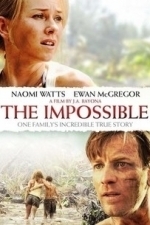
How would you like to take your family on holiday to Thailand only to be caught in the onslaught of a tsunami? Such is the case in this film based on the true story of a family's painful and moving ordeal from the 2004 tidal wave.
The wall of water comes out of nowhere when no one was expecting anything and everyone was just having a good time playing or relaxing by the pool. In an instant everyone present has their lives changed forever as they just try and hold on to something and claw their way to safety.
The disaster sequences are amazing, but it is all over quickly so the film is about love, loss and survival. Trying to make it back to the civilized world or at least what is left of it and trying to locate your missing family members is all the family cares about.
Understandably emotions run high throughout the film and I dare you to hold back the tears when several of the most touching moments occur. You are moved continually as you hope and pray the family find each other again and make it off together and patched up the best they can.
Naomi Watts was nominated for an Oscar for this role and she really deserves it giving an intense, emotional performance. Ewan McGregor is also emotional when he gets to use a cell phone to call his family and breaks down. Even young Spider-Man, Tom Holland, is along for the ride as the couple's oldest son frantically trying to help his mother to safety.
The triumph of the human spirit is present here and you are taken along with them as your empathy pours out to the victims of this tragedy.
Keep your tissues close by for this one.
The wall of water comes out of nowhere when no one was expecting anything and everyone was just having a good time playing or relaxing by the pool. In an instant everyone present has their lives changed forever as they just try and hold on to something and claw their way to safety.
The disaster sequences are amazing, but it is all over quickly so the film is about love, loss and survival. Trying to make it back to the civilized world or at least what is left of it and trying to locate your missing family members is all the family cares about.
Understandably emotions run high throughout the film and I dare you to hold back the tears when several of the most touching moments occur. You are moved continually as you hope and pray the family find each other again and make it off together and patched up the best they can.
Naomi Watts was nominated for an Oscar for this role and she really deserves it giving an intense, emotional performance. Ewan McGregor is also emotional when he gets to use a cell phone to call his family and breaks down. Even young Spider-Man, Tom Holland, is along for the ride as the couple's oldest son frantically trying to help his mother to safety.
The triumph of the human spirit is present here and you are taken along with them as your empathy pours out to the victims of this tragedy.
Keep your tissues close by for this one.
Bob Mann (459 KP) rated Adrift (2018) in Movies
Sep 29, 2021

“Hurricane Raymond has been upgraded to a category 5”
“Should we be worried” says Tami. Well, yes dear, you really should.
In the glorious surroundings of Tahiti, the American footloose traveller Tami Oldham (Shailene Woodley, “Divergent trilogy“, “The Descendents) meets British footloose traveller Richard Sharp (Sam Claflin, “Journey’s End“, “Me Before You“) and a nautical-based love beckons. Richard is hired by his friends Peter (Jeffrey Thomas) and Christine (Elizabeth Hawthorne) to sail their luxury 44 foot yacht Hazana from Tahiti to Tami’s home city of San Diego. But they hadn’t reckoned on the decidedly un-romantic attentions of Raymond and severely battered and bruised it’s a battle for survival on the vast expanse of the Pacific.
I was intrigued by this film as it seems to have divided the professional critics’ opinions: Kevin Maher in The Times gave it five stars… five! Conversely Edward Porter in The Sunday Times gave it two stars. After seeing the film, I’m with Mr Maher on this one (breaking convention as I haven’t exactly been in tune with this reviewer recently!).
As a story with romantic undertones, the film will live or die on your belief in this aspect. And fortunately the romance works. There is real chemistry between the pair despite them striking you as an odd couple. This is in no small part to the quality of the acting: Claflin proves again that he is a safe pair of hands as a male lead, but it’s Shailene Woodley, who has to carry large portions of the film single-handedly, who again demonstrates just how excellent an actress she is. The camera of Tarentino favourite Robert Richardson (“The Hateful Eight“, “Django Unchained”) stays tightly on Woodley’s features dramatically capturing her tiniest of grimaces.
Woodley is also deliciously un-Hollywood, getting to where she has through acting talent as much as her looks. Yes, she has a great body (liberally, perhaps a tad lasciviously, featured here both above and under the water) but her face is gloriously assymettical with little wrinkles appearing unexpectedly when she grins. She’s a good role model for young girls that perfection is not a pre–requisite for success. (What’s perhaps less good, role-model-wise, is that Woodley allegedly ate only 350 calories a day to get to the emaciated state seen at the end of the film! But to compensate, it’s notable that she looks so much better/sexier at the start of the film than at the end).
It’s also interesting to note that the 27-year old Woodley is also a co-producer on the film, a sign perhaps that as well as being the ‘Meryl Streep of the future'(TM), she is also likely to become a significant mover and shaker in Hollywood when getting there.
A bit like “The Shallows“, it’s unapologetically a B movie, but it’s delivered with such style and chutzpah that it drives its way through the apallingly cheesy dialogue just as the poor Hazana bashes its way throught the mountainous seas. It’s even self-mocking, with Tami rolling her eyes at the corniness of Richard’s, very English, attempts at romantic dialogue. The script is more successful in establishing back-stories for Tami and Richard, demonstrating a degree of parallelism that perhaps better explains their mutual attraction. The irony of fate taking Tami back to her damaged past is exquisite.
A controversial and brave decision by Icelandic director Baltasar Kormákur is to constantly flashback between the survival scenes and Tami and Richard’s courtship that leads up to the cataclismic event. This can be a little distracting, but given the gut-wrenching twist in the third act a linear storytelling would simply have not worked. It’s very well done too, with matched cross-cuts that really work well. Kormákur’s previous film “Everest” was his biggest hit to date, and I noted the cheeky addition of the book “Everest” on the bookshelf on Richard’s boat! (As an aside, “Everest” is for some reason the film review on One Mann’s Movies that has been viewed more often than any other… no idea why… must be down to search engine results!)
Extraordinarily, it’s a true story with the closing frames of the film being genuinely moving.
With many similarities to the excellent Robert Redford thriller “All Is Lost”, this is a robust and enthralling thriller-cum-romance that unusually delivers on both counts. The romance is believable and the thrills suitably thrilling, especially when a panic-ridden Tami is separated from her one patch of dry land. Although slightly let down by some dodgy dialogue, sitting amongst all the big-hitter summer blockbusters this is a movie you should definitely seek out.
In the glorious surroundings of Tahiti, the American footloose traveller Tami Oldham (Shailene Woodley, “Divergent trilogy“, “The Descendents) meets British footloose traveller Richard Sharp (Sam Claflin, “Journey’s End“, “Me Before You“) and a nautical-based love beckons. Richard is hired by his friends Peter (Jeffrey Thomas) and Christine (Elizabeth Hawthorne) to sail their luxury 44 foot yacht Hazana from Tahiti to Tami’s home city of San Diego. But they hadn’t reckoned on the decidedly un-romantic attentions of Raymond and severely battered and bruised it’s a battle for survival on the vast expanse of the Pacific.
I was intrigued by this film as it seems to have divided the professional critics’ opinions: Kevin Maher in The Times gave it five stars… five! Conversely Edward Porter in The Sunday Times gave it two stars. After seeing the film, I’m with Mr Maher on this one (breaking convention as I haven’t exactly been in tune with this reviewer recently!).
As a story with romantic undertones, the film will live or die on your belief in this aspect. And fortunately the romance works. There is real chemistry between the pair despite them striking you as an odd couple. This is in no small part to the quality of the acting: Claflin proves again that he is a safe pair of hands as a male lead, but it’s Shailene Woodley, who has to carry large portions of the film single-handedly, who again demonstrates just how excellent an actress she is. The camera of Tarentino favourite Robert Richardson (“The Hateful Eight“, “Django Unchained”) stays tightly on Woodley’s features dramatically capturing her tiniest of grimaces.
Woodley is also deliciously un-Hollywood, getting to where she has through acting talent as much as her looks. Yes, she has a great body (liberally, perhaps a tad lasciviously, featured here both above and under the water) but her face is gloriously assymettical with little wrinkles appearing unexpectedly when she grins. She’s a good role model for young girls that perfection is not a pre–requisite for success. (What’s perhaps less good, role-model-wise, is that Woodley allegedly ate only 350 calories a day to get to the emaciated state seen at the end of the film! But to compensate, it’s notable that she looks so much better/sexier at the start of the film than at the end).
It’s also interesting to note that the 27-year old Woodley is also a co-producer on the film, a sign perhaps that as well as being the ‘Meryl Streep of the future'(TM), she is also likely to become a significant mover and shaker in Hollywood when getting there.
A bit like “The Shallows“, it’s unapologetically a B movie, but it’s delivered with such style and chutzpah that it drives its way through the apallingly cheesy dialogue just as the poor Hazana bashes its way throught the mountainous seas. It’s even self-mocking, with Tami rolling her eyes at the corniness of Richard’s, very English, attempts at romantic dialogue. The script is more successful in establishing back-stories for Tami and Richard, demonstrating a degree of parallelism that perhaps better explains their mutual attraction. The irony of fate taking Tami back to her damaged past is exquisite.
A controversial and brave decision by Icelandic director Baltasar Kormákur is to constantly flashback between the survival scenes and Tami and Richard’s courtship that leads up to the cataclismic event. This can be a little distracting, but given the gut-wrenching twist in the third act a linear storytelling would simply have not worked. It’s very well done too, with matched cross-cuts that really work well. Kormákur’s previous film “Everest” was his biggest hit to date, and I noted the cheeky addition of the book “Everest” on the bookshelf on Richard’s boat! (As an aside, “Everest” is for some reason the film review on One Mann’s Movies that has been viewed more often than any other… no idea why… must be down to search engine results!)
Extraordinarily, it’s a true story with the closing frames of the film being genuinely moving.
With many similarities to the excellent Robert Redford thriller “All Is Lost”, this is a robust and enthralling thriller-cum-romance that unusually delivers on both counts. The romance is believable and the thrills suitably thrilling, especially when a panic-ridden Tami is separated from her one patch of dry land. Although slightly let down by some dodgy dialogue, sitting amongst all the big-hitter summer blockbusters this is a movie you should definitely seek out.