

Trolls: Poppy's Party - Read and Sing-Along Book
Book and Education
App
An all new bonding and learning activity based on DreamWorks Animation's TROLLS. A fun and musical...

Connor Sheffield (293 KP) rated Assassin's Creed: The Official Movie Novelization in Books
May 21, 2017
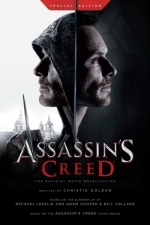

With that said, I turned my attention to the novel, and pre-ordered the special edition because I knew it would make a great addition to my collection of Assassin's Creed novels, and I wanted everything I could possibly get from the novel. I love all the behind the scenes features on a DVD/Blu Ray and when I heard that this book contained some BHS content I wanted it so badly that I made sure I got the special edition despite the addition to the price.
The adaptation of the Film to the novel, is incredible. When Movies are adapted from Books, there will always be the person with you that says "The Book is always better". Sometimes, in the vice versa of this situation, when books are adapted from films, it doesn't always add anything more to make the film's plot better, or give you anything else to think about. This book is something else entirely.
In the movie we are introduced to so many characters, and so many sub plots that just can't be explored in the film itself, because it would be what I and others like to call, a cluster fuck. There would far too much going on, and people already seemed confused by the simple plot of the film, that the addition of these subplots would have given them a headache and everything they needed to see to enjoy the movie would be lost even further, as people would walk out of the cinemas saying "What the heck did I just watch?". Books allow the writer and the reader the freedom to explore these subplots and open up our experience to these other characters such as Moussa, Emir, Nathan, and Lin. If you don't even know these names, that's because the film didn't get the opportunity to express to you the importance of these names, whilst introducing them in a way that you only really remember them as, 'The other assassins in the facility who organize the breakout of Abstergo finale'.
However these characters each have their own Assassin ancestors, at least two of which are heavily connected to the video games. Lin's ancestor, is Shao Jun, the protagonist who you play as in Assassin's Creed Chronicles: China. Emir's ancestor, is a Turkish Assassin named Yusuf, the same Yusuf who you befriend in Assassin's Creed: Revelations, whilst playing as an older Ezio Auditore in his final video game to end the Ezio Trilogy. In the movie's special features, there is a deleted scene in which Cal is able to see these ancestors, during the common room scene as he is trying to eat his steak. However it was taken out due to it not making much sense for him to be able to see other people ancestors via the bleeding effect. The novel on the other hand, doesn't need this scene, and instead the reader is treated to the thoughts and a little backstory to each of these modern day assassins, and how they had felt after being introduced to their ancestors, and how they connected to them through their own lives.
We learn even more about the films central characters as well, mainly Aguilar, Sofia and Callum Lynch, and the novel adaptation gives us a new view on their relationship as a whole. Sofia feels emotions she has never felt with other patients. Callum has a lot running through his mind that just can't be spoken or portrayed in the film. Aguilar's relationship to his fellow Assassin Maria is opened up to us, with us learning that they had been very intimate, and that despite never truly portraying their love for one another, the two assassins knew what the other was thinking and they moved and thought in unison with one another, which makes the final memory sequence, that much more heart breaking, and powerful.
The book grants us access to everything, and this is what makes it such a thrilling read. From start to finish I just wanted to read on and on, despite how heavy my eyes felt at night, tucked up in bed. It grips you and pulls you into the exciting journey of the beautifully written emotional rollercoster. Christie Golden, known for her own literary work and for her work on other franchise based novels, including Star Wars, World of Warcraft and Star Trek, has done a fantastic job at expanded the movie into a new experience, which even I wasn't expecting, and I've watched the film twice in the cinema and about 7 times since the day of it's digital release, March 10, 2017. I really do love this book and everything it has to offer.
My only bad point, which is personal to me, as I have theories about certain points of this movie, and I was hoping it would help answer some of my theories. However, whilst it expanded on them a little, giving more evidence to support one of my theories, it simply left more questions than answers. That is no fault of the writer or her work, but simply to my own inquisitive mind. The book overall has no faults in my opinion.
If you enjoyed the movie, you'll love the book more. If you didn't enjoy the movie, give the book a try. It might surprise you.




Ugh, this book. Some of it was enjoyable, and yet so much of it was just so damn frustrating. First of all, the entire thing seemed like it was based on just a mountain of stereotypes and tropes. Emma has built-in stereotypes and preconceived notions about Dominic (a bartender can't be anything like a banker, apparently, or share any of the same interests). Every woman in the banking world is a vapid idiot except Emma. All New Yorkers just want to get married and move to the suburbs. And so on and so on. It gets really old after a while.
Then, the whole different worlds thing: Emma versus Dom style. As a moving forward plot device, it just seemed incredibly forced. I understand that the "we're from two different worlds" idea still exists today, but really? It's that hard to overcome that a woman considers just dropping the only guy who has ever made her happy, because he seems beneath her? It would be different if the book put forth some real reasons that their class differences threatened their relationship, but it really doesn't. It's all half developed and mostly based on Emma's speculation.
That brings me to Emma. I wanted to like Emma. I could see a lot of Emma in myself - a quiet introvert who doesn't take well to people, who needs time to warm up. I understand that. But oh my gosh, she drove me crazy. So wishy washy! So indecisive! So unable to just follow her *own* thoughts and feelings. She drove me insane. It's very hard to fully enjoy a novel where you often want to wring the neck of the main character.
All of that, truly, I could have probably forgiven if Green hadn't taken the plot off the deep end near the end of the novel. I was so irritated and so upset: I went through all of the above for THIS? I won't spoil it, but let's just say I didn't sign up for a Nicholas Sparks novel. Any of the novel's redeeming qualities (a cute cat, a somewhat cute kid, Emma's dad) went out the window.
Overall, I just didn't enjoy this one. Too much of the plot devices irritated me, and then-BOOM-the actual plot drove me over the edge.
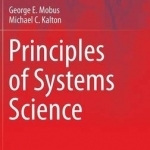
Principles of Systems Science
George E. Mobus and Michael C. Kalton
Book
This pioneering text provides a comprehensive introduction to systems structure, function, and...

H&E naturist
Lifestyle and Magazines & Newspapers
App
H&E naturist is the leading monthly magazine aimed at all those who enjoy a clothes-free lifestyle....
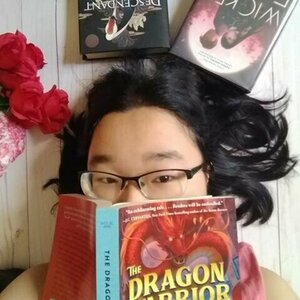
Sophia (Bookwyrming Thoughts) (530 KP) rated Gates of Thread and Stone (Gates of Thread and Stone #1) in Books
Jan 23, 2020

Much as I actually read the synopsis once when I first saw it months ago on Goodreads and then again before I clicked "Read Now" on Netgalley, I ended up forgetting the synopsis <i>entirely</i> by the time I started.
Except for one word: Labyrinth. Needless to say, I actually thought for awhile that <i>Gates of Thread and Stone</i> would be about a labyrinth. <i>The</i> Labyrinth of the Greek myths, per say, and when I actually read <i>Gates of Thread of Stone</i>, I checked the synopsis again to set myself on the right track (because when there's no one being sent as sacrifice, you know there's something wrong).
<i>Gates of Thread and Stone</i> is really about a girl named Kai <i>living</i> with her "brother," Reev, in a place called the Labyrinth, named so by its maze-like structure, and where the lowest of the lowest in Ninurta live out their daily lives. But one day, Reev disappears just like many others and Kai is determined to find her brother.
There's something about <i>Gates of Thread and Stone</i> that I really like. It's definitely not the world, even though I highly enjoyed Lee's world-building each section (East Quarter, White Court, Void, Outlands, etc.) in Ninurta were set apart from one another and most even had their own nicknames (East Quarter = Labyrinth, North Quarter = Purgatory). It's most certainly not the amount of possible f-bombs in here as well, or what I'll assume as f-bombs, because "drek" by itself is certainly not sounding like crap or hell.
The characters were tolerable Kai is a determined and persistent character who has an admirable strength and may sometimes be a little feisty. Irra is perhaps one of my favorite characters by far, being a dramatic yet eccentric advisor in assisting Kai and Avan finding Reev. In fact... he's a bit of an oddity compared to the other Infinites, who seem to be similar to gods and goddesses based on their description.
The plot was a little predictable and I was just waiting for a couple of parts to play out (I really should stop being Sherlock Holmes and just enjoy reading the book, but I can't help myself). While the end is similar to the end of <i>Senshi</i> and the beginning of <i>Shinobi</i> and doesn't seem to have a bigger plot that spans over to the sequel or more books.
Now that I actually took the time to write all that down, maybe it's the world-building that I liked the most. With the ending of <i>Gates of Thread and Stone</i> seeming to be a solid ending, I may read the sequel just to for the pure fun of seeing what Ninurta will be like.
<a href="https://bookwyrmingthoughts.com/review-gates-of-thread-and-stone-by-lori-m-lee/"; target="_blank">This review was originally posted on Bookwyrming Thoughts</a>
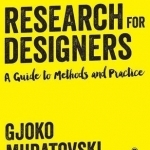
Research for Designers: A Guide to Methods and Practice
Book
Instructors - Electronic inspection copies are available or contact your local sales representative...

CheapOair Cheap Flight Booking
Travel and Lifestyle
App
** 2017 App Store Best Ways to Book Travel ** Book the cheapest flight deals, last minute hotels...
Merissa (14190 KP) rated Ericksen (Gen-Heirs: The Guardians of Sziveria, #5) in Books
Nov 7, 2022
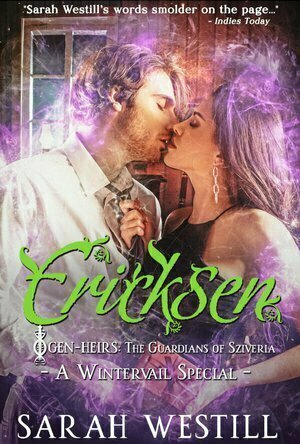
The overall story arc continues but you don't need to have read any of the previous books to understand this one. I would recommend you read them simply for the amazing stories they are!
The pacing is wonderful, giving you moments of action coupled with moments of silence, vulnerability, and tenderness. There are moments of steam, but that isn't the main focus of the novel.
I loved seeing Melody grow as a person and as a talent. Vayden stole my heart from the start and just compounded it with every sweet and loving moment. This was a fantastic addition to the series and I can't wait for it to continue. Highly recommended by me.
** same worded review will appear elsewhere **
* A copy of this book was provided to me with no requirements for a review. I voluntarily read this book, and the comments here are my honest opinion. *
Merissa
Archaeolibrarian - I Dig Good Books!

The Garden Bible: Designing Your Perfect Outdoor Space
Michael Glassman and Barbara Ballinger
Book
A full-colour, richly illustrated and comprehensive guide on creating your own great garden, with...