

Nepal Travel Guide with Offline Maps
Navigation and Travel
App
SPECIAL FEATURES - STOP CARRYING BOOK GUIDES!!! - 100% OFFLINE TRAVEL GUIDE - ZOOMABLE 100%...

Japan Travel Guide and Offline Street Map
Navigation and Travel
App
SPECIAL FEATURES - STOP CARRYING BOOK GUIDES!!! - 100% OFFLINE TRAVEL GUIDE - ZOOMABLE 100%...

Sintra Travel Guide and Offline City Street Map
Navigation and Travel
App
SPECIAL FEATURES - STOP CARRYING BOOK GUIDES!!! - 100% OFFLINE TRAVEL GUIDE - ZOOMABLE 100%...

Darren (1599 KP) rated American Animals (2018) in Movies
Jun 20, 2019
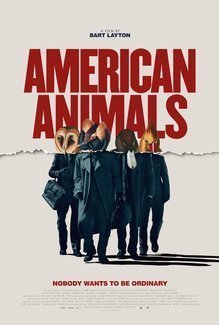


As the idea turns into a plan they bring in Chas Allen (Jenner) and Eric Borsuk (Abrahamson), can they make this plan come off, well the answer is no because as we see the planning we meet the real thieves now in their 30s discussing what they remember about the idea.
Thoughts on American Animals
Characters – Warren is the streetwise student on a scholarship, not living up to his potential, he will always get things down however illegal they might be. He is the one that brings the team together to make this happen even if he is also the one that gets them in the most problems. Spencer is the art student that comes up with the idea because he is sick of not standing out in the art world, looking for the pain be believes artist require. He is all in with the planning but when it comes to following through he thinks they will need to go too far. Chas is the getaway driver, he has the most money which helps with the planning of the heist. Eric becomes the brains learning where things could and would go wrong if they do it in certain directions. We do also meet the adult versions of these characters in the real version that are looking back on the crime they committed.
Performances – Evan Peters is the clear highlight in this film, he always comes off unpredictable which seeing the older versions of the characters you completely understand too. Barry Keoghan does play the stranger member of the crew well, he is the one that is happy to plan not commit a crime, he needs to be straighter faced than Peters character. When it comes to the rest of the cast they are fine without needing to do that much.
Story – The story here is based on the real story of four university students that robbed the rare book collection in the library of their university. The way the story is told is interesting because it does both help and hinder the film, having a mix of the actors playing the younger versions and the real men talking about the events does give the story a documentary feel. Where this does hinder the story is by telling us that they failed early on and are now just remembering what happen which takes away any excitement or edge of your set moments towards anything going on. There are moments in the story which are good to watch, for example the scene where they are watching heist movies to learn how to pull it off and seeing the pitch perfect plan in Warren’s head. If we are being honest, the story is about 20 minutes too long because the opening hour just drags you along, once the heist gets underway things get more exciting but by then you might see the audience lose interest.
Crime – The crime follows a real heist that happened at the same university, we get to see how it was planned, how things went down and seeing the consequences the boys felt.
Settings – The film is mostly set in and around the university, this helps for any heist film, we do get moments where we step away, but that is for the plan which does work when you see how the boys are out of their depth at times.
Scene of the Movie – Selecting the names.
That Moment That Annoyed Me – The first hour.
Final Thoughts – This is an overly long heist movie that drags along at a horribly slow pace, once things kick off we do get some interest, but the fact we have the real criminals involved in telling the story we know the outcome.
Overall: Just watch for Evan Peters being slightly crazy.
https://moviesreview101.com/2018/08/28/american-animals-2018/

iMaps+ for Google Maps ™ and Street View ™ : Transit and Offline Contacts
Navigation and Travel
App
iMaps+ brings Google powered search, directions and Street View™ to your iOS device. Powered by...
Kalila and Dimna: (From the Panchatantra, Jatakas, Bidpai, Kalilah and Dimnah and Lights of Canopus): v. 2: Fables of Conflict and Intrigue
Michael Wood, Ramsay Wood and Gillian Whitworth
Book
Kalila and Dimna or The Panchatantra (also known in Europe since 1483 as The Fables of Bidpai) is a...

The Heart is a Lonely Hunter
Carson McCullers and Kasia Boddy
Book
Carson McCullers' The Heart is a Lonely Hunter is a powerful exploration of alienation and...
In This Moment: Five Steps to Transcending Stress Using Mindfulness and Neuroscience
Book
Little daily hassles can add up to big, big stress. Whether you're stuck in traffic, hauling your...

Hugo: The Shooting Script
Book
Director Martin Scorsese, the legendary storyteller, decided to make his first-ever 3D film based on...

Gareth von Kallenbach (980 KP) rated BlacKkKlansman (2018) in Movies
Jul 8, 2019
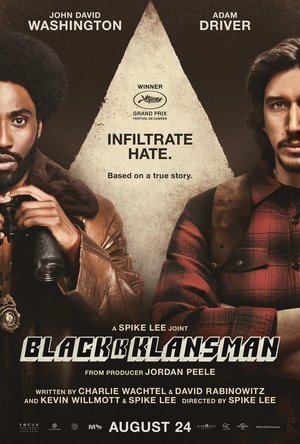

The film is very creative in the way that it presents history and allows the audience ride along with the action, suspense, and anxiety experience by Washington and Driver’s characters. The tone of the film, at times, is lighthearted in its approach but quickly draws you back in when faced with the reality that David Duke, and people like him walk among us dressing up their racism with non-threatening slogans, professional attire, and a clean-cut package.
The story displayed is a reminder that racism in America has a long history and is not isolated geographically to the south nor limited to Charlottesville or Charleston. The attitudes and actions committed by those who agree with the stances of white supremacy and white supremacist organizations have had a drastic impact on the development of American society. It has shaped and misshapen our attitudes towards one another. It continues to affect us today as we all bear witness to unbridled racism or the downplaying of racism with terms like “political correctness.” This film is timely in its approach and offers audiences a more full and expansive view of what combatting racism and racist attitudes and actions looks like.
Blackkklansman is a film that many have waited for when first hearing about the story of Ron Stallworth and they will not be disappointed with what they witness on screen. Sadly, the people who desperately need to see this movie may pass on it because they are uncomfortable with the subject matter and the reality that they themselves may be complicit in the continuance of racism and white supremacy. This film feels like a conversation being conducted directly between the director and audience. There are subtleties that allow the audience to think about the meaning and even parallel between the early 1970s and the current political environment, as well as, moments where there is no hiding of the message, no metaphor, no allegory. The filmmakers make it clear for those watching that many of us need to wake up almost as blatantly as Spike Lee promotes one of his earlier films, School Daze.
The only problem I found with the film was that I was left wanting more discussion. I wanted to see more of what Ron Stallworth dealt with as the only black detective in his department. If anything, this shows a real strength in the film by leaving audiences emotionally connected with the horrors that he faced, as well as, the way that those around him come to grips with the reality of the hatred and racial violence that had overlooked before because it did not have a direct effect on them. Blackkklansman is a film that will have audiences reflecting long after the credits have rolled. Hopefully the themes, metaphors, and overall message will help foster overdue and well-needed conversations about race, racism, prejudice, and violence. This film takes audiences out of their comfort zones and forces them to face some of the dark corners of America for two hours. Within that two hours, hopefully the people who don’t recognize racism and bigotry get a glimpse of the true horror and fear that marginalized communities feel on a daily basis so that they themselves can be agents of change and fight against racism.