
Search
Search results
Web Standards Solutions: The Markup and Style Handbook
Book
Welcome to the expanded second edition of Dan Cederholm's best-selling Web Standards Solutions. Web...


Cheap flights and airline tickets — Jetradar
Travel and Lifestyle
App
Jetradar app lets you compare airfares from hundreds of airlines and travel agencies and delivers...

Gareth von Kallenbach (980 KP) rated Machine Gun Preacher (2011) in Movies
Aug 7, 2019
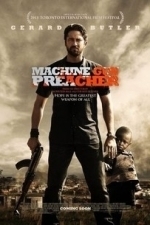


“Machine Gun Preacher” stars Gerard Butler, Michelle Monaghan, Kathy Baker, Michael Shannon, Madeline Carrol, and is directed by Marc Foster (previously directed “The Kite Runner” , “Quantum Of Solace” , “Monsters Ball” , and “Finding Neverland”).
The movie follows the true life story of Sam Childers (Gerard Butler) a former biker gang member/drug dealer who, at a major crossroads in his life, experiences a spirtial awakening and becomes a devoted preacher and family man. One day, after hearing another preacher speak about the plight of the thousands of kidnapped and orphaned children in africa as the result of civil war, Childers makes the life changing decision to go to Africa and assist in the building and repair of homes and ‘safe zones’ for refugees that have been damaged or destroyed by the chaos engulfing the countries of Sudan and Uganda. However, upon seeing the destruction and widespread horror inflicted upon the people (in particular the children) Childers decides he cannot stand idly by and do nothing to help.
Ignoring the warnings of overwhlemed peacekeepers and aid workers in the area, Sam decides to construct an orhanage where he thinks it’s needed the most – right in the center of the most volitile area in the Sudan, which also happens to be controlled by the brutal and ultra-violent LRA (Lord’s Resistance Army). The LRA roam from village to village kidnapping children and forcing them to become soliders for the LRA or even worse. In the beginning, Childers meets with success finding as many orphaned children as he can and ferrying them to his orphanage where they find food, shelter, and medical aid. But it is not enough. After several attacks and ambushes, Childers decides he cannot let the LRA continue to sadistically destroy lives. Sam begins to lead missions deep into LRA territory, taking the fight to the enemy while struggling with the knowledge that the situation grows darker every day for the people he is trying to help – in the Sudan and for his family back home.
This movie is definately intense and NOT for the faint of heart. I have not had the chance to read Sam Childers book which the movie is supposedly based on. As far as redemption tales go, this as realistic as it gets, in the sense that sometimes in order to find the salvation or spiritual awakening you seek, you’re forced to sacrifice all and risk losing everything you hold dear in this life in order to find it. Even with the knowledge that once you arrive at the end of that journey, you may not find the awakening you so desperately fought for.
The performances in this movie were all excellent. Kudos to Gerard Butler and Michelle Monaghan in particular. The young actors who portrayed the orphans and child soldiers definately knocked it out of the park as well. Butler also produced the movie which lends more credence to the whole theory that if one of the lead actors has a hand in the behind-the-scences work of the movie, chances are it’ll be a movie worth seein’. I’d encourage you to go see it regardless of the time of day in theaters or grab it on DVD. Rated R for extreme violence throughout and some sexual content.
The movie follows the true life story of Sam Childers (Gerard Butler) a former biker gang member/drug dealer who, at a major crossroads in his life, experiences a spirtial awakening and becomes a devoted preacher and family man. One day, after hearing another preacher speak about the plight of the thousands of kidnapped and orphaned children in africa as the result of civil war, Childers makes the life changing decision to go to Africa and assist in the building and repair of homes and ‘safe zones’ for refugees that have been damaged or destroyed by the chaos engulfing the countries of Sudan and Uganda. However, upon seeing the destruction and widespread horror inflicted upon the people (in particular the children) Childers decides he cannot stand idly by and do nothing to help.
Ignoring the warnings of overwhlemed peacekeepers and aid workers in the area, Sam decides to construct an orhanage where he thinks it’s needed the most – right in the center of the most volitile area in the Sudan, which also happens to be controlled by the brutal and ultra-violent LRA (Lord’s Resistance Army). The LRA roam from village to village kidnapping children and forcing them to become soliders for the LRA or even worse. In the beginning, Childers meets with success finding as many orphaned children as he can and ferrying them to his orphanage where they find food, shelter, and medical aid. But it is not enough. After several attacks and ambushes, Childers decides he cannot let the LRA continue to sadistically destroy lives. Sam begins to lead missions deep into LRA territory, taking the fight to the enemy while struggling with the knowledge that the situation grows darker every day for the people he is trying to help – in the Sudan and for his family back home.
This movie is definately intense and NOT for the faint of heart. I have not had the chance to read Sam Childers book which the movie is supposedly based on. As far as redemption tales go, this as realistic as it gets, in the sense that sometimes in order to find the salvation or spiritual awakening you seek, you’re forced to sacrifice all and risk losing everything you hold dear in this life in order to find it. Even with the knowledge that once you arrive at the end of that journey, you may not find the awakening you so desperately fought for.
The performances in this movie were all excellent. Kudos to Gerard Butler and Michelle Monaghan in particular. The young actors who portrayed the orphans and child soldiers definately knocked it out of the park as well. Butler also produced the movie which lends more credence to the whole theory that if one of the lead actors has a hand in the behind-the-scences work of the movie, chances are it’ll be a movie worth seein’. I’d encourage you to go see it regardless of the time of day in theaters or grab it on DVD. Rated R for extreme violence throughout and some sexual content.

Cynthia Armistead (17 KP) rated American Gods in Books
Mar 1, 2018
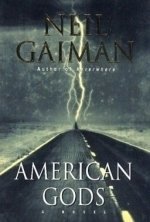
I'm trying to remember whether or not I've read any of Gaiman's other novels before, and I'm fairly certain that I haven't. I read [b:Good Omens|12067|Good Omens|Terry Pratchett|http://photo.goodreads.com/books/1266659394s/12067.jpg|4110990], but that was co-written with [a:Terry Pratchett|1654|Terry Pratchett|http://photo.goodreads.com/authors/1235562205p2/1654.jpg], and the collaboration was genius. I know that the entire world seems to love Sandman, of course, but I'm just not a fan of graphic novels. In fact, it took me a while to realize that the Good Omens co-author and the Sandman author were one and the same.
I've certainly read some short stories, too. The most memorable, <a href="http://en.wikipedia.org/wiki/Snow,_Glass,_Apples">"Snow, Glass, Apples"</a> was reprinted in an anthology I read recently. I find it disturbing, so I won't re-read it. Well-written, of course—it wouldn't be so very memorably distressing if it weren't so masterfully done! (I found the <a href="http://www.holycow.com/dreaming/stories/snow-glass-apples">text online</a> if you care to read it, but please understand that the story deals with pedophilia, necrophilia, and incest here. It is the polar opposite of all things Disney.) Snow White was never one of of my favorite fairy tales, and Gaiman definitely pushed it much farther down the list.
In any case, I don't know what I was expecting from Gaiman, but <i>American Gods</i> wasn't it. I like stories with happy endings, and within the first few chapters I was fairly sure that there wouldn't be one. Is Gaiman fundamentally opposed to joy, or is it just happiness that he doesn't allow?
The novel is epic. It is masterful. All that stuff from the big critics is dead on. The book could be used as the backbone of a mythological scavenger hunt if a teacher were willing to run a very unstructured but engaging course that way. I certainly enjoyed that aspect of it, and it made me glad that I was reading it on my iTouch so that I could look up anything I liked online at any time, no matter where I happened to be (which was almost always at home or somewhere else that had wifi access, happily).
I seldom want to see illustrations in any book, but yes, I think I would like to see good pictures of some of the characters Gaiman described in this one. On the other hand, without artwork I spent time imagining what the characters looked like based on the descriptions. I don't normally stop to do that, as such matters as seldom relevant to a plot, but these beings caught my fancy. Not enough that I would sit through an entire graphic novel, I'm afraid, but if I saw one now I might flip through it to see how the artist's renderings compare with my versions.
I'm seldom able to identify an overall Theme to the books I read. Most of them, honestly, are fluff. I'm fine with that. I read them because they entertain me. <i>American Gods</i> is different. It is entertaining, but it isn't light or fluffy in the least. It definitely has an easily identifiably Theme and Tropes and all those elements that I recall from long-ago classes, the sorts of things that put me off from my original English major because I hated tearing other author's works apart instead of writing anything original. (Now, I begin to understand that we were being taught to recognize what makes for good writing so we might have some hope of possibly creating some of it one day.)
I somewhat timidly conclude that <i>American Gods</i> is the first piece of Literature I've read in a very long time, and well worth the time spent reading it. (I find it rather amusing that it would be British Literature, despite its title, due to the author's nationality.) I'm not going to state the theme, because that would be a spoiler, and I hate putting those in reviews—but it's something that I see as a Truth, and one that needs to be stated far more often, especiallly today. It's even more interesting that it took a Brit to say it.
The book is dark, although it does have some very bright spots in it. I will acknowledge that I was going through a particularly bad time with regards to my health when I was reading it, but I still think it might be best for some people to read this one when in a fairly positive state of mind.
I've certainly read some short stories, too. The most memorable, <a href="http://en.wikipedia.org/wiki/Snow,_Glass,_Apples">"Snow, Glass, Apples"</a> was reprinted in an anthology I read recently. I find it disturbing, so I won't re-read it. Well-written, of course—it wouldn't be so very memorably distressing if it weren't so masterfully done! (I found the <a href="http://www.holycow.com/dreaming/stories/snow-glass-apples">text online</a> if you care to read it, but please understand that the story deals with pedophilia, necrophilia, and incest here. It is the polar opposite of all things Disney.) Snow White was never one of of my favorite fairy tales, and Gaiman definitely pushed it much farther down the list.
In any case, I don't know what I was expecting from Gaiman, but <i>American Gods</i> wasn't it. I like stories with happy endings, and within the first few chapters I was fairly sure that there wouldn't be one. Is Gaiman fundamentally opposed to joy, or is it just happiness that he doesn't allow?
The novel is epic. It is masterful. All that stuff from the big critics is dead on. The book could be used as the backbone of a mythological scavenger hunt if a teacher were willing to run a very unstructured but engaging course that way. I certainly enjoyed that aspect of it, and it made me glad that I was reading it on my iTouch so that I could look up anything I liked online at any time, no matter where I happened to be (which was almost always at home or somewhere else that had wifi access, happily).
I seldom want to see illustrations in any book, but yes, I think I would like to see good pictures of some of the characters Gaiman described in this one. On the other hand, without artwork I spent time imagining what the characters looked like based on the descriptions. I don't normally stop to do that, as such matters as seldom relevant to a plot, but these beings caught my fancy. Not enough that I would sit through an entire graphic novel, I'm afraid, but if I saw one now I might flip through it to see how the artist's renderings compare with my versions.
I'm seldom able to identify an overall Theme to the books I read. Most of them, honestly, are fluff. I'm fine with that. I read them because they entertain me. <i>American Gods</i> is different. It is entertaining, but it isn't light or fluffy in the least. It definitely has an easily identifiably Theme and Tropes and all those elements that I recall from long-ago classes, the sorts of things that put me off from my original English major because I hated tearing other author's works apart instead of writing anything original. (Now, I begin to understand that we were being taught to recognize what makes for good writing so we might have some hope of possibly creating some of it one day.)
I somewhat timidly conclude that <i>American Gods</i> is the first piece of Literature I've read in a very long time, and well worth the time spent reading it. (I find it rather amusing that it would be British Literature, despite its title, due to the author's nationality.) I'm not going to state the theme, because that would be a spoiler, and I hate putting those in reviews—but it's something that I see as a Truth, and one that needs to be stated far more often, especiallly today. It's even more interesting that it took a Brit to say it.
The book is dark, although it does have some very bright spots in it. I will acknowledge that I was going through a particularly bad time with regards to my health when I was reading it, but I still think it might be best for some people to read this one when in a fairly positive state of mind.

Kyera (8 KP) rated Princess of Thorns in Books
Feb 1, 2018

Princess of Thorns is a not-so-classic retelling of the Sleeping Beauty story. The main character is actually the daughter of the cursed princess, who awoke from a kiss. Her name is Aurora, like the Disney movie's princess and her mother's name is Rose. In the french version of the tale, Sleeping Beauty's daughter is named Aurore. I believe that her mother's is the shortened form of Briar Rose, like German version of her tale by the Brother's Grimm. If you are familiar with the Grimm and Perrault versions of the tale, not only the Disney one, then you will notice many similarities. In a few versions of the tale, there is an evil step-mother or mother-in-law who attempts to eat the leading lady's children.
The author makes use of these characters and plots in her novel. She chooses to include the ill-fated mother, brother and sister, as well as the villainous step-mother. Although that familial tie is not explicitly stated, the King was the children's father and he married the ogre. Thus, she would be their step-mother. And you thought you had a dysfunctional family?
In true fairytale fashion, there are ogres, witches, fairies, and ruffians. Not all are portrayed as you would expect. The ogres have evolved, or perhaps devolved depending upon who you ask. In the early years, the ogres were monstrous creatures that devoured souls whole. They did not control themselves, but feasted on the entire soul leaving nothing behind. As time went on, they were forced to change and limit how much they took. After a time, the ogres began to become smaller and take on much more human-like appearances. Their food source never changed and they prided themselves upon each soul they took, marking their bare skulls.
The Fae seem human, although they possess extra-human traits and magic. One may not think of fairies and immediately imagine a human-like creature with great dexterity, skill in battle, and a lack of guilt -but the Fair Folk are shown this way in the novel. A fairy can bestow a gift upon a human child, like beauty, courage, eloquence, obedience, or strength. But each blessing comes with a curse, as the magic always finds a way to turn the gift into a burden. There are untold consequences to the blessings that cannot be avoided. As such, the fairies stopped giving their gifts to human children.
As with most fairytales, there is an element of romance. The love story blossoms under unusual circumstances and not without its share of problems. The two characters get to know each other throughout the journey, but their are many secrets left untold. As they are discovered, the relationship is altered for good or bad. And in the end, a choice must be made.
Most importantly, the novel isn't entirely predictable (although the budding romance was expected). Generally, you expect good to triumph over evil in most modern retellings of the story - unlike their Grimm counterparts. The plot's climax was frankly a little anti-climactic, but enjoyable non-the-less.
I think the author showed an average amount of character development, although I usually think more would be incredibly beneficial. Certain aspects of the world were explained, but not vividly enough. The "show-don't-tell" method could have been employed here to create a richer, more immersive world. Overall, I was pleased with the author's lexicon, grammar, and spelling - which happens much less often than should reasonably be expected.
I would certainly read another novel by this author as I love stories based upon fairytales. If you read Alex Flinn, I would highly recommend this novel to you just keep in mind it is slightly darker. Readers of fantasy, romance, and the like will enjoy this book and should give it a chance. It seems to target the female demographic, but males should enjoy it as well.
The author makes use of these characters and plots in her novel. She chooses to include the ill-fated mother, brother and sister, as well as the villainous step-mother. Although that familial tie is not explicitly stated, the King was the children's father and he married the ogre. Thus, she would be their step-mother. And you thought you had a dysfunctional family?
In true fairytale fashion, there are ogres, witches, fairies, and ruffians. Not all are portrayed as you would expect. The ogres have evolved, or perhaps devolved depending upon who you ask. In the early years, the ogres were monstrous creatures that devoured souls whole. They did not control themselves, but feasted on the entire soul leaving nothing behind. As time went on, they were forced to change and limit how much they took. After a time, the ogres began to become smaller and take on much more human-like appearances. Their food source never changed and they prided themselves upon each soul they took, marking their bare skulls.
The Fae seem human, although they possess extra-human traits and magic. One may not think of fairies and immediately imagine a human-like creature with great dexterity, skill in battle, and a lack of guilt -but the Fair Folk are shown this way in the novel. A fairy can bestow a gift upon a human child, like beauty, courage, eloquence, obedience, or strength. But each blessing comes with a curse, as the magic always finds a way to turn the gift into a burden. There are untold consequences to the blessings that cannot be avoided. As such, the fairies stopped giving their gifts to human children.
As with most fairytales, there is an element of romance. The love story blossoms under unusual circumstances and not without its share of problems. The two characters get to know each other throughout the journey, but their are many secrets left untold. As they are discovered, the relationship is altered for good or bad. And in the end, a choice must be made.
Most importantly, the novel isn't entirely predictable (although the budding romance was expected). Generally, you expect good to triumph over evil in most modern retellings of the story - unlike their Grimm counterparts. The plot's climax was frankly a little anti-climactic, but enjoyable non-the-less.
I think the author showed an average amount of character development, although I usually think more would be incredibly beneficial. Certain aspects of the world were explained, but not vividly enough. The "show-don't-tell" method could have been employed here to create a richer, more immersive world. Overall, I was pleased with the author's lexicon, grammar, and spelling - which happens much less often than should reasonably be expected.
I would certainly read another novel by this author as I love stories based upon fairytales. If you read Alex Flinn, I would highly recommend this novel to you just keep in mind it is slightly darker. Readers of fantasy, romance, and the like will enjoy this book and should give it a chance. It seems to target the female demographic, but males should enjoy it as well.

Paul Kellett (118 KP) rated Fallen Land: A Post Apocalyptic Board Game in Tabletop Games
May 9, 2019

Great theme, very immersive (2 more)
Solo playable
Plenty of replayability
A bit fiddly to keep track of things (1 more)
A lot of little rules to remember
An Immersive Post Apocalyptic survival game
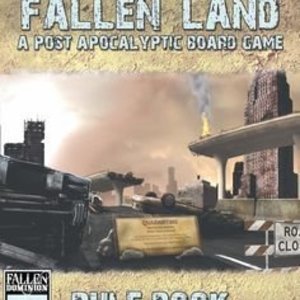
I don't know where I was when this launched on Kickstarter, but it totally passed me by until I started seeing a few posts on Facebook groups a couple of weeks ago. My interest was piqued and after watching a few videos and reading the reviews here, I took the plunge and ordered it from Fallen Dominion Studios. I got the base came and the expansion which adds more cards, rules for an epic 6 player game as well as 2 solo variants. Delivery to the UK was super quick, about 10 days and the shipping price was good.
On first opening the box, you are greeted with a few punchboards, the game board and a ton of cards, there is a lot contained in such a small box.
After punching and organising everything, I read the rules, painted the little plastic faction tokens and made some character inventory sleeves to help keep the play area neat.
The rules are really well written and easy to follow & understand with plenty of examples and pictures. there is a helpful index on the inside back page so you can quickly find anything you need mid-game.
The first solo variant is basically just a "reach the victory point win in as few turns as possible" - a great way to quickly learn the basics of the game and very enjoyable. It will be good if you just want to play a fairly quick (60-90 minute) survival/exploration game.
The second solo rule set is where the game really kicks into high gear. You choose a number of opponent factions depending on how much of a challenge you want and during the Town Business Phase, roll a D10 for each faction, comparing the result to a chart in the book to see what each faction does. these results can boost each faction up one or both of the victory point tracks (getting to the top of either one is a win) or more importantly, initiating PvP combat against your faction.
While this is still not the same as playing against real opponents, it offers a great challenge that will test your luck and skill to beat.
So what sets this game out as a solo gem? It's one of the most immersive games I've played. It's part open-world survival boardgame, part rpg and part story book.
You are the leader of a faction of survivors following a devastating war that destroyed the US leaving pockets of survivors trying to eke out a living among the radioactive ruins. As you make your way around the map, trying to secure vital resources or checking out points of interest, you will be drawing encounter cards and trying to complete them.
You control a team of 5 characters plus a vehicle if you are lucky and start the game with 10 items (from assault rifles to baseball bats, med kits to body armour and everything in between) which you can equip to each character any way you see fit. Some characters will get a bonus if they have certain items and some items can grant boosts to your entire party.
Here is where the RPG feel comes in. Each character and Item has a row of skill attribute boxes along the bottom edge of the card with skills such as Combat, Survival, Medical, Mechanics and Diplomacy. Your character card has a maximum carrying capacity and each item a weight so your character can only carry a certain number of items.
Skill checks are simple, you add up the total values in each attribute column of your character plus his/her equipment. Every 10 is an automatic success. Then you roll a D10 and must roll equal to or lower than the unit value. So, if your combat total is 14, then you get 1 success for the 10 and then must roll 4 or less to get a second success. This makes equipping items very important as not only do you want your skills to be as high as possible, it's often preferable to store an item for later if it would result in a lower unit thus making the die roll harder.
On to the encounters. There are a lot of them. Seriously, loads and each one on them has a mini story delving into another aspect of life after 'the war'. These add so much to the feeling of being immersed in a full world and are varied and well written. Each encounter will list a series of skill checks and the number of successes you need to pass. This is Ameritrash at it's finest Read a story, roll a bunch of dice and the deal with the outcome. A successful result will see you off with a new stash of items, victory points or maybe even new characters you can rotate into your team to replace injured members or just improve your chances with better skills.
There is so much in this game, the sheer number of cards is immense. the replayability is sky high as you will never see everything this game can offer. There are character combinations that complement each other if used together (what are the chances of drawing a husband and his wife together out of a deck of over 100 cards?), locations and storylines that trigger bonus effects if you have the right gear and 10 different factions each with their own skills and bonuses.
This game is certainly not for everyone - if you don't like luck-based games then you might not enjoy the amount of dice rolling and card drawing in Fallen Land.
The art is also divisive. It's very stylized and cartoony but it works with the feel of the game. It's not a pretty experience, everything is broken and destroyed, it's a harsh, Mad Max world of brutal survival and the art on the cards kind of fits this feel and to be honest, most of it ends up covered up and you concentrate more on reading the stories and trying to survive.
All in all a great so experience and a fantastic, brutal multiplayer game.
On first opening the box, you are greeted with a few punchboards, the game board and a ton of cards, there is a lot contained in such a small box.
After punching and organising everything, I read the rules, painted the little plastic faction tokens and made some character inventory sleeves to help keep the play area neat.
The rules are really well written and easy to follow & understand with plenty of examples and pictures. there is a helpful index on the inside back page so you can quickly find anything you need mid-game.
The first solo variant is basically just a "reach the victory point win in as few turns as possible" - a great way to quickly learn the basics of the game and very enjoyable. It will be good if you just want to play a fairly quick (60-90 minute) survival/exploration game.
The second solo rule set is where the game really kicks into high gear. You choose a number of opponent factions depending on how much of a challenge you want and during the Town Business Phase, roll a D10 for each faction, comparing the result to a chart in the book to see what each faction does. these results can boost each faction up one or both of the victory point tracks (getting to the top of either one is a win) or more importantly, initiating PvP combat against your faction.
While this is still not the same as playing against real opponents, it offers a great challenge that will test your luck and skill to beat.
So what sets this game out as a solo gem? It's one of the most immersive games I've played. It's part open-world survival boardgame, part rpg and part story book.
You are the leader of a faction of survivors following a devastating war that destroyed the US leaving pockets of survivors trying to eke out a living among the radioactive ruins. As you make your way around the map, trying to secure vital resources or checking out points of interest, you will be drawing encounter cards and trying to complete them.
You control a team of 5 characters plus a vehicle if you are lucky and start the game with 10 items (from assault rifles to baseball bats, med kits to body armour and everything in between) which you can equip to each character any way you see fit. Some characters will get a bonus if they have certain items and some items can grant boosts to your entire party.
Here is where the RPG feel comes in. Each character and Item has a row of skill attribute boxes along the bottom edge of the card with skills such as Combat, Survival, Medical, Mechanics and Diplomacy. Your character card has a maximum carrying capacity and each item a weight so your character can only carry a certain number of items.
Skill checks are simple, you add up the total values in each attribute column of your character plus his/her equipment. Every 10 is an automatic success. Then you roll a D10 and must roll equal to or lower than the unit value. So, if your combat total is 14, then you get 1 success for the 10 and then must roll 4 or less to get a second success. This makes equipping items very important as not only do you want your skills to be as high as possible, it's often preferable to store an item for later if it would result in a lower unit thus making the die roll harder.
On to the encounters. There are a lot of them. Seriously, loads and each one on them has a mini story delving into another aspect of life after 'the war'. These add so much to the feeling of being immersed in a full world and are varied and well written. Each encounter will list a series of skill checks and the number of successes you need to pass. This is Ameritrash at it's finest Read a story, roll a bunch of dice and the deal with the outcome. A successful result will see you off with a new stash of items, victory points or maybe even new characters you can rotate into your team to replace injured members or just improve your chances with better skills.
There is so much in this game, the sheer number of cards is immense. the replayability is sky high as you will never see everything this game can offer. There are character combinations that complement each other if used together (what are the chances of drawing a husband and his wife together out of a deck of over 100 cards?), locations and storylines that trigger bonus effects if you have the right gear and 10 different factions each with their own skills and bonuses.
This game is certainly not for everyone - if you don't like luck-based games then you might not enjoy the amount of dice rolling and card drawing in Fallen Land.
The art is also divisive. It's very stylized and cartoony but it works with the feel of the game. It's not a pretty experience, everything is broken and destroyed, it's a harsh, Mad Max world of brutal survival and the art on the cards kind of fits this feel and to be honest, most of it ends up covered up and you concentrate more on reading the stories and trying to survive.
All in all a great so experience and a fantastic, brutal multiplayer game.

Kaysee Hood (83 KP) rated Attachments in Books
Nov 16, 2017


Unconventional Romance (3 more)
Read Life Issues
Movie/Book References
Friendships
Love at First...E-mail?
I've seen some low scored reviews for this book on GR and I realized it may keep some people from reading it, but here are some points I think some should consider before not giving Attachments a chance:
1. This is Rainbow Rowell's first published novel, so of course for some it doesn't hold the magic like Eleanor & Park. Keep in mind many first books never hold against later published works, but are still good or why would the author be allowed to continue?
2. Even though it was published in 2011, it is based in 1999/2000 for plot reasons as to why Lincoln would have his job. This may offset some readers who might not realize how different 1999 is to 2017 Internet use wise for jobs.
3. The lack of reading into who and why the characters are as they are. In a way, it is the adult version of Fangirl, expect the roles are flipped a tad bit.
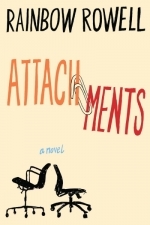
Anyway, I loved Attachments because it stayed true to Rowell's style, yet it felt raw compared to how she writes now. There is the unconventional love story of a man falling in love with a woman through the e-mails he reads as part of his job to ensure people are working and not nonsense while on the job. There's characters of all sorts with real world problems and real life flaws. There are topics covered of overbearing mothers and mothers who are too cruel both because of their own life. There is men who never want to be tied down, yet one does due to advice and the right woman. The book covers pieces life without taking from the plot whatsoever.
Lincoln O'Neil is a 28-year-old who could have been a successful man with a normal day shift job if a break up had not left him shattered nine years before. Maybe also if his mother had not coddled him, even though she clearly meant well as it is clear him and his sister, Eve, might have been her whole life. Yet we would not have the awkward, shy man working a the swing shift in the IT office as a "security officer" fixing computers in his spare time when he isn't reading through e-mails that come up flagged in the Webfence program. Apparently the security part was ensuring no one at the newspaper office was using the Internet to look at porn, gamble, or idle chit chat instead of working. Not quite was Lincoln had pictured and he doesn't enjoy reading people's exchanges, but the money is good and will grant him the chance to move out his mom's sooner rather than later.
His mundane routine and nothingness during his shift is filled with some enjoyment as Lincoln reads the e-mails flagged from Beth Fremont and Jennifer Scribner-Snyder. There is nothing harmful. Innocent discussions of water cooler talk, life, relationships, and gossip. As much as he knows it is wrong to continue to read their messages about their lives without flagging them as he would anyone else Lincoln cannot help but to get a kick out of the e-mails.
However it soon becomes apparent Lincoln has fallen for Beth despite the fact he has no idea what she looks like or who is she outside of work. Not to mention she has a boyfriend, Chris, who even though she may rant about to Jennifer, she obviously has not intent on breaking ties with. Not for someone like Lincoln anyway. So he spends his time in turmoil trying to decide if a new job is in order, going back to college, or finding a woman to focus his attention on (which are the very things he tries to do). He even tries to ignore the e-mails, yet can't. He cannot help, but feel for Jennifer's worry over having a baby even though her husband wants one. He cannot help, but captivated by their friendship. He cannot help his feelings for Beth for who she is.
It doesn't help Beth has spotted him labeling him as "A Cute Guy" when he never realized she was around. It is like a game of cat and mouse between them then. Beth still unaware he is reading her e-mails. Lincoln unaware of how often she is close to him even when she is going out of her way to find him.
Thus a budding romance is born. But how much of a romance can it be when Beth has Chris and Lincoln can barely look a woman in the eyes?
1. This is Rainbow Rowell's first published novel, so of course for some it doesn't hold the magic like Eleanor & Park. Keep in mind many first books never hold against later published works, but are still good or why would the author be allowed to continue?
2. Even though it was published in 2011, it is based in 1999/2000 for plot reasons as to why Lincoln would have his job. This may offset some readers who might not realize how different 1999 is to 2017 Internet use wise for jobs.
3. The lack of reading into who and why the characters are as they are. In a way, it is the adult version of Fangirl, expect the roles are flipped a tad bit.
Anyway, I loved Attachments because it stayed true to Rowell's style, yet it felt raw compared to how she writes now. There is the unconventional love story of a man falling in love with a woman through the e-mails he reads as part of his job to ensure people are working and not nonsense while on the job. There's characters of all sorts with real world problems and real life flaws. There are topics covered of overbearing mothers and mothers who are too cruel both because of their own life. There is men who never want to be tied down, yet one does due to advice and the right woman. The book covers pieces life without taking from the plot whatsoever.
Lincoln O'Neil is a 28-year-old who could have been a successful man with a normal day shift job if a break up had not left him shattered nine years before. Maybe also if his mother had not coddled him, even though she clearly meant well as it is clear him and his sister, Eve, might have been her whole life. Yet we would not have the awkward, shy man working a the swing shift in the IT office as a "security officer" fixing computers in his spare time when he isn't reading through e-mails that come up flagged in the Webfence program. Apparently the security part was ensuring no one at the newspaper office was using the Internet to look at porn, gamble, or idle chit chat instead of working. Not quite was Lincoln had pictured and he doesn't enjoy reading people's exchanges, but the money is good and will grant him the chance to move out his mom's sooner rather than later.
His mundane routine and nothingness during his shift is filled with some enjoyment as Lincoln reads the e-mails flagged from Beth Fremont and Jennifer Scribner-Snyder. There is nothing harmful. Innocent discussions of water cooler talk, life, relationships, and gossip. As much as he knows it is wrong to continue to read their messages about their lives without flagging them as he would anyone else Lincoln cannot help but to get a kick out of the e-mails.
However it soon becomes apparent Lincoln has fallen for Beth despite the fact he has no idea what she looks like or who is she outside of work. Not to mention she has a boyfriend, Chris, who even though she may rant about to Jennifer, she obviously has not intent on breaking ties with. Not for someone like Lincoln anyway. So he spends his time in turmoil trying to decide if a new job is in order, going back to college, or finding a woman to focus his attention on (which are the very things he tries to do). He even tries to ignore the e-mails, yet can't. He cannot help, but feel for Jennifer's worry over having a baby even though her husband wants one. He cannot help, but captivated by their friendship. He cannot help his feelings for Beth for who she is.
It doesn't help Beth has spotted him labeling him as "A Cute Guy" when he never realized she was around. It is like a game of cat and mouse between them then. Beth still unaware he is reading her e-mails. Lincoln unaware of how often she is close to him even when she is going out of her way to find him.
Thus a budding romance is born. But how much of a romance can it be when Beth has Chris and Lincoln can barely look a woman in the eyes?

Lottie disney bookworm (1056 KP) rated Part of Your World in Books
Aug 16, 2019
Review by Disney Bookworm
Contains spoilers, click to show
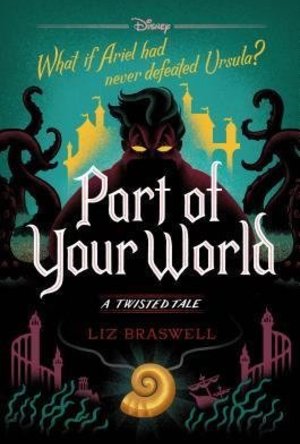
Part of Your World is based five years after Ursula defeats Ariel, yes you heard me right! The whole miraculous, shiny magic being released from the shell, the little mermaid regaining her voice, the whole harpoon, giant octopus, child scarring scene…never happened!
In this twisted tale Ursula succeeded in tricking Eric into marrying Vanessa; she now rules the Kingdom, with Eric remaining under Ursula’s spell and pretty much clueless to his wife’s evil tendencies. Conversely Ariel is Queen of the Sea, ruling Atlantica in her father’s absence. Oh yeah! Spoiler! Ursula still has Triton in her slimy grasp as well.
NB: Just for clarification this isn’t really a spoiler as you find this out on page 20- please don’t send in complaints.
The book includes all of your favourite characters from the classic 1989 movie: Scuttle, Sebastian, Flounder and even Grimsby and Carlotta! Liz Braswell does such a good job in rejuvenating these characters and reminding us why we loved them in the first place. There wasn’t enough Flounder for my liking but a lot of the story takes place above ground so I can’t really complain- maybe he needs his own tale?
The star of the book has to be Ariel though, she is the Little Mermaid after all…or is she? Braswell’s character is much more mature and tougher than the Little Mermaid we remember. After living as a mute Queen for 5 years Ariel has lost the naïve, childish part of her personality and has become a ruler consumed by guilt and melancholy. Nevertheless, this withdrawal into herself has not dampened her courage and when she learns King Triton may still be alive, she immediately begins her quest to save her father. I’m also relieved to say that I got a very sassy and sarcastic vibe from Ariel at points in the book- a woman after my own heart!
Eric too is not the suave, smouldering-before-it-was-cool character he was back in the day. Instead, overpowered by Ursula’s magic, he is distant and confused: still loved by his people but now labelled as “mad”. He loses himself in music, with his latest opera telling a familiar tale that the reader will surely recognise. Can he regain his memory in time to rescue his kingdom from his wife? Will he and Ariel meet again? Can the new Queen of the Sea rescue Triton or is Ursula just too powerful now?
The original characters of The Little Mermaid are welcomed with open arms into this story and, despite the notable differences in our two protagonists, the remaining characters are comforting and familiar. Braswell also takes the opportunity to introduce us to new characters: Jona the gull, provides quite a modern outlook for a “Disney” character, questioning the world around her with a critical eye. Even background characters such as an hilarious old apple vendor and Vareet, a mute servant girl (whom I was sure was going to have a bigger role than she did) do not fade into the pages. Quite the opposite, thanks to the book’s detail, humour and intrigue, these characters will stay with us for just as long as the story itself.
In summary, Liz Braswell’s novel draws us in hook, line and sinker. Part of Your World is impossible to put down. You will find yourself disparaging Ariel’s former lovestruck personality along with her, experiencing the tension and danger associated with Flotsam and Jetsam and exploring Eric’s kingdom through Braswell’s detailed storytelling.
There’s probably a google-defined order to read the twisted tales in but frankly I don’t care. Try this one first- you won’t regret it!
Written by The Disney Bookworm:
https://disneybookworm.home.blog/2019/04/28/part-of-your-world-a-twisted-tale-by-liz-braswell/
In this twisted tale Ursula succeeded in tricking Eric into marrying Vanessa; she now rules the Kingdom, with Eric remaining under Ursula’s spell and pretty much clueless to his wife’s evil tendencies. Conversely Ariel is Queen of the Sea, ruling Atlantica in her father’s absence. Oh yeah! Spoiler! Ursula still has Triton in her slimy grasp as well.
NB: Just for clarification this isn’t really a spoiler as you find this out on page 20- please don’t send in complaints.
The book includes all of your favourite characters from the classic 1989 movie: Scuttle, Sebastian, Flounder and even Grimsby and Carlotta! Liz Braswell does such a good job in rejuvenating these characters and reminding us why we loved them in the first place. There wasn’t enough Flounder for my liking but a lot of the story takes place above ground so I can’t really complain- maybe he needs his own tale?
The star of the book has to be Ariel though, she is the Little Mermaid after all…or is she? Braswell’s character is much more mature and tougher than the Little Mermaid we remember. After living as a mute Queen for 5 years Ariel has lost the naïve, childish part of her personality and has become a ruler consumed by guilt and melancholy. Nevertheless, this withdrawal into herself has not dampened her courage and when she learns King Triton may still be alive, she immediately begins her quest to save her father. I’m also relieved to say that I got a very sassy and sarcastic vibe from Ariel at points in the book- a woman after my own heart!
Eric too is not the suave, smouldering-before-it-was-cool character he was back in the day. Instead, overpowered by Ursula’s magic, he is distant and confused: still loved by his people but now labelled as “mad”. He loses himself in music, with his latest opera telling a familiar tale that the reader will surely recognise. Can he regain his memory in time to rescue his kingdom from his wife? Will he and Ariel meet again? Can the new Queen of the Sea rescue Triton or is Ursula just too powerful now?
The original characters of The Little Mermaid are welcomed with open arms into this story and, despite the notable differences in our two protagonists, the remaining characters are comforting and familiar. Braswell also takes the opportunity to introduce us to new characters: Jona the gull, provides quite a modern outlook for a “Disney” character, questioning the world around her with a critical eye. Even background characters such as an hilarious old apple vendor and Vareet, a mute servant girl (whom I was sure was going to have a bigger role than she did) do not fade into the pages. Quite the opposite, thanks to the book’s detail, humour and intrigue, these characters will stay with us for just as long as the story itself.
In summary, Liz Braswell’s novel draws us in hook, line and sinker. Part of Your World is impossible to put down. You will find yourself disparaging Ariel’s former lovestruck personality along with her, experiencing the tension and danger associated with Flotsam and Jetsam and exploring Eric’s kingdom through Braswell’s detailed storytelling.
There’s probably a google-defined order to read the twisted tales in but frankly I don’t care. Try this one first- you won’t regret it!
Written by The Disney Bookworm:
https://disneybookworm.home.blog/2019/04/28/part-of-your-world-a-twisted-tale-by-liz-braswell/

Darren (1599 KP) rated A Street Cat Named Bob (2016) in Movies
Dec 18, 2019

Verdict: Delightful
Story: A Street Cat Named Bob starts as we meet homeless addict James (Treadaway) who spends his days singing for enough money that could get him a meal and a fix, when he overdoes, Val (Froggatt) gives him a chance to get emergency living to clean up with act. James is willing to make this happen and he ends up meeting a stray cat.
Reluctantly James decides to keep Bob the cat and learns to grab a new lease for life and that as a double act they could achieve things he could only dream of as a musician, as well as finding love in one of the neighbours Betty (Gedmintas).
Thoughts on A Street Cat Named Bob
Characters – James is a homeless drug addict who has an overdose. He is given a big chance to go on the path to recovery with an emergency home, where he meets a cat and suddenly he starts to see his life turn around, his busking lifestyle sees him make money, he meets a new woman and can support himself, he will need to go through the toughest test of his life, if he wants to break free of his addictions. Bob is the ginger cat that turns up in James’ life, he won’t leave his side as he helps him clean up his act. Betty is the neighbour that becomes James only human friend, she will show him about vegan life becoming a love interest, even though she has seen how being an addict has taken away somebody in her life before. Val is the person that pushes James into the program, believing he can change and will change, she supports him through the whole process.
Performances – Luke Treadaway in the leading role is brilliant to watch, he shows us just how desperate James is to turn his life around and what he must go through. Ruta Gedmintas and Joanne Froggatt are both great in the supporting roles in the film too.
Story – The story here follows a homeless drug addict that gets his life turnaround thanks to the help of one person and a mysterious ginger cat that gives him happiness. This is based on the real story of the man James and Bob the real cat, we see the recovery process, just how difficult it can be for somebody who is trying to turn their life around. We can see how the ending will come about because there is a book about the turn around, even though it does become entertaining throughout the film.
Biopic/Comedy – The biopic side of this film does show how James does turn his life around, it is shown in a way that could see the struggle he will be facing. The comedy of the film does give you a couple of laughs with how Bob interacts in life.
Settings – The film is set in London which does show how the culture of the homeless people being able to survive around town that is filled with a drug culture that could end their fight.
Scene of the Movie – First day out with Bob.
That Moment That Annoyed Me – Nothing really.
Final Thoughts – This is a delightful little comedy that brings to life one man’s journey to salvation with his new friend Bob the cat.
Overall: Feel Good Movie.
Story: A Street Cat Named Bob starts as we meet homeless addict James (Treadaway) who spends his days singing for enough money that could get him a meal and a fix, when he overdoes, Val (Froggatt) gives him a chance to get emergency living to clean up with act. James is willing to make this happen and he ends up meeting a stray cat.
Reluctantly James decides to keep Bob the cat and learns to grab a new lease for life and that as a double act they could achieve things he could only dream of as a musician, as well as finding love in one of the neighbours Betty (Gedmintas).
Thoughts on A Street Cat Named Bob
Characters – James is a homeless drug addict who has an overdose. He is given a big chance to go on the path to recovery with an emergency home, where he meets a cat and suddenly he starts to see his life turn around, his busking lifestyle sees him make money, he meets a new woman and can support himself, he will need to go through the toughest test of his life, if he wants to break free of his addictions. Bob is the ginger cat that turns up in James’ life, he won’t leave his side as he helps him clean up his act. Betty is the neighbour that becomes James only human friend, she will show him about vegan life becoming a love interest, even though she has seen how being an addict has taken away somebody in her life before. Val is the person that pushes James into the program, believing he can change and will change, she supports him through the whole process.
Performances – Luke Treadaway in the leading role is brilliant to watch, he shows us just how desperate James is to turn his life around and what he must go through. Ruta Gedmintas and Joanne Froggatt are both great in the supporting roles in the film too.
Story – The story here follows a homeless drug addict that gets his life turnaround thanks to the help of one person and a mysterious ginger cat that gives him happiness. This is based on the real story of the man James and Bob the real cat, we see the recovery process, just how difficult it can be for somebody who is trying to turn their life around. We can see how the ending will come about because there is a book about the turn around, even though it does become entertaining throughout the film.
Biopic/Comedy – The biopic side of this film does show how James does turn his life around, it is shown in a way that could see the struggle he will be facing. The comedy of the film does give you a couple of laughs with how Bob interacts in life.
Settings – The film is set in London which does show how the culture of the homeless people being able to survive around town that is filled with a drug culture that could end their fight.
Scene of the Movie – First day out with Bob.
That Moment That Annoyed Me – Nothing really.
Final Thoughts – This is a delightful little comedy that brings to life one man’s journey to salvation with his new friend Bob the cat.
Overall: Feel Good Movie.