

The Maze Runner ™
Games
App
Join the community of Gladers trapped in the center of an ever-changing deadly maze. Run for your...

Hearts in Atlantis (2001)
6.7 Rate It
Movie
When middle-aged photographer Bobby Garfield (David Morse) returns to his hometown for the funeral...
Stephen King

David McK (3883 KP) rated Sharpe's Company (1994) in Movies
Oct 10, 2021 (Updated Apr 6, 2026)
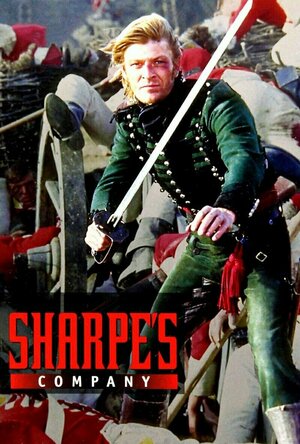
I say what was then, as there have since been more novels set before, during or even after The Napoleonic Wars, which provided the background for these movies.
This - both novel and movie - is the one that starts with the siege of Ciudad Rodrigo and ends with that of Badajoz, with (Sean Beans) Captain Richard Sharpe 'pushed aside' in the intervening period by those who can afford to buy his commission. This is also the one with the mad, twitching Obadiah Hakeswill (portrayed here by Pete Postlethwaite), who isn't so much a danger to Sharpe himself as he is too his men - Patrick Harper included - and who has a history with Sharpe.
I've said it before, and I'm sure I'll say it again: I so wish they had a proper budget for these movies!

The Outsider
9.0 Rate It
Book
'My mother died today. Or maybe yesterday, I don't know.' In The Outsider (1942), his classic...

Watt
Book
Written in Roussillon during World War Two, while Samuel Beckett was hiding from the Gestapo, "Watt"...



People grieve in many different ways, as Shari Arnold shows in her young adult novel <i>Neverland</i>. It has been four months since seventeen-year-old Livy lost her little sister Jenna to leukemia. Her mother has become a workaholic, her father a ghost, but Livy has become determined to help as many sick children as she can, either by reading to them or becoming a bone marrow donor. Livy’s life revolves solely around the children at the hospital but things begin to change when she meets the mysterious Meyer who takes her out of her comfort zone and challenges her to have fun.
As suggested by the title, <i>Neverland</i> is based upon the well-known story of Peter Pan. Meyer, like Peter, loves an adventure and whisks Livy away to do things she would never have thought to do on her own. By showing Livy how to have fun, Meyer hopes to encourage her to move on, but the big question is, is Livy ready to live without her sister?
The first part of the book has a contemporary setting that makes the story appear to be the typical girl meets boy who makes everything better type of novel, however the second section is completely different. Part two is so full of fantasy and magical ideas that it feels like a completely different book. Initially it was exciting when Meyer was something of an enigma, but suddenly the story becomes childish and fake once his true identity has been revealed, thus making the novel less gripping.
Nonetheless, <i>Neverland</i> is very moving as is anything regarding the death of young children. Arnold provides an interesting retelling of the delightful fairytale giving a totally new meaning to the children who do not grow up. Those who enjoy contemporary and fantasy novels will enjoy both elements however some readers expecting a young adult love story may be disappointed with the unrealistic turn the novel takes part way through.

Earthbound: David Bowie and the Man Who Fell to Earth
Book
'Before there was Star Wars before there was Close Encounters there was The Man Who Fell To Earth....
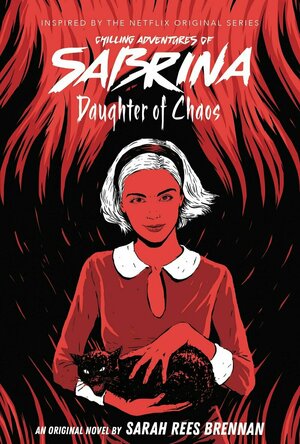
Daughter of Chaos (The Chilling Adventures of Sabrina #2)
7.5 Rate It
Book
Half-witch, half-mortal sixteen-year-old Sabrina Spellman has made her choice: She's embraced her...

Institutional Arrangements for Conservation, Development and Tourism in Eastern and Southern Africa: A Dynamic Perspective
Rene van der Duim, Machiel Lamers and Jakomijn van Wijk
Book
This book presents an overview of different institutional arrangements for tourism, biodiversity...