
Search
Search results
Jesters_folly (230 KP) rated Spiral: From the Book of Saw (2021) in Movies
May 22, 2021


Contains spoilers, click to show
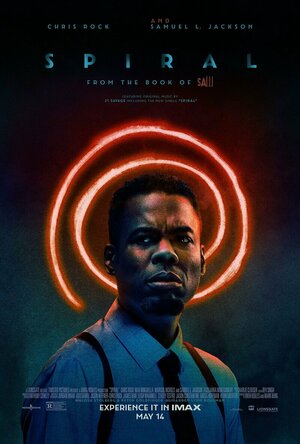
'Spiral: from the book of Saw' is the ninth Saw film and, for once I can say it's not more of the same.
Spiral is a Saw film, it has the traps and the police but it's an all new cast, the only time we see any of the original cast is in a photo of the original 'Jigsaw'. The traps also don't play the same roll, most of the previous Saw films had the 'game's' play the main part of the film and the police investigations were set to fill in the gaps. Spiral is the reverse, a new Jigsaw killer is targeting police and the main plot is the police trying to stop him, concentrating on the relationships in the department and using the franchise's use of flashbacks to add to the story. We only see the traps for a few moments, there is still gore but not at the same level. Instead we have a number of jump scared as 'the pig' grabs his victims .
Spiral seems to be thinking that the time of 'torture poem's is over, yes there are people who still want to watch it but noted many. This is why it's the Saw franchise that is still going, other films in the genre, such as 'Hostel' relied on gore but didn't have much else to offer but saw had more story as well.
When I say all the cast is new that includes the puppet, instead of the little guy on a tricycle we have a pig man, we have lots of pig references, proving bus to the fact that the victims are all police.
Although it is a Saw film, Spiral is a good jump jump on point for new views as it doesn't rely on the originals to much and sets up for a possible new franchise.
Spiral is a Saw film, it has the traps and the police but it's an all new cast, the only time we see any of the original cast is in a photo of the original 'Jigsaw'. The traps also don't play the same roll, most of the previous Saw films had the 'game's' play the main part of the film and the police investigations were set to fill in the gaps. Spiral is the reverse, a new Jigsaw killer is targeting police and the main plot is the police trying to stop him, concentrating on the relationships in the department and using the franchise's use of flashbacks to add to the story. We only see the traps for a few moments, there is still gore but not at the same level. Instead we have a number of jump scared as 'the pig' grabs his victims .
Spiral seems to be thinking that the time of 'torture poem's is over, yes there are people who still want to watch it but noted many. This is why it's the Saw franchise that is still going, other films in the genre, such as 'Hostel' relied on gore but didn't have much else to offer but saw had more story as well.
When I say all the cast is new that includes the puppet, instead of the little guy on a tricycle we have a pig man, we have lots of pig references, proving bus to the fact that the victims are all police.
Although it is a Saw film, Spiral is a good jump jump on point for new views as it doesn't rely on the originals to much and sets up for a possible new franchise.
graveyardgremlin (7194 KP) rated Magic in the Wind (Drake Sisters, #1) in Books
Feb 15, 2019



The first few chapters of MItW started off well enough, the author captured the coastal town atmosphere perfectly, however, after that it got a little, okay at times a lot, cheesy and eye-roll-inducing. Romances don't have to be that sticky-sweet. What was different and interesting is that the narration was mainly told through the male lead instead of the female; there's not too much of that in romances. The only downfall to the story being told this way was Damon waxing poetic about Sarah the Mysterious, Sarah the Magical, Sarah the Magnificent, Sarah, She Who Walks on Water - seriously, what a Mary-Sue. I'm surprised people didn't address her as Saint Sarah. Everyone in town follows her "advice" (basically she tells them what to do in a roundabout way and they listen), seeks her out to magically fix all their problems, act like she's a goddess, combined, this all made it ten times worse. They just follow her like brainless zombies and never get upset at her poking her nose in their business (not that they all don't do the same in everybody else's). Even though all of that was nauseating, she wasn't the worst Mary-Sue I've run across (Why o' why are there so many of them? Is there a writer's manual on how to write a paragon so that everything they touch, everywhere they go, everyone they meet, they're held up as a supreme being? I wish I was perfect too. :P) and she had magic, so that makes it all the more unfair. Although, who is Sarah besides the saint of this small coastal town? I have no clue, she was never made real, I actually envisioned a golden aura around her like she's some sort of angelic being or something, which is at total odds with her tough defender super hero side. Some girls have all the luck. She has magic, she's as kind as can be, she's perfect in every way (except she's not conventionally beautiful or something, the description was kind of unclear), so of course everyone loves her, she's peaceful and she gets to kick a** like she's Buffy? No freaking way. Where can I sign up?
Another annoyance was "painfully shy" Hannah, one of Sarah's six sisters. Hannah is apparently a model who travels the world, is on magazines, goes on talk shows, etc., even though she is painfully shy. Hey, I can believe someone famous has trouble like that, my problem comes from her "condition" being described as "painfully shy" all the time. It is mentioned in that exact same way, it's never really shy, very shy, extremely shy, or even just plain old shy, no it has to be "painfully shy." In truth, it was only said three times (that I noticed), but in a story that is only around ninety pages, it really sticks out, especially since it was awkwardly brought into the plot. I have a hard time believing this is only shyness, try social phobia or at the very least, some anxiety disorder. Why hasn't she had psychological care? The only remedies mentioned are magical spells and whatnot. While I'm on the subject of Hannah, of whom I know more about personality-wise than Sarah, I might as well mention the jeering and taunting between Jona, the town sheriff, and herself. These interactions are so over-the-top and obvious; we all know where this is going to lead in a future book. And not one of the sisters or Damon notices what is right in front of them. How can they be so imperceptive? What are they, seven? Although I have to admit I'd hate to be called "Baby" or "Barbie" doll too, but then again, I don't look like a Victoria's Secret model, Hannah does.
As for the plot, it was barely there, more time was spent on introducing the sisters, their legacy, characters that went nowhere, and having Sarah sit on a pedestal. Damon would have been more interesting if this had been made into a full-length book - I like the idea of a scientist being confronted with magic - but there just wasn't enough there for a cohesive story. I usually don't write much about short stories but had a lot to say about this one. Obviously. I'm interested in the sisters' stories, I try not to judge authors solely based on a short story, so I will check them out, especially Hannah's. As someone who's been "painfully shy" (couldn't resist) her whole life, my interest has been piqued to see how the author develops Hannah and her shyness in that installment of the series.
I was thinking of giving this an average rating but after writing my review and thinking back on the story, it's just not that good.
2/5 stars
Another annoyance was "painfully shy" Hannah, one of Sarah's six sisters. Hannah is apparently a model who travels the world, is on magazines, goes on talk shows, etc., even though she is painfully shy. Hey, I can believe someone famous has trouble like that, my problem comes from her "condition" being described as "painfully shy" all the time. It is mentioned in that exact same way, it's never really shy, very shy, extremely shy, or even just plain old shy, no it has to be "painfully shy." In truth, it was only said three times (that I noticed), but in a story that is only around ninety pages, it really sticks out, especially since it was awkwardly brought into the plot. I have a hard time believing this is only shyness, try social phobia or at the very least, some anxiety disorder. Why hasn't she had psychological care? The only remedies mentioned are magical spells and whatnot. While I'm on the subject of Hannah, of whom I know more about personality-wise than Sarah, I might as well mention the jeering and taunting between Jona, the town sheriff, and herself. These interactions are so over-the-top and obvious; we all know where this is going to lead in a future book. And not one of the sisters or Damon notices what is right in front of them. How can they be so imperceptive? What are they, seven? Although I have to admit I'd hate to be called "Baby" or "Barbie" doll too, but then again, I don't look like a Victoria's Secret model, Hannah does.
As for the plot, it was barely there, more time was spent on introducing the sisters, their legacy, characters that went nowhere, and having Sarah sit on a pedestal. Damon would have been more interesting if this had been made into a full-length book - I like the idea of a scientist being confronted with magic - but there just wasn't enough there for a cohesive story. I usually don't write much about short stories but had a lot to say about this one. Obviously. I'm interested in the sisters' stories, I try not to judge authors solely based on a short story, so I will check them out, especially Hannah's. As someone who's been "painfully shy" (couldn't resist) her whole life, my interest has been piqued to see how the author develops Hannah and her shyness in that installment of the series.
I was thinking of giving this an average rating but after writing my review and thinking back on the story, it's just not that good.
2/5 stars

Mothergamer (1655 KP) rated BEYOND: Two Souls in Video Games
Jun 21, 2019


I had never played Beyond: Two Souls and I got the game for free with my Playstation Plus subscription. I decided to check it out. Right from the start of the game, the story hooks you in with an introduction to a young woman (played by Ellen Page) sitting in a sheriff's office looking grim. This is where Beyond really begins. It's an intriguing way to start a story and I found myself wanting to know who this young woman was and how she got to this point.
As the story progresses, you learn that the young woman's name is Jodie and she has a psychic connection with an entity known as Aiden. Jodie can communicate and work with Aiden to use telepathic abilities such as moving objects or possessing people's minds. This is where the game has time jumps between Jodie's childhood, her teen years, and adulthood. It seems the story does this on purpose, showing that memories in Jodie's mind are jumbled so there are frequent time jumps back and forth. It can be a little confusing at times, but it seems to meld well with the story.
You can adjust the difficulty settings in the game from easy to normal depending on your play style which is nice. Since this was my first time playing the game, I went with the easy setting so I could get a feel for things and just enjoy the story. As the story switched back and forth in the timeline you get to see the things Jodie went through as a kid with Aiden and how she came to be with the lead scientist of the paranormal department, Nathan who is played by Willem Dafoe. Throughout Jodie's childhood, Nathan is a constant presence and a bit of a father figure to her as they run tests to see how strong Jodie's abilities are as well as testing her connection to Aiden. This is where the game introduces you to the controls and the quick action button events.
You can also switch views between Jodie and Aiden. There are many points in the game where Jodie relies on Aiden for certain parts of the story in order to move objects, possess people, or fight enemies. This is where the quick action controls come in. Honestly, I did not like the quick action controls because for me it detracted from the story immersion and often felt like a chore to do especially if I missed it the first time. There were times where it was vital that I not miss the quick action moment and it could be very frustrating when I did miss it.
The aspect of Jodie and Aiden learning and growing together as the story progresses is definitely interesting. There are great emotional moments in the story with Jodie as she is trying to navigate what it means to be herself while trying to adjust and separate herself from Aiden. You also get to see how her relationships change with people like Nathan as she grows. The time skips through the fifteen year span of Jodie's life fill in some of the gaps in the story, but there are times where it feels a bit muddled because in some aspects it takes away the player control and just takes you along for the ride. That is not necessarily a bad thing, because Ellen Page does a phenomenal job as Jodie and I found myself caring a lot about this character and wanting to protect her from all the people who were trying to control or manipulate her.
There are multiple endings to Beyond depending on choices you make as Jodie, but it doesn't always seem like there are a ton of choices because you are basically there to see Jodie's story unfold and see how she came to be where she is. The voice acting and motion capture of the game is incredible and everyone did a fantastic job telling this story. That's not to say Beyond isn't flawed. As I said before, I did not like the quick action event sequences. I felt this detracted from the story a bit. I also felt there were a couple of writing choices that could have been done better and in a more thoughtful manner such as a troubling scene in one of Jodie's teen years memories. I also felt the ending could have been stronger because it took an odd cliffhanger turn. That being said, I did enjoy Beyond: Two Souls because of the great casting and the story. Ellen Page as Jodie is the real deal bringing a great sincerity to the character that made me care genuinely about Jodie and wanting her to be okay. That is the sign of some good storytelling. Beyond is definitely worth playing through at least once to see the story unfold through Jodie's eyes.
As the story progresses, you learn that the young woman's name is Jodie and she has a psychic connection with an entity known as Aiden. Jodie can communicate and work with Aiden to use telepathic abilities such as moving objects or possessing people's minds. This is where the game has time jumps between Jodie's childhood, her teen years, and adulthood. It seems the story does this on purpose, showing that memories in Jodie's mind are jumbled so there are frequent time jumps back and forth. It can be a little confusing at times, but it seems to meld well with the story.
You can adjust the difficulty settings in the game from easy to normal depending on your play style which is nice. Since this was my first time playing the game, I went with the easy setting so I could get a feel for things and just enjoy the story. As the story switched back and forth in the timeline you get to see the things Jodie went through as a kid with Aiden and how she came to be with the lead scientist of the paranormal department, Nathan who is played by Willem Dafoe. Throughout Jodie's childhood, Nathan is a constant presence and a bit of a father figure to her as they run tests to see how strong Jodie's abilities are as well as testing her connection to Aiden. This is where the game introduces you to the controls and the quick action button events.
You can also switch views between Jodie and Aiden. There are many points in the game where Jodie relies on Aiden for certain parts of the story in order to move objects, possess people, or fight enemies. This is where the quick action controls come in. Honestly, I did not like the quick action controls because for me it detracted from the story immersion and often felt like a chore to do especially if I missed it the first time. There were times where it was vital that I not miss the quick action moment and it could be very frustrating when I did miss it.
The aspect of Jodie and Aiden learning and growing together as the story progresses is definitely interesting. There are great emotional moments in the story with Jodie as she is trying to navigate what it means to be herself while trying to adjust and separate herself from Aiden. You also get to see how her relationships change with people like Nathan as she grows. The time skips through the fifteen year span of Jodie's life fill in some of the gaps in the story, but there are times where it feels a bit muddled because in some aspects it takes away the player control and just takes you along for the ride. That is not necessarily a bad thing, because Ellen Page does a phenomenal job as Jodie and I found myself caring a lot about this character and wanting to protect her from all the people who were trying to control or manipulate her.
There are multiple endings to Beyond depending on choices you make as Jodie, but it doesn't always seem like there are a ton of choices because you are basically there to see Jodie's story unfold and see how she came to be where she is. The voice acting and motion capture of the game is incredible and everyone did a fantastic job telling this story. That's not to say Beyond isn't flawed. As I said before, I did not like the quick action event sequences. I felt this detracted from the story a bit. I also felt there were a couple of writing choices that could have been done better and in a more thoughtful manner such as a troubling scene in one of Jodie's teen years memories. I also felt the ending could have been stronger because it took an odd cliffhanger turn. That being said, I did enjoy Beyond: Two Souls because of the great casting and the story. Ellen Page as Jodie is the real deal bringing a great sincerity to the character that made me care genuinely about Jodie and wanting her to be okay. That is the sign of some good storytelling. Beyond is definitely worth playing through at least once to see the story unfold through Jodie's eyes.
Purple Phoenix Games (2266 KP) rated Breakdancing Meeples in Tabletop Games
Oct 18, 2021
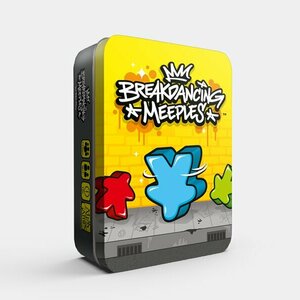
I think that I’ve mentioned in some of my previous reviews that I rarely buy games without first having played and/or researched them beforehand. Enter Breakdancing Meeples. One fine day, I was perusing the fine stock at my FLGS. While I was wandering and debating whether I should buy Reef or 7 Wonders Duel, my gaze fell upon a small tin with some funny artwork – a game titled Breakdancing Meeples. It was a small and fairly inexpensive game, so I figured, why not? I picked it up (along with 7 Wonders Duel this time) and brought it home to my collection. Was my faith misplaced, or does the game deliver on its first impression of simple fun? Keep reading to find out.
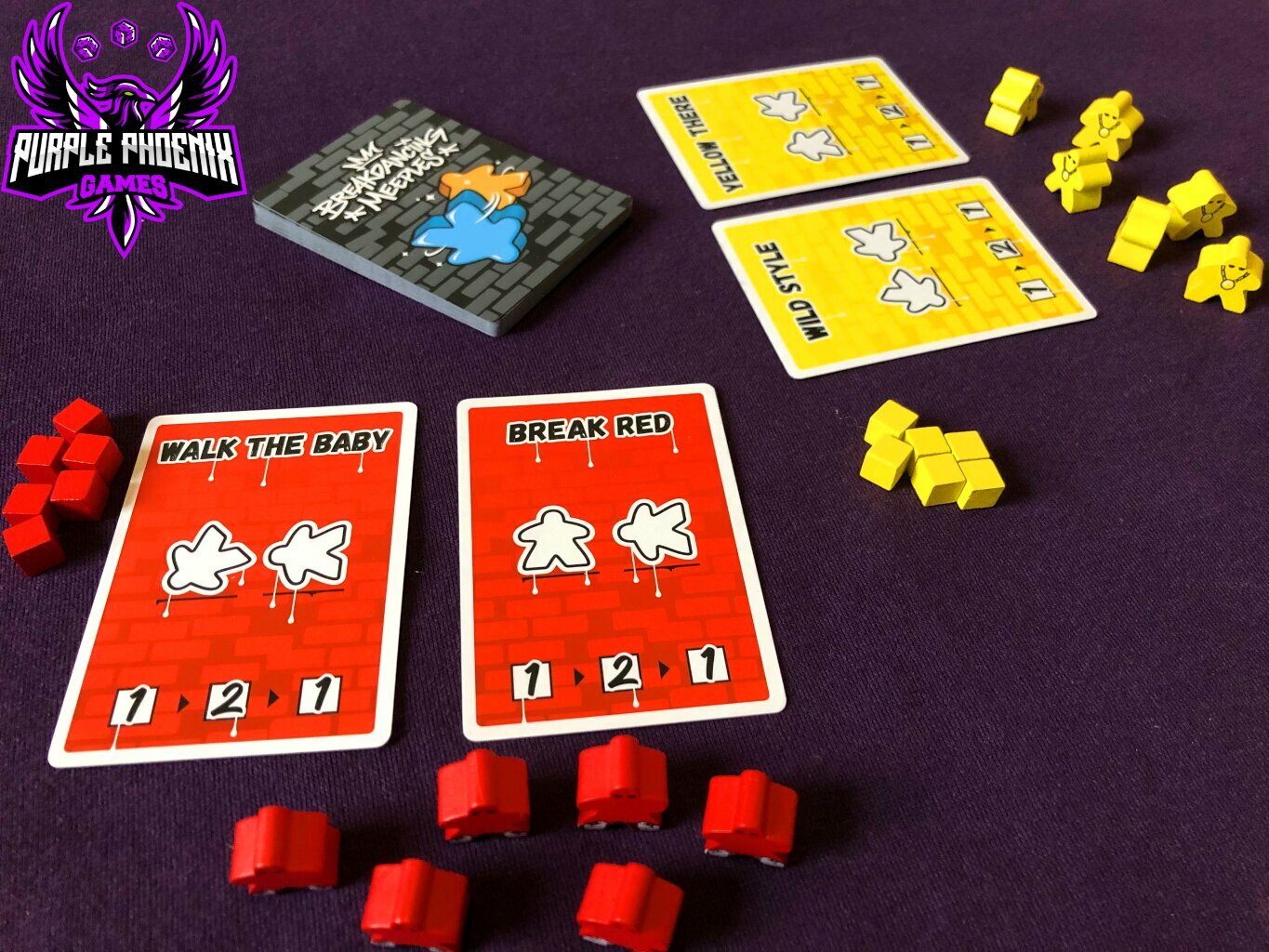
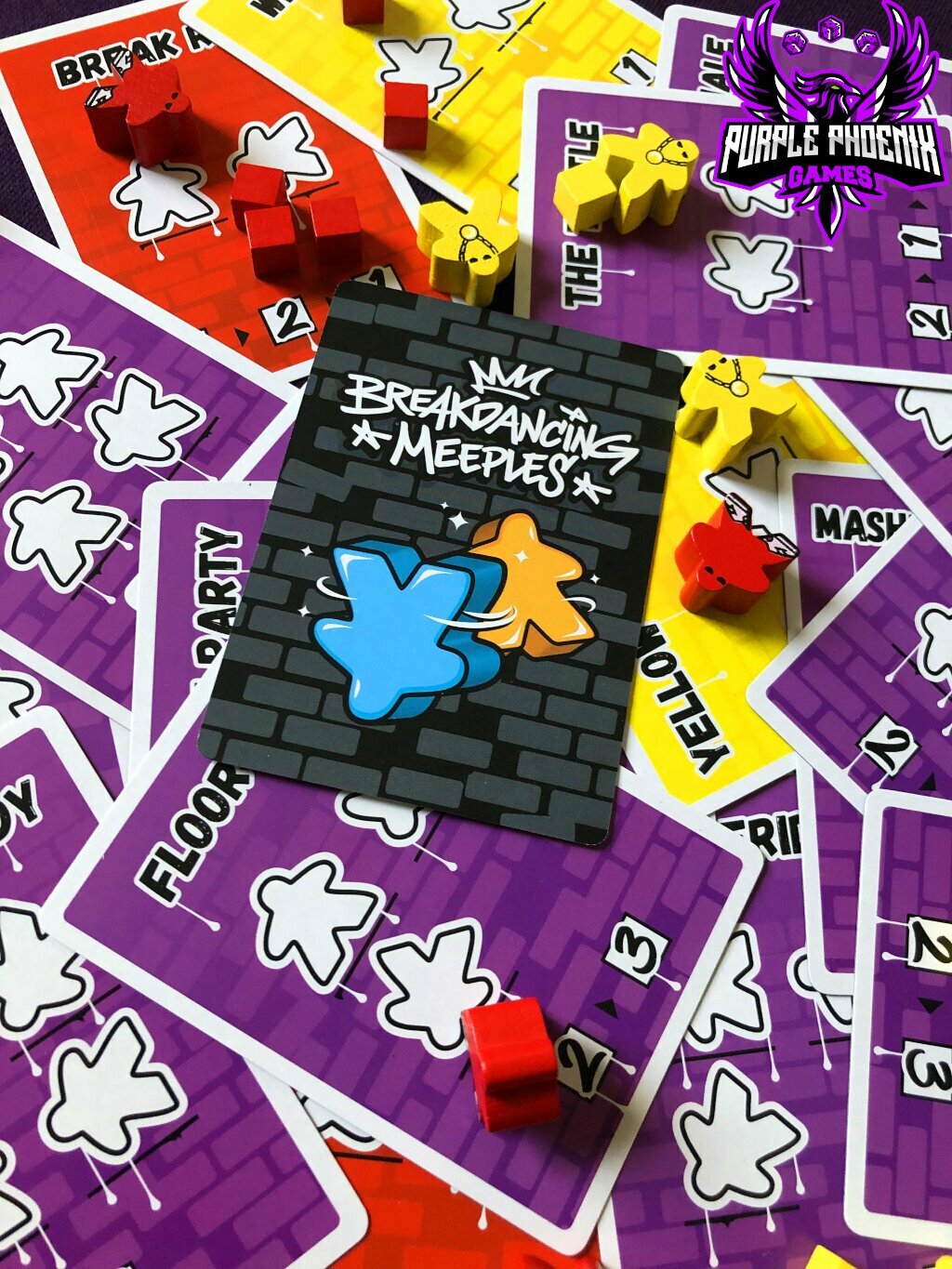
Breakdancing Meeples is a real-time game in which players are trying to amass the most Crowd Appeal (VP) by directing their dance crews to perform the baddest and most impressive dance routines of all time. To setup the game, give each player 6 Meeples, 6 cubes, and their starting Routine cards in their chosen color. Shuffle the remaining Routine cards to form a draw pile, open up the Breakdancing Meeples app (or just get a one-minute timer ready) and the dance battle is set to begin!
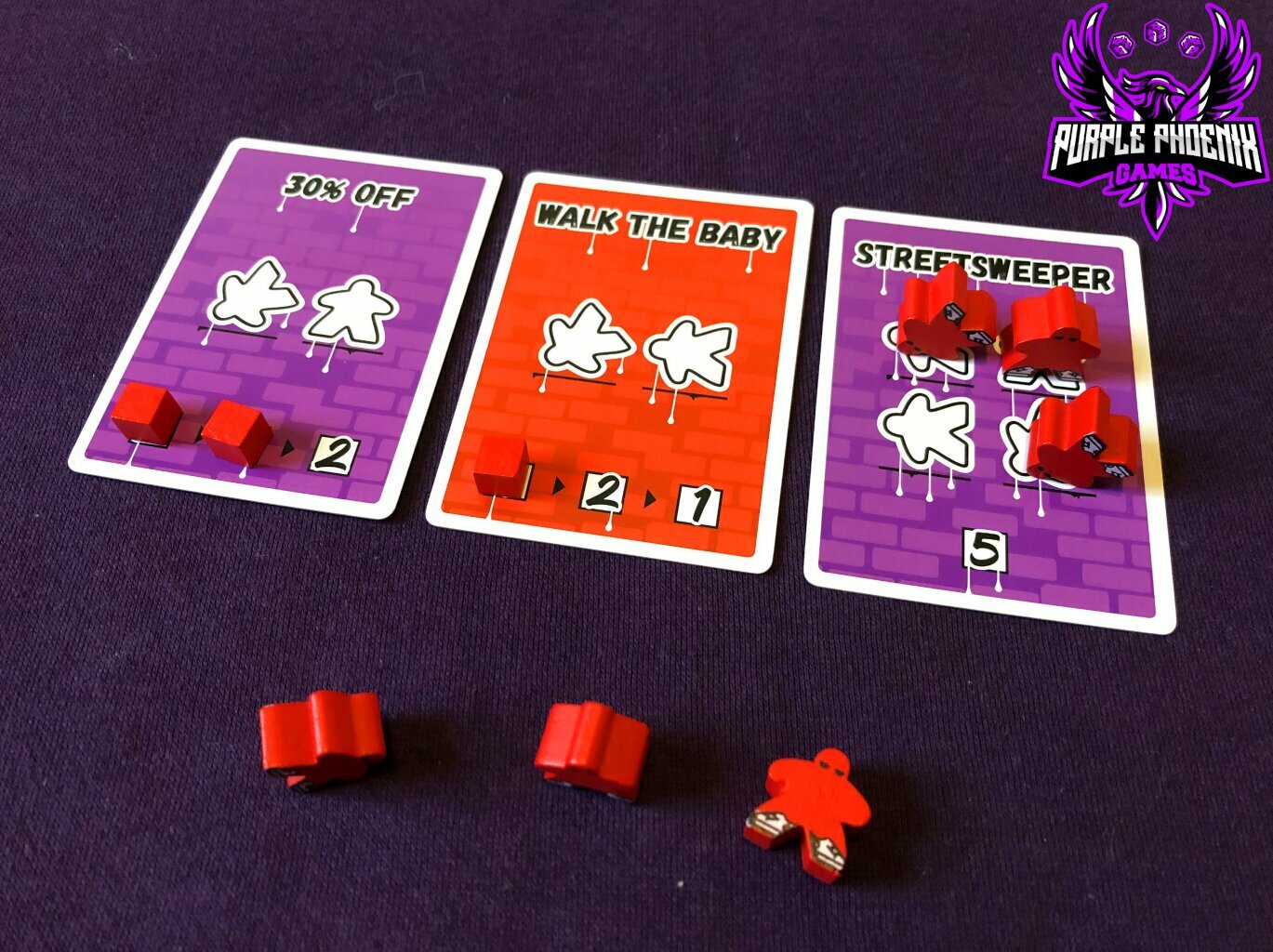
Each round is broken into two phases – Dance Off, and Remix. In the Dance Off, players will have one minute to roll their Meeples (yes, you read that correctly – rolling Meeples) to complete as their crew’s Routines as many times as they can to earn Crowd Appeal. When rolling Meeples, there are 4 stances in which the Meeples can land: Feet, Side, Head, or Back. These positions correspond to stances on your Routine cards. If you roll a Meeple in a stance that matches one on your card, you may place that Meeple on that card, moving you closer to completing that Routine. Once all stances have been filled on a Routine, you earn a Crowd Appeal cube, placing it on the leftmost available square at the bottom of that Routine card. You may then pick up all the Meeples from that card, and they are back in play. It is important to note that once a Meeple has been placed on a Routine, it may not be removed until the Routine is finished! If you are unable, or unwilling, to place a Meeple on a Routine card, you may reroll any unused Meeples. Continue rolling and placing your Meeples in this fashion until the one-minute timer runs out. When time has been called, all players will count up their Crowd Appeal – the points listed at the bottom of their Routine cards that are covered by cubes, signifying a successful rep of that Routine. The Dance Off phase is now over.
Now comes the Remix phase. Reveal as many face-up cards from the Draw deck as there are players plus one. Beginning with the player who has the lowest Crowd Appeal, players will take turns selecting a new Routine card to add to their repertoire for the next round. Players may only ever have 3 Routine cards, so in future rounds, players can choose to discard from their play area in favor of a new card. A new round now begins with another Dance Off, and continues as above until the fourth Dance Off has been completed. Players then tally their total Crowd Appeal, and the player with the highest score is the winner! Dare I say, the Dancing Queen? No? Ok…
With a fun theme and simple gameplay, does Breakdancing Meeples hold up? I would have to say yes. First let’s talk about the simplicity of gameplay. All you have to do is roll Meeples and match stances to cards. It may not sound exciting when stated that way, but add in the one-minute timer and suddenly you’ve got a more engaging and action-based game. Throw the Meeples into the mix (literally, in this game) and their disproportionate limbs and unique silhouettes provide an extra challenge in getting them to roll and land exactly as you want them to.
Another neat element of this game is the addition of Rally and Special cards to the Draw deck. Rally cards are purchased (with Crowd Appeal) in the Remix phase, and are then attached to one of your existing Routines. In the next Dance Off, when rolling your Meeples, Rally cards can provide extra Crowd Appeal points once their conditions have been met. These cards may cost some end-game points, but they could earn you much more if the conditions are right. It’s a risk, and adds some suspense to the gameplay. Special cards grant the player a ‘wild’ dancer. If you roll 2 Meeples in the same stance, you may exchange them to a single dancer in your chosen stance. Rally and Special cards can be removed from the game for a more simple gameplay, if playing with younger players for example, but add in an extra twist to the chaos of the real-time limitations.
Is Breakdancing Meeples my favorite game? Nope. But it’s a cute, fun, and fast little game that I can see myself pulling out often as a filler, or even a game to introduce newer gamers to the hobby. It is lighthearted in nature, with a unique theme, and it just is fun to play. I am glad that I bought this game on a whim, and I definitely will be keeping it in my collection. With that said, Purple Phoenix Games gives it a hoppin’ 7 / 12. Check it out, you might be surprised!
Breakdancing Meeples is a real-time game in which players are trying to amass the most Crowd Appeal (VP) by directing their dance crews to perform the baddest and most impressive dance routines of all time. To setup the game, give each player 6 Meeples, 6 cubes, and their starting Routine cards in their chosen color. Shuffle the remaining Routine cards to form a draw pile, open up the Breakdancing Meeples app (or just get a one-minute timer ready) and the dance battle is set to begin!
Each round is broken into two phases – Dance Off, and Remix. In the Dance Off, players will have one minute to roll their Meeples (yes, you read that correctly – rolling Meeples) to complete as their crew’s Routines as many times as they can to earn Crowd Appeal. When rolling Meeples, there are 4 stances in which the Meeples can land: Feet, Side, Head, or Back. These positions correspond to stances on your Routine cards. If you roll a Meeple in a stance that matches one on your card, you may place that Meeple on that card, moving you closer to completing that Routine. Once all stances have been filled on a Routine, you earn a Crowd Appeal cube, placing it on the leftmost available square at the bottom of that Routine card. You may then pick up all the Meeples from that card, and they are back in play. It is important to note that once a Meeple has been placed on a Routine, it may not be removed until the Routine is finished! If you are unable, or unwilling, to place a Meeple on a Routine card, you may reroll any unused Meeples. Continue rolling and placing your Meeples in this fashion until the one-minute timer runs out. When time has been called, all players will count up their Crowd Appeal – the points listed at the bottom of their Routine cards that are covered by cubes, signifying a successful rep of that Routine. The Dance Off phase is now over.
Now comes the Remix phase. Reveal as many face-up cards from the Draw deck as there are players plus one. Beginning with the player who has the lowest Crowd Appeal, players will take turns selecting a new Routine card to add to their repertoire for the next round. Players may only ever have 3 Routine cards, so in future rounds, players can choose to discard from their play area in favor of a new card. A new round now begins with another Dance Off, and continues as above until the fourth Dance Off has been completed. Players then tally their total Crowd Appeal, and the player with the highest score is the winner! Dare I say, the Dancing Queen? No? Ok…
With a fun theme and simple gameplay, does Breakdancing Meeples hold up? I would have to say yes. First let’s talk about the simplicity of gameplay. All you have to do is roll Meeples and match stances to cards. It may not sound exciting when stated that way, but add in the one-minute timer and suddenly you’ve got a more engaging and action-based game. Throw the Meeples into the mix (literally, in this game) and their disproportionate limbs and unique silhouettes provide an extra challenge in getting them to roll and land exactly as you want them to.
Another neat element of this game is the addition of Rally and Special cards to the Draw deck. Rally cards are purchased (with Crowd Appeal) in the Remix phase, and are then attached to one of your existing Routines. In the next Dance Off, when rolling your Meeples, Rally cards can provide extra Crowd Appeal points once their conditions have been met. These cards may cost some end-game points, but they could earn you much more if the conditions are right. It’s a risk, and adds some suspense to the gameplay. Special cards grant the player a ‘wild’ dancer. If you roll 2 Meeples in the same stance, you may exchange them to a single dancer in your chosen stance. Rally and Special cards can be removed from the game for a more simple gameplay, if playing with younger players for example, but add in an extra twist to the chaos of the real-time limitations.
Is Breakdancing Meeples my favorite game? Nope. But it’s a cute, fun, and fast little game that I can see myself pulling out often as a filler, or even a game to introduce newer gamers to the hobby. It is lighthearted in nature, with a unique theme, and it just is fun to play. I am glad that I bought this game on a whim, and I definitely will be keeping it in my collection. With that said, Purple Phoenix Games gives it a hoppin’ 7 / 12. Check it out, you might be surprised!

Illeana Douglas recommended In a Lonely Place (1950) in Movies (curated)

Kristy H (1252 KP) rated The Switch in Books
Jan 7, 2021
A touching look at love and loss
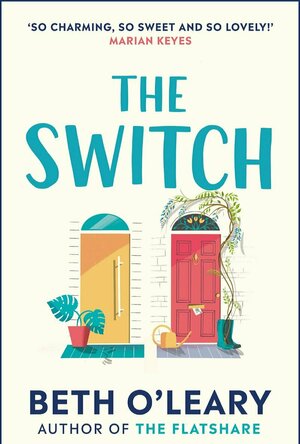
Leena Cotton's way to deal with life is losing herself in her work. But when she's forced to take a two-month sabbatical, her usual focal point is gone. So Leena comes up with a plan: she'll escape to her grandmother Eileen's house, a beautiful little cottage in the lovely, quiet village of Hamleigh, and Eileen will come and stay in Leena's flat in London. To Leena, this sounds perfect; her grandmother, after all, though nearly eighty, is newly single and looking for another chance at love. Where better to find it than in bustling London? But switching places isn't as easy as it seems. In Hamleigh, Leena learns her grandmother's shoes are hard to fill, having to plan a local festival and deal with nosy neighbors. Meanwhile, in London, Eileen has to get up-to-speed with online dating and the hustle and bustle of a busy city. But, all may not be lost for the Cotton women.
Oh this book. It's just absolutely lovely. I wasn't sure if the idea of a "swapping places" book would come across as silly or trite, but in O'Leary's deft hands, it's perfect. She gives us a beautiful story about healing after grief (Leena's sabbatical comes because she blows a presentation as she's dealing with the grief of losing her sister; Eileen, obviously, has lost her granddaughter). But it's also funny, sweet, and romantic. The sadness is woven in with hope and beauty. It's one of those rare books that can make you both cry and laugh.
Eileen and Leena--what can I say about these characters? They are so real! I identified, of course, with workaholic Leena, and you just want to go into the book and save her (though she doesn't need it) as she struggles with her sister's death, feeling abandoned by her own grieving mother after the loss, and getting her life back on track. And Eileen? She's a total trip. Finally free to find love again, she's a wonderful and spunky woman that you cannot help but root for. The supporting cast is absolutely excellent--Leena's friends and flatmates, combined with the townspeople of Hamleigh, make for some of the most memorable supporting cast I can remember in quite some time. They all fit together perfectly in the story.
Overall, I defy you not to fall for this tale. Eileen's quest for love. Leena's quest to find herself again. O'Leary gives us a beautiful gift in THE SWITCH. One of my favorite reads of the year. 4.5+ stars.
Leena Cotton's way to deal with life is losing herself in her work. But when she's forced to take a two-month sabbatical, her usual focal point is gone. So Leena comes up with a plan: she'll escape to her grandmother Eileen's house, a beautiful little cottage in the lovely, quiet village of Hamleigh, and Eileen will come and stay in Leena's flat in London. To Leena, this sounds perfect; her grandmother, after all, though nearly eighty, is newly single and looking for another chance at love. Where better to find it than in bustling London? But switching places isn't as easy as it seems. In Hamleigh, Leena learns her grandmother's shoes are hard to fill, having to plan a local festival and deal with nosy neighbors. Meanwhile, in London, Eileen has to get up-to-speed with online dating and the hustle and bustle of a busy city. But, all may not be lost for the Cotton women.
Oh this book. It's just absolutely lovely. I wasn't sure if the idea of a "swapping places" book would come across as silly or trite, but in O'Leary's deft hands, it's perfect. She gives us a beautiful story about healing after grief (Leena's sabbatical comes because she blows a presentation as she's dealing with the grief of losing her sister; Eileen, obviously, has lost her granddaughter). But it's also funny, sweet, and romantic. The sadness is woven in with hope and beauty. It's one of those rare books that can make you both cry and laugh.
Eileen and Leena--what can I say about these characters? They are so real! I identified, of course, with workaholic Leena, and you just want to go into the book and save her (though she doesn't need it) as she struggles with her sister's death, feeling abandoned by her own grieving mother after the loss, and getting her life back on track. And Eileen? She's a total trip. Finally free to find love again, she's a wonderful and spunky woman that you cannot help but root for. The supporting cast is absolutely excellent--Leena's friends and flatmates, combined with the townspeople of Hamleigh, make for some of the most memorable supporting cast I can remember in quite some time. They all fit together perfectly in the story.
Overall, I defy you not to fall for this tale. Eileen's quest for love. Leena's quest to find herself again. O'Leary gives us a beautiful gift in THE SWITCH. One of my favorite reads of the year. 4.5+ stars.

Jessica - Where the Book Ends (15 KP) rated They Both Die At The End in Books
Jan 30, 2019
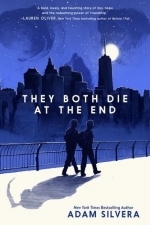

Stop and imagine for just one minute what it would be like if you received a phone call telling you that you were going to die within the next 24 hours. How would you live your last 24 hours? Would you have a funeral with your family and friends so that you have a chance to say goodbye, or would you try and make a new friend going through the same thing you were so that you don’t have to be alone on your last day on this planet? This is exactly what happens to both Rufus and Mateo.
Rufus is outgoing and not afraid to stand up for himself. He’s had a pretty crappy few years but he’s managed to make friends with the other kids in his foster home. They have become his family. He gets the call that everyone dreads informing him that he’s going to die today. He decides to download the Last Friend app so that he can get paired up with someone to spend his last 24 hours with.
Mateo is a quiet and somewhat sheltered teenager who has been living on his own since his dad is currently in a coma. He gets the call that he is going to die today and he is instantly terrified to leave his apartment. He quickly decides that he doesn’t want to die alone, so he downloads the Last Friend App in hopes that he will come out of his shell on his last day.
Mateo and Rufus meet through the Last Friend App and have an amazingly memorable final 24 hours together. The bring about change in each other that they never thought was possible.
These characters are so easy to relate to and its so hard not to love them. I couldn’t help but laugh with them and cheer for them, and though I did everything in my power not to cry with them I couldn’t stop myself from crying crocodile tears over their trials and tribulations. This story is about growing, changing as a person and allowing yourself to love and be loved in the wake of great adversity.
They Both Die at the End is the first book I’ve read by Adam Silvera, and I can’t wait to read more. Silvera has a way with words that can suck the air from your lungs, bring you to your knees and in the next sentence completely revive you. After turning the final page of this book and wiping the tears from my eyes I closed the book with a new found appreciation for the life I have and the awareness that it can all be taken away in a moment.
Rufus is outgoing and not afraid to stand up for himself. He’s had a pretty crappy few years but he’s managed to make friends with the other kids in his foster home. They have become his family. He gets the call that everyone dreads informing him that he’s going to die today. He decides to download the Last Friend app so that he can get paired up with someone to spend his last 24 hours with.
Mateo is a quiet and somewhat sheltered teenager who has been living on his own since his dad is currently in a coma. He gets the call that he is going to die today and he is instantly terrified to leave his apartment. He quickly decides that he doesn’t want to die alone, so he downloads the Last Friend App in hopes that he will come out of his shell on his last day.
Mateo and Rufus meet through the Last Friend App and have an amazingly memorable final 24 hours together. The bring about change in each other that they never thought was possible.
These characters are so easy to relate to and its so hard not to love them. I couldn’t help but laugh with them and cheer for them, and though I did everything in my power not to cry with them I couldn’t stop myself from crying crocodile tears over their trials and tribulations. This story is about growing, changing as a person and allowing yourself to love and be loved in the wake of great adversity.
They Both Die at the End is the first book I’ve read by Adam Silvera, and I can’t wait to read more. Silvera has a way with words that can suck the air from your lungs, bring you to your knees and in the next sentence completely revive you. After turning the final page of this book and wiping the tears from my eyes I closed the book with a new found appreciation for the life I have and the awareness that it can all be taken away in a moment.
Relax & Rest Guided Meditations
Health & Fitness and Lifestyle
App
Enjoy the deep relaxation, stress relief and benefits of meditation with the Meditation Oasis®...

Gareth von Kallenbach (980 KP) rated the Xbox One version of LEGO Star Wars: The Skywalker Saga in Video Games
Apr 28, 2022
I first saw Lego Star Wars: The Skywalker Saga at E3 2019 during a meeting with Warner Bros. Interactive. Even at that stage of development, it was clear that the game had enormous potential as not only did it offer fun and quirky gameplay, but it also allowed players the chance to explore multiple locales from the film and play in a story and sandbox mode.
The game covers the nine episodic films in the series and allows players to play multiple characters big and small from the films as well as use multiple vehicles and weapons as they battle and solve puzzles to complete the levels.
As with most Lego-themed games there is plenty of humor and the game while following the general outline of the film plots does have some deviations which allow for some expanded gameplay and humor-filled moments.
Recreating the rescue of Luke from the cold on Hoth for example required a Tauntaun Ride to three locales to defeat enemies and align communication dishes in order to complete the task at hand.
Players can select the character they wish to control as at times one such as R2-D2 will be needed to complete a puzzle to unlock a terminal while another will be needed for their firepower or other abilities.
There are loads of cosmetics, characters, and vehicles that can be unlocked, and what I found so amazing was the incredible depth each chapter offered. Side quests and exploring could be done or players can select a more linear path and complete the missions.
The graphics in the game are series best as playing on an Xbox Series S the detail level was amazing and on more than one occasion I had to keep myself focused on the mission versus exploring.
The replay value of the game is also amazing as there is just so much content available that allows players to be creative and above all have fun.
In keeping with the Lego brand, the game is ideal for all ages as while there are plenty of characters being shot and explosions, the end result is usually a pile of bricks for players to collect. The sound and music in the game also need to be noted as there is a great mix of voice talents, sounds, and movies that will transport players deep into the Star Wars universe.
On more than one instance I found myself saying that I would play one more chapter before stopping only to find myself powering on for extended gameplay sessions.
I cannot say enough great things about the game as it is for my taste the best Lego-themed game ever and a must-own game for Star Wars fans of any age.
5 stars out of 5
The game covers the nine episodic films in the series and allows players to play multiple characters big and small from the films as well as use multiple vehicles and weapons as they battle and solve puzzles to complete the levels.
As with most Lego-themed games there is plenty of humor and the game while following the general outline of the film plots does have some deviations which allow for some expanded gameplay and humor-filled moments.
Recreating the rescue of Luke from the cold on Hoth for example required a Tauntaun Ride to three locales to defeat enemies and align communication dishes in order to complete the task at hand.
Players can select the character they wish to control as at times one such as R2-D2 will be needed to complete a puzzle to unlock a terminal while another will be needed for their firepower or other abilities.
There are loads of cosmetics, characters, and vehicles that can be unlocked, and what I found so amazing was the incredible depth each chapter offered. Side quests and exploring could be done or players can select a more linear path and complete the missions.
The graphics in the game are series best as playing on an Xbox Series S the detail level was amazing and on more than one occasion I had to keep myself focused on the mission versus exploring.
The replay value of the game is also amazing as there is just so much content available that allows players to be creative and above all have fun.
In keeping with the Lego brand, the game is ideal for all ages as while there are plenty of characters being shot and explosions, the end result is usually a pile of bricks for players to collect. The sound and music in the game also need to be noted as there is a great mix of voice talents, sounds, and movies that will transport players deep into the Star Wars universe.
On more than one instance I found myself saying that I would play one more chapter before stopping only to find myself powering on for extended gameplay sessions.
I cannot say enough great things about the game as it is for my taste the best Lego-themed game ever and a must-own game for Star Wars fans of any age.
5 stars out of 5
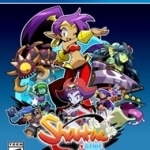
Rolando Jesus Feliciano (3 KP) rated the PlayStation 4 version of Shantae Half-Genie Hero in Video Games
Apr 27, 2018
Humor (3 more)
Audio quality
Simple platforming
Great DLC
Simple everything else (1 more)
Too Short
For the love of frog, no more Rule 34 on this series
Ok I've held off on this. Really held off. The DLC sold me though so that's my excuse. Half Genie Hero is the fourth entry in the Shantae series. I really want to say something good about the main game but I can't. It's simple. That's it. It tries to be a combination of collectathon and Metroidvania but unlike Pirate's Curse, this game misses the mark. Granted there are strong points, the platforming is fun, decent storyline, wonderful music (just try getting that first stage song out of your head). However after a bit the gameplay becomes repetitive. Go through a stage, collect the things, beat the boss, then backtrack for quest specific items to unlock the next area, rinse and repeat. At least they didn't butcher the game's true waifu Rottytops, ok maybe putting her in race girl gear might have Deviant Art fans getting creative, if not those artists on R34 (please don't damage this series any more guys, please). I mean look at the fact that in its previous entry they fleshed her character out...figuratively and literally. The game does end rather abruptly in a sense, and.... WayForward, why? Not once but twice you call back to Mega Man 8 and that boarding segment. I don't want to hear anyone tell me, they didn't really, because WayForward knew. They have a blasted trophy that you can earn for perfectly completing that segment called "Jump Jump Slide Slide" y'all did that on purpose and my ptsd kicked right in when I first saw the segment. That said, lets move on to the DLC. I loved the content. The friends content have me more story for the main part of the game and the Risky dlc was like going back to Pirate's Curse. However save for certain slides, I won't spoil the game. Then we have the costume pack... First the ninja dlc allows you to play as Specter Knight somewhat giving you an amazing bit of action. That ending does get you real bad that when I saw the Gaijin Goomba reaction in his latest video, I could not stop laughing. The bikini dlc finally gave me something I wanted, a challenge. Forget going through with all the hearts, give me three and the chance that I could lose them all if I don't keep her cool. This dlc is perfect in awakening my speed run skills. Finally we have Officer Shantae. If you have only played this series and Shovel Knight, go get Mighty Switch Force because this is an amazing clone of it, music and all. Overall I feel that the dlc packs saved the game. I can't begin to think the game was a waste of cash if they didn't exist. Let's hope if there is a fifth entry, they up the challenge and give it more a metroidvania style. Step back to Pirate's Curse WayForward and go from there.