
Search
Search results
Purple Phoenix Games (2266 KP) rated Citadels in Tabletop Games
Aug 13, 2021
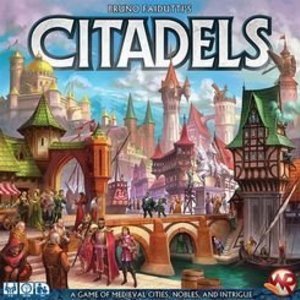


It has been documented several times that I, Travis Lopez, would be a horrible city planner. So why do I keep playing these games that require me to build city buildings and components and why do I enjoy them so much? Well, truth be told, this is a game that I had traded for years ago, got rid of, missed terribly, and repurchased. However, this is the newer version that includes a lot more in the box. Does it mean that the game is better? More stuff means better game, right?
In Citadels players will be donning the mantle of potential Master Builders and will need to build the greatest buildings within the city and manipulate the powers of special people within its walls. The game ends when a player has built their seventh district building. The player with the most VP at this time will be crowned Master Builder and winner of Citadels!
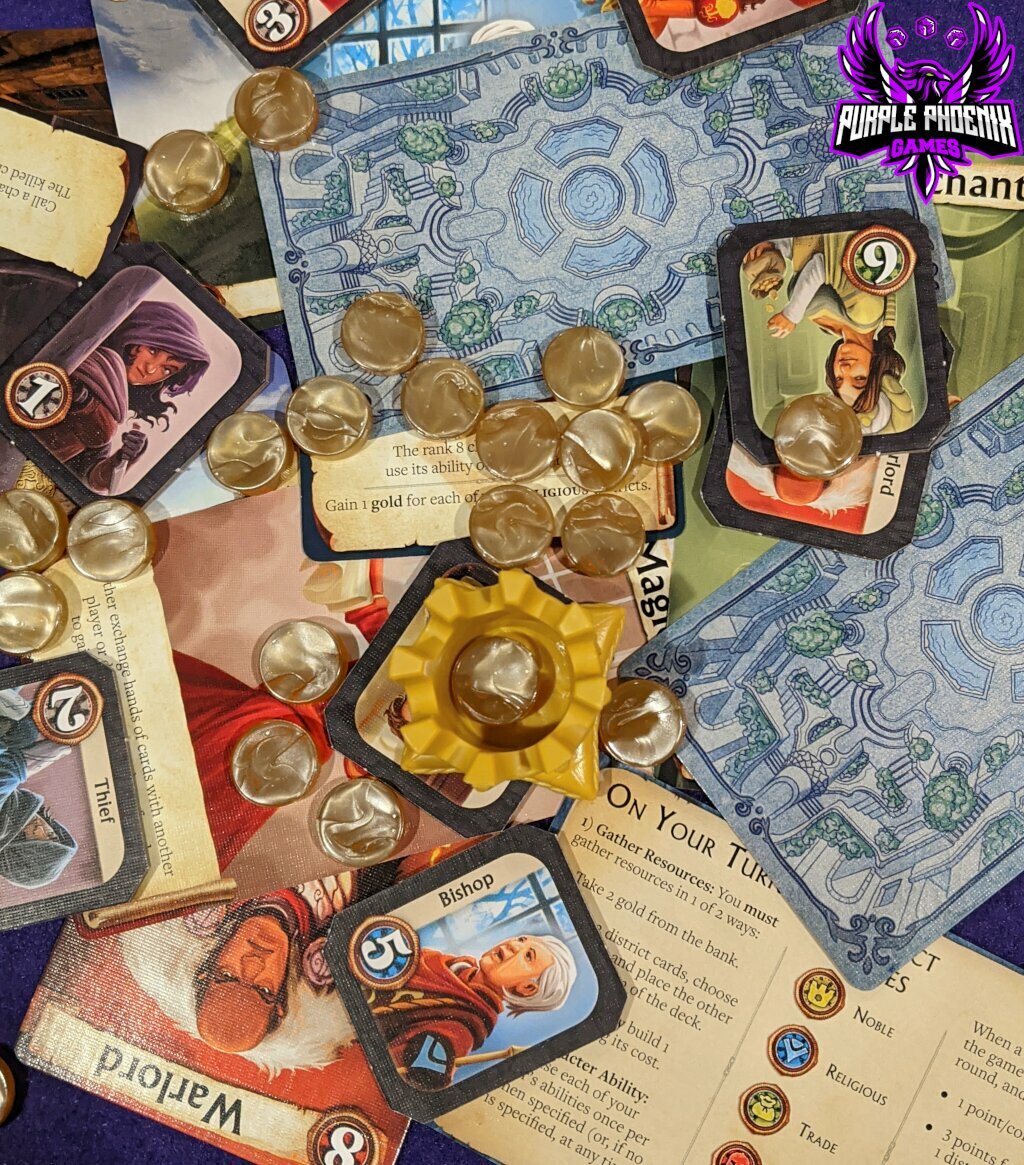
To setup, decide which eight characters will be used in the game, gather their cards and tokens, and place their tokens in ascending order on the table. This is to remind all players which characters (and their rank) is in play. Assemble the district (building) cards per the rules and shuffle the deck. Deal each player four of these district cards along with two gold coins. The eldest player will begin the game as the current First Player (complete with crown mini) and will begin the first phase of the first round.
Citadels is played over several rounds, each with two phases played within. The first phase is the Selection Phase, where the current First Player takes the character cards, shuffles them, adds zero to two cards (dependent upon number of players) face-up on the table and one card face-down. They then choose from the cards remaining in hand which character’s powers they would like to enact for the turn. The cards are passed to the next player in line who will do the same, and so on around the table.
Once all players have chosen their character card, the Turn Phase can begin. The current First Player (the one with the crown) will announce the characters in rank order, with the lowest character going first. In a typical game using only original base characters, this is “1: Assassin.” Whomever chose the Assassin card will flip over their character card, perform its special power, and then continue with their turn. In this case, the Assassin’s special power is to announce the name of a CHARACTER to assassinate. NOTE: This does NOT mean the name of the PLAYER. So the Assassin could choose to assassinate the King character, not the Travis player. After the character has used their power, the player can continue with the rest of their turn, though some character powers may be used at any time during the player’s turn.
After the character power is used, the player will gather resources in the form of two gold coins from the bank or by drawing two district cards from the deck and choosing one to keep in hand. After this choice, the player may then build one district in their play area if they wish and if they can afford to do so. Once complete, the crowned First Player will call out the next character rank (2: Thief in our example) who will continue their turn in the same way. The game continues in this fashion until a player has built their seventh district. The round continues until all players have had an equal amount of turns. Players then count VP on district cards and bonuses per the rulebook. The player with the most VP at the end of the game is crowned the Master Builder and winner of Citadels!
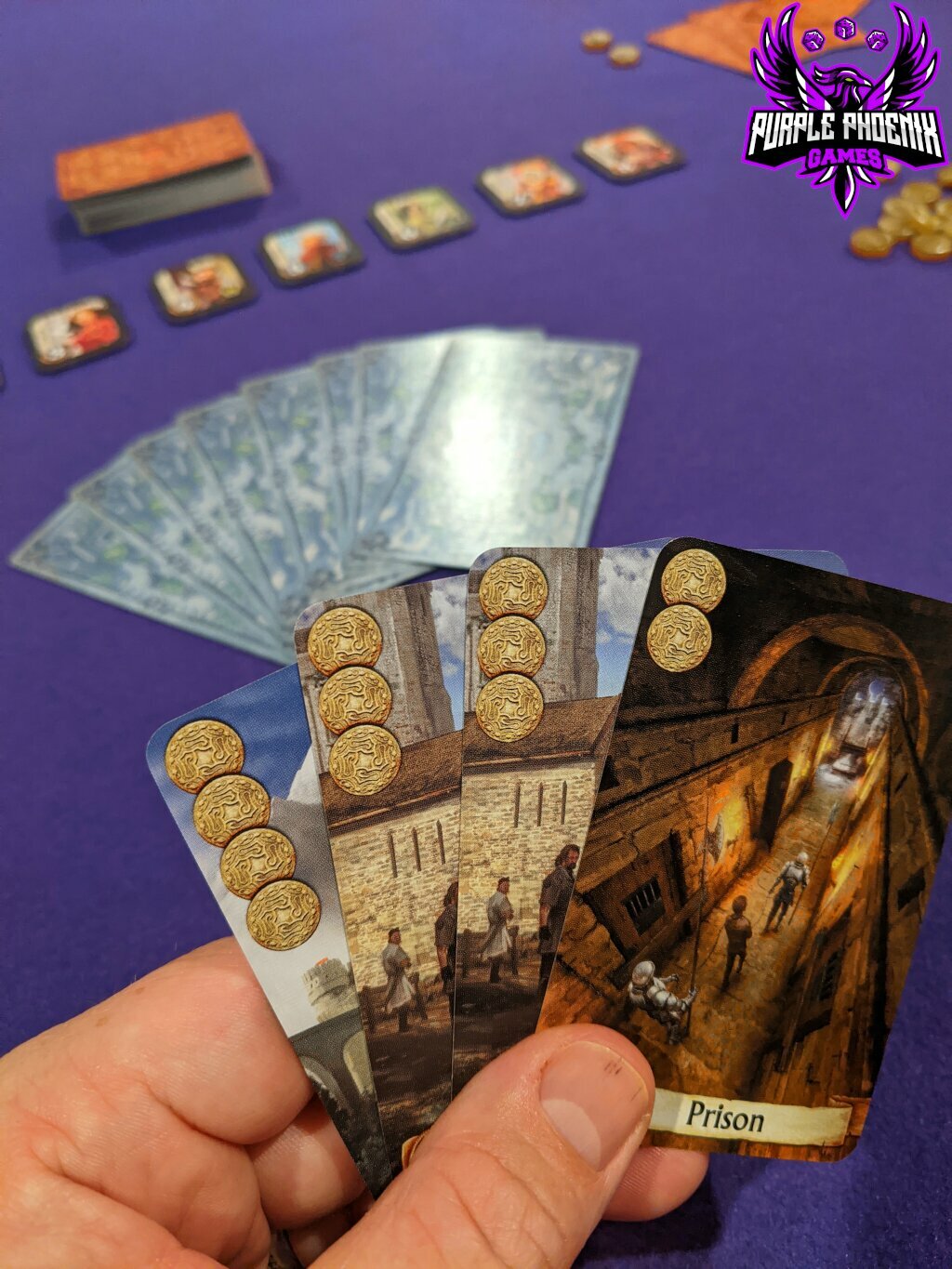
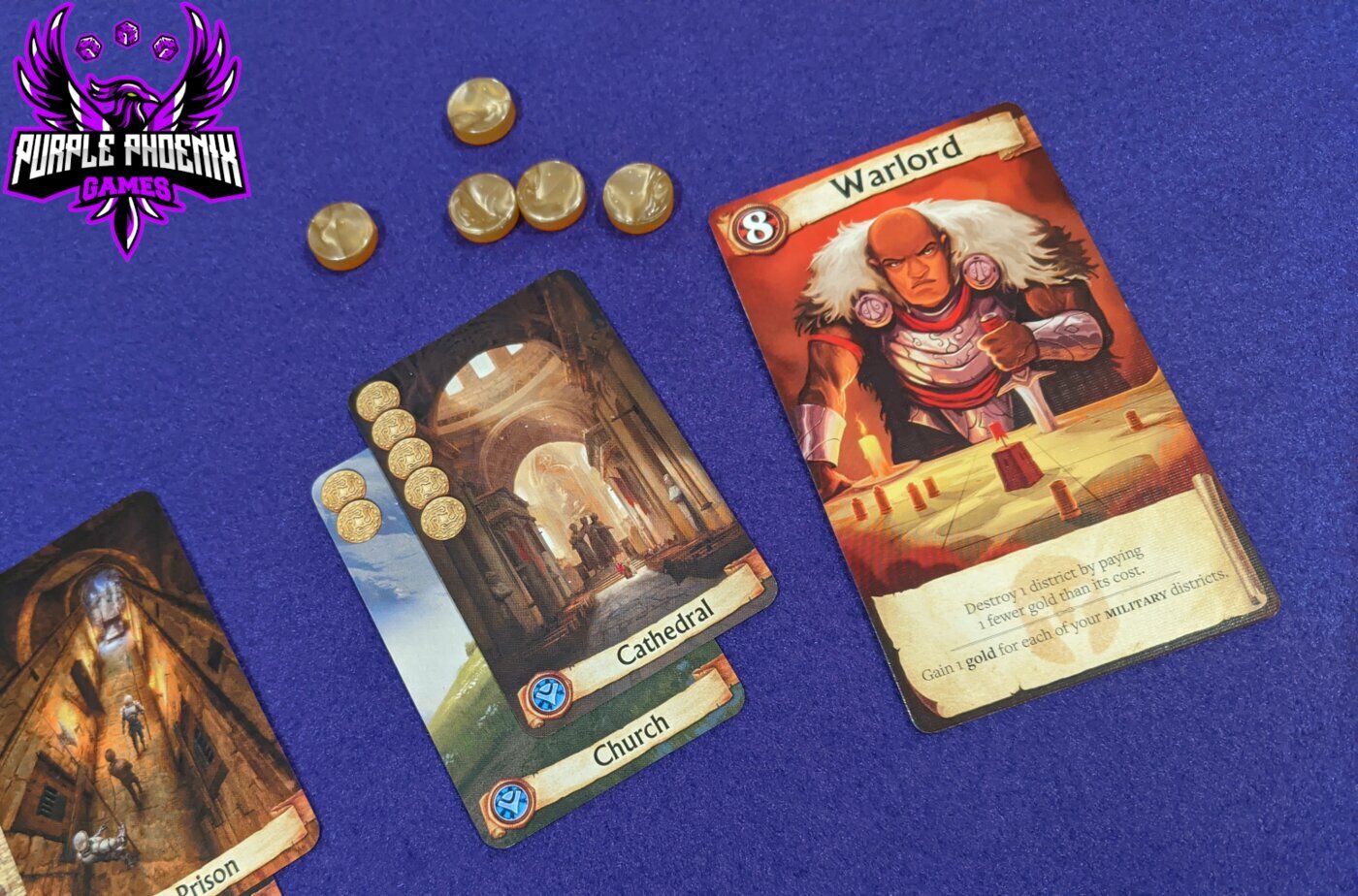
Components. I have to say that I enjoyed the components in the older version of Citadels I used to have just fine. I had sleeved all my cards, and the gold coins were nice back in the day. This version, however, includes many more components and each one is higher quality than the previous version’s. The art on the cards has been updated and is much much nicer now as well. The addition of the crown mini, the character tokens, and other components not mentioned here merely increases my love for Citadels. Windrider has knocked it out of the park with this version. And that’s saying nothing about all the additional characters now included in the game! Oh boy, so much variability!
Along with that variability is the customization of the game. You can play with one of the six pre-constructed provided suggestions in the rulebook or create your own combination of different characters. With three versions of each rank, many possibilities are… possible.
I do love Citadels, and with the right group can be a show-stopper all on its own. Some players may get a little offended or sassy because there is a fair amount of Take That in Citadels with the character interactions, so if playing with people who don’t understand the difference between a game and real life, I would prep them appropriately. I love being able to outwit my opponents by drafting certain characters they didn’t think I would want. Keeping them all on their toes during the game is sneaky fun.
So for me, with the amount of replayability, high quality and excellent components, and cutthroat gameplay I simply adore Citadels. I can pull it out with different groups and have different play experiences and try to tailor the character offering to the strengths of my players, or simply use one listed in the back of the rulebook. Purple Phoenix Games gives Citadels an underhanded, yet scholarly 21 / 24. It’s a stunning, magical, wonderful game and one of Bruno Faidutti’s best ever! Surely this is already in your collection, right? If not, make it so.
In Citadels players will be donning the mantle of potential Master Builders and will need to build the greatest buildings within the city and manipulate the powers of special people within its walls. The game ends when a player has built their seventh district building. The player with the most VP at this time will be crowned Master Builder and winner of Citadels!
To setup, decide which eight characters will be used in the game, gather their cards and tokens, and place their tokens in ascending order on the table. This is to remind all players which characters (and their rank) is in play. Assemble the district (building) cards per the rules and shuffle the deck. Deal each player four of these district cards along with two gold coins. The eldest player will begin the game as the current First Player (complete with crown mini) and will begin the first phase of the first round.
Citadels is played over several rounds, each with two phases played within. The first phase is the Selection Phase, where the current First Player takes the character cards, shuffles them, adds zero to two cards (dependent upon number of players) face-up on the table and one card face-down. They then choose from the cards remaining in hand which character’s powers they would like to enact for the turn. The cards are passed to the next player in line who will do the same, and so on around the table.
Once all players have chosen their character card, the Turn Phase can begin. The current First Player (the one with the crown) will announce the characters in rank order, with the lowest character going first. In a typical game using only original base characters, this is “1: Assassin.” Whomever chose the Assassin card will flip over their character card, perform its special power, and then continue with their turn. In this case, the Assassin’s special power is to announce the name of a CHARACTER to assassinate. NOTE: This does NOT mean the name of the PLAYER. So the Assassin could choose to assassinate the King character, not the Travis player. After the character has used their power, the player can continue with the rest of their turn, though some character powers may be used at any time during the player’s turn.
After the character power is used, the player will gather resources in the form of two gold coins from the bank or by drawing two district cards from the deck and choosing one to keep in hand. After this choice, the player may then build one district in their play area if they wish and if they can afford to do so. Once complete, the crowned First Player will call out the next character rank (2: Thief in our example) who will continue their turn in the same way. The game continues in this fashion until a player has built their seventh district. The round continues until all players have had an equal amount of turns. Players then count VP on district cards and bonuses per the rulebook. The player with the most VP at the end of the game is crowned the Master Builder and winner of Citadels!
Components. I have to say that I enjoyed the components in the older version of Citadels I used to have just fine. I had sleeved all my cards, and the gold coins were nice back in the day. This version, however, includes many more components and each one is higher quality than the previous version’s. The art on the cards has been updated and is much much nicer now as well. The addition of the crown mini, the character tokens, and other components not mentioned here merely increases my love for Citadels. Windrider has knocked it out of the park with this version. And that’s saying nothing about all the additional characters now included in the game! Oh boy, so much variability!
Along with that variability is the customization of the game. You can play with one of the six pre-constructed provided suggestions in the rulebook or create your own combination of different characters. With three versions of each rank, many possibilities are… possible.
I do love Citadels, and with the right group can be a show-stopper all on its own. Some players may get a little offended or sassy because there is a fair amount of Take That in Citadels with the character interactions, so if playing with people who don’t understand the difference between a game and real life, I would prep them appropriately. I love being able to outwit my opponents by drafting certain characters they didn’t think I would want. Keeping them all on their toes during the game is sneaky fun.
So for me, with the amount of replayability, high quality and excellent components, and cutthroat gameplay I simply adore Citadels. I can pull it out with different groups and have different play experiences and try to tailor the character offering to the strengths of my players, or simply use one listed in the back of the rulebook. Purple Phoenix Games gives Citadels an underhanded, yet scholarly 21 / 24. It’s a stunning, magical, wonderful game and one of Bruno Faidutti’s best ever! Surely this is already in your collection, right? If not, make it so.


Daniel Boyd (1066 KP) rated Until Dawn in Video Games
Jul 21, 2017

Cast (1 more)
Graphics
A Bloody Good Time
This game by all accounts, should have been a flop. The fact that it was a cliché teen horror story, the fact that it started out as a move game for the ps3 and has had a long, unsteady development cycle and the fact that it was coming out in August, a time of year that is known as the stealth zone, as it is after the summer blockbuster season, but before the big fall line up drops. Yet, Supermassive games have managed to produce an engaging, genuinely scary story that plays on your expectations of this genre and succeeds in keeping the player engaged for a 10-12 hour story that follows the teens trying to survive through a horrific night of terror. I have been a gamer for the vast majority of my time on this earth and while I am very proud of that fact, I do realise that it may cloud my judgement somewhat and I could lose sight somewhat of what really makes a game special, which is why I will always greatly value an outsider’s opinion. I have been with my girlfriend for the past 3 years and before meeting me she was a casual gamer at best, playing Wii games and mobile games, I do believe she owned a PS1 when she was young but she definitely isn’t a gamer like I am. So, when I get a game and she watches me playing it and has a reaction more than just, ‘is this all you do?’ I know that it is something a bit more special than any old game. It happened with season 1 of Telltale’s Walking Dead, it happened with The Last Of Us and it happened a few nights ago with Until Dawn. As soon as I put the disc in and we played the first chapter, we were both hooked and dying to find out what happens next. This game is very well written, with an intriguing, engaging narrative coupled with purposefully written bad cheesy dialogue creating many memorable moments. The cast is very talented also, the facial capture in this game is very good and when playing you can see each tiny expression of fear or anger on the actor’s faces and the VO work is also pretty impeccable. Hayden Pannietre and Rami Malek stand out, as does Peter Stromare and the actor who plays Mike. The first quarter of the game is full of ‘mock’ scares that the group are seen pranking each other with, however not to an annoying extent. The scares that follow are very real with the next part of the game being reminiscent of a 70’s slasher movie. The atmosphere is built very well, with well timed audio cues and the use of a fixed camera working both as a homage to classic ps1 era horror games and as to give the player a feeling they are constantly being watched. Some camera angles are unsettling and the tracking shots can be particularly creepy, especially when you could have sworn that you saw something move in the far corner of the screen. The game then delves more into supernatural horror, which I will talk about more in the spoiler section of the review. Really though, there isn’t anything to spoil in this game in the respect that you can beat the game with everyone alive, or everybody dead. The only thing to spoil is how the characters die, which can be in a few different but increasingly gruesome ways which I won’t spoil here.
That’s not to say that everything that this game has to offer is positive, several of the big twists can be seen coming from a mile away, for example my better half guessed who the killer was going to be within the first hour of our playthrough, but other than that I am struggling to find any real criticisms in this game. It is just a fun experience that I would recommend to anyone, whether you are a horror fan or not.
Okay, spoiler time.
The twists in the game are fairly obvious. From very early on in the game it is clear that the ‘therapy’ sessions with Peter Stromare are a hallucination, probably a hallucination of the psycho in the clown mask and that psycho is probably Josh. All of these things come to pass, which means when they are revealed to be true the shock value is pretty much lost. It is also fairly obvious that there is something after the group besides the psycho, something that is more than likely to be supernatural. The only twist is finding out what that is and when it’s revealed to be the Gollum-like Wendigos, I was somewhat disappointed. The creatures are pretty cool in how they move, as they very twitchy and quick, but they are fairly generic and not all that scary once you know what they look like. The character deaths are quite well done, but half of the characters have fake ‘deaths,’ before their actual death scenes which makes the actual death scenes less impactful and somewhat fall flat.
Overall, Until Dawn is an engaging, entertaining experience that doesn’t really have any major flaws. For the most part the humour and the scares are well executed and while not all of the characters are likeable, they are all well written horror stereotypes that are played very well by their real life counterparts. This game was unexpectedly great by a number of people, and is seen as a surprise hit and likewise for me, it exceeded my expectations and served as a very pleasant and welcome addition to the modern horror genre.
That’s not to say that everything that this game has to offer is positive, several of the big twists can be seen coming from a mile away, for example my better half guessed who the killer was going to be within the first hour of our playthrough, but other than that I am struggling to find any real criticisms in this game. It is just a fun experience that I would recommend to anyone, whether you are a horror fan or not.
Okay, spoiler time.
The twists in the game are fairly obvious. From very early on in the game it is clear that the ‘therapy’ sessions with Peter Stromare are a hallucination, probably a hallucination of the psycho in the clown mask and that psycho is probably Josh. All of these things come to pass, which means when they are revealed to be true the shock value is pretty much lost. It is also fairly obvious that there is something after the group besides the psycho, something that is more than likely to be supernatural. The only twist is finding out what that is and when it’s revealed to be the Gollum-like Wendigos, I was somewhat disappointed. The creatures are pretty cool in how they move, as they very twitchy and quick, but they are fairly generic and not all that scary once you know what they look like. The character deaths are quite well done, but half of the characters have fake ‘deaths,’ before their actual death scenes which makes the actual death scenes less impactful and somewhat fall flat.
Overall, Until Dawn is an engaging, entertaining experience that doesn’t really have any major flaws. For the most part the humour and the scares are well executed and while not all of the characters are likeable, they are all well written horror stereotypes that are played very well by their real life counterparts. This game was unexpectedly great by a number of people, and is seen as a surprise hit and likewise for me, it exceeded my expectations and served as a very pleasant and welcome addition to the modern horror genre.

Kristy H (1252 KP) rated Before I Let Go in Books
Jan 5, 2018

Easy to read (1 more)
Honest portrayal of mental illness
Lacks full character development (1 more)
Difficult to discern full point
Quick read that falls a little short
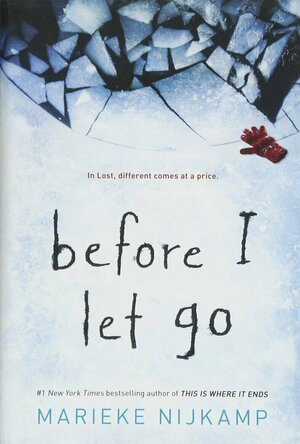
When Corey gets the call that her best friend, Kyra, has passed away--falling under the ice in their frigid hometown of Lost Creek, Alaska--she is devastated. Corey has been gone from Lost, as it's known, away at boarding school, corresponding with Kyra only via letters. She was due to visit in a few days and now her best friend is gone. Lost always shunned Kyra because she was bipolar and had maniac episodes. The small, insulated town couldn't understand Kyra's highs and lows. She stood out too much in a place where being different was wrong. But the seven months that Corey's been away has been long enough for the town of Lost to turn on her and now deem her an outsider. Since Corey's departure, Lost has suddenly embraced Kyra, though Corey isn't sure why. Even worse, they are calling Kyra's death meant to be, her time. They've rallied around in her death and they want nothing to do with Corey. Kyra always said she would wait for Corey to return: why didn't she?
I definitely have some mixed feelings about this one. It's billed as a YA mystery, and I can see its drama appealing more to teens, perhaps, but I could never really fully tell what the book was truly about or what it was trying to be. It has weird unexplained mystical elements thrown in--think Carol Goodman or Jennifer McMahon, but they aren't fully fleshed out or well-explained. I believe the intent is to slowly build up suspense and creep you out, but they don't slowly build up (they sort of start out full force and stay there, or almost trickle away... it's hard to explain) and they never really seem to have a purpose. So it's just one element of the book that leaves you hanging. The ending, too, leaves you with little closure.
The novel is told mainly from Corey's perspective, but we also get weird snippets told as if in a play format (like we're hearing from the town), but those aren't fully formed either. It's very strange. I liked Corey, but she comes in angry at her town and we don't get a lot of explanation into her character or real background into her friendship with Kyra, despite being assured that they were best friends up until Corey left.
It's sad, because I was really drawn to the character of Kyra (you get flashbacks to the girls' friendship and life before Kyra's death). I thought the book did a fairly good job of portraying mental illness and honestly Kyra--despite her death--seemed to be the most fully formed character in many ways. She implores Corey not to fix her, that she's not a puzzle to solve, and she discusses her manic spells in a very mature and very thoughtful way. It's one of the reasons that I'm keeping a three-star rating for this one; I'm hoping the portrayal of her illness can help and inform others.
There are also a variety of relationships portrayed in the novel--albeit, I thought, rather superficially--lesbian, pansexual, asexual, gay, etc. I wouldn't say any relationship is at all fully delved into, but I appreciate that Nijkamp at least wanted to try to be representative with her characters.
The other thing is that Nijkamp's books are just so darn easy to read. I remember that about This Is Where It Ends, too. I read almost this entire novel in one setting. Her writing draws you in so easily, even if you don't always agree with what you're reading, or if you wish for more character development. You could pick this up and fly through it in a day.
In the end, this certainly wasn't what I expected. The strange mystical elements seemed out of place and they, along with most of the characters, weren't really fleshed out. I was a fan of how easy the story was to read and the mental illness portrayal, though, as well as how easy the story was to read. I was drawn to the character of Kyra and wished I could have learned even more about her. The story was compelling and Nijkamp did an excellent job making you feel the cold of the Alaskan setting and the similar coldness of the townspeople. At the same time, while I could certainly see a small town being incredibly close-minded (and they were), some of the other plot points seemed a little overboard. A quick read, especially for teens.
I definitely have some mixed feelings about this one. It's billed as a YA mystery, and I can see its drama appealing more to teens, perhaps, but I could never really fully tell what the book was truly about or what it was trying to be. It has weird unexplained mystical elements thrown in--think Carol Goodman or Jennifer McMahon, but they aren't fully fleshed out or well-explained. I believe the intent is to slowly build up suspense and creep you out, but they don't slowly build up (they sort of start out full force and stay there, or almost trickle away... it's hard to explain) and they never really seem to have a purpose. So it's just one element of the book that leaves you hanging. The ending, too, leaves you with little closure.
The novel is told mainly from Corey's perspective, but we also get weird snippets told as if in a play format (like we're hearing from the town), but those aren't fully formed either. It's very strange. I liked Corey, but she comes in angry at her town and we don't get a lot of explanation into her character or real background into her friendship with Kyra, despite being assured that they were best friends up until Corey left.
It's sad, because I was really drawn to the character of Kyra (you get flashbacks to the girls' friendship and life before Kyra's death). I thought the book did a fairly good job of portraying mental illness and honestly Kyra--despite her death--seemed to be the most fully formed character in many ways. She implores Corey not to fix her, that she's not a puzzle to solve, and she discusses her manic spells in a very mature and very thoughtful way. It's one of the reasons that I'm keeping a three-star rating for this one; I'm hoping the portrayal of her illness can help and inform others.
There are also a variety of relationships portrayed in the novel--albeit, I thought, rather superficially--lesbian, pansexual, asexual, gay, etc. I wouldn't say any relationship is at all fully delved into, but I appreciate that Nijkamp at least wanted to try to be representative with her characters.
The other thing is that Nijkamp's books are just so darn easy to read. I remember that about This Is Where It Ends, too. I read almost this entire novel in one setting. Her writing draws you in so easily, even if you don't always agree with what you're reading, or if you wish for more character development. You could pick this up and fly through it in a day.
In the end, this certainly wasn't what I expected. The strange mystical elements seemed out of place and they, along with most of the characters, weren't really fleshed out. I was a fan of how easy the story was to read and the mental illness portrayal, though, as well as how easy the story was to read. I was drawn to the character of Kyra and wished I could have learned even more about her. The story was compelling and Nijkamp did an excellent job making you feel the cold of the Alaskan setting and the similar coldness of the townspeople. At the same time, while I could certainly see a small town being incredibly close-minded (and they were), some of the other plot points seemed a little overboard. A quick read, especially for teens.

Lee (2222 KP) rated Pet Sematary (2019) in Movies
Apr 2, 2019 (Updated Apr 5, 2019)
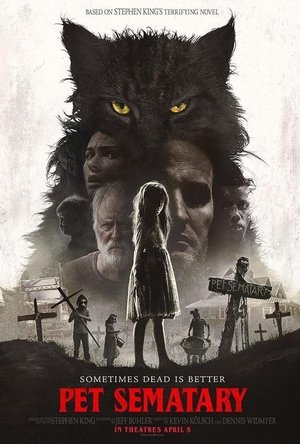
Not only have I not read the Stephen King book that Pet Sematary is based on, I haven't even seen the original 1989 movie either. As much as I feel ashamed for completely missing out on both of those, it also meant that I was able to head into this movie with nothing to compare it to and no idea of what to expect, other than a bit of creepy-burial-ground-raising-the-dead type stuff that the first trailer covered. One quick note on the trailers before I begin though - the most recent one, which luckily I only saw after I had seen the movie, pretty much gives away the entire plot. Granted, if you're a fan of Stephen Kings work, or even the original movie, then you're going to know what to expect anyway. But, if you're like me - someone who enjoys a good horror movie, but doesn't read books and has gaping holes in his movie viewing history, then try and give the trailers a miss on this occasion before heading into the cinema.
Louis Creed (Jason Clarke) is a Boston doctor who moves his family to the (hopefully) less chaotic setting of rural Maine - wife Rachel (Amy Seimetz), 8 year old daughter Ellie (Jeté Laurence), toddler Gage and friendly family cat Church. However, the family soon discover that their house is located right alongside a road which is prone to noisy trucks suddenly speeding past - our first jump scare and something already given away by the trailers! Those trucks also have a tendency to end the lives of any local pets who might happen to wander out in front of them, so it's pretty handy that there happens to be a Native American graveyard out in the woods at the back of the Creed's new house.
The local children make good use of the area, carrying out a funeral procession while wearing masks before burying deceased pets there, and they have also erected a sign - "Pet Sematary", which is nailed to one of the trees outside of it. Unfortunately, it's not too long before Church falls victim to a passing truck, at which point friendly neighbour Jud (John Lithgow) tells Louis of a special burial ritual which can be carried out on an area of ground located even further into the forest. It's a ritual that can bring the dead back to life so, in order to avoid upsetting daughter Ellie, Louis keeps the death a secret until he and Jud can head out late that night to perform the ritual with Church. Sure enough, Church is back with the family the next morning - alive, but looking very disheveled and in a seriously grumpy mood. He's not quite the cute little bundle of joy he once was - as Jud puts it, "Sometimes dead is better".
After banging on earlier about spoilers for movies, I feel it would be wrong of me to go and do the same thing here. If you're familiar with the story, then you'll know what happens anyway, although there is a moderate change of detail in this particular version which has already had a few die hard Stephen King fans up in arms. I'll just say that the special properties of the burial ground get used on a few more occasions during the course of the movie, with increasingly devastating consequences, and I personally felt that the change to the source material totally worked within the confines of this version of the story.
Ok, so what did I think of the movie overall? Well, I found Pet Sematary to be pretty intense, even more so than 'Us' recently. There were a couple of guys to the side of me in the cinema who were sitting forward on the edge of their seat for the majority of the movie just hyperventilating - I thought they were going to have a heart attack at one point! Yes, there are some jump scares, but this was more the kind of nightmare horror that I loved while watching 'Us' and it had me gripped to my seat for a good 80% or so of its run-time. Everyone involved in the movie is on top form - the children are outstanding, as is Jason Clarke, John Lithgow, even the cat! The dread-filled atmosphere, the tragedy and the horror of it all, it really resonated with me and I came away from this exhausted but happy!
Louis Creed (Jason Clarke) is a Boston doctor who moves his family to the (hopefully) less chaotic setting of rural Maine - wife Rachel (Amy Seimetz), 8 year old daughter Ellie (Jeté Laurence), toddler Gage and friendly family cat Church. However, the family soon discover that their house is located right alongside a road which is prone to noisy trucks suddenly speeding past - our first jump scare and something already given away by the trailers! Those trucks also have a tendency to end the lives of any local pets who might happen to wander out in front of them, so it's pretty handy that there happens to be a Native American graveyard out in the woods at the back of the Creed's new house.
The local children make good use of the area, carrying out a funeral procession while wearing masks before burying deceased pets there, and they have also erected a sign - "Pet Sematary", which is nailed to one of the trees outside of it. Unfortunately, it's not too long before Church falls victim to a passing truck, at which point friendly neighbour Jud (John Lithgow) tells Louis of a special burial ritual which can be carried out on an area of ground located even further into the forest. It's a ritual that can bring the dead back to life so, in order to avoid upsetting daughter Ellie, Louis keeps the death a secret until he and Jud can head out late that night to perform the ritual with Church. Sure enough, Church is back with the family the next morning - alive, but looking very disheveled and in a seriously grumpy mood. He's not quite the cute little bundle of joy he once was - as Jud puts it, "Sometimes dead is better".
After banging on earlier about spoilers for movies, I feel it would be wrong of me to go and do the same thing here. If you're familiar with the story, then you'll know what happens anyway, although there is a moderate change of detail in this particular version which has already had a few die hard Stephen King fans up in arms. I'll just say that the special properties of the burial ground get used on a few more occasions during the course of the movie, with increasingly devastating consequences, and I personally felt that the change to the source material totally worked within the confines of this version of the story.
Ok, so what did I think of the movie overall? Well, I found Pet Sematary to be pretty intense, even more so than 'Us' recently. There were a couple of guys to the side of me in the cinema who were sitting forward on the edge of their seat for the majority of the movie just hyperventilating - I thought they were going to have a heart attack at one point! Yes, there are some jump scares, but this was more the kind of nightmare horror that I loved while watching 'Us' and it had me gripped to my seat for a good 80% or so of its run-time. Everyone involved in the movie is on top form - the children are outstanding, as is Jason Clarke, John Lithgow, even the cat! The dread-filled atmosphere, the tragedy and the horror of it all, it really resonated with me and I came away from this exhausted but happy!

Purple Phoenix Games (2266 KP) rated The Oregon Trail Card Game in Tabletop Games
Nov 7, 2019

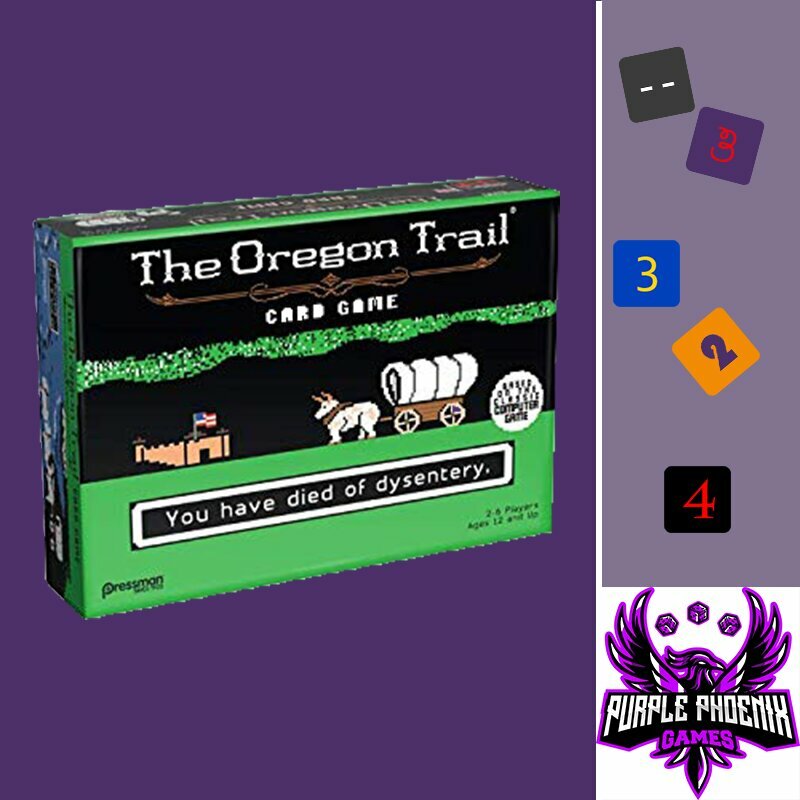
The Oregon Trail! A classic computer game from our youth that, despite being so hard to beat, kept us coming back for more! So when it was turned into a card game, I was SO EXCITED! Nothing like dying of Dysentery to bring back fond memories! Does this game live up to the hype of the OG game? Keep reading to find out!
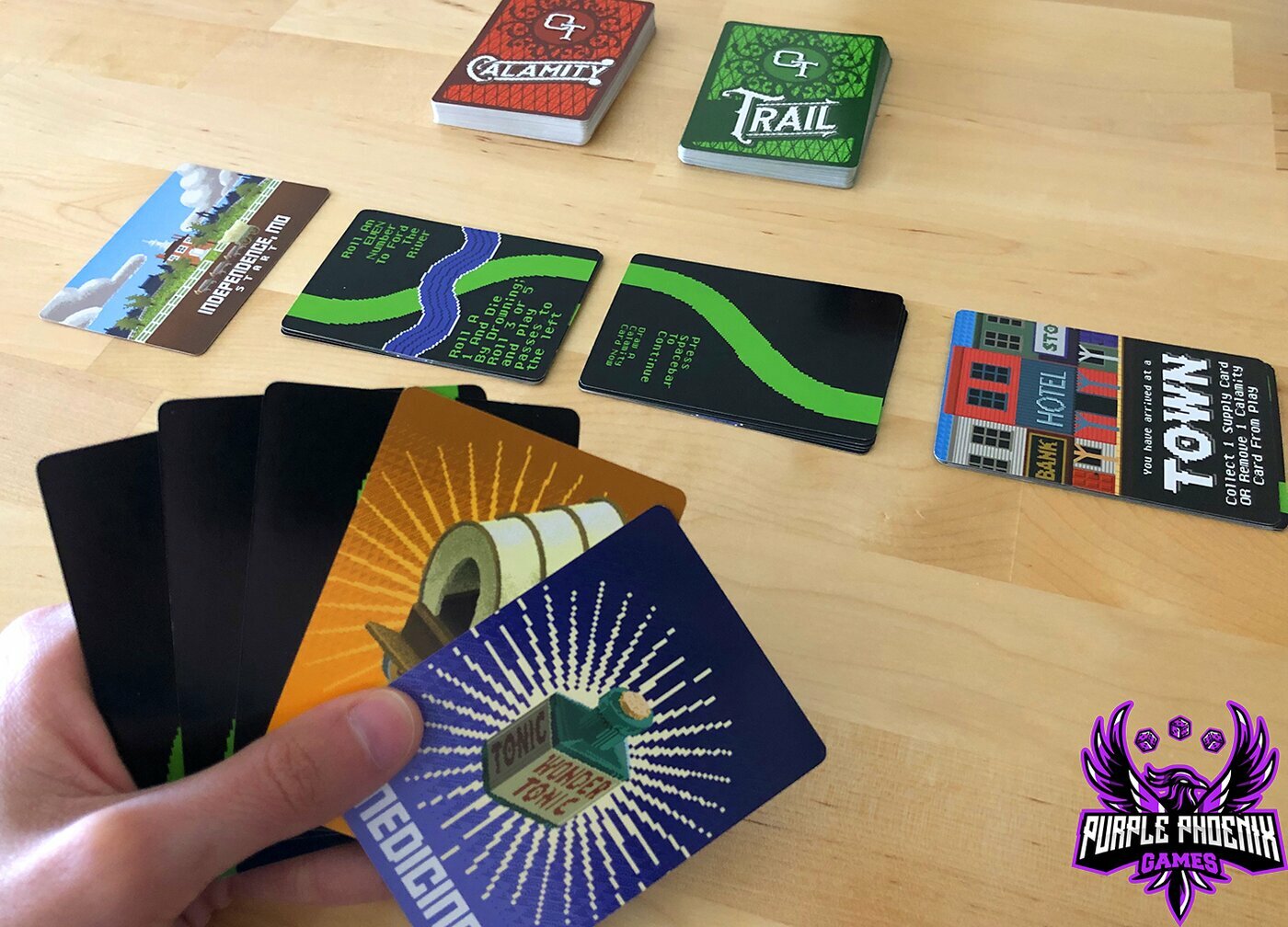
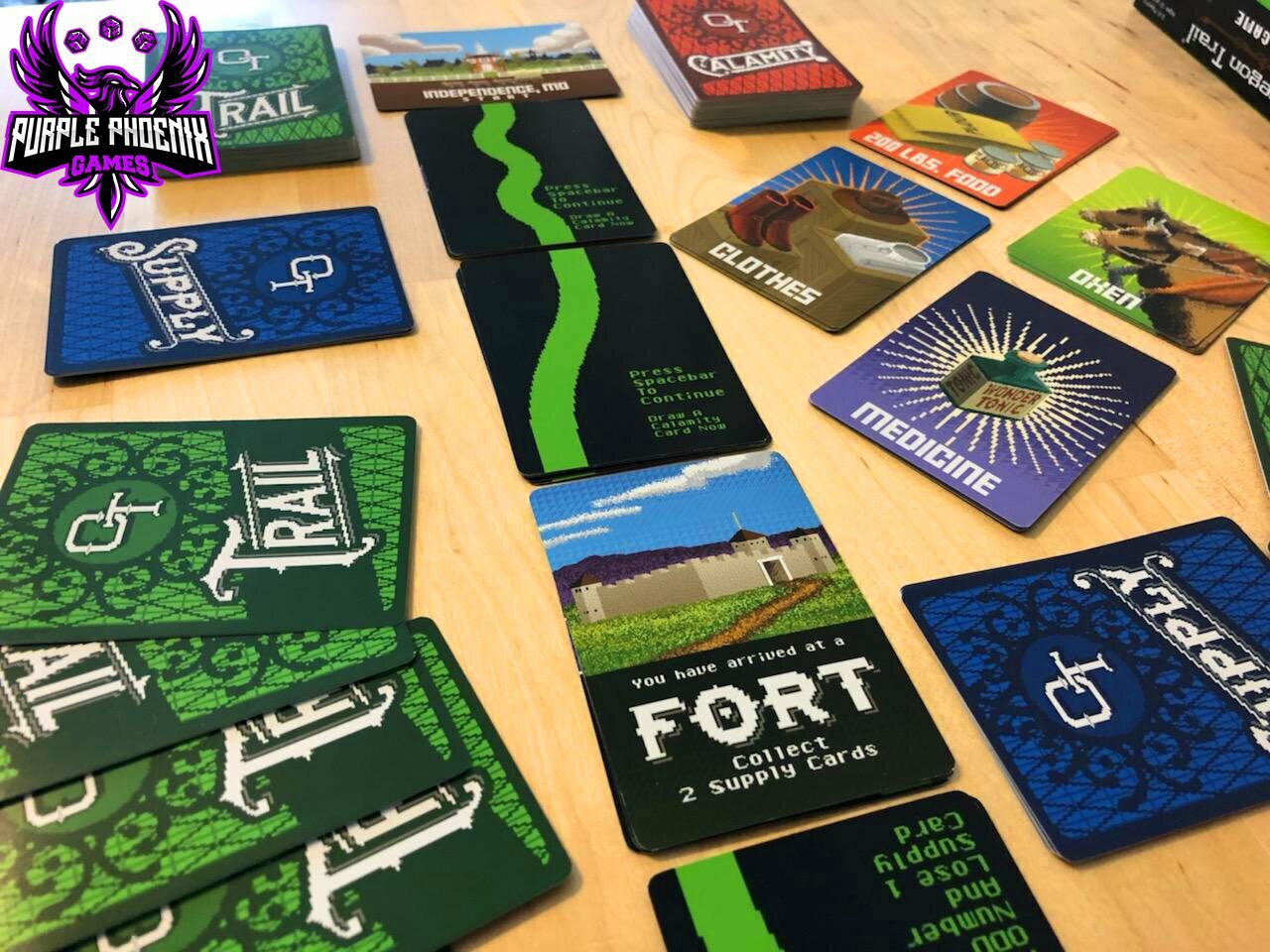
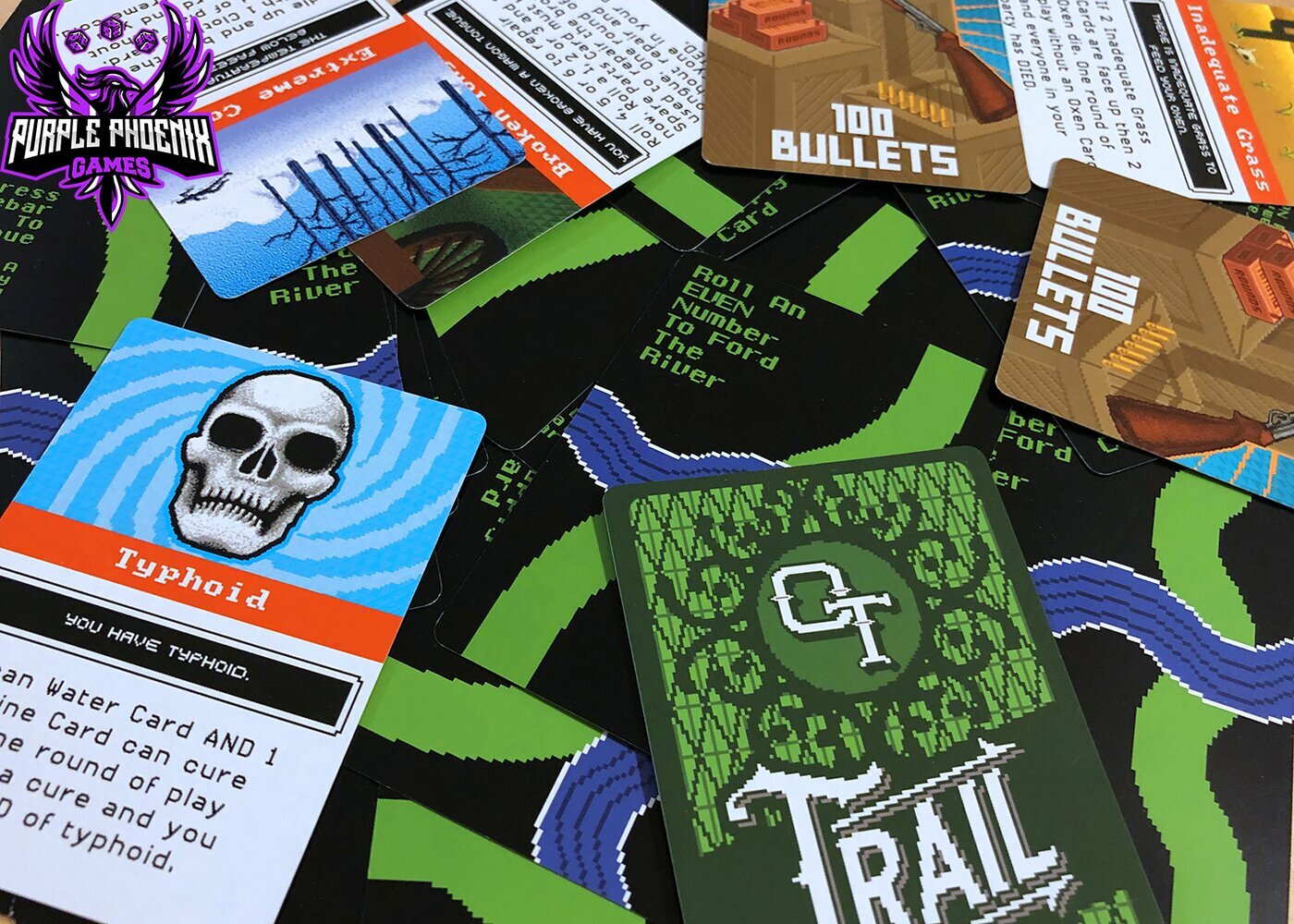
The Oregon Trail Card Game is a cooperative game of hand management in which players are trying to make it all the way down the Oregon Trail! Players take turns playing Trail cards to advance on their journey, stopping at forts and towns along the way to collect supplies, and dealing with the Calamities of the open Trail – whether that’s fording across rivers or dealing with nasty rattlesnake bites. Do you and your party have what it takes to survive, or will the trail claim more lives in the end?
Ok so first things first – for nostalgia’s sake, this game is great. The artwork is a call-back to the original 8-bit design, the Calamities you may encounter are taken right from the computer game (there IS a “You have died of Dysentery” card), and the game is as hard to win as you remember. It definitely makes for a fun walk down memory lane.
Now, actually PLAYING the game is a different story. I think it’s a pretty bad attempt at a card game. For starters, the rulesheet (it’s more of a brochure than a book…) is extremely ambiguous. I had more questions about how to play after I read the rules than I did beforehand. The physical layout of the rules feels choppy, which makes it hard to logically follow, and the wording for some rules feels like it contradicts other rules. Overall, it just seems like the rulesheet was written in one go with no refining or editing – every single thought was thrown in and then not checked for accuracy or clarity.
Beyond the calamity that is the rulesheet, the game is hard to beat. The rules even say “More likely, the game ends when the last player dies.” Like even the creators know it’s impossible! I’ve never won a game because it is stacked against the players from the start. For starters, the game is so long. Without going too much into detail, by the end of the game 50 out of the 58 trail cards will be used – that’s almost ALL of them! And almost every card has a text action/consequence associated with it, which really reduces your likelihood of success. Some Calamity cards kill off players with no chance for remedy first, while some Trail cards are dictated by die rolls that can also either kill you or cause you to draw extra Calamity cards. I know the original game was tough, but since this card game is more based on the luck of the draw than your decisions, it feels futile to play. Luck-based games, when executed well, can be pretty fun. But unfortunately, it just doesn’t work for me in this game.
So do I like this game? Kind of? I like it for nostalgic purposes, but beyond that I really don’t. The rules make no sense and I feel like I interpret them differently every time – so who knows if I’ve actually ever played correctly. I have never won a game, the furthest I’ve ever gotten has been about halfway through to the end. Should you try The Oregon Trail Card Game? Probably not. You’re not really missing a lot besides reliving some childhood memories. Fun idea, but awful execution, in my opinion! Purple Phoenix Games (with guest score from a pal of Travis) gives The Oregon a Trail Card Game a choleric 12 / 24.
The Oregon Trail Card Game is a cooperative game of hand management in which players are trying to make it all the way down the Oregon Trail! Players take turns playing Trail cards to advance on their journey, stopping at forts and towns along the way to collect supplies, and dealing with the Calamities of the open Trail – whether that’s fording across rivers or dealing with nasty rattlesnake bites. Do you and your party have what it takes to survive, or will the trail claim more lives in the end?
Ok so first things first – for nostalgia’s sake, this game is great. The artwork is a call-back to the original 8-bit design, the Calamities you may encounter are taken right from the computer game (there IS a “You have died of Dysentery” card), and the game is as hard to win as you remember. It definitely makes for a fun walk down memory lane.
Now, actually PLAYING the game is a different story. I think it’s a pretty bad attempt at a card game. For starters, the rulesheet (it’s more of a brochure than a book…) is extremely ambiguous. I had more questions about how to play after I read the rules than I did beforehand. The physical layout of the rules feels choppy, which makes it hard to logically follow, and the wording for some rules feels like it contradicts other rules. Overall, it just seems like the rulesheet was written in one go with no refining or editing – every single thought was thrown in and then not checked for accuracy or clarity.
Beyond the calamity that is the rulesheet, the game is hard to beat. The rules even say “More likely, the game ends when the last player dies.” Like even the creators know it’s impossible! I’ve never won a game because it is stacked against the players from the start. For starters, the game is so long. Without going too much into detail, by the end of the game 50 out of the 58 trail cards will be used – that’s almost ALL of them! And almost every card has a text action/consequence associated with it, which really reduces your likelihood of success. Some Calamity cards kill off players with no chance for remedy first, while some Trail cards are dictated by die rolls that can also either kill you or cause you to draw extra Calamity cards. I know the original game was tough, but since this card game is more based on the luck of the draw than your decisions, it feels futile to play. Luck-based games, when executed well, can be pretty fun. But unfortunately, it just doesn’t work for me in this game.
So do I like this game? Kind of? I like it for nostalgic purposes, but beyond that I really don’t. The rules make no sense and I feel like I interpret them differently every time – so who knows if I’ve actually ever played correctly. I have never won a game, the furthest I’ve ever gotten has been about halfway through to the end. Should you try The Oregon Trail Card Game? Probably not. You’re not really missing a lot besides reliving some childhood memories. Fun idea, but awful execution, in my opinion! Purple Phoenix Games (with guest score from a pal of Travis) gives The Oregon a Trail Card Game a choleric 12 / 24.

Goddess in the Stacks (553 KP) rated Slayer (Slayer #1) in Books
Apr 1, 2019
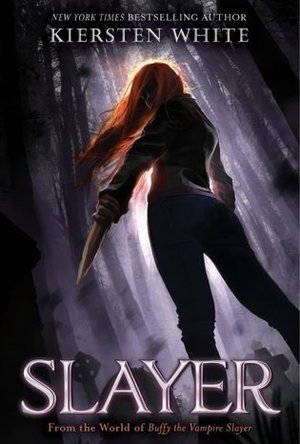
I am a Buffy fan. I'm not the biggest Buffy fan I know - that honor goes to a friend of mine, who I just gave a giant box of Buffy comic to, since we're downsizing in preparation for the move to the new house. I haven't seen anyone that happy in a while, and it made my day. (And hers, judging from the bouncing and squeeeeing and hugging!) But I am still a Buffy fan. I own DVDs of the entire show, plus Angel, plus the original movie. The box of comics I just gave away was Season 8 and some spin offs. Slayer takes place after all of that.
First I'm going to say, if you're not a Buffy fan, seriously don't bother with this book. You won't understand a lot of what goes on, and while there are cursory explanations given in the book, it's really not meant for people that haven't watched/read the rest of the world. You'd be okay not knowing much about Angel, but you really do need to have watched the TV show of Buffy, especially that last season. While the book takes place after the comics, they're not necessary to understand the plot as that, at least, is explained.
So, for the rest of us Buffy fans, this is a great continuation of the Buffy-verse. Nina is the daughter of Watchers - in fact the daughter of Buffy's first watcher, the one before Giles. Given what befell the Watchers, the ones that are left are kind of antagonistic towards Slayers in general and Buffy in particular. So when Nina becomes a Slayer, her world goes sideways.
The world is mostly the same, but with a twist due to events in the comics. (It's explained. You don't need to have read them.) The book expands on how Slayer powers work, a bit, especially their dreams now that there's more than one of them alive at a time. We do see mentions of familiar characters, with one notable scene where an old favorite appears briefly.
I really enjoyed the book, and I'm eager to read the second half of the duology when it comes out. I need to know how Nina's story ends! The book ended on a subtle cliffhanger; the main conflict has been resolved, and the characters think it's over, but we know it's not. Similar to how many episodes of Buffy ended, actually.
So yeah. If you're a Buffy fan, pick up this book, it's pretty great. If you're not - take a pass. Or start with the TV show and get yourself a new fandom if you're feeling bored!
You can find all my reviews at http://goddessinthestacks.com
First I'm going to say, if you're not a Buffy fan, seriously don't bother with this book. You won't understand a lot of what goes on, and while there are cursory explanations given in the book, it's really not meant for people that haven't watched/read the rest of the world. You'd be okay not knowing much about Angel, but you really do need to have watched the TV show of Buffy, especially that last season. While the book takes place after the comics, they're not necessary to understand the plot as that, at least, is explained.
So, for the rest of us Buffy fans, this is a great continuation of the Buffy-verse. Nina is the daughter of Watchers - in fact the daughter of Buffy's first watcher, the one before Giles. Given what befell the Watchers, the ones that are left are kind of antagonistic towards Slayers in general and Buffy in particular. So when Nina becomes a Slayer, her world goes sideways.
The world is mostly the same, but with a twist due to events in the comics. (It's explained. You don't need to have read them.) The book expands on how Slayer powers work, a bit, especially their dreams now that there's more than one of them alive at a time. We do see mentions of familiar characters, with one notable scene where an old favorite appears briefly.
I really enjoyed the book, and I'm eager to read the second half of the duology when it comes out. I need to know how Nina's story ends! The book ended on a subtle cliffhanger; the main conflict has been resolved, and the characters think it's over, but we know it's not. Similar to how many episodes of Buffy ended, actually.
So yeah. If you're a Buffy fan, pick up this book, it's pretty great. If you're not - take a pass. Or start with the TV show and get yourself a new fandom if you're feeling bored!
You can find all my reviews at http://goddessinthestacks.com

Maris (8 KP) rated Hocus Pocus and the All-New Sequel in Books
Jun 10, 2019
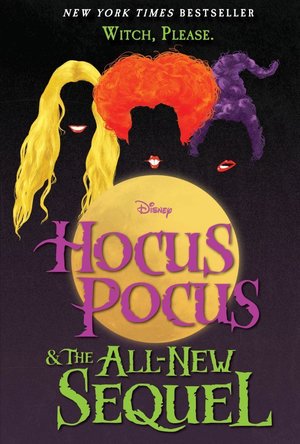

I can not tell you how disappointing this book was. Everything from the start of the sequel to the very end. I almost DNF the book, but since this is a sequel to one of my favorite Halloween movies as a child I wanted to finish the story. I knew it wasn't going to get better.
The beginning of the book is just a recap from the movie with more knowledge of the characters feelings and a little bit more about the Sanderson sisters. I'm pretty bummed out that the author left out my favorite scene from the movie which was when the kids ran up to the cop who really wasn't a cop! I just think that part should have been put into the book.
Once you get to the sequel its 25 years later on Halloween day in Salem. Max and Allison have a daughter named Poppy. I'm curious to why the author wanted the daughter name Poppy when everyone else has normal names like the author wanted the character to stand out more? Poppy has two close friends, Isabella and Travis. Poppy has a crush on her friend Isabella, and Travis who looks out for Poppy helping her with school, and social life with the other kids when Poppy seems to be getting attacked by others.
To sum it up without giving away to much of the story, Poppy doesn't believe in her parents or her Aunt Dani's story about Sanderson's sister when they were kids. Poppy, Isabella, and Travis head to the Sanderson's house and pretty much did exactly what her parents did 25 years ago minus the black candle.
It seems to me the author tried too hard to make this sequel to be better or equal to the first Hocus Pocus that she was adding too much of the same stuff from the first story. I didn't like the same jokes and it wasn't nearly as funny. The story was just too much for me and didn't have enough originality for me. One thing that was irritating was that Sarah Sanderson would say Amok Amok Amok in the first story than with the sequel she always seems to be repeating herself with words like Afoot and such.
You do get to read some familiar characters from the first story which was nice. There is a new character named Elizabeth who is Winnie, Mary, and Sarah's sister. I honestly didn't think it was necessary to add another witch to the famous Sanderson witches.
All in all this story wasn't it for me. Like I said I'm pretty bummed out about it. I couldn't get into the story, everything just seemed forced together and that the author was trying to hard to make this story stand out.
The beginning of the book is just a recap from the movie with more knowledge of the characters feelings and a little bit more about the Sanderson sisters. I'm pretty bummed out that the author left out my favorite scene from the movie which was when the kids ran up to the cop who really wasn't a cop! I just think that part should have been put into the book.
Once you get to the sequel its 25 years later on Halloween day in Salem. Max and Allison have a daughter named Poppy. I'm curious to why the author wanted the daughter name Poppy when everyone else has normal names like the author wanted the character to stand out more? Poppy has two close friends, Isabella and Travis. Poppy has a crush on her friend Isabella, and Travis who looks out for Poppy helping her with school, and social life with the other kids when Poppy seems to be getting attacked by others.
To sum it up without giving away to much of the story, Poppy doesn't believe in her parents or her Aunt Dani's story about Sanderson's sister when they were kids. Poppy, Isabella, and Travis head to the Sanderson's house and pretty much did exactly what her parents did 25 years ago minus the black candle.
It seems to me the author tried too hard to make this sequel to be better or equal to the first Hocus Pocus that she was adding too much of the same stuff from the first story. I didn't like the same jokes and it wasn't nearly as funny. The story was just too much for me and didn't have enough originality for me. One thing that was irritating was that Sarah Sanderson would say Amok Amok Amok in the first story than with the sequel she always seems to be repeating herself with words like Afoot and such.
You do get to read some familiar characters from the first story which was nice. There is a new character named Elizabeth who is Winnie, Mary, and Sarah's sister. I honestly didn't think it was necessary to add another witch to the famous Sanderson witches.
All in all this story wasn't it for me. Like I said I'm pretty bummed out about it. I couldn't get into the story, everything just seemed forced together and that the author was trying to hard to make this story stand out.
Becca Major (96 KP) rated Black in TV
May 26, 2018
Premise (3 more)
Story
Mystery
Interesting world-building
THAT TERRIBLE ENDING (1 more)
Manipulative asshat hero
"Black" is just weird, okay?
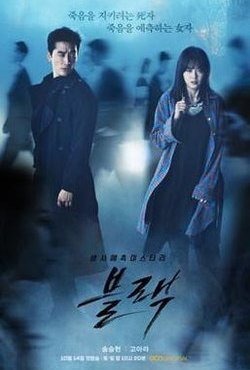
"Black" is a very weird show because it is a steaming pile of questions. What Black is actually about is a detective who kinda befriends a psychic woman right before getting shot, and the Grim Reaper that possesses his dead body for his own purposes. Oh, and the psychic and the reaper develop feelings for each other, because of course they do.
The Characters
The main female character is Kang Ha-ram, an unfortunate woman who is able to see black smokey clouds on the backs of people who are about to die. Then, if she touches them, she can see exactly how they die. She lives alone, has trouble keeping a job, and has a terrible relationship with her family. Out of all the characters in this show, she is the most relatable. It’s also nice to see a headstrong female character who is also compassionate and damaged.
The main male character, however, is the Grim Reaper. His designated number is 444, but he chooses to call himself Black pretty early on (as an homage to "Meet Joe Black" though I can't say anything about it because I haven't actually seen the movie). He's... interesting. On one hand, I hate him. I hate that he manipulates Ha-ram. I hate that he lies to her about everything, and still has the audacity to jerk her around. I hate that he is prejudiced and egotistical. On the other hand, after he's been on Earth for a little while, he starts to pick up on the nuances of human interaction, so I can't hate him too much.
The Story
The story caught my attention early on. It is first and foremost a mystery and a cold-case mystery at that. Shortly after Black takes over the life of detective Han Mu-gang, he is roped into a case of teenage prostitution, murder, and political cover-ups. It's very good and keeps you guessing. Plus there's the romance between Ha-ram and Black to worry about. Unfortunately, the entire final episode is terrible. It literally feels like they threw darts at a board to figure out how to finish the show.
Final Thoughts
It's a good show that could use a much better finale. It has strong characters and a hella good story. The effects are good, and the acting is great. If you like mysteries or need a change of pace, then give it a shot.
[I wrote a little bit more about this on my personal blog, and I plan to do a few more posts about Black on it. Check it out if you are interested. https://rebecca-major.com/2018/05/24/black-a-spoiler-free-k-drama-review/]
The Characters
The main female character is Kang Ha-ram, an unfortunate woman who is able to see black smokey clouds on the backs of people who are about to die. Then, if she touches them, she can see exactly how they die. She lives alone, has trouble keeping a job, and has a terrible relationship with her family. Out of all the characters in this show, she is the most relatable. It’s also nice to see a headstrong female character who is also compassionate and damaged.
The main male character, however, is the Grim Reaper. His designated number is 444, but he chooses to call himself Black pretty early on (as an homage to "Meet Joe Black" though I can't say anything about it because I haven't actually seen the movie). He's... interesting. On one hand, I hate him. I hate that he manipulates Ha-ram. I hate that he lies to her about everything, and still has the audacity to jerk her around. I hate that he is prejudiced and egotistical. On the other hand, after he's been on Earth for a little while, he starts to pick up on the nuances of human interaction, so I can't hate him too much.
The Story
The story caught my attention early on. It is first and foremost a mystery and a cold-case mystery at that. Shortly after Black takes over the life of detective Han Mu-gang, he is roped into a case of teenage prostitution, murder, and political cover-ups. It's very good and keeps you guessing. Plus there's the romance between Ha-ram and Black to worry about. Unfortunately, the entire final episode is terrible. It literally feels like they threw darts at a board to figure out how to finish the show.
Final Thoughts
It's a good show that could use a much better finale. It has strong characters and a hella good story. The effects are good, and the acting is great. If you like mysteries or need a change of pace, then give it a shot.
[I wrote a little bit more about this on my personal blog, and I plan to do a few more posts about Black on it. Check it out if you are interested. https://rebecca-major.com/2018/05/24/black-a-spoiler-free-k-drama-review/]

Emma @ The Movies (1786 KP) rated Holmes and Watson (2018) in Movies
Sep 25, 2019
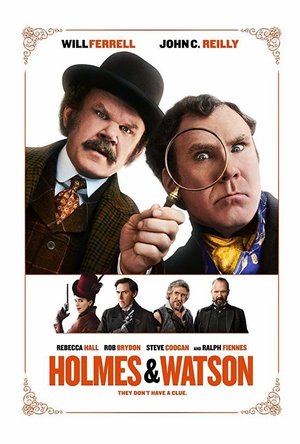

This film wasn't without some laughs. With its witty caption at the very beginning followed by quite an entertaining scene where Holmes and Watson first meet I had some hopes that the feedback I'd been hearing was a little over played. By the end of the film however... well I can count the amount of times I laughed out loud on one hand. As a 90 minute film with two of those laughs coming right at the beginning it's not exactly amazing.
But... there's always a but... I'm not really a fan of repetetive humour. There are a few scenes that rely on the same gag over and over, that's just not my sort of thing. There is certainly an audience out there for this film, it just wasn't me.
I'm not particularly a fan of Will Ferrell or John C Reilly, they produce entertaining characters but they're not generally names that will have me running out straight away to see something. In such a mediocre film though John C Reilly has managed to pull out a great performance. It doesn't feel like he's hamming it up quite as much as Ferrell and for the most part he's great on screen.
There are a few cameo parts involved. Steve Coogan was given quite a good part to play, and Pam Ferris as Queen Victoria seemed to come out of it alright too. It's coming again... but... Hugh Laurie's piece, well it's not what we're used to from him or Mycroft.
One of the things I love is the mid-air mind calculations in Holmes related things and thankfully this film does them in a rather amusing way. We're treated to a few, although my personal favourite came from the mind of Watson. From his solution I'm going to say that there's a little bit of Watson in most of us.
Mini spoiler alert... there's a musical number. I slumped in my seat a bit when it started. Don't panic though, it was actually quite good. I feel like they might be able to get a music video out of it somewhere.
What you should do
My gut reaction is that this sort of film is a bit Marmite. If you enjoy their sort of humour then you'll enjoy it, if not then you'll probably get a handful of laughs out of it like I did. It's definitely a streamer, get some friends over, order some pizza and pour some drinks. In that scenario I think most people would find it amusing.
Movie thing you wish you could take home
I would honestly love the picture that Millie draws for Holmes.
But... there's always a but... I'm not really a fan of repetetive humour. There are a few scenes that rely on the same gag over and over, that's just not my sort of thing. There is certainly an audience out there for this film, it just wasn't me.
I'm not particularly a fan of Will Ferrell or John C Reilly, they produce entertaining characters but they're not generally names that will have me running out straight away to see something. In such a mediocre film though John C Reilly has managed to pull out a great performance. It doesn't feel like he's hamming it up quite as much as Ferrell and for the most part he's great on screen.
There are a few cameo parts involved. Steve Coogan was given quite a good part to play, and Pam Ferris as Queen Victoria seemed to come out of it alright too. It's coming again... but... Hugh Laurie's piece, well it's not what we're used to from him or Mycroft.
One of the things I love is the mid-air mind calculations in Holmes related things and thankfully this film does them in a rather amusing way. We're treated to a few, although my personal favourite came from the mind of Watson. From his solution I'm going to say that there's a little bit of Watson in most of us.
Mini spoiler alert... there's a musical number. I slumped in my seat a bit when it started. Don't panic though, it was actually quite good. I feel like they might be able to get a music video out of it somewhere.
What you should do
My gut reaction is that this sort of film is a bit Marmite. If you enjoy their sort of humour then you'll enjoy it, if not then you'll probably get a handful of laughs out of it like I did. It's definitely a streamer, get some friends over, order some pizza and pour some drinks. In that scenario I think most people would find it amusing.
Movie thing you wish you could take home
I would honestly love the picture that Millie draws for Holmes.

BankofMarquis (1832 KP) rated Annihilation (2018) in Movies
Feb 24, 2018
Just didn't work for me
I like "Intelligent Science Fiction". You know, like Alex Garland's other Directorial effort 2014's EX MACHINA or Jeff Nichols’ involving 2016 film MIDNIGHT SPECIAL. These are the types of films that uses the backdrop of Science Fiction to delve deeper into character, concepts or ideas, leaving time for the audience to take it all in and to really think about what is being shown on the screen and to wrestle with the concepts brought forth. So, I was really excited when I found out the Garland would be helming a film of the first book in Jeff VanderMeer's SOUTHERN REACH trilogy, ANNIHILATION - a trippy sci-fi book series about an alien presence that starts tearing away at the very fabric of human existence. I was convinced that this marriage of source material and filmmaker would create another cinematic gem.
Boy, was I wrong.
ANNIHILATION fails in all the ways that these types of films could fail. It is self-indulgent, favors style over substance, mood over momentum and has long, long, loooong scenes of dialogue (or non-dialogue) that is supposed to convey a sense of dread and, for me, just made me want to yell at the screen "get on with it!"
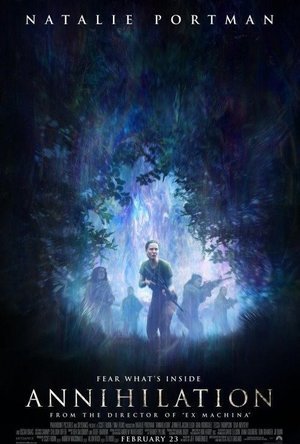
ANNIHILATION tells the story of a group of women who comprise the 12th group of explorers entering "the shimmer" - an unknown phenomenon in a remote part of the US that is growing and will soon start engulfing populated areas. None of the other groups have returned (save for 1 soldier). This 12th group, led by the mysterious Dr. Ventres, tries to get at the heart of what the shimmer is and succeed where others failed. Once inside "the shimmer" the group must fight with their own nightmares and what makes them human.
Sounds like a really good premise for an intelligent Sci-Fi film doesn't it? Unfortunately, Director and Writer Garland is more interested in the sights, sounds and moods of "the shimmer" and fails to create any interesting characters - or circumstances - for the audience to follow.
Natalie Portman stars as Lena - a biologist (and former military) who's husband (the great Oscar Isaac) is the lone returning solider (though not all of him, mentally, has returned). The pairing of these two strong, interesting actors should have been enough to propel this film forward, but all they do is stare at each other and "not say" anything. They look at each other like something is wrong, but the never say or do anything. Compounding things is the weird portrayal of the weird Dr. Ventres by Jennifer Jason Leigh - an actress not known from shying away from weird. Her portrayal would have worked, I think, if she had some "normal" folks to play against - or if her character had some sort of climax, but she doesn't, she just sort of peters out. Joining these two are Tessa Thompson (losing the goodwill she earned in THOR:RAGNAROK) as a physicist that "has secrets" and Gina Rodriguez (channelling her inner Michelle Rodriguez) as a gung-ho "kick-ass" paramedic (you can guess how that is going to turn out). Only Tuva Novotny as scientist Cass Sheppard has anything approaching an interesting character, but she is on all too briefly.
Also wasted in this film is Benedict Wong (DOCTOR STRANGE) as the "Basil Exposition" of this film (explaining things to the audience) and David Gyasi (INTERSTELLAR) as a pseudo-love interest for Lena.
Maybe I'm just not "artsy" enough to enjoy this. If you are and you enjoy this, let me know what I missed. As it is, I have an early, leading contender for "Worst Film of 2018".
In the meantime, I'm going to rewatch EX MACHINA or MIDNIGHT SPECIAL, two intelligent Science Fiction films that work.
Letter Grade: C
4 stars (out of 10) and you can take that to the Bank(ofMarquis)
Boy, was I wrong.
ANNIHILATION fails in all the ways that these types of films could fail. It is self-indulgent, favors style over substance, mood over momentum and has long, long, loooong scenes of dialogue (or non-dialogue) that is supposed to convey a sense of dread and, for me, just made me want to yell at the screen "get on with it!"
ANNIHILATION tells the story of a group of women who comprise the 12th group of explorers entering "the shimmer" - an unknown phenomenon in a remote part of the US that is growing and will soon start engulfing populated areas. None of the other groups have returned (save for 1 soldier). This 12th group, led by the mysterious Dr. Ventres, tries to get at the heart of what the shimmer is and succeed where others failed. Once inside "the shimmer" the group must fight with their own nightmares and what makes them human.
Sounds like a really good premise for an intelligent Sci-Fi film doesn't it? Unfortunately, Director and Writer Garland is more interested in the sights, sounds and moods of "the shimmer" and fails to create any interesting characters - or circumstances - for the audience to follow.
Natalie Portman stars as Lena - a biologist (and former military) who's husband (the great Oscar Isaac) is the lone returning solider (though not all of him, mentally, has returned). The pairing of these two strong, interesting actors should have been enough to propel this film forward, but all they do is stare at each other and "not say" anything. They look at each other like something is wrong, but the never say or do anything. Compounding things is the weird portrayal of the weird Dr. Ventres by Jennifer Jason Leigh - an actress not known from shying away from weird. Her portrayal would have worked, I think, if she had some "normal" folks to play against - or if her character had some sort of climax, but she doesn't, she just sort of peters out. Joining these two are Tessa Thompson (losing the goodwill she earned in THOR:RAGNAROK) as a physicist that "has secrets" and Gina Rodriguez (channelling her inner Michelle Rodriguez) as a gung-ho "kick-ass" paramedic (you can guess how that is going to turn out). Only Tuva Novotny as scientist Cass Sheppard has anything approaching an interesting character, but she is on all too briefly.
Also wasted in this film is Benedict Wong (DOCTOR STRANGE) as the "Basil Exposition" of this film (explaining things to the audience) and David Gyasi (INTERSTELLAR) as a pseudo-love interest for Lena.
Maybe I'm just not "artsy" enough to enjoy this. If you are and you enjoy this, let me know what I missed. As it is, I have an early, leading contender for "Worst Film of 2018".
In the meantime, I'm going to rewatch EX MACHINA or MIDNIGHT SPECIAL, two intelligent Science Fiction films that work.
Letter Grade: C
4 stars (out of 10) and you can take that to the Bank(ofMarquis)