Search
Search results

Pocket Wiki for Stardew Valley
Reference and Utilities
App
Looking for help or the latest tips for the game Stardew Valley? This all-in-one solution is exactly...

Kristy H (1252 KP) rated One Last Stop in Books
Jun 3, 2021

A dazzling, heartfelt queer romance
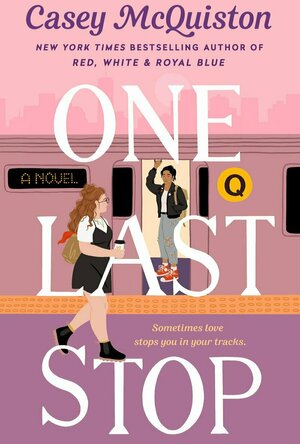
August Landry moves to New York City, just another stop among many in her quest to prove that she's fine being alone. Everything she owns fits in five boxes, and she sleeps on an inflatable mattress. She belongs nowhere and needs no one. But NYC feels different to August: her diverse group of roommates, who adopt her immediately; her job at an all-night pancake diner; and the subway. Because the subway brings Jane: beautiful, enigmatic, leather jacket-clad Jane. Then August realizes something; Jane is always on the subway because she has to be. She's trapped and displaced in time from the 1970s. It seems as if August--and her new band of friends--may be the only one to save her. Can August believe in something, someone, enough to free Jane?
"Truth is, when you spend your whole life alone, it's incredibly appealing to move somewhere big enough to get lost in, where being alone looks like a choice."
I've put off writing this review because it's hard to see how I can do McQuiston's beautiful romance any justice. This book is such a romantic, sexy, and heartwarming read. August is an excellent character. She's spent most of her life in her uncle's shadow, working with her mother to try to solve his missing person's case. August eventually declared herself done--done searching, done with mysteries. But then this beautiful woman appears on the subway, and she offers the biggest mystery of all to August. Why is Jane stuck on the subway and how can August help?
"And she can't believe Jane had the nerve, the audacity, to become the one thing August can't resist: a mystery."
McQuiston gives us the most amazing, diverse queer novel one could ever wish for. August is bi and Jane basically every lesbian's dream. It's impossible not to fall in love with this gorgeous Asian subway vision. Even better, through Jane and other events, it's a tribute to those who came before our generation. Jane was a (incredibly sexy) activist / riot girl in the 1970s, yet is shocked that you can typically be openly gay on the subway now. She comes to everyone's defense there. She's amazing. As for August's roommates, they are beautiful and diverse, including trans and gay characters, with the lovely Myla taking care of the group. There are several drag queens given legitimate, true storylines. To say how meaningful this is to the queer community--it's hard to even explain. All of these characters--roommates Myla, her boyfriend, Niko, and Wes; neighbor Isaiah; coworkers Lucie and Winfield--are real and treated with care. They are funny, flawed, and create the most amazing found family ever.
"Jane doesn't age. She's magnetic and charming and gorgeous. She... kind of lives underground."
As for August and Jane, this is a romance for the ages. This book is swoony and sexy. It will make you laugh; it will make you cry. McQuiston has written a lesbian character for us lesbians to ogle for years to come, and a romance to stack all other romances against. It's funny and heartwarming. There's magic and mystery. There's pancakes. It's a beautiful ode to New York City, the subway, and falling in love. There's seriously nothing not to love.
So yes, I loved this book. I love McQuiston's way with words--the humor, the romance, the way she allows the queer community to have meaningful love stories in our world. This book is flowing with passion, with beauty, and magic. 4.5+ stars.
"Truth is, when you spend your whole life alone, it's incredibly appealing to move somewhere big enough to get lost in, where being alone looks like a choice."
I've put off writing this review because it's hard to see how I can do McQuiston's beautiful romance any justice. This book is such a romantic, sexy, and heartwarming read. August is an excellent character. She's spent most of her life in her uncle's shadow, working with her mother to try to solve his missing person's case. August eventually declared herself done--done searching, done with mysteries. But then this beautiful woman appears on the subway, and she offers the biggest mystery of all to August. Why is Jane stuck on the subway and how can August help?
"And she can't believe Jane had the nerve, the audacity, to become the one thing August can't resist: a mystery."
McQuiston gives us the most amazing, diverse queer novel one could ever wish for. August is bi and Jane basically every lesbian's dream. It's impossible not to fall in love with this gorgeous Asian subway vision. Even better, through Jane and other events, it's a tribute to those who came before our generation. Jane was a (incredibly sexy) activist / riot girl in the 1970s, yet is shocked that you can typically be openly gay on the subway now. She comes to everyone's defense there. She's amazing. As for August's roommates, they are beautiful and diverse, including trans and gay characters, with the lovely Myla taking care of the group. There are several drag queens given legitimate, true storylines. To say how meaningful this is to the queer community--it's hard to even explain. All of these characters--roommates Myla, her boyfriend, Niko, and Wes; neighbor Isaiah; coworkers Lucie and Winfield--are real and treated with care. They are funny, flawed, and create the most amazing found family ever.
"Jane doesn't age. She's magnetic and charming and gorgeous. She... kind of lives underground."
As for August and Jane, this is a romance for the ages. This book is swoony and sexy. It will make you laugh; it will make you cry. McQuiston has written a lesbian character for us lesbians to ogle for years to come, and a romance to stack all other romances against. It's funny and heartwarming. There's magic and mystery. There's pancakes. It's a beautiful ode to New York City, the subway, and falling in love. There's seriously nothing not to love.
So yes, I loved this book. I love McQuiston's way with words--the humor, the romance, the way she allows the queer community to have meaningful love stories in our world. This book is flowing with passion, with beauty, and magic. 4.5+ stars.

Track Kit - GPS Tracker with offline maps
Navigation and Travel
App
Track Kit is a great GPS tracking and publishing app packed with tons of cool features from Pro...

Neon's Nerd Nexus (360 KP) rated Rambo: Last Blood (2019) in Movies
Sep 19, 2019


Last Bore
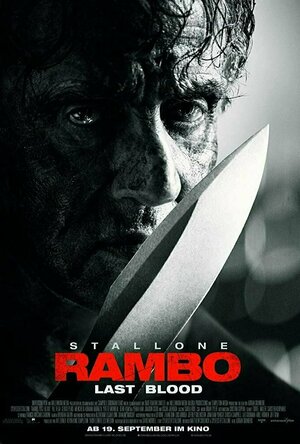
Rambo Last Blood is a bloody mess of a movie that feels so disjointed from all the other rambo films it will leave you confused and unfulfilled. Its starts of fine enough, we see Rambo in an ordinary life taking care of the farm doing average day to day tasks and growing old but clearly still troubled and haunted by his memories of war. We are then introduced to a couple of people he cares a lot about and from there trouble starts to brew. Problem is this beginning segment is an absolute shambles, not only is it extremely boring and tedious every single character is highly unlikeable, hollow, bland and annoying with no personality either. Then on top of that we have writing and dialog that are woeful almost like no effort was put into them whatsoever and the sad part is we are forced to sit through well over an hour of this too. This hour at times was actually so painful to watch especially for a film that knows most of us are only there for the kills. After waiting that long and sitting through a story that feels like it was meant for a Taken sequel you would think the action would make up for it..... right?. Wrong, while action is ok its still not great coming off more of a brief kill montage more than anything else. Kills are deliciously brutal thats for sure but they feel rushed because the film just cant wait to move on to the next one as fast as it can. All this brutal killing also at times can feel a little ujustified too making me acquire a disconnect from the Rambo we have come to know and love. If this film was meant to be another sequel it fails, if it was meant to be a Rambo tribute it fails and to top it all off it just ends abruptly out of no where with no real conclusion or point to be made. Last Blood seems like it didnt try to be a good film or a fun film and it left me confused, bored and baffled to why it exists at all. There are a few brief over the top cool kills but all in all its a pointless movie thats not worth anyones time. To top it all off my bike got stolen while I was inside watching this too and I have to say I got more excitement from seeing that had happened than watching this crap. Rambo Last Blood more like Rambo Last Bike.

Kaysee Hood (83 KP) rated Magnus Chase and the Ship of the Dead: Magnus Chase Series Book 3 in Books
Nov 30, 2017


Magnus & Alex (5 more)
Friendship
Big Banana
Chase Space
Percabeth
Pottery Barn
Dragon Dad (3 more)
Ragnarok
A Ship Made Out of Zombie Nails (Gross)
Abusive Dads
World Ending? Not again...
Stop the end of the world. Sounds easy enough, right?
How many times are children of the Gods going to have to do this before one of them has the foretold quest to alter it where life as we know it is not in peril?
Magnus Chase and his friends have to stop Loki, ensure Naglfar doesn't sail, and prevent Ragnarok. Oh, also all while fighting giants with pottery, getting Godly blood and spit mead from giants in the hopes it'll help Magnus in an insult contest with Loki, seeing if Granddad Njord's ex-wife will help them out or let them freeze like a pre-made dinner meal supermom prepared for someone else to pop in the oven. Did I mention Floor 19 Crew has to do all these tasks without dying because not being in Hotel Valhalla equals no responding to life in their rooms. No do overs. No second chances. Simply dead. Easy as pie.
To not spoil this for those of you who have yet to read book three I'll end my sum of The Ship of the Dead and continue on with my praise.
Though there is the question of the voices, if this is the last of Magnus Chase then I have to say I'm pleased with our trilogy of the Norse Gods. In Sword of Summer, Hammer of Thor, and now The Ship of the Dead we've had the characters fleshed out. We've seen them grown. We've witness them overcome personal trails and fight through fears (can we say good job Magnus for fighting wolves even though it is clearly a phobia?). This has proved even those waiting for their day of judgement for centuries can change who they are and accept things even if they are not okay with them.
Somehow in 400 pages that pasts of Halfborn, Mallory, and T.J. were laid out to be part of the main plot, but also show development of the characters and how their own lessons would help on the quest. We were actually able to learn how far they have come from who they were before they died, after death, and who they are now. It was even written how to show they are still learning their lessons and have things to overcome now, which is perfectly okay as long as they stay strong and levelheaded.
The daughters/son of Loki had to overcome their own fears of being good enough despite what poison their fathers have caused them to believe. Even Hearthstone has to return to face the curse over his family one more time. Even Magnus has a realization he has wroth and even if some may not see it, he does and so do his friends.
The Ship of the Dead seems to be about looking at your fears and flaws, realizing they are there, and having to make the choice what you will do about them. Will you allow them to take over your life? Or will you work to be a better person? Are you going to let one moment in the past ruin your future? Or will you take the lesson and forgive yourself, forgive someone else, and live the best life you can? Will you let a parents shortcomings decide how you live? Or will you choose to look beyond their views and become a better person than they are?
How many times are children of the Gods going to have to do this before one of them has the foretold quest to alter it where life as we know it is not in peril?
Magnus Chase and his friends have to stop Loki, ensure Naglfar doesn't sail, and prevent Ragnarok. Oh, also all while fighting giants with pottery, getting Godly blood and spit mead from giants in the hopes it'll help Magnus in an insult contest with Loki, seeing if Granddad Njord's ex-wife will help them out or let them freeze like a pre-made dinner meal supermom prepared for someone else to pop in the oven. Did I mention Floor 19 Crew has to do all these tasks without dying because not being in Hotel Valhalla equals no responding to life in their rooms. No do overs. No second chances. Simply dead. Easy as pie.
To not spoil this for those of you who have yet to read book three I'll end my sum of The Ship of the Dead and continue on with my praise.
Though there is the question of the voices, if this is the last of Magnus Chase then I have to say I'm pleased with our trilogy of the Norse Gods. In Sword of Summer, Hammer of Thor, and now The Ship of the Dead we've had the characters fleshed out. We've seen them grown. We've witness them overcome personal trails and fight through fears (can we say good job Magnus for fighting wolves even though it is clearly a phobia?). This has proved even those waiting for their day of judgement for centuries can change who they are and accept things even if they are not okay with them.
Somehow in 400 pages that pasts of Halfborn, Mallory, and T.J. were laid out to be part of the main plot, but also show development of the characters and how their own lessons would help on the quest. We were actually able to learn how far they have come from who they were before they died, after death, and who they are now. It was even written how to show they are still learning their lessons and have things to overcome now, which is perfectly okay as long as they stay strong and levelheaded.
The daughters/son of Loki had to overcome their own fears of being good enough despite what poison their fathers have caused them to believe. Even Hearthstone has to return to face the curse over his family one more time. Even Magnus has a realization he has wroth and even if some may not see it, he does and so do his friends.
The Ship of the Dead seems to be about looking at your fears and flaws, realizing they are there, and having to make the choice what you will do about them. Will you allow them to take over your life? Or will you work to be a better person? Are you going to let one moment in the past ruin your future? Or will you take the lesson and forgive yourself, forgive someone else, and live the best life you can? Will you let a parents shortcomings decide how you live? Or will you choose to look beyond their views and become a better person than they are?

Weather Now for iPhone
Weather and Travel
App
Amazingly beautiful 3D images of our planet draws your attention for so long that you may forget...

Lottie disney bookworm (1056 KP) rated A Frozen Heart in Books
Sep 20, 2020
Contains spoilers, click to show
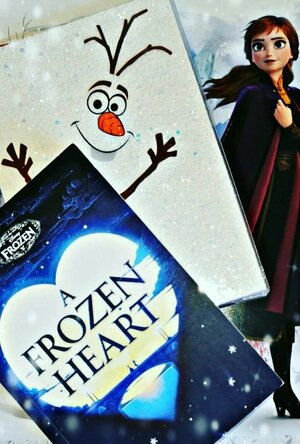
It seems like adaptations of Frozen and Frozen 2 are everywhere right now: it must be so hard for an author to come up with a story that is different enough to draw readers in but still in-keeping with the story. Luckily, Elizabeth Rudnick’s skilled writing turns the typical Frozen tale on its head: telling it solely from the perspective of Anna and Hans.
It is this, seemingly simple, difference that gives “A Frozen Heart” it’s edge. The inclusion of Hans’ viewpoint allows us to witness his upbringing as the 13th Prince of The Southern Isles: we visit looming, black, inhospitable castle with it’s stern, hard-to-please King; an absent-minded, weak but loving Queen and the youngest Prince who has been bullied for his entire life.
Rudnick’s characterisation of Hans is nothing less than pure genius. It is difficult to feel anything but pity for Hans during his childhood: he is constantly disappointing his father and being physically and emotionally bullied by his brothers. The only family member whom Hans truly seems to love is his mother but she is portrayed as somewhat absent in her mental state. (As a mother I can only assume this is from having 13 sons! I struggle with 2!)
Even when Hans “plots” his way to Arendelle, it is purely an evacuation plan. He is so desperate to leave the Southern Isles that he believes Elsa, a social enigma of a future queen, is his best chance for a new life. Then, when Hans realises Elsa is a lost cause and goes off singing and dancing into the night with Anna, at first, the reader genuinely believes his intentions are good. It even reminded me of the fan theory that Hans is the real deal until the trolls sing “get the fiancé out of the way”.
Hans is never completely trustworthy though: he is too acutely aware of how others view him and his actions, as well as the relative power those onlookers have and whether they will support him with his next, calculated move.
Hans also seems to be of the opinion that a Queen needs a King and the King will rule. Apart from being adoringly archaic(!), it is likely that this could be an effect of the relationship between his parents: the brief insight we have into the King and Queen of the Southern Isles suggest Hans has never had a strong female role model in his life. Again, Rudnick’s writing and characters implying that Hans is not 100% to blame: perhaps he is merely a product of the harsh environment he was brought up in?
Unfortunately, the deep-rooted power complex instilled from his father wins out in the end and Hans can see no alternative life but one where he is ruler. Thus, the villain in him rises; constantly calculating and predicting how his actions will be judged by others and the tale with which we are so familiar plays out.
Anna’s story runs along similar parallels to Hans, with neglect and isolation from her closest family. However, the way this pain manifests in Anna could not be further than that of the Prince of the Southern Isles.
‘A Frozen Heart’ reflects Anna’s vulnerability in every sentence. As a young girl Anna lost her freedom as well as her best friend and sister; as a teenager she loses her parents and this has formed an extremely fragile, trusting, naïve young woman. Anna has lived the definition of a sheltered childhood: is it any wonder she falls in love with the first man who pays her attention? Anna’s even confesses to herself: “That is all I ever wanted. For someone to love me”.
Despite this, Anna does not present as a weak character. Yes, she is a hopeless romantic: all the best people are in my opinion! However, she is also strong-willed and is willing to go to any lengths to bring back her sister. Rudnick’s first-person perspective only highlights this strength in Anna: she completely accepts her faults and can see the error in her actions, particularly when it comes to Hans, but she can not and will not give up.
I really enjoyed the insight into Hans and Anna’s thoughts and particularly into Hans’ background. However, once this initial thrill was over, I felt that ‘A Frozen Heart’ merely followed along with the plot of the movie and, dare I say, became a bit lazy?
Please don’t misunderstand me, I did enjoy the book and Rudnick did an amazing job bringing to life our favourite characters on the page but I just needed a little bit more: perhaps an insight into Kristoff’s backstory? How does a young boy with a reindeer find himself adopted by trolls? Is Kristoff even an orphan? What has he experienced in order to consider the trolls love doctors?
‘A Frozen Heart’: an interesting concept but maybe played it a little too safe? Please let me know your thoughts.
It is this, seemingly simple, difference that gives “A Frozen Heart” it’s edge. The inclusion of Hans’ viewpoint allows us to witness his upbringing as the 13th Prince of The Southern Isles: we visit looming, black, inhospitable castle with it’s stern, hard-to-please King; an absent-minded, weak but loving Queen and the youngest Prince who has been bullied for his entire life.
Rudnick’s characterisation of Hans is nothing less than pure genius. It is difficult to feel anything but pity for Hans during his childhood: he is constantly disappointing his father and being physically and emotionally bullied by his brothers. The only family member whom Hans truly seems to love is his mother but she is portrayed as somewhat absent in her mental state. (As a mother I can only assume this is from having 13 sons! I struggle with 2!)
Even when Hans “plots” his way to Arendelle, it is purely an evacuation plan. He is so desperate to leave the Southern Isles that he believes Elsa, a social enigma of a future queen, is his best chance for a new life. Then, when Hans realises Elsa is a lost cause and goes off singing and dancing into the night with Anna, at first, the reader genuinely believes his intentions are good. It even reminded me of the fan theory that Hans is the real deal until the trolls sing “get the fiancé out of the way”.
Hans is never completely trustworthy though: he is too acutely aware of how others view him and his actions, as well as the relative power those onlookers have and whether they will support him with his next, calculated move.
Hans also seems to be of the opinion that a Queen needs a King and the King will rule. Apart from being adoringly archaic(!), it is likely that this could be an effect of the relationship between his parents: the brief insight we have into the King and Queen of the Southern Isles suggest Hans has never had a strong female role model in his life. Again, Rudnick’s writing and characters implying that Hans is not 100% to blame: perhaps he is merely a product of the harsh environment he was brought up in?
Unfortunately, the deep-rooted power complex instilled from his father wins out in the end and Hans can see no alternative life but one where he is ruler. Thus, the villain in him rises; constantly calculating and predicting how his actions will be judged by others and the tale with which we are so familiar plays out.
Anna’s story runs along similar parallels to Hans, with neglect and isolation from her closest family. However, the way this pain manifests in Anna could not be further than that of the Prince of the Southern Isles.
‘A Frozen Heart’ reflects Anna’s vulnerability in every sentence. As a young girl Anna lost her freedom as well as her best friend and sister; as a teenager she loses her parents and this has formed an extremely fragile, trusting, naïve young woman. Anna has lived the definition of a sheltered childhood: is it any wonder she falls in love with the first man who pays her attention? Anna’s even confesses to herself: “That is all I ever wanted. For someone to love me”.
Despite this, Anna does not present as a weak character. Yes, she is a hopeless romantic: all the best people are in my opinion! However, she is also strong-willed and is willing to go to any lengths to bring back her sister. Rudnick’s first-person perspective only highlights this strength in Anna: she completely accepts her faults and can see the error in her actions, particularly when it comes to Hans, but she can not and will not give up.
I really enjoyed the insight into Hans and Anna’s thoughts and particularly into Hans’ background. However, once this initial thrill was over, I felt that ‘A Frozen Heart’ merely followed along with the plot of the movie and, dare I say, became a bit lazy?
Please don’t misunderstand me, I did enjoy the book and Rudnick did an amazing job bringing to life our favourite characters on the page but I just needed a little bit more: perhaps an insight into Kristoff’s backstory? How does a young boy with a reindeer find himself adopted by trolls? Is Kristoff even an orphan? What has he experienced in order to consider the trolls love doctors?
‘A Frozen Heart’: an interesting concept but maybe played it a little too safe? Please let me know your thoughts.

Bob Mann (459 KP) rated Stan & Ollie (2018) in Movies
Sep 28, 2021
When the laughter has to end.
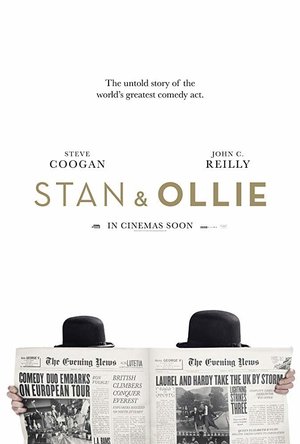
The problem with any comedy double act is that if illness or death get in the way (think Dustin Gee and Les Dennis; or Morecambe and Wise) the wheels can come off for the other partner. “Stan and Ollie” tells the story of the comic duo starting in 1937 when they reached their peak of global popularity, albeit when Laurel was hardly on speaking terms with their long-term producer Hal Roach (Danny Huston).
As you might guess from this, the emotional direction for the film is downwards, but not necessarily in a totally depressing way. The film depicts the duo’s tour of Laurel’s native country (he was born in Lancashire) and this has its ups as well as its downs.
Not knowing their life story, this is one where when the trailer came on I shut my eyes and plugged my ears so as to avoid spoilers: as such I will say nothing further on the details of the plot.
My wife and I were reminiscing after seeing this flick about how our parents used to crack up over the film antics of Laurel and Hardy. And they were, in their own slapstick way, very funny indeed. The film manages to recreate (impecably) some of their more famous routines and parodies others: their travel trunk gallops to the bottom of the station steps, mimicking the famous scenes with a piano from 1932’s “The Music Box”. “Do we really need that trunk” Hardy deadpans to Laurel.
The turns
There are four star turns at the heart of the film and they are John C. Reilly as Ollie; Steve Coogan as Stan; Shirley Henderson (forever to be referenced as “Moaning Myrtle”) as Ollie’s wife Lucille and Nina Arianda (so memorable as the ‘pointer outer’ in the ‘Emperor’s New Clothes’ segment of “Florence Foster Jenkins“) as Stan’s latest wife Ida.
Coogan and Reilly do an outstanding job of impersonating the comic duo. Both are simply brilliant, playing up to their public personas when visible but subtly delivering similar traits in private. Of the two, John C. Reilly’s performance is the most memorable: he IS Oliver Hardy. Not taking too much away from the other performance, but there are a few times when Coogan poked through the illusion (like a Partridge sticking its head out from a Pear Tree you might say).
Henderson and Arianda also add tremendous heart to the drama, and Arianda’s Ida in particular is hilarious. Also delivering a fabulous supporting role is Rufus Jones as the famous impressario Bernard Delfont: all smarm and Machiavellian chicanery that adds a different shape of comedy to the film.
Another Fine Mess?
Actually, no: it’s one of those pleasant and untaxing cinema experiences that older audiences in particular will really enjoy. However, the film’s far from perfect in my view: the flash-forwards/flash-backs I felt made the story bitty and disjointed; and ultimately the life story of the duo doesn’t have a huge depth of drama in it to amaze or excite, the way that 2004’s “Beyond the Sea” (the biopic of Bobby Darin) did for example. But the film never gets boring or disappoints.
I’d like to say that the script by Jeff Pope (“Philomena“) is historically accurate, but a look at the wikipedia entries for the pair show that it was far from that. Yes, the tours of the UK and Europe did happen, but over multiple years and the actual events in their lives are telescoped into a single trip for dramatic purposes. But I think the essence of the pair comes across nicely. Laurel’s wikipedia entry records a nice death-bed scene that sums up the guy:
“Minutes before his death, he told his nurse that he would not mind going skiing, and she replied that she was not aware that he was a skier. “I’m not,” said Laurel, “I’d rather be doing that than this!” A few minutes later, the nurse looked in on him again and found that he had died quietly in his armchair.”
“Stan and Ollie” has a few preview screenings before the New Year, but goes on UK general release on January 11th. Recommended.
As you might guess from this, the emotional direction for the film is downwards, but not necessarily in a totally depressing way. The film depicts the duo’s tour of Laurel’s native country (he was born in Lancashire) and this has its ups as well as its downs.
Not knowing their life story, this is one where when the trailer came on I shut my eyes and plugged my ears so as to avoid spoilers: as such I will say nothing further on the details of the plot.
My wife and I were reminiscing after seeing this flick about how our parents used to crack up over the film antics of Laurel and Hardy. And they were, in their own slapstick way, very funny indeed. The film manages to recreate (impecably) some of their more famous routines and parodies others: their travel trunk gallops to the bottom of the station steps, mimicking the famous scenes with a piano from 1932’s “The Music Box”. “Do we really need that trunk” Hardy deadpans to Laurel.
The turns
There are four star turns at the heart of the film and they are John C. Reilly as Ollie; Steve Coogan as Stan; Shirley Henderson (forever to be referenced as “Moaning Myrtle”) as Ollie’s wife Lucille and Nina Arianda (so memorable as the ‘pointer outer’ in the ‘Emperor’s New Clothes’ segment of “Florence Foster Jenkins“) as Stan’s latest wife Ida.
Coogan and Reilly do an outstanding job of impersonating the comic duo. Both are simply brilliant, playing up to their public personas when visible but subtly delivering similar traits in private. Of the two, John C. Reilly’s performance is the most memorable: he IS Oliver Hardy. Not taking too much away from the other performance, but there are a few times when Coogan poked through the illusion (like a Partridge sticking its head out from a Pear Tree you might say).
Henderson and Arianda also add tremendous heart to the drama, and Arianda’s Ida in particular is hilarious. Also delivering a fabulous supporting role is Rufus Jones as the famous impressario Bernard Delfont: all smarm and Machiavellian chicanery that adds a different shape of comedy to the film.
Another Fine Mess?
Actually, no: it’s one of those pleasant and untaxing cinema experiences that older audiences in particular will really enjoy. However, the film’s far from perfect in my view: the flash-forwards/flash-backs I felt made the story bitty and disjointed; and ultimately the life story of the duo doesn’t have a huge depth of drama in it to amaze or excite, the way that 2004’s “Beyond the Sea” (the biopic of Bobby Darin) did for example. But the film never gets boring or disappoints.
I’d like to say that the script by Jeff Pope (“Philomena“) is historically accurate, but a look at the wikipedia entries for the pair show that it was far from that. Yes, the tours of the UK and Europe did happen, but over multiple years and the actual events in their lives are telescoped into a single trip for dramatic purposes. But I think the essence of the pair comes across nicely. Laurel’s wikipedia entry records a nice death-bed scene that sums up the guy:
“Minutes before his death, he told his nurse that he would not mind going skiing, and she replied that she was not aware that he was a skier. “I’m not,” said Laurel, “I’d rather be doing that than this!” A few minutes later, the nurse looked in on him again and found that he had died quietly in his armchair.”
“Stan and Ollie” has a few preview screenings before the New Year, but goes on UK general release on January 11th. Recommended.
Daniel Boyd (1066 KP) rated The Haunting of Hill House in TV
Nov 13, 2018 (Updated Nov 13, 2018)

Predictable jumpscares (2 more)
Bad acting
Crappy script
Overhyped Garbage
The Haunting Of Hill House is a 2018 Netflix series directed by Mike Flanagan, who directed last year's fantastically creepy adaption of Stephen King's 'Gerald's Game'. Hill House even features some of the same cast members in Carla Gugino and Henry Thomas, whom I both really like. Before diving into it, I thought that this show was going to be tailor made for me, with a brilliant cast and the same subtle but terrifying horror that Flanagan used in Gerald's Game.
However, after watching the first couple of episodes, I was struggling to get into it. Due to the massive amount of hype and praise that this show was getting I decided to stick with it. By the time I got to episode 6, I was done, but then my girlfriend guilted me into watching that rest of the series because she wanted to see it and she was, "too scared to watch it alone."
What a huge waste of time that turned out to be.
If you have read any of my other reviews of horror-based media, you will know that I have a love/hate relationship with the genre. There are very few horror movies or shows that I feel indifferent about. I hate lazy, formulaic bad horror and that is exactly what Hill House is.
Every single episode consists of a jumpscare at the start of the episode, then a hard cut either forwards or backwards in the timeline. Then about 15-20 minutes of piss poor acting and boring dialogue. This is followed by another cheap jumpscare, usually a woman screaming at an obnoxiously loud volume at the camera. Then we get another hard cut back to the other timeline.
The main issue with this structure, (other than being extremely lazy and repetitive,) is that when the hard cut is made to the other timeline, the audience knows that it is done by an editor and that we are now being asked to focus on a part of the story within the other timeline, but for the characters within the show, it makes no sense. For example, two people are having a conversation when something creepy happens. They go to investigate and a screaming woman comes launching towards them or is standing at the edge of a bed or doing basically any other ghost story cliché you can think of. Then the show cuts away to show the characters as children being haunted by a different ghost, but then when we cut back to the present, we never find out how the last jumpscare was resolved. What was the aftermath of that screaming lady at the end of the bed you ask? How was that resolved? How are the character's mentalities after this happened to them? Who cares?! Say the writers, let's just move on to the next cheap jumpscare.
The script is extraordinarily lazy and the child actors are horribly bad. This is an issue that I feel that there isn't really any excuse for anymore after the brilliant child performances in shows like Stranger Things and Season 2 of the Sinner.
If you judge the quality of something based on what it sets out to do versus what it actually does, then The Haunting Of Hill House is the worst show that I have had the displeasure of sitting through this year. The scares are pathetic, the acting is atrocious in places, the script is diabolically cheesy at times, there is hardly any originality present for an, 'original series,' and the show is overflowing with clichés. Not once did a jumpscare actually scare me, because they were all either laughably predicable or they would be totally out of place just for the sake of shock value and would merit a heavy sigh rather than an legit scare. The most egregious, offensively bad example of this was when two characters were having a conversation in a car in episode 6 and a ghost randomly screams from the backseat.
Please do not waste your time with this series, 2018 had so much brilliance to offer on the small screen and despite what you might hear from big publications, this is not one of them.
However, after watching the first couple of episodes, I was struggling to get into it. Due to the massive amount of hype and praise that this show was getting I decided to stick with it. By the time I got to episode 6, I was done, but then my girlfriend guilted me into watching that rest of the series because she wanted to see it and she was, "too scared to watch it alone."
What a huge waste of time that turned out to be.
If you have read any of my other reviews of horror-based media, you will know that I have a love/hate relationship with the genre. There are very few horror movies or shows that I feel indifferent about. I hate lazy, formulaic bad horror and that is exactly what Hill House is.
Every single episode consists of a jumpscare at the start of the episode, then a hard cut either forwards or backwards in the timeline. Then about 15-20 minutes of piss poor acting and boring dialogue. This is followed by another cheap jumpscare, usually a woman screaming at an obnoxiously loud volume at the camera. Then we get another hard cut back to the other timeline.
The main issue with this structure, (other than being extremely lazy and repetitive,) is that when the hard cut is made to the other timeline, the audience knows that it is done by an editor and that we are now being asked to focus on a part of the story within the other timeline, but for the characters within the show, it makes no sense. For example, two people are having a conversation when something creepy happens. They go to investigate and a screaming woman comes launching towards them or is standing at the edge of a bed or doing basically any other ghost story cliché you can think of. Then the show cuts away to show the characters as children being haunted by a different ghost, but then when we cut back to the present, we never find out how the last jumpscare was resolved. What was the aftermath of that screaming lady at the end of the bed you ask? How was that resolved? How are the character's mentalities after this happened to them? Who cares?! Say the writers, let's just move on to the next cheap jumpscare.
The script is extraordinarily lazy and the child actors are horribly bad. This is an issue that I feel that there isn't really any excuse for anymore after the brilliant child performances in shows like Stranger Things and Season 2 of the Sinner.
If you judge the quality of something based on what it sets out to do versus what it actually does, then The Haunting Of Hill House is the worst show that I have had the displeasure of sitting through this year. The scares are pathetic, the acting is atrocious in places, the script is diabolically cheesy at times, there is hardly any originality present for an, 'original series,' and the show is overflowing with clichés. Not once did a jumpscare actually scare me, because they were all either laughably predicable or they would be totally out of place just for the sake of shock value and would merit a heavy sigh rather than an legit scare. The most egregious, offensively bad example of this was when two characters were having a conversation in a car in episode 6 and a ghost randomly screams from the backseat.
Please do not waste your time with this series, 2018 had so much brilliance to offer on the small screen and despite what you might hear from big publications, this is not one of them.