
Search
Search results

GREG - A Mathematical Puzzle Game To Train Your Brain Skills
Games and Education
App
### • Apple Best New Games • #1 Puzzle Game App • “A puzzle game that will test your speed...

Gareth von Kallenbach (980 KP) rated Fantastic Four (2015) in Movies
Jun 19, 2019
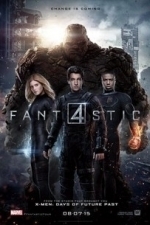

If you hold the film rights to an iconic and beloved comic book series, one would think you would do everything possible to see that it flourishes under you watch. For 29th Century Fox, The Fantastic Four is an asset that should be a gem of their studio as the long-running Marvel comic series has had legions of fans for generations.
The previous two films did well enough but still had their detractors amongst the fans. So, Fox opted for a hiatus and then a radical reboot of the series complete with casting choices that were considered very questionable.
The new version features Miles Teller as Reed Richards, a young man obsessed with teleportation to the point that his teachers and other students laugh at him for his odd and obsessive ways.
His only friend is Ben Grimm (Jamie Bell), who despite a lack of scientific knowledge supports Reed in his efforts which eventually allow him to be recruited by Dr. Franklin Storm (Reg E. Cathey), who discloses that he is working on a large scale teleportation device and seeing how Reed pulled it off with a device he made in his garage, is eager to see what he can do at a fully-funded facility.
Reed meets Franklins adopted daughter Sue (Kate Mara), as well as his son Johnny (Michael B. Jordan), while they work with the mercurial Victor Von Doom (Toby Kebbell), to complete the device.
When the team finds success, they are horrified to learn that the government plans to take over control of the project so Ben, Victor, Johnny, and Reed opt to use it themselves to visit the other dimension in order to leave their mark in history.
Things at first go well but when a mysterious force envelops them, odd things start to happen when they return home. Reed is capable of stretching himself, Johnny is a living fire, Ben is covered in rocks, and Sue is phasing in and out.
Flashing forward the group is under the watch of the government and Reed has fled not wanting to be a part of whatever is going on. Ben is used for special operations and blames Reed for abandoning them as Sue and Johnny are prepped for the field.
Now one would think a setup like this has some potential at the very least for some action and great FX. Sadly the film lurches ahead fairly light on action. The threat to the film appears, and within 10 minutes has moved to a fairly underwhelming final conflict that is so obviously done in front of a Green Screen that it loses much of the intended impact.
The best I can say for the film is that it is a forgettable and flawed film that tries to launch a new franchise in a new way. But the casting choices in the film are so wrong, that it undermines it at every step. Setting aside the debate over an African American Johnny Storm, Miles Teller is so bland; he just does not scream leading man or driving force behind the team.
The same can be said for pretty much the entire cast. The backstories hint at various things but their actions conflict several aspects of the film which to be honest are fairly forgettable.
The entire movie is like watching a Jr. College Fan Film where the cast has a Green Screen and studio funding, but not a clue on how to carry out a story, modern action sequences of character development.
Fox needs to take a serious page from Sony and work with Marvel if they are going to continue this franchise, or return the rights to Marvel so fans can finally get a film that does justice to the source material.
I am glad that Director Josh Trank is no longer associated with the pending Star Wars film as this movie is a train wreck that spits all over the history and legacy of the source material.
http://sknr.net/2015/08/07/the-fantastic-four/
The previous two films did well enough but still had their detractors amongst the fans. So, Fox opted for a hiatus and then a radical reboot of the series complete with casting choices that were considered very questionable.
The new version features Miles Teller as Reed Richards, a young man obsessed with teleportation to the point that his teachers and other students laugh at him for his odd and obsessive ways.
His only friend is Ben Grimm (Jamie Bell), who despite a lack of scientific knowledge supports Reed in his efforts which eventually allow him to be recruited by Dr. Franklin Storm (Reg E. Cathey), who discloses that he is working on a large scale teleportation device and seeing how Reed pulled it off with a device he made in his garage, is eager to see what he can do at a fully-funded facility.
Reed meets Franklins adopted daughter Sue (Kate Mara), as well as his son Johnny (Michael B. Jordan), while they work with the mercurial Victor Von Doom (Toby Kebbell), to complete the device.
When the team finds success, they are horrified to learn that the government plans to take over control of the project so Ben, Victor, Johnny, and Reed opt to use it themselves to visit the other dimension in order to leave their mark in history.
Things at first go well but when a mysterious force envelops them, odd things start to happen when they return home. Reed is capable of stretching himself, Johnny is a living fire, Ben is covered in rocks, and Sue is phasing in and out.
Flashing forward the group is under the watch of the government and Reed has fled not wanting to be a part of whatever is going on. Ben is used for special operations and blames Reed for abandoning them as Sue and Johnny are prepped for the field.
Now one would think a setup like this has some potential at the very least for some action and great FX. Sadly the film lurches ahead fairly light on action. The threat to the film appears, and within 10 minutes has moved to a fairly underwhelming final conflict that is so obviously done in front of a Green Screen that it loses much of the intended impact.
The best I can say for the film is that it is a forgettable and flawed film that tries to launch a new franchise in a new way. But the casting choices in the film are so wrong, that it undermines it at every step. Setting aside the debate over an African American Johnny Storm, Miles Teller is so bland; he just does not scream leading man or driving force behind the team.
The same can be said for pretty much the entire cast. The backstories hint at various things but their actions conflict several aspects of the film which to be honest are fairly forgettable.
The entire movie is like watching a Jr. College Fan Film where the cast has a Green Screen and studio funding, but not a clue on how to carry out a story, modern action sequences of character development.
Fox needs to take a serious page from Sony and work with Marvel if they are going to continue this franchise, or return the rights to Marvel so fans can finally get a film that does justice to the source material.
I am glad that Director Josh Trank is no longer associated with the pending Star Wars film as this movie is a train wreck that spits all over the history and legacy of the source material.
http://sknr.net/2015/08/07/the-fantastic-four/

Phillip McSween (751 KP) rated Up (2009) in Movies
May 30, 2019


A Movie That Never Stumbles Towards its End Goal.
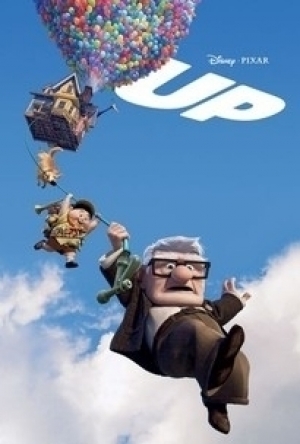
After the death of his wife (tear), Carl Fredericksen (Edward Asner) decides to tie a bunch of balloons to his house and fly off on a great adventure. He gets more than what he bargained for when he realizes he won’t be alone on this adventure.
Acting: 10
Beginning: 10
Up has more power in its first twelve minutes than most films do in their entire runtime. I can watch this a dozen times and it still hits me the same exact way. It tells the story of the relationship between Carl and Ellie in all of its highs and lows. You will be hard-pressed to find a better beginning than this throughout the history of movies. There’s something so real and heartfelt about it that sucks you in and sets up Carl’s character perfectly.
Characters: 10
Life has turned Carl into a cranky old man whose everything hurts all the time. He takes no guff and, at the end of the day, just wants to be left alone. He is one of numerous rich characters than shine throughout the movie, both animal and human alike. Young boyscout Russell (Jordan Nagai) puts a smile on my face with every single scene that he’s in. He’s always willing to go above and beyond to help. So inquisitive, yet so clueless. Throw in Doug the talking dog and the awesome Snipe and you have the perfect mix of original characters you want to root for.
Cinematography/Visuals: 10
I was blown away by the amazing visuals Up has to offer. So many colors shoot out at you as you see the balloons hovering over Carl’s house for the first time. The house floats into Paradise Falls after surviving a wicked storm and you’re treated to just that—Paradise. Canyons and a tropical rainforest full of lush greenery. The detail that went into this animation is outstanding.
Conflict: 10
There is plenty of action to be had on this great adventure. What starts as an innocent trip is quickly disrupted by a storm that turns everything upside down. The adventure soars to new heights after that, never really slowing down much for you to check on the time. Beginnings are important, but middles even moreso, and the events that unfold during the meat of the film are fun and harrowing at the same time.
Genre: 10
Memorability: 10
Pace: 10
Up is like riding a smooth wave. Some moments are more intense than others, but you’re always headed towards an end goal of sorts. Bad pacing is filled with road blocks and unnecessary scenes, but Up manages to maximize its full runtime by making every single moment count.
Plot: 10
A beautiful story that couldn’t have been told in a more beautiful way. It’s fun and unique, definitely something you haven’t seen before. I honestly can’t think of a better way it could have been done.
Resolution: 10
I’m one of the few weirdos who was touched just as much by the ending as I was the beginning. It makes you happy to see what befalls the characters, yet a bit sad as you realize the movie is reaching its conclusion. At the end, Up doesn’t linger. It does what it needs to do and concludes perfectly.
Overall: 100
There is a reason Up is one of three animated movies nominated for Best Picture. It is one of the greatest movies ever made and tops my all-time list as of 5/30/2019. Noticed I didn’t say “one of the greatest animated movies”, but one of the greatest MOVIES. It’s an all-timer driven by great character relationships and powerful, emotion-filled scenes.
Acting: 10
Beginning: 10
Up has more power in its first twelve minutes than most films do in their entire runtime. I can watch this a dozen times and it still hits me the same exact way. It tells the story of the relationship between Carl and Ellie in all of its highs and lows. You will be hard-pressed to find a better beginning than this throughout the history of movies. There’s something so real and heartfelt about it that sucks you in and sets up Carl’s character perfectly.
Characters: 10
Life has turned Carl into a cranky old man whose everything hurts all the time. He takes no guff and, at the end of the day, just wants to be left alone. He is one of numerous rich characters than shine throughout the movie, both animal and human alike. Young boyscout Russell (Jordan Nagai) puts a smile on my face with every single scene that he’s in. He’s always willing to go above and beyond to help. So inquisitive, yet so clueless. Throw in Doug the talking dog and the awesome Snipe and you have the perfect mix of original characters you want to root for.
Cinematography/Visuals: 10
I was blown away by the amazing visuals Up has to offer. So many colors shoot out at you as you see the balloons hovering over Carl’s house for the first time. The house floats into Paradise Falls after surviving a wicked storm and you’re treated to just that—Paradise. Canyons and a tropical rainforest full of lush greenery. The detail that went into this animation is outstanding.
Conflict: 10
There is plenty of action to be had on this great adventure. What starts as an innocent trip is quickly disrupted by a storm that turns everything upside down. The adventure soars to new heights after that, never really slowing down much for you to check on the time. Beginnings are important, but middles even moreso, and the events that unfold during the meat of the film are fun and harrowing at the same time.
Genre: 10
Memorability: 10
Pace: 10
Up is like riding a smooth wave. Some moments are more intense than others, but you’re always headed towards an end goal of sorts. Bad pacing is filled with road blocks and unnecessary scenes, but Up manages to maximize its full runtime by making every single moment count.
Plot: 10
A beautiful story that couldn’t have been told in a more beautiful way. It’s fun and unique, definitely something you haven’t seen before. I honestly can’t think of a better way it could have been done.
Resolution: 10
I’m one of the few weirdos who was touched just as much by the ending as I was the beginning. It makes you happy to see what befalls the characters, yet a bit sad as you realize the movie is reaching its conclusion. At the end, Up doesn’t linger. It does what it needs to do and concludes perfectly.
Overall: 100
There is a reason Up is one of three animated movies nominated for Best Picture. It is one of the greatest movies ever made and tops my all-time list as of 5/30/2019. Noticed I didn’t say “one of the greatest animated movies”, but one of the greatest MOVIES. It’s an all-timer driven by great character relationships and powerful, emotion-filled scenes.
Kirk Bage (1775 KP) rated Game Night (2018) in Movies
Jan 22, 2021
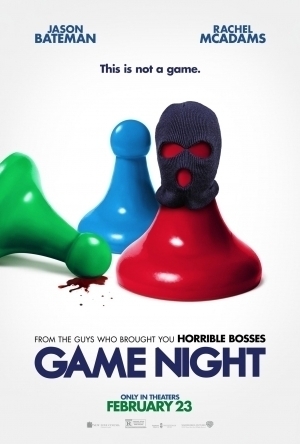


Virtual game nights over Zoom have been a big part of many lockdown experiences, so, if you haven’t already, check out this fun, disposable comedy starring Jason Bateman and Rachel McAdams. The two ever reliable leads make this 100 minute romp something worth doing, pitched as it is to tickle you on a superficial level and then leave you alone. Not one minute of meaningful plot or artistic message exists here; this is frat house tomfoolery for the now middle aged mainstream and then a bow to the crowd.
Anyone who has hosted, or been a guest at a dedicated game night will instantly relate to recognisable moments of cringe, such as the person who takes it all far too seriously and must win at all costs; the one who is far too dim to be true, and neither understands the rules nor knows the answers; the couple whose relationship is about to be ruined by how much they disagree; the guys who care much more about the booze, chat and music to care about the game; and the psycho that you didn’t really want to invite but is there in the mix anyway, giving the weirdest answers of all time and bringing down the mood. It’s all there!
When events take a canny twist and a planned fake murder mystery turns into a very real one, there is tons of fun to be had watching the main pair misjudge the amount of danger they are in, believing it all to still be a game. Bateman phones in his usual laconic likeable deadpan schtick, hard to differentiate from his role in half a dozen other films where he plays the likeable everyman, but is never less than watchable – because that’s what he does. McAdams also delivers her ace card, with a guileless charm and sweetness that makes her permanently lovable. She also wins by a point or two on the best lines and laugh out loud moments. If I was keeping score, I’d say she wins this one.
As a couple, their chemistry works a treat and sustains the conceit well for most of the running time. It can feel at times like a bit of a one trick pony, however, and also pushes the boundaries of likability by having quite a mean heart in places, leaning on crass, puerile or macho humour when not entirely necessary – but I guess it knows its target audience and just goes full tilt at that goal.
For that reason, it wouldn’t be something I’d be showing the kids. This is adult humour, for adults – a concept that always makes me slightly uncomfortable, as it will inevitably involve gratuitous violence, nasty misogyny and token gross-outs: the mainstay of comedy films without actual jokes. Game Night just about gets away with it, however, by being smart enough and self-aware enough to know exactly where it sits, shrugging its shoulders and saying “this is what this is” take it or leave it. And I guess there will be as many people who don’t enjoy it as those who do.
Personally, I enjoy what Bateman and McAdams do best enough to play along and enjoy the ride. There is also a terrifically creepy, but note perfect turn from the increasingly reliable Jesse Plemmons, as the lonely neighbour, who steals all the funniest moments the film has to offer. See it for his performance and comic timing if for nothing else. It’s also nice to see Michael C. Hall of Dexter fame turn up for two minutes of mayhem – I don’t see enough of him these days.
In conclusion, neither a winner or a loser. Let’s call it a draw and reset the pieces.
Anyone who has hosted, or been a guest at a dedicated game night will instantly relate to recognisable moments of cringe, such as the person who takes it all far too seriously and must win at all costs; the one who is far too dim to be true, and neither understands the rules nor knows the answers; the couple whose relationship is about to be ruined by how much they disagree; the guys who care much more about the booze, chat and music to care about the game; and the psycho that you didn’t really want to invite but is there in the mix anyway, giving the weirdest answers of all time and bringing down the mood. It’s all there!
When events take a canny twist and a planned fake murder mystery turns into a very real one, there is tons of fun to be had watching the main pair misjudge the amount of danger they are in, believing it all to still be a game. Bateman phones in his usual laconic likeable deadpan schtick, hard to differentiate from his role in half a dozen other films where he plays the likeable everyman, but is never less than watchable – because that’s what he does. McAdams also delivers her ace card, with a guileless charm and sweetness that makes her permanently lovable. She also wins by a point or two on the best lines and laugh out loud moments. If I was keeping score, I’d say she wins this one.
As a couple, their chemistry works a treat and sustains the conceit well for most of the running time. It can feel at times like a bit of a one trick pony, however, and also pushes the boundaries of likability by having quite a mean heart in places, leaning on crass, puerile or macho humour when not entirely necessary – but I guess it knows its target audience and just goes full tilt at that goal.
For that reason, it wouldn’t be something I’d be showing the kids. This is adult humour, for adults – a concept that always makes me slightly uncomfortable, as it will inevitably involve gratuitous violence, nasty misogyny and token gross-outs: the mainstay of comedy films without actual jokes. Game Night just about gets away with it, however, by being smart enough and self-aware enough to know exactly where it sits, shrugging its shoulders and saying “this is what this is” take it or leave it. And I guess there will be as many people who don’t enjoy it as those who do.
Personally, I enjoy what Bateman and McAdams do best enough to play along and enjoy the ride. There is also a terrifically creepy, but note perfect turn from the increasingly reliable Jesse Plemmons, as the lonely neighbour, who steals all the funniest moments the film has to offer. See it for his performance and comic timing if for nothing else. It’s also nice to see Michael C. Hall of Dexter fame turn up for two minutes of mayhem – I don’t see enough of him these days.
In conclusion, neither a winner or a loser. Let’s call it a draw and reset the pieces.

Carbs & Cals: Visual counter for diet & diabetes
Health & Fitness and Medical
App
Other calorie counting apps boast 5 MILLION+ FOODS, but **news flash** nobody actually eats 5...

Virtual Families 2: Our Dream House
Games and Entertainment
App
*Now Downloaded 11 Million Times!! Well played, people!* *Whoa! You made us #1 in Simulation!...

okletmereviewit (4 KP) rated Shin Godzilla (2016) in Movies
May 11, 2018
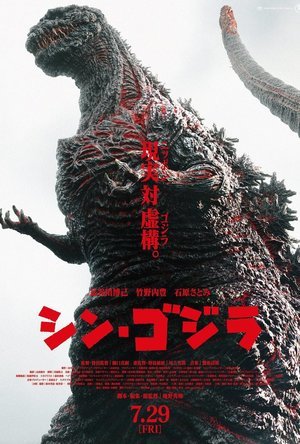

The King of the Monsters is Back
Contains spoilers, click to show
I must say that when I heard that TOHO was coming out with a new Godzilla movie I was super ecstatic. I have enjoyed the Godzilla franchise since I was a kid. The movie starts with a modern Tokyo with the pretense that it is shortly after the Fukushima Nuclear meltdown and after several earthquakes. An explosion in the harbor alerts the officials to scramble to find out what has happened. At first there is a lot of chaos and uncertainties as to what is happening out in the harbor. Then a grotesque creature is seen swimming up the on of the rivers inland. The look of this monster is that of a Snake Shark and an Eel with hind legs. This underdeveloped monster is referred to as Godzilla's "1st Form". As it snakes its way through metropolitan area's, forced evacuations are sent underway to assure as many lives that can be saved could. As the fledgling Godzilla struggles with trying to maneuver on land, you see red almost blood looking liquid pouring from its gills. It shortly there after makes its way back to the bay and resubmerged. The Japanese Government is in a panic trying to figure out what this thing is, and how to best deal with it. Teams of researchers from around the country begin an unprecedented collaboration of the minds to classify and to come up with a solution on how to defend Tokyo and the rest of Japan from this creature. Next time we see the creature coming out of the water it begins to resemble the Godzilla we all know and love. But with sudo deformed forearms, and red coloring to its skin, and a misshapen mouth. This form is referred to as his 3rd form. This 3rd form Godzilla begins making its way through the cities headed for Tokyo. The government authorizes the use of any and all weapons in order to stop the best in its tracks. After some failures trying what they could. The Japanese reach out to America for help. The US deploys B2 Stealth Bombers with subnuclear missile's which cause significant damage, causing Godzilla to undergo another transformation, this time expelling fiery breath that is then focused into a plasma beam that destroys a large section of the city. Then the bombers go to make a second attack and in a wholly new never before seen attack in any of the Godzilla franchise, Godzilla shoots its plasma beams out of his back, in multiple directions destroying the attacking fleet. To which Godzilla enters a hibernation type sleep in the middle of all the destruction and chaos. Both Japanese and American governments as well as several other countries around the world begin sharing data and ideas with one another and a plan is formulated to 'freeze' Godzilla thus killing the creature. The entire country of Japan commissions local chemical plants to create a coagulant and freezing agent to stop Godzilla. A 4 Tier Attack plan is put into place. They begin by sending trains filled with explosives to awaken the monster. Then one after another the Japanese Military begins assaulting Godzilla. At which point Godzilla begins to use his Plasma beam from both his mouth and in another totally new move, from his tail. Godzilla is finally knocked down and the coagulant is then pumped into him, in two stages. At the last stage, Godzilla destroys the Cranes that were pumping the fluid into him, and as he stands to begin more destruction, you see him instantly freeze. At the end of the movie, you see a destroyed Tokyo trying to recover and find some form of normality. And before credit roll, you see up close of Godzilla's tail. It looks like miniature aliens or babies were being birthed from Godzilla's tail. And then it fades to black. Even though the whole movie was Englished Subtitled, I found it very enjoyable and action packed. TOHO has done it again.

Chris Sawin (602 KP) rated Book of Blood (2008) in Movies
Jun 20, 2019
"The dead have highways. Highways that lead to intersections and intersections that spill into our world. And if you find yourself at one of those intersections, you should stop and you should listen because the dead have stories to tell."
Mary Florescu, writer, teacher, and overall expert of the paranormal, is still looking for the distinct evidence of supernatural occurences. A house catches her eye that has been on the market since the daughter of the couple living there before had been murdered. It's said the original homeowner was thrown against the wall by an invisible force so hard that shards of his broken bones pierced his lungs and he choked to death on his own blood. During each incident, the message, "Don't mock us," was found written in blood on the closet doors. Mary decides to move into the house to find proof of the supernatural, bringing an audio/video technician, Reg Fuller, to help document anything they find. A new student, Simon McNeal, transfers into Mary's class. He seems to have a special gift related to the paranormal and is brought into the house to help work with Mary and Reg on the project. Strange occurences seem to begin immediately and only get more violent as they occur. But as things progress, the relationship between Mary and Simon turns physical and suspicious evidence is found in Simon's bag that point to him being a fake. Is the house actually "haunted," or is Simon playing everyone for a fool?
I'm a fairly big fan of Clive Barker's work. I've loved the books and stories (Books of Blood Vol. 1-3, Mister B. Gone, The Hellbound Heart) of his that I've read and several of his films (Hellraiser, Midnight Meat Train) are some of the best the horror genre has to offer. Midnight Meat Train was probably the best horror film to come out of last year, so my expectations were high when I heard about this film and saw the trailer. This was one of my most anticipated horror films of the year even though it seemed to get the short end of the stick with its release much like what happened with Midnight Meat Train. I can tell you that Book of Blood is a good watch, but it may not be what you're expecting.
Book of Blood has its bloody moments, but it's not an all out gorefest. It's actually more of a supernatural thriller. The director, John Harrison, described the film as being more along the lines of films like The Others and The Orphanage. It relies more on mood and atmosphere rather than blood and guts splattering all over your face, which isn't a bad thing at all if done correctly. Book of Blood almost pulls that aspect of the film flawlessly. I say, "almost," because certain lines of dialogue ("I promise we will listen and I will tell your stories to the world.") and a few of the things that happened in the final act of the film (steel briefcase...it'll make sense when you see it) seem a bit cheesy, but may sit better with me on repeat viewings.
The film actually reminded me of Hellraiser quite a bit throughout the film. Other than Doug Bradley's brief cameo (if you blink, you'll probably miss him), the opening scene of when Reg and Mary go into the room where everything happened just reminds me of Frank staying in the attic in Hellraiser. Hellraiser is one of my favorite horror films, so the brief nod to the film (whether intentional or not) was very welcome to me.
My main concern with Book of Blood was how they were going to turn a short story that was originally just an introduction to the actual Books of Blood by Clive Barker into a full length film. The concern wound up being for nothing as Book of Blood met nearly all of my expectations and was extremely faithful to the original material while bringing in elements from another one of his stories called, "On Jerusalem Street." The story fleshes out nicely and the acting is good, for the most part. I think the perfectionist in me kept me from rating this any higher, but I'd definitely recommend it as it's a worthy addition to any avid horror movie enthusiast's collection.
Mary Florescu, writer, teacher, and overall expert of the paranormal, is still looking for the distinct evidence of supernatural occurences. A house catches her eye that has been on the market since the daughter of the couple living there before had been murdered. It's said the original homeowner was thrown against the wall by an invisible force so hard that shards of his broken bones pierced his lungs and he choked to death on his own blood. During each incident, the message, "Don't mock us," was found written in blood on the closet doors. Mary decides to move into the house to find proof of the supernatural, bringing an audio/video technician, Reg Fuller, to help document anything they find. A new student, Simon McNeal, transfers into Mary's class. He seems to have a special gift related to the paranormal and is brought into the house to help work with Mary and Reg on the project. Strange occurences seem to begin immediately and only get more violent as they occur. But as things progress, the relationship between Mary and Simon turns physical and suspicious evidence is found in Simon's bag that point to him being a fake. Is the house actually "haunted," or is Simon playing everyone for a fool?
I'm a fairly big fan of Clive Barker's work. I've loved the books and stories (Books of Blood Vol. 1-3, Mister B. Gone, The Hellbound Heart) of his that I've read and several of his films (Hellraiser, Midnight Meat Train) are some of the best the horror genre has to offer. Midnight Meat Train was probably the best horror film to come out of last year, so my expectations were high when I heard about this film and saw the trailer. This was one of my most anticipated horror films of the year even though it seemed to get the short end of the stick with its release much like what happened with Midnight Meat Train. I can tell you that Book of Blood is a good watch, but it may not be what you're expecting.
Book of Blood has its bloody moments, but it's not an all out gorefest. It's actually more of a supernatural thriller. The director, John Harrison, described the film as being more along the lines of films like The Others and The Orphanage. It relies more on mood and atmosphere rather than blood and guts splattering all over your face, which isn't a bad thing at all if done correctly. Book of Blood almost pulls that aspect of the film flawlessly. I say, "almost," because certain lines of dialogue ("I promise we will listen and I will tell your stories to the world.") and a few of the things that happened in the final act of the film (steel briefcase...it'll make sense when you see it) seem a bit cheesy, but may sit better with me on repeat viewings.
The film actually reminded me of Hellraiser quite a bit throughout the film. Other than Doug Bradley's brief cameo (if you blink, you'll probably miss him), the opening scene of when Reg and Mary go into the room where everything happened just reminds me of Frank staying in the attic in Hellraiser. Hellraiser is one of my favorite horror films, so the brief nod to the film (whether intentional or not) was very welcome to me.
My main concern with Book of Blood was how they were going to turn a short story that was originally just an introduction to the actual Books of Blood by Clive Barker into a full length film. The concern wound up being for nothing as Book of Blood met nearly all of my expectations and was extremely faithful to the original material while bringing in elements from another one of his stories called, "On Jerusalem Street." The story fleshes out nicely and the acting is good, for the most part. I think the perfectionist in me kept me from rating this any higher, but I'd definitely recommend it as it's a worthy addition to any avid horror movie enthusiast's collection.

Jordan Binkerd (567 KP) rated Star Wars, Vol. 2: Showdown on the Smuggler's Moon in Books
Aug 9, 2019
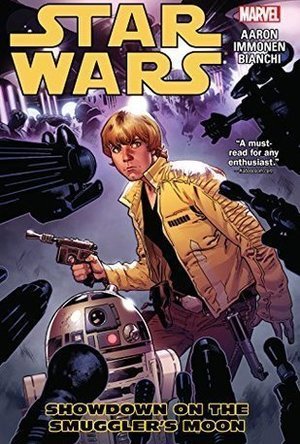
Note: this review is transposted from my personal review blog, and so was originally written several years ago. I figured if I reposted it here, someone might actually read it….
I very much enjoyed the first volume of Marvel’s ongoing Star Wars series, but many other reviewers took issue with it for playing things safe and giving us a story like many we’d seen before. These criticisms are not completely unfounded, I’ll admit, but neither are they completely fair. Either way, this is not a problem the series has going forward…. This second volume also includes the one-off flashback story THE LAST OF HIS BREED, featuring Obi-Wan Kenobi adjusting to his exile on Tatooine, which is discussed separately below.
Luke Skywalker has successfully escaped the clutches of the bounty hunter Boba Fett, but all he got for his troubles was the journal of Obi-Wan Kenobi–no small prize, but probably not all that helpful in furthering his Jedi training. So what’s the next logical step in learning about the Jedi? Try and sneak onto Coruscant to infiltrate the old Jedi Temple, of course! But when his attempt to find a discreet ship and pilot in a seedy bar on Nar Shaddaa goes horribly awry, Luke finds himself the prisoner of Grakkus the Hutt. In addition to the traditional crime and vice, Grakkus has made a name for himself as one of the foremost collectors of Jedi artifacts. Now Luke faces the battle of his life in Grakkus’ arena, billed as “the last Jedi” and pitted against a fearsome creature for the amusement of Grakkus’ fellow crime lords….Meanwhile, Han and Leia are out scouting potential locations for a new Rebel base when they run across a figure from Han’s past. Her name is Sana, and she claims to be his wife….
As with the previous volume, this was some stellar work. Jason Aaron nails the banter between Han & Leia, to the point where you can almost hear Carrie Fisher and Harrison Ford delivering the lines, and Luke’s mix of cockiness and self-doubt is spot-on for his character and situation. Also of note is Stuart Immonen’s spectacular artwork. From the character closeups to the panoramic vistas, this was pure Star Wars. Also amusing was watching our entire cast wade into battle wielding lightsabers. Did Luke manage to salvage anything of value from Grakkus’ stash on his way out? I guess we’ll have to wait and see….
Then there’s the Obi-Wan backup story. It’s been seven years since the rise of the Empire, seven years since the death of the Jedi and the Republic. Formerly one of the greatest Jedi of his generation, now Obi-Wan Kenobi lives a life of obscurity on the desert planet of Tatooine. Where once he protected the innocent of the galaxy, now “Old Ben” forces himself to look the other way lest he draw the Empire’s notice as Jabba’s thugs extort water from the locals. All that matters is protecting the boy, Luke Skywalker, on whose unknowing shoulders rest the fate of the galaxy. But there are limits to the patience of even the greatest of Jedi….
This was a good one. The story was solid, and it’s always interesting to see Obi-Wan’s state of mind during his exile. Was this done better in John Jackson Miller’s KENOBI? Yes. That goes without saying, if only because he had more than twenty-four pages to tell his story. At any rate, KENOBI isn’t canon anymore, so we’ll not dwell on it. Simone Bianchi’s art here was stellar, I must say, and his Kenobi managed to blend Ewan McGregor and Alec Guinness superbly. I would very much like to see more of these one-off excerpts from Obi-Wan’s journal appear in future issues of the comic.
CONTENT: Moderate violence, not too gruesome most of the time. Mild profanity. Mild sexual innuendo and flirting.
Original posts: Main story (https://jordanbinkerd.wordpress.com/2015/11/23/review-star-wars-showdown-on-the-smugglers-moon-by-jason-aaron-stuart-immonen/) & Obi-Wan Flashback (https://jordanbinkerd.wordpress.com/2015/11/23/review-star-wars-the-last-of-his-breed-by-jason-aaron-simone-bianchi/)
I very much enjoyed the first volume of Marvel’s ongoing Star Wars series, but many other reviewers took issue with it for playing things safe and giving us a story like many we’d seen before. These criticisms are not completely unfounded, I’ll admit, but neither are they completely fair. Either way, this is not a problem the series has going forward…. This second volume also includes the one-off flashback story THE LAST OF HIS BREED, featuring Obi-Wan Kenobi adjusting to his exile on Tatooine, which is discussed separately below.
Luke Skywalker has successfully escaped the clutches of the bounty hunter Boba Fett, but all he got for his troubles was the journal of Obi-Wan Kenobi–no small prize, but probably not all that helpful in furthering his Jedi training. So what’s the next logical step in learning about the Jedi? Try and sneak onto Coruscant to infiltrate the old Jedi Temple, of course! But when his attempt to find a discreet ship and pilot in a seedy bar on Nar Shaddaa goes horribly awry, Luke finds himself the prisoner of Grakkus the Hutt. In addition to the traditional crime and vice, Grakkus has made a name for himself as one of the foremost collectors of Jedi artifacts. Now Luke faces the battle of his life in Grakkus’ arena, billed as “the last Jedi” and pitted against a fearsome creature for the amusement of Grakkus’ fellow crime lords….Meanwhile, Han and Leia are out scouting potential locations for a new Rebel base when they run across a figure from Han’s past. Her name is Sana, and she claims to be his wife….
As with the previous volume, this was some stellar work. Jason Aaron nails the banter between Han & Leia, to the point where you can almost hear Carrie Fisher and Harrison Ford delivering the lines, and Luke’s mix of cockiness and self-doubt is spot-on for his character and situation. Also of note is Stuart Immonen’s spectacular artwork. From the character closeups to the panoramic vistas, this was pure Star Wars. Also amusing was watching our entire cast wade into battle wielding lightsabers. Did Luke manage to salvage anything of value from Grakkus’ stash on his way out? I guess we’ll have to wait and see….
Then there’s the Obi-Wan backup story. It’s been seven years since the rise of the Empire, seven years since the death of the Jedi and the Republic. Formerly one of the greatest Jedi of his generation, now Obi-Wan Kenobi lives a life of obscurity on the desert planet of Tatooine. Where once he protected the innocent of the galaxy, now “Old Ben” forces himself to look the other way lest he draw the Empire’s notice as Jabba’s thugs extort water from the locals. All that matters is protecting the boy, Luke Skywalker, on whose unknowing shoulders rest the fate of the galaxy. But there are limits to the patience of even the greatest of Jedi….
This was a good one. The story was solid, and it’s always interesting to see Obi-Wan’s state of mind during his exile. Was this done better in John Jackson Miller’s KENOBI? Yes. That goes without saying, if only because he had more than twenty-four pages to tell his story. At any rate, KENOBI isn’t canon anymore, so we’ll not dwell on it. Simone Bianchi’s art here was stellar, I must say, and his Kenobi managed to blend Ewan McGregor and Alec Guinness superbly. I would very much like to see more of these one-off excerpts from Obi-Wan’s journal appear in future issues of the comic.
CONTENT: Moderate violence, not too gruesome most of the time. Mild profanity. Mild sexual innuendo and flirting.
Original posts: Main story (https://jordanbinkerd.wordpress.com/2015/11/23/review-star-wars-showdown-on-the-smugglers-moon-by-jason-aaron-stuart-immonen/) & Obi-Wan Flashback (https://jordanbinkerd.wordpress.com/2015/11/23/review-star-wars-the-last-of-his-breed-by-jason-aaron-simone-bianchi/)

Becca Major (96 KP) rated The Irregular at Magic High School: Vol. 1: Enrollment Arc, Part 1 in Books
Feb 5, 2018

Interesting premise (3 more)
Tatsuya
Mystery surrounding the Shiba siblings
Most of the side-characters
Information dumps (3 more)
General editing mistakes
Miyuki
Lack of male characters (that aren’t antagonists)
The Setup
The Irregular at Magic High School
Book by Tsutomu Sato
Review by Rip Major
The Irregular at Magic High School is about siblings Tatsuya and Miyuki and their experiences at First High. The school is split into two main groups, the Blooms, who are gifted with the ability to use and control magic, and Weeds, who can use magic, but aren’t as strong with it as the Blooms are. Miyuki, who is a prodigy with magic and has the brains to back it up, is placed with the Blooms. Tatsuya, on the other hand, is not as gifted with magic, so he is placed with the Weeds.
The plot is pretty anime-standard. Boy and girl go to a new school and participate in shenanigans. The majority of the book follows the day to day misadventures of Tatsuya and Miyuki as they deal with the fact that, while they are extremely close, they are essentially in different hierarchical classes. This culminates in Miyuki joining the Student Council and Tatsuya joining the Disciplinary Committee, even though both are reluctant about the whole thing.
Tatsuya is a very interesting character because he is constantly annoyed by his classmates and their shenanigans, most of which he gets drawn into. He seems like the type of character that would prefer to be in the background and be left to his own devices, but his status as main character simply won’t let him. It is actually quite amusing to read his inner monologue while things happen to and around him. He is actually quite smart, being able to work on CADs (the in-universe way to cast magic) with exceptional skill and speed. He is also a skilled martial artist, apparently knowing ninjutsu, or something similar. Additionally, he also has a very mechanical way of thinking, which includes shutting down parts of himself that would ordinarily be considered normal. For instance, there is a scene where he realizes his older classmate is arousing him, and he shuts it down. Basically, in a book where the POV changes often and usually without meaning, Tatsuya is a very interesting character to be in the head of.
Unfortunately, Miyuki isn’t nearly as interesting as her brother. She is beautiful, smart, and gifted; all of which makes her a little too perfect for me to really connect with. Her major flaw is that she has an unusual and uncomfortable obsession with her brother. Also, she just feels a lot flatter than most of the side characters. And I officially have nothing else to say about her.
In all honesty, most of what I found interesting about this book was certain aspects of Sato’s world-building, specifically the pseudo-science/magic marriage and how it is explained. I also like how mysterious the history of the siblings is. Very little about their relationships with their parents is revealed, or why they are living alone in their apartment. In fact, other than the basic setup of the plot and characteristics of the two, not much else is explored in this book. I am curious to see if the next book will reveal more.
Book by Tsutomu Sato
Review by Rip Major
The Irregular at Magic High School is about siblings Tatsuya and Miyuki and their experiences at First High. The school is split into two main groups, the Blooms, who are gifted with the ability to use and control magic, and Weeds, who can use magic, but aren’t as strong with it as the Blooms are. Miyuki, who is a prodigy with magic and has the brains to back it up, is placed with the Blooms. Tatsuya, on the other hand, is not as gifted with magic, so he is placed with the Weeds.
The plot is pretty anime-standard. Boy and girl go to a new school and participate in shenanigans. The majority of the book follows the day to day misadventures of Tatsuya and Miyuki as they deal with the fact that, while they are extremely close, they are essentially in different hierarchical classes. This culminates in Miyuki joining the Student Council and Tatsuya joining the Disciplinary Committee, even though both are reluctant about the whole thing.
Tatsuya is a very interesting character because he is constantly annoyed by his classmates and their shenanigans, most of which he gets drawn into. He seems like the type of character that would prefer to be in the background and be left to his own devices, but his status as main character simply won’t let him. It is actually quite amusing to read his inner monologue while things happen to and around him. He is actually quite smart, being able to work on CADs (the in-universe way to cast magic) with exceptional skill and speed. He is also a skilled martial artist, apparently knowing ninjutsu, or something similar. Additionally, he also has a very mechanical way of thinking, which includes shutting down parts of himself that would ordinarily be considered normal. For instance, there is a scene where he realizes his older classmate is arousing him, and he shuts it down. Basically, in a book where the POV changes often and usually without meaning, Tatsuya is a very interesting character to be in the head of.
Unfortunately, Miyuki isn’t nearly as interesting as her brother. She is beautiful, smart, and gifted; all of which makes her a little too perfect for me to really connect with. Her major flaw is that she has an unusual and uncomfortable obsession with her brother. Also, she just feels a lot flatter than most of the side characters. And I officially have nothing else to say about her.
In all honesty, most of what I found interesting about this book was certain aspects of Sato’s world-building, specifically the pseudo-science/magic marriage and how it is explained. I also like how mysterious the history of the siblings is. Very little about their relationships with their parents is revealed, or why they are living alone in their apartment. In fact, other than the basic setup of the plot and characteristics of the two, not much else is explored in this book. I am curious to see if the next book will reveal more.