

Bible Scholar Interactive
Reference and Games
App
Now just $2.99. The Bible Scholar named one of: "25 Incredible..Apps Every Theology Student...

Haley Mathiot (9 KP) rated Once Dead, Twice Shy (Madison Avery, #1) in Books
Apr 27, 2018


But the dark timekeeper who killed her isn't happy, because she's got his amulet, and she's not all the way dead (just sort of dead). Teaming up with Barnabas—who may or may not be a fallen angel—and the light time keeper, Chronos (or Ron for short), a guardian angel (who she forces to guard someone else) and enlisting the human help of her ex-prom date Josh (who she didn't realize she had a crush on), she has to attempt to save her soul.
All in a day's work for a dead high-schooler… right?
This was the second time I've read Once Dead, Twice Shy. I still can't figure out what the title means. Whatever it means, it was a pretty exciting book. There wasn't a second of "down-time." Madison was always up to something, learning something, running to—or from—something, or saving someone. Every chapter had little pieces of the puzzle, and the way it all fit together at the end, was priceless, hilarious, and promising.
I will say that I don't like where the story picks up. I think Harrison should have actually included the beginning of the story, where she gets killed. I read it before I read this book and I would have been rather lost without it. It was a short story included in Prom Nights from Hell. I don't care if this is technically a "book 1" in the series. It should have been book 2, or at least had the beginning of the story included in it.
I really liked Madison. I liked her character (though not some of her choices—but hey, if I was a dead seventeen year old trying to keep her dad from knowing that she could bend time, I probably would have made those same choices) and I liked her interior monologue. She was serious enough to be nerve-wracking and exciting, but sarcastic enough to give everything a touch of comic relief. I really didn't like Josh in the short prequel to this book, but as his character began to be more clear, I really started to like him. I hope things turn out well between him and Madison. I would have liked a little more romantic tension between them, but what was there was clean and innocent—a little too innocent for Madison Avery.
I don't particularly like Kim Harrison's writing style. It's very casual, it has those dreaded fragments, and it's nothing out of the ordinary. However, her way of describing both physical images and emotional feelings was very good, and I could see everything, hear everything, and feel everything her characters were experiencing. As I mentioned above, I liked the comic relief. I also liked her lack of language through the story. Madison had her own set of "words" and phrases that she used that weren't offensive in any way, and it made the story much more enjoyable. However, the only word I can think of to describe her writing is mediocre, and that and the lack of tension between Madison and Josh are the only reasons I don't give this book five stars.
Content: clean of language, violence, and sexuality of any kind. Thank you Harrison, for writing clean YA fiction!
Recommendation: Ages 12+ to lovers of sci-fi, fantasy, and general YA fiction.
This review is copyright Haley Mathiot and Night Owl Reviews.
Debbiereadsbook (1836 KP) rated I've Got You in Books
Jul 3, 2019
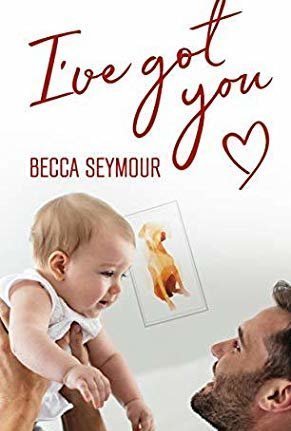

This is sort of the second book in the set, Let Me Show You is the first, and you really should read that one, I think, to give you the full picture of what Scott did to Carter in that book, and why he feels so bad about himself in this one. Not totally NECESSARY, but I think it would help a great deal.
Scott was awful to Carter, and then came out to him, which made what Scott did all the worse. When Scott kisses Davis, Tanner’s best friend, at Carter and Tanner’s party, Scott runs. It takes a great deal of Carter to bring Scott out of himself. Davis is profoundly affected by that kiss, and he knows what Scott did to Carter was bad, but when Davis sees Scott, really SEES deep into his eyes, Davis knows Scott is desperately unhappy with his lot. But can the newly outed vet be happy with the single dad? Can he be happy, at ALL?
Like I said, I think it would help a great deal to read Carter and Tanner’s book before this one. If only to give you the full picture of what Scott did to Carter, and why Tanner is reluctant to forgive Scott, even if Carter does, and just why Scott hates himself so much. You need that bigger picture, I think. Just my personal opinion, is all.
Scott is hurting. He knows what he did was wrong, and the fact that Carter has taken it upon himself to become Scott’s best friend shocks him but gives him hope. He doesn’t know if he will ever be truly happy with himself for that, but he has to try. Meeting Davis at Carter and Tanner’s party was a bit of a revelation. He doesn’t know why he kissed Davis, but he liked it, a lot. Getting to know Davis seems like a good idea, but a deeply scary one for Scott, especially since Davis has a baby daughter.
Davis is lovely! I loved his patience with Scott, he knows Scott is hurting, and he knows Scott is newly out, so he understands explaining stuff is hard work, but very quickly, very early on, Davis knows Scott is the man for him. He just has to bide his time while Scott gets himself sorted. When Scott comes to work in Davis’ coffee shop, it gives Davis the ideal opportunity to get close to Scott. And when Scott meets Libby?? Davis is smitten, deeply!
There is, for Scott, a great deal of soul-searching in this book. Davis is an open book here and Scott is not. It takes time for Scott to come out of himself, and for the relationship between Davis and Scott to develop and I loved that. In Carter and Tanner’s review, I said I loved being made to wait for the main event but here? I wasn’t even sure we would GET the main event! It’s a close thing, I tell ya. But it’s right and proper that these two take their time, and get to know each other properly, I think.
It has some sexy time, some deeply emotional time, some funny moments and some shocking ones. Both Davis and Scott have their say, in the first person. Both voices are very different, and each change is clearly headed at the beginning of a chapter.
It also has some very homophobic comments from a shocking source, where you don’t expect them, but once you know, you understand why Scott was in a bad place before.
We leave this little town, with Scott and Davis, and Carter and Tanner happily settling down to their new lives together. We also get to meet Scott’s sister. I’d like her to be happy too. She had it tough for a long time, and reconnecting with Scott gives her the courage to do something about her life. She deserves the kind of happiness her brother has found, too, please Ms Seymour!
Not quite as warm and fuzzies and too stinking cute as Let Me Some You, but it’s a very close thing! Still. . .
5 full and shiny stars
**same worded review will appear elsewhere**


Hadley (567 KP) rated Soul Drinker in Books
Jul 25, 2020
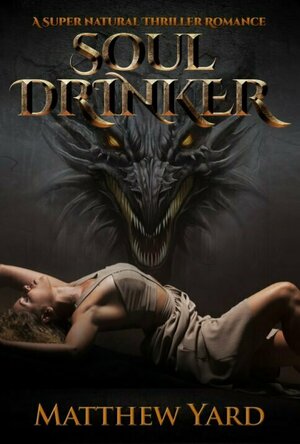

That, along with a little romance, mystery, and historical elements make up this novel that features three main characters who are stuck in a struggle between good and evil while having to face mistakes from the past.
Welcome to the hellish world of Soul Drinker by newcomer, Matthew Yard.
Deep description is what makes up Yard's storytelling, so much so that the book is extremely hard to read. Only 132 pages long, Yard spends most paragraphs describing one single thing in many different ways, such as a young woman's hair, which only needs one sentence to tell such a detail, but instead, took an entire paragraph.
During an ancient civilization, a deity appeared named Destroyer, it found a way to break through the boundaries that separates realms and universes - - - finding our realm, Destroyer leaves his son Luther to build powerful followings through cults run by Pagans.
The novel's villain, Luther, isn't present enough to feel like a real threat for the reader. And the three main characters, other than their physical descriptions, are lifeless because of the extreme lack of character development.
Our main character, Devin, is a college student who constantly has nightmares of his best friend's murder. He also lives at house in the woods which he has no idea how he attained it and this is never explained. After Devin and a classmate named Vic have an encounter with a supernatural cloud, they end up at this house, where readers find out that Devin isn't the only one who has been having nightmares.
Vic is a beautiful, young woman, who Devin seems to be enamoured with, but she is still busy getting over her first love. A few chapters in, readers get flashbacks of Vic's father and mother before she was born. Vic's father was also haunted by this supernatural cloud, which seems to have had a tighter grip on him than Vic - - - her father's flashbacks are the most interesting part of this story.
Vic's father, Jacob, is fast asleep next to his wife when a giant face wakes him up, telling him that there is work to do. Jacob follows the face out into the hallway, when it begins to sway, as if through the eyes of a drunk. Jacob fights the urge to continue to the stairs, wanting to turn back and protect his sleeping wife.
A little while later, we find out that Jacob is psychic: he can see the dead and/or the past. But for anymore development on that interesting piece of information, readers get one glimpse of what Jacob sees - - - and that's it. Jacob's wife, Nina, is an even flatter character, which we only get to see in bed either asleep or waking up. Even Jacob's mental and spiritual fight with the 'face' is disappointingly short with no real tension, no climax, or feelings of betrayal when something finally happens in the end of that scene.
Love, the supernatural, and Pagan cults are what make up the plot of this book. The story jumps between Devin, Vic and Jacob, but the story gets caught up in moments that shouldn't be more than a paragraph, which caused me to become bored with the story. And Yard's writing made this book read like a fan fiction: a lot of inconsistencies throughout, tons of misspellings, and a major overuse of the same words, sometimes even in the same sentence.
Unfortunately, this book was almost unreadable, and the heavy descriptions were extremely off-putting, as was the end of the story- - - the book ended suddenly, and with no sequel in sight. I can't recommend this book to anyone.

Animated Essential Atlas
Medical and Education
App
The Focus Animated Essential Atlas of Anatomy and Physiology includes a full chapter on: -Cell –...

Suswatibasu (1703 KP) rated All Grown Up in Books
Jan 3, 2018 (Updated Jan 3, 2018)
Her life is spread eagled across the pages for the reader to pick over. Each chapter is a snapshot of an episode in her life, whether it is looking back over some of her chaotic childhood years - Dad was a drug user who died too early; Mum, once on her own again, runs bi-monthly dinner parties in the 1990s attended by only men, who of course try and hit on Andrea, a teenager at the time; or whether it is an examination of her relationships with her friends, lovers and acquaintances who pass through her life now.
Andrea also has a brother who in turn has a daughter, only tiny, who was born with a congenital problem and her life expectancy is only around four years. Yet, our self absorbed protagonist does not really visit to offer support because she is so wrapped up in her own world. She simply does not have the mental capacity and resources to give to her brother and little niece.
This is an interesting read, on-point in many ways – it smacks of New York and of lives lived in the city, Freudian Angst, neuroses and all the shtick of metropolitan Manhattan. At times, it did feel a little cliched but may be we all repeat the same patterns?

LeftSideCut (3776 KP) rated It (2017) in Movies
Aug 9, 2019
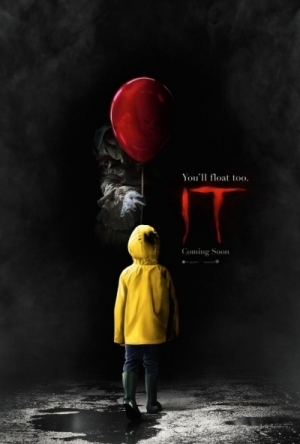

It's one scene after the next of spooky imagery and mild jump scares - it's not overly terrifying, but it's an enjoyable time.
I didn't find It to be particularly scary - there were parts here and there that were uncomfortable (the old woman in the background of the library scene - no focus on her whatsoever, but it gave me chills) and of course, the already infamous scene at the beginning with Georgie is hard to watch considering the age of the child.
But it's lack of all out terror is not a bad thing - the movie can concentrate on a hugely important aspect of the original book - the friendship shared betweens The Losers Club.
The young actors in this are great, all hugely believable, and likable, as they set off on their quest to stop Pennywise and his reign over the town of Derry.
In a world transfixed with Stranger Things, the atmosphere of It treads familiar turf, the 80s setting hitting the right nostalgic spots.
Bill Skarsgård makes a great Pennywise. He doesn't try to copy what the great Tim Curry did in the original TV movie, he makes it his own. He's not quite as sinister as Tim Curry, but he's damn entertaining, and his costume and make up make for a creepy enough clown.
I'm really looking forward to the upcoming Chapter 2, to see if Andy Muschietti can pull off the ending as well as he pulled off the beginning.

Deborah (162 KP) rated What Matters in Jane Austen?: Twenty Crucial Puzzles Solved in Books
Dec 21, 2018
For example, there is a chapter on the games played in the novels. No one (that I know!) plays at Speculation any more, but we can grasp both the fundamentals of the game ("I am never to see my cards and Mr Crawford does all the rest" as Lady Bertram puts it!) and read into it some further illumination of the participating characters. And of course understand why Sir Thomas thought that it might not amuse him to have wife wife as a partner in Whist!
There are sections on characters who have no reported speech (it had not occurred before that we never hear Captain Benwick speak, but it is quite true!), clears away the myth that there are no scenes where women are not present and wraps up with an important consideration of Jane Austen's place in the development of the novel. I think that as she is so very readable, and perhaps also because she is a woman writer, people in general are too apt to dismiss her importance, but her innovations in style are immeasurable. I don't think it is going too far to say that without Austen the novel would not have developed in the way it has. If you read Henry James, Flaubert, Kafka and a long et cetera, you best give your thanks to Jane Austen!
There's Something I've Been Dying to Tell You
Book
By turns, it is riotous, deeply serious, practical and sad. Reading it is like being at her kitchen...

Building Faith Through a Carpenter's Hands
Russell Brandon and Danielle A. Vann
Book
Faith is something you are innately born with or it comes after you've been served a hearty dose of...