
Search
Search results

Sleep Cycle alarm clock
Health & Fitness and Utilities
App
Waking up made easy. An intelligent alarm clock that analyzes your sleep and wakes you in the...

Bob Mann (459 KP) rated Shang-Chi and the Legend of the Ten Rings (2021) in Movies
Sep 16, 2021


Relationship between Shaun and Katy (1 more)
Great Shakespearean level of story
Ten rings to rule them all
Positives:
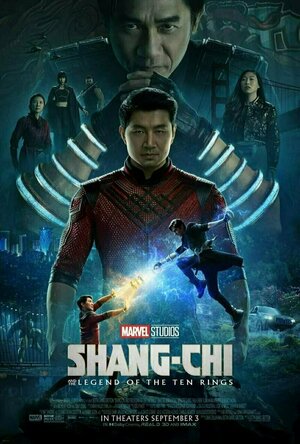
- This is Marvel at its best. A script (with Shakespearean undertones) that melds action with good character development and laugh-out-loud feel-good dialogue. The great thing is that you don't need to be a Marvel nerd to enjoy this one. Yes, there are some fabulous Easter Eggs for Marvel fans (and a wonderful return of a character from one of the early films). But it's almost a standalone feature in its own right.
- The action sequences are top-notch, particularly an early fight on a careering San Francisco "bendy-bus". Some great martial-arts reminiscent of "Crouching Tiger, Hidden Dragon", made more exciting by the fact that the impressive Simu Liu did all his own stunts.
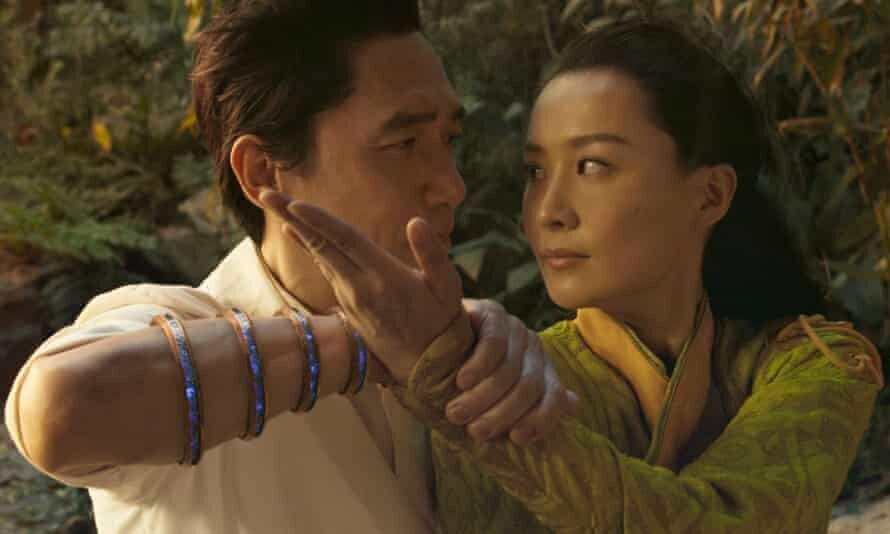
- The relationship built between Shaun and Katy is wonderful, and the actors deliver on it brilliantly: no wonder when you have the exceptional Awkwafina on the other end of it. Similarly, the relationship built between Shang-Chi and his father is powerful, thanks to some wonderful acting from Tony Chiu-Wai Leung. So good in the gripping (and erotic) 'Lust, Caution', I believe this is his first English-speaking film.
- With the odd exception (see below), the special effects are top-notch.
Negatives:
- I thought this was 5* all the way until the final reel, when we descended into a CGI-driven "Godzilla vs Kong" finale. I hate CGI that's just a blur of action across the screen where you're struggling to understand what's going on. Less would be more here for me.
- The movie makes extensive use of 'flashbacks' and, for me, there was a bit too much heavy-handedness in their use. I muttered "enough already" to a few of them, since they were taking us out of the movie's current narrative.
- There were a couple of effects that looked like the intern at the special effects company had put them together during a coffee break. An early plunge of a jeep into a forest and some rather obvious green-screen stuff in the finale. Surprised that these weren't caught and redone.
Timeline?: So, it took more of a Marvel nerd than I am (my wonderful daughter-in-law Bronwyn) to point out that although this film is set (largely) in the "Present Day", the events of "Avengers: Endgame" actually happen in 2023. So in the Marvel timeline, this is set in between Thanos's "blip" and "the return". This is the reason why Wong is present but not Doctor Strange, for example.
Summary Thoughts: Marvel goes East! This is a really entertaining addition to the franchise, mixing Marvel action with Eastern mysticism and martial arts. It's an impressive job by director and co-writer Destin Daniel Cretton, in only his second feature (he did "Just Mercy" in 2019).
As a Marvel film, there are of course end-credit scenes ("monkeys" in onemannsmovies speak). A mid-title one is the best, bringing some additional Marvel characters into the mix. And there's a post-credits one which sets up for further sequels but which I found rather irritating.
It's ironic that a Marvel movie so right for the Chinese market - the first to be headlined by an Asian actor and with substantial Mandarin dialogue - might not get a release in China. According to this report, this appears to be for two reasons: firstly that the actor Simu Liu made some derogatory remarks about China in the past, and secondly that in the comics Shang Chi's father is Fu Manchu - a Western-derived character with racial overtones.
This doesn't seem to have hurt it so far. After less than two weeks of opening, it has made $262 million on a budget estimated to be $150-200 million.
(For the full graphical review and video check out #onemannsmovies on the web, Facebook and Tiktok. Thanks).
- This is Marvel at its best. A script (with Shakespearean undertones) that melds action with good character development and laugh-out-loud feel-good dialogue. The great thing is that you don't need to be a Marvel nerd to enjoy this one. Yes, there are some fabulous Easter Eggs for Marvel fans (and a wonderful return of a character from one of the early films). But it's almost a standalone feature in its own right.
- The action sequences are top-notch, particularly an early fight on a careering San Francisco "bendy-bus". Some great martial-arts reminiscent of "Crouching Tiger, Hidden Dragon", made more exciting by the fact that the impressive Simu Liu did all his own stunts.
- The relationship built between Shaun and Katy is wonderful, and the actors deliver on it brilliantly: no wonder when you have the exceptional Awkwafina on the other end of it. Similarly, the relationship built between Shang-Chi and his father is powerful, thanks to some wonderful acting from Tony Chiu-Wai Leung. So good in the gripping (and erotic) 'Lust, Caution', I believe this is his first English-speaking film.
- With the odd exception (see below), the special effects are top-notch.
Negatives:
- I thought this was 5* all the way until the final reel, when we descended into a CGI-driven "Godzilla vs Kong" finale. I hate CGI that's just a blur of action across the screen where you're struggling to understand what's going on. Less would be more here for me.
- The movie makes extensive use of 'flashbacks' and, for me, there was a bit too much heavy-handedness in their use. I muttered "enough already" to a few of them, since they were taking us out of the movie's current narrative.
- There were a couple of effects that looked like the intern at the special effects company had put them together during a coffee break. An early plunge of a jeep into a forest and some rather obvious green-screen stuff in the finale. Surprised that these weren't caught and redone.
Timeline?: So, it took more of a Marvel nerd than I am (my wonderful daughter-in-law Bronwyn) to point out that although this film is set (largely) in the "Present Day", the events of "Avengers: Endgame" actually happen in 2023. So in the Marvel timeline, this is set in between Thanos's "blip" and "the return". This is the reason why Wong is present but not Doctor Strange, for example.
Summary Thoughts: Marvel goes East! This is a really entertaining addition to the franchise, mixing Marvel action with Eastern mysticism and martial arts. It's an impressive job by director and co-writer Destin Daniel Cretton, in only his second feature (he did "Just Mercy" in 2019).
As a Marvel film, there are of course end-credit scenes ("monkeys" in onemannsmovies speak). A mid-title one is the best, bringing some additional Marvel characters into the mix. And there's a post-credits one which sets up for further sequels but which I found rather irritating.
It's ironic that a Marvel movie so right for the Chinese market - the first to be headlined by an Asian actor and with substantial Mandarin dialogue - might not get a release in China. According to this report, this appears to be for two reasons: firstly that the actor Simu Liu made some derogatory remarks about China in the past, and secondly that in the comics Shang Chi's father is Fu Manchu - a Western-derived character with racial overtones.
This doesn't seem to have hurt it so far. After less than two weeks of opening, it has made $262 million on a budget estimated to be $150-200 million.
(For the full graphical review and video check out #onemannsmovies on the web, Facebook and Tiktok. Thanks).

Mothergamer (1652 KP) rated The Green Hornet (2011) in Movies
Apr 3, 2019


I don't even have the words for how infuriated I am right now with The Green Hornet film. There's a small part of me that wishes I could just throw a brick at Seth Rogen's crotch right now, because he absolutely deserves it along with director Michael Gondry. That's right, the director of the film Eternal Sunshine Of The Spotless Mind which to me was a good movie is responsible for this equally terrible movie.
I do feel much of the blame lies with the fact that Seth Rogen co-wrote this screenplay and he claimed that he was so glad he didn't screw up one of his favorite childhood heroes. Seth, Seth, Seth....tsk tsk, someone's a dirty rotten liar Seth. Why must you constantly lie to us Seth? The truth is you messed up completely! In the original radio show, comics, and T.V. Show Britt Reid wasn't a moron. He was a smart successful newspaper publisher, he was confident, and he could fight well alongside his equally confident sidekick Kato. I loved the T.V. show and I loved the comic. I loved watching The Green Hornet on Kung Fu Saturday when I was a kid. That was the highlight of my Saturday. I would watch a couple of episodes of The Green Hornet and then watch the featured kung fu film. That's a sacred childhood memory and you, Seth Rogen along with your director have pissed all over it.
Not only did you make Britt Reid a total jerk, you made him stupid too! He loosely based Britt Reid on Paris Hilton? Are you kidding me with this nonsense?
Seth Rogen's Britt Reid is a spoiled rich brat who shows no interest in running the newspaper, but he instead becomes buddies with Kato his mechanic and coffee maker. I felt bad for Jay Chou because he's no Bruce Lee, but he did alright in spite of Seth Rogen constantly hyperventilating and shouting in every scene. He tried, he really did. Cameron Diaz's role as Reid's secretary Lenore Case is completely useless. She's basically camera filler with a great smile.
Of course, The Green Hornet has to have a villain and that is Christoph Waltz (Oscar winner from Inglorious Basterds) as Chudnofsky, but there is no depth to the character which proves bad writing is bad writing. Now I like action scenes as much as the next person, but it's as if Seth Rogen got bored and just added as much action as possible as filler rather than having an actual plot that tells the story. There's also so much pointless dialogue, watching this train wreck of a film is like being stuck in a dentist's chair having a root canal with no anesthesia. Yes, it's that damn bad. Not even the overpriced 3-D could save this film. That is just a gimmick to get more money out of people and this film proved that point real quick.
There is so much that could have been done to make this film version of the T.V. show great, but none of it was done. Instead, we get a film that is so terrible with no plot at all, a fake Britt Reid (I don't care what you say Rogen, that character you played was NOT Britt Reid! You are a liar sir!), a subdued Kato that got overshadowed by the crazy rich brat, a useless vapid secretary, and a villain that's about as threatening as a labradoodle. Seth Rogen and Michale Gondry you should be ashamed and embarrassed that your names are on this piece of trash.
Don't waste your money on this folks and certainly don't waste it on 3-D. The original is better and I'm sure that Mr. Rogen's going to have several bricks thrown at his crotch for even writing this awful screenplay. Just please, do us a favor and go sit in the corner with M. Night Shyamalan and quit making movies, because you really screwed the pooch on this one pal.
I do feel much of the blame lies with the fact that Seth Rogen co-wrote this screenplay and he claimed that he was so glad he didn't screw up one of his favorite childhood heroes. Seth, Seth, Seth....tsk tsk, someone's a dirty rotten liar Seth. Why must you constantly lie to us Seth? The truth is you messed up completely! In the original radio show, comics, and T.V. Show Britt Reid wasn't a moron. He was a smart successful newspaper publisher, he was confident, and he could fight well alongside his equally confident sidekick Kato. I loved the T.V. show and I loved the comic. I loved watching The Green Hornet on Kung Fu Saturday when I was a kid. That was the highlight of my Saturday. I would watch a couple of episodes of The Green Hornet and then watch the featured kung fu film. That's a sacred childhood memory and you, Seth Rogen along with your director have pissed all over it.
Not only did you make Britt Reid a total jerk, you made him stupid too! He loosely based Britt Reid on Paris Hilton? Are you kidding me with this nonsense?
Seth Rogen's Britt Reid is a spoiled rich brat who shows no interest in running the newspaper, but he instead becomes buddies with Kato his mechanic and coffee maker. I felt bad for Jay Chou because he's no Bruce Lee, but he did alright in spite of Seth Rogen constantly hyperventilating and shouting in every scene. He tried, he really did. Cameron Diaz's role as Reid's secretary Lenore Case is completely useless. She's basically camera filler with a great smile.
Of course, The Green Hornet has to have a villain and that is Christoph Waltz (Oscar winner from Inglorious Basterds) as Chudnofsky, but there is no depth to the character which proves bad writing is bad writing. Now I like action scenes as much as the next person, but it's as if Seth Rogen got bored and just added as much action as possible as filler rather than having an actual plot that tells the story. There's also so much pointless dialogue, watching this train wreck of a film is like being stuck in a dentist's chair having a root canal with no anesthesia. Yes, it's that damn bad. Not even the overpriced 3-D could save this film. That is just a gimmick to get more money out of people and this film proved that point real quick.
There is so much that could have been done to make this film version of the T.V. show great, but none of it was done. Instead, we get a film that is so terrible with no plot at all, a fake Britt Reid (I don't care what you say Rogen, that character you played was NOT Britt Reid! You are a liar sir!), a subdued Kato that got overshadowed by the crazy rich brat, a useless vapid secretary, and a villain that's about as threatening as a labradoodle. Seth Rogen and Michale Gondry you should be ashamed and embarrassed that your names are on this piece of trash.
Don't waste your money on this folks and certainly don't waste it on 3-D. The original is better and I'm sure that Mr. Rogen's going to have several bricks thrown at his crotch for even writing this awful screenplay. Just please, do us a favor and go sit in the corner with M. Night Shyamalan and quit making movies, because you really screwed the pooch on this one pal.

Gareth von Kallenbach (980 KP) rated the PlayStation 4 version of Prey in Video Games
Jun 19, 2019
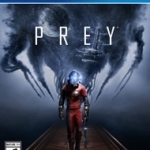


Bethesda and Arkane Studios have combined again on another highly successful and deeply compelling game. After the first two Dishonored games the bar was set exceptionally high and when it was announced that they would be rebooting and reimagining PREY, many gamers were curious to see what would come next.
Playing as Morgan Yu, gamers find themselves aboard the massive Talos I space station during an outbreak of a shape changing enemy known as Typhoids.
The typhoid can mimic any object from a coffee mug to a chair which adds to a high degree of peril facing players as they attempt to survive. Along the way players will be free to explore and take on multiple side quests but resources including precious ammunition are in short supply therefore players will have to gather, recycle, and craft needed materials in order to survive.
The lavish and complex details of the station are impressive but what really makes the game stand out is the multiple ways that players can play the game and complete various objectives. Players are also free to ignore various side quests and select multiple paths to an ending which allows for an incredible amount of replay value.
The enemies are numerous and thanks to a limited amount of ammunition, running and gunning will not work as there are times to fight, run, hide, and you should gray matter in order to survive. At times it can be frustratingly difficult but successfully completing the game does give you a sense of accomplishment which made me think of the first two Dead Space games in terms of their difficulty.
Players will also have the opportunity to enhance their weapons and their abilities ranging from strengthening firearms to being able to mimic the morphing abilities of the Typhoid.
One of my favorites was the Kinetic blast which enabled me to send a powerful shock wave into enemies. This is highly effective but limited due to the amount of kinetic shots and power that a player has at any given time.
Over the numerous hours that I played the game I found myself being drawn further and further into the story line. When multiple mission options arose I often had to face moral choices such as helping fellow survivors or leaving them to their fate so that I may live to complete a mission which ultimately would lead toward completion of the game.
PREY is about choices as the game is crafted to allow players to operate in a morally ambiguous area. You are not required to be the matinee hero nor are you required to be the mustache twirling villain; rather you are free to take advantage of situations as they arise.
One such example saw me take several items of food that had been collected by a group of survivors. I rationalize that with a big battle coming most of them would not survive and that it was up to me to prevail so that I may continue on with the numerous objectives I had before me. This may essentially lead to you having to turn and perhaps kill a fellow survivor which indeed was referenced down the road. The numerous and varied enemies complement the incredibly detailed and massive station which allows for players to take advantage of the zero gravity situations and navigate the outside of the station rather than go through the densely populated core of the station. Of course this only works if various airlocks are indeed open for you to access from the exterior of the station, but this is the type of freedom that players have.
While the difficulty of the game can be a bit frustrating players are able to adjust the difficulty settings and with the multiple gameplay options available to them, patience and persistence will pay off in the end.
The game is a real triumph and is already one of the more impressive titles of 2017. I look forward to seeing what is next for the franchise as PREY is an impressive achievement that will provide countless hours of gaming to even the most hard-core gamer.
http://sknr.net/2017/05/10/prey-3/
Playing as Morgan Yu, gamers find themselves aboard the massive Talos I space station during an outbreak of a shape changing enemy known as Typhoids.
The typhoid can mimic any object from a coffee mug to a chair which adds to a high degree of peril facing players as they attempt to survive. Along the way players will be free to explore and take on multiple side quests but resources including precious ammunition are in short supply therefore players will have to gather, recycle, and craft needed materials in order to survive.
The lavish and complex details of the station are impressive but what really makes the game stand out is the multiple ways that players can play the game and complete various objectives. Players are also free to ignore various side quests and select multiple paths to an ending which allows for an incredible amount of replay value.
The enemies are numerous and thanks to a limited amount of ammunition, running and gunning will not work as there are times to fight, run, hide, and you should gray matter in order to survive. At times it can be frustratingly difficult but successfully completing the game does give you a sense of accomplishment which made me think of the first two Dead Space games in terms of their difficulty.
Players will also have the opportunity to enhance their weapons and their abilities ranging from strengthening firearms to being able to mimic the morphing abilities of the Typhoid.
One of my favorites was the Kinetic blast which enabled me to send a powerful shock wave into enemies. This is highly effective but limited due to the amount of kinetic shots and power that a player has at any given time.
Over the numerous hours that I played the game I found myself being drawn further and further into the story line. When multiple mission options arose I often had to face moral choices such as helping fellow survivors or leaving them to their fate so that I may live to complete a mission which ultimately would lead toward completion of the game.
PREY is about choices as the game is crafted to allow players to operate in a morally ambiguous area. You are not required to be the matinee hero nor are you required to be the mustache twirling villain; rather you are free to take advantage of situations as they arise.
One such example saw me take several items of food that had been collected by a group of survivors. I rationalize that with a big battle coming most of them would not survive and that it was up to me to prevail so that I may continue on with the numerous objectives I had before me. This may essentially lead to you having to turn and perhaps kill a fellow survivor which indeed was referenced down the road. The numerous and varied enemies complement the incredibly detailed and massive station which allows for players to take advantage of the zero gravity situations and navigate the outside of the station rather than go through the densely populated core of the station. Of course this only works if various airlocks are indeed open for you to access from the exterior of the station, but this is the type of freedom that players have.
While the difficulty of the game can be a bit frustrating players are able to adjust the difficulty settings and with the multiple gameplay options available to them, patience and persistence will pay off in the end.
The game is a real triumph and is already one of the more impressive titles of 2017. I look forward to seeing what is next for the franchise as PREY is an impressive achievement that will provide countless hours of gaming to even the most hard-core gamer.
http://sknr.net/2017/05/10/prey-3/


My rating: 3.5
<i>This eBook was provided by the publisher via NetGalley in exchange for an honest review</i>
Before beginning this book readers need to be aware, particularly those of a more fragile nature, that it contains themes of mental illness, sexual abuse and suicidal tendencies; but that does not mean this is not a great book. The strap line on the cover of <i>Black Box</i> by Cassia Leo says “Not just another love story” implying that whilst it does fall under the romantic genre there is something more to the novel.
The book begins, in a way, with a cliffhanger. The date is January 8th and the narrator appears to be about to experience, and possibly die, in a plane crash. Before the author reveals the outcome she back tracks to January 3rd where the story, <i>Black Box</i>, genuinely begins.
There are two main characters and the narrative constantly changes from one point of view to the other. This helps the reader to understand both characters’ experiences: past and present. Nineteen-year old Mikki wants to kill herself. She has tried more than once in the past but this time she has a more detailed plan, one that her family would be unable to interfere with. By lying about her real intentions she books a flight to Los Angeles to get as far away from Boston as she can, however she does not anticipate the severe snowy weather which cancels all flights for the next few days.
Stranded at the airport she meets Crush, a guitar playing Harvard student who was meant to be on the same flight as her. With the niggling feeling that he has met her before, Crush convinces Mikki to go to a coffee shop with him and later, sensing her reluctance to return home, offers to share a double bedroom suite with her at a local hotel until the flights can be rescheduled. During this time together Crush works out why he recognizes Mikki. He once saved her life after she was physically abused and can prove this as he left the only copy of a book his grandpa wrote, titled <i>Black Box</i>, with her that night; a book she still possesses.
The few days they spend in each other’s company helps Mikki more than the years of therapy she has endured since being diagnosed with bipolar. It also helps Crush deal with his own demons and both of them begin to realize they want to live. They also have fallen in love for the first time in their lives and begin to believe they were meant to be together.
It always seems unrealistic that characters in novels fall in love so quickly but their devastating pasts make the reader yearn for them to stay together; they both deserve some happiness and a life worth living. The first person narratives are written so well it is like reading a true story rather than fiction, which makes their experiences even more distressing. Sadly there are people in the world that would be able to relate to either Mikki or Crush, and depending on their current situation may prefer not to read this book. However, Leo has mentioned in her acknowledgments that readers have contacted her to share their own personal experiences.
The downside of this novel was the use of foul language. That may not bother some people, and it is evident that the world today is less shocked by swear words, but it is not necessary to include so much of it. The language was probably intended to make it more realistic and emphasize the pain the two characters feel. If it had only been during the dialogue that these words were used it would have been better than reading them throughout the narrative.
Although shocking and dark in nature, <i>Black Box</i> gets very gripping, especially as life seems to be looking up for Mikki, yet the reader has already read about the upcoming plane crash. With breath held in hope that everything will turn out okay, it is easy to rush through the final chapters. Whether or not there is a happy ending is something you will have to find out by reading it…
<i>This eBook was provided by the publisher via NetGalley in exchange for an honest review</i>
Before beginning this book readers need to be aware, particularly those of a more fragile nature, that it contains themes of mental illness, sexual abuse and suicidal tendencies; but that does not mean this is not a great book. The strap line on the cover of <i>Black Box</i> by Cassia Leo says “Not just another love story” implying that whilst it does fall under the romantic genre there is something more to the novel.
The book begins, in a way, with a cliffhanger. The date is January 8th and the narrator appears to be about to experience, and possibly die, in a plane crash. Before the author reveals the outcome she back tracks to January 3rd where the story, <i>Black Box</i>, genuinely begins.
There are two main characters and the narrative constantly changes from one point of view to the other. This helps the reader to understand both characters’ experiences: past and present. Nineteen-year old Mikki wants to kill herself. She has tried more than once in the past but this time she has a more detailed plan, one that her family would be unable to interfere with. By lying about her real intentions she books a flight to Los Angeles to get as far away from Boston as she can, however she does not anticipate the severe snowy weather which cancels all flights for the next few days.
Stranded at the airport she meets Crush, a guitar playing Harvard student who was meant to be on the same flight as her. With the niggling feeling that he has met her before, Crush convinces Mikki to go to a coffee shop with him and later, sensing her reluctance to return home, offers to share a double bedroom suite with her at a local hotel until the flights can be rescheduled. During this time together Crush works out why he recognizes Mikki. He once saved her life after she was physically abused and can prove this as he left the only copy of a book his grandpa wrote, titled <i>Black Box</i>, with her that night; a book she still possesses.
The few days they spend in each other’s company helps Mikki more than the years of therapy she has endured since being diagnosed with bipolar. It also helps Crush deal with his own demons and both of them begin to realize they want to live. They also have fallen in love for the first time in their lives and begin to believe they were meant to be together.
It always seems unrealistic that characters in novels fall in love so quickly but their devastating pasts make the reader yearn for them to stay together; they both deserve some happiness and a life worth living. The first person narratives are written so well it is like reading a true story rather than fiction, which makes their experiences even more distressing. Sadly there are people in the world that would be able to relate to either Mikki or Crush, and depending on their current situation may prefer not to read this book. However, Leo has mentioned in her acknowledgments that readers have contacted her to share their own personal experiences.
The downside of this novel was the use of foul language. That may not bother some people, and it is evident that the world today is less shocked by swear words, but it is not necessary to include so much of it. The language was probably intended to make it more realistic and emphasize the pain the two characters feel. If it had only been during the dialogue that these words were used it would have been better than reading them throughout the narrative.
Although shocking and dark in nature, <i>Black Box</i> gets very gripping, especially as life seems to be looking up for Mikki, yet the reader has already read about the upcoming plane crash. With breath held in hope that everything will turn out okay, it is easy to rush through the final chapters. Whether or not there is a happy ending is something you will have to find out by reading it…

Ross (3284 KP) rated Cold Iron (Masters & Mages #1) in Books
Jan 22, 2019
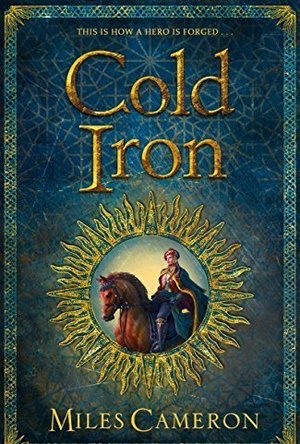
Elaborate prose and an unsettling amount of "wait and see" damaged my enjoyment
This book feels like your standard coming-of-age fantasy - young man from a simple village finds himself in the big city destined for greatness and surrounds himself with strong watchers while he grows into his potential. It is that and it is so much more.
The story that is told is how Aranthur, this young man (selected from his village to attend the big city university) finds himself in the midst of conflict and significant events in the empire's changing status. The idea of fate dictating that this one man would be at the centre of things (see Wheel of Time) is not one that is explored here. While it is hinted at (he is frequently told off for ending up in unusual circumstances), it isn't overly laboured. Nobody tells him he was chosen or anything like that. Instead he gradually learns that he has found himself at the centre of political intrigue, plotting, counter-plotting, conspiracies and war.
This book is not about Aranthur. He is just the focal point of the book, the story is so much bigger than him. This meant it did at times become a little hard to take that he always just happened to meet the right person, go to the right place at the right time in order to witness or participate in a number of significant plot events. In hindsight, this is largely all explained as some hidden agenda and him being put in those places to make those decisions but at the time it was a little jarring.
The narrative is more akin to Robert Jordan than many contemporary writers - so much overly elaborate description of people, places, clothes, horses, weapons etc. At times this adds to the reading experience but I found it over-used and made the book feel like a much longer read (I was shocked when I found out it was just under 450 pages - it reads like around 700). Also, so much of the narrative is in either italics (to show it is a magic/majick/magik delete as appropriate) or is in some odd variation of French ("gonne" for gun, "quaveh" for coffee etc) to become irritating. At times the book is more like a decent fantasy tale or conspiracy and intrigue which has been edited by a historical re-enactment nut. Given this is fictional and the world is the author's to do with as he wishes, forcing some historical accuracy at the expense of reader enjoyment seemed an odd decision to make.
The magical system seems fairly standard fantasy fayre, albeit it is not described or explored in any detail, people just suddenly do things which haven't previously been mentioned. A large aspect of the book is Aranthur's being chosen to translate an ancient text to decode the magical secrets hidden there. I think in all he decodes three of these, and uses them, but there is no mention of them until he has to use them in a fight. It could just be that I have been reading a lot of LitRPG recently, where every spell is described in intimate detail and its uses are discussed way in advance of being needed in combat, but I felt like it was something of an afterthought or rescue from a plot dead-end ("oh sod it, say he done a magic").
While I did enjoy this book on the whole, the narrative style and the focus being on clothes rather than describing the interesting aspects of the world were to its detriment. Also, the book is written as two "books" (chapters), the first "book" covers around 80% and all in one long chapter without breaks. To my mind, ending there would have sufficed. The final 20% in "book 2" felt like part epilogue, part sequel and should maybe have been split as such.
My advice to anyone reading this, is to suspend disbelief that little bit further and trust that things do largely get explained satisfactorily before the end.
The story that is told is how Aranthur, this young man (selected from his village to attend the big city university) finds himself in the midst of conflict and significant events in the empire's changing status. The idea of fate dictating that this one man would be at the centre of things (see Wheel of Time) is not one that is explored here. While it is hinted at (he is frequently told off for ending up in unusual circumstances), it isn't overly laboured. Nobody tells him he was chosen or anything like that. Instead he gradually learns that he has found himself at the centre of political intrigue, plotting, counter-plotting, conspiracies and war.
This book is not about Aranthur. He is just the focal point of the book, the story is so much bigger than him. This meant it did at times become a little hard to take that he always just happened to meet the right person, go to the right place at the right time in order to witness or participate in a number of significant plot events. In hindsight, this is largely all explained as some hidden agenda and him being put in those places to make those decisions but at the time it was a little jarring.
The narrative is more akin to Robert Jordan than many contemporary writers - so much overly elaborate description of people, places, clothes, horses, weapons etc. At times this adds to the reading experience but I found it over-used and made the book feel like a much longer read (I was shocked when I found out it was just under 450 pages - it reads like around 700). Also, so much of the narrative is in either italics (to show it is a magic/majick/magik delete as appropriate) or is in some odd variation of French ("gonne" for gun, "quaveh" for coffee etc) to become irritating. At times the book is more like a decent fantasy tale or conspiracy and intrigue which has been edited by a historical re-enactment nut. Given this is fictional and the world is the author's to do with as he wishes, forcing some historical accuracy at the expense of reader enjoyment seemed an odd decision to make.
The magical system seems fairly standard fantasy fayre, albeit it is not described or explored in any detail, people just suddenly do things which haven't previously been mentioned. A large aspect of the book is Aranthur's being chosen to translate an ancient text to decode the magical secrets hidden there. I think in all he decodes three of these, and uses them, but there is no mention of them until he has to use them in a fight. It could just be that I have been reading a lot of LitRPG recently, where every spell is described in intimate detail and its uses are discussed way in advance of being needed in combat, but I felt like it was something of an afterthought or rescue from a plot dead-end ("oh sod it, say he done a magic").
While I did enjoy this book on the whole, the narrative style and the focus being on clothes rather than describing the interesting aspects of the world were to its detriment. Also, the book is written as two "books" (chapters), the first "book" covers around 80% and all in one long chapter without breaks. To my mind, ending there would have sufficed. The final 20% in "book 2" felt like part epilogue, part sequel and should maybe have been split as such.
My advice to anyone reading this, is to suspend disbelief that little bit further and trust that things do largely get explained satisfactorily before the end.
Debbiereadsbook (1804 KP) rated I've Got You in Books
Jul 3, 2019
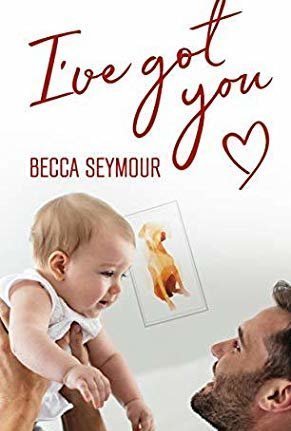
a stunning follow up!
Independent reviewer for Archaeolibrarian, I was gifted my copy of this book.
This is sort of the second book in the set, Let Me Show You is the first, and you really should read that one, I think, to give you the full picture of what Scott did to Carter in that book, and why he feels so bad about himself in this one. Not totally NECESSARY, but I think it would help a great deal.
Scott was awful to Carter, and then came out to him, which made what Scott did all the worse. When Scott kisses Davis, Tanner’s best friend, at Carter and Tanner’s party, Scott runs. It takes a great deal of Carter to bring Scott out of himself. Davis is profoundly affected by that kiss, and he knows what Scott did to Carter was bad, but when Davis sees Scott, really SEES deep into his eyes, Davis knows Scott is desperately unhappy with his lot. But can the newly outed vet be happy with the single dad? Can he be happy, at ALL?
Like I said, I think it would help a great deal to read Carter and Tanner’s book before this one. If only to give you the full picture of what Scott did to Carter, and why Tanner is reluctant to forgive Scott, even if Carter does, and just why Scott hates himself so much. You need that bigger picture, I think. Just my personal opinion, is all.
Scott is hurting. He knows what he did was wrong, and the fact that Carter has taken it upon himself to become Scott’s best friend shocks him but gives him hope. He doesn’t know if he will ever be truly happy with himself for that, but he has to try. Meeting Davis at Carter and Tanner’s party was a bit of a revelation. He doesn’t know why he kissed Davis, but he liked it, a lot. Getting to know Davis seems like a good idea, but a deeply scary one for Scott, especially since Davis has a baby daughter.
Davis is lovely! I loved his patience with Scott, he knows Scott is hurting, and he knows Scott is newly out, so he understands explaining stuff is hard work, but very quickly, very early on, Davis knows Scott is the man for him. He just has to bide his time while Scott gets himself sorted. When Scott comes to work in Davis’ coffee shop, it gives Davis the ideal opportunity to get close to Scott. And when Scott meets Libby?? Davis is smitten, deeply!
There is, for Scott, a great deal of soul-searching in this book. Davis is an open book here and Scott is not. It takes time for Scott to come out of himself, and for the relationship between Davis and Scott to develop and I loved that. In Carter and Tanner’s review, I said I loved being made to wait for the main event but here? I wasn’t even sure we would GET the main event! It’s a close thing, I tell ya. But it’s right and proper that these two take their time, and get to know each other properly, I think.
It has some sexy time, some deeply emotional time, some funny moments and some shocking ones. Both Davis and Scott have their say, in the first person. Both voices are very different, and each change is clearly headed at the beginning of a chapter.
It also has some very homophobic comments from a shocking source, where you don’t expect them, but once you know, you understand why Scott was in a bad place before.
We leave this little town, with Scott and Davis, and Carter and Tanner happily settling down to their new lives together. We also get to meet Scott’s sister. I’d like her to be happy too. She had it tough for a long time, and reconnecting with Scott gives her the courage to do something about her life. She deserves the kind of happiness her brother has found, too, please Ms Seymour!
Not quite as warm and fuzzies and too stinking cute as Let Me Some You, but it’s a very close thing! Still. . .
5 full and shiny stars
**same worded review will appear elsewhere**
This is sort of the second book in the set, Let Me Show You is the first, and you really should read that one, I think, to give you the full picture of what Scott did to Carter in that book, and why he feels so bad about himself in this one. Not totally NECESSARY, but I think it would help a great deal.
Scott was awful to Carter, and then came out to him, which made what Scott did all the worse. When Scott kisses Davis, Tanner’s best friend, at Carter and Tanner’s party, Scott runs. It takes a great deal of Carter to bring Scott out of himself. Davis is profoundly affected by that kiss, and he knows what Scott did to Carter was bad, but when Davis sees Scott, really SEES deep into his eyes, Davis knows Scott is desperately unhappy with his lot. But can the newly outed vet be happy with the single dad? Can he be happy, at ALL?
Like I said, I think it would help a great deal to read Carter and Tanner’s book before this one. If only to give you the full picture of what Scott did to Carter, and why Tanner is reluctant to forgive Scott, even if Carter does, and just why Scott hates himself so much. You need that bigger picture, I think. Just my personal opinion, is all.
Scott is hurting. He knows what he did was wrong, and the fact that Carter has taken it upon himself to become Scott’s best friend shocks him but gives him hope. He doesn’t know if he will ever be truly happy with himself for that, but he has to try. Meeting Davis at Carter and Tanner’s party was a bit of a revelation. He doesn’t know why he kissed Davis, but he liked it, a lot. Getting to know Davis seems like a good idea, but a deeply scary one for Scott, especially since Davis has a baby daughter.
Davis is lovely! I loved his patience with Scott, he knows Scott is hurting, and he knows Scott is newly out, so he understands explaining stuff is hard work, but very quickly, very early on, Davis knows Scott is the man for him. He just has to bide his time while Scott gets himself sorted. When Scott comes to work in Davis’ coffee shop, it gives Davis the ideal opportunity to get close to Scott. And when Scott meets Libby?? Davis is smitten, deeply!
There is, for Scott, a great deal of soul-searching in this book. Davis is an open book here and Scott is not. It takes time for Scott to come out of himself, and for the relationship between Davis and Scott to develop and I loved that. In Carter and Tanner’s review, I said I loved being made to wait for the main event but here? I wasn’t even sure we would GET the main event! It’s a close thing, I tell ya. But it’s right and proper that these two take their time, and get to know each other properly, I think.
It has some sexy time, some deeply emotional time, some funny moments and some shocking ones. Both Davis and Scott have their say, in the first person. Both voices are very different, and each change is clearly headed at the beginning of a chapter.
It also has some very homophobic comments from a shocking source, where you don’t expect them, but once you know, you understand why Scott was in a bad place before.
We leave this little town, with Scott and Davis, and Carter and Tanner happily settling down to their new lives together. We also get to meet Scott’s sister. I’d like her to be happy too. She had it tough for a long time, and reconnecting with Scott gives her the courage to do something about her life. She deserves the kind of happiness her brother has found, too, please Ms Seymour!
Not quite as warm and fuzzies and too stinking cute as Let Me Some You, but it’s a very close thing! Still. . .
5 full and shiny stars
**same worded review will appear elsewhere**

Sophia (Bookwyrming Thoughts) (530 KP) rated Going Down in Flames (Going Down in Flames, #1) in Books
Jan 23, 2020
For once, I think my instincts were right (not that I ever listen) about Going Down in Flames. I was expecting a lot more.
The idea and the concept were unique and interesting. Shape-shifting dragons? Check. Oddball at a prestigious boarding school Bryn is being sent to on her sixteenth birthday? Check. Proof that the Directorate isn't always right? Check. TRYING to stay alive? Ooo, interesting. Check! All the ingredients of a great book. I was even so excited about DRAGONS!
<img border="0" src="http://1.bp.blogspot.com/-cuqBh1sDPEY/U6NzNu6g3hI/AAAAAAAADhs/Pb2oaXOydkQ/s1600/how_to_train_your_dragon_2_gif_by_thegrzebol-d6wlb2k.gif"; height="106" width="320">
Plus, the pretty cover and the tag line: If her love life is going down in flames, she might as well spark a revolution.
WHAT REVOLUTION?!?!?! is my biggest question right at this very moment. There's no revolution, not really. At least, not one that Bryn starts. That revolution, which is apparently peaceful and started by Zavien-Not-Zayn, was there well before Bryn comes around. She doesn't even know about that revolution or even the fact that she's a dragon until said dude starts stalking her for awhile.
<img border="0" src="http://4.bp.blogspot.com/-98SDXmeq-i8/U6Nzpun3IGI/AAAAAAAADh0/d0iqv6tv0OU/s1600/giphy.gif"; height="175" width="320">
So I'm really curious as to the definition of revolution here. Because in the long run, it's all sparkly rainbows and unicorns with the abrupt end. The last sentence? Damn Directorate. If anything, damning the Directorate shows there hasn't been a revolution. Sure, Bryn makes her point. She's a crossbreed and she's just like any other dragon. She made a change. To have a love life, that is, but it's not like she gets to choose. I mean, her grandmother and the mom of the dude she hates most attempts at playing matchmaker. Arranged marriage still exists.
*sighs* Not a dramatic change if you ask me. A change for future crossbreeds, sure. Certainly the Directorate wasn't overthrown.
<img border="0" src="http://3.bp.blogspot.com/-1ffyT3n870o/U6N0wvDSjhI/AAAAAAAADiA/3S69yaZT8RM/s1600/giphy+(2).gif"; height="176" width="320">
Perhaps the most interesting part of Going Down in Flames for me were the death threats. The way they're written and set up. They're thrown in at surprising, yet right times. Oh, and there's no warning on those attempts. It kept me at the edge of my seat trying to guess where the next attack would be at.
There also seems to be something missing from the characters. Particularly with Jaxon and Bryn. They hate each other and then all of a sudden, he starts helping her. Not just to save his reputation, but to protect her. There is something remotely wrong with a character who hates you from the bottom of their hearts to "protecting you." O_o
<blockquote>Jaxon: I also did it to help you.
Bryn: I saved your life. Dont get snippy with me.
Jaxon: *slams coffee cup down* I came to secure protection for your life.</blockquote>
Tell me there isn't something wrong with that. O_o Because it ends shortly after, and now I can't really decide if Bryn gets stuck marrying Jaxon due to arranged marriage or she gets to choose who she wants to marry. If there are any other life threatening stuff going on afterward or the dragons that used to hate her now treat her as an equal. If her mother actually gets a happy reunion with her parents. If Zavien is still stuck with his intended or if he and the Revisionists peacefully achieve more individual rights for dragons.
<img border="0" src="http://4.bp.blogspot.com/-v3e-NYdq7P8/U6N2FJxKKNI/AAAAAAAADiM/7xswneekUqs/s1600/giphy+(3).gif"; height="239" width="320">
There are just so many questions that aren't answered yet, that this feels like an entire end is missing and Going Down in Flames is the very first of a trilogy or series. Yet... this is a stand alone... according to Goodreads. Am I missing something, or did anyone else who read this feel the same way?
--------------------------
Advanced copy provided by the publisher
Original Rating: 2.5
This review and more found over at <a href="http://bookwyrming-thoughts.blogspot.com/2014/06/arc-review-going-down-in-flames-by-chris-cannon.html">Bookwyrming Thoughts</a>
<a href="http://bookwyrming-thoughts.blogspot.com/"><img src="http://4.bp.blogspot.com/-Gi5Rk5yLloA/UtliaUbdL3I/AAAAAAAACbE/J27z92_qrYU/s1600/Official+Banner.png"; /></a>
The idea and the concept were unique and interesting. Shape-shifting dragons? Check. Oddball at a prestigious boarding school Bryn is being sent to on her sixteenth birthday? Check. Proof that the Directorate isn't always right? Check. TRYING to stay alive? Ooo, interesting. Check! All the ingredients of a great book. I was even so excited about DRAGONS!
<img border="0" src="http://1.bp.blogspot.com/-cuqBh1sDPEY/U6NzNu6g3hI/AAAAAAAADhs/Pb2oaXOydkQ/s1600/how_to_train_your_dragon_2_gif_by_thegrzebol-d6wlb2k.gif"; height="106" width="320">
Plus, the pretty cover and the tag line: If her love life is going down in flames, she might as well spark a revolution.
WHAT REVOLUTION?!?!?! is my biggest question right at this very moment. There's no revolution, not really. At least, not one that Bryn starts. That revolution, which is apparently peaceful and started by Zavien-Not-Zayn, was there well before Bryn comes around. She doesn't even know about that revolution or even the fact that she's a dragon until said dude starts stalking her for awhile.
<img border="0" src="http://4.bp.blogspot.com/-98SDXmeq-i8/U6Nzpun3IGI/AAAAAAAADh0/d0iqv6tv0OU/s1600/giphy.gif"; height="175" width="320">
So I'm really curious as to the definition of revolution here. Because in the long run, it's all sparkly rainbows and unicorns with the abrupt end. The last sentence? Damn Directorate. If anything, damning the Directorate shows there hasn't been a revolution. Sure, Bryn makes her point. She's a crossbreed and she's just like any other dragon. She made a change. To have a love life, that is, but it's not like she gets to choose. I mean, her grandmother and the mom of the dude she hates most attempts at playing matchmaker. Arranged marriage still exists.
*sighs* Not a dramatic change if you ask me. A change for future crossbreeds, sure. Certainly the Directorate wasn't overthrown.
<img border="0" src="http://3.bp.blogspot.com/-1ffyT3n870o/U6N0wvDSjhI/AAAAAAAADiA/3S69yaZT8RM/s1600/giphy+(2).gif"; height="176" width="320">
Perhaps the most interesting part of Going Down in Flames for me were the death threats. The way they're written and set up. They're thrown in at surprising, yet right times. Oh, and there's no warning on those attempts. It kept me at the edge of my seat trying to guess where the next attack would be at.
There also seems to be something missing from the characters. Particularly with Jaxon and Bryn. They hate each other and then all of a sudden, he starts helping her. Not just to save his reputation, but to protect her. There is something remotely wrong with a character who hates you from the bottom of their hearts to "protecting you." O_o
<blockquote>Jaxon: I also did it to help you.
Bryn: I saved your life. Dont get snippy with me.
Jaxon: *slams coffee cup down* I came to secure protection for your life.</blockquote>
Tell me there isn't something wrong with that. O_o Because it ends shortly after, and now I can't really decide if Bryn gets stuck marrying Jaxon due to arranged marriage or she gets to choose who she wants to marry. If there are any other life threatening stuff going on afterward or the dragons that used to hate her now treat her as an equal. If her mother actually gets a happy reunion with her parents. If Zavien is still stuck with his intended or if he and the Revisionists peacefully achieve more individual rights for dragons.
<img border="0" src="http://4.bp.blogspot.com/-v3e-NYdq7P8/U6N2FJxKKNI/AAAAAAAADiM/7xswneekUqs/s1600/giphy+(3).gif"; height="239" width="320">
There are just so many questions that aren't answered yet, that this feels like an entire end is missing and Going Down in Flames is the very first of a trilogy or series. Yet... this is a stand alone... according to Goodreads. Am I missing something, or did anyone else who read this feel the same way?
--------------------------
Advanced copy provided by the publisher
Original Rating: 2.5
This review and more found over at <a href="http://bookwyrming-thoughts.blogspot.com/2014/06/arc-review-going-down-in-flames-by-chris-cannon.html">Bookwyrming Thoughts</a>
<a href="http://bookwyrming-thoughts.blogspot.com/"><img src="http://4.bp.blogspot.com/-Gi5Rk5yLloA/UtliaUbdL3I/AAAAAAAACbE/J27z92_qrYU/s1600/Official+Banner.png"; /></a>

MegaReader
Book and Education
App
Access over 2 million (and counting) FREE Books, Right From Your iPhone, iPad, or iPod Touch... …...

Bird Song Id Automatic Recognition & Reference - Birds of the British Isles
Reference
App
The original and the best, accept no cheap imitations ! Record a bird singing and use Automatic...