
Search
Search results

Bob Mann (459 KP) rated Mary Poppins Returns (2018) in Movies
Sep 28, 2021
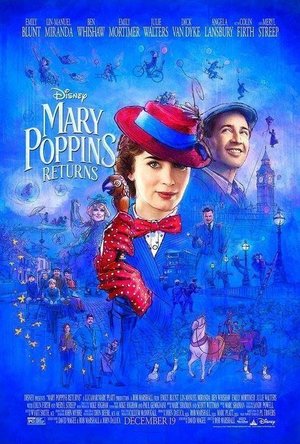


A valiant attempt to recreate a masterpiece.
How do you repaint a masterpiece: the Mona Lisa of children’s fantasy cinema? Some would say “You shouldn’t try”.
As I’ve said before, Mary Poppins was the first film I saw when it came out (or soon afterwards) at a very impressionable age…. I was said to have bawled my eyes out with “THE MAGIC NANNY IS GOING AWAY!!” as Julie Andrews floated off! So as my last cinema trip of 2018 I went to see this sequel, 54 years after the original, with a sense of dread. I’m relieved to say that although the film has its flaws it’s by no means the disaster I envisaged.
The plot
It’s a fairly lightweight story. Now all grown up, young Michael from the original film (Ben Whishaw) has his own family. His troubles though come not singly but in battalions since not only is he grieving a recent loss but he is also about to be evicted from 17 Cherry Tree Lane. Help is at hand in that his father, George Banks, had shares with the Fidelity Fiduciary Bank. But despite their best efforts neither he, his sister Jane (Emily Mortimer) nor their chirpy “strike a light” lamplighter friend Jack (Lin-Manuel Miranda) can find the all-important share certificates. With the deadline from bank manager Wilkins (Colin Firth) approaching, it’s fortuitous that Mary Poppins (Emily Blunt) drops in to look after the Banks children – John (Nathanael Saleh), Anabel (Pixie Davies) and Georgie (Joel Dawson) – in her own inimitable fashion.
Songs that are more Meh-ry Poppins
I know musical taste is very personal. My biggest problem with the film though was that the songs by Marc Shaiman were, to me, on the lacklustre side. Only one jumped out and struck me: the jaunty vaudeville number “A Cover is not the Book”. Elsewhere they were – to me – unmemorable and nowhere near as catchy as those of “The Greatest Showman“. (What amplified this for me was having some of the classic Sherman-brothers themes woven into the soundtrack that just made me realise what I was missing!) Richard M Sherman – now 90 – was credited with “Music Consultant” but I wonder how much input he actually had?
The other flaws
Another issue I had with the film was that it just tried WAAYYY too hard to tick off the key attributes of the original:
‘Mary in the mirror’ – check
‘Bottomless carpet bag’ – check
‘Initial fun in the nursery’ – check
‘Quirky trip to a cartoon land’ – check
‘Dance on the ceiling with a quirky relative’ – check
‘Chirpy chimney sweeps’ – check (“Er… Mr Marshall… we couldn’t get chimney sweeps… will lamplighters do?” “Yeah, good enough”)
Another thing that struck me about the film – particularly as a film aimed at kids – is just how long it is. At 2 hours and 10 minutes it’s a bladder-testing experience for adults let alone younger children. (It’s worth noting that this is still 9 minutes shorter than the original, but back in the 60’s we had FAR fewer options to be stimulated by entertainment and our attention spans were – I think – much longer as a result!)
What it does get right
But with this whinging aside, the film does get a number of things spit-spot on.
Emily Blunt is near perfection as Poppins. (In the interests of balance my wife found her bizarrely clipped accent very grating, but I suspect P.L. Travers would have approved!). Broadway star Lin-Manuel Miranda also does a good job as Jack, although you wonder whether the ‘society of cockney actors’ must again be in a big grump about the casting! I found Emily Mortimer just delightful as the grown-up Jane, although Ben Whishaw‘s Michael didn’t particularly connect with me.
Almost unrecognisable was David Warner as the now wheelchair-bound Admiral Boom. His first mate is none other than Jim Norton of “Father Ted” Bishop Brennan fame (thanks to my daughter Jenn for pointing that one out)!
Also watch out (I’d largely missed it before I realised!) for a nice pavement cameo by Karen Dotrice, the original Jane, asking directions to number 19 Cherry Tree Lane.
What the film also gets right is to implement the old-school animation of the “Jolly Holidays” segment of the original. That’s a really smart move. Filmed at Shepperton Studios in London, this is once again a great advert for Britain’s film technicians. The London sets and the costumes (by the great Sandy Powell) are just superb.
Some cameo cherries on the cake
Finally, the aces in the hole are the two cameos near the end of the film. And they would have been lovely surprises as well since neither name appears in the opening credits. It’s therefore a CRYING SHAME that they chose to let the cat out of the bag in the trailer (BLOODY MARKETING EXECS!). In case you haven’t seen the trailer, I won’t spoil it for you here. But as a magical movie experience the first of those cameos moved me close to tears. He also delivers a hum-dinger of a plot twist that is a genuinely welcome crossover from the first film.
Final Thoughts
Rob Marshall directs, and with a pretty impossible task he delivers an end-product that, while it didn’t completely thrill me, did well not to trash my delicate hopes and dreams either. Having just listened to Kermode and Mayo’s review (and it seems that Mark Kermode places Poppins on a similar pedestal to me) the songs (and therefore the “Place Where Lost Things Go” song) just didn’t resonate with me in the same way, and so, unlike Kermode, I mentally never bridged the gap to safely enjoying it.
But what we all think is secondary. Because if some three or four year old out there gets a similarly lifelong love of the cinema by watching this, then that’s all that matters.
As I’ve said before, Mary Poppins was the first film I saw when it came out (or soon afterwards) at a very impressionable age…. I was said to have bawled my eyes out with “THE MAGIC NANNY IS GOING AWAY!!” as Julie Andrews floated off! So as my last cinema trip of 2018 I went to see this sequel, 54 years after the original, with a sense of dread. I’m relieved to say that although the film has its flaws it’s by no means the disaster I envisaged.
The plot
It’s a fairly lightweight story. Now all grown up, young Michael from the original film (Ben Whishaw) has his own family. His troubles though come not singly but in battalions since not only is he grieving a recent loss but he is also about to be evicted from 17 Cherry Tree Lane. Help is at hand in that his father, George Banks, had shares with the Fidelity Fiduciary Bank. But despite their best efforts neither he, his sister Jane (Emily Mortimer) nor their chirpy “strike a light” lamplighter friend Jack (Lin-Manuel Miranda) can find the all-important share certificates. With the deadline from bank manager Wilkins (Colin Firth) approaching, it’s fortuitous that Mary Poppins (Emily Blunt) drops in to look after the Banks children – John (Nathanael Saleh), Anabel (Pixie Davies) and Georgie (Joel Dawson) – in her own inimitable fashion.
Songs that are more Meh-ry Poppins
I know musical taste is very personal. My biggest problem with the film though was that the songs by Marc Shaiman were, to me, on the lacklustre side. Only one jumped out and struck me: the jaunty vaudeville number “A Cover is not the Book”. Elsewhere they were – to me – unmemorable and nowhere near as catchy as those of “The Greatest Showman“. (What amplified this for me was having some of the classic Sherman-brothers themes woven into the soundtrack that just made me realise what I was missing!) Richard M Sherman – now 90 – was credited with “Music Consultant” but I wonder how much input he actually had?
The other flaws
Another issue I had with the film was that it just tried WAAYYY too hard to tick off the key attributes of the original:
‘Mary in the mirror’ – check
‘Bottomless carpet bag’ – check
‘Initial fun in the nursery’ – check
‘Quirky trip to a cartoon land’ – check
‘Dance on the ceiling with a quirky relative’ – check
‘Chirpy chimney sweeps’ – check (“Er… Mr Marshall… we couldn’t get chimney sweeps… will lamplighters do?” “Yeah, good enough”)
Another thing that struck me about the film – particularly as a film aimed at kids – is just how long it is. At 2 hours and 10 minutes it’s a bladder-testing experience for adults let alone younger children. (It’s worth noting that this is still 9 minutes shorter than the original, but back in the 60’s we had FAR fewer options to be stimulated by entertainment and our attention spans were – I think – much longer as a result!)
What it does get right
But with this whinging aside, the film does get a number of things spit-spot on.
Emily Blunt is near perfection as Poppins. (In the interests of balance my wife found her bizarrely clipped accent very grating, but I suspect P.L. Travers would have approved!). Broadway star Lin-Manuel Miranda also does a good job as Jack, although you wonder whether the ‘society of cockney actors’ must again be in a big grump about the casting! I found Emily Mortimer just delightful as the grown-up Jane, although Ben Whishaw‘s Michael didn’t particularly connect with me.
Almost unrecognisable was David Warner as the now wheelchair-bound Admiral Boom. His first mate is none other than Jim Norton of “Father Ted” Bishop Brennan fame (thanks to my daughter Jenn for pointing that one out)!
Also watch out (I’d largely missed it before I realised!) for a nice pavement cameo by Karen Dotrice, the original Jane, asking directions to number 19 Cherry Tree Lane.
What the film also gets right is to implement the old-school animation of the “Jolly Holidays” segment of the original. That’s a really smart move. Filmed at Shepperton Studios in London, this is once again a great advert for Britain’s film technicians. The London sets and the costumes (by the great Sandy Powell) are just superb.
Some cameo cherries on the cake
Finally, the aces in the hole are the two cameos near the end of the film. And they would have been lovely surprises as well since neither name appears in the opening credits. It’s therefore a CRYING SHAME that they chose to let the cat out of the bag in the trailer (BLOODY MARKETING EXECS!). In case you haven’t seen the trailer, I won’t spoil it for you here. But as a magical movie experience the first of those cameos moved me close to tears. He also delivers a hum-dinger of a plot twist that is a genuinely welcome crossover from the first film.
Final Thoughts
Rob Marshall directs, and with a pretty impossible task he delivers an end-product that, while it didn’t completely thrill me, did well not to trash my delicate hopes and dreams either. Having just listened to Kermode and Mayo’s review (and it seems that Mark Kermode places Poppins on a similar pedestal to me) the songs (and therefore the “Place Where Lost Things Go” song) just didn’t resonate with me in the same way, and so, unlike Kermode, I mentally never bridged the gap to safely enjoying it.
But what we all think is secondary. Because if some three or four year old out there gets a similarly lifelong love of the cinema by watching this, then that’s all that matters.

Chris Sawin (602 KP) rated The Suicide Squad (2021) in Movies
Oct 6, 2021

Its adult humor is also incredibly poignant (2 more)
Blood and gore is Troma levels of insanity
King Shark and Polka Dot Man
Not as fun on repeat viewings (1 more)
Is a little too similar to Guardians of the Galaxy
I'm a Motherf@#$ing Superhero!
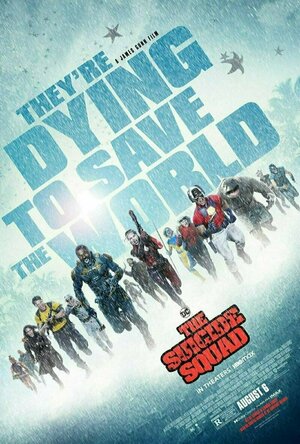
You could probably get away with calling James Gunn’s The Suicide Squad an R-rated version of Guardians of the Galaxy, but it isn’t entirely fair or correct. It’s a complicated comparison much like Gunn’s status with Marvel Studios that allowed him to make the film in the first place and whether or not The Suicide Squad is a sequel or a reboot to David Ayer’s 2016 film.
Gunn has always had a knack for getting gory or gross or raunchy if the opportunity presented itself. The Suicide Squad almost feels like a clean, strike that, blood-splattered slate for the filmmaker. Gunn had complete creative control while making The Suicide Squad and it shows; not only in its graphic content and excessive vulgarity, but also in the characters Gunn chose to be in the film. Nearly everyone has been replaced from the previous Suicide Squad film except for Captain Boomerang (Jai Courtney), Colonel Rick Flagg (Joel Kinnaman), Harley Quinn (Margot Robbie), and Amanda Waller (Viola Davis). The new characters are mostly unknown or barely known villains, which makes the fact that nearly all of them are expendable all the more intriguing.
While Guardians of the Galaxy and The Suicide Squad are two different films, there are some undeniable similarities. The cast of The Suicide Squad is insanely stacked, but you have to know by now that three quarters of these characters die in horribly gruesome ways. Witnessing who lives and who dies is half the fun of the film, so that won’t be spoiled here. But The Suicide Squad has a team of five characters that are grouped together and featured more than anyone else. It’s a lot like how Guardians began with Star-Lord, Gamora, Drax, Rocket, and Groot. These five characters also end up being the ones you love the most.
Gunn also has a thing for taking a group of assholes and giving them meaning. In the tenth season of South Park, Eric Cartman meets Bart Simpson face to face. Bart has always been a troublemaker and a prankster, but Cartman ground up Scott Tenorman’s parents, slapped that ground parent meat in some chili, and made Scott eat his own parents. The comparison between Guardians and The Suicide Squad is a lot like the difference between Bart Simpson and Eric Cartman. The Suicide Squad features straight up murderers, demented psychopaths, and whatever the hell Weasel is.
Not unlike his other comic book film work though, Gunn typically takes what would be unlikable characters on their own and finds a purpose for them once they’re with other outcasts that they can relate to. There is a ton of heart in The Suicide Squad. You fall in love with King Shark because he’s trying to read books upside down and use one of his fingers as mustache as a brilliant disguise, but you don’t feel for him until he reveals that he’s never had a friend. Sebastian, Ratcatcher II’s go-to rat, is adorable because he waves at, offers leaves to, and flocks toward Bloodsport even though he’s afraid of rats. There’s still this camaraderie in The Suicide Squad. It may be broken and gory, but it’s still camaraderie.
There are some unusual choices that Gunn made with The Suicide Squad though. They originally wanted Will Smith to come back as Deadshot, but supposedly cast Idris Elba to replace Smith in the role. Then they backtracked and made Elba Bloodsport. The odd thing is that both Bloodsport and Peacemaker are exactly the same as Deadshot. Peacemaker seems to be a bit crazier, but both characters have a thing for making anything a weapon in their hands and having precise aim. Bloodsport is even doing everything in the film for the sake of his daughter. It gives Warner Bros a chance to bring Smith back as Deadshot down the line, but having all three characters in the same film would be serious overkill.
Harley Quinn’s action sequences in The Suicide Squad are better and more satisfying than anything Margot Robbie has done with the role. Polka Dot Man is low-key the coolest character of the film despite seeing his mom in every person that he meets. Many will likely point to the blood, the gore, and all of the F-bombs shouted mostly among teammates as Gunn cleansing his Marvel/Disney palette so to speak. However, the major difference is Starro. Starro is a giant blue and purple starfish with an eyeball in the middle of his body. He is essentially a kaiju, but he shoots miniature versions of himself out of his armpits which latch onto people’s faces, kills them, and turns their corpses into zombie-like slaves that do his bidding; all while Starro gets bigger and bigger in the process. The abridged version of this starfish heavy explanation is that Starro is fucking terrifying. The entire world is basically on the verge of bowing down to a Godzilla sized starfish that has the ability to shoot armies of himself out of his Goddamn armpits! The MCU featuring a monster or creature of any kind that is that scary is slim to none.
The Suicide Squad is an uproarious extravaganza filled with grotesque nom-noms, full-on naked dick shots, and John Cena in tighty-whities and it’s is the most fun you’ll have with an R-rated comic book film in a theater (or at home with HBO Max) since Deadpool. It’s the first comic book film to come along in a good long while that’s charming because of how weird it is. As a final note, stay/watch after the credits. James Gunn and John Cena are doing an 8-episode Peacemaker TV series for HBO Max due sometime in 2022, so that may or may not be teased in some capacity.
Gunn has always had a knack for getting gory or gross or raunchy if the opportunity presented itself. The Suicide Squad almost feels like a clean, strike that, blood-splattered slate for the filmmaker. Gunn had complete creative control while making The Suicide Squad and it shows; not only in its graphic content and excessive vulgarity, but also in the characters Gunn chose to be in the film. Nearly everyone has been replaced from the previous Suicide Squad film except for Captain Boomerang (Jai Courtney), Colonel Rick Flagg (Joel Kinnaman), Harley Quinn (Margot Robbie), and Amanda Waller (Viola Davis). The new characters are mostly unknown or barely known villains, which makes the fact that nearly all of them are expendable all the more intriguing.
While Guardians of the Galaxy and The Suicide Squad are two different films, there are some undeniable similarities. The cast of The Suicide Squad is insanely stacked, but you have to know by now that three quarters of these characters die in horribly gruesome ways. Witnessing who lives and who dies is half the fun of the film, so that won’t be spoiled here. But The Suicide Squad has a team of five characters that are grouped together and featured more than anyone else. It’s a lot like how Guardians began with Star-Lord, Gamora, Drax, Rocket, and Groot. These five characters also end up being the ones you love the most.
Gunn also has a thing for taking a group of assholes and giving them meaning. In the tenth season of South Park, Eric Cartman meets Bart Simpson face to face. Bart has always been a troublemaker and a prankster, but Cartman ground up Scott Tenorman’s parents, slapped that ground parent meat in some chili, and made Scott eat his own parents. The comparison between Guardians and The Suicide Squad is a lot like the difference between Bart Simpson and Eric Cartman. The Suicide Squad features straight up murderers, demented psychopaths, and whatever the hell Weasel is.
Not unlike his other comic book film work though, Gunn typically takes what would be unlikable characters on their own and finds a purpose for them once they’re with other outcasts that they can relate to. There is a ton of heart in The Suicide Squad. You fall in love with King Shark because he’s trying to read books upside down and use one of his fingers as mustache as a brilliant disguise, but you don’t feel for him until he reveals that he’s never had a friend. Sebastian, Ratcatcher II’s go-to rat, is adorable because he waves at, offers leaves to, and flocks toward Bloodsport even though he’s afraid of rats. There’s still this camaraderie in The Suicide Squad. It may be broken and gory, but it’s still camaraderie.
There are some unusual choices that Gunn made with The Suicide Squad though. They originally wanted Will Smith to come back as Deadshot, but supposedly cast Idris Elba to replace Smith in the role. Then they backtracked and made Elba Bloodsport. The odd thing is that both Bloodsport and Peacemaker are exactly the same as Deadshot. Peacemaker seems to be a bit crazier, but both characters have a thing for making anything a weapon in their hands and having precise aim. Bloodsport is even doing everything in the film for the sake of his daughter. It gives Warner Bros a chance to bring Smith back as Deadshot down the line, but having all three characters in the same film would be serious overkill.
Harley Quinn’s action sequences in The Suicide Squad are better and more satisfying than anything Margot Robbie has done with the role. Polka Dot Man is low-key the coolest character of the film despite seeing his mom in every person that he meets. Many will likely point to the blood, the gore, and all of the F-bombs shouted mostly among teammates as Gunn cleansing his Marvel/Disney palette so to speak. However, the major difference is Starro. Starro is a giant blue and purple starfish with an eyeball in the middle of his body. He is essentially a kaiju, but he shoots miniature versions of himself out of his armpits which latch onto people’s faces, kills them, and turns their corpses into zombie-like slaves that do his bidding; all while Starro gets bigger and bigger in the process. The abridged version of this starfish heavy explanation is that Starro is fucking terrifying. The entire world is basically on the verge of bowing down to a Godzilla sized starfish that has the ability to shoot armies of himself out of his Goddamn armpits! The MCU featuring a monster or creature of any kind that is that scary is slim to none.
The Suicide Squad is an uproarious extravaganza filled with grotesque nom-noms, full-on naked dick shots, and John Cena in tighty-whities and it’s is the most fun you’ll have with an R-rated comic book film in a theater (or at home with HBO Max) since Deadpool. It’s the first comic book film to come along in a good long while that’s charming because of how weird it is. As a final note, stay/watch after the credits. James Gunn and John Cena are doing an 8-episode Peacemaker TV series for HBO Max due sometime in 2022, so that may or may not be teased in some capacity.

Gareth von Kallenbach (980 KP) rated Battleship (2012) in Movies
Aug 7, 2019


Basing a movie off of a videogame is often a risky proposition. For every “Resident Evil”, there at least a dozen others that are out and out disasters, “Mario Brothers”, “Wing Commander”, and “Double Dragon” are a few examples of how not to do it.
While Hollywood shows no signs of stopping videogame adaptations anytime soon, game development companies are becoming more savvy with allowing their products to become movies and are requiring uality scripts, cast, and directors before they enter into any film deal. Undaunted, Hollywood turned its eyes on children’s toys for inspiration. With the successful Transformers series, Hasbro has been targeted for their very popular line of board games as source material for future movies.
First out of the box is “Battleship”, director Peter Berg’s big-budget adaptation of the timeless naval strategy game that has been enjoyed for decades by players young and old. Since this is the era of video games, the simplistic style of the board game needed to be tweaked in order to make it appealing for the summer movie masses.
Gone is the classic strategy of the game and in its place, a loud and brash cast of 20-somethings, over-the-top special effects, and a plot riddled with more holes than the classic grids in the game that spawned the film.
Taylor Kitsch follows up his role in John Carter by playing Alex Hopper, a ne’er-do-well who despite the mentoring of his successful naval officer brother (Alexander Skarsgard), never seems to run out of ways to get himself in trouble. His latest efforts to impress a girl he met in a bar, land him in hot water with the authorities and his brother lays down the law and insists that Alex join the Navy and make something of his life.
The film jumps into the future where Alex is now dating the very attractive girl from the bar, Samantha (Brooklyn Decker), and trying to get enough courage together to ask her father for permission to marry his daughter. The fact that her father is Admiral Shane (Liam Neeson), only complicates the matter.
Despite holding the rank of an officer, Alex is still extremely headstrong and prone to getting himself in trouble. What what was supposed to be a friendly soccer match during allied naval exercises escalates, and Alex finds himself facing an ignominious exit from the Navy. He’s given a temporary reprieve as the ships in his fleet are suddenly faced with the threat of extraterrestrial origins.
Approximately around the same time Alex entered the Navy, scientists developed a way to amplify radio signals and directed them toward planets they believed could possibly support life. The signals were answered in the form of a hostile force that arrives on Earth only to cut a swath of destruction across the world as well as the naval fleet it encounters. Cut off from the rest of the fleet and reinforcements by an energy field, Alex is forced into command and must confront the deadly enemy at all cost to save the world.
What follows is a series of elaborate special effects that, while visually appealing, fail to pack much punch as the plot and characters are so underwhelming.
I understand that for films this type, especially given the source material, one must give a certain amount of leeway and accept, even grudgingly, the inconsistencies and impracticalities. That being said, not only are the characters about as thin and one-dimensional as they possibly could be, they are for the most part utterly devoid of any interesting qualities nor are they given much in the way of back story that makes us care for their outcomes. R&B star Rihanna spends a good chunk of her time looking tough and menacing, but isn’t given much more to do than occasionally fire a gun.
Kitsch is so utterly bland and unsympathetic that there’s just really no redeeming value to his character. Battleship is supposed to be a story of redemption but instead it’s a story of inconsistencies. Many times throughout the film common sense much less standard military procedures seems to go out the window.
For example, standard rules of engagement tactics were not used early in the film, but yet were readily deployed during the so-called big finale to the film with success. One has to wonder how more seasoned officers with far more resources at their disposal failed to utilize such tactics or have success with the methods that they employed. Yet ironically, this young lieutenant on his first command is able to out-maneuver these aliens when he decides to take to the offensive and lull the enemy into a fairly passive mode where they don’t do much more than watch.
The aliens, while interesting, are given precious little to do other than occasionally destroy or blow something up. We have no idea why they are on earth and to be honest, why they arrived in such small force. If the idea was to conquer Earth, it was poorly planned. Yet if proper procedures were followed, their incursion could have been dealt with very early and easily with the resources at hand. But that would’ve made for a short movie.
What I found puzzling was how surprisingly light on action the movie was. Yes there were firefights but they were spread sparingly throughout the film. You do not have one grand epic battle against overwhelming odds, you do not have legions of enemy troops for the Navy to wade through. It was pretty much a here-it-is-take-it-or-leave it, ho-hum finale.
The film does have some good points with Hawaii as its main backdrop. I did like the fact that there were a lot of active and retired soldiers and sailors used in the filming of the picture. It is clear that the filmmakers wanted to honor the soldiers who have so gallantly served our nation. I just wish they could’ve given them a much better showcase, because truthfully you’ll find far more thrills and enjoyment busting out the actual Battleship game than sitting through the film.
There is a scene post-credits that does hint at possible future installments, but I kept asking myself one question, “Why?” Rumor has it that several years goes Steven Segal attempted to revive his big-screen career by pitching an Under Siege 3 to Universal. Segal supposedly pitched the idea that his character would be on a naval ship that encountered extraterrestrial menace. The studio passed on this idea and, if there’s any truth to the rumor, they should have passed on this idea when it came time to make Battleship.
While Hollywood shows no signs of stopping videogame adaptations anytime soon, game development companies are becoming more savvy with allowing their products to become movies and are requiring uality scripts, cast, and directors before they enter into any film deal. Undaunted, Hollywood turned its eyes on children’s toys for inspiration. With the successful Transformers series, Hasbro has been targeted for their very popular line of board games as source material for future movies.
First out of the box is “Battleship”, director Peter Berg’s big-budget adaptation of the timeless naval strategy game that has been enjoyed for decades by players young and old. Since this is the era of video games, the simplistic style of the board game needed to be tweaked in order to make it appealing for the summer movie masses.
Gone is the classic strategy of the game and in its place, a loud and brash cast of 20-somethings, over-the-top special effects, and a plot riddled with more holes than the classic grids in the game that spawned the film.
Taylor Kitsch follows up his role in John Carter by playing Alex Hopper, a ne’er-do-well who despite the mentoring of his successful naval officer brother (Alexander Skarsgard), never seems to run out of ways to get himself in trouble. His latest efforts to impress a girl he met in a bar, land him in hot water with the authorities and his brother lays down the law and insists that Alex join the Navy and make something of his life.
The film jumps into the future where Alex is now dating the very attractive girl from the bar, Samantha (Brooklyn Decker), and trying to get enough courage together to ask her father for permission to marry his daughter. The fact that her father is Admiral Shane (Liam Neeson), only complicates the matter.
Despite holding the rank of an officer, Alex is still extremely headstrong and prone to getting himself in trouble. What what was supposed to be a friendly soccer match during allied naval exercises escalates, and Alex finds himself facing an ignominious exit from the Navy. He’s given a temporary reprieve as the ships in his fleet are suddenly faced with the threat of extraterrestrial origins.
Approximately around the same time Alex entered the Navy, scientists developed a way to amplify radio signals and directed them toward planets they believed could possibly support life. The signals were answered in the form of a hostile force that arrives on Earth only to cut a swath of destruction across the world as well as the naval fleet it encounters. Cut off from the rest of the fleet and reinforcements by an energy field, Alex is forced into command and must confront the deadly enemy at all cost to save the world.
What follows is a series of elaborate special effects that, while visually appealing, fail to pack much punch as the plot and characters are so underwhelming.
I understand that for films this type, especially given the source material, one must give a certain amount of leeway and accept, even grudgingly, the inconsistencies and impracticalities. That being said, not only are the characters about as thin and one-dimensional as they possibly could be, they are for the most part utterly devoid of any interesting qualities nor are they given much in the way of back story that makes us care for their outcomes. R&B star Rihanna spends a good chunk of her time looking tough and menacing, but isn’t given much more to do than occasionally fire a gun.
Kitsch is so utterly bland and unsympathetic that there’s just really no redeeming value to his character. Battleship is supposed to be a story of redemption but instead it’s a story of inconsistencies. Many times throughout the film common sense much less standard military procedures seems to go out the window.
For example, standard rules of engagement tactics were not used early in the film, but yet were readily deployed during the so-called big finale to the film with success. One has to wonder how more seasoned officers with far more resources at their disposal failed to utilize such tactics or have success with the methods that they employed. Yet ironically, this young lieutenant on his first command is able to out-maneuver these aliens when he decides to take to the offensive and lull the enemy into a fairly passive mode where they don’t do much more than watch.
The aliens, while interesting, are given precious little to do other than occasionally destroy or blow something up. We have no idea why they are on earth and to be honest, why they arrived in such small force. If the idea was to conquer Earth, it was poorly planned. Yet if proper procedures were followed, their incursion could have been dealt with very early and easily with the resources at hand. But that would’ve made for a short movie.
What I found puzzling was how surprisingly light on action the movie was. Yes there were firefights but they were spread sparingly throughout the film. You do not have one grand epic battle against overwhelming odds, you do not have legions of enemy troops for the Navy to wade through. It was pretty much a here-it-is-take-it-or-leave it, ho-hum finale.
The film does have some good points with Hawaii as its main backdrop. I did like the fact that there were a lot of active and retired soldiers and sailors used in the filming of the picture. It is clear that the filmmakers wanted to honor the soldiers who have so gallantly served our nation. I just wish they could’ve given them a much better showcase, because truthfully you’ll find far more thrills and enjoyment busting out the actual Battleship game than sitting through the film.
There is a scene post-credits that does hint at possible future installments, but I kept asking myself one question, “Why?” Rumor has it that several years goes Steven Segal attempted to revive his big-screen career by pitching an Under Siege 3 to Universal. Segal supposedly pitched the idea that his character would be on a naval ship that encountered extraterrestrial menace. The studio passed on this idea and, if there’s any truth to the rumor, they should have passed on this idea when it came time to make Battleship.
Kirk Bage (1775 KP) rated Ford v Ferrari (aka Le Mans '66) (2019) in Movies
Jan 22, 2021 (Updated Jan 22, 2021)
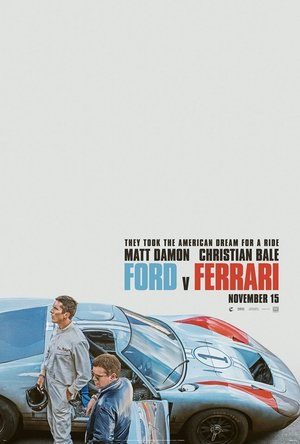
Matt Damon asked Christian Bale how he had managed to lose almost 70lbs for his role as Ken Miles, following his chubbing up to play Dick Cheney in Vice the previous year. Bale just smiled, shrugged and said, “I didn’t eat”. Such is his reputation for playing real people with 100% commitment, apocryphal or not, I totally believe that is true.
Sports films, and especially racing films, hang on three things: the quality and believability of the sports/racing scenes, the dynamic tension between the lead characters, and the degree we are hooked by the underdog makes a comeback element. Le Mans ’66, also known as Ford V Ferrari for American audiences, who obviously can’t make sense of French or numbers, has all three of those boxes ticked, and several others besides.
It will make it easier for me to explain why I liked this film so much if I confess up front to how much I liked it, so without hesitation I confidently state… more than Rush (2013) and Grand Prix (1966), making it probably the best racing film ever, but less than Warrior (2011) or Rocky (1976), making it a contender for top 5 but not the best sports movie ever. So, that is pretty high praise from the flag-fall.
Let’s examine the 3 key elements in order. Firstly, the racing scenes: This film is based on real people in real races driving real cars, with very little altered or tweaked for dramatic purposes (save one key detail of the final race). It didn’t need anything adding, because the real story is incredible enough. Part of that is the very real rivalry that existed between the undisputed champions of the world’s most beautiful cars, Ferrari, representing everything essentially European, and the empire of mass production efficiency that was the Ford dynasty, representing everything American.
The reproductions of the cars themselves and the personalities behind them is vivid and believable from minute one, so when the cars hit the track you can almost smell the fuel and feel the heat and grime, not to mention the speed. Every shot on every straight and turn feels like it should, and would, if you yourself were driving: intense, terrifying, exhilarating and addictive!
At no point did I see anything unrealistic, or a piece of footage copied and pasted. No trick angles or overuse of time stretching techniques, what you see is mostly what you get, and if you understand car racing in even the most amateur way then that is impressive. Add to that a complete understanding of tension building during a race from a direction and acting point of view and you just have to tip your helmet visor to James Mangold and Christian Bale, who seem in complete synthesis about what is required from a racing scene.
Next, look at the chemistry between Damon’s laconic yet stubborn pragmatist, Carroll Shelby, and Bale’s idiosyncratic, twitchy adrenaline junky, Ken Miles. They couldn’t be more different, personality wise, or actually performance wise. Bale chews up the screen with another in a long line now of big bold characterisations that you can’t take your eyes off, and Damon gives off solid, dependable, trust-worthy movie-star vibes in return. Their scenes together are spiky, fun, compelling and feel authetic, in a Hollywood movie way that we recognise and love. It feels almost like Paul Newman and Jack Lemon – the handsome straight guy and the quirky foil.
I love both these actors when they bring their A game. And they do here. It is consummate film acting, completely in control of what kind of film they are making. Not a naturalistic drama hoping to sweep the Oscars and hit hard in the emotional solar plexus, but a fun sports film driven by the conventions and tropes of the genre. Both manage to keep it just the right side of fun and exciting, whilst holding the reigns on believability also. Mangold, who knows how both action (Logan) and Bio-pics (Walk the Line) work to a very high level, brings experience of both genres to the fore here, and the blend is sublime.
Finally, there is the underdog element. Both of these guys were unconventional mavericks, and well known as being so. Both respected, but never treated as champions as they deserved in their lifetime, perhaps because they were not yes men or company men, who toed the line and played by the rules of the big bosses of the sport. Both of them absolutely driven by compulsion and passion to win, yet both flawed on the ways they could achieve that.
Then there is the consideration how much the car is a character, or at least Ford as a concept. What makes this story so great is the David and Goliath element, that makes you sure there is no possible way this could be true. As with all great sports films, even if you know the history and result of a real event, the little guy sticking it to the invincible and arrogant behemoth, win, lose or draw, is what makes us invest and then cheer, or cry, when all the effort is finally spent.
Effort, sacrifice, overcoming obstacles, facing defeat, bouncing back from setbacks, gaining respect of friends and rivals alike – all these elements make a sports film great. Le Mans ’66 has it all, with the added bonus of enough budget to make it fly, which isn’t usually the case in this genre. It looks spectacular, feels exciting and is ultimately completely satisfying, as both a character study of real men, and a document of a game changing moment in sporting history.
It also doesn’t entirely ignore the female influence on such a masculine world; the little known Irish actress Catriona Balfe as Mollie Miles really caught my eye in some really tender scenes. This film won’t be passing the Bechdal test any time soon, however, as she is pretty much the only female member of the cast with an actual name! But it isn’t something to get too hung up about, in my opinion.
I’d be bold enough to recommend this to anyone. No need to love cars, or racing or even sport at all. If you love good movies that keep you hooked till the checkered flag of the credits, then look no further. High art? No. A proper movie with huge mass appeal? 100%
Sports films, and especially racing films, hang on three things: the quality and believability of the sports/racing scenes, the dynamic tension between the lead characters, and the degree we are hooked by the underdog makes a comeback element. Le Mans ’66, also known as Ford V Ferrari for American audiences, who obviously can’t make sense of French or numbers, has all three of those boxes ticked, and several others besides.
It will make it easier for me to explain why I liked this film so much if I confess up front to how much I liked it, so without hesitation I confidently state… more than Rush (2013) and Grand Prix (1966), making it probably the best racing film ever, but less than Warrior (2011) or Rocky (1976), making it a contender for top 5 but not the best sports movie ever. So, that is pretty high praise from the flag-fall.
Let’s examine the 3 key elements in order. Firstly, the racing scenes: This film is based on real people in real races driving real cars, with very little altered or tweaked for dramatic purposes (save one key detail of the final race). It didn’t need anything adding, because the real story is incredible enough. Part of that is the very real rivalry that existed between the undisputed champions of the world’s most beautiful cars, Ferrari, representing everything essentially European, and the empire of mass production efficiency that was the Ford dynasty, representing everything American.
The reproductions of the cars themselves and the personalities behind them is vivid and believable from minute one, so when the cars hit the track you can almost smell the fuel and feel the heat and grime, not to mention the speed. Every shot on every straight and turn feels like it should, and would, if you yourself were driving: intense, terrifying, exhilarating and addictive!
At no point did I see anything unrealistic, or a piece of footage copied and pasted. No trick angles or overuse of time stretching techniques, what you see is mostly what you get, and if you understand car racing in even the most amateur way then that is impressive. Add to that a complete understanding of tension building during a race from a direction and acting point of view and you just have to tip your helmet visor to James Mangold and Christian Bale, who seem in complete synthesis about what is required from a racing scene.
Next, look at the chemistry between Damon’s laconic yet stubborn pragmatist, Carroll Shelby, and Bale’s idiosyncratic, twitchy adrenaline junky, Ken Miles. They couldn’t be more different, personality wise, or actually performance wise. Bale chews up the screen with another in a long line now of big bold characterisations that you can’t take your eyes off, and Damon gives off solid, dependable, trust-worthy movie-star vibes in return. Their scenes together are spiky, fun, compelling and feel authetic, in a Hollywood movie way that we recognise and love. It feels almost like Paul Newman and Jack Lemon – the handsome straight guy and the quirky foil.
I love both these actors when they bring their A game. And they do here. It is consummate film acting, completely in control of what kind of film they are making. Not a naturalistic drama hoping to sweep the Oscars and hit hard in the emotional solar plexus, but a fun sports film driven by the conventions and tropes of the genre. Both manage to keep it just the right side of fun and exciting, whilst holding the reigns on believability also. Mangold, who knows how both action (Logan) and Bio-pics (Walk the Line) work to a very high level, brings experience of both genres to the fore here, and the blend is sublime.
Finally, there is the underdog element. Both of these guys were unconventional mavericks, and well known as being so. Both respected, but never treated as champions as they deserved in their lifetime, perhaps because they were not yes men or company men, who toed the line and played by the rules of the big bosses of the sport. Both of them absolutely driven by compulsion and passion to win, yet both flawed on the ways they could achieve that.
Then there is the consideration how much the car is a character, or at least Ford as a concept. What makes this story so great is the David and Goliath element, that makes you sure there is no possible way this could be true. As with all great sports films, even if you know the history and result of a real event, the little guy sticking it to the invincible and arrogant behemoth, win, lose or draw, is what makes us invest and then cheer, or cry, when all the effort is finally spent.
Effort, sacrifice, overcoming obstacles, facing defeat, bouncing back from setbacks, gaining respect of friends and rivals alike – all these elements make a sports film great. Le Mans ’66 has it all, with the added bonus of enough budget to make it fly, which isn’t usually the case in this genre. It looks spectacular, feels exciting and is ultimately completely satisfying, as both a character study of real men, and a document of a game changing moment in sporting history.
It also doesn’t entirely ignore the female influence on such a masculine world; the little known Irish actress Catriona Balfe as Mollie Miles really caught my eye in some really tender scenes. This film won’t be passing the Bechdal test any time soon, however, as she is pretty much the only female member of the cast with an actual name! But it isn’t something to get too hung up about, in my opinion.
I’d be bold enough to recommend this to anyone. No need to love cars, or racing or even sport at all. If you love good movies that keep you hooked till the checkered flag of the credits, then look no further. High art? No. A proper movie with huge mass appeal? 100%
Chris Sawin (602 KP) rated Black Widow (2021) in Movies
Oct 6, 2021
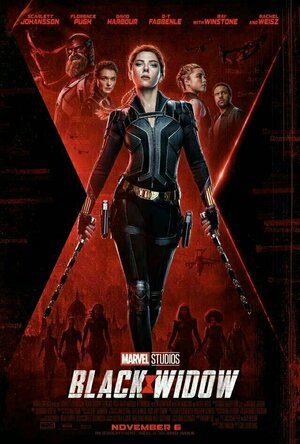
Florence Pugh (2 more)
The free-fall sequence at the end.
Taskmaster before the mask comes off.
It's way too long. (3 more)
The Taskmaster changes are weak.
It's as if the characters are fighting over who gets to be the comedic relief.
Familiar storyline.
Espionage Exhaustion
Black Widow is a film explaining what Natasha Romanoff (Scarlett Johansson) was up to in-between Captain America: Civil War and Avengers: Infinity War. The film was originally set to be released in May of 2020, but was pushed back and had three different release dates thanks to COVID-19. Unfortunately, most completed films that sit on the shelf and are in limbo for over a year rarely live up to the anticipation. Black Widow is worthwhile for a few key action sequences and notable characters that steal the spotlight, but is otherwise a mostly forgettable superhero film.
Marketed as a superhero film, Black Widow is also a spy thriller. Johansson has stated that films such as Logan, Harrison Ford’s The Fugitive, and Terminator 2: Judgment Day were influences. After Civil War, Thaddeus Ross (William Hurt) is on the hunt for Natasha Romanoff. Women like Natasha who have had similar training in a torturous training facility known as The Red Room are victims to brainwashing by a man named Dreykov (Ray Winstone), but a serum ends up in Natasha’s hands that can break Dreykov’s brainwashing. Natasha begins searching for The Red Room and Dreykov, which also has her crossing paths with other spies that posed as her family members; her “sister” Yelena Belova (Florence Pugh), her “father” Alexai Shostakov (David Harbour), and her “mother” Melina Vostokoff (Rachel Weisz).
The biggest selling point for Black Widow is that it’s a mostly female cast in front of and behind the camera. The film is directed by Cate Shortland and Black Widow is her first big budget feature. It’s also co-written by female screenwriter Jac Schaeffer (uncredited co-screenwriter of Captain Marvel) and Ned Benson (director of The Disappearance of Eleanor Rigby).
Taskmaster is cool in the film until you realize the character has been altered from his comic book origins. This isn’t uncommon in the MCU or even other live-action superhero adaptations, but what the character has become in the film will be received with mixed results. In the comics, Taskmaster’s real identity is Anthony Masters and he’s a mercenary not unlike Deadpool (the two have fought together and against each other). Copying fighting styles and weapon techniques is similar to the film, but it’s all thanks to his incredible memory and photographic reflexes.
The character is altered to fit the story in the Black Widow film. It’s not necessarily a bad thing as it gives a bigger purpose for the character since it suddenly becomes a major part of Natasha’s storyline, but how the character evolves over the course of the film seems to almost relieve Natasha of her past sins rather than continue to serve as a catalyst. Taskmaster is generally involved in some of the best hand-to-hand combat sequences, but seems to be left hanging by the end of the film. We could see the character again, but whether or not the desire is there to see Taskmaster return is debatable.
The free-fall sequence that has been teased in the trailers is Black Widow’s most unique source of action. There’s exploding elements and falling debris, Natasha trying to save someone’s life, and Taskmaster thrown in attempting to mess up whatever she has planned; plus a bunch of goons bringing up the rear that will obviously be taken out in peak fashion. The sequence is like a duel to the death taking place on the edge of a volcano that’s about to erupt. It’s on the verge of being overkill, but is just awesome enough to trigger all of the adrenaline in your body.
Kevin Feige apparently wanted an equal amount of screen time for both Natasha and Yelena. With the after-credits sequence, Natasha being very dead after the events of Infinity War, and the reports that Yelena may be the new Black Widow, she’s essentially the star of the film and for good reason. The character begins as an individual with a chip on her shoulder from someone from her past, but Florence Pugh is able to add humor and empathy with her performance. Yelena has the best one-liners in the film (“That would be a cool way to die,”) and is essentially the best source of comedic relief (i.e. her hysterectomy rant), as well. She is the one character in the film you’d want to see more of after Black Widow ends.
The storyline of Black Widow doesn’t feel like anything you haven’t experienced cinematically before, especially within the confines of the MCU. An evil man is responsible for pulling the strings of a bunch of women that would kick his ass otherwise. Unfortunately, Ray Winstone doesn’t feel all that intimidating as Dreykov since he doesn’t do much besides talk in Black Widow. The point is made in the film that is all there’s really needed of the character, but Dreykov’s biggest weapon is his mouth. However, his verbal skills don’t seem advantageous enough to make him such a threat let alone keep him alive for over 20 years.
It also feels like every MCU film has its on-screen characters competing over who can get the most laughs; this is something that only got worse after Thor: Ragnarok proved to be a success. Marvel films are already so formulaic with most villains being introduced and killed within the confines of a single film. Natasha’s spy family all feel like minor extensions of herself. Rachel Weisz, despite not aging a day in nearly 30 years, is forgettable as Melina. David Harbour is essentially his character from Stranger things cosplaying as Mr. Incredible with a Russian accent. Even Florence Pugh’s Yelena Belova character is basically a blonde younger version of Natasha even though they’re not related by blood.
Black Widow clocks in at over two hours and it feels like a film that could have been edited down. Witnessing the events of a dysfunctional spy family who then spend good chunks of the film reminiscing about those moments the audience has already seen is redundant storytelling that feels like nothing more than filler.
Black Widow is worth seeing for Florence Pugh, the free-fall action sequence, and anything involving Taskmaster before it’s revealed who is under the mask. Everything else about Black Widow feels like it was done better by the films it was supposedly influenced by and mostly feels like a diluted imitation of Captain America: The Winter Soldier. It’s fantastic that women are getting more opportunities in big summer blockbusters like this one, but it’s also disheartening since their filmmaking skills are shackled to formulaic superfluity that obviously stands in the way of creating extraordinary cinema.
Marketed as a superhero film, Black Widow is also a spy thriller. Johansson has stated that films such as Logan, Harrison Ford’s The Fugitive, and Terminator 2: Judgment Day were influences. After Civil War, Thaddeus Ross (William Hurt) is on the hunt for Natasha Romanoff. Women like Natasha who have had similar training in a torturous training facility known as The Red Room are victims to brainwashing by a man named Dreykov (Ray Winstone), but a serum ends up in Natasha’s hands that can break Dreykov’s brainwashing. Natasha begins searching for The Red Room and Dreykov, which also has her crossing paths with other spies that posed as her family members; her “sister” Yelena Belova (Florence Pugh), her “father” Alexai Shostakov (David Harbour), and her “mother” Melina Vostokoff (Rachel Weisz).
The biggest selling point for Black Widow is that it’s a mostly female cast in front of and behind the camera. The film is directed by Cate Shortland and Black Widow is her first big budget feature. It’s also co-written by female screenwriter Jac Schaeffer (uncredited co-screenwriter of Captain Marvel) and Ned Benson (director of The Disappearance of Eleanor Rigby).
Taskmaster is cool in the film until you realize the character has been altered from his comic book origins. This isn’t uncommon in the MCU or even other live-action superhero adaptations, but what the character has become in the film will be received with mixed results. In the comics, Taskmaster’s real identity is Anthony Masters and he’s a mercenary not unlike Deadpool (the two have fought together and against each other). Copying fighting styles and weapon techniques is similar to the film, but it’s all thanks to his incredible memory and photographic reflexes.
The character is altered to fit the story in the Black Widow film. It’s not necessarily a bad thing as it gives a bigger purpose for the character since it suddenly becomes a major part of Natasha’s storyline, but how the character evolves over the course of the film seems to almost relieve Natasha of her past sins rather than continue to serve as a catalyst. Taskmaster is generally involved in some of the best hand-to-hand combat sequences, but seems to be left hanging by the end of the film. We could see the character again, but whether or not the desire is there to see Taskmaster return is debatable.
The free-fall sequence that has been teased in the trailers is Black Widow’s most unique source of action. There’s exploding elements and falling debris, Natasha trying to save someone’s life, and Taskmaster thrown in attempting to mess up whatever she has planned; plus a bunch of goons bringing up the rear that will obviously be taken out in peak fashion. The sequence is like a duel to the death taking place on the edge of a volcano that’s about to erupt. It’s on the verge of being overkill, but is just awesome enough to trigger all of the adrenaline in your body.
Kevin Feige apparently wanted an equal amount of screen time for both Natasha and Yelena. With the after-credits sequence, Natasha being very dead after the events of Infinity War, and the reports that Yelena may be the new Black Widow, she’s essentially the star of the film and for good reason. The character begins as an individual with a chip on her shoulder from someone from her past, but Florence Pugh is able to add humor and empathy with her performance. Yelena has the best one-liners in the film (“That would be a cool way to die,”) and is essentially the best source of comedic relief (i.e. her hysterectomy rant), as well. She is the one character in the film you’d want to see more of after Black Widow ends.
The storyline of Black Widow doesn’t feel like anything you haven’t experienced cinematically before, especially within the confines of the MCU. An evil man is responsible for pulling the strings of a bunch of women that would kick his ass otherwise. Unfortunately, Ray Winstone doesn’t feel all that intimidating as Dreykov since he doesn’t do much besides talk in Black Widow. The point is made in the film that is all there’s really needed of the character, but Dreykov’s biggest weapon is his mouth. However, his verbal skills don’t seem advantageous enough to make him such a threat let alone keep him alive for over 20 years.
It also feels like every MCU film has its on-screen characters competing over who can get the most laughs; this is something that only got worse after Thor: Ragnarok proved to be a success. Marvel films are already so formulaic with most villains being introduced and killed within the confines of a single film. Natasha’s spy family all feel like minor extensions of herself. Rachel Weisz, despite not aging a day in nearly 30 years, is forgettable as Melina. David Harbour is essentially his character from Stranger things cosplaying as Mr. Incredible with a Russian accent. Even Florence Pugh’s Yelena Belova character is basically a blonde younger version of Natasha even though they’re not related by blood.
Black Widow clocks in at over two hours and it feels like a film that could have been edited down. Witnessing the events of a dysfunctional spy family who then spend good chunks of the film reminiscing about those moments the audience has already seen is redundant storytelling that feels like nothing more than filler.
Black Widow is worth seeing for Florence Pugh, the free-fall action sequence, and anything involving Taskmaster before it’s revealed who is under the mask. Everything else about Black Widow feels like it was done better by the films it was supposedly influenced by and mostly feels like a diluted imitation of Captain America: The Winter Soldier. It’s fantastic that women are getting more opportunities in big summer blockbusters like this one, but it’s also disheartening since their filmmaking skills are shackled to formulaic superfluity that obviously stands in the way of creating extraordinary cinema.
Chris Sawin (602 KP) rated The Forever Purge (2021) in Movies
Dec 14, 2021
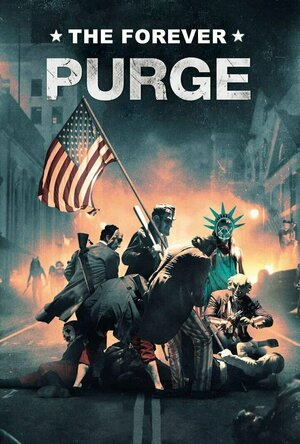
The Purger's costumes (1 more)
The film's genuinely bad ass female characters.
There's no character development. (1 more)
The film is just more of the same.
America, A Ho-Hum Dystopia
Searching for stability in the face of record high levels of illegal immigration resulting from a surge in refugees fleeing cartel violence in Mexico and a growing wave of White Supremacy and anti-hispanic racism in the United States, the New Founding Fathers of America have proposed the unthinkable in order to solve the nation’s problems: the reinstatement of the Purge.
Written by The Purge creator James DeMonaco and directed by Everardo Gout, The Forever Purge is the fifth film in the franchise and its first entry since The Purge TV series ended after only two seasons in 2019.
Taking place primarily in Los Felis Valley, Texas, The Forever Purge follows Mexican refugees Adela (Ana de la Reguera) and Juan (Tenoch Huerta), who despite having made a life in America after living in the country for just ten months, continue to find themselves the victims of racism.
A talented cowboy, Juan works for the financially successful Tucker family on their ranch alongside Dylan (Josh Lucas), a member of the Tucker family who isn’t as good of a cowboy as Juan and lets his “white man good, Mexican bad” mentality drive his actions way more often than he should.
With the announcement that the Purge will be reinstated, the two buckle down and prepare to survive their first ever experience with the country’s most gruesome tradition. While the two successfully find sanctuary and survive the initial 12 hours of the sanctioned Purge, they emerge to find that many US citizens have just outright refused to stop purging.
Amidst the chaos, Canada and Mexico open their borders for six hours, allowing anyone not interesting in partaking in the events and wants to survive to flee to one of respective countries. However, the two countries also announce that after these six hours pass, they will be closing their American borders forever, preventing any further escape.
As the entire nation falls into chaos, its citizens begin to realize that The Forever Purge has begun.
The fifth film in the franchise and the latest installment since The Purge tv series ended in 2019, The Forever Purge is pretty much of the same for the horror franchise – in other words, it’s not going to make or break the opinion you already have about these movies.
A definite improvement over The First Purge, which one could argue is the worst film in the series, the performances in The Forever Purge in particular are leaps and bounds better in comparison to those found in its predecessor
You know how there are some movies where, for some reason or another, you don’t watch every trailer it drops before release, and thus are end up surprised when the film turns out to be completely different from the one-note-concept you imagined it would have?
While the upside to this avoidance of marketing material is that you’re almost completely in the dark about a given film prior to seeing it, the downside is that what your own imagined concept of the film may have more more potential than the final product.
The Forever Purge was one such film for me. For some reason, I thought the movie took place in a not-too-distant future where the majority of the country had become a desolate wasteland, water was scarce, and tumbleweeds were the closest thing to a pet anyone had.
Not only that, but I imagined that The Purge, long-outlawed in this post-apocalyptic future, had been reinstated as a full-time event by a group of crazed desperadoes.
Sadly, my idea of a western-slash-Mad Max-inspired Purge film ended up being way more interesting than The Forever Purge actually was, as most of the film’s creativity is found not in the Purge itself, but rather in the expansion to the franchise’s lore – specifically the state in which the USA is left in by the end of the film, as well as the end credits reveal of where Americans across the country are located
A Purger in The Forever Purge, directed by Everardo Valerio Gout.As a result, The Forever Purge ends with the franchise seemingly having lost whatever bite it may have once had. Kills are about as memorable as a bug splat on your windshield while driving on the highway, character development is minimal at best, and you aren’t invested in the outcome of what’s transpiring whatsoever.
You also don’t really know who the protagonists of the film are. Do you root for the successful family that doesn’t know how to cooperate outside of its own race, or the married couple that came to this country illegally?
Furthermore, why is it that each film’s unique masked purgers, who literally show up for only a handful of scenes in each of their respective appearances, are the best part of these films? It’s like really awesome DLC for a lifelessly dull video game.
While the action-horror film does at least introduce two strong female characters, Dylan Tucker’s wife, Cassidy (Cassidy Freeman), isn’t one of them. Her defining characteristics are that she’s pregnant and helpless.
However, Dylan’s younger sister, Harper (Leven Rambin), is awesome. She knows how to use a gun, is resourceful, intelligent, and breaks the ‘dumb blonde’ stereotype we’re all too familiar with.
Ana de la Reguera also rectifies her death in Army of the Dead with her performance as Adela, a former member of a group of women who fought against the cartel in Mexico who can fight, has knowledge of weapons, and knows how to navigate the city in the safest way possible. In other words, she’s a bad ass.
While The Forever Purge is meant to serve as a ‘final entry’ for the franchise, everything is left wide open at the end of the film, just in case another sequel gets greenlit. After all, we know how the general movie-going population just loves to keep mediocre franchises alive.
As such, nothing is resolved by the end of film, and the Forever Purge ends up being just what it sounds like: never ending.
The issue with this non-ending is that where the franchise could potentially go and where it’s actually going are two entirely different things, and thus the end result of the Forever Purge is way more disappointing because of this split.
A lackluster Purge entry at best that is only considered decent because the film that came before it is so awful, The Forever Purge does put some effort into attempting to put a different spin on how we view immigrants, but even that seems half-cocked at best.
With a concept this stagnant, The Forever Purge has successfully done what other horror movies have never been able to do; make deaths, murdering, and killing a total bore. Hopefully, with any luck, The Purge franchise will pillage and murder itself with this entry.
Written by The Purge creator James DeMonaco and directed by Everardo Gout, The Forever Purge is the fifth film in the franchise and its first entry since The Purge TV series ended after only two seasons in 2019.
Taking place primarily in Los Felis Valley, Texas, The Forever Purge follows Mexican refugees Adela (Ana de la Reguera) and Juan (Tenoch Huerta), who despite having made a life in America after living in the country for just ten months, continue to find themselves the victims of racism.
A talented cowboy, Juan works for the financially successful Tucker family on their ranch alongside Dylan (Josh Lucas), a member of the Tucker family who isn’t as good of a cowboy as Juan and lets his “white man good, Mexican bad” mentality drive his actions way more often than he should.
With the announcement that the Purge will be reinstated, the two buckle down and prepare to survive their first ever experience with the country’s most gruesome tradition. While the two successfully find sanctuary and survive the initial 12 hours of the sanctioned Purge, they emerge to find that many US citizens have just outright refused to stop purging.
Amidst the chaos, Canada and Mexico open their borders for six hours, allowing anyone not interesting in partaking in the events and wants to survive to flee to one of respective countries. However, the two countries also announce that after these six hours pass, they will be closing their American borders forever, preventing any further escape.
As the entire nation falls into chaos, its citizens begin to realize that The Forever Purge has begun.
The fifth film in the franchise and the latest installment since The Purge tv series ended in 2019, The Forever Purge is pretty much of the same for the horror franchise – in other words, it’s not going to make or break the opinion you already have about these movies.
A definite improvement over The First Purge, which one could argue is the worst film in the series, the performances in The Forever Purge in particular are leaps and bounds better in comparison to those found in its predecessor
You know how there are some movies where, for some reason or another, you don’t watch every trailer it drops before release, and thus are end up surprised when the film turns out to be completely different from the one-note-concept you imagined it would have?
While the upside to this avoidance of marketing material is that you’re almost completely in the dark about a given film prior to seeing it, the downside is that what your own imagined concept of the film may have more more potential than the final product.
The Forever Purge was one such film for me. For some reason, I thought the movie took place in a not-too-distant future where the majority of the country had become a desolate wasteland, water was scarce, and tumbleweeds were the closest thing to a pet anyone had.
Not only that, but I imagined that The Purge, long-outlawed in this post-apocalyptic future, had been reinstated as a full-time event by a group of crazed desperadoes.
Sadly, my idea of a western-slash-Mad Max-inspired Purge film ended up being way more interesting than The Forever Purge actually was, as most of the film’s creativity is found not in the Purge itself, but rather in the expansion to the franchise’s lore – specifically the state in which the USA is left in by the end of the film, as well as the end credits reveal of where Americans across the country are located
A Purger in The Forever Purge, directed by Everardo Valerio Gout.As a result, The Forever Purge ends with the franchise seemingly having lost whatever bite it may have once had. Kills are about as memorable as a bug splat on your windshield while driving on the highway, character development is minimal at best, and you aren’t invested in the outcome of what’s transpiring whatsoever.
You also don’t really know who the protagonists of the film are. Do you root for the successful family that doesn’t know how to cooperate outside of its own race, or the married couple that came to this country illegally?
Furthermore, why is it that each film’s unique masked purgers, who literally show up for only a handful of scenes in each of their respective appearances, are the best part of these films? It’s like really awesome DLC for a lifelessly dull video game.
While the action-horror film does at least introduce two strong female characters, Dylan Tucker’s wife, Cassidy (Cassidy Freeman), isn’t one of them. Her defining characteristics are that she’s pregnant and helpless.
However, Dylan’s younger sister, Harper (Leven Rambin), is awesome. She knows how to use a gun, is resourceful, intelligent, and breaks the ‘dumb blonde’ stereotype we’re all too familiar with.
Ana de la Reguera also rectifies her death in Army of the Dead with her performance as Adela, a former member of a group of women who fought against the cartel in Mexico who can fight, has knowledge of weapons, and knows how to navigate the city in the safest way possible. In other words, she’s a bad ass.
While The Forever Purge is meant to serve as a ‘final entry’ for the franchise, everything is left wide open at the end of the film, just in case another sequel gets greenlit. After all, we know how the general movie-going population just loves to keep mediocre franchises alive.
As such, nothing is resolved by the end of film, and the Forever Purge ends up being just what it sounds like: never ending.
The issue with this non-ending is that where the franchise could potentially go and where it’s actually going are two entirely different things, and thus the end result of the Forever Purge is way more disappointing because of this split.
A lackluster Purge entry at best that is only considered decent because the film that came before it is so awful, The Forever Purge does put some effort into attempting to put a different spin on how we view immigrants, but even that seems half-cocked at best.
With a concept this stagnant, The Forever Purge has successfully done what other horror movies have never been able to do; make deaths, murdering, and killing a total bore. Hopefully, with any luck, The Purge franchise will pillage and murder itself with this entry.

Purple Phoenix Games (2266 KP) rated The Grimm Masquerade in Tabletop Games
Apr 8, 2021
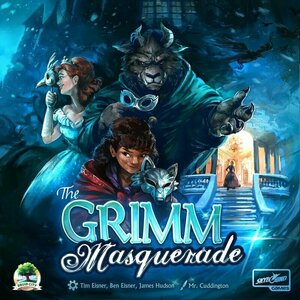
Have you ever been to a proper masquerade? I have not, though I would enjoy it, I think. I would enjoy it even more if I were competing against the other attendees to figure out who is who (and avoid having to do those Victorian square dances). But what if I were actually fairytale folk cavorting around with others trying to gain artifacts that speak to me while refusing any artifacts that may hurt me. Well now you understand my plight and the premise of this game.
The Grimm Masquerade is a hidden role competitive bluffing game for two to five players. In it player take on the roles of well-known fairytale folk attending a magical masquerade thrown by The Beast (I mean, he has a name, right? Not just “The Beast…”). Attendees are tasked with trying to unmask other attendees while earning magical roses in the process. The winner is the player who can earn the most roses at the end of three rounds of bluffing and guessing, unless one player is able to earn 10 roses before the end.
DISCLAIMER: We were provided a copy of this game for the purposes of this review. This is a retail copy of the game, so what you see in these photos is exactly what would be received in your box. I do not intend to cover every single rule included in the rulebook, but will describe the overall game flow and major rule set so that our readers may get a sense of how the game plays. For more in depth rules, you may purchase a copy online or from your FLGS. Also, this review concentrates on the two-player variant for the game as I played it mostly with my wife. -T
To setup, place the main board showing all the fairytale folk in the middle of the table. Each player will receive two (one if playing multi-player rules) Character cards, all Evidence Markers of their chosen color, and Reference cards. Around the board is placed the remaining Character cards, the Artifact deck, the stack of Broken Mirror tokens, the pile of roses, and the Action Board with two random Action cards revealed on either side. For the two-player game six Artifact cards are revealed in a line and each player will choose one Artifact for each of their two characters they are playing. The unchosen Artifacts will form the discard pile near the Artifact draw pile. Whomever most recently wore a costume will be the lead player and the game may begin!
The game is played in rounds, with each turn of a round consisting of two steps. First, the active player draws an Artifact card and decides to keep it in their face-up tableau of Artifacts for all to see or give the Artifact to another player. Then the active player will draw a second card and either keep or give, whichever is opposite of their first choice. For example, should the first card drawn be kept, the next card would need to be given away. Each character has one Boon suit (which they love), and one Bane suit (which they despise). If at any time a character receives a card to create a matching pair in their tableau they must indicate whether that Artifact is in fact their Bane suit or not. They do this by placing one of their Evidence Markers on the character who owns that suit’s Bane value. However, if the player is actually the character who has that suit as their Bane, they have been unmasked and will play their other character in hopes of winning with them.
Should a player receive a card that would cause a set of three matching suit cards, they must indicate that they have either won the round or that they are not the character that matches that suit’s Boon value. For example, should a player receive their third Treats card they must declare they have won the round (if they happen to be Red Riding Hood), or that they are not indeed Red Riding Hood by placing an Evidence Marker on Red Riding Hood.
After this card play at the beginning of their turn the active player may choose to discard a matching pair of Artifact cards in order to activate an Action available (optional step). The Actions available are on the revealed Action cards on either side of the Action Board (which also shows an always-available Action of Point the Finger). So by discarding a pair of Crowns, for example, a player could utilize the Action card Eavesdrop in order to force the other player(s) to place Evidence Markers on characters they are NOT. This gives the active player more insight into who the other player(s) may actually BE.
Once cards have been drawn and the optional Actions taken, play passes to the next player. Players win the round by collecting three matching Boon Artifact cards or by unmasking all other characters in play. Whichever player wins the round also takes the Rose Trophy depending on which of the three rounds was just completed (value 1 for the first round, 3 for the second, and 5 for the third). At the end of the third round players count up their total roses (unless one player has earned 10 or more at the end of a previous round) and whomever has collected the most is the winner of The Grimm Masquerade!
Components. I have to say, every game I have played by Druid City Games has had amazing components, and this one is certainly no different. All the cardboard pieces, the cards, and the wooden discs are all excellent quality. But what I want to concentrate on here is the perfect choice to employ Mr. Cuddington for the art. Every time I see Mr. Cuddington on the credits for a game I know I am going to love looking at it on the table. They just have amazing style and everything is so detailed and perfectly matched for the setting. This FEELS like a Grimm’s Fairy Tales game for sure, and I love it.
It is definitely no secret that I love this one. I enjoy hidden role games to begin with (The Resistance: Avalon also being one of my favorites), and this setting feels excellently matched to the genre and the execution is wonderful. I really have a great time sussing out who is who and giving those final Artifacts in order to unmask players that are perceived to be leading is so fulfilling. Being able to spend matching cards in order to use Actions is also great design, especially when you can bluff by discarding your Boon cards to throw opponents off your trail. So much deceit in a fun package.
If you have few hidden role games and you want something with a light theme and relatively quick playtime, please do yourself a favor and check out The Grimm Masquerade. Purple Phoenix Games gives this one a playful 15 / 18. If you are like us and enjoy games where you control some information and can guess other players’ identities, but also like games where you can still play on even when you have been found out, this one is for you. If only this could support even more players, I could see it unseating Avalon for me. As it is, I may still end up using this one more often than Avalon unless I have a larger group of people at the table. That is a big statement from me as Avalon is a proven winner and has been a staple of my collection for years. But The Grimm Masquerade is that good. Play it and let me know if you agree.
The Grimm Masquerade is a hidden role competitive bluffing game for two to five players. In it player take on the roles of well-known fairytale folk attending a magical masquerade thrown by The Beast (I mean, he has a name, right? Not just “The Beast…”). Attendees are tasked with trying to unmask other attendees while earning magical roses in the process. The winner is the player who can earn the most roses at the end of three rounds of bluffing and guessing, unless one player is able to earn 10 roses before the end.
DISCLAIMER: We were provided a copy of this game for the purposes of this review. This is a retail copy of the game, so what you see in these photos is exactly what would be received in your box. I do not intend to cover every single rule included in the rulebook, but will describe the overall game flow and major rule set so that our readers may get a sense of how the game plays. For more in depth rules, you may purchase a copy online or from your FLGS. Also, this review concentrates on the two-player variant for the game as I played it mostly with my wife. -T
To setup, place the main board showing all the fairytale folk in the middle of the table. Each player will receive two (one if playing multi-player rules) Character cards, all Evidence Markers of their chosen color, and Reference cards. Around the board is placed the remaining Character cards, the Artifact deck, the stack of Broken Mirror tokens, the pile of roses, and the Action Board with two random Action cards revealed on either side. For the two-player game six Artifact cards are revealed in a line and each player will choose one Artifact for each of their two characters they are playing. The unchosen Artifacts will form the discard pile near the Artifact draw pile. Whomever most recently wore a costume will be the lead player and the game may begin!
The game is played in rounds, with each turn of a round consisting of two steps. First, the active player draws an Artifact card and decides to keep it in their face-up tableau of Artifacts for all to see or give the Artifact to another player. Then the active player will draw a second card and either keep or give, whichever is opposite of their first choice. For example, should the first card drawn be kept, the next card would need to be given away. Each character has one Boon suit (which they love), and one Bane suit (which they despise). If at any time a character receives a card to create a matching pair in their tableau they must indicate whether that Artifact is in fact their Bane suit or not. They do this by placing one of their Evidence Markers on the character who owns that suit’s Bane value. However, if the player is actually the character who has that suit as their Bane, they have been unmasked and will play their other character in hopes of winning with them.
Should a player receive a card that would cause a set of three matching suit cards, they must indicate that they have either won the round or that they are not the character that matches that suit’s Boon value. For example, should a player receive their third Treats card they must declare they have won the round (if they happen to be Red Riding Hood), or that they are not indeed Red Riding Hood by placing an Evidence Marker on Red Riding Hood.
After this card play at the beginning of their turn the active player may choose to discard a matching pair of Artifact cards in order to activate an Action available (optional step). The Actions available are on the revealed Action cards on either side of the Action Board (which also shows an always-available Action of Point the Finger). So by discarding a pair of Crowns, for example, a player could utilize the Action card Eavesdrop in order to force the other player(s) to place Evidence Markers on characters they are NOT. This gives the active player more insight into who the other player(s) may actually BE.
Once cards have been drawn and the optional Actions taken, play passes to the next player. Players win the round by collecting three matching Boon Artifact cards or by unmasking all other characters in play. Whichever player wins the round also takes the Rose Trophy depending on which of the three rounds was just completed (value 1 for the first round, 3 for the second, and 5 for the third). At the end of the third round players count up their total roses (unless one player has earned 10 or more at the end of a previous round) and whomever has collected the most is the winner of The Grimm Masquerade!
Components. I have to say, every game I have played by Druid City Games has had amazing components, and this one is certainly no different. All the cardboard pieces, the cards, and the wooden discs are all excellent quality. But what I want to concentrate on here is the perfect choice to employ Mr. Cuddington for the art. Every time I see Mr. Cuddington on the credits for a game I know I am going to love looking at it on the table. They just have amazing style and everything is so detailed and perfectly matched for the setting. This FEELS like a Grimm’s Fairy Tales game for sure, and I love it.
It is definitely no secret that I love this one. I enjoy hidden role games to begin with (The Resistance: Avalon also being one of my favorites), and this setting feels excellently matched to the genre and the execution is wonderful. I really have a great time sussing out who is who and giving those final Artifacts in order to unmask players that are perceived to be leading is so fulfilling. Being able to spend matching cards in order to use Actions is also great design, especially when you can bluff by discarding your Boon cards to throw opponents off your trail. So much deceit in a fun package.
If you have few hidden role games and you want something with a light theme and relatively quick playtime, please do yourself a favor and check out The Grimm Masquerade. Purple Phoenix Games gives this one a playful 15 / 18. If you are like us and enjoy games where you control some information and can guess other players’ identities, but also like games where you can still play on even when you have been found out, this one is for you. If only this could support even more players, I could see it unseating Avalon for me. As it is, I may still end up using this one more often than Avalon unless I have a larger group of people at the table. That is a big statement from me as Avalon is a proven winner and has been a staple of my collection for years. But The Grimm Masquerade is that good. Play it and let me know if you agree.
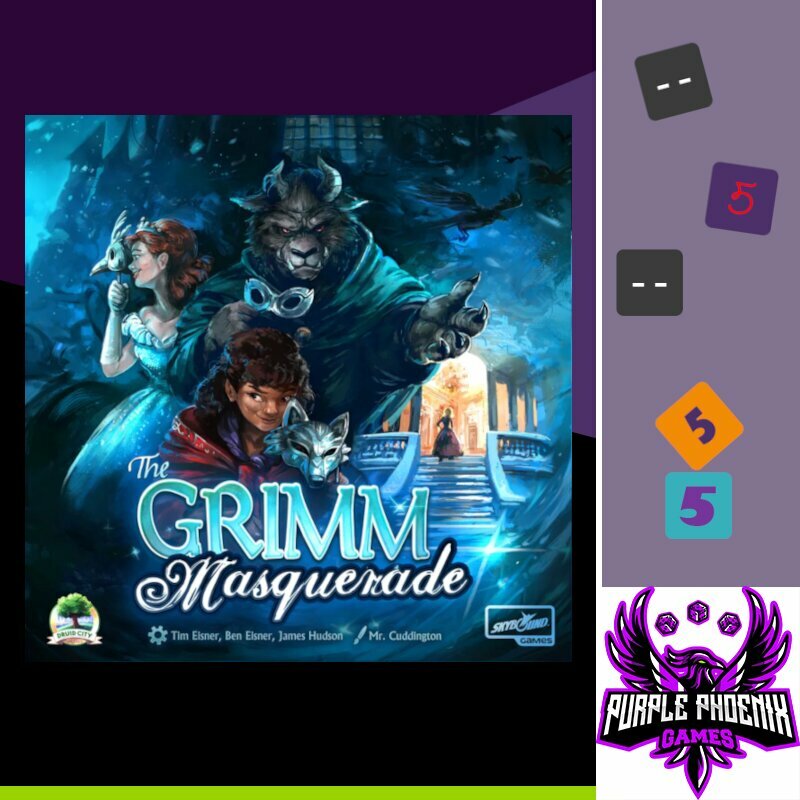
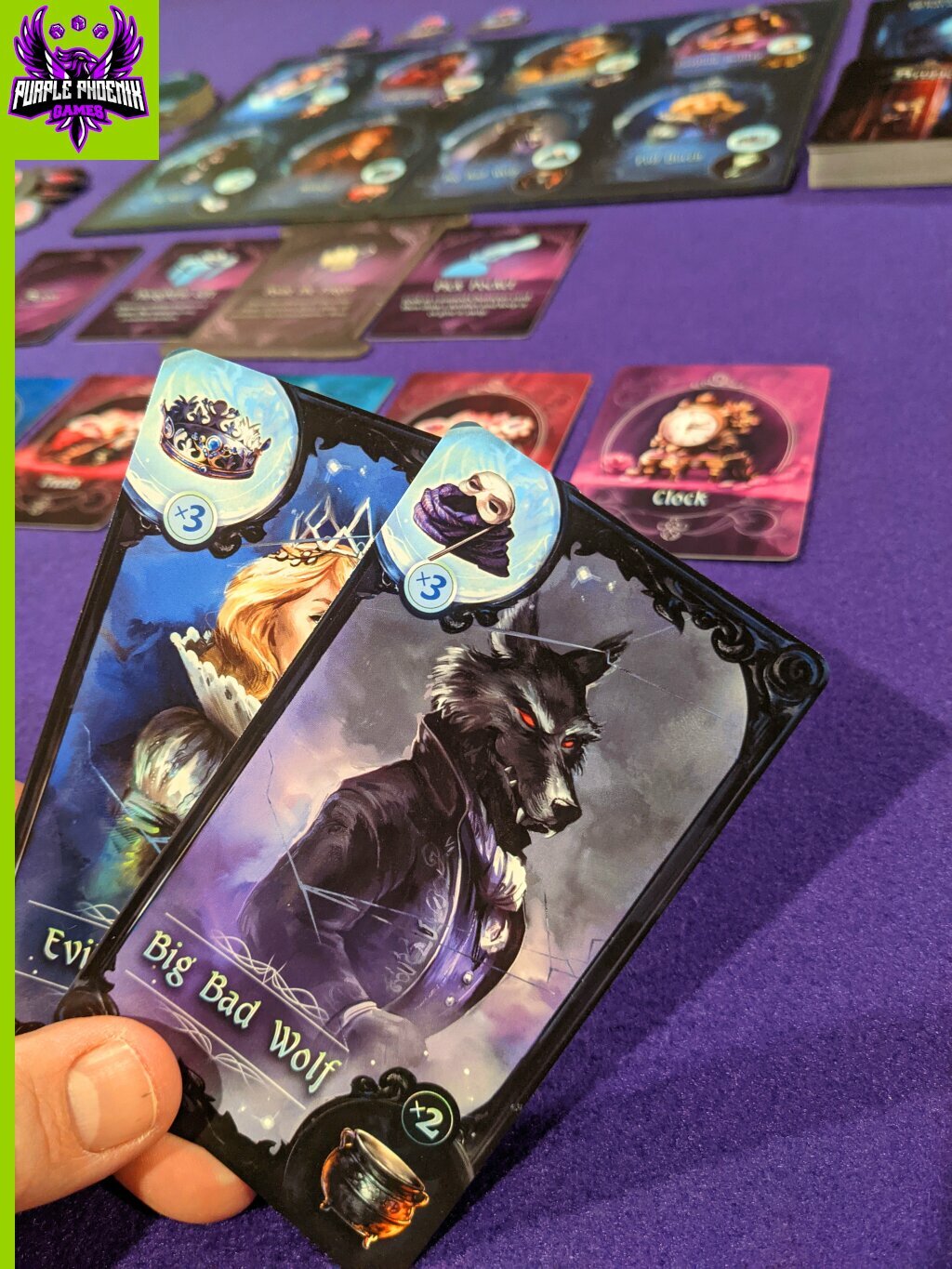
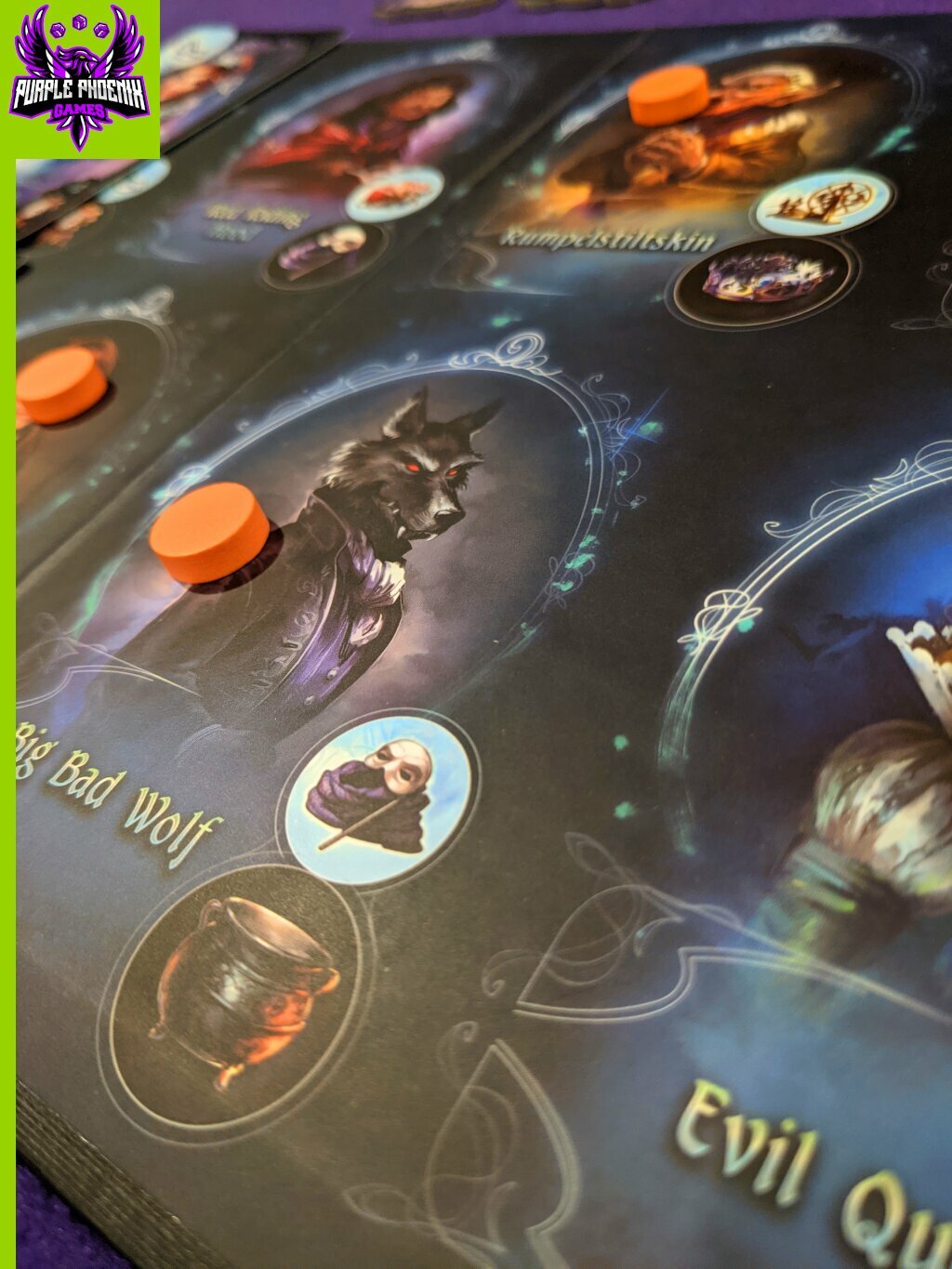

Kirk Bage (1775 KP) rated Knives Out (2019) in Movies
Jan 22, 2021
Murder mystery films tend to be more fun in theory and anticipation than they are to watch. It’s a genre that I very much enjoy and have indulged in over the years. Yet, if I look back in detail at it, I find that it is the books, especially those of Agatha Christie, that I like much more than anything lasting a couple of hours on the screen. There’s something about the mystery being rushed and squeezed into the cinema artform that is usually anti-climactic or even a full on let down.
Perhaps my favourite of the entire genre is a film that refuses to take itself seriously and is at once a pastiche of the multiple cliches that have accumulated over the years. And that film is, of course, the wonderfully camp, funny and charming 1985 romp Clue, starring Tim Curry and a slough of 80s B stars having the time of their lives. It isn’t a “good” film, it is a cult film, it’s joy being in its absolute lack of pretension or moral judgement. Like the board game that inspired it, it isn’t overly complicated or long, but has just enough cleverness, mirth and ambiance about it to always be a winner.
Rian Johnson’s take on the genre, Knives Out, is aware of these elements at all times, being above all things colourful, playful, arch and glib, but never convoluted or cerebral in an alienating way. He is something of a master at subverting a genre and wringing new life into it; take the invention of the teen noir in Brick, or the blend of assassin time travel sci-fi in Looper. He even gave an entire franchise a new breath of life by re-examining the use of humour and self referencing in Star Wars: The Last Jedi.
All of those previous films have as many detractors as mega fans, proving his style is devisive, for its audacity and its irreverence towards any idea of purism within an established model. And Knives Out is no exception to that. However, it may be the film of his that most people can agree on that they enjoyed, for one reason or another. I think it’s as interesting to ask why that is as it is to talk about the film itself… so, I will. At least, I’ll try to do both without losing my train of thought.
Firstly, it looks stunning; the palate of rich colours used in the poster and all marketing just make it look like something you want to immerse yourself in – every jacket, tie, dress, or piece of furniture is designed to precision, and it works like a dream of the genre you may have once had, as if it had been plucked directly from your subconscious. As in all good murder mysteries, the location, props and costumes should hold as much character as the actors, and the stately home of the Thrombey family certainly provides plenty of atmosphere in every texture and material on display.
Of course, the cast of characters is wonderfully put together with some inspired casting of familiar faces and actors you trust, such as Toni Collette and Michael Shannon, together with a few we don’t see enough of these days, such as Jamie Lee Curtis and Don Johnson, who both manage to create something as memorable as anything they did in their golden days. Add to the mix two bone fide action film superstars in Daniel Craig and Chris Evans, who leave the baggage of their most famous characters far behind and manage to convince you they are real actors again, the former with the aide of a jarring but hilarious Southern drawl, that grates at first but is a perfect choice on reflection.
Then there are the two lynchpins of this film’s ultimate success and joy: the exceptional legendary gravitas of 90 year old Christopher Plummer as the patriarch and victim at the centre of the intrigue, and the quite glorious revelation of Ana de Armas, whose charisma, beauty and skill in this delicately balanced role was the most impressive thing for me about the whole production. It may be Craig who is the ever present focus, as the detective tasked with solving the “crime”, but it is de Armas that you will remember most long after the credits roll.
As for the plot, well… I obviously can’t talk about it without ruining the whole thing. But, I can say that it isn’t far into the intricate web of motives, alibis and secrets before you start to sense this is going somewhere different, even unique. The examination of the relationships and personalities, and the extent to which they each demonstrate greed and selfishness is fascinating, superceding the crime that exists on the surface with a swamp of far seedier and unpleasant goings-on. Craig’s suave Benoit Blanc isn’t so much a detective here as a family therapist, or perhaps a supernatural presence in the style of the old classic, An Inspector Calls. Perhaps, it is suggested, no one completely escapes guilt and shame here… or do they? Are we looking for a murderer, or the only morally good person amidst a pack of dogs?
Another key element is how modern and unstuffy it feels, despite the country house and riches this is no play of manners, quite the opposite – no one here is on their best behaviour for the sake of decorum, and being upper class is an idea played with rather than enforced. The tea and cakes of the classic Christie, such as Murder on the Orient Express is replaced by smartphones and similar trappings, that identify it as definitely 2019 and no period piece. The concerns and themes are very much rooted in our present problems, and for that it engages and resonates in ways a costume drama just can’t do.
Upon finishing it for the first time, you may be thinking “sure, OK, I enjoyed that… but I’m not blown away here”. Then, as it sinks in over coming weeks, you find yourself recommending it to people, and thinking about how good it is in ways you didn’t initially think about. And that is surely why it was so embraced by the critics and paying public alike; it is a likeable, fun film, that can also stand some artistic scrutiny. It isn’t the smartest, or prettiest, or most meaningful film ever made, but it is enough of all three to make it an instant mini-classic, in my opinion.
I feel like there is maybe more to say about it, which is always a good sign, but that will do for now. I’d be happy to discuss it with anyone that feels the need. Or hear from anyone that didn’t like it! It would be interesting to hear that side of it, because I haven’t heard many negative comments on it at all. I don’t think I would defend it as a masterpiece to the end of the Earth, ‘cos it ain’t that good. I’m just hard pressed to find a serious fault. And it’s great when one of those sneaks up on you!
Perhaps my favourite of the entire genre is a film that refuses to take itself seriously and is at once a pastiche of the multiple cliches that have accumulated over the years. And that film is, of course, the wonderfully camp, funny and charming 1985 romp Clue, starring Tim Curry and a slough of 80s B stars having the time of their lives. It isn’t a “good” film, it is a cult film, it’s joy being in its absolute lack of pretension or moral judgement. Like the board game that inspired it, it isn’t overly complicated or long, but has just enough cleverness, mirth and ambiance about it to always be a winner.
Rian Johnson’s take on the genre, Knives Out, is aware of these elements at all times, being above all things colourful, playful, arch and glib, but never convoluted or cerebral in an alienating way. He is something of a master at subverting a genre and wringing new life into it; take the invention of the teen noir in Brick, or the blend of assassin time travel sci-fi in Looper. He even gave an entire franchise a new breath of life by re-examining the use of humour and self referencing in Star Wars: The Last Jedi.
All of those previous films have as many detractors as mega fans, proving his style is devisive, for its audacity and its irreverence towards any idea of purism within an established model. And Knives Out is no exception to that. However, it may be the film of his that most people can agree on that they enjoyed, for one reason or another. I think it’s as interesting to ask why that is as it is to talk about the film itself… so, I will. At least, I’ll try to do both without losing my train of thought.
Firstly, it looks stunning; the palate of rich colours used in the poster and all marketing just make it look like something you want to immerse yourself in – every jacket, tie, dress, or piece of furniture is designed to precision, and it works like a dream of the genre you may have once had, as if it had been plucked directly from your subconscious. As in all good murder mysteries, the location, props and costumes should hold as much character as the actors, and the stately home of the Thrombey family certainly provides plenty of atmosphere in every texture and material on display.
Of course, the cast of characters is wonderfully put together with some inspired casting of familiar faces and actors you trust, such as Toni Collette and Michael Shannon, together with a few we don’t see enough of these days, such as Jamie Lee Curtis and Don Johnson, who both manage to create something as memorable as anything they did in their golden days. Add to the mix two bone fide action film superstars in Daniel Craig and Chris Evans, who leave the baggage of their most famous characters far behind and manage to convince you they are real actors again, the former with the aide of a jarring but hilarious Southern drawl, that grates at first but is a perfect choice on reflection.
Then there are the two lynchpins of this film’s ultimate success and joy: the exceptional legendary gravitas of 90 year old Christopher Plummer as the patriarch and victim at the centre of the intrigue, and the quite glorious revelation of Ana de Armas, whose charisma, beauty and skill in this delicately balanced role was the most impressive thing for me about the whole production. It may be Craig who is the ever present focus, as the detective tasked with solving the “crime”, but it is de Armas that you will remember most long after the credits roll.
As for the plot, well… I obviously can’t talk about it without ruining the whole thing. But, I can say that it isn’t far into the intricate web of motives, alibis and secrets before you start to sense this is going somewhere different, even unique. The examination of the relationships and personalities, and the extent to which they each demonstrate greed and selfishness is fascinating, superceding the crime that exists on the surface with a swamp of far seedier and unpleasant goings-on. Craig’s suave Benoit Blanc isn’t so much a detective here as a family therapist, or perhaps a supernatural presence in the style of the old classic, An Inspector Calls. Perhaps, it is suggested, no one completely escapes guilt and shame here… or do they? Are we looking for a murderer, or the only morally good person amidst a pack of dogs?
Another key element is how modern and unstuffy it feels, despite the country house and riches this is no play of manners, quite the opposite – no one here is on their best behaviour for the sake of decorum, and being upper class is an idea played with rather than enforced. The tea and cakes of the classic Christie, such as Murder on the Orient Express is replaced by smartphones and similar trappings, that identify it as definitely 2019 and no period piece. The concerns and themes are very much rooted in our present problems, and for that it engages and resonates in ways a costume drama just can’t do.
Upon finishing it for the first time, you may be thinking “sure, OK, I enjoyed that… but I’m not blown away here”. Then, as it sinks in over coming weeks, you find yourself recommending it to people, and thinking about how good it is in ways you didn’t initially think about. And that is surely why it was so embraced by the critics and paying public alike; it is a likeable, fun film, that can also stand some artistic scrutiny. It isn’t the smartest, or prettiest, or most meaningful film ever made, but it is enough of all three to make it an instant mini-classic, in my opinion.
I feel like there is maybe more to say about it, which is always a good sign, but that will do for now. I’d be happy to discuss it with anyone that feels the need. Or hear from anyone that didn’t like it! It would be interesting to hear that side of it, because I haven’t heard many negative comments on it at all. I don’t think I would defend it as a masterpiece to the end of the Earth, ‘cos it ain’t that good. I’m just hard pressed to find a serious fault. And it’s great when one of those sneaks up on you!
Kirk Bage (1775 KP) rated Game Of Thrones in TV
Aug 6, 2020

Look on the bright side, we all said, without really believing it, when lockdown hit in March – time to watch those box sets we’ve been putting off. Well that was, of course, a great idea! For me that box set was possibly the biggest of all: the behemoth that is GOT.
Much like when a new band gets big quickly and you refuse to listen to the hype, I avoided watching the biggest show in the world, even when it was on in the same room as I tried to read a book in the other corner. It wasn’t that I thought I wouldn’t like it, but more that I didn’t believe it could be anywhere near as good as folk were making it out to be, especially as season one looked like only a slight step up on the swords and sandles exploitation-fests that had been going around. I labelled it “Tits and Dragons” and got on with my life for the next 8 years.
March 2020 will go down in history as the biggest spike in streaming TV services the globe will ever see. Literally millions of previously casual watchers, who had been busy having lives and jobs, turned to Netflix, Amazon Prime, Now TV and iPlayer etc, in search of endless hours of easy entertainment they could immerse their bored and twitchy minds inside of. Without internet at home, I had to go a bit more old school and rely on my daughter posting me the DVDs of GOT season by season.
I found season one enjoyable, with caveats, as it seemed to be one massive exposition (and sexposition) workshop. Obviously the main characters were being set up for big storylines down the road. In which sense it reminded me of a soap opera; in how it flitted between characters and relationships, never dwelling on one plot point for more than two minutes. I liked the way the production had set itself up though – the sets and costumes were of a much higher level than was usual for this kind of thing. Then there was those great opening credits, which become impossible not to hum along to as you get more into it.
Sadly, the first big shock moment didn’t shock me, as I’d heard so much about it on social media 9 years ago. But it was still very well done. Bold and brave; to take out a big name that early was a master stroke. By the end of S1E9 I was properly hooked. Although it helped I didn’t have anything else to do!
The next two weeks I had to wait for season two to be posted out, so I embarked on watching all the DVD commentaries too to kill some time in the evenings whilst I waited. This is almost certainly something I wouldn’t have done under normal circumstances and I believe it is what cemented my enjoyment of it as a whole. Listening to the cast and crew reminisce about what a great time they had, and how close they all were, really helped put it into context for me. I was already loving Peter Dinklage and Lena Headey, but their humour and irreverence in the commentaries made it feel like there were pals in the room watching it with me.
By season two and beyond, I was looking at maps, memorizing every minor character’s name, house and motto, and just immersing in it to the point of obsession. As, I guess, millions of people had already done over the years, but now I got what the fuss was all about. It is an addictive show; you have to know what happens next, you simply can’t leave it alone! Whether it is hissing and booing at Joffrey, or loving to hate Cersei, or siding with the bastards and broken things, there is always something engaging going on – and when a character you disliked dies horribly it is so satisfying!
It is a weird mix, however, of moments so horribly signposted, with some dubious acting, and moments of real surprise and emotion delivered with great acting. Many of the characters really grow into their skins as the actors get more familiar and comfortable being them. The writers too get better at putting the right words in their mouths, and learn to minimise the exposition moments. The young ones in particular really grow impressively as it goes on into seasons 3 and 4. Maisie Williams as the slightly sadistic loner Arya Stark especially. I loved how none stereotypical that character was, and have to say her relationship with The Hound was my favourite thing in the whole show.
At the climax of season four, which I believe was the peak of it artistically, the story arc of Dinklage as Tyrion Lannister, aka The Imp, becomes so compellingly good you can’t take your eyes off him. I had already come to the conclusion that his scenes were the best ones, but this went to 11 on the dial. And it gets better thinking back on it too. Which can’t truly be said of where they go with John Snow and Daenarys, who are ostensibly the main draw by this point, as all storylines seem to mirror their journeys on opposite sides of the world; a song of ice and fire, indeed.
Seasons 5 and 6 continued to be great, even though the dramatic peaks were hard to top. What did improve was the big set pieces, as episodes such as Hardhome and Battle of the Bastards upper the bar on huge battles, staged masterfully. There were things happening that I had never seen in a TV show before, both creatively and budget spent. Watching some of the making of documentaries was fascinating in this regard. The props department alone was astonishingly detailed, to Lord of the Rings degrees, properly impressive!
To go into story and scene details here is pointless, and I don’t want to include any more spoilers than I already have, just in case there is anyone else like me, that hasn’t done the whole journey yet. Obviously, there was some controversy in where seasons 7 and especially 8 went with some storylines and characters. I thought it was mostly fine, to be honest, I just went with it. But it did become a little stretched and hurried, as it raced towards its conclusion. It’s hard for me to get a proper impression of how tense and then annoying it would be to wait a long time for a new season and then have it not go where you imagined it would. Not a problem for me, as I blitzed the final 4 seasons in about a week.
As the episode ratings of season 8 on IMDb indicate, folk were not happy. There was an element of anti-climax, to be fair, but what else could it have been, now so many people claim it as their own? The end isn’t perfect, and that may have a lot to do with the fact they stopped following the books, because they hadn’t been written. In all honestly, I didn’t care. It was spectacular and diverting enough to keep my attention, and my investment in the characters not brutally killed off was not teenage enough to take it personally. I do have sympathy for fans that felt their loyalty betrayed, but come on… it’s just a TV show.
Watching the same fictional world for more than 70 actual hours can do things to you brain. In conclusion I would say I loved going there! The good things always outweighed the annoying things, and it is an experience I would recommend to anyone who hasn’t done it. Whatever age you are, it is a must see phenomenon, like The Sopranos – oh wait, I haven’t seen that yet either…
Much like when a new band gets big quickly and you refuse to listen to the hype, I avoided watching the biggest show in the world, even when it was on in the same room as I tried to read a book in the other corner. It wasn’t that I thought I wouldn’t like it, but more that I didn’t believe it could be anywhere near as good as folk were making it out to be, especially as season one looked like only a slight step up on the swords and sandles exploitation-fests that had been going around. I labelled it “Tits and Dragons” and got on with my life for the next 8 years.
March 2020 will go down in history as the biggest spike in streaming TV services the globe will ever see. Literally millions of previously casual watchers, who had been busy having lives and jobs, turned to Netflix, Amazon Prime, Now TV and iPlayer etc, in search of endless hours of easy entertainment they could immerse their bored and twitchy minds inside of. Without internet at home, I had to go a bit more old school and rely on my daughter posting me the DVDs of GOT season by season.
I found season one enjoyable, with caveats, as it seemed to be one massive exposition (and sexposition) workshop. Obviously the main characters were being set up for big storylines down the road. In which sense it reminded me of a soap opera; in how it flitted between characters and relationships, never dwelling on one plot point for more than two minutes. I liked the way the production had set itself up though – the sets and costumes were of a much higher level than was usual for this kind of thing. Then there was those great opening credits, which become impossible not to hum along to as you get more into it.
Sadly, the first big shock moment didn’t shock me, as I’d heard so much about it on social media 9 years ago. But it was still very well done. Bold and brave; to take out a big name that early was a master stroke. By the end of S1E9 I was properly hooked. Although it helped I didn’t have anything else to do!
The next two weeks I had to wait for season two to be posted out, so I embarked on watching all the DVD commentaries too to kill some time in the evenings whilst I waited. This is almost certainly something I wouldn’t have done under normal circumstances and I believe it is what cemented my enjoyment of it as a whole. Listening to the cast and crew reminisce about what a great time they had, and how close they all were, really helped put it into context for me. I was already loving Peter Dinklage and Lena Headey, but their humour and irreverence in the commentaries made it feel like there were pals in the room watching it with me.
By season two and beyond, I was looking at maps, memorizing every minor character’s name, house and motto, and just immersing in it to the point of obsession. As, I guess, millions of people had already done over the years, but now I got what the fuss was all about. It is an addictive show; you have to know what happens next, you simply can’t leave it alone! Whether it is hissing and booing at Joffrey, or loving to hate Cersei, or siding with the bastards and broken things, there is always something engaging going on – and when a character you disliked dies horribly it is so satisfying!
It is a weird mix, however, of moments so horribly signposted, with some dubious acting, and moments of real surprise and emotion delivered with great acting. Many of the characters really grow into their skins as the actors get more familiar and comfortable being them. The writers too get better at putting the right words in their mouths, and learn to minimise the exposition moments. The young ones in particular really grow impressively as it goes on into seasons 3 and 4. Maisie Williams as the slightly sadistic loner Arya Stark especially. I loved how none stereotypical that character was, and have to say her relationship with The Hound was my favourite thing in the whole show.
At the climax of season four, which I believe was the peak of it artistically, the story arc of Dinklage as Tyrion Lannister, aka The Imp, becomes so compellingly good you can’t take your eyes off him. I had already come to the conclusion that his scenes were the best ones, but this went to 11 on the dial. And it gets better thinking back on it too. Which can’t truly be said of where they go with John Snow and Daenarys, who are ostensibly the main draw by this point, as all storylines seem to mirror their journeys on opposite sides of the world; a song of ice and fire, indeed.
Seasons 5 and 6 continued to be great, even though the dramatic peaks were hard to top. What did improve was the big set pieces, as episodes such as Hardhome and Battle of the Bastards upper the bar on huge battles, staged masterfully. There were things happening that I had never seen in a TV show before, both creatively and budget spent. Watching some of the making of documentaries was fascinating in this regard. The props department alone was astonishingly detailed, to Lord of the Rings degrees, properly impressive!
To go into story and scene details here is pointless, and I don’t want to include any more spoilers than I already have, just in case there is anyone else like me, that hasn’t done the whole journey yet. Obviously, there was some controversy in where seasons 7 and especially 8 went with some storylines and characters. I thought it was mostly fine, to be honest, I just went with it. But it did become a little stretched and hurried, as it raced towards its conclusion. It’s hard for me to get a proper impression of how tense and then annoying it would be to wait a long time for a new season and then have it not go where you imagined it would. Not a problem for me, as I blitzed the final 4 seasons in about a week.
As the episode ratings of season 8 on IMDb indicate, folk were not happy. There was an element of anti-climax, to be fair, but what else could it have been, now so many people claim it as their own? The end isn’t perfect, and that may have a lot to do with the fact they stopped following the books, because they hadn’t been written. In all honestly, I didn’t care. It was spectacular and diverting enough to keep my attention, and my investment in the characters not brutally killed off was not teenage enough to take it personally. I do have sympathy for fans that felt their loyalty betrayed, but come on… it’s just a TV show.
Watching the same fictional world for more than 70 actual hours can do things to you brain. In conclusion I would say I loved going there! The good things always outweighed the annoying things, and it is an experience I would recommend to anyone who hasn’t done it. Whatever age you are, it is a must see phenomenon, like The Sopranos – oh wait, I haven’t seen that yet either…

Daniel Boyd (1066 KP) rated Spectre (2015) in Movies
Jul 20, 2017
Well written (1 more)
Good direction
Mr Hinx (1 more)
Not enough Cristoph Waltz
As good as the last?
Contains spoilers, click to show
When Casino Royale released in 2006, it was to be a soft reboot of the franchise that showed viewers the events of Bond’s first mission and it strived to rectify some of the silly gadgets etc that were being over-used with Brosnan’s Bond. In my opinion, Casino Royale was a great film, it just wasn’t a Bond film. It done away with all of the silly gimmicks and cheesy one liners and was an introduction to a more grounded version of the iconic character, which made for a great spy thriller but not a great Bond movie. Then Quantum of Solace came out and literally nobody cared, not many people went to see it, it didn’t make much money at the box office and to this day I’ve still not seen that whole movie from start to finish and to be honest, I’m perfectly okay with that. Skyfall was the third Craig Bond movie to be released and it was a triumph. Finally Craig felt like he was actually playing Bond and not just some random hard ass military spy. It even flirted with the idea of gadgets, had a flamboyant supervillain and introduced a young, fresh faced Q, which was a nice touch. The movie ended with Silva killing Judi Dench’s M and Bond killing Silva, Ralph Fiennes was then appointed with the title of M and Naomi Harris was revealed to be the new Moneypenny. So with the last movie pleasing both long time Bond fans and newcomers alike, SPECTRE had a lot to live up to.
The movie opens with Bond in Mexico City, during the Day Of The Dead festival, Bond listens in on a meeting of two Mafioso and learns about a mysterious organisation hoping to achieve world domination and their illusive leader known as ‘The Pale King.’ He then blows up the building they are in and ends up in a chopper fight with one of the gangsters, whom he eventually kills. This leads into a stunning opening credits sequence, that really is one of the best I’ve seen, (even though the song is still crap.) This is an awesome intro and probably tops Skyfall’s intro which was also very cool.
The rest of the movie is a joy to a long time Bond fan like me. It checks off all of the boxes that make up a classic Bond movie. An awesome Aston Martin car chase – check, a big bad henchman who doesn’t say much but is very hard to kill – check, an effective use of gadgets and cheesy one liners – check, a supervillain that has an epic secret layer that he invites Bond to – check, Bond being strapped to an elaborate device in that secret layer and tortured – check. Now all of this is really well executed, but the problem with it is that it throws any of the gritty realism shown in the last three movies right out of the window, which like I say is perfectly okay, but it causes this movie to feel as if it is taking place in a separate universe from the last three. This is not a problem to me, I am more than happy to have a good old fashioned Bond movie back on our screens that isn’t afraid to shy away from the use of gadgets and witty quips and it’s a movie that actually handles it well unlike some of the naff late Brosnan movies. On the other hand though, I can totally see why some people would have a problem with this movie, especially if you aren’t a long time Bond fan and prefer Craig’s more realistic turn as Bond. If that is the case then this movie really won’t be for you and the chances are that you will leave the cinema leaving pretty disappointed.
Now, let’s forget for a minute that this is a 007 movie and just analyse it as a traditional piece of cinema. First off, I’m really glad that they brought Sam Mendes back to direct this one, he is very obviously a passionate Bond fan and I think he has done a great job with both Bond movies that he has made and I also really hope they can keep him on to do at least one more movie in the series. This is also a well written movie, its script is witty and fast paced, while keeping making sure that although the audience is kept intrigued, they are never lost in whatever is going on. The cinematography in this movie is also great, besides a shaky cam chase sequence during the opening of the movie, I’d actually say that this is a masterfully shot movie. Hoyte Van Hoytema was the principle of photography for this movie and that guy really likes his eye pleasing shots and his use of the rule of thirds, which is especially evident in the funeral scene where Monica Belluci is introduced. There were two Bond girls in this movie and they were both serviceable, Belluci was really only there for exposition, but Lea Seadoux did a good job with her more fleshed out role.
Now, I want to talk about the main villain in the movie, played by the incredible Christophe Waltz. When he is in the movie, he steals every scene, however that leads me on to a problem I have with the movie. He is introduced near the beginning of the movie, within the first half hour, then a good hour passes before he is reintroduced, and although what is going on during that hour is entertaining, when you have already introduced a villain played by the master of playing villains that is Mr Waltz, it’s hard not to wonder when he is going to be back in the movie. Also I feel that this movie is quite long, possibly due to the large number of different locales and although it is actually only a few more minutes longer than Skyfall, Skyfall didn’t feel that long and this movie feels a lot longer. Also Mr Hinx is a pretty rubbish henchman, he is as forgetful as Jaws and Oddjob were memorable and doesn’t have a line until the last fight with Bond, I felt he was just very underused.
Now I’m going to go into spoiler territory, so if you haven’t seen the film yet, you may want to jump to the end of the review. Okay, we all good? Well turns out Christophe Waltz is actually the new Blofeld, which really isn’t surprising since he is the head of SPECTRE. What did annoy me a little, is the fact that he was Bond’s step-brother, kind of? But whatever, I can live with it. Also, although the villains lair was kind of a trope and wasn’t really used all too much before it was blown up, once Blofeld got his scar, he did look the part. So that is another classic Bond thing to introduce, Blofeld is to Bond what The Joker is to Batman and it is nice to have the arch nemesis introduced. One of the downsides to introducing Blofeld though is that it was obvious they weren’t going to kill him off, at least not in this movie, also Mr Hinx’s death was also rather anticlimactic. Andrew Scott’s character C was revealed to be a spy for SPECTRE and again had a fairly anticlimactic death, but he was perfectly serviceable in the role.
Overall I did enjoy the movie a great deal and although this is a review based on my opinion, I do somewhat have to take into consideration the bigger picture and how other fans will feel upon seeing this film. Like I have said, I think fans of old fashioned traditional Bond will love this movie as it finally fulfils the criteria for it to be labelled a ‘Bond’ movie, I can definitely see a lot of people being disappointed in the film if they go in expected another realistic spy thriller.
The movie opens with Bond in Mexico City, during the Day Of The Dead festival, Bond listens in on a meeting of two Mafioso and learns about a mysterious organisation hoping to achieve world domination and their illusive leader known as ‘The Pale King.’ He then blows up the building they are in and ends up in a chopper fight with one of the gangsters, whom he eventually kills. This leads into a stunning opening credits sequence, that really is one of the best I’ve seen, (even though the song is still crap.) This is an awesome intro and probably tops Skyfall’s intro which was also very cool.
The rest of the movie is a joy to a long time Bond fan like me. It checks off all of the boxes that make up a classic Bond movie. An awesome Aston Martin car chase – check, a big bad henchman who doesn’t say much but is very hard to kill – check, an effective use of gadgets and cheesy one liners – check, a supervillain that has an epic secret layer that he invites Bond to – check, Bond being strapped to an elaborate device in that secret layer and tortured – check. Now all of this is really well executed, but the problem with it is that it throws any of the gritty realism shown in the last three movies right out of the window, which like I say is perfectly okay, but it causes this movie to feel as if it is taking place in a separate universe from the last three. This is not a problem to me, I am more than happy to have a good old fashioned Bond movie back on our screens that isn’t afraid to shy away from the use of gadgets and witty quips and it’s a movie that actually handles it well unlike some of the naff late Brosnan movies. On the other hand though, I can totally see why some people would have a problem with this movie, especially if you aren’t a long time Bond fan and prefer Craig’s more realistic turn as Bond. If that is the case then this movie really won’t be for you and the chances are that you will leave the cinema leaving pretty disappointed.
Now, let’s forget for a minute that this is a 007 movie and just analyse it as a traditional piece of cinema. First off, I’m really glad that they brought Sam Mendes back to direct this one, he is very obviously a passionate Bond fan and I think he has done a great job with both Bond movies that he has made and I also really hope they can keep him on to do at least one more movie in the series. This is also a well written movie, its script is witty and fast paced, while keeping making sure that although the audience is kept intrigued, they are never lost in whatever is going on. The cinematography in this movie is also great, besides a shaky cam chase sequence during the opening of the movie, I’d actually say that this is a masterfully shot movie. Hoyte Van Hoytema was the principle of photography for this movie and that guy really likes his eye pleasing shots and his use of the rule of thirds, which is especially evident in the funeral scene where Monica Belluci is introduced. There were two Bond girls in this movie and they were both serviceable, Belluci was really only there for exposition, but Lea Seadoux did a good job with her more fleshed out role.
Now, I want to talk about the main villain in the movie, played by the incredible Christophe Waltz. When he is in the movie, he steals every scene, however that leads me on to a problem I have with the movie. He is introduced near the beginning of the movie, within the first half hour, then a good hour passes before he is reintroduced, and although what is going on during that hour is entertaining, when you have already introduced a villain played by the master of playing villains that is Mr Waltz, it’s hard not to wonder when he is going to be back in the movie. Also I feel that this movie is quite long, possibly due to the large number of different locales and although it is actually only a few more minutes longer than Skyfall, Skyfall didn’t feel that long and this movie feels a lot longer. Also Mr Hinx is a pretty rubbish henchman, he is as forgetful as Jaws and Oddjob were memorable and doesn’t have a line until the last fight with Bond, I felt he was just very underused.
Now I’m going to go into spoiler territory, so if you haven’t seen the film yet, you may want to jump to the end of the review. Okay, we all good? Well turns out Christophe Waltz is actually the new Blofeld, which really isn’t surprising since he is the head of SPECTRE. What did annoy me a little, is the fact that he was Bond’s step-brother, kind of? But whatever, I can live with it. Also, although the villains lair was kind of a trope and wasn’t really used all too much before it was blown up, once Blofeld got his scar, he did look the part. So that is another classic Bond thing to introduce, Blofeld is to Bond what The Joker is to Batman and it is nice to have the arch nemesis introduced. One of the downsides to introducing Blofeld though is that it was obvious they weren’t going to kill him off, at least not in this movie, also Mr Hinx’s death was also rather anticlimactic. Andrew Scott’s character C was revealed to be a spy for SPECTRE and again had a fairly anticlimactic death, but he was perfectly serviceable in the role.
Overall I did enjoy the movie a great deal and although this is a review based on my opinion, I do somewhat have to take into consideration the bigger picture and how other fans will feel upon seeing this film. Like I have said, I think fans of old fashioned traditional Bond will love this movie as it finally fulfils the criteria for it to be labelled a ‘Bond’ movie, I can definitely see a lot of people being disappointed in the film if they go in expected another realistic spy thriller.