Clockers (1995)
7.0 Rate It
Movie
A "clocker" is a 24-hour drug dealer, and Strike (Mekhi Phifer) is the hardest-working one on the...
One of us is Lying
8.3 Rate It
Book
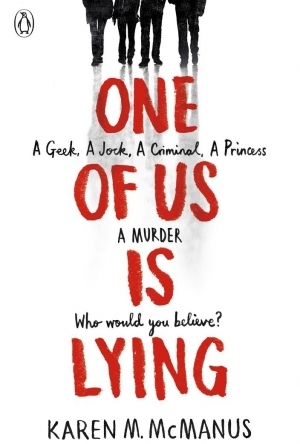
One of Us Is Lying is the story of what happens when five strangers walk into detention and only...

BankofMarquis (1832 KP) rated Mission impossible dead reckoning part one (2023) in Movies
Jul 14, 2023
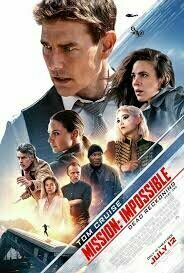

Fresh off his cinema-saving success with TOP GUN: MAVERICK, Cruise (and Director Christopher McQuarrie) comes back with another giant summer tentpole film - MISSION IMPOSSIBLE: DEAD RECKONING, PART ONE - and they hit it out of the park again.
The 7th film in the Mission Impossible franchise (which debuted, incredibly, 27 years ago), DEAD RECKONING, PART ONE reunites Ethan Hunt (Tom Cruise) with his band of hero/outlaws to stop yet another world-wide crisis. It’s familiar ground but it is the journey not the destination that makes these types of films work and the journey (which, to be honest, is just an excuse to jump from action set piece to action set piece) is a fun one filled with comfortable characters/actors both old and new.
Besides Cruise (who’s got the Ethan Hunt character down), DR1 is filled with Hunt’s “regular” crew, Luther (Vingh Rhames - the only other actor besides Cruise to be in every MI film), Benji (SImon Pegg - around since MI 3) and Ilsa Faust (Rebecca Ferguson - on board since film 5). These are all familiar, comfortable characters and when the band gets back together about 1/2 way through the film, it felt liking sinking into your couch after a long, hard (but good) day of work to watch your favorite comfort show.
McQuarrie, wisely, populates the rest of the film with new, but comfortably familiar, faces such as Haley Atwell (Agent Carter in the MCU), Shea Wigham (ironically, he played Atwell’s boss in the Agent Carter TV Series), Pom Klementieff as Paris (the name of the character Leonard Nimoy played in the TV Series). Klementieff is also a veteran of the MCU having played Mantis in the Guardians of the Galaxy films, Esai Morales (one of the bosses in NYPD BLUE) and Cary Elwes (the Princess Bride). All bring their “A” game to the adventure and all of them acquit themselves just fine.
Oh…and Henry Czerny reprises his role as Kittridge from the first Mission Impossible film - and it was good to see him, too as was Vanessa Kirby’s re-appearance as Hunt’s “frenemie”, The White Widow (in a role that is a bit more expanded).
But, of course, all of these actors/performances takes a back seat to the action sequences and McQuarrie and Cruise are at the top of their game here. The big action set pieces are a marvel to watch - very enjoyable, exciting, nerve-wracking and easy to follow with some sense of humor rolled in. Unlike another big action flick (that leaned more towards the over-the-top comic-book type action), this Mission Impossible film relies on tension to make these action scenes pop off the screen - and McQuarrie succeeds.
Since this film is labeled as “Part One” you would expect to this film to end on a cliff-hanger and McQuarrie/Cruise were smart about that, too. It is more of “the mission isn’t finished” than a cliff-hanger, which helps this film hold together on it’s own and not just “Part One of a two-parter”.
Very smart, indeed.
A fun romp at the cinema - head out to the biggest screen possible to immerse yourself into this mission, you’ll be glad you did.
Letter Grade: A
9 stars (out of 10) and you can take that to the Bank(ofMarquis)
A fun, escapist, action film that is satisfying (and not dumb), MISSION IMPOSSIBLE: DEAD

Fred (860 KP) rated the PlayStation 4 version of Red Dead Redemption 2 in Video Games
Dec 4, 2018

Let's start with what this game is about. It's an open world game, set in the old west. It's set before the events of Red Dead Redemption. In that game, you played as John Marston. In that game, John was a man trying to change his life. He was a criminal, a thief, a murderer, but he's gone straight In this game, you play as Arthur Morgan. A criminal in the same gang with John. He is a bad guy, no doubt. But throughout the game, he has many opportunities to do good. Of course, you can play him that way, or you can play him as a heartless bastard. This will effect some of the story, the dialogue & the ending of the game. I played the game as if Arthur was a good guy inside & the ending I got was very satisfying, very emotional.
For most of the story, you're on the run with your gang, setting up different camps throughout the map, evading rival gangs & the law. This is a great way to get to know the world, however, you're free to explore most of the map freely. It is enormous & gorgeous. Some of the best scenery I've seen in a game. Sometimes you will really feel you're living in a real world. And that's the greatest thing about this game. The immersion. You really feel like you're living the life of your character. And Rockstar did that by making you take care of your character. You shave, bathe, eat & take care of your horse. Yes, you name your horse, feed it, brush it, pet it. You get very attached to it, as it is your main way of getting around. If your horse dies, it's gone. And believe me, it hurts to lose your horse.
Rockstar fills the game with so many missions, side activities, random encounters & hidden Easter eggs that it will take you weeks to do them all. I've been playing since day one, an average of 6 to 7 hours a day, & today, 5 & a half weeks later, I finally got 100% in the game. To be honest, when I first started, I spent lots of time just riding around, finding activities & hidden goodies & enjoying the scenery. Like most of their games, there's a supernatural element to some things as well as supernatural encounters. Steampunk, monsters, etc... a little bit of everything. Some encounters are funny, some terrifying, all of them cool.
I think what makes this game different & better than it's predecessor is the characters themselves. I'm not talking about the main characters alone, I'm talking about the people who litter the world. In RDR, some of the characters were silly, off-the-wall & unnatural. They were cartoonish. In RDR2, the people are real. Some may be weird and a bit crazy, but they never feel fake. They never feel like a character. Because of this, the world lives. They breathe life into it with every interaction. From the
Civil War veterans to the blind beggar, to the racist jackass standing on the corner in Saint Denis handing out pro-white pamphlets. They really make you feel like you're there. Again, immersion.
Some of the things you can do besides the missions are rob people, trains, coaches, banks. Another thing is hunting. Hunting can be a great way to make money. During the game, there are many challenges that you can undertake as well. There's are 9 categories with 10 challenges to each that can be done at your leisure. I left a lot of these to do last. I honestly didn't think I'd be able to do some of them. They just seemed ridiculous. But funny enough, I did about 50 of the last challenges within 2 days. And when I finished, I expected my 100% trophy to pop up. But it didn't. I was at 99%. What the? Looking at my completion list, there was something under the collections section that said unknown collection. Searching the internet, I found that most sites didn't have it listed. But I finally found a site that did. The last collection was the hunting challenge. And this brings us to that feckin robin.
Okay, let me explain. The hunting challenge you are given is to kill 5 different lists of animals. Each animal must be a perfect carcass. Which means, they have to be of perfect quality before you kill them & you must not damage them while killing them. Well, all of these animals are small animals. And most of them are small birds. It was fairly easy to get most of these animals. But there was one that was a huge pain in the ass. Can you guess what it was? Yes, a robin. A small, fast bird that is so rare, there are pages & videos galore on finding one. Most of which as total bollocks. How do I know? I spent over 7 hours trying to find one. Going to all these spots, seeing 3 of them total, shooting one & ruining it's carcass, & missing the other 2 based on their disappearance through the trees. I was really going to give up. So close, but so far. Luckily, using some people's hints & coming up with my own, I finally figured out how to get him. And it then took me 15 minutes. Yes, 15 minutes with 7 hours of wasted time. I am putting this as a negative, because it was really ridiculous to try to hunt this thing. So aggrivating. I understand if they want to make something rare, but it's just not nice. I felt like Rockstar was pulling a joke on it's players.
But anyway, this still doesn't bring down my score of the game. It's one of the greatest games I've ever played. But Rockstar has many perfect 10 games under it's belt in my opinion, including RDR. Is this game better. Yes, I think so. But it's oh so close.
A quick word on RDR online. It's only in beta, so I can't give a true review yet. However, I'm finding it so much fun doing missions with other people. Of course, there are jackasses going around shooting people for no reason. It gives no benefit to do so. Not all of the features are in there yet, but I will be playing when it goes to full online & will giv an update.

Paul Kellett (118 KP) rated Secrets of the Lost Tomb in Tabletop Games
May 1, 2019
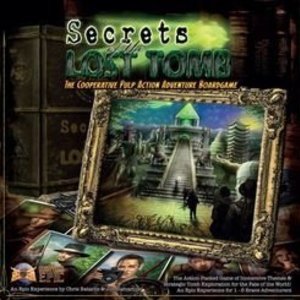
Almost like a cross between Descent and Betrayal at the House on the Hill, you build the dungeon one tile at a time (from a large stack of room tiles) as you explore 3 levels trying to get to and defeat the boss and retrieve the quest item before the time track runs out.
All the creatures and events are automated making this a fully co-op game and action points are distributed evenly between the adventurers. There is also a special solo only character with a bunch of companions so you can play without having to take control of multiple characters if you wish.
I have now played through all the scenarios several times and this game is still on the top of My dungeon crawl list, it really does everything I wanted. With the base game and 7 expansions, there is a HUGE amount of content as well as rules to combine everything into a full campaign with character progression.
The scenarios are much more varied and interesting than other dungeon crawls. One mission you could be trying to stop a long dead pharaoh from coming back and spreading his evil in the world while the next mission might see you trying to stop Russian commandos from stealing Captain Nemo's submarine, The Nautilus. Each scenario has a 1930s pulp fiction feel to it and, despite the occasional typo, are very well written and thought out.
The scenarios have an introduction which sets the scene, a setup guide that tells you what tiles, creatures and items are specific to the story and need to be set aside and the win/lose conditions. There then follows a series of numbered sections which serve as chapters in the story. These are triggered by various events, normally by discovering room tiles with specific icons on them or by the comet track (which is the game's timer) hitting a certain point. This is a great feature and is easy to follow. I much prefer this to the way the quests are laid out in Descent 2e.
The scenarios are long and so far have taken nearly twice the specified amount of time as listed. That said, you are so immersed in the story and exploring the tomb, the game never feels like it is dragging or outstaying it's welcome. You just need to budget for 3-4 hours of play time per story although this does come down once you are familiar with the rules.
Yes, there are a lot of tokens and stats to keep track of, but I wouldn't say it detracts from the game or the feeling of immersion, especially after the first game or two and the fact that each player takes one action at a time going round the table until all actions have been taken means that there is less downtime than other games.
The AI is very well done with creatures moving and attacking the player with the most soul tokens (gained by killing creatures) so the most dangerous character will be the main focus of the enemy and you can plan your turn to have the right people positioned where they will be best protected/best used.
This is by far the best and most immersive dungeon crawl I've played and really has knocked Descent off as My go-to game of this genre.
Find out more about Secrets of the Lost Tomb and more at Everything Epic Games

James Dean Bradfield recommended Roy Buchanan by Roy Buchanan in Music (curated)

ClareR (6256 KP) rated The Stars Now Unclaimed (The Universe After #1) in Books
May 26, 2018
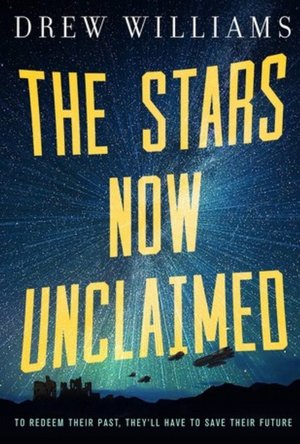
This has been compared to Firefly, Star Wars and some other science fiction stories and worlds, but I think it's a good story in its own right.
I really liked the main character - a female lead (who we don't learn the name of until near the end) who travels the universe after 'The Pulse" puts most planets back to the dark ages, to find children who have developed gifts because of this phenomenon. The Pax seem to be following her every move (I'm hoping the reason for this will be explained in the next instalment), and they're not good news (think mindless fascist zealots. If you're not with them, you're dead). The unnamed pilot/ soldier/ pilot has some great friends, who along with the telekinetic teen she saves at the beginning, must all work together to save their homeward. It's exciting stuff, believe me!
Many thanks to NetGalley and the publisher for a copy of this fantastic book to read!

Hard to Hold (Black Ops Heros #1)
8.0
Rate It
Book
Anna Key Marshall is about to get what she's always wanted: a baby. Granted, it's through a sperm...

Kristy H (1252 KP) rated The Widow's House in Books
Feb 8, 2018

You know how sometimes you start a novel and immediately know, from the first page, that you'll enjoy it? THE WIDOW'S HOUSE was that way for me. It sucked me in immediately and kept me interested throughout; I read it in about 24 hours. The book is filled with complicated characters, starting with Clare. You start to realize she's the ultimate unreliable narrator, but are never able to tell exactly how much. She appears unhappy with her selfish author husband and her marriage. She had a rough childhood--growing up in the Hudson Valley not far from Monty's estate, which has clearly affected the way she sees the world. The entire story is told from her point of view, and we're stuck with all events being filtered through her lens. It's genius really, and it is a refreshing change from so many novels lately that change narrators and time periods. You find yourself working and guessing with Clare as she unravels local history and the events unfolding at Riven House.
The novel is certainly told in the Gothic tradition. I first fell for Goodman via her excellent novel, [b:The Lake of Dead Languages|120274|The Lake of Dead Languages|Carol Goodman|http://images.gr-assets.com/books/1320554718s/120274.jpg|3159707], and this book reminded me of that one in some ways. Unlike some Gothic novels, you do not have to suspend much disbelief as the creepy events unfold around Clare and Jess. There are parts of this book that are incredibly spooky, and it's quite well-done. I loved that I was frantically flipping the pages, constantly second guessing everything and wondering what was happening. There are some great twists that shock you, even as you're still trying to figure things out in you're head (much like Clare). This novel will leave you guessing. It's crazy and confusing, but fascinating and incredibly hard to put down. It's completely enjoyable and stays with you after you've finished it, going over various plot points. Highly recommend.
I received a copy of this novel from the publisher and Edelweiss (thank you!) in return for an unbiased review; it is available everywhere as of 03/07/2017.
<center><a href="http://justacatandabookatherside.blogspot.com/">Blog</a>; ~ <a href="https://twitter.com/mwcmoto">Twitter</a>; ~ <a href="https://www.facebook.com/justacatandabook/">Facebook</a>; ~ <a href="https://plus.google.com/u/0/+KristyHamiltonbooks">Google+</a></center>;

Purple Phoenix Games (2266 KP) rated King of the Castle in Tabletop Games
Jul 2, 2020
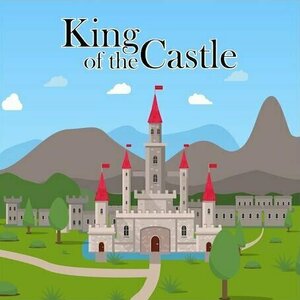

Disclaimer: We were provided a prototype copy of this game for the purposes of this preview. The components pictured are not final. Also, I do not plan to detail the entire rulebook in this review, but rather discuss the main rules and overall flow of the game. Keep an eye out for the Kickstarter launching later this fall! -L
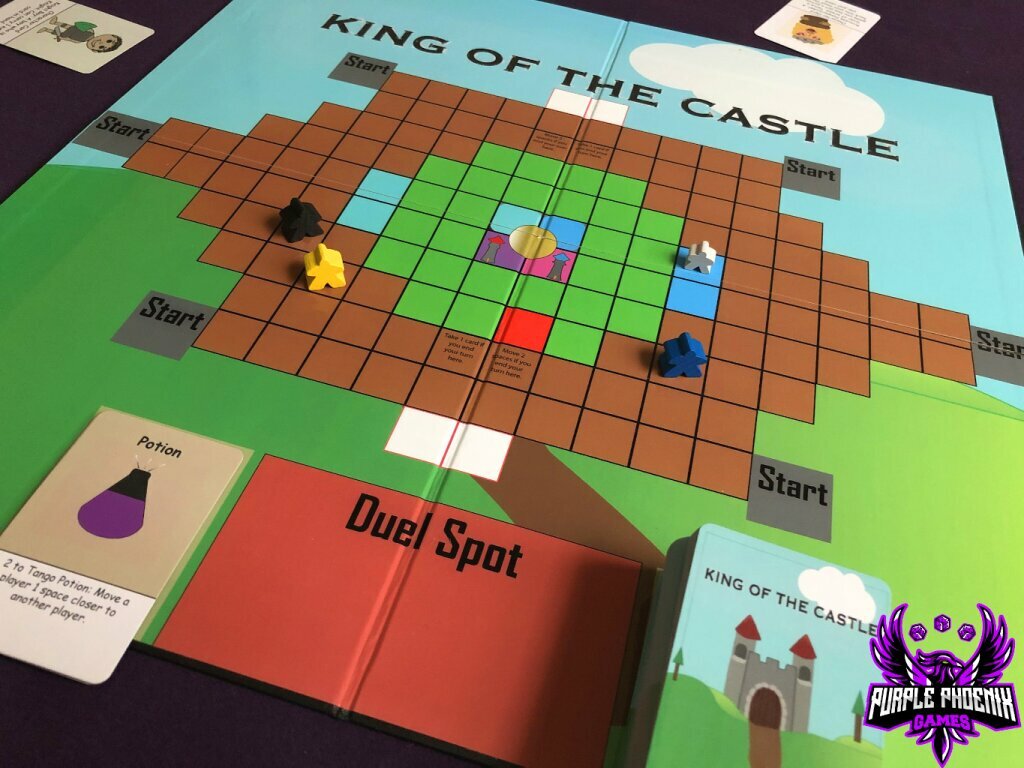
King of the Castle is a game of hand management, grid movement, and take that in which players are battling to be the first to capture and hold the throne. Played over a series of turns, players will move around the board, draw cards, and battle opponents to hinder their progress. To setup, each player is given a Character card at random, selects a Meeple in their chosen color, and places it on one of the various Start spaces on the game board. Shuffle all other cards and place them in a draw deck. Select a player to be the first player, and you are ready to begin!
On your turn, you will take a combination of 2 actions. Those combos are: Move 1 space and draw 1 card, Move 2 spaces, or Draw 2 cards. It is important to note that diagonal movement is not allowed! There are 2 types of cards that can be drawn: Potion cards (special powers/abilities) and Army cards (strength points for duels). Once you have performed your 2 actions, and played any Potion cards from your hand that you want, your turn ends. The game moves on to the next player. If you land on the same space as an opponent, you must duel each other. The dueling players will select as many Army cards from their hand as they wish to play, and will lay them down simultaneously. They may then play up to 3 Potion cards from their hand to influence the strength points of either player, as stated on the Potion cards. Whomever has the most strength points wins the duel, and gets to remain on that space. The loser must discard a card, and is knocked back to the nearest Exit space (depending on their current placement on the board).
In the center of the board are 2 Tower spaces. You must ‘capture’ a Tower in order to fulfill the win conditions. To capture a Tower, you must land on that space and occupy it for one full turn. Once you have captured a Tower, you may move to capture the Throne. The centermost space of the board is the Throne. To capture the Throne, you must first have captured a Tower, and you must enter the Throne space and occupy it for 3 complete and consecutive turns. When you are capturing a Tower or the Throne, you can still be attacked by opponents – so it is important to have a strong hand of cards to ward off enemies and continue your occupation of these valuable spaces. Once a player has occupied the Throne space for 3 consecutive turns, the game ends and that player is named King!
So with all of that said, how does King of the Castle play? Overall, I would say it’s a nice and simple little game. The concept itself is easy to comprehend – draw cards, duel opponents, capture a Tower, and ultimately, the Throne. There is a decent amount of strategy required for success. Not only are you racing to the center of the board, but you also need to amass a strong hand of cards with which you can hinder your opponents. Choosing when to use your Potion cards can affect not only your strategy, but those of your enemies as well. Is your strategy to skirt around your opponents and try to sneak by unnoticed? Or will you duel enemies at every opportunity, building up your Army and continually kicking the other players to the Exit spaces on the board? The idea of having to ‘capture’ certain spaces by occupying them for consecutive turns is an interesting one, and adds a unique twist to this game. You must be able to defend yourself in those spaces, or risk being kicked back to an Exit, requiring you to start that journey over again. It is a simple game to play, but not necessarily one that is easy to win, and I really like that.
Components. As I stated earlier, this is only a prototype version of the game, and I anticipate that there will be some changes for final production. That being said, the board in this prototype is nice and sturdy, the cards are easy to manipulate, and the Meeples are your standard wooden bits. So overall, these prototype components are off to a great start. The artwork and overall style of the game are a different story. The current artwork is pretty childish and unrefined. Again, this being only a prototype, I anticipate that the artwork will be overhauled and revised for final production. The artwork on the board is pretty basic as well, which is not necessarily a bad thing, it just doesn’t feel immersive or engaging for players. The spaces of the board are different colors to denote different areas of play, but nothing is labeled on the board, which can create some confusion at first as to the flow of movement around the board. The rules themselves need to be revised and edited for clarity. There is just a bit of ambiguity that leaves questions unanswered, but nothing that cannot be fixed.
All in all, the concept of King of the Castle is a solid one. It combines hand management, grid movement, and take that in a way that all 3 mechanics complement and work well with each other. The gameplay is lighthearted and relatively simple, which results in a fun and fast game. With some refining of the style and editing of the rules, I am sure that this game will truly shine. I look forward to following its progress, and am eager to see the Kickstarter campaign later this year. Keep your eyes on King of the Castle, because it’s shaping up to be a solid game.