
Search
Hadley (567 KP) rated Voices in the Snow in Books
Feb 16, 2021

Horror (2 more)
Well-written detail
Atmosphere
Awkward characters (1 more)
Some inconsistencies
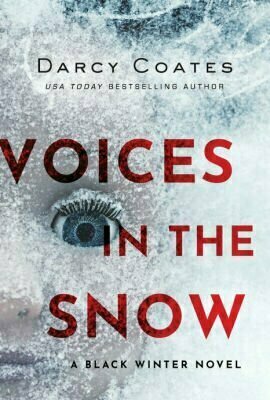
Winter is beginning to really show up for 2021 by blanketing the States in snow, which made this novel seem fitting to read this month, along with the isolated climate of quarantine which the two main characters go through in Darcy Coates' Voices in the Snow. This story is the first book in a four book series that is full of horror and mystery, and I couldn't seem to put it down - - - after the first 100 pages, the story steers off in a direction I didn't see coming.
Voices in the Snow is set in today's world, but at the beginning of a dystopian future in the UK, which mostly takes place at a large, desolate manor that sits just outside a forest called Banksy Forest. From the second chapter until the end, readers make their home here with the two main characters Clare and Dorran, but very shortly into the story, we realize that they aren't the only 'people' in the house.
The main question of the novel is whether or not Dorran can be trusted - - - Clare wakes up in his family's manor after a car accident, and she can't exactly remember how the accident happened, but she also can't remember why she was driving out in a blizzard in the first place, but she does recall that she was on the phone with her sister, Beth, and we learn that her sister worries about Clare like she's her mother. Clare becomes focused on trying to somehow contact Beth to let her know she's still alive.
We find out later that Dorran comes from a prestigious family that makes their money from being in the wood distribution business. His family, the Morthornes, aren't a typical family. Not only does Dorran's relatives live at the manor during the warmer months, but so do the servants, all 60 of them. Dorran makes it obvious that he doesn't enjoy this type of lifestyle:
" ' All right. I guess not. Especially in this house. How large is it [the house] ?'
'Inconveniently large.' He shrugged. 'It does not only house our family, but the servants as well.'
Clare's eyebrows rose. 'Servants?'
'Staff,' he corrected quickly. Clare thought she saw a flicker of embarrassment, but it was hidden almost immediately. 'My apologies. That is another part of tradition that is well outdated. My mother wishes for the staff to be referred to as servants.' "
Soon the two are discussing whether or not they could survive for months at the manor due to the blizzard not seeming to let up, with this discussion, readers find out there is an inside garden located in the depths of the manor, unfortunately, food wasn't planted since the family and servants leave the home for the winter, but there are plenty of seeds to start cultivating. One day while Clare is trying to get the seeds planted, she decides to go get Dorran, who left to go check on the many furnaces that heat the manor, but Clare easily gets lost in the house she has barely walked around in, and ends up in a wine cellar: here, Clare hears scraping noises that lead her to a creature huddled in the dark.
" The figure turned toward her. Eyes glinted - - - horrible, inhuman eyes peering out from behind long, greasy hair. Then the figure darted away, escaping from her circle of light, disappearing into a narrow doorway in the stone wall.
A sharp, broken scream cut through the cold air. Clare didn't realize it had come from her until she felt the ache in her throat. She stumbled backward, and her shoulders hit one of the shelves. Muffled clinking noises surrounded her as the bottles rocked.
She couldn't stop shaking. The thudding footsteps echoed around her, beating fast, like her own heart. The scraping noise joined it, louder this time. It surrounded her and overwhelmed her. "
Although Clare tells Dorran what she saw, he doesn't believe her. He believes that the stress from the car accident has caused her to hallucinate. Clare slowly begins to tell herself that he's probably right, but then the human-like creatures begin to show up more and more, always disappearing right before Dorran can see them. Shortly after an incident with another one of the creatures, Clare runs into Banksy Forest, set on getting the radio she remembered having in her car, to contact her sister Beth.
There are so many twists and turns in this story that it makes it wonderfully unpredictable. If I said anymore about it, it would give away too many of the surprises waiting inside. Voices in the Snow may not have been the best title for this book, but it is a really well-written horror story. The only annoyance I had with the novel is the awkwardness between the two main characters, which didn't seem natural. Most of what happens between Clare and Dorran are seen a mile away before it happens. During some scenes, I found myself rolling my eyes at the dialogue between Clare and Dorran, but the horror in the story makes up for the predictability of the characters.
I highly recommend this book to horror lovers; the scenes of scares and creatures were well-detailed. I was not disappointed at all. There were only a few inconsistencies throughout, but I think they would be easily over looked for the story is really enjoyable. I look forward to reading the rest of the series.
Voices in the Snow is set in today's world, but at the beginning of a dystopian future in the UK, which mostly takes place at a large, desolate manor that sits just outside a forest called Banksy Forest. From the second chapter until the end, readers make their home here with the two main characters Clare and Dorran, but very shortly into the story, we realize that they aren't the only 'people' in the house.
The main question of the novel is whether or not Dorran can be trusted - - - Clare wakes up in his family's manor after a car accident, and she can't exactly remember how the accident happened, but she also can't remember why she was driving out in a blizzard in the first place, but she does recall that she was on the phone with her sister, Beth, and we learn that her sister worries about Clare like she's her mother. Clare becomes focused on trying to somehow contact Beth to let her know she's still alive.
We find out later that Dorran comes from a prestigious family that makes their money from being in the wood distribution business. His family, the Morthornes, aren't a typical family. Not only does Dorran's relatives live at the manor during the warmer months, but so do the servants, all 60 of them. Dorran makes it obvious that he doesn't enjoy this type of lifestyle:
" ' All right. I guess not. Especially in this house. How large is it [the house] ?'
'Inconveniently large.' He shrugged. 'It does not only house our family, but the servants as well.'
Clare's eyebrows rose. 'Servants?'
'Staff,' he corrected quickly. Clare thought she saw a flicker of embarrassment, but it was hidden almost immediately. 'My apologies. That is another part of tradition that is well outdated. My mother wishes for the staff to be referred to as servants.' "
Soon the two are discussing whether or not they could survive for months at the manor due to the blizzard not seeming to let up, with this discussion, readers find out there is an inside garden located in the depths of the manor, unfortunately, food wasn't planted since the family and servants leave the home for the winter, but there are plenty of seeds to start cultivating. One day while Clare is trying to get the seeds planted, she decides to go get Dorran, who left to go check on the many furnaces that heat the manor, but Clare easily gets lost in the house she has barely walked around in, and ends up in a wine cellar: here, Clare hears scraping noises that lead her to a creature huddled in the dark.
" The figure turned toward her. Eyes glinted - - - horrible, inhuman eyes peering out from behind long, greasy hair. Then the figure darted away, escaping from her circle of light, disappearing into a narrow doorway in the stone wall.
A sharp, broken scream cut through the cold air. Clare didn't realize it had come from her until she felt the ache in her throat. She stumbled backward, and her shoulders hit one of the shelves. Muffled clinking noises surrounded her as the bottles rocked.
She couldn't stop shaking. The thudding footsteps echoed around her, beating fast, like her own heart. The scraping noise joined it, louder this time. It surrounded her and overwhelmed her. "
Although Clare tells Dorran what she saw, he doesn't believe her. He believes that the stress from the car accident has caused her to hallucinate. Clare slowly begins to tell herself that he's probably right, but then the human-like creatures begin to show up more and more, always disappearing right before Dorran can see them. Shortly after an incident with another one of the creatures, Clare runs into Banksy Forest, set on getting the radio she remembered having in her car, to contact her sister Beth.
There are so many twists and turns in this story that it makes it wonderfully unpredictable. If I said anymore about it, it would give away too many of the surprises waiting inside. Voices in the Snow may not have been the best title for this book, but it is a really well-written horror story. The only annoyance I had with the novel is the awkwardness between the two main characters, which didn't seem natural. Most of what happens between Clare and Dorran are seen a mile away before it happens. During some scenes, I found myself rolling my eyes at the dialogue between Clare and Dorran, but the horror in the story makes up for the predictability of the characters.
I highly recommend this book to horror lovers; the scenes of scares and creatures were well-detailed. I was not disappointed at all. There were only a few inconsistencies throughout, but I think they would be easily over looked for the story is really enjoyable. I look forward to reading the rest of the series.

BookblogbyCari (345 KP) rated The Naked Future in Books
Aug 5, 2018

Book Review by Cari Mayhew. Rating 7.5/10
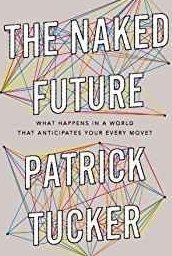
This is a book about how the digital footprint we leave behind us can be used to make predictions about our future in all aspects of our lives. But are we seeing the coming to being of a dystopian science fiction, or are we tapping into a new superpower?
Every app on every device we use leaves a digital trail about us, and this has implications in the fields of medicine and the spread of infections, education and learning, and crime prediction, through to movie preference and dating.
The book predominantly examines the value to society in general but also looks at the benefits to the individual. Of course, these benefits come at a cost to our privacy, which the book also briefly addresses. Each chapter is centered on its own topic. I will mention each but in the interests of brevity won’t go into detail on each topic.
Chapter 1 begins by describing how certain apps can be extremely useful warning providers, but by the end of the chapter, we are looking at how your smartphone apps can be used to locate you, even when your GPS is turned off and you’re not geo-tagging posts or tweets. With modern statistical models and enough data points, it’s possible to predict where you will be down to the hour and within a square block one and a half years from now. Turning off your GPS doesn't actually make you less predictable, it just makes your predictability level harder to detect - your future remains naked.
Similarly, in Chapter 2 which examines deliberate self-tracking, Tucker notes that Fitbit users who are confused or ignorant of the device’s privacy settings are inadvertently sharing the data details of their sexual activity.
This seems like frightening stuff, but then the conversation turns to more benevolent uses of such technology. Chapter 3, by way of an imagined story, examines how such technology can be used to predict the spread of dangerous infections, including the identification of new strains of virus as new mutations occur.
Chapter 4 looks at the use of such technology in weather forecasting, and how it’s been used to make way for insurance against the effects of the weather for affected businesses. Chapter 5 explores how movie/book choice and ratings can be used to predict what makes a good movie/book.
We go back to the frightening stuff in Chapter 6. Here Tucker talks about how the smartphone has become the ultimate shopping accessory. Knowing what habitual time an individual wants a coffee, cig, or beer, is ideal for online advertisers, who will be able to send you a voucher/coupon or a mere suggestion right there on the spot. There could also be surveillance systems examining what you pick up and consider buying but don't put into basket /trolley. Tucker goes on to describe how data brokers such as Acxiom have begun selling on to advertisers access to not only your data to also to your future decisions.
Chapter 7 looks at education and learning, and makes the following good points: “What telemetric education offers is the chance for all students to raise their hands and be heard, without fear of confirming some unflattering, broadly held perception about their social group.” And “Imagine for a moment the power of knowing beforehand how well you would perform on a test but how disempowered you would feel if that same future was naked to your competition, or to your future potential employers.”
I like the title of chapter 8 “When Your Phone Says You’re In Love”. Here Tucker tells how online dating sites have become a living social science lab. Again here your personal details can be sold on. In the future, you could be rating your actual get-togethers on the app. Already invented is a “sociometer” which detects unconscious biological signals which show what role you’re taking in a conversation, and can then produce predictions on how the rest of the conversation will go.
Chapters 9 and 10 look at predictions in the where, when and who of acts of crime. He discusses where it has worked so far. But on this Tucker says “Predictive policing in the wrong hands looks less like a boon to public safety and more like a totalitarian hammer.”
The book concludes with Chapter 11, titled “The World That Anticipates Your Every Move”. Here one interviewee said as “Privacy is a blip on the radar of history.” Indeed the chapter ends with an obituary to privacy, where Tucker says “we will feel increasingly powerless against the tide of transparency rendering this planet in a new form as surely as the movement of glaciers carved our canyons and valleys.”
I’ve highlighted here the more worrisome aspects of the topics, but it’s important to note that Tucker does aim to offer a prescription for the situation, though it’s spread out in occasional paragraphs here and there rather than as a useful reference at the end. That said I found the actionable advice was rather brief and unoriginal.
Tucker presents a fair and balanced view of this important and highly relevant topic of our times, and the book is clearly well-researched. Some chapters show a little humor which was fun, but although the book is aimed at the layman, I often felt like I was reading a science textbook. The book is a real eye-opener, especially if it’s something you hadn’t given much thought to. The overall message of the book is clear: our data is already out there, but it’s ours first and foremost, and we can be savvy and use it to our advantage.
This is a book about how the digital footprint we leave behind us can be used to make predictions about our future in all aspects of our lives. But are we seeing the coming to being of a dystopian science fiction, or are we tapping into a new superpower?
Every app on every device we use leaves a digital trail about us, and this has implications in the fields of medicine and the spread of infections, education and learning, and crime prediction, through to movie preference and dating.
The book predominantly examines the value to society in general but also looks at the benefits to the individual. Of course, these benefits come at a cost to our privacy, which the book also briefly addresses. Each chapter is centered on its own topic. I will mention each but in the interests of brevity won’t go into detail on each topic.
Chapter 1 begins by describing how certain apps can be extremely useful warning providers, but by the end of the chapter, we are looking at how your smartphone apps can be used to locate you, even when your GPS is turned off and you’re not geo-tagging posts or tweets. With modern statistical models and enough data points, it’s possible to predict where you will be down to the hour and within a square block one and a half years from now. Turning off your GPS doesn't actually make you less predictable, it just makes your predictability level harder to detect - your future remains naked.
Similarly, in Chapter 2 which examines deliberate self-tracking, Tucker notes that Fitbit users who are confused or ignorant of the device’s privacy settings are inadvertently sharing the data details of their sexual activity.
This seems like frightening stuff, but then the conversation turns to more benevolent uses of such technology. Chapter 3, by way of an imagined story, examines how such technology can be used to predict the spread of dangerous infections, including the identification of new strains of virus as new mutations occur.
Chapter 4 looks at the use of such technology in weather forecasting, and how it’s been used to make way for insurance against the effects of the weather for affected businesses. Chapter 5 explores how movie/book choice and ratings can be used to predict what makes a good movie/book.
We go back to the frightening stuff in Chapter 6. Here Tucker talks about how the smartphone has become the ultimate shopping accessory. Knowing what habitual time an individual wants a coffee, cig, or beer, is ideal for online advertisers, who will be able to send you a voucher/coupon or a mere suggestion right there on the spot. There could also be surveillance systems examining what you pick up and consider buying but don't put into basket /trolley. Tucker goes on to describe how data brokers such as Acxiom have begun selling on to advertisers access to not only your data to also to your future decisions.
Chapter 7 looks at education and learning, and makes the following good points: “What telemetric education offers is the chance for all students to raise their hands and be heard, without fear of confirming some unflattering, broadly held perception about their social group.” And “Imagine for a moment the power of knowing beforehand how well you would perform on a test but how disempowered you would feel if that same future was naked to your competition, or to your future potential employers.”
I like the title of chapter 8 “When Your Phone Says You’re In Love”. Here Tucker tells how online dating sites have become a living social science lab. Again here your personal details can be sold on. In the future, you could be rating your actual get-togethers on the app. Already invented is a “sociometer” which detects unconscious biological signals which show what role you’re taking in a conversation, and can then produce predictions on how the rest of the conversation will go.
Chapters 9 and 10 look at predictions in the where, when and who of acts of crime. He discusses where it has worked so far. But on this Tucker says “Predictive policing in the wrong hands looks less like a boon to public safety and more like a totalitarian hammer.”
The book concludes with Chapter 11, titled “The World That Anticipates Your Every Move”. Here one interviewee said as “Privacy is a blip on the radar of history.” Indeed the chapter ends with an obituary to privacy, where Tucker says “we will feel increasingly powerless against the tide of transparency rendering this planet in a new form as surely as the movement of glaciers carved our canyons and valleys.”
I’ve highlighted here the more worrisome aspects of the topics, but it’s important to note that Tucker does aim to offer a prescription for the situation, though it’s spread out in occasional paragraphs here and there rather than as a useful reference at the end. That said I found the actionable advice was rather brief and unoriginal.
Tucker presents a fair and balanced view of this important and highly relevant topic of our times, and the book is clearly well-researched. Some chapters show a little humor which was fun, but although the book is aimed at the layman, I often felt like I was reading a science textbook. The book is a real eye-opener, especially if it’s something you hadn’t given much thought to. The overall message of the book is clear: our data is already out there, but it’s ours first and foremost, and we can be savvy and use it to our advantage.
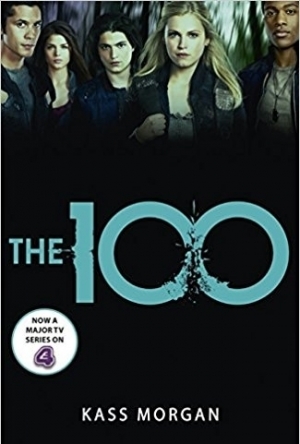


"The door slid open and Clarke knew it was time to die." What a way to start the book. Kass Morgan dives right into her storyline with an in-your-face opener. It took a bit of time before I, as the reader realized what this book was about. She began by setting up a number of characters, switching between perspectives, to quickly introduce you to the players. Those people who will have the biggest impact upon the storyline.
Each character is thrown into the mix, destined to be sent to Earth. The first in a long, long time. While not all make it, we are still treated with back stories and past relationships. Had the author not included those scenes, her characters would have been much more difficult to relate to. You come to briefly understand what the person goes through, exactly why he/she is so angry and hurt, and what they each did to become subjected to the fate of the 100. Personally, I would have preferred that greater attention had been given to character development rather than relationship development.
The Earth was unlivable for so long, and yet they send these 100 "children" as guinea pigs, rather than trained professionals. People who could colonize, build shelters, feed the colony, study the land and environment, or even tend to the ill. Instead, these youths are forced to come together with a common goal - survival.
One gets to a certain point in the novel and then realizes they don't entirely know what these different living situations/names mean. Of course, the Walden and Arcadian people seem to be of a lower class, economic, and social standing than the Phoenix. Walden also had an outbreak at one point that had to be quarantined. But beyond that? I'm not entirely sure what the distinctions are. Clearly the Phoenix people are "posh", with foreign accents, prone to extravagances and taking what they have for granted. But how did they come to be in that, dare I say, caste to begins with? Were people settled based upon their original locations on Earth? Or perhaps based upon the money/knowledge they could provide? Unfortunately, that aspect of the story is not very clearly explained. It seems that the author took more time to focus on the intricacies of the relationships than the world building.
Sometimes the author was redundant, choosing to repeat the same fears/desire over and over again. Yes, we understand that the medicine is missing. Was it flung from the ship before the crash or during? Can they survive without it? We don't know yet, but if we didn't realize the medicine was important the first time it was mentioned... We certainly realized it after the tenth.
This book has a very unique concept in that it combines the post-apocalyptic Hunger Games or Divergent-type Earth with space. While it may exist in other novels, I've not yet read something similar. Where it does seem to follow typical YA novels is the fact that it has a love triangle. Those seem like they are a requirement, as they are in most popular young adult novels. (HG, Divergent, TMI, Vampire Diaries, etc.)
There is a bit of mystery in the book as well. It seems that the reason one of the characters is arrested must be kept a secret, even from the reader. The author continuously has the girl think to herself, 'Why isn't he asking me about my confinement?', 'He's happy, this is for the best [that he doesn't know.]', and even has her love interest say "I heard a rumor about a girl on Phoenix who was arrested for..." Yes, there was a dramatic pause. And no, he does not finish his sentence. After the third or fourth time, the author finally reveals the girl's situation during a flashback.
Throughout the novel, the author develops the relationship between two main characters. Unfortunately, it's a bit jarring and sporadic. It quickly jumps from bitter hatred from the moment they step foot on Earth to reconciliation after one act, then back to hatred. Again, after one act. While relationships can be a roller coaster, this is a bit too authentic to the carnival ride.
The relationship is not perfect, especially when she has a second possible love interest. A guy who after only a short while, thinks of only her before he falls asleep. That girl must be something. The first time they really spend any time together, he decides that making out is the best course of action. Much to the dismay of her other love interest, though it does not dissuade him. Sound familiar?
It doesn't take long before he snaps at her and their brief... Whatever it was is over. Or is it?
They must be masochists, because it seems they're just gluttons for punishment and emotional, gut wrenching hurt... Or just those that don't learn from history. (Doomed to repeat it and all that.) Who would continuously subject themselves to that kind of torment? Move on and let yourself heal. It's not a post-apocalyptic world that only the two of you can repopulate... There are other individuals in camp with you. (Like the second guy you may or may not like, but that you certainly make out with in the woods.) But that's just my perspective.
While I found myself bemused and skeptical at times about certain aspects of the book, none of those times corresponded to the purposefully exaggerated environment that they must adapt to on Earth. Rather it is the progression of relationships, situations characters find themselves in, and utterly disastrous karmic intervention. Seriously, they must have really messed with the world for it to so perfectly separate two lovers as it does.
I suspected there would be a particular plot twist and unsurprisingly it came to fruition approximately 98% of the way through the book. I'm intrigued to see where the author takes it and how it will develop in the sequel - The 100: Day
21 (which is next on my review list!)
I find myself enjoying the read, dispute the obvious flaws one notices whilst reading it. If you take it as an easy, enjoyable read - then that is what you will come away with. If you expect it to be a fantastic piece that delves into the human psyche to truly draw you into a character's life and relationships - then you will be quite disappointed. Overall, I would recommend this novel to those who enjoy dystopian, teen romance series.
Each character is thrown into the mix, destined to be sent to Earth. The first in a long, long time. While not all make it, we are still treated with back stories and past relationships. Had the author not included those scenes, her characters would have been much more difficult to relate to. You come to briefly understand what the person goes through, exactly why he/she is so angry and hurt, and what they each did to become subjected to the fate of the 100. Personally, I would have preferred that greater attention had been given to character development rather than relationship development.
The Earth was unlivable for so long, and yet they send these 100 "children" as guinea pigs, rather than trained professionals. People who could colonize, build shelters, feed the colony, study the land and environment, or even tend to the ill. Instead, these youths are forced to come together with a common goal - survival.
One gets to a certain point in the novel and then realizes they don't entirely know what these different living situations/names mean. Of course, the Walden and Arcadian people seem to be of a lower class, economic, and social standing than the Phoenix. Walden also had an outbreak at one point that had to be quarantined. But beyond that? I'm not entirely sure what the distinctions are. Clearly the Phoenix people are "posh", with foreign accents, prone to extravagances and taking what they have for granted. But how did they come to be in that, dare I say, caste to begins with? Were people settled based upon their original locations on Earth? Or perhaps based upon the money/knowledge they could provide? Unfortunately, that aspect of the story is not very clearly explained. It seems that the author took more time to focus on the intricacies of the relationships than the world building.
Sometimes the author was redundant, choosing to repeat the same fears/desire over and over again. Yes, we understand that the medicine is missing. Was it flung from the ship before the crash or during? Can they survive without it? We don't know yet, but if we didn't realize the medicine was important the first time it was mentioned... We certainly realized it after the tenth.
This book has a very unique concept in that it combines the post-apocalyptic Hunger Games or Divergent-type Earth with space. While it may exist in other novels, I've not yet read something similar. Where it does seem to follow typical YA novels is the fact that it has a love triangle. Those seem like they are a requirement, as they are in most popular young adult novels. (HG, Divergent, TMI, Vampire Diaries, etc.)
There is a bit of mystery in the book as well. It seems that the reason one of the characters is arrested must be kept a secret, even from the reader. The author continuously has the girl think to herself, 'Why isn't he asking me about my confinement?', 'He's happy, this is for the best [that he doesn't know.]', and even has her love interest say "I heard a rumor about a girl on Phoenix who was arrested for..." Yes, there was a dramatic pause. And no, he does not finish his sentence. After the third or fourth time, the author finally reveals the girl's situation during a flashback.
Throughout the novel, the author develops the relationship between two main characters. Unfortunately, it's a bit jarring and sporadic. It quickly jumps from bitter hatred from the moment they step foot on Earth to reconciliation after one act, then back to hatred. Again, after one act. While relationships can be a roller coaster, this is a bit too authentic to the carnival ride.
The relationship is not perfect, especially when she has a second possible love interest. A guy who after only a short while, thinks of only her before he falls asleep. That girl must be something. The first time they really spend any time together, he decides that making out is the best course of action. Much to the dismay of her other love interest, though it does not dissuade him. Sound familiar?
It doesn't take long before he snaps at her and their brief... Whatever it was is over. Or is it?
They must be masochists, because it seems they're just gluttons for punishment and emotional, gut wrenching hurt... Or just those that don't learn from history. (Doomed to repeat it and all that.) Who would continuously subject themselves to that kind of torment? Move on and let yourself heal. It's not a post-apocalyptic world that only the two of you can repopulate... There are other individuals in camp with you. (Like the second guy you may or may not like, but that you certainly make out with in the woods.) But that's just my perspective.
While I found myself bemused and skeptical at times about certain aspects of the book, none of those times corresponded to the purposefully exaggerated environment that they must adapt to on Earth. Rather it is the progression of relationships, situations characters find themselves in, and utterly disastrous karmic intervention. Seriously, they must have really messed with the world for it to so perfectly separate two lovers as it does.
I suspected there would be a particular plot twist and unsurprisingly it came to fruition approximately 98% of the way through the book. I'm intrigued to see where the author takes it and how it will develop in the sequel - The 100: Day
21 (which is next on my review list!)
I find myself enjoying the read, dispute the obvious flaws one notices whilst reading it. If you take it as an easy, enjoyable read - then that is what you will come away with. If you expect it to be a fantastic piece that delves into the human psyche to truly draw you into a character's life and relationships - then you will be quite disappointed. Overall, I would recommend this novel to those who enjoy dystopian, teen romance series.

Well written (1 more)
Great characters
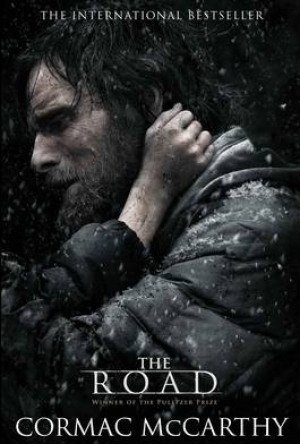
If the world ended, could you keep your morals and values? Imagine that your a father, with a young child in a burned-out world, barely surviving out on the road, and there are cannibals and murderers out to get you. Over time, you would watch your child become thinner and thinner, and every now and then you're lucky enough to find some canned or jarred food here and there, but it's only a matter of time before you can't find anymore. Soon, you would both be too weak to move - - - would you murder someone if they had food? Yet, most people out on the road are just like you, with no food and searching for more - - - in that case, could you kill and eat a person to survive? Or would you let yourself and your child starve, keeping your morals and values intact?
This is a scenario people may have to face one day, especially with the shape the world is in today. Even now people are faced with sticking with their morals and values, from helping our fellow man to the decision of holding a door open for a stranger. The Road, Cormac McCarthy's Pulitzer Prize winning novel, brings the very question of humanity to the forefront, as well as how hard it is to hold onto it.
The father, The Road's main character, takes us on a journey through the mountains in a burned-out America, but the fires that took over are never explained and they didn't need to be. Apparently having been on the move for a couple of years, he wants to take his young son South to survive the winter months that are very close by. Readers get glimpses of what happened the night the grid went down from the father's point-of-view, but so many years have passed that the memories are few, the facts aren't completely straight, and any type of life before the fires seems to have been just a dream. So the two begin the story heading South, dragging everything they have scavenged in their travels inside of a metal shopping cart, and the father isn't sure they'll make it out of the mountains before winter. He only has tattered pieces of a map that they have carried for a long time, having numbered each piece with a broken crayon they had found, making it hard to estimate how far they need to travel.
While traveling, they very rarely run into other people, at one point, when they run into a very bad man, the father realizes he hasn't spoken to another person (other than his son) in at least a year. This is mostly because the majority of people that are still alive are the type of people that would rather kill you and take whatever you have than speak to you. Even most of the houses they come upon are burned and abandoned, but the father sees these buildings as a chance to find food and supplies: "The roadside hedges were gone to rows of black and twisted brambles. No sign of life. He left the boy standing in the road holding the pistol while he climbed an old set of limestone steps and walked down the porch of the farmhouse shading his eyes and peering in the windows. He let himself in through the kitchen. Trash in the floor, old newsprint. China in a breakfront, cups hanging from their hooks. He went down the hallway and stood in the door to the parlor. There was an antique pumporgan in the corner. A television set. Cheap stuffed furniture together with an old handmade cherrywood chifforobe. He climbed the stairs and walked through the bedrooms. Everything covered with ash. A child's room with a stuffed dog on the windowsill looking out at the garden. He went through the closets. He stripped back the beds and came away with two good woolen blankets and went back down the stairs. In the pantry were three jars of homecanned tomatoes. He blew the dust from the lids and studied them. Someone before him had not trusted them and in the end neither did he and he walked out with the blankets over his shoulder and they set off along the road again. " The young son is usually left close by outside because he seems scared that either there will be bad people or dead people inside.
Throughout this incredible, heart wrenching novel, the father slowly becomes more ill with what seems to be a case of pneumonia, possibly caused by all of the ash that is in the air from the fires; this makes him cough uncontrollably. Yet, he doesn't focus on that he may not live too much longer, instead he tries everything to get his son as far South as possible without too much of a plan of what to do when they get there.
The horror of this book is brought to light by the realism of what could happen if the world were to end, when people lose their humanity and begin to kill and eat their fellow humans. It leaves us wondering if we could hold onto what we are today when the basic need for shelter and food become more important than another person's life. But the father and son are examples of the few individuals who are able to hold onto their humanity during the end of the world: they share supplies if they can, they don't kill humans or animals to feed themselves, and they live by one rule: if a person is still alive, they take nothing from them.
The struggle these two go through is very real and believable, and McCarthy's writing is so well done that this book is hard to put down. Even while reading, most won't notice that there is only one character in the entire story that is given a name; our two main characters are never addressed by anything other than Papa or son/boy. The father's worry about keeping his son alive and unharmed is heartbreaking, for instance, one scene where he believes that he and his son are going to be found by cannibals, he quickly goes over with his son on how to shoot himself with the pistol, so neither of them will be taken alive. As a parent, I choked up in quite a few scenes, including this one - - - and as with the film adaptation, I cried heartily at the end.
This emotional, dark novel is an amazing book to read. The Road is bound to leave readers questioning what they would do in the same circumstances as the father. I highly recommend this book to people who love dystopian novels, but beware, this is a story you won't be able to forget.
This is a scenario people may have to face one day, especially with the shape the world is in today. Even now people are faced with sticking with their morals and values, from helping our fellow man to the decision of holding a door open for a stranger. The Road, Cormac McCarthy's Pulitzer Prize winning novel, brings the very question of humanity to the forefront, as well as how hard it is to hold onto it.
The father, The Road's main character, takes us on a journey through the mountains in a burned-out America, but the fires that took over are never explained and they didn't need to be. Apparently having been on the move for a couple of years, he wants to take his young son South to survive the winter months that are very close by. Readers get glimpses of what happened the night the grid went down from the father's point-of-view, but so many years have passed that the memories are few, the facts aren't completely straight, and any type of life before the fires seems to have been just a dream. So the two begin the story heading South, dragging everything they have scavenged in their travels inside of a metal shopping cart, and the father isn't sure they'll make it out of the mountains before winter. He only has tattered pieces of a map that they have carried for a long time, having numbered each piece with a broken crayon they had found, making it hard to estimate how far they need to travel.
While traveling, they very rarely run into other people, at one point, when they run into a very bad man, the father realizes he hasn't spoken to another person (other than his son) in at least a year. This is mostly because the majority of people that are still alive are the type of people that would rather kill you and take whatever you have than speak to you. Even most of the houses they come upon are burned and abandoned, but the father sees these buildings as a chance to find food and supplies: "The roadside hedges were gone to rows of black and twisted brambles. No sign of life. He left the boy standing in the road holding the pistol while he climbed an old set of limestone steps and walked down the porch of the farmhouse shading his eyes and peering in the windows. He let himself in through the kitchen. Trash in the floor, old newsprint. China in a breakfront, cups hanging from their hooks. He went down the hallway and stood in the door to the parlor. There was an antique pumporgan in the corner. A television set. Cheap stuffed furniture together with an old handmade cherrywood chifforobe. He climbed the stairs and walked through the bedrooms. Everything covered with ash. A child's room with a stuffed dog on the windowsill looking out at the garden. He went through the closets. He stripped back the beds and came away with two good woolen blankets and went back down the stairs. In the pantry were three jars of homecanned tomatoes. He blew the dust from the lids and studied them. Someone before him had not trusted them and in the end neither did he and he walked out with the blankets over his shoulder and they set off along the road again. " The young son is usually left close by outside because he seems scared that either there will be bad people or dead people inside.
Throughout this incredible, heart wrenching novel, the father slowly becomes more ill with what seems to be a case of pneumonia, possibly caused by all of the ash that is in the air from the fires; this makes him cough uncontrollably. Yet, he doesn't focus on that he may not live too much longer, instead he tries everything to get his son as far South as possible without too much of a plan of what to do when they get there.
The horror of this book is brought to light by the realism of what could happen if the world were to end, when people lose their humanity and begin to kill and eat their fellow humans. It leaves us wondering if we could hold onto what we are today when the basic need for shelter and food become more important than another person's life. But the father and son are examples of the few individuals who are able to hold onto their humanity during the end of the world: they share supplies if they can, they don't kill humans or animals to feed themselves, and they live by one rule: if a person is still alive, they take nothing from them.
The struggle these two go through is very real and believable, and McCarthy's writing is so well done that this book is hard to put down. Even while reading, most won't notice that there is only one character in the entire story that is given a name; our two main characters are never addressed by anything other than Papa or son/boy. The father's worry about keeping his son alive and unharmed is heartbreaking, for instance, one scene where he believes that he and his son are going to be found by cannibals, he quickly goes over with his son on how to shoot himself with the pistol, so neither of them will be taken alive. As a parent, I choked up in quite a few scenes, including this one - - - and as with the film adaptation, I cried heartily at the end.
This emotional, dark novel is an amazing book to read. The Road is bound to leave readers questioning what they would do in the same circumstances as the father. I highly recommend this book to people who love dystopian novels, but beware, this is a story you won't be able to forget.
Mandy and G.D. Burkhead (26 KP) rated The Grey Bastards in Books
May 20, 2018
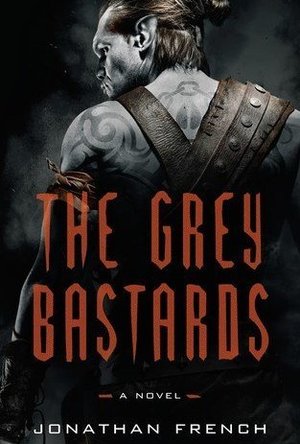
Shelf Life – The Grey Bastards Exemplifies Grimdark Fantasy at Its Damn Finest
Contains spoilers, click to show
The Grey Bastards is a fun, foul-mouthed read. If you’re turned off by bad language, steamy sex, or a good plot with plenty of action and twists, then this book isn’t for you. The Grey Bastards falls into the fantasy sub-genre known as grimdark. Where high fantasy has your Tolkien beautiful and noble elves, dwarves, humans, and wizards with epic battles between good and evil, grimdark takes all of that and covers it in shit, pus, and blood. Notice how in high fantasy nobody ever takes a piss or fucks? In grimdark, everyone does.
But don’t be fooled into thinking this book will be any less intelligent, epic, or heartfelt for it. The Grey Bastards is all of that and more. The novel follows Jackal, a half-breed orc living in the Lot Lands, the barren desert wasteland of Hispartha. He is a Grey Bastard, one of many half-orc hoofs, each protecting its own small town in the Lots. Members of a hoof are elite warriors that ride out on their Barbarians—giant warthogs—and slaughter invading bands of orcs.
Hispartha is a vibrant world, with a mix of fantastical species (orcs, half-orcs, elves, humans, halflings, and centaurs) with unique cultures and religions. Hispartha itself takes influences from Reconquista Spain, which is especially noticeable in the nomenclature, geography, and architecture.
The primarily atheistic half-orcs recently won their freedom from slavery at the hands of humans. Humans treat the half-orcs like second-class citizens, but tolerate them because of their strength, using them as a shield from the orcs. The elves are beautiful, reclusive, and probably the most cliché; there is one important elf character, but for the most part, we don’t get a good look into their culture in the first book. The centaurs worship Romanesque deities and go on crazed, Bacchanalian killing sprees during the blood moon.
Besides the half-orcs, the halflings are perhaps the most interesting. I still have a hard time visualizing them, trying to figure out if they are thin, pixie-like creatures or more stocky like dwarves. Their small stature and black skin makes me think of pygmies. They worship a god they expect will reincarnate someday, (view spoiler)
One thing that has always annoyed me about fantasy is that many authors feel that the characters of their world, being pre-industrial and thus “medieval,” must all be white, straight, Christian (or proto-Christian), cisgender males. If a woman appears at all is to act as the damsel, prize, or, if she’s lucky, a mystical enchantress to guide the heroes or provide a maguffin. It has come to the point in which this has become a tired and accepted baseline for fantasy. I don’t necessarily think that these fantasy authors are intentionally trying to be uninclusive, so much as they just seem to forget that other groups of people can exist in fantasy thanks to its fathers, Tolkien and Lewis.
But enough with my rant, the purpose of which is to highlight why I am often drawn to grimdark fantasy: at the very least I know that women, people of color, lgbt people, and other religions will be present, even if they are often victimized. This is because grimdark fantasy honestly depicts the horrors of rape, war, murder, slavery, and racism (or rather, speciesism in most cases) and has heroes and villains that are morally grey.
However, many authors describe these atrocities and then leave it at that, assuming that simply depicting them is enough to make a book mature and meaningful. They often fail to make any sort of statement on evil, and thus can seem to be, at best, blindly accepting it and, at worst, glorifying it (this often happens in the cases of magnificent bastard characters, who are absolute monsters but are so charming you almost respect or like them).
Jonathan French, however, does not fall short of the mark as many authors do, and for two main reasons: humor and humanity.
Let’s start with the humor. This book is hilarious. I mean in the I literally laughed out loud while reading it way. Sure, the jokes are often crass, but I have a dirty mind, so inappropriate humor is my favorite kind. The dialogue is especially top-notch, and the interactions between Jackal and his friends Fetching and Oats feel genuine, full of in-jokes, insults, and sexually-charged humor, all of which are exactly how I interact with my own close friends. And every major character in this book is so damn witty that I’m honestly jealous of them. If I could be quick enough to make even one of their zingers at the right time in a conversation, I would feel proud of myself for the rest of the day.
Humor is necessary to prevent any grimdark fantasy from becoming too over-the-top or depressing. And honestly, humor is needed most when the world is a dark and frightening place. But too much humor could accidentally downplay the point of grimdark: the brutally honest depiction of the atrocities that people are capable of.
And this is where it is important to have an element of humanity. By this I mean that the “good guys” must make some action or statement on those atrocities. Too often I read or watch hardened badass characters with no emotion who can watch a person get tortured and killed without flinching (maybe even do it themselves) and who never stop to question the nature of their society (even as part of their character growth), and I have difficulty finding them at all relatable or even the least bit interesting.
Now, often for this type of character, he or she is dead inside as a coping mechanism and part of their character arc is learning to allow themselves to feel their repressed emotions: heartbreak, anger, fear, etc. This can be done very well (see The Hunger Games for a great example—dystopian scifi and grimdark fantasy have very similar undertones). But most times it just ends up falling flat.
But Jackal already starts out with more personality than most grimdark protagonists. He is a humorous and light-hearted person. Sure, he lives in a desert wasteland, his race is entirely created by rape, he’s treated as a second-class citizen, and his life and the lives of those around him are in constant danger of rape and/or murder by invading orcs or blood-crazed centaurs. But despite all of that, he still has a sense of humor, people he loves, a community, ambitions, moral code, and all of the other things that these protagonists are often lacking.
Don’t get me wrong, he can be an asshole, and he’s often acts rashly before he thinks. But the scene that really stuck with me the most was [when Jackal and the wizard Crafty come across an unconscious elf sex-slave. I was expecting him to say something along the lines of “There’s nothing we can do for her, we have to save ourselves” or “This isn’t any of our business” or “It would be best to just put her out of her mercy.” These are the typical lines that a grimdark protagonist might utter while their companion—accused of being a bleeding heart—frees the slave. But this was not the case. Jackal and Crafty both immediately set out to free the girl and steal her away from her owner, despite the danger to themselves. And when he comes across an entire castle-full of these women, Jackal again sets about freeing them without a moment’s hesitation. (hide spoiler)]
And it’s no surprise that Jackal has a serious problem with rape. As I’ve mentioned before, half-orcs are entirely the product of roving bands of orcs raping human, elven, or even half-orc women. [When Jackal learns that Starling, the elf slave he rescued, is pregnant with a half-orc baby, he is not only furious with the orcs that gang-raped her, but also disturbed by the fact that elven society shuns any of their women who have been raped, and that these victims often end up taking their own lives rather than give birth to an impure half-elf. (hide spoiler)]
Furthermore, Jackal, unlike many people in Hispartha, does not buy into misogyny or sexism. His best friend Fetching is the first female half-orc to have joined a group of riders. Not only does Jackal respect Fetching, he understands the emotional turmoil that she is dealing with being the first female rider and how she overcompensates as a result to earn the respect of the other men.
While there is quite a bit of speciesism (pretty much none of the species get along with one another), the inhabitants of Hispartha come in every skin color and nobody gives a damn. Furthermore, sexuality is primarily treated as each person’s individual preference and nobody else’s business. While characters may make jokes about acting “backy” (gay), these are made in good humor between friends, and nobody gets particularly offended by them. Fetching is herself openly bisexual (though she seems to suppress her heterosexual desires more than her homosexual ones out of that same need to be “one of the boys”), and Oats and Jackal are one of my favorite bromantic pairings.
Grimdark fantasy can often be depressing to read. But Jonathan French does an excellent job of infusing hope into his narrative. The story actually has a happier ending than I was expecting. [I was especially pleased when Jackal chooses Fetching to be the new leader of the hoof (she is voted in unanimously by the other riders). I find it incredibly annoying in books and movies when revolutionaries/usurpers decide to appoint themselves leaders, as the former does not qualify you for the latter. Part of Jackal’s arc is realizing that he is not meant to lead the hoof like he’d once desired. (hide spoiler)]
For the sequel, The True Bastards, I’m hoping to see [if a cure can be found for the thrice-blood child now infected with plague, how Fetching is doing leading the hoof, and what the mysterious Starling is up to (I don’t buy for a second that she’s killed herself). And of course, I fully expect that Jackal is going to have to fulfill his empty promise to the halfling’s resurrected god, Belico.
But don’t be fooled into thinking this book will be any less intelligent, epic, or heartfelt for it. The Grey Bastards is all of that and more. The novel follows Jackal, a half-breed orc living in the Lot Lands, the barren desert wasteland of Hispartha. He is a Grey Bastard, one of many half-orc hoofs, each protecting its own small town in the Lots. Members of a hoof are elite warriors that ride out on their Barbarians—giant warthogs—and slaughter invading bands of orcs.
Hispartha is a vibrant world, with a mix of fantastical species (orcs, half-orcs, elves, humans, halflings, and centaurs) with unique cultures and religions. Hispartha itself takes influences from Reconquista Spain, which is especially noticeable in the nomenclature, geography, and architecture.
The primarily atheistic half-orcs recently won their freedom from slavery at the hands of humans. Humans treat the half-orcs like second-class citizens, but tolerate them because of their strength, using them as a shield from the orcs. The elves are beautiful, reclusive, and probably the most cliché; there is one important elf character, but for the most part, we don’t get a good look into their culture in the first book. The centaurs worship Romanesque deities and go on crazed, Bacchanalian killing sprees during the blood moon.
Besides the half-orcs, the halflings are perhaps the most interesting. I still have a hard time visualizing them, trying to figure out if they are thin, pixie-like creatures or more stocky like dwarves. Their small stature and black skin makes me think of pygmies. They worship a god they expect will reincarnate someday, (view spoiler)
One thing that has always annoyed me about fantasy is that many authors feel that the characters of their world, being pre-industrial and thus “medieval,” must all be white, straight, Christian (or proto-Christian), cisgender males. If a woman appears at all is to act as the damsel, prize, or, if she’s lucky, a mystical enchantress to guide the heroes or provide a maguffin. It has come to the point in which this has become a tired and accepted baseline for fantasy. I don’t necessarily think that these fantasy authors are intentionally trying to be uninclusive, so much as they just seem to forget that other groups of people can exist in fantasy thanks to its fathers, Tolkien and Lewis.
But enough with my rant, the purpose of which is to highlight why I am often drawn to grimdark fantasy: at the very least I know that women, people of color, lgbt people, and other religions will be present, even if they are often victimized. This is because grimdark fantasy honestly depicts the horrors of rape, war, murder, slavery, and racism (or rather, speciesism in most cases) and has heroes and villains that are morally grey.
However, many authors describe these atrocities and then leave it at that, assuming that simply depicting them is enough to make a book mature and meaningful. They often fail to make any sort of statement on evil, and thus can seem to be, at best, blindly accepting it and, at worst, glorifying it (this often happens in the cases of magnificent bastard characters, who are absolute monsters but are so charming you almost respect or like them).
Jonathan French, however, does not fall short of the mark as many authors do, and for two main reasons: humor and humanity.
Let’s start with the humor. This book is hilarious. I mean in the I literally laughed out loud while reading it way. Sure, the jokes are often crass, but I have a dirty mind, so inappropriate humor is my favorite kind. The dialogue is especially top-notch, and the interactions between Jackal and his friends Fetching and Oats feel genuine, full of in-jokes, insults, and sexually-charged humor, all of which are exactly how I interact with my own close friends. And every major character in this book is so damn witty that I’m honestly jealous of them. If I could be quick enough to make even one of their zingers at the right time in a conversation, I would feel proud of myself for the rest of the day.
Humor is necessary to prevent any grimdark fantasy from becoming too over-the-top or depressing. And honestly, humor is needed most when the world is a dark and frightening place. But too much humor could accidentally downplay the point of grimdark: the brutally honest depiction of the atrocities that people are capable of.
And this is where it is important to have an element of humanity. By this I mean that the “good guys” must make some action or statement on those atrocities. Too often I read or watch hardened badass characters with no emotion who can watch a person get tortured and killed without flinching (maybe even do it themselves) and who never stop to question the nature of their society (even as part of their character growth), and I have difficulty finding them at all relatable or even the least bit interesting.
Now, often for this type of character, he or she is dead inside as a coping mechanism and part of their character arc is learning to allow themselves to feel their repressed emotions: heartbreak, anger, fear, etc. This can be done very well (see The Hunger Games for a great example—dystopian scifi and grimdark fantasy have very similar undertones). But most times it just ends up falling flat.
But Jackal already starts out with more personality than most grimdark protagonists. He is a humorous and light-hearted person. Sure, he lives in a desert wasteland, his race is entirely created by rape, he’s treated as a second-class citizen, and his life and the lives of those around him are in constant danger of rape and/or murder by invading orcs or blood-crazed centaurs. But despite all of that, he still has a sense of humor, people he loves, a community, ambitions, moral code, and all of the other things that these protagonists are often lacking.
Don’t get me wrong, he can be an asshole, and he’s often acts rashly before he thinks. But the scene that really stuck with me the most was [when Jackal and the wizard Crafty come across an unconscious elf sex-slave. I was expecting him to say something along the lines of “There’s nothing we can do for her, we have to save ourselves” or “This isn’t any of our business” or “It would be best to just put her out of her mercy.” These are the typical lines that a grimdark protagonist might utter while their companion—accused of being a bleeding heart—frees the slave. But this was not the case. Jackal and Crafty both immediately set out to free the girl and steal her away from her owner, despite the danger to themselves. And when he comes across an entire castle-full of these women, Jackal again sets about freeing them without a moment’s hesitation. (hide spoiler)]
And it’s no surprise that Jackal has a serious problem with rape. As I’ve mentioned before, half-orcs are entirely the product of roving bands of orcs raping human, elven, or even half-orc women. [When Jackal learns that Starling, the elf slave he rescued, is pregnant with a half-orc baby, he is not only furious with the orcs that gang-raped her, but also disturbed by the fact that elven society shuns any of their women who have been raped, and that these victims often end up taking their own lives rather than give birth to an impure half-elf. (hide spoiler)]
Furthermore, Jackal, unlike many people in Hispartha, does not buy into misogyny or sexism. His best friend Fetching is the first female half-orc to have joined a group of riders. Not only does Jackal respect Fetching, he understands the emotional turmoil that she is dealing with being the first female rider and how she overcompensates as a result to earn the respect of the other men.
While there is quite a bit of speciesism (pretty much none of the species get along with one another), the inhabitants of Hispartha come in every skin color and nobody gives a damn. Furthermore, sexuality is primarily treated as each person’s individual preference and nobody else’s business. While characters may make jokes about acting “backy” (gay), these are made in good humor between friends, and nobody gets particularly offended by them. Fetching is herself openly bisexual (though she seems to suppress her heterosexual desires more than her homosexual ones out of that same need to be “one of the boys”), and Oats and Jackal are one of my favorite bromantic pairings.
Grimdark fantasy can often be depressing to read. But Jonathan French does an excellent job of infusing hope into his narrative. The story actually has a happier ending than I was expecting. [I was especially pleased when Jackal chooses Fetching to be the new leader of the hoof (she is voted in unanimously by the other riders). I find it incredibly annoying in books and movies when revolutionaries/usurpers decide to appoint themselves leaders, as the former does not qualify you for the latter. Part of Jackal’s arc is realizing that he is not meant to lead the hoof like he’d once desired. (hide spoiler)]
For the sequel, The True Bastards, I’m hoping to see [if a cure can be found for the thrice-blood child now infected with plague, how Fetching is doing leading the hoof, and what the mysterious Starling is up to (I don’t buy for a second that she’s killed herself). And of course, I fully expect that Jackal is going to have to fulfill his empty promise to the halfling’s resurrected god, Belico.