
Search

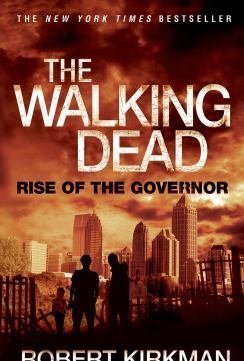
Hadley (567 KP) rated The Walking Dead Rise of the Governor (Book #1) in Books
May 27, 2019

Characters (1 more)
Story telling
Too many author afterthoughts (1 more)
Overusage of scientific words for the brain
I love the Walking Dead. And,personally, I love any book that has a great apocalyptic world in it, and even more so if it has some pretty good characters in it, too.
Cue Brian and Philip Blake: in The Walking Dead's 'The Rise of the Governor,' we meet two brothers who barely have anything in common; Brian is a laid back, music-loving hippie, while Philip is a hard-headed, tough guy. In the story, we follow both brothers along with two of Philip's best buddies and his daughter, Penny. The focus is on the brothers almost the entire time, and quickly, the reader finds out that, surprisingly, Brian is the oldest of the pair, but yet, Philip is the one making all of the decisions. As we continue on, the dynamic between the brothers becomes clear - we start to understand that Brian has always been the cautious one of the family, while Philip quickly learned to be a fearless leader from an early age, making this odd dynamic seem right.
Most importantly, what the two have in common is their love for Penny. If you have ever watched the TV show, The Walking Dead, then you will recognize the little girl and the tragic fate that became her. But, we never knew the backstory of how Penny was turned into a zombie, which is one of the few reasons this book series was made. Penny spends much of the time as a background character, but her part plays a very important role on the development of the man we know becomes 'the Governor.' She reacts as most children would be expected to if the world were ever to suffer from a zombie apocalypse- she withdraws, barely speaking and hardly eats. When one of Philip's longtime friends gets bit by a zombie, Penny reacts with a cool casualness that seems troubling from early on. On another note, if it wasn't for her uncle, Brian, Penny would have probably died much earlier in the book, but because of his father-like protectiveness of her, she is kept alive until the end of the book. But when it does happen, I don't think I could blame Philip for keeping his daughter as a zombie-type of pet.
During the book, 'Rise of the Governor,' the group with the Blake brothers travel to Atlanta, Georgia in hopes of finding a refugee camp to hunker down at, but instead, they find that Atlanta has practically been turned over to the walkers. It's here that they fortunately meet a trio that is held up in an apartment building- this trio is the Chalmers family, which consists of David and his two grown daughters, April and Tara. The transition between the group fighting their way through the hordes in Atlanta to meeting the Chalmers family is done perfectly to the point that is it very believable that this could actually happen in real life.
One of the few problems I did have with this book were the authors' afterthoughts: too many times throughout the book, characters would suddenly show up with a new weapon or item that the authors would literally backtrack to explain how they found it, when it could have been easily shown while the character was in the area of where it was found.
Much of the story, appropriately, shows our main group of characters killing zombies with an array of weapons and such, but Kirkman - or co-writer, Bonansinga- seem to like to show off their knowledge of the brain a little too much:
"The business end of Philip's pickaxe lands squarely in the monster's head, cracking the coconutlike shell of the old man's skull, piercing the dense, fibrous membrane of the dura mater and sinking into the gelatinous parietal lobe. " The use of scientific terms just seems like an egotistical move, one that could have been avoided if they weren't used throughout the book.
In the middle of the book, there is an odd thing that happens which the reader may connect to the story or may not, when David Chalmers is meeting his end (Chalmers was suffering from advanced lung cancer before the group meets him), gives almost a prophetic speech on his death bed. We can either take this as he was speaking about who Philip was going to become or he was talking about the apocalypse as a whole, but the reader is never really told and the dying words are never discussed among any of the characters:
" 'The devil has plans for us.'... The voice that comes out of David Chalmers is low and gravelly, an engine dieseling: 'The day of reckoning is drawing near... the Deceiver walks among us.' "
Eventually, the group is forcefully thrown out of the Chalmers' apartment building due to a horrible mistake between Philip and April. To not give too much away, here is the part where Tara tells them to go away: " He whirls around and comes face-to-face with Tara Chalmers, who holds the Ruger pistol, the muzzle raised and aimed directly at Philip. "
The story continues on with the Blake brothers, Penny and Philip's friend, Nick, as they try to find shelter once again in the dead congested Atlanta. Early on, we learn that Philip has a bad temper, and as the book continues, his temper becomes more volatile and more important to the characters and the reader. Philip's personality changes are understandable in the story, but Kirkman/Bonansinga suddenly make Brian unafraid of his brother at a point where Philip's anger is almost at its worse; this isn't believable to the readers, especially because a few pages later, Brian changes back to being scared to even speak to his brother.
Overall, the story isn't about the zombies or Penny's tragic death, but rather about Brian and Philip; how the family dynamic plays out when everything is at it's worst. Also, when you read the story, there is a point where it seems that Brian is more of a father to Penny than Philip ever was, showing also the Uncle and Niece dynamics- something that will make complete sense near the end of the book. Whether you like The Walking Dead or not, the book is well done, but I believe it would only appeal to those who like survival type stories.
Cue Brian and Philip Blake: in The Walking Dead's 'The Rise of the Governor,' we meet two brothers who barely have anything in common; Brian is a laid back, music-loving hippie, while Philip is a hard-headed, tough guy. In the story, we follow both brothers along with two of Philip's best buddies and his daughter, Penny. The focus is on the brothers almost the entire time, and quickly, the reader finds out that, surprisingly, Brian is the oldest of the pair, but yet, Philip is the one making all of the decisions. As we continue on, the dynamic between the brothers becomes clear - we start to understand that Brian has always been the cautious one of the family, while Philip quickly learned to be a fearless leader from an early age, making this odd dynamic seem right.
Most importantly, what the two have in common is their love for Penny. If you have ever watched the TV show, The Walking Dead, then you will recognize the little girl and the tragic fate that became her. But, we never knew the backstory of how Penny was turned into a zombie, which is one of the few reasons this book series was made. Penny spends much of the time as a background character, but her part plays a very important role on the development of the man we know becomes 'the Governor.' She reacts as most children would be expected to if the world were ever to suffer from a zombie apocalypse- she withdraws, barely speaking and hardly eats. When one of Philip's longtime friends gets bit by a zombie, Penny reacts with a cool casualness that seems troubling from early on. On another note, if it wasn't for her uncle, Brian, Penny would have probably died much earlier in the book, but because of his father-like protectiveness of her, she is kept alive until the end of the book. But when it does happen, I don't think I could blame Philip for keeping his daughter as a zombie-type of pet.
During the book, 'Rise of the Governor,' the group with the Blake brothers travel to Atlanta, Georgia in hopes of finding a refugee camp to hunker down at, but instead, they find that Atlanta has practically been turned over to the walkers. It's here that they fortunately meet a trio that is held up in an apartment building- this trio is the Chalmers family, which consists of David and his two grown daughters, April and Tara. The transition between the group fighting their way through the hordes in Atlanta to meeting the Chalmers family is done perfectly to the point that is it very believable that this could actually happen in real life.
One of the few problems I did have with this book were the authors' afterthoughts: too many times throughout the book, characters would suddenly show up with a new weapon or item that the authors would literally backtrack to explain how they found it, when it could have been easily shown while the character was in the area of where it was found.
Much of the story, appropriately, shows our main group of characters killing zombies with an array of weapons and such, but Kirkman - or co-writer, Bonansinga- seem to like to show off their knowledge of the brain a little too much:
"The business end of Philip's pickaxe lands squarely in the monster's head, cracking the coconutlike shell of the old man's skull, piercing the dense, fibrous membrane of the dura mater and sinking into the gelatinous parietal lobe. " The use of scientific terms just seems like an egotistical move, one that could have been avoided if they weren't used throughout the book.
In the middle of the book, there is an odd thing that happens which the reader may connect to the story or may not, when David Chalmers is meeting his end (Chalmers was suffering from advanced lung cancer before the group meets him), gives almost a prophetic speech on his death bed. We can either take this as he was speaking about who Philip was going to become or he was talking about the apocalypse as a whole, but the reader is never really told and the dying words are never discussed among any of the characters:
" 'The devil has plans for us.'... The voice that comes out of David Chalmers is low and gravelly, an engine dieseling: 'The day of reckoning is drawing near... the Deceiver walks among us.' "
Eventually, the group is forcefully thrown out of the Chalmers' apartment building due to a horrible mistake between Philip and April. To not give too much away, here is the part where Tara tells them to go away: " He whirls around and comes face-to-face with Tara Chalmers, who holds the Ruger pistol, the muzzle raised and aimed directly at Philip. "
The story continues on with the Blake brothers, Penny and Philip's friend, Nick, as they try to find shelter once again in the dead congested Atlanta. Early on, we learn that Philip has a bad temper, and as the book continues, his temper becomes more volatile and more important to the characters and the reader. Philip's personality changes are understandable in the story, but Kirkman/Bonansinga suddenly make Brian unafraid of his brother at a point where Philip's anger is almost at its worse; this isn't believable to the readers, especially because a few pages later, Brian changes back to being scared to even speak to his brother.
Overall, the story isn't about the zombies or Penny's tragic death, but rather about Brian and Philip; how the family dynamic plays out when everything is at it's worst. Also, when you read the story, there is a point where it seems that Brian is more of a father to Penny than Philip ever was, showing also the Uncle and Niece dynamics- something that will make complete sense near the end of the book. Whether you like The Walking Dead or not, the book is well done, but I believe it would only appeal to those who like survival type stories.
5 Minute Movie Guy (379 KP) rated Scary Stories to Tell in the Dark (2019) in Movies
Sep 16, 2019
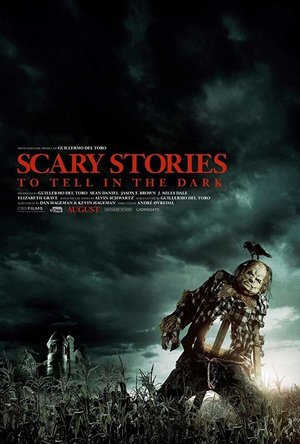

In the early 1980s, author Alvin Schwartz created a book of short horror stories titled Scary Stories to Tell in the Dark that would go on to terrorize a whole generation of curious young readers. Combined with its morbid and ghastly illustrations by artist Stephen Gammell, the book would serve as an introduction to horror for many. Over the next ten years, Schwartz wrote two more books in the Scary Stories series, and now, nearly forty years later, it has finally been adapted into a major motion picture. Produced by Academy Award-winning director Guillermo Del Toro and directed by André Øvredal, the Scary Stories to Tell in the Dark film constructs a new narrative around several of the iconic short stories from the book series, and brings them to life to haunt the movie’s teenage characters.
In Mill Valley, Pennsylvania in 1968, a group of teenage friends fleeing from a band of bullies hide out in an abandoned haunted house on Halloween night. They know the story of this house well, whose folklore is rooted in the origins of their own small town. It was once owned by the wealthy Bellows Family, who according to urban legend, locked away their own daughter, Sarah Bellows, inside the cellar of their home. Sarah had been accused of killing the town’s children, and so her family kept her hidden away and attempted to erase her from existence, even removing her from their own family portraits. According to legend, Sarah wrote a book of horror stories and would read them aloud through the walls of her room to frighten the local townspeople.
While inside this haunted house, our group of protagonists; Stella (Zoe Colletti), Ramón (Michael Garza), Auggie (Gabriel Rush), and Chuck (Austin Zajur), discover the room Sarah had spent her life trapped in. Stella, an amateur horror writer herself, finds the rumored book that was written by Sarah. Upon opening it she sees that a new page is somehow being written in blood right before her very eyes, and it happens to be about the bully that chased them into the house. The next day, they realize that it seems as though the story actually came true, and that the book itself may be haunted. This establishes the basic premise of the film, in which new stories are being written in the book and they appear to be targeting Stella and everyone else that entered the Bellows’ house that night.
It’s an interesting set-up that cleverly mixes horror with mystery, as the characters are not only trying to survive these stories as they come to life, but are also trying to figure out how to stop them from happening. The film features five different stories from the series, most of which come from the third and final book, and a sixth story centered around Stella and Sarah Bellows that is at least in part inspired by one of the original tales. To give an example without giving too much away, one story for instance, involves a haunted scarecrow, whereas another is about a walking corpse in search of its severed big toe. The stories themselves are much more dark and grotesque than I had anticipated. I was expecting something more along the lines of Goosebumps, which was a series of children’s horror books that I personally loved and grew up with as a child, but these are much more disturbing than that. While I only found the first story of the film, “Harold”, to actually be scary, I do imagine this movie might be a little too frightening for some teenagers.
I should clarify that I’m not familiar with the original written source material of Scary Stories to Tell in the Dark, and I had truthfully never even heard of the books prior to the movie’s announcement. I don’t have any personal stake in these stories, but I do admire the thoughtfulness and creativity that went into building the film around them. I thought the film started out really strong with a likable cast of characters, and with most of its best moments featured early on. I loved the introduction to the haunted house and the legend of the Bellows Family. I enjoyed the playful nature of our group of young protagonists, who in the beginning felt reminiscent of the fun and crazy kids you might find in an 80s movie like The Goonies. Additionally, I liked the mystery of Sarah Bellows that the kids were trying to uncover, all the while struggling to survive the dangers of her haunting stories that had come to life.
Unfortunately, as the movie went on, I found myself less and less invested in it with each passing story, all of which I would argue are weaker than the previous one before it. The Pale Lady storyline was particularly dull and underwhelming. The final act itself, although smartly designed with its use of parallels, wound up feeling poorly executed and unsatisfying overall.
Similarly, in regards to the acting, I liked the performances even less by the end as well. Early on I had been impressed with Zoe Colletti as Stella, but I found her to be annoying in the later parts of the movie. The same goes for Austin Zajur as Chuck. The cast for the most part was decent, but everything about the movie began to drop in quality as it dragged on, which is especially unfortunate given how well it starts out.
The special effects are mostly quite good and adequately disturbing, but on the same token, I wish they were more clearly visible at times. A lot of the horror settings take place in dark rooms, so at times it can be hard to see the monsters with much clarity. Still, I love the design of Harold the Scarecrow, as well as The Jangly Man, who is played by contortionist Troy James whose extreme flexibility allows the character to move in unnatural and disturbing looking ways.
To conclude, I’m left with some mixed feelings on Scary Stories to Tell in the Dark. For me, it almost hits the mark, but unfortunately it isn’t a movie that I think I’d bother to watch again. It made a solid first impression with its rich atmosphere and creepy first act, but it failed to maintain its momentum and level of quality. In the end, my favorite thing about the whole movie is actually the excellent cover song of “Season of the Witch” by Lana Del Rey that plays during the credits. However that’s not in any way to say the movie is so bad that the credits were my favorite part. It’s just a great song by an artist I very much enjoy. If you grew up with the Scary Stories to Tell in the Dark series, then by all means, I recommend that you at least check it out. If you like horror and have any troublesome teenaged kids, this may be a perfect opportunity to have some fun scaring the heck out of them.
In Mill Valley, Pennsylvania in 1968, a group of teenage friends fleeing from a band of bullies hide out in an abandoned haunted house on Halloween night. They know the story of this house well, whose folklore is rooted in the origins of their own small town. It was once owned by the wealthy Bellows Family, who according to urban legend, locked away their own daughter, Sarah Bellows, inside the cellar of their home. Sarah had been accused of killing the town’s children, and so her family kept her hidden away and attempted to erase her from existence, even removing her from their own family portraits. According to legend, Sarah wrote a book of horror stories and would read them aloud through the walls of her room to frighten the local townspeople.
While inside this haunted house, our group of protagonists; Stella (Zoe Colletti), Ramón (Michael Garza), Auggie (Gabriel Rush), and Chuck (Austin Zajur), discover the room Sarah had spent her life trapped in. Stella, an amateur horror writer herself, finds the rumored book that was written by Sarah. Upon opening it she sees that a new page is somehow being written in blood right before her very eyes, and it happens to be about the bully that chased them into the house. The next day, they realize that it seems as though the story actually came true, and that the book itself may be haunted. This establishes the basic premise of the film, in which new stories are being written in the book and they appear to be targeting Stella and everyone else that entered the Bellows’ house that night.
It’s an interesting set-up that cleverly mixes horror with mystery, as the characters are not only trying to survive these stories as they come to life, but are also trying to figure out how to stop them from happening. The film features five different stories from the series, most of which come from the third and final book, and a sixth story centered around Stella and Sarah Bellows that is at least in part inspired by one of the original tales. To give an example without giving too much away, one story for instance, involves a haunted scarecrow, whereas another is about a walking corpse in search of its severed big toe. The stories themselves are much more dark and grotesque than I had anticipated. I was expecting something more along the lines of Goosebumps, which was a series of children’s horror books that I personally loved and grew up with as a child, but these are much more disturbing than that. While I only found the first story of the film, “Harold”, to actually be scary, I do imagine this movie might be a little too frightening for some teenagers.
I should clarify that I’m not familiar with the original written source material of Scary Stories to Tell in the Dark, and I had truthfully never even heard of the books prior to the movie’s announcement. I don’t have any personal stake in these stories, but I do admire the thoughtfulness and creativity that went into building the film around them. I thought the film started out really strong with a likable cast of characters, and with most of its best moments featured early on. I loved the introduction to the haunted house and the legend of the Bellows Family. I enjoyed the playful nature of our group of young protagonists, who in the beginning felt reminiscent of the fun and crazy kids you might find in an 80s movie like The Goonies. Additionally, I liked the mystery of Sarah Bellows that the kids were trying to uncover, all the while struggling to survive the dangers of her haunting stories that had come to life.
Unfortunately, as the movie went on, I found myself less and less invested in it with each passing story, all of which I would argue are weaker than the previous one before it. The Pale Lady storyline was particularly dull and underwhelming. The final act itself, although smartly designed with its use of parallels, wound up feeling poorly executed and unsatisfying overall.
Similarly, in regards to the acting, I liked the performances even less by the end as well. Early on I had been impressed with Zoe Colletti as Stella, but I found her to be annoying in the later parts of the movie. The same goes for Austin Zajur as Chuck. The cast for the most part was decent, but everything about the movie began to drop in quality as it dragged on, which is especially unfortunate given how well it starts out.
The special effects are mostly quite good and adequately disturbing, but on the same token, I wish they were more clearly visible at times. A lot of the horror settings take place in dark rooms, so at times it can be hard to see the monsters with much clarity. Still, I love the design of Harold the Scarecrow, as well as The Jangly Man, who is played by contortionist Troy James whose extreme flexibility allows the character to move in unnatural and disturbing looking ways.
To conclude, I’m left with some mixed feelings on Scary Stories to Tell in the Dark. For me, it almost hits the mark, but unfortunately it isn’t a movie that I think I’d bother to watch again. It made a solid first impression with its rich atmosphere and creepy first act, but it failed to maintain its momentum and level of quality. In the end, my favorite thing about the whole movie is actually the excellent cover song of “Season of the Witch” by Lana Del Rey that plays during the credits. However that’s not in any way to say the movie is so bad that the credits were my favorite part. It’s just a great song by an artist I very much enjoy. If you grew up with the Scary Stories to Tell in the Dark series, then by all means, I recommend that you at least check it out. If you like horror and have any troublesome teenaged kids, this may be a perfect opportunity to have some fun scaring the heck out of them.
Hadley (567 KP) rated American Gods in Books
Jun 5, 2020

Mad Sweeney (1 more)
Gaiman's writing and descriptions
No character development (2 more)
Dehumanizes women
The ending
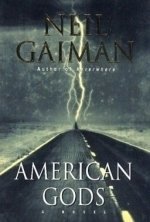
The gods of the old world still exist in Neil Gaiman's 2001 novel "American Gods."
A science fiction/ fantasy story set in today's America, American Gods tries to answer the question of what happens when people stop believing in the past gods, and start worshiping new ones?
Shadow is our main character, who we meet while he's attempting to get released from prison after three years of incarceration - - - afterall, he has a job, wife and life waiting for him on the outside. And even though he's built up a strong exterior while in prison, everything comes crashing down after he receives news that his wife and best friend have died in a car accident.
Cue Wednesday, an old, odd man who gives Shadow a job after his release from prison - - - with strings attached: Shadow can't ask any questions, he must protect his employer at all costs, and if people need to be hurt, he must hurt them. Although Wednesday doesn't tell him exactly what is going on, Shadow agrees to his duties and begins a road trip with the eccentric old man, meeting an array of colorful characters along the way. But soon, Shadow begins to realize that his employer may be a mythical god in disguise, yet, oddly Shadow never really questions it or anything in the entire book for that matter.
The novel takes an odd turn early on when Shadow's dead wife, Laura, comes back to life in a zombified way. While Shadow is staying in a cheap hotel room, and Wednesday sharing a room with a young hotel employee in another, Shadow sees his wife in the clothing she was buried in, but he doesn't flinch - - - he carries a very calm conversation with dead Laura, he even goes down to the lobby to buy her a pack of cigarettes, and the next morning, he still doesn't seem bothered by it when he sees her muddy footprints on the floor. Wednesday tries to convince Shadow it was a dream, but makes snarky remarks that tells Shadow that even he knows it wasn't a dream. The two simply move on on their road trip, no questions asked.
But during this road trip, Shadow's suspicions are confirmed. He gets to see not only Wednesday, but two others in their true god-form, and afterwards, Wednesday confirms that he is indeed the Norse god, Odin.
Gaiman's take on mythological gods living in today's society is interesting, but disappointing. From recognizable gods to the forgotten ones, readers with a liking to history would probably enjoy this story most.
American Gods centers on the question of what happens to gods when they are no longer worshipped, and Gaiman merely focuses on male gods, while making all female characters (gods and humans) either prostitutes and/or sexual objects which is really off-putting for me as a female reader. And Gaiman's character development in the novel for gods and humans is nowhere to be seen thus lending very little plot development that is actually believable or enjoyable. I was unable to bring myself to care about our main character, Shadow, nor the plight with his zombie wife.And speaking of Laura, the disappointing character traits makes her not just unlikable, but also an unnecessary character overall.
I just can't recommend this book: the novel is good for the first 100 pages, but you could easily skip the next 450 pages that is just filler, and not miss much of the story. Gaiman also dehumanizes women, introduces characters in a way that would make them seem an important part of the story to only drop them out of it as quickly as they came in, and the ending is just a huge disappointment. All in all, Gaiman had a great idea, but the execution he used was poorly done - - - some parts even seem like Gaiman wrote them in a completely different state of mind, contradicting story lines and character traits altogether.
I did, however, have three favorite characters that weren't utilized enough for me to rate the story higher than I have: Mad Sweeney, Ibis and Jacquel. Mad Sweeney is a giant leprechaun that can pull gold coins out of the air; Ibis and Jacquel are Anubis and Jackel from Egyptian mythology, who run a funeral home in Cairo, Illinois today.
American Gods takes place only over a few months, which is surprising with how long the novel is. But the story is a buildup with no climax. Most characters come and go before readers can even decide if they like them or not,and that paired up with severe lack of character development leaves most of the main characters pretty forgettable. With this special edition containing 1200 more words, the story is still not worth it in the end. Gaiman is still a great writer, but this is not the book to recommend to anyone who wants to begin reading his work.
A science fiction/ fantasy story set in today's America, American Gods tries to answer the question of what happens when people stop believing in the past gods, and start worshiping new ones?
Shadow is our main character, who we meet while he's attempting to get released from prison after three years of incarceration - - - afterall, he has a job, wife and life waiting for him on the outside. And even though he's built up a strong exterior while in prison, everything comes crashing down after he receives news that his wife and best friend have died in a car accident.
Cue Wednesday, an old, odd man who gives Shadow a job after his release from prison - - - with strings attached: Shadow can't ask any questions, he must protect his employer at all costs, and if people need to be hurt, he must hurt them. Although Wednesday doesn't tell him exactly what is going on, Shadow agrees to his duties and begins a road trip with the eccentric old man, meeting an array of colorful characters along the way. But soon, Shadow begins to realize that his employer may be a mythical god in disguise, yet, oddly Shadow never really questions it or anything in the entire book for that matter.
The novel takes an odd turn early on when Shadow's dead wife, Laura, comes back to life in a zombified way. While Shadow is staying in a cheap hotel room, and Wednesday sharing a room with a young hotel employee in another, Shadow sees his wife in the clothing she was buried in, but he doesn't flinch - - - he carries a very calm conversation with dead Laura, he even goes down to the lobby to buy her a pack of cigarettes, and the next morning, he still doesn't seem bothered by it when he sees her muddy footprints on the floor. Wednesday tries to convince Shadow it was a dream, but makes snarky remarks that tells Shadow that even he knows it wasn't a dream. The two simply move on on their road trip, no questions asked.
But during this road trip, Shadow's suspicions are confirmed. He gets to see not only Wednesday, but two others in their true god-form, and afterwards, Wednesday confirms that he is indeed the Norse god, Odin.
Gaiman's take on mythological gods living in today's society is interesting, but disappointing. From recognizable gods to the forgotten ones, readers with a liking to history would probably enjoy this story most.
American Gods centers on the question of what happens to gods when they are no longer worshipped, and Gaiman merely focuses on male gods, while making all female characters (gods and humans) either prostitutes and/or sexual objects which is really off-putting for me as a female reader. And Gaiman's character development in the novel for gods and humans is nowhere to be seen thus lending very little plot development that is actually believable or enjoyable. I was unable to bring myself to care about our main character, Shadow, nor the plight with his zombie wife.And speaking of Laura, the disappointing character traits makes her not just unlikable, but also an unnecessary character overall.
I just can't recommend this book: the novel is good for the first 100 pages, but you could easily skip the next 450 pages that is just filler, and not miss much of the story. Gaiman also dehumanizes women, introduces characters in a way that would make them seem an important part of the story to only drop them out of it as quickly as they came in, and the ending is just a huge disappointment. All in all, Gaiman had a great idea, but the execution he used was poorly done - - - some parts even seem like Gaiman wrote them in a completely different state of mind, contradicting story lines and character traits altogether.
I did, however, have three favorite characters that weren't utilized enough for me to rate the story higher than I have: Mad Sweeney, Ibis and Jacquel. Mad Sweeney is a giant leprechaun that can pull gold coins out of the air; Ibis and Jacquel are Anubis and Jackel from Egyptian mythology, who run a funeral home in Cairo, Illinois today.
American Gods takes place only over a few months, which is surprising with how long the novel is. But the story is a buildup with no climax. Most characters come and go before readers can even decide if they like them or not,and that paired up with severe lack of character development leaves most of the main characters pretty forgettable. With this special edition containing 1200 more words, the story is still not worth it in the end. Gaiman is still a great writer, but this is not the book to recommend to anyone who wants to begin reading his work.

Acanthea Grimscythe (300 KP) rated I Am the Cheese in Books
May 16, 2018


If I were to judge a book by its title or cover, Robert Cormier's I Am the Cheese is definitely not a book that I would pick up. In fact, I probably would have gone my entire life without touching it if it weren't for the fact that one of my teachers assigned it for my class in Young Adult Literature. For that reason, I'm glad I took the class.
Like most of Cormier's books, I Am the Cheese is set in the town of Monument, Massachusetts. It is a fictional setting based on the author's own home town. In this story, the main character is Adam Farmer and doubles as my pick for PopSugar's 2017 Reading Challenge as a book with an unreliable narrator, because young Adam Farmer is precisely that: unreliable.
Adam Farmer grows up with a rather complicated life: his family is part of the early stages of the Witness Protection Program. They are relocated to Monument after his father uncovers deeply rooted corruption among government officials and, as a result, testifies against them. Having been young at the time, Adam only knows his life as it now and goes about his day to day business as any boy his age would. He meets and falls in love with a girl named Amy and one day decides to skip school and bike to Rutterberg, Vermont so that he can deliver a gift to his father, who is currently in the hospital. As Adam tells us his story of visiting his father, we are simultaneously introduced to him in the future, where he is currently under psychiatric care. There, he is urged to recover his memories via sessions with Brint. During these sessions, the reader learns more Adam and his family.
I really can't say a whole lot more about the book other than that without revealing spoilers, but what I can say is that this book has more twists and turns with sharp jerks than those little mini-coaster rides at a theme park. You know, the ones that leave you with bruises instead of making you scream with glee? Even better, these twists are rather dark in nature - more so than I would have expected for a book labeled Young Adult back in the 70s. It's extremely rare for me to find myself questioning elements of story throughout an entire book, but I Am the Cheese succeeded in doing just that.
Another interesting element to I Am the Cheese, and one of the many traits it shares with Post-Modernism literature, is the use of several different styles of writing within its pages. While the book has alternating perspectives, there is a clear distinction when each perspective changes: first person is from Adam's point-of-view; the interview transcripts are from recordings of Brint and Adam speaking; the final style is third-person limited, with most of its focus centered directly on Adam and what goes on around him.
I was also surprised to learn, via my instructor, that the number Adam calls to try and reach Amy was actually Cormier's personal phone number. He had put it in the book so that if readers called it, they would be able to speak with him - particularly during less happy moments in their life. That alone is deserving of kudos.
I Am the Cheese is undoubtedly one of my favorite Young Adult books and, as a result, I definitely plan to read more of Cormier's books, especially since many of them have startlingly dark themes.
Like most of Cormier's books, I Am the Cheese is set in the town of Monument, Massachusetts. It is a fictional setting based on the author's own home town. In this story, the main character is Adam Farmer and doubles as my pick for PopSugar's 2017 Reading Challenge as a book with an unreliable narrator, because young Adam Farmer is precisely that: unreliable.
Adam Farmer grows up with a rather complicated life: his family is part of the early stages of the Witness Protection Program. They are relocated to Monument after his father uncovers deeply rooted corruption among government officials and, as a result, testifies against them. Having been young at the time, Adam only knows his life as it now and goes about his day to day business as any boy his age would. He meets and falls in love with a girl named Amy and one day decides to skip school and bike to Rutterberg, Vermont so that he can deliver a gift to his father, who is currently in the hospital. As Adam tells us his story of visiting his father, we are simultaneously introduced to him in the future, where he is currently under psychiatric care. There, he is urged to recover his memories via sessions with Brint. During these sessions, the reader learns more Adam and his family.
I really can't say a whole lot more about the book other than that without revealing spoilers, but what I can say is that this book has more twists and turns with sharp jerks than those little mini-coaster rides at a theme park. You know, the ones that leave you with bruises instead of making you scream with glee? Even better, these twists are rather dark in nature - more so than I would have expected for a book labeled Young Adult back in the 70s. It's extremely rare for me to find myself questioning elements of story throughout an entire book, but I Am the Cheese succeeded in doing just that.
Another interesting element to I Am the Cheese, and one of the many traits it shares with Post-Modernism literature, is the use of several different styles of writing within its pages. While the book has alternating perspectives, there is a clear distinction when each perspective changes: first person is from Adam's point-of-view; the interview transcripts are from recordings of Brint and Adam speaking; the final style is third-person limited, with most of its focus centered directly on Adam and what goes on around him.
I was also surprised to learn, via my instructor, that the number Adam calls to try and reach Amy was actually Cormier's personal phone number. He had put it in the book so that if readers called it, they would be able to speak with him - particularly during less happy moments in their life. That alone is deserving of kudos.
I Am the Cheese is undoubtedly one of my favorite Young Adult books and, as a result, I definitely plan to read more of Cormier's books, especially since many of them have startlingly dark themes.

Hazel (1853 KP) rated Salt to the Sea in Books
Dec 17, 2018
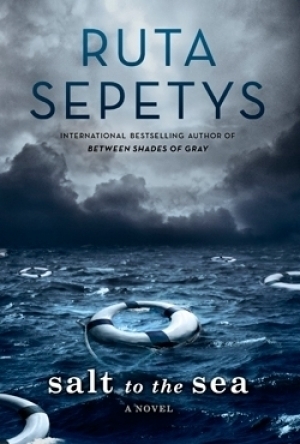
<i>This ARC was provided by the publisher via NetGalley in exchange for an honest review
“We survivors are not the true witnesses. The true witnesses, those in possession of the unspeakable truth, are the drowned, the dead, the disappeared.” </i>– Primo Levi
World War Two has got to be the most well known and talked about period of history. Despite it not even being a century ago, it is already taught in schools around the globe. However a lot of events are omitted from our history books. A lot of people, including those alive at the time, have no idea of some of the situations Europeans found themselves in. Ruta Sepetys, despite having only previously written two novels, has become known for her stories about the lesser-known aspects of the Second World War. Her third book, <i>Salt to the Sea</i>, is no different.
In 1945 things were not looking great for the people living in Germany. Their greatest concern was the invading Russian army, resulting in thousands of Germans evacuating their hometowns. Four characters in their late teens/early twenties narrate <i>Salt to the Sea</i>: Joana, Florian, Emilia and Alfred. Their varied nationalities – Lithuanian, Prussian, Polish and German – help provide a range of opinions about the war, but regardless of who they believe to be the enemy, whether it be German or Russian or both, they are all figuratively in the same boat.
Joana, Emilia and Florian meet each other amongst a group of refugees trekking to freedom. A lot of trust is involved especially as no one is willing to reveal his or her true story. It is clear that each character is hiding something personal, something to do with the war, yet they all rely on and help each other to continue on their journey.
Naturally, being a war story there is masses of death and destruction. Set in January, the weather conditions are just as dangerous as the Russian soldiers. It is the end of the novel that contains the most shocking of events: a sinking of a ship that kills 9000 passengers. The most severe maritime disaster ever, yet it is doubtful that readers already know about it.
Despite being a work of fiction, Sepetys sticks to the facts in her heavily researched novel. She shocks the reader with the severity of the situation, and may even bring some to tears with the outcome. She has not sugar coated anything. Some storytellers save the innocents from harm, but this was not the case in <i>Salt to the Sea</i>. In war, no one can choose who lives and who dies. Millions of innocent people perish.
The short chapters keep the story flowing quickly. It is shocking, gripping and engaging. There is a brief notion of romance but this is not focused on and thus does not detract from the factual storyline. There was a hinted connection between characters in this novel and those in <i>Between Shades of Grey </i>– one of Sepetys’ earlier novels, however this is not a sequel or part of a series.
With the help of maps showing the difference between Europe now and Europe in 1945,<i> Salt to the Sea</i> is highly educational. Although aimed at young adults it is suitable for older generations as well. Whilst containing shocking content, you are certain to fall in love with Sepetys’ writing.
“We survivors are not the true witnesses. The true witnesses, those in possession of the unspeakable truth, are the drowned, the dead, the disappeared.” </i>– Primo Levi
World War Two has got to be the most well known and talked about period of history. Despite it not even being a century ago, it is already taught in schools around the globe. However a lot of events are omitted from our history books. A lot of people, including those alive at the time, have no idea of some of the situations Europeans found themselves in. Ruta Sepetys, despite having only previously written two novels, has become known for her stories about the lesser-known aspects of the Second World War. Her third book, <i>Salt to the Sea</i>, is no different.
In 1945 things were not looking great for the people living in Germany. Their greatest concern was the invading Russian army, resulting in thousands of Germans evacuating their hometowns. Four characters in their late teens/early twenties narrate <i>Salt to the Sea</i>: Joana, Florian, Emilia and Alfred. Their varied nationalities – Lithuanian, Prussian, Polish and German – help provide a range of opinions about the war, but regardless of who they believe to be the enemy, whether it be German or Russian or both, they are all figuratively in the same boat.
Joana, Emilia and Florian meet each other amongst a group of refugees trekking to freedom. A lot of trust is involved especially as no one is willing to reveal his or her true story. It is clear that each character is hiding something personal, something to do with the war, yet they all rely on and help each other to continue on their journey.
Naturally, being a war story there is masses of death and destruction. Set in January, the weather conditions are just as dangerous as the Russian soldiers. It is the end of the novel that contains the most shocking of events: a sinking of a ship that kills 9000 passengers. The most severe maritime disaster ever, yet it is doubtful that readers already know about it.
Despite being a work of fiction, Sepetys sticks to the facts in her heavily researched novel. She shocks the reader with the severity of the situation, and may even bring some to tears with the outcome. She has not sugar coated anything. Some storytellers save the innocents from harm, but this was not the case in <i>Salt to the Sea</i>. In war, no one can choose who lives and who dies. Millions of innocent people perish.
The short chapters keep the story flowing quickly. It is shocking, gripping and engaging. There is a brief notion of romance but this is not focused on and thus does not detract from the factual storyline. There was a hinted connection between characters in this novel and those in <i>Between Shades of Grey </i>– one of Sepetys’ earlier novels, however this is not a sequel or part of a series.
With the help of maps showing the difference between Europe now and Europe in 1945,<i> Salt to the Sea</i> is highly educational. Although aimed at young adults it is suitable for older generations as well. Whilst containing shocking content, you are certain to fall in love with Sepetys’ writing.
Sophia (Bookwyrming Thoughts) (530 KP) rated Hullmetal Girls in Books
Jan 23, 2020
<b><i>I received this book for free from Publisher in exchange for an honest review. This does not affect my opinion of the book or the content of my review.</i></b>
<em>Hullmetal Girls</em> was both painful and fun to read, with machinery and body modification in space. Skrutskie's latest novel is quite different for those who have read her <em><a href="https://bookwyrmingthoughts.com/mini-reviews-part-1-emily-skrutskie-marie-lu-and-others/">The Abyss Surrounds Us</a></em> duology, but just as good.
No cute sea monsters though. 😞
<h2><strong>What can you expect from <em>Hullmetal Girls</em> then?</strong></h2>
Because that's what you're really here for. (That, and well, prime book shoving from one of your favorite book dragons.)
<h3>Space and machinery</h3>
<em>Hullmetal Girls</em> is kind of cyborgs in space but not exactly cyborgs as Scela are people who are enhanced with machinery to be stronger and better. There's a huge price to pay, but also rewarding for those who make it to the top. I found it interesting to see how the Scela worked both during the process of becoming one and training.
<h3>Very painful beginning</h3>
Skrutskie introduces us to Aisha, a girl who decides to undergo surgery to become Scela, an enhanced soldier who is stripped of humanity to protect the Fleet ruled by the General Body. We're in the process of the surgery with her, and it'll be a painful read as she is being taken apart and put back together.
<h3>Strong sense of family</h3>
Family is a huge theme from the beginning of the book until the end. Aisha risks her life to become Scela to provide a better life for her remaining family and to give her younger brother the best care for his sickness. Throughout the book, we see this as her motivation to get through basic training and to be a part of the best Scela, even though she probably doesn't care or want to be there. She's not the only one though, as one of her teammates undergoes the procedure to help her sister become the best researcher she can possibly be. If anything happens to the people they love, they're in a void of nothing, trying to figure out what their meaning of life is.
<h3>Friendship and teamwork</h3>
After Scela survive their procedure, they are placed into squads who they will be with from training and into their careers as the Fleet's protective body. From early on, Aisha and her squadmates: Key, Wooj and Praava are all thrown together and have to figure how they can work together as a team. They learn that if they all want to accomplish their goals, they'll have to meet somewhere in the middle. It's not something they get ahold of easily and without some challenges, though, but they get there eventually.
<h3>Open-ended ending</h3>
<em>Hullmetal Girls</em> has an open ending but brings everything together to a satisfying closure that leaves some imagination to the readers of what could happen to the characters after the book ends.
<h2><strong><em>Hullmetal Girls</em> is different from Skrutskie's debut novels, but just as amazing with the technology in space, the friendship that develops and the sibling relationship that drives some of the characters.</strong></h2>
<a href="https://bookwyrmingthoughts.com/hullmetal-girls-by-emily-skrutskie/"; target="_blank">This review was originally posted on Bookwyrming Thoughts</a>
<em>Hullmetal Girls</em> was both painful and fun to read, with machinery and body modification in space. Skrutskie's latest novel is quite different for those who have read her <em><a href="https://bookwyrmingthoughts.com/mini-reviews-part-1-emily-skrutskie-marie-lu-and-others/">The Abyss Surrounds Us</a></em> duology, but just as good.
No cute sea monsters though. 😞
<h2><strong>What can you expect from <em>Hullmetal Girls</em> then?</strong></h2>
Because that's what you're really here for. (That, and well, prime book shoving from one of your favorite book dragons.)
<h3>Space and machinery</h3>
<em>Hullmetal Girls</em> is kind of cyborgs in space but not exactly cyborgs as Scela are people who are enhanced with machinery to be stronger and better. There's a huge price to pay, but also rewarding for those who make it to the top. I found it interesting to see how the Scela worked both during the process of becoming one and training.
<h3>Very painful beginning</h3>
Skrutskie introduces us to Aisha, a girl who decides to undergo surgery to become Scela, an enhanced soldier who is stripped of humanity to protect the Fleet ruled by the General Body. We're in the process of the surgery with her, and it'll be a painful read as she is being taken apart and put back together.
<h3>Strong sense of family</h3>
Family is a huge theme from the beginning of the book until the end. Aisha risks her life to become Scela to provide a better life for her remaining family and to give her younger brother the best care for his sickness. Throughout the book, we see this as her motivation to get through basic training and to be a part of the best Scela, even though she probably doesn't care or want to be there. She's not the only one though, as one of her teammates undergoes the procedure to help her sister become the best researcher she can possibly be. If anything happens to the people they love, they're in a void of nothing, trying to figure out what their meaning of life is.
<h3>Friendship and teamwork</h3>
After Scela survive their procedure, they are placed into squads who they will be with from training and into their careers as the Fleet's protective body. From early on, Aisha and her squadmates: Key, Wooj and Praava are all thrown together and have to figure how they can work together as a team. They learn that if they all want to accomplish their goals, they'll have to meet somewhere in the middle. It's not something they get ahold of easily and without some challenges, though, but they get there eventually.
<h3>Open-ended ending</h3>
<em>Hullmetal Girls</em> has an open ending but brings everything together to a satisfying closure that leaves some imagination to the readers of what could happen to the characters after the book ends.
<h2><strong><em>Hullmetal Girls</em> is different from Skrutskie's debut novels, but just as amazing with the technology in space, the friendship that develops and the sibling relationship that drives some of the characters.</strong></h2>
<a href="https://bookwyrmingthoughts.com/hullmetal-girls-by-emily-skrutskie/"; target="_blank">This review was originally posted on Bookwyrming Thoughts</a>

Night Reader Reviews (683 KP) rated The Gilded Wolves (The Gilded Wolves #1) in Books
Jan 9, 2020

Review Just Becasue
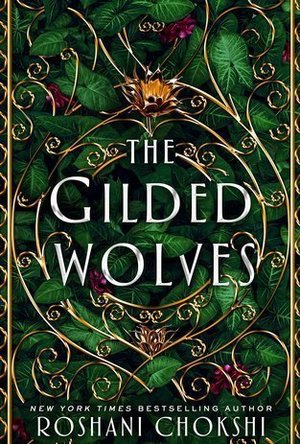
The Gilded Wolves by Roshani Choksi was not as good as I was hoping for at all. Early into the book I found myself being reminded strongly of The Da Vinci Code by Dan Brown and that gives any book a lot to live up too. There were also multiple inconsistencies such as a pendent being smashed in one chapter only to be perfectly fine a few chapters later amd used again. It ended with a cliffhanger that makes me wonder if its the author's intention is to create a sequel, which may redeem the book a little bit. Even after finishing the book the concept of Forging was still a bit confusing, and with it being such a major part of the book that is not good news.
Séverin was striped of his title as heir to a House in the Order of Babel for an unknown reason after his parents died in a fire. Séverin was approached by Hypnos after stealing an artifact from him. Hypnos blackmails Séverin to agree to steal a diffrent item from House Kore. In order to do this Séverin enlists the help of his friends Zofia, Laila, and Enrique. His adopted brother Tristan also helps out but openly shows his distrust of Hypnos.
After successfully retrieving the item in question from House Kore the friends are shocked to discover that they are not quite done. The Fallen House has risen and is trying to awaken a Babel Fragment. Thd Fallen Housr needs a few things that the firends have in order to achieve their goal, but the friends can not allow the Fallen House to succeed. Now the friends must try to stop this awakening
or civilization as they know it might be changed forever.
What I liked best was how all the characters teemed up together with Hypnos to achieve their goals. At times the Da Vinci Code feeling of the book while the friends solve puzzles was enjoyable. What I liked least was that it felt like more detail in the back story was needed. Forging for example, why can only some people do it? The idea that Babel Fragments somehow allow people to use God's power to manipulate objects was not explained very well. Plus there is the fact that I could not decide on the age range of the main characters. Sometimes they appear to be adults and at othertimes they were more like children, barely even teens.
For the target readers of this book anyone could read it. Middle school students with a high reading level would be able to handle this book with very few problems. The book is even about average size so I don't think that would even be an issue for someone who likes reading. I give this
book a 2 out of 4 with the hope that a second book will be released. If there is no second book in the works than this book only deserves a 1. I would not call it a complete waste of time, but it was close.
Upon finishing the book there were too many concepts important to the background of the story that did not get enough attention. I do not enjoy it or recommend books that still have me questioning aspects that build the foundation of the story by the time it ends.
https://www.facebook.com/nightreaderreviews
Séverin was striped of his title as heir to a House in the Order of Babel for an unknown reason after his parents died in a fire. Séverin was approached by Hypnos after stealing an artifact from him. Hypnos blackmails Séverin to agree to steal a diffrent item from House Kore. In order to do this Séverin enlists the help of his friends Zofia, Laila, and Enrique. His adopted brother Tristan also helps out but openly shows his distrust of Hypnos.
After successfully retrieving the item in question from House Kore the friends are shocked to discover that they are not quite done. The Fallen House has risen and is trying to awaken a Babel Fragment. Thd Fallen Housr needs a few things that the firends have in order to achieve their goal, but the friends can not allow the Fallen House to succeed. Now the friends must try to stop this awakening
or civilization as they know it might be changed forever.
What I liked best was how all the characters teemed up together with Hypnos to achieve their goals. At times the Da Vinci Code feeling of the book while the friends solve puzzles was enjoyable. What I liked least was that it felt like more detail in the back story was needed. Forging for example, why can only some people do it? The idea that Babel Fragments somehow allow people to use God's power to manipulate objects was not explained very well. Plus there is the fact that I could not decide on the age range of the main characters. Sometimes they appear to be adults and at othertimes they were more like children, barely even teens.
For the target readers of this book anyone could read it. Middle school students with a high reading level would be able to handle this book with very few problems. The book is even about average size so I don't think that would even be an issue for someone who likes reading. I give this
book a 2 out of 4 with the hope that a second book will be released. If there is no second book in the works than this book only deserves a 1. I would not call it a complete waste of time, but it was close.
Upon finishing the book there were too many concepts important to the background of the story that did not get enough attention. I do not enjoy it or recommend books that still have me questioning aspects that build the foundation of the story by the time it ends.
https://www.facebook.com/nightreaderreviews
Mississippi Blood
9.1 Rate It
Book
#1 New York Times Bestselling Author The endgame is at hand for Penn Cage, his family, and the...
HO
History of Dance with Web Resource
Book
History of Dance, Second Edition, offers readers a panoramic view of dance from prehistory to the...
Hadley (567 KP) rated The Other Mrs. in Books
Apr 4, 2020
Mental illness done correctly (1 more)
Addictive
Mental illness.
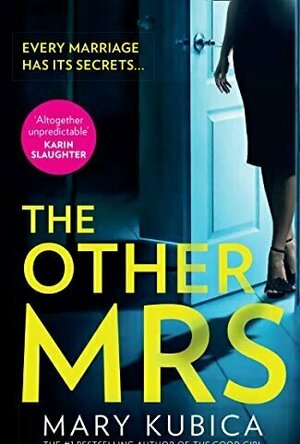
I've read a lot of horror books that cover this subject, watched horror movies covering this subject, listened to music covering this subject, but none of them have covered mental illness as well and correctly as Mary Kubica's "The Other Mrs.."
So, with that said, if you have any type of PTSD, this book may be hard for you to read. Otherwise, this novel is very addicting, filled with so many twists and turns that you won't be able to set it down for long. For me, someone who deals with C-PTSD, 'The Other Mrs.' by Mary Kubica has been a heartache to read, but also very fulfilling to finish.
Kubica is known for her best-selling novel 'the Good Girl' - - - a thriller following a mother and a detective in search of the the former's missing daughter that leads them down a twisted tale of family secrets. From highly acclaimed critics, 'the Other Mrs.' has out-done 'the Good Girl' as Kubica's best novel so far. Kubica sticks with her psychological thriller writing that she is known for in this newest novel. She keeps the reader guessing at what will happen next, and she plays out mental illnesses in a way that most who suffer can relate while winding in a mystery well enough that the reader won't be able to guess everything before the ending.
I can't give such a heavy review on this book because, to do so, would give away a lot of the ending, so I'll stick to talking about noteworthy characters that make up the novel. The main character is a woman named Sadie, whose family is being uprooted from Chicago and moved to a small island in Maine after her husband's sister dies, which leaves them with not only a house in the will, but a sixteen-year-old niece named Imogen.
Sadie is already a mother of two sons, both younger than sixteen, when she suddenly finds herself in-charge of the stereo-typical edgy teenager, Imogen. Sadie describes her the first time she sees Imogen: " But there she stands, a morose figure dressed in black. Black jeans, a black shirt, bare feet. Her hair is black, long with bangs that slant sideways across her face. Her eyes are outlined in a thick slash of black eyeliner. Everything black, aside from the white lettering on her shirt, which reads, I want to die. The septum of her nose is pierced. Her skin, in contrast to everything else, is white, pallid, ghostlike. She's thin. "
Early one morning when Sadie is heading off to work, she finds a word spelled on her car window. The word reads: "Die." Sadie, as most readers, quickly assumes that Imogen is responsibly for this, as she tries to explain: "I've tried to be understanding because of how awful the situation must be for her. Her life has been upended. She lost her mother and now must share her home with people she doesn't know. But that doesn't justify threatening me. Because Imogen doesn't mince words. She means just what she said. She wants me to die."
The next character that makes up a big part of this story is a confident, self-centered woman, whose name is Camille,and is also the 'other woman' in this story. Camille is a woman who gets what and who she wants, and won't let anyone get in her way, including Sadie, whose husband is someone Camille wants. I can't go much into the things that Camille's character does because it would give away a lot of the surprises in this novel - - - I can say though that there is murder and mystery throughout; the book will leave most readers guessing until the very end.
One other character who deserves mentioning is a little girl- - - with the nickname 'Mouse' - - - who finds herself suddenly dealing with a horrific stepmother, who abuses her physically and mentally unbeknownst to Mouse's father. One time, in which Mouse shows how smart she is to her the stepmother while being in front of her father (who Mouse likes to call 'Fake Mom'), later that night, when Mouse's father isn't looking, Fake Mom lets Mouse know how she felt about that:
" But later that night, when he father wasn't looking, Fake Mom got down into Mouse's face and told her if she ever made her look stupid again in front of her father, there would be hell to pay. Fake Mom's face got all red. She bared her teeth like a dog does when it's mad. A vein stuck out of her forehead. It throbbed. Fake Mom spit when she spoke, like she was so mad she couldn't stop herself from spitting. Like she was spitting mad. She spit on Mouse's face but Mouse didn't dare raise a hand to wipe it away."
Mental and physical abuse make up all that The Other Mrs. is about. So far, this is the best story I have read in a long time. My only problem with it is it's written like a YA novel, where it seems Kubica tried to keep that from happening by throwing in some heavy syllable words to make it more fitting for adults. But, luckily, she left out most of the wishy-washy elements that make up YA novels, so I believe most adults will enjoy this. I highly recommend this book to people who love murder mysteries!
I've read a lot of horror books that cover this subject, watched horror movies covering this subject, listened to music covering this subject, but none of them have covered mental illness as well and correctly as Mary Kubica's "The Other Mrs.."
So, with that said, if you have any type of PTSD, this book may be hard for you to read. Otherwise, this novel is very addicting, filled with so many twists and turns that you won't be able to set it down for long. For me, someone who deals with C-PTSD, 'The Other Mrs.' by Mary Kubica has been a heartache to read, but also very fulfilling to finish.
Kubica is known for her best-selling novel 'the Good Girl' - - - a thriller following a mother and a detective in search of the the former's missing daughter that leads them down a twisted tale of family secrets. From highly acclaimed critics, 'the Other Mrs.' has out-done 'the Good Girl' as Kubica's best novel so far. Kubica sticks with her psychological thriller writing that she is known for in this newest novel. She keeps the reader guessing at what will happen next, and she plays out mental illnesses in a way that most who suffer can relate while winding in a mystery well enough that the reader won't be able to guess everything before the ending.
I can't give such a heavy review on this book because, to do so, would give away a lot of the ending, so I'll stick to talking about noteworthy characters that make up the novel. The main character is a woman named Sadie, whose family is being uprooted from Chicago and moved to a small island in Maine after her husband's sister dies, which leaves them with not only a house in the will, but a sixteen-year-old niece named Imogen.
Sadie is already a mother of two sons, both younger than sixteen, when she suddenly finds herself in-charge of the stereo-typical edgy teenager, Imogen. Sadie describes her the first time she sees Imogen: " But there she stands, a morose figure dressed in black. Black jeans, a black shirt, bare feet. Her hair is black, long with bangs that slant sideways across her face. Her eyes are outlined in a thick slash of black eyeliner. Everything black, aside from the white lettering on her shirt, which reads, I want to die. The septum of her nose is pierced. Her skin, in contrast to everything else, is white, pallid, ghostlike. She's thin. "
Early one morning when Sadie is heading off to work, she finds a word spelled on her car window. The word reads: "Die." Sadie, as most readers, quickly assumes that Imogen is responsibly for this, as she tries to explain: "I've tried to be understanding because of how awful the situation must be for her. Her life has been upended. She lost her mother and now must share her home with people she doesn't know. But that doesn't justify threatening me. Because Imogen doesn't mince words. She means just what she said. She wants me to die."
The next character that makes up a big part of this story is a confident, self-centered woman, whose name is Camille,and is also the 'other woman' in this story. Camille is a woman who gets what and who she wants, and won't let anyone get in her way, including Sadie, whose husband is someone Camille wants. I can't go much into the things that Camille's character does because it would give away a lot of the surprises in this novel - - - I can say though that there is murder and mystery throughout; the book will leave most readers guessing until the very end.
One other character who deserves mentioning is a little girl- - - with the nickname 'Mouse' - - - who finds herself suddenly dealing with a horrific stepmother, who abuses her physically and mentally unbeknownst to Mouse's father. One time, in which Mouse shows how smart she is to her the stepmother while being in front of her father (who Mouse likes to call 'Fake Mom'), later that night, when Mouse's father isn't looking, Fake Mom lets Mouse know how she felt about that:
" But later that night, when he father wasn't looking, Fake Mom got down into Mouse's face and told her if she ever made her look stupid again in front of her father, there would be hell to pay. Fake Mom's face got all red. She bared her teeth like a dog does when it's mad. A vein stuck out of her forehead. It throbbed. Fake Mom spit when she spoke, like she was so mad she couldn't stop herself from spitting. Like she was spitting mad. She spit on Mouse's face but Mouse didn't dare raise a hand to wipe it away."
Mental and physical abuse make up all that The Other Mrs. is about. So far, this is the best story I have read in a long time. My only problem with it is it's written like a YA novel, where it seems Kubica tried to keep that from happening by throwing in some heavy syllable words to make it more fitting for adults. But, luckily, she left out most of the wishy-washy elements that make up YA novels, so I believe most adults will enjoy this. I highly recommend this book to people who love murder mysteries!
Ross (3284 KP) May 27, 2019