
Search
Search results

Purple Phoenix Games (2266 KP) rated Cartooner: The Fast & Furious Game of Drawing Comics in Tabletop Games
Jul 23, 2019
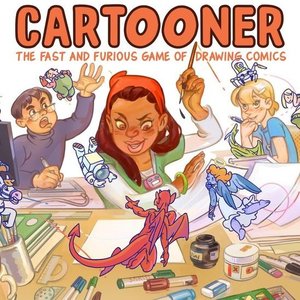

Ok, I need to admit to you all that I am an artist. I am a musician (as we all at Purple Phoenix Games are). Unfortunately, I am nowhere near what anyone would call a competent visual artist (see play pic below for evidence of that). So when I received Cartooner from Japanime Games (thank you!) I was a bit intimidated. I was never good at Pictionary and I thought I was gonna be doomed whilst playing this. If you are like me, please keep reading because I actually did really well with this one.
A typical game of Cartooner will last four rounds and each round will be the same length – five, six, or seven minutes each. During these rounds players will create comics using increasing numbers of panels each round. So Round 1 will be a 2-panel comic, Round 2 will have 4 panels, Round 3 will have 6 panels, and the final round will contain 8 panels to fill with glorious comic gold. This is the basic game flow. Where the actual “game” part comes in is through the use of the two decks of cards.
DISCLAIMER: I do not intend to cover every single rule included in the rule book, but will describe the overall game flow and major rule set so that our readers may get a sense of how the game plays. For more in depth rules, you may purchase a copy from the publisher directly or from your FLGS. -T
Three “Theme” cards are dealt at the beginning of the game to each player, which describe the player’s obsessions. Players score points at the end of each round for including their Themes in the comic. This may sound somewhat easy, but the game comes with about 28,000 Theme cards and the combinations can be pretty wonky. For example, for my first game I was dealt Fear of Growing Old, Infidelity, and Desire to Be Famous. My 10-year old niece was dealt Aliens, Flowers, and Animals. I mean, come on! AND her dad is an art teacher (who also played with us and totally killed the art). So I thought I was beaten before we even began. The three Theme cards kept everyone pretty busy in Round 1, but it was about to get harder.
Round 2 introduces a new element to the game that refreshes every round: “Trend” cards. Whomever scored lowest in the previous round will draw Trend cards (the number of which is determined by which round you are currently playing) and choose cards to enact for the upcoming round. Trends are basically bonus cards that you can attempt to incorporate into your comic for the round to score fabulous amounts of points. These are optional, of course, but really can boost those scores for the round, so are not to be ignored.
At the end of each round players will present and read their comics to the group to be scored. Points are awarded for including your Themes, completing objectives from the Trend cards, and also for filling in every panel on your page – which I thought would be a breeze, but apparently eight panels is way too hard for me because I neglected to draw something in the final two panels. Tally up your points from all the rounds and determine the greatest comic artist at the table (it was me)!
Components. This game is a large pad of paper, 28,000 cards, and cardboard VP tokens. You must supply your own writing utensil. As you can see below, I like to live on the edge and used ballpoint pen for my artwork. The tokens are fine and the cards are of good quality. What I really want to highlight is the pad of paper that is provided. Every game each player will need four sheets of paper from the pad, one for each round. These pages are wonderfully organized and include the game rules at the bottom of each page to remind you of what will score points. This helps you to prioritize your panels to include the most VP-worthy elements and to (hopefully) tell a good story as well.
All in all this is a frantic comic drawing game that will have you pulling out your hair trying to compose a somewhat cohesive short visual story including elements that may not, and probably WILL not, fit into that narrative. It is relatively quick, as long as the presentations and arbitrations are held in check for time. We do not have many drawing games in our collections, and I am overjoyed that we now have an enjoyable representative of the genre. Purple Phoenix Games eagerly awards this one a 10/12. Go check it out and test your own illustration skills.
A typical game of Cartooner will last four rounds and each round will be the same length – five, six, or seven minutes each. During these rounds players will create comics using increasing numbers of panels each round. So Round 1 will be a 2-panel comic, Round 2 will have 4 panels, Round 3 will have 6 panels, and the final round will contain 8 panels to fill with glorious comic gold. This is the basic game flow. Where the actual “game” part comes in is through the use of the two decks of cards.
DISCLAIMER: I do not intend to cover every single rule included in the rule book, but will describe the overall game flow and major rule set so that our readers may get a sense of how the game plays. For more in depth rules, you may purchase a copy from the publisher directly or from your FLGS. -T
Three “Theme” cards are dealt at the beginning of the game to each player, which describe the player’s obsessions. Players score points at the end of each round for including their Themes in the comic. This may sound somewhat easy, but the game comes with about 28,000 Theme cards and the combinations can be pretty wonky. For example, for my first game I was dealt Fear of Growing Old, Infidelity, and Desire to Be Famous. My 10-year old niece was dealt Aliens, Flowers, and Animals. I mean, come on! AND her dad is an art teacher (who also played with us and totally killed the art). So I thought I was beaten before we even began. The three Theme cards kept everyone pretty busy in Round 1, but it was about to get harder.
Round 2 introduces a new element to the game that refreshes every round: “Trend” cards. Whomever scored lowest in the previous round will draw Trend cards (the number of which is determined by which round you are currently playing) and choose cards to enact for the upcoming round. Trends are basically bonus cards that you can attempt to incorporate into your comic for the round to score fabulous amounts of points. These are optional, of course, but really can boost those scores for the round, so are not to be ignored.
At the end of each round players will present and read their comics to the group to be scored. Points are awarded for including your Themes, completing objectives from the Trend cards, and also for filling in every panel on your page – which I thought would be a breeze, but apparently eight panels is way too hard for me because I neglected to draw something in the final two panels. Tally up your points from all the rounds and determine the greatest comic artist at the table (it was me)!
Components. This game is a large pad of paper, 28,000 cards, and cardboard VP tokens. You must supply your own writing utensil. As you can see below, I like to live on the edge and used ballpoint pen for my artwork. The tokens are fine and the cards are of good quality. What I really want to highlight is the pad of paper that is provided. Every game each player will need four sheets of paper from the pad, one for each round. These pages are wonderfully organized and include the game rules at the bottom of each page to remind you of what will score points. This helps you to prioritize your panels to include the most VP-worthy elements and to (hopefully) tell a good story as well.
All in all this is a frantic comic drawing game that will have you pulling out your hair trying to compose a somewhat cohesive short visual story including elements that may not, and probably WILL not, fit into that narrative. It is relatively quick, as long as the presentations and arbitrations are held in check for time. We do not have many drawing games in our collections, and I am overjoyed that we now have an enjoyable representative of the genre. Purple Phoenix Games eagerly awards this one a 10/12. Go check it out and test your own illustration skills.
Daniel Boyd (1066 KP) rated Blade Runner (1982) in Movies
Oct 10, 2017

Incredible setting. (2 more)
Groundbreaking for sci-fi movies of the time.
The special effects and visuals still hold up 35 years later.
The Perils & Benefits Of Hindsight
I first watched Blade Runner around fifteen years ago and in my seven year old brain , I put it into the same category as Star Wars. They were both sci-fi movies, both made in a similar era and they both starred Harrison Ford. I think that the first version I saw was the director's cut version. I went back to Blade Runner at the age of 12, when the ultimate cut was released in 2007 and at the time, I felt that the setting and the world were still incredible, but the plot and characters in the movie left a lot to be desired. For the release of the sequel 2049, I decided to go back and re-watch the directors cut a few days before I went to see the new movie.
I totally forgot how slow this film was. The whole thing moves at a snail's pace and half of the runtime is spent looking at Harrison Ford's reaction shots. I had it in my head that the pace of Blade Runner was similar to that of A New Hope, but I was way off. I get it, it's not a sci-fi action flick, it's a hard-boiled, contemplative detective film, but it really was a slog.
I still feel the same way about this movie that I always have, the world and setting is better than the movie itself. There is a reason that so many movies took elements of Blade Runner's amazing setting and used them as inspiration for their own films. To this day the sets and the majority of this 35 year old film's visuals still look great, that is an achievement not to be scoffed at.
I will always appreciate Blade Runner for what it did for sci-fi movies that came after it, but if you saw this film as a kid and are thinking about going back to re-watch it again for the release of the sequel, I would actually recommend against it. This movie was so much better in my head than it was when I actually re-watched it and I somehow like it less now after re-watching it. This shouldn't take away from the importance and influence of this film though and if you consider this a classic, it would be hard to argue with you.
I totally forgot how slow this film was. The whole thing moves at a snail's pace and half of the runtime is spent looking at Harrison Ford's reaction shots. I had it in my head that the pace of Blade Runner was similar to that of A New Hope, but I was way off. I get it, it's not a sci-fi action flick, it's a hard-boiled, contemplative detective film, but it really was a slog.
I still feel the same way about this movie that I always have, the world and setting is better than the movie itself. There is a reason that so many movies took elements of Blade Runner's amazing setting and used them as inspiration for their own films. To this day the sets and the majority of this 35 year old film's visuals still look great, that is an achievement not to be scoffed at.
I will always appreciate Blade Runner for what it did for sci-fi movies that came after it, but if you saw this film as a kid and are thinking about going back to re-watch it again for the release of the sequel, I would actually recommend against it. This movie was so much better in my head than it was when I actually re-watched it and I somehow like it less now after re-watching it. This shouldn't take away from the importance and influence of this film though and if you consider this a classic, it would be hard to argue with you.
Hazel (1853 KP) rated Where Are You Hiding, God? in Books
Jul 5, 2017


Cute
This eBook was provided by the publisher via NetGalley in exchange for an honest review
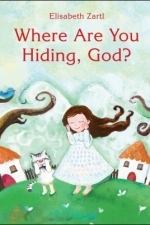
Where Are You Hiding, God? is a children’s picture book by the Austrian illustrator Elisabeth Zartl. Originally published in 2013 under the German title Wo versteckst du dich, lieber Gott? it has been translated into English in order to reach a wider audience. Primarily targeted at children of Christian families, the book attempts to explain the concept of God.
The short story begins with an anonymous little girl searching for God in a manner that resembles a game of Hide and Seek. She looks in her bedroom, the bathroom and the garden before giving up in defeat. As she sits desolately alone, a gust of wind and a falling leaf prompt her to realise that God does not have a corporeal body, but is, in fact, everywhere. Exhilarated by her newfound understanding, she exclaims that God was in all the places she looked and that he is inside her, too. God is everywhere.
Aimed at children ages three and over, Where Are You Hiding, God? explores the confusion a child may have in comprehending the idea of God. For a child, knowing something or someone is there but not being able to see them is a difficult idea to grasp. This book, through the demonstration of someone their own age, helps to explain their questions and uncertainties.
Elizabeth Zartl’s illustrations capture the attention of those reading or looking at the pages. Filling each page with a full-colour palette, the drawings are child-friendly but realistic, making it easy to process, and accurately creates a visual narrative of the written words. The language is also suitable for the intended demographic and, although three-year-olds may not be able to read it themselves, they will certainly understand the story.
From a design point of view, the text and illustrations do not quite match up. The full-page artworks make it difficult to place the short sentences in a way that both elements can work together. This, however, is not the fault of the author/illustrator who would have originally been working with a German text.
Overall, Where Are You Hiding, God? is a sweet, short story that can be read to children or grandchildren over and over again. As well as being a source of entertainment, it introduces them to the beliefs they will encounter during their Christian upbringing and prepares them to develop a greater understanding of God.
Where Are You Hiding, God? is a children’s picture book by the Austrian illustrator Elisabeth Zartl. Originally published in 2013 under the German title Wo versteckst du dich, lieber Gott? it has been translated into English in order to reach a wider audience. Primarily targeted at children of Christian families, the book attempts to explain the concept of God.
The short story begins with an anonymous little girl searching for God in a manner that resembles a game of Hide and Seek. She looks in her bedroom, the bathroom and the garden before giving up in defeat. As she sits desolately alone, a gust of wind and a falling leaf prompt her to realise that God does not have a corporeal body, but is, in fact, everywhere. Exhilarated by her newfound understanding, she exclaims that God was in all the places she looked and that he is inside her, too. God is everywhere.
Aimed at children ages three and over, Where Are You Hiding, God? explores the confusion a child may have in comprehending the idea of God. For a child, knowing something or someone is there but not being able to see them is a difficult idea to grasp. This book, through the demonstration of someone their own age, helps to explain their questions and uncertainties.
Elizabeth Zartl’s illustrations capture the attention of those reading or looking at the pages. Filling each page with a full-colour palette, the drawings are child-friendly but realistic, making it easy to process, and accurately creates a visual narrative of the written words. The language is also suitable for the intended demographic and, although three-year-olds may not be able to read it themselves, they will certainly understand the story.
From a design point of view, the text and illustrations do not quite match up. The full-page artworks make it difficult to place the short sentences in a way that both elements can work together. This, however, is not the fault of the author/illustrator who would have originally been working with a German text.
Overall, Where Are You Hiding, God? is a sweet, short story that can be read to children or grandchildren over and over again. As well as being a source of entertainment, it introduces them to the beliefs they will encounter during their Christian upbringing and prepares them to develop a greater understanding of God.

Acanthea Grimscythe (300 KP) rated It (2017) in Movies
May 12, 2018
Contains spoilers, click to show
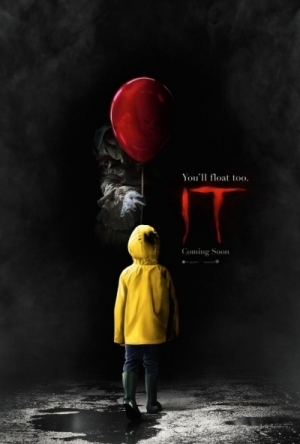
My mom took me to see the new It – and it was great. It does have a few changes that are worth noting though – and I’m curious as to how they will play out in the next part. Presently, the film only covers the part that takes place in 1957-1958 (though in the movie, it’s 1988), which leaves things open for another film.
First, I want to say that I have a thing for Bill Skarsgård. I have since I watched Hemlock Grove, where he plays an upir. So finding out that he would be playing Pennywise somehow dispelled my fear of clowns (which actually formed when I was eight and watched the It miniseries – or at least, the first bit of it). Skarsgård performance is spectacular and I have no complaints regarding his acting.
For the most part, It follows a line between the miniseries and the book. When it comes to a tome the size of It, obviously things have need cutting out. To expect more would likely have mean an entire series (not that I’d complain). There are a few things that really bugged me though. First, Richie does not do his voices in It. This is a major character trait that I feel should have been included – especially since he uses his voice imitations in the book to get past Pennywise. To leave out one of Richie’s defining characteristics is disappointing, as I really wanted to see how it would play out.
Second, once again, what Stan sees differs from the book. Those that have read It know that Stan ends up trapped in a standpipe. Here, a corpse comes at him and in order to escape, he recites the names of birds from a book he keeps in his pocket. This causes the door to open and thus Stan Uris lives. His obsession with birds, like Richie’s voice imitations, is another defining characteristic of the boys that is left out.
Because the movie is pressed for time, it’s easier to understand why other elements are left out – such as the real reason behind Eddie Corcoran’s death (which is left simply at “missing” in the film). In fact, several of the disappearance are touched upon just enough to remind viewers how threatening Pennywise is – and that’s perfect for this film.
Overall, I really enjoyed It. I feel that leaving out those two defining characteristics of Richie and Stan was unnecessary. Despite that, It comes in as one of my favorite film so far this year and I might have to bug Mom to get it for me on DVD.
First, I want to say that I have a thing for Bill Skarsgård. I have since I watched Hemlock Grove, where he plays an upir. So finding out that he would be playing Pennywise somehow dispelled my fear of clowns (which actually formed when I was eight and watched the It miniseries – or at least, the first bit of it). Skarsgård performance is spectacular and I have no complaints regarding his acting.
For the most part, It follows a line between the miniseries and the book. When it comes to a tome the size of It, obviously things have need cutting out. To expect more would likely have mean an entire series (not that I’d complain). There are a few things that really bugged me though. First, Richie does not do his voices in It. This is a major character trait that I feel should have been included – especially since he uses his voice imitations in the book to get past Pennywise. To leave out one of Richie’s defining characteristics is disappointing, as I really wanted to see how it would play out.
Second, once again, what Stan sees differs from the book. Those that have read It know that Stan ends up trapped in a standpipe. Here, a corpse comes at him and in order to escape, he recites the names of birds from a book he keeps in his pocket. This causes the door to open and thus Stan Uris lives. His obsession with birds, like Richie’s voice imitations, is another defining characteristic of the boys that is left out.
Because the movie is pressed for time, it’s easier to understand why other elements are left out – such as the real reason behind Eddie Corcoran’s death (which is left simply at “missing” in the film). In fact, several of the disappearance are touched upon just enough to remind viewers how threatening Pennywise is – and that’s perfect for this film.
Overall, I really enjoyed It. I feel that leaving out those two defining characteristics of Richie and Stan was unnecessary. Despite that, It comes in as one of my favorite film so far this year and I might have to bug Mom to get it for me on DVD.
Acanthea Grimscythe (300 KP) rated The Windmill (The Windmill Massacre) (2016) in Movies
May 12, 2018

I spend a bit too much time on Facebook, of that there’s no doubt. As a result, I tend to pay attention to what movies my friends talk about. One such friend is horror author Edward Lorn, and one such movie that popped up in my feed because of him is The Windmill.
Set in Holland, The Windmill is a fun film that follows the traditional “haunted locale” story. Like most movies of this nature, viewers are presented with an abandoned building (the windmill), an old legend, and a supernatural being. In this case, the windmill is considered a gateway to Hell, courtesy of a miller that, after making a deal with the devil, ground the bones of his victims rather than flour. When a group of individuals embark on a tour of Holland’s windmills, what appears to be an every day, run of the mill (pun totally intended) attraction quickly turns deadly.
The Windmill‘s cast of characters fits several different roles, from the uppity doctor to the vengeful model and even the cliché mad woman with daddy issues. These characters remain true to their personality types and don’t tend to waiver, even as things continue to spin out of control, for which I am thankful – even though it means that they’re downright horrible people. The acting is fairly well done in comparison to a lot of available horror movies, too.
One of the things that did bother me about this movie was an extremely brief lack of continuity. At the point in which the tour bus breaks down in middle of the road, an incident occurs and the bus falls over. That isn’t altogether strange, aside from the fact that it appears to have been knocked over by a bird flying into the window. Whether that was intentional or not, I did find it to be a bit amusing. Since I don’t consider this to be much of a spoiler, I figured I’d simply point it out.
While The Windmill contains several elements of the slasher genre, it appeals more to the psyche via the use of the demonic haunting and vivid hallucinations that reveal the deepest, darkest secrets of its cast. It’s not the best film out there, but it is certainly entertaining in its own right and is undoubtedly worth the watch for a bit of cheesy horror fun. The title, also known as The Windmill Massacre, can be found on Netflix in the United States.
Set in Holland, The Windmill is a fun film that follows the traditional “haunted locale” story. Like most movies of this nature, viewers are presented with an abandoned building (the windmill), an old legend, and a supernatural being. In this case, the windmill is considered a gateway to Hell, courtesy of a miller that, after making a deal with the devil, ground the bones of his victims rather than flour. When a group of individuals embark on a tour of Holland’s windmills, what appears to be an every day, run of the mill (pun totally intended) attraction quickly turns deadly.
The Windmill‘s cast of characters fits several different roles, from the uppity doctor to the vengeful model and even the cliché mad woman with daddy issues. These characters remain true to their personality types and don’t tend to waiver, even as things continue to spin out of control, for which I am thankful – even though it means that they’re downright horrible people. The acting is fairly well done in comparison to a lot of available horror movies, too.
One of the things that did bother me about this movie was an extremely brief lack of continuity. At the point in which the tour bus breaks down in middle of the road, an incident occurs and the bus falls over. That isn’t altogether strange, aside from the fact that it appears to have been knocked over by a bird flying into the window. Whether that was intentional or not, I did find it to be a bit amusing. Since I don’t consider this to be much of a spoiler, I figured I’d simply point it out.
While The Windmill contains several elements of the slasher genre, it appeals more to the psyche via the use of the demonic haunting and vivid hallucinations that reveal the deepest, darkest secrets of its cast. It’s not the best film out there, but it is certainly entertaining in its own right and is undoubtedly worth the watch for a bit of cheesy horror fun. The title, also known as The Windmill Massacre, can be found on Netflix in the United States.

Rachel King (13 KP) rated Fever (The Chemical Garden, #2) in Books
Feb 11, 2019

I found this book to be much grimmer than the first book, Wither. In this book, Rhine and Gabriel spend most of their time trying to escape and running from or to some place. It was rather tiring at times, and I often wondered while I was reading, Don't they need to eat more? Seriously, they subsist on almost no food until they get to the orphanage, and even then, Rhine still seems to have an anorexic-like view of any and all food. Not very realistic for teenagers, in my view.
Moving on. Rhine's behavior while trapped in the carnival showed me that she can be very scatterbrained and disorganized, without any real planning abilities, even though I saw her as just the opposite in the first book. She seemed to just give in as the power of the drug "angel blood" is forced on her and Gabriel to control them. Her lack of motivation was disappointing, to say the least. The little girl she escapes with proves to be one of the most interesting variables in the whole book.
Further events once they escape seem to just delay the inevitable, but they do help to draw a more detailed picture of the world that Rhine comes from - the desperation and depravity that so much of society has sunk to as the hope of its children continues to inexplicably die. The division between those that want to continue looking for a cure and those that don't is clear, but what is not clear for most of the book is what is killing Rhine, who should still have 3 years of life to go. The horrible Vaughn of Wither is like a haunting presence throughout the book, and he has more secrets than even I can fathom.
The romance between Rhine and Gabriel is stagnated without the threat of discovery by Rhine's abandoned husband. Between escaping capture, living on the run, and futilely hunting down Rhine's brother, it has little chance to grow much at all. In fact, Rhine seemed to have more chemistry with another boy at the orphanage than she can maintain with Gabriel. Plus, Gabriel knows nothing about the world outside the mansion and is flung reeling into this life of survival that he could not have been prepared for - I can't help but feel sorry for him.
The most fascinating scene in the book is hinted at on the cover from the tarot card in Rhine's hand, but unfortunately those elements won't be covered until the final, untitled book in 2013. I look forward to a conclusion that more cleanly wraps up this series.
Moving on. Rhine's behavior while trapped in the carnival showed me that she can be very scatterbrained and disorganized, without any real planning abilities, even though I saw her as just the opposite in the first book. She seemed to just give in as the power of the drug "angel blood" is forced on her and Gabriel to control them. Her lack of motivation was disappointing, to say the least. The little girl she escapes with proves to be one of the most interesting variables in the whole book.
Further events once they escape seem to just delay the inevitable, but they do help to draw a more detailed picture of the world that Rhine comes from - the desperation and depravity that so much of society has sunk to as the hope of its children continues to inexplicably die. The division between those that want to continue looking for a cure and those that don't is clear, but what is not clear for most of the book is what is killing Rhine, who should still have 3 years of life to go. The horrible Vaughn of Wither is like a haunting presence throughout the book, and he has more secrets than even I can fathom.
The romance between Rhine and Gabriel is stagnated without the threat of discovery by Rhine's abandoned husband. Between escaping capture, living on the run, and futilely hunting down Rhine's brother, it has little chance to grow much at all. In fact, Rhine seemed to have more chemistry with another boy at the orphanage than she can maintain with Gabriel. Plus, Gabriel knows nothing about the world outside the mansion and is flung reeling into this life of survival that he could not have been prepared for - I can't help but feel sorry for him.
The most fascinating scene in the book is hinted at on the cover from the tarot card in Rhine's hand, but unfortunately those elements won't be covered until the final, untitled book in 2013. I look forward to a conclusion that more cleanly wraps up this series.
Rachel King (13 KP) rated River Marked (Mercy Thompson, #6) in Books
Feb 11, 2019
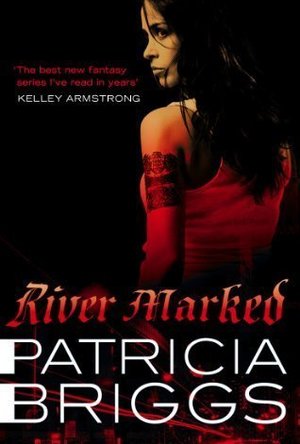
This book takes a different direction than previous books in the series, because Mercy is doing something that I think is quite rare in the typical Urban Fantasy heroine -- she is getting married. As a married woman, I quite like this turn and the extra confidence and sense of permanence it gives Mercy, but I don't think this is something that every reader will fully appreciate. Still, it feels fresh and new to me, and I think it has the potential to "breathe new life" into the series.
The loose ends of Stefan's mess from the previous book are quickly tied up, and the plot swiftly moves on to a "surprise" wedding for Mercy. The set-up of the wedding was quite endearing, and I even teared up a bit over it. These two sub-plots take place rather quickly, though, as the main focus of the book is what occurs during Mercy and Adam's honeymoon.
Mercy figures out quickly that they have been set up by certain fairy acquaintances for reasons that no one really knows. I was laughing at this, as it feels like a bumper sticker motto: If the world needs saving - send Mercy! So of course, Urban Fantasy heroine Mercy does not get a typical honeymoon, but one fraught with peril and impending doom.
While it may seem on the surface to be a random way to introduce new characters and magical elements into the series, I think that the events that happened at the Columbia River were a great way to focus on Mercy's native heritage and answer many of the questions that I have been harboring through the series about her ability to transform into a coyote. She makes some new friends of native descent that are able to help her tackle her looming battle with the river monster, and she discovers that she is not the only native who can become another animal. She also learns more about her father and his relationship with her mother. The walking stick also plays a major part, though I hope this is not the last we've seen of it. That stick has too many quirks to just let it go.
The river monster itself was quite a creation - as much fantasy as I have read, I've never come across anything quite like it, though some creatures of Greek mythology comes close. Abominations like that remind me why I avoid watching horror movies. The behavior of the otterkin also reminded me of the way members of a cult exalt their leader - creepy. I can't wait for the next book!
The loose ends of Stefan's mess from the previous book are quickly tied up, and the plot swiftly moves on to a "surprise" wedding for Mercy. The set-up of the wedding was quite endearing, and I even teared up a bit over it. These two sub-plots take place rather quickly, though, as the main focus of the book is what occurs during Mercy and Adam's honeymoon.
Mercy figures out quickly that they have been set up by certain fairy acquaintances for reasons that no one really knows. I was laughing at this, as it feels like a bumper sticker motto: If the world needs saving - send Mercy! So of course, Urban Fantasy heroine Mercy does not get a typical honeymoon, but one fraught with peril and impending doom.
While it may seem on the surface to be a random way to introduce new characters and magical elements into the series, I think that the events that happened at the Columbia River were a great way to focus on Mercy's native heritage and answer many of the questions that I have been harboring through the series about her ability to transform into a coyote. She makes some new friends of native descent that are able to help her tackle her looming battle with the river monster, and she discovers that she is not the only native who can become another animal. She also learns more about her father and his relationship with her mother. The walking stick also plays a major part, though I hope this is not the last we've seen of it. That stick has too many quirks to just let it go.
The river monster itself was quite a creation - as much fantasy as I have read, I've never come across anything quite like it, though some creatures of Greek mythology comes close. Abominations like that remind me why I avoid watching horror movies. The behavior of the otterkin also reminded me of the way members of a cult exalt their leader - creepy. I can't wait for the next book!

Molly J (Cover To Cover Cafe) (106 KP) rated The Second Wife in Books
Mar 25, 2019

Suspense (2 more)
Characters
Plot Line
This Book Is A Cosmic Roller Coaster Of Thrills and Chills!
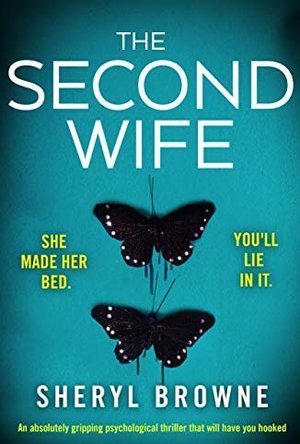
Do you ever come across a book that is absolutely mind boggling, leaving you scraping what’s left of your jaw, up off the floor because the entire time you read it, you were in awe, and on the edge of your seat? Yea, well I was just like that with this book here. The Second Wive is a cosmic explosion of twists, turns, and unexpected elements as you fly through this book. I read it a month or so ago, via NetGalley, and oh my word. There are no words to describe how this book made me feel.
Every minute of Rebecca’s life changing experiences became my own. Every pounding heart beat, mine. Every questionable thought, mine. Every. Thing. Mine. Watching what she went through as she stepped into her deceased friend’s life as the second wife…..well, sometimes, I had to stop reading because it became that intense for me. Watching her uncover the truth, watching her fears form….it was utterly chilling at times.
With Rebecca’s and Richard’s characters, you have the perfect blend of good and evil. But, the question is this: are they really good, evil and who they say they are? Browne did a fantastic job of waiting til the very end to let her readers know just what they wanted answered. These characters take your heart and squeeze…..squeeze so hard, your heart feels like it might burst and then, at the end of this white-knuckle thriller, you can finally breathe again. Your heart starts beating again, your breath starts to even out, your mind starts to think about all you just endured to reach the end.
If you looking for a book full of laughs and romance, don’t buy this book. You won’t like it if that’s what you are expecting. If you are looking for a book that will make you drool because your jaw is opened like a codfish the entire time, then buy this book. If you are looking for a page-turner, edge-of-seat, white-knuckle, heart pounding to bursting experience, then absolutely, without a doubt, 100% buy this book. You will not be disappointed and you will be giving it 5 star praises as I did. Fantastically down, Browne. Fantastically done.
*I received a complimentary copy of this book from NetGalley, Bookouture and was under no obligation to post a review, positive or negative.*
Every minute of Rebecca’s life changing experiences became my own. Every pounding heart beat, mine. Every questionable thought, mine. Every. Thing. Mine. Watching what she went through as she stepped into her deceased friend’s life as the second wife…..well, sometimes, I had to stop reading because it became that intense for me. Watching her uncover the truth, watching her fears form….it was utterly chilling at times.
With Rebecca’s and Richard’s characters, you have the perfect blend of good and evil. But, the question is this: are they really good, evil and who they say they are? Browne did a fantastic job of waiting til the very end to let her readers know just what they wanted answered. These characters take your heart and squeeze…..squeeze so hard, your heart feels like it might burst and then, at the end of this white-knuckle thriller, you can finally breathe again. Your heart starts beating again, your breath starts to even out, your mind starts to think about all you just endured to reach the end.
If you looking for a book full of laughs and romance, don’t buy this book. You won’t like it if that’s what you are expecting. If you are looking for a book that will make you drool because your jaw is opened like a codfish the entire time, then buy this book. If you are looking for a page-turner, edge-of-seat, white-knuckle, heart pounding to bursting experience, then absolutely, without a doubt, 100% buy this book. You will not be disappointed and you will be giving it 5 star praises as I did. Fantastically down, Browne. Fantastically done.
*I received a complimentary copy of this book from NetGalley, Bookouture and was under no obligation to post a review, positive or negative.*

Ashley Valencia (5 KP) rated Beauty and the Beast (2017) in Movies
Apr 13, 2019
I Wanted to Like It
The animated Beauty and the Beast is one of my favorite movies to this day so i really wanted to like this film and tried to go in with no expectations.
I knew we were in trouble when Emma Watson started her first song of the film HEAVILY autotuned. The practice used to be that if an actor couldnt sing, they would lip sync and have someone else do the singing voice. This was also common practice for the animated films, one actor for singing and another for spoken lines. I wish they would've gone this route. The autotuning is just so heavy I found it cringey.
The film is gorgeous, a lot of pleasing visuals and effects but the Beast just looks, strange. Not really animalistic. Honestly more like if his face was carved out of a tree.
Despite the singing issue I do think the cast was well chosen. They all do a good job with what they have. Especially the actor playing Gaston. It seemed clear that they weren't 100% sure what to do with the character. At a few points it seemed like they were going to try to make him sympathetic but then they'd fall back on him just being awful. Still the actor did an amazing job and really sold it.
For the most part the plot sticks close to the original film though there are a few new elements, some background on Belle's mom, and new songs.
A few weeks before the film's release the director announced that there was definitely a gay character in the film. There are a few implications that there might be but that's it. I think honestly it would've come across better, he would've been given more credit, if he'd just let it be instead of making a big announcement and patting himself on the back. It would've seemed like a subtle nod to the lgbtq community instead of the false disappointing promise it turned out to be. He wanted the credit without actually putting in the work and it shows.
Overall I just didn't care for it. It's fine. Nothing spectacular. The animated film was definitely better. So I'd say stick with the classic however it is worth watching just to see the different interpretation of the story.
If you want a live action version I would recommend La Belle et la Bete, the 2014 French-Germanic version instead. It's a more interesting and visually stunning version of the story.
I knew we were in trouble when Emma Watson started her first song of the film HEAVILY autotuned. The practice used to be that if an actor couldnt sing, they would lip sync and have someone else do the singing voice. This was also common practice for the animated films, one actor for singing and another for spoken lines. I wish they would've gone this route. The autotuning is just so heavy I found it cringey.
The film is gorgeous, a lot of pleasing visuals and effects but the Beast just looks, strange. Not really animalistic. Honestly more like if his face was carved out of a tree.
Despite the singing issue I do think the cast was well chosen. They all do a good job with what they have. Especially the actor playing Gaston. It seemed clear that they weren't 100% sure what to do with the character. At a few points it seemed like they were going to try to make him sympathetic but then they'd fall back on him just being awful. Still the actor did an amazing job and really sold it.
For the most part the plot sticks close to the original film though there are a few new elements, some background on Belle's mom, and new songs.
A few weeks before the film's release the director announced that there was definitely a gay character in the film. There are a few implications that there might be but that's it. I think honestly it would've come across better, he would've been given more credit, if he'd just let it be instead of making a big announcement and patting himself on the back. It would've seemed like a subtle nod to the lgbtq community instead of the false disappointing promise it turned out to be. He wanted the credit without actually putting in the work and it shows.
Overall I just didn't care for it. It's fine. Nothing spectacular. The animated film was definitely better. So I'd say stick with the classic however it is worth watching just to see the different interpretation of the story.
If you want a live action version I would recommend La Belle et la Bete, the 2014 French-Germanic version instead. It's a more interesting and visually stunning version of the story.

Movie Metropolis (309 KP) rated Pan (2015) in Movies
Jun 11, 2019

Where's the magic? Where's the sparkle?
The mesmerising story of Peter Pan has been told by numerous directors, playwrights and novelists over the years with Disney’s brilliant animation being one of the highlights in a series of standout moments.
Now, the story receives a very 21st-century makeover in Pan, but does director Joe Wright’s brooding reimagining sink or swim?
Unfortunately, this occasionally beautifully shot film ends up causing more of a headache than Michael Bay’s much-maligned Transformers series in a movie that lacks the magic and sparkle of the traditional tale, instead focusing too much on special effects and noise – my god this is a loud film.
Stars like Hugh Jackman, Rooney Mara, Garrett Hedlund and Amanda Seyfriend take their places amongst a cast of forgettable characters that never seem to make any sort of impression, despite Pan’s 111 minute running time.
Following the story of Peter, played by a particularly wooden Levi Miller, Pan takes place many years before the events of the famous story, following a similar path to the recent Alice in Wonderland remake and Oz the Great and the Powerful.
Unfortunately, including a previously unmentioned backstory to the character brings about the same problems as it did for the aforementioned films. Pan has no charm and is completely void of originality with the production team borrowing many elements from movies like Avatar, the Harry Potter series and even the Indiana Jones franchise.
Hugh Jackman’s Blackbeard is the only character to make any sort of impact and the Wolverine star is a delight to watch in a role that requires masses of cheese and just a little malice. The rest of the cast are as wooden as the galleons in which they are transported and this is a real shame, given the talent on offer.
Elsewhere, the cinematography is exceptional with some amazing sequences shot with flair and supreme confidence but the poor CGI detracts from the spectacle. For a film with a budget of $150million, it has some of the worst special effects I have ever come across.
Nevertheless, there is much for younger children to enjoy. The bright colours and constant shifts in tone ensure Pan never settles into a rut, despite its bland characters and lacklustre special effects.
Overall, Pan is a crushing disappointment. The special effects are poor, the promising cast never gels together and the story is a hybrid of other, better films that results in a movie that will leave you with a headache, rather than a sense of magic and sparkle.
https://moviemetropolis.net/2015/10/18/wheres-the-magic-wheres-the-sparkle-pan-review/
Now, the story receives a very 21st-century makeover in Pan, but does director Joe Wright’s brooding reimagining sink or swim?
Unfortunately, this occasionally beautifully shot film ends up causing more of a headache than Michael Bay’s much-maligned Transformers series in a movie that lacks the magic and sparkle of the traditional tale, instead focusing too much on special effects and noise – my god this is a loud film.
Stars like Hugh Jackman, Rooney Mara, Garrett Hedlund and Amanda Seyfriend take their places amongst a cast of forgettable characters that never seem to make any sort of impression, despite Pan’s 111 minute running time.
Following the story of Peter, played by a particularly wooden Levi Miller, Pan takes place many years before the events of the famous story, following a similar path to the recent Alice in Wonderland remake and Oz the Great and the Powerful.
Unfortunately, including a previously unmentioned backstory to the character brings about the same problems as it did for the aforementioned films. Pan has no charm and is completely void of originality with the production team borrowing many elements from movies like Avatar, the Harry Potter series and even the Indiana Jones franchise.
Hugh Jackman’s Blackbeard is the only character to make any sort of impact and the Wolverine star is a delight to watch in a role that requires masses of cheese and just a little malice. The rest of the cast are as wooden as the galleons in which they are transported and this is a real shame, given the talent on offer.
Elsewhere, the cinematography is exceptional with some amazing sequences shot with flair and supreme confidence but the poor CGI detracts from the spectacle. For a film with a budget of $150million, it has some of the worst special effects I have ever come across.
Nevertheless, there is much for younger children to enjoy. The bright colours and constant shifts in tone ensure Pan never settles into a rut, despite its bland characters and lacklustre special effects.
Overall, Pan is a crushing disappointment. The special effects are poor, the promising cast never gels together and the story is a hybrid of other, better films that results in a movie that will leave you with a headache, rather than a sense of magic and sparkle.
https://moviemetropolis.net/2015/10/18/wheres-the-magic-wheres-the-sparkle-pan-review/