
Search
Search results

Gareth von Kallenbach (980 KP) rated After Earth (2013) in Movies
Aug 7, 2019
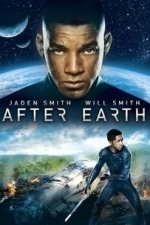


At its core, After Earth is a coming of age story set in a future sci-fi world. With the story by Will Smith and directed by M Knight Shyamalan, those expecting the summer blockbusters that Will Smith is known for may be disappointed. Furthermore, those expecting an epic sci-fi film will also be disappointed. In many ways After Earth is a coming of age film for Jaden Smith, who takes center stage.
Set 1000 years in the future, mankind is fighting for survival against a race of creatures known as Ursa, who hunt humans down by smelling fear. The human Special Forces are led by General Cypher Raige played by Will Smith. Smith is a legendary ranger and revered among mankind because of his ability to “Ghost” which is to suppress his fear completely so the Ursa cannot sense him. Meanwhile his son Kitai, played by Will Smith’s real life son Jaden Smith, is desperately trying to impress his father by following in his footsteps. Kitai’s real test comes when the two crash land on the abandoned Earth and Kitai must face his crippling internal fear to save himself and his father.
Will Smith plays perhaps one of his most subdued roles of his career. No wise cracks, no bravado. He is very much the stern and stoic military man. As if to showcase his ability to completely control his fear his character also shows no other emotion either. This is a risky play for an actor who is known for his charisma. And without a doubt many will be turned off by it. But it works to help elevate Jaden’s performance, especially since Will speaks most of the dialog in the film by giving stern orders not only as commanding officer but as a father to son.
Jaden Smith’s performance starts out mediocre. He is not the over confident stupid youth you would mostly expect to find in this type of role, but rather he is the unassuming, emotional and somewhat weak character. From the time the characters crash land on earth he becomes the lead. At first his character is somewhat annoying as he is crippled by fear and emotions. But at the point when he starts to conquer those fears, we too get carried by his performance. He becomes stronger and I found myself actually involved in his journey. No longer trying to figure out what new obstacle he must face next, but rather in watching him grow from boy to man.
Visually the film is beautiful and refreshing. The sci-fi aspects of the film are unassuming which helps to not take away from the story being told. It was reminiscent of some of the 80s sci-fi films that were futuristic but limited and instead focused on story. The first act of the film is slow, however once the scene shifts to earth, the pacing of this film is excellent. It is one dangerous thing to the next in a race against time.
In the end I found myself enjoying this film more than I thought I would. I was surprised by Will Smith’s limited role but I was pleasantly surprised by Jaden’s growth on screen. The film had less visual sci-fi then I was expecting however in the end I did not seem to mind as I found myself more interested in the coming of age story. It is far from perfect and does not feel right being released during the summer blockbuster season. However in the end, it is worth a trip to the theater, even if it is only a matinee.
Set 1000 years in the future, mankind is fighting for survival against a race of creatures known as Ursa, who hunt humans down by smelling fear. The human Special Forces are led by General Cypher Raige played by Will Smith. Smith is a legendary ranger and revered among mankind because of his ability to “Ghost” which is to suppress his fear completely so the Ursa cannot sense him. Meanwhile his son Kitai, played by Will Smith’s real life son Jaden Smith, is desperately trying to impress his father by following in his footsteps. Kitai’s real test comes when the two crash land on the abandoned Earth and Kitai must face his crippling internal fear to save himself and his father.
Will Smith plays perhaps one of his most subdued roles of his career. No wise cracks, no bravado. He is very much the stern and stoic military man. As if to showcase his ability to completely control his fear his character also shows no other emotion either. This is a risky play for an actor who is known for his charisma. And without a doubt many will be turned off by it. But it works to help elevate Jaden’s performance, especially since Will speaks most of the dialog in the film by giving stern orders not only as commanding officer but as a father to son.
Jaden Smith’s performance starts out mediocre. He is not the over confident stupid youth you would mostly expect to find in this type of role, but rather he is the unassuming, emotional and somewhat weak character. From the time the characters crash land on earth he becomes the lead. At first his character is somewhat annoying as he is crippled by fear and emotions. But at the point when he starts to conquer those fears, we too get carried by his performance. He becomes stronger and I found myself actually involved in his journey. No longer trying to figure out what new obstacle he must face next, but rather in watching him grow from boy to man.
Visually the film is beautiful and refreshing. The sci-fi aspects of the film are unassuming which helps to not take away from the story being told. It was reminiscent of some of the 80s sci-fi films that were futuristic but limited and instead focused on story. The first act of the film is slow, however once the scene shifts to earth, the pacing of this film is excellent. It is one dangerous thing to the next in a race against time.
In the end I found myself enjoying this film more than I thought I would. I was surprised by Will Smith’s limited role but I was pleasantly surprised by Jaden’s growth on screen. The film had less visual sci-fi then I was expecting however in the end I did not seem to mind as I found myself more interested in the coming of age story. It is far from perfect and does not feel right being released during the summer blockbuster season. However in the end, it is worth a trip to the theater, even if it is only a matinee.

Bob Mann (459 KP) rated Denial (2016) in Movies
Sep 29, 2021


Jewry Trial.
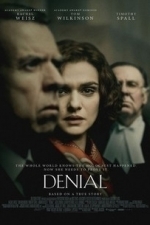
It’s the mid-90’s and Deborah Lipstadt (Rachael Weisz, “The Lobster“), an American professor of Holocaust studies at a US university has written a book naming and shaming David Irving (Timothy Spall, “Mr Turner”) as a Nazi-apologist who denies that the Holocaust ever happened. Filing a law suit against Penguin Books and Lipstadt in the UK, Lipstadt chooses to fight rather than settle and takes the case to the High Courts in a much publicised trial.
Help is required and Lipstadt is assigned a hot-shot solicitor (if that’s not an oxymoron) in the form of Anthony Julius (Andrew Scott, “Sherlock”) and top barrister Richard Rampton (Tom Wilkinson, “Selma“). The stage is set for an epic legal battle that will establish not just legal precedent but also historical precedent affecting the entire Jewish people.
This film’s trailer really appealed to me, and I was looking forward to this film. And that view clearly also got through to people of my age bracket (and older) since the cinema was pretty full. But ultimately I was disappointed by the film.
But first the good points.
The cinematography by Haris Zambarloukos (“Thor”, “Mamma Mia”) is memorable, particularly for the Auschwitz tour which is done in an impressively bleak way on an astoundingly bleak winter’s day.
Andrew Scott, so woefully miscast as “C” in “Spectre“, here is a nice shoo-in for the cocksure but aloof expert. And Tom Wilkinson, who can seldom put a movie foot wrong, is also perfectly cast as the claret-swigging defence-lead: passionless and analytical even when facing the horrors of a trip to Auschwitz.
Timothy Spall’s Irving is well portrayed as the intelligent and articulate – albeit deluded – eccentric he no doubt is.
There are also some nice cameo performances, including John Sessions (“Florence Foster Jenkins“) as an Oxbridge history boffin and Mark Gatiss (“Sherlock”) as an Auschwitz expert.
However, these positives don’t outweigh the big negative that the broader ensemble cast never really gels together well. The first time this is evident is in an office meeting of the defence team where the interactions have a sheen of falseness about them that is barely hidden behind some weak script and forced nervous laughter. Tea can’t help.
In particular, attractive Kiwi actress Caren Pistorius (“The Light Between Oceans“) seems to have been given a poor hand to play with as the junior member of the team. A late night interaction with her boyfriend, who whinges at her for having to work late, seems to be taken from a more sexist age: “the 70’s called and they want their script back”.
None of this is helped by Rachel Weisz, who I’m normally a fan of, but here she is hindered by some rather dodgy lines by David Hare (“The Reader”) and an unconvincing (well, to me at least) New York accent. For me I’m afraid she just doesn’t seem to adequately convey her passion for the cause.
While the execution of the court scenes are well done, the film is hampered by its opening five words: “Based on a True Story”. This is something of a disease at the moment in the movies, and whilst in many films (the recent “Lion” for example) the story is in the journey rather than the result, with “Denial” the story is designed to build to a tense result that unfortunately lacks any sort of tension – since the result is pre-ordained.
This is all a great shame, since director Mick Jackson (“LA Story”, in his first feature for nearly 15 years) has the potential here for a great movie. Perhaps a more fictionalised version (“vaguely based on a true story”) might have provided more of a foundation for a better film?
Help is required and Lipstadt is assigned a hot-shot solicitor (if that’s not an oxymoron) in the form of Anthony Julius (Andrew Scott, “Sherlock”) and top barrister Richard Rampton (Tom Wilkinson, “Selma“). The stage is set for an epic legal battle that will establish not just legal precedent but also historical precedent affecting the entire Jewish people.
This film’s trailer really appealed to me, and I was looking forward to this film. And that view clearly also got through to people of my age bracket (and older) since the cinema was pretty full. But ultimately I was disappointed by the film.
But first the good points.
The cinematography by Haris Zambarloukos (“Thor”, “Mamma Mia”) is memorable, particularly for the Auschwitz tour which is done in an impressively bleak way on an astoundingly bleak winter’s day.
Andrew Scott, so woefully miscast as “C” in “Spectre“, here is a nice shoo-in for the cocksure but aloof expert. And Tom Wilkinson, who can seldom put a movie foot wrong, is also perfectly cast as the claret-swigging defence-lead: passionless and analytical even when facing the horrors of a trip to Auschwitz.
Timothy Spall’s Irving is well portrayed as the intelligent and articulate – albeit deluded – eccentric he no doubt is.
There are also some nice cameo performances, including John Sessions (“Florence Foster Jenkins“) as an Oxbridge history boffin and Mark Gatiss (“Sherlock”) as an Auschwitz expert.
However, these positives don’t outweigh the big negative that the broader ensemble cast never really gels together well. The first time this is evident is in an office meeting of the defence team where the interactions have a sheen of falseness about them that is barely hidden behind some weak script and forced nervous laughter. Tea can’t help.
In particular, attractive Kiwi actress Caren Pistorius (“The Light Between Oceans“) seems to have been given a poor hand to play with as the junior member of the team. A late night interaction with her boyfriend, who whinges at her for having to work late, seems to be taken from a more sexist age: “the 70’s called and they want their script back”.
None of this is helped by Rachel Weisz, who I’m normally a fan of, but here she is hindered by some rather dodgy lines by David Hare (“The Reader”) and an unconvincing (well, to me at least) New York accent. For me I’m afraid she just doesn’t seem to adequately convey her passion for the cause.
While the execution of the court scenes are well done, the film is hampered by its opening five words: “Based on a True Story”. This is something of a disease at the moment in the movies, and whilst in many films (the recent “Lion” for example) the story is in the journey rather than the result, with “Denial” the story is designed to build to a tense result that unfortunately lacks any sort of tension – since the result is pre-ordained.
This is all a great shame, since director Mick Jackson (“LA Story”, in his first feature for nearly 15 years) has the potential here for a great movie. Perhaps a more fictionalised version (“vaguely based on a true story”) might have provided more of a foundation for a better film?

RəX Regent (349 KP) rated Chitty Chitty Bang Bang (1968) in Movies
Mar 7, 2019

Contains spoilers, click to show
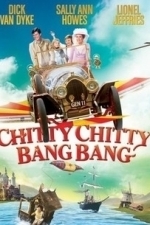
This was the first time that I've seen this children's classic since I was a child, and I suppose that I'd hoped that it would live up to its reputation. In all fairness though, I din't like it that much when I was a child, if I'm honest and my children, though some DO like it, others seemed to have mixed feelings. At best, it's likable but never lovable and at worst, it just isn't liked at all.
So, as an adult I watched this loose adaptation of James Bond's, Ian Flemming's novel, with every good intention, but in the end was left disappointed. Firstly, at 2 hours and 20 minutes long, it feels like an epic, and a completely unnecessary one at that. Its intermission is turned into a Batfink or Adam West's Batman styled cliffhanger rather than a thematic or narrative break that it traditionally should have been, even going so far as to recap the action in the second act!
The songs weren't great either, generally bordering on tedium rather than holding my interest. The story seems to be a little off kilter too, with a seemingly fatal crash destroying the eponymous car before its eventual restoration by Dick van Dyke. This was the culmination of a five-minute title sequence showcasing the early Grand Prix's of 1907 and '08 which for a family film seemed to drag somewhat.
But after an hour of songs and character development, we finally take off in the flying car to the fantasy land of Vulgaria, only for the whole experience to be a fantastical story told by Van Dyke's, Caractacus Potts! All in all, this was a strange film, but not in an entertaining way like Willy Wonka's Chocolate Factory, the connection being Roald Dahl's involvement with the screenplay, but in a rather boring way, with events just seeing to happen without any really cause or need. One hour of story, then another one of fantasy. How many other films can boast this kind narrative twist and get away with it. It just seemed to be indulgent and plodding.
It would defiantly have been improved if the car was actually magical and did actually take them on this adventure rather than suggesting that it is perfectly okay to sing and dance around the real world but it's a stretch too far to have a flying car! It should have been a fantasy through and through rather than six of one and half a dozen of the other.
Ultimately, Overrated in my opinion and since the view of FOUR children, boys and girls ranging from 7 – 15, is that it's watchable rather than fully enjoyable, I suspect that this film is being viewed through rose tinted glasses.
So, as an adult I watched this loose adaptation of James Bond's, Ian Flemming's novel, with every good intention, but in the end was left disappointed. Firstly, at 2 hours and 20 minutes long, it feels like an epic, and a completely unnecessary one at that. Its intermission is turned into a Batfink or Adam West's Batman styled cliffhanger rather than a thematic or narrative break that it traditionally should have been, even going so far as to recap the action in the second act!
The songs weren't great either, generally bordering on tedium rather than holding my interest. The story seems to be a little off kilter too, with a seemingly fatal crash destroying the eponymous car before its eventual restoration by Dick van Dyke. This was the culmination of a five-minute title sequence showcasing the early Grand Prix's of 1907 and '08 which for a family film seemed to drag somewhat.
But after an hour of songs and character development, we finally take off in the flying car to the fantasy land of Vulgaria, only for the whole experience to be a fantastical story told by Van Dyke's, Caractacus Potts! All in all, this was a strange film, but not in an entertaining way like Willy Wonka's Chocolate Factory, the connection being Roald Dahl's involvement with the screenplay, but in a rather boring way, with events just seeing to happen without any really cause or need. One hour of story, then another one of fantasy. How many other films can boast this kind narrative twist and get away with it. It just seemed to be indulgent and plodding.
It would defiantly have been improved if the car was actually magical and did actually take them on this adventure rather than suggesting that it is perfectly okay to sing and dance around the real world but it's a stretch too far to have a flying car! It should have been a fantasy through and through rather than six of one and half a dozen of the other.
Ultimately, Overrated in my opinion and since the view of FOUR children, boys and girls ranging from 7 – 15, is that it's watchable rather than fully enjoyable, I suspect that this film is being viewed through rose tinted glasses.

Ross (3284 KP) rated Game Of Thrones - Season 8 in TV
May 29, 2019 (Updated May 30, 2019)
A bit of a let-down
I don't think I will ever understand why the decision was made to squeeze the final season into 6 episodes. This seems to have put all the onus on ending storylines quickly and less on building tension. And yet, so much of this series was slow, drawn out padding.
There were two episodes of pretty much non-stop action. These were visually stunning, however so badly written and incongruous. Given how well the series as a whole has tried to mimic medieval European history, to have a battle start and end in a very short time was simply nonsense. No attention to likely battle plans was attempted (a sieging army wouldn't attack, and a besieged army wouldn't come out onto the field of battle), it was just a CGI-heavy, smoky, frantic fight.
The rest of the series was a much slower pace, which is GoT's style. However those episodes were so flat and dull as to be like someone else entirely had written them. Gone was the political wrangling, the back-stabbing and the two-facedness (generally, there were some brief moments of this).
The focus of each episode was also almost solely in one place, where it has always been at its best by showing so many things at a time. Rather than this being the convergence of all story threads, this just came across as storytelling-by-numbers.
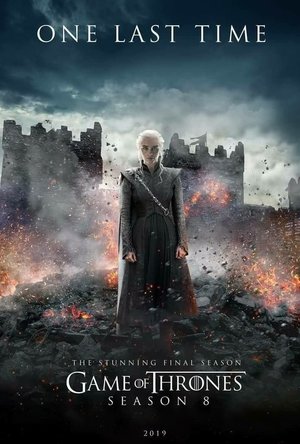
I had no problems with Daenerys' change in character - it had been so well hinted at that you didn't have to be the 3-eyed raven to see it coming. It also felt totally in line with her past decisions, and family history, and this was one of the few parts I felt were well written and understandable.
A lot of fan-favourite characters got shat on in the final few series, but I don't see why people are surprised - the main character of the first series was beheaded in that same series, so this was quite normal for GoT.
I really did not like the final outcome of the series, with Bran on the throne and the whole scene with all the lords (some of whom I still don't recognise) was painful - why would they listen to Tyrion and go with his "can't defeat a story" nonsense.
Overall, it was not a finale worthy of the series as a whole, but it was a reasonably enjoyable and at times thrilling conclusion to an epic story.
And one good thing to come out of this is the motivation it will give other writers: get on with finishing your stories or Benioff and Weiss will do it for you!
There were two episodes of pretty much non-stop action. These were visually stunning, however so badly written and incongruous. Given how well the series as a whole has tried to mimic medieval European history, to have a battle start and end in a very short time was simply nonsense. No attention to likely battle plans was attempted (a sieging army wouldn't attack, and a besieged army wouldn't come out onto the field of battle), it was just a CGI-heavy, smoky, frantic fight.
The rest of the series was a much slower pace, which is GoT's style. However those episodes were so flat and dull as to be like someone else entirely had written them. Gone was the political wrangling, the back-stabbing and the two-facedness (generally, there were some brief moments of this).
The focus of each episode was also almost solely in one place, where it has always been at its best by showing so many things at a time. Rather than this being the convergence of all story threads, this just came across as storytelling-by-numbers.
I had no problems with Daenerys' change in character - it had been so well hinted at that you didn't have to be the 3-eyed raven to see it coming. It also felt totally in line with her past decisions, and family history, and this was one of the few parts I felt were well written and understandable.
A lot of fan-favourite characters got shat on in the final few series, but I don't see why people are surprised - the main character of the first series was beheaded in that same series, so this was quite normal for GoT.
I really did not like the final outcome of the series, with Bran on the throne and the whole scene with all the lords (some of whom I still don't recognise) was painful - why would they listen to Tyrion and go with his "can't defeat a story" nonsense.
Overall, it was not a finale worthy of the series as a whole, but it was a reasonably enjoyable and at times thrilling conclusion to an epic story.
And one good thing to come out of this is the motivation it will give other writers: get on with finishing your stories or Benioff and Weiss will do it for you!
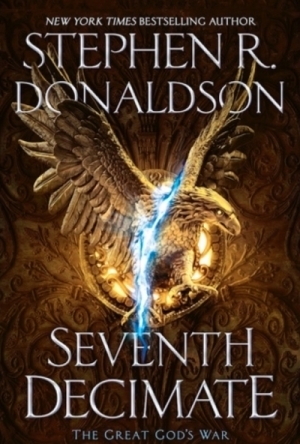
Ross (3284 KP) rated The Seventh Decimate : The Great Gods War Book One in Books
Jan 22, 2018
The main character (2 more)
The storyline
Everything else
1 dimensional short story that goes on too long
*** Disclosure: I received a free copy of this from NetGalley in exchange for an honest review ***
I haven't previously read any of Donaldson's work, though my Dad's unwieldy omnibus edition of the First Chronicles of Thomas Covenant the Unbeliever has been in my pile for some time now.
The storyline follows Prince Bifalt journeying to find the sorcery that can undo his country's current plight (they appear to have lost all magical abilities, key to staying in their generations old battle with neighbours). It starts off in the moments before battle, with the prince teaching his comrades about the history of the battle in a very hard to believe section of "here's the backstory but isn't it good that I wove it into the dialogue". We are introduced to his brothers at arms and each of their quirks and peccadillos, which turns out to be a waste as they pretty much all die within the next 100 pages, whether they like horses or are womanisers or not.
The opening action is very gripping and filled me with hope for the book to follow, as Bifalt and his companions lead a special mission to assassinate the enemy's sorcerers with their previously unreleased rifles.
Thereafter the action pretty much dries up. What follows on Bifalt's quest is a nonsense 200 pages of journey through the back country with a thoroughly detestable character who suspects everyone except those who actually have a reason to be his enemy.
After days in the desert, he meets a nonsensical caravan of misfits that he manages to ostracise himself from by being himself.
What follows is a tedious nonsense of journey, discussion, treachery, intrigue and just general nonsense.
Donaldson has an annoying habit of occasionally following a line of dialogue with "What he meant was" to show what the prince is actually trying to ask but didn't. This gets very annoying very quickly.
The conclusion of the story can only be described as relief that it is over, no great revelations, no climactic sequence or discovery, just "that's that sorted then now send to publishers".
Having recently read a number of fantasy books told from numerous viewpoints and covering really epic storylines, to come to such a linear, one dimensional tossed away story as this from someone who is supposed to be one of the greats of the genre, it really was an incredible disappointment.
I shan't be reading the second or third books of the trilogy, and Thomas Covenant has just slipped down my pile a bit.
I haven't previously read any of Donaldson's work, though my Dad's unwieldy omnibus edition of the First Chronicles of Thomas Covenant the Unbeliever has been in my pile for some time now.
The storyline follows Prince Bifalt journeying to find the sorcery that can undo his country's current plight (they appear to have lost all magical abilities, key to staying in their generations old battle with neighbours). It starts off in the moments before battle, with the prince teaching his comrades about the history of the battle in a very hard to believe section of "here's the backstory but isn't it good that I wove it into the dialogue". We are introduced to his brothers at arms and each of their quirks and peccadillos, which turns out to be a waste as they pretty much all die within the next 100 pages, whether they like horses or are womanisers or not.
The opening action is very gripping and filled me with hope for the book to follow, as Bifalt and his companions lead a special mission to assassinate the enemy's sorcerers with their previously unreleased rifles.
Thereafter the action pretty much dries up. What follows on Bifalt's quest is a nonsense 200 pages of journey through the back country with a thoroughly detestable character who suspects everyone except those who actually have a reason to be his enemy.
After days in the desert, he meets a nonsensical caravan of misfits that he manages to ostracise himself from by being himself.
What follows is a tedious nonsense of journey, discussion, treachery, intrigue and just general nonsense.
Donaldson has an annoying habit of occasionally following a line of dialogue with "What he meant was" to show what the prince is actually trying to ask but didn't. This gets very annoying very quickly.
The conclusion of the story can only be described as relief that it is over, no great revelations, no climactic sequence or discovery, just "that's that sorted then now send to publishers".
Having recently read a number of fantasy books told from numerous viewpoints and covering really epic storylines, to come to such a linear, one dimensional tossed away story as this from someone who is supposed to be one of the greats of the genre, it really was an incredible disappointment.
I shan't be reading the second or third books of the trilogy, and Thomas Covenant has just slipped down my pile a bit.
Alice (12 KP) rated Arcanum Unbounded: The Cosmere Collection in Books
Jul 3, 2018


<i>My thanks to the publisher for providing me with a review copy in exchange for an honest review</i>
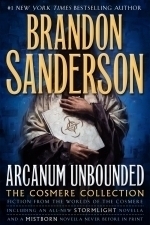
Arcanum Unbounded is an anthology of classic and epic proportions from a true Fantasy genius which was full to the brim of Brandon Sanderson’s Cosmere universe. The book followed characters we all know and love and plenty of new characters to fall for – Dusk, I’m looking at you.
The book is divided up into “systems” with a neat little explanation as to the layout of each system; which is then related to a specific setting from the Cosmere – Elantris, Mistborn, Threnody, First of the Sun and a previously unnamed and unpublished Stormlight Archive novella.
Oodles of Cosmere.
I don’t want to go into too much detail about the individual shorts for those of you who have not read any the related systems books – (you have to!) – but each story gave a wonderful insight into the characters points of view and their unique history.
My favorites of this anthology would have to be The Emperor’s Soul, Sixth of the Dusk and Edgedancer. They each brought a little something special to this book – Emperor’s Soul took me right back to Elantris, the first ever Sanderson book I read and still my favorite to this day; Sixth of the Dusk had this overwhelming silence to it even when the characters involved were speaking (though this was few and far between in fairness) and this silence across the characters when Brandon’s characters usually talk so much was brilliantly done.
Edgedancer was a book in The Stormlight Archive system, though I’m slightly ashamed to admit I haven’t read all of The Stormlight Archive books yet, but I have them and this gave spoilers into The Words of Radiance (book 2 of the series so far) these spoilers are not really spoilers to me, maybe once I’ve read Radiance it will make a difference but my first read through made no spoilery difference to me.
Each individual short in the system was preceded by a little spoiler warning if there would be one, or a note stating where in the story arc it falls and was then followed by a sweet little Postscript from Brandon – each one tailor made for its preceding event; the best postscript was for The Hope of Elantris but I won’t give anything away, you had to read it.
Overall, Arcanum Unbounded is a perfect book to dive into Brandon Sanderson’s work as few of the stories in it actually need to be read before the main story – Mistborn: A Secret History, The Hope of Elantris, Edgedancer for definite. If you’re looking for a new fantasy author to sink your teeth into Brandon Sanderson is your man.
Arcanum Unbounded is an anthology of classic and epic proportions from a true Fantasy genius which was full to the brim of Brandon Sanderson’s Cosmere universe. The book followed characters we all know and love and plenty of new characters to fall for – Dusk, I’m looking at you.
The book is divided up into “systems” with a neat little explanation as to the layout of each system; which is then related to a specific setting from the Cosmere – Elantris, Mistborn, Threnody, First of the Sun and a previously unnamed and unpublished Stormlight Archive novella.
Oodles of Cosmere.
I don’t want to go into too much detail about the individual shorts for those of you who have not read any the related systems books – (you have to!) – but each story gave a wonderful insight into the characters points of view and their unique history.
My favorites of this anthology would have to be The Emperor’s Soul, Sixth of the Dusk and Edgedancer. They each brought a little something special to this book – Emperor’s Soul took me right back to Elantris, the first ever Sanderson book I read and still my favorite to this day; Sixth of the Dusk had this overwhelming silence to it even when the characters involved were speaking (though this was few and far between in fairness) and this silence across the characters when Brandon’s characters usually talk so much was brilliantly done.
Edgedancer was a book in The Stormlight Archive system, though I’m slightly ashamed to admit I haven’t read all of The Stormlight Archive books yet, but I have them and this gave spoilers into The Words of Radiance (book 2 of the series so far) these spoilers are not really spoilers to me, maybe once I’ve read Radiance it will make a difference but my first read through made no spoilery difference to me.
Each individual short in the system was preceded by a little spoiler warning if there would be one, or a note stating where in the story arc it falls and was then followed by a sweet little Postscript from Brandon – each one tailor made for its preceding event; the best postscript was for The Hope of Elantris but I won’t give anything away, you had to read it.
Overall, Arcanum Unbounded is a perfect book to dive into Brandon Sanderson’s work as few of the stories in it actually need to be read before the main story – Mistborn: A Secret History, The Hope of Elantris, Edgedancer for definite. If you’re looking for a new fantasy author to sink your teeth into Brandon Sanderson is your man.

EmersonRose (320 KP) rated Dodger's Doorrway in Books
Nov 20, 2019
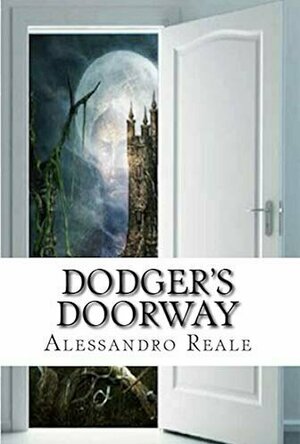
Dodger’s Doorway, by Alessandro Reale, is a fantasy adventure story that explores retelling classic fairy tales and fables in unique and fun ways. The book follows main character Mark ‘Dodger’ Bishop, a teenager from our world who is tired of his life. While struggling with divorcing parents, and school bullies, and getting through his senior year of high school, Dodger finds a doorway to another world. This world is inhabited by the fairytale characters of our childhoods. Dodger meets Humpty Dumpty and Rumpelstiltskin and many more classic characters. Dodger is taken on an exciting journey which has its dangers and challenges. Along the way, Dodger must work to not only save Storyworld but work through his own fears and struggles.
Dodger’s Doorway is a fantastical adventure that makes for a super fun read. The melded fairytale worlds is a theme we have seen more and more of, which I love, and I think that Reale did a masterful job of combining the magical nostalgia of the characters we know and love as well as bringing in a unique twist and creating new life in this classic characters. I particularly liked the portrayal of Humpty Dumpty. I think that Humpty is a character that is often veered away from as being too hard or not interesting enough to expand upon, but Reale takes him and makes him into an exciting warrior, which I thought was very clever. Reale’s Storyworld combines the magical innocence and dark origins of the stories and characters he chooses which gives the story a real sense of danger and epic adventure that makes the book a quick and thrilling read. Reale took inspirational from a wide range of stories; from Hansel and Gretel, Jack and the Beanstalk, Pinocchio, Peter Pan, Alice in Wonderland, The Wizard of Oz, and many more. I loved the variety and enjoyed seeing Reale’s spin on the characters.
The book itself is well-written, and the arc works well to make for a book that is hard to put down. Dodger is a great character in that he has a lot of growth throughout the book and creates real feeling relationships with the fairytale characters he meets. I liked that Reale brought the book to a young adult read instead of a children’s book by playing with the dark sides of fairytales, as well as making Dodger a teenager dealing with very real young adult issues.
Dodger’s Doorway is an enchanting story with a lot of heart. I very much enjoyed reading it. If you are a fan of fantasy stories, particularly tales where characters find magical worlds, a personal childhood dream of mine and many others I am sure, then I would highly recommend giving this book a read!
Dodger’s Doorway is a fantastical adventure that makes for a super fun read. The melded fairytale worlds is a theme we have seen more and more of, which I love, and I think that Reale did a masterful job of combining the magical nostalgia of the characters we know and love as well as bringing in a unique twist and creating new life in this classic characters. I particularly liked the portrayal of Humpty Dumpty. I think that Humpty is a character that is often veered away from as being too hard or not interesting enough to expand upon, but Reale takes him and makes him into an exciting warrior, which I thought was very clever. Reale’s Storyworld combines the magical innocence and dark origins of the stories and characters he chooses which gives the story a real sense of danger and epic adventure that makes the book a quick and thrilling read. Reale took inspirational from a wide range of stories; from Hansel and Gretel, Jack and the Beanstalk, Pinocchio, Peter Pan, Alice in Wonderland, The Wizard of Oz, and many more. I loved the variety and enjoyed seeing Reale’s spin on the characters.
The book itself is well-written, and the arc works well to make for a book that is hard to put down. Dodger is a great character in that he has a lot of growth throughout the book and creates real feeling relationships with the fairytale characters he meets. I liked that Reale brought the book to a young adult read instead of a children’s book by playing with the dark sides of fairytales, as well as making Dodger a teenager dealing with very real young adult issues.
Dodger’s Doorway is an enchanting story with a lot of heart. I very much enjoyed reading it. If you are a fan of fantasy stories, particularly tales where characters find magical worlds, a personal childhood dream of mine and many others I am sure, then I would highly recommend giving this book a read!
LEGO® Star Wars™: The Complete Saga
Games and Entertainment
App
LEGO® Star Wars™: The Complete Saga is available on iOS for the first time! ***Episode I Story...

LilyLovesIndie (123 KP) rated The Hobbit in Books
Nov 5, 2018
See the latest version of this review over on Ramble Media http://www.ramblemedia.com/?p=19585
Wow, am I glad that watching the film made me want to reread this timeless classic! I first read this as an eleven year old at school, trying to prove a point to a teacher that a child could read a book like this. I succeeded in reading it, thought the fantasy great, but remembered very little of the story or the fact there was another epic adventure waiting to be told by the much praised JRR Tolkien.
How I have missed out! The story follows a very plain, and at times fussy, Mr Baggins of Bagend, a Hobbit of Hobbiton, in the 'reasonable West', as he takes an adventure, in the company of 'dwarves' to save their long forsaken home. The company encounter many trials and tribulations along the way, from angry goblins, to giant spiders, to meddlesome elves and even Smaug the Terrible, but they triumph over them all.
Honestly, I cannot give praise enough for the book, and many have done so before in, what I am sure, will be better expressed reviews and accolades of praise, so I will aim to keep this short and sweet, picking up on key, outstanding features that bowled me over. The first thing I have to raise is the characterisation. The 'cast' of assembled characters, from the main company of the dwarves, to the helpers and and those that hinder them along their journey, are all thoroughly well explained by the creative use of authorial voice in the narration of events. Mr Baggins is, although a little fussy at times, an incredibly likable character, as I'm sure most hobbits are, who's funny outbursts and ideas make him the comedy relief at tense times. He is also, without a doubt, the brains and drive behind the adventure, once Gandalf has left, and proves that anyone, no matter how small can be a hero - a great quality to see in a major character who is less 'normal' than most as too often it's the popular, stereotypical heroes that dominate literature! Thorin and his company of bedraggled dwarves are a barrel of laughs at times (no pun intended!) and are all well developed in what is a relatively short story.
And that, I suppose, is the best feature of this book, for me at least! The development of plot, characters, scenery and everything else you could possibly wish to know about anyone involved in a story (eg background history etc) is all given to you in abundance, but they never overpower each other, they are instead woven intricately together in a brand of storytelling that belongs in oral tradition, not in words on a page. It is clear, especially after reading the foreword, that the Hobbit originated as a story to be told, not read, and incredibly, that makes it all the more readable as it hooks you in a way few books ever will. It aims to drag you, however reluctantly or willingly, into the adventure and take you away from your own little, safe, hobbit hole across the Shire and the Wild, and everywhere else they travel, with you feeling completely immersed as the final member of the company, but one who goes as unnoticed by the others as if you were wearing Bilbo's ring. However, the extremely clever thing that Tolkien does, and of this I am supremely envious of as I wish I could do this in my own writing, is that even though you feel so well informed, you still want to know more about them, and for the creative among us, we want to fill those gaps with our own imagination! Very rarely do I come across an author who manages to inform, excite, engage, and engender creativity in such a way in under 300 pages.
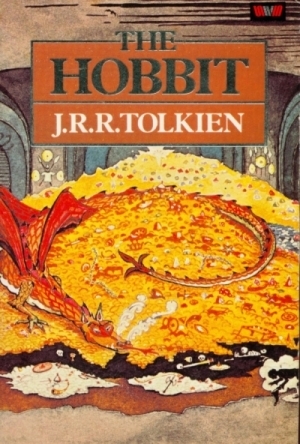
Finally, I guess I have to give credit to the wonderful drawings accompanying the text. Beautifully drawn, incredibly supportive of your own imaginative process, yet strangely, not limiting in letting you continue to let your imagination wander. The are a wonderful addition to the book, and I say that as someone who doesn't think a real book should have pictures, and add a greater accessibility to all of the new experiences you encounter as you travel through the story to the Lonely Mountain at the end.
And so, I draw my ramblings to a close, however there is plenty more to be said, that will be left unsaid, partly due to my desire to go and read Lord of the Rings for the first time as a result of reading The Hobbit. I can only conclude with the highest praise for this story, and the highest level of recommendation to anyone who has not yet read it, or those like me that think because they read it as a child it counts. This is a book that should, and deserves, to be read over and over again, and one of those occasions should be reading it aloud to a child, as that, is the only way to truly experience the wonderful story weaved by a master storyteller.
Wow, am I glad that watching the film made me want to reread this timeless classic! I first read this as an eleven year old at school, trying to prove a point to a teacher that a child could read a book like this. I succeeded in reading it, thought the fantasy great, but remembered very little of the story or the fact there was another epic adventure waiting to be told by the much praised JRR Tolkien.
How I have missed out! The story follows a very plain, and at times fussy, Mr Baggins of Bagend, a Hobbit of Hobbiton, in the 'reasonable West', as he takes an adventure, in the company of 'dwarves' to save their long forsaken home. The company encounter many trials and tribulations along the way, from angry goblins, to giant spiders, to meddlesome elves and even Smaug the Terrible, but they triumph over them all.
Honestly, I cannot give praise enough for the book, and many have done so before in, what I am sure, will be better expressed reviews and accolades of praise, so I will aim to keep this short and sweet, picking up on key, outstanding features that bowled me over. The first thing I have to raise is the characterisation. The 'cast' of assembled characters, from the main company of the dwarves, to the helpers and and those that hinder them along their journey, are all thoroughly well explained by the creative use of authorial voice in the narration of events. Mr Baggins is, although a little fussy at times, an incredibly likable character, as I'm sure most hobbits are, who's funny outbursts and ideas make him the comedy relief at tense times. He is also, without a doubt, the brains and drive behind the adventure, once Gandalf has left, and proves that anyone, no matter how small can be a hero - a great quality to see in a major character who is less 'normal' than most as too often it's the popular, stereotypical heroes that dominate literature! Thorin and his company of bedraggled dwarves are a barrel of laughs at times (no pun intended!) and are all well developed in what is a relatively short story.
And that, I suppose, is the best feature of this book, for me at least! The development of plot, characters, scenery and everything else you could possibly wish to know about anyone involved in a story (eg background history etc) is all given to you in abundance, but they never overpower each other, they are instead woven intricately together in a brand of storytelling that belongs in oral tradition, not in words on a page. It is clear, especially after reading the foreword, that the Hobbit originated as a story to be told, not read, and incredibly, that makes it all the more readable as it hooks you in a way few books ever will. It aims to drag you, however reluctantly or willingly, into the adventure and take you away from your own little, safe, hobbit hole across the Shire and the Wild, and everywhere else they travel, with you feeling completely immersed as the final member of the company, but one who goes as unnoticed by the others as if you were wearing Bilbo's ring. However, the extremely clever thing that Tolkien does, and of this I am supremely envious of as I wish I could do this in my own writing, is that even though you feel so well informed, you still want to know more about them, and for the creative among us, we want to fill those gaps with our own imagination! Very rarely do I come across an author who manages to inform, excite, engage, and engender creativity in such a way in under 300 pages.
Finally, I guess I have to give credit to the wonderful drawings accompanying the text. Beautifully drawn, incredibly supportive of your own imaginative process, yet strangely, not limiting in letting you continue to let your imagination wander. The are a wonderful addition to the book, and I say that as someone who doesn't think a real book should have pictures, and add a greater accessibility to all of the new experiences you encounter as you travel through the story to the Lonely Mountain at the end.
And so, I draw my ramblings to a close, however there is plenty more to be said, that will be left unsaid, partly due to my desire to go and read Lord of the Rings for the first time as a result of reading The Hobbit. I can only conclude with the highest praise for this story, and the highest level of recommendation to anyone who has not yet read it, or those like me that think because they read it as a child it counts. This is a book that should, and deserves, to be read over and over again, and one of those occasions should be reading it aloud to a child, as that, is the only way to truly experience the wonderful story weaved by a master storyteller.
RəX Regent (349 KP) rated Hell's Angels (1930) in Movies
Feb 19, 2019
Big budget, elaborate air combat scenes which resulted in several deaths and Gimmick after gimmick… This has to be the Howard Hughes’ World War 1 epic, Hell’s Angels.
Where to begin?
Well, we follow the Routledge two brothers as they join the war effort and the Royal Air Corps. in 1914 and whilst one is a somewhat cowardly womaniser, his brother is the noble heroic type who spends the film being screwed over bey everyone in one way or another, but most notably by his girlfriend, Jean Harlow, who is so annoyingly wrong for him that it is a relief when he has heart is broken by her in the third act.
But like mots aspects of this plot, this is as messy and disjointed as everything else. We are given a story line to follow for two hours, as Hughes indulges his legendary love of flying to create some of the best dog fight sequences ever committed to film. They are real, epic and effective in conveying the thrilling danger of these world war one battles.
But this is a film of gimmick. Pushing the pre-code envelope with sex and bad language, this was originally conceived as a silent movie and was re-written and re-shot to become the sound movie whcih we have to today and there in clearly lies the problem. What we end up is a movie cobbled together, with silence sequences being converted to sound, the poor acting from its star James Hall as the idealistic Roy Routledge, Jean Harlow, replacing the original silent star Gretta Nissen for this sound version, excelling in her role as his trampy girlfriend and Ben Lyon as the weaker brother, Monte, but the real star of this show are the special effects.
But of the human stars, Harlow, presented here in the only colour footage known to exist of the tragic star, who would die at the young age of 26 just seven years later, probably delivers one of the best performances in the whole picture, certainly outshining her male co-stars.
Of the special effects though, the use of 2-tone Technicolor, which was actually shot with the Metrocolor system but processed by Technicolor, in one sequence as the group are all together at a party, as well as the classical use of tints during some other scenes, add a vibrancy to the project. But this also can have a jarring effect, especially as we leave the colour scenes and wrap up thet sequences in black and white.
But the model effects, notably the munition raid at the end and the Zeppelin bombing London scenes are spectacular, especially for the time. The other notable gimmick which has yet to be transferred to the small screen, was the original use of what was called Magnascope back in 1930.
This was obviously only used at high end theaters but this paved the way for what IMAX are doing now, by blowing up the aerial scenes into a larger screen format from the 1.20:1 ratio which the the rest of film was presented. But when you add all this up you have got a mess!
Magnascope, technicolor scenes, tinted scenes, daring aerial battles, a half arsed love story and an image of world war which was a kin to that of Michael Bay’s Pearl Harbor’s (2001) view of World War 2! But this is what this is. An early, lavish popcorn blockbuster, with little to offer but cinematic thrills, which it succeeds at without any doubt.
The action is great, the plot is mediocre to say the least but as film, it does offer a brief insight into how cinema audiences saw the Great War back in 1930 and you can not help but think that this audience was only nine years away from the next one as we watch this.
pictureBut the ending was grim, with noble ends rounding off a story of brotherly love and love of duty and country, seems overblown considering what we had had to sit through but still, by the end, is anybody really routing for the Routledge brothers to have a happy ending?
I certainly was not. But this ending is the nearest thing that this film has to a story arc, as is pays off the opening act where Roy risks his life fighting a duel for his cowardly brother against the very German officer who is about to have them executed.
Duty wins out and Monte sees the light at the end after a very melodramatic death scene.
But having said all that, this film is worth it for the action alone and for film buffs, the only colour footage of Jean Harlow.
Where to begin?
Well, we follow the Routledge two brothers as they join the war effort and the Royal Air Corps. in 1914 and whilst one is a somewhat cowardly womaniser, his brother is the noble heroic type who spends the film being screwed over bey everyone in one way or another, but most notably by his girlfriend, Jean Harlow, who is so annoyingly wrong for him that it is a relief when he has heart is broken by her in the third act.
But like mots aspects of this plot, this is as messy and disjointed as everything else. We are given a story line to follow for two hours, as Hughes indulges his legendary love of flying to create some of the best dog fight sequences ever committed to film. They are real, epic and effective in conveying the thrilling danger of these world war one battles.
But this is a film of gimmick. Pushing the pre-code envelope with sex and bad language, this was originally conceived as a silent movie and was re-written and re-shot to become the sound movie whcih we have to today and there in clearly lies the problem. What we end up is a movie cobbled together, with silence sequences being converted to sound, the poor acting from its star James Hall as the idealistic Roy Routledge, Jean Harlow, replacing the original silent star Gretta Nissen for this sound version, excelling in her role as his trampy girlfriend and Ben Lyon as the weaker brother, Monte, but the real star of this show are the special effects.
But of the human stars, Harlow, presented here in the only colour footage known to exist of the tragic star, who would die at the young age of 26 just seven years later, probably delivers one of the best performances in the whole picture, certainly outshining her male co-stars.
Of the special effects though, the use of 2-tone Technicolor, which was actually shot with the Metrocolor system but processed by Technicolor, in one sequence as the group are all together at a party, as well as the classical use of tints during some other scenes, add a vibrancy to the project. But this also can have a jarring effect, especially as we leave the colour scenes and wrap up thet sequences in black and white.
But the model effects, notably the munition raid at the end and the Zeppelin bombing London scenes are spectacular, especially for the time. The other notable gimmick which has yet to be transferred to the small screen, was the original use of what was called Magnascope back in 1930.
This was obviously only used at high end theaters but this paved the way for what IMAX are doing now, by blowing up the aerial scenes into a larger screen format from the 1.20:1 ratio which the the rest of film was presented. But when you add all this up you have got a mess!
Magnascope, technicolor scenes, tinted scenes, daring aerial battles, a half arsed love story and an image of world war which was a kin to that of Michael Bay’s Pearl Harbor’s (2001) view of World War 2! But this is what this is. An early, lavish popcorn blockbuster, with little to offer but cinematic thrills, which it succeeds at without any doubt.
The action is great, the plot is mediocre to say the least but as film, it does offer a brief insight into how cinema audiences saw the Great War back in 1930 and you can not help but think that this audience was only nine years away from the next one as we watch this.
pictureBut the ending was grim, with noble ends rounding off a story of brotherly love and love of duty and country, seems overblown considering what we had had to sit through but still, by the end, is anybody really routing for the Routledge brothers to have a happy ending?
I certainly was not. But this ending is the nearest thing that this film has to a story arc, as is pays off the opening act where Roy risks his life fighting a duel for his cowardly brother against the very German officer who is about to have them executed.
Duty wins out and Monte sees the light at the end after a very melodramatic death scene.
But having said all that, this film is worth it for the action alone and for film buffs, the only colour footage of Jean Harlow.