

Princess Dress-Up
Games and Entertainment
6.0 Rate It
App
--> Hundreds of dress up combinations - clothes, hairstyles, jewelry and much more! --> 4 beautiful...

Rachel King (13 KP) rated Veiled Rose (Tales of Goldstone Wood, #2) in Books
Feb 11, 2019

Rose Red is by far the most intriguing character, as her birth is shrouded in mystery, her friends are animals with voices, and she cloaks herself in veils and layers to hide even the smallest scrap of skin from any prying eyes - including her own. The shame she bears for her own appearance is so great that her very existence is surrounded by grand tales of monsters and demons told by all of the local villagers, yet she bears a strength much greater than she appears to possess and she has a kind of magic that allows her to walk the secret Paths and face down death in all its forms. Even at the end of the book, I could not fully grasp who or what she is.
Leo manages to find and befriend Rose Red in boyhood, but he has a burden of his own as Prince Lionheart of Southlands, destined to become King. Leo knows his responsibilities, but he secretly just wants a friend and to make people laugh as a court jester. These polar opposites manage to pull him across the world again and again as he struggles with the simple question, "What do you want?"
Many other characters litter the pages of the book, which was at times confusing as I attempted to deduce which creature or character was on the side of good or evil, such as the Dragon - which became apparent at its occupation of Southlands. As an allegory for Christianity, some characters were clear - such as the Prince, but others were murkier, such as the Lady.
The structure of the book itself was off-putting for me. The book is divided into five parts, with chapters in each part, but in between each part a vague sense of time has passed, so that the reader cannot pick up where the last chapter left off. At each break, I would get the feeling that the plot was picking up, only to be let down that the climactic moments have been glossed over. I also really disliked the ending. Certain things are expected of classic fairy tales, and none of this was included in the ending of this book. Perhaps the author was aiming for something more "realistic" or to simply get the reader to continue the series, but loose endings this big make me feel like I wasted my time reading the book, only to get no satisfaction at the finale.

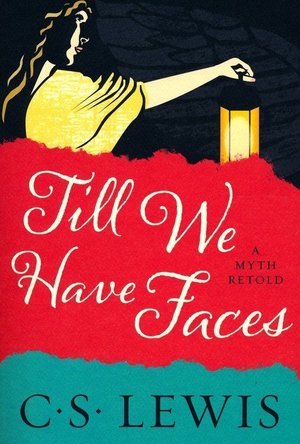
Mitchell Knutzen (16 KP) rated Till We Have Faces in Books
Feb 21, 2018


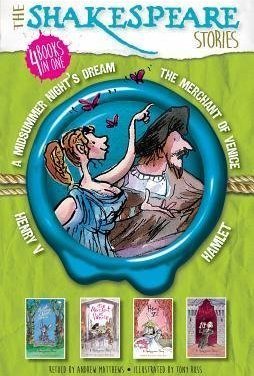

Matthews manages to take some of the most plot-heavy and confusing Shakespeare plays and break them down to their most basic elements. The language is easy to follow without lacking intellect or wit, and he stays true to Shakespeare’s concepts and characters. Illustrated short stories for kids are a no-brainer for getting children interested in William Shakespeare, and Matthews was smart to dive into the genre. He isn’t reinventing the wheel, but he is making the wheel accessible to a wide range of audiences.
I like how it has pictures, gives the cast and a quote from the original play. Then it tells the story and finishes up with an explanation of what just happened and some history of Shakespeare and the play.
The Forgotten Garden
7.3 Rate It
Book
A foundling, an old book of dark fairy tales, a secret garden, an aristocratic family, a love...
Dining with the Rich and Royal
Book
Dining with the Rich and Royal is a marvelous journey into the gastronomic peccadilloes of the...
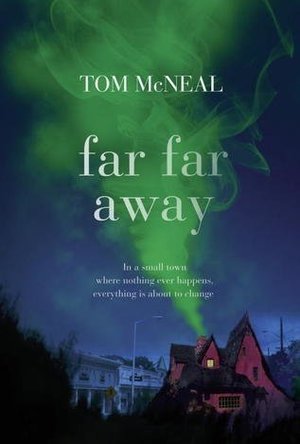
Far Far Away
7.7
Rate It
Book
It says quite a lot about Jeremy Johnson Johnson that the strangest thing about him isn't even the...

Sondheim and Lapine's into the Woods
Book
'The Woods are just Trees. The Trees are just Wood.' - All together Stephen Sondheim and James...
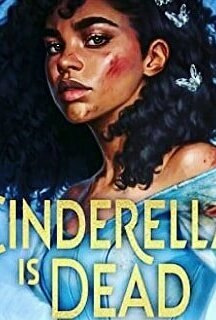
Cinderella is Dead
7.5
Rate It
Book
It’s 200 years after Cinderella found her prince, but the fairy tale is over. Teen girls are now...
Retelling Cinderella LGBTQ
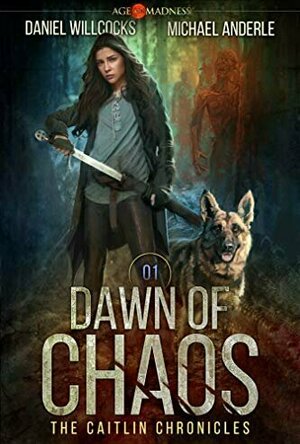
Dawn of Chaos (The Caitlin Chronicles #1)
Daniel Willcocks and Michael Anderle
7.0
Rate It
Book
The Governor she trusted to protect her wants her dead. The target she was sent to capture wants to...