
Search
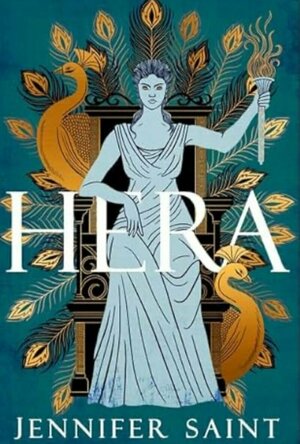

I really enjoyed this retelling of Hera’s story. She wasn’t a woman to be messed with - and Zeus pushed her to her limits on many occasions. While she couldn’t punish the King of the Gods, she could certainly punish the women that he cheated on her with.
In the original stories, Hera is vilified, portrayed as unreasonably vengeful, spiteful even. In this version, we can see her motivations. She can’t possibly direct her revenge on her monarch - that would endanger her position and Zeus would deal with her like all those who acted against him.
Hera is complicated woman, and she acts in the only way she knows how to. Her anger has centuries to mature and grow, and there’s a real sense of the passage of time. It’s just that that passage is pretty meaningless to a God!
This novel doesn’t excuse Hera’s behaviour, but it certainly gives the reasons for it. I love Greek mythology, and Jennifer Saints retellings have been excellent. This is another great addition to the series.
In the original stories, Hera is vilified, portrayed as unreasonably vengeful, spiteful even. In this version, we can see her motivations. She can’t possibly direct her revenge on her monarch - that would endanger her position and Zeus would deal with her like all those who acted against him.
Hera is complicated woman, and she acts in the only way she knows how to. Her anger has centuries to mature and grow, and there’s a real sense of the passage of time. It’s just that that passage is pretty meaningless to a God!
This novel doesn’t excuse Hera’s behaviour, but it certainly gives the reasons for it. I love Greek mythology, and Jennifer Saints retellings have been excellent. This is another great addition to the series.
Dictionary of Classical Mythology
Book
Jenny March's acclaimed Dictionary of Classical Mythology, first published in 1998 but long out of...


ClareR (6256 KP) rated Daughters of Sparta in Books
May 21, 2023
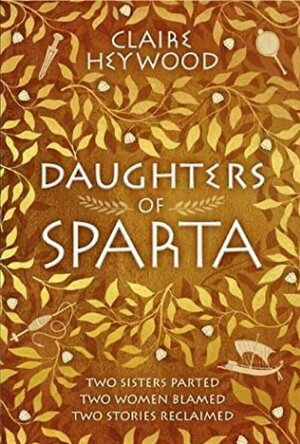
I had read The Shadow of Perseus first, so I knew what to expect from Daughters of Sparta, and I also knew that I was going to love it!
First of all, these books read as historical fiction, NOT as myths. There are no gods or goddesses intervening in the lives of mortals, messing it all up. The mortals are all perfectly capable of doing that themselves.
Secondly, the women are strong in the context of the time they live in, not by our modern standards. Women were completely reliant on their husbands and families; sold off to the men who would most benefit their fathers. As is the case with Klytemnestra (spelt with a ‘K’ here, but it can be a ‘C’ as well!) and Helen.
To be fair, both women have a lot about them. Klytemnestra commits the ultimate two fingered salute to her husband, and Helen removes herself from the possibility of dying in childbirth. There’s also the fact that Helen seems to be constantly searching for affection and love. Denied both by her mother, she doesn’t get those things from her husband either, probably because they never get to know one another. And Paris certainly doesn’t show her love or affection once they get to Troy. She must feel supremely uncomfortable around the other women in Troy once the Greeks turn up and start killing all of their husbands.
Don’t get me wrong, I love the Greek myths where the gods are involved, but I really like this version too. Really very enjoyable, I raced through this book. I’m hoping that Claire Heywood has another retelling in the pipeline!
First of all, these books read as historical fiction, NOT as myths. There are no gods or goddesses intervening in the lives of mortals, messing it all up. The mortals are all perfectly capable of doing that themselves.
Secondly, the women are strong in the context of the time they live in, not by our modern standards. Women were completely reliant on their husbands and families; sold off to the men who would most benefit their fathers. As is the case with Klytemnestra (spelt with a ‘K’ here, but it can be a ‘C’ as well!) and Helen.
To be fair, both women have a lot about them. Klytemnestra commits the ultimate two fingered salute to her husband, and Helen removes herself from the possibility of dying in childbirth. There’s also the fact that Helen seems to be constantly searching for affection and love. Denied both by her mother, she doesn’t get those things from her husband either, probably because they never get to know one another. And Paris certainly doesn’t show her love or affection once they get to Troy. She must feel supremely uncomfortable around the other women in Troy once the Greeks turn up and start killing all of their husbands.
Don’t get me wrong, I love the Greek myths where the gods are involved, but I really like this version too. Really very enjoyable, I raced through this book. I’m hoping that Claire Heywood has another retelling in the pipeline!

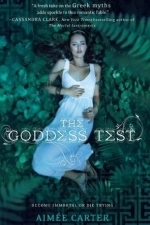
Julie (77 KP) rated The Goddess Test in Books
Sep 12, 2017

Henry (1 more)
Not insta-love
"I’ve probably read The Goddess Test trilogy at least five times. I absolutely LOVE these books.
This spin on the Greek gods is amazing. It’s so different and refreshing. In this book, Kate has a big task ahead of her. Passing the seven tests are difficult, but what happens after winning is almost as difficult, if not more so. But let me just say, she has the ability to pass and do well after doing so, she just doesn’t quite believe it herself.
You get to read about a lot of different characters, each one is very different and has their own little quirks and faults. Some of them being Ava- Kates best friend who is a flirty, boy crazy young girl who has a hard time keeping her hands to herself; Calliope- a quiet, obedient servant who shows Kate support; Ella- Kate’s bossy attendant who loves to dress her up in awful dresses; and Diana- Kate’s loving mother who is dying but visits Kate through her dreams." Read the entire review here: https://thenerdybookwormsite.wordpress.com/2017/07/07/the-goddess-test-by-aimee-carter/
This spin on the Greek gods is amazing. It’s so different and refreshing. In this book, Kate has a big task ahead of her. Passing the seven tests are difficult, but what happens after winning is almost as difficult, if not more so. But let me just say, she has the ability to pass and do well after doing so, she just doesn’t quite believe it herself.
You get to read about a lot of different characters, each one is very different and has their own little quirks and faults. Some of them being Ava- Kates best friend who is a flirty, boy crazy young girl who has a hard time keeping her hands to herself; Calliope- a quiet, obedient servant who shows Kate support; Ella- Kate’s bossy attendant who loves to dress her up in awful dresses; and Diana- Kate’s loving mother who is dying but visits Kate through her dreams." Read the entire review here: https://thenerdybookwormsite.wordpress.com/2017/07/07/the-goddess-test-by-aimee-carter/




Personally I think this should have also counted towards my classic read for the month aswell, but hey, I don’t make the rules . . oh, wait . .
For those of you not in the know The Iliad is Homers epic poem about the Trojan war, this version was translated by EV Rieu.
What can I say about this, without sounding like a complete philistine? It is essentially a Soap Opera based around testosterone fuelled macho men and a bunch of Gods having a hissy fit! I loved it!
Crivens, there’s a lot of people in it though!! It did take me a little while to get into it, and being a little rusty on my Greek mythology I kept forgetting who was on whose side, but I eventually found my stride, and if you can wade through all the different ways that different people were killed (Homer does really like describing how each person died, potentially the Tarantino of his day!) It is a really detailed account of a mythological war that inspired a whole wealth of literature, and I can see why it is a classic.
For those of you not in the know The Iliad is Homers epic poem about the Trojan war, this version was translated by EV Rieu.
What can I say about this, without sounding like a complete philistine? It is essentially a Soap Opera based around testosterone fuelled macho men and a bunch of Gods having a hissy fit! I loved it!
Crivens, there’s a lot of people in it though!! It did take me a little while to get into it, and being a little rusty on my Greek mythology I kept forgetting who was on whose side, but I eventually found my stride, and if you can wade through all the different ways that different people were killed (Homer does really like describing how each person died, potentially the Tarantino of his day!) It is a really detailed account of a mythological war that inspired a whole wealth of literature, and I can see why it is a classic.
Rachel Maria Berney (114 KP) rated Norse Mythology in Books
Dec 4, 2018
A little informative and interesting
Contains spoilers, click to show
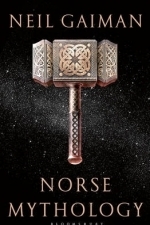
I love Neil Gaiman. I was so excited to read this book as I really enjoyed American Gods and jabe a love of Viking history. Right before reading this I read Stephen Fry's Mythology, unlucky for Neil and me. I can't help but compare the two and Gaiman's Norse Mythology comes up short. Whilst we do have access to more information of Greek myth than Norse myth, I don't think that's the entire reason that Norse Mythology is a hard read. The telling of the Norse stories doesn't have the flow I have come to expect from Gaiman, there is a strangled growth to it that makes for a choppy reading that is just hard work and not that enjoyable. Gaiman's style and what I enjoy about him is too constrained in this retelling of Norse myths, this may be due to a lack of evidence of Norse myth and history. I think it would have worked well online, as blog posts etc. As a book it is something easily put down, forgotten about and never finished.
Food of the Gods: A Rupert Wong Novel
Book
It's not unusual to work two jobs in this day and age, but sorcerer and former triad soldier Rupert...
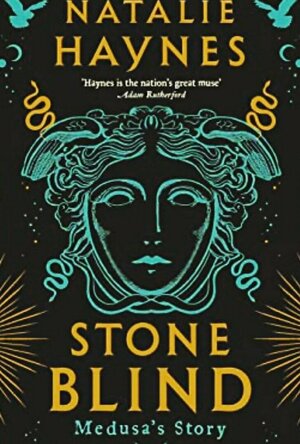
Stone Blind
10.0 Rate It
Book
'So to mortal men, we are monsters. Because of our flight, our strength. They fear us, so they call...
Greek Mythology Historical fiction Retellings Feminism
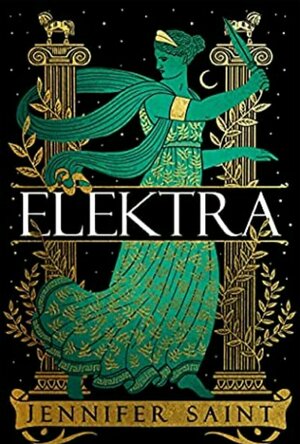
Greek mythology is my catnip, and Elektra was the only thing I wanted to listen to for the week it took me to finish it (work and families can be really inconvenient sometimes!).
Elektra by Jennifer Saint is told from three female perspectives: Clytemnestra, the sister of Helen, the wife of Agamemnon; Cassandra, a Princess of Troy; and Elektra, Clytemnestra and Agamemnon’s youngest daughter.
The things these women had to put up with! Clytemnestra’s husband Agamemnon, acts like a madman (but it’s ok, it’s all for the Gods!) and she’s supposed to accept it all. Except she doesn’t.
Cassandra is treated like a madwoman after she’s cursed by Apollo. She can tell the future, but no-one believes her. So they only have themselves to blame when Troy is destroyed.
And then there’s Elektra. She seems to have fully bought into the whole “men/ daddy knows best, and anyway, he’s a hero” story. She’s a young woman who adores her father and believes he can do no wrong. She can’t understand her mothers reaction to the sacrifice of her eldest daughter and Elektra’s sister. Can we blame Elektra though? Probably. She certainly knows how to play the long game.
The narrators were well chosen, and really helped to add life and vigour to the characters of the three women. Listening to these Greek myths haas added something extra special to the stories - after all, I’ve read these stories so many times over the years in different forms. And I still can’t see a time where they’ll get old. In every retelling there’s a different angle, and I don’t think I can express enough how much I enjoy the story told from the women’s points of view.
Elektra is just fabulous - a timeless story about strong women.
Elektra by Jennifer Saint is told from three female perspectives: Clytemnestra, the sister of Helen, the wife of Agamemnon; Cassandra, a Princess of Troy; and Elektra, Clytemnestra and Agamemnon’s youngest daughter.
The things these women had to put up with! Clytemnestra’s husband Agamemnon, acts like a madman (but it’s ok, it’s all for the Gods!) and she’s supposed to accept it all. Except she doesn’t.
Cassandra is treated like a madwoman after she’s cursed by Apollo. She can tell the future, but no-one believes her. So they only have themselves to blame when Troy is destroyed.
And then there’s Elektra. She seems to have fully bought into the whole “men/ daddy knows best, and anyway, he’s a hero” story. She’s a young woman who adores her father and believes he can do no wrong. She can’t understand her mothers reaction to the sacrifice of her eldest daughter and Elektra’s sister. Can we blame Elektra though? Probably. She certainly knows how to play the long game.
The narrators were well chosen, and really helped to add life and vigour to the characters of the three women. Listening to these Greek myths haas added something extra special to the stories - after all, I’ve read these stories so many times over the years in different forms. And I still can’t see a time where they’ll get old. In every retelling there’s a different angle, and I don’t think I can express enough how much I enjoy the story told from the women’s points of view.
Elektra is just fabulous - a timeless story about strong women.