Search
Search results
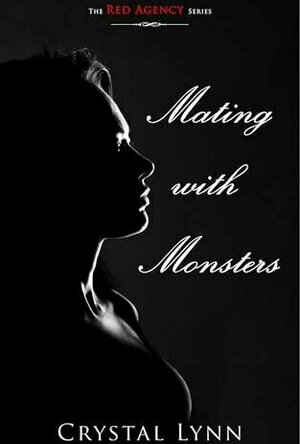
Mating With Monsters (The Red Agency #2)
9.0 Rate It
Book
A monster matchmaking agency… Four dangerously hot monsters… And the human woman they will...

Lyndsey Gollogly (2893 KP) rated Reject ( Academy of Misfits book 2) in Books
Dec 16, 2021

209 of 250
Kindle
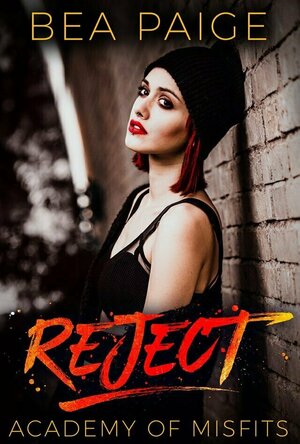
Reject (Academy of Misfits book 2)
By Bea Paige
Once read a review will be written via Smashbomb and link posted in comments
What's the saying: keep your friends close and your enemies closer?
Guess I'm about to find out just how difficult that really is. I might have my best friend back but his safety and that of my chosen family depends on me doing something I vowed never to do.
Join Camden's crew.
Thing is, you don't turn down the leader of Hackney's Hackers and then get a second chance without forfeiting something in return. The relationships I was just starting to build, is that too high of a price?
Sonny with his joking nature and dimples.
Ford with his mysterious dominance and protective instinct.
Eastern with his unyielding loyalty and feeling of home.
This term at Oceanside Academy, my sanity will be pushed to the limit as I walk the fine line between friend and foe. All I know is this better be worth it because I'm about to learn something important about myself. I was happy being a delinquent, but a reject... ? Not so much.
Loved it!! Better than the first one and I enjoyed that! The story is developing and becoming more thrilling although I had the cliffhanger pegged from the start. I’d have tho by now that some of the characters would start grating on me but they aren’t the one you want to see dealt with is Monk that dude has it coming! Really good reverse harem too as it’s built nicely to this point. Definitely recommend.
Kindle
Reject (Academy of Misfits book 2)
By Bea Paige
Once read a review will be written via Smashbomb and link posted in comments
What's the saying: keep your friends close and your enemies closer?
Guess I'm about to find out just how difficult that really is. I might have my best friend back but his safety and that of my chosen family depends on me doing something I vowed never to do.
Join Camden's crew.
Thing is, you don't turn down the leader of Hackney's Hackers and then get a second chance without forfeiting something in return. The relationships I was just starting to build, is that too high of a price?
Sonny with his joking nature and dimples.
Ford with his mysterious dominance and protective instinct.
Eastern with his unyielding loyalty and feeling of home.
This term at Oceanside Academy, my sanity will be pushed to the limit as I walk the fine line between friend and foe. All I know is this better be worth it because I'm about to learn something important about myself. I was happy being a delinquent, but a reject... ? Not so much.
Loved it!! Better than the first one and I enjoyed that! The story is developing and becoming more thrilling although I had the cliffhanger pegged from the start. I’d have tho by now that some of the characters would start grating on me but they aren’t the one you want to see dealt with is Monk that dude has it coming! Really good reverse harem too as it’s built nicely to this point. Definitely recommend.
Lyndsey Gollogly (2893 KP) rated Guardian Ascending ( Collectors Division book 3) in Books
Aug 29, 2022


155 of 230
Kindle
Guardian Ascending ( Collectors Division book 3)
By Lexie Winston
⭐️⭐️⭐️⭐️⭐️
🌶🌶🌶🌶🌶
Mina’s in trouble again. Knocked out and captured by AoA, she has no idea what they want from her. Has friend turned to foe? And how is she going to be able to feed her hungers while in captivity?
Meanwhile her parents are on the war path, and her team are trying to rescue her, but they are blocked at every turn.
With time running out to defeat Hammus, Team Alpha receives some much needed help from an unlikely source.
Can they rescue Mina and together, save the worlds from total domination and enslavement.
Join Jessamina and her team in Book three of the Collectors Division.
Guardian’s Blood is a Reverse harem novel and as such there will be no choosing. Contains both MM and FF and scenes of a sexual nature and isn’t recommend for young readers.
Holy hell that’s one way to wrap up a trilogy! Omg I had every emotion going! I’ve enjoyed this series so so much and I’m hoping and praying we get a spin off I mean there is just too much not too! I won’t post spoilers but once you have read this you will totally understand. Mina is one hot pink bar or demon! Spicy scenes I normally brush over but these were just dragging me in. The world building and characters I just absolutely loved I’ve literally stayed up all night to finish it. Please give this author and series a go!
Kindle
Guardian Ascending ( Collectors Division book 3)
By Lexie Winston
⭐️⭐️⭐️⭐️⭐️
🌶🌶🌶🌶🌶
Mina’s in trouble again. Knocked out and captured by AoA, she has no idea what they want from her. Has friend turned to foe? And how is she going to be able to feed her hungers while in captivity?
Meanwhile her parents are on the war path, and her team are trying to rescue her, but they are blocked at every turn.
With time running out to defeat Hammus, Team Alpha receives some much needed help from an unlikely source.
Can they rescue Mina and together, save the worlds from total domination and enslavement.
Join Jessamina and her team in Book three of the Collectors Division.
Guardian’s Blood is a Reverse harem novel and as such there will be no choosing. Contains both MM and FF and scenes of a sexual nature and isn’t recommend for young readers.
Holy hell that’s one way to wrap up a trilogy! Omg I had every emotion going! I’ve enjoyed this series so so much and I’m hoping and praying we get a spin off I mean there is just too much not too! I won’t post spoilers but once you have read this you will totally understand. Mina is one hot pink bar or demon! Spicy scenes I normally brush over but these were just dragging me in. The world building and characters I just absolutely loved I’ve literally stayed up all night to finish it. Please give this author and series a go!
Merissa (14194 KP) rated Interstellar Angel (Astral Heat #1) in Books
Sep 16, 2021 (Updated Jul 14, 2023)
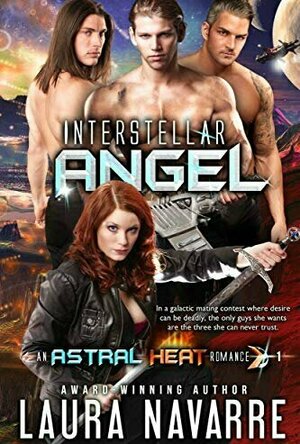

INTERSTELLAR ANGEL is the first book in the Astral Heat series and is a slow-start, slow-burn reverse harem science fiction story.
The prologue starts with a character called Zorin being held in a cell. He escapes (with help) and disappears until the last part of the book, but not before kissing one of our main males senseless. Kaia has run away from home to escape the chains of being a princess - and I mean that literally. Only now she has been caught and things are never going to be the same for her.
There was a lot to this that didn't make sense to me - the whole cyber aspect of it, if I'm honest. I use a computer but I don't know all about the innards, and that's what it felt like. Once I skimmed over those parts, it got better.
There are some very steamy moments in this but, as Kaia says, no penetration. There is also a lot of back and forth, life-mates, mating pheromones, protective instincts, you name it. Overall, it was a good read that I enjoyed and have no hesitation in recommending.
Fair warning though - it does end on a cliffhanger so be prepared to wait to find out what happens next. The next book, Renegade Angel, is due for release in December.
** same worded review will appear elsewhere **
* A copy of this book was provided to me with no requirements for a review. I voluntarily read this book, and the comments here are my honest opinion. *
Merissa
Archaeolibrarian - I Dig Good Books!
Sep 16, 2021
The prologue starts with a character called Zorin being held in a cell. He escapes (with help) and disappears until the last part of the book, but not before kissing one of our main males senseless. Kaia has run away from home to escape the chains of being a princess - and I mean that literally. Only now she has been caught and things are never going to be the same for her.
There was a lot to this that didn't make sense to me - the whole cyber aspect of it, if I'm honest. I use a computer but I don't know all about the innards, and that's what it felt like. Once I skimmed over those parts, it got better.
There are some very steamy moments in this but, as Kaia says, no penetration. There is also a lot of back and forth, life-mates, mating pheromones, protective instincts, you name it. Overall, it was a good read that I enjoyed and have no hesitation in recommending.
Fair warning though - it does end on a cliffhanger so be prepared to wait to find out what happens next. The next book, Renegade Angel, is due for release in December.
** same worded review will appear elsewhere **
* A copy of this book was provided to me with no requirements for a review. I voluntarily read this book, and the comments here are my honest opinion. *
Merissa
Archaeolibrarian - I Dig Good Books!
Sep 16, 2021
Merissa (14194 KP) rated Crystal Shard (Paladins of Crystal. #1) in Books
Jul 26, 2022 (Updated Jul 26, 2023)
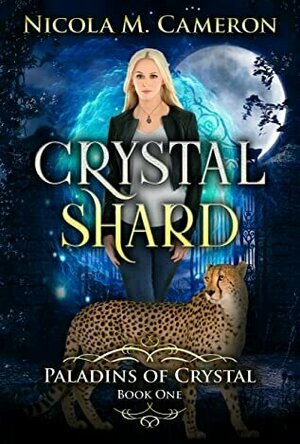
CRYSTAL SHARD is the first book in the Paladins of Crystal series, a new reverse harem series that promises to be a blast! In a nutshell, Crystal is living with her brother and s-i-l, in a dead-end job. One bad day later and she's hiding in a garden when her muse, whom she didn't know she had, decides to take matters into her own hands. Crystal is transported to a new world and ends up meeting five royal Paladins (Buff Lords). There you go.
Of course, there's more to it than that. I am hoping there will be a book for each of the Paladins but this one was Anton's. Crystal feels attracted to all of them but Anton is the one she spends the most time with. The sparks fly but Anton can't act on his wants and needs, not if he wants his mother to live.
The world-building here is exceptional, just what I've come to expect from this author. The characters are multi-dimensional and, in Crystal's case, snarky and headstrong. This leads to some fantastic situations that you can see clearly.
This book ended way too soon for me. I feel it's going to be a series to read one after the other! Absolutely fantastic. I loved every word and can't wait to read more. Highly recommended by me.
** same worded review will appear elsewhere **
* A copy of this book was provided to me with no requirements for a review. I voluntarily read this book, and the comments here are my honest opinion. *
Merissa
Archaeolibrarian - I Dig Good Books!
Jul 20, 2022
Of course, there's more to it than that. I am hoping there will be a book for each of the Paladins but this one was Anton's. Crystal feels attracted to all of them but Anton is the one she spends the most time with. The sparks fly but Anton can't act on his wants and needs, not if he wants his mother to live.
The world-building here is exceptional, just what I've come to expect from this author. The characters are multi-dimensional and, in Crystal's case, snarky and headstrong. This leads to some fantastic situations that you can see clearly.
This book ended way too soon for me. I feel it's going to be a series to read one after the other! Absolutely fantastic. I loved every word and can't wait to read more. Highly recommended by me.
** same worded review will appear elsewhere **
* A copy of this book was provided to me with no requirements for a review. I voluntarily read this book, and the comments here are my honest opinion. *
Merissa
Archaeolibrarian - I Dig Good Books!
Jul 20, 2022
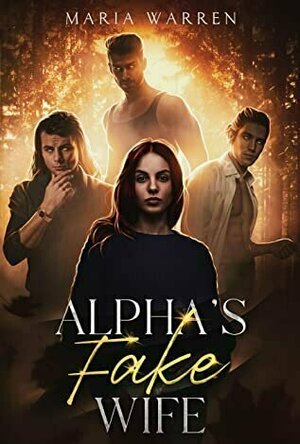
Alpha's Fake Wife by Maria Warren
4.0 Rate It
Book
Alpha Andrew isn't interested in love, or marriage. He'd much rather hunt down the scum that's been...
Reverse Harem Paranormal Romance Shifters
Lyndsey Gollogly (2893 KP) rated Curse Marked ( The Marked series book 1) in Books
Jan 31, 2020
Highly recommended
Contains spoilers, click to show
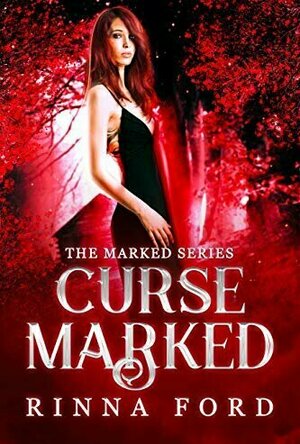
She doesn’t know anything about herself before the age of thirteen. Even the name she now answers to is not her own, but that isn’t the strangest thing about her.
Anne Smith was found on the steps of a homeless shelter with no memory of her life before that moment and a small tattoo-like mark in the center of her back that has grown and changed with each new moon. It’s been almost fifteen years, and the now the mark covers almost every inch of skin on her back.
With good reason, it’s impossible for her to let anyone in, to let anyone get close. Who would believe that her mark burns itself into her skin every twenty-eight days, leaving it larger than before? But, what if there was not only someone who believes her but has the answers to the questions that she desperately wants to ask? Would she finally be able to let people in?
The mark is almost complete. What will happen when there’s no more room left to grow?
Curse Marked is the first story in a medium-burn reverse harem series. Due to strong language and sexual situations, it is recommended for 18+.
I loved this book! I love the whole story! It's non stop action and so easy to follow and read in a good way. From Emelia finding her Uncle, his boyfriend to learning who she is and what she can do. Finding out her powers are so strong from the Dragon inside and the caster. I love her two mates although we hardly know Ronan yet I'm looking forward to getting to know him.
Finding her mother and the truth hoping she can form sort of relationship with her in future books.
Recommended
Anne Smith was found on the steps of a homeless shelter with no memory of her life before that moment and a small tattoo-like mark in the center of her back that has grown and changed with each new moon. It’s been almost fifteen years, and the now the mark covers almost every inch of skin on her back.
With good reason, it’s impossible for her to let anyone in, to let anyone get close. Who would believe that her mark burns itself into her skin every twenty-eight days, leaving it larger than before? But, what if there was not only someone who believes her but has the answers to the questions that she desperately wants to ask? Would she finally be able to let people in?
The mark is almost complete. What will happen when there’s no more room left to grow?
Curse Marked is the first story in a medium-burn reverse harem series. Due to strong language and sexual situations, it is recommended for 18+.
I loved this book! I love the whole story! It's non stop action and so easy to follow and read in a good way. From Emelia finding her Uncle, his boyfriend to learning who she is and what she can do. Finding out her powers are so strong from the Dragon inside and the caster. I love her two mates although we hardly know Ronan yet I'm looking forward to getting to know him.
Finding her mother and the truth hoping she can form sort of relationship with her in future books.
Recommended

Greg Mottola recommended The White Sheik (1952) in Movies (curated)

Greg Mottola recommended I Vitelloni (1953) in Movies (curated)