
Search
Search results

Goddess in the Stacks (553 KP) rated Enchantress of Numbers: A Novel of Ada Lovelace in Books
Apr 2, 2018
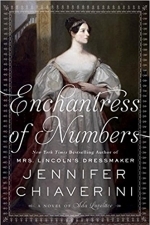


Enchantress of Numbers has been making the rounds lately - it seems there's been an interest in books about women in STEM, which is a good thing. Ada Lovelace is considered to be the first computer programmer, though "computers" as we know them didn't really exist at the time. What she wrote was an algorithm for making a machine spit out a specific result - a machine that was never actually built. Still, her contributions to the very early science of computing were invaluable and she is (rightly) revered for them. Sadly, she died in her 30s from ovarian cancer - a loss that undoubtedly slowed down the advancement of early computing.
The early parts of the book are told in third person, about her mother's marriage to Lord Byron, and Ada's own birth. From there, Ada tells the story in first person, as she grows up with her strict mother in English Aristocratic Society.
It is historical fiction, so the author has taken some liberties, though I was a bit confused that in the book she meets Mr. Babbage some time before meeting Mrs. Somerville; Wikipedia says Lady Lovelace was introduced to Mr. Babbage by her mentor, Mrs. Somerville. Odd that the author chose to change that up.
I've definitely read better historical fiction - Philippa Gregory is a personal favorite - but this wasn't bad. It was a little slow, and a little dry in spots, but it was overall good. If you weren't interested in Ada Lovelace or early computing and mathematics I don't think the book would be very enjoyable at all. But if you do like those things, and are willing to put up with a little bit of boredom, it's a decent book.
You can find all my reviews at http://goddessinthestacks.wordpress.com
The early parts of the book are told in third person, about her mother's marriage to Lord Byron, and Ada's own birth. From there, Ada tells the story in first person, as she grows up with her strict mother in English Aristocratic Society.
It is historical fiction, so the author has taken some liberties, though I was a bit confused that in the book she meets Mr. Babbage some time before meeting Mrs. Somerville; Wikipedia says Lady Lovelace was introduced to Mr. Babbage by her mentor, Mrs. Somerville. Odd that the author chose to change that up.
I've definitely read better historical fiction - Philippa Gregory is a personal favorite - but this wasn't bad. It was a little slow, and a little dry in spots, but it was overall good. If you weren't interested in Ada Lovelace or early computing and mathematics I don't think the book would be very enjoyable at all. But if you do like those things, and are willing to put up with a little bit of boredom, it's a decent book.
You can find all my reviews at http://goddessinthestacks.wordpress.com
On Life-Writing
Book
Chapter 12 of this publication is open access, available under the terms of a CC BY-NC-ND 4.0...

ClareR (6256 KP) rated The Dream Weavers in Books
Apr 25, 2021
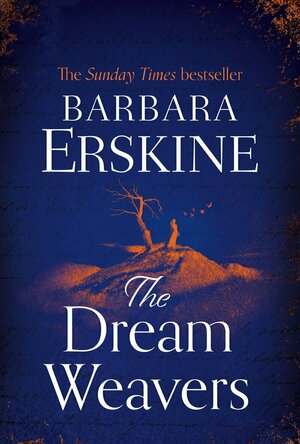

The Dream Weavers is an historical fiction novel, with one foot in Saxon Mercia and the other in modern day Hereford. There’s a touch of the supernatural as well - all the better to see the past with. And I loved reading it.
Simon is writing a book of Anglo-Saxon history, and starts to hear a woman calling a name outside his rented cottage. When he goes out to look, no one is there.
The cottage owner brings in her local spiritual advisor, Bea, who hopes to put the ghost outside to rest. This is only the beginning.
The timelines alternate between King Offa’s daughter, Eadburh, and Bea’s life in Hereford with her husband who is a priest at the cathedral.
I honestly didn’t think I’d enjoy this - but I really did! It uses religion without being overly religious, and the same goes for the more Pagan elements. It was a a really interesting, highly readable book. I haven’t read much about the history around King Offa’s time, so I enjoyed the opportunity to do that. It was a book that was difficult to put down - except that was done for me, as I read a stave a day on The Pigeonhole! It’s a big book, but it really didn’t feel that way. It sent me off on little internet searches as well - namely Anchorites, and what types of dogs Anglo-Saxons kept as pets (and whether they did or not!). I like a book that interests me enough to read around it!
This is definitely one for the historical fiction fans, especially those that like a bit of the magical element as well. I loved reading it!
Many thanks to The Pigeonhole, and to HarperCollins for giving me access via NetGalley for an honest review.
Simon is writing a book of Anglo-Saxon history, and starts to hear a woman calling a name outside his rented cottage. When he goes out to look, no one is there.
The cottage owner brings in her local spiritual advisor, Bea, who hopes to put the ghost outside to rest. This is only the beginning.
The timelines alternate between King Offa’s daughter, Eadburh, and Bea’s life in Hereford with her husband who is a priest at the cathedral.
I honestly didn’t think I’d enjoy this - but I really did! It uses religion without being overly religious, and the same goes for the more Pagan elements. It was a a really interesting, highly readable book. I haven’t read much about the history around King Offa’s time, so I enjoyed the opportunity to do that. It was a book that was difficult to put down - except that was done for me, as I read a stave a day on The Pigeonhole! It’s a big book, but it really didn’t feel that way. It sent me off on little internet searches as well - namely Anchorites, and what types of dogs Anglo-Saxons kept as pets (and whether they did or not!). I like a book that interests me enough to read around it!
This is definitely one for the historical fiction fans, especially those that like a bit of the magical element as well. I loved reading it!
Many thanks to The Pigeonhole, and to HarperCollins for giving me access via NetGalley for an honest review.

Lindsay (1812 KP) rated One Boy's War in Books
Aug 24, 2020
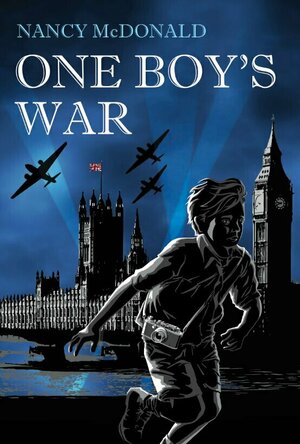

One Boy's War is a bit of a continuation of Boy from Berlin. It is all based on a ship and in London, England during 1940 in the summer. It tells the tale of a boy named Kafer who is on a ship to Canada. He ends up returning to London, England.
Kafer and his mother and sibling are on the ship to Cannada. Something happens to make them return to London. There is an adventure for Kafer on the return. The adventures are enjoyable to read. There seems to be a mystery man that Kafer spots at the hotel while he and his family are waiting in Scotland.
There seems to be an adventure that Kafer and friend named Freddy that get Kafer into so trouble. Though I do not want to spoil that goes. This book is a good read. Children will enjoy it. If you want to find out if Kafer and his family make it safe and sound to Canada or not. I would suggest picking this book up.
In London, there are more adventures that Kafer goes on and he brings his brother along for one of them. Will they escape the Nazi's ore will they not. Will Kafer save his family or will he be stopped. The twist and turns of this book make you want to read to find out.
I was turning the pages of this book. I could not put it down. This book is mostly fiction with historical events that take place and with a real family. Any historical fiction fan from middle grade and up will enjoy this. I also enjoy the fact that this book and Boy from Berlin are pretty clean in language. I did not find one bad word in either book.
Kafer and his mother and sibling are on the ship to Cannada. Something happens to make them return to London. There is an adventure for Kafer on the return. The adventures are enjoyable to read. There seems to be a mystery man that Kafer spots at the hotel while he and his family are waiting in Scotland.
There seems to be an adventure that Kafer and friend named Freddy that get Kafer into so trouble. Though I do not want to spoil that goes. This book is a good read. Children will enjoy it. If you want to find out if Kafer and his family make it safe and sound to Canada or not. I would suggest picking this book up.
In London, there are more adventures that Kafer goes on and he brings his brother along for one of them. Will they escape the Nazi's ore will they not. Will Kafer save his family or will he be stopped. The twist and turns of this book make you want to read to find out.
I was turning the pages of this book. I could not put it down. This book is mostly fiction with historical events that take place and with a real family. Any historical fiction fan from middle grade and up will enjoy this. I also enjoy the fact that this book and Boy from Berlin are pretty clean in language. I did not find one bad word in either book.
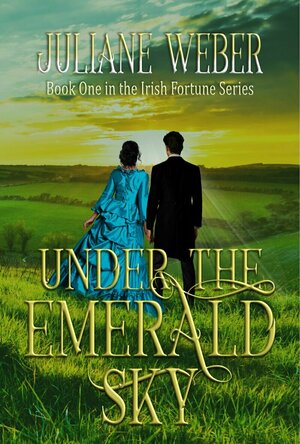
Under the Emerald Sky (The Irish Fortune #1)
Book
Escape to 19th century Ireland in the first book in the Irish Fortune Series, a historical fiction...
Historical Fiction Ireland Irish History Great Famine

Heather Cranmer (2721 KP) created a post
May 10, 2022

Deborah (162 KP) rated Six Tudor Queens: Katherine of Aragon, the True Queen: Six Tudor Queens 1 in Books
Dec 19, 2018

Weir again goes from traditionalist historian to historical novelist, but she can't seem to leave the historian bit behind. Much as I dislike wholesale abandonment of historical accuracy and the flagrant sensationalism of Phillipa Gregory and her Ilk, I really found this book over long and tedious - I could quite cheerfully have done some poisoning myself just to get the book over and done with! It feels like Weir has looked up every single historical quote she could find from people in the period and tried to squeeze them into the book. I had read biographies of the period that are more enlightening that this and do more to bring the people and period to life.
During the third quarter of the book, we get a lot of Henry coming in to visit Katherine, giving us a bit of plot exposition and then having a strop and stomping out like a child having a tantrum. After about the tenth occurrence this gets rather tedious and doesn't feel altogether likely.
I was slightly weirded by the implication that Katherine on arrival quite fancied the ten year old Henry and the bit in the Tower with the 'ghost lady' and the shivers down the spine in Peterborough cathedral seemed out of place and both only really play off if you have a knowledge of the period already, in which case you really don't need to be reading this.
Finally, for all the historical stuff Weir has stuffed in there, she really does need to pay better attention to her geography. I know Ampthill isn't that far from Dunstable, but I think I little effort would inform her that it's more like 14 miles and not the 4 she has in the book!
While the writing isn't awful, it's just not engaging and the book is far too long and becomes tedious. Does Weir really believe that Katherine believed that, after everything that he had done, Henry would meekly accept the Pope's vastly overdue ruling, put Anne and Elizabeth and the change of a male heir aside along with his leadership of the Church of England? hindsight is a wonderful thing, but I find it hard to beleive that Katherine was as stupid and naive as she comes across here. She says she still loves Henry and wouldn't do anything against him, yet writes to the Pope and the Emperor with a clear intention of inciting war! I think Weir means to make her sympathetic, but I just found her exasperating. I would recommend some good non-fiction book on the period ahead of this.
During the third quarter of the book, we get a lot of Henry coming in to visit Katherine, giving us a bit of plot exposition and then having a strop and stomping out like a child having a tantrum. After about the tenth occurrence this gets rather tedious and doesn't feel altogether likely.
I was slightly weirded by the implication that Katherine on arrival quite fancied the ten year old Henry and the bit in the Tower with the 'ghost lady' and the shivers down the spine in Peterborough cathedral seemed out of place and both only really play off if you have a knowledge of the period already, in which case you really don't need to be reading this.
Finally, for all the historical stuff Weir has stuffed in there, she really does need to pay better attention to her geography. I know Ampthill isn't that far from Dunstable, but I think I little effort would inform her that it's more like 14 miles and not the 4 she has in the book!
While the writing isn't awful, it's just not engaging and the book is far too long and becomes tedious. Does Weir really believe that Katherine believed that, after everything that he had done, Henry would meekly accept the Pope's vastly overdue ruling, put Anne and Elizabeth and the change of a male heir aside along with his leadership of the Church of England? hindsight is a wonderful thing, but I find it hard to beleive that Katherine was as stupid and naive as she comes across here. She says she still loves Henry and wouldn't do anything against him, yet writes to the Pope and the Emperor with a clear intention of inciting war! I think Weir means to make her sympathetic, but I just found her exasperating. I would recommend some good non-fiction book on the period ahead of this.

Suswatibasu (1703 KP) rated The Wicked Cometh in Books
Jan 1, 2018
Enjoyable, easy read
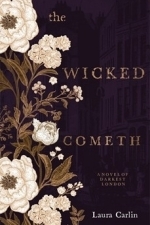
Rich in atmosphere, characterisation and vocabulary, this historical fiction follows the character of Hester White, an 18-year-old living in squalid conditions in 19th century London. A carriage accident may well prove her salvation - passenger, the charismatic Calder Brock, seems determined to rescue her from the gutter, his sister Rebekah to be entrusted with her education.
Following closely in Sarah Waters' footsteps, this is a Victorian pastiche that returns to those perennials of murder, identity, prostitution and female survival. Carlin writes with fluency and conjures up a grim, dank, seedy London where the only sanctuary for our heroine is in female friendship
While this is an enjoyable read, it does feel more generic than original, and there are some clumsy tricks such as the extended death-bed confession/life-story at the end. Great for fans of Victoriana.
Following closely in Sarah Waters' footsteps, this is a Victorian pastiche that returns to those perennials of murder, identity, prostitution and female survival. Carlin writes with fluency and conjures up a grim, dank, seedy London where the only sanctuary for our heroine is in female friendship
While this is an enjoyable read, it does feel more generic than original, and there are some clumsy tricks such as the extended death-bed confession/life-story at the end. Great for fans of Victoriana.
Lindsay (1812 KP) rated The Mapmaker's Children in Books
Sep 9, 2017
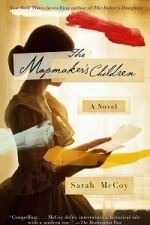

I loved this book with each turn of the page. It gave you two stories that went well together. You get a modern mystery. You also learn about history at that time.
This book has you learn about Sarah and her family. We learn about slavery and what it like to be a part of the UGRR? The historical fiction and story go through the past to the future.
What will happen to Sarah and helping other by being so brave? The abolitionist John Brown has a daughter that might really be talented. She and Eden have something in common. Will Eden uncover the secrets of the past to the future?
You do learn about slavery and what our country was going through at that time. Eden may find a story that connects to the Hills from the past to present.
This book has you learn about Sarah and her family. We learn about slavery and what it like to be a part of the UGRR? The historical fiction and story go through the past to the future.
What will happen to Sarah and helping other by being so brave? The abolitionist John Brown has a daughter that might really be talented. She and Eden have something in common. Will Eden uncover the secrets of the past to the future?
You do learn about slavery and what our country was going through at that time. Eden may find a story that connects to the Hills from the past to present.

Auburn (57 KP) rated The Mayflower Bride (Daughters of the Mayflower, #1) in Books
Apr 10, 2019

This take on what it means to be on the Mayflower and the struggles that come along with it is very interesting. It makes what I just think of an event so much more. The character, even though it is hard to keep track at times, are relatable and you find yourself invested in their stories. The language was modern and that took away from the story for me. My only other problem was the flatness, while there was problems most of the book just felt monotonous. This could be just because I don't read much historical fiction but I am not sure.
Perfect for those fans who want to feel connected to a real event but with a fictional aspect instead of just facts. This will give them a good read that will keep you interested until the very end.
Perfect for those fans who want to feel connected to a real event but with a fictional aspect instead of just facts. This will give them a good read that will keep you interested until the very end.