
Search
Search results
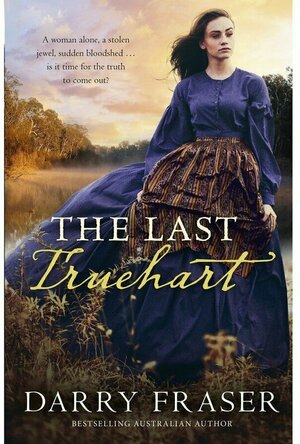
The Last Truehart
Book
1898, Geelong, Victoria. Stella Truehart is all alone in the world. Her good-for-nothing husband has...

ClareR (6256 KP) rated Daughters of Sparta in Books
May 21, 2023
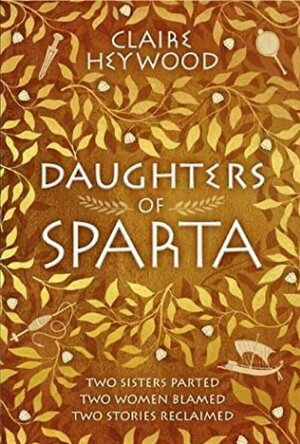

I had read The Shadow of Perseus first, so I knew what to expect from Daughters of Sparta, and I also knew that I was going to love it!
First of all, these books read as historical fiction, NOT as myths. There are no gods or goddesses intervening in the lives of mortals, messing it all up. The mortals are all perfectly capable of doing that themselves.
Secondly, the women are strong in the context of the time they live in, not by our modern standards. Women were completely reliant on their husbands and families; sold off to the men who would most benefit their fathers. As is the case with Klytemnestra (spelt with a ‘K’ here, but it can be a ‘C’ as well!) and Helen.
To be fair, both women have a lot about them. Klytemnestra commits the ultimate two fingered salute to her husband, and Helen removes herself from the possibility of dying in childbirth. There’s also the fact that Helen seems to be constantly searching for affection and love. Denied both by her mother, she doesn’t get those things from her husband either, probably because they never get to know one another. And Paris certainly doesn’t show her love or affection once they get to Troy. She must feel supremely uncomfortable around the other women in Troy once the Greeks turn up and start killing all of their husbands.
Don’t get me wrong, I love the Greek myths where the gods are involved, but I really like this version too. Really very enjoyable, I raced through this book. I’m hoping that Claire Heywood has another retelling in the pipeline!
First of all, these books read as historical fiction, NOT as myths. There are no gods or goddesses intervening in the lives of mortals, messing it all up. The mortals are all perfectly capable of doing that themselves.
Secondly, the women are strong in the context of the time they live in, not by our modern standards. Women were completely reliant on their husbands and families; sold off to the men who would most benefit their fathers. As is the case with Klytemnestra (spelt with a ‘K’ here, but it can be a ‘C’ as well!) and Helen.
To be fair, both women have a lot about them. Klytemnestra commits the ultimate two fingered salute to her husband, and Helen removes herself from the possibility of dying in childbirth. There’s also the fact that Helen seems to be constantly searching for affection and love. Denied both by her mother, she doesn’t get those things from her husband either, probably because they never get to know one another. And Paris certainly doesn’t show her love or affection once they get to Troy. She must feel supremely uncomfortable around the other women in Troy once the Greeks turn up and start killing all of their husbands.
Don’t get me wrong, I love the Greek myths where the gods are involved, but I really like this version too. Really very enjoyable, I raced through this book. I’m hoping that Claire Heywood has another retelling in the pipeline!
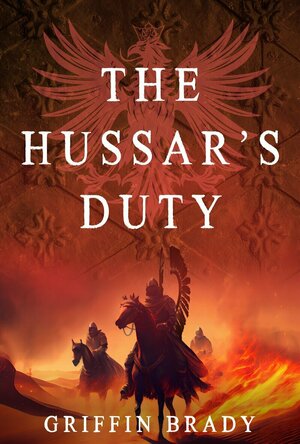
The Hussar's Duty (The Winged Warrior #3)
Book
Poland’s most valiant winged hussar is called to fight in a campaign ripe for disaster. But he...
Historical Fiction

Becs (244 KP) rated Restorations in Books
May 22, 2019
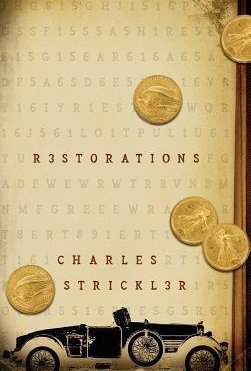

Rather interesting and intriguing read
I received a copy of Restorations by Charles Strickler to read and review from Smith Publicity. Everything I say is one hundred percent my own opinions.
I'm generally not a fan of Historical Fictions but my attention was gripped by this intriguing novel. Charles Strickler's writing style is very informative and it doesn't have that "boring history" tone to it. It was rather light and flowed like water. You can also tell that Charles Strickler did a ton of research prior to writing Restorations and it honestly shows.
Restorations follows Miles' journey in recovering a 1928 Stutz Black Hawk Boat Tail Roadster he bought from an auction. There is a mysterious aura around the Black Hawk and Miles is set on getting answers. This journey he takes includes a pretty woman, a few near death experiences, the mafia, and surprisingly loads of action. You're not going to want to miss this!!
"Stop living in your father's shadow."
Characters:
Miles West - the main character who buys the Black Hawk. Nothing overall special that needs to be pointed out about him.
Bramley Ann Fairchild - the auctioneer who sold Miles the car. She ends up helping him figure out the mystery behind the Black Hawk.
Ms. Gardner - basically the mother figure for Miles and she is dead set on trying to get Miles and Bramley together.
Mr. Howe - the lawyer of Carlo Bello. He seems to be absolutely terrified of Bello.
Carlo Bello - a mob leader who will do anything to get what he wants. He's trying to get the Black Hawk from Miles.
Maximilian "Lefty" Webber - the original owner of the Black Hawk that Miles purchased, deceased.
Wil - the repair man.
Reasons why I rated it 4 stars:
1. The plot:
The plot flowed pretty smoothly, minus a few bumps and turns. I did notice a few spots where the plot jumped and there wasn't story/ character development. But overall, it wasn't the worst thing I've read.
2. My enjoyment:
I really enjoyed reading Restorations and would most defiantly reread. I actually sent the review copy I received to a good friend as she is a fan of the mafia and this style of books. (Fingers crossed she enjoys it as well)
3. Character and story development:
There were a few parts where the reader could have used a bit more character and story development/ background, as it lacked. But it really was a great debut novel, especially for it being in Historical Fiction!
4. Grammar and spelling:
Charles Strickler is a great writer and I did not notice any major grammatical or spelling errors. I did find a few that are usually overlooked but they didn't take away from the overall story.
5. The overall story:
I rather enjoyed reading Restorations and would reread. I just wish the parts that seemed to be lacking where able to be added too.
"Accidents happen all the time."
I'm generally not a fan of Historical Fictions but my attention was gripped by this intriguing novel. Charles Strickler's writing style is very informative and it doesn't have that "boring history" tone to it. It was rather light and flowed like water. You can also tell that Charles Strickler did a ton of research prior to writing Restorations and it honestly shows.
Restorations follows Miles' journey in recovering a 1928 Stutz Black Hawk Boat Tail Roadster he bought from an auction. There is a mysterious aura around the Black Hawk and Miles is set on getting answers. This journey he takes includes a pretty woman, a few near death experiences, the mafia, and surprisingly loads of action. You're not going to want to miss this!!
"Stop living in your father's shadow."
Characters:
Miles West - the main character who buys the Black Hawk. Nothing overall special that needs to be pointed out about him.
Bramley Ann Fairchild - the auctioneer who sold Miles the car. She ends up helping him figure out the mystery behind the Black Hawk.
Ms. Gardner - basically the mother figure for Miles and she is dead set on trying to get Miles and Bramley together.
Mr. Howe - the lawyer of Carlo Bello. He seems to be absolutely terrified of Bello.
Carlo Bello - a mob leader who will do anything to get what he wants. He's trying to get the Black Hawk from Miles.
Maximilian "Lefty" Webber - the original owner of the Black Hawk that Miles purchased, deceased.
Wil - the repair man.
Reasons why I rated it 4 stars:
1. The plot:
The plot flowed pretty smoothly, minus a few bumps and turns. I did notice a few spots where the plot jumped and there wasn't story/ character development. But overall, it wasn't the worst thing I've read.
2. My enjoyment:
I really enjoyed reading Restorations and would most defiantly reread. I actually sent the review copy I received to a good friend as she is a fan of the mafia and this style of books. (Fingers crossed she enjoys it as well)
3. Character and story development:
There were a few parts where the reader could have used a bit more character and story development/ background, as it lacked. But it really was a great debut novel, especially for it being in Historical Fiction!
4. Grammar and spelling:
Charles Strickler is a great writer and I did not notice any major grammatical or spelling errors. I did find a few that are usually overlooked but they didn't take away from the overall story.
5. The overall story:
I rather enjoyed reading Restorations and would reread. I just wish the parts that seemed to be lacking where able to be added too.
"Accidents happen all the time."

Janeeny (200 KP) rated Things Fall Apart in Books
Jun 10, 2019
I was very confused by February’s ‘Penguin Reading Challenge’, as I don’t think I got one. Their February newsletter did recommend ‘Pride and Prejudice’ as a valentine read so potentially that may have been my classic recommendation for the month, however I’ve already read that one so I decided this month to go for January’s second recommendation of Chinua Achebe’s ‘Things fall apart’.
I don’t really know how to summarise this book without giving a lot away so I’m going to rely on Amazon –
Okonowo is the greatest warrior alive. His fame has spread like a bushfire in West Africa and he is one of the most powerful men of his clan.
But he also has a fiery temper. Determined not to be like his father, he refuses to show weakness to anyone – even if the only way he can master his feelings is with his fists. When outsiders threaten the traditions of his clan, Okonowo takes violent action. Will the great man’s dangerous pride eventually destroy him?
Again a Classic that did actually engross me. At the risk of sounding like a complete heel I was expecting to be lectured to by this book. Usually with Historical literature books of such high acclaim we encounter a lot of hidden and profound messages about our place in the world and how we treat others and the story can feel a bit dry. Also, with the other Historical fiction based in other countries I’ve read, I’ve appreciated the story, but they have essentially been based around problems exclusive to that era and culture, so it’s not really something I can relate to.
So oddly enough this little book set within a Nigerian tribe in the 1890s was actually quite relatable. Ok so maybe not many people can relate to a situation where you and a group of other men lead your foster son to a dark forest and kill him, but we can relate to making hard choices in life and letting down the ones we love.
You know as soon as you meet Okonowo that things are not going to go well for him, he is a prideful man quick to anger. He mistreats his wives and has high expectations of his children, and his intentions whilst well-meaning for his family are also misguided. Okonowo lives in a very superstitious village, and you can see that, after Okonowo does something that a close friend warns him against, that things will start to go bad from there. Things do not end well for Okonowo, as he doesn’t seem to learn or heed the warnings around him, but in the end you do start to sympathise with him a bit.
I think the best way to summarise the events in ‘Things fall apart’ is that whilst Okonowo’s problems are steered by his tribe’s beliefs and superstitions they are in essence problems that are relatable around the world.
I don’t really know how to summarise this book without giving a lot away so I’m going to rely on Amazon –
Okonowo is the greatest warrior alive. His fame has spread like a bushfire in West Africa and he is one of the most powerful men of his clan.
But he also has a fiery temper. Determined not to be like his father, he refuses to show weakness to anyone – even if the only way he can master his feelings is with his fists. When outsiders threaten the traditions of his clan, Okonowo takes violent action. Will the great man’s dangerous pride eventually destroy him?
Again a Classic that did actually engross me. At the risk of sounding like a complete heel I was expecting to be lectured to by this book. Usually with Historical literature books of such high acclaim we encounter a lot of hidden and profound messages about our place in the world and how we treat others and the story can feel a bit dry. Also, with the other Historical fiction based in other countries I’ve read, I’ve appreciated the story, but they have essentially been based around problems exclusive to that era and culture, so it’s not really something I can relate to.
So oddly enough this little book set within a Nigerian tribe in the 1890s was actually quite relatable. Ok so maybe not many people can relate to a situation where you and a group of other men lead your foster son to a dark forest and kill him, but we can relate to making hard choices in life and letting down the ones we love.
You know as soon as you meet Okonowo that things are not going to go well for him, he is a prideful man quick to anger. He mistreats his wives and has high expectations of his children, and his intentions whilst well-meaning for his family are also misguided. Okonowo lives in a very superstitious village, and you can see that, after Okonowo does something that a close friend warns him against, that things will start to go bad from there. Things do not end well for Okonowo, as he doesn’t seem to learn or heed the warnings around him, but in the end you do start to sympathise with him a bit.
I think the best way to summarise the events in ‘Things fall apart’ is that whilst Okonowo’s problems are steered by his tribe’s beliefs and superstitions they are in essence problems that are relatable around the world.

Molly J (Cover To Cover Cafe) (106 KP) rated The Lost Castle in Books
Feb 25, 2019
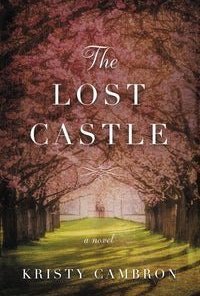

I'm a historical Christian fiction lover, but sometimes I find the multiple time lines hard to follow. However, reading this beautifully moving novel by the very talented Kristy Cambron was so easy to follow and was absolutely captivating. This book has what I call "all the feels". It's incredibly detailed, with characters that are chiseled magnificently. Each time line brings the reader to a character that will make way into your heart and stay their long after the book is finished.
The beautiful ruins of the castle that Ms. Cambron describes come to life for me. I could feel myself transported to the heart of France, finding the castle and living the life of these three women, Avaline, Vi and Ellie. I loved that feeling! It's not often that a multi timeline can do that and I was so pleased that it did.
Watching Ellie deal with her grandmother, brought back memories of my own dealings with Alzheimer's with my grandfather. It was a bittersweet time for me!
This incredible story is filled with longing, hope, faith, and finding love. I turned page after page of this 4 star novel until I reached the final one. I shut the novel, sat back and reflected on all I felt through this book, from smiles, to sadness, to butterflies in my stomach. Ms. Cambron has created another keeper in my opinion. This book will be one that I recommend to all, and have already asked my local libraries to carry it for others to read! Well done, Ms. Cambron! Well done!
*I received a complimentary copy of this book from Book Look Bloggers/Publisher and was under no obligation to post a review, positive or negative.*
The beautiful ruins of the castle that Ms. Cambron describes come to life for me. I could feel myself transported to the heart of France, finding the castle and living the life of these three women, Avaline, Vi and Ellie. I loved that feeling! It's not often that a multi timeline can do that and I was so pleased that it did.
Watching Ellie deal with her grandmother, brought back memories of my own dealings with Alzheimer's with my grandfather. It was a bittersweet time for me!
This incredible story is filled with longing, hope, faith, and finding love. I turned page after page of this 4 star novel until I reached the final one. I shut the novel, sat back and reflected on all I felt through this book, from smiles, to sadness, to butterflies in my stomach. Ms. Cambron has created another keeper in my opinion. This book will be one that I recommend to all, and have already asked my local libraries to carry it for others to read! Well done, Ms. Cambron! Well done!
*I received a complimentary copy of this book from Book Look Bloggers/Publisher and was under no obligation to post a review, positive or negative.*
MaryAnn (14 KP) rated An Hour Unspent (Shadows Over England, #3) in Books
Mar 5, 2019
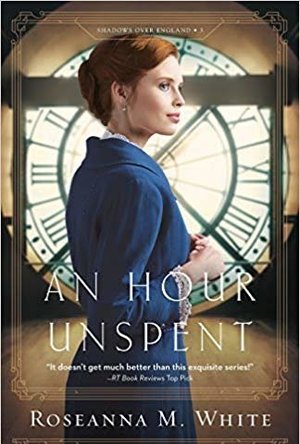
Once London’s top thief, Barclay Pearce has turned his back on his life of crime and now uses his skills for a nation at war. But not until he rescues a clockmaker’s daughter from a mugging does he begin to wonder what his future might hold.
Evelina Manning has constantly fought for independence but she certainly never meant for it to inspire her fiancé to end the engagement and enlist in the army. When the intriguing man who saved her returns to the Manning residence to study clockwork repair with her father, she can’t help being interested. But she soon learns that nothing with Barclay Pearce is as simple as it seems.
As 1915 England plunges ever deeper into war, the work of an ingenious clockmaker may give England an unbeatable military edge—and Germany realizes it as well. Evelina’s father soon finds his whole family in danger—and it may just take a reformed thief to steal the time they need to escape it.
My Thoughts: This is an intriguing and entertaining book. From the first chapter to the last, it has the reader completely enamored. This is the third book in the series and if the reader like myself hasn't read the first two, they will be able to read along easily. The setting takes place during the first world war and grabs the readers attention from the first page. The characters are fun, witty and down to earth.
I believe that this book is to teach us what family really is and to appreciate and to hold on tight and love our famililies. It's a book about serving others and putting family first.
I believe that readers will truly enjoy this novel, especially those who love historical fiction.
Evelina Manning has constantly fought for independence but she certainly never meant for it to inspire her fiancé to end the engagement and enlist in the army. When the intriguing man who saved her returns to the Manning residence to study clockwork repair with her father, she can’t help being interested. But she soon learns that nothing with Barclay Pearce is as simple as it seems.
As 1915 England plunges ever deeper into war, the work of an ingenious clockmaker may give England an unbeatable military edge—and Germany realizes it as well. Evelina’s father soon finds his whole family in danger—and it may just take a reformed thief to steal the time they need to escape it.
My Thoughts: This is an intriguing and entertaining book. From the first chapter to the last, it has the reader completely enamored. This is the third book in the series and if the reader like myself hasn't read the first two, they will be able to read along easily. The setting takes place during the first world war and grabs the readers attention from the first page. The characters are fun, witty and down to earth.
I believe that this book is to teach us what family really is and to appreciate and to hold on tight and love our famililies. It's a book about serving others and putting family first.
I believe that readers will truly enjoy this novel, especially those who love historical fiction.
MaryAnn (14 KP) rated A Duel for Christmas (Pevensey Mysteries, #3) in Books
Mar 5, 2019
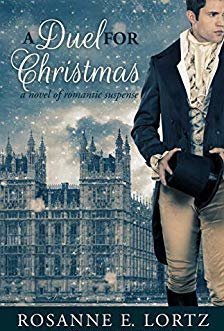
After seven long years in Devon, Lady Maud Worlington returns to London to reclaim life on her own terms, but a nefarious shadow and the prospect of financial ruin dog her steps. An impulsive and unforgettable kiss under the mistletoe creates a connection with Geoffrey, the handsome, young Duke of Tilbury. Yet as pleasant as it is to have a suitor, Maud is not sure how a boy of one-and-twenty can prove an equal partner in life and the equal of all the forces mounted against her.
The Duke of Tilbury considers himself as adept at managing matters as he is at swordplay, but his beautiful new acquaintance Lady Worlington has other ideas about how to manage her complicated life. Intrigued by their stolen kiss, Geoffrey pursues Lady Worlington’s affections, only to be foiled by the lady’s own doubts, by rivals for her hand, and by a sudden death, that affects both their families. When Jacob Pevensey, the investigator from Bow Street enters the scene, the duke becomes a prime suspect in the murder case. Truths are unearthed that Geoffrey would rather keep hidden, and the twelve days of Christmas race toward a perilous end.
My Thoughts: A story full of mystery, suspense, romance, and some charming characters. I truly enjoyed this story, based on the twelve days of Christmas, in true Victorian style. The characters were well developed and easy to relate to. Some you liked and some you dislike. It was good to see the strengthening of Maude's character, that she was finally able to stand up for herself and to go on with life without being bullied or blackmailed. This story takes many twists and turns and has many surprises for the reader. This is a book for those who like historical fiction. A wonderful read just in time for the Christmas season!
The Duke of Tilbury considers himself as adept at managing matters as he is at swordplay, but his beautiful new acquaintance Lady Worlington has other ideas about how to manage her complicated life. Intrigued by their stolen kiss, Geoffrey pursues Lady Worlington’s affections, only to be foiled by the lady’s own doubts, by rivals for her hand, and by a sudden death, that affects both their families. When Jacob Pevensey, the investigator from Bow Street enters the scene, the duke becomes a prime suspect in the murder case. Truths are unearthed that Geoffrey would rather keep hidden, and the twelve days of Christmas race toward a perilous end.
My Thoughts: A story full of mystery, suspense, romance, and some charming characters. I truly enjoyed this story, based on the twelve days of Christmas, in true Victorian style. The characters were well developed and easy to relate to. Some you liked and some you dislike. It was good to see the strengthening of Maude's character, that she was finally able to stand up for herself and to go on with life without being bullied or blackmailed. This story takes many twists and turns and has many surprises for the reader. This is a book for those who like historical fiction. A wonderful read just in time for the Christmas season!

Nicole Hadley (380 KP) rated The Lost History of Stars in Books
Jun 16, 2018
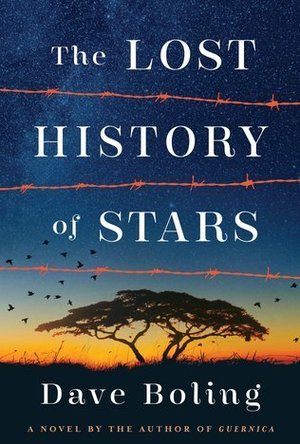
The Lost History of Stars by Dave Boling is a powerful and shocking story about a family during The Second Anglo-Boer War during the early part of the 20th century in Africa. It's a historical fiction story that is inspired by true events. The Lost History of Stars is a story of desperation and hope.
The main character, Lettie, who is a thirteen year old Dutch-Africkaner girl comes from a poor farming family. She endures the loss of her home with her mother and two younger siblings when the scorched earth policy employed by the British during the Boer War burns their farm and forces them to leave in a wagon. Their African maid, Bina, tries to stay with the family, but is given no choice by the soldiers but to return to her people.
Lettie and her family are sent to a concentration camp where the conditions are awful. Her father, older brother, uncles, and grandfather are sent to fight the British with guerrilla tactics. Lettie worries and wonders about Bina and her family. Often Lettie remembers the songs and wisdom Bina shared during her childhood and the history of stars that Grandpa shared with her at night under the sparkling sky.
The story is told from Lettie's point of view. The reader learns of her experience in the concentration camp. Lettie attempt to find the good in small moments. Her more treasured possession is her English dictionary, which she reads for comfort to pass time.
The story switches between the present and past. This allows the reader to understand life before the war and during the war. It give the reader background information to understand the family dynamics.
The main character, Lettie, who is a thirteen year old Dutch-Africkaner girl comes from a poor farming family. She endures the loss of her home with her mother and two younger siblings when the scorched earth policy employed by the British during the Boer War burns their farm and forces them to leave in a wagon. Their African maid, Bina, tries to stay with the family, but is given no choice by the soldiers but to return to her people.
Lettie and her family are sent to a concentration camp where the conditions are awful. Her father, older brother, uncles, and grandfather are sent to fight the British with guerrilla tactics. Lettie worries and wonders about Bina and her family. Often Lettie remembers the songs and wisdom Bina shared during her childhood and the history of stars that Grandpa shared with her at night under the sparkling sky.
The story is told from Lettie's point of view. The reader learns of her experience in the concentration camp. Lettie attempt to find the good in small moments. Her more treasured possession is her English dictionary, which she reads for comfort to pass time.
The story switches between the present and past. This allows the reader to understand life before the war and during the war. It give the reader background information to understand the family dynamics.

David McK (3883 KP) rated The Lone Warrior (Jack Lark, #4) in Books
Jan 30, 2019


Fourth entry in [a: Paul Fraser Collard|7024929|Paul Fraser Collard|https://d.gr-assets.com/authors/1368086413p2/7024929.jpg]'s 'Jack Lark' series (that started with [b: The Scarlet Thief|18752323|The Scarlet Thief (Jack Lark, #1)|Paul Fraser Collard|https://d.gr-assets.com/books/1383577532s/18752323.jpg|24752025]), this sees Jack Lark caught up in the Indian Mutiny (or First War of Independence, depending upon your point of view!) of 1857, and is my pick for the best of the series so far.
The novel starts out pretty much as it means to go on, with Jack rescuing someone from her indentured lifestyle, then agreeing to accompany her home to Delhi, arriving just in time to get caught up in the mutiny.
Despite holding a British passport myself (well, Northern Irish ...) this is actually a subject that I don't think we were ever taught anything about while I was at school. Sure, I'd heard of it, but only through word-of-mouth, and only ever forming a general impression of it rather than having any real knowledge of the cause, or the effects. As such, and (I.M.O.) like all the best kinds of historical fiction, I actually learned something while simultaneously being entertained (by the general story, NOT by the rather graphic depictions of some of the more harrowing events).
Talking of that story, I also feel that the book could (almost) be split into at least three distinct sections: Jacks journey to Delhi, his involvement in the siege of the British magazine while within it, and the final - and longest - part his involvement in the siege and (partial) recapture of the city.
Like the best of the Sharpe books (a hackneyed comparison, I know, but apt), I also read through this one in only a matter of days - always the sign of a good book!
The novel starts out pretty much as it means to go on, with Jack rescuing someone from her indentured lifestyle, then agreeing to accompany her home to Delhi, arriving just in time to get caught up in the mutiny.
Despite holding a British passport myself (well, Northern Irish ...) this is actually a subject that I don't think we were ever taught anything about while I was at school. Sure, I'd heard of it, but only through word-of-mouth, and only ever forming a general impression of it rather than having any real knowledge of the cause, or the effects. As such, and (I.M.O.) like all the best kinds of historical fiction, I actually learned something while simultaneously being entertained (by the general story, NOT by the rather graphic depictions of some of the more harrowing events).
Talking of that story, I also feel that the book could (almost) be split into at least three distinct sections: Jacks journey to Delhi, his involvement in the siege of the British magazine while within it, and the final - and longest - part his involvement in the siege and (partial) recapture of the city.
Like the best of the Sharpe books (a hackneyed comparison, I know, but apt), I also read through this one in only a matter of days - always the sign of a good book!