
Search
Search results

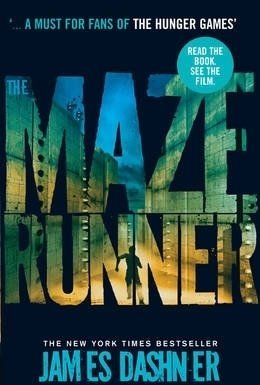
Hadley (567 KP) rated The Maze Runner in Books
Apr 6, 2019

Contains spoilers, click to show
There are murderous creatures in the maze, but the maze is your only way home.
Although there is power in numbers, no one in the Glade knows how they got there or why they're there. Everyone has a job, either making food or running the maze, hoping to find an exit, but they've been at it for two years.
Then there's the 'changing.' Anyone who has seen the creatures in the maze knows they can be stung instead of killed (which one is worse is hard to tell), it brings back unwanted memories of their life before the maze. All can agree, that have been stung, it's better to live with the Maze than with what's outside in the world.
In 'The Maze Runner,' James Dashner writes an action filled mystery that keeps the readers on their toes. Although the film is already out and has been viewed by millions, the book is well worth a read just because the movie kept out crucial parts that happened in the book!
The reader gets to follow Thomas from the very moment he enters the Glade; everything is new for him and for us. Thomas quickly wants to be a Runner (someone who runs the maze every day, from sun up to sun down), but the leaders of the Glade think he's a greenie (new person in the Glade) that thinks he's too good for hard labor: "Listen, trust me on this, Tommy. Start stompin' around this place yappin' about how you're too good to work like a peasant, how you're all nice and ready to be a Runner - you'll make plenty of enemies. Drop it for now." Thomas' fast friend, Newt, gives him sound advice.
Later in the book, Thomas ends up becoming a Runner after saving the leader of the Glade from the maze and its creatures. The maze's openings close at sundown every night, which means if you get caught in the maze afterwards, you are stuck out there until sun rise, and this is exactly what happened with leader, Alby and lead Runner, Minho.
As the walls were closing, Thomas and Newt saw the forms of Alby and Minho appear,but they both knew they wouldn't make it in time - Thomas runs inside just as the walls shut behind him. "Greenie,' Minho said, 'if you think that was brave comin' out here, listen up. You're the shuckiest shuck-faced shuck there ever was. You're as good as dead, just like us." Thomas also broke the biggest rule of the Glade : DO NOT ENTER THE MAZE IF YOU'RE NOT A RUNNER.
This entire night is the most important part of the book.
All of the characters in Dashner's first book of the series are interesting and diverse, even down to Newt's accent. My biggest complaint of this book was the author's over use of the words meters and centimeters; there are plenty of words out there that are used to describe how big or how small something is,but Dashner decided to only use those two words repeatedly. Also, all of the Gladers use code words for curse words, but this is never explained why they do this (such as shuck face instead of fuck face).
Then there's the telepathy that Thomas has with Teresa (the only girl to ever show up at the Glade) - this may be explained later on in the other books,but having only read this one so far - this is never explained. They use this ability quite a bit after Teresa wakes up from her 'coma,' that it almost seems like an afterthought that was just added to make the story more interesting.
I also don't have patience for characters that make a decision then suddenly change their mind the very next page. At one point, when Thomas and Teresa learn that there is a code for the maze, they agree that they shouldn't tell anyone about it,yet,suddenly, like right after Thomas states he doesn't need to tell anyone, he's thinking he MUST tell someone about the code.
But,the entire book isn't like this. Dashner is very fluid in his writing,and keeps the reader interested with really no downtime in between chapters - there just always seems to be something happening or going wrong!
Also, Dashner made Thomas into an emotional character, something that is odd in writing for a male character. He isn't afraid to show his emotions, and this is something that is very welcomed and written quite well throughout the book.
Yet, the other characters aren't written as well as our main character. A majority of the characters just seem angry all the time, walking around with a chip on their shoulder. Any other character that is mentioned, such as Zart, is a blank slate except for the slight description of what they look like.
The Glade and the maze are wonderfully described that even a light reader can imagine it. The creatures inside seem to take the cake when it comes to description, seeming that Dashner took more time out to describe these nightmarish beings.
I think the fact that the movie left out important parts of the book did a dishonor to Dashner's work. The book's version of events may not make more sense than the film's, but it made for a more interesting story. I do like the movies, but you MUST read the book if you like them. You missed out on quite a few things.
I certainly recommend this book. Most people don't categorize 'The Maze Runner' as a horror- genre book,but I ask you: if you woke up in an isolated community, where you can only get out if you solve the maze, which is covered in creatures that want to hunt you down and kill you, wouldn't you consider that a horrific problem?
Although there is power in numbers, no one in the Glade knows how they got there or why they're there. Everyone has a job, either making food or running the maze, hoping to find an exit, but they've been at it for two years.
Then there's the 'changing.' Anyone who has seen the creatures in the maze knows they can be stung instead of killed (which one is worse is hard to tell), it brings back unwanted memories of their life before the maze. All can agree, that have been stung, it's better to live with the Maze than with what's outside in the world.
In 'The Maze Runner,' James Dashner writes an action filled mystery that keeps the readers on their toes. Although the film is already out and has been viewed by millions, the book is well worth a read just because the movie kept out crucial parts that happened in the book!
The reader gets to follow Thomas from the very moment he enters the Glade; everything is new for him and for us. Thomas quickly wants to be a Runner (someone who runs the maze every day, from sun up to sun down), but the leaders of the Glade think he's a greenie (new person in the Glade) that thinks he's too good for hard labor: "Listen, trust me on this, Tommy. Start stompin' around this place yappin' about how you're too good to work like a peasant, how you're all nice and ready to be a Runner - you'll make plenty of enemies. Drop it for now." Thomas' fast friend, Newt, gives him sound advice.
Later in the book, Thomas ends up becoming a Runner after saving the leader of the Glade from the maze and its creatures. The maze's openings close at sundown every night, which means if you get caught in the maze afterwards, you are stuck out there until sun rise, and this is exactly what happened with leader, Alby and lead Runner, Minho.
As the walls were closing, Thomas and Newt saw the forms of Alby and Minho appear,but they both knew they wouldn't make it in time - Thomas runs inside just as the walls shut behind him. "Greenie,' Minho said, 'if you think that was brave comin' out here, listen up. You're the shuckiest shuck-faced shuck there ever was. You're as good as dead, just like us." Thomas also broke the biggest rule of the Glade : DO NOT ENTER THE MAZE IF YOU'RE NOT A RUNNER.
This entire night is the most important part of the book.
All of the characters in Dashner's first book of the series are interesting and diverse, even down to Newt's accent. My biggest complaint of this book was the author's over use of the words meters and centimeters; there are plenty of words out there that are used to describe how big or how small something is,but Dashner decided to only use those two words repeatedly. Also, all of the Gladers use code words for curse words, but this is never explained why they do this (such as shuck face instead of fuck face).
Then there's the telepathy that Thomas has with Teresa (the only girl to ever show up at the Glade) - this may be explained later on in the other books,but having only read this one so far - this is never explained. They use this ability quite a bit after Teresa wakes up from her 'coma,' that it almost seems like an afterthought that was just added to make the story more interesting.
I also don't have patience for characters that make a decision then suddenly change their mind the very next page. At one point, when Thomas and Teresa learn that there is a code for the maze, they agree that they shouldn't tell anyone about it,yet,suddenly, like right after Thomas states he doesn't need to tell anyone, he's thinking he MUST tell someone about the code.
But,the entire book isn't like this. Dashner is very fluid in his writing,and keeps the reader interested with really no downtime in between chapters - there just always seems to be something happening or going wrong!
Also, Dashner made Thomas into an emotional character, something that is odd in writing for a male character. He isn't afraid to show his emotions, and this is something that is very welcomed and written quite well throughout the book.
Yet, the other characters aren't written as well as our main character. A majority of the characters just seem angry all the time, walking around with a chip on their shoulder. Any other character that is mentioned, such as Zart, is a blank slate except for the slight description of what they look like.
The Glade and the maze are wonderfully described that even a light reader can imagine it. The creatures inside seem to take the cake when it comes to description, seeming that Dashner took more time out to describe these nightmarish beings.
I think the fact that the movie left out important parts of the book did a dishonor to Dashner's work. The book's version of events may not make more sense than the film's, but it made for a more interesting story. I do like the movies, but you MUST read the book if you like them. You missed out on quite a few things.
I certainly recommend this book. Most people don't categorize 'The Maze Runner' as a horror- genre book,but I ask you: if you woke up in an isolated community, where you can only get out if you solve the maze, which is covered in creatures that want to hunt you down and kill you, wouldn't you consider that a horrific problem?

Debbiereadsbook (1832 KP) rated Heated Beat in Books
Nov 12, 2020


wonderful books/narration!
Independent reviewer for Archaeolibrarian, I was gifted the audio version of this book.
My Mate Jack (book 1)
Don't you just love a friends to lovers book? With lots of misunderstandings and mix-ups along the way? Nothing else, just these two friends, one with a crush on his straight best friend? Made even better by some awesome narration??
This book right here!
Will has been in love with Jack forever, but Jack likes girls and Will doesn't. When Jack asks Will about kissing, then about having sex with men, Will allows Jack to get close. Then Jack goes to Ibiza and Will goes to uni and things are said, done, implied and the fall out is massive.
I want to be a bit picky here, cos, you know, I can, its my review but the only thing that would have made this book any better was if Jack had much more of a say. Apart from the epilogue, Jack doesn't get a say and I wanted him to, I so DESPERATELY wanted him to. I needed to know what was going through HIS mind when he kisses Jack, when they do what they do before they go their ways, and I don't get it. Had he been given a bigger say, I would be raving about this book! Oh, don't get me wrong, I LOVED this as it was but Jack? He would have been the icing on a pretty special cake.
Dan Calley narrates. Mr Calley is fast becoming a favourite. His voice carries a very British accent, and his reading voice is deep and even. His voices are amazing, and he hits the accents to a tee. He gets across all of Will's feelings about Jack. His reactions to what they do, to what comes after and to what he does when Jack fianlly, FINALLY, tells Will what he really wants. Or rather Who.
It's not a very long read/listen (108 pages/3 hours) but it packs a powerful punch. I didn't quite manage to listen to it in one go, cos that darn dayjob got in the way, but I very nearly did.
Apart from not getting enough of Jack, I cannot fault the book nor the narration so...
5 full and shiny stars for the book AND the narration.
~~same worded review will appear elsewhere~
Lucky Man (book 2)
This is book 2 in the Heated Beat series, and while it's not NECESSARY to read/listen to book one, My Mate Jack, I think you SHOULD, cos , you know, I said so! Jack and Will pop up a lot, since Jack lives with Finn, but it's not needed to have their story before this one. But you know, THAT book was a 5 star listen too!
Danny has drooled over Finn on stage for some time. Meeting him, going home with him, gave him the best night of his life. But Finn has a secret and Danny has a stressful job. Can they make it work?
This is a much darker, dirtier, deadly listen than book one, but I loved it just as much, maybe a tad more.
There is powerful and instant chemistry between Finn and Danny, and it carries right through the book. Its hot and steamy, but equally, deeply emotional, for both Finn and Danny. Finn's health issues, and what that meant in his previous relationships, are his primary concern. Danny is dealing with a murderer who has been on a spree across the country.
Danny reaction to Finn's health issues were not what Finn was expecting, but still, Danny struggled with Finn a couple of times, especially when he had an episode (is that the correct term? ) but Danny rode it out, and did his best to understand. Some serious research into Finn's condition has been done for this book, I'm not saying what that is, because spoilers, but the level of research into treatments and how people suffering this condition cope shows here.
I LOVED that this book is set in Nottingham. As a Nottingham gal, I got all the places that were mentioned, and loved that the shortened, locally used names for places like The Queens Medical Centre (big hospital!) are used. Loved the references to local towns, and how far they are away from Nottingham and the correct distances/times are used. Proper made my day!
I did get the murderer all wrong. I had a fairly close to Finn character pegged as the bad guy, but that all went belly up on me, so well played!
Both Finn and Danny have a say here, and I am SOOOOOOOOOOOOOOOOOOOOOOOOOO glad they do! I think this one, especially, would have suffered had we not got them both, so thank you Garrett Leigh, for making my day twice in this book!
Dan Calley narrates again, and again, he knocks it out the park!
His voices for Will and Jack are spot on from book to book, but Danny and Finn's voices are perfect too. He gets over all of Danny's concern about the relationship, given that he isn't out at work. He gets over all of his concern about Finn when he has an episode, and how he deals with the aftermath. Calley gets over all of Finn's insecurities, and what's going on in his brain. I felt for Finn, listening to him have internal conversations with himself about Danny and his feelings for Danny, and where their relationship was going.
Mr Calley NAILS it, he really does.
5 full and shiny stars for the book AND narration
**same worded review will appear elsewhere**
My Mate Jack (book 1)
Don't you just love a friends to lovers book? With lots of misunderstandings and mix-ups along the way? Nothing else, just these two friends, one with a crush on his straight best friend? Made even better by some awesome narration??
This book right here!
Will has been in love with Jack forever, but Jack likes girls and Will doesn't. When Jack asks Will about kissing, then about having sex with men, Will allows Jack to get close. Then Jack goes to Ibiza and Will goes to uni and things are said, done, implied and the fall out is massive.
I want to be a bit picky here, cos, you know, I can, its my review but the only thing that would have made this book any better was if Jack had much more of a say. Apart from the epilogue, Jack doesn't get a say and I wanted him to, I so DESPERATELY wanted him to. I needed to know what was going through HIS mind when he kisses Jack, when they do what they do before they go their ways, and I don't get it. Had he been given a bigger say, I would be raving about this book! Oh, don't get me wrong, I LOVED this as it was but Jack? He would have been the icing on a pretty special cake.
Dan Calley narrates. Mr Calley is fast becoming a favourite. His voice carries a very British accent, and his reading voice is deep and even. His voices are amazing, and he hits the accents to a tee. He gets across all of Will's feelings about Jack. His reactions to what they do, to what comes after and to what he does when Jack fianlly, FINALLY, tells Will what he really wants. Or rather Who.
It's not a very long read/listen (108 pages/3 hours) but it packs a powerful punch. I didn't quite manage to listen to it in one go, cos that darn dayjob got in the way, but I very nearly did.
Apart from not getting enough of Jack, I cannot fault the book nor the narration so...
5 full and shiny stars for the book AND the narration.
~~same worded review will appear elsewhere~
Lucky Man (book 2)
This is book 2 in the Heated Beat series, and while it's not NECESSARY to read/listen to book one, My Mate Jack, I think you SHOULD, cos , you know, I said so! Jack and Will pop up a lot, since Jack lives with Finn, but it's not needed to have their story before this one. But you know, THAT book was a 5 star listen too!
Danny has drooled over Finn on stage for some time. Meeting him, going home with him, gave him the best night of his life. But Finn has a secret and Danny has a stressful job. Can they make it work?
This is a much darker, dirtier, deadly listen than book one, but I loved it just as much, maybe a tad more.
There is powerful and instant chemistry between Finn and Danny, and it carries right through the book. Its hot and steamy, but equally, deeply emotional, for both Finn and Danny. Finn's health issues, and what that meant in his previous relationships, are his primary concern. Danny is dealing with a murderer who has been on a spree across the country.
Danny reaction to Finn's health issues were not what Finn was expecting, but still, Danny struggled with Finn a couple of times, especially when he had an episode (is that the correct term? ) but Danny rode it out, and did his best to understand. Some serious research into Finn's condition has been done for this book, I'm not saying what that is, because spoilers, but the level of research into treatments and how people suffering this condition cope shows here.
I LOVED that this book is set in Nottingham. As a Nottingham gal, I got all the places that were mentioned, and loved that the shortened, locally used names for places like The Queens Medical Centre (big hospital!) are used. Loved the references to local towns, and how far they are away from Nottingham and the correct distances/times are used. Proper made my day!
I did get the murderer all wrong. I had a fairly close to Finn character pegged as the bad guy, but that all went belly up on me, so well played!
Both Finn and Danny have a say here, and I am SOOOOOOOOOOOOOOOOOOOOOOOOOO glad they do! I think this one, especially, would have suffered had we not got them both, so thank you Garrett Leigh, for making my day twice in this book!
Dan Calley narrates again, and again, he knocks it out the park!
His voices for Will and Jack are spot on from book to book, but Danny and Finn's voices are perfect too. He gets over all of Danny's concern about the relationship, given that he isn't out at work. He gets over all of his concern about Finn when he has an episode, and how he deals with the aftermath. Calley gets over all of Finn's insecurities, and what's going on in his brain. I felt for Finn, listening to him have internal conversations with himself about Danny and his feelings for Danny, and where their relationship was going.
Mr Calley NAILS it, he really does.
5 full and shiny stars for the book AND narration
**same worded review will appear elsewhere**
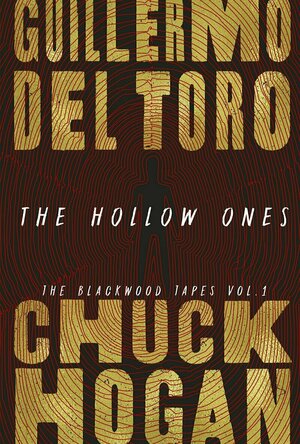
Hadley (567 KP) rated The Hollow Ones: the Blackwood Tapes Vol. 1 in Books
Sep 9, 2020

Paranormal and occult (1 more)
Great story
A filler character with potential (1 more)
Overly used details
[This is the ARC version - - - John Silence was renamed Hugo Blackwood in the final version]
I've grown up watching a lot of Guillermo Del Toro's movies. One of my favorites that he was the screenwriter for is Hellboy. Yet, I spent almost four months at the beginning of this year playing the video game Death Stranding, which features Del Toro as a main character. I bring the former and latter up because they rank very high on some of my favorite things list, and I believe that The Hollow Ones is one of the best books I have read in a long time. This is one of those few rare books which I wish I could live in as a lover of the paranormal/occult.
Odessa Hardwicke - - - an FBI greenhorn - - - is ordering dinner with her partner, Walt Leppo, when they get a phone call that someone is on a shooting rampage from an airplane. (Hardwicke looks up to Leppo as a father figure, and he sees her as a daughter) We learn that the two have been on a corruption case involving a politician's former deputy chief of staff- - - they suddenly realize that the airplane may be tied to this man, and he may also be the one going on the killing spree. The pair speed off to the deputy chief's home in fear that he may be going to kill his recently divorced wife, who was waiting to receive not only their huge house, but a nice lump sum of money.
When Hardwicke and Leppo get to the house, after stopping the deputy chief, Hardwicke suddenly finds herself holding a gun on her partner while he tries to murder a little girl. She has only two choices to make: a) kill her partner, and face the backlash of shooting an agent in the line-of-duty or b) let him kill the girl and possibly herself- - - Hardwicke chooses to shoot and kill Leppo. Immediately after this, she sees something like a heatwave leave Leppo's body and disappear. When other agents arrive to the crime scene, Hardwicke keeps this information to herself, wanting to know instead why her partner suddenly turned into a murderer. Pending an investigation, Hardwicke is put on desk duty, including errands that the Bureau doesn't want to deal with. Enter Agent Earl Solomon.
On order by the FBI, Hardwicke is sent to clean out an office used by a retired agent that was hospitalized for a stroke. She takes his things to the hospital (not knowing what to do with them), and while discussing her plight with him and revealing that she had seen a sort of heat vapor leave Leppo's body, Solomon quickly tells her to write a letter to a man named John Silence, and place it in a nearly invisible mailbox in the Wallstreet area of New York.
From this point on, the book really begins to take off, and the fact that the authors brought in the religion of Palo (the Mayombe branch) is fascinating for anyone interested in the occult. The buildup of the story is really enjoyable, too, especially when Hardwicke decides to write and deliver the letter.
Readers also get to see Solomon's story from years before when he was one of the first African Americans to be recruited into the FBI. We see Solomon being sent to Mississippi in 1962, where a number of lynchings of African Americans have occurred, but the FBI hasn't been called in until the last murder: a lynching of a white man. Solomon can't help but question if he was only brought on this case because he is African American. Ignoring the bigotry, Solomon does his job, and comes across a young boy who is possessed by some sort of demon. The boy tells Solomon to bring him Silence, a man who Solomon has never heard of.
John Silence is also an interesting character; a nearly 500-year-old occult detective. We also get to see flashbacks of his life in the 1500's, learning about his occupation as a barrister, and his first encounter with the paranormal- - - something that has plagued him since- - - as well as his teacher in the occult. In the chapters of today, Silence is a mysterious figure, and carries himself much like a modern day Sherlock Holmes. Even by the end of the book, readers are still left with questions over what Silence has been through in the last 500 years. He, having only met Solomon 58 years prior- - - the two have a huge history together. Proven by the fact of how many 'cases' Solomon has hidden in his private records room that the two have embarked on together.
The Hollow Ones is a very enjoyable book, but I could only give it 3 out of 5 stars. The rating is because the authors- - - Del Toro and Hogan- - - used so many details, like the make and model of a passing vehicle, that it would interrupt the flow of the story, being bogged down by it. One other problem that I had was with the character Laurena; she was a 'filler character' (a character that is brought in just to make something happen in the story), but she was written to be Hardwicke's best friend. This was highly unbelievable with the two times she showed up in the story.
I really, really hope that Del Toro and Hogan decide to make this a series, and that the rest of the books show us Solomon's and Silence's journeys together! I highly recommend this book to people who love the paranormal/occult crime books.
I've grown up watching a lot of Guillermo Del Toro's movies. One of my favorites that he was the screenwriter for is Hellboy. Yet, I spent almost four months at the beginning of this year playing the video game Death Stranding, which features Del Toro as a main character. I bring the former and latter up because they rank very high on some of my favorite things list, and I believe that The Hollow Ones is one of the best books I have read in a long time. This is one of those few rare books which I wish I could live in as a lover of the paranormal/occult.
Odessa Hardwicke - - - an FBI greenhorn - - - is ordering dinner with her partner, Walt Leppo, when they get a phone call that someone is on a shooting rampage from an airplane. (Hardwicke looks up to Leppo as a father figure, and he sees her as a daughter) We learn that the two have been on a corruption case involving a politician's former deputy chief of staff- - - they suddenly realize that the airplane may be tied to this man, and he may also be the one going on the killing spree. The pair speed off to the deputy chief's home in fear that he may be going to kill his recently divorced wife, who was waiting to receive not only their huge house, but a nice lump sum of money.
When Hardwicke and Leppo get to the house, after stopping the deputy chief, Hardwicke suddenly finds herself holding a gun on her partner while he tries to murder a little girl. She has only two choices to make: a) kill her partner, and face the backlash of shooting an agent in the line-of-duty or b) let him kill the girl and possibly herself- - - Hardwicke chooses to shoot and kill Leppo. Immediately after this, she sees something like a heatwave leave Leppo's body and disappear. When other agents arrive to the crime scene, Hardwicke keeps this information to herself, wanting to know instead why her partner suddenly turned into a murderer. Pending an investigation, Hardwicke is put on desk duty, including errands that the Bureau doesn't want to deal with. Enter Agent Earl Solomon.
On order by the FBI, Hardwicke is sent to clean out an office used by a retired agent that was hospitalized for a stroke. She takes his things to the hospital (not knowing what to do with them), and while discussing her plight with him and revealing that she had seen a sort of heat vapor leave Leppo's body, Solomon quickly tells her to write a letter to a man named John Silence, and place it in a nearly invisible mailbox in the Wallstreet area of New York.
From this point on, the book really begins to take off, and the fact that the authors brought in the religion of Palo (the Mayombe branch) is fascinating for anyone interested in the occult. The buildup of the story is really enjoyable, too, especially when Hardwicke decides to write and deliver the letter.
Readers also get to see Solomon's story from years before when he was one of the first African Americans to be recruited into the FBI. We see Solomon being sent to Mississippi in 1962, where a number of lynchings of African Americans have occurred, but the FBI hasn't been called in until the last murder: a lynching of a white man. Solomon can't help but question if he was only brought on this case because he is African American. Ignoring the bigotry, Solomon does his job, and comes across a young boy who is possessed by some sort of demon. The boy tells Solomon to bring him Silence, a man who Solomon has never heard of.
John Silence is also an interesting character; a nearly 500-year-old occult detective. We also get to see flashbacks of his life in the 1500's, learning about his occupation as a barrister, and his first encounter with the paranormal- - - something that has plagued him since- - - as well as his teacher in the occult. In the chapters of today, Silence is a mysterious figure, and carries himself much like a modern day Sherlock Holmes. Even by the end of the book, readers are still left with questions over what Silence has been through in the last 500 years. He, having only met Solomon 58 years prior- - - the two have a huge history together. Proven by the fact of how many 'cases' Solomon has hidden in his private records room that the two have embarked on together.
The Hollow Ones is a very enjoyable book, but I could only give it 3 out of 5 stars. The rating is because the authors- - - Del Toro and Hogan- - - used so many details, like the make and model of a passing vehicle, that it would interrupt the flow of the story, being bogged down by it. One other problem that I had was with the character Laurena; she was a 'filler character' (a character that is brought in just to make something happen in the story), but she was written to be Hardwicke's best friend. This was highly unbelievable with the two times she showed up in the story.
I really, really hope that Del Toro and Hogan decide to make this a series, and that the rest of the books show us Solomon's and Silence's journeys together! I highly recommend this book to people who love the paranormal/occult crime books.

Bob Mann (459 KP) rated Wordslingers: The Story of Self-Publishing (2021) in Movies
Sep 28, 2021
They say that everyone has a book in them. I guess the key question is whether anyone else wants to read it. Such is the subject of this new documentary from A. Brooks Bennett. As a publisher says at one point “Writing a book is a creative act; publishing a book is a business”.
The democratization of publishing
The internet has brought many advantages to modern life, but perhaps one of the most interesting is the democratization of publishing. No longer is control in the hands of publishing houses, who might glance at and immediately dismiss new ideas in literature. It’s worth remembering that 12 publishing houses turned down J.K. Rowling’s draft for Harry Potter! Now anyone can be creative in writing and self-publish on the web. My own wife – Sue Mann – did just this, self-publishing the WW1 poems and reminiscences of two of her great-uncles. (It’s available from all good bookshops… oh, no…. actually just from here!) Are the poems artistically any good? I have no idea! Will it sell many copies? Clearly not! Was it a personal goal achieved in honouring their memory? Absolutely! Different people want different things from the medium.
Very ‘American’.
It’s probably down to the pioneer spirit, but as a generalisation Americans seem far more ambitious than Brits: or at least, more OPENLY ambitious. Whereas most Brits will quietly get on with building their careers, some Americans will go hell-for-leather towards their vision of “success” no matter the cost: no guts; no glory; and be noisy about it!
But for every J.K. Rowling or Bill Bryson there are several thousand writers who have ‘failed to launch’.
Here we follow two budding authors – one from California; the other from North Carolina – self-publishing their work and seeking sales.
One – Giles A (“Andy”) Anderson – has self-published a seemingly disturbing work called “Vidu” – the first of what he hopes will be a five-part series. He first talks from a ghoulish bookstore, speaking psycho-babble with the requisite hyperbole of an ‘artiste’. (It suggests how the books might read… but perhaps that’s misjudging). It comes then as a surprise when we find he doesn’t live alone in a coffin playing video games on his own, but has a lovely wife and two young and perfectly normal children. So his book is an “off the beaten track kinda book”, but the man seems well-grounded and following his dream in bite-size pieces.
Moral: Avoid the Travel Books
As is often the case though, the documentary homes in on, and spends most of its time with, the other author – Adam Shephard. Shephard is struggling to launch as an author and also – in parallel – wrestling with the Green Card process for his supportive and vivacious Croatian wife Ivana. The problem is that Shephard has written an extended travel blog: ten-a-penny on sites like WordPress.
I read a Forbes article last year that reported that – astonishingly – in a survey 11% of American respondents had never travelled outside of their home state and 40% had never left the country. For such a well-heeled country, the US is incredibly insular. So Shephard’s vision is to encourage youngsters to step outside of their comfort zone and jump on that plane to Guatemala. It’s a fine objective. But does anyone want to listen? And – crucially – is the book any good and commercial enough? As the famous ‘founder of self-publishing’, the late Dan Poynter (to who the film is dedicated) says “You can’t make any money off a travel book”.
The film never goes as far as having either of the featured books critically reviewed: that might have added some extra spice to the story (and possibly provoked some painful reactions). But the piles of unopened boxes in Adam’s clinically white storage facility rather speaks for itself. Since Shephard never seems to do anything by halves, the boxes are piled high and thus the fall from grace is hard, long…. and absolutely riveting. (Ivana’s support and love in such difficult circumstances is commendable: he is a truly blessed man).
Jaw-dropping Walmart scene
At least at the start of the film, Adam’s self-belief and confidence in himself is infectious. The peak of his bravado, and a jaw-dropping highpoint in the movie for me, was a scene filmed in Walmart. Shephard, in a case of “reverse shoplifting”, sneaks HIS books onto the bookshelves of Walmart. What happens when they then try to buy one? It’s a real eye-opener and worth watching the documentary for in its own right.
It’s an interesting legal position: if Walmart were to be upset about this scene, what on earth could they charge them with!? Littering?
Highs and lows.
Shephard seems to have talent as a speaker, and it struck me that he would be genuinely suited to a job in sales. In the movie we see him performing self-confidence-building pitches to young people (and, boy, could we sometimes use that in the UK post-Brexit). A few books sold. But another event barely breaking even. The pattern becomes familiar and, in a way, rather tragic.
There are unexpected highs and lows for Adam and Ivana along the way though, unrelated to the publishing story, and the filmmaker skillfully weaves them into the narrative to good effect.
Thought-provoking.
I watched this on a whim and thought I’d probably switch off after 10 minutes. Documentaries normally are not my thing! But no. It had me gripped to see how things would turn out – like watching a slow-motion car crash! The journey was well-worth the ride: a real page-turner you might say.
The democratization of publishing
The internet has brought many advantages to modern life, but perhaps one of the most interesting is the democratization of publishing. No longer is control in the hands of publishing houses, who might glance at and immediately dismiss new ideas in literature. It’s worth remembering that 12 publishing houses turned down J.K. Rowling’s draft for Harry Potter! Now anyone can be creative in writing and self-publish on the web. My own wife – Sue Mann – did just this, self-publishing the WW1 poems and reminiscences of two of her great-uncles. (It’s available from all good bookshops… oh, no…. actually just from here!) Are the poems artistically any good? I have no idea! Will it sell many copies? Clearly not! Was it a personal goal achieved in honouring their memory? Absolutely! Different people want different things from the medium.
Very ‘American’.
It’s probably down to the pioneer spirit, but as a generalisation Americans seem far more ambitious than Brits: or at least, more OPENLY ambitious. Whereas most Brits will quietly get on with building their careers, some Americans will go hell-for-leather towards their vision of “success” no matter the cost: no guts; no glory; and be noisy about it!
But for every J.K. Rowling or Bill Bryson there are several thousand writers who have ‘failed to launch’.
Here we follow two budding authors – one from California; the other from North Carolina – self-publishing their work and seeking sales.
One – Giles A (“Andy”) Anderson – has self-published a seemingly disturbing work called “Vidu” – the first of what he hopes will be a five-part series. He first talks from a ghoulish bookstore, speaking psycho-babble with the requisite hyperbole of an ‘artiste’. (It suggests how the books might read… but perhaps that’s misjudging). It comes then as a surprise when we find he doesn’t live alone in a coffin playing video games on his own, but has a lovely wife and two young and perfectly normal children. So his book is an “off the beaten track kinda book”, but the man seems well-grounded and following his dream in bite-size pieces.
Moral: Avoid the Travel Books
As is often the case though, the documentary homes in on, and spends most of its time with, the other author – Adam Shephard. Shephard is struggling to launch as an author and also – in parallel – wrestling with the Green Card process for his supportive and vivacious Croatian wife Ivana. The problem is that Shephard has written an extended travel blog: ten-a-penny on sites like WordPress.
I read a Forbes article last year that reported that – astonishingly – in a survey 11% of American respondents had never travelled outside of their home state and 40% had never left the country. For such a well-heeled country, the US is incredibly insular. So Shephard’s vision is to encourage youngsters to step outside of their comfort zone and jump on that plane to Guatemala. It’s a fine objective. But does anyone want to listen? And – crucially – is the book any good and commercial enough? As the famous ‘founder of self-publishing’, the late Dan Poynter (to who the film is dedicated) says “You can’t make any money off a travel book”.
The film never goes as far as having either of the featured books critically reviewed: that might have added some extra spice to the story (and possibly provoked some painful reactions). But the piles of unopened boxes in Adam’s clinically white storage facility rather speaks for itself. Since Shephard never seems to do anything by halves, the boxes are piled high and thus the fall from grace is hard, long…. and absolutely riveting. (Ivana’s support and love in such difficult circumstances is commendable: he is a truly blessed man).
Jaw-dropping Walmart scene
At least at the start of the film, Adam’s self-belief and confidence in himself is infectious. The peak of his bravado, and a jaw-dropping highpoint in the movie for me, was a scene filmed in Walmart. Shephard, in a case of “reverse shoplifting”, sneaks HIS books onto the bookshelves of Walmart. What happens when they then try to buy one? It’s a real eye-opener and worth watching the documentary for in its own right.
It’s an interesting legal position: if Walmart were to be upset about this scene, what on earth could they charge them with!? Littering?
Highs and lows.
Shephard seems to have talent as a speaker, and it struck me that he would be genuinely suited to a job in sales. In the movie we see him performing self-confidence-building pitches to young people (and, boy, could we sometimes use that in the UK post-Brexit). A few books sold. But another event barely breaking even. The pattern becomes familiar and, in a way, rather tragic.
There are unexpected highs and lows for Adam and Ivana along the way though, unrelated to the publishing story, and the filmmaker skillfully weaves them into the narrative to good effect.
Thought-provoking.
I watched this on a whim and thought I’d probably switch off after 10 minutes. Documentaries normally are not my thing! But no. It had me gripped to see how things would turn out – like watching a slow-motion car crash! The journey was well-worth the ride: a real page-turner you might say.

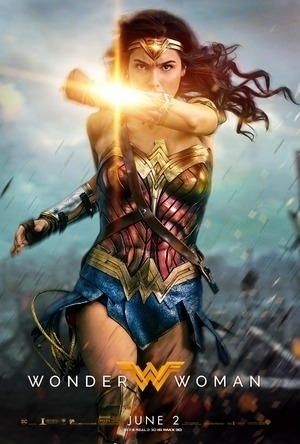
Lee (2222 KP) rated Wonder Woman (2017) in Movies
Jul 14, 2017
After a pretty lengthy drought, we finally get another decent DC movie
As the DC TV universe continues to go from strength to strength, the DC movie universe is gradually going downhill. Don’t get me wrong, I really liked Man of Steel, despite the overloaded CGI destruction at the end. I didn’t mind Batman Vs Superman either, even with Jesse Eisenberg doing his very best to try and ruin it. But, despite successfully introducing two other major DC heavyweight characters (and not so successfully introducing a few others) and picking up steam in the final act, the movie struggled. Suicide Squad then managed to take bad to a completely new level, and was just a complete train-wreck.
Batman Vs Superman was our first introduction to Wonder Woman in the DC movie universe, and she was the most entertaining and promising aspect of the whole movie. As a child of the 70s, I grew up watching and enjoying the Wonder Woman TV show, along with re-runs of the Batman 60s show and of course the Christopher Reeve Superman movies. After all these years of countless Batman and Superman movies, it was great to not only see Wonder Woman finally on the big screen, but also to see her being portrayed so well. Now, with her standalone movie coming out a few months before the mediocre looking Justice League movie, this is not only an important movie for DC but also an important first step in finally bringing strong female superheroes to the big screen. Paving the way for Captain Marvel, a Black Widow standalone movie, and more. This had to be good.
Thankfully, it is. Although there’s still a long way to go in order to reach the level that Marvel already managed to achieve many movies ago, this is indeed a serious step up for DC. Opening with a brief scene set in present day, Wonder Woman then takes us back to Themyscira. A paradise island, hidden from view from the rest of the world, where a young Diana lives peacefully among her Amazon tribe. Despite their peaceful existence though, the Amazons are constantly preparing themselves for the return of Ares, God of War. Archery and combat training is undertaken daily on the island, under the guidance of Dianas aunt, General Antiope (Robin Wright). Diana is keen to train too and her reluctant mother, Queen Hippolyta (Connie Nielsen), eventually agrees, requesting that General Antiope train her hard and make her the best. As Diana grows into a woman, training has clearly gone well and she’s even managing to give her aunt a good run for her money! Just in time too as World War 1 pilot Steve Trevor (Chris Pine) crashes through the invisible barrier cloaking the island and crash lands into the sea, closely followed by a bunch of Germans who are on his tail. Time for the Amazon women to put their training to good use, but not without some casualties…
Steve tells Diana of the great war that’s raging throughout the world and Diana believes this to be the return of Ares. She decides to leave her home and travel with Steve to put an end to Ares once and for all. So, she grabs her shield and lasso of truth and ‘borrows’ the sacred ‘God Killer’ sword from the tower it rests in and off they go. Leaving behind the bright, vibrant island of Themyscira and returning to the traditional, dark grey pallet of colours that we’re used to seeing in our DC movies as they head to war-torn London.
Steve takes over as charming tour guide as Diana enters the human world for the first time. Her innocence and curiosity of the modern world are played beautifully by Gadot, with plenty of fish-out-of-water style humour too. But she’s also never afraid to question and stand up for what she believes in and tackle those who try and oppose her, giving an interesting perspective on aspects of humanity which deserve to be questioned. Her drive to get to the front-line of war, to seek out Ares and supposedly end all war by defeating him, constantly driving her forward. Romance eventually blossoms between Diana and Steve, but it feels natural and believable and helps to hold the movie together during some of its slower moments.
When Wonder Woman manages to get to the front line and steps out into no-mans land, ignoring the advice of Steve and those around her, it’s magnificent. It heralds the first in a series of magnificent action sequences involving German soldiers as she puts her training to good use. Initially shielding herself from the onslaught of bullets before moving onto the offensive with some bad-ass combat moves, slo-mo back-flips, jumps, whip action and displays of pure power and strength. Everything we got a glimpse of in Batman Vs Superman, ramped up to the max, perfectly executed and accompanied by a rocking soundtrack!
Where Wonder Woman doesn’t work so well is in the handling of its villains. Whenever we switch to General Ludendorff and Doctor Poison, busily developing deadly gases to unleash, momentum seems to be lost. And as for Ares, when we do finally meet him he’s pretty laughable, with no clearly defined motivation or character. Following a bit of villain monologue, we get the general gist of what his beef is and then the last 20 minutes or so descend into the over the top CG destruction that we’re so used to seeing now in these movies. It’s a minor gripe, and not handled as badly as some previous movies, but along with the pacing issues it does affect the overall enjoyment of the movie somewhat.
None of this detracts from Wonder Woman herself though. Gal Gadot has truly made this role her own and displays the perfect mix of strength, beauty, brains, confidence, determination and general all-round girl power. She can more than hold her own in the DC universe and should hopefully be a prominent force in the upcoming Justice League movie and beyond.
Batman Vs Superman was our first introduction to Wonder Woman in the DC movie universe, and she was the most entertaining and promising aspect of the whole movie. As a child of the 70s, I grew up watching and enjoying the Wonder Woman TV show, along with re-runs of the Batman 60s show and of course the Christopher Reeve Superman movies. After all these years of countless Batman and Superman movies, it was great to not only see Wonder Woman finally on the big screen, but also to see her being portrayed so well. Now, with her standalone movie coming out a few months before the mediocre looking Justice League movie, this is not only an important movie for DC but also an important first step in finally bringing strong female superheroes to the big screen. Paving the way for Captain Marvel, a Black Widow standalone movie, and more. This had to be good.
Thankfully, it is. Although there’s still a long way to go in order to reach the level that Marvel already managed to achieve many movies ago, this is indeed a serious step up for DC. Opening with a brief scene set in present day, Wonder Woman then takes us back to Themyscira. A paradise island, hidden from view from the rest of the world, where a young Diana lives peacefully among her Amazon tribe. Despite their peaceful existence though, the Amazons are constantly preparing themselves for the return of Ares, God of War. Archery and combat training is undertaken daily on the island, under the guidance of Dianas aunt, General Antiope (Robin Wright). Diana is keen to train too and her reluctant mother, Queen Hippolyta (Connie Nielsen), eventually agrees, requesting that General Antiope train her hard and make her the best. As Diana grows into a woman, training has clearly gone well and she’s even managing to give her aunt a good run for her money! Just in time too as World War 1 pilot Steve Trevor (Chris Pine) crashes through the invisible barrier cloaking the island and crash lands into the sea, closely followed by a bunch of Germans who are on his tail. Time for the Amazon women to put their training to good use, but not without some casualties…
Steve tells Diana of the great war that’s raging throughout the world and Diana believes this to be the return of Ares. She decides to leave her home and travel with Steve to put an end to Ares once and for all. So, she grabs her shield and lasso of truth and ‘borrows’ the sacred ‘God Killer’ sword from the tower it rests in and off they go. Leaving behind the bright, vibrant island of Themyscira and returning to the traditional, dark grey pallet of colours that we’re used to seeing in our DC movies as they head to war-torn London.
Steve takes over as charming tour guide as Diana enters the human world for the first time. Her innocence and curiosity of the modern world are played beautifully by Gadot, with plenty of fish-out-of-water style humour too. But she’s also never afraid to question and stand up for what she believes in and tackle those who try and oppose her, giving an interesting perspective on aspects of humanity which deserve to be questioned. Her drive to get to the front-line of war, to seek out Ares and supposedly end all war by defeating him, constantly driving her forward. Romance eventually blossoms between Diana and Steve, but it feels natural and believable and helps to hold the movie together during some of its slower moments.
When Wonder Woman manages to get to the front line and steps out into no-mans land, ignoring the advice of Steve and those around her, it’s magnificent. It heralds the first in a series of magnificent action sequences involving German soldiers as she puts her training to good use. Initially shielding herself from the onslaught of bullets before moving onto the offensive with some bad-ass combat moves, slo-mo back-flips, jumps, whip action and displays of pure power and strength. Everything we got a glimpse of in Batman Vs Superman, ramped up to the max, perfectly executed and accompanied by a rocking soundtrack!
Where Wonder Woman doesn’t work so well is in the handling of its villains. Whenever we switch to General Ludendorff and Doctor Poison, busily developing deadly gases to unleash, momentum seems to be lost. And as for Ares, when we do finally meet him he’s pretty laughable, with no clearly defined motivation or character. Following a bit of villain monologue, we get the general gist of what his beef is and then the last 20 minutes or so descend into the over the top CG destruction that we’re so used to seeing now in these movies. It’s a minor gripe, and not handled as badly as some previous movies, but along with the pacing issues it does affect the overall enjoyment of the movie somewhat.
None of this detracts from Wonder Woman herself though. Gal Gadot has truly made this role her own and displays the perfect mix of strength, beauty, brains, confidence, determination and general all-round girl power. She can more than hold her own in the DC universe and should hopefully be a prominent force in the upcoming Justice League movie and beyond.

Emma @ The Movies (1786 KP) rated X-Men: Dark Phoenix (2019) in Movies
Jun 22, 2019 (Updated Sep 25, 2019)
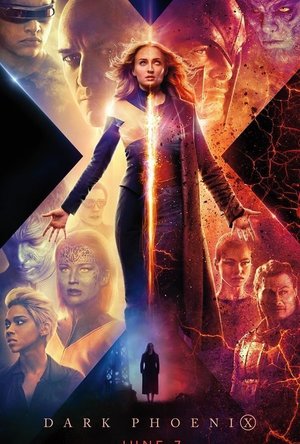

This was another screening that needed a second viewing because of challenging people, so now I've seen it in 2D and 3D. I'm seeing more films in 3D recently that actually work, I'm still not quite convinced by it but I'm certainly not annoyed by it.
The pre-"hype" for this was very mixed. I had been looking forward to the film for a long time but when the first trailer dropped I was disappointed and underwhelmed, it was however nice to see that others were having the opposite reaction to me. Perhaps I had just built it up too much in my head beforehand.
As we eeked closer the vibe became decidedly negative around it, and for the most part I avoided articles and rants as I just don't see the point in speculating so wildly about something that hasn't been seen. That climaxed again when the preview screening was interrupted by a fire alarm, and then when the internet seemed to go nuts over the fact the review embargo was so late. (It's not like embargos are unusual, I don't see how you can draw conclusions from release and embargo being on the same day... this seems entirely logical. *deep breath*)
Something I would like to query is the fact that someone decided it was sensible to put a reaction video of three of the stars seeing the Dark Phoenix trailer in 4DX. It's a little bit of fun, but frustrating if you've been trying to avoid trailers and spoilers before seeing the film.
Wow... waffle... to the film!
The team take on a mission to space when a shuttle loses control and is in the path of what appears to be solar flares. The mission seems successful until they realise there's still a crew member trapped. With the shuttle disintegrating the only ones who can safely make it are Jean and Nightcrawler. As Jean holds the shuttle in place Nightcrawler rescues the last man from the wreckage but when he returns for her she's already encountered the strange space energy.
Somehow despite the destruction of the shuttle Jean survives floating in space, Nightcrawler brings her back to the X-Jet and the whole team return to Earth as heroes. Jean wasn't left unchanged by her encounter though, she's changing, and as her mind begins to open the danger starts to grow.
Almost all of the characters in Dark Phoenix go through some sort of change. Jean comes face to face with her past and a power that is even more difficult to control than her own. Professor Xavier is less of a friend in his current persona than he's ever been before, and in this moment may not be the leader the X-Men need. Certainly by the end of the film each character has grown in some way. I'm not sure I was a fan of the changes in Professor Xavier, they were necessary in some respects but in the context of the rest of the series are a bit of a shock and out of the blue.
Thankfully some things don't change, and Quicksilver is still very funny, the occasional laugh was needed in what was quite a serious film.
Very briefly I want to talk about the effects. There's obviously a lot of them but I didn't spot anything that was outright terrible. (There's one moment in Cerebro, but that's more to do with how they choose to depict Cerebral's general imagery than anything.) My real standout moment is Jean's hair when she is embracing Dark Phoenix. We are given the floating underwater swirling effect that we should have seen in Aquaman.
It's been a while since I've seen all of the other films, although I did rewatch Last Stand and Apocalypse in the run up to this. There were a few moments where I saw flashes of Last Stand in Dark Phoenix which I thought was a nice touch.
I'm not sure there's a lot of point dwelling much on the acting for the main cast, it's consistent and what you'd expect for the franchise. Nicholas Hoult was able to bring a slightly bigger performance and he's probably one of the only regulars that had the ability to do that with his story.
Our villains were led by Jessica Chastain as Vuk. Vuk as a character and most of her group in general are actually quite bland. As emotionless aliens there's little to either love or hate. Had they been slightly more human than drone-like then they might have had a bigger impact. The only moment where I saw some good acting was when Vuk is with Jean near the very end and a look comes across her face and I thought, "oooh, acting!"
I wasn't entirely sure what was happening with Raven. She seemed to be a bundle of contradictions and got a terrible hand when it came to the script. I did want to slap her at one point, there was no need for what she did! NO NEED!
[Random thought: If Raven's scales/skin ripples when she transforms then how does she manage to do that when she's wearing an X-Suit? And also, why does she bother changing to her human look when she's in the mansion?]
The actions sequences were very good, the train scene felt like it had been crafted perfectly. Possibly a little too organised, but overall the entire scene came together. I particularly liked the choice of music when it coincided with Storm's piece, wonderfully atmospheric. (A pun? Perhaps.)
If there's anything I've taken from this it's that Dark Phoenix annoyed me less than Endgame did. It's not epic, but then I've never felt like the franchise has ever been that high on the scale. I'm reasonably happy with where it's left the sequence and what the future of the franchise might hold. I honestly don't think it deserves the hate that it's been getting.
What you should do
I think that you should go and see it, the action is good and a nice diversion for a couple of hours.
Movie thing you wish you could take home
I'd always want a superpower, but my choice changes more than Raven does.
The pre-"hype" for this was very mixed. I had been looking forward to the film for a long time but when the first trailer dropped I was disappointed and underwhelmed, it was however nice to see that others were having the opposite reaction to me. Perhaps I had just built it up too much in my head beforehand.
As we eeked closer the vibe became decidedly negative around it, and for the most part I avoided articles and rants as I just don't see the point in speculating so wildly about something that hasn't been seen. That climaxed again when the preview screening was interrupted by a fire alarm, and then when the internet seemed to go nuts over the fact the review embargo was so late. (It's not like embargos are unusual, I don't see how you can draw conclusions from release and embargo being on the same day... this seems entirely logical. *deep breath*)
Something I would like to query is the fact that someone decided it was sensible to put a reaction video of three of the stars seeing the Dark Phoenix trailer in 4DX. It's a little bit of fun, but frustrating if you've been trying to avoid trailers and spoilers before seeing the film.
Wow... waffle... to the film!
The team take on a mission to space when a shuttle loses control and is in the path of what appears to be solar flares. The mission seems successful until they realise there's still a crew member trapped. With the shuttle disintegrating the only ones who can safely make it are Jean and Nightcrawler. As Jean holds the shuttle in place Nightcrawler rescues the last man from the wreckage but when he returns for her she's already encountered the strange space energy.
Somehow despite the destruction of the shuttle Jean survives floating in space, Nightcrawler brings her back to the X-Jet and the whole team return to Earth as heroes. Jean wasn't left unchanged by her encounter though, she's changing, and as her mind begins to open the danger starts to grow.
Almost all of the characters in Dark Phoenix go through some sort of change. Jean comes face to face with her past and a power that is even more difficult to control than her own. Professor Xavier is less of a friend in his current persona than he's ever been before, and in this moment may not be the leader the X-Men need. Certainly by the end of the film each character has grown in some way. I'm not sure I was a fan of the changes in Professor Xavier, they were necessary in some respects but in the context of the rest of the series are a bit of a shock and out of the blue.
Thankfully some things don't change, and Quicksilver is still very funny, the occasional laugh was needed in what was quite a serious film.
Very briefly I want to talk about the effects. There's obviously a lot of them but I didn't spot anything that was outright terrible. (There's one moment in Cerebro, but that's more to do with how they choose to depict Cerebral's general imagery than anything.) My real standout moment is Jean's hair when she is embracing Dark Phoenix. We are given the floating underwater swirling effect that we should have seen in Aquaman.
It's been a while since I've seen all of the other films, although I did rewatch Last Stand and Apocalypse in the run up to this. There were a few moments where I saw flashes of Last Stand in Dark Phoenix which I thought was a nice touch.
I'm not sure there's a lot of point dwelling much on the acting for the main cast, it's consistent and what you'd expect for the franchise. Nicholas Hoult was able to bring a slightly bigger performance and he's probably one of the only regulars that had the ability to do that with his story.
Our villains were led by Jessica Chastain as Vuk. Vuk as a character and most of her group in general are actually quite bland. As emotionless aliens there's little to either love or hate. Had they been slightly more human than drone-like then they might have had a bigger impact. The only moment where I saw some good acting was when Vuk is with Jean near the very end and a look comes across her face and I thought, "oooh, acting!"
I wasn't entirely sure what was happening with Raven. She seemed to be a bundle of contradictions and got a terrible hand when it came to the script. I did want to slap her at one point, there was no need for what she did! NO NEED!
[Random thought: If Raven's scales/skin ripples when she transforms then how does she manage to do that when she's wearing an X-Suit? And also, why does she bother changing to her human look when she's in the mansion?]
The actions sequences were very good, the train scene felt like it had been crafted perfectly. Possibly a little too organised, but overall the entire scene came together. I particularly liked the choice of music when it coincided with Storm's piece, wonderfully atmospheric. (A pun? Perhaps.)
If there's anything I've taken from this it's that Dark Phoenix annoyed me less than Endgame did. It's not epic, but then I've never felt like the franchise has ever been that high on the scale. I'm reasonably happy with where it's left the sequence and what the future of the franchise might hold. I honestly don't think it deserves the hate that it's been getting.
What you should do
I think that you should go and see it, the action is good and a nice diversion for a couple of hours.
Movie thing you wish you could take home
I'd always want a superpower, but my choice changes more than Raven does.

Gareth von Kallenbach (980 KP) rated Hellboy (2019) in Movies
Jul 2, 2019
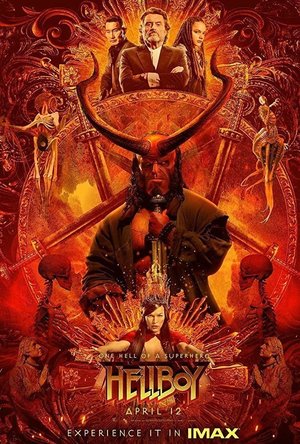

Trivia question for you…what does an immortal evil queen, King Arthur, Nazis and a boy born from Hell itself have in common? If you answered Hellboy you win a prize. The prize is going to the theater and watching the film and whether it’s a prize worth winning is something you’ll have to decide for yourself. I’m getting a bit ahead of myself though, so let’s rewind a bit and start at the beginning.
Hellboy (David Harbour) is a demon from Hell (hence the name), his backstory as we learn early on in the movie is pretty standard fare. The Nazi’s are on the verge of losing World War II and in a desperate move to turn the tide call upon the evil sorcerer Rasputin to call upon the depths of Hell and raise a champion who will fight for them. The incantation is interrupted when famous Nazi hunter Lobster Johnson (Thomas Haden Church) goes in with guns blazing, as other allied troops join the fray. Their relief at stopping the incantation is short-lived as the alter opens and a young demon climbs through. Professor Broom who had infiltrated the Nazi team had been brought in to put down any evil that was successfully summoned. Upon seeing the young demon, Professor Broom (for reasons known only to him at the time) decides not to kill him, but to take him in and raise him as his own.
Flash forward to present day, and Hellboy as we now know him alongside his father are members of the B.P.R.D (Bureau for Paranormal Research and Defense). On a mission to defeat some giants that are roaming the countryside in England they stumble upon an ancient evil that dark forces are trying to retrieve. It seems back in the dark ages a war between humans and monsters was being waged. Seeing no end to the violence King Arthur (Mark Stanley) and his faithful wizard Merlin (Brian Gleeson) offer to surrender to The Blood Queen (Milla Jovovich). On top the hill where the surrender is to take place, the Blood Queen is betrayed by one of her own and King Arthur, using the infamous blade Excalibur, cut the Blood Queen into several parts. While she can’t be killed, she can be contained and each of her body parts are placed in separate boxes. These boxes are then sealed with holy water that only a holy man can unlock and are sent to the farthest corners of England. If the Blood Queen ever returns, she will release a plague that will not only destroy England but spread across the entire world. Thus, sets the stage for Hellboy.
Being a fan of the previous movies and in particular the portrayal of Hellboy by Ron Pearlman, I wasn’t sure how to feel about David Harbour in this role. It’s always a bit hit or miss when a series is rebooted, and I was pleasantly surprised with how David Harbour stepped up and into the role. While he doesn’t have the same menacing size and gruffness that Ron Pearlman possesses, it didn’t take me long to adjust to this new version. He is joined by a strong supporting cast consisting of Sasha Lane as his ghost whispering friend Alice and Ben Daimo as an MI-11 agent weary of teaming up with a monster. Milla Jovovich does an outstanding job as the Blood Queen and her fairy-pig friend portrayed by Stephen Graham and Douglas Tait.
Visually the movie is stunning, with the numerous monsters and fairy creatures coming to life before your eyes. The movie is exceptionally gory as one might expect, with numerous limb dismemberments, decapitations, and more blood than anyone would expect to erupt from such wounds. It’s over-the-top and meant to be that way which tended to bring some uncomfortable laughter at times from those around me. Having recently played Mortal Kombat 11, I couldn’t help but feel that some of the fatality screens in that game would have felt right at home in this movie.
Story is where I feel Hellboy falls a bit flat. There are so many characters and side stories going on that it’s easy to get lost in it. From my description above, you can see that it includes King Arthur, Rasputin, Nazis, Secret Societies, Witches that eat children, monsters…and that’s only in the first half of the movie. There is a ton going on and there are a lot of disconnects. While trying to avoid spoilers, there is a part in the film where Hellboy is talking to Baba Yaga (see another character reference), and after tricking her she places a curse on him. I’m still trying to figure out if the curse she placed on him occurred in the movie or not. In fact, I’m trying to figure out exactly what the point of that scene was. It’s not a bad story, but it tries to pack in a TON of references in its brief hour and forty five-ish minutes.
I’ll be the first to admit that I’ve never read any of the Hellboy graphic novels, I have seen both of the previous films, so I had a little bit of background going into this movie. I don’t know if all the references in the movie are pivotal to the novels or not. You certainly don’t have to have read them or seen the previous movies to appreciate this one, I just wonder if they tried to fit in too many Hellboy references into one film. Hellboy is an enjoyable ride, and it certainly doesn’t drag at all, in fact I was surprised at how quickly it was over. With all that being said, it’s a fun action-packed movie, with lots of gratuitous violence if that’s your thing. I certainly wouldn’t recommend taking your children to see it, violence aside, I just think there is way too much going on and it can be difficult to follow. Oh, and don’t forget to stay through the credits for the end credit scene. It’s not pivotal to the movie, but worth waiting around for.
Hellboy (David Harbour) is a demon from Hell (hence the name), his backstory as we learn early on in the movie is pretty standard fare. The Nazi’s are on the verge of losing World War II and in a desperate move to turn the tide call upon the evil sorcerer Rasputin to call upon the depths of Hell and raise a champion who will fight for them. The incantation is interrupted when famous Nazi hunter Lobster Johnson (Thomas Haden Church) goes in with guns blazing, as other allied troops join the fray. Their relief at stopping the incantation is short-lived as the alter opens and a young demon climbs through. Professor Broom who had infiltrated the Nazi team had been brought in to put down any evil that was successfully summoned. Upon seeing the young demon, Professor Broom (for reasons known only to him at the time) decides not to kill him, but to take him in and raise him as his own.
Flash forward to present day, and Hellboy as we now know him alongside his father are members of the B.P.R.D (Bureau for Paranormal Research and Defense). On a mission to defeat some giants that are roaming the countryside in England they stumble upon an ancient evil that dark forces are trying to retrieve. It seems back in the dark ages a war between humans and monsters was being waged. Seeing no end to the violence King Arthur (Mark Stanley) and his faithful wizard Merlin (Brian Gleeson) offer to surrender to The Blood Queen (Milla Jovovich). On top the hill where the surrender is to take place, the Blood Queen is betrayed by one of her own and King Arthur, using the infamous blade Excalibur, cut the Blood Queen into several parts. While she can’t be killed, she can be contained and each of her body parts are placed in separate boxes. These boxes are then sealed with holy water that only a holy man can unlock and are sent to the farthest corners of England. If the Blood Queen ever returns, she will release a plague that will not only destroy England but spread across the entire world. Thus, sets the stage for Hellboy.
Being a fan of the previous movies and in particular the portrayal of Hellboy by Ron Pearlman, I wasn’t sure how to feel about David Harbour in this role. It’s always a bit hit or miss when a series is rebooted, and I was pleasantly surprised with how David Harbour stepped up and into the role. While he doesn’t have the same menacing size and gruffness that Ron Pearlman possesses, it didn’t take me long to adjust to this new version. He is joined by a strong supporting cast consisting of Sasha Lane as his ghost whispering friend Alice and Ben Daimo as an MI-11 agent weary of teaming up with a monster. Milla Jovovich does an outstanding job as the Blood Queen and her fairy-pig friend portrayed by Stephen Graham and Douglas Tait.
Visually the movie is stunning, with the numerous monsters and fairy creatures coming to life before your eyes. The movie is exceptionally gory as one might expect, with numerous limb dismemberments, decapitations, and more blood than anyone would expect to erupt from such wounds. It’s over-the-top and meant to be that way which tended to bring some uncomfortable laughter at times from those around me. Having recently played Mortal Kombat 11, I couldn’t help but feel that some of the fatality screens in that game would have felt right at home in this movie.
Story is where I feel Hellboy falls a bit flat. There are so many characters and side stories going on that it’s easy to get lost in it. From my description above, you can see that it includes King Arthur, Rasputin, Nazis, Secret Societies, Witches that eat children, monsters…and that’s only in the first half of the movie. There is a ton going on and there are a lot of disconnects. While trying to avoid spoilers, there is a part in the film where Hellboy is talking to Baba Yaga (see another character reference), and after tricking her she places a curse on him. I’m still trying to figure out if the curse she placed on him occurred in the movie or not. In fact, I’m trying to figure out exactly what the point of that scene was. It’s not a bad story, but it tries to pack in a TON of references in its brief hour and forty five-ish minutes.
I’ll be the first to admit that I’ve never read any of the Hellboy graphic novels, I have seen both of the previous films, so I had a little bit of background going into this movie. I don’t know if all the references in the movie are pivotal to the novels or not. You certainly don’t have to have read them or seen the previous movies to appreciate this one, I just wonder if they tried to fit in too many Hellboy references into one film. Hellboy is an enjoyable ride, and it certainly doesn’t drag at all, in fact I was surprised at how quickly it was over. With all that being said, it’s a fun action-packed movie, with lots of gratuitous violence if that’s your thing. I certainly wouldn’t recommend taking your children to see it, violence aside, I just think there is way too much going on and it can be difficult to follow. Oh, and don’t forget to stay through the credits for the end credit scene. It’s not pivotal to the movie, but worth waiting around for.

Ivana A. | Diary of Difference (1171 KP) rated Daisy's Vintage Cornish Camper Van in Books
Aug 3, 2020

<a href="https://amzn.to/2Wi7amb">Wishlist</a>; | <a
<a href="https://diaryofdifference.com/">Blog</a>; | <a href="https://www.facebook.com/diaryofdifference/">Facebook</a>; | <a href="https://twitter.com/DiaryDifference">Twitter</a>; | <a href="https://www.instagram.com/diaryofdifference/">Instagram</a>; | <a href="https://www.pinterest.co.uk/diaryofdifference/pins/">Pinterest</a>;
<img src="https://diaryofdifference.com/wp-content/uploads/2020/04/Book-Review-Banner-40.png"/>;
Daisy's Vintage Cornish Camper Van by Ali McNamara is exactly the book I thought I needed to put me in a better mood!
When Ana inherits a camper van from her best friend, she needs to go to Cornwall to get it. A nice sea air and fish and chips are enver a bad choice.
But when she arrives, she realises that the camper van is in a much worse state than she imagined. The fixing will take longer than she anticipated. On top of this, Ana finds a series of unsent postcards dating back to the 1940s, hidden in the van. This is a sign and Ana wants to make sure the postcards are delivered.
And while the camper van is restored and Ana is helping other people be happy, she may eventually notice she is finding her way back to happiness again.
<b><i>My Thoughts:</i></b>
Daisy's Vintage Cornish Camper Van got my attention from the moment I saw that beautiful cover. Then, I read the synopsis and I was sold.
For me, both camper vans and postcards have a big importance in my life. I have always wanted to have a camper van and be able to go on a road trips and experience that freedom. Even though I was lucky to be able to travel the world, it is never enough.
<b><i>"Yes, there's definitely something about a camper van that makes people smile. They're a happy vehicle, so people enjoy seeing them as much as their owners enjoy driving them."</i></b>
And postcards were always a way to travel without living my home. Get to meet other places and cultures, meet other people. It is extraordinary how many things I have learned about the world and the people from other countries just by reading their postcards.
<b><i>"Deltiology - it's the name for the study and collection of postcards. It comes from the Greek word deltios, which means "writing tablet" or "letter"."</i></b>
Ana is working in London, busy in her day-to-day job. When her best friend Daisy dies, she is completely lost. Daisy was everything she had, and now she is gone. When she inherits this van, Ana is eager to pick the van up and return to her normal London routine. She is not really a fan of travel, camper vans or camping. But Daisy was, and if she wanted for Ana to have this van and that was her last wish, this is the least Ana can do for her.
<b><i>"These old vehicles are very sensitive - especially camper vans. They're the worst, very temperamental they can be."</i></b>
Throughout her stay, Ana meets Malachi, the mechanic, who sold the van to Daisy and who will help Ana restore it. He is a very interesting character with an interesting point of view on life.
He was my favourite character in the book.
<b><i>"People pay a lot of money these days to find themselves. They're not really finding themselves, they're finding a version of themselves they feel happy to be for a while."
"We all change through our lives, and what you're happy to be when you're twenty is unlikely to be what you're happy being when you're older."</i></b>
Malachi also has a camper van himself. He always tells Ana why camper vans are amazing. If you are a fan of camper van, this book will be a favourite by default.
<b><i>"But... you'd be mad not to at least try camping in her. It's a wonderful experience. You can drive where you like, set up camp and cook your dinner in the open air, even bed down under the stars if you're lucky. The freedom is amazing."</i></b>
I loved everything about this book. The story was beautiful. All the characters were likeable and real. They all had their stories and points of development. It was nice to see Ana finally healing and learning to be happy again. Malachi's story was beautiful and it was the perfect closure to his mission. Noah's personal story was also heartwarming, as he learns to accept what happened in the past and be able to move on. I also really want to talk about the mystery couple from the postcards, but I won't, in fear that I will spoil anything. But the development on that story was amazing and it helped Ana in many ways to heal herself, which was magical!
<b><i>"If something is worth doing, Ana - I hear one of her favourite sayings echo in my ears - it's worth doing well."</i></b>
To summarize - Daisy's Vintage Cornish Camper Van is my new favorite!
Beautiful and heartwarming. It will make you want to go on a road trip. I definitely recommend Daisy's Vintage Cornish Camper Van. And as with every book, I love learning random things, and here are some things I learned:
<b><i>"Did you know the phrase "dilly-dally" is commonly attributed to the English music hall singer Marie Lloyd, but was actually in use much earlier than her 1918 song, as far back as the seventeenth century?"
"A Splitty. It's what we call a split screen camper van. All pre-1967 camper vans have a windscreen split in two. After that the new models all had the solid bay windows."</i></b>
<a href="https://amzn.to/2Wi7amb">Wishlist</a>; | <a
<a href="https://diaryofdifference.com/">Blog</a>; | <a href="https://www.facebook.com/diaryofdifference/">Facebook</a>; | <a href="https://twitter.com/DiaryDifference">Twitter</a>; | <a href="https://www.instagram.com/diaryofdifference/">Instagram</a>; | <a href="https://www.pinterest.co.uk/diaryofdifference/pins/">Pinterest</a>;
<a href="https://diaryofdifference.com/">Blog</a>; | <a href="https://www.facebook.com/diaryofdifference/">Facebook</a>; | <a href="https://twitter.com/DiaryDifference">Twitter</a>; | <a href="https://www.instagram.com/diaryofdifference/">Instagram</a>; | <a href="https://www.pinterest.co.uk/diaryofdifference/pins/">Pinterest</a>;
<img src="https://diaryofdifference.com/wp-content/uploads/2020/04/Book-Review-Banner-40.png"/>;
Daisy's Vintage Cornish Camper Van by Ali McNamara is exactly the book I thought I needed to put me in a better mood!
When Ana inherits a camper van from her best friend, she needs to go to Cornwall to get it. A nice sea air and fish and chips are enver a bad choice.
But when she arrives, she realises that the camper van is in a much worse state than she imagined. The fixing will take longer than she anticipated. On top of this, Ana finds a series of unsent postcards dating back to the 1940s, hidden in the van. This is a sign and Ana wants to make sure the postcards are delivered.
And while the camper van is restored and Ana is helping other people be happy, she may eventually notice she is finding her way back to happiness again.
<b><i>My Thoughts:</i></b>
Daisy's Vintage Cornish Camper Van got my attention from the moment I saw that beautiful cover. Then, I read the synopsis and I was sold.
For me, both camper vans and postcards have a big importance in my life. I have always wanted to have a camper van and be able to go on a road trips and experience that freedom. Even though I was lucky to be able to travel the world, it is never enough.
<b><i>"Yes, there's definitely something about a camper van that makes people smile. They're a happy vehicle, so people enjoy seeing them as much as their owners enjoy driving them."</i></b>
And postcards were always a way to travel without living my home. Get to meet other places and cultures, meet other people. It is extraordinary how many things I have learned about the world and the people from other countries just by reading their postcards.
<b><i>"Deltiology - it's the name for the study and collection of postcards. It comes from the Greek word deltios, which means "writing tablet" or "letter"."</i></b>
Ana is working in London, busy in her day-to-day job. When her best friend Daisy dies, she is completely lost. Daisy was everything she had, and now she is gone. When she inherits this van, Ana is eager to pick the van up and return to her normal London routine. She is not really a fan of travel, camper vans or camping. But Daisy was, and if she wanted for Ana to have this van and that was her last wish, this is the least Ana can do for her.
<b><i>"These old vehicles are very sensitive - especially camper vans. They're the worst, very temperamental they can be."</i></b>
Throughout her stay, Ana meets Malachi, the mechanic, who sold the van to Daisy and who will help Ana restore it. He is a very interesting character with an interesting point of view on life.
He was my favourite character in the book.
<b><i>"People pay a lot of money these days to find themselves. They're not really finding themselves, they're finding a version of themselves they feel happy to be for a while."
"We all change through our lives, and what you're happy to be when you're twenty is unlikely to be what you're happy being when you're older."</i></b>
Malachi also has a camper van himself. He always tells Ana why camper vans are amazing. If you are a fan of camper van, this book will be a favourite by default.
<b><i>"But... you'd be mad not to at least try camping in her. It's a wonderful experience. You can drive where you like, set up camp and cook your dinner in the open air, even bed down under the stars if you're lucky. The freedom is amazing."</i></b>
I loved everything about this book. The story was beautiful. All the characters were likeable and real. They all had their stories and points of development. It was nice to see Ana finally healing and learning to be happy again. Malachi's story was beautiful and it was the perfect closure to his mission. Noah's personal story was also heartwarming, as he learns to accept what happened in the past and be able to move on. I also really want to talk about the mystery couple from the postcards, but I won't, in fear that I will spoil anything. But the development on that story was amazing and it helped Ana in many ways to heal herself, which was magical!
<b><i>"If something is worth doing, Ana - I hear one of her favourite sayings echo in my ears - it's worth doing well."</i></b>
To summarize - Daisy's Vintage Cornish Camper Van is my new favorite!
Beautiful and heartwarming. It will make you want to go on a road trip. I definitely recommend Daisy's Vintage Cornish Camper Van. And as with every book, I love learning random things, and here are some things I learned:
<b><i>"Did you know the phrase "dilly-dally" is commonly attributed to the English music hall singer Marie Lloyd, but was actually in use much earlier than her 1918 song, as far back as the seventeenth century?"
"A Splitty. It's what we call a split screen camper van. All pre-1967 camper vans have a windscreen split in two. After that the new models all had the solid bay windows."</i></b>
<a href="https://amzn.to/2Wi7amb">Wishlist</a>; | <a
<a href="https://diaryofdifference.com/">Blog</a>; | <a href="https://www.facebook.com/diaryofdifference/">Facebook</a>; | <a href="https://twitter.com/DiaryDifference">Twitter</a>; | <a href="https://www.instagram.com/diaryofdifference/">Instagram</a>; | <a href="https://www.pinterest.co.uk/diaryofdifference/pins/">Pinterest</a>;

Chris Sawin (602 KP) rated The Suicide Squad (2021) in Movies
Oct 6, 2021
Its adult humor is also incredibly poignant (2 more)
Blood and gore is Troma levels of insanity
King Shark and Polka Dot Man
Not as fun on repeat viewings (1 more)
Is a little too similar to Guardians of the Galaxy
I'm a Motherf@#$ing Superhero!
You could probably get away with calling James Gunn’s The Suicide Squad an R-rated version of Guardians of the Galaxy, but it isn’t entirely fair or correct. It’s a complicated comparison much like Gunn’s status with Marvel Studios that allowed him to make the film in the first place and whether or not The Suicide Squad is a sequel or a reboot to David Ayer’s 2016 film.
Gunn has always had a knack for getting gory or gross or raunchy if the opportunity presented itself. The Suicide Squad almost feels like a clean, strike that, blood-splattered slate for the filmmaker. Gunn had complete creative control while making The Suicide Squad and it shows; not only in its graphic content and excessive vulgarity, but also in the characters Gunn chose to be in the film. Nearly everyone has been replaced from the previous Suicide Squad film except for Captain Boomerang (Jai Courtney), Colonel Rick Flagg (Joel Kinnaman), Harley Quinn (Margot Robbie), and Amanda Waller (Viola Davis). The new characters are mostly unknown or barely known villains, which makes the fact that nearly all of them are expendable all the more intriguing.
While Guardians of the Galaxy and The Suicide Squad are two different films, there are some undeniable similarities. The cast of The Suicide Squad is insanely stacked, but you have to know by now that three quarters of these characters die in horribly gruesome ways. Witnessing who lives and who dies is half the fun of the film, so that won’t be spoiled here. But The Suicide Squad has a team of five characters that are grouped together and featured more than anyone else. It’s a lot like how Guardians began with Star-Lord, Gamora, Drax, Rocket, and Groot. These five characters also end up being the ones you love the most.
Gunn also has a thing for taking a group of assholes and giving them meaning. In the tenth season of South Park, Eric Cartman meets Bart Simpson face to face. Bart has always been a troublemaker and a prankster, but Cartman ground up Scott Tenorman’s parents, slapped that ground parent meat in some chili, and made Scott eat his own parents. The comparison between Guardians and The Suicide Squad is a lot like the difference between Bart Simpson and Eric Cartman. The Suicide Squad features straight up murderers, demented psychopaths, and whatever the hell Weasel is.
Not unlike his other comic book film work though, Gunn typically takes what would be unlikable characters on their own and finds a purpose for them once they’re with other outcasts that they can relate to. There is a ton of heart in The Suicide Squad. You fall in love with King Shark because he’s trying to read books upside down and use one of his fingers as mustache as a brilliant disguise, but you don’t feel for him until he reveals that he’s never had a friend. Sebastian, Ratcatcher II’s go-to rat, is adorable because he waves at, offers leaves to, and flocks toward Bloodsport even though he’s afraid of rats. There’s still this camaraderie in The Suicide Squad. It may be broken and gory, but it’s still camaraderie.
There are some unusual choices that Gunn made with The Suicide Squad though. They originally wanted Will Smith to come back as Deadshot, but supposedly cast Idris Elba to replace Smith in the role. Then they backtracked and made Elba Bloodsport. The odd thing is that both Bloodsport and Peacemaker are exactly the same as Deadshot. Peacemaker seems to be a bit crazier, but both characters have a thing for making anything a weapon in their hands and having precise aim. Bloodsport is even doing everything in the film for the sake of his daughter. It gives Warner Bros a chance to bring Smith back as Deadshot down the line, but having all three characters in the same film would be serious overkill.
Harley Quinn’s action sequences in The Suicide Squad are better and more satisfying than anything Margot Robbie has done with the role. Polka Dot Man is low-key the coolest character of the film despite seeing his mom in every person that he meets. Many will likely point to the blood, the gore, and all of the F-bombs shouted mostly among teammates as Gunn cleansing his Marvel/Disney palette so to speak. However, the major difference is Starro. Starro is a giant blue and purple starfish with an eyeball in the middle of his body. He is essentially a kaiju, but he shoots miniature versions of himself out of his armpits which latch onto people’s faces, kills them, and turns their corpses into zombie-like slaves that do his bidding; all while Starro gets bigger and bigger in the process. The abridged version of this starfish heavy explanation is that Starro is fucking terrifying. The entire world is basically on the verge of bowing down to a Godzilla sized starfish that has the ability to shoot armies of himself out of his Goddamn armpits! The MCU featuring a monster or creature of any kind that is that scary is slim to none.
The Suicide Squad is an uproarious extravaganza filled with grotesque nom-noms, full-on naked dick shots, and John Cena in tighty-whities and it’s is the most fun you’ll have with an R-rated comic book film in a theater (or at home with HBO Max) since Deadpool. It’s the first comic book film to come along in a good long while that’s charming because of how weird it is. As a final note, stay/watch after the credits. James Gunn and John Cena are doing an 8-episode Peacemaker TV series for HBO Max due sometime in 2022, so that may or may not be teased in some capacity.
Gunn has always had a knack for getting gory or gross or raunchy if the opportunity presented itself. The Suicide Squad almost feels like a clean, strike that, blood-splattered slate for the filmmaker. Gunn had complete creative control while making The Suicide Squad and it shows; not only in its graphic content and excessive vulgarity, but also in the characters Gunn chose to be in the film. Nearly everyone has been replaced from the previous Suicide Squad film except for Captain Boomerang (Jai Courtney), Colonel Rick Flagg (Joel Kinnaman), Harley Quinn (Margot Robbie), and Amanda Waller (Viola Davis). The new characters are mostly unknown or barely known villains, which makes the fact that nearly all of them are expendable all the more intriguing.
While Guardians of the Galaxy and The Suicide Squad are two different films, there are some undeniable similarities. The cast of The Suicide Squad is insanely stacked, but you have to know by now that three quarters of these characters die in horribly gruesome ways. Witnessing who lives and who dies is half the fun of the film, so that won’t be spoiled here. But The Suicide Squad has a team of five characters that are grouped together and featured more than anyone else. It’s a lot like how Guardians began with Star-Lord, Gamora, Drax, Rocket, and Groot. These five characters also end up being the ones you love the most.
Gunn also has a thing for taking a group of assholes and giving them meaning. In the tenth season of South Park, Eric Cartman meets Bart Simpson face to face. Bart has always been a troublemaker and a prankster, but Cartman ground up Scott Tenorman’s parents, slapped that ground parent meat in some chili, and made Scott eat his own parents. The comparison between Guardians and The Suicide Squad is a lot like the difference between Bart Simpson and Eric Cartman. The Suicide Squad features straight up murderers, demented psychopaths, and whatever the hell Weasel is.
Not unlike his other comic book film work though, Gunn typically takes what would be unlikable characters on their own and finds a purpose for them once they’re with other outcasts that they can relate to. There is a ton of heart in The Suicide Squad. You fall in love with King Shark because he’s trying to read books upside down and use one of his fingers as mustache as a brilliant disguise, but you don’t feel for him until he reveals that he’s never had a friend. Sebastian, Ratcatcher II’s go-to rat, is adorable because he waves at, offers leaves to, and flocks toward Bloodsport even though he’s afraid of rats. There’s still this camaraderie in The Suicide Squad. It may be broken and gory, but it’s still camaraderie.
There are some unusual choices that Gunn made with The Suicide Squad though. They originally wanted Will Smith to come back as Deadshot, but supposedly cast Idris Elba to replace Smith in the role. Then they backtracked and made Elba Bloodsport. The odd thing is that both Bloodsport and Peacemaker are exactly the same as Deadshot. Peacemaker seems to be a bit crazier, but both characters have a thing for making anything a weapon in their hands and having precise aim. Bloodsport is even doing everything in the film for the sake of his daughter. It gives Warner Bros a chance to bring Smith back as Deadshot down the line, but having all three characters in the same film would be serious overkill.
Harley Quinn’s action sequences in The Suicide Squad are better and more satisfying than anything Margot Robbie has done with the role. Polka Dot Man is low-key the coolest character of the film despite seeing his mom in every person that he meets. Many will likely point to the blood, the gore, and all of the F-bombs shouted mostly among teammates as Gunn cleansing his Marvel/Disney palette so to speak. However, the major difference is Starro. Starro is a giant blue and purple starfish with an eyeball in the middle of his body. He is essentially a kaiju, but he shoots miniature versions of himself out of his armpits which latch onto people’s faces, kills them, and turns their corpses into zombie-like slaves that do his bidding; all while Starro gets bigger and bigger in the process. The abridged version of this starfish heavy explanation is that Starro is fucking terrifying. The entire world is basically on the verge of bowing down to a Godzilla sized starfish that has the ability to shoot armies of himself out of his Goddamn armpits! The MCU featuring a monster or creature of any kind that is that scary is slim to none.
The Suicide Squad is an uproarious extravaganza filled with grotesque nom-noms, full-on naked dick shots, and John Cena in tighty-whities and it’s is the most fun you’ll have with an R-rated comic book film in a theater (or at home with HBO Max) since Deadpool. It’s the first comic book film to come along in a good long while that’s charming because of how weird it is. As a final note, stay/watch after the credits. James Gunn and John Cena are doing an 8-episode Peacemaker TV series for HBO Max due sometime in 2022, so that may or may not be teased in some capacity.
Hadley (567 KP) rated The Institute in Books
Oct 24, 2019
Likable characters (1 more)
Paranormal
Sexualizing children (1 more)
Not a regular King story
At around 95 novels, Stephen King, who is one of the most well-known authors of our time, debuts a possible new novel series about psychic children. 'The Institute' mostly takes place in a hidden facility located in a wooded area of Maine,where readers follow a kidnapped child prodigy named Luke Ellis, and the government experiments that are inflicted on him to heighten his psychic powers.
So why is the government kidnapping children to conduct psychic research on them? At first, it may seem just that: psychic research, because psychic powers seem to be more powerful in young children than adults, but nothing is what it seems. As the boss of this Institute says to the children: " ' There's a war going on, and you have been called upon to serve your country.' " A few sentences later, and she explains it a little more in depth for Ellis: " ' This is not an arms race but a mind race, and if we lose, the consequences would be more than dire; they would be unimaginable. You may only be twelve, but you are a soldier in an undeclared war. The same is true of Kalisha and the others. Do you like it? Of course not. Draftees never do, and draftees sometimes need to be taught that there are consequences for not following orders. I believe you've already had one lesson in that regard. If you're as bright as your records say you are, perhaps you won't need another. If you do, however, you'll get it. This is not your home. This is not your school. You will not simply be given an extra chore or sent to the principal's office or given detention; you will be punished. Clear? ' "
King writes in a third-person point-of-view, which makes it a little disturbing that when any female character he introduces (including girls as young as 11-years-old) are usually introduced by their breast size. It's not uncommon for male writers to introduce female characters this way, but when most of them are children, it can be very off putting for readers. One scene, King makes Ellis notice that Kalisha has 'her hands on her mostly nonexistent hips,' then writes about the character Helen in the same scene: " Another door opened and Helen Simms appeared, clad - - - sort of - - - in what Luke believed were called babydoll pajamas. She had hips, plus other interesting equipment. " Both of these characters are only twelve-years-old.
Aside from the children, King also introduces an important character named Tim Jamieson. This character starts the novel off before readers meet Ellis; we learn that he is a former cop who is traveling to New York while taking odd jobs on his way there, including a night knocker job in DuPray, South Carolina (which becomes very important later on in the story) .
Avery, my personal favorite character in the book, is a ten-year-old who acts like a five-year-old, " The screamer was a little boy in Star Wars pajamas, hammering on doors with small fists that went up and down like pistons. Ten? Avery Dixon looked six, seven at most. The crotch and one leg of his pajama pants were wet and sticking to him. " Dixon and Kalisha are both in the Institute for telepathy. " 'You know so,' Kalisha said, and began to stroke the little boy's [Dixon] hair again. Like had a sense - - - maybe bullshit, maybe not - - - that a lot was going on between them. Inside traffic. " And quickly, the group of children become protective of Dixon, " 'But you need to take care of this one for as long as you can. When I think of Tony or Zeke or that bitch Winona hitting Avery, it makes me want to cry. ' " Kalisha confides in Ellis.
Kalisha, one of the other children that has been kidnapped, is another very likable character that seems to keep all of the other kids' spirits up by either keeping them out of trouble with advice or stopping small fights between them. Another kid named Nicky, the troublemaker of the group, is the stereo-typical bad boy. He gets involved in fistfights with the orderlies that work at the Institute, taking quite a bit of abuse in return. But eventually, the rebelliousness catches up with him, leading him to be moved from Front Half to the dreaded Back Half.
Readers later learn that Back Half is worse than Front Half. Most questions we may have about why the Institute is abusing these children are all answered when readers get to see into Back Half from Kalisha's point-of-view. But what is left unanswered is exactly how many children have been through the Institute? From the amount of children seen just in this story, the numbers could be in the hundreds of thousands!
But, as expected, the children come up with a plan to escape - - - with giving as little detail as possible, an orderlie at the Institute is helped by one of the children with a personal problem, and in return, this orderlie decides to help one of them escape and reveal everything that is the Institute. The instance the escape starts being discussed is when the book really picks up.
King's writing of the abuse our characters sustain is very real (" When Stevie Whipple asked where he'd been and what was wrong, Luke just shook his head. He didn't want to talk about the tank. Not now, not ever. He supposed it was like being in a war. You got drafted, you went, but you didn't want to talk about what you'd seen, or what had happened to you there." ) The scene in which Ellis refuses to speak of is where the orderlie Zeke is trying to make Ellis confess that he is not only telekinesis, but also telepathic: "Zeke hauled him up by the hair. His white tunic was soaked. He looked fixedly at Luke. 'I'm going to put you down again, Luke. Again and again and again. I'll put you down until you drown and then we'll resuscitate you and drown you again and resuscitate you again. Last chance: what number am I thinking of?' "
King brings up a fictional belief that strikes fear in parents everywhere: children being kidnapped for government experiments. Readers witness Ellis' parents being killed, Kalisha being a surrogate mother to kids she barely knows, Nicky being beaten by adults when he refuses to get 'shots for dots,' night terrors, suicide, zap sticks and murder.
This book doesn't read like a regular King book; even with the paranormal aspects occurring in it, it doesn't add up to much. The horror aspect is more in the form of child abuse then paranormal moments. I would only recommend this book to fans of Netflix's 'Stranger Things' and Patterson's 'Maximum Ride.' I don't think I would read this again.
So why is the government kidnapping children to conduct psychic research on them? At first, it may seem just that: psychic research, because psychic powers seem to be more powerful in young children than adults, but nothing is what it seems. As the boss of this Institute says to the children: " ' There's a war going on, and you have been called upon to serve your country.' " A few sentences later, and she explains it a little more in depth for Ellis: " ' This is not an arms race but a mind race, and if we lose, the consequences would be more than dire; they would be unimaginable. You may only be twelve, but you are a soldier in an undeclared war. The same is true of Kalisha and the others. Do you like it? Of course not. Draftees never do, and draftees sometimes need to be taught that there are consequences for not following orders. I believe you've already had one lesson in that regard. If you're as bright as your records say you are, perhaps you won't need another. If you do, however, you'll get it. This is not your home. This is not your school. You will not simply be given an extra chore or sent to the principal's office or given detention; you will be punished. Clear? ' "
King writes in a third-person point-of-view, which makes it a little disturbing that when any female character he introduces (including girls as young as 11-years-old) are usually introduced by their breast size. It's not uncommon for male writers to introduce female characters this way, but when most of them are children, it can be very off putting for readers. One scene, King makes Ellis notice that Kalisha has 'her hands on her mostly nonexistent hips,' then writes about the character Helen in the same scene: " Another door opened and Helen Simms appeared, clad - - - sort of - - - in what Luke believed were called babydoll pajamas. She had hips, plus other interesting equipment. " Both of these characters are only twelve-years-old.
Aside from the children, King also introduces an important character named Tim Jamieson. This character starts the novel off before readers meet Ellis; we learn that he is a former cop who is traveling to New York while taking odd jobs on his way there, including a night knocker job in DuPray, South Carolina (which becomes very important later on in the story) .
Avery, my personal favorite character in the book, is a ten-year-old who acts like a five-year-old, " The screamer was a little boy in Star Wars pajamas, hammering on doors with small fists that went up and down like pistons. Ten? Avery Dixon looked six, seven at most. The crotch and one leg of his pajama pants were wet and sticking to him. " Dixon and Kalisha are both in the Institute for telepathy. " 'You know so,' Kalisha said, and began to stroke the little boy's [Dixon] hair again. Like had a sense - - - maybe bullshit, maybe not - - - that a lot was going on between them. Inside traffic. " And quickly, the group of children become protective of Dixon, " 'But you need to take care of this one for as long as you can. When I think of Tony or Zeke or that bitch Winona hitting Avery, it makes me want to cry. ' " Kalisha confides in Ellis.
Kalisha, one of the other children that has been kidnapped, is another very likable character that seems to keep all of the other kids' spirits up by either keeping them out of trouble with advice or stopping small fights between them. Another kid named Nicky, the troublemaker of the group, is the stereo-typical bad boy. He gets involved in fistfights with the orderlies that work at the Institute, taking quite a bit of abuse in return. But eventually, the rebelliousness catches up with him, leading him to be moved from Front Half to the dreaded Back Half.
Readers later learn that Back Half is worse than Front Half. Most questions we may have about why the Institute is abusing these children are all answered when readers get to see into Back Half from Kalisha's point-of-view. But what is left unanswered is exactly how many children have been through the Institute? From the amount of children seen just in this story, the numbers could be in the hundreds of thousands!
But, as expected, the children come up with a plan to escape - - - with giving as little detail as possible, an orderlie at the Institute is helped by one of the children with a personal problem, and in return, this orderlie decides to help one of them escape and reveal everything that is the Institute. The instance the escape starts being discussed is when the book really picks up.
King's writing of the abuse our characters sustain is very real (" When Stevie Whipple asked where he'd been and what was wrong, Luke just shook his head. He didn't want to talk about the tank. Not now, not ever. He supposed it was like being in a war. You got drafted, you went, but you didn't want to talk about what you'd seen, or what had happened to you there." ) The scene in which Ellis refuses to speak of is where the orderlie Zeke is trying to make Ellis confess that he is not only telekinesis, but also telepathic: "Zeke hauled him up by the hair. His white tunic was soaked. He looked fixedly at Luke. 'I'm going to put you down again, Luke. Again and again and again. I'll put you down until you drown and then we'll resuscitate you and drown you again and resuscitate you again. Last chance: what number am I thinking of?' "
King brings up a fictional belief that strikes fear in parents everywhere: children being kidnapped for government experiments. Readers witness Ellis' parents being killed, Kalisha being a surrogate mother to kids she barely knows, Nicky being beaten by adults when he refuses to get 'shots for dots,' night terrors, suicide, zap sticks and murder.
This book doesn't read like a regular King book; even with the paranormal aspects occurring in it, it doesn't add up to much. The horror aspect is more in the form of child abuse then paranormal moments. I would only recommend this book to fans of Netflix's 'Stranger Things' and Patterson's 'Maximum Ride.' I don't think I would read this again.